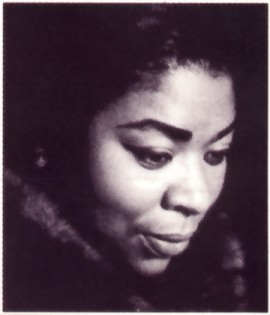
This 1968 performance of AIDA from the Teatro Colon, Buenos Aires, cropped up on the Opera Depot website and thought the combination of Martina Arroyo (above) and Carlo Bergonzi as Aida and Radames would be exciting to hear, since they are two of my all-time favorite Verdi singers. Both are in prodigious voice, providing phrase after phrase of wonderfully generous vocalism. My thanks to Dmitry for making me a copy.
Martina Arroyo never made a commercial recording of AIDA, and Bergonzi’s Radames on the Decca label (with Tebaldi) was recorded in an unusual acoustic which even later tampering-with could not make really enjoyable. So it’s wonderful to have this live recording from the Colon in perfectly good sound and with both singers on impressive vocal form.

The Teatro Colon (above) is a vast house (1,000 standees may be accommodated), and over the years has been rated high acoustically by singers and listeners alike. On this evening in 1968, the crowd surely senses that they are hearing teriffic vocalism from Arrroyo and Bergonzi and they repay the singers with generous ovations throughout the performance.
Bruno Bartoletti is on the podium; over the years I have heard performances conducted by this man that seem ideal and others that are less inspiring. For this AIDA he sets a generally fast pace (the ballet segments are wickedly speedy – I would not want to have been dancing in this performance!) but he certainly gives his singers a lot of leeway, and they enjoy lingering on high notes and having the opportunity to sustain favorite phrases.
There are some off-notes and a few unhappy bits from the pit musicians, and one jarring passage in the Tomb Scene where Bartoletti inexplicably rushes ahead of Bergonzi who is in the middle of some raptly poetic music-making; it takes a few bars to get things back in sync.

Carlo Bergonzi (above) has always been my personal king of tenors; yes, I know all his flaws and yes, he went on singing too long after he should have stopped. But in his heyday he was just so thoroughly pleasing to listen to, his marvelous turns of phrase and beautifully sustained vocalism always make me feel…happy. The beauty of hearing the Italian language wrapped in Bergonzi’s plangently expressive sound has always given me particular joy; even now, if I’m feeling blue, I’ll reach for that first Decca recital disc and soon I’m transported out of myself and basking in the music that has kept me – both spiritually and psychologically – on an even keel all these years. His singing in this AIDA is simply marvelous to experience: the unstinting generosity of both voice and style, the many small touches of sustained notes and his lovely colourings of the words in a rich emotional palette. It’s Verdi tenor singing at its best.
Martina Arroyo is in glorious voice also, rich and even throughout the role’s vast range. If she does not employ the ravishing piano effects that some sopranos have in this music, we are amply compensated with the velvety splendour of Arroyo’s sound and her plush phrasing, as well as her dramatic awareness which never carries her to excess. In this grand performance, the great Martina rises to the high-C of ‘O patria mia’ – a note which has defeated many a soprano – with blessed assurance and sustains it with glorious ease. In the opera’s concluding Tomb Scene, she and Bergonzi trade passages of soul-pleasing Verdi vocalism, and together they sustain their final joint phrase seemingly beyond the realm of human possibility.
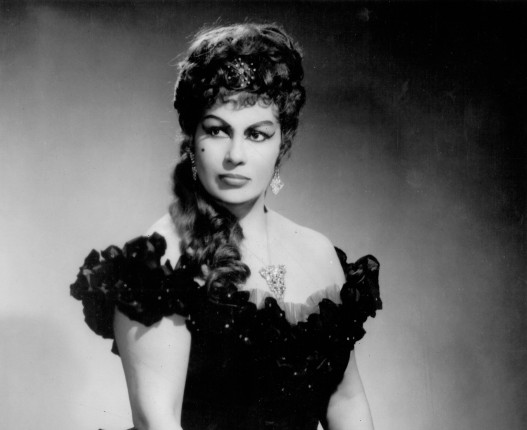
The Serbian mezzo-soprano Biserka Cvejic (above) is probably not on anyone’s list of top-ten mezzos; yet if she had been the Amneris in either of the last two AIDAs I heard at The Met, I would have been satisfied. It’s a crusty, Old-World sound with an ample and pleasing chest register and higher notes sometimes approached from below. Cvejic has the role well in hand and if her singing doesn’t rise to the level of the soprano and tenor, neither does she let down her side of the triangle.
Cornell MacNeil is a powerful, dramatic Amonasro and I was surprised to find Nicola Rossi-Lemeni listed as Ramfis: this basso – a famous stage-creature of the 1950s – is surely nearing the end of his singing career by 1968. If not vocally prime, he surprises with some very robust moments (‘Immenso Ptah!’) and makes an authoritative impression.
 Oberon's Glade
Leave a comment