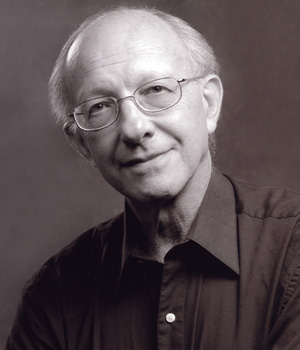
Above: pianist Gilbert Kalish of the Chamber Music Society of Lincoln Center
Tuesday October 22nd, 2013 – Piano quartets from three centuries were on the bill today at this Chamber Music Society of Lincoln Center performance. As I walked down the corridor to enter the auditorium at Alice Tully Hall, I experienced the odd sensation of being in church; these CMS concerts are not only completely satisfying musically, but they are so spiritually uplifting in their ability to carry us out of the everyday world to something more pure and elevated.
I had an incredible seat, second row center, looking up at the musicians at close range. The lines of communication – between player and player, and between musicians and audience – were so direct and intimate; I don’t exaggerate when I say it was a transportive experience.
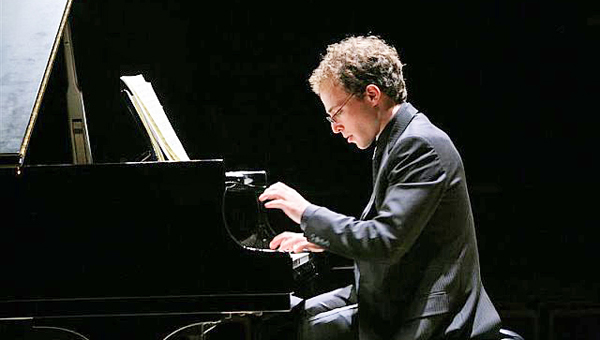
Above: pianist Orion Weiss
Mozart first: the ill-fated genius composed two piano quartets, a relatively rare genre during the Viennese
Classical period. The E-flat major quartet K. 493 is the second of these, and dates from 1786. It is thought to be the piece that Mozart himself played at Count Joseph Thun’s palace when the composer journeyed to Prague in 1787 to witness the overwhelming success there of his opera LE NOZZE DI FIGARO. This quartet is considered among the peaks of Mozart’s chamber music, and it certainly seemed so today in a performance of remarkable musical clarity and emotional immediacy.
Orion Weiss was at the Steinway, with Nicolas Dautricourt (violin), Paul Neubauer (viola) and Keith Robinson (cello) center-stage. Their playing was impeccable, and I so deeply enjoyed watching the communication between them: a silent language of the eyes and a tilt of the head. Mr. Neubauer, as expressive of face as in his musicianship, seemed the conduit linking the four players emotionally. The music flowed freely as melody and embellishment passed from one player to another. An atmosphere of quiet intensity filled the hall, the audience breathing in the sustaining beauty of Mozart’s perfection.
A complete change of mood as we were transported forward to 1931 and the intoxicating rhythms and alluring turns of phrase of the Spanish composer Joaquin Turina’s A-minor quartet, opus 67. Here the players were out to seduce the ear, led by Yura Lee (violin) with Messrs. Neubauer, Robinson and Weiss.
Turina composed this piano quartet in 1931; its flavour of
Spanish folk music, with gypsy and Andalusian nuances, is characteristic of the composer’s work, which was influenced by his predecessors Manuel de Falla and Isaac Albeniz. Veering effortlessly from the fiery rhythms to the more sustained song-like motifs, Ms. Lee and her colleagues reveled in sensuous glow of the music; Mr. Weiss fulfilled the demanding piano writing with élan, and again I greatly enjoyed the the silent sense of conspiracy among the players as they wound their way thru the subtle turns of the music.
Yura Lee switched gracefully from violin to viola for the evening’s concluding work, the Brahms Quartet #2, Opus 26. For this long (50 minutes) and demanding work, keyboard master Gilbert Kalish was at the Steinway, Nicolas Dautricourt returned with his violin, and the superb Mr. Robinson polished off his evening perfectly – the only player involved in all three works tonight.
Johannes Brahms himself played the piano part at this work’s premiere in 1863; Robert Schumann had already hailed Brahms as Beethoven’s heir apparent, and the piano quartet was one of the works that propelled the composer into his position as one of the immortal Three Bs – Bach, Beethoven and Brahms – in the pantheon of classical music.
Tonight this masterpiece unfolded in all its glory. In a touching tribute in the playbill, Mr. Dautricourt spoke of being mentored by Mr. Kalish at Ravinia in 2002 when the Frenchman had first arrived in the United States. It must have been a great experience for them to perform together this evening.
Mr. Dautricourt’s playing is so passionate and expressive; I found myself drawn to this tall and charismatic musician, who is apparently equally at home in both jazz and the classics. Mr. Kalish’s playing was resonant and sublime, with Ms. Lee and Mr. Robinson yet again as pleasing to watch as to hear. The cumulative effect of their performance drew a sustained applause from the attentive and dedicated audience of music-lovers.
The anticipation I felt going into the concert was amply rewarded: I had expected the best that music can offer, but – intangibly – it was even better than that.
- Mozart Quartet in E-flat major for Piano, Violin, Viola, and Cello, K. 493 (1786)
- Turina Quartet for Piano, Violin, Viola, and Cello, Op. 67 (1931)
- Brahms Quartet No. 2 in A major for Piano, Violin, Viola, and Cello, Op. 26 (1861)
The participating artists tonight were:
 Oberon's Glade
Leave a comment