
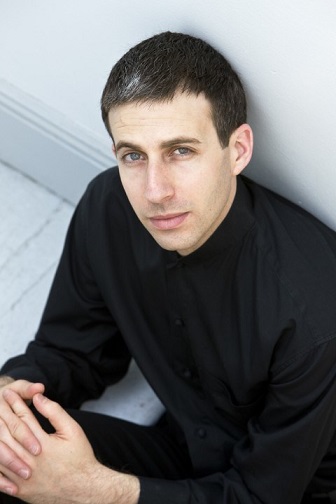
Above: violinist Kuan Cheng Lu of The New York Philharmonic
~ Author: Oberon
Sunday February 17th, 2019 – Artists of The New York Philharmonic performing works by Bach, Debussy, and Fauré at Merkin Hall. This was originally going to be an all-French program, but somewhere along the way, Arthur Honegger’s Sonatine for Violin and Cello – which I was very curious to hear – turned into Bach’s Trio Sonata in C-major, BWV 529.
The switch soon became irrelevant, as the Bach was vividly performed by Kuan Cheng Lu (violin), Robert Rhinehart (viola), and David J. Grossman (bass). The opening Allegro was dynamically played, with some sustained bass notes giving the music an anchor. To the rather forlorn Largo, Kuan Cheng Lu brought lovely subtleties of phrase; this movement – without a formal ending – leads immediately into the lively concluding Allegro.

Claude Debussy’s Piano Trio followed, with guest artist Hélène Jeanney (above) at the Steinway; violinist Kuan Cheng Lu (the only artist to appear twice this afternoon) and cellist Qiang Tu joined her for this work, which was composed during the Summer of 1880 in Fiesole, Italy, when Debussy was 18 years old. At the time, he was the musical traveling companion and maître de musique of Nadezhda von Meck, Tchaikovsky’s generous patroness. Most of the autograph material for this trio was thought to have been lost, and was only discovered a century later, in 1982, among the papers of Debussy’s pupil Maurice Dumesnil.
If we were to hear this music without knowing who wrote it, we’d never guess it’s by Debussy; the young composer had yet to find his own voice. This trio is entertaining salon music, which might be mistaken for Bizet or Delibes. For all that, just hearing it gives a lot of pleasure – especially when played as beautifully as it was today.
Ms. Jeanney’s playing gives the music a Springtime freshness; the opening Andantino con molto allegro will later turn moody, even passionate. But overall, loveliness prevails. A song-like melody from Mr. Tu’s cello is taken up in turn by Mr. Lu’s violin: both these artists display smooth, savourable tone. Things turn rhapsodic, and the pianist’s expressive playing carries us along.
The ensuing Scherzo opens with pizzicati from the strings and the piano playing a dancing tune that evoked fanciful marionettes with its wit and sense of irony. Charm is abundant here. Then on to the Andante espressivo, where the cellist again inaugurates a theme that is passed on to the violin. Ms. Jeanney’s playing is so delightful here, full of grace and colour. The blend of the three players becomes quite intense as the music builds, only to recede into another violin passage. The movement ends in a blissful state.
The final Appassionato commences in a minor-key, agitated state. Things calm to a passage of melodious strings and rippling piano. An interlude of cello pizzicati followed by a jaunty passage lead on to fair finish; the musicians were robustly applauded by the packed house.
 Oberon's Glade
Leave a comment