(I fell in love with Rebecca Krohn when she danced a small role in a now mostly-forgotten ballet. Her farewell to New York City Ballet was an event I’ll always remember. I’ve brought this review over from the Grove, since it eluded the mass transfer to the Glade.)
(Click on each photo to enlarge.)

Above: Rebecca Krohn, photographed by Paul Kolnik
Saturday October 7th, 2017 – Watching Rebecca Krohn dance with the New York City Ballet was a favorite experience of mine during the years when I was seeing the Company often. She joined NYCB as an apprentice in 1998, the year I moved to New York City, and became a member of the corps de ballet the following year. In 2006 she was promoted to soloist, and in 2012 to the rank of principal.
Thru the passing seasons since I started going to New York City Ballet in 1975, I’ve developed several serious ‘dancer crushes’; Marnee Morris was the first, and then there was Pauline Golbin, and then a select group of others. Rebecca Krohn had been dancing there for a year or two, sometimes catching my eye, when in 2001 she made a great leap onto my radar screen in the Peter Martins ballet BURLESKE. This beautiful ballet, with its surprise ending, is set to a Richard Strauss score; I often hoped to see it revived, but – as with so many appealing ballets – it seems to have vanished into thin air. But it did serve as an entrée for Ms. Krohn – I recall she wore a violet-coloured frock – and after that I was always on the lookout for her.
I save everything: here’s the cast page from the night when it all began:

As her career progressed, Rebecca Krohn took on a wide range of roles, excelling as both Arabian and Sugar Plum in NUTCRACKER; as both the Lilac Fairy and Carabosse in SLEEPING BEAUTY; multiple roles in SWAN LAKE; in sleek leotard ballets like STRAVINSKY VIOLIN CONCERTO and MONUMENTUM/MOVEMENTS; as the Queen in THE CAGE; in IN G MAJOR, GLASS PIECES, and ANTIQUE EPIGRAPHS. She was sublime in the Élégie of BRAHMS-SCHOENBERG QUARTET, charming as Helena in MIDSUMMER NIGHT’S DREAM, sultry in ‘Summer‘ from THE FOUR SEASONS, and a born Princess in FIREBIRD. She made an especially fine impression as the Dark Angel in SERENADE. The one ballet I wished she’d danced that she apparently never did was EMERALDS.
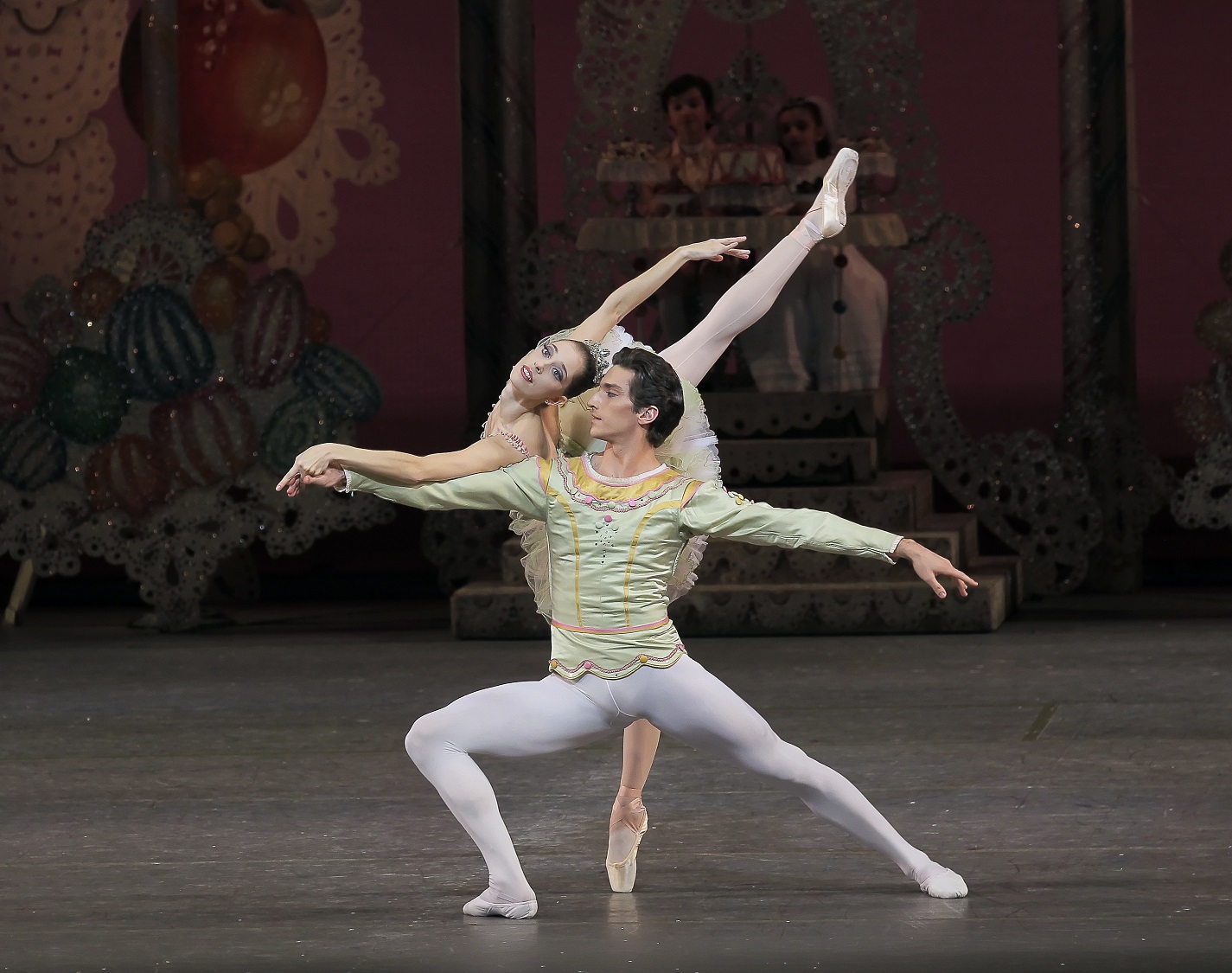
Balanchine’s NUTCRACKER with Zachary Catazaro
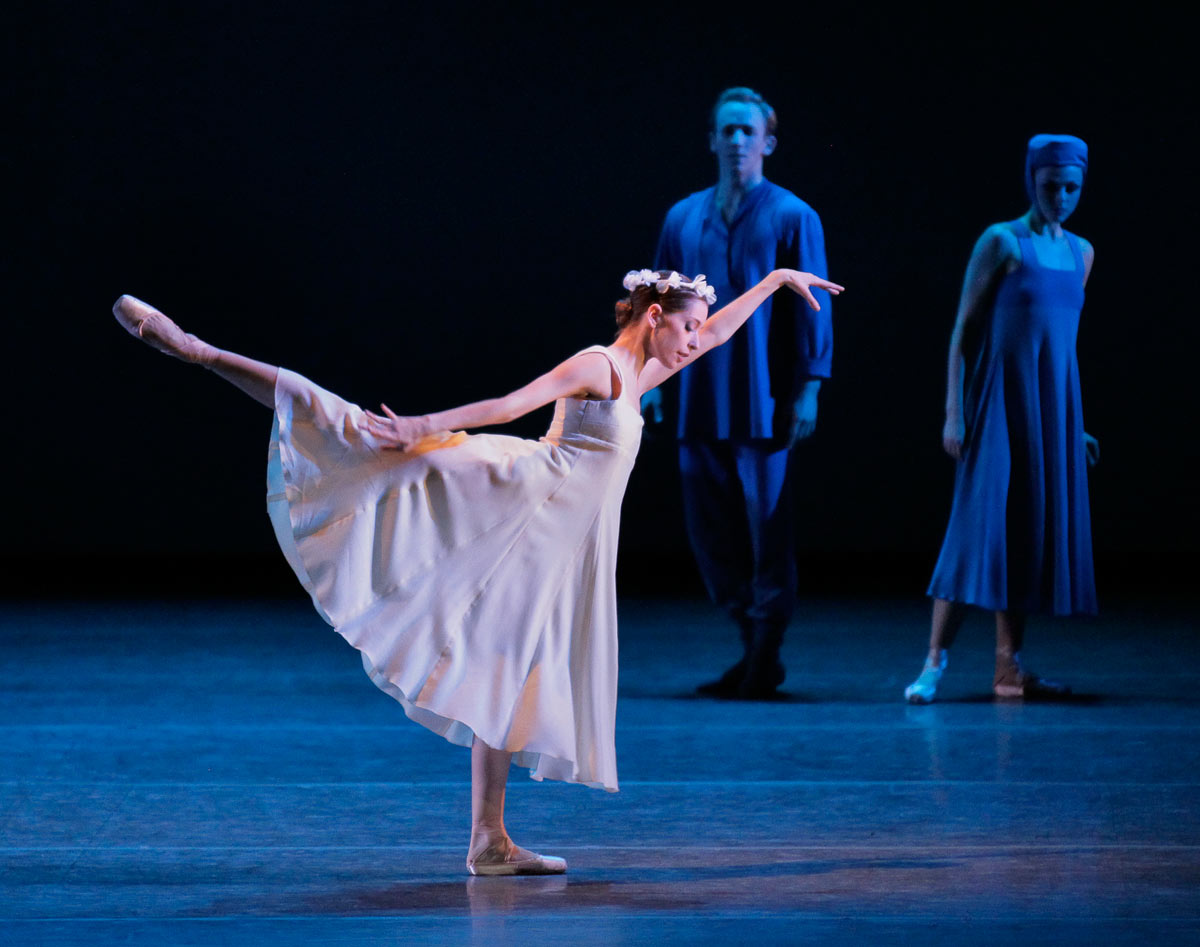
At a later revival of RUSSIAN SEASONS, Rebecca took on the role of the bride; photo by Paul Kolnik

Balanchine’s SERENADE; photo by Paul Kolnik

Balanchine’s SERENADE with Janie Taylor, Ashley Bouder, and Ask LaCour; photo by Paul Kolnik

Balanchine’s SERENADE with Jenifer Ringer and Ask LaCour; this Paul Kolnik photo is one of my all-time favorite dance images
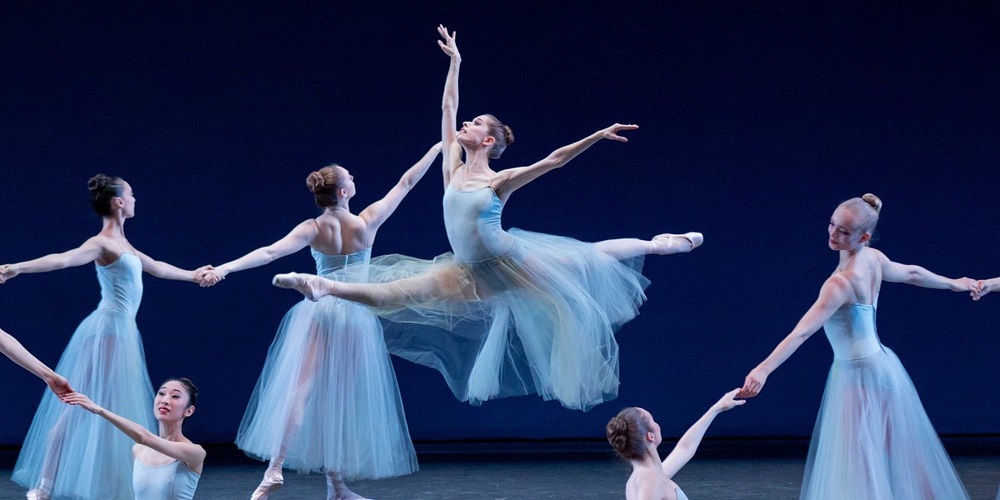
Balanchine’s SERENADE; photo by Paul Kolnik
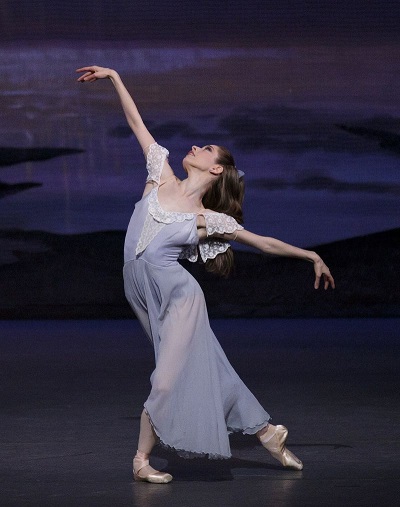
Balanchine’s Davidsbündlertänze; photo by Paul Kolnik
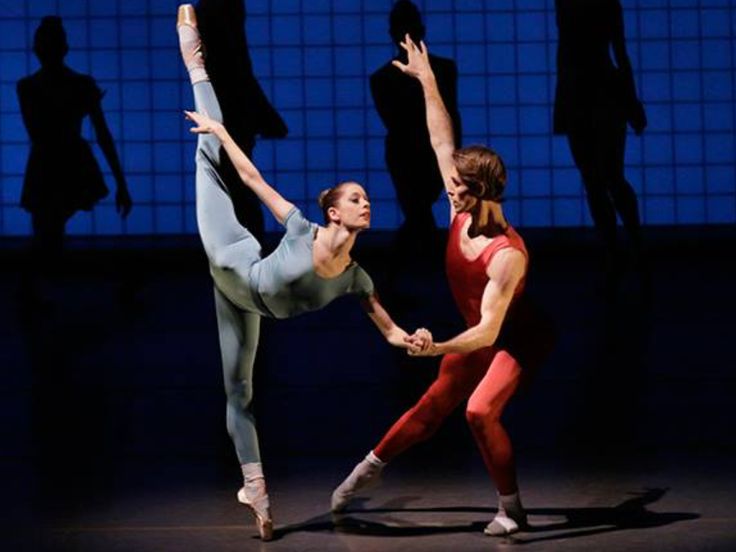
Jerome Robbins’ GLASS PIECES with Adrian Danchig-Waring; photo by Paul Kolnik

From Justin Peck’s gorgeous BELLES-LETTRES, with Taylor Stanley and Anthony Huxley; photo by Paul Kolnik

BELLES-LETTRES with Tyler Angle; photo by Paul Kolnik
Looking back over these pictures, so many memories spring up. Rebecca’s career began just as I took up residency in New York City, and it was a great pleasure to watch her bloom from a somewhat reticent young beauty in the corps to the assured, elegant ballerina we’ve come to love.
~~~~~~~~~~~~~~~~~~~~~~~~~~~~~~~~~~~~~~~~~~~~~
And so we come down to the evening of Rebecca Krohn’s farewell performance; unlike the bitter-sweetness that tinges some farewells, this was a joy-filled evening saluting a dancer who has never really seemed to seek the spotlight but who – when the opportunities came – stepped into it with her own personal brand of glamour and grace.
The program, subtitled 20th Century Violin Concertos, was rewarding in many ways. We saw a revival of Peter Martins’s THE RED VIOLIN, originally made on Jennie Somogyi and Sebastien Marcovici; and we experienced Maria Kowroski’s stunning debut in IN MEMORY OF… before Rebecca Krohn joined her colleagues Sterling Hyltin, Ask LaCour, and Amar Ramasar in one of her finest roles: in Balanchine’s STRAVINSKY VIOLIN CONCERTO.
I went back to my notes on the premiere of THE RED VIOLIN in May 2006 to see how I’d felt about it at first viewing. All of the things that bothered me about this ballet at the premiere still bother me, and I gathered from intermission chatter that several people in the audience felt the same way. First off, it’s way too long. Despite appealing passages and interesting textures, the score tends to meander…and the choreography meanders right along with it. Both in terms of length and orchestration, it’s too big of a score to be sustained by eight dancers, however wonderful they might be; at times on the big stage they seemed terribly diminished. The partnering motifs are tricky but they are repeated too often to be effective, and after a while the choreography became tedious. On top of which, the ballet seemed seriously under-rehearsed.

Fortunately, violinist Philippe Quint (above) gave a thoroughly impressive – even mesmerizing – rendering of the concerto, with excellent support by Maestro Andrew Litton and the always-fine and often under-acknowledged playing of the NYC Ballet orchestra. The charismatic Mr. Quint faced a barrage of cheers as he came out for his bow; now I want to hear him in a recital or in a concert setting.
The dancers did everything humanly possible to make THE RED VIOLIN a viable dance experience; alas, their efforts were in vain. My hat’s off to Unity Phelan, Megan LeCrone, Taylor Stanley, and Zachary Catazaro for a valiant effort; and a special ‘bravo‘ to Harrison Coll whose sheer energy and commitment went a long way to give us something to savour in this uphill battle of a dancework.
Following the intermission, the evening took a major up-sweep with a luminous performance from Maria Kowroski, debuting a new role in Jerome Robbins’ IN MEMORY OF…

The Alban Berg violin concerto was splendidly played by NYCB concertmaster Kurt Nikkanen (above): what a great asset for the dancers to have this world-class violinist playing for them night after night. This evening, Kurt’s performance was perfect, making a kozmic connection to the magic of the inimitable Ms. Kowroski.
Maria’s portrayal of the young girl who fights a heroic – but losing – battle with death is a masterpiece. Looking younger than springtime and with her technique at full flourish, the great ballerina summoned forth gentle lyricism for her duet with the ever-noble Jared Angle, then drew us deeply into the drama of her struggle against the relentless figure of Death, as personified by Zachary Catazaro. Stripped down to her vulnerable essence, the character of the girl – based on the real-life figure of Manon Gropius who died at the age of nineteen – drew from Maria Kowroski a devastating portrayal of a person succumbing to fate. Devoid of theatricality, Maria let the young woman’s life seep out her as Death claims a victory. The ballet, though, ends optimistically, with the ballerina borne aloft amidst white-clad angels.
When the curtain rose for the bows, a veritable torrent of applause and cheers greeted Ms. Kowroski and her colleagues. I think the entire audience were hoping for a solo bow from Maria, but it wasn’t to be. I can only imagine what sort of an uproar a solo bow would have evoked.
The Stravinsky violin concerto sounded fabulous tonight – what a great piece of music! – as played by the Company’s principal 2nd violinist Lydia Hong. Once again, the orchestra under Maestro Litton played with great clarity, upholding Mr. B’s dictum: “The music is always first.”
Sterling Hyltin is onstage as this ballet opens: Sterling is one of the dancers I miss most in this time of self-imposed exile, and it was such a great feeling to experience her dancing again tonight. She has made this role her own, bringing an ideal mixture of wit, energy, and vision to her very musical dancing of it. Ask LaCour’s effortlessly space-filling dancing is always pleasing to experience and, as he towered over Sterling in that memorable passage of stillness where – with a simple sweep of his arm – he shows her the world, I simply felt a deep satisfaction of seeing these two dancers again.
A wave of applause greeted Rebecca Krohn as she came swirling into view. Moments later, she and her partner Amar Ramasar had the audience under their spell in one of the most fascinating duets Balanchine ever devised. At its end, Amar goes from standing to flat on the floor faster than the eye can see, whilst Rebecca leans into a luxuriant back-bend. The audience went wild; the two dancers could have taken a couple of bows here, but instead the ballet surged forward.
The rather ironic rhythmic vitality of the concerto’s concluding Capriccio found the stage-full of dancers investing the à la Russe steps and gestures with infectious joy. This led to a warm ovation for the corps and the two principal couples, who came before the curtain twice to vigorous applause.
Then the stage was cleared and the curtain rose on Rebecca Krohn standing alone as an tidal wave of bravas swept over her. Her fellow-principals presented her with bouquets and single roses, then the entire Company came on to give her a remarkable send-off. At last, Rebecca’s husband, former NYCB soloist Adam Hendrickson, brought his wife an enormous bunch of flowers.

Above: Rebecca Krohn and the dancers of The New York City Ballet
 Oberon's Glade