(Still transferring individual articles from Oberon’s Grove to the Glade. There’s only a few more days before the Grove will shut down.)
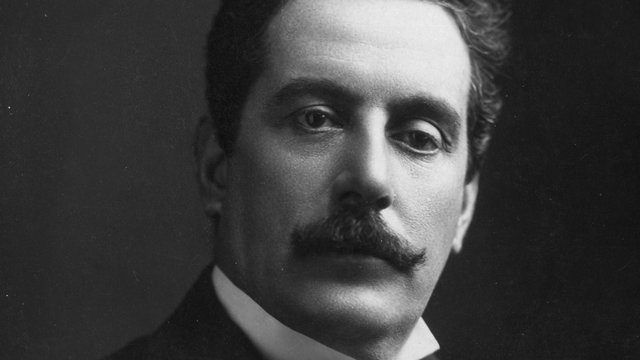
January 13th and 14th, 2024 matinees – Back-to-back Puccini matinees at The Met: Saturday was the classic Zeffirelli BOHEME, and Sunday was the Minghella BUTTERFLY.
NOTE: the production photos in this article are by Ken Howard/MET Opera. Click on the individual images to enlarge.
The BOHEME, which played to a packed House, was overall a satisfying performance, though it could have been so much more with an inspired conductor. Marco Armiliato fits in well with the current Met trend for “loud and fast”; he managed, at various points, to nearly drown out even such hefty voices as Adam Plachetka’s and Krzysztof Bączyk’s, whilst the lighter voices in the cast were left to fend for themselves. Loud, punctuating brass accents seem to be the stock in trade of most of the Met’s conductors these days. I guess they think this makes the operas more exciting.
At any rate, the BOHEME was strongly cast, down to the clear-toned Parpignol of Gregory Warren and the hearty Benoit/Alcindoro of veteran baritone Donald Maxwell. Kristina Mkhitaryan had a success with Musetta’s Waltz, and capped the ensuing ensemble with a Met-sized top B. She also made something of the character’s kindness as she prayed for her friend Mimi in the opera’s final moments.
The quartet of Bohemians were vocally distinctive, having fun with their scenes of camaraderie but also showing the necessary vocal appeal when Puccini hands them melodies to sing. Rodion Pogossov’s darkish timbre made the most of all of Schaunard’s music: odd that the composer does not give the musician in the story an aria of his own. But Mr. Pogossov managed to turn his Act I narrative into something of vocal importance…and he was warmly cheered at his curtain call. The impressive Polish basso Krzysztof Bączyk was an outstanding Colline; his ‘Coat Aria’ was poetically sung…and very moving.
Adam Plachetka’s Marcello was another winning role for the tall and lovable Czech singer; he has become a Met favorite…one who gains new fans whenever he sings. The voice today was ample, warm, and congenial, billowing forth in the ensemble ‘encore’ of Musetta’s waltz tune in Act II, and making his scene with Mimi in Act III a vocal highlight of the day.
Stephen Costello’s Rodolfo ranks with the finest I have heard. Poetry pervades everything that Stephen sings: his Italian diction and sense of the flow of the words were a joy to experience all afternoon. He never throws a line away. Example: his hauntingly quiet observation “Che viso d’amalata…” as he tries to revive the fainted Mimi in Act I casts a long shadow over events to come.
Stephen’s “Che gelida manina” was magical; so ardent and so ideally phrased and coloured. When Armiliato encroached on the dreamy atmosphere the tenor had established, Stephen stuck to his guns. His top-C was spine-tingling, and what a gorgeous pianissimo finish with “Vi piaccia dir!” The love duet was superb, capped by a sustained and steady joint top-C with Ms. Stikhina.
Mr. Costello continued to make every phrase of his role memorable; his singing as he introduced Mimi to his comrades at the Cafe Momus was filled with shining pride, and as he struggled in Act III to tell Marcello why he wanted to leave Mimi, his despair was palpable. The Act IV duet for tenor and baritone was gorgeously sung, though here again the conducting was lacklustre.
Stephen Costello was apparently celebrating his 100th Met performance this afternoon, and at his solo bow he was pelted with carnations: a fitting finish to his luminous performance.

Above: Elena Stikhina
Ms. Stikhina was for me the unknown quantity in the afternoon’s performance, and I am happy to say that it only took a line or two for me to be seduced by the unusual chiaroscuro qualities of her voice – a voice that speaks well in the big House. Her “Mi chiamano Mimi“ was full of enticing colours, with a sense of rapture at “...ma quando vien lo sgelo…” that was delightful to hear. Mr. Costello launched the love duet “O soave fanciulla...” fervently, and then the soprano came in big: a spinto outpouring. Their joint high-C pleased the audience with its clarity…and duration.
The soprano’s melodious singing filled each of Mimi’s lines in the Momus scene, and then she and Mr. Plachetka sang richly in their great duet at the Barrière d’Enfer. Ms. Stikhina’s ‘Addio‘ was tenderly sung, using a nice mix of dynamics; the act’s concluding quartet was spoilt somewhat by the over-playing of the orchestra.

Ms. Stikhina’s simple, touching “Sono andante” in the final scene progressed to the tragic expression of her eternal love for Rodolfo; and her soft, sighing repeat of “Che gelida manina” made a poignant end to this sad love story.
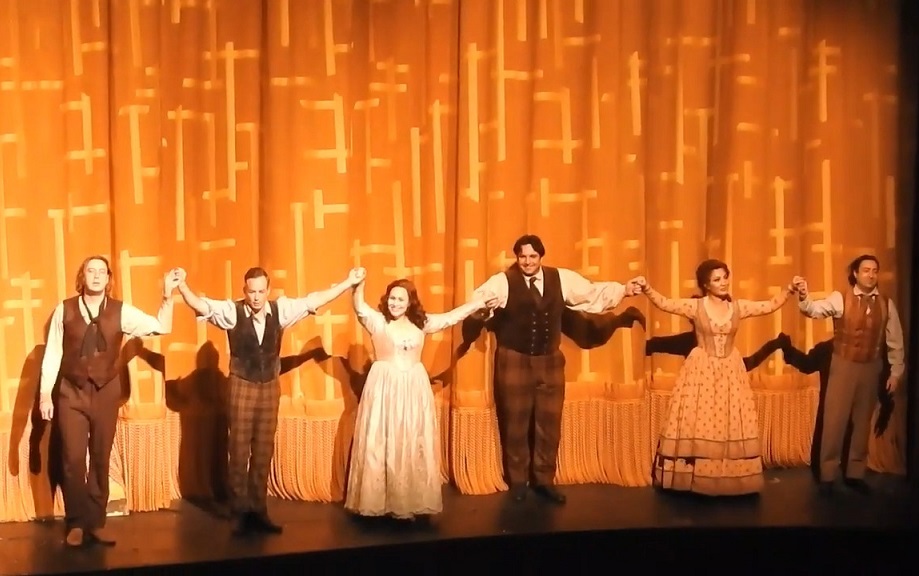
BOHEME is one of the two remaining Met productions where the curtain calls are taken before the once-iconic Great Gold Curtain.
The soprano won a vociferous ovation at her solo bow; I went to the stage door, specifically to meet Ms. Stikhina…and she’s a lovely lady…and very kind.
~~~~~~~~~~~~~~~~~~~~~~~~~~~~~~~~~~~~~~~~~~~~~~~~~~~~~~~~~~~~~~~~~~~~~~~~~~~~~~~~~~~~~~~~~~
The next day, I was back for the BUTTERFLY; this time, my score desk was on the ‘even’ side of the House. The first several minutes of the performance were spoilt by people up in my area stumbling around in the darkness, trying to find their seats. It wasn’t until the arrival of Sharpless that everyone had settled in.
Later, there was one charming moment when a lone stagehand came out during the intermission to vacuum up the cherry blossoms that were strewn onstage during the love duet, winning a round of applause when the job was done.
Derrick Inouye was on the podium this afternoon, for the most part keeping the orchestral volume level under control; the multi-hued beauty of Puccini’s orchestration could be savoured whilst the voices emerged clearly. There were a few bloopers from the players, most likely due to mid-season fatigue.
The cast was uniformly fine, down to the fleeting but essential roles of the Commissioner (Christopher Job), the Registrar (Christian Jeong), and Kate Pinkerton (Edyta Kulzak); Robert Pomakov was a strong-voiced Bonze, and Jeongcheol Cha an impressive Yamadori. Tony Stevenson was the excellent, voicey Goro.

Baritone Davide Luciano as Sharpless (above, in the letter scene with Ms. Kurzak) deployed his resonant, darkly handsome voice to superb effect as the kind-hearted US Consul, whose prophetic lines in Act I go unheeded. What a great pleasure to hear this singer’s opulent voicing of the role in his native tongue, making the character’s music essential.
Knowing the despair that will ensue when he brings Pinkerton and his American wife to Butterfly’s refuge, Mr. Luciano caught all the drama of the situation with his attempts to iron things out, but to no avail. He upbraids Pinkerton, who rushes away, leaving the Consul to deal with the consequences. Mr. Luciano’s thoughtful portrayal and bountiful voice won a volley of bravos when he took his bow at the end.
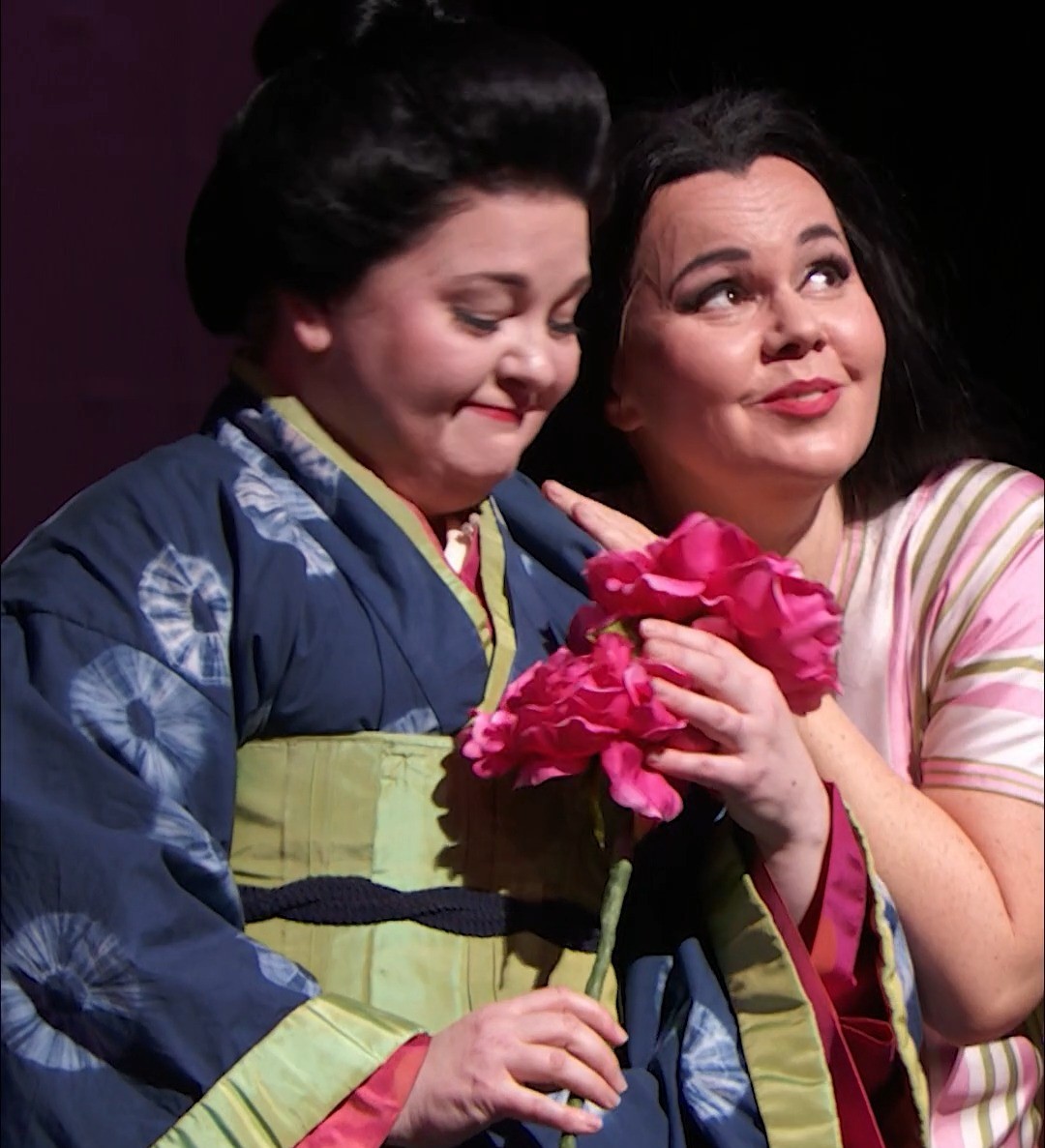
Elizabeth DeShong (above, with Ms. Kurzak) as the faithful Suzuki sang splendidly Her large, rich voice easily covers the range from a strong top to a glorious chest voice, so that every note and phrase of Suzuki’s role became something to cherish. Her harmonizing in the Flower Duet was simply gorgeous. Then, as fate closes in on her mistress, everything Suzuki says and does becomes essential to the drama: she immediately grasps who Kate Pinkerton is and knows in a flash how things will turn out, as her deeply felt “Che giova?” tells us.
Ms. DeShong joined Matthew Polenzani and Davide Luciano in making their trio a highlight of the afternoon: they simply poured their hearts into the music. But Ms. DeShong still had more heartache to sing of: her “Piangerò tanto…tanto!” is devastating, and her very last desperate line – “Resto con voi!” – is cruelly dismissed by Butterfly, who is summoning the steely resolve to end her own life. Ms. DeShong was magnificent, and she rightly drew a fervent reaction from the crowd at her bow.

Matthew Polenzani (above, with Ms. Kurzak in a Ken Howard/MET Opera photo) today sang what might be considered opera’s most thankless leading role: Benjamin Franklin Pinkerton. No matter how well you sing it, the audience is going to hold your cruelty to Butterfly against you; sure enough, after Mr. Luciano and Ms. DeShong had basked in a sea of acclaim during the curtain calls, the decibel level decreased noticeably when Mr. Polenzani appeared for his bow. But this was in no way a reflection on his performance.
He had sung very well indeed, bringing a perfect blend of tenderness and passion to his vocalism. The topmost notes sailed out over the orchestra, but as he started “Addio, fiorito asil” a hushed and anguished tinge of regret seeped into his tone. So expressive. Earlier, in the opera’s 20-minutes of ecstasy – the Act I Love Duet – Mr. Polenzani and Ms. Kurzak found a beautiful blend of timbres, whilst the poetry of romance flowed sweetly from their lips. Butterfly’s fears are overcome by the ardent, urgent words her beloved sings to her.
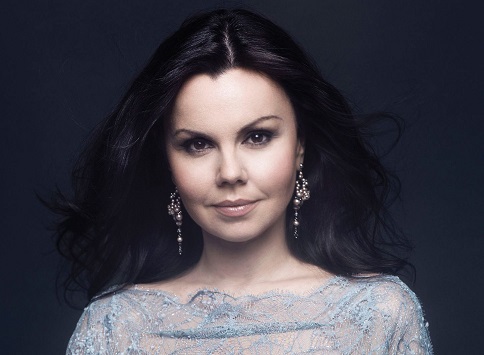
Aleksandra Kurzak (above) impressed me with her Tosca at The Met in 2022; she really made something of the role vocally, despite being constantly harassed volume-wise by another Met routinier, Carlo Rizzi. For her Butterfly today, Ms. Kurzak was in the far more capable hands of Maestro Inouye.
The Kurzak Butterfly caused quite a stir at the Met prima earlier in January, and from note one she seemed to have the ideal blend of vocal weightiness and spun-out legato delicacy to create one of the most memorable Butterflies in my long history with the opera.
Clarity of tone in phrase after sublime phrase made her entrance aria the enthralling experience it should be: “I am come at the call of love!“…what could be more operatic than that? As the act progressed, traces of sharpness sometimes cropped up, but by the Love Duet all was not merely well, but thrilling.
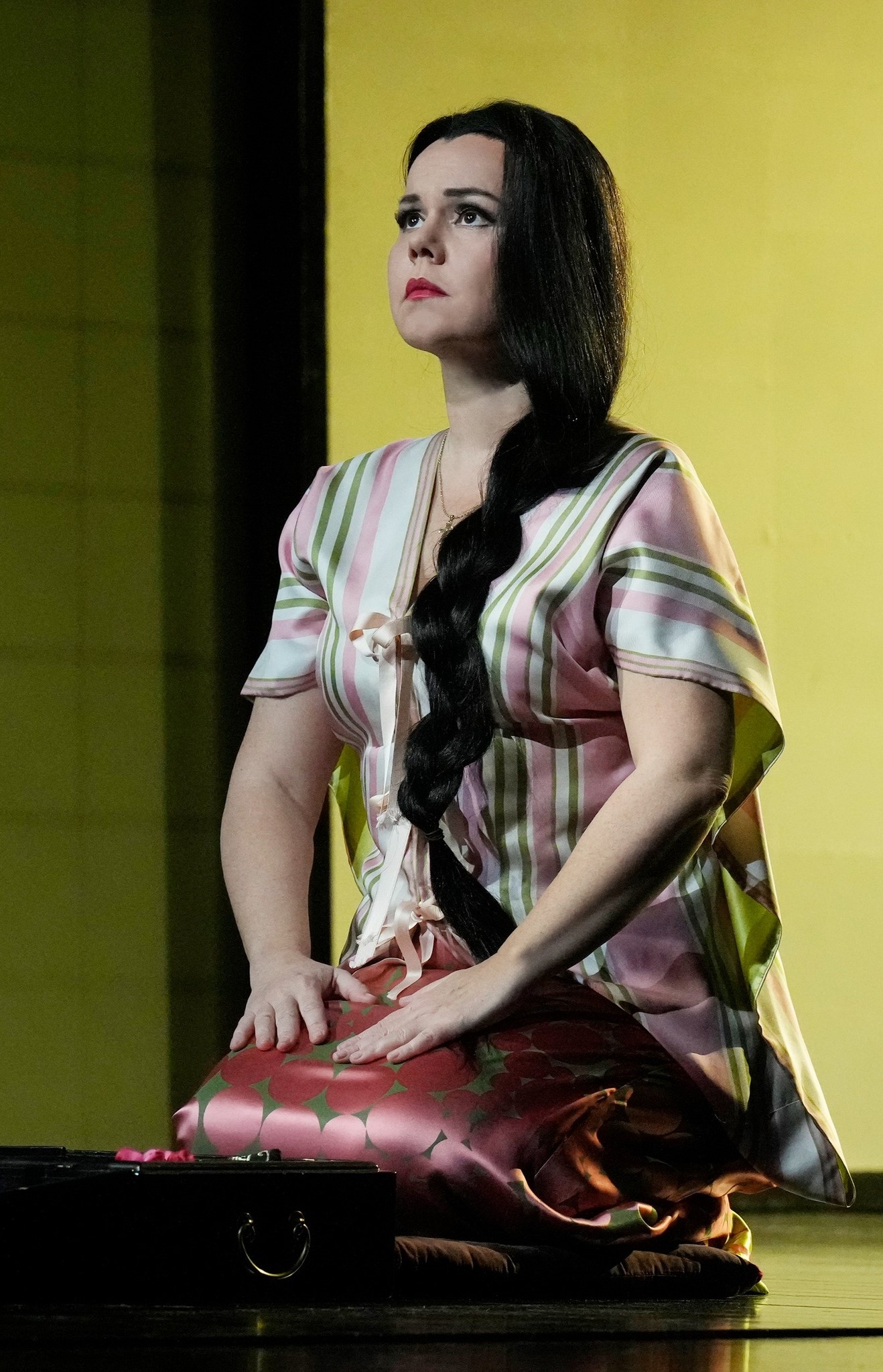
Above: Ms. Kurzak as Butterfly
The soprano’s inspired phrasing of ‘Un bel di’ was captivating, the tone lovingly shaded as she sang of the long-awaited return of her husband. She ended the aria with a stunningly sustained final note, eliciting a burst of bravas. As Act II continued with the consul’s arrival and with a visit from the hopelessly-smitten Prince Yamadori, Ms. Kurzak made girlish, coy replies. But the moment that Sharpless suggests she should consider the Prince’s offer, a dark pall descends.
Now Ms. Kurzak digs in to the drama in no uncertain terms. With her aghast, tortured cry of “Ah! m’ha scordata!”, Butterfly rushes off and returns with her child. “No! Questo mai!“, she cries: she can never return to the life she knew as a geisha.
After a clash with the marriage broker, Goro, Ms. Kurzak embarks on the scene that is the heart of the opera: “Vedrai, piccolo amor!” she reassures the child…his father will come back from across the sea. Suddenly the harbor cannon sounds. There is a tremendous build-up of tension and hope, and at last the soprano unfurls the opera’s killer line: “Ei torna e m’ama!!” There should have been a torrent of applause and cheers for Ms. Kurzak here.
The flowers are strewn as Butterfly and Suzuki harmonize, and then comes the poignant Humming Chorus as they settle in to wait. Bringing the house lights to 1/4 here really kills the atmosphere: people began to chat, or make a dash for the restroom.
After the atmospheric prelude, and Butterfly’s haunting lullaby (up to a silken top-B), the heart-rending finale unfolds. “Under the great bridge of heaven, there is no happier woman than you…!”, Butterfly tells Kate. The pain now becomes unendurable; Suzuki is cruelly dismissed. Butterfly steels herself, bids an anguised farewell to her adored son, and kills herself with her father’s dagger.
My Butterflies go way back: it was a televised performance of excerpts from the opera sung by Renata Tebaldi first captured my imagination. In fact, it led me to where I am today.
At the Old Met, I chanced to see Licia Albanese’s last Butterfly ever in November 1963. Yet, even before that, I saw a wonderful soprano named Maria di Gerlando in the role in Syracuse, NY. Over the years, Teresa Zylis-Gara, Maralin Niska, Diana Soviero, and Liping Zhang have made outstanding impressions in the role. And now, Aleksandra Kurzak can be counted in the highest echelon.
~ Oberon
 Oberon's Glade