~ Author: Mark Anthony Martinez II
Thursday November 13th, 2025 – Some music should really be performed in churches, or at least is best heard in churches. Sacred music, like the famous requiems, is often heard in concert halls, but the acoustics of a church really highlight such music in the best ways. Great composers aren’t only able to write beautiful music; they also know how to make the music sound its best given the medium they are working in. Part of this is knowing how to write for particular instruments or voice types, but another part is understanding the acoustical features of where their music is supposed to be performed.
The American Symphony Orchestra held their November 13th concert in Midtown Manhattan at St. Bartholomew’s Church and did so with the perfect repertoire for the venue. The ASO is known for performing classics as well as more forgotten pieces. This concert featured music by two composers, Peter Cornelius and Luigi Cherubini. Although they are not household names today, in their own times they were well regarded. Cherubini, in particular, was one of the most famous composers when he was alive, enough so that Beethoven thought he was the greatest composer of his era.
St. Bartholomew’s Church was a beautiful and perfect acoustic for both the orchestra and the Bard Festival Chorale, who would be performing the two pieces under the baton of Leon Botstein.
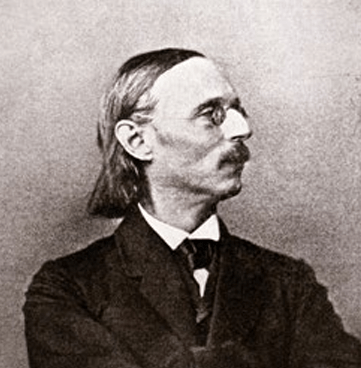
Above: Peter Cornelius
The concert started with Cornelius’ Stabat Mater, which was having its U.S. premiere with this concert. The Stabat Mater was composed in 1849, which is considered to be in his early period. The soloists for this piece were Wendy Bryn Harmer (soprano), Krysty Swann (mezzo-soprano), Eric Taylor (tenor), and Harold Wilson (bass).
The piece opened with the orchestra playing a solemn and tragic-sounding opening, reminiscent of Beethoven’s more tragic works. The real majesty of the piece started to unfurl when the choir came in. The first movement was truly breathtakingly beautiful and, with the booming acoustics of the church, felt so moving. The choir and orchestra did a wonderful job of weaving in and out while the two switched off the lead.
The piece continued with Harmer singing a brief solo interspersed with choral responses. Afterwards, the soloists sang together in a sort of ensemble, doing a call and response with the choir.
The soloists all did a phenomenal job. I particularly liked Wilson as the bass soloist. His voice cut through while not overpowering at any time.
A standout section of the Stabat Mater was the Eja Mater movement. This movement was the only true solo aria of the entire piece and was sung eloquently by Harmer. The solo had the workings of an early German Romantic feel to it.
The piece concluded with a fanfare of both orchestra and chorus in a glorious finale full of brass fireworks. The entire piece was so masterfully performed by both the orchestra and the choir. It was a truly phenomenal job that every musician should be proud of.
During the intermission, several of the orchestra members packed up, as the Cherubini Requiem would have a smaller orchestral ensemble and no soloists. The Requiem was written about 30 years prior to Cornelius’ Stabat Mater, and as such, had more of a late Classical feel to the piece.
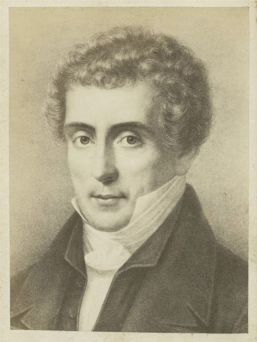
Above: Luigi Cherubini
The Requiem started with a menacing undertone that meandered forebodingly until the choir whispered into existence. You could immediately hear why Beethoven was so enamored of Cherubini’s music (even if the admiration apparently wasn’t requited). The Introit movement is such a delicately haunting piece of music, where the choral colors really float in the domed sound of St. Bartholomew’s.
What I find so interesting about requiems is how differently each composer tackles the same text. Verdi’s Dies Irae and Fauré’s Pie Jesu, for instance, are so different from any others. And similarly, Cherubini’s treatment of these texts is uniquely sublime.
Cherubini’s Dies Irae feels like it has the same Judgment Day focus that other settings of the text have, but with a more distinctly moderated Classical feeling.
I liked the treatment that the musicians gave the Pie Jesu. It was hauntingly beautiful and so elegantly performed. The orchestra’s deftness of sound was noteworthy.
The Agnus Dei closed out the Requiem and was perhaps my favorite movement of the entire piece. It had moments of fanfare but also the quiet intimacy that highlighted the text beautifully. There was a recurring descending motif throughout the entire movement that was passed around all the different voices, bringing a cohesive shape and symbolically tying all of the musicians together. The movement ended with that theme swirling around and the choir sustaining a sort of hum that ended not with a bang, but a forceful whisper, just like the Requiem had started with.
~ Mark Anthony Martinez II
 Oberon's Glade