[Note: by coincidence, two writers from this blog wrote about the same concert, which was given by the Pittsburgh Symphony at Carnegie Hall on December 3rd, 2025. Scroll down the blog to read Shoshana Klein’s write-up.]
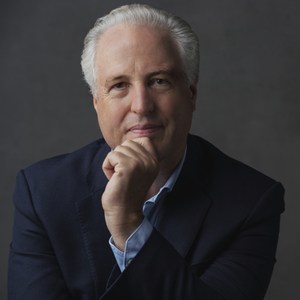
Above: Maestro Manfred Honeck
Author: Grayson T. Kilgo
I was sitting in the center rear orchestra at Carnegie Hall on Wednesday night, which is typically the best place to take in the full sound of an ensemble without losing detail. The warmth of the brass lands cleanly there, and the acoustics make even the smallest gestures unmistakable. It’s also the place where every cough and every dropped cellphone announces itself, uninvited, a reminder that Carnegie never lets you forget you’re part of the room whether you want to be or not. Small microphones on wires hung from the ceiling for the night’s live WQXR broadcast, which meant Pittsburgh’s first appearance at Carnegie in eleven years was not only a sold-out return to New York, but also a performance carried to a national audience.
I read through the program notes before the lights dimmed. The night opened with the New York premiere of Lera Auerbach’s Frozen Dreams, followed by Seong-Jin Cho in Rachmaninoff’s Rhapsody on a Theme of Paganini, and closed with Shostakovich’s Fifth Symphony. It was, in a way, an all-Russian program. Auerbach was born in the former Soviet Union before defecting to New York as a teenager, and placing her commissioned work alongside Rachmaninoff and Shostakovich set up a progression that moved from a contemporary voice to something more historically grounded. Building the night around a modern commission, a major concerto with a widely known soloist, and a symphony the orchestra is closely identified with under music director Manfred Honeck showed a clear sense of programming and identity. Their Grammy-winning recording of the Shostakovich is still regularly referenced, so bringing it back to Carnegie felt less like a safe choice and more like a quiet assertion of identity.
The ensemble, in long tuxedo tails with a few bold expressions of concert black mixed in, took their seats and prepared to execute the program.
Frozen Dreams opened almost imperceptibly. Honeck gently opened his hand, letting the atmosphere open with it, and the sound arrived in a quiet, suspended layer. Auerbach’s writing moved through muted brass, thin glissandos, and brief figures that dissolved almost as soon as they formed, with trills in the strings and winds adding a cold, unsettled texture. From my seat I couldn’t see the percussion, but I heard something glass-like underneath that gave the sound an edge. The piece felt caught between memory and the present moment, and I found myself able to stay with that tension rather than resist it. I wondered if others in the hall felt the same, since this kind of meditative dissonance sits outside what many people expect from a more traditional program. For me it was less about narrative and more about holding a moment still, and it closed with the same quiet release with which it began.
Seong-Jin Cho took the stage for Rachmaninoff’s Rhapsody on a Theme of Paganini, the centerpiece of the night. The work moves through twenty-four variations on Paganini’s Caprice No. 24, shifting between quick, sharp writing and the wide lyricism of the eighteenth variation. Cho, whom I had only known through recordings and reviews, is described as a player of clarity and restraint, and that came through immediately. The fast variations were clean and controlled, and in the quieter moments he drew out color and expression without exaggeration. The performance felt technically flawless and balanced from start to finish.
During his well-deserved Chopin encore, the Waltz in C-sharp minor, I noticed the principal cellist watching him closely, almost absorbed. It stayed with me. Cho offered clarity and space throughout the night, and at times I found myself wanting the orchestra to meet that with a bit more edge in the larger passages. The performance was thoughtful and precise, and the strongest live account of the rhapsody I have heard.
Shostakovich’s Fifth is where the identity of the Pittsburgh Symphony came through most clearly. Honeck has led the orchestra since 2008, and the tightness of the ensemble reflects how deliberately he has shaped its sound. Their connection to this symphony runs deep, including a Grammy-winning 2017 recording, but hearing it in person made you feel how much boldness sits underneath their control. Pittsburgh plays with a kind of daring that sits on an edge without toppling over.
The first movement held tension without heaviness. The scherzo had a dry bite that stayed pointed without drifting into caricature. The third movement created one of the stillest stretches of the night. The long, exposed string lines carried clearly, and the room went unusually quiet for a hall this size.
The finale built steadily, gaining strength without sudden pushes. The brass became very present; Carnegie naturally magnifies that, but Pittsburgh’s section has a physical solidity that lands deep in the chest. The percussion added weight without blurring the texture. After the last chord, the room sat quiet for a beat before applause broke. As I exited onto 57th Street, I felt spent but satisfied. The program had range, and Pittsburgh played with a presence that made their return to New York feel fully theirs.
~ Grayson T. Kilgo
 Oberon's Glade