Author: Mark Anthony Martinez II
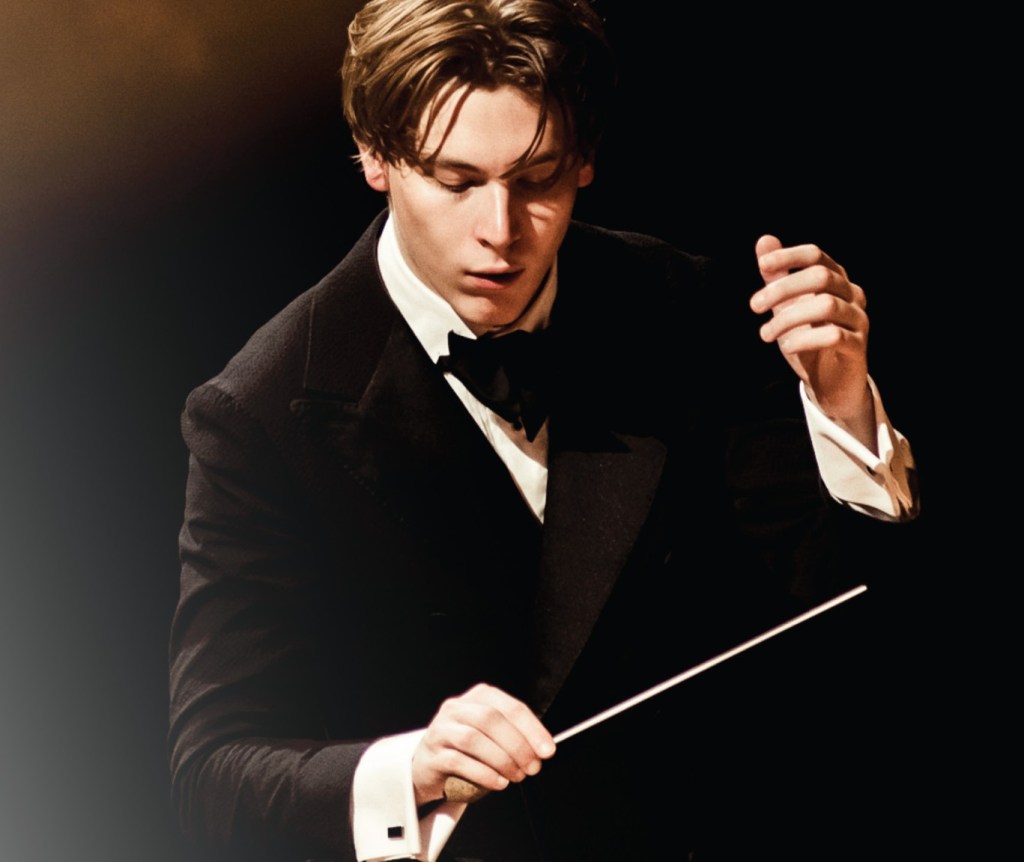
Wednesday February 25th, 2026 – The Chicago Symphony Orchestra at Carnegie Hall under the baton of Maestro Klaus Mäkelä (photo above), performing two less-frequently heard tone poems.
The hall was abuzz, and something I noticed was that the orchestra was already seated on stage instead of coming on with the conductor. As the lights dimmed and the young Maestro Mäkelä cued the first notes, the piece started with a loud brass bass. I was unfamiliar with both pieces on the program, but I noted that, for a Sibelius piece, the music sounded particularly Straussian. At the time, I was thinking, “Wow, Sibelius really did learn a lot from Strauss.” After several more minutes of thinking the same, I realized that the program order had been flipped and that instead of starting with Sibelius’ Lemminkäinen, they were in fact playing Strauss’ Ein Heldenleben!
I was so glad that I eventually realized my mistake, but thought it was funny that it took me so long to do so.
Mäkelä was fun to watch, as he was one of the more animated conductors I had seen in a while. As he conducted the piece joyously, with his hair flying with each gesticulation, it added another element to the show beyond just the music.
The Chicago Symphony Orchestra did a magnificent job playing the difficult piece, which ranged from tone poem to violin concerto at some points. The piece itself is, funnily enough, conceptualized around Strauss’ own life instead of pulling from the more traditional Grecian, Roman, or mythical source material. Knowing the source material makes certain sections more entertaining, like the wind solo portion, which sounded more like a cacophony than music, representing Strauss’ critics in life.
There was an ascending leitmotif that persisted throughout the piece, passed adeptly among the different instruments. The leitmotif represented Strauss himself (or the Hero).
The structure of the tone poem had eight distinct sections, though they weren’t marked as such in the program. The most interesting section to me was when the concertmaster, Robert Chen, essentially took the role of a violin soloist in a concerto-like movement. Strauss’ wife, Pauline, was a soprano, and Chen’s violin took on the emblematic role of portraying her throughout Strauss’ life.
One interesting moment was an extended trumpet solo that appeared to come from offstage. I was trying to pinpoint where it might be coming from, but I saw that the stage-right door was open, and once the fanfare had ended, the door closed again. I love the use of these spatial elements in music, because it really expands everything so it’s not just “on stage,” but all around.
The orchestra charged through the difficult piece, and figures from earlier sections, like the hero’s leitmotif and Pauline’s violin, returned as the piece ended in a blaze.
After the intermission, the orchestra reduced in size and was now set to play Sibelius’ Lemminkäinen. The piece is actually a set of tone poems that Sibelius wrote with similar thematic material. One interesting historical note is that the Chicago Symphony Orchestra was the first American orchestra to perform Sibelius’ music, so it was fitting that they are still continuing that tradition.
The pieces are inspired by the Finnish epic poem The Kalevala. This poem follows the titular character along his adventures. What is interesting is that these pieces weren’t originally conceptualized as one set, but came together over time. As they were composed, the first two in today’s set were performed as a unit, and as Sibelius wrote more, they were added to the larger work.
As a pairing, the Strauss fit very well with the Sibelius. The two works heavily feature brass and have a mystical aura to them. The first movement, Lemminkäinen and the Maidens of Saari, was a gorgeous and restrained piece evocative of nature and spring. The cellists in particular had a lovely solo section that continued for much of the movement.
Sibelius seemed to have a soft spot for the cello, because the second movement started with a plaintive cello solo, with an oboe eventually soaring above it. The second piece, The Swan of Tuonela, is interesting in that it started its life as an opera. Sibelius abandoned writing the opera after visiting Bayreuth and realizing that the competition as an opera composer was extremely fierce, but selfishly I wish that Sibelius had taken that dramatic leap and finished it. The movement felt in many ways like an overture, with memorable tunes and lush atmospheric music seeming to rise out of the earth.
The fourth movement, Lemminkäinen’s Return, was a standout for the orchestra. The piece starts with string tremolos, but has a melody built into them in a way that I haven’t really seen before. This movement felt the most Finnish in nature, as the main motif was passed from the strings to the brass, then to the woodwinds.
Toward the middle of the piece, there was a dramatic col legno section where the celli played with the wood of their bows instead of the hair, as the final movement came to a dramatic close.
My friend, who I was seeing the piece with, noticed that we were “jamming” out to classical music at the end, and I found it so funny that a non-modern art form can have the same physical effect as something played on the streets of Manhattan. Truly a testament to the Chicago Symphony Orchestra’s playing.
~ Mark Anthony Martinez II
 Oberon's Glade