Author: Philip Gardner

  • Shaham|Sokhiev @ The New York Philharmonic

    43631700_10158224011972293_9087441948343533568_n

    Above: violinist Gil Shaham and conductor Tugan Sokhiev, photo by Chris Lee/NY Philharmonic

    ~ Author: Oberon

    Thursday October 25th, 2018 – An all-Russian evening at The New York Philharmonic. Tugan Sokhiev, Music Director of Orchestre National du Capitole de Toulouse, was making his Philharmonic debut on the podium, with Gil Shaham as violin soloist.

    Alexander Borodin composed In the Steppes of Central Asia to honor Tsar Alexander II on the 25th anniversary of his coronation. The eight-minute work has an ethereal start, from which emerges a plaintive clarinet solo played by Pascual Martínez-Forteza; this artist’s sumptuous tone was a joy to hear throughout the evening. Maestro Sokhiev held sway over the music, which was gorgeously played – especially by the celli. Solos for English Horn and flute, a rich passage for the horns, and the violins in a tutti of cinematic sweep kept the ear constantly allured. The music becomes majestic, worthy of a venerable Tsar.

    As the work progressed, I was very much put in mind of the composer’s opera Prince Igor, and found myself wondering where Peter Gelb’s expensive poppy field might be languishing.

    Mr. Shaham then joined the orchestra for Prokofiev’s Violin Concerto No. 1. This work was choreographed by Jerome Robbins in 1979; the ballet, Opus 19/The Dreamer, is by far my favorite from the Robbins catalog, and is frequently performed by the New York City Ballet.  It’s always wonderful to experience music I’ve come to know at the ballet in its original concert setting, and it goes without saying that the choreography danced in my mind during Mr. Shaham’s marvelous performance.

    Prokofiev’s knack for blending lyricism and irony was a continual source of pleasure in tonight’s performance by Mssrs. Shaham and Sokhiev. The concerto’s haunting opening, with the shining, silver – almost astringent – sound of Mr. Shaham’s violin draws us into a dreamlike state. Everything is magical, with the violas pulsing as the soloist engages in shimmering fiorature. The music becomes driven, only to meld into a slow cadenza. Then a chill sets in, with the flute shimmering. Mr. Shaham, returning to the original melody, lets the sound vanish into thin air.

    In the ensuing Scherzo, the music abounds in sarcasm; Mr. Shaham met all the technical demands with impetuous energy, including some really gritty playing. This is such amazing music to experience, right up to its sudden end.

    The the work’s final movement commences with a moderate-tempo, march-like theme, first played by the bassoon, and later by the brass.  Mr. Shaham’s playing of the songful melodies Prokofiev gifts him was luxuriantly modulated. His tone taking on a nocturnal iridescence, the violinist made the concerto’s final moments pure heaven.

    Mr. Shaham played a 30-second delight of an encore his announcement of which I could not hear. It was witty little treat, but a cellphone interjection at the start was not welcome.

    Sokhiev-8-crdit-Patrice-Nin-1024x680

    Above: Maestro Tugan Sokhiev, photo by Patrice Nin

    I last heard Tchaikovsky’s Symphony No. 4 played by the Philharmonic in 2016 in at performance that impressed and even thrilled me sonically, without reaching me on a spiritual level. Tonight, Maestro Sokhiev achieved that last distinction in a performance of soaring lyricism and searing passion, played splendidly by the orchestra. Perhaps it is true that it takes a conductor with a Russian soul to find the deepest resonances of Russian music.

    Tchaikovsky’s fourth symphony grew out of a highly emotional period of the composer’s life. After a disastrous attempt at marriage, he suffered from writer’s block whilst also struggling with depression and pondering his sexuality. He finished the symphony in 1877 and it was premiered in 1888.  The the opening bars of music stand as a metaphor for Fate; in Tchaikovsky’s own words: “…the fatal power which prevents one from attaining the goal of happiness”.

    This evening’s performance was thrilling in every way. From the splendid opening and straight thru to the end, the orchestra were on peak form. The depth of sound from the ensemble – and the numerous solo passages that frequently sing forth – constantly impressed, and the Maestro had everything under fingertip control. From the grandest imperial passages to the uncanny delicacy of the more restrained moments, his mastery of colour and balance seemed ideal. My companion for the evening, Ben Weaver, who knows this music inside out, was very taken with Sokhiev’s pacing ,which made the symphony seem fresh to him.

    The Philharmonic’s soloists produced an endless flow of enchanting playing: Mr. Forteza and his colleagues – Robert Langevin (flute), Sherry Sylar (oboe), and Judith LeClair (bassoon) – seized upon the generous melodic gifts which Tchaikovsky lavished upon them. The horns were plush, the trumpets and trombones commanding in their fanfares. The timpanist was a marvel of velvet touch is the waltzy passage of the first movement, and in the ‘interlude’ of the otherwise Allegro finale, the triangle sounded with a pristine glimmer.

    There seemed to be a particular sheen on the string playing tonight, and they made the pizzicati of the Scherzo dazzlingly alive. Watching Maestro Sokhiev cue them and entice their keen manipulation of the dynamic range during this captivating movement was a treat in itself.

    In recent days, the feeling that we are poised now of the edge of an abyss makes music, poetry, art, and Nature seem more vivid and essential than ever. A beautiful face among the crowd tonight captured my imagination, but filled me with apprehension that such innocence may soon be swept away in a tide of hatred.

    ~ Oberon

  • Aimard | Stefanovich @ Carnegie

    ~Author: Scoresby

    Thursday October 25 2018 – The difference between hearing a particular musician live versus hearing a recording of them can be extraordinary. For Pierre-Laurent Aimard and Tamara Stefanovich‘s two piano performance in Carnegie’s Zankel Hall, I was excited by the repertoire but unsure how it would be performed. Familiar with Mr. Aimard’s many recordings but never having heard him live, I have always thought of him as a thoughtful, but somewhat understated pianist. This duo proved me wrong in one of the most exciting and beautiful performances I’ve heard in the past few years. 

    Screen Shot 2018-10-26 at 7.00.51 PM
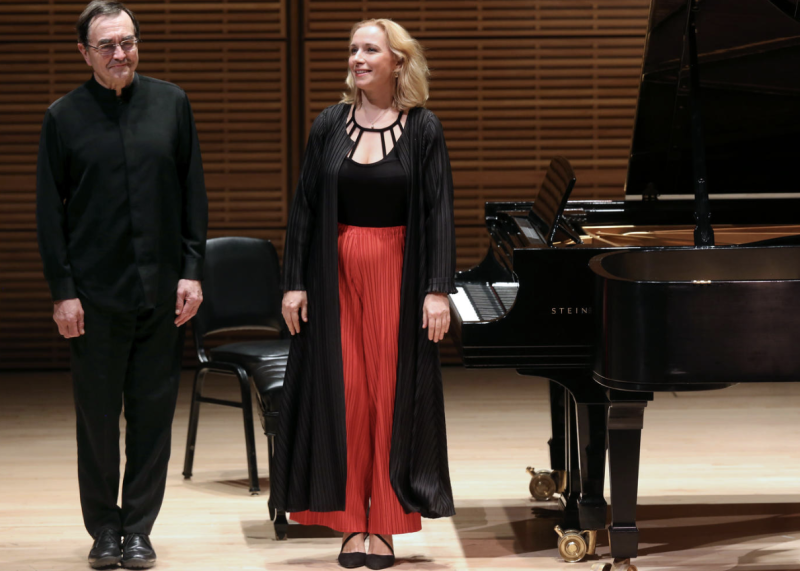
    Pierre-Laurent Aimard and Tamara Stefanovich during last night’s recital; Photo Credit: Steve Sherman

    This was a concert of equals, exchange, and contrasts. To begin the program, they selected seven works from Bartok’s Mikrokosmos. For those who haven’t studied piano, the Mikrokosmos occupy an odd place: wonderful short studies meant to illuminate aspects of technique/musical thinking ranging from the beginner (Book 1) to virtuoso performer (Book 6). Bartok made sure that each of these were compositionally interesting and many are imbued with folksy melodies.

    The short selection Ms. Stefanovich and Mr. Aimard drew from covered the range of styles. One was the Debussy like Chord and Trill Study in which Mr. Aimard played a constant Debussy-like trill to Ms. Stafanovich’s chordal melody. The light touch and exquisite pedaling made this short study shine. In the aptly named New Hungarian Folk Song (originally for voice and piano), they brought out the Messiaen-like textures in the base chords below the lyrical melody. To end the selections they played the Ligeti-like Ostinato trading accents and rhythms with each other. It was a nice launching point for the rest of the evening.

    Next was Ravel’s very early work Sites auriculaires which consists of a Habanera in the first movement and a second movement titled Between bells. In the Habanera, Mr. Aimard plucked out a sensual low pulse that is kept quietly moving through the movement while Ms. Stefanovich brought a clean sound to the more melodic part. The performers made the most of the luscious bell-like sonorities in the opening of Between bells that sound like later Ravel, full of whole tones with large dynamics. The silken middle section was given a soft pedaling and lots of space to let the notes resonate.

    The major work on the first half of the program was the US Premiere of Harrison Birtwistle’s Keyboard Engine, A Construction for Two Pianos. Like the rest of the program, this piece is a study in opposites: ranging from dynamics, thematic material between performers, rhythmic contrasts, toccata like lines paired with heavy chords, and many others. The two pianos seem split in this material – always interrupting the other with its contrast, sometimes aligning to produce a new sonority altogether. After a dodecaphonic sounding start of quiet repetitious notes the music roars to life with sudden loud dynamics in the extreme registers of the piano. The pianos are slowly exchanging a call and answer type format and the dialogue between them becomes more frenzied. After a brief respite with dreamy material, a rapid pace ensues with an ostinato that is punctuated by polyrhythms in both instruments. Both performers seemed to gleefully indulge interrupting the other’s lines and hitting giant chords in sync.

    These spacious and frenzied passages continue to alternate for the remainder of the work and each time a passage moves in to the opposite extreme it takes on slightly different material. Ms. Stefanovich and Mr. Aimard managed to capture the frenzy, intimacy, and mischievousness that this piece has – it would be fantastic for two dancers to stage given the many contrasts. One of my favorite sections was near the end when Mr. Aimard’s piano begins to create sympathetic vibrations with the other piano by holding down specific keys with the sustain pedal. These transfers of sound and timbre gave a bell like quality to some of Ms. Stefanovich’s chords. I found myself transfixed in the jazzy riffs of rhythm and spinning themes of the piano. It must take incredible coordination to pull off such an assured performance of this work that seemed to be perfectly both in and out of sync. It was a pleasure to see both pianists studying each other carefully for cues.

    Screen Shot 2018-10-26 at 6.55.43 PM
    Above: Loriod and Messiaen many years later, still in love

    The treat of the evening came after intermission in the form of Messiaen’s Visions de l’amen. This sprawling seven movement, 50-minute (small for Messiaen’s standards) work is a classic two piano piece with each of the movements dedicated to a vision of a reason to be thankful (or an amen as Messiaen puts it) – this is a cosmic, mystical piece of music in a way only Messiaen can deliver. Like the Birtwistle work, each piano has its own distinct voice – a fleeting, fast ethereal part that was written for Messiaen’s future wife Yvonne Loriod and an earthier chordal part written for himself. Ms. Loriod was perhaps the greatest contemporary music pianist of the 20th century and the dedicatee of almost all of Messiaen’s piano music – they had a partnership of equals. Ms. Stefanovich took on Loriod’s voice and Mr. Aimard took Messiaen’s.

    Before the opening Amen of creation, the performers took a good two minutes on stage letting the audience quiet down and the rumbling of the subway beneath to pass before beginning. Mr. Aimard managed to make the ppp in the score for his primordial opening sound like a whisper coming out of the slight noise from the crowd earlier before introducing the main melodic theme of the work. Meanwhile, the pppp high-pitched bells from Ms. Stefanovich rang in a soft, but lucid texture. The creeping in Ms. Stefanovich’s part is classic Messiaen – a song of the stars that is continually moving atop Mr. Aimard’s expanding chords. The interaction between the two is like light hitting stained glass and creating refractions – the light being Ms. Stefanovich’s bending colors. The music continued getting faster and louder as the “Creation” unfolded until the resonance from the piano held in the air with one last loud chord. In the next movement’s long introduction, Mr. Aimard nailed the jazzy harmonies and riffs barrowed from the Quartet from the End of Time’s sixth movement in the low register. Ms. Stefanovich’s managed to play through the rapid bird like sequences in the high reaches of the piano in a sing-song fashion in perfect time with beefy chords from Mr. Aimard. This exchange and dialogue of thematic material was so much fun to both watch and hear.

    One of my favorite moments from the evening was after the first outburst of passion in the Amen of desire. The music got very quiet producing a moment of éblouissement. Mr. Aimard played a tender love theme while Ms. Stefanovich in the tinkled a taught, but honeyed variation of the original ‘star’ melody in the upper registers. The quiet sensitivity of Ms. Stefanovich’s made the music sing. This gave way to a loud run of manic, effervescent love at the climax of the movement with both performers seemingly investing all of their energy. It was clearly that this work is personal to both of them. Only the ending of the Amen of the consummation got even louder, more manic, and extreme in its sound.

    Screen Shot 2018-10-26 at 7.02.18 PM
    Pierre-Laurent Aimard and Tamara Stefanovich; Photo Credit: Steve Sherman

    Through all the dense textures, both performers managed to emphasize Messiaen’s stunning language taking through the virtuosic runs of Ms. Stefanovich’s high register and the huge chords of Ms. Aimard’s lower register. In the fffff final, organ like chords spanning the register of the entire piano the audience gave a well-deserved rapturous applause before the notes even decayed. They ran the gamut of textures, timbres, and emotions – ending in exaltation. As one more conservative in taste neighbor near me put it “I never thought I’d like that sort of modern music, but hearing that piece in person was like a religious experience!” Indeed it is and it is difficult to get a sense of the proportions of such a piece from a recording.

    — Scoresby

    The Performers:

    Pierre-Laurent Aimard, piano

    Tamara Stefanovich, piano

    The Repertoire:

    Bartók: Seven Selections from Mikrokosmos

    Ravel: Site auriculaires

    Birtwistle: Keyboard Engine, A Construction for Two Pianos

    Messiaen: Visions de l’amen

  • Hilary Hahn @ White Light Festival

    ~Author: Scoresby

    Tuesday October 23 2018 – Lincoln Center’s White Light Festival every October/November is always an interdisciplinary highlight of the season that offers a variety of different events. This year’s ranges from the upcoming US Premiere of Kaija Saariaho’s new opera Only the Sound Remains to a music with dance performance of Feldman’s Triadic Memories featuring pianist Pedja Muzijevic and choreographer Cesc Gelabert. Part of this celebration of spiritual/communal art featured the genial violinist Hilary Hahn in all too rare NY concert. She performed two of the three of the Bach Sonatas and Partitas that she just released on recording. The last work was one of the other three she recorded as her debut album, and it seems will perform them this Spring in Europe. According to Ms. Hahn’s Instagram, this was her first solo concert in the US in her career.

    Screen Shot 2018-10-25 at 12.38.40 PM
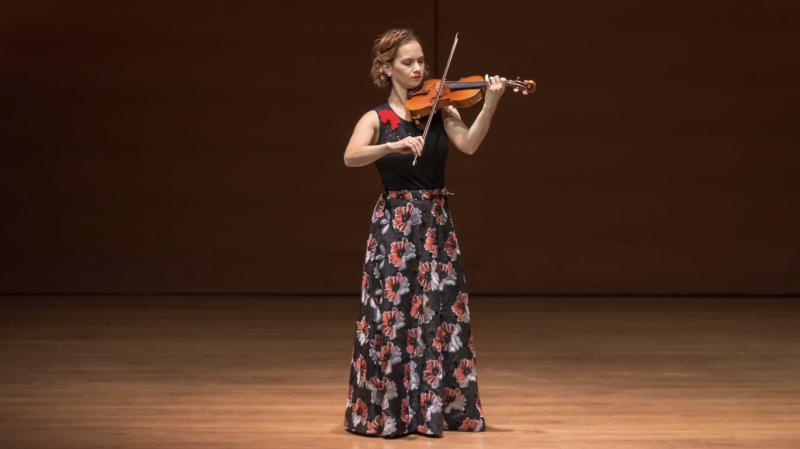
    Above: Violinist Hilary Hahn playing Bach; Photo by Kevin Yatarola Courtesy of Lincoln Center

    Ms. Hahn was performing to a sold out, enthusiastic audience in the intimate Alice Tully Hall yesterday evening. It should be said that all six of these pieces are extremely difficult to play well and yet at the core of the violin repertoire. The first work on the program was Sonata No. 1 in G minor. Ms. Hahn coaxed a large, beautiful sound out of her violin in the opening Adagio. Her sound was reminiscent of a purer Arthur Grumiaux (different intepratively). In the Fugue, Ms. Hahn took a more aggressive sounding virtuosic as she traversed each of the many double and triple stops. Out of the many live performances I’ve seen of this work, this is the first time I’ve heard this movement sound almost as clean as a recording – a near impossible feat. In addition to her accuracy, it was striking to be able to hear the countermelodies in the bass that usually disappear in the dense textures rang with clarity. In Ms. Hahn’s rendering, the intricate contrapuntal structure was easy to hear. While she was retuning before the third movement, the audience gave a hearty applause. After the gorgeous Sciliano, Ms. Hahn gave a brisk, full-bodied account of the presto. Her use of a quick tempo and her interesting finger work let the entire bass line ring through the movement letting the entirety of the piece shine.

    In the opening Allemende of the Partita No. 1 in B minor Ms. Hahn took her time and employed small cells of melodic phrases that were punctuated by the larger chords. It was a unique take on this movement, make it sound angular – almost in the vein of Stravinsky. She seemed to take a similar approach in Courante that when moving into the Double expanded into a carefully coordinated flash of notes that was always clear. Part of that clarity came from giving almost every note its own bowing, making each shine in its own way. The audience applauded here too before the final four movements. Another highlight was the careful pacing of the Sarabande. As in other areas, Ms. Hahn’s preternatural ability of voicing every line let the music sing.

    Screen Shot 2018-10-25 at 12.41.23 PM

    Above: Violinist Hilary Hahn

    After intermission was Partita No. 2 in D minor. Ms. Hahn continued with the same big sound and near orchestral quality of playing. While beautifully rendered and intellectual satisfying, I couldn’t help but feel that her performance felt lacking in intimacy. As encore to the Partita, Ms. Hahn opted to replay the massive Chaconne. While I felt it was quite a bit odd at first to play a 15 minute encore of music just performed earlier, this was her best playing of the night. Perhaps relieved to be over with her first US solo concert, she seemed relaxed and personal with this second reading. Phrases that had been burly had a softer edge to them, the lyrical parts of the work had more space, and Ms. Hahn seemed to use quieter dynamics than she had the rest of the evening. It was thrilling to hear such a change in performance style from the rest of the concert and the crowd seemed to be just as enthralled.

    Scoresby

  • At Amanda Selwyn’s Open Rehearsal

    AmandaSelwynAileyOpenRehearsal_hheron-314

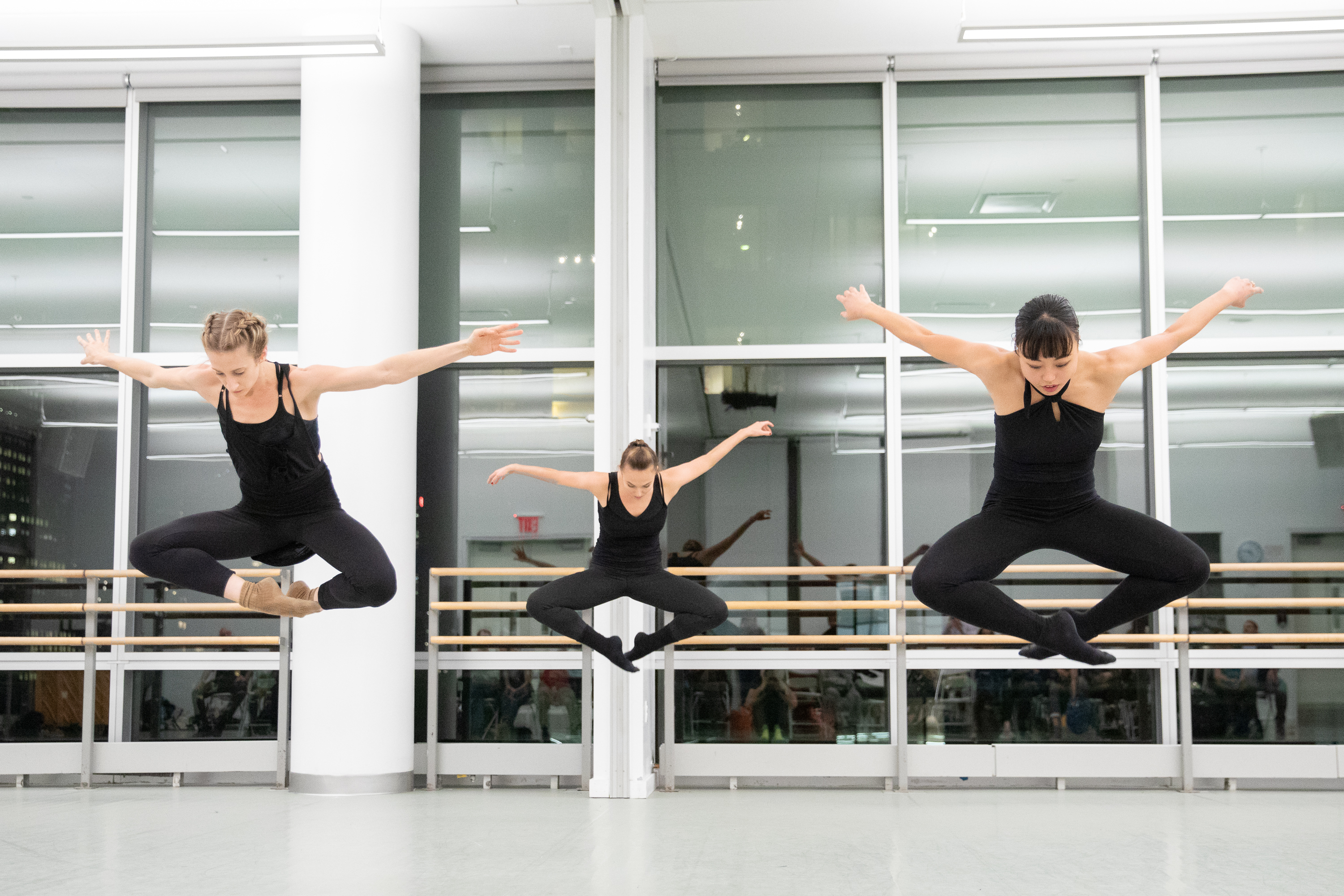
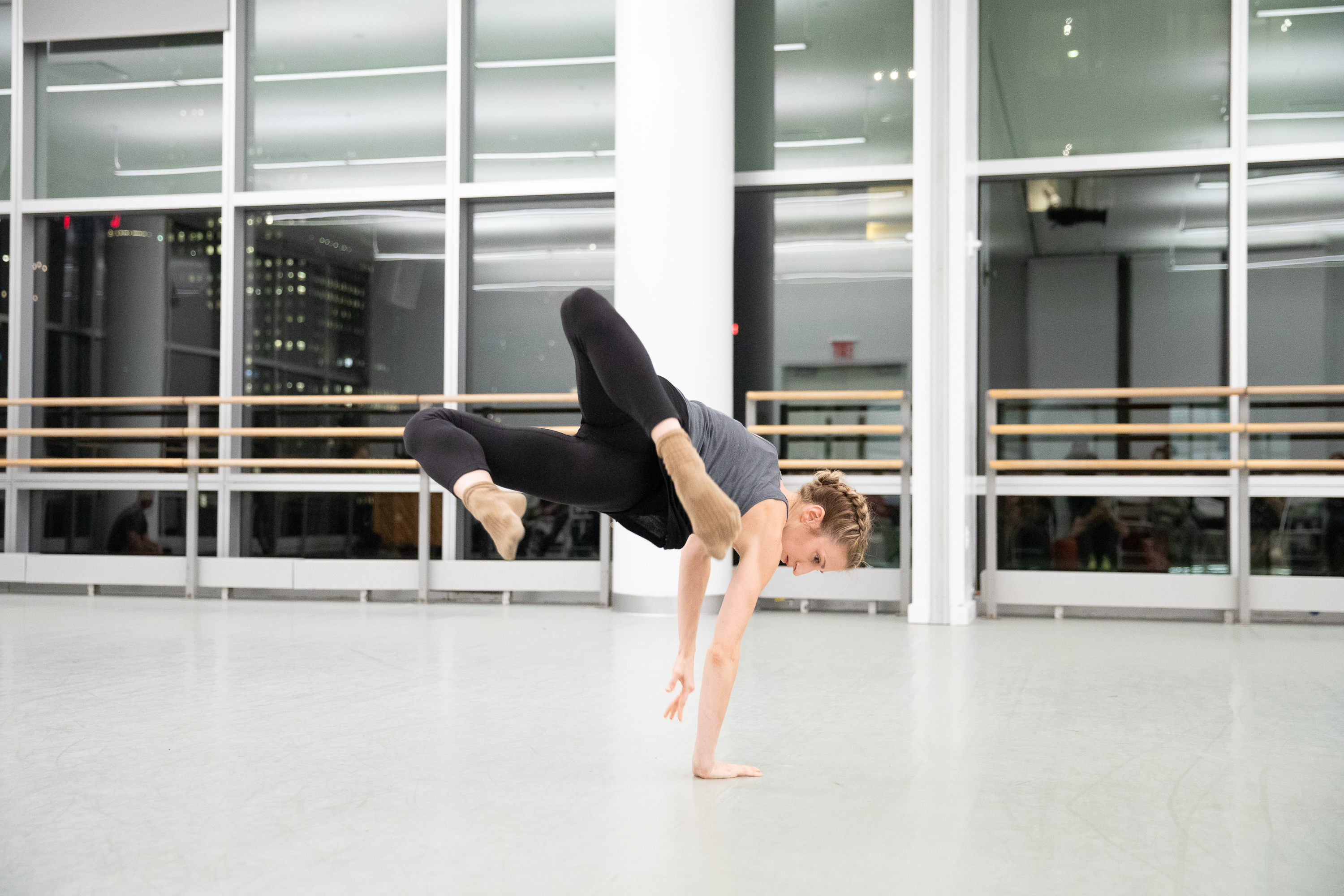
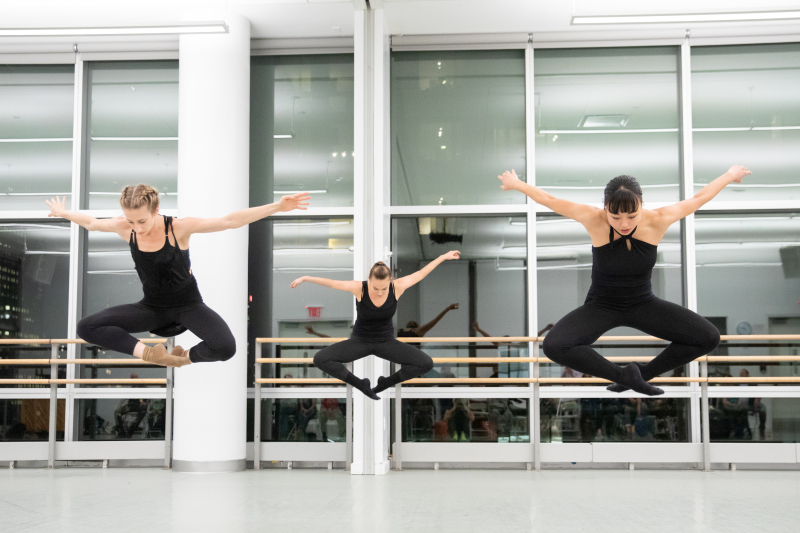
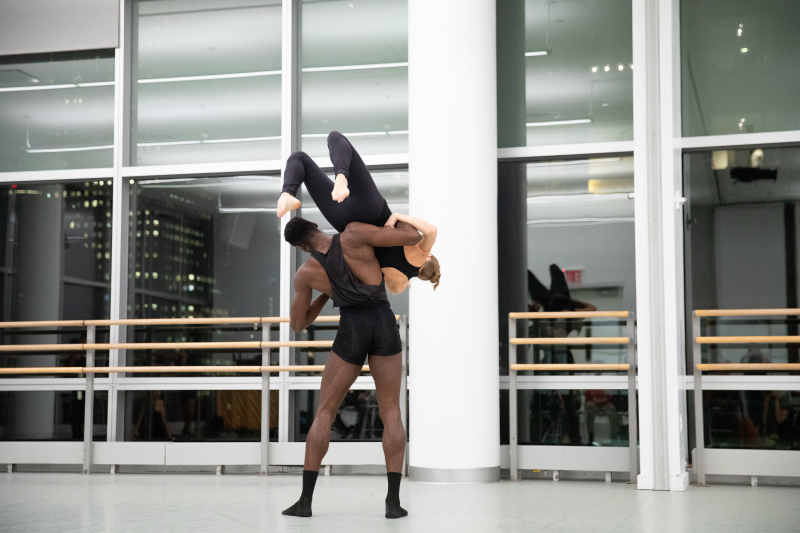
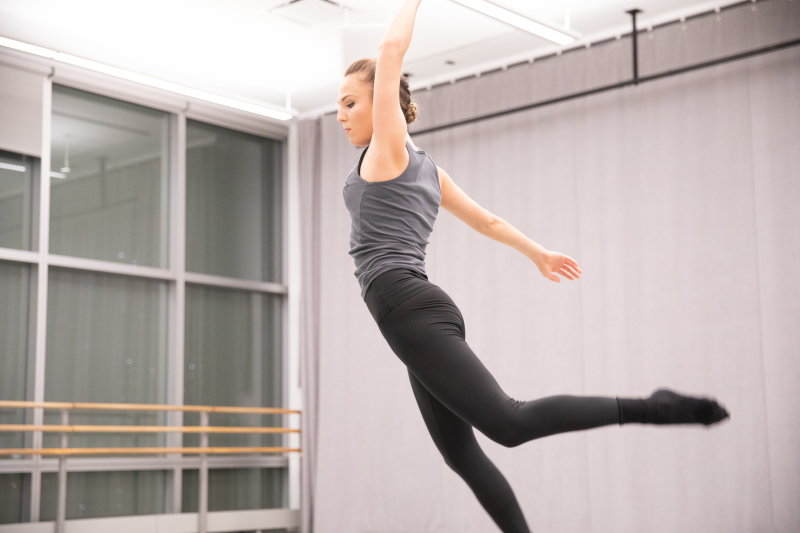
    Above: Sarah Starkweather, Manon Halley, and Misaki Hayama of Amanda Selwyn Dance Theatre; photo by Hayim Heron

    ~ Author: Oberon

    On Monday, October 15th, 2018, I caught up with Amanda Selwyn when her company presented an open rehearsal at the Ailey Studios.

    Over the past few years, my interest in dance has slowly been fading. But there are a few choreographers who will always draw me back, and Amanda is one of them; I can honestly say I’ve never seen a Selwyn work I didn’t like…or love.

    So when I received an invitation to an open rehearsal of Amanda’s new work-in-progress, CROSSROADS, I rearranged my schedule so as to attend. Inspired by the art of Magritte and Escher, Amanda is collaborating with scenic and costume designer Anna-Alisa Belous for this production. CROSSROADS will be performed June 20th thru 22nd, 2019, at New York Live Arts.

    Amanda Selwyn’s danceworks are always a collaborative effort on the part of choreographer and her dancers. In the early phases of creation, the individual dancers come up with phrases or gestures. These movement motifs are taken up by the company, tried in unison. If the consensus is positive, the phrase becomes an experimental element which may be elaborated upon, broken down or re-shuffled, and finally assimilated into the dance. These motifs may appear in various guises – as solo, duet, or ensemble passages – as the work develops. Amanda is the mastermind who assembles, enhances, and molds the finished product.  

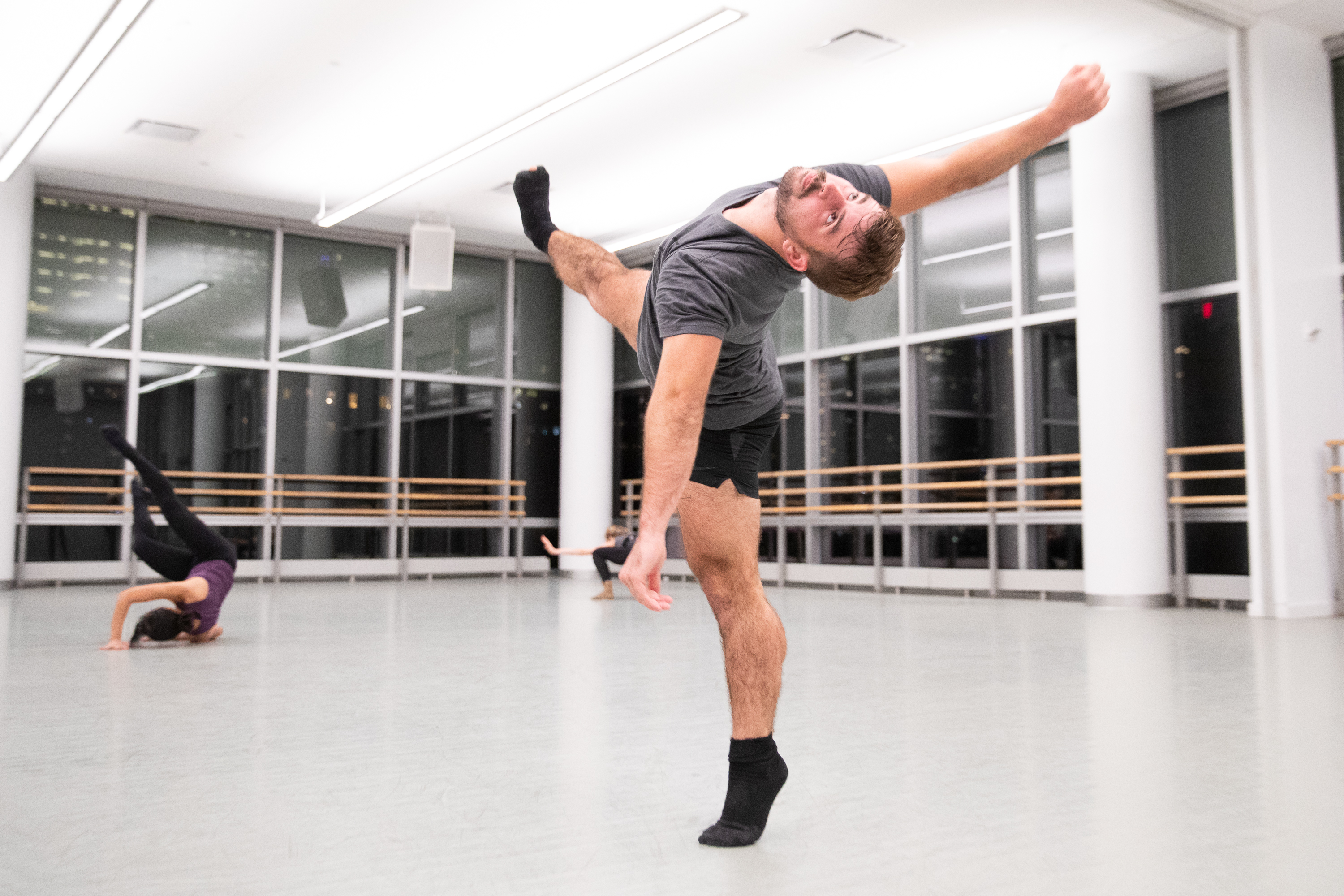
    So this evening, I was really happy to see Amanda again, she being one of my favorite danceworld personalities. Three women I’ve met before – Torrey McAnena, Manon Halley, and Sarah Starkweather – are pillars of the Selwyn ensemble. I was delighted to see that Misaki Hayama, who danced recently with Roberto Villanueva’s BalaSole Dance Company, has joined Amanda’s troupe. Alex Cottone has danced for Amanda before, but I had not previously met him. Two new male dancers have just recently joined the Company: tall and athletic Fabricio Seraphim, and a vibrant, energetic young man named Yoshio Pineda.

    Here are some images by Hayim Heron from this studio presentation:

    AmandaSelwynAileyOpenRehearsal_hheron-588

    Alex Cottone

    AmandaSelwynAileyOpenRehearsal_hheron-419

    Torrey McAnena

    AmandaSelwynAileyOpenRehearsal_hheron-226

    Fabricio Seraphim and Torrey McAnena

    AmandaSelwynAileyOpenRehearsal_hheron-489

    Manon Halley

    AmandaSelwynAileyOpenRehearsal_hheron-199

    Sarah Starkweather, Alex Cottone

    AmandaSelwynAileyOpenRehearsal_hheron-491

    Misaki Hayama, Sarah Starkweather, Yoshio Pineda

    AmandaSelwynAileyOpenRehearsal_hheron-275

    Torrey McAnena

    AmandaSelwynAileyOpenRehearsal_hheron-335

    Sarah Starkweather

    All photography by Hayim Heron

    It was simply great to watch these dancers, and to feel re-connected to Amanda Selwyn’s work. Now I need to get in touch with her and visit some upcoming rehearsals.

    ~ Oberon

  • At Amanda Selwyn’s Open Rehearsal

    AmandaSelwynAileyOpenRehearsal_hheron-314

    Above: Sarah Starkweather, Manon Halley, and Misaki Hayama of Amanda Selwyn Dance Theatre; photo by Hayim Heron

    ~ Author: Oberon

    On Monday, October 15th, 2018, I caught up with Amanda Selwyn when her company presented an open rehearsal at the Ailey Studios.

    Over the past few years, my interest in dance has slowly been fading. But there are a few choreographers who will always draw me back, and Amanda is one of them; I can honestly say I’ve never seen a Selwyn work I didn’t like…or love.

    So when I received an invitation to an open rehearsal of Amanda’s new work-in-progress, CROSSROADS, I rearranged my schedule so as to attend. Inspired by the art of Magritte and Escher, Amanda is collaborating with scenic and costume designer Anna-Alisa Belous for this production. CROSSROADS will be performed June 20th thru 22nd, 2019, at New York Live Arts.

    Amanda Selwyn’s danceworks are always a collaborative effort on the part of choreographer and her dancers. In the early phases of creation, the individual dancers come up with phrases or gestures. These movement motifs are taken up by the company, tried in unison. If the consensus is positive, the phrase becomes an experimental element which may be elaborated upon, broken down or re-shuffled, and finally assimilated into the dance. These motifs may appear in various guises – as solo, duet, or ensemble passages – as the work develops. Amanda is the mastermind who assembles, enhances, and molds the finished product.  

    So this evening, I was really happy to see Amanda again, she being one of my favorite danceworld personalities. Three women I’ve met before – Torrey McAnena, Manon Halley, and Sarah Starkweather – are pillars of the Selwyn ensemble. I was delighted to see that Misaki Hayama, who danced recently with Roberto Villanueva’s BalaSole Dance Company, has joined Amanda’s troupe. Alex Cottone has danced for Amanda before, but I had not previously met him. Two new male dancers have just recently joined the Company: tall and athletic Fabricio Seraphim, and a vibrant, energetic young man named Yoshio Pineda.

    Here are some images by Hayim Heron from this studio presentation:

    AmandaSelwynAileyOpenRehearsal_hheron-588

    Alex Cottone

    AmandaSelwynAileyOpenRehearsal_hheron-419

    Torrey McAnena

    AmandaSelwynAileyOpenRehearsal_hheron-226

    Fabricio Seraphim and Torrey McAnena

    AmandaSelwynAileyOpenRehearsal_hheron-489

    Manon Halley

    AmandaSelwynAileyOpenRehearsal_hheron-199

    Sarah Starkweather, Alex Cottone

    AmandaSelwynAileyOpenRehearsal_hheron-491

    Misaki Hayama, Sarah Starkweather, Yoshio Pineda

    AmandaSelwynAileyOpenRehearsal_hheron-275

    Torrey McAnena

    AmandaSelwynAileyOpenRehearsal_hheron-335

    Sarah Starkweather

    All photography by Hayim Heron

    It was simply great to watch these dancers, and to feel re-connected to Amanda Selwyn’s work. Now I need to get in touch with her and visit some upcoming rehearsals.

    ~ Oberon

  • Salon Seánce @ Tarisio

    ~Author: Scoresby

    Thursday October 19 2018 – After the many concerts I’ve reviewed in the past week or so that had theatrical elements, ranging from the NY Philharmonic’s MUTED to Berlioz’s Lélio, it was satisfying to hear a performance that finally seemed to strike the rare balance between excellent music and intellectually interesting theater. Salon Séance, co-founded by siblings violinist Mari Lee (an ensemble connect Alumnus) and Simon Lee (who provided the research for the work), performed its unusual structure in the show room of the string instrument auction house Tarisio with electric candles all over the stage and a backdrop of 50 or so rare instruments. Essentially, this performance consisted of full pieces of music by a specific composer being played, punctuated with short theatrical monologues that illuminate context in which those pieces were composed while threading a common theme through it all. The theme of this concert about Britten and Auden was addressing the question “How Do I live in a Broken World?”

    Screen Shot 2018-10-24 at 5.42.55 PM
    Above Ms. Valla leading the musicians in contacting Britten’s spirit; photo credit: Rodrigo Aranjuelo

    In the opening, actress Sagine Valla was alone​ as​ the five​ musicians walked toward the stage speaking to her. Because of this unusual setup there was none of the traditional clapping as the musicians entered, a welcome relief from the usual program. After a bit of awkward dialogue, the performance became interesting when the musicians and Ms. Valla gathered in a circle to summon the spirit of Benjamin Britten. After a few unsuccessful attempts, she suggested for the musicians to play something to rouse Britten. The quartet then launched into the first movement of his String Quartet No. 1, Op. 25 played by fantastic chamber musicians and the performance didn’t let up until the end of the evening.

    The quartet performing included violinists Rebecca Anderson (an Ensemble Connect Alumnus) and Mari Lee, cellist Mihai Marica (a regular at CMS at Lincoln Center), and violist Ayane Kozasa (a founding member of the Azuri Quartet). The first movement of this piece alternates between two contrasting themes that slowly develop using each other as springboards. The first is a slow ethereal theme layered with nostalgia played with the violins and viola in the highest ranges of their instruments while the cello plucks an almost child-like theme in a completely different register. Ms. Anderson, Ms. Lee, and Ms. Kozasa did a wonderful job of sustaining the high-pitched melody cleanly while Mr. Marica’s warm pizzicatos filled the room. The group brought verve to the raucous second theme, but they were best in the closing bits of the movement as the first theme turns from sweetness to longing.

    Instead of moving into the next movement, Ms. Valla (now taken by Mr. Britten’s spirit) began to talk in the first person about Britten’s life during the time the quartet was composed. Ms. Valla (with Noelle Wilsons’s brilliant script) painted Britten’s move to New York and the way his love of California made him long to be back in England. She also introduced the moment Britten met poet W.H. Auden who later became the core of the evening’s drama.

    After a riveting performance of the other three movements, Ms. Lee, Ms. Valla, and pianist Julia Hamos joined together for the most creative part of the evening. While Ms. Lee and Ms. Hamos performed the Waltz, March, and Moto perpetuo from Britten Violin Suite, Op. 6, Ms. Valla gave a monologue about Britten’s travels through Europe. At first, she talked about how he went to Vienna and found it magical just as the Waltz began. As Ms. Valla transitioned to talk about the way Britten felt alienated by the rise of Nazism the music moved into the sinister the March. Ms. Valla’s monologue wasn’t constant, there was plenty of space for the music too. Instead it was sort of a trio between the three performers. While Ms. Lee and Ms. Hamos were a bit too loud for Ms. Valla at times, it is hard to play a difficult piano part softly enough for a speaker in such a small space (the audience fit only perhaps 40 people).

    The drama of the night reached its peak when the text shifted back to Britten’s fraught relationship with Auden as the Moto perpetuo begins. Here Mr. Lee’s detailed research and Ms. Wilson’s energetic script paid off as Ms. Valla captured Britten’s jealously and infinite admiration for Auden, all while their personal connection soured. As the music broke off, Ms. Valla recited an emotionally abusive letter Auden sent to Britten, essentially lambasting him for what Auden thought was naivety and privilege on Britten’s part. Ms. Valla then claimed to lose Britten’s spirit from exhaustion and the piece goes into intermission.

    Screen Shot 2018-10-24 at 5.48.16 PM

    Above: Ms. Anderson, Ms. Lee, Mr. Marica, and Ms. Kozasa; Photo Credit: Rodrigo Aranjuelo

    After intermission, “Britten” talked about the horror he felt at World War II and performing at the Bergen-Belsen Concentration Camp with Menhuin for survivors, “I never felt the same after that trip.” It was his vehement belief that art was a panacea for those dark times. With this in mind, the quartet performed the complete String Quartet No. 2, Op. 36 which was composed contemporaneously. While the first two movements are lovely, the Chacony is one of Britten’s most substantial pieces of music. Each quartet member (Ms. Lee and Ms. Anderson switched positions) gave her/his all in the difficultly paced movement, getting every nuance from the sunny bursts of optimism that end the work to the sinewy dissonant textures that start the movement. It was among the liveliest chamber music performances I’ve heard this year, but with Ms. Valla’s speech in mind about the war it became even more emotionally potent.

    The genius of Ms. Lee’s production and Mikael Södersten’s direction is that the speech never sounds corny and the music is from top notch performers. This a serious historically informed piece about Britten’s inner life that links directly with the music they perform, almost like immersive program notes that both the novice and aficionado can enjoy. My only wish is that there was more speech in the second half of the program. Nonetheless, it is a relief from the staid concert environment. From the audience members I talked to afterword seemed to make even the most jaded listeners seemed won over – a rewarding evening all around. I look forward to seeing the project’s next production with the next composer. 

    ~Scoresby

    To recap, the performers:

    Rebecca Anderson, violin

    Julia Hamos, piano

    Ayane Kozasa, viola

    Mari Lee, violin/co-creator

    Simon Lee, researcher/co-creator

    Mihai Marica, cello

    Mikael Södersten, director/advisor

    Sagine Valla, actor

    Noelle P. Wilson, playwright

    The program:

    Britten String Quartet No. 1, Op. 25

    Britten Violin Suite, Op. 6 selections

    Britten String Quartet No. 2, Op. 36

  • Mignon Dunn as Dalila

    Mignon-dunn-01

    In the aftermath of the opening night performance of a new SAMSON ET DALILA at The Met, the folks on The List and at Parterre are discussing favorite interpreters of the opera’s title roles; the name of Mignon Dunn came up.  

    Mignon was a great favorite of mine and her performances in such roles as Laura in GIOCONDA, Fricka in the RING Cycle, Anna in TROYENS, Brangaene in TRISTAN UND ISOLDE, and Ortrud in LOHENGRIN are among my fondest operatic memories.

    In 1985, I had the good fortune to see Mignon Dunn as Dalila in a production by the Connecticut Opera Association at The Bushnell in Hartford. She and her co-stars, Jon Frederic West and Charles Karel, sang powerfully whilst doing what they could dramatically in an old-style, rather campy setting.

    In the course of my two-year project of rescuing music from my vast cassette collection, I was able to preserve this recording of Mignon singing Dalila’s opening aria from Act II with piano from a radio program in 1975 which I taped off the air:

    Mignon Dunn – Amour viens aider ma faiblesse – SAMSON & DALILA – Met Marathon 1975

    I’ll be seeing the Met’s new SAMSON ET DALILA twice in the coming weeks: once with each cast.

    ~ Oberon
  • van Zweden’s Bruckner 8th @ The NY Phil

    JaapVanZweden

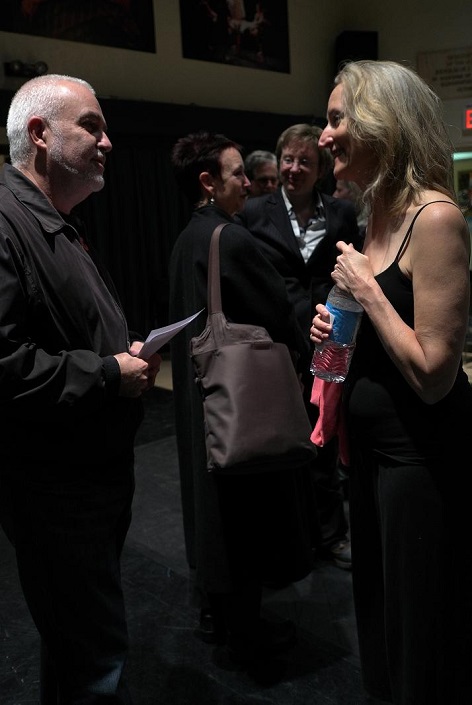
    Above: Jaap van Zweden, Musical Director of The New York Philharmonic

    ~ Author: Oberon

    Friday September 28th, 2018 – This evening was our first opportunity to hear Jaap van Zweden lead The New York Philharmonic since he officially took up the position of Musical Director. My friend Ben Weaver and I splurged and bought tickets to this concert because Bruckner is always on our must-hear list. In 2014, I had my first live encounter with the composer’s 8th in this very hall, under Alan Gilbert’s baton. It was a revelation.

    Tonight, Jaap van Zweden offered Conrad Tao’s Everything Must Go as a prelude to the Bruckner 8th. Does this massive symphony need a prelude? No. As with many ‘new’ works we’ve encountered over the past few seasons, Everything Must Go is expertly crafted but it sounds like so much else: by turns spare and noisy, with frequent percussive bangs and pops, this eleven-minute piece (it felt longer) passed by without providing any sense of the composer’s individual voice. Perhaps hearing more of Mr. Tao’s work – music not yoked to an existing masterpiece that employs the same orchestral forces – will lead us to discover who he is.

    Since there was no pause between the Tao and the Bruckner, the audience’s response to Everything Must Go could not be gauged. I wonder if the young composer took a bow at the end; we had headed out as the applause commenced.

    For the first two movements of the Bruckner, I was enthralled. The orchestra sounded truly superb, and Maestro van Zweden held sway with a perfect sense of the music’s architecture. It was a tremendous relief and balm to emerge from the day’s madness (the Kavanaugh hearings) into Bruckner’s vibrant world.

    The Philharmonic musicians offered rich tone and marvelous colours, the brass sounding grand and the violins singing lyrically in their big theme. The music has a Wagnerian sense of the monumental, and a ceaseless melodic flow. Among the solo moments, Sherry Sylar’s oboe stood out. At one point there’s an almost direct quote from Tchaikovsky’s SLEEPING BEAUTY. During a respite/interlude, softer themes mingle before a splendid onslaught from the brass turns grandiose. The movement ends on a murmur.

    The Scherzo has as its main and oft-repeated theme a churning 5-note figure that has worked its way into the soundtrack for GAME OF THRONES. As the movement progresses, the harp makes a lovely effect, as do the entwining voices of solo woodwinds. Textures modify seamlessly, sustaining our pleasure.

    A deep sense of longing suffuses the opening of the Adagio, with its rising passion. Again the harp glimmers magically. The rise and fall of great waves of sound bring passages of almost unbearable beauty; there’s a spectacular build-up to music of searing passion which evaporates into soft halo of solo winds. As the music re-builds, a Tchaikovskian glory permeates. It seems, though, that Bruckner cannot quite decide how to end this epic movement.

    Pulsing, march-like, and majestic, the Finale leads us onward. A big swaying rhythm from the timpani leads into a huge tsunami of sound. The work began to feel like a series of climaxes, though, and traces of brass fatigue started to crop up. The Maestro and the musicians were engulfed by gales of applause and cheers at the end. 

    I’m probably in a minority in feeling that Alan Gilbert’s 2014 rendering of the Bruckner 8th with the Philharmonic reached me on a deeper level, as well as being more exhilarating. “Well, it was faster!”, Ben Weaver would say. À chacun son goût…

    ~ Oberon

  • van Zweden’s Bruckner 8th @ The NY Phil

    JaapVanZweden

    Above: Jaap van Zweden, Musical Director of The New York Philharmonic

    ~ Author: Oberon

    Friday September 28th, 2018 – This evening was our first opportunity to hear Jaap van Zweden lead The New York Philharmonic since he officially took up the position of Musical Director. My friend Ben Weaver and I splurged and bought tickets to this concert because Bruckner is always on our must-hear list. In 2014, I had my first live encounter with the composer’s 8th in this very hall, under Alan Gilbert’s baton. It was a revelation.

    Tonight, Jaap van Zweden offered Conrad Tao’s Everything Must Go as a prelude to the Bruckner 8th. Does this massive symphony need a prelude? No. As with many ‘new’ works we’ve encountered over the past few seasons, Everything Must Go is expertly crafted but it sounds like so much else: by turns spare and noisy, with frequent percussive bangs and pops, this eleven-minute piece (it felt longer) passed by without providing any sense of the composer’s individual voice. Perhaps hearing more of Mr. Tao’s work – music not yoked to an existing masterpiece that employs the same orchestral forces – will lead us to discover who he is.

    Since there was no pause between the Tao and the Bruckner, the audience’s response to Everything Must Go could not be gauged. I wonder if the young composer took a bow at the end; we had headed out as the applause commenced.

    For the first two movements of the Bruckner, I was enthralled. The orchestra sounded truly superb, and Maestro van Zweden held sway with a perfect sense of the music’s architecture. It was a tremendous relief and balm to emerge from the day’s madness (the Kavanaugh hearings) into Bruckner’s vibrant world.

    The Philharmonic musicians offered rich tone and marvelous colours, the brass sounding grand and the violins singing lyrically in their big theme. The music has a Wagnerian sense of the monumental, and a ceaseless melodic flow. Among the solo moments, Sherry Sylar’s oboe stood out. At one point there’s an almost direct quote from Tchaikovsky’s SLEEPING BEAUTY. During a respite/interlude, softer themes mingle before a splendid onslaught from the brass turns grandiose. The movement ends on a murmur.

    The Scherzo has as its main and oft-repeated theme a churning 5-note figure that has worked its way into the soundtrack for GAME OF THRONES. As the movement progresses, the harp makes a lovely effect, as do the entwining voices of solo woodwinds. Textures modify seamlessly, sustaining our pleasure.

    A deep sense of longing suffuses the opening of the Adagio, with its rising passion. Again the harp glimmers magically. The rise and fall of great waves of sound bring passages of almost unbearable beauty; there’s a spectacular build-up to music of searing passion which evaporates into soft halo of solo winds. As the music re-builds, a Tchaikovskian glory permeates. It seems, though, that Bruckner cannot quite decide how to end this epic movement.

    Pulsing, march-like, and majestic, the Finale leads us onward. A big swaying rhythm from the timpani leads into a huge tsunami of sound. The work began to feel like a series of climaxes, though, and traces of brass fatigue started to crop up. The Maestro and the musicians were engulfed by gales of applause and cheers at the end. 

    I’m probably in a minority in feeling that Alan Gilbert’s 2014 rendering of the Bruckner 8th with the Philharmonic reached me on a deeper level, as well as being more exhilarating. “Well, it was faster!”, Ben Weaver would say. À chacun son goût…

    ~ Oberon

  • Robin Becker’s INTO SUNLIGHT: A Documentary

    6a00d8341c4e3853ef014e8607bdb8970d-800wi

    Above: dancers Yoko Sugimoto-Ikezawa and Joseph Jehle in a 2011 performance of Robin Becker’s INTO SUNLIGHT at the 92nd Street Y; photo by Kokyat

    ~ Author: Oberon

    Thursday September 27th, 2018 – Having followed the development of Robin Becker’s profoundly moving anti-war dancework INTO SUNLIGHT from its early rehearsals in 2010, I was honored to be invited to a screening of the new documentary film about the piece this evening.

    Robin Becker did not set out to create a dancework about the Vietnam War; her idea was to make a piece that would grow out of her sense of helpless despair when the US commenced its war against Iraq. In researching for her project, she came upon David Maraniss’s book THEY MARCHED INTO SUNLIGHT. She immediately felt its power as a depiction of the human aspects of war and of war’s effect on both the people fighting it and on their loved ones waiting at home for them to return (or not), as well as thoughtful citizens enraged by the policies and careless disdain for the value of human life of the politicians who wage wars.

    They-marched-into-sunlight-9780743261043_hr

    INTO SUNLIGHT was inspired by the David Maraniss book ‘They Marched Into Sunlight‘, an account of two days in October 1967 when “…war was raging in Vietnam as the anti-war movement was raging in America.” I’m eyeing my copy of the book on my bookshelf as I write this, and will start re-reading it in a few days.

    The book – and the ballet – revolve around two events that took place on those days in October of 1967: the ambush of a battalion of American soldiers in the Vietnam jungle, and a protest against the Dow Chemical Company at the University of Wisconsin.

    Robin Becker has given the tragic tale a new dimension thru her choreography. Set to a score Chris Lastovicka, Robin’s ballet entwines both threads of the book – the war abroad and the reaction at home – in a cohesive narrative, as dark and haunting as any dancework I have witnessed. Along with Jacqulyn Buglisi’s deeply resonant TABLE OF SILENCE, INTO SUNLIGHT stands as a truly meaningful dance experience. Both works share a common root: they are about something.

    Watch a trailer for INTO SUNLIGHT here. And visit the documentary’s website here.

    Page-9a-dancers

    Above: Robin Becker and company photographed while in Vietnam in 2015 for performances of INTO SUNLIGHT

    Ron Honsa’s film is outstanding on every count. He brings us gorgeously-shot performance footage, segments of Ms. Becker and David Maraniss speaking of the connection between the dancework and the book; and Mr. Honsa follows the Becker company to Vietnam, where INTO SUNLIGHT was performed in 2015.

    But Mr. Honsa delves deeper, bringing us interviews with people whose lives were permanently affected by the events of October 1967: Consuelo Allen, Clark Welch, and Paul Solgin.

    Consuelo Allen’s father, Lieutenant Colonel Terry Allen, Jr., had been home on leave and was saying goodbye to his family before heading back to Vietnam when his five-year-old daughter Consuelo cried out: “You can’t leave! You’re going to die!”  On that fatal morning of October 17, 1967, as he led his Black Lions battalion on a search-and-destroy mission in the Long Nguyen Secret Zone, Terry Allen, Jr. and sixty of his men were killed in an ambush.

    Clark Welch was one of Terry’s commanders. He suffers extreme mental torment over the loss of his men. Both Clark and Consuelo are deeply touching as the tell their stories for the film.

    Paul Solgin was one of the demonstrators at the University of Wisconsin; many of the demonstrators sustained injury at the hands of club-swinging police. Ironically, their freedom of speech and of dissent might be thought to be among the ideals that the soldiers serving in Vietnam were fighting to protect.

    6a00d8341c4e3853ef0133f5d2f779970b-800wi

    Above: me and Robin Becker after the 92nd Y showing of INTO SUNLIGHT in 2011; photo by Kokyat.

    Among the audience at this evening’s showing of the documentary was dancer Nicole Sclafani, who plays a major role in Robin Becker’s INTO SUNLIGHT. In the ballet, Nicole’s duet with Oisín Monaghan depicts a woman who dreamed of the death of her brother from a horrific abdominal wound sustained in battle, only to awaken the next day to find that her dream was prophetic.

    Another true story that is told in INTO SUNLIGHT is of the death of West Point football hero Don Holleder, who – with his comrades – rushed headlong onto the battlefield that October morning and was immediately gunned down. Compellingly danced by Chazz Fenner-McBride, it’s one of the ballet’s heart-stopping moments. 

    Yet another of the most poignant scenes in the dancework is that of a young widow, danced by Yoko Sugimoto-Ikezawa, visiting the grave of her soldier-husband, portrayed in the film by Ricky Werthen. The distraught woman clings to the gravestone, unable to comprehend the loss of her beloved.

    This was written by me after initially reading Mr. Maraniss’s book:

    “For all the emotional power behind the factual re-telling of these events, by far the most overwhelming aspect of the story comes many years after the incidents when the leaders of the two factions who met on that battlefield that October morning meet once again – now old warriors – and explore the anonymous patch of Vietnamese land where so many young men (from both sides) laid down their lives. If only the two commanders could have met before the battle, they might have realized their differences were vastly outweighed by their common humanity. They could have shaken hands and walked back to their respective camps, refusing to kill each other simply because someone had told them it was the thing to do.”

    42661569_10156269132114998_7428979763382845440_n

    UPDATE: This documentary will be shown at AMC Loew’s on Saturday October 20th at 4:00 PM as part of the Chelsea Film Festival.

    ~ Oberon