Author: Philip Gardner

  • Compagnie Accrorap @ The Joyce

    Kader.attou.02

    ~ Author: Oberon

    Tuesday January 23rd, 2018 – For their Joyce debut, Compagnie Accrorap performed The Roots, a work for eleven men created by the Company’s founder, Kader Attou, that is at once vibrant and thoughtful. For 90 minutes, to an eclectic score, the men astound us with their break-dancing skills whilst also evoking a wide range of masculine feelings: loneliness, bravado, competitiveness, and camaraderie.

    The Roots begins with a man slumped in a brokedown armchair. On an old turntable, a song is playing that summons up memories. He slips the needle off the disc, and music from a ghostly piano sounds as a group of men materialize: are they out of the past, the present, or the future? We never know. But they are soon dancing up a storm. 

    To a musical collage devised by Régis Baillet – from his solo project Diaphane, and a spectrum of other music – the Company dance in full ensemble, in splinter groups, in in-sync trios, duets, and fantastical solos which display by turns their prodigious break-dance skills, acrobatic grace, and poignant artistry. Nadia Genez’s everyday-wear costuming at once unifies the men as a community whilst allowing ample freedom of movement. In a dilapidated living room (Olivier Boune’s design), a coffee table cunningly disguises a trampoline from which the men launch improbable aeriel feats: they are are truly at home in the air. At one point, all the furniture begins gliding about the stage. A major factor in the overall success of The Roots is Fabrice Crouzet’s expertly atmospheric lighting.

    There’s a lot to take in, both sonically and in terms of movement, over the span of The Roots. In terms of risk-taking, pinpoint timing, and musicality, these dancers have everything to offer. Gentle wit keeps the audience charmed, but much of the time exhilaration is the watchword. The furniture often plays a part in the choreography, as in one of the work’s most memorable passages: a terrifically subtle tap-dance routine done on a table top, whilst the lighting makes it a shadow dance.

    6382c6fdcd82465b9e0e087f1611d1da

    Above photo by João Garcia

    The dancers in The Roots are Babacar “Bouba” Cissé, Bruce Chiefare, Virgile Dagneaux,
Erwan Godard, Mabrouk Gouicem, Adrien Goulinet, Kevin Mischel, Artem Orlov, Mehdi Ouachek, Nabil Ouelhadj, and Maxime Vicente. Superstars individually, as a collective they are incomparable. The roar of applause that greeted their curtain calls attests to their achievement.

    Kader2

    Above: choreographer Kader Attou, founder of Compagnie Accrorap.

    This program continues at The Joyce thru Sunday, January 28th; I give it five stars. Get tickets here, or at The Joyce box office.

    ~ Oberon

  • Hockney @ The Met Museum

    L1910337

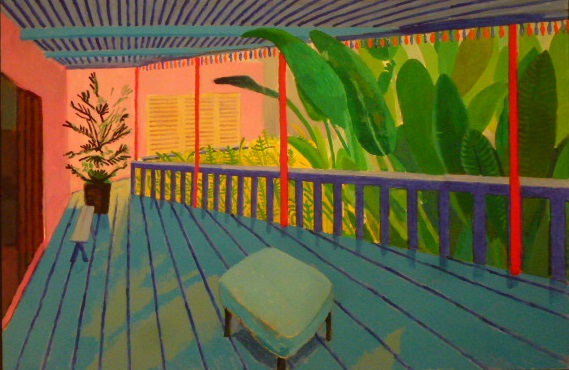
    If you’re in New York City, please take the time to visit the David Hockney exhibit at The Metropolitan Museum of Art; it runs thru February 25th, 2018. My friend Debbie and I were there earlier today and we both genuinely enjoyed seeing representative works from the various ‘eras’ of Hockney’s career. I particularly loved all the shades of blue on his canvases.

    L1910368

    Garden With Blue Terrace ~ 2015

    L1910360

    Breakfast at Malibu, Sunday, 1989

  • Franck & Ravel @ The NY Philharmonic

    Thibaudet

    Above: pianist Jean-Yves Thibaudet

    Author: Oberon

    Saturday January 20th, 2018 matinee – This afternoon’s program at The New York Philharmonic might have been subtitled Music for Dancing: we heard a chamber score that’s been transformed into a ballet, and – after the interval – a succession of works inspired by dance forms: a sarabande, a set of waltzes, and finally a boléro that has become one of the most famous musical works ever created.

    From time to time, The Philharmonic programs a chamber work; this not only adds a new dimension to a given performance, but affords fans of the orchestra an opportunity to enjoy hearing some of the esteemed artists of The Philharmonic in a front-and-center setting.

    This afternoon, a sterling performance of César Franck’s Piano Quintet brought guest pianist Jean-Yves Thibaudet together with a quartet of extraordinary string players to play this gorgeous score – music used by choreographer Justin Peck for his lush and exquisite 2014 ballet Belles-Lettres at New York City Ballet.

    César Franck had fallen in love with one of his pupils, Augusta Holmès, who he met in 1875. The Piano Quintet was written under the influence of Franck’s romantic obsession, and thus was detested by Madame Franck to the end of her days. Composer Camille Saint-Saëns (no less) played the piano for the Quintet’s premiere performance, but he seems to have been offended by the music’s sensuality; Saint-Saëns rejected Franck’s proposal of dedicating the quintet to him.

    The players for the Franck quintet this afternoon were Sheryl Staples and Michelle Kim (violins), Cynthia Phelps (viola), and Eileen Moon-Myers (cello) with Mr. Thibaudet at the Steinway. The opening movement, Molto moderato quasi lento, commences with a violin theme played by Sheryl Staples; Ms. Staples throughout the Quintet played with ravishing lyricism. Mr. Thibaudet enters with a somewhat hesitant phrase, and then Ms. Moon-Myers’ dusky cello joins. The piano turns dreamy before a sudden eruption. Ms. Staples and Cynthia Phelps’ richly shaded viola savour every opportunity, and the Quintet has an especially nice role for the second violin which Ms. Kim set forth with lovely tone.

    The strings play in unison over a turbulent piano motif; a change to a more pensive mood finds piano and strings alternating. There’s a spacious, impassioned passage before the movement’s enigmatic end. 

    Late seating at this point was a serious distraction; the players waited patiently as latecomers stumbled to their seats. Ms. Staples was then thankfully able to re-establish the mood quickly with her silken playing of the soft, longing theme over hushed keyboard that opens the Lento con molto sentimento. A heart-wrenching descending motif for piano and cello announces a hauntingly beautiful passage with a poignant mix of voices. Then Mr. Thibaudet takes up another set of descending notes, like raindrops – or heartbeats. Ms. Staples plays with overwhelming beauty; the hesitancy of the piano recurs, and the cellist sustains a remarkable deep note. Mr. Thibaudet in the high register and Ms. Staples’s sweetest tones bring this romantic reverie to an end.

    The concluding Allegro non troppo ma con fuoco opens with Ms. Kim’s agitato figuration which Ms. Staples joins; the piano sounds almost ominous. Unison strings play over an active keyboard, evoking a sense of mystery and restlessness. A big, waltz-like buildup suddenly evaporates into an ethereal violin passage: Ms. Staples again at her finest. The music then grows unsettled in its rush to an abrupt finish.

    Warm enthusiasm greeted the quintet of players as they came out for a bow; I had hopes of an encore, but the stage was now to be re-set for the full orchestra.

    Jw

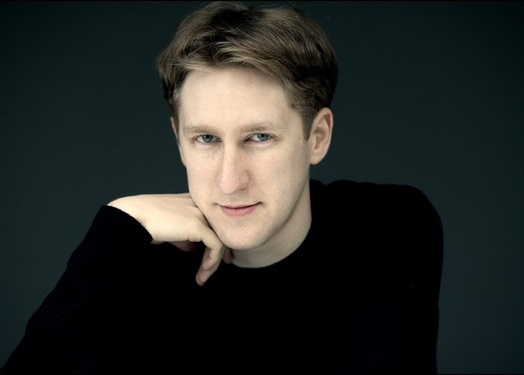
    Joshua Weilerstein (above) took the podium for the second half of this afternoon’s program, which opened with Ravel’s orchestration of Claude Debussy’s Sarabande et Danse. The sarabande originated in Central America as a dance for women, accompanied by castanets; it had an Arabian lilt. But the sarabande was regarded as too provocative, and was banned. Later the French took it on as a much more staid dance, at a slower tempo.

    Ravel’s setting of this piece, which Debussy wrote for solo piano, opens with a wind chorale; a full string section, with lovely basses, take over. Solo moments crop up – for clarinet (Anthony McGill), bassoon (Judith LeClair) and a trumpeter who I couldn’t see. The work ends with the sound of a gong which fades to nothingness. By contrast, the Danse was upbeat, showing Ravel’s orchestrational gifts to vivid effect. The harp and horn had their moments, and overall this coloristic, rhythmic little gem glowed.

    The Valses nobles et sentimentales is a suite of waltzes published in 1911 by Maurice Ravel as piano solos; an orchestral version was published in 1912. The title was chosen in homage to Franz Schubert, who had published a set of waltzes in 1823 entitled Valses nobles and Valses sentimentales. The Ravel orchestrated setting has a strong balletic association: Balanchine used them for his eerie La Valse, wherein a young girl is stalked by Death in a haunted ballroom.

    Mr. Weilerstein gave a vibrant interpretation, played fantastically by the huge orchestra. Mr. McGill (and a flautist I could not see from my location) made particularly fine impressions.

    Ravel’s Boléro was the closing work on the program, and it’s always great fun to hear it played live. Ravel composed this best-known of his works in 1928 for a ballet choreographed by Bronislava Nijinsky for Ida Rubinstein. Consisting only of repetitions of the same C-major theme over the same insistent rhythm, Boléro hypnotizes with its constant shifts in instrumentation as the music unfolds in one long, slow crescendo.

    The thrill of today’s performance for a devotee of the NY Phil such as myself was in hearing the various solo voices of the orchestra take up the tune: flute, clarinet, bassoon, saxophone (wow, this guy was really wailing!), and on and on in various combinations. And all the while, the relentlessly diligent strings pluck and the snare drums maintain the pace, starting softly and turning militant as the Boléro sways onward with mesmerizing inevitability.

    The crowd went absolutely wild as Boléro ended: everyone stood up and yelled.

    ~ Oberon

  • Franck & Ravel @ The NY Philharmonic

    Thibaudet

    Above: pianist Jean-Yves Thibaudet

    Author: Oberon

    Saturday January 20th, 2018 matinee – This afternoon’s program at The New York Philharmonic might have been subtitled Music for Dancing: we heard a chamber score that’s been transformed into a ballet, and – after the interval – a succession of works inspired by dance forms: a sarabande, a set of waltzes, and finally a boléro that has become one of the most famous musical works ever created.

    From time to time, The Philharmonic programs a chamber work; this not only adds a new dimension to a given performance, but affords fans of the orchestra an opportunity to enjoy hearing some of the esteemed artists of The Philharmonic in a front-and-center setting.

    This afternoon, a sterling performance of César Franck’s Piano Quintet brought guest pianist Jean-Yves Thibaudet together with a quartet of extraordinary string players to play this gorgeous score – music used by choreographer Justin Peck for his lush and exquisite 2014 ballet Belles-Lettres at New York City Ballet.

    César Franck had fallen in love with one of his pupils, Augusta Holmès, who he met in 1875. The Piano Quintet was written under the influence of Franck’s romantic obsession, and thus was detested by Madame Franck to the end of her days. Composer Camille Saint-Saëns (no less) played the piano for the Quintet’s premiere performance, but he seems to have been offended by the music’s sensuality; Saint-Saëns rejected Franck’s proposal of dedicating the quintet to him.

    The players for the Franck quintet this afternoon were Sheryl Staples and Michelle Kim (violins), Cynthia Phelps (viola), and Eileen Moon-Myers (cello) with Mr. Thibaudet at the Steinway. The opening movement, Molto moderato quasi lento, commences with a violin theme played by Sheryl Staples; Ms. Staples throughout the Quintet played with ravishing lyricism. Mr. Thibaudet enters with a somewhat hesitant phrase, and then Ms. Moon-Myers’ dusky cello joins. The piano turns dreamy before a sudden eruption. Ms. Staples and Cynthia Phelps’ richly shaded viola savour every opportunity, and the Quintet has an especially nice role for the second violin which Ms. Kim set forth with lovely tone.

    The strings play in unison over a turbulent piano motif; a change to a more pensive mood finds piano and strings alternating. There’s a spacious, impassioned passage before the movement’s enigmatic end. 

    Late seating at this point was a serious distraction; the players waited patiently as latecomers stumbled to their seats. Ms. Staples was then thankfully able to re-establish the mood quickly with her silken playing of the soft, longing theme over hushed keyboard that opens the Lento con molto sentimento. A heart-wrenching descending motif for piano and cello announces a hauntingly beautiful passage with a poignant mix of voices. Then Mr. Thibaudet takes up another set of descending notes, like raindrops – or heartbeats. Ms. Staples plays with overwhelming beauty; the hesitancy of the piano recurs, and the cellist sustains a remarkable deep note. Mr. Thibaudet in the high register and Ms. Staples’s sweetest tones bring this romantic reverie to an end.

    The concluding Allegro non troppo ma con fuoco opens with Ms. Kim’s agitato figuration which Ms. Staples joins; the piano sounds almost ominous. Unison strings play over an active keyboard, evoking a sense of mystery and restlessness. A big, waltz-like buildup suddenly evaporates into an ethereal violin passage: Ms. Staples again at her finest. The music then grows unsettled in its rush to an abrupt finish.

    Warm enthusiasm greeted the quintet of players as they came out for a bow; I had hopes of an encore, but the stage was now to be re-set for the full orchestra.

    Jw

    Joshua Weilerstein (above) took the podium for the second half of this afternoon’s program, which opened with Ravel’s orchestration of Claude Debussy’s Sarabande et Danse. The sarabande originated in Central America as a dance for women, accompanied by castanets; it had an Arabian lilt. But the sarabande was regarded as too provocative, and was banned. Later the French took it on as a much more staid dance, at a slower tempo.

    Ravel’s setting of this piece, which Debussy wrote for solo piano, opens with a wind chorale; a full string section, with lovely basses, take over. Solo moments crop up – for clarinet (Anthony McGill), bassoon (Judith LeClair) and a trumpeter who I couldn’t see. The work ends with the sound of a gong which fades to nothingness. By contrast, the Danse was upbeat, showing Ravel’s orchestrational gifts to vivid effect. The harp and horn had their moments, and overall this coloristic, rhythmic little gem glowed.

    The Valses nobles et sentimentales is a suite of waltzes published in 1911 by Maurice Ravel as piano solos; an orchestral version was published in 1912. The title was chosen in homage to Franz Schubert, who had published a set of waltzes in 1823 entitled Valses nobles and Valses sentimentales. The Ravel orchestrated setting has a strong balletic association: Balanchine used them for his eerie La Valse, wherein a young girl is stalked by Death in a haunted ballroom.

    Mr. Weilerstein gave a vibrant interpretation, played fantastically by the huge orchestra. Mr. McGill (and a flautist I could not see from my location) made particularly fine impressions.

    Ravel’s Boléro was the closing work on the program, and it’s always great fun to hear it played live. Ravel composed this best-known of his works in 1928 for a ballet choreographed by Bronislava Nijinsky for Ida Rubinstein. Consisting only of repetitions of the same C-major theme over the same insistent rhythm, Boléro hypnotizes with its constant shifts in instrumentation as the music unfolds in one long, slow crescendo.

    The thrill of today’s performance for a devotee of the NY Phil such as myself was in hearing the various solo voices of the orchestra take up the tune: flute, clarinet, bassoon, saxophone (wow, this guy was really wailing!), and on and on in various combinations. And all the while, the relentlessly diligent strings pluck and the snare drums maintain the pace, starting softly and turning militant as the Boléro sways onward with mesmerizing inevitability.

    The crowd went absolutely wild as Boléro ended: everyone stood up and yelled.

    ~ Oberon

  • Gatti/Royal Concertgebouw: Wagner & Bruckner

    Daniele Gatti

    Above: conductor Daniele Gatti

    Author: Oberon

    Wednesday January 17th, 2018 – This long-awaited Carnegie Hall concert by the Royal Concertgebouw under the baton of Daniele Gatti paired two of my favorite composers – Wagner and Bruckner – and my expectations for the performance were very high indeed. Wagner-starved as my friend Dmitry and I have been in recent seasons, hearing the Prelude to Act III and Good Friday Spell from PARSIFAL was alone reason to anticipate this concert for months in advance. That Bruckner’s 9th Symphony would complete the program gave reason to feel this was destined to be a thrilling evening. Both works were played magnificently by this great orchestra, and Maestro Gatti again upheld our esteem for him as one of the greatest conductors of our time.

    But in practice – as opposed to in theory – I felt, as the evening progressed, that putting these two masterpieces on the same program didn’t work out nearly as well as I’d expected. About midway thru the Bruckner, I felt my interest waning. In attempting to reason it out, I came to this conclusion: Wagner is a great composer, and Bruckner is a very good one. This certainly does not mean that Bruckner’s music isn’t wonderful, and meaningful. But there’s a depth of feeling in Wagner’s writing that – for me – eludes Bruckner.   

    Wagner’s two ‘Grail’ operas – one about the father (PARSIFAL) and the other about the son (LOHENGRIN) – both contain music of other-worldly beauty. The composer wrote: “It is reserved for Art to save the spirit of religion.” [“Religion and Art” (1880)]. In these two operas, Wagner’s music expresses the inexpressible in ways that make non-believers like myself wonder if we’ve got it right…or not.

    Maestro Gatti’s gift for evoking mythic times and places (his Metropolitan Opera AIDAs in 2009 were fascinating in this regard) meant that the music from PARSIFAL performed tonight was truly transportive. As with his Met performances of the Wagner opera in 2013, Gatti’s pacing seemed ideal. The gorgeously integrated sound of the Concertgebouw, with its velvety-resonant basses, leads us to Monsalvat, where – with Parsifal’s return – the long Winter gives way to Spring. For a blessèd time, we are far from the dismal present, watching the flowers bloom is that legendary realm, as Kundry weeps. Poetry without words.  

    Bruckner’s unfinished 9th symphony impressed me deeply when I first heard it performed live in 2014, and I expected the same reaction tonight. For much of the first movement, I was thoroughly engaged and experiencing the tingles of appreciation that Bruckner’s music usually produces. I confess that I like the ‘purple’ parts of Bruckner’s music best, and perhaps my eventual zone-out began with the Scherzo.

    In the Adagio, I grew restless; the repetitions became tiresome. A few people got up and left, and others had fallen asleep. I continued to attempt to re-engage with the superb playing and Maestro Gatti’s interpretation, but honestly I could not wait for the symphony to end; and I made a mental note to skip an upcoming performance of it.

    The irony of tonight’s situation struck me as I was pondering the experience on the train going home. How is it that Wagner, a non-believer, is able to put us in touch with the divine whereas the pious Bruckner, a devout Catholic who dedicated the 9th symphony “To God”, seems only to be knocking on heaven’s door?

    Now, more than ever, I look forward to the upcoming PARSIFAL performances at The Met.

    ~ Oberon

  • Gatti/Royal Concertgebouw: Wagner & Bruckner

    Daniele Gatti

    Above: conductor Daniele Gatti

    Author: Oberon

    Wednesday January 17th, 2018 – This long-awaited Carnegie Hall concert by the Royal Concertgebouw under the baton of Daniele Gatti paired two of my favorite composers – Wagner and Bruckner – and my expectations for the performance were very high indeed. Wagner-starved as my friend Dmitry and I have been in recent seasons, hearing the Prelude to Act III and Good Friday Spell from PARSIFAL was alone reason to anticipate this concert for months in advance. That Bruckner’s 9th Symphony would complete the program gave reason to feel this was destined to be a thrilling evening. Both works were played magnificently by this great orchestra, and Maestro Gatti again upheld our esteem for him as one of the greatest conductors of our time.

    But in practice – as opposed to in theory – I felt, as the evening progressed, that putting these two masterpieces on the same program didn’t work out nearly as well as I’d expected. About midway thru the Bruckner, I felt my interest waning. In attempting to reason it out, I came to this conclusion: Wagner is a great composer, and Bruckner is a very good one. This certainly does not mean that Bruckner’s music isn’t wonderful, and meaningful. But there’s a depth of feeling in Wagner’s writing that – for me – eludes Bruckner.   

    Wagner’s two ‘Grail’ operas – one about the father (PARSIFAL) and the other about the son (LOHENGRIN) – both contain music of other-worldly beauty. The composer wrote: “It is reserved for Art to save the spirit of religion.” [“Religion and Art” (1880)]. In these two operas, Wagner’s music expresses the inexpressible in ways that make non-believers like myself wonder if we’ve got it right…or not.

    Maestro Gatti’s gift for evoking mythic times and places (his Metropolitan Opera AIDAs in 2009 were fascinating in this regard) meant that the music from PARSIFAL performed tonight was truly transportive. As with his Met performances of the Wagner opera in 2013, Gatti’s pacing seemed ideal. The gorgeously integrated sound of the Concertgebouw, with its velvety-resonant basses, leads us to Monsalvat, where – with Parsifal’s return – the long Winter gives way to Spring. For a blessèd time, we are far from the dismal present, watching the flowers bloom is that legendary realm, as Kundry weeps. Poetry without words.  

    Bruckner’s unfinished 9th symphony impressed me deeply when I first heard it performed live in 2014, and I expected the same reaction tonight. For much of the first movement, I was thoroughly engaged and experiencing the tingles of appreciation that Bruckner’s music usually produces. I confess that I like the ‘purple’ parts of Bruckner’s music best, and perhaps my eventual zone-out began with the Scherzo.

    In the Adagio, I grew restless; the repetitions became tiresome. A few people got up and left, and others had fallen asleep. I continued to attempt to re-engage with the superb playing and Maestro Gatti’s interpretation, but honestly I could not wait for the symphony to end; and I made a mental note to skip an upcoming performance of it.

    The irony of tonight’s situation struck me as I was pondering the experience on the train going home. How is it that Wagner, a non-believer, is able to put us in touch with the divine whereas the pious Bruckner, a devout Catholic who dedicated the 9th symphony “To God”, seems only to be knocking on heaven’s door?

    Now, more than ever, I look forward to the upcoming PARSIFAL performances at The Met.

    ~ Oberon

  • Mälkki/Skride @ NY Phil

    ~ Author: Scoresby

    Thursday January 11 2018 – Last night at the New York Philharmonic was an evening that I had been looking forward to for a long time. It was conducted by Susanna Mälkki and featured violinist Baiba Skride. I had never heard Ms. Mälkki conduct the New York Philharmonic before, but had heard her during her days as music director of Ensemble intercontemporain, her debut at the Chicago Symphony a few years ago, and most recently conducting L’Amour de Loin. She is one of those conductors that I don’t necessarily agree with stylistically, but she always has an interesting and unique interpretation that is worth hearing.

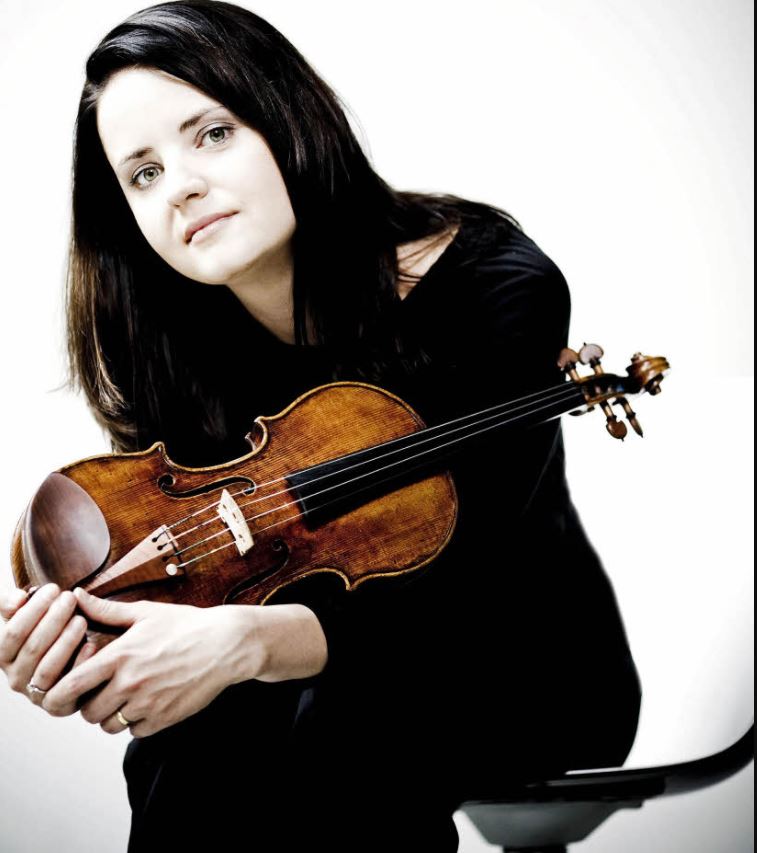
    The performance began with Baiba Skride performing the Tchaikovsky Violin Concerto in D major, Op. 35, which while a warhorse is also one of the most difficult concerti in the violin repertoire. Immediately from the orchestral introduction it was clear that Ms. Mälkki had prepared the orchestra well – all of the textures were transparent and grand. Ms. Skride for her part had a warm interpretation but that didn’t indulge in large romantic gestures. Instead, she played the piece as one might play Brahms. Each of the tuttis were more memorable though as I don’t think I’ve heard an orchestral accompaniment as vibrant or full of life for a piece like this. Ms. Mälkki followed Ms. Skride’s lead in taking out extravagant gestures usually found in the concerto. In the second tutti, the orchestra felt light, brisk, with the trumpets sounding grand above the violins. Ms. Mälkki produced an almost frantic tempo in the lead up to the cadenza. Ms. Skride was at her best in the fast skittering parts of the first movement, but seemed to have trouble with some of the technical sections of the piece.

    Capture

    Above: Violinist Baiba Skride; Photo Credit: Marco Borggreve

    The second movement was the best of the concerto, in part because there was more direct interplay between Ms. Skride and the orchestra. Principal clarinet Anthony McGill’s duet with Ms. Skride was crafted beautifully; each note sounding like velvet. Ms. Skride took the third movement at a blistering pace and seemed more in her element here. She got a folksy, scraggily sound out of the violin that made the music feel more dance like.

    After intermission Ms. Mälkki led the orchestra in the NY Premiere of an older piece of Esa-Pekka Salonen’s called Helix. While not the most exciting work by Salonen, this is an enjoyable overture-style piece that builds in momentum and dynamics until the very end. It begins with low gongs beating with high flutes coming in way above them. This extreme tonal range gives an almost primordial sound that one would hear in Ives. As with all Salonen pieces, this one relies on dance-like motifs mixed with a lot of orchestral coloring – thus it made sense to pair with the Debussy that would come later. Most impressive was that as the pieces gains momentum and becomes denser, Ms. Mälkki managed to create absolute clarity with the orchestra. Every instrument could be heard near the end, evening with banging percussion and wild dancing from all the instruments. Ms. Mälkki’s style of conducting reflects this precision: it is punctilious and clear; every beat is perfectly straight.

    Capture

    Above: Conductor Susanna Mälkki; Photo by: Simon Fowler

    The final piece on the program was Debussy’s La Mer. Ms. Mälkki had an unusual interpretation that I found to be thrilling and dull at the same time. On one hand, particularly in the first and last movements, I have never heard the piece played with so attention to orchestral coloring. The winds and the brasses sparkled, the strings gushed at times, and there were thrashes, yet also beautifully delicate moments. Through all three movements every part of the orchestral was ringing with sound and clear. There wasn’t a note out of place. That said, Ms. Mälkki seemed to eschew all sense of ambiguity and impressionism in her interpretation using the same precision as in the Salonen. This worked well in the second movement which has a lot of counterpoint and fast runs, but it made the mystery of the music disappear in the others. I can imagine that anyone that enjoys a more sensual Debussy would be bored by this interpretation, but it is hard to argue with the interpretation as a whole when the orchestra has that much color. Ms. Mälkki obviously has the respect of the orchestra; the players were playing the best I’ve heard them in the past few years and were giving it their all.  I look forward to hearing Ms. Mälkki’s return.

    ~ Scoresby

  • Our Mother Who Art In Heaven

    6a00d8341c4e3853ef0128768818fe970c-800wi

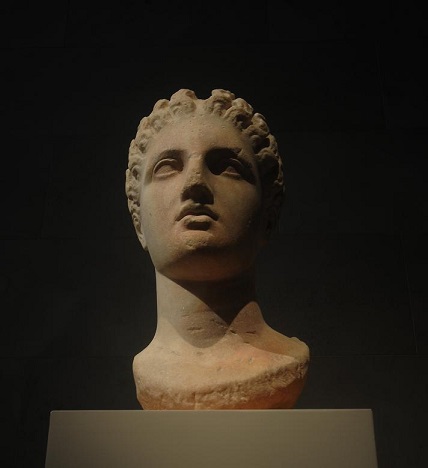
    Above: marble head of a goddess, 4th century BC ~ Metropolitan Museum of Art

    The Age of Women is upon us. All during this year that is about to end, I have felt more urgently than ever that it is time for the women of the world to rise up and seize the power that is within their grasp.

    Worldwide, the ratio of male to female is essentially 50-50; here in the USA, women outnumber men. Yet in the US Congress, only 20% of those serving are female. It is time for that to change, and for women to become fully represented in the halls of government on the local, state, and national levels. 

    I don’t believe in “god”, but I could definitely embrace a female deity, for only a female could have created the universe: men tend to destroy, but women are nurturers.

    So let us now turn away from the old beliefs and find our future instead under the benevolent gaze of that goddess, also known as Mother Nature.  

      IMG_1579

  • Big Basso Note

    Hqdefault

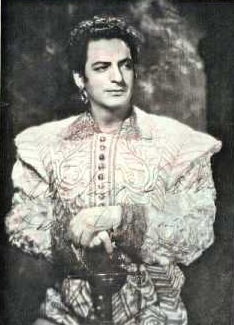
    Above: basso Roberto Silva as Don Giovanni

    Lots of opera lovers are familiar with recordings of the 1951 Mexico City AIDA because it includes an interpolated high E-flat from Maria Callas at the conclusion of the Triumphal Scene. Despite middling sound-quality, there’s actually quite a lot to sustain interest in the performance as a whole – not least the voice-risking, full-throttle Amneris of Oralia Dominguez. Dominguez was only 26 at the time, and singing her first Amneris; she spends the voice so recklessly, including some cavernous chest-tones, that it’s a wonder she was able to ever sing anything again. But in fact she had a career that lasted into the 1970s, and is best-remembered as Erda in the Karajan RING Cycle recording.

    There’s another impressive voice to be heard in this Mexico City performance: basso Roberto Silva, who sings Ramfis. Silva sustains a powerful note in the phrase “Per tua man diventi ai nemici terror, folgore…morte!” during the Temple Scene. Silva holds his own against the Radames of Mario del Monaco.

    Mario del Monaco & Roberto Silva – Temple Scene ~ AIDA – Mexico City 1951

    I went in search of information about Señor Silva, though I could not find much in the way of biographical detail. He sang in LUCIA DI LAMMERMOOR, RIGOLETTO and PURITANI with Callas during her Mexico City seasons, and there is a listing of him as Geronte in MANON LESCAUT (also at the Palacio de Bellas Artes, in 1951) opposite Clara Petrella. It seems he also had a career as a film actor.

    The only other souvenir I could find of Roberto Silva is this rendering of Colline’s “Coat Aria” from BOHEME. It’s quite nice, actually.

  • Big Basso Note

    Hqdefault

    Above: basso Roberto Silva as Don Giovanni

    Lots of opera lovers are familiar with recordings of the 1951 Mexico City AIDA because it includes an interpolated high E-flat from Maria Callas at the conclusion of the Triumphal Scene. Despite middling sound-quality, there’s actually quite a lot to sustain interest in the performance as a whole – not least the voice-risking, full-throttle Amneris of Oralia Dominguez. Dominguez was only 26 at the time, and singing her first Amneris; she spends the voice so recklessly, including some cavernous chest-tones, that it’s a wonder she was able to ever sing anything again. But in fact she had a career that lasted into the 1970s, and is best-remembered as Erda in the Karajan RING Cycle recording.

    There’s another impressive voice to be heard in this Mexico City performance: basso Roberto Silva, who sings Ramfis. Silva sustains a powerful note in the phrase “Per tua man diventi ai nemici terror, folgore…morte!” during the Temple Scene. Silva holds his own against the Radames of Mario del Monaco.

    Mario del Monaco & Roberto Silva – Temple Scene ~ AIDA – Mexico City 1951

    I went in search of information about Señor Silva, though I could not find much in the way of biographical detail. He sang in LUCIA DI LAMMERMOOR, RIGOLETTO and PURITANI with Callas during her Mexico City seasons, and there is a listing of him as Geronte in MANON LESCAUT (also at the Palacio de Bellas Artes, in 1951) opposite Clara Petrella. It seems he also had a career as a film actor.

    The only other souvenir I could find of Roberto Silva is this rendering of Colline’s “Coat Aria” from BOHEME. It’s quite nice, actually.