Author: Philip Gardner

  • Kitty Carlisle

    Scanned Section 17-1

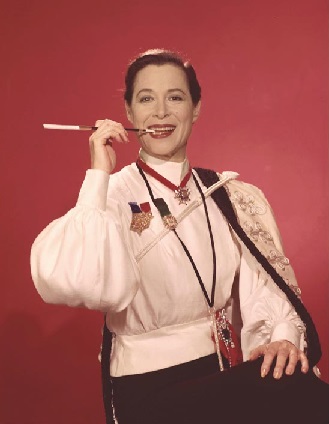
    When I was a kid, everybody knew who Kitty Carlisle was: a panelist on the popular TV game show To Tell The Truth. But I had no idea she was also a singer. Born in New Orleans in 1910, she had studied voice there and subsequently appeared in musicals – and even as Carmen (in Salt Lake City). She made several musically-oriented films, including the Marx Brothers’ A NIGHT AT THE OPERA.

    38b1e7568ea4345712de0e72683ce526-1

    In the summer of 1966, my parents took me for our annual summer vacation to Saratoga where Eugene Ormandy was conducting a concert performance of FLEDERMAUS with the Philadelphia Orchestra. The main attraction for me was the presence of Hilde Gueden, Roberta Peters, and Barry Morell in the cast. Kitty’s being cast as Prince Orlofsky seemed like a gimmick to me, but she actually sang very well. 

    CarlisleFledermaus

    Above: as Prince Orlofsky, in a Louis Melançon/Met Opera portrait

    Later that same year, Kitty Carlisle made her Met debut as Orlofsky. I sent her a congratulatory letter and received the card at the top of this article in return. She sang the role fifteen times with The Met, at Lincoln Center, on tour, and in the Parks Series. In 1980 she appeared in the role for the final time for Beverly Sills’ farewell gala at the New York State Theater. 

    Kitty dated George Gershwin and married Moss Hart. She served for twenty years on the New York State Council on the Arts, and was seen often among audiences at Lincoln Center events. I saw her once, walking alone across The Met lobby: she must have been 80 or so, but her erect posture, jet black hair, and elegant outfit gave her a timeless air. Kitty Carlisle passed away in 2007.

    And yes, she really could sing:

    Kitty Carlisle – Vilja ~ THE MERRY WIDOW

  • Huang|Noseda|New York Philharmonic

    Frank_huang_1684x936

    Above: The New York Philharmonic’s concertmaster Frank Huang

    ~ Author: Oberon

    Wednesday November 22nd, 2017 – The announcement of the death of the great Russian baritone Dmitri Hvorostovsky coloured my entire day. It came, by unhappy coincidence, on the anniversary of the assassination of John F Kennedy which took place in 1963: the most disturbing world-event of my youth. That brutal murder – and its aftermath – I still remember so clearly.

    This evening, I went as planned to  The New York Philharmonic‘s program of Russian and French works. Though I was in the mood for darker, more soul-reaching music, the program – magnificently played – did lift my spirits, if only temporarily.

    As far as I know, Mr. Hvorostovsky appeared with The New York Philharmonic for only one program: in 1998, he sang Mahler’s Kindertotenlieder with the orchestra. I was there, and was swept away by the peerless beauty of his voice and by his deeply poetic interpretation. How I wished he could have been with us again tonight. But the program did commence with music from Hvorostovsky’s homeland: a suite from Nicolai Rimsky-Korsakov’s opera The Legend of the Invisible City of Kitezh. It ended up being my best-loved work of the evening and it was brilliantly delivered by the Philharmonic players, under Gianandrea Noseda’s baton.

    Hearing music from The Legend of the Invisible City of Kitezh brought back memories of a day in 1983 when I stepped off a bus in Boston on a Sunday afternoon and began walking towards the opera house where the Rimsky-Korsakov opera was being performed at a matinee. Suddenly the sky opened up; no store that was open sold umbrellas. I made a run for it, but was literally drenched from head to toe by the time I got to the theatre. Needless to say, I did not enjoy the performance at all, and left at intermission…still soaking wet.

    The suite from The Legend of the Invisible City of Kitezh is in four movements, depicting episodes from the opera: a Hymn to Nature, Fevronia’s wedding procession, the invasion of the Tatars and the subsequent battle, and Fevronia’s Ascension to the Invisible. It begins on a sombre note, with harps adding a touch of magic. Throughout the suite, solo wind passages abound; Maestro Noseda brought out these colouristic facets, and the Philharmonic artists played them delightfully.

    A broad viola theme stands out, and the percussionists are kept on their toes with bells, chimes,and glockenspiel in addition to the timpani, bass, and snare drums that come to attention for the battle scenes. The suite was an excellent program-opener.  

    It’s always a great pleasure when principals from the Philharmonic step into the concerto spotlight. Tonight, concertmaster Frank Huang performed Camille Saint-Saëns’ Violin Concerto No. 3 – my first time hearing it live. The concerto begins without an orchestral introduction; instead, only quiet, darkish chords  provide a background for the rather harsh opening phrases of the violin. Mr. Huang’s playing here seemed a little unsettled, with traces of sharpness of pitch. But within seconds, the violinist had settled into the music and gave a really impressive, technically assured performance.

    As the concerto’s first movement develops, there are dramatic contrasts between full-bodied, passionate themes and more sedate passages. There is a sense of yearning in the music which Mr. Huang conveyed to perfection. In the Andantino which follows, the composer meshes the solo violin with winds in music with an elegant air. 

    The concluding movement begins with a slow introduction and some almost jagged interjections from the  violin. The Allegro non troppo itself is launched with an up-sweeping motif for the solo violin. Passages of coloratura for the soloist alternate with more lyrical elements; then commences a surprising cantabile, where Mr. Huang’s beauty of tone was ravishingly engaging. Pages of virtuosic writing show off the soloist’s fluent technique, and hints of gypsy passion are thrown in. The leaping violin theme returns and is most welcome. An orchestral chorale is an innovative detour before the concerto sails on to a bravura finish. Mr. Huang was rightly accorded a prolonged ovation from the audience whilst his onstage colleagues tapped their bows and stamped their feet in acclaim.

    Noseda

    Above: Gianandrea Noseda

    Rachmaninoff’s Symphony No. 3, under Maestro Noseda’s baton, followed the interval. Like so many symphonic works, its a piece I’m not really familiar with, and I must say, I felt slightly disappointed with it musically. It’s all terribly impressive and enjoyable to hear, but the emotions are rarely engaged. Perhaps it was just my mood, but I kept longing for a deeper experience.

    That said, the artists of the Philharmonic played it most impressively. And it is to them that I owe thanks for moving or thrilling me on this evening: to Mr. Huang of course, but also to other players who had prominent passages tonight: Sheryl Staples (violin), Yoobin Son and Mindy Kaufman (flute/piccolo), Sherry Sylar (oboe), Pascual Martinez Forteza (clarinet), Kim Laskowski (bassoon), and Amy Zaloto (bass clarinet).

    Encouraged by the great success of his Rhapsody on a Theme of Paganini (1934), Rachmaninoff started  work on his third symphony in the summer of 1935. Leopold Stokowski and the Philadelphia Orchestra gave the premiere on November 6, 1936. It was not well-received by the audience, nor by the press. Perhaps, as with those early auditors, I need to hear it a few more times to cultivate a more positive reaction. 

    There are countless appealing passages – a cello tutti was especially beautiful – and the final movement’s journey from optimism thru a vale of doubt and the onward via a meditative passage to a ringing conclusion evoked a big response from the Geffen Hall audience.

    ~ Oberon

  • Dmitri Hvorostovsky Has Passed Away

    004a2691

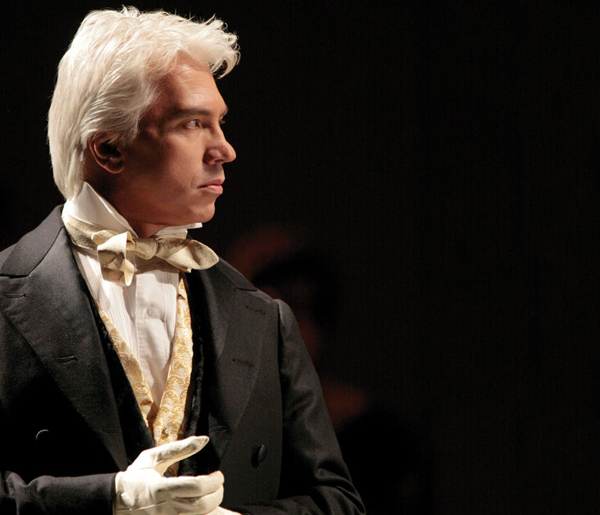
    One of the era’s few true titans of the opera world, Dmitri Hvorostovsky, has passed away at the age of 55. 

    It’s possible I was the first person in the Americas to hear the voice of Dmitri Hvorostovsky. Within a week of his historic Cardiff Singer of the World win in 1989, my dear friend Mollie sent me tapes of the competition – which had produced the famous ‘Battle of the Baritones’ as Dima and Bryn Terfel vied for the top prize. They both won: Hvorostovsky the main title and Bryn took the Lieder Prize; they both went on to spectacular careers.

    His Cardiff win sent the charismatic Russian singer on a career trajectory that took him to the great opera houses and concert stages of the world. He was beloved by audiences everywhere.

    At The Met, Hvorostovsky made his debut in 1995 as Prince Yeletsky in PIQUE-DAME. He went on to sing nearly 200 performances with the Company. I had the good fortune of seeing him often in such roles as Belcore in ELISIR, Germont, Posa, Andrei in WAR & PEACE, Onegin, Renato in BALLO IN MASCHERA, Count di Luna, Simon Boccanegra, Carlo in ERNANI, and Rigoletto.

    In 2015, already in treatment for a brain tumor, Hvorostovsky made a heroic effort to come to New York City to sing three performances as Count di Luna in TROVATORE; the audience greeted him with fervent affection, and he sang beautifully.

    Dima

    Above: fantastic moment as Dima greets fans after his 2015 Count di Luna at The Met.

    In February 2016, I saw Hvorostovsky for what was to be the final time: in recital at Carnegie Hall. On May 7th, 2017, he appeared on The Met stage for the last time: at a gala marking The Met’s 50th season at Lincoln Center, Dima made an unannounced appearance, singing the “Cortigiani!” from RIGOLETTO.

    Scanned Section 2-1

    Three times prior to that last Carnegie recital, I heard Hvorostovsky in concert settings. The first was at Symphony Hall in Boston where, in 1995, he gave an all-Russian program with chorus; as an encore, he sang “America the Beautiful” – gorgeously – and took a high A (or was it a B-flat?) at the climax that was simply thrilling. The entire afternoon was a feast of splendid singing.

    Scanned Section 4-1

    In 1998, soon after I’d moved to New York City, Hvorostovsky sang Mahler’s Kindertotenlieder with the New York Philharmonic. The music suited him to perfection. And in April 2010, he joined soprano Sondra Radvanovsky in a program of arias and duets at Carnegie Hall: two of the truly distinctive artists of our time.

    Looking back:

    6a00d8341c4e3853ef01b8d21a7d3b970c-800wi

    Dmitri Hvorostovsky – BALLO aria – Cardiff 1989

    Dmitri Hvorostovsky – In The Stillness of the Silent Night~Rachmaninoff – Cardiff 1989

    More of The Voice:

    PECHEURS DES PERLES – duet – Paul Groves & Dmitri Hvorostovsky – Tucker Gala 1995

    Hvorostovsky – TROVATORE aria – Tucker Gala 1995

    Dmitri Hvorostovsky & Rene Pape – DON CARLO scene – Met 2006

    Hvorostovsky – arias from PRINCE IGOR and ERNANI – BBC Proms 2006

    As Eugene Onegin:

    Onegin

    Dmitri Hvorostovsky – ONEGIN aria

    Portrait of the artist as a young man:

    1987

    I met Dmitri Hvorostovsky only once, very briefly. I was leaving work at Tower Records as he and his wife were coming in. I spontaneously held out my hand and he grasped it firmly and gave me a smile. Neither of us said a word.

    Dmitri Hvorostovsky – Tchaikovsky ~ None But The Lonely Heart

  • Upcoming: Barnard/Columbia Dances @ NYLA

    23622175_1575201285874852_874849280968044420_n

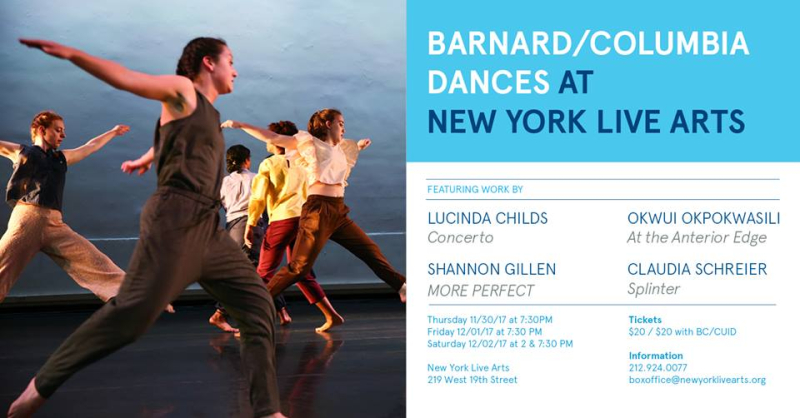
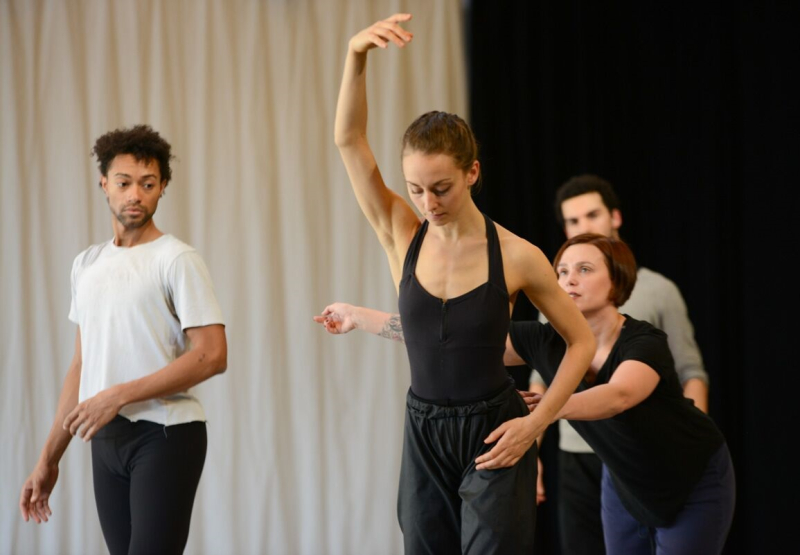
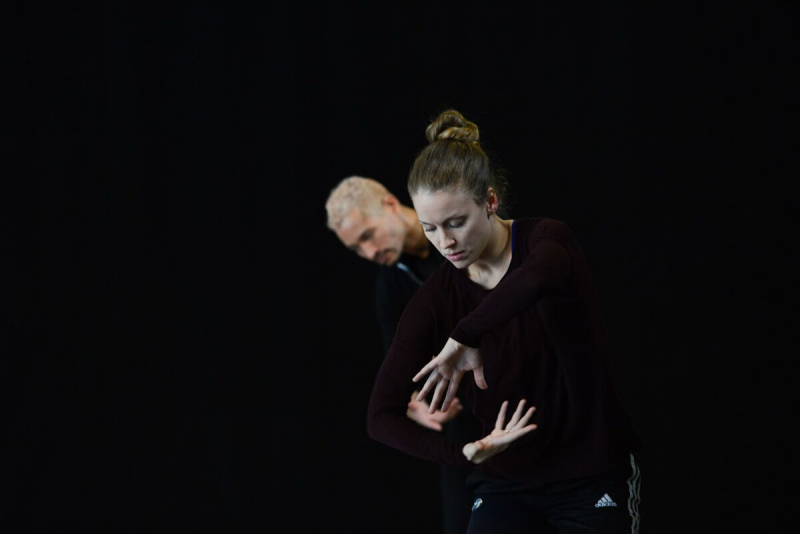
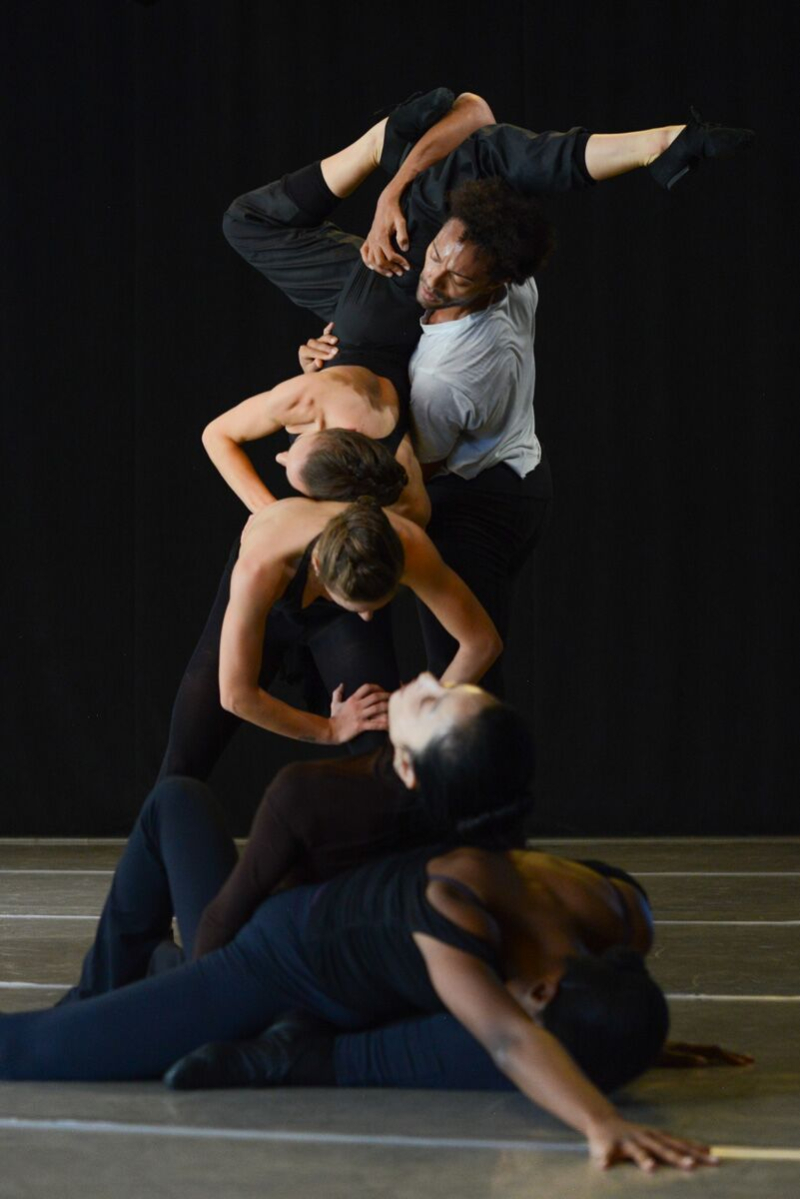
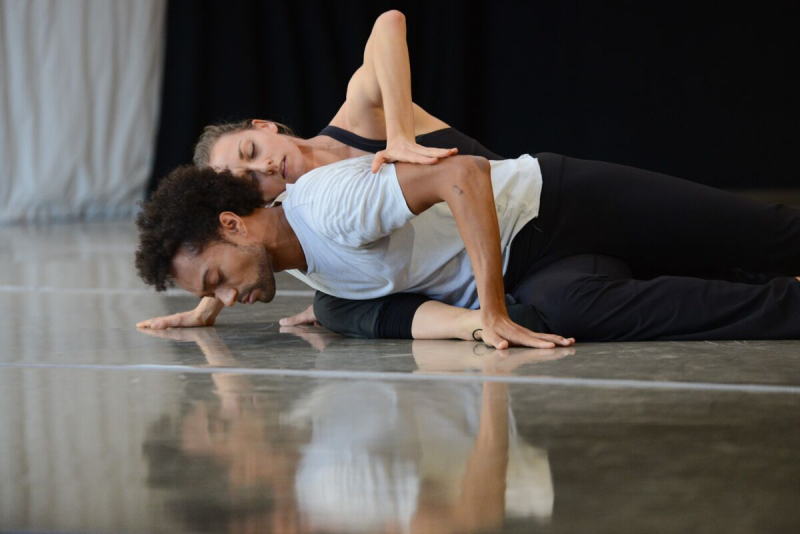
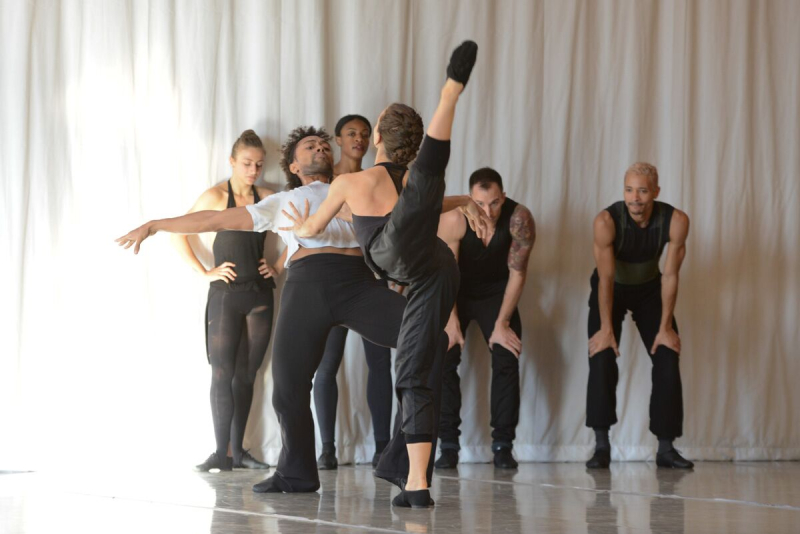
    The premiere of Claudia Schreier’s ballet SPLINTER is one of the works featured on a program at New York Live Arts by Barnard/Columbia Dances. The performance dates are November 30th, December 1st, and two shows on December 2nd. Tickets and more information here.

    Claudia’s SPLINTER gets its name from the Marc Mellits score from which she draws six of eight movements for her dancework. Each movement is named after a type of tree. It’s quite dynamic music, with passing moments of reverie. 

    L1900691

    Above: Claudia Schreier and dancers in rehearsal

  • Flute Affair @ Chamber Music Society

    11.19.17_Flute_Affair

    Above: flautists Ransom Wilson and Tara Helen O’Connor

    Author: Oberon

    Sunday November 19th, 2017 – In a well-conceived program of works composed in four different centuries, Chamber Music Society of Lincoln Center presented two of today’s foremost flautists – Tara Helen O’Connor and Ransom Wilson – joined by an ensemble of top-flight artists. The ink’s probably not totally dry yet on John Luther Adams’ newest score, a CMS co-commission having its New York premiere this evening.

    Music of Bach opened the concert: his Trio Sonata in G-major for two flutes and continuo was given an elegant performance by Ms. O’Connor and Mr. Wilson, with cellist Timothy Eddy and Juho Pohjonen at the harpsichord providing a gracious continuo. The sound of blending flutes has an enchantment that few other instruments playing in duo can evoke. The sonata’s Adagio e piano has an air of sweet melancholy, and in the propulsive rhythmic figures of the two Allegro sections, Mr. Eddy made music that went beyond keeping time.

    For Mozart’s C-major flute quartet, K 285b, Ms. O’Connor was joined by violinist Kristin Lee, violist Paul Neubauer, and cellist Timothy Eddy. In this two-movement work, the composer keeps the flute prominent but doesn’t neglect the other instruments. Rising from the gentle flow of the opening Allegro, Ms. O’Connor’s quicksilver fluting sends a melodic line over to Ms. Lee’s violin. The strings provide a rich yet cultivated blend. We then head into the second movement: a theme-and-variations setting. The theme feels like a courtly dance; in the first variation the flute sings over gently rocking strings. Ms. Lee shines in the second variation and Mr. Eddy in the third, where the Neubauer viola injects an insinuating little phrase that’s so delicious. The fourth variation takes a minor-key turn, with a sighing quality. Flute-song is the attractive essence of the fifth variation: Ms. O’Connor’s playing is soft and sweet. The sprightly closing variation is in spirit of the country dance known as the Ländler. It’s a short dance, but full of charm.

    John luther adams

    Above: composer John Luther Adams

    The new Adams was up next: ‘there is no one, not even the wind’ proved to be both intriguing and a bit problematic. The stage had been set for the work’s large ensemble, which includes our two flautists – Ms.O’Connor now playing alto flute – two percussionists (the excellent Ayano Kataoka and Ian David Rosenbaum, with a marimba for each…and a bass drum as well), piano (Mr. Pohjonen), violin (Ms. Lee), viola (Mr. Neubauer), cello (Mr. Eddy), and bass Anthony Manzo.

    The music begins delicately with the striking of individual bell tones. Ms. Lee’s violin enters on high; slowly, the other voices of the ensemble are mixed in: we seem to be floating thru space and time. Piercing flute notes from Mr. Wilson seem like signals from distant worlds; meanwhile Ms. O’Connor’s alto flute evokes ancient realms on Earth. Notes struck on the marimbas linger on the air, enveloping us in mystery.The bass drum sounds like distant thunder, with deep piano tones adding to an ominous feeling. The flutes resume; the music transcends reality as sound-clouds move across the horizon of the mind.

    The music is marvelously crafted and – needless to say – magically played. But there’s simply too much of it: even the most poetic dream can outlast itself. An annoying cougher infringed on the atmosphere, and a sense of restlessness began to intrude. Much as I loved the sounds I was hearing, I began to wonder if we had been adrift too long. And yet, I could definitely listen to this work again – preferably at home, where the imagination could be allowed full play.

    During the interval, there was considerable buzz about the Adams work: from what I could gather, people around us found it essentially fascinating but too extended.  

    Dutilleux young

    Above: composer Henri Dutilleux around the time he wrote his Sonatine

    Henri Dutilleux passed away in 2013 at the age of 97. His Sonatine for flute and piano was commissioned by the Paris Conservatory as a test piece for the graduating flautists of 1942; tonight, Ransom Wilson and Juho Pohjonen turned it into ten minutes of magic.

    The Sonatine begins mysteriously, the piano soon entwined with the flute. The music is very “French” with lingerings in the upper range and twisty rising scales. A bird-song cadenza shows off Mr. Wilson’s fluency of technique; this leads to a lyrical developmental section. There’s a full stop, and then rippling figurations from the piano draw us into music that’s light, bright, and subtly ironic. The piano writing turns grand before another cadenza – this one heading downhill – carries us on to a witty speed-up to the end. The audience gave the players – and the piece – a warm reception. I’m going to tell some of my choreographer-friends about it.

    We bounced back to the second decade of the 19th century for the evening’s final work: the Septet in D-minor by Johann Nepomuk Hummel. Dating from 1816, this septet sounds rather ahead of its time, thanks to the composer’s ideas about instrumentation, harmony, and modulation. It’s a piece that brings the listener a sense of elation in both its musical freshness and its inspired instrumentation: Hummel calls for a trio of strings and a trio of winds, and he sets them off brilliantly against writing for the piano that calls for great virtuosity and sensitivity.

    Juho pohjonen

    Within moments of the start of the Hummel, the audience could grasp the fact that the man at the Steinway, Juho Pohjonen (above), was playing with extraordinary dexterity, feeling, and commitment. He wasn’t just playing the notes, but investing them with colour and nuance – one could often sense a full dynamic range within a single passage; and how fine were Mr. Pohjonen’s taperings of the many scale phrases to keep us under his spell. When the septet ended, his colleagues urged the pianist to step forward where he was greeted by a barrage of bravos. Called back to the stage, the players sent Mr. Pohjonen out first, then they all held back so that he had a solo bow. It was one of my favorite moments from among the many evenings I’ve spent at Alice Tully Hall.

    The Hummel is simply bursting with great opportunities for each of the seven players to show what they can do. After a full-bodied start, hesitations creep in. Mr. Manzo’s bass makes the first of numerous incursions with rich, rhythmic sound. Mr. Neubauer’s viola pulses as the three wind players comment. Meanwhile, the piano writing is a joy to hear as Mr. Pohjonen veers from extroverted to delicate in the twinkling of an eye. He can be pensive at one moment and wryly light-hearted the next. Before the first movement ends, Mr. Eddy’s cello has its say.

    “It’s a piano thing!”, I wrote as the second movement commenced: it’s cleverly marked Menuetto o scherzo by the composer, and the bass gets us involved before the piano again draws our attention. Cello and viola meld with smooth sounds from Eric Reed’s horn; Mr. Reed repeatedly sustains notes which lead into melodic motifs.

    In the Andante cantabile, a melody gets passed about with variations. Mr. Pohjonen dazzles us yet again, later adopting a ‘toy piano’ sound for some fanciful coloratura. A slow-rising tutti sends the piano swirling; the bass lures us to a fun finish.

    The forward impetus of the concluding Vivace brings us to a conversation between the Neubauer viola and James Austin Smith’s congenial oboe; Mr. Eddy has a heartfelt cello passage with piano, and then Ms. O’Connor’s flute blends beautifully with the oboe and horn as Mr. Pohjonen’s playing is honed down to a thread. Cascades of notes from the keyboard underscore the final measures of this fantastic piece. 

    • Bach Trio Sonata in G-major for Two Flutes and Continuo, BWV 1039 (c. 1736-41)
    • Mozart Quartet in C-major for Flute, Violin, Viola, and Cello, K. 285b (1781)
    • J. L. Adams there is no one, not even the wind for Two Flutes, Two Percussionists, Piano, Violin, Viola, Cello, and Bass (New York Premiere, CMS Co-Commission) (2017)
    • Dutilleux Sonatine for Flute and Piano (1943)
    • Hummel Septet in D-minor for Flute, Oboe, Horn, Viola, Cello, Bass, and Piano, Op. 74 (c. 1816)

    ~ Oberon

  • Lubovitch’s LEGEND OF TEN @ Martha Graham

    SA3_9126_preview

    Above: Abdiel Cedric Jacobsen and Anne Souder of the Martha Graham Dance Company; photo by Nir Arieli

    ~ Author: Oberon

    Friday November 17th, 2017 – The renowned choreographer Lar Lubovitch will celebrate the 50th anniversary of his Company in the coming Spring when the Lar Lubovitch Dance Company will perform two programs at the Joyce Theater from April 17th through April 22nd, 2018. Joining in the celebration, the dancers of the Martha Graham Dance Company will perform the Lubovitch masterpiece LEGEND OF TEN, set to Johannes Brahms’s Piano Quintet in F minor; the Lubovitch Company premiered this work in 2010.

    This afternoon, photographer Nir Arieli and I stopped by at the Graham Studios at Westbeth to watch a rehearsal of LEGEND OF TEN. The Graham dancers are the crème de la crème of the dance world: in their combination of athleticism and artistry, they have few rivals. On top of that, they’re all really nice people. So any chance to be in their presence has a special meaning for me.

    I’ve seen LEGEND OF TEN three times in the past, danced by the Lubovitch Company. Yet today, I was struck afresh by its power and beauty. Taking wing on the Brahms score, LEGEND sends the dancers swirling thru dynamic movement that melds ballet motifs with elements of folk dance.

    In the course of today’s rehearsal, Mr. Lubovitch did quite a bit of dancing himself as he demonstrated for the Graham dancers. Assisting Mr. Lubovitch was Kate Skarpetowska – an estimable choreographer in her own right who has danced with the Lubovitch Company and is intimately familiar with his work.

    Here’s a gallery of Nir Arieli’s images from this afternoon:

    SA3_8351_preview

    From left: Ben Schultz, Anne O’Donnell, Kate Skarpetowska, So Young An, Leslie Andrea Williams, Lorenzo Pagano

    SA3_8409_preview

    Abdiel Cedric Jacobsen, Anne Souder, and Kate Skarpetowska

    SA3_8470_preview

    Watching a film of LEGEND with Mr. Lubovitch

    SA3_8477_preview

    SA3_8546_preview

    Lar Lubovitch coaching Abdiel and Anne Souder in a duet passage

    SA3_8568_preview

    Anne Souder and Anne O’Donnell

    SA3_8832_preview

    Leslie Andrea Williams

    SA3_8896_preview

    So Young An

    SA3_9155_preview

    Lorenzo Pagano

    SA3_8804_preview

    Ari Mayzick, Anne O’Donnell

    SA3_9348_preview

    Abdiel Cedric Jacobsen

    SA3_9481_preview

    Ecstatic moment

    SA3_8990_preview

    Abdiel with Anne Souder: pas de deux…continued below

    SA3_9101_preview

    SA3_9110_preview

    SA3_9111_preview

    SA3_9125_preview

    SA3_9139_preview

    SA3_9142_preview

    SA3_9144_preview

    Ensemble: Ari, Ben, Lorenzo, Laurel Dalley Smith, Leslie

    SA3_9180_preview

    Leslie Andrea Williams

    SA3_9337_preview

    Abdiel and Anne Souder

    SA3_9492_preview

    Leslie Andrea Williams

    SA3_9505_preview

    Many thanks to Denise Vale of the Graham Company for helping to arrange today’s studio visit, and also to Janet Eilber, publicist Janet Stapleton, to Mr. Lubovitch and Ms. Skarpetowska for letting us eavesdrop on their process, and – of course – to the phenomenal dancers. And although they weren’t dancing today, it was great to catch up briefly with Ying Xin and The Lloyds: Knight and Mayor.

    All photos by Nir Arieli.

    ~ Oberon

  • TURANDOT @ The Met

    Turandot0607.07

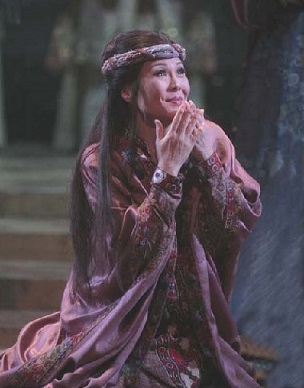
    Above: Hei-Kyung Hong as Liu in a Beatriz Schiller/Met Opera photo

    ~ Author: Oberon

    Thursday November 16th, 2017 – I invited my friend Claudia Schreier to this evening’s performance of TURANDOT at The Met; I wanted her to experience one of last truly grand opera productions in the Met’s repertory. The presence in the cast of Hei-Kyung Hong as Liu was a major factor in choosing this particular evening.

    As at every performance of TURANDOT I’ve attended in the past 30 years, the house was packed. And, as at every Hei-Kyung Hong performance I have attended at The Met, the soprano’s presence in the cast drew large numbers of Asian opera fans. It turned out to be – yet again – Ms. Hong’s night. 

    The evening got off to a sluggish start: Carlo Rizzi’s pacing of the Mandarin’s opening address was slower than the MTA and caused baritone Jeongcheol Cha to dig deep for sufficient breath to sustain the phrases of his proclamation. Later, Rizzi thoughtlessly allowed too much orchestral volume at times, undermining expressive opportunities for his singers.

    23658727_10156216374773690_1557430116954388631_n

    The towering figure of Bulgarian basso Giorgi Kirof as Timur (above, taking a curtain call) came onto the scene; in his Met debut, Mr. Kirof’s looming stature gave Ms. Hong’s petite figure as Liu an almost childlike aspect. The basso – a stalwart of the Sofia National Opera – gave a vocally moving performance, reaching emotional heights in the heartbreak of “Liù…Liù…sorgi! È l’ora chiara d’ogni risveglio!” which literally choked me up.

    Alexey Lavrov was a terrific Ping, with a big, warm sound; his “Ho una casa nell’Honan…” was superbly sung. As his sidekicks Pang and Pong, Tony Stevenson and Eduardo Valdes gave characterful singing. I actually love the scene of the three ministers, which Puccini orchestrated so precisely. As the Emperor Altoum, Ronald Naldi’s voice ‘spoke’ clearly – all the way from Amsterdam Avenue.

    Aleksandrs Antonenko had a fine evening as Calaf. He measures out the voice thoughtfully in Act I, saving up for the arduous singing ahead. But his “Non piangere, Liu” was finely judged, revealing veins of beauty in his powerhouse voice. Throughout the Riddle Scene, the tenor scored with dramatically-lit singing, and joined Oksana Dyka’s Turandot on a firm and sustained high-C at the end of “In questa reggia“. Mr. Antonenko also took – and held – a strong high-C at “No, no, Principessa altera! ti voglio ardente d’amor!

    Mr. Antonenko’s “Nessun dorma” was persuasively sung, reveling in the music’s inherent lyricism; he pulled off the climactic phrase impressively and managed to both acknowledge and forestall a wave of ‘bravos!’ by holding up his hand, letting the opera flow forward. The tenor’s singing in the final duet was first-rate, with some lovely expressions of tenderness as Turandot succumbed to him.

    Oksana Dyka’s voice is slender of tone yet strong of projection. The top range doesn’t blossom but the notes are there; it took a few phrases for the sound to shake loose. As she moved downstage in the course of “In questa reggia” the voice began to speak into the house with increasing effect. Her Riddle Scene was filled with characterful expression: fire and ice. Following her collapse and her desperate plea to her father, the scene turned dramatically absorbing.

    Ms. Dyka, her hair down and nearly prone with despair, is literally overcome with wonderment when Calaf/Antonenko offers her a way out of the bargain. She simply stares at him, realizing that this is a different kind of man than she’s accustomed to dealing with. Then he gently helps her to her feet. The chemistry between the two singers here was genuine; I’ve never seen that moment done quite that way.

    Ms. Dyka’s voice seemed freer in Act III, and she was sustaining the phrases more and reveling in the upper range notes, holding them to generate increased excitement. Her “Del primo pianto” was movingly sung, opening up her humanity which has been bound in ice for so long. In the final moments of the opera, the soprano’s “Padre augusto…Conosco il nome dello straniero! Il suo nome è…Amor!” had a silvery gleam and a prolonged top-B.

    Hei-Kyung Hong’s Liu has captivated audiences time and again in her long Met career. As someone who has seen and heard so many splendid sopranos essay the role of Liu – people like Moffo, Freni and Caballe – I feel Hei-Kyung’s stands at the pinnacle both for her physical perfection and her deeply moving singing.

    If her Wikipedia page is accurate, Hei-Kyung is now 58 years old. Her voice has retained its freshness thanks to her wisdom in choosing repertoire. Tonight both the beauty of her sound and the instinctive rightness of her phrasing gave the music a deeply feminine quality; she also has a feeling for the Italianate style that escapes many non-Italian-born singers. Both her arias were as finely sung as I’ve ever heard them, and her death scene was truly heart-rending. She received a vociferous ovation, very much deserved.  

    All evening, the Met Orchestra made marvelous music, with particular magic from the violin of concertmaster David Chan who made so many of his phrases shine. Likewise, the chorus were at their most fervent and full-voiced.

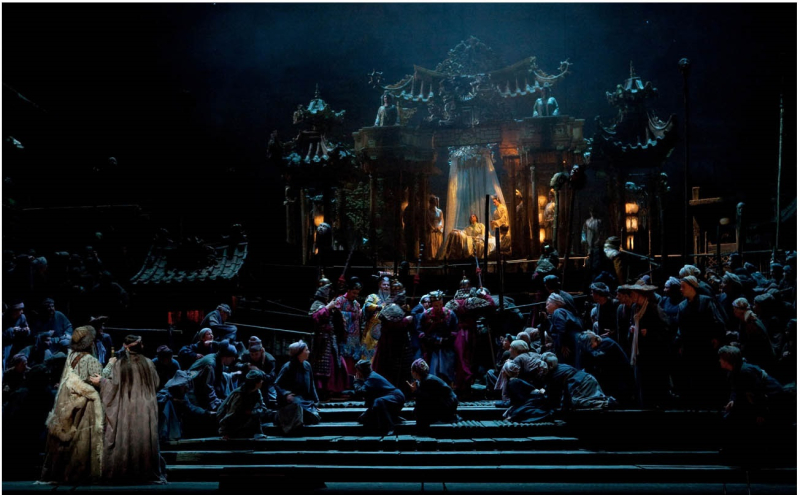
    Turandot0910.06 sohl

    Above: Act I production photo by Marty Sohl/Met Opera

    Some of the original staging has been altered and to me this weakens the overall effect of the opera. And the crowd scenes seem less crowded than in the past. The 45-minute intermission after the 35-minute first act would have been unbearable had I not had the one-and-only Claudia Schreier to keep me company.

    Catch the curtain calls here, with the charming episode of the “missed bouquet”.

    ~ Oberon

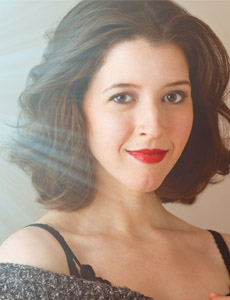
  • Lisette in London

    Main_36362

    Lisette Oropesa (above) made her debut at The Royal Opera House, Covent Garden, on October 30th, 2017 in a controversial production of Donizetti’s LUCIA DI LAMMERMOOR.

    Directed by Katie Jenkins, the production was largely savaged by critics and operagoers alike when it premiered in 2016 (“…’too leaden even for the hecklers…” said The Telegraph). But Lisette and her fellow cast members seem to have rescued it in this revival, with the help of some judicious toning-down by the director.

    The reviews are coming in, and they are raves. Here’s a sample:

    “The cast is outstanding, especially the Lucia of Cuban-American soprano Lisette Oropesa. A consummate actor with a fresh, pearly sound and exquisite top notes, Oropesa creates a flesh-and-blood character out of Donizetti’s sketchy heroine. Her mad scene is beautifully judged, full of nuance and changes of pace – deeply disturbing rather than tragic – and her tender relationship with Alisa (superbly acted by Rachel Lloyd) is the most honest in this ghastly story.” ~ The Stage

  • David Finckel and Wu Han

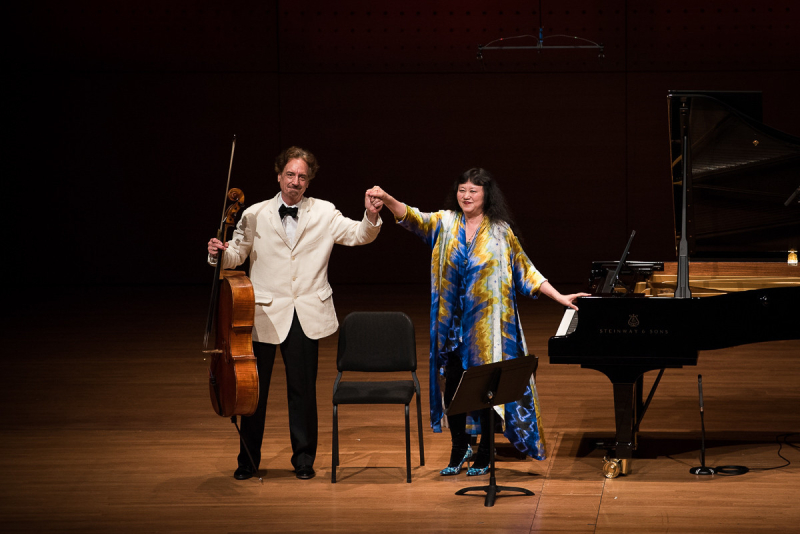
    W_006_ChamberMusicSociety_CherylynnTsushima_20170712

    Above: David Finckel and Wu Han, photo by Cherylynn Tsushima

    Due to the severe wind and rainstorm on Sunday, I had to miss the Chamber Music Society of Lincoln Center‘s program featuring Tamara Mumford and the Escher String Quartet. I was there in spirit.

    I did want to draw everyone’s attention to this wonderful article about Chamber Music’s Society’s co-Artistic Directors, Wu Han and David Finckel. They are two of my favorite players and personalities in the music world, and it’s enlightening (and fun!) to read more about them.

    ~ Oberon
  • Pianist George Li @ Weill Hall

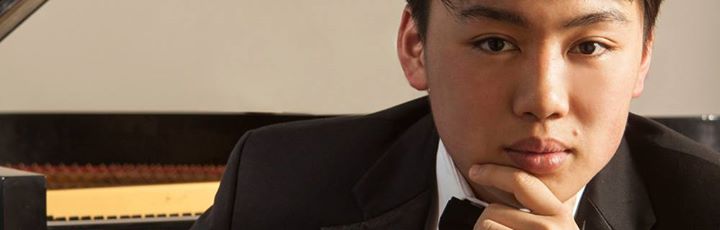
    Li

    Above: George Li

    ~ Author: Oberon

    Friday October 27th, 2017 – I first heard the young Chinese-American pianist George Li when he appeared at the 2015 Young Concert Artists gala; read about his marvelous performance here. Tonight I was glad of an opportunity to hear Mr. Li again, in a solo recital at Weill Hall.

    Small of stature, the 21-year-old pianist is a titan of talent. In a well-devised program this evening, he captivated his large and very attentive audience with playing on the grand scale: and while he is capable of massive volume and of veritable thunderbolts hurled from the keyboard’s lower octaves, Mr. Li also shows expert dynamic control in nuanced phrases and great sensitivity in passages of poetic expression. 
    Mr. Li’s choice of Haydn to open his program proved ideal. In the composer’s B-Minor Sonata (1776), the pianist was able, within moments, to display his broad dynamic range. The opening Allegro moderato alternated subtle turns of phrase with full-bodied, emphatic motifs. The sonata’s Minuet, a simple melody, turns somewhat grander in the trio section; Mr. Li delineated this shift to perfection. In the somewhat rambunctious final Presto, the pianist teased us with charming pauses between scales and trills, tossing off all the coloratura passagework in this unusual and inventive movement with complete clarity.

    The centerpiece of Mr. Li’s program was his interpretation of Chopin’s second sonata, which is built around its famous third movement: the Marche funèbre.

    From its turbulent opening, the opening Grave – Doppio movimento gave us a breathtaking display of the pianist’s gifts. The music is alternately seething and pensive, with a rising theme corresponding to a rise in the player’s passion. My notes on his playing were reduced to “Huge!”, “Thrilling!” and “Epic turmoil!” After a brief display of tenderness, the pianist became so searingly rhapsodic that I simply wrote “DAMN!”. In an electrifying moment, Mr. Li sustained the movement’s concluding chord and then suddenly pulled his hands off the keyboard to his chest. It was a gesture I’ll never forget.

    Following an agitato start and some darkly wild passages, the second movement turns into a slow waltz. Mr. Li wandered beautifully thru this musical landscape, reveling in his dynamic control. After a return to speediness, the music ends on a fading note: more magic.

    The doleful Marche funèbre was poignantly played; we felt the weight of the world upon us in Mr. Li’s deeply mournful phrases. Then a clear, sentimental melody rises from the bleakness. With heartfelt modulations and a caressive softness of touch, the pianist’s playing here was transportive. The march then returns, and gloom settles in once more.

    With a scurrying feeling, the sonata’s concluding Presto seems almost like an afterthought in its brevity. After about a minute, Mr. Li’s nimble hands suddenly hesitate and the sonata ends with a briskly struck chord.

    The Chopin elicited prolonged applause from the audience, and Mr. Li was called back for two bows; he acknowledged our enthusiasm with a lovely hand-over-heart gesture.

    Following a longish interval during which the piano tuner seemed to be performing major surgery on the Steinway, Mr. Li returned with works by Rachmaninoff and Liszt.

    I found Rachmaninoff’s Variations on a Theme of Corelli, written in 1931, to be the least interesting music on the program. The theme itself is nothing to write home about; then Rachmaninoff throws everything but the kitchen sink into the variations. Mr. Li brought all his prodigious gifts to this piece, from the simple setting forth of the theme thru the panoramic rhythms and harmonies of the endless variations. The audience were with him every step of the way, but – for all the delights of his playing – I found myself wishing he had programmed something else.

    Such notions were swept away with Mr. Li’s choices of the concluding works for his recital: ideally contrasted, Franz Liszt’s meditative the Consolation in D-flat Major found its perfect counter-poise in the mad virtuosity of his Hungarian Rhapsody No. 2.

    In the Consolation, the pianist created a dreamlike atmosphere with his delicate, contemplative playing. Then there was a brief silence and Mr. Li launched the Hungarian Rhapsody with its vibrant gypsy themes. Sparkling virtuosity, and a sense of playfulness in his variances of speed and witty pauses, the pianist kept the audience enthralled. The sight of his fingers flying up and down the keyboard at super-speed with mind-boggling.

    Engulfed in waves of heartfelt applause, Mr. Li offered two encores from the operatic repertoire, displaying both his sensitive and his uninhibited sides. In the gentle and simple clarity of the Blessed Spirit theme from Gluck’s ORFEO ED EURIDICE and then in the sexy brilliance of the Chanson bohème from Bizet’s CARMEN, Mr. Li summarized his dual nature: as a poet and a virtuoso.  

    The Program:

    • HAYDN Piano Sonata in B Minor, Hob. XVI: 32
    • CHOPIN Piano Sonata No. 2 in B-flat Minor, Op. 35
    • RACHMANINOFF Variations on a Theme of Corelli
    • LISZT Consolation No. 3 in D-flat Major
    • LISZT Hungarian Rhapsody No. 2 in C-sharp Minor

    ~ Oberon