Author: Philip Gardner

  • André Watts|ORPHEUS @ Carnegie Hall

    Watts11_high - david bazemore

    Above: pianist André Watts, photo by David Bazemore

    ~ Author: Oberon

    Thursday October 26th, 2016 – Pianist André Watts joined ORPHEUS this evening as the beloved chamber orchestra kicked off their 2017-2018 Carnegie Hall season with a New York premiere and classics by Mozart and Beethoven. We learned that 600 school-children were in attendance – up in the balcony – having been provided with tickets free of charge. A subtitle for the program might have been “Pianists Who Compose”, as Mozart, Beethoven, and Iyer each first won renown at the keyboard. 
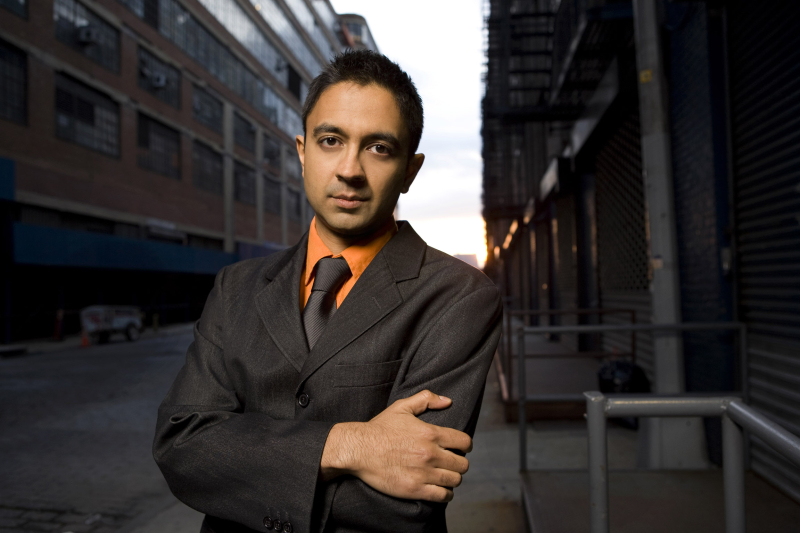
    Vijay-Iyer

    American composer Vijay Iyer (above) is a jazz pianist, bandleader, producer, electronic musician, and writer. Tonight ORPHEUS offered the New York premiere of Mr. Iyer’s Asunder, an eclectic and vastly pleasing work that suits the ORPHEUS players to perfection.

    In his program note, Mr. Iyer said that, on first receiving the ORPHEUS commission, he thought of writing a piece that would reflect the current deep divisions in our country and “…how it feels to be an American today: pulled apart, broken, anxious, untethered…” He thought of writing big, violent music but then he chose instead to write a piece that “…imagines unity anew…” Bravo! for taking such a stance, Mr. Iyer.

    Asunder is presented in four movements; it opens with pacing horns and an oddly noble feeling. Pulsing rhythms and a somewhat ominous timpani carry us thru to a passage for strident winds. Swirls of notes from both strings and winds allude to the movement’s title: Agitated. It ends with dour, deep sounds.

    Marked Patient and mysterious, the second movement begins with plucking and a jazzy piccolo solo over bass and cello. A Mid-Eastern flavour permeates; following a build-up to an almost militant passage, a Glassian repetitive motif takes over and we settle into a slow sway.

    Calm and precise, like clockwork begins with a gorgeous flute solo; bell tones and other percussive effects designate the effect of time. A repeated downward passage is repeated just a few too many times (my sole reservation about the work).

    Solo oboe over bass accompaniment opens the concluding Lush movement; then a rather drowsy clarinet takes over. The Mid-East is evoked again as the music assumes the feeling of a desert journey, then pulses up over deep bass notes. The glockenspiel sounds again, and after a plucked passage the finale turns cinematic.

    Percussionist Maya Gunji did a great job in the Iyer, as did several of her woodwind colleagues, though I couldn’t see them clearly enough to name names. And the strings sounded superb…all evening, in fact. Mr. Iyer was called to the stage and was enthusiastically applauded by audience and musicians alike.

    The Steinway was then rolled out, and André Watts appeared to a warm welcome from the Carnegie audience.

    André Watts came to public prominence at the age of 16 when Leonard Bernstein chose him as a soloist, making his New York Philharmonic debut on one of the orchestra’s Young People’s Concerts – a concert which was broadcast nationwide on CBS-TV. Two weeks later, Bernstein again called upon the young and charismatic Mr. Watts to substitute at the last minute for the ailing Glenn Gould in performances of Liszt’s E-flat Concerto with the New York Philharmonic. In 1976, André Watts’ recital for the Live From Lincoln Center series was the first full-length recital broadcast in the history of television.

    The Watts career has spanned over half a century, interrupted at times by health issues. Now 70 years old, he plays with the energy and distinction that have endeared him to audiences worldwide over the decades; he played, in fact, like a very jeune homme.

    Mozart’s Piano Concerto No. 9, composed in January 1777, picked up the appellation “Jeunehomme” “young man”) by mistake when Mozart’s mention (in a letter) of the name of the young pianist who inspired the work –  Victoire Jenamy (1749-1812) – somehow got scrambled from Jenamy to Jeunehomme. Victoire was the daughter of the famous 18th-century ballet master Noverre, and she was apparently in Salzburg during the winter of 1776-77 where she met Mozart. This was the first of the composer’s piano concertos to appear in print, published in Paris around 1780.

    My first impression of Mr. Watts as he began to play (I’d never heard him live before) was: “He makes the piano sing!” This concerto is very demanding, and – as the pianist remarks in his program note – shows such  maturity of writing from a 21-year-old that we could easily be convinced it comes from a later time in the Mozart’s career. It is, overall, music that brings genuine comfort and joy.

    In the opening Allegro, Mr. Watts displayed a light touch in a series of delicious trills, with much charming filigree; yet there was also warm power and rhythmic vitality to be enjoyed. An elaborate cadenza held the audience in silent thrall. The following Andantino begins in a somber mood, and the pianist’s sad song (again with some sweet trills) was expressively played. As a more hopeful feeling rises, the orchestra has a really lovely passage: the music has an unusual sense of containment, of assurance and grace. A downward-flowing cadenza, with yet more intriguing trills, showed Mr. Watts’ control and artistic depth.

    The finale, a Rondo, commences with virtuosic feats from the pianist. A fine flow develops, with cascades of piano notes. In the middle of the movement, Mozart injects a courtly Minuet interlude, introduced by the soloist who unfurls the melody gently over a pizzicato accompaniment. Another cadenza, now with a rising aspect, again gives us savourable trills.

    The audience abundantly hailed Mr. Watts and the ORPHEUS players: a full standing-ovation ensued. We hoped for an encore, but the pianist – perhaps wisely – left us to our Mozartean reveries.

    Following a longish intermission, the Beethoven 1st symphony provided a perfect finale to the evening. We’d just heard this work a couple of weeks ago, played by the Orchestra of St. Luke’s in this very hall. It’s such a cordial piece, and I’ve grown really fond of it. It was nice to hear it again so soon. 

    The Beethoven 1st is the symphony that seems to start mid-phrase. The ORPHEUS players gave a marvelous performance, with a breadth and richness of sound that filled the venerable space. Rhythmic acuity and some lovely solo bits from the winds players engaged us from first note to last, and made for an impressive end to a thoroughly satisfying evening of music-making.

    The Program:

    VIJAY IYER: Asunder (New York Premiere)

    MOZART: Piano Concerto No. 9, K. 271 “Jeunehomme

    BEETHOVEN: Symphony No. 1

    ~ Oberon
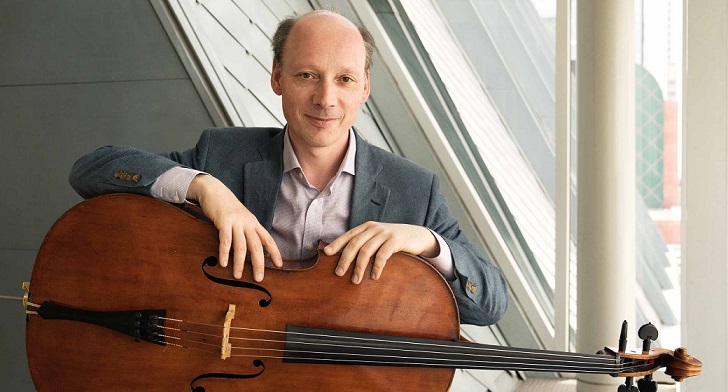
  • Ensemble Connect @ Weill Hall

    EnsembleConnectBanner

    ~ Author: Scoresby

    Monday October 23rd, 2017 – In Carnegie Hall’s intimate Weill Hall, I attended an eclectic concert of American music performed by Ensemble Connect (formerly Ensemble ACJW). For those that do not know, Ensemble Connect is according to the Carnegie Hall website “a program of Carnegie Hall, The Juilliard School, and the Weill Music Institute in partnership with the New York City Department of Education.”  Each member is a two-year fellow who performs, teaches, and educates mainly (but not exclusively) in NYC. The Carnegie Hall and Paul Hall (at Juilliard) series of performances are always interesting, as the ensemble typically plays adventurous mixes of chamber music repertoire. 

    I was excited to see the program began with the wonderful clarinetist Yonnah Kim and the colorful pianist Lee Dione performing the Bernstein Sonata for Clarinet and Piano. While I had never heard the sonata before, I remembered Ms. Kim from her excellent performance last year in Golijov’s The Dreams and Prayers of Isaac the Blind. The sonata is divided into two movements, the first being having a relatively dissonant skittering melody reminiscent of Hindemith. The second is more in the mode of Bernstein’s popular style, with jazzy sections. I couldn’t help but wonder if Bernstein had been listening to the Rite of Spring when composing the piece, there are a few allusions throughout the sonata. 

    Ms. Kim captured the oscillating clarinet in the first movement part well with a clear, mysterious sound – managing to shade the lower register parts of the work with a dusty timbre. In the second movement, she added flair to the jazzy sections making them come to life. Mr. Lee managed to capture the mood well with subtle dynamic phrasing and finesse in the rhythmic sections. While I can’t say I was fond of the sonata musically, both players sounded as if they had playing together for years.

    After the sonata, Mr. Dione gave a short speech tying together the wide-ranging program; highlighting the need for distinct American voices to be heard. The second piece on the program was Missy Mazzoli’s Still Life with Avalanche, which is for flute (Rosie Gallagher), clarinet doubling as bass clarinet (Yoonah Kim), violin (Adelya Nartadjieva), viola (Andrew Gonzalez), cello (Madeline Fayette), piano (Lee Dione), percussion (Brandon Ilaw), and 3 harmonicas. The work begins with the harmonicas and strings creating an atmospheric drone that is then interrupted by the bass clarinet and piano. These interruptions build and become more frequent until the piece takes shape. It sounds like a mix of a few genres ranging from rock to contemporary classical. The players all gave a committed performance, embracing each different style of music and coordinating well. 

    The last piece on the brief first half of the program was Copland’s Sextet for clarinet (Yoonah Kim), violins (Rebecca Anderson and Adelya Nartadjieva), viola (Andrew Gonzalez), cello (Julia Yang), and piano (Mika Sasaki). The piece is a reduction of Copland’s Short Symphony, though I hadn’t heard either before. The writing is densely packed with complex rhythms, jazzy riffs, and lyrical melodies. It is an excellent piece, though there is almost too much to listen to in the first movement. Despite the difficulty of getting the timing correct on this piece, the ensemble seemed very together capturing the nervous trudging quality of the opening. Balance-wise, it was a pleasure to hear Ms. Yang’s resonant voice, she seemed to capture the bouncing character of the piece well. It keeps its momentum all the way until the first chords of the second movement. There is a dramatic shift to a quiet chorale-like second movement, which slowly builds in intensity. The strings did a good job of providing a resonant sound, contrasting the first movement well. The finale is a more calculated cacophony that really emphasizes jazzy rhythms and slides. Duets between Ms. Kim and the various strings provided a light and entertaining sound.

    The second half of the program was devoted to one of Steve Reich’s most important works: Different Trains. The piece is for a quartet and tape (sound engineer Benjamin Furiga assisting in this performance); the quartet consisting of Adelya Nartadjieva on first violin, Rebecca Anderson on second violin, Andrew Gonzalez on viola, and Madeline Fayette on cello. The tape has tracks of trains, the speech of holocaust survivors from interviews with Mr. Reich, and a taped quartet. The music and the speech imitate each other creating a hybrid between speech and music through the three movements of the piece. While certainly an important milestone in 20th century classical music and a well-crafted composition, I’ve never had an affinity for this piece. It seemed particularly strange to hear such an emotional work about the holocaust and the aftermath of World War II in Weill Hall’s intimate grandiloquent setting with gold trimming and a beautiful chandelier. 

    Nonetheless, the musicians executed the performance well, keeping their place despite the fact that there seemed to be technical issues with the spoken part of the tape (while audible some of the time, it seemed to cut in and out at times making it hard to follow). They all seemed invested in the music and it showed: many audience members around me were bobbing their heads to the hypnotic speech/rhythms. I appreciate that Ensemble Connect goes after diverse sets of repertoire that typically wouldn’t be programmed together, especially when the playing is as high caliber as it was this evening.

    ~ Scoresby

  • Weilerstein|Barnatan @ Zankel Hall

    Barnatan and Weilerstein Photo by Paul Stewart

    Above: Inon Barnatan and Alisa Weilerstein, photo by Paul Stewart

    ~ Author: Scoresby

    Tuesday October 17th,  2017 – In Carnegie’s Zankel Hall, cellist Alisa Weilerstein and pianist Inon Barnatan gave a probing recital exploring a variety of repertoire. I noticed on my way into the building that the performance sold out, the crowd was buzzing with energy before the performance. While I have heard both of these instrumentals as soloists with orchestras before, I had never heard either in recital. Recently the duo has been touring and recording together, so it was easy to see their fluency with each other’s playing.

    The performance began with Mendelssohn Cello Sonata No. 2 in D Major, Op. 58. Immediately striking about the jubilant opening was the amount of restraint that both artists have. Instead, they focused on creating color, mood, and structure rather than the usual busty opening. Particularly satisfying was the clear, crisp phrasing during the recapitulation. Clearly both musicians have technical mastery of their instruments. The second movement begins with an impish scherzo that mixes cello pizzicato with staccato notes on the piano. Here, they both managed to capture the darker coloring well, particularly with Ms. Weilerstein’s dry sound. The music then has a contrasting romantic second theme. 

    Rolling choral-like arpeggios at the start of the third movement were the highlight of this piece. Mr. Barnatan took his time savoring each of these chords, capturing the happiness tinged with nostalgia. It is a pleasure to hear a duo where the instrumentalists have equal command of their instruments. In the fast-paced final movement the interplay between the two musicians was fun to hear, one picking up a scale the other had just finished zipping back and forth. They gave a fast, structured account through the chords.

    Rostropovich_Britten

    Above, from the archives: Rostropovich and Britten

    One of the reasons I was interested in this particular performance was to hear Britten Cello Sonata in C Major, Op. 65. While I know the cello suites, I hadn’t heard this particular piece before. This was the first of a few pieces written for Rostropovich (all within Britten’s later period). It was a pleasure to hear this for the first time, especially with Ms. Weilerstein’s edgier sound. The first movement, “Dialogo: Allegro” is aptly named. It beings almost like an argument between the two instruments, each cutting each other off with jazzy syncopated rhythms. The theme seems both anxious and wistful at the same time. Ms. Weilerstein seemed to emphasize a drier scratchy sound over lyricism, which worked well to contrast Mr. Barnatan’s softer staccato chords. 

    The second movement is a sinewy display of pizzicato for the cello. It is quiet, fast, and virtuosic for both instruments. Both players performed with verve, it was particularly satisfying hearing the quiet bite they both added. The third movement fully flushes out the misty nostalgia of the first movement, bringing the piece to its emotional climax. Ms. Weilerstein captures the dark colours of this movement well, really letting the lower registers shine and letting her sound expand. Her playing is striking because unlike many cellists, she has a pin-point sound that usually feels dry and craggy – it was fabulous hearing her let the cello resonate in this movement. The fourth movement contains many delicious cello shrieks and other effects, the players making the mood restless again. The final fifth movement is a relentless trudge to the end and had the audience give an enthusiastic ovation. I must say that after hearing this very convincing performance, the piece has become one of my favorites for cello and piano.

    S Mackey - Copy

    Above: composer Steven Mackey

    Steven Mackey’s compositions are always a pleasure to hear, he has a creative way of using instruments that makes listening to his works live particularly enjoyable. There are always effects that recordings can’t quite capture, and it is fun to be able to see how they are produced. Through Your Fingers, which had its world premiere with this performance and was co-commissioned by Carnegie Hall, is a one-movement piece that is divided into four distinct sections. I wonder if Mr. Mackey was aware that this piece would be paired with the Britten because stylistically they worked quite well with one before the intermission and one directly after. Mr. Mackey’s piece seems to wander between a few different moods/themes – none of them reach their conclusion, instead continuously switching and developing.

    The first section is slow and lyrical, while the second becomes more agitated with interesting shifting rhythms. I couldn’t help but picture a primordial environment when listening, particularly with the high harmonic theme with the cello. Some of Mr. Mackey’s scales in the piano part reminded me of Ginastera. I can’t imagine a more committed performance of this piece, Mr. Barnatan letting the piano oscillate between a more percussive bass and sweet melodic scales with Ms. Weilerstein embracing all of the extended cello techniques. Both led the piece into its passionate climax, capturing both the wild side of the music while still feeling grounded and precise. 

    While I wouldn’t remove any of the pieces on the program, the second half felt very long coming in at over an hour. The final piece on the program was the classic Rachmaninoff Cello Sonata in G Minor, Op. 19. It was finely played, Mr. Barnatan having a colorful palette and Ms. Weilerstein with her clarity and transparent sound. Mr. Barnatan played the piano part with a Chopin-esque lyricism, never letting the many large chords becoming overwrought. As an encore, they offered the third movement of the Chopin Cello Sonata. Both artists seemed more relaxed after the large program, letting the music flow and letting themselves get swept up a little. The crowd seemed deservedly enthusiastic at the close. 

    ~ Scoresby

  • Bohemia in Bloom @ Chamber Music Society

    Clive Greensmith

    Above: cellist Clive Greensmith

    Author: Oberon

    Sunday October 22nd, 2017 – This program offered by Chamber Music Society of Lincoln Center of works by three Czech composers got off to a dazzling start with music by Josef Suk, with whose music I’d had little previous connection. Suk’s Piano Quartet in A minor was his opus #1; he dedicated it to his teacher, Antonin Dvorák.

    Hearing this quartet tonight was an experience I would have described in the 1960s as “mind-blowing”. The Suk also provided us with an introduction to a remarkable cellist, Clive Greensmith. For fourteen years the cellist of the Tokyo String Quartet, Mr. Greensmith is now a chamber/symphonic soloist and a member of the Montrose Trio. As the applause for this evening’s opening Suk quartet commenced, my companion and I turned to one another and said, “The cellist!” We’ll be looking for any opportunity to hear him again.

    Composed in 1891, Josef Suk’s piano quartet simply brims over with glorious melody and rhythmic vitality. He writes beautifully for all four instruments, giving each voice ample opportunity to shine forth. Mr. Greensmith, in his first CMS appearance, found himself in the elite company of some of our favorite CMS personalities.

    Danbi

    Above: violinist Danbi Um

    From the very opening, with the strings playing a unison theme from which Danbi Um’s violin takes flight, we are drawn into this music. Gloria Chien at the Steinway brings the tempo down a bit and a flow of melodies commences which will carry us thru the first two movements, evoking spine-tingling sensations thru their heart-on-sleeve beauty. The passion of the music rises and falls, building to grand themes and then subsiding to provide solo opportunities for the players.

    7714943343e43b17749221426c024487-300x200

    Yura Lee (above), always so very welcome among the Society’s many peerless artists, gives her customary dusky glow to the viola passages, and Mr. Greensmith’s cello is thrilling in both its uncanny resonance and immaculate finesse. Playing together in their deeper range, our three string soloists produced a rich texture that gave the impression of a full string orchestra in play. A passage of soul-filling passion brings the first movement to an end.

    Gloria-chien

    Above: Gloria Chien

    Extraordinary softness of touch from Gloria Chien’s keyboard lures us into the central Adagio. Then Mr. Greensmith commenced a cello theme of incredible richness: heavenly playing. Ms. Um’s elegant violin sails sweet and high, and then Ms. Lee joins her string colleagues in an assault on the emotions: “These Players!” is all I wrote.

    But Suk, in this Adagio, has still more to offer us: for Mr. Greensmith’s cello again plunges to the depths. By this point I’m literally entranced. Briefly the music seems to sparkle from the piano and high violin, and then a splendidly rhapsodic feeling takes over. Where one might expect this music to finish with a final grand gesture, it instead goes into a long fade-away and vanishes into thin air.

    Ms. Chien is superb in the quartet’s closing Allegro con fuoco, which is at times scherzo-like in feeling. The pianist plays inventive bridges between solo passages for the three string players. An almost militant feeling develops, only to give way to more tender feelings – expressively played by our quartet – before reaching a joyous close. This performance of the Suk will be held high on my list of magical experiences at Chamber Music Society.

    Michael-Brown-piano

    Above: pianist Michael Brown

    Antonin Dvořák’s first piano quintet, opus 5, was originally performed at Prague in 1872. The composer was not pleased with the work and withdrew it. Fifteen years later, he re-worked the quintet but again was unhappy with it; and so it was that his opus 5 piano quintet was never performed during Dvořák’s lifetime. A manuscript of the 1887 revision was found following World War I and was performed by students at the Prague Conservatory on March 29th, 1922. The score was finally published until 1959.

    Much as I love Dvořák’s music in general, I must say that he was perhaps correct in thinking this particular work doesn’t show him at his best. It’s very attractive music, to be sure, and it goes without saying that it was played to perfection this evening. But somehow it reaches the heart only sporadically.

    Michael Brown at the Steinway opens the quintet, with Mr. Greensmith’s cello passage leading into an appealing violin melody played over a courtly string figure. The tempo slows, then rekindles itself; limpid piano phrases develop into a big tutti finale for the first movement.

    Mr. Brown’s playing was so clear and thoughtful in the sad and somewhat hesitant piano solo that begins the Andante sostenuto. Danbi Um offers an achingly lovely violin solo; the music gets dense and then Danbi and Clive Greensmith trade phrases…like silk and velvet respectively. Mr. Brown’s playing here is truly exquisite, and Ms. Lee took every opportunity to let her viola sound forth. Ms. Um’s violin makes a soft ascent to a quiet ending.

    The final movement begins agitato, with Mr. Brown running off a jaunty piano bit before all join in. The piano is in fact quite prominent throughout this Allegro con brio: from a quaint tune to an almost “toy” piano moment, Mr. Brown has it all superbly in hand. Thru numerous modulations, the music reaches an ebullient end.

    As2

    Above: violinist Alexander Sitkovetsky

    Following the interval, Alexander Sitkovetsky took the lead in the Smetana G-minor Piano Trio, the opening passages of which provided a perfect showcase for the violinist’s passionate playing. Mr. Greensmith introduces a somewhat sunnier theme, and Mr. Sitkovetsky’s violin soars to the heights. Pulsing energy and a big sweep give way to another flight from the violin. Things get rather turbulent, calmed by Ms. Chien’s fluent piano solo. A grandiose buildup collapses into a swift end.

    The second movement starts out quiet yet lively, with a unison passage. A violin interlude, played lovingly by Mr. Sitkovetsky, is lyrical; then the music turns weightier, with a slow, almost trudging beat. A dancelike feeling emerges, and moves on to an unexpectedly sudden finish.

    The Presto finale opens in a state of near madness, quite a scrambling feeling. Ms. Chien’s piano has a sense of urgency, then she plays single notes in succession to mark a quietening. An affecting cello theme is taken up by the violin. Lovely melodies, over rippling piano figures, vanish in another burst of forward motion; then the tender cello theme is heard once again, with the piano blending, and a really fine, pensive solo bit from the Steinway. The strings sing out, only to give way to a dirge-like passage. But the music rebounds with vitality, Mr. Sitkovetsky’s violin rising in triumph. All seems about to end well, but Smetana briefly lets a cloud creep by before it’s dispelled by a brisk three-bar fortissimo.

    After joining in the standing ovation that greeted the players at the end, my friend Adi and I found ourselves discussing yet again how fulfilling these CMS concerts are, and how wonderful the music always sounds in Alice Tully’s house.

    The Repertory: 

    • Suk Quartet in A minor for Piano, Violin, Viola, and Cello, Op. 1 (1891)
    • Dvořák Quintet in A major for Piano, Two Violins, Viola, and Cello, Op. 5 (1872)
    • Smetana Trio in G minor for Piano, Violin, and Cello, Op. 15 (1855, rev. 1857)

    ~ Oberon

  • Tero Saarinen Company @ The Joyce

    TeroSaarinenCompany1

    Above: from Tero Saarinen’s Morphed; photo by Günther Gröger

    ~ Author: Oberon

    Friday October 20th, 2017 – Tero Saarinen Company, one of Europe’s premiere contemporary dance companies, presenting Morphed, an all-male work, at The Joyce.

    With a running time of just over one hour, Morphed is performed by seven dancers of varying ages and physiques on a truly fascinating set designed by Bessie-award winner Mikki Kunttu, who also supervised the excellent lighting. Finnish fashion designer Teemu Muurimäki’s black & white costumes ideally completed the visual setting. While the eye was constantly intrigued, the ear could revel in music drawn from three works by Finnish composer Esa-Pekka Salonen. Blending all these elements into a cohesive whole made for one of the most satisfying evenings of dance I’ve encountered in the past two decades.

    The sound of the French horn (my instrument!) commenced even as the lights went down immediately seizing the imagination, conjuring visions of both the dawn and of the hunt. This gorgeous music is Salonen’s Concert étude for solo horn (composed 2000). In a space surrounded on three sides by hanging ropes, the seven dancers – all in black hoods – simply walk and walk; sometimes their walking seems casual and free, at other times more regimented. The scene brightens and the dancers appear in silhouette.

    The hoods come off, and new music takes over – from Salonen’s Foreign Bodies (2001) – which has a kozmic energy.  The hanging ropes become part of the choreography as the men walk among them, gathering them, grasping them for support, sending them flying. Solo and duet passages unfold, observed (or ignored) by the men who are not dancing at the moment. One especially powerful pas de deux climaxes with one man dragging the other about by the shirt on his back.  

    Suddenly the music goes haywire and things get wild; the dancers rush about until calm is restored and the music becomes slow and other-worldly. Then, linking arms, the men begin to swirl like a turning wheel. The hanging ropes are activated, creating a mass effect of contrasted motions in the space: really impressive!

    Silence falls, and the agitato of Salonen’s violin concerto accompanies a lighting shift to blue. A solo is danced, which morphs into a trio. Bits of clothing start to come off. Then golden light settles in, and a stylized duet, with motifs reminiscent of Nijinsky’s Faune, is yet another compelling passage. The dancers, some of them now shirtless, continue to move, to strike poses, or to repose upon the floor as the curtain falls.

    I think the highest praise I can give to Saarinen’s Morphed is that, when it ended, I was ready to sit thru it again.

    ~ Oberon

  • Destinations: A Dancer’s Journey

    _MG_3049

    Above: Francesco Pireddu

    In 2011, the Sardinian dancer Francesco Pireddu appeared with Roberto Villanueva’s BalaSole Dance Company here in New York City. Francesco’s solo, Silence, was a highlight of the show. A few weeks ago, I heard from Francesco; together we arranged for him to write an article for my blog. And here it is:

    ~~~~~~~~~~~~~~~~~~~~~~~~~~~~~~~~~~~~~~~~~~~~~~~~~~~~~~~~~~~~~~~~~~~~~~~~~~~~~~~~~~~~~~~~~~~~

    Destinations: A Dancer’s Journey ~ Guest Author: Francesco Pireddu

    Hi. My name is Francesco Pireddu. And, like each one of us, I have a story.

    When I look at my childhood I see a small, very small village in the middle of the mountains, in the beautiful Italian island called Sardinia. My parents, myself, three brothers and one sister. A big Italian family surrounded by gorgeous nature, visited by particularly cold winters and delighted with bright and hot summers. There was not much to do, apart from going to school, doing the homework and help my mother out in the house. Discipline, simplicity and rigor were the key notes of my family’s life. I was profoundly drawn to everything that wasn’t there: dance, performance, self-expression in the deepest form. I needed to explore. And, as soon as I finished high school, I left.

    > First destination: Rome. I was excited, determined and scared. Dance and acting: that’s all I wanted to do, and I ran to register at the most prestigious acting school. I was told that, first things first, there was a “three-monologues-audition” to prepare. Three monologues? Did I have to perform three monologues in front of a bunch of people? No, thanks. I was too shy. Very self-conscious. The day after, I registered at one of the most famous dance schools and I felt so much better. Ballet, modern and improvisation classes: I was in my element. The movement was a beautiful journey. My body language was exposed and explored.

    > Second destination: Tuscany. Without a formal audition I was chosen to perform with Micha Van Hoecke, the renowned Belgian director. He was preparing RIGOLETTO, one of the greatest Italian operas by Giuseppe Verdi. Later, I joined Lindsay Kemp’s ensemble and toured the country with LE MASCHERE, a joyful and engaging operetta by Mascagni based on La Commedia dell’Arte. I was happy and proud of being part of such huge productions, and working with Lindsay Kemp, the great choreographer and director who worked closely with artists such as David Bowie and Kate Bush, is definitely one of the best experiences of my career.

    In Tuscany I also kept working on my craft and I intensely studied ballet with Marina Van Hoecke, a gifted and demanding teacher who trained Maurice Bejart’s male dancers for more than a decade. Her gentle and tough personality, her immense knowledge and captivating spirit defined profoundly my journey and improved my foundation.

    > Third destination: London. One day, Marina, out of the blue, said to me: “I don’t want you in my class anymore. Go somewhere else”. I was devastated. Speechless. I could not understand. I didn’t do anything wrong and I was a devoted student. Why was she pushing me away? It took me many years to understand that the people who really love you and believe in you are the ones who let you go or make you go. Since then, rejection hurts me minimally. I like to believe that that lesson was part of the training.

    In London I performed at the Royal Opera House, Covent Garden, in productions such as BORIS GODUNOV and LA FORZA DEL DESTINO, and I studied ballet with teachers such as Roland Price, Romayne Grigorova, Joan Hewson and Raymond Chai.

    > Fourth destination: New York. On my first day in the Big Apple I walked from 42nd street to 75th and Broadway and I ended up at Steps Dance Studio. I still remember the energy, the vibrancy that only a dance studio emanates. I was watching a ballet class and eating a massive walnut muffin. A tall and gentle lady was next to me. She was staring at me and started to ask me simple questions such as: what’s your name? Where are you from? Are you a dancer…..? And a conversation was born. She asked me to audition for her company and, a week later, I found myself in Hartford, Connecticut, rehearsing the Albano NUTRACKER. We performed in different cities and at Mohegan Sun arena.

    6a00d8341c4e3853ef015434168d1f970c-800wi

    I am still in New York City and so many beautiful things have happened: I performed at New York Live Arts with Balasole Dance Company (photo above, by Kokyat); at Dixon Place I co-created a solo with the director Albert Andrew Garcia for his new show “Tryptych”, and I was cast as a dancer and actor in the off-Broadway musical “The Raja’s Son and Princess Labam”. Last season I was in AIDA at the  Metropolitan Opera and I am currently in their production of TURANDOT. Along the way I was cast in numerous commercials such as: Chase Bank Holiday, JA Bank, Mountain Dew, Bud Light beer and Pima cotton sheets. I made my screen debut in the movie “Top Broker” and I just finished shooting the first season of the series “Play Love”.

    7566C6AF-85FA-4FB2-BD6C-99D1257F4CFB

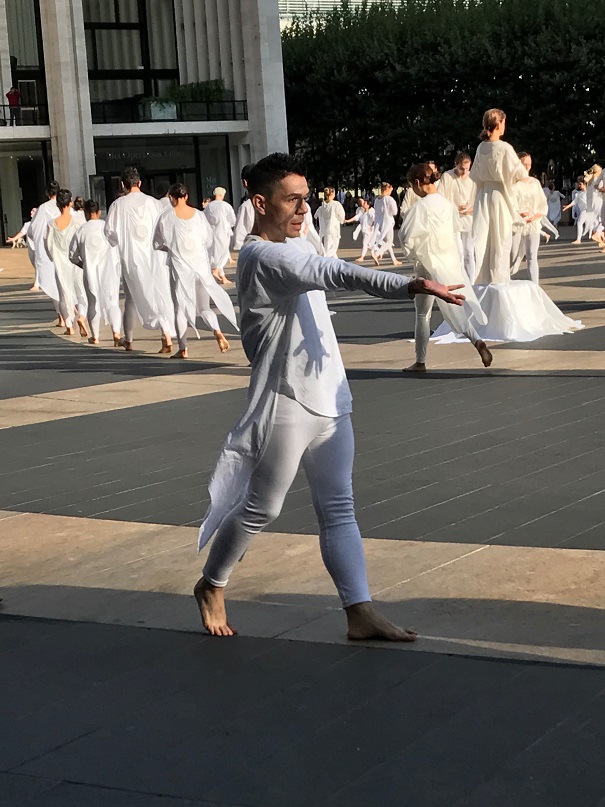
    Above: Francesco performing in Table of Silence

    Last September I joined the Buglisi Dance Company at the Lincoln Plaza in Table of Silence: with a beautiful and emotional dance tribute we remembered and honored the victims of 9/11 and the event was seen livestream all over the world. I was honored to be part of such a remarkable event.

    Oh, and in New York City I closed the circle: I trained full-time for two years at HB Studio, the prestigious acting school.

    IMG_5690

    I treasure my experiences. From a village of 600 people, zero money and infinite obstacles, my journey surprises me every day. Next destination: the next rejection(s)! Only then and there do miracles happen.”

    ~ Guest Author: Francesco Pireddu

  • Monteverdi’s L’ORFEO @ Alice Tully Hall

    Monteverdi ORFEO

    ~ Author: Oberon

    Wednesday October 18th, 2017 – Tonight marked the first event in our Great Performers at Lincoln Center subscription series: Monteverdi’s L’ORFEO was performed by the Monteverdi Choir and the English Baroque Soloists under the baton of Sir John Eliot Gardiner. Tenor Krystian Adam appeared as Orfeo, enjoying great personal success in the role. The large cast was peopled by fine singing-actors who made their characters come alive in a semi-staged setting. There was some off-pitch singing in the course of the evening, but by the final moresca all was forgiven.

    The opera, which was fiirst performed in 1607 as the ducal court of Mantua, charts the story of the singer Orfeo’s love for Euridice, her death from a snake bite, and Orfeo’s journey to hell to bring his beloved back. Moved by Orfeo’s despair and devotion, Plutone allows Euridice to leave the underworld – with the stipulation that Orfeo not look at her during their journey. Orfeo cannot resist, and by gazing at his beloved, he causes her second death. The intervention of Orfeo’s father, Apollo, sends Orfeo heavenward, where he can spend eternity observing Euridice in the afterlife.

    Soprano Hana Blažíková opened the prologue as La Musica (she later also appeared as Euridice). At first Ms. Blažíková’s voice seemed too large – almost Tosca-like – but she settled in quickly and did some really impressive, controlled singing in her solo with the excellent harpist Gwyneth Wentink. The story then unfolds. 

    I hated the semi-staging, at least in the opening scenes where the costumed nymphs and shepherds cavorted in fake camaraderie that had the air of a high-school play. They seemed self-conscious as they embraced one another endlessly, whilst singing repeatedly about how very happy they were for Orfeo. When the story turns darker, things improved considerably. Thenceforth, everyone was clad in black and moved in stylized formations, with the musicians sometimes part of the action. 

    Mr. Adam as Orfeo made a vivid impression from his first lines. As the character moves from joy to despair, the tenor’s palette of vocal colour provided phrase after phrase of deeply satisfying singing. His long scena upon losing his Euridice for a second time was a vocal marvel, with the words and his poignant phrasing of the music all of a piece.

    Basso Gianluca Buratto, a masterful singing-actor, doubled as Caronte and Plutone. As Caronte, having  denied Orfeo entrance to the underworld, moved eerily around the stage, intrigued by the sounds of the musical instruments and the people playing them. Mr. Buratto’s large, inky bass sound was superbly inflected, making his scenes highlights of the evening.

    A third fascinating voice was that of Korean counter-tenor Kangmin Justin Kim who – as Speranza – sang from the mezzanine. The voice is clear, steady, mystical. There was also fine singing from Lea Desandre (Messagera) and Francesca Boncompagni (Prosperina) – each with a lovely face and form – and notable beauty of tone in Gareth Treseder’s Eco, sung from above with a voice that hung on the air.

    Under Sir John Eliot Gardiner’s expert leadership, the evening musically provided endless pleasures. The instrumental ensemble played superbly and there was so much fine vocalism to savour. L’ORFEO was played straight thru in a 2-hour+ stretch, but it flew by.

    ~ Oberon

  • Boston Trio @ Weill Hall

    Landing_image_mobi

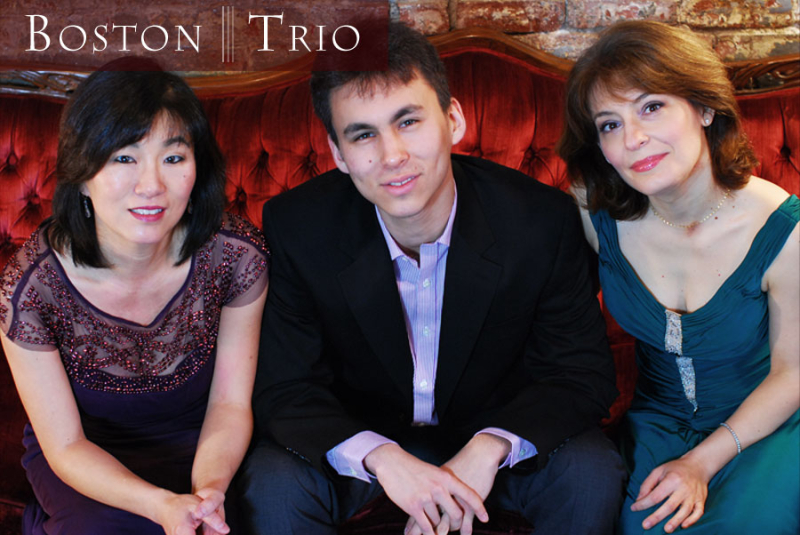
    Above: The Boston Trio: Heng-Jin Park, piano; Jonah Ellsworth, cello; Irina Muresanu, violin

    Author: Oberon

    Thursday September 28th, 2017 – Inaugurating my 2017-2018 Carnegie season with an ensemble new to me – the Boston Trio – in concert at Weill Hall. In terms of both programming and playing, the evening (aptly sub-titled Wheel of Colors) was a genuine pleasure; a large and very attentive audience made for a congenial atmosphere.

    The program was finely-constructed, with some ‘new’ music to begin, followed by an incredibly inventive arrangement of a symphonic classic, and concluding with a familiar and beloved Dvořák piano trio. We sat close, on the keyboard side, and were deeply immersed in the music. The pianist wore red, the violinist a lovely pale lemon-yellow frock, and the cellist an open-collar blue shirt; they were as pleasing to watch as to hear, and Ms. Muresanu’s elegant posture was an added delight.

    Jennifer Higdon: Piano Trio

    I. Pale Yellow

    II. Fiery Red

    I admit to being unfamiliar with Jennifer Higdon‘s music, though her name figures prominently among current composers. The two movements of Higdon’s Piano Trio seemed like miniature tone poems, and they were superbly played by the Boston Trio.

    In the first, Pale Yellow, the composer reveals a romantic bent: the music is lyrical, melodious, devoid of angularity. Yet while harkening back to a more gracious era, the piece seems utterly contemporary and fresh. It served as a perfect introduction to the three artists of the Boston Trio.

    Pale Yellow begins with a wistful passage for the piano; the cello comes in on a soft, sustained tone. The violin joins, entwining its voice with the cello in close, intriguing harmonies. The music flows lovingly: the cello sinks to the deep range as the violin sings high and sweet. Our three players develop a warm resonance of sound and then the music turns turbulent before rising…soaring. There’s a sort of coda, with the violin again lingering on high. A lovely, gradual resolution leaves the audience in a spellbound state.

    A complete volte face for the second movement: Fiery Red is aptly titled. It commences with violent energy, Ms. Muresanu slashing her bow across the strings. At the piano, Heng-Jin Park strikes up a dynamic dance, but suddenly things come to a halt. Then the strings begin to buzz as the piano gets a bit jazzy. This develops into a plodding piano figuration as violin and cello pluck away. An energy build-up sends the violin and cello high with a scratchy edge to their playing. From a piano heartbeat, the volume amps up and the music starts to sway heavily. Musical peaks and valleys eventually surge forward to the ending. 

    Great playing from all three musicians, and the audience really seemed to be soaking it all in. Now I need to hear more of Higdon’s music: it’s refreshing to find a contemporary composer who in unafraid of melody and sentiment on the one hand, and who can then can turn bristling and quirky moments later.

    After the briefest of pauses, the trio returned for the Debussy.  

    Debussy/arr. Beamish: La Mer

    I. De l’aube à midi sur la mer

    II. Jeux de vagues

    III. Dialogue du vent et de la mer

    The idea of hearing Debussy’s  La Mer arranged for piano trio was a key factor in my decision to attend this concert. Sally Beamish, London-born violist and composer, arranged the Debussy masterwork in 2013 for the Trio Apaches, a British ensemble. I can only marvel at what Ms. Beamish accomplished, and marvel further at the Boston Trio’s splendid playing of the piece.

    There’s no sense of miniaturization or of anything being ‘left out” in Ms. Beamish’s adaptation: the sound our trio produced tonight had a quite amazing orchestral quality, and Debussy’s reputation as a colorist didn’t suffer at all as they played with such depth both of tone and of feeling.

    Ms. Beamish hands much of the responsibility for the success of her setting to the pianist, and Heng-Jin Park seized on the opportunity, playing beautifully and conjuring the mood shifts of each of the three movements. 

    The pianist commences De l’aube à midi sur la mer quiet and low, and the tremelo strings join in, developing a sense of mystery. Dense textures evolve, with gently rocking waves evoked by the strings; later, piano and cello pulsate with a violin overlay. Taking on a symphonic quality, the three players bring out delicious colours. The violin shimmers, the cello sings deep, the piano is luminous: sustained, heartfelt, passionate playing from all.

    Rippling sensations from the keyboard open Jeux de vagues, with the strings in agitation. Heng-Jin Park gracefully executes the melismas that Debussy originally assigned to the harp – so atmospheric – and Ms. Muresanu’s trills are a further attraction. The music fades into a hazy mist.

    Low grumbling from Heng-Jin Park’s Steinway and a restless passage from Mr. Ellsworth’s cello set Dialogue du vent et de la mer on its way. The restless yearning of a downward-bending 2 note/4 note motif that recurs in this movement is a signature element of La Mer, and Ms. Beamish’s arrangement employs it intriguingly. The depth of sound the three musicians achieve is most gratifying, and contrasts magically with the calm stillness of the piano repeating the main motif. This theme is taken up by all three, with a build-up of ecstatic tension.

    Experiencing the Debussy in this intimate setting is something I’ll always remember; roses for Ms. Beamish to hail her accomplishment, and gratitude to the Boston Trio for bringing the work to us, and playing it so very well.

    Following the interval, Dvořák provided an ideal conclusion to the evening.   

    Dvořák: Piano Trio in F Minor, Op. 65

    I. Allegro, ma non troppo

    II. Allegretto grazioso

    III. Poco Adagio

    IV. Finale. Allegro con brio

    With the new music and the Debussy arrangement behind us, I simply let the familiar Dvorák play on, genuinely savoring the artistry of the three musicians and vastly enjoying their performance. My companion of the evening, choreographer Claudia Schreier, spoke afterwards of experiencing a deep connection both to this music and the Boston Trio’s performance of it.

    A full-house standing ovation followed the Dvorák; the musicians came out for a couple of bows, and, as it became evident the crowd wanted to hear more music, the trio graciously gave us the Presto from Haydn’s C-major trio. This music is sparkling, with a somewhat ironic quality, and with a darkish interlude. It showed off the three players superbly and brought the evening to a merry end.

    ~ Oberon

  • Opening Night @ The Met: NORMA

    881x425_membership_bucket

    ~ Author: Oberon

    Monday September 25th, 2017 – I took a score desk for this evening’s NORMA at The Met; if memory serves, this the first time I’ve ever attended an opening night.

    In 2013, Sondra Radvanovsky gave a sensational portrayal of Norma at the Met. She has sung a great deal since then, and in very demanding roles. One hoped very much that her success tonight might equal or even surpass her prior Met outing as Bellini’s noble and tragic priestess.

    The evening started out on a sour note: with a scheduled start-time of 6:30 PM, the hall should have been open for seating by 6:00 PM or very shortly thereafter. Instead, ticket-holders were left standing outside closed doors for nearly 25 minutes. Balcony and Family Circle patrons were packed into the hot, airless area outside the auditorium, and many elderly people found this truly unpleasant. No announcement or explanation was given.

    The house was not full as we settled in. Following the playing of the National Anthem, during which no one seemed to be kneeling but some soprano took the ‘Licia Albanese option’, there was a long pause, and at last the opera began. Then there was an immediate disruption in my area as a late-arriving patron was seated by a flashlight-wielding usher.

    As I was at score desk, I cannot report on the production, but I do want to see it at some point later in the season: a friend who had attended the dress rehearsal assured me that it’s the kind of production I will like.

    Carlo Rizzi has never been more than a routinier; he was absent from The Met for nine years (from 2007 to 2016) but now he’s back, conducting a new production on opening night. This was actually one of the better Rizzi experiences I have had over the years, though still not really inspired. There were some cuts taken, and also a couple of very weird re-arrangements of things, of which there were no signs in the score I was following. The orchestra played quite beautifully all evening – notably the flute solo that introduces “Casta diva” – and the chorus seemed at their best.   

    Michelle Bradley sang Clothilde – we’ll have to wait to hear her in something bigger to get an idea of the voice, but it seems promising – and Adam Diegel was a vocally strong and assured Flavio.

    5780b6e8cf49e

    Matthew Rose (above) was a splendid Oroveso, covering the wide range impressively and bringing the role very much to prominence. Both his great scenes – “Ite sul colle” and “Ah, del Tebro” – were vocal highlights of the evening, and in an story full of broken hearts, Mr. Rose reminded us of Oroveso’s own heartache with his expressive singing in the final pages of the opera.

    As Pollione, Joseph Calleja’s voice sounded huge in his opening phrases. I love the sound of his voice, and his phrasing, inflections, and mastery of working piano/pianissimo shadings into the vocal line were truly impressive. Unfortunately, much of his vocalism all evening was beset by a tendency to sing sharp, and this offset the positive aspects of his performance.

    I’ve always felt that Adalgisa should be sung by a soprano; despite the thrill of hearing the voice of a Simionato, Horne, or Cossotto in this music, both its range and the character’s supposed youthfulness seem to call for a lighter quality. Joyce DiDonato’s somewhat slender voice definitely has a sopranoish quality to it, and from her first soft entry, her opening monolog (it’s not really an aria) was extremely impressive both as singing and as a portrait of the character: young, hopeful, vacillating in her romantic turmoil. Ms. DiDonato was able to bring a sense of drama to everything while remaining scrupulously musical.

    Screen-Shot-2016-11-07-at-8.16.24-PM-600x400

    Above: Joyce DiDonato

    In the exciting duet for Adalgisa and Pollione that concludes the opera’s first scene there developed a remarkable atmosphere mixing desire with apprehension: Ms. Di Donato’s excellent colourings brought the young priestess’s dilemma to high relief. Stating that she must never see Pollione again draws his query: “E il nostro amor?” (“And what of our love?”) to which Ms. DiDonato replied on an exquisitely sustained top-A: “Ah…l’obbliai!” (” Let it be forgotten!”). Later, Mr. Calleja had one of his loveliest moments as he asked her, sweetly, “Abbandonarmi cosi?” (“You would abandon me, then?”). Later, Ms. DiDonato interpolated an exciting volley at “Mi lascia!” (“Leave me!”), and the end of their duet drew thunderous applause. 

    From this point forward, Adalgisa’s music is tightly meshed with Norma’s, so I will digress now to discuss Sondra Radvanovsky’s performance of the high priestess’s great opening scena. Establishing her authority at once, the soprano’s well-measured recitative “Sediziose voci” set the groundwork for all that will follow. Calming her people’s cries for war against the Romans, she assures them that Rome will perish – not thru their uprising but “like a viper self-stung…” Then comes the evening’s first great moment of Radvanovsky magic: a simply ravishing, sustained pianissimo high-A on “…io mieto.”

    Sondra’s “Casta diva” this evening was one of the most moving and fascinating musical experiences of the past two decades: not only was it beautifully phrased and enunciated: it transcended the act of singing and took us to a higher spiritual level. At first, following along with my score, I was mesmerized not only by the soprano’s unique timbre but also by her ideal turns of phrase: it’s how I’ve always imagined this aria could be sung. I became aware of the palpable hush that had fallen over the House: the entire audience seemed spellbound, afraid to even breathe lest the spell be broken. A singer with the power to hold an opera house in the palm of her hand is a rarity today; in this heartfelt and ever-so-timely prayer for peace, Sondra’s voice seemed like a beacon of hope. 

    Reassuring the populace that the Roman proconsul will fall with her stunning “Cadra! Punirlo io posso!“, Sondra now sings the cabalettaAh bello a me, ritorna” expressing her hope that she can again find joy in her love for Pollione which has of late been strained for some reason she can’t comprehend. Despite a few passing phases where her coloratura was a bit imprecise, Sondra swept thru the first verse with aplomb, then took a cadenza up to a gorgeous ppp high-C before commencing an embellished second verse; this she crowned with a massive high-C. 

    In the opera’s second scene, the reason for the perceived rift between Norma and Pollione is revealed: he has fallen in love with the younger Adalgisa. In their meeting, as Adalgisa explains her predicament to Norma, the older woman is at first sympathetic; but when it’s revealed that Adalgisa’s suitor is “a Roman”, all hell breaks loose.

    In this duet, Norma reassures Adalgisa with the phrase “Ah si, fa core” (“Take heart…!) which carries her up to a sustained top-C. Normally, Adalgisa repeats this phrase and mirrors Norma’s high note; tonight, instead, we went off on some interpolated tangent I’d never heard before. Finally, the two women blend voices in a harmonized cadenza: Radvanovsky and DiDonato matched up very well indeed.

    When Pollione shows up (drawing titters from the audience), Sondra launches Norma’s vicious “Oh, non tremare!” with its dual assaults on high-Cs that are simply ballistic. A trace of flatness intruded at “O di qual sei tu vittima” but was quickly set to rights. The ensuing trio is given the full treatment, including a sometimes-cut ‘verse’ for Adalgisa. The stretta is then thrillingly rendered, with Sondra latching on to a stupendous high-D.

    How beautifully the Met strings ‘sang’ the melody of “Teneri figli” (“Beloved children..”) at the start of Act II. In the monolog where Norma ponders killing her sons, Sondra made cunning use of chest voice. She sang the long lines of “Teneri figli” with moving inflections.

    Adagisa, awash with guilt at having hurt Norma, is shocked to hear Norma ask her to take the children to Pollione and remain with him: “Pei figli suoi…” as Sondra sings with such dazzling control: “…for the sake of his children…” Ms. Di Donato again skirted a high-C that echoes Norma’s, though she seems to have the note in her range.

    If my ears played me true, “Mira, O Norma” was sung in F; it might have been better taken down a have-tone as Ms. DiDonato’s voice seemed to be tiring just a bit (though still mighty attractive) and some of her highest notes seemed a bit opaque. Norma’s “Ah perche, perche…” found Sondra at her most marvelous, and together the two women achieved a truly sweet blend. The second verse of “Si, fino al’ora” included some appealing rubato effects. The audience showered the two singers with well-deserved cheers and applause.

    NORM_3836c-768x512

    Above: Sondra Radvanovsky as Norma in a Ken Howard/Met Opera photo

    In the final scene, Norma still has so much to sing, and here Sondra pulled out all the stops and sealed her triumph in no uncertain terms. At first hopeful that Adalgisa might persuade Pollione to come back to the mother of his children (Sondra’s spun-out ppp high-C at “…del primo amore“), such hopes are dashed: Adalgisa has been unsuccessful and Pollione has vowed kidnap his beloved from the Druid temple. Now Norma’s wrath is unleashed: Roman blood shall flow in torrents –  a titanic Radvanovsky high-C at “…sangue Romano!” as her warriors emit a surprising, lusty war cry. Rizzi takes the “Guerra” chorus at breakneck speed, but includes the “dawn” ending with Sondra’s floated final note. 

    Pollione is captured and Norma is to interrogate him. He asks only for a swift death. But in the great duet “In mia man alfin tu sei” (“Your fate is in my hands…”) she taunts him, threatening to kill his children and to reveal Adalgisa’s deceit to the people: deceit punishable by death. Using chest voice to great effect, as well as bewitching softness at “Preghi alfin?”, Sondra is simply at her peak here. Mr. Calleja’s continuing sharpness was a distraction, though.

    About to name Adalgisa as a traitor, Norma is gripped by her conscience – how can she accuse the girl of the same crime she herself has committed? When the people cry out for the name of the guilty person, Norma replies “Son io!” (“It is I!”): Sondra taking my breath away yet again. In “Qual core tradisti…”, Pollione sees Norma for the noble, honest woman she is and repents his actions. They will die together at the stake. Sondra’s remarkable piano singing in this ensemble, and her majestic top-B, can be added to the endless list of vocal jewels in her performance.

    The end is reached: Norma and Pollione face the pyre together. Then Norma remembers her children: she knows they will be executed as Roman bastards. She confesses the fact of her motherhood to her father, Oroveso, who at first shuns her.  Then, in a final overwhelming plea, “Deh, non volerli vittime” (“Do not let them be the victims of my own misdeeds..”), Norma slowly wins her father over. From her piano first pleadings to the overwhelming power of her joy when Oroveso relents, Sondra transforms this passage into the crowning glory of her magnificent performance.

    DKaw98fV4AEkdWQ.jpg large

    Above: Sondra Radvanovsky as Norma at The Met

    Catch the curtain calls here.

    ~ Oberon

  • The Labèque Sisters|van Zweden|NY Philharmonic

    Labeque-01

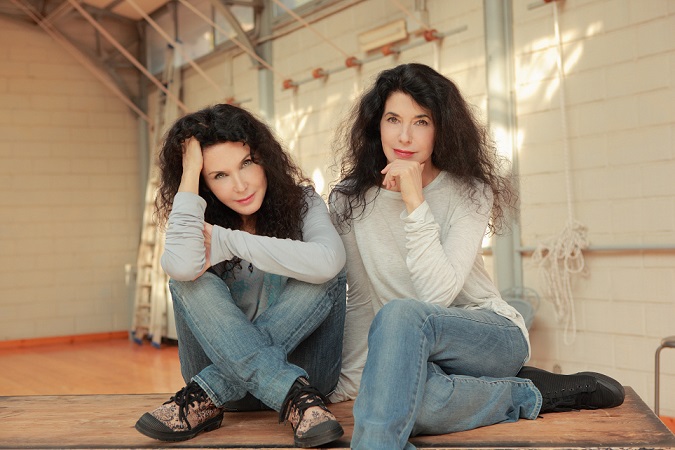
    Above: Katia and Marielle Labèque

    Author: Oberon

    Saturday September 23rd, 2017 – The first thing we noticed upon taking our seats at The New York Philharmonic this evening was that the seating arrangement for the orchestra had changed: risers are now in use. Hopefully this is a permanent enhancement, as it is so pleasing to be able to actually see people like Judith LeClair, Robert Langevin, Anthony McGill, and Liang Wang while they are playing. 

    This week has marked the start of the Jaap van Zweden era at the Philharmonic, even though it’s not until next season that the appendage “Designate” will be dropped from the title “Music Director”.  The orchestra played superbly for the Maestro, and if the vociferous standing ovation that erupted the moment the Mahler 5th ended is any indication, the audience is embracing Mr. van Zweden in no uncertain terms.

    The New York premiere of Philip Glass’s Concerto for Two Pianos and Orchestra opened the program. The Labèque sisters, in fitted black trousers and be-spangled sweaters, were warmly greeted by the crowd; they have been top-rank musicians for a long time and they still look sensationally slender and attractive…and their playing retains its accustomed verve and grace.

    Glass calls for a huge orchestra for this most recent of his creations; no fewer than seven percussionists take part, along with vast troupes of string, wind, and brass players. The concerto is in three movements and sets out from a jazzy opening that develops into a feeling of a giant hurdy-gurdy playing as a kozmic merry-go-round swirls madly. Pulsing waves of sound, in dense textures, wash over us.  From this turbulence, a lovely misterioso motif for the pianos emerges, with a gong struck softly as an undertone.

    The pianists playing in their lower ranges open the second movement, with wooden clappers beating time. The trumpets and flutes join voices; at this point a cellphone went off in the audience but it merged into the musical texture. Rhythmic and textural variety sustain this central movement. The concerto concludes with a sort of adagio of somewhat darkish hues.

    The new concerto is appealing in its way, but I can’t say it’s particularly distinctive or memorable. The pianos do not take the prominence one might expect in a concerto setting, but rather they are simply one constant voice in the overall chorus of instruments, given a few solo/duo passages along the way. I was hoping for an encore from the Labèque sisters, or possibly an appearance by Philip Glass, but after a couple of bows, the intermission commenced.

    Van-zweden-jaap-banner

    Above: Jaap van Zweden

    Mahler’s Fifth Symphony was composed during the summers of 1901 and 1902, during his annual holiday from his job as director of the Vienna Court Opera. It was in Vienna the winter prior to beginning his fifth symphony that Mahler had met Alma Schindler, the beautiful daughter of a famous landscape painter. Mahler proposed to her in the Autumn of 1901, and the symphony, with its journey from mourning thru the dreamworld of the Adagietto to happy triumph seems to mirror the composer’s state of mind with his new-found love.

    The symphony’s brilliant opening trumpet fanfare was excitingly introduced by Christopher Martin. As the first three movements of this very long symphony progressed, the Philharmonic players responded thrillingly to Maestro van Zweden’s intense, almost daemonic vision of the score. In the beloved Adagietto, for strings and harp, the conductor’s gentle pace and his summoning of luminous textures from the musicians created a depth of beauty in which we could – for a few minutes – forget the dark dangers of living in today’s uncertain world. In the grandeur of the symphony’s dazzling Rondo-Finale, the maestro and his musicians swept the celebratory feeling forward, pausing only for a couple of momentary roundabouts, and on to its epic conclusion. The audience went wild.

    ~ Oberon