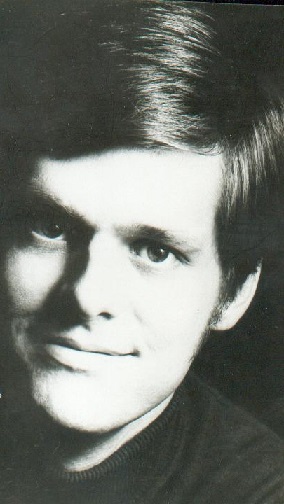
Author: Philip Gardner

  • New Chamber Ballet: From Bach to Beat

    21122624_10155646992488571_4600347794179842337_o

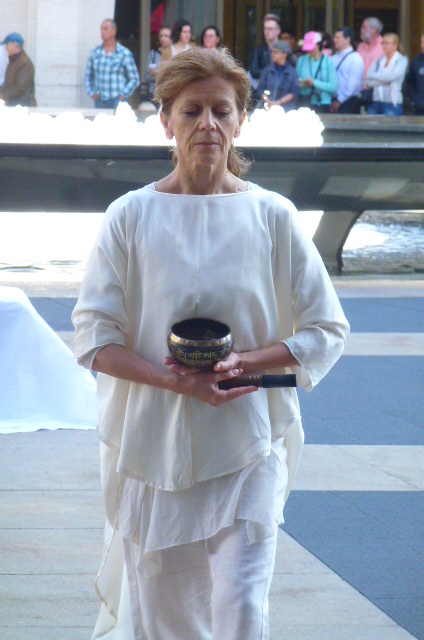
    Above: Elizabeth Brown of New Chamber Ballet

    Friday September 22nd, 2017 – Kicking off their 2017-2018 season, Miro Magloire’s New Chamber Ballet offered an evening of five ballets choreographed by Miro to music by J S Bach, W A Mozart, Luciano Berio, Beat Furrer, and the choreographer himself. Pianist Melody Fader and violinist Doori Na performed these stylistically varied scores to perfection: their playing illuminated the evening in a very special way. Miro’s five ballerinas – Sarah Atkins, Elizabeth Brown, Kristine Butler, Traci Finch, and Amber Neff – rose to every challenge the choreographer handed them, from brisk allegro combinations to extremes of partnering.

    Miro has recently altered the seating configuration for his City Center Studio presentations: the audience now sit on all four borders of the performing space, with the piano in a permanent place at the far end of the hall. This worked exceptionally well. I chose a seat right next to the musicians which proved wonderfully congenial. 

    The revival of Lace provided a stunning showcase for violinist Doori Na: his playing of Luciano Berio’s Sequenza VIII was simply spine-tinglingly sensational. To revel in the exceptional clarity of Doori’s playing – the music’s fleet edginess, intensity, and wide dynamic range all captured to perfection – made for a perfect start to the evening. The choreography creates a sense of ritual as the three ballerinas – Sarah Atkins, Elizabeth Brown, and Traci Finch – seem to personify priestesses in the service of some ancient, long-forgotten goddess. Each dancer has solo passages while the other two sit or kneel, striking poses of reverence or ecstasy. The contrast between agitation and reverence creates an engrossing atmosphere.

    Pianist Melody Fader brought a hypnotic, quiet radiance to the music of Beat Furrer for Voicelessness, a duet inspired by a poem of Sylvia Plath’s and danced by Kristine Butler and Amber Neff. Melody’s control of the music’s piano/pianissimo gradations was so atmospheric. The two dancers moved with intense assurance thru some very demanding partnering sequences; in this and other recent ballets, Miro has created a new mode of same-sex partnering.

    The revival of 104 Fahrenheit, to Magloire’s own score, made me stop to think: have I seen any other  ballets choreographed by their composer before? I can’t think of any. The ballet begins languidly, with Melody Fader again setting the mood with her refined playing. Traci Finch has the first solo passage: a danced agitato with cunning pauses. Kristine Butler’s slower solo reflects the sense of stillness in the music. Skittering motifs from the piano signal Elizabeth Brown’s space-filling solo, a vividly-danced montage of athleticism and repose in which the dancer’s hands create their own visual poetry. Throughout, Melody Fader’s inspired playing gave wing to the exceptional dancing.

    The world premiere of a new duet to music from Johann Sebastian Bach’s Well-Tempered Clavier has a simple working title for now: Bach. Commissioned by longtime friends of New Chamber Ballet, Leslie and Richard Curtis, the duet is lovely as it stands; but Miro already has plans to enlarge on it.

    Wearing Sarah Thea’s frothy pastel frocks, Amber Neff and Kristine Butler drew inspiration from Melody Fader’s spot-on playing of the Bach prelude and fugue #14 in F-sharp minor. The two dancers move from joyous bounciness thru some stretchy give-and-take partnering, and lovely, ecstatic back-bends. It’ll be interesting to see how Miro develops this piece, and whether additional dancers might be included.   

    Amity is set to Mozart’s violin sonata in C Major K.296, and what a wonderful performance of that piece we heard this evening from Melody Fader and Doori Na. Sitting so close to these music-makers, I could really feel their resonance – Doori’s lower register had a nice contralto depth – while Melody’s choice of tempos seemed perfect.

    6a00d8341c4e3853ef01b8d28b748f970c-800wi

    Above: Amity dress rehearsal image by Nir Arieli.

    Wearing Sarah Thea’s gossamer-gold costumes, dancers Sarah Atkins, Kristine Butler, Traci Finch, and Amber Neff affirmed the sense of joy in dancing to Mozart’s music with airy grace. From time to time, Miro has them fall to the floor: an unexpected move that at first seemed accidental. These little touches occur frequently throughout Miro’s choreography, and they keep things fresh.

  • Otakar Kraus as Alberich

    O Kraus

    Above: Otakar Kraus as Alberich

    Baritone Otakar Kraus (1909–1980) was born at Prague; he later became a naturalized citizen of Great Britain. Kraus made his operatic début as Amonasro at Brno in 1935, and was a member of the Bratislava Opera from 1936 to 1939. At the outbreak of World war II, he moved to Britain and joined the touring Carl Rosa Company in 1940.

    As a member of the English Opera Group in 1946, Otakar Kraus created the role of Tarquinius in Britten’s The Rape of Lucretia at Glyndebourne, and later sang the role of the Vicar in Albert Herring, and Lockit in Britten’s realization of The Beggar’s Opera. Kraus created the role of Nick Shadow in Stravinsky’s The Rake’s Progress at Venice in 1951. For the next 22 years, he was associated with the Royal Opera House, Covent Garden. There he sang most of the principal baritone parts in addition to creating Diomede in Walton’s Troilus and Cressida in 1954 and King Fisher in Tippett’s The Midsummer Marriage the following year. Otakar Kraus sang Alberich in the Ring Cycle at Bayreuth from 1960-1962.

    Kraus retired from the stage in 1973 to teach. In that same year, he was made an Officer of the Order of the British Empire. His pupils have included Robert Lloyd CBE, Sir Willard White, and Sir John Tomlinson.

    Otakar Kraus passed away in 1980. The Otakar Kraus Music Trust was founded in his honor.

    Otakar Kraus – Bin ich nun frei ~ RHEINGOLD – Bayreuth 1960

  • Confrontation

    Scanned Section 2-1

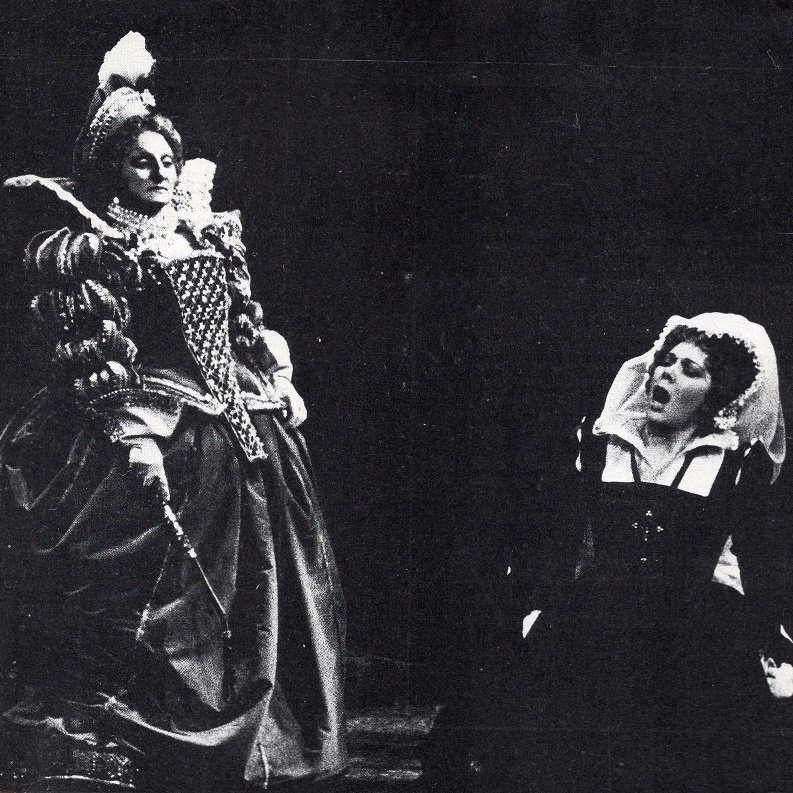
    The fictitious meeting of Elizabeth I (Pauline Tinsley) and Mary Stuart (Dame Janet Baker) from Donizetti’s opera MARIA STUARDA, sung in English.

    MARY STUART – Confrontation Scene – in English – Dame Janet Baker – Pauline Tinsley – ENO 1973

  • Upcoming: A New Season @ New Chamber Ballet

    L1880359

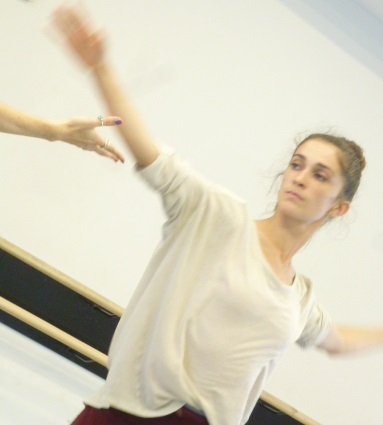
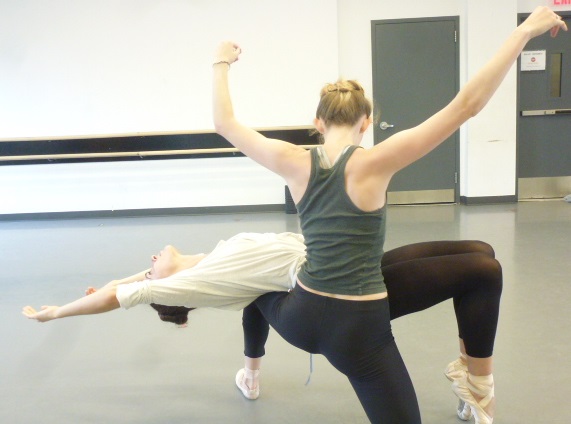
    Above: dancers Amber Neff and Kristine Butler of New Chamber Ballet

    Monday September 18th, 2017 – Today I stopped by at the Ballet Hispanico studios to visit some of my favorite people from the dance world: Miro Magloire and the ballerinas of his New Chamber Ballet. They are presently in rehearsal for the opening performances of their 2017-2018 season, which will take place on September 22nd and 23rd, 2017, at the City Center Studios. Tickets and more information about the performances here

    The all-Magloire program for the opening performances features a new ballet commissioned by Richard and Leslie Curtis to music by J S Bach. The other composers represented will be Luciano Berio, Beat Furrer, and Miro Magloire. The dancers are Sarah Atkins, Elizabeth Brown, Kristine Butler, Traci Finch, and Amber Neff. In keeping with New Chamber Ballet’s time-honoured tradition, all of the musical scores will be performed live by pianist Melody Fader and violinist Doori Na.

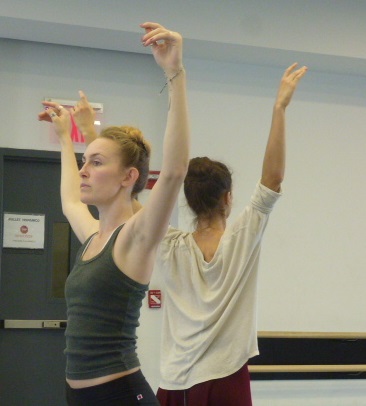
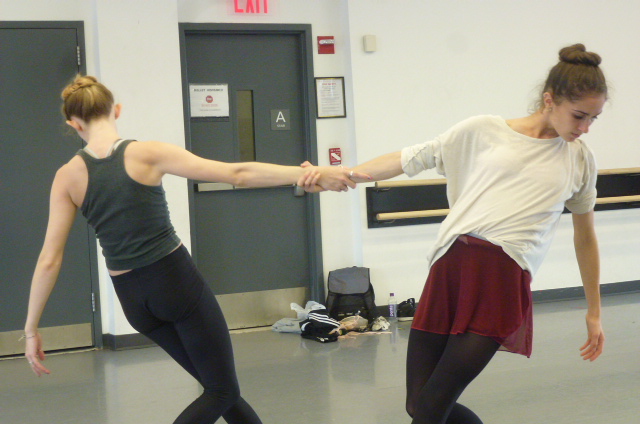
    The overcast sky and a recalcitrant camera kept me from getting any really good images today, but here are some of Amber and Kristine rehearsing the new Bach piece and Voicelessness, the Beat Furrer ballet:

    L1880230

    L1880237

    L1880350

    L1880431

    Kristine Butler is the newest member of New Chamber Ballet

    L1880432

    L1880437

    L1880464

    L1880477

    L1880505

    L1880525

  • John Osborn: A Tribute to Gilbert Duprez

    DE3532Cover-1024x1024

    Tenor John Osborn has released a new disc of operatic arias on the Delos label, and it’s a beauty. While three of the four composers represented are Italian, all of the selections are sung in French. The operas from which the arias are culled were all associated with Gilbert Duprez (1806-1896), who has always been credited with inventing the “do di petto” (the high-C from the chest).

    Mr. Osborn had an exciting success as Rodrigo di Dhu in Rossini’s LA DONNA DEL LAGO at The Met in 2015; his singing on the night I saw it really perked up a pleasing but rather staid evening. The new Delos album shows the tenor’s artistry to striking effect, and he receives admirable support from Maestro Constantine Orbelian, the Kaunas City Symphony, and – in Arnold’s great scène from GUILLAUME TELL – the Kaunas State Chorus.

    The disc begins with two arias from JERUSALEM, the adaptation of his 1843 opera I LOMBARDI that Verdi made for Paris in 1847. The first of these, “Je veux encore entendre ta voix“, is a lilting melody so familiar in its Italian setting (“La mia letizia infondere“). The opera’s hero Gaston, captured and imprisoned while on the Crusade, sings of his longing for his far-away beloved Hélène. The aria is a perfect introduction to Mr. Osborn’s singing, which is graceful, poetic, and full of affecting colors. Dynamic control is this tenor’s long suit, and his beautifully tapered phrases fall sublimely on the ear. Maestro Orbelian conspires with the singer to conjure up some lovely rubato effects, and the first Duprez-like foray to the top is really impressive. Mr. Osborn finishes off the aria with an easy ascent to a ringing high third before the final cadence. 

    The second JERUSALEM selection is less well-known: “Ô mes amis, mes frères d’armes“, in which Gaston, wrongly accused of murder, pleads with his comrades-in-arms to end his dishonored life. One again, Mr. Osborn shows a heartfelt mastery of mood, shading his singing with a sense of vulnerability. For all the drama of the situation, the tenor’s vocalism is wonderfully fragrant, most especially at the phrase “Je pleure, hélas, comme une femme…”

    The first of the disc’s four Donizetti arias is next: the poignant “Ange si pur” from LA FAVORITE. Fernand, on the eve of his marriage to his beloved Leonor, learns that she has been the mistress of the king. He seeks refuge in a monastery where he recalls his brief happiness and laments the shattering of his dream. Mr. Osborn’s rendering of this aria ranks with the best I have heard: imbuing his singing with such sweet sadness, the tenor astonishes with his ascent to the aria’s treacherous high-C. A remarkable cadenza and the singer’s spectacular mastery of the dynamic spectrum left me in a state of awe.

    LES MARTYRS was Donizetti’s French treatment of his opera POLIUTO, a story of Christian martyrdom which met with censorship just before its Italian premiere in 1838. Withdrawing from the fray, the composer moved to Paris and revised the opera specifically for Gilbert Duprez. In the aria “Oui, j’irai dans leur temple“, the Christian leader Polyeucte vows to go to the Roman temple to fulfill a vow of faith, despite the promise of martyrdom. The aria is a statement of resolve and a call to action; with God’s protection, Polyeucte will cast down the Roman idols. Mr. Osborn delivers it magnificently, reveling in the Duprez-inspired high notes and ending in thrilling fashion.

    Inexplicably, I have never listened to Hector Berlioz’s epic BENVENUTO CELLINI all the way thru; this makes no sense, as the composer’s TROYENS, BEATRICE ET BENEDICT, La Captive, and the magical Les nuits d’été are among my all-time favorite works. In the two CELLINI arias which John Osborn includes on his disc are so cordially sung that my curiosity to hear the full opera is now piqued (though finding the time will be another matter…) 

    La gloire était ma seule idole” finds the sculptor Benvenuto Cellini anticipating the arrival of his beautiful mistress Teresa. This expressive aria begins over a delicate accompaniment but soon blooms into a paean to the artist’s beloved. John Osborn brings a delicious feeling of tenderness to his singing here. The second verse is more extroverted, and ends with a prayer that heaven may protect Teresa, and protect their love. Here Mr. Osborn does some of his most affecting singing in an already-affecting program.

    The second CELLINI aria, “Sur les monts, les plus sauvages” is this disc’s ‘secret treasure’. It begins with a very Berliozian introduction leading to a pensive recitative in which we can again savour John Osborn’s gift for colour and verbal acuity. As the drama builds, Cellini rails against his destiny as an artist. When the aria proper begins, the sculptor longs for the life of a simple shepherd; herein, Mr. Osborn treats us to  beautifully sustained and reflective singing with a deliciously plaintive quality. The music becomes slightly more restless, and I am put in mind of Hylas’s lovely aria of longing for his homeland: “Vallon sonore” from LES TROYENS. In the second verse of Cellini’s aria, Mr. Osborn’s vocal control is so impressive, and the music’s rising passion brings us some superbly sustained notes and the singer’s congenial flexing of his dynamic muscles. The aria’s conclusion is superbly rendered.

    From Donizetti’s LUCIE DI LAMMERMOOR, we have Edgard’s great final aria of lament for his ill-fated love for Lucie; here given in the “Duprez/French” setting as “Bientôt l’herbe des champs croîtra“, the desolate young man awaits a duel with Lucie’s brother among the graves of his forefathers. 

    Though it may seem like an over-abundance of praise, I must again remark on Mr. Osborn’s fascinating account of this very familiar scene, for he begins the opening recitative “Tombs of my ancestors…” in an incredibly hushed piano, and his sense of exquisite grief is palpable; his despair over his thwarted love draws us in deeply. A plangent swelling of the tone marks at the recitative conclusion marks Edgard’s hapless expression of longing for death.

    The aria proper is awash with heartbreak, the tenor’s phrasing so persuasive, ravishing in its eloquence. The concluding cadenza is nothing less than fabulously passionate, yet Mr. Osborn then sinks the voice to a sustained delicacy before a final expression of hopelessness. Masterful!

    In Donizetti’s DOM SEBASTIEN, the title character is the king of Portugal. Following a devastating battle against the Moors, he stands alone on the battlefield, surrounded by the dead of both armies, and longs for the consoling sight of his beloved. With its atmospheric harp introduction, the aria is unusually lovely for it’s sad setting. Mr. Osborn’s phrasing is elegiac, and his meshing of the top note into the fabric of the melody is so skillfully handled. The cadenza here again left me in a state of true admiration for the singer.

    The program concludes with the GUILLAUME TELL scene in which Arnold summons his courage – and that of his Swiss countrymen – to throw off the yoke of the cruel Austrian governor Gessler. Constantine Orbelian and his players set the scene in the melancholy introduction, and Mr. Osborn commences the recitative’s “Do not abandon me, hope of revenge” with sublime softness. 

    A GISELLE-like motif sets the aria proper – Asile héréditaire – on its way, with John Osborn’s easy ascents to the high range impressively handled. The melody expands in breadth before a gentle reprise; the tenor’s tender coloration of the phrase “…pour le derniere fois…” is yet another moment to savour. Then comes the fiery cabaletta, “Amis! Amis, secondez ma vengeance!“, an irresistible call to arms which Mr. Osborn ends on a triumphantly sustained high-C.

    To say that this new Delos offering pleased me greatly would be an under-statement. Perhaps the highest praise I can give is to say that the disc joins my long-time favorite tenor collections – Carlo Bergonzi’s first Decca album and Luciano Pavarotti’s all-Donizetti program – to form a triumvirate of tenor trophies which I will turn to often.        

    ~~~~~~~~~~~~~~~~~~~~~~~~~~~~~~~~~~~~~~~~~~~~~~~~~~~~~~~~~~~~~~~~~~~~~~~~~~~~~~~~~~~~~~~~~~~~~

    GilbertDuprez

    Gilbert Duprez (above), the tenor who inspired the new Delos disc, was born in Paris in 1806, studied there, and made his operatic debut at the Odéon in 1825. When his career failed to develop, he sought greener pastures in Italy and was most successful there in Bellini’s IL PIRATA. In 1831, at Lucca, Duprez sang Arnold in the Italian-language premiere of Rossini’s GUGLIELMO TELL and stunned the audience by introducing a high-C from the chest (as opposed to the falsetto approach to top notes which was then the custom). Thenceforth, the tenor’s Italian career burgeoned, including the premiere of Donizetti’s LUCIA DI LAMMERMOOR in 1835.

    Duprez returned in triumph to Paris in 1837 and became a great favorite of Parisian audiences. But by 1844, his voice was beginning to decline, and by 1851 he had stopped singing. It was thought that, despite his revolutionizing of a new sound to high notes, his overall technique was insufficiently grounded.

    He lived on to the grand old age of 90.

  • Souvenir

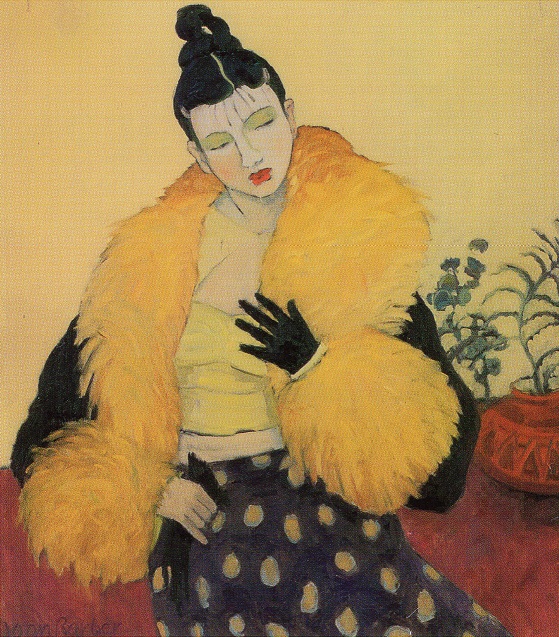
    Woman With Boa ~ Joan Barber  1995

    ~ Woman with Boa – Joan Barber – 1995

    I bought this postcard in Provincetown many years ago, and I still love it.

  • Souvenir

    Woman With Boa ~ Joan Barber  1995

    ~ Woman with Boa – Joan Barber – 1995

    I bought this postcard in Provincetown many years ago, and I still love it.

  • Table of Silence ~ 2017

    L1870606

    Above: vocal soloist Courtney Cook

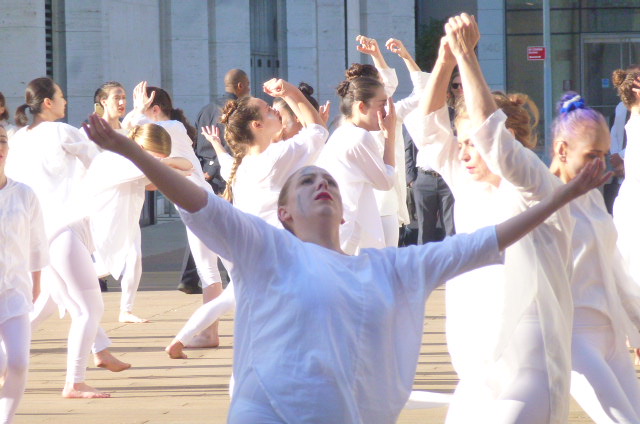
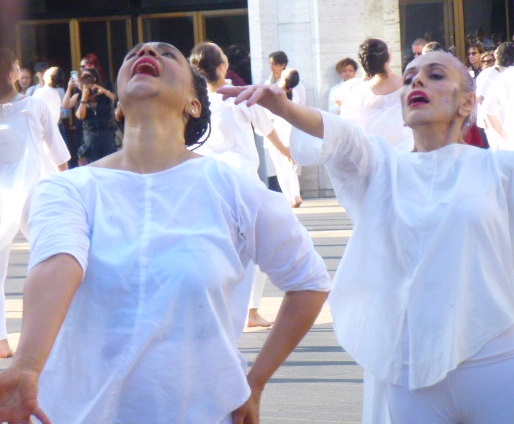
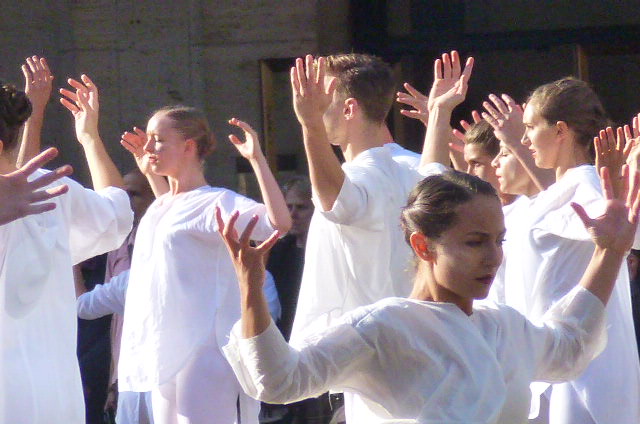
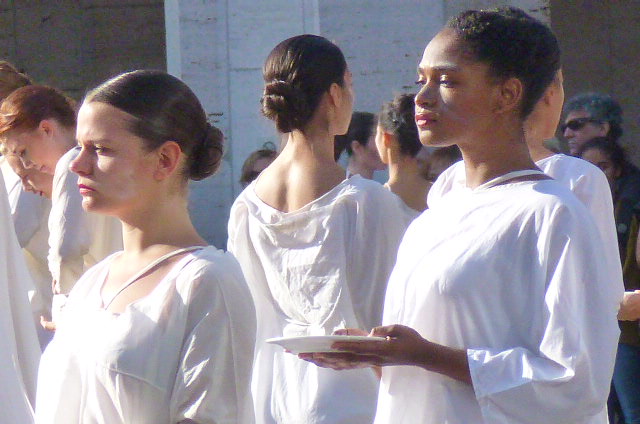
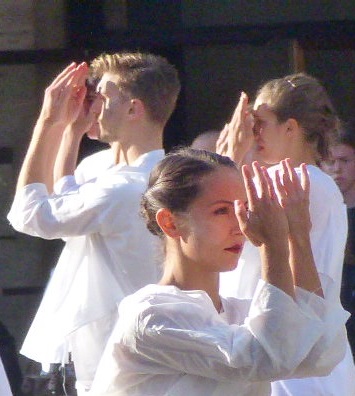
    Monday September 11th, 2017 – The seventh annual performance of Jacqulyn Buglisi’s ritual of hope and peace, Table of Silence, was given on the Plaza at Lincoln Center this morning. Commemorating the 9/11 terrorist attacks, this astonishing work gathers together more than one hundred dancers and an ensemble of singers, flautists, and percussion players who perform an ethereal score conceived by Andrea Ceccomori (flutes) and Libby Larsen (vocals). 

    This year, Table of Silence seemed more moving and more necessary than ever. A pall of darkness hangs over our daily lives as self-serving and often incoherent world leaders, deranged perpetrators of senseless violence, and a succession of natural catastrophes fill the headlines with presages of doom. Thus, we turn ever more fervently to music, dance, poetry, and art, both for solace and to inspire a hope that our common humanity may prevail.

    Here are some images from this morning’s uplifting and thought-provoking performance of Table of Silence

    L1870609

    Percussionists at the ready

    L1870622

    L1870626

    L1870644

    L1870704

    L1870709

    L1870728

    L1870749

    L1870753

    L1870755

    L1870766

    L1870783

    Dance Theatre of Harlem‘s Da’Von Doane on the right

    L1870793

    Graham priestess Virginie Mécène summons the faithful

    L1870802

    L1870807

    L1870819

    Vocalists Lydia Graham and Carla Lopez-Speziale

    L1870830

    Lloyd Knight of the Martha Graham Dance Company

    L1870845

    Courtney Cook

    L1870860

    Graham diva and Associate Founder of Buglisi Dance Theatre: Terese Cappuccilli

    L1870754

    L1870942

    Virginie Mécène signals the end of the rites

    L1870949

    Virginie Mécène

    More photos on Facebook: here.

    “The 9/11 Table of Silence Project represents the common threads of humanity which unite all mankind into a single force with common goals and aspirations regardless of race, culture, or religion. Through this ritual, we celebrate compassion, and honor the bravery of all those affected by acts of war and suppression of freedom…a call for Peace in our world.” ~ Jacqulyn Buglisi

  • Jon Crain

    J crain

    Tenor Jon Crain sang with the New York City Opera and at The Met, where his roles included Don Jose, Narraboth in SALOME, and Matteo in ARABELLA. He also participated in a studio recording of CAROUSEL with Roberta Peters, Alfred Drake, Claramae Turner, and Norman Treigle, and in an abridged English-language recording of TALES OF HOFFMANN issued by The Metropolitan Opera. Crain appeared on radio programs devoted to opera and song. 

    Following his retirement, the tenor joined the music faculty at West Virginia University. He passed away in 2003.

    Jon Crain ~ Ariadne auf Naxos – excerpt in English ~ 1958

  • John Stewart

    John Stewart

    The American tenor John Stewart made his professional debut at Santa Fe in 1964. Over the ensuing years, he returned often to Santa Fe in a wide-ranging repertory. He made his New York City Opera debut in 1968 and sang many roles there, including Albert Herring, Tamino, and Nanki-Poo. At the Metropolitan Opera, he appeared as Don Ottavio and as Alfred in FLEDERMAUS.

    It was at the New York City Opera that I had the pleasure of hearing John Stewart as Pinkerton, Alfredo in TRAVIATA, Sali in A VILLAGE ROMEO AND JULIET, and Mozart’s Tito.

    In 1972, he sang Mathan in Handel’s ATHALIA with the Handel Society at Carnegie Hall. The cast further featured Elinor Ross, Maureen Forrester, and Ara Berberian. Mr. Stewart’s singing of the aria “Gentle airs, melodious strains” that evening remains a cherished memory of mine.

    In 1974, John Stewart joined the Frankfurt Opera where he sang until his retirement in 1990. He currently teaches voice in New York City.
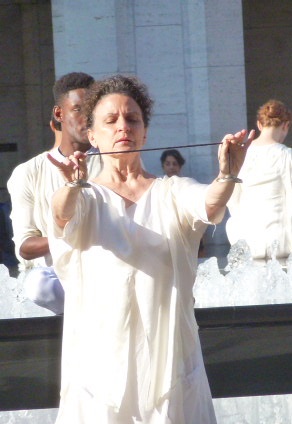
    John Stewart – ROI D’YS aria – Lexington KY 1970