Author: Philip Gardner
-
Alice Cucini
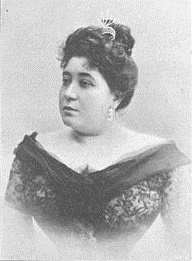
Alice Cucini (1870-1949), Italian contralto, was among the first generation of singers to be recorded. Debuting in 1891, she had a busy and successful career throughout Italy, and became very popular in South America where she toured frequently between 1901 and 1910. She also journeyed to St. Petersburg in 1898 for a series of performances there.
Cucini passed away in 1949 at Verdi’s Casa di Riposo in Milan.
In this truncated, Italian-language recording of Dalila’s famous aria, the slight catch in Cucini’s voice as she manipulates the chest voice is endearing to my ear.
-
Claudia Schreier & Company @ The Joyce

Above: Da’Von Doane (of Dance Theater of Harlem) and Elizabeth Claire Walker (from Los Angeles Ballet) in Claudia Schreier’s TRANQUIL NIGHT, BRIGHT AND INFINITE @ The Joyce; photo by Travis Magee
Author: Oberon
Friday July 21st, 2017 – Tonight’s performance by Claudia Schreier & Company at The Joyce was something I had been looking forward to ever since the choreographer confided to me last Fall the news that she had been invited to show a full evening of her work at the iconic dance venue. Having put together an impressive program of her ballets which explore a range of moods and musical styles, Ms. Schreier assembled a simply gorgeous troupe of dancers and also summoned a choir, a pianist, a clarinet virtuoso, and a string quartet to make the performance one of the most impressive and satisfying in many a Gotham moon.
I first became aware of Claudia Schreier’s choreography thru her creations for Columbia Ballet Collaborative; those elements in dance-making that should be fundamentals (but so often aren’t) – musicality, structural integrity, showing off dancers in the best possible light, and an underlying sense of passionate commitment – are givens when it comes to Ms. Schreier’s work.
It was one particular piece – her 2013 ballet HARMONIC set to a dazzling score by the Dutch composer Douwe Eisenga – that heralded a great leap to prominence for the choreographer. After its premiere at Columbia, the ballet was taken up by Craig Salstein’s Intermezzo Dance Company for performances at Vassar.
And then, in 2014, HARMONIC won Claudia Schreier the top prize in the Breaking Glass Competition for Female Choreographers. The shouts of joy from the crowd as HARMONIC ended that night signaled the emergence of a major force in the dance world, and things have rolled on with a sense of inevitability since then. A year after winning their Competition, Breaking Glass presented a full evening of Schreier choreography at the Ailey Citigroup Theatre which was a smashing success. Claudia then became the second woman to hold the Virginia B Toulmin Fellowship for Female Choreographers at New York University’s Center for Ballet and Arts. A ‘big ballet’ (CHARGE) for Ballet Academy East, and an intimate quartet (SOLITAIRE) for the Vail International Dance Festival (2016) have shown Ms. Schreier’s range. Commissions and future projects will keep her busy for months to come.
And so this evening’s Joyce program provided a welcome vision of what Claudia Schreier has accomplished to date, where she stands at the moment, and where it all may lead her in the future.
~~~~~~~~~~~~~~~~~~~~~~~~~~~~~~~~~~~~~~~~~~~~~~~~~~~~~~~~~~~~~~~~~~~~~~~~~~~~~~~~~~~~~~~~~~~~
On Valentine’s Day, 2016, Claudia and I attended a concert which was part of the New York Philharmonic Ensembles series at Merkin Hall. A stellar group of NY Phil players opened their program with the Piano Quintet – composed in 2010 – of Ellen Taafe Zwilich. After the quintet’s striking first movement, I whispered to Claudia: “That’s your next ballet!” and she whispered back, “I was thinking the exact same thing!” And…voilà!…a year and a half later, we have WORDPLAY.

WORDPLAY is an impeccably-crafted duet, danced by New York City Ballet’s Unity Phelan and Jared Angle (above, photo by Travis Magee). Clad in sleek red-and-black body tights from designer Martha Chamberlain, the dancers mirror the changing moods of the Zwilich score in a pairing that shifts from intimate to gently ironic. Jared Angle, always my ideal as a danseur noble, looked thoroughly at home in the supple Schreier choreography, and his partnering skills are to die for. Ms. Phelan’s technical authority is vivid, yet I can’t quite get a sense of the woman inside the dancer.

Above: Wendy Whelan, Da’Von Doane, and members of Tapestry in Claudia Schreier’s VIGIL; photo by Travis Magee
VIGIL is set to choral works by Tomás Luis de Victoria and Sergei Rachmaninoff which were performed live tonight by the choral group Tapestry. Their achingly beautiful harmonies evoked such feelings of peace: an escape to a realm of purity and truth from an ever-darkening world. Danceworks which can move us to the very depths of our souls come along but rarely; VIGIL is in that rarefied echelon.

With the singers of Tapestry, clad in black, ranged in a semi-circle onstage, the stage lights came up on the heavenly sight of Wendy Whelan poised aloft, borne up on the strong arms of Da’Von Doane. Together they moved thru the choreography, which somehow manages to be both elegant and soulful, in a state of grace. As Da’Von manipulated his gossamer-light ballerina with consummate skill thru lifts and sustained poses, they seemed like angels on Earth. Wendy’s other-worldly beauty and serenity as she floated weightlessly in her partner’s hands was something to behold.

As the lights began to fade on the final moments of VIGIL, I wanted so desperately to remain in that beautiful place with Wendy, Da’Von , and the singers of Tapestry. I was put in mind of the ecstatic words of the Dyer’s Wife in Act II of Richard Strauss’s DIE FRAU OHNE SCHATTEN; upon being shown a vision of the life she has always desired, she cries out: “O Welt in der Welt! O Traum im Wachen!” (“O world within the world! O waking dream!”)…
But if we cannot linger long in paradise, then let it be Shostakovich who calls to us: the gentle opening of his Piano Quintet, Opus 57, played by pianist Emily Wong, opens Claudia Schreier’s SOLITAIRE, which was first seen at last summer’s Vail Festival. Unity Phelan leads off the ballet alone to that pensive piano solo; she is soon joined by three men: Jared Angle, Da’Von Doane, and Cameron Dieck, as the strings take up a chorale-like passage.
The Shostakovich section ends with the first of two sensational lifts of Ms. Phelan by Jared Angle. The moderato pastorale from Alfred Schnittke’s Piano Quintet is the setting for their ensuing duet, which reaches a striking climax with a powerful, very exposed overhead lift.

Let us now praise the superb musicians (above) who so beautifully played the Shostakovich/Schnittke scores used in SOLITAIRE: Emily Wong (piano), Lily Holgate and Kenneth Trotter (violins), Drew Ford (viola), and Julia Henderson (cello).
Here are some of Travis Magee’s images from SOLITAIRE:

Da’Von Dane and Unity Phelan

Unity Phelan and Jared Angle

Unity Phelan and Jared Angle
During the intermission, everyone was abuzz about the choreography, the music, and the dancing. It was wonderful to find so many dance-world luminaries among the crowd: Deborah Wingert Arkin and her daughter Ava; Christina Lynch Markham and Madelyn Ho from Paul Taylor; Miro Magloire, Brian Brooks, Vincent Paradiso, Richard Isaac, Jere Hunt…

Live music set the evening’s second half on its way with a brilliant performance of Leonard Bernstein’s Sonata for Clarinet and Piano (1942). Above: Ms. Wong was again delightfully at the keyboard with Weixiong Wang delivering a performance of the clarinet part with delicious tone, fluent technique, vastly appealing subtle moments, and a lively personality to boot. This ballet, with the intriguing title TRANQUIL NIGHT, BRIGHT AND INFINITE, opens with the five dancers in silhouette.
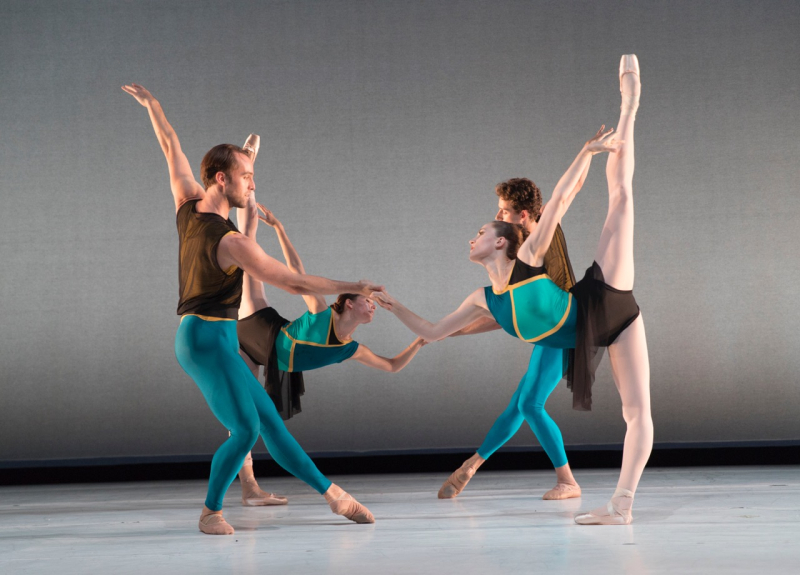
As the lights come up, Martha Chamberlain’s tourquoise/sea-green/black costumes catch the eye – above, Jared Angle, Unity Phelan, Elizabeth Claire Walker, and Dameron Dieck; photo by Travis Magee. The choreography is agile, sometimes stylized, with comings and going and brisk partnering trade-offs. Joined by Da’Von Doane, the dancers follow the music into a lyrical state…

…as Ms. Walker and Mr. Angle dance a pas de deux while their colleagues eavesdrop. The ballet ends with an upbeat feeling.
More images from TRANQUIL NIGHT, BRIGHT AND INFINITE courtesy of Travis Magee:

Unity Phelan and Da’Von Doane

Unity Phelan and Cameron Dieck
Solo danceworks for women loom large in my memory-book: seeing Peggy Lyman dance The Incense at Jacob’s Pillow; Kaitlyn Gilliland debuting at New York City Ballet in Eliot Feld’s Étoile Polaire; Ioanna Toumpakari enrapturing me with Andonis Foniadakis’ Rite of Spring; a whole evening of solos from the magical Miki Orihara at La MaMa…the list goes on and on. Tonight, Claudia Schreier’s THE TRILLING WIRE, danced by Wendy Whelan, wrote a whole new chapter in my dance diary: an unforgettable piece performed by Terpsichore’s favoured handmaiden.
The choreography for THE TRILLING WIRE is different from all other Schreier choreography I have seen. And I’m sure it posed challenges for the dancer; but Wendy Whelan has risen to every challenge that’s ever come her way and thus she turned this unusual work into a full-fledged triumph.
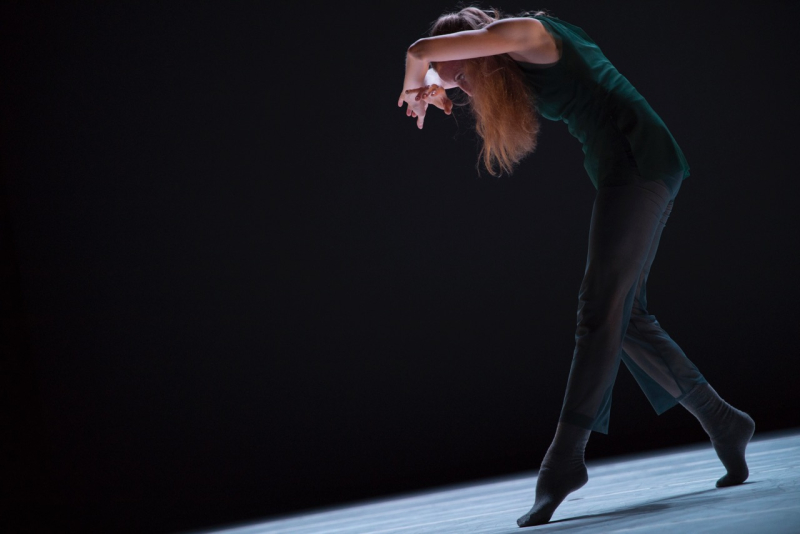
With the string players back in the pit to play movements of three Marc Mellits string quartets, the ballet opens with Wendy – hair down, in a casual outfit and wearing socks – facing upstage. She begins to move, and within about three seconds we are totally under her spell: her most subtle gestures lure the viewer in. A flow of dance commences, with a searching air and marked by pauses as if she was examining the terrain along which her quest carries her. Mesmerizing at every single moment, Wendy transforms a prayerful gesture into an act of wonderment.
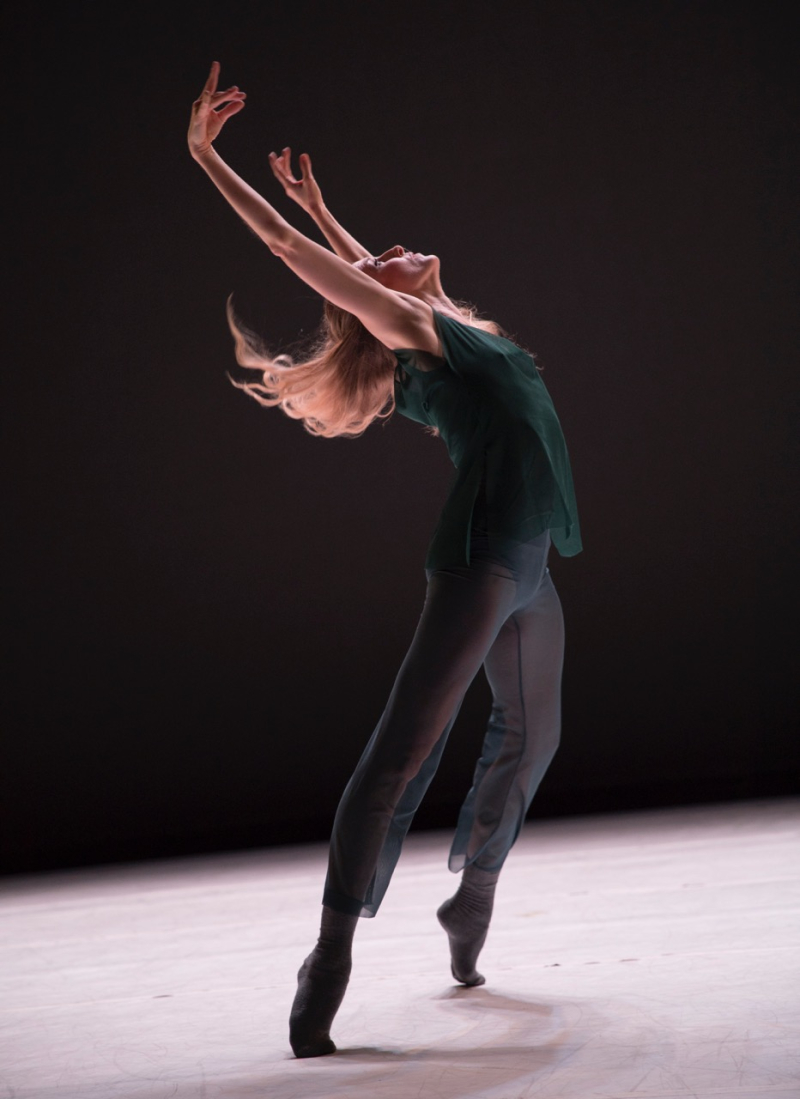
As the musical pace steps up, the gorgeous movement quality becomes light and airy. Wendy’s arms and hands are hypnotic, and even her hair is dancing. As the strings stutter, the classic notion of “dancing like no one is watching” comes to mind.
Then out of the blue comes a walkabout: Wendy simply circles the stage. But even this simple act has such resonance. To pulsing music, fabulous movement ensues; veering from lyrical to stylized, turns and gentle leaps propel the dancer as the pace quickens. A sort of coda seems to indicate the solo is about to end, but suddenly Wendy stops, only to embark on a slowish passage with animated gestures. She has made the music, the choreography, and the very space itself her own. The audience erupted in a tumult of cheers and applause after having savoured this unparalleled dance experience. Graciously sharing the acclaim with the musicians, Wendy was engulfed in a flood of love.
Here’s a gallery of Travis Magee’s images of Wendy Whelan in Claudia Schreier’s THE TRILLING WIRE:




I simply cannot get over the power and the glory of Wendy’s performance!
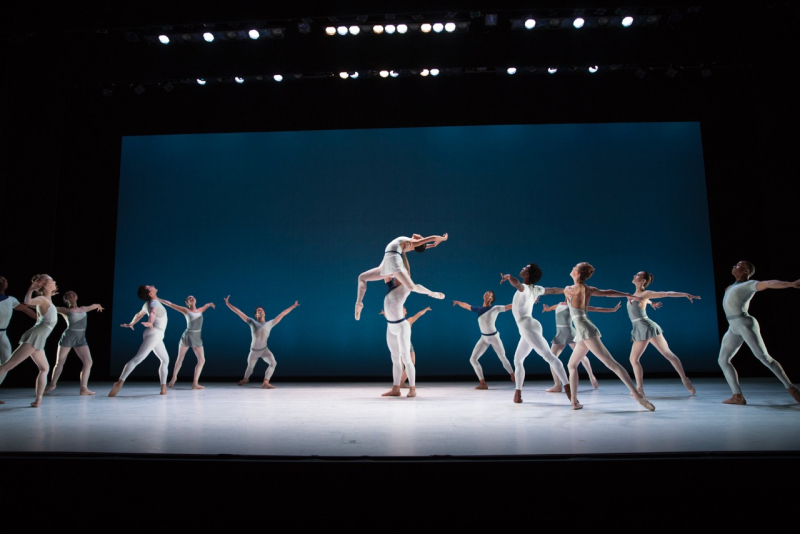
Above: the final moment of CHARGE with Tiffany Mangulabnan is a spectacular lift by Gilbert Bolden III
The evening ended thrillingly with CHARGE. Douwe Eisenga’s Piano Concerto, Movement III is the musical font from which this choreographed blessing flows. It is a work for large ensemble, and every dancer in that ensemble matters. There’s no standing about or idle promenading: this is a ballet that is meticulously structured yet seemingly bursting with spontaneity. The eye is constantly allured from one heavenly body to another as Claudia’s bevy of ballerinas and their handsome cavaliers flash thru the combinations and partnering motifs with élan.
The driven pace of the music – with fleeting moments of sparkle – propels various smaller ensemble sub-divisions into a vast tapestry of dance. Visual polyphony has seldom been so appealing: with endless comings and goings, one hardly knows where to settle one’s gaze next.
Travis Magee caught these moments from CHARGE:
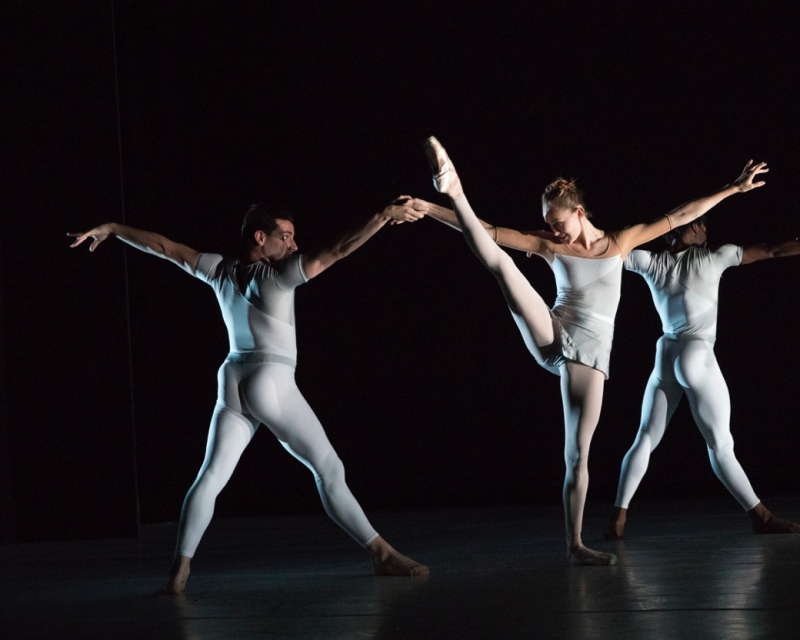
Craig Wasserman and Holly Curran
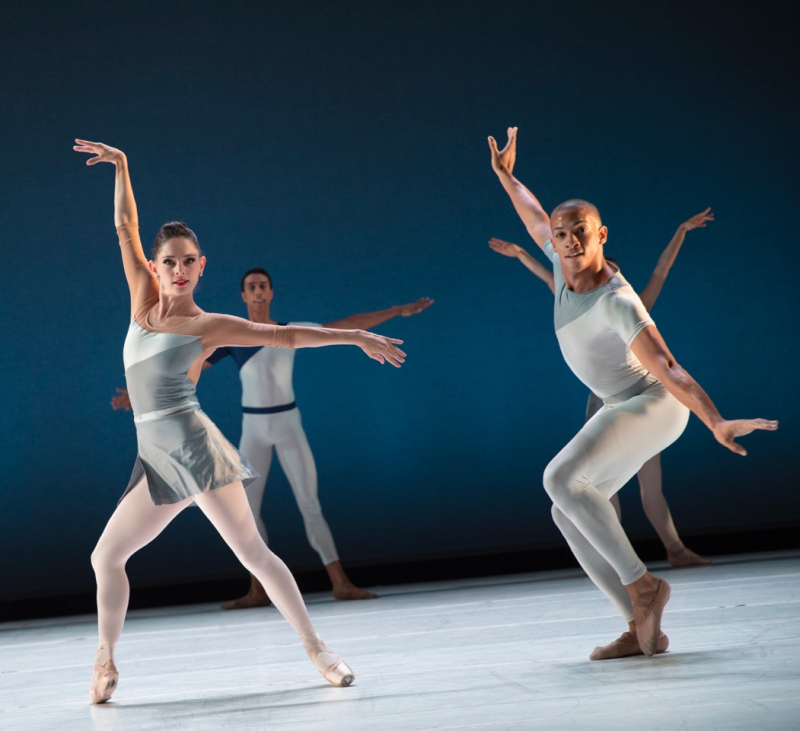
Ramona Kelley and Gabriel Hyman
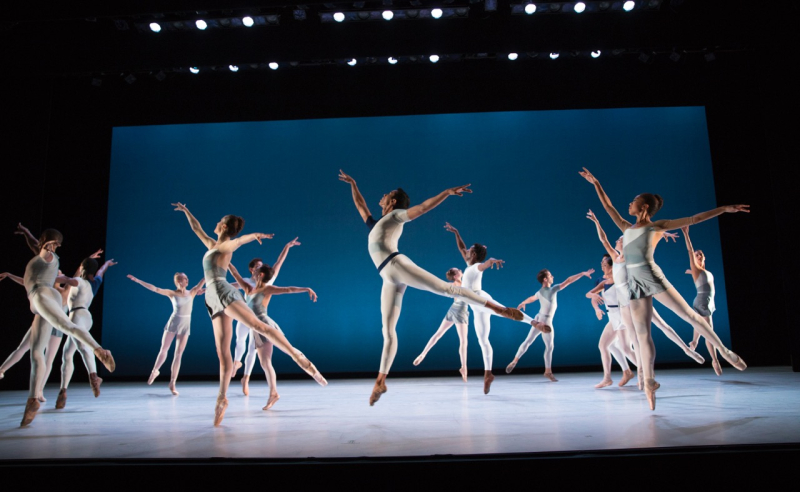
For me, this ballet was especially gratifying to watch thanks to the presence in the cast of a number of ballerinas who I count as wonderful friends: thus, thru every moment of CHARGE, I was feeling a very personal connection to what was happening onstage: thanks…and roses…to Holly Curran (who opens CHARGE alone onstage, luminous in the light), Amber Neff, Elinor Hitt, Ramona Kelley, Cassidy Hall, and Tiffany Mangulabnan. New to me were Evelyn Kocak, Jasmine Perry, and Jordan Miller. Beauties, all!
Da’Von Doane, having danced passionately all evening, looked wonderfully fresh and vital here: he and the other men have so much to do in CHARGE, from whirlwind combinations to tricky partnering motifs. Great work from all: Samuel Akins, Michael Breeden, Gabriel Hyman, Francis Lawrence, Craig Wasserman, and Gilbert Bolden III. Mr. Bolden, who I believe is about to join NYC Ballet, is a tall and powerful presence: he effortlessly put Tiffany Mangulabnan into an overhead lift to mark the end of this spectacular ballet.
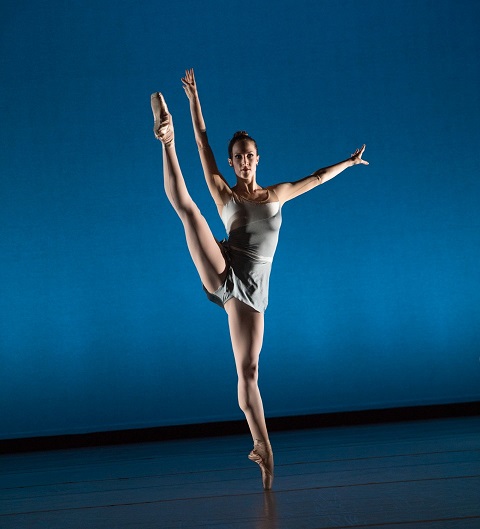
As if we had not had enough thrills all evening, watching Elizabeth Claire Walker (above) toss off a series of demi-turns while sending her extension skyward was the frosting on the cake. This combination, which made me think of Gamzatti’s coda in Bayadere, just delighted me thoroughly. We don’t get to see Liz nearly often enough here in New York City.
The curtain fell, then rose again as the packed house went wild for the dancers. Wendy, Unity, Jared, and Cameron – already in street clothes – joined the cast of CHARGE onstage. Finally, Cameron brought Claudia Schreier out onto the stage; the entire audience stood up and literally screamed at the top of their lungs. It seemed actually that the roof might cave it. Such delirium, and so well-deserved.
Many thanks to Travis Magee for producing the images for this article.
~ Oberon
-
Prelude: Claudia Schreier & Co

Claudia Schreier & Co will be at The Joyce on July 21st and 22nd, 2017, as part of the theatre’s two-week ballet festival. The performances are sold out.
On Wednesday evening, July 19th, photographer Travis Magee and I stopped in at the Barnard College studios where rehearsals have been taking place. The dancers were running thru CHARGE, Claudia’s large-scale ballet set to a vibrant score by the Dutch composer Douwe Eisenga. For this ensemble work, Claudia has gathered together an outstanding group of dancers; although it’s an ad hoc ensemble, they’ve already developed the feeling of a Company.
Here are more of Travis’s images from CHARGE:
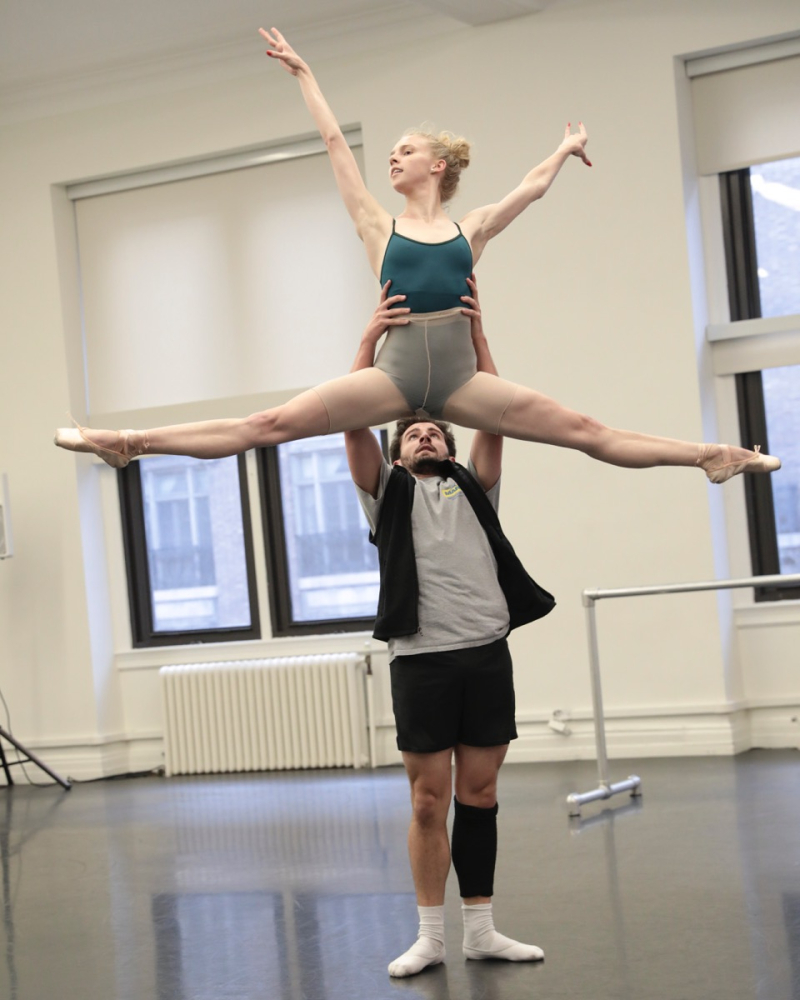
Elinor Hitt and Craig Wasserman

Elizabeth Claire Walker

Claudia & Company
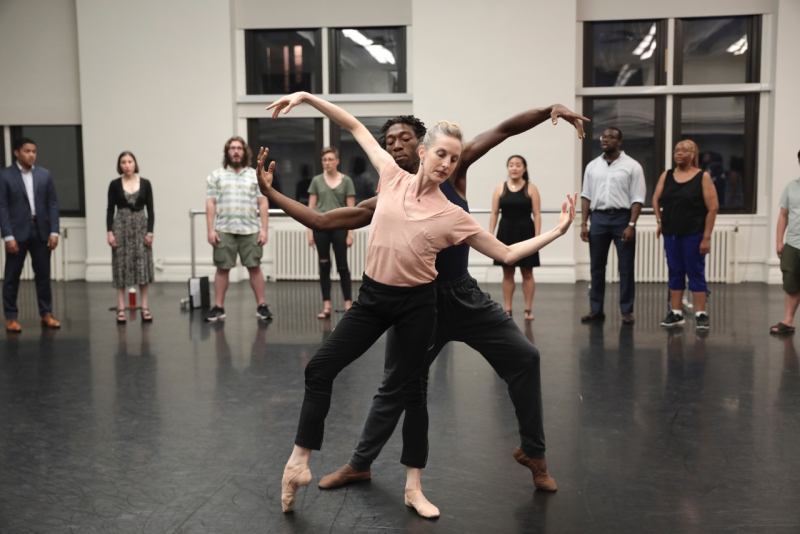
While the dancers caught their breath after two runs of CHARGE, members of the choral group Tapestry filed into the studio and arranged themselves in a semi-circle to sing the music of Tomás Luis de Victoria and Sergei Rachmaninoff which comprise the setting of Claudia’s breathtaking pas de deux, VIGIL.
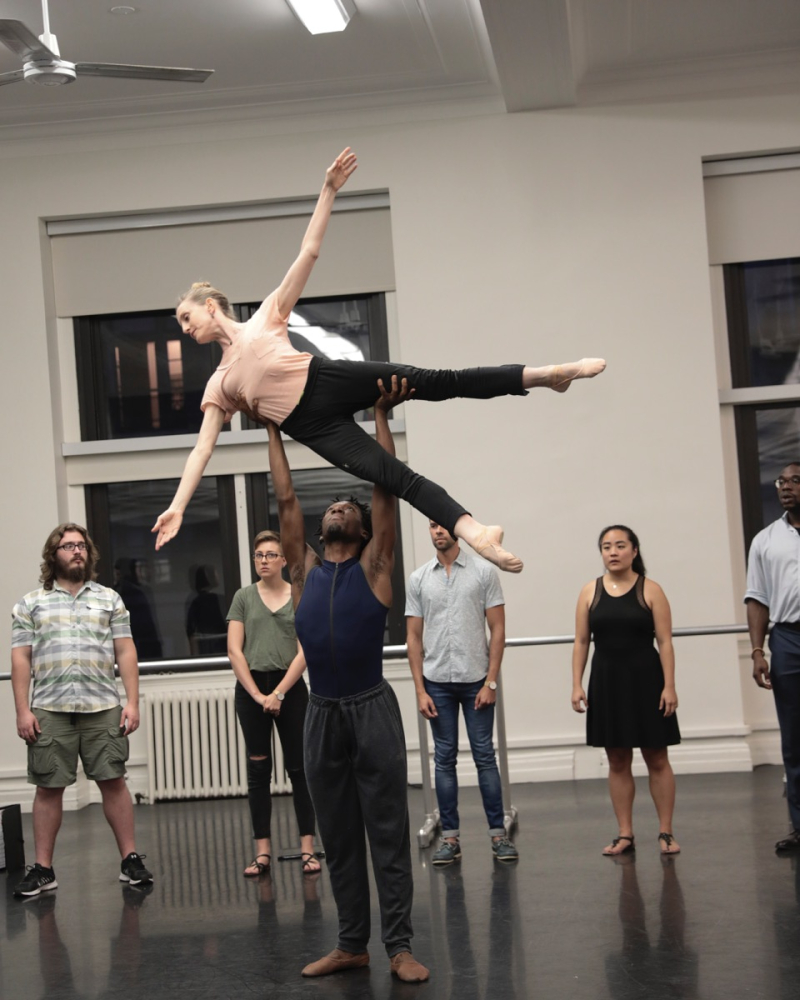
VIGIL is danced by guest artist Wendy Whelan and Dance Theater of Harlem’s Da’Von Doane. Working together for the first time, Wendy and Da’Von have formed a partnership based on resonant technique and spiritual affinity. Their dancing is borne up by the heartfelt, resplendent harmonies of Tapestry, making this is a dance experience sans pareil.
More of Travis Magee’s photos from VIGIL:


The Joyce performances by Claudia Schreier & Co will further feature ballets set to music of Leonard Bernstein, Marc Mellits, Dmitri Shostakovich, Alfred Schnittke, and Ellen Taafe Zwilich. Unity Phelan, Jared Angle, and Cameron Dieck – all from New York City Ballet – will appear in prominent roles.
All photos by Travis Magee.
-
Matti Salminen as Hagen

On October 21st, 1988, basso Matti Salminen (in a Marty Sohl photo, above) enjoyed a huge personal triumph with his magnificent portrayal of Hagen at the Metropolitan Opera’s premiere performance of the Otto Schenk production of GOTTERDAMMERUNG, with James Levine on the podium. I was there, and it was one of the great nights in my opera-going career.
This excerpt comes from the 1993 broadcast of the Wagner masterwork:
-
A Report from the Chelsea Music Festival
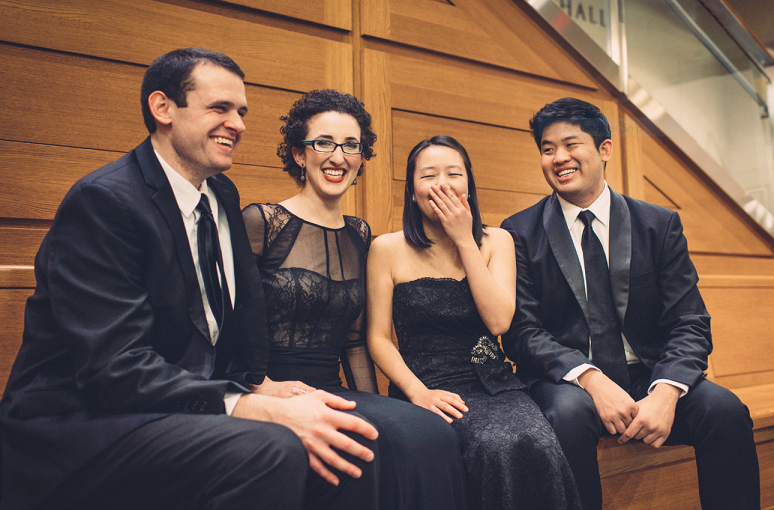
Above: the players of the Verona Quartet; photo credit ~ Joseph Ong/Brittany Florenz
Author: Scoresby
Friday June 16th, 2017 – On a hot sticky night, I went to the penultimate set of events for the Chelsea Music Festival. Hosted in St. Paul’s German Lutheran Church was a lecture by the neuroscientist Dr. Michael Shadlen and a performance by the Verona Quartet. For those who do not know, the Chelsea Music Festival is much more than the name would suggest. Rather than just a few concerts, it brings it together all of the different senses by having food, art, lectures, music and other events focused on one theme hosted in different venues in Chelsea in a whirlwind of eight days. For each of these various disciplines, the festival has a residency – thus no night is the same, and it is a true intellectually stimulating week.
Unfortunately, due to illness, I only ended up attending the second to last evening. This year’s theme focuses on keeping time. Dr. Shadlen’s lecture was about how humans perceive and anticipate time. His accessible talk first discussed the idea that time grounds the mind. It seems to Dr. Shadlen, time and anticipation help breed consciousness.
More interestingly, he then gave different demonstrations of sight experiments in chimps. Dr. Shadlen was able to show anticipation thru graphs (and audio) of the various neurons of a chimp reacting. Right before each anticipated event would happen, you could see a crescendo of neural activity until the event took place. The longer it was from the expected time, the more activity. As he put it, this is where “the neuroscience of cognition and aesthetics meet.” Because the brain is constantly anticipating and timing, music stimulates this part of the brain – constantly being thrown off by the various changes in what is anticipated. The implications of his lecture set up a classical performance perfectly.
While all of the other performances during the week are curated by the festival, here the Verona Quartet (this year’s Ensemble-in-Residence) was playing a program of their own choosing. The opener of the program was Ravel String Quartet in F Major. This young Quartet sounded fantastic throughout the Ravel, the lower strings delivering a beautiful blend of dark colors. The Quartet took a rather tight structural approach, keeping the tension high through the entire first movement. In their hands the piece seemed unstable and nervous, constantly bursting with energy through each phrase. This led to a dramatic outbursts that felt restrained almost right away and I couldn’t help but smile after the lecture about anticipation. The purplish lighting on stage and humid venue made the air seem to be saturated with energy.
During the pizzicato-ridden second movement, the players made a full use of Ravel’s sound effects. One of my favorite sections was the muted trio during the movement. The Quartet took on a much warmer tone, contrasting the more aggressive tone from earlier. I only wish they had slowed the trio section down a little more; it still felt as structured and nervous as the opening movement. They did a great job of building dynamic range transitioning back into the scherzo. During the third and fourth movements, the group seemed to change sound to thicker, rougher textures. While technically precise, instead of the smooth edges that some groups produce in this piece, the Veronas had a tense edgy sound. It would be great to hear this group play Janacek.
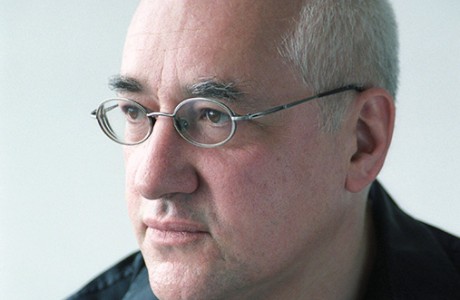
The other part of the first half was a world premiere by the Composer-in-Residence (and well-known composer) Sebastian Currier (above). His music had been played all week during the festival, and this commission was the capstone event of sorts. The new piece is part of a project of creating six etudes and six lullabies for six different string quartets, this set of two being the second entry of the project. In keeping with the festival theme, the piece is titled Etude: Interactions and Lullaby: Pulsing.
Through the etude, the quartet plays a theme that seems to keep developing. It is a fast-paced piece that reminded me some of John Adams’s writing, though more tonally adventurous and colorful. As each player’s theme gets offset and displaced, the chords gradually became more dissonant. The music is skittering and spider-like, and the Verona Quartet played it with verve, managing to capture all of the intricate accents. Because of the driving sections in this piece, there is very little silence. At times it sounded like Mr. Currier was making use of a Shepard Tone as everything falls out of sync. Finally, the difficult etude opened up into a muted chorale of sorts that brings the piece to a close, really the restlessness finally settling.
The lullaby to me felt like a ship that was rocking back and forth, with chords that slowly crescendo and decrescendo, each played by the whole quartet. This contrasted the etude well. As the piece evolves and moves forward, melodies start to emerge as instruments drop out of these larger chords to take on their own sound. Here Mr. Currier is employing a microtonal language so that each chord has completely different texture, timbre, and feeling. The piece builds to a beautiful E-flat chord that ends the piece, sounding much lighter than all the material preceding it. These pieces are great miniatures in the quartet repertoire, and I look forward to hearing the other five sets.
The lengthy program concluded with the very difficult Beethoven String Quartet in C-sharp minor, Op. 131. This seven-movement piece, played with no breaks, is a great way to conclude a program about measuring time. The first movement opens with an extended fugue, played here with attention and clarity. Similar to in the Ravel, the Quartet seemed be intent on the structure of the piece, infusing it with energy. While it was effective, it felt at times that some of the more delicate sections of this movement were overlooked. Nonetheless, they brought out the counter-melodies clearly. During the second movement, the group had a more folksy sound. They did best in the energetic rhythmic sections. While well-played, the third and fourth movements seemed to lack the structure that they had brought elsewhere. The music here seemed more about the individual movement rather than moving the piece forward.
Luckily, in the penultimate movement they seemed to regain their focus creating a beautifully sorrowful adagio; particularly lovely were the downward runs near the end of the movement. Throughout, they seemed to use a sweeping dynamic range that paved the way into the dramatic finale. During the last movement, the Quartet did a good job of bringing out the intense counterpoint while still managing to sound lyrical. Watching a quartet coordinate this is always a treat, and here the players seemed to be able to navigate the intricate voicing and virtuosity well, leading to an exciting conclusion. I look forward to hearing this young quartet in the future and seeing how their sound develops, they are certainly formidable performers.
While an overwhelming evening in many ways I am so glad that the Chelsea Music Festival provides such a diverse and vibrant set of events. It really is a quintessential New York celebration of culture and I look forward to attending again next year.
~ Scoresby
-
CMS ~ Summer Evenings 2017 ~ Concert 3
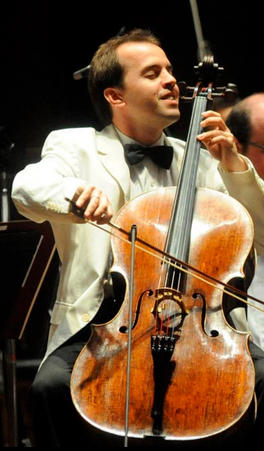
Above: cellist Efe Baltacigil
Author: Oberon
Sunday July 16th, 2017 – All too soon, Chamber Music Society of Lincoln Center‘s Summer Evenings series for 2017 has come to an end. Over the course of the three concerts, we heard magnificent music, played to perfection. Each summer I find myself hoping that a fourth concert might be added to the series: the packed houses indicate how successful these summertime concerts are. But perhaps it’s just a question of timing, as so many musicians are making appearances at the various summer festivals. Also, the Society is about to commence a run of concerts at Saratoga Springs. So, we can feel grateful for what we have heard this summer, whilst looking forward to the 2017-2018 CMS season.
Anticipation ran high as Alice Tully Hall was again filled to the rafters with Gotham’s music-lovers, thirsting for the classics as the doldrums of the summer lazed along. A cordial greeting to Mr. Baltacigil and his colleagues…
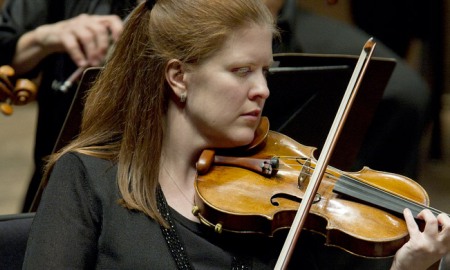
…violinist Erin Keefe (above)…
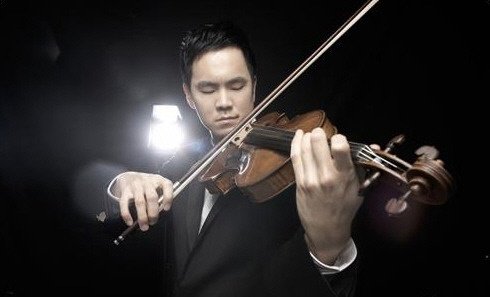
…and violist Richard O’Neill (above), as they appeared onstage for the opening Beethoven.
The D-major Trio opens serenely, but things soon become quite lively. It was quickly evident that our three musicians were well-matched, and as the shifting themes unfolded their playing was marked by a fine mixture of impetus and elegance.
As is so often the case, it is in the second movement, marked Andante quasi allegretto, that we get to the heart of the matter. A nostalgic feeling pervades here, though the textures remain translucent. Mr. Baltacigil’s cello enhances the lyrical aspects of the music, and some gracious plucking maintains an active feeling so that things don’t turn dolorous. A beautiful viola passage receives loving attention from Mr. O’Neill, and Ms. Keefe’s relishing of the Andante‘s most subtle moments is a distinctive asset.
Delicate playing in the Menuetto dances us along with courtly charm. Then, after a longish pause, the concluding Rondo is quite jolly, with the cello prominent, the viola harmonizing, and the three voices eventually in finely-timed exchanges. A passing lull into lyricism again brings subtle mastery from our expert trio before the piece reaches its happy ending.
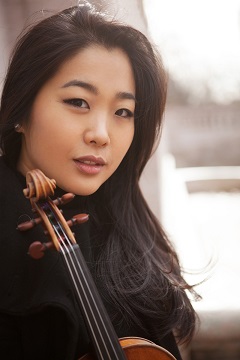
A brilliant performance of the Prokofiev Violin sonata in D-major followed. While I have enjoyed the playing of Kristin Lee (above, in an Arthur Moeller potrait) on many CMS evenings in the past, I can’t recall having heard her in a sonata performance. Her Prokofiev was, in a word, spectacular. And, with their usual knack for matching up musicians of like quality, Michael Brown at the Steinway played with thrilling verve and clarity.
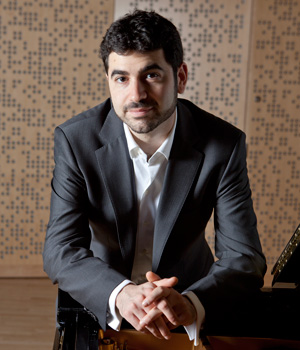
Above: Michael Brown, photographed by Jeanette Beckman
Originally a flute sonata, this piece was re-worked by Prokofiev for violin as several violinists – notably David Oistrakh – took an interest in it. In the opening Moderato, the violin floats in a lyrical dream. An almost fanfare-like passage leads to some scurrying before resuming its more song-like aspect, with some piercing highs; a pensiveness evolves and a short coda concludes the movement.
The ensuing Scherzo begins as a jig, with dance-like swirls from both violin and piano. A more tranquil interlude temporarily lulls us, but things again speed up to a big dance.
The Andante features a soaring, romantic theme for the violin: Ms. Lee was at her most poetic here before passing the melody along to Mr. Brown, who takes it up at the piano. The music aches the heart until a quiet restlessness steals in; the violin goes high and sounds on the verge of spacing out.
The Allegro con brio finale opens with a rollicking passage and then jogs along for a bit until Mr. Brown’s pianistic passion takes over. Things simmer down and become quite delicate; then a song wells up and a triumphant feeling builds. A increase in velocity carries the sonata to the finish line.
Kristin Lee, a beauty in black, was so impressive in her technical command, with Mr. Brown an ideal colleague in both the passion and precision of his playing. As the duo embraced at the end of their superb performance, the audience lavished well-deserved cheers upon them.

Violist Yura Lee (above) joined the ensemble after the intermission for a richly rewarding performance of Antonin Dvorák’s String Quintet in E-flat major, Opus 97.
“Spillville is an ideal place; I would like to spend the rest of my days there,” wrote the homesick Dvorák of the Iowa town where he had gone (in 1893) to mingle with the local Bohemian community. But while he was there, something else happened: a road-show of Native American entertainments and crafts came to Spillville for two weeks. Dvorák was intrigued by the rhythms and harmonies he heard in the group’s presentations and worked some of these elements into his E-flat major Quintet.
One of the most delightful aspects of this work is in the composer’s assigning of equal prominence to the “1st” and “2nd” violins and violas; this division of labor gives everyone a chance to shine. And underlying the melodious marvels produced by his colleagues, Mr. Baltacigil’s honey-toned cello playing gave the ensemble a pleasing depth of feeling: for both rhythmically and melodically, Mr. Baltacigil is first class.
Dvorák himself was a viola player, and it is to that instrument that the composer gives the quintet’s opening statement, played from the heart by Richard O’Neill. Chamber Music Society is like a paradise for lovers of the viola sound (count me in!) where one is likely on a given evening to hear the likes of Paul Neubauer, Matthew Lipman, or Pierre Lapointe. In tonight’s Dvorák, Yura Lee shared the viola spotlight with Mr. O’Neill: her rich, pliant tone is always so inviting. Likewise, on the violin side, Mlles. Keefe and Kristin Lee were each heard to advantage.
In the quintet’s first movement, Ms. Keefe’s lambent tone was particularly enhancing. As ribbons of melody pass from player to player, we can savor the unique sound of each voice as well as their combined appeal when they sang in unison in a passage with an unusual drawling quality. The two violists were having a heyday, unwrapping each phrase the composer has given them and relishing it for us to enjoy.
For the second Allegro movement, Mr. O’Neill again takes the lead. Ms. Keefe and Yura Lee trade passages and then, to the genial plucking of her colleagues, Yura takes up a gorgeous theme which explains why she wanted to be “1st”; Ms. Keefe, playing high and sweet, makes the same case for being “1st” violin.
The Larghetto offers a set of variations, shifting between major and minor. Here a sad melody is given out by the lower voices with a hymn-like quality. More magic from Yura Lee, and then Ms. Keefe plays a sinuous obbligato over the choir; the opposite effect is created when Mr. Baltacigil’s animated cello is overlain by the harmonizing violins and violas. The cellist then sings forth while the higher voices take a tremelo stance. Amazing delicacy is achieved in a plucked interlude, the audience breathlessly charmed by the effect. Following a dynamic outburst, calm is restored and Kristin Lee carries the Larghetto to a fade out.
Erin Keefe leads a dance to start the Finale: Allegro giusto. Plucking again; then Kristin Lee, Mr. Baltacigil, and Yura Lee each have their say before a broad flow of melody ensues. Ms. Keefe takes up a ‘Native’ theme and then Yura Lee has a final viola gesture which leads to a rush to the finish: an exhilarating end to a great evening of music.
~ Oberon
-
Erda’s Warning
Anne Gjevang (above) as Erda and Hans Sotin as Wotan in this fascinatingly mysterious scene from DAS RHEINGOLD:
Weiche Wotan! – RHEINGOLD – Anne Gjevang and Hans Sotin – Met bcast 1~16~88
“Yield it, Wotan, yield it!
Flee the ring’s dread curse!
To dark destruction –
irredeemably –
its possession dooms you.” -
Erda’s Warning
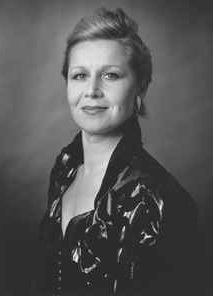
Anne Gjevang (above) as Erda and Hans Sotin as Wotan in this fascinatingly mysterious scene from DAS RHEINGOLD:
Weiche Wotan! – RHEINGOLD – Anne Gjevang and Hans Sotin – Met bcast 1~16~88
“Yield it, Wotan, yield it!
Flee the ring’s dread curse!
To dark destruction –
irredeemably –
its possession dooms you.” -
A Passionate Romeo
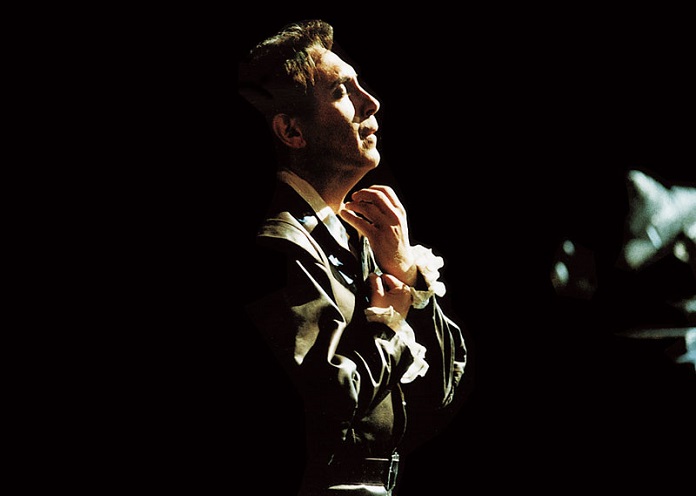
Ardent lyricism from Neil Shicoff in this gorgeous Gounod aria:
Neil Shicoff – Ah leve-toi soleil – ROMEO & JULIETTE – Met 1986

 Oberon's Glade