Author: Philip Gardner

  • Barbara Conrad Has Passed Away

    B Conrad

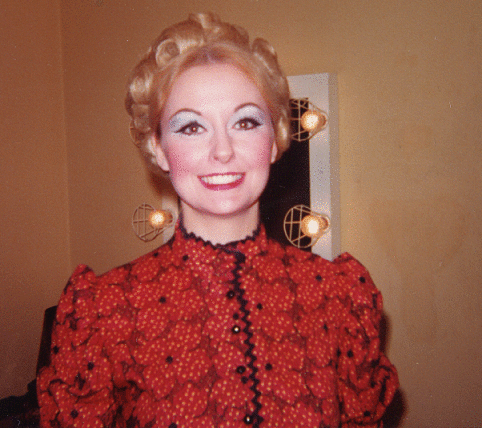
    Mezzo-soprano Barbara Conrad has passed away; famously the center of a racist imbroglio during her college days at the University of Texas, Ms. Conrad went on to a long and distinguished career. 

    In 1957, when she was 19 years old, Barbara Conrad was chosen to play Dido, the queen of Carthage, opposite a white student as her lover in a production of Henry Purcell’s DIDO & AENEAS. The interracial pairing stirred up a major controversy: Ms. Conrad drew death threats from white students, who harassed her with phone calls. The case reached the Texas legislature, which threatened to withdraw funding from the university if she was not replaced in the production. When university officials caved in to the legislature’s demands, Ms. Conrad was publicly gracious, but on a personal level she was devastated.

    Harry Belafonte offered to pay the young singer’s tuition at any school of her choice if she desired to transfer, but she stuck things out in Austin. Belafonte later arranged for Ms. Conrad to fly to New York City for auditions; the trip’s expenses were underwritten by Eleanor Roosevelt.

    Putting the past behind her, Conrad emerged as a distinctive singer and stage personality; she sang at both the New York City Opera and at The Met, where I saw her as Maddalena in RIGOLETTO and Preziosilla in FORZA DEL DESTINO. She was also heard at The Met as Annina in ROSENKAVALIER, Hecuba in LES TROYENS, and as Maria in the Met’s premiere performances of PORGY AND BESS.

    Ms. Conrad appeared with major opera companies and orchestras, and worked with such conductors as  Maazel, Bernstein, and Levine. She went on to teach at the Manhattan School of Music, where she co-founded the Wagner Theater Program.

    Amazingly enough, I got to hear Barbara Conrad yet again: in 2008, she sang Fricka in the Wagner Theater Program’s semi-staged WALKURE. She was “…vivid, larger-than-life…her frustration and anger grandly portrayed. Despite some tension on the uppermost notes, Conrad’s intense, chesty sound and authoritative command of the stage elicited applause as she made her exit…”

    Incredibly, part of this WALKURE performance is to be found on YouTube. It will give you an idea of Ms. Conrad’s vibrant performance as the queen of the gods.

    There was a post-script to the story: a few days after the WALKURE, Barbara Conrad came to Tower Records where I was working. I struck up a conversation with her, using her Fricka as an entrée. She was beyond gracious, and so tickled that I recalled seeing her as Preziosilla; I remarked that not only had she made a smouldering physical impression, but that she was the one Preziosilla in my experience who really made something of the music.

    Barbara Conrad is the subject of a documentary, WHEN I RISE.

    Here’s a sampling of Ms. Conrad’s singing, from her repertoire of spirituals:

    Barbara Conrad sings ‘Deep River’

    May she rest in peace.
  • Catherine Robbin

    Robbin-Catherine-8

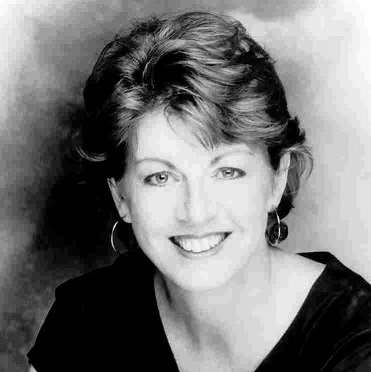
    Canadian mezzo-soprano Catherine Robbin sing’s Robert Schumann’s atmospheric ‘Mondnacht’ (‘Moonlit Night’).

    Catherine Robbin sings Schumann’s Mondnacht

    “It was as if the heavens
    Had silently kissed the earth,
    So that in a shower of blossoms
    She must only dream of him.

    The breeze wafted through the fields,
    The ears of corn waved gently,
    The forests rustled faintly,
    How starry was the night.

    And my soul spread
    Far its wings
    And sailed o’er the hushed lands
    As if gliding homeward.” 

  • William Stone

    William Stone

    William Stone is an American baritone who gave some very impressive performances at New York City Opera in the 1980s and 90s, most notably as Germont in TRAVIATA, Zurga in PECHEURS DES PERLES, and Count Almaviva in NOZZE DI FIGARO. He also sang at The Met from 1998-2003, and extensively throughout North America as well as at such premiere European theatres as the Monnaie, La Scala, Opéra National de Paris, and at the Wexford Festival.

    Among the baritone’s many recordings is an especially impressive performance of William Walton’s BELSHAZZAR’S FEAST.

    William Stone – Hai già vinta la causa! ~ NOZZE DI FIGARO

  • Calidore Quartet @ CMS

    Ps2Z7A8630-copy

    Above, the Calidore Quartet: Ryan Meehan, Estelle Choi, Jeremy Berry, and Jeffrey Myers

    Author: Scoresby

    Thursday May 18th, 2017 – The Calidore Quartet and violist Paul Neubauer in the first of two performances scheduled for this evening (the first at 6:30 PM, and the second one at 9:00 PM), marking the end of this season’s Rose Studio series at Chamber Music Society of Lincoln Center. The quartet consists of Jeffrey Myers and Ryan Meehan, violins, Jeremy Berry on viola, and cellist Estelle Choi. It was a short program of seventy minutes, without intermission, featuring two great works.

    First up was one of my favorite pieces in the genre: Ligeti’s 20-minute String Quartet No. 1 for Strings, “Métamorphoses nocturnes”. This piece is structured into different small character pieces, each propelling the theme posited in the first few notes forward. While it is a fantastic piece in its own right, it is stylistically quite different than the rest of Ligeti’s output, instead feeling like one of the Bártok quartets, if he had lived another ten years.

    Ligeti uses a variety of different effects through the piece and the quartet handled every challenge well. The music starts off with a dry mysterious introduction with various whole tone scales appearing and builds in a large crescendo to a rollicking theme that launches the piece forward into its other sections. The Calidore Quartet did a superb job of building from a whisper into a bang making the performance a thrill.

    Equally enjoyable was the way the quartet embraced all of the sound effects from string snaps to lightly played harmonics near the bridge. Multiple times I saw audience members craning their necks to see how the quartet was producing these otherworldly sounds. While some quartets emphasize the overlying structure, the Calidores focused individual characters of each section. This leads to larger dynamic and tempo contrasts. The languid night music sections became infused with color. My favorite part of the evening was during the section in which the first violin has a sustained trill while the rest of the quartet plays slow consonant chords – in the midst of so much else going on, this part felt like being elevated into a misty plain.

    Credit+Tristan+Cook

    Above: violist Paul Neubauer in a Tristan Cook photo

    The second piece on the program was Mozart’s Quintet in C major for Two Violins, Two Violas, and Cello, K. 515 with Paul Neubauer as the additional violist. I had never heard this piece and I found it quite intriguing. When I typically think of quintets, I picture one instrument that functions as a quasi-solo instrument. This piece is pure chamber music in that the distribution of voicing is more even.

    The tone of the strings here was warmer than in the Ligeti. Of particular note was the buttery round sound of Ms. Choi’s cello – she seems able to blend with every individual voice in the ensemble and supply a steady bedrock for the group to fall back on. The opening Allegro was delightful, they did an excellent job highlighting all of the inner textures that typically get brushed aside for melodic content.

    It was interesting to me that the players managed to have a smooth, legato tone throughout most of the work. Until the fourth movement where some particular sections require more articulation, it felt like one large lush body of sound (even during pizzicatos) without one harsh tone. One of the highlights was the third movement with its interruptions between Mr. Berry’s melody and Mr. Myers. They did a good job with the theatrics of cutting each other off, while still managing to match vibrato and style of playing. It was lovely to hear the difference in timbre between the violin and viola here.

    It is great being able to hear strings in a hall like this – it feels like being in someone’s living room in which you can hear every note. These players took advantage, really making every resonant note and dynamic shift count. While I enjoyed the performance, I would have preferred program order in reverse. It was hard for me as a listener to follow up an electrifying, colorful piece with something much more subdued and refined – even when it was as well played as it was here. Nonetheless, the members of the Calidore Quartet proved that they are well worth the acclaim and accolades that they have been receiving. It was a great way to end the last of the Rose Studio concerts for the season. 

    ~ Scoresby

  • Jerry Hadley

    Quartet

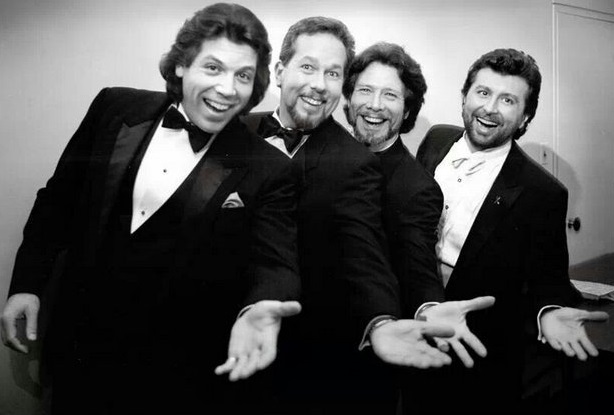
    Above, an all-star quartet: Thomas Hampson, James Morris, Samuel Ramey, and Jerry Hadley

    Back in 1980, at the New York City Opera, a young tenor singing the role of Gastone in TRAVIATA made me prick up my ears with his brief lines. It was Jerry Hadley. He is one of a four singers who captivated me initially in a small role and went on to a major career; the others were Samuel Ramey (1st Nazarene in SALOME), Kathleen Battle (Shepherd in TANNHAUSER), and Lisette Oropesa (Cretan Woman in IDOMENEO). They all became great favorites of mine.

    Hadley had a generous lyric tenor with an Italianate sense of warmth and passion. The voice was clear and ardent, and he looked good onstage. He sang quite a lot at New York City Opera – where I saw him as Alfred in FLEDERMAUS, as Faust, and Nadir in PECHEURS DES PERLES. I also was present when he sang the title-role in Mozart’s IDOMENEO (Strauss version) at the Mostly Mozart Festival.

    In 1987, Hadley made his Met debut as des Grieux in MANON and sang 125 performances there – in roles as diverse as Donizetti’s Edgardo, Mozart’s Ferrando and Don Ottavio, and Stravinsky’s Tom Rakewell. I saw him at The Met as Alfredo in TRAVIATA, Tamino in ZAUBERFLOETE, and Lensky in EUGENE ONEGIN. His final Met performances were in the title-role of Harbison’s THE GREAT GATSBY in 2002. He committed suicide in 2007, at the age of 55.

  • Alexander Sitkovetsky/Wu Qian @ CMS

    2171-sitkovetsky

    Above: Wu Qian and Alexander Sitkovetsky

    Author: Scoresby

    Thursday May 11th, 2017 – I had the experience of going to Chamber Music Society of Lincoln Center’s wonderfully intimate Rose Studio for a duo performance – from a married couple no less: violinist Alexander Sitkovetsky  and pianist Wu Qian. I am always a fan of performances in the Rose Studio as you feel enveloped in the music – there is no bad seat in a hall this small. I have only ever heard solo piano performance and all string chamber music in here, so it was interesting to see how the space is different with a mixed ensemble.

    The program was well-balanced, with each half starting with one shorter piece followed by one full-length sonata. It commenced with Korchánski’s arrangement of Manuel De Falla’s Suite populaire espagñole for Violin and Piano. While I have heard the entirety of the piece once in performance, violinists tend to only play the jaunty last movement as an encore piece. It was a pleasure to hear it in full here.

    Mr. Sitkovetsky’s playing was clean and clear. He seemed to use extra bow pressure to make the lines come out very smoothly, adding a sweeping vibrato in the more romantic lines. Mr. Sitkovetsky was at his best during the pulsing dance sections. As a whole, their take was slower than I am used to, which allowed Ms. Qian to do an excellent job bringing out the impressionistic elements of the piano part. Particularly noteworthy was her silky tone in the second movement and percussive pulses in the fourth movement, both reminding me of de Falla’s Nights in the Gardens of Spain (which composed within a year of the Suite).

    he first half of the program ended with Schumann’s Sonata in D minor for Violin and Piano, Op. 121. While I hadn’t heard it live before this program, I have never had much of an affinity for this piece. I typically find it too busy-sounding, with the first movement quite repetitive. Nonetheless, the duo did a fine job with the piece making many of the lines more clear than they typically are. They took a structured approach, allowing one to hear a coherent flow of ideas through the piece (which is not always the case). Mr. Sitkovetsky managed to get a more muscly sound than earlier, most noticeable in the last movement. Ms. Qian handled the technical demands and quirky off-beats well.

    The second half of the program began with Alfred Schnittke’s Suite in the Old Style for Violin and Piano. Schnittke’s pieces typically have a conglomerate sound, mixing a modernist idiom with other styles. Here Schnittke composed the piece in a completely Baroque style (with the exception of one note). Mr. Sitkovetsky had a sweet and playful tone. He and Ms. Qian seemed in complete sync as they wove their way through the various movements. I loved the way they played the third movement, a minuet that sounds more like a lullaby. Here the dance pulse of the minuet was clear. They managed to conjure up a beautiful sense of yearning for another time: it was nostalgia in the best way possible.

    This led straight into the difficult fugue which they played with a bouncy, light tone, and sheer virtuosity. They managed to highlight all of the voicing well, with great coordination between them – the violin almost felt like an extension of the piano. In the final movement “Pantomime“, they took a slow, methodical approach that emphasized the humor. This made the dissonant climax after the child-like introduction hysterical – a few audience members let out quiet chuckles. The piece ends with an amusing incomplete scale into silence.

    The program concluded with Grieg’s Sonata No. 3 in C minor for Violin and Piano, Op. 45. This was once a favorite of the violin repertoire, but has decreased in popularity over the years. I’ve always been a fan and found this reading invigorating. The passionate and edgy melody of the first movement fit Mr. Sitkovetsky’s full sound well. Ms. Qian provided sparkling playing with Lisztian waterfall-like arpeggios mixed with dark coloring. The start of second movement is a sugary and sentimental, reminiscent of a Trenet song if the violin were a vocalist. It is a nice escapist melody. 

    In the final movement, Mr. Sitkovetsky and Ms. Qian brought out all of the folksy dance-like rhythms. It is always a good sign when everyone in the audience seems to be tapping their feet or bobbing their head. The back and forth between the instruments was lovely, as was watching their shadows move on the back of the hall. They brought Grieg’s colors to life, making every phrase ring. To hear such lush music in a small space was a treat.

    ~ Scoresby

  • The Unknown Island

    322820825d6066b9950f9b51d1bfd747

    Jose van Dam ~ Berlioz – L’Ile inconnue

    “Tell me, my pretty lass,
    where would you like to go?
    The sail billows,
    and the breeze is rising!

    The oar is of ivory,
    the pennant of silk,
    the rudder of pure gold;
    I have an orange for ballast,
    for a sail, an angel’s wing…
    and as our cabin boy: a seraph.

    Tell me, my pretty lass,
    where would you like to go?
    The sail billows,
    and the breeze is rising!  

    Is it to the Baltic..
    or to the Pacific Ocean…
    to the island of Java?
    Or maybe is it to Norway,
    to gather snow flowers?
    Or the blossoms of Angoska?

    Tell me, my pretty lass,
    where would you like to go?
    The sail billows,
    the breeze is rising!

    Take me, said the fair girl,
    to the faithful shore
    where love is forever true.

    That shore, my darling,
    is hardly known
    in the realm of love.

    Where would you like to go?

    The breeze is rising!”

    ~ translation of Théophile Gautier’s poem L’Ile Inconnue

  • Yvonne Naef

    Yvonne Naef

    Yvonne Naef sang wonderful performances as Fricka and Waltraute at The Met 2004 to 2009; she also sang Amneris there, which I inexplicably missed. How I would love to hear her here in New York City again.

    Ms. Naef is an impressive Sieglinde on Simone Young’s recording of DIE WALKURE, with Stuart Skelton as Siegmund:

    Yvonne Naef – DIE WALKURE ~ Der Manner Sippe – Simone Young cond

    And here’s Yvonne Naef in a more intimate setting:

    Yvonne Naef ~ Als ihr geliebter schied – Zemlinsky

  • My Only Meyerbeer

    15780720_10209660094513178_5114976865812364173_n

    To date, this concert performance of LES HUGUENOTS presented at Carnegie Hall in 1969 is the only Meyerbeer opera I have experienced live. Listening to Lisette Oropesa’s recent performance of the aria “Robert, toi que j’aime” from ROBERT LE DIABLE put me in mind of that Carnegie HUGUENOTS which marked one of many high points in the era of Beverly Sills Mania.

    Die-hard Meyerbeer admirers continually clamor for more productions of his operas, yet to me they always seems like musically sprawling works wherein a few stimulating arias or ensembles are to be found amidst much that is merely workaday. Here is New York City, Meyerbeer fared quite well during the first 50 or so years at the Old Met, where productions of ROBERT LE DIABLE, LE PROPHETE, L’AFRICAINE and especially LES HUGUENOTS (the fabled ‘nights of the seven stars’) were given fairly regularly; but by the mid-1930s they all seem to have faded away. A production of PROPHETE – starring Marilyn Horne, Renata Scotto, and James McCracken – was given at the New Met in 1977 and repeated in 1979 before vanishing. 

    Over the years, I have made numerous attempts to connect with these antique operas: a recording of ROBERTO IL DIAVOLO from the Maggio Musicale 1968 with Scotto and Boris Christoff held by attention for a while, as did a video from San Francisco of L’AFRICAINE with Placido Domingo and the sultry-voiced Shirley Verrett. I bought the commercial recording of LE PROPHETE but never made it past the first LP before turning it over to the library.

    Sutherland had her HUGUENOTS at La Scala (with Corelli and Simionato driving audiences to distraction), and ROBERT LE DIABLE has been revived for Samuel Ramey and, more recently, for Bryan Hymel. 

    But, getting back to that 1969 HUGUENOTS at Carnegie Hall, my opera diary (volume 1) reveals that Licia Albanese, Régine Crespin, Bidu Sayão, and Dame Alicia Markova were among the audience.

    The evening essentially was a Sills triumph. She wore a queenly white and gold gown and sang all of Marguerite de Valois’ fanciful coloratura brilliantly, tossing off strikingly clear notes in alt and driving her fans to distraction. Here is a sample of Sills in this music:

    Beverly Sills – O beau Pays ~ LES HUGUENOTS

    There was also excellent singing from Justino Diaz as Marcel (who intones the old Lutheran hymn ‘A Mighty Fortress is Our God‘), and fine work from Thomas Jamerson (de Nevers) and Joshua Hecht (St Bris). As the desperate lovers, Angeles Gulin (Valentine) and Tony Poncet (Raoul) were less impressive. Despite some attractive passages, Gulin’s “almost painfully huge” voice was beset by pitch problems. Poncet, who had had an estimable career singing demanding roles from the French and Italian repertoire starting in 1957, had been in vocal decline. This performance was viewed as something of a comeback, but it was not very successful.

    Kay_Creed

    The queen’s page Urbain was beautifully sung by mezzo-soprano Kay Creed (above, after singing Angelina in LA CENERENTOLA at NYC Opera). At the time, I had a huge crush on Ms. Creed, who in 1960 had been named Miss Oklahoma. I saw her many times at NYC Opera: as Suzuki, and as Maddalena, Siebel, Mlle. Clairon in CAPRICCIO, Cherubino, Annina in ROSENKAVALIER, and as Nancy in a delightfully-cast performance of ALBERT HERRING.

  • The St. Lawrence Quartet @ CMS

    SLSQ004_MBorggreve2017

    Above: the players of The St. Lawrence Quartet are Christopher Constanza, Lesley Robertson, Owen Dalby, and Geoff Nuttall; photo by Marco Borggreve

    Author: Scoresby

    Wednesday April 25th 2017 – On this rainy, dreary evening, the St. Lawrence String Quartet presented by Chamber Music Society of Lincoln Center, played a recital in Alice Tully Hall. Despite their notoriety, this was the first time I had the opportunity to hear the St. Lawrence String Quartet live. I’ve heard their recent recording of John Adams’s concerto Absolute Jest, so was intrigued to hear them perform Mr. Adams’s second string quartet.

    Luckily contrasting the weather outside, the first piece on the program was Haydn’s Quartet in C major for Strings, Hob. III:32, Op. 20 No. 2. In the opening moderato they had a light, tight style of playing. The playing was robust and resonant, it almost sounded like they were miked at time due to the quartet’s vibrato being well in sync.

    During the second movement of particular note was Mr. Constanza’s beautifully dark color, which blended well into the rest of the quartet. They seemed to savor the silences in the music, giving lots of space to the thick chords. The fugal fourth movement was the most satisfying, played with a large dynamic range leading to close out the piece. The playing was quick, light, and precise – though textually changed into a drier sound.

    John adams

    Above: composer John Adams

    The piece I was most curious about on the program was John Adams’s Quartet No. 2 for Strings, composed in 2014. The St. Lawrence String Quartet has had a long standing relationship with Mr. Adams in the past, writing his first string quartet, Absolute Jest, and this quartet for them. As a longtime John Adams fan, it was interesting to see how he continues to stylistically change even at the age of seventy. The first movement is based on the Scherzo from Beethoven’s penultimate piano sonata. Mr. Adams takes a fragment of the melody and puts it through a kaleidoscope of key, timbre, and rhythmic transformations with the music rarely seeming to slow. There are a few rhythmic and textual nods to the Große Fuge as well as small references to the last piano sonata and other late Beethoven works.

    While I typically think of Mr. Adams’s soundscape as open, here the writing was spidery and dense. For the most part, the instruments kept in similar ranges, never using extreme highs or lows. The cumulative effect felt claustrophobic. I appreciated Mr. Adams’s humor in taking these small fragments from Beethoven’s late period (which many scholars believe pushed tonality, rhythm, and structure forward) and pushing them through the wringer of different styles, expanding them further than Beethoven could have conceived. The players did well exhibiting all of the textual and rhythmic shifts – they performed in a wry way which made it easy to hear all of the textures in the dense writing.

    The second movement is based around a fragment from the opening of Op. 111. The start of the movement is much quieter than other parts of the piece, and the writing seems to open up a little here. They played with subtlety during the first part of the movement, before switching to an impressively nimble style for a virtuosic finish based around one of the Diabelli Variations.

    The second half of the program was also a work completely new to me: Saint-Saëns Quartet in E minor for Strings, Op. 112. Here the quartet was at their best. One of the most transporting moments of the concert were the opening chords of the first movement. Full of resonance with a mute on and playing the small ornamental flourishes that sounded like wisps from a cloud, the quartet managed to capture the French panache of Saint-Saëns’s writing.

    The performers painted the two contrasting themes in the first movement well, managing to be both sweet and dark. The St. Lawrence has impeccable pianissimos – really being able to make their instruments sing while being utterly clear. The writing of this quartet is both highly structured and romantically rich – a nice blend of two different styles. There are also hints of modernity peppered in, which seems unusual for Saint-Saëns.

    The third movement was performed beautifully, the most impressive part being the blending of the viola, second violin, and cello lines. While for the first part of the movement the instruments aren’t given more than accompanying lines – they managed to create a shifting backdrop for the solo violin line. Each chord was reminiscent of a master painter mixing and testing the gamut of colors. The pulsing finale was played with a muscly and full tone closing out the piece with flair.

    As a sweet encore, the Quartet offered the slow movement of Haydn’s Op. 20 No. 1.

    ~ Scoresby