Author: Philip Gardner

  • EUGENE ONEGIN @ The Met

    Netrebko ONEGIN

    Above: Anna Netrebko as Tatiana

    Author: Ben Weaver

    Saturday April 22nd, 2017 matinee – Tchaikovsky’s operatic adaptation of Pushkin’s “Eugene Onegin” arrived this Spring at the Metropolitan Opera. Today, the season’s final performance of the opera was telecast via HD to cinemas around the world. It’s a practice that has been contributing to the hemorrhaging of live audience attendance for the house. The Met auditorium has countless empty seats more often than not, and many of those that are filled are actually papered and subsidized by donors. Today’s ONEGIN matinee was one of only two performances of the opera that actually sold out.
    Robin-Ticciati

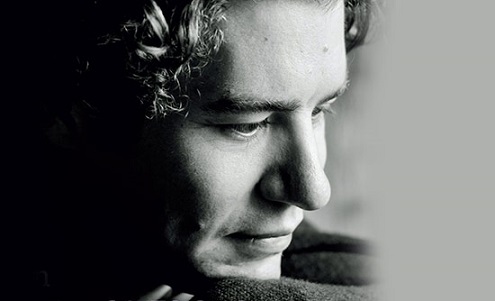
    In the pit was the English conductor Robin Ticciati (above). He led a really magnificent reading the score, the Met Orchestra responding to Tchaikovsky’s superb orchestration with perfection. Ticciati was careful not to overwhelm the singers with sound (Tchaikovsky’s orchestral writing is often dense). There was a wonderful lightness to his interpretation, each musical strand rising magically out of the tapestry of sound. His energetic, forward moving pacing mostly worked well. Perhaps if Tatiana in her Letter Scene and Lensky in his Act II aria had been allowed to linger just a tad longer…but overall Tchaikovsky’s magical score danced and sighed superbly.

    The cast assembled for the revival of this 2013 production was first rate. At the heart of it was Anna Netrebko as Tatiana. When Netrebko first sang the role at the Met in 2013 I did not think she made a great impression. Primarily I objected to her bland reading of the text, disappointing for a native speaker. She has certainly been able to deepen her understanding of the role. This afternoon she was a living, breathing heroine. Her Letter Scene was by turns wistful and sad, excited and terrified. Fear as she awaits Onegin’s arrival, and shame at his rejection, were palpable. Haughtiness, in a crimson gown at the royal ball in Act III as she sees Onegin for the first time in many years, was delicious. And the final scene revealed verismo-ish declarations that she will not betray her husband. I suddenly remembered that Netrebko has sung Lady Macbeth and intends to sing Tosca too. These flashes of pure steel were thrilling. Vocally she was excellent. There are occasional tendencies (not new to her) to stray off pitch in her middle voice. But her top was strong and gleaming, and the aforementioned steel in the final scene brought to mind Galina Vishnevskaya. The young, impressionable Tatiana is a woman now, royalty even. She won’t let Onegin forget this.
    Mattei ONEGIN

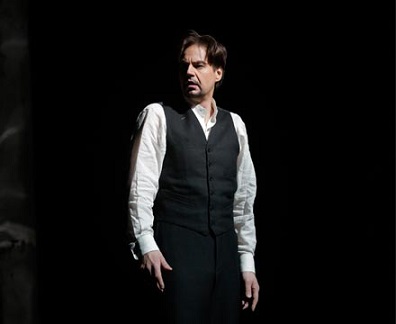
    Peter Mattei as Onegin (above) was in stunning voice. Truly this is one of the most beautiful baritone sounds in the world. Soft and plush, but not lacking in volume. Mattei’s long-limbed figure undergoes a reverse transformation of Tatiana. Haughty and indifferent at first, he unravels as Tatiana grows in stature. While Mattei’s singing was beyond reproach, his Russian diction was quite poor. In Act 1 it was still recognizable as Russian. Alas, as the opera progressed I often wasn’t sure he was singing in Russian at all, or just making sounds intended to sound vaguely Slavic.

    Russian tenor Alexei Dolgov was a terrific Lensky. His singing is effortless. Perhaps his neurotic, bordering hysteric Lensky would not be to all tastes, but it was believable, and – again – the singing was terrific. His Act II aria was heart-wrenching; his Russian diction crystal clear. Elena Maximova, as Lensky’s fiancée Olga, did everything right dramatically and musically. Perhaps the voice is a bit too monochrome and lacks warmth, but during the Act II ball she wonderfully conveyed a flirty, young woman who only too late realizes that her behavior towards her fiancée will lead to tragedy.

    It is a great touch to have a young bass play Prince Gremin. Usually Gremin is seen as an old man, but a youthful Stefan Kocan, with the necessary low notes in full bloom, leaves no doubt why Tatiana would refuse to leave him for a now-pathetic Onegin. 

    It was wonderful to see and hear two veteran Russian mezzos as the matriarchs. Elena Zaremba as Madame Larina showed off a still gleaming, forceful mezzo, effortlessly dominating ensembles. The great Larissa Diadkova, long one of my favorite singers, was a superb Filippyevna. There is still much voice left and dramatically her fussy Nanny was by turns funny and deeply moving as she recalls her own youth. My first live Filippyevna was the legendary Irina Arkhipova making a much belated Met debut in 1997. It is the highest compliment I can pay Diadkova to say that she is in the Arkhipova stratosphere of artists. 

    There were wonderful supporting appearances by Tony Stevenson as Triquet (lovely singing of the birthday song; it’s a character that can be very grating, but Stevenson is a superb character singer/actor), Richard Bernstein as Zaretski, and David Crawford as a Captain. The chorus was in excellent form, under the leadership of Donald Palumbo. 

    The big problem with the Met’s ONEGIN, alas, is the mediocre-to-terrible production by Deborah Warner, sets by Tom Pye, costumes by Chloe Obolensky and lighting by Jean Kalman. Warner’s boring conception is old-fashioned in the worst sense of the word. I’m as fond of a “period appropriate” production as anyone, but Warner’s staging contributes nothing to the work. The previous, gorgeous production by Robert Carsen showed more depth with a simple white box and autumn leaves than Warner and team manage with stuffy period detail. The silly “when in doubt, just lay down on the stage” trope should be made illegal. All of Act I is set in the Larin country home living room. Why the family would bring their entire farming staff in there, and then allow people to throw wheat on the living room floor, is a mystery. The Duel scene is the most effective, a moody wintry landscape. But the columns in all of Act III are simply too large, sitting like titans, distracting from any and all action on the stage. 

    So it was the superb cast of singing actors, the orchestra, and thrilling conducting by Ticciati that made this ONEGIN a superb musical event.

    ~ Ben Weaver

  • Jonathan Biss|NY Philharmonic

    Jonathan_Biss_104_credit_Benjamin_Ealovega
    Above: pianist Jonathan Biss in a Benjamin Ealovega portrait

    Author: Scoresby

    Thursday April 20th, 2017 – The promising young conductor Courtney Lewis shared his New York Philharmonic subscription debut (he was the Assistant Conductor there from 2014 – 2016) with the pianist Jonathan Biss. The program was split between two orchestral works bookending two piano concerti. While individually the pieces were interesting, it was a little unclear how the program fit together. It was my first time hearing Mr. Lewis live and my first time hearing Mr. Biss in an orchestral performance – though I have enjoyed his solo performances in the past.

    The first selection on the program was Part Two Scene One of Berlioz’s Roméo et Juliette, Dramatic Symphony after Shakespeare’s Tragedy, Op. 17. The scene is broken down into a tone poem of sorts with the subtitles: Romeo Alone, Sadness, Distant Sounds of a Concert and a Ball, and Great Festivities in the Capulet’s Palace. While a Berlioz fan, I had never heard this particular work before. After last night’s performance I immediately went home and listened to the full piece online – it is some of Berlioz’s most original composing.

    1MlJi1ft

    Mr. Lewis (above) and the orchestra had superb dynamic control, starting from just a hush in the beginning that evoked a person meandering through a forest with the lighting shimmering and shifting under different trees. The music itself reminded me so much of the creeping chromaticism and lush sounds in Tristan and Isolde that I kept expecting to hear the famous Tristan Chord. Berlioz doesn’t go that far though, and instead the piece opens up into a great party scene.

    Mr. Lewis led this change in atmosphere marvelously – shifting from a tragic meditative walk into a brash, almost militaristic ball. This wasn’t light dance music in Mr. Lewis’s interpretation; instead, there were crashes and thumps with the percussion implying the coming tragedy. It was satisfying to see that the players seem to have genuine affection for him and it felt like they wanted him to succeed.

    Next on the program was the young composer Timo Andres’s The Blind Banister: Concerto for Piano and Chamber Orchestra with Jonathan Biss performing the piano part. The piece was composed as a companion piece to Beethoven Piano Concerto No. 2 in B-flat major, Op. 19 (on the program later), though as Mr. Andres admits in his notes there are few similarities other than a motif he takes from the cadenza of the Beethoven. Mr. Andres’s piece centers on downward/upward scalar motion and suspended seconds. It is tonal and has layers upon layers of atmosphere, with the piano a fabric holding it together. Mr. Lewis did a good job of highlighting different timbres in the score, while Mr. Biss gave the piece a dedicated performance. The woodblocks in the second movement were particularly fun to hear.

    The second half started with the underappreciated gem of the Beethoven Piano Concerti: No. 2 in B-flat major, Op. 19. I have always had affinity for this piece, being dainty and expressive at the same time. Mr. Biss was at his best in the first and last movements, playing with a touch as light as a feather. It was impressive hearing how he could change the color of a particular phrase with his changes in articulation, ranging from buttery legatos to harpsichord-like plucking.

    In the Adagio the orchestra shined – I thought the brass section sounded lovely with a warm sound. Mr. Biss played the dynamics of the adagio well, but didn’t have the same ease and gloss as he did in the first movement. The Rondo was played brusquely and with finesse; all of the structures were very tight. Mr. Biss did a good job of keeping the tune playful, making it sound like something someone could whistle. The orchestra gave an equally nimble performance.

    The final piece on this eclectic program was Elgar’s In the South (Alassio), Op. 50.  I’ve never had an affinity for Elgar before, but this unknown piece to me reminded me a lot of Strauss mixed with Italian folk tunes. Mr. Lewis played through the large swells of romanticism well. The quietest sections were the most memorable, with a charming duet between the harps and Associate Principal Viola Rebecca Young being a highlight of the evening. During the denser moments of the piece, some of the middle range instruments sounded muddy, but this is was due more to Elgar’s writing than Mr. Lewis’s conducting. Overall Mr. Lewis proved more than capable and demonstrated he is a flexible conductor well on his way to a major career. Mr. Biss lived up to his reputation as a fine Beethoven interpreter and a subtle artist. 

    ~ Scoresby

  • Nadine Denize as Cassandra

    Denize_nadine

    In this rare recording from the 1978 Ravinia Festival, mezzo-soprano Nadine Denize sings Cassandra’s monologue, “Malheureux roi!” from Berlioz’s LES TROYENS. Following a brief pause, the final moments of the Cassandra-Chorebus duet are heard.

    Nadine Denize as Cassandre ~ LES TROYENS – Levine cond – Ravinia 1978

  • Nadine Denize as Geneviève

    16283512

    Currently enjoying my re-discovery of mezzo-soprano Nadine Denize, I was recalling the only time I saw her onstage: as Geneviève in Debussy’s PELLÉAS ET MÉLISANDE at The Met in October 2000.

    This was my diary entry, written the morning after the performance:

    “The Met’s PELLÉAS was a tremendous evening, the gorgeous score played with great clarity and haunting beauty by The Met orchestra. This is one of James Levine’s best operas, and he wove the marvelous sound-tapestry with superb control. The production is exceptionally atmospheric: the slow, timeless world of Allemonde is ever in shadow; unanswered questions hang over the hyper-civilized, stifling palace like a brooding cloud.

    In an outstanding cast, Dwayne Croft as Pelléas gave an outstanding performance: the warmth of his darkish sound seeped into the music, producing long stretches of incredible vocal beauty. Susanne Mentzer was not an innocent Mélisande but a young woman whose experiences have left her dazed and shell-shocked…an engrossing interpretation, exquisitely sung…so full of lyricism and vulnerability.

    It was thrilling to see José van Dam on the Met stage again. He is one of our greatest singers, and his Golaud is perfection in its sheer naturalness of vocalism and austere, haunted presence. In the unaccompanied plea to his wife for forgiveness in the opera’s final scene, the house was held enraptured as van Dam sustained a gossamer pianissimo welling up from the depths of his soul.

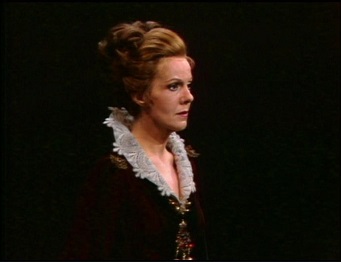
    As Geneviève, Nadine Denize’s wine-coloured contralto and splendid diction made her ‘letter scene’ a vocal highlight of the evening. Her dignified presence in the opera’s final scene was so moving. Sheer vocal magnificence made Robert Lloyd’s Arkel the anchor of the evening musically, his moving portrayal of the old king culminating in his wistful acceptance of Mélisande’s death and his silent departure from the bed-chamber.

    Alfred Walker sang well as the Physician, and James Danner did a fine job as Yniold. The singing all evening flowed over the orchestra with speech-like ease and natural, un-theatrical simplicity. A great evening!

    Nadine Denize – Pelléas et Mélisande ~ Voici ce qu’il écrit à son frère Pelléas

  • Kristine Jepson Has Passed Away

    Roh-ariadne-2

    Above: Kristine Jepson as the Composer in ARIADNE AUF NAXOS at Covent Garden in 2008. Photo by Clive Barda.

    It is very sad to note the passing of Kristine Jepson, a wonderful singer and stage presence, after a long battle with cancer. The mezzo-soprano made her Met debut in Britten’s DEATH IN VENICE is 1994 and subsequently sang over 100 performances at The Met, where her roles included Cherubino and Octavian.

    It was as the Composer in Strauss’s ARIADNE AUF NAXOS that Kristine Jepson first intrigued me with the youthful glow of her voice and her wonderfully natural portrayal when she sang the role at Boston in 1991 – the very production that marked the ascendancy of Deborah Voigt, who sang the title-role. In 2003, Ms. Jepson again excelled in this role at The Met in a splendid performance that featured the Met debut of Christine Brewer.

    In 2006, Kristine Jepson sang Idamante in Mozart’s IDOMENEO at The Met; her performance was truly impressive, but sadly these were to be her last appearances on that stage.

  • Violinist Simone Lamsma @ Weill Hall

    DSC7528_20
     
    Above: Simone Lamsma, photographed by Otto Van Toorn
     
    {Note: As I continue to cope with a severe lower back episode, please welcome guest-writer Scoresby, who will be covering some events in my absence and – hopefully – will continue to write for this blog in the future so that we may – between the two of us – cover even more concerts.}  
     
    Thursday March 30th, 2017 – The violinist Simone Lamsma performed a well-programmed Carnegie debut at Weill Hall with pianist Robert Kulek.

    While a well-known composer for his orchestral music, this was the first time I have heard a James Macmillan piece. It was a welcome introduction to his sound world. His Sonata for Violin and Piano, “Before the Tryst” is a 15-minute piece in one-movement that cycles through many different moods and colors. At its heart is a setting that Macmillan wrote in the early 1980’s of the Scottish poet William Soutar’s “The Tryst”. Previously, Macmillan used a melody from the setting in a shorter violin and piano work called “After the Tryst”.

    Before the Tryst” initiates with a whisper of violin harmonics and the percussive, almost inaudible, high reaches of the piano. Percussion and rhythm are vital to this piece – it almost feels like dance music. There are many trills (reminiscent of the opening of the Prokofiev sonata), slides, tone clusters, and other well used devices to paint a colorful canvas. While tonal, there are plenty of delicious dissonances.

    There are sections of lyric quiet punctuated with aggressively anxious lines. Fittingly, it reminded me of a young person anxiously falling into an all consuming love, feeling both drawn-in and cut off at the same time. It is certainly a worthwhile entry into the violin repertoire.

    Ms. Lamsma managed to dramatically capture all of the rhythms, particularly near the end. She played with a wonderfully scratchy, Stravinsky-esque tone. Mr. Kulek complemented this with a warm tone. The piece ends with a section of the violin hostilely interjecting long pauses until only the silence remains.

    Prokofiev Sonata No. 1 in F Minor, Op. 80 is one of my favorite pieces of music, so it is always a pleasure to hear a live performance. It is a later Prokofiev piece started in the backdrop of the Great Terror in 1938 and completed in 1946 – David Oistrakh and Samuel Feinberg performed the first and third movements at his funeral seven years later.

    Ms. Lamsma’s crafted a sarcastic edge and raspiness that served the piece well. In the first movement, she did an excellent job of keeping space and quiet within the piece – if played too quickly it can lose its brooding mood. One of the most successful parts of her recital was Ms. Lamsma’s virtuosic playing and fast tempo in the second movement. Mr. Kulek let loose in the fortissimos creating an urgent mood.

    In the third movement, Ms. Lamsma’s mute on the instrument along with her tone, almost made her sound like the ghostly playing of a 1940’s record. This movement is Prokofiev in one of his most impressionist idioms. As I was listening, I could almost imagine the static from an LP and sounds of rain patting a window on a dreary day. The last movement ended the sonata with fast, rhythmic pulses, which finally gave way to one last whispering statement of the first movement.

    Robert Kulek - 220a

    Above: Robert Kulek, photo by Brabander Fotografie

    After the intermission was Strauss’s Violin Sonata in E-flat Major, Op. 18. While I personally have never had an affinity for this piece, this reading did make me see how important the piece was to Strauss’s development for his later symphonic poems. The piece is written in three movements with a dense piano part that the violin soars over.

    Ms. Lamsma gave a muscular performance in all three movements, though managed to have still a spontaneous flair in the second movement. The violin playing had a warmer, fuller tone in the Strauss. At many points, particularly in the first and third movements, I felt as if this piece would work well as a concerto because the piano part has so much bundled in. Nonetheless, Mr. Kulek managed to give a transparent reading, with notably sensitive playing in the second movement.

    The romance of the Strauss balanced the heavier first half of the program well. Clearly this young artist has an eye for thoughtful programming. As an encore, the artists treated the audience to a bonbon in the form of Samuel Dushkin’s “Sicilienne” (after Romanze from Weber’s Violin Sonata, Op. 10, No. 1).

    ~ Scoresby

  • Raina Kabaivanska as Amelia Grimaldi

    Kabaivanska

    Above: soprano Raina Kabaivanska

    Teatro All Scala gave a two-week season at The Kennedy Center in Washington DC in September 1976, a highlight of the Center’s Bicentennial Celebration. The performances marked La Scala’s first appearance in the United States with an exclusive engagement at the Opera House. The repertory: Verdi’s Macbeth, starring mezzo-soprano Shirley Verrett, La Bohème, La Cenerentola, and Simon Boccanegra.

    By chance, I happened to catch a broadcast of the Boccanegra and recorded a bit of it, despite some radio interference from a late summer storm. Raina Kabaivanska sang Amelia, Piero Cappuccilli was Simon Boccanegra, and Claudio Abbado conducted.

    Here is the beautiful ‘recognition’ duet, where Simon is re-united with his long-lost daughter:

    BOCCANEGRA duet – Kabaivanska & Cappuccilli – Scala at Washington DC – 1976

  • Natalia Troitskaya as Adriana Lecouvreur

    00323174

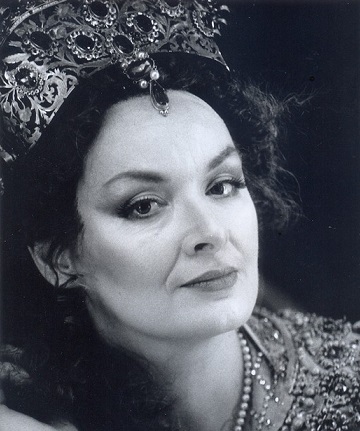
    Natalia Troitskaya, born in Belgrade of Russian descent, had a major career as a lirico-spinto soprano during the 1980s. She sang at many major European houses, having a long association with both the Vienna State Opera and the Staatsoper Hamburg. She sang in South America, and in the USA at Washington DC and Los Angeles.

    Troitskaya seemed to vanish from the operatic world around 1991; later, I learned that she had passed away in 2006 at the age of 55 following a long illness. She left hardly any commercial recordings, but there are some live performances that were preserved from broadcasts.

    Natalia Troitskaya – ADRIANA LECOUVREUR – Adriana’s entrance – Barbican~London 1987

  • Patricia Brooks as Violetta

    6a00d8341c4e3853ef00e54ff4f69f8833-800wi

    I’ve seen more than a eighty different sopranos in the title-role of Verdi’s TRAVIATA over the years. Patricia Brooks’s interpretation of the role of Violetta in Frank Corsaro’s memorable production for the New York City Opera in 1966, with Placido Domingo as Alfredo, remains at the top of the list. Employing her rather slender and agile voice to optimum effect, she created a portrait of the doomed courtesan that has resonated over the decades. Paradoxically feverish and fragile, Brooks moved audiences – literally – to tears.

    Listening again, nearly fifty years on, to my in-house recording of the Act I scena brings back a flood of memories of the myriad nuances – both vocal and dramatic – that gave the Brooks Violetta its unique place in the opera’s performance history.

    One thing about Ms. Brooks in this role: she was forever making tiny changes in both her singing and her acting of the role, maintaining its freshness over the half-dozen times I saw her in the role. As Matthew Epstein, a great Brooks admirer, said: “No two Brooks Violettas are alike!”

    Patricia Brooks as Violetta – w Molese – NYCO – 9~28~69

    There were other Violettas who moved and thrilled me, but none quite reached the soul of the desperate woman who sacrifices her own happiness so that someone else may be happy.