Author: Philip Gardner

  • Reese Thompson’s KIDS PLAY

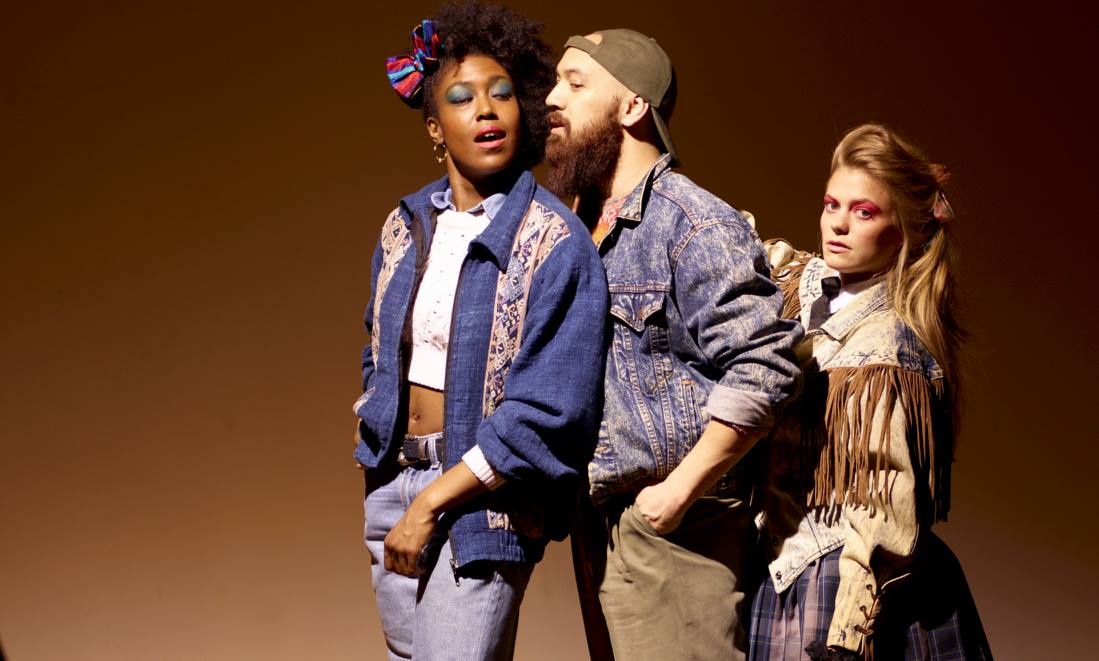
    Kids play - cast

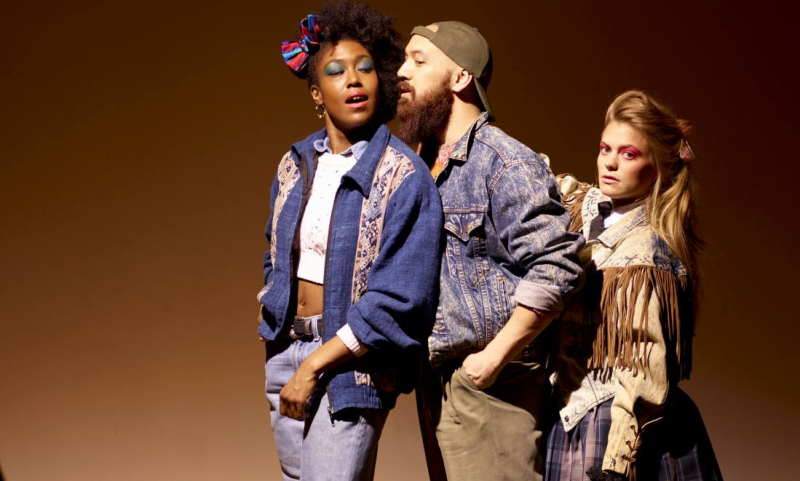
    Above: the cast of Reese Thompson’s play KIDS PLAY –  Erin Margaret Pettigrew, Matthew Bovee, and Joy Donze; styling by Anthony Hagan, hair and make-up by Ta Ming Chen; photographed by Jan Klier

    Recently, I received an e-mail from Reese Thompson. Reese and I worked together back in the day at Tower Records, and while we seldom see one another, we have stayed in contact thru the passing years.

    I could see from the heading of his e-mail – “Important Life Announcement” – that this was not just a friendly, keeping-in-touch message. Fortunately, it contained very good news: Reese’s play, entitled KIDS PLAY, is to be presented at the Edinburgh Fringe Festival this Summer. Edinburgh Fringe is the largest and one of the most prestigious arts festivals in the world: last year the Festival spanned 25 days and featured 50,266 performances of 3,269 shows in 294 venues. I expect this year’s Festival will carry on in the same vein.

    Reese and I, and hundreds of thousands of people world-wide, have something in common: we were cruelly bullied as children. In his e-mail, Reese mentioned the specific times in his daily school routine when things were most treacherous: getting to and from school, lunch-hour, and the playground. Although I am many years older than Reese, I experienced the exact same pattern in my youth. Nothing has changed…in fact, I would say things have gotten worse.

    “For certain kids, the world reveals itself as a dangerous place early on.” Truer words have never been spoken. If you are ‘different’, you become – at a very young age – fair game for those who fit accepted norms, both at school and in the community.

    The burgeoning suicide rate among very young people should be setting off all kinds of alarms, but instead it seems to have become just another statistic: suicide is now the third leading cause of death among young people, resulting in about 4,400 deaths per year. According to Yale University’s Office of Public Affairs, victims of bullying are 2 to 9 times more likely to consider suicide than non-victims.

    For those young people who don’t fit in, and who lack parental support and understanding, life becomes a quest to find your people: we build our own family and support network over time, and inevitably this replaces blood ties as a source of refuge, understanding, and encouragement.

    Reese Thompson’s KIDS PLAY evolved over a three-year period from a 10-minute play dealing with shaming, internalized sexism, and bullying on the playground. Since then, by collaborating with different casts and directors, the present a full-length version has taken shape. It now encompasses such themes as  childhood friendships, attending Catholic school, and nerve-wracking decisions about coming out. Reese’s play is both auto-biographical and universal.

    But, lest you think KIDS PLAY is a dark downer of a theatrical experience, it doesn’t wallow in despair: in fact, there is singing…and dancing, as in this preliminary video featuring the cast members and choreographed by Benjamin Rowan.

    Of course, putting on a production at a festival across the pond costs money, and the KIDS PLAY folks have started a fun-raising effort: you can read more about the play (and the other half of its double bill, Joy Donze’s 13 AND NOT PREGNANT), and contribute to the expenses involved here.

  • Reese Thompson’s KIDS PLAY

    Kids play - cast

    Above: the cast of Reese Thompson’s play KIDS PLAY –  Erin Margaret Pettigrew, Matthew Bovee, and Joy Donze; styling by Anthony Hagan, hair and make-up by Ta Ming Chen; photographed by Jan Klier

    Recently, I received an e-mail from Reese Thompson. Reese and I worked together back in the day at Tower Records, and while we seldom see one another, we have stayed in contact thru the passing years.

    I could see from the heading of his e-mail – “Important Life Announcement” – that this was not just a friendly, keeping-in-touch message. Fortunately, it contained very good news: Reese’s play, entitled KIDS PLAY, is to be presented at the Edinburgh Fringe Festival this Summer. Edinburgh Fringe is the largest and one of the most prestigious arts festivals in the world: last year the Festival spanned 25 days and featured 50,266 performances of 3,269 shows in 294 venues. I expect this year’s Festival will carry on in the same vein.

    Reese and I, and hundreds of thousands of people world-wide, have something in common: we were cruelly bullied as children. In his e-mail, Reese mentioned the specific times in his daily school routine when things were most treacherous: getting to and from school, lunch-hour, and the playground. Although I am many years older than Reese, I experienced the exact same pattern in my youth. Nothing has changed…in fact, I would say things have gotten worse.

    “For certain kids, the world reveals itself as a dangerous place early on.” Truer words have never been spoken. If you are ‘different’, you become – at a very young age – fair game for those who fit accepted norms, both at school and in the community.

    The burgeoning suicide rate among very young people should be setting off all kinds of alarms, but instead it seems to have become just another statistic: suicide is now the third leading cause of death among young people, resulting in about 4,400 deaths per year. According to Yale University’s Office of Public Affairs, victims of bullying are 2 to 9 times more likely to consider suicide than non-victims.

    For those young people who don’t fit in, and who lack parental support and understanding, life becomes a quest to find your people: we build our own family and support network over time, and inevitably this replaces blood ties as a source of refuge, understanding, and encouragement.

    Reese Thompson’s KIDS PLAY evolved over a three-year period from a 10-minute play dealing with shaming, internalized sexism, and bullying on the playground. Since then, by collaborating with different casts and directors, the present a full-length version has taken shape. It now encompasses such themes as  childhood friendships, attending Catholic school, and nerve-wracking decisions about coming out. Reese’s play is both auto-biographical and universal.

    But, lest you think KIDS PLAY is a dark downer of a theatrical experience, it doesn’t wallow in despair: in fact, there is singing…and dancing, as in this preliminary video featuring the cast members and choreographed by Benjamin Rowan.

    Of course, putting on a production at a festival across the pond costs money, and the KIDS PLAY folks have started a fun-raising effort: you can read more about the play (and the other half of its double bill, Joy Donze’s 13 AND NOT PREGNANT), and contribute to the expenses involved here.

  • The First Time I Heard GÖTTERDÄMMERUNG

    Herbert-Ralph-02[d]

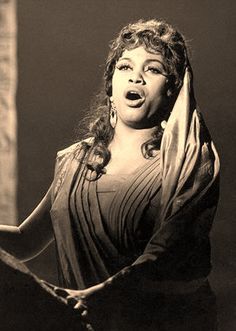
    Above: American bass-baritone Ralph Herbert

    Still being held captive by the evil sorceress Sciatica, I decided I needed a different “front page” article for my blog.

    Coming randomly upon an excerpt from Act II of Wagner’s GÖTTERDÄMMERUNG – from my premiere encounter with that opera – I was taken back over the decades to a wintry afternoon in January, 1962, when I heard Wagner’s “grand finale of the RING Cycle” for the very first time. At age fourteen, I had already been an opera-lover for three years when the complete RING was broadcast via the Texaco-Metropolitan Opera Radio Network.

    I never missed a Texaco matinee in the first 20 or so years of my operatic ‘career’, my first one having been Sutherland’s “debut season” LUCIA broadcast. I would sit alone in the family rec room, and no one was allowed to disturb me; the phone was taken off the hook. Once in a great while, if a particular opera was not grabbing my attention, my grandmother and I would play Honeymoon Bridge as the sun went down. We always loved Milton Cross’s narration of the curtain calls. 

    The RING Cycle of course became a great favorite work of mine over time; but at first, allured as was by by BUTTERFLY, TROVATORE, and GIOCONDA, it wasn’t easy to comprehend.

    RHEINGOLD was not very accessible for me: too much “male” singing. I did better with DIE WALKÜRE, in part because the story had more meaning for me, and three singers I already knew and liked – Birgit Nilsson, Gladys Kuchta, and Jon Vickers – had leading roles. Hearing Milton Cross describe the final scene of WALKÜRE prompted me to go out into the field behind our house and make a circle of empty boxes, newspapers, etc on the snow-covered ground. I set it afire in four different places and then realized I was in the middle of the ring.

    SIEGFRIED was something of a trial, at least until Jean Madeira (Erda) and Birgit Nilsson (Brunnhilde) started to sing. I remember liking the Norn Scene from GÖTTERDÄMMERUNG quite a bit, wherein Madeira was joined by Irene Dalis and Martina Arroyo; and the Dawn Duet was fun, thanks to Birgit’s lightning bolt high-C, but my mind began to wander during much of the rest of Act I, re-engaging when Nilsson and Irene Dalis met as the sundered Valkyrie sisters.

    Neu-frick-2-640x3001

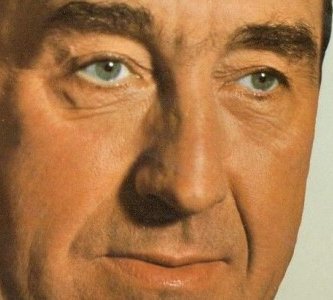
    Above: bass Gottlob Frick

    I can remember distinctly being drawn into the mystery of the opening of Act II, especially as Milton Cross had described Alberich’s dreamlike appearance to his slumbering son, Hagen, sung by Gottlob Frick, who over the ensuing years has always been my idea of a great Wagner basso.

    In this eerie scene, Mr. Frick is joined by baritone Ralph Herbert as Alberich:

    Ralph Herbert & Gottlob Frick – Götterdämmerung ~ Act II Scene 1 – Met 1962 – Leinsdorf cond

    Of course, Birgit’s Immolation Scene was exciting, though at the time it seemed too long; now it sometimes seems too short.

    Erich Leinsdorf conducted this RING Cycle; a grand master of the Wagner repertoire, he had made his Met debut in 1938 (!) conducting WALKÜRE with Flagstad as Brunnhilde and Elizabeth Rethberg as Sieglinde, and made his farewell to The Met in 1983, conducting ARABELLA with Dame Kiri Te Kanawa. In all, Leinsdorf led nearly 500 performances for The Met, both at home and on tour.

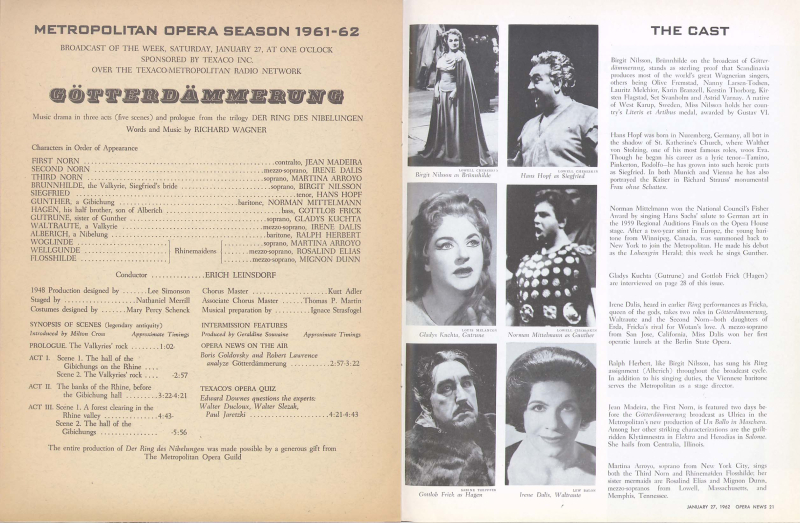
    ONGotterdammerung196162

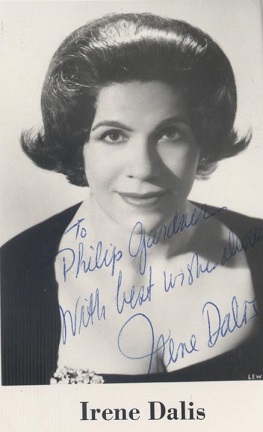
    It was fun coming across the Opera News cast page (above) for this particular broadcast, and to see that Ms. Dalis had sent me an autographed copy of the same head-shot used in the magazine:

    6a00d8341c4e3853ef00e54f21231a8833-800wi

    And here are Nilsson and Dalis in final part of the scene where Waltraute has asked Brunnhilde to give up the ring. It begins with Brunnhilde’s “Welch’ banger Träume Mären meldest du Traurige mir!” (“What tales of tortured dreams do you tell in such distress?”)

    Götterdämmerung ~ Birgit Nilsson & Irene Dalis – Leinsdorf cond – Met 1962

    Recalling those first few seasons of broadcasts, I remember one of my grandmother’s great comeback lines. Sutherland was singing Amina in SONNAMBULA and at the end of “Sovra il sen” I said: “Grandma, Joan Sutherland just hit E-flat above high-C!” “That’s nothin’…” she retorted, “…once I got up to P and held it all night!”

    ~~~~~~~~~~~~~~~~~~~~~~~~~~~~~~~~~~~~~~~~~~~~~~~~~~~~~~~~~~~~~~~~~~~~~~~~~~~~~~~~~~~~~~~~~~~~~

    I’m sorry not to be attending performances at this time, and blogging about them; hopefully I will become more mobile in the next few days, and start venturing out. I appreciate everyone continuing to visit Oberon’s Grove and finding things to read.

  • Sciatica

    Radiating-pain-sciatic-nerve

    UPDATE – 3/18/17 – I’m now in my 7th day of being virtually home-bound. The pain is pretty much steady; painkillers have helped me get thru the week…and I have a chiropractor who makes house calls! I so miss getting out, taking walks, having lunches with friends, and attending concerts and dance performances. 

    Meanwhile, if anyone knows an acupuncturist who might make a house call up here in Inwood, e-mail me at [email protected]

    March 11, 2017 – After intermittent sciatic problems over the past three or four years, I’m in the midst of an especially painful episode that is causing me to miss events, which is extremely frustrating for me. Sciatic pain is random and meds which might work one day do nothing the next. I’m dealing with it as best I can, and hope to be back on a normal schedule soon.

  • Mendelssohn’s Sorrow @ Chamber Music Society

    20170226_MS

    Above: the Schumann Quartet

    Sunday February 26th, 2017 – Following last week’s Chamber Music Society of Lincoln Center‘s program centering on joy-filled music by Felix Mendelssohn, we were back at Alice Tully Hall to experience the great composer’s more melancholy moods. With music of Bach and Schumann also on offer, we became acquainted with Schumann String Quartet, and could admire once again three artists whose CMS performances to date have given particular pleasure: violinist Danbi Um, cellist Jakob Koranyi, and pianist Juho Pohjonen.

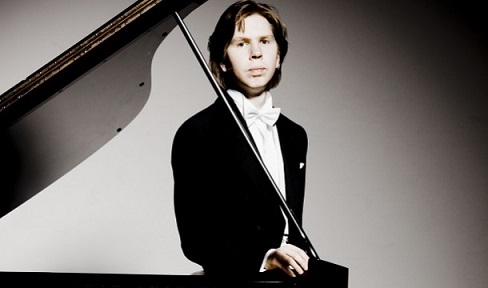
    Juho_Pohjonen009_0

    Mr. Pohjonen (above) opened the evening with Bach’s Chromatic Fantasy and Fugue in D minor for Keyboard, BWV 903. The Finnish pianist’s elegance of technique and his Olde World mystique always summon up for me visions of pianists from bygone days performing in the drawing rooms of Paris, Budapest, or Vienna. But for all those dreamworld allusions, Mr. Pohjonen’s playing has vibrant immediacy and is very much of our time.  

    Mr. Pohjonen, in a program note, describes the Chromatic Fantasy as “labyrinthine”, and that it most surely is; but it’s a wonderful work to get lost in, and as the pianist drew us along the music’s sometimes eccentric, almost improvisational pathways, we could only marvel at the gradations of both subtlety and passion in his playing.

    The Schumann Quartet intrigued us from the very opening notes of their rendering of Mendelssohn’s Fugue in E-flat major. From her first phrase, violist Liisa Randalu drew us in; the three Schumann brothers – Erik and Ken (violins), and Mark (cello) – take up the wistful melody in turn. The music becomes gently animated, with the four voices blending serenely. Poignant colours from the rising violin and the honeyed resonance of the cello frame Ms. Randalu’s expressive playing. These textures will become key elements in the Schumann Quartet’s performance of the composer’s Quartet in F-minor, which followed immediately.

    Mendelssohn’s last completed major work, the F-minor quartet was composed in 1847. On returning to Frankfurt from a tiring stay in London in early May, the composer soon learned that Fanny, his beloved sister, had died of a stroke. Mendelssohn struggled that summer with work on numerous projects, but was only able to complete this final quartet, dedicated to Fanny’s memory. On November 4th, he died following a series of strokes. He was 38 years old.

    The F-minor quartet opens with scurrying attacks and a sense of restless energy. The music softens to a nervous pulsing as the cello sings from lyrical depths, with the luminous violin overhead. The movement then accelerates to a striking finish. The “scherzo” ironically mixes passionate phrases with delicate commentary. Viola and cello rumble darkly in the brief trio passage, then the tempest stirs up again before a little coda vanishes into thin air.

    A simple song that Mendelssohn and Fanny had shared in happier times memorializes their bond in the touching Adagio, which commences with a descending cello passage. The recollections evoked by the song, which is a sweet melody in its own right, are now tinged with sadness. Superbly controlled tone  from Erik Schumann’s violin was most affecting; the pulsing cello then heralds a surge of despairing passion.

    The finale is restless, at times verging on dissonant. Passing notions of lyricism are swept away, and wild passages for the violin warn of an impending disaster. This is a composer on the brink.

    The Schumann Quartet’s very impressive playing of this disturbing yet strangely beautiful piece earned them a very warm acclamation from the Tully Hall crowd. It is pleasing to know that they will be back with us next season in this same lovely space to share other aspects of their artistry – music from The Roaring Twenties on March 4th, 2018, and a full Schumann Quartet evening on April 29th, 2018, when they’ll play works of Haydn, Bartok, Reimann, and Schumann. 

    Following the interval, Mr. Pohjonen offered Robert Schumann’s Arabesque in C major for Piano, Op. 18. This episodic piece has a narrative aspect, though none is stated or even implied. Mr. Pohjonen relished the melodious themes that rise up, veering from major to minor as the Arabesque flows forward. Subtle passages become treasurable in this pianist’s interpretation, and the poetic finish of the work was lovingly expressed.

    Juho Pohjonen returned with his colleagues Danbi Um and Jakob Koranyi for Schumann’s Trio No. 1 D minor for Piano, Violin, and Cello, Op. 63.

    Danbi-Um-Banner_2

    Above: Danbi Um, photo by Vanessa Briceño

    Koranyi_Jakob_pc_Anna-Lena_Ahlström_1_72

    Above: Jakob Koranyi, photo by Anna-Lena Ahlström

    Ms. Um, lithe and lovely in a fair burgundy-hued gown, displayed the sweetness of tone that makes listening to her so enjoyable; Messrs Koranyi and Pohjonen are masters of dynamic nuance, and thus the three together delivered page after page of radiant, colorful playing. 

    The D-minor trio’s opening movement calls for rippling arpeggios from the pianist, expertly set forth by Mr. Pohjonen. Ms. Um and Mr. Koranyi harmonize and converse in passages which switch from lyrical yearning to emphatic declamation. A pause, and a new theme emerges: delicate at first, then turning passionate. A sense of agitation prevails in this movement, despite ‘settled’ moments: the three musicians captured these shifts of mood so well, and they savored the rather unexpected ending. 

    Marked “Lebhaft, doch nicht zu rasch” (‘Lively, but not rushed’), the scherzo has the feel of a scuffing, skipping dance. Rising and falling scales glow in the calmer interlude; but the dance soon strikes up again…and comes to a sudden halt.

    The trio’s third movement embarks on a disconsolate violin passage, played with affecting expressiveness and lovely control by Ms. Um. When Mr. Koranyi’s cello joins in, this simple melody becomes increasingly touching. A gently urgent central section reverts to the slow, sad gorgeousness so evocatively sustained by our three musicians, the cello sounding from the depths.

    The tuneful finale seems almost joyous, but shadows can still hover. The playing is marvelously integrated, becoming tender – almost dreamy – with smoothly rippling piano and the violin on the ascent. The themes mingle, developing into a big song. This simmers down briefly before a final rush of energy propels us to the finish. 

    I had felt pretty certain the Um-Koranyi-Pohjonen collaboration would produce memorable results, and I was right. We must hear them together again – soon – and let’s start with my favorite chamber works: the Mendelssohn piano trios. The audience shared my enthusiasm for the three musicians, calling them back for a second bow this evening.

    • Bach Chromatic Fantasy and Fugue in D minor for Keyboard, BWV 903 (before 1723)
    • Mendelssohn Fugue in E-flat major for String Quartet, Op. 81, No. 4 (1827)
    • Mendelssohn Quartet in F minor for Strings, Op. 80 (1847)
    • Schumann Arabesque in C major for Piano, Op. 18 (1838-39)
    • Schumann Trio No. 1 D minor for Piano, Violin, and Cello, Op. 63 (1847)
  • Mendelssohn’s Sorrow @ Chamber Music Society

    20170226_MS

    Above: the Schumann Quartet

    Sunday February 26th, 2017 – Following last week’s Chamber Music Society of Lincoln Center‘s program centering on joy-filled music by Felix Mendelssohn, we were back at Alice Tully Hall to experience the great composer’s more melancholy moods. With music of Bach and Schumann also on offer, we became acquainted with Schumann String Quartet, and could admire once again three artists whose CMS performances to date have given particular pleasure: violinist Danbi Um, cellist Jakob Koranyi, and pianist Juho Pohjonen.

    Juho_Pohjonen009_0

    Mr. Pohjonen (above) opened the evening with Bach’s Chromatic Fantasy and Fugue in D minor for Keyboard, BWV 903. The Finnish pianist’s elegance of technique and his Olde World mystique always summon up for me visions of pianists from bygone days performing in the drawing rooms of Paris, Budapest, or Vienna. But for all those dreamworld allusions, Mr. Pohjonen’s playing has vibrant immediacy and is very much of our time.  

    Mr. Pohjonen, in a program note, describes the Chromatic Fantasy as “labyrinthine”, and that it most surely is; but it’s a wonderful work to get lost in, and as the pianist drew us along the music’s sometimes eccentric, almost improvisational pathways, we could only marvel at the gradations of both subtlety and passion in his playing.

    The Schumann Quartet intrigued us from the very opening notes of their rendering of Mendelssohn’s Fugue in E-flat major. From her first phrase, violist Liisa Randalu drew us in; the three Schumann brothers – Erik and Ken (violins), and Mark (cello) – take up the wistful melody in turn. The music becomes gently animated, with the four voices blending serenely. Poignant colours from the rising violin and the honeyed resonance of the cello frame Ms. Randalu’s expressive playing. These textures will become key elements in the Schumann Quartet’s performance of the composer’s Quartet in F-minor, which followed immediately.

    Mendelssohn’s last completed major work, the F-minor quartet was composed in 1847. On returning to Frankfurt from a tiring stay in London in early May, the composer soon learned that Fanny, his beloved sister, had died of a stroke. Mendelssohn struggled that summer with work on numerous projects, but was only able to complete this final quartet, dedicated to Fanny’s memory. On November 4th, he died following a series of strokes. He was 38 years old.

    The F-minor quartet opens with scurrying attacks and a sense of restless energy. The music softens to a nervous pulsing as the cello sings from lyrical depths, with the luminous violin overhead. The movement then accelerates to a striking finish. The “scherzo” ironically mixes passionate phrases with delicate commentary. Viola and cello rumble darkly in the brief trio passage, then the tempest stirs up again before a little coda vanishes into thin air.

    A simple song that Mendelssohn and Fanny had shared in happier times memorializes their bond in the touching Adagio, which commences with a descending cello passage. The recollections evoked by the song, which is a sweet melody in its own right, are now tinged with sadness. Superbly controlled tone  from Erik Schumann’s violin was most affecting; the pulsing cello then heralds a surge of despairing passion.

    The finale is restless, at times verging on dissonant. Passing notions of lyricism are swept away, and wild passages for the violin warn of an impending disaster. This is a composer on the brink.

    The Schumann Quartet’s very impressive playing of this disturbing yet strangely beautiful piece earned them a very warm acclamation from the Tully Hall crowd. It is pleasing to know that they will be back with us next season in this same lovely space to share other aspects of their artistry – music from The Roaring Twenties on March 4th, 2018, and a full Schumann Quartet evening on April 29th, 2018, when they’ll play works of Haydn, Bartok, Reimann, and Schumann. 

    Following the interval, Mr. Pohjonen offered Robert Schumann’s Arabesque in C major for Piano, Op. 18. This episodic piece has a narrative aspect, though none is stated or even implied. Mr. Pohjonen relished the melodious themes that rise up, veering from major to minor as the Arabesque flows forward. Subtle passages become treasurable in this pianist’s interpretation, and the poetic finish of the work was lovingly expressed.

    Juho Pohjonen returned with his colleagues Danbi Um and Jakob Koranyi for Schumann’s Trio No. 1 D minor for Piano, Violin, and Cello, Op. 63.

    Danbi-Um-Banner_2

    Above: Danbi Um, photo by Vanessa Briceño

    Koranyi_Jakob_pc_Anna-Lena_Ahlström_1_72

    Above: Jakob Koranyi, photo by Anna-Lena Ahlström

    Ms. Um, lithe and lovely in a fair burgundy-hued gown, displayed the sweetness of tone that makes listening to her so enjoyable; Messrs Koranyi and Pohjonen are masters of dynamic nuance, and thus the three together delivered page after page of radiant, colorful playing. 

    The D-minor trio’s opening movement calls for rippling arpeggios from the pianist, expertly set forth by Mr. Pohjonen. Ms. Um and Mr. Koranyi harmonize and converse in passages which switch from lyrical yearning to emphatic declamation. A pause, and a new theme emerges: delicate at first, then turning passionate. A sense of agitation prevails in this movement, despite ‘settled’ moments: the three musicians captured these shifts of mood so well, and they savored the rather unexpected ending. 

    Marked “Lebhaft, doch nicht zu rasch” (‘Lively, but not rushed’), the scherzo has the feel of a scuffing, skipping dance. Rising and falling scales glow in the calmer interlude; but the dance soon strikes up again…and comes to a sudden halt.

    The trio’s third movement embarks on a disconsolate violin passage, played with affecting expressiveness and lovely control by Ms. Um. When Mr. Koranyi’s cello joins in, this simple melody becomes increasingly touching. A gently urgent central section reverts to the slow, sad gorgeousness so evocatively sustained by our three musicians, the cello sounding from the depths.

    The tuneful finale seems almost joyous, but shadows can still hover. The playing is marvelously integrated, becoming tender – almost dreamy – with smoothly rippling piano and the violin on the ascent. The themes mingle, developing into a big song. This simmers down briefly before a final rush of energy propels us to the finish. 

    I had felt pretty certain the Um-Koranyi-Pohjonen collaboration would produce memorable results, and I was right. We must hear them together again – soon – and let’s start with my favorite chamber works: the Mendelssohn piano trios. The audience shared my enthusiasm for the three musicians, calling them back for a second bow this evening.

    • Bach Chromatic Fantasy and Fugue in D minor for Keyboard, BWV 903 (before 1723)
    • Mendelssohn Fugue in E-flat major for String Quartet, Op. 81, No. 4 (1827)
    • Mendelssohn Quartet in F minor for Strings, Op. 80 (1847)
    • Schumann Arabesque in C major for Piano, Op. 18 (1838-39)
    • Schumann Trio No. 1 D minor for Piano, Violin, and Cello, Op. 63 (1847)
  • Nilsson & Rysanek in WALKURE

    Nilsson Rysanek

    In their signature roles of Brunnhilde and Sieglinde, I believe this series of performances may have been the last time Birgit Nilsson and Leonie Rysanek sang in DIE WALKURE together. Otmar Suitner conducts.

    Nilsson & Rysanek – WALKURE – scene from Act III – San Francisco 1982

  • Nilsson & Rysanek in WALKURE

    Nilsson Rysanek

    In their signature roles of Brunnhilde and Sieglinde, I believe this series of performances may have been the last time Birgit Nilsson and Leonie Rysanek sang in DIE WALKURE together. Otmar Suitner conducts.

    Nilsson & Rysanek – WALKURE – scene from Act III – San Francisco 1982

  • Celebrating Alan Gilbert’s 50th Birthday

    1617_GilbertBdayFeb23_3240x1256

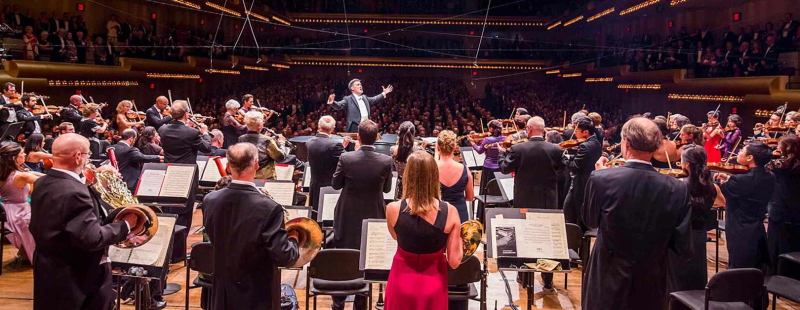
    Thursday February 23rd, 2017 – An array of stars from the classical music firmament were on hand to celebrate the 50th birthday of The New York Philharmonic‘s Music Director Alan Gilbert. Click on the above photo to enlarge.

    “Life begins at 50!”…at least it did for me: the life I’d always hoped to live, here in New York City with my beloved, with everything I enjoy – music, dance, art, food, a nearby park – at my fingertips, and good friends to share things with. Alan Gilbert’s tenure as Music Director coincides with my own embrace of The Philharmonic. I would go once in a while during the Mehta-Boulez-Masur-Maazel years, but in recent seasons I have rarely missed a program; I have become an admirer of several of the orchestra’s musicians, and of Alan’s leadership. He’ll soon be embarking on a new phase of his career, and so it was truly pleasing to be there tonight, joining with the stellar party guests onstage to salute the Maestro.

    The first half of the evening was devoted to music of the Three Bs: Bach, Beethoven, and Brahms. After welcoming speeches, Alan Gilbert strode out to a warm greeting from the packed house. Paolo Bordignon was at the harpsichord as Pamela Frank and Frank Huang took up the opening Vivace of Bach’s Concerto for Two Violins in D minor, BWV 1043, playing with festive vitality. Pamela Frank was then joined by Joshua Bell for the Largo ma non tanto, and how beautifully their timbres blended: deeply satisfying music-making. I’d hoped Alan Gilbert might play tonight, but the third movement of the Bach brought forth Lisa Batiashvili and Mr. Huang in the vivacious Allegro

    I think this was the first time I have heard this piece outside of its ballet setting: Balanchine’s masterpiece CONCERTO BAROCCO is frequently given across the Plaza. Throughout tonight’s concert rendering, the choreography danced in my head.

    Phenomenal back-to-back performances by two of the world’s great pianists followed: Emanuel Ax cast a magic spell over the music of Brahms: the Andante from the 2nd piano concerto. How gently Mr. Ax caressed this music, and how poignant was the sound of Carter Brey’s cello in his long solo passage. The cello returns near the end of the movement as Mr. Ax plays a series of delicate trills.

    Yefim Bronfman then took command of the Steinway in a thrillingly virtuosic Allegro con brio from Beethoven’s Piano Concerto No. 3. With some wonderful interjections from the Philharmonic’s wind soloists along the way, the pianist brought both passion and nuance to his playing. As his spectacular rendering of the cadenza drew to its close on a series of gossamer trills, the orchestra re-entered creating an exquisite sense of quietude. 

    Joshua Bell’s fiery playing and unbridled physicality evoked the audience’s rousing ovation for his performance of the Allegro energico from Max Bruch’s first violin concerto. Moments later, a very different aspect of Mr. Bell’s artistry was gorgeously evidenced as he joined Renée Fleming for Richard Strauss’s “Morgen!“; the warmth of the soprano’s voice and the silken serenity of Mr. Bell’s phrasing created a tranquil atmosphere, like basking in sunlight on some distant seashore.

    Ms. Fleming then gave one of her trademark arias, “Marietta’s Lied” from Erich Korngold’s DIE TOTE STADT; the song’s romance and mystery were conveyed by the soprano in the high-rising arcs of the vocal line over a dreamlike orchestration that features harp, piano, and celesta. The music becomes passionate; then the singer speaks a couple of lines, as she tries to recall the words of the second verse. Once again the haunting melody is sung, followed by an evocative postlude. Intoxicating moments.

    Lisa Batiashvili offered “Goin’ Home“, the ‘spiritual’ that was drawn from the principal theme of the Largo of Antonin Dvořák’s New World symphony, arranged by Fritz Kreisler, and adapted by T. Batiashvili. This was played with rich emotion and lovely tone by the comely Ms. Batiashvili; the only problem is that the song is quite brief, leaving us craving more Batiashvili.

    Gershwin’s An American in Paris, a favorite work of Alan Gilbert’s, was the closing work of the evening; not my cup of tea, but of course superbly played. 

    Frock watch: being a party night, the women of the Philharmonic did not all wear regulation black; Cynthia Phelps looked radiant in a “gamorous” slit-skirt emerald green number. Pamela Frank wore a black gown shot with silver, and be-jeweled shoes which would have made Cinderella envious. Lisa Batiashvili, ever the picture of elegance, wore a sleek, satiny gun-metal creation with a hint of Grecian style. And Renée Fleming looked every inch the diva in vermilion with a long golden shawl.

    Renée led us in singing ‘Happy Birthday, Dear Alan’ with the standing audience saluting the conductor and everyone singing full-voice. Maestro Gilbert basked in the embraces of the great musicians who had gathered to honor him; then they all seemed to be heading off together to continue the party into the wee hours as Alan waved goodbye to the crowd.