Author: Philip Gardner

  • @ My Met Score Desk for FRAU OHNE SCHATTEN ~ 2024

    Volle

    Above: Michael Volle as Barak takes a bow; click on the image to enlarge

    ~ Author: Oberon

    Saturday December 7th, 2024 matinee – I’ll never forget the first time I heard any music from Richard Strauss’s DIE FRAU OHNE SCHATTEN (“The Woman Without a Shadow“) It was in the late summer of 1966; I was on my very first solo trip to NYC, and I had joined the ticket line for the opening weeks of the Metropolitan Opera’s new home at Lincoln Center, where the Company would (finally) be giving the Met premiere of the Strauss fantasy opera, some 47 years after its world premiere at Vienna.

    FRAU was in rehearsal in the weeks leading up to the premiere; a stellar cast had been assembled: Leonie Rysanek, Christa Ludwig, Irene Dalis, James King, and Walter Berry would be singing the leading roles, with Karl Böhm on the podium. 

    On my second day on the line, a wave of excitement swept down the line of the hundreds of people camped out along the north side of the opera house: Leonie Rysanek had been spotted walking across the plaza toward the theatre’s main entrance. The crowd surged onto the plaza, everyone rushing to greet the celebrated diva. In a panic, Leonie signaled to the security guards positioned just inside the lobby. They emerged and cleared a path for her thru the excited fans. Once safely inside, the soprano turned and waved to us.

    As twilight came, I started hearing the sound of a soprano voice singing very high. Silence fell all along the line: the voice seemed familiar, but not the music. The word spread: one of the half-dozen “senior” Met fans who were ‘representing’ the fans in dealing with the Met’s security and staff had been allowed in to a FRAU run-thru. Incredibly, he somehow managed to record about a minute of Leonie singing the Empress’s Fountain Scene from Act III of the opera. (This would have been extremely difficult to achieve, since in those days it was not just a matter of holding a cellphone in your palm and hitting ‘record’; he would have had to have smuggled in a concealed cassette recorder and kept the mike hidden).

    Today, seated at my score desk and waiting for the performance to start, all this came back to me as the Met musicians ran thru portions of their parts in the Strauss score they were about to play. Who had made that brief recording? Was he still alive? Had he kept the tape as a document of an exciting chapter in the Met’s history? We’ll never know.

    ~~~~~~~~~~~~~~~~~~~~~~~~~~~~~~~~~~~~~~~~~~~~~~~~~~~~~~~~~~~~~~~~~~~~~~~~~~~~~~~~~~~~~~~~~~

    But, enough nostalgia.

    This year’s FRAU revival had been originally planned for an earlier season, but the pandemic had squashed the idea; in the interim, some roles had been re-cast, but with less-than-promising possibilities for success – I’d been skeptical (rightly, as it turned out) of some of the singers who are now doing these roles. The vocal writing is fiendishly demanding. Also, the work needs a first class opera conductor, one who can draw thrilling playing from the orchestra, whilst keeping the music transparent and not encroaching on the voices.

    There was a delay in opening the auditorium (always a bad sign) and it turned out that there was a cast change, but not one that I’d hoped for: Isaachah Savage would be singing the role of the Emperor, replacing Russell Thomas; Russell had received rave reviews from fans on the various opera sites after opening night, and I was especially keen to hear him in this music. By the end of the afternoon, I was wondering if he’d sung himself out at the second show, trying to compete with the orchestral onslaughts that Yannick Nézet-Séguin was dealing out from the podium.

    It was the conducting today that often reduced Strauss’s magnificent score to a simple noise fest. Having heard this opera conducted in the House by Karl Böhm, Christof Perick, Christian Thielemann, Philippe Auguin, and Vladmir Jurowski, Yannick Nezet-Seguin’s take on the masterpiece was particularly disappointing, though not unexpected. Strauss provides ample opportunity for “big and brassy” in the many passages of the opera in which no one is singing. But today, the voices were constantly being encroached upon or covered by the sonic waves coming from the pit. It was sad to experience these thoughtless indulgences in hyped-up volume in a score so rich with textures.

    It was unusual to see that, by 12:45 PM, all the MET Orchestra musicians were seated in the pit; as a rule they come wandering in, one by one, right up til the time the houselights go down. The House was nearly full, far more so than at my earlier performances to date this season.

    With the three thunderous repeats of the “Keikobad” motif, we were off. Ryan Speedo Green’s voice sounded huge in the music of the Spirit Messenger, but Nina Stemme (who’d been listed for the Dyer’s Wife when the revival was first being talked about, but was now doing the Nurse) sadly showed the toll that a career in such roles as Isolde, Turandot, and Elektra can take on tonal steadiness. Last season her Met Elektra was a sad affair: the voice sounded ravaged, short of breath, and iffy on the highest notes. An announcement that “seasonal allergies” had compromised her voice, and asking our indulgence, was made. Today, in the supposedly ‘easier’ role of the Nurse, Stemme sounded wobbly, with a sense of desperation on the highest notes. She did have some very good passages, but was inconsistent. I’d been hoping that Christine Goerke, whose ‘a star is born’ Dyer’s Wife in 2013 turned her into the prima donna she deserved to be, would be the Nurse this time around…but, no such luck.
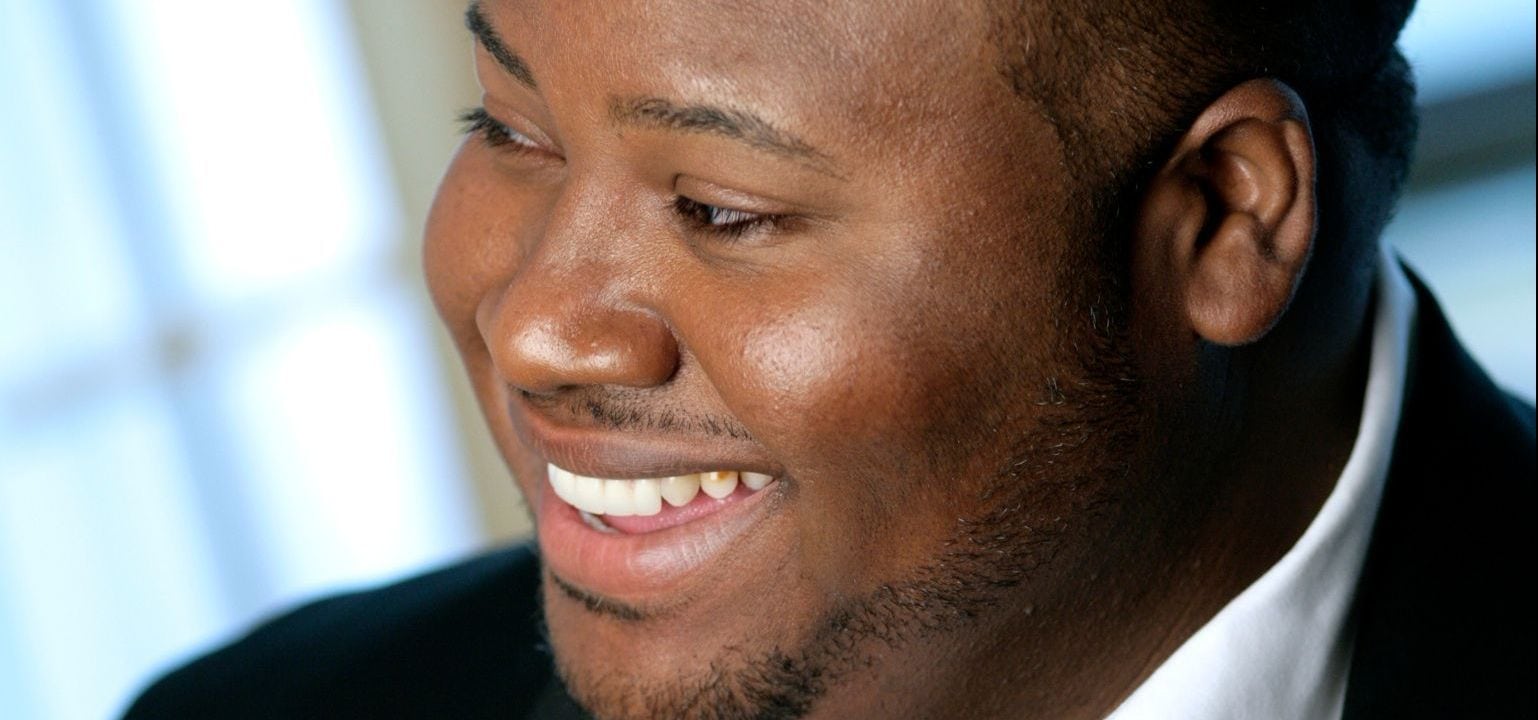
    Savage

    Mr. Savage (above) made a splendid impression in the Emperor’s first scene, the voice full, warm, and house-filling. And Yannick did everything he could to support this singer who had saved the day with his handsome vocalism. But by the time the arduous second aria in Act II had arrived, the conductor was letting the orchestral volume rip. The tenor overcame this hurdle, but he should never have had to face a hurdle at all. Mr. Savage sang gloriously after being spared the Emperor’s fate of being turned to stone in Act III, and his part in the final quartet was very finely done. He was heartily applauded at his bows.

    The Empress now appears, in the form of Elza van den Heever. The soprano’s voice shone, especially her top notes, which sailed clearly into the house; and she took the opera’s climactic high-C early and let it glow. But the timbre of her voice is not distinctive, and when the top range was not in play, she was less persuasive. She’s not a vocal colorist, which means her singing could sometimes sound rather ordinary. The Empress’s spoken ‘crisis’ scene at the fountain (often cut…what was Strauss thinking, anyway?) became tedious after a while.

    Lise Lindstrom, who I last heard here as a very impressive Turandot in 2015, has in the interim been singing the heaviest Wagner and Strauss roles all over the world. This afternoon, with Yannick’s orchestra pounding away, even Ms. Lindstrom’s sturdy volume reserves were often tested, and her upper range could turn strident. For all that, there was still something moving about her vocalism, and a more thoughtful conductor could have supported rather than contested her singing. Watching the bows, Lise remains a knockout beauty in terms of face and form. 

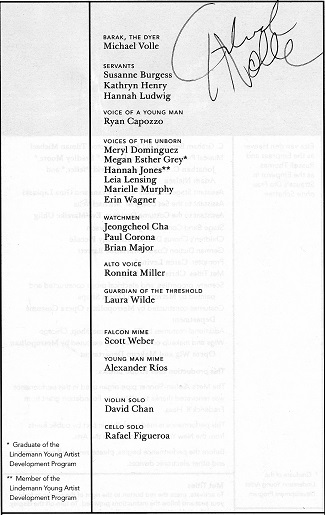
    The most compelling performance of the day came from the great Michael Volle as Barak. From first note to finale, this wonderful artist made the humble, loving, generous character come vividly to life. Mr. Volle constantly made me choke back tears as he created a Dyer who is the palpable center of the entire story. His pain at his wife’s callous rejection was deeply moving in the quiet ending of Act I – as he listened to the trio of the Nightwatchmen extolling the joys of marital love – and his kindly care of his three handicapped brothers during the “party” in Act kept the Volle Barak at the center of it all. 

    The great Act III duet for Barak and his wife, sung unaware of one another’s nearness in Keikobad’s prison, is the heart of the opera; and here Mr. Volle reached the heavens with his gorgeously voiced “Mir anvertraut…” and the hushed beauty of his “Furchte dich nicht!”

    At the end, all things resolved, and with his happiness now complete, Mr. Volle’s Barak stepped forward the launch the final quartet with “Nun will ich jubeln!”, the voice so powerful and assured, the sentiment so real. The other three singers, still having to contend with the deafening roar of the orchestra, stayed afloat whilst Mr. Volle, undaunted, sang with the surety of voice that makes him a great artist. He joins my pantheon of great Baraks – Walter Berry, Bernd Weikl, and Wolfgang Brendel – and reminded me yet again of how fortunate I have been – in these 60-plus years of opera-going – to have experienced such singers.

    As the Guardian of the Threshold, Laura Wilde (who stepped in as Ellen Orford at the 2022 Met matinee of PETER GRIMES), sounded a bit like Ms. van den Heever; but even in this brief role, Ms. Wilde was hit with some of Yannick’s sonic booms. Jessica Faselt was the Falcon, Thomas Capobianco, Aleksey Bogdanov, and Scott Conner a voicey trio of brothers, Ryan Capazzo a lyrical Jüngling, and Jeongcheol Cha, Paul Corona, and Brian Major an excellent trio of Watchmen. The fabulous contralto Ronnita Miller was not well-miked as the Alto Voice in the prison scene, but she still sounded super.

    Figueroa ^ Chan

    Special kudos to cellist Rafael Figueroa and concert-master David Chan (above) whose solos in Act II and Act III respectively were so movingly played. They rightfully joined the singers onstage during the bows. 

    I went to the stage door with the sole purpose of thanking Mr. Volle; he was extremely kind, and gave me a warm handshake. I came so close to saying “I love you!”, and that’s exactly what I was feeling.
    Volle-1 jpg

    So, despite the sabotage efforts of Y N-S, the glory of the Strauss score could not be dimmed. During the finale, as what longtime standee Eddie Smith used to call “bloopers” sounded from the brass, I was thinking with sympathy of all those spent lips.

    I’m curious to see how the incoming Principal Guest Conductor Daniele Rustioni will fare at The Met. I already rate him much higher that Yannick, and he’s way better looking, too.

    ~ Oberon

  • Premiere: Levine/Schenk GOTTERDAMMERUNG ~ 1988

    Scanned Section 6-1

    (Click on the above cast list – and the images in the article – to enlarge.)

    During these endless days of being at home, I’ve been reading thru my opera diary, a hand-written document I started in 1962 and which now fills numerous file folders. So many wonderful memories of the great performances I saw over the years were stirred up by reading about them.

    One such exciting night was the 1988 premiere of the Otto Schenk GÖTTERDÄMMERUNG, the closing opera of Wagner’s epic RING Cycle. Often referred to affectionately as “the Levine RING”, full cycles of the production in the ensuing seasons created a great international buzz; Wagnerites from all over the globe gathered in New York City to witness this classic staging.

    Having already seen the RHEINGOLD, WALKURE and SIEGFRIED, I had a pretty good idea of what to expect; still, when the Gibichung Hall loomed into view, it took my breath away. Levine was mostly magnificent, though there were moments when he let things drag a bit; his orchestra gave it their all, and the chorus sounded sensational as they gathered in lusty expectation of the double wedding.

    As to the singers, here’s what I wrote upon returning to my room at the Colonial House after the performance: 

    “Casting was strong, with pretty singing from the Rhinemaidens – Joyce Guyer (in her Met debut), Diane Kesling, and Meredith Parsons – and Franz Mazura made an astoundingly vivid Alberich, singing with oily malice. The opening scene of Act II, with Alberich pawing at the sleeping Hagen, was very atmospheric.

    The Gibichung brother and sister were rather curiously cast: as Gunther, Anthony Raffell’s voice sounded veiled and throaty, and Kathryn Harries’ beautiful (and beautifully acted) Gutrune was undone by effortful singing and a prominent vibrato. [I mentioned that Cornell MacNeil and Lucine Amara could have made for far more interesting casting in these roles!].

    The Norn Scene, which I have always loved, benefited from the super casting of Mignon Dunn as 1st Norn, sung with richly doom-ladened tone. Hanna Schwarz (2nd Norn) had a couple of husky moments, but overall sang vividly, with excellent diction. As the 3rd Norn, Marita Napier sometimes sounded a bit insecure, but she did not let down the side. These three really made something of their opening discussion. 

    Toni Kramer sang erratically but acceptably in the torturous role of Siegfried. He seemed to be husbanding his powers, doing his best singing in Act III.

    C l + h b

    Above: Christa Ludwig as Waltraute and Hildegard Behrens as Brunnhilde

    The divine Christa Ludwig made a thrilling Waltraute, singing with great clarity and verbal point. The distinctive Ludwig tone – that cherished sound – drew the audience in to her every phrase. Add to this the anguished urgency of her delivery, and the result was a veritable triumph.

    The Ludwig Waltraute produced one of my all-time favorite curtain calls: stepping before the gold curtain for her first solo bow, she was greeted by such a din of applause and shouting that she halted in her tracks; her eyes opened wide in amazement, and she broke into a huge smile. It seemed to me that she had not expected such an avalanche of affection. She bowed deeply, clearly savoring this outpouring of love from the crowd.

    Matti

    The towering magnificence of Matti Salminen as Hagen (above) produced tremendous excitement in the House. His huge voice was at peak form, effortlessly filling the hall with sinister sound. In the scene where Hagen’s father appears to him in a dream, Salminen and Franz Mazura matched one another in both power and eerily expressive subtlety: thoroughly engrossing. The basso’s portrayal as the drama of Act II unfolded was towering in its epic nastiness and in his manipulation of the situation to attain the character’s sole goal: to regain the ring. This was a performance thrilling to behold, and to hear. 

    The roar of applause for each of Salminen’s solo bows was thunderous, and I was so excited to be part of it, shouting myself hoarse.

    Snapshot

    Hildegard Behrens (above) was a Brunnhilde of terrifying intensity and incredible feminine strength. This was an overwhelming interpretation, in which voice and physicality combined to transcend operatic convention, reaching me on the deepest possible level. Behrens lived the part, in no uncertain terms.

    The Dawn Duet found Behrens portraying the tamed warrior maid to perfection, savoring her domestic bliss but eager that Siegfried should go out into the world and do great deeds. Her unconventional beauty and her inhabiting of the character were so absorbing to behold. Later, In the scene with Waltraute, Behrens as Brunnhilde listened anxiously to all her sister’s words and she began to grasp the first signs of the downward spiral that would culminate with Siegfried’s betrayal and her own sacrifice. Even so, she dismissed Waltraute with fierce disdain. Behrens’ vivid depiction of Brunnhilde’s terror and helpless dejection as the false Siegfried wrested the ring from her was palpable.

    Scanned Section 1-1

    In one of the evening’s most gripping moments, Behrens – having become possessed by Brunnhilde’s plight in Act II – responded to Siegfried’s oath by snatching Hagen’s spear away him and singing her own oath with blistering abandon. Totally immersed in the character, her pain was painful to behold. In the powerful trio that ends Act II, Behrens, Raffell, and Salminen were splendid.

    Behrens GOTTER

    Above: Hildegard Behrens as Brunnhilde ~ Immolation Scene

    In the Immolation Scene, the great strength of Brunnhilde’s love for Siegfried, and her determination to perish in the flames of his funeral pyre, marked the culmination of Hildegard Behrens’ sensational performance. Her singing was powerful, with unstinting use of chest voice and flaming top notes; there were moments when expressionistic effects crept in but it all seemed so right. The amazing thing about Behrens’ singing and acting here was that it all seemed spontaneous…she seemed to be living it all in the moment. One cannot ask more of an operatic portrayal.

    The curtain calls went on and on, the audience eager to show their appreciation with volleys of bravos as the singers stepped forward time and again. Here we must also thank James Levine, whose grand design underlies the great success to date of the individual operas. Ahead, in the Spring, seeing the full cycle in a week’s time is already on my calendar. My dream will come true!” 

    ~ Oberon

  • Farewells: Ask la Cour

    Ask ~ elaine kurie

    Above: painting of Ask la Cour by Elaine Kurie*

    (Click on the images in this article to enlarge.)

    Saturday October 9th, 2021 – The tall Danish dancer Ask la Cour bade farewell to New York City Ballet this evening. As the pandemic stretched out far longer than most of us expected, I wondered if NYCB would be able to re-open and if Ask’s farewell performance would actually take place. I purchased my ticket in advance, hoping for the best. It turned out to be a wonderful, uplifting evening, commencing with catching up with Wendy Whelan and Kurt Froman before the dancing started.

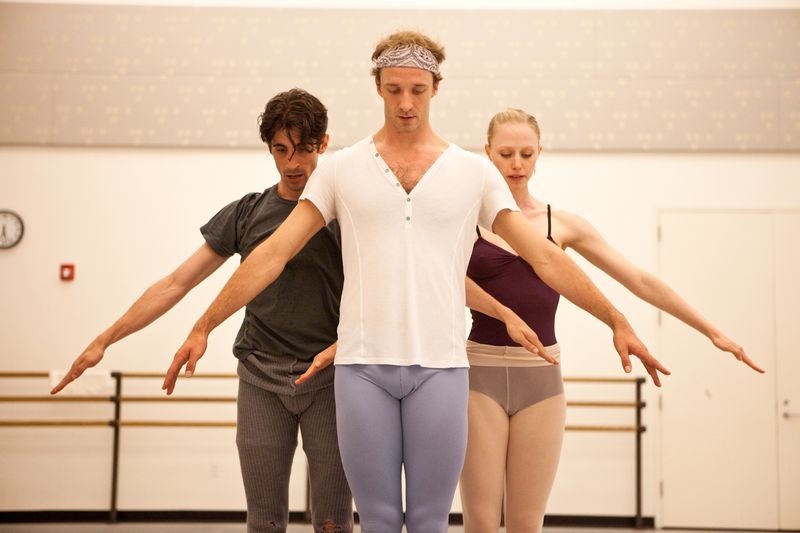
    One of my favorite memories of watching Ask la Cour was at the Manhattan Movement and Arts Center in 2011, when Justin Peck was preparing a program to take to Saratoga. Ask was to dance excerpts from Balanchine’s APOLLO; photographer Matt Murphy was with me to capture this image of Ask from this unforgettable studio session:

    Then came an additional treat: Justin’s THE ENORMOUS ROOM was also on the bill for that Saratoga performance, and Sean Suozzi joined Ask and Tess to rehearse this Mendelssohn piece. Such a great experience for me, watching three of my dance idols in an intimate studio setting, while Matt Murphy clicked away:

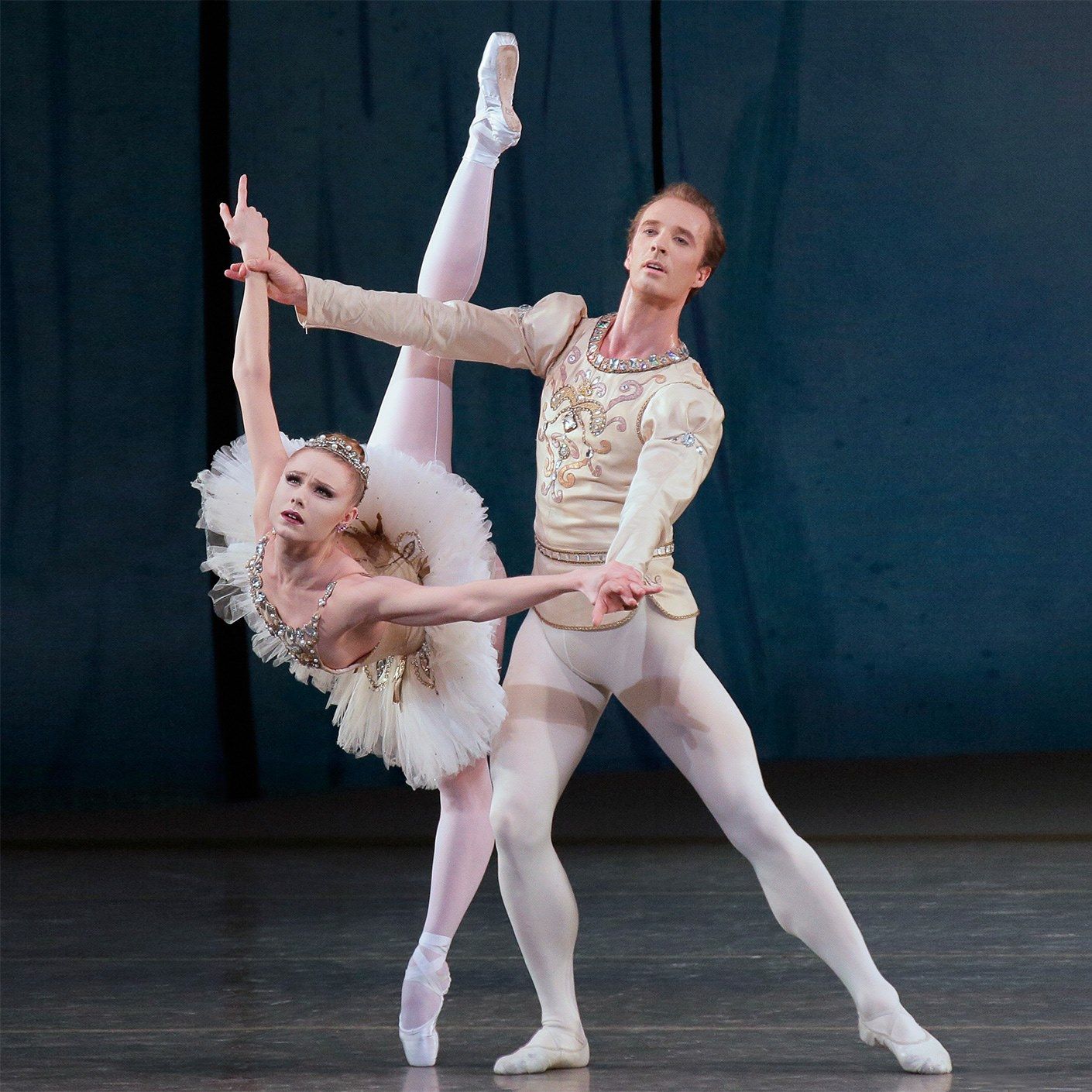
    Mearns la cour diamonds

    Ask could move effortlessly from the classic look of Balanchine’s DIAMONDS (above, with Sara Mearns)…

    Ask 4 temps

    …to the more contemporary style of FOUR TEMPERAMENTS (above). 

    Ask made an outstanding impression in such diverse roles as the Prince in FIREBIRD, Rothbart in SWAN LAKE, Friar Laurence in ROMEO & JULIET, and – so moving – as the Father in PRODIGAL SON. He was poetic in LIEBESLIEDER WALZER, EMERALDS, SERENADE, and Peter Martins’ MORGEN; bereft in the Élégie from TCHAIKOVSKY SUITE #3; lyrical – and later annoyed – in BARBER VIOLIN CONCERTO; on the brink of madness in Davidsbündlertänze; sexy in the Russian dance in SWAN LAKE; and a perfect Balanchine/Stravinsky cavalier in STRAVINSKY VIOLIN CONCERTO and MONUMENTUM/MOVEMENTS.

    Ask la Cour talks about one of his signature roles – in Balanchine’s STRAVINSKY VIOLIN CONCERTOhere.

    Ask and Maria Kowroski dance the pas de deux from Christopher Wheeldon’s AFTER THE RAIN – filmed at daybreak against the New York City skyline – here. Ask and Maria danced this duet tonight as the program’s finale.

    ~~~~~~~~~~~~~~~~~~~~~~~~~~~~~~~~~~~~~~~~~~~~~~~~~~~~~~~~~~~~~~~~~~~~~~~~~~~~~~~~~~~~~~~~~~

    La-Cour-Ask jpg

    For his farewell gala, Ask danced Balanchine and Wheeldon. Clothide Otranto was on the podium, and the New York City Ballet orchestra were in fine fettle, playing music from Gluck to Muhly.

    I’ll always remember the first time I saw Balanchine’s MONUMENTUM PRO GESUALDO/MOVEMENTS FOR PIANO AND ORCHESTRA: I was headed to a matinee at The Met, and I popped into the State Theater to watch M/M which was the first work on the program. Helene Alexopoulos was the ballerina that afternoon. I was fascinated watching the dancers of the corps de ballet rearrange themselves in new patterns after each movement.

    These are two of Stravinsky’s most intriguing scores; tonight, Alan Moverman was the piano soloist for MOVEMENTS. When the curtain rose, I realized how out-of-touch I have been with NYCB these past few years: I hardly recognized anyone on that stage. Aside from Teresa Reichlen and Ask, Mary Elizabeth Sell and Gil Bolden were just about the only really familiar faces.

    Tess and Ask made such an impressive partnership, with their long limbs and their cool command of the intricacies of the choreography. MONUMENTUM/MOVEMENTS seemed like a breath of fresh air tonight, and I particularly enjoyed Balanchine’s combinations for the corps in the second ballet. 

    Justin Peck’s ROTUNDA, to music by Nico Muhly, came next; this was my first opportunity to see it. Over time, I have run hot and cold over Justin’s ballets, sometimes finding them soulless. But I loved ROTUNDA; from curtain-rise to dramatic finish, both the airy, spacious staging and Muhly’s fine score made a very positive impression.

    The dancers, casually dressed, outdid themselves. In the ballet, they periodically huddle in a circle, as if choosing who will dance next. Two just-promoted ballerinas – Indiana Woodward and Unity Phelan – were delightful in contrasting ways; we can expect much from them in the coming seasons.

    It was lovely indeed to see Sara Adams and Claire Kretzschmar again, and I was truly impressed by the pairing of Miriam Miller and Andrew Scordato: two tall dancers, dancing to perfection. Daniel Ulbricht, as always, lit up the stage, though he is somewhat under-utilized in this ballet. I’ve admired Daniel Applebaum since he first appeared on this stage; he’s grown into an exceptional presence, so pleasing to watch. Jovani Furlan and Gil Bolden rounded out the male contingent.

    Simply stellar dancing from Megan Fairchild, debuting in this ballet tonight, won the audience’s delighted approval both with her thoughtful, flowing dancing of her solo and later in a magical pas de deux with Gil Bolden. What a captivating performance!

    Watching the charismatic Gonzalo Garcia onstage tonight, one wonders why he would even think of retiring: what a complete artist he is. His solo was spellbinding; the audience seemed to hold its collective breath as the danseur moved with consummate grace about the space. And it is Gonzalo who brings ROTUNDA to its striking finish: realizing he is alone, he rushes forward into a sudden blackout.

    Balanchine’s CHACONNE, to music from Gluck’s poignant opera ORFEO ED EURIDICE, was danced by Sara Mearns and Russell Janzen. Their performance drew great applause from the audience, though I found myself missing Kyra Nichols. Baily Jones and Harrison Coll did very well in their tricky duet, Aaron Sanz was marvelous in the pas de trois, and Kristen Segin thoroughly charming in the pas de cinq. The flautist played the haunting Dance of the Blessed Spirits exquisitely.

    The pas de deux from Christopher Wheeldon’s AFTER THE RAIN united Ask and the soon-to-retire Maria Kowroski; pianist Nancy McDill and violinist Kurt Nikkanen performed the haunting Arvo Pärt score from the pit.

    Maria’s dark hair came as a bit of a shock, even though I had seen photos in advance. She and Ask gave a lush performance, Ask’s partnering so astute and so caring. Their curtain calls were a poignant souvenir of longtime colleagues and friends savouring one last dance together.

    Ask la cour by-henry-Leutwyler

    At the end, Ask (above in a Henry Leutwyler photo) was given a classic NYCB send-off from both the audience and his colleagues. Each of his fellow dancers came out to give him flowers and an embrace, and each carried a Danish flag. Amar Ramasar and Ask had an amusing dance-off. It was a happy farewell.

    During the applause, I was remembering not only Ask’s many excellent performances but also his kindness to me when I was suffering from sciatica in 2017. He sent me some excellent advice about dealing with the problem, which I’ll never forget.

    More recently, as the pandemic moved into its second wave this past Summer, I ran into Ask outside the stage door one afternoon and greatly enjoyed talking with him. He was heading to Denmark that day, and it’s to Denmark that he’ll now be returning, to teach at the Royal Danish Ballet School, and to work with Nikolaj Hübbe at the Royal Danish Ballet. Held og lykke, Ask!

    ~ Oberon

    * Note: Elaine Kurie’s painting of Ask la Cour (top of the article) was awarded First Place in the Portrait Society of America Members‘ Show. Visit Ms. Kurie’s website here to see more of her beautiful work.

  • BORIS GODUNOV @ The Met ~ 2021

    (Always a pleasure to attend the opera with my long-time opera friend and former ABT soloist, Craig Salstein)

    Tuesday October 5, 2021 – Attending my first live performance at The Met since March 2020, I met my friend Craig Salstein in our balcony box to watch the Met’s BORIS GODUNOV. It’s an opera I have seen only once previously: in the classic Ming Cho Lee settings, with Samuel Ramey as the tsar, during the Met’s 1997-1998 season. Currently, The Met is performing BORIS in its original 1869 version, without intermission, lasting about 2 hours and 20 minutes. 

    BORIS has always been a problematic opera for me. I remember hearing it for the first time on the 1963 Met broadcast – in English – and finding it incomprehensible. Even after attending the Ramey performance, I felt bemused. Scenes showing events that will lead in the end to Boris’s downfall did not seem to make for a cohesive story – we don’t even see the tsar for a long time following his coronation – so tonight I tried a new approach: listening to the opera as a symphonic work, with vocal soloists and chorus. It worked, for the music is truly marvelous.

    And it was marvelously played tonight by The Met Orchestra, under the expert baton of Sebastian Weigle. Solo passages, in particular for the clarinet, were savourable. As always, I truly enjoyed watching the Met musicians from our perch above the pit. Onstage, the Met Chorus were in fine fettle, splendidly voicing all the magnificent music Mussorgsky has given them, and entering into the drama with gusto.

    The Met’s current production can’t touch the grandeur of the Ming Cho Lee version, but it’s effective in its own way. Scene flows into scene, and we are spared the tedium of a Gelb intermission. When I booked the tickets, the thought of a 140-minute sit seemed daunting, but in fact the evening flew by, thanks to the excellence of the musical forces.

    René Pape, now 57 years old, gave a deeply committed and moving portrayal of the tsar. As with his Gurnemanz here in 2018, the basso measures out the voice more cautiously now than of yore. After years of singing some of the most demanding roles in the bass repertory – and singing them unsparingly – it’s inevitable that the voice would be somewhat altered. But it’s a beautiful sound all the same, so touching in its eloquent lyricism. Pape’s haunted, abstracted portrayal was fascinating to experience.

    Estonian basso Ain Anger as Pimen and British tenor David Butt Philip as Grigory had made their Met debuts in these roles a few days earlier. In this production, Pimen has the look of a member of the order of wizards of Middle Earth; I briefly scanned the monastery set, looking for his palantir. No such globe was to be seen, but there was a huge book from which the old monk read to Grigory the tale of the murdered Dmitry.

    Mr. Anger has a riveting presence, and his singing was expressive, though the sound of the voice sometimes lacked richness. I will look forward to hearing him as Prince Gremin later in the season. Mr. Butt Philip (is he related to Dame Clara?) was fine, but without the Polish scene, the role’s vocal opportunities are greatly diminished. 

    Two superb portrayals were the outstanding elements of the evening: Ryan Speedo Green was simply grand as the drunken Varlaam. The basso has a big voice and a big presence, and he made his ballad the vocal hit of the evening, winning applause. Mr. Green could surely take on the role of Pimen one day, and – who knows? – maybe even that of the tsar himself. Tenor Myles Mykkanen gave an astonishing physical portrayal as the Holy Fool. In this staging, the character appears right from the opera’s start: constantly in motion, his body twisting tormentedly in a hapless dance of one possessed. Later, when the Fool approaches the tsar and begins to sing, Mr. Mykkanen’s feel for neurotic lyricism was uncanny.

    Maxim Paster was the wily Shuisky, making the most of his passage describing the glowing corpse of the murdered Dmitry; it’s Shuisky who assumes power following the death of Boris, as the production’s final tableau shows. Baritone Aleksey Bogdanov as Schelkalov has a fine voice indeed; we can hope to hear him in other roles at The Met.   

    Without an appearance by the Polish Princess Marina Mniszek, the performance was dominated by male voices; the characterful singing of two distinctive mezzo-sopranos – Tichina Vaughn as the Innkeeper and Eve Gigliotti as the Nurse – was thus doubly welcome. The nurse’s discovery of the tsar’s dead body in the final momenst of the opera was a very effective touch.  

    Any Met performance that kicks off with Richard Bernstein onstage is headed – from that moment on – for success. Other fine portrayals tonight came from Kevin Burdette, Bradley Garvin, Brenton Ryan, and Mark Schowalter. As Boris’s children, Erika Baikoff (Xenia) and Megan Marino (Fyodor) did well, though it’s always preferable to have a boy as the heir, if at all possible.

    Metropolitan Opera House
    October 5th, 2021

    BORIS GODUNOV
    Modest Mussorgsky

    Boris Godunov...........René Pape
    Prince Shuisky..........Maxim Paster
    Pimen...................Ain Anger
    Grigory.................David Butt Philip
    Varlaam.................Ryan Speedo Green
    Simpleton*..............Miles Mykkanen
    Nikitich................Richard Bernstein
    Mitiukha................Bradley Garvin
    Shchelkalov.............Aleksey Bogdanov
    Innkeeper...............Tichina Vaughn
    Missail................ Brenton Ryan
    Officer.................Kevin Burdette
    Xenia...................Erika Baikoff
    Feodor..................Megan Marino
    Nurse...................Eve Gigliotti
    Boyar in Attendance.....Mark Schowalter

    Conductor...............Sebastian Weigle

    ~ Oberon

  • A Voicey RIGOLETTO @ The Met ~ 2022

    Rigoletto

    Above: the drop curtain for the Met’s production of RIGOLETTO; photo by Donghwan Kim ~ Click on the image to enlarge.

    Sunday December 11th, 2022 matinee – This was one of the best-sung performances I have heard at The Met in many moons. Every single singer was perfectly cast, deeply committed, and eminently suited to his or her role. While Lisette Oropesa, Aigul Akhmetshina, Stephen Costello, Michael Chioldi, and John Relyea were the principals, everyone – down to the king of one-liners, Yohan Yi, as the Guard – gave us the kind of singing we so long to hear.

    Speranza Scapucci was on the podium; her take on the music is fast and sometimes furious. The eccentric, rushed tempo she set for the “Cortigiani” was almost funny…and funny is not what you want at that moment. Scapucci tended to overdose on brass, and the storm music in the final scene became an orchestral interlude: you could see the singers’ mouths moving but rarely actually hear what they were singing. But no matter: it was the the singers who made it all worthwhile. The chorus and orchestra were on peak form, though they deserve a more sensitive conductor.

    Michael Chioldi gave a monumental performance in the title-role. The voice is a house-filling one, and his singing is emotion-drenched, and deeply human. The baritone started strongly and simply got better and better as the opera unfolded. But it wasn’t all powerhouse vocalism, for Mr. Chioldi could find a haunting tenderness in his scenes with his beloved daughter. Like the great Cornell MacNeil before him, Mr. Chioldi has a ringing top register, so that such great moments as the end of the “Pari siamo…” and of the vendetta duet, caused extra shivers to race up and down my spine. At the heart of the Chioldi Rigoletto was his moving plea, “Miei signori“, to the courtiers who have kidnapped his daughter. Minutes later, yet another lump in my throat was induced by the baritone’s consoling “Piangi, fanciulla piangi“. He ended the opera with a desperate cry to heaven.  Bravo, bravo, bravo!!!

    Lisette Oropesa’s Gilda is more strong-willed than many I have encountered. A bit rebellious, she is not always cowed by her father’s scoldings, which stem from his deep love for her. As her nurse Giovanna is already in cahoots with the seductive Duke, things follow a natural course. This Gilda is no shrinking violet: she welcomes her beloved into the ducal bedchamber with a passionate kiss. And although turning Gilda’s ‘murder’ into a pre-arranged suicide is a bit far-fetched, Lisette convinced us that she was ready to die for love.

    And her vocalism was ravishing. Strong emotional currents run thru everything Lisette sings; she can find just the right colour for every note and word, and it all seems perfectly spontaneous. A magical, palpable  hush settled over the House during Lisette’s “Caro nome“: an exquisite portrait of a young girl on the brink, the innocence of the words underscored by a subtle sense of longing. In the ensuing scenes, phrase after phrase of captivating tone and nuance – from her defiance in the vendetta duet to the heart-wrenching poignancy of her farewell to her father – showed again what a thoughtful and unique artist this soprano is. 

    Stephen Costello’s Duke was the finest performance I’ve ever heard from him. His voice was marvelously clear, handsome of timbre, and with an ardent quality that made the character seem sincere…even though we know he isn’t. Stephen’s blithe voicing of “Questo o quella” set the tone for his entire performance: sustained line, charming turns of phrase, and an easy high register. His elegantly tender “È il sol dell’ anima” was irresistible…what girl could say “no” to him? In “Parmi veder le lagrime“, the tenor notched up my admiration for his singing even further: I began to think of Gedda, Kraus, and Bergonzi in this music, and Stephen’s singing of it seemed just as persuasive as these paragons. He then gave us two verses of “Possente amor...”, sealing his triumph. “La donna e mobile” seemed like a built-in encore for an afternoon of truly impressive singing.

    As the murderous siblings, Maddalena and Sparafucile, Aigul Akhmetshina and John Relyea repeated their roles from the season premiere of the opera, both making very strong impressions. The mezzo has a creamy sound, and she’s quite gorgeous into the bargain. I’d love to hear her as Dalila or Charlotte. Mr. Relyea’s inky bass is perfect for the gentleman/assassin…every line counted, and his low-F was chilling. 

    Craig Colclough was an outstanding Monterone, strong of voice and an excellent actor. Soprano Susan Burgess made her Met debut as a dishy Countess Ceprano, and Scott Scully, Jeongcheol Cha, and Paul Corona were sturdy-voiced courtiers. I loved Eve Gigliotti’s Giovanna…but: this is a singer capable of bigger assignments at The Met, as her singing in the ASO’s Taneyev evening earlier this season clearly showed. Andrea Coleman and Yohan Yi, both Met choristers, were back as the Page and Guard respectively, to fine effect.

    The audience’s reaction was typical of what we hear at the opera these days: relatively brief applause for arias and set pieces, then roars of enthusiasm during the final bows. But it was an attentive crowd, and for that we must be grateful.

    Lisette and dk december 2022

    Above: at the close of today’s voice-fest, my friend DK finally met his idol, Lisette. They were to have met in 2020, but the pandemic caused a delay. Click on the image to enlarge.

  • Lisette Oropesa Steps In as Susanna @ The Met~2007

    (I had been friends with Lisette Oropesa for almost a year when she stepped in as Susanna in a series of performances of NOZZE DI FIGARO at The Met. I had shared all the excitement and suspense of the days leading up to the announced cast change with the young soprano. I’d had a prior commitment on the evening of the NOZZE prima, but made it over to The Met in time to see quite a bit of NOZZE…and to savor Lisette’s great success. Read about my evening below.)

    Above: NOZZE curtain call; click on the image to enlarge.

    Tuesday October 2, 2007 – Of course, all day today I was thinking about Lisette…and feeling like tonight – of all nights – I really needed to be at the Met. Going to the dress rehearsal and attending the second performance isn’t quite the same as going to the actual ‘event’. How could I miss my friend’s first Met Susanna? At various points during the day I decided to simply skip the NYC Opera gala but then I had told a couple of the singers that I would be there and I do not like to break my promises. Unexpectedly, I found a solution.

    Arriving at Lincoln Center I dropped off some flowers for Lisette at the stage door and ran into the pianist Vlad Iftinca who is one of Lisette’s favorite musicians and friends; Vlad told me he had an engagement elsewhere and would not be able to be at Lisette’s performance. Heading out, I saw that Isabel Bayrakdarian’s name was still on the NOZZE poster but even as I stood there someone from the Met came out and pasted “Lisette Oropesa” over it. Then I went over to the State Theatre to find out who was singing at their gala. The board in the lobby listed the singers and also said the performance would end at 8:35. That’s a VERY short gala, though I suppose for the patrons it is the dinner/dance that is the evening’s big attraction. Then I realized that I would be able to see most of the NOZZE so I quickly bought one of the Met’s ‘rush’ seats. When the gala ended I walked over to the Met; two minutes later there was a seating break and so I was able to see 3/4ths of the performance.

    I don’t really like galas all that much; unless you have a real occasion to celebrate (like the Met’s 100th anniversary) I don’t really see the point of having singers or dancers appear in snippets of great operas or ballets. The only real purpose a gala like this one at New York City Opera serves – for me – is a chance to check out the current vocal estate of a number of singers in one fell swoop.

    Among the singers who appeared, I was curious to hear Lauren Flanigan. Once considered NYC opera’s resident prima donna, Flanigan seems to have take a hiatus since her extraordinary triumph there in Marvin David Levy’s MOURNING BECOMES ELECTRA in 2004. I did hear her singing from the orchestra pit for the New York City Ballet’s sadly short-lived TWO BIRDS WITH THE WINGS OF ONE {Music: Bright Sheng/Choreography: Jean-Pierre Bonnefoux} and she was fantastic. Prior to MOURNING, I had found Flanigan wildly erratic and on a couple of occasions I walked out on her performances. She is slated for Barber’s VANESSA at NYC Opera this Fall.

    Nelly Miricioiu is another interesting name on the gala roster tonight. In 1989 I was at Miricioiu’s Met debut as Mimi in BOHEME where the soprano used her intriguing timbre and vast palette of vocal colours to create an unforgettable portrait of the pathetic seamstress. Thereafter Miricioiu’s career went soaring in Europe where she was (is?) sort of a cult figure. She ventured into all sorts of repertoire and in the meantime recorded some bel canto rarities for the Opera Rara label. I heard many of these while I was working at Tower and with each release it seemed to me that Miricioiu’s ability to sing on pitch was increasingly compromised. I knew better than to attend her two performances of VESPRI at the Met in 2004 but I heard negative reports. Today, scanning her offerings on YouTube I was surprised to read some rave comments about some very erratic vocalism; it seems that staying on pitch is no longer considered an essential component of singing. I can take the stray off-note but beyond that pitchiness drives me up the wall.

    The announced programme had some fairly unusual and interesting items. George Manahan led a vibrant performance of the Danse Slav from Chabrier’s LE ROI MALGRE LUI. Sadly, the listed aria from LE CID was deleted due to the illness of Brandon Jovanovich. Maria Kanyova in an elegant wine-coloured gown sang a very attractive ‘Depuis le jour’ with some nicely sustained piani and Carl Tanner sang a robust ‘O Paradis!’ from L’AFRICAINE, scaling the voice down successfully in the more reflective passages.

    Ms. Flanagan appeared in a plain black gown with a long shawl and an awesome decolletage. You never know with Lauren Flanigan what she might offer – it could be anything from LA VESTALE to the ‘nightmare’ scene from DIE FRAU OHNE SCHATTEN. I suppose no one would have anticipated her actual choice, Adele’s coloratura showpiece ‘En proie de la tristesse’ from Rossini’s LE COMTE ORY. The last person I heard sing this aria was Patricia Brooks. Flanigan’s performance may not have been genuine bel canto and she had a couple of moments when she nearly veered off-track, but it was brave adventure. Scales and roulades were delivered with a combination of flair and luck; she managed high notes that you didn’t think she’d get. Imposing her zany personality overall, Flanigan scored a personal triumph and took the evening’s one unrestrained ovation.

    Light opera then prevailed for a while: a trio from LA BELLE HELENE (Andrew Drost, Matthew Burns and Michael Chioldi), ‘Kiss me again’ from MADAMOISELLE MODISTE well sung by Janara Kelleman and a suave ‘Maxim’ aria from MERRY WIDOW sung by Corey McKern.

    In a scene from IL TABARRO, Carl Tanner and Meagan Miller gave us a much more pleasant experience than that provided by the ball-busting Licitra & Guleghina at the Met last season. The scene comes off best when the singers show us the lyricism of these melodies. It’s a nostalgic duet, with a hidden agenda of mutual desire. Meagan looked really glorious in her scarlet gown and let fly with a long and focused top C of startling accuracy. She and Carl reminded me again of why I like TABARRO after their Met counterparts turned me off to it.

    Nelly Micicioiu’s performance of ‘Robert, toi que j’aime’ from Meyerbeer’s ROBERT LE DIABLE was rather sad. This aria, which has been magnificently sung by Sills, Scotto, Brooks and June Anderson over the years, can really be a heart-pounding affair. Its initial simplicity of expression mounts – with the heroine’s distress – to an outpouring of emotion; it is melodically unusual and needs a great singer to carry it off. Miricioiu sounded unsupported and threadbare to me, stringing the phrases together with evident mechanics rather than offering a persuasive musical statement. She was strongly applauded.

    The gala ended with a very fine performance of the final scene of FAUST. Daniel Borowski’s voice as Mephistopheles was darkish and menacing. Dinyar Vania sang with clarity and warmth, and he did not let Faust’s increasing urgency lead him off the music. Elizabeth Caballero was a thrilling Marguerite as her voice sailed higher and higher in the final trio; earlier she was very touching as she recalled her first meeting with Faust – beautifully rapt phrasing – and she and Dinyar capped the evening with a vibrant mutual top B.

    My concerns about the evening stem from the feeling that things were amplified; NYCO has been tampering with ‘enhancements’ for years and in the programme a “Sound Designer” was credited. I’m hoping Monsieur Mortier will make make things right; back in the Rudel era we never thought there was an acoustic problem at the State Theatre and lightish voices were always clearly audible. Whatever happened to the conductor’s duty to make sure his singers are heard?

    Perfect timing: I arrived at the Met exactly at the break after Act I of NOZZE. I realized that I could not really rate this performance honestly because missing the first act proved to be a major deterrent to getting into it both musically and dramatically. Audience distractions prompted me to move to standing room after the intermission. Some people on the Met’s house staff are downright unpleasant, but that’s another story.

    Overall I think I enjoyed the dress rehearsal more than this performance. In part this was due to the conducting of Philippe Jordan which seemed so fresh and agile at the dress but for some reason seemed almost faceless tonight. I also found that Erwin Schrott’s Figaro was not holding my interest. His interpretation, which seems to be built on not actually ‘singing’ much of the time (see notes in the dress rehearsal story) worked well once but on second hearing seemed a little tedious. As an actor, however, he is inspired. I loved the way he curled up on Ann Murray’s lap after finding out that she is his mother. Michele Pertusi was a truly fine Count and Anke Vondung is a good Cherubino.

    Hei-Kyung Hong as the Contessa , Lisette as Susanna,and Kathleen Kim as Barbarina were all very attractive both physically and vocally. It was the best ‘Porgi amor’ I have heard from Hei-Kyung, and her ‘Dove sono’ won the evening’s longest applause. Lisette’s silvery sound etched into the ensembles with skill, and she seemed thoroughly at home onstage. Her ‘Deh vieni non tardar’ seemed to cast a spell over the house. Together Hei-Kyung and Lisette made the Letter Duet the vocal highlight of the evening. Kathleen Kim is a small person with a big, lively voice. She was affectionately greeted by the audience. Hei-Kyung wowed the crowd at curtain call, and watching Lisette take her first solo bow in a Met opera was something to remember.

    ~ Oberon

  • Charles Askegard’s Farewell @ New York City Ballet

    (Continuing my effort to bring articles from the Grove to the Glade. Time is running out!)

    Askegard

    Sunday October 9, 2011 – Charles Askegard (photo: Rosier) gave his farewell performance at New York City Ballet this afternoon. A dancer renowned for both his magnificent partnering and elegant style, Charles’s departure leaves a place in the New York dance scene that will be difficult to fill. But for now at least we need only to say “A bientot” and not “Au revoir“: Charles will continue as a force in the dance world as he and former ABT principal ballerina Michele Wiles team up to create Ballet Next, due to debut at The Joyce on November 21st.

    Maria charles

    Above: Charles Askegard guesting in NUTCRACKER with Maria Kowroski, photo by Chris Clark. The Kowroski/Askegard partnership has been an ongoing joy for NYCB-goers over the past several seasons. This afternoon they danced together in the DIAMONDS pas de deux and in the final movement of Balanchine’s EPISODES.

    6a00d8341c4e3853ef00e54f2657178833-800wi

    Farewells tend to evoke memories, and I have so many from Chuck’s performances which have always remain clearly in my mental scrapbook. One notable Kowroski/Askegard triumph that I’d always hoped to see again was Helgi Tomasson’s PRISM (Paul Kolnik photo above). Wendy Whelan has been partnered by superb cavaliers in her many luminous renderings of the SYMPHONY IN C adagio, but there was one special night when Balanchine, Bizet and Terpsichore all smiled in unison on the Whelan/Askegard partnership. Of the zillion or so Sugar Plum pas de deux I’ve seen, a performance with the rare pairing of Charles with Abi Stafford stands out as a testament to the art of ballet partnering.

    During his NYCB career the many moods of the Balanchine repertoire were celebrated in Chuck’s performances in STARS & STRIPES, SERENADE, FIREBIRD, FOUR TEMPERAMENTS, CORTEGE HONGROIS and LIEBESLIEDER WALTZES…

    333_2336

    …and he was unforgettable in ROBERT SCHUMANN’S DAVIDSBUNDLERTANZE, above with Kyra Nichols.

    Charles’s Balanchine choices for today’s gala gave us Maria Kowroski first in a tutu (DIAMONDS) and then in a leotard (EPISODES); she and Charles danced as one and the high emotional temperature of the occasion was marked by shared smiles between the dancers. Though it seemed to me that Maria was on the verge of tears, she danced radiantly in what must have been a bittersweet performance for her. They have always looked sensational together and the audience saluted their partnership with sustained applause as Maria swept into a deep curtsey to her cavalier.

    Three other excellent partnerships made EPISODES very impressive to watch today. Abi Stafford with Tyler Angle, and Teresa Reichlen with Ask LaCour have danced this ballet earlier in the season and they were all looking super this afternoon. An exciting match-up of Jennie Somogyi with Sebastien Marcovici gave a fresh slant to Concerto.

    172_1284

    In an uncharacteristic exploration of the dark side, Charles has had a revelatory success in Robbins’ IN MEMORY OF… (Kolnik photo, above) which he chose to be part of his farewell programme today; I’ve seen him in this ballet with Darci Kistler, Kyra Nichols, and Wendy Whelan and he is just spectacular in it. (Jerome Robbins personally coached Askegard in the role).

    6a00d8341c4e3853ef0134854314b4970c-800wi

    Charles Askegard & Wendy Whelan in IN MEMORY OF… Photo by Paul Kolnik.

    Today Wendy was extrordinary both in her dancing and her richly detailed characterization of a young woman stalked by Death. Wendy fights a tremendous battle with Death but in the end she cannot withstand his brutal assault. She later appears -gorgeously – as an ethereal spirit. Jared Angle is passionate and tender as her mortal lover. Charles Askegard as the Death figure gave a sinister, relentless performance, developing a hot-wired intensity in his long duet with his victim. The corps are first seen as villagers and then as angels. They danced beautifully, the girls so pretty in their muted pastel dresses.

    As the dancers were bowing I wondered who will succeed to this role on which Charles has put an indelible stamp. I must mention also Kurt Nikkanen’s excellent playing of the Berg concerto with Andrews Sill on the podium.

    02ASKEGARD1_SPAN-articleLarge

    The gala ended with WESTERN SYMPHONY, Balanchine’s cowboy ballet (Kolnik photo, above). This has been a classic Askegard role for several seasons and he danced it today – opposite a sexy and provocative Sara Mearns – with a mixture of laid-back charm and easy bravura. The cast also featured outstanding performances from a vivacious Rebecca Krohn with Jon Stafford (on a whirl with his patented air turns), and Adam Hendrickson’s handsome daydreaming cowpoke with Megan Fairchild as his pretty, witty Muse. They danced brilliantly.

    Then the big royal send-off for Mr. Askegard commenced as a parade of ballerinas each exchanged large bouquets for a hug and kiss from the well-beloved cavalier. The Company’s male principals all swarmed on together and enveloped Charles in a congratulatory huddle. As the curtain rose and fell several times, Chuck tried in vain to get his ballerinas to come forward and bow with him. But for once the peerless partner was left on his own to face the music: a standing ovation and waves of affection sweeping across the footlights.

  • Ermonela Jaho’s Butterfly @ The Met ~ 2018

    (Brought this over from the Grove…my first time hearing this captivating Albanian soprano. I knew I’d want to save this memory.)

    Untitled

    Above: soprano Ermonela Jaho; click on the image to enlarge.

    ~ Author: Oberon

    Saturday March 3rd, 2018 matinee – This afternoon’s performance of MADAMA BUTTERFLY at the Metropolitan Opera played to a packed house. It’s an opera that always manages to get to me, however often I’ve seen and heard it. New to me today was the Albanian soprano Ermonela Jaho; her vocally fascinating performance was genuinely intriguing, especially in view of the fact that her voice is on the light side for such a taxing role in the big House. But Ms. Jaho knows her way around this music, and – supported by a strong line-up of colleagues – this made for a truly satisfying performance.

    I like the Minghella production for the most part – despite the puppet – but I didn’t feel the need for a seat with a view today. Conductor Marco Armiliato has this music in his blood – though he sometimes covered the singers – and the orchestra played extremely well, with many really beautiful moments.

    Ms. Jaho, whose timbre is a bit like Pilar Lorengar’s, at first sounded under-powered. But her phrasing and sense of youthful anticipation were spot on, so as she moved thru the entry aria, things began to bloom. The voice sits high: she finished “Spira sul mare” with a fine, sustained high D-flat. The soprano then commenced to draw me in and play on my heartstrings with one exquisite phrase after another.

    Ieri son salita...” had lovely delicacy, and the gentle resignation of “Rinegata…e felice!” was a sublimely done. As the love duet unfolded, Ms. Jaho’s delicious mixing in of piano/pianissimo notes kept giving me chills of delight. Her singing of “Vogliatemi bene…” was so moving in its plea for love, and her “…un bene da bambino” ravished. The soprano plucked stunning, silvery top notes out of the air, as at “…in man del’uom!” A sense of rapture built with her “Dolce notte…quante stelle!” followed by spectacular softness at “…quant’occhi fisi attente…” So many felicitous details in her singing! I genuinely hated being dragged back to reality following the Act I curtain today; I could not wait for the second act to begin.

    In the scene leading up to “Un bel di“, Ms. Jaho was achingly touching with her sweet recollections of her brief time with Pinkerton: “O Butterfly…piccina moglietina…” and “…quando fa la nidiata…” were sublimely nuanced. “Un bel di” was intimately sung, so alive with verbal detail aligned you vocal colour. The final expression of hope and steadfastness was crowned by a crystalline high B-flat.

    After rejecting Yamadori – her final life-line – Ms. Jaho’s Butterfly was spellbinding in the Letter Scene with Sharpless. Her hushed reply to the letter’s assumption that she would have forgotten Pinkerton (“Suzuki, dillo tu…”) was sung with a tender hush. She is numbed by the Consul’s suggestion that she forget Pinkerton, and lashes out violently at “Ah…m’ha scordata!!“, crying out in pain. She then brings forth Pinkerton’s son, and the story spirals to its tragic denouement.

    Che tua madre…” was simply crushing as a devastatingly personal reflection on what Butterfly would do as an abandoned wife and mother: the soft fear in Jaho’s voice at “…la geisha cantera.” Gleaming tops as she moved on to the despairing cries of “Morta! Morta!” Bidding farewell to the Consul, she describes the baby’s name “…Gioia mi chiamerò!” with a sustained pianissimo fading into air.

    Now comes the agonizing sighting of the ship – a stunning A-sharp on “…Abramo Lincoln!!…” and the brief triumph of her faith, “…sol io che l’amo!” before the cresting, shining ascent on “Ei torna, e m’ama!

    Ms. Jaho’s singing of the Flower Duet, finely blended with Maria Zifchak’s Suzuki, was sweet and silvery, with a shimmering B-flat at “…petali d’ogn fior…” In the quiet monolog that follows, the soprano’s expressive and very personal singing, full of detail, was mesmerizing. The atmospheric Humming Chorus with its enchanting harp was a final passage of peace before Butterfly’s world collapses.

    In Act III, Ms. Jaho’s exquisite “Dormi amor mio…” marked her last moments of hope. Then comes the betrayal, the brutal truth: great tension as she made dramatic use of her lower range, asking Suzuki if Pinkerton is still alive. Overwhelming sadness as she contemplates her fate and the surrender of her son. Chilling pauses sustain the dramatic atmosphere before the bleakly poignant “Sotto il gran ponte del cielo…”

    Powerfully, Butterfly dismisses Suzuki, and in a numbed voice of tragic accents Ms. Jaho reads the inscription on the knife blade: “To die with honor when one can no longer live with honor…” In the crushing agony of her final moments, Ms. Jaho’s searing cry of “Amore…addio…addio, piccolo amor!” demolished me completely.

    In Roberto Aronica (Pinkerton) and Roberto Frontali (Sharpless), strong and wonderfully idiomatic vocalism carried the day. During their exchanges in Act I, the two Italians delighted in the words, and neither was daunted in the least by the volume that rose at times from the pit.

    Mr. Aronica lets the music flow; it’s a big sound which rises vibrantly to the upper notes. One might have thought him mismatched to Ms. Jaho’s lighter sound in the love duet, but Mr. Aronica sang lyrically here, turning up the volume when a solo moment came his way. The sweet urging of his “…ancor non m’hai detto che m’ami!” gave way to the reassurance that  “…love doesn’t kill!…” (There he’s wrong, as it turns out.) As the duet moved to its climax, the tenor’s increasing rapture buoyed the soprano’s soaring gleam.

    In Act III, the Aronica’s singing in both the great trio (my favorite passage in the entire opera) and in the heartrending remorse of “Addio, fiorito asil” was generous and moving.

    It’s silly and juvenile, though, that audiences tend to boo mean or nasty characters when they take their bows. The opera’s over: if the singer has done a good job, what’s the point of booing? 

    Mr. Frontali was an excellent Sharpless, one of the most touching roles created by Puccini for male singer. Sharpless foresees disaster, but once it happens he is helpless to stem the destructive tide. Mr. Frontali’s rich tone and very expressive way with the words made his every phrase important. In Act I his launching of the beautiful “O amico fortunato…!” was superb, as was his prophetic “Badate! Ella ci crede!” (“Be careful! She believes in you!“)

    In Act II, Mr. Frontali and Ms. Jaho  made the Letter Scene the key element of the opera that it should be. The baritone’s sudden impatience with Butterfly’s steadfastness erupts at (“Ebbene, che fareste, Madama Butterfly…s’ei non dovesse ritornar più mai?“): the last words, thundered out, were shocking: I’ve never heard it done that way. Frontali’s goodbye to Butterfly’s son was another cause for heartache.

    In that great Act III trio, all is made clear. Sharpless’s prophecy was accurate, Pinkerton too late recognizes his tragic thoughtlessness, and Suzuki is left to deal with the damage, knowing the path Butterfly will take. Maria Zifchak is the Met’s go-to Suzuki, and she turned in yet another very fine performance of the role today. With magnificent support from the orchestra, these three singers produced a vocal buildup of passion, regret, and despair made a thrilling impact.

    The opera’s smaller roles were all done well today. Tony Stevenson was a more musical Goro than some, putting emphasis on the notes rather than on the ‘character’ aspects of the marriage broker’s music. Stefan Szkafarowsky was a dramatic Bonze, and I enjoyed hearing baritone Hyung Yun again: he sang handsomely as Yamadori. If only Butterfly had accepted Yamadori’s proposal! Paul Corona (Commissioner) and Edyta Kulczak (Kate Pinkerton, the ‘innocent cause’ of Butterfly’s tragedy) both did well.

    Her extremely moving performance today made me wonder why Ms. Jaho has not sung at The Met with greater frequency: aside from a single Violetta in 2008, these Butterflies are her only Met appearances to date. The audience seemed truly taken with her this afternoon, and I especially loved her warm embrace of Ms. Zifchak during the curtain calls. 

    Overall, the afternoon left me emotionally exhausted, and that’s exactly what an operatic performance should do.

    ~ Oberon

  • Farewells: Maria Kowroski

    (Fetching a story about Maria K’s farewell to New York City Ballet from Oberon’s Grove and placing it here, on the Glade, so I’ll always know where to find it.)

    Click on each image to enlarge:

    Maria diamonds kolnik jpg

    Above: Maria Kowroski in Balanchine’s DIAMONDS; photo by Paul Kolnik

    Peter Martins said of Maria Kowroski that her elevation to the rank of principal ballerina at New York City Ballet was “inevitable” from day one. And it happened so fast: she joined the Company as an Apprentice in 1994 and five years later attained the Principal designation. I feel so fortunate to have been there from the start, watching her career unfold.

    Over the passing seasons, Maria’s performances have radiated with the distinctive glow that is the trademark of a great ballerina. Her range has been vast: she excelled as the a witty Girl in Green in DANCES AT A GATHERING, as a leggy Broadway babe in SLAUGHTER ON TENTH AVENUE, in the stately adagio of SYMPHONY IN C, as the sleek temptress in PRODIGAL SON, as an iconic Swan Queen (in both the Balanchine and Martins productions), as the wryly hilarious “hat girl” in THE CONCERT, as a magnificent Firebird, as a spectacular Red Angel in Ulysses Dove’s ballet of that title, as an ideal Titania in MIDSUMMER NIGHTS DREAM, and as a triple treat in JEWELS, wherein she was equally gorgeous in each “act” : Emeralds, Rubies, and Diamonds. She looked as stunning in such leotard ballets as AGON and STRAVINSKY VIOLIN CONCERTO as in the be-jeweled gowns of LIEBESLIEDER WALTZES and VIENNA WALTZES.

    Watch Maria in motion in the AGON pas de deux with Amar Ramasar here, scrolling down the page once the link opens.

    Maria and Ask la Cour perform the pas de deux from Christopher Wheeldon’s AFTER THE RAIN at sunrise on a September morning in lower Manhattan. Watch here.

    Here is a Maria K gallery:

    Maria firebird

    As the Firebird

    Maria siren

    As The Siren in PRODIGAL SON; a Paul Kolnik photo

    Maria-chuck=serenade

    Maria’s great partnership with Charles Askegard (above in SERENADE), who made the leap from ABT to NYC Ballet to dance with her, brought forth some of her most thrilling performances. I especially loved their dancing together in Helgi Tomasson’s PRISM.

    Agon albert maria-1 jpg

    Maria in AGON with Albert Evans

    Maria jock  agon termine

    In AGON with Jock Soto; photo by Richard Termine

    Maria edwaard morphoses

    Dancing with Edwaard Liang for Christopher Wheeldon’s Morphoses in Central Park; photo by Kokyat…

    Maria jason vail baiano

    …and with Jason Fowler at Vail; photo by Erin Baiano.

    Maria philip mozartiana

    MOZARTIANA with Philip Neal

    Maria fabrice

    A once-in-a-lifetime pairing of Maria Kowroski and the Joffrey Ballet’s magnifique Fabrice Calmels, for the Monterrey International Dance Festival in 2014.  

    Maria ask

    With Ask la Cour in AFTER THE RAIN

    Vienna waltzes

    After VIENNA WALTZES, with Amar Ramasar, Sterling Hyltin, and Gonzalo Garcia; Amar, Sterling, and Gonzalo performed at Maria’s gala this afternoon

    Maria tyler aaa

    Maria with Tyler Angle in SWAN LAKE; a Paul Kolnik photo

    ~~~~~~~~~~~~~~~~~~~~~~~~~~~~~~~~~~~~~~~~~~~~~~~~~~~~~~~~~~~~~~~~~~~~~~~~~~~~~~~~~~~~~~~~~~

    For her farewell program his afternoon, Maria chose pieces by Balanchine, Wheeldon, and Bigonzetti; the Company performed my favorite Jerome Robbins ballet: OPUS 19/THE DREAMER.

    A scene from Balanchine’s CHACONNE opened the performance, with Maria and Russell Janzen in the principal roles. Clothilde Otranto was on the podium, beginning a game of ‘pass the baton’ which continued through the afternoon. Special kudos to flautist Scott Kemsley for his exquisite playing; he deserves a credit in the Playbill. A roar of applause and bravas greeted Maria’s entrance; she and Russell danced with a deep sense of lyricism.

    Andrews Sill then took up the baton for the atmospheric OPUS 19/THE DREAMER, which Sterling Hyltin and Gonzalo Garcia danced so beautifully. Kurt Nikkanen played the Prokofiev 1st violin concerto splendidly – it’s such a great piece of music! – and Mr. Kemsley and harpist Sara Cutler added their artistry to this musical highlight of the day. In the opening passage of the ballet, Gonzalo was simply mesmerizing; this is a perfect role for him, and Sterling was the perfect partner. Bravi!!

    Maestro Andrew Litton now joined the festivities to conduct an excerpt from Christopher Wheeldon’s DANSE A GRANDE VITESSE which was danced by Maria with Tyler Angle. Tyler, his head now shaved, has always been a terrific partner for Maria, and so it was great to see them together again tonight. The couple make a spectacular entrance here, Maria in a stunning overhead lift: the crowd went wild. Propulsive music (by Michael Nyman) set the excerpt on its way; later, the music takes on a hymn-like feeling, and then becomes animated. It ends with Maria again aloft. As the curtain fell, a gigantic ovation erupted; after a couple of bows, the lights came up but the audience continued to cheer for another minute or two, not realizing that Maria was changing her costume for…

    AMARIA, a pièce d’occasion created by choreographer Mauro Bigonzetti, which celebrates the partnership of Maria Kowroski and Amar Ramasar; the dancers’ first names are enshrined in the ballet’s title. Onstage, pianist Craig Baldwin played Scarlatti sonatas. Each dancer has a solo, then join in a rather restless duet. The mood overall is darkish and somber. Their bows together were extremely moving for me; they seem to be two dancers who have always been there for each other.

    Balanchine’s SLAUGHTER ON TENTH AVENUE, one of the few ballets by the Master that I can’t stand, closed the show. The recently-retired Ask la Cour made a brief comeback to honor his long-time colleague, Maria, at her farewell. Tyler Angle and Daniel Applebaum took the other leading roles. The ballet looks terribly dated and corny now, though it gives us the chance to revel in the gorgeous Kowroski gams. The music is so annoying; I couldn’t wait for it to end. But the rest of the audience greeted the piece – and then the bowing ballerina – deliriously. 

    And so we bade farewell to the inimitable Maria Kowroski. Many of her partners – past and recent – joined the long parade of friends presenting her with bouquets and embraces. The last to appear were Maria’s husband with their young son…and again, the audience went nuts.

    As the prolonged ovation – the volleys of bravas, the golden streamers falling about her, the enthusiastic and very genuine admiration from her colleagues – swept on, countless visions of the great ballerina in her many wonderful roles danced by in my head.

    But one memory that has always lingered in my mind had nothing to do with Maria’s actual dancing. One evening a few years ago, Wei and I were at the Metropolitan Opera House for an ABT performance. During the intermission, we came out from the auditorium and noticed a commotion at the foot of the grand staircase. We walked over, and there was Maria in a stunning cream-coloured gown, be-jeweled and elegantly coiffed. She was graciously accepting compliments and signing autographs when a woman approached with her tiny daughter, who might have been all of three years old. The child, who was simply fascinated by the tall ballerina standing before her, didn’t say a word, but – prompted by her mother – held out her playbill for Maria to sign. Maria knelt down and spoke quietly to the girl, and signed her name. When she stood up, the girl remained totally transfixed. It was such a charming moment.

    ~ Oberon
  • Farewells: Sterling Hyltin

    (Farewells at New York City Ballet are always special, and Sterling’s was one of the most memorable. I’ve saved this article from Oberon’s Grove…the performance took place in 2022.)

    Sterling-hyltin

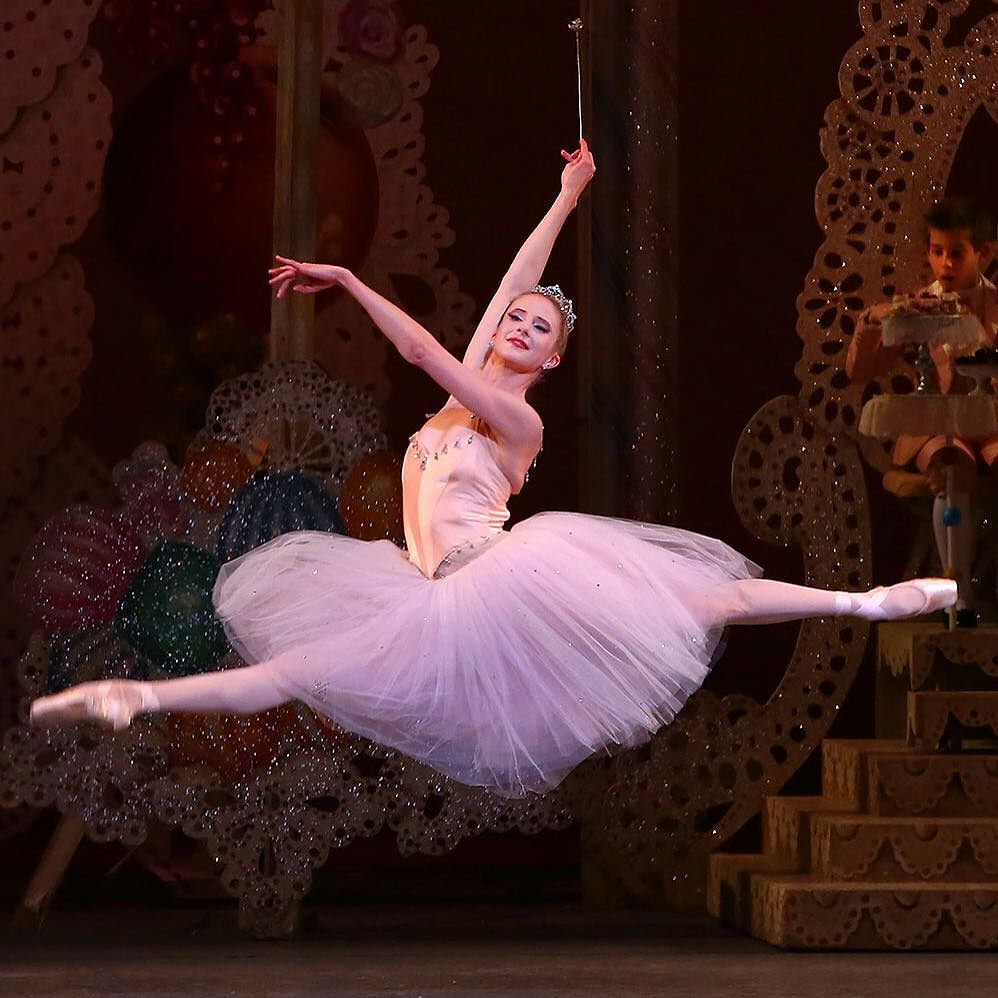
    Above: Sterling Hyltin as the Sugar Plum Fairy in Balanchine’s NUTCRACKER

    Author: Oberon

    Sunday December December 4th, 2022 – Today we bade farewell to one of New York City Ballet‘s loveliest stars: Sterling Hyltin. A native of Texas, Sterling joined the Company in 2003, and four years later she attained the rank of Principal: such a rapid ascent!

    Among the many ballets in which Sterling has moved and delighted me over the years are Balanchine’s APOLLO, BRAHMS-SCHOENBERG QUARTET, COPPELIA, DUO CONCERTANT, NUTCRACKER (she excelled both as Sugar Plum and Dewdrop), LIEBESLIEDER WATZES, MIDSUMMER NIGHT’S DREAM (she was a perfect Hermia, and I wish she had done Titania!), RUBIES in JEWELS (where she scintillated, but could we not have had her in EMERALDS as well?), SCOTCH SYMPHONY, LA VALSE, and the Stravinsky “leotard” ballets.

    In the Robbins repertoire, she was particularly luminous in AFTERNOON OF A FAUN, DANCES AT A GATHERING, OPUS 19/THE DREAMER, and IN THE NIGHT; and she displayed a gift for comedy in THE CONCERT. She danced the lead in the Peter Martins productions of SWAN LAKE and SLEEPING BEAUTY, and created the role of Juliet in the premiere of the Martins ROMEO & JULIET. Sterling has also danced in ballets by Wheeldon, Ratmansky, Millepied, and Justin Peck. 

    Here is a collection of images of Sterling in some of her most-admired roles; click on each photo to enlarge:
    Sterling-hyltin-and-amar-ramasar-in-symphony-in-three-movements JPG-

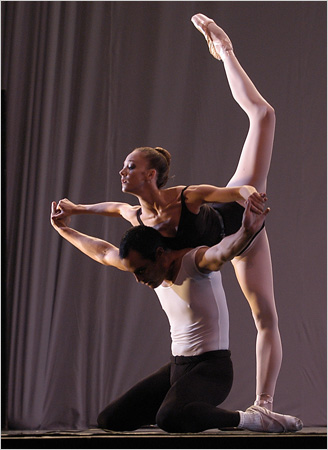
    SYMPHONY IN THREE MOVEMENTS, with Amar Ramasar; photo by Pau Kolnik

    Sterling aurora

    As Aurora in SLEEPING BEAUTY

    Sterling-hyltin-and-gonzalo-garcia-photo-c2a9-paul-kolnik

    RUBIES, with Gonzalo Garcia; photo by Paul Kolnik

    Sterling odette kolnik

    As Odette in SWAN LAKE; photo by Paul Kolnik

    Sterling-Hyltin-and-Taylor-Stanley-Symphony-in-Three-Movements Kolnik

    In SYMPHONY IN THREE MOVEMENTS, with Taylor Stanley; photo by Paul Kolnik

    Sterling-Hyltin-with-Robbie-Fairchild-Duo-Concertant_HR

    DUO CONCERTANT with Robbie Fairchild

    Sterling-hyltin-and-tyler-angle-e baiano jpg

    In Robbins’ DANCES AT A GATHERING with Tyler Angle; photo by Erin Baiano

    Sterling robbie

    With Robbie Fairchild in STRAVINSKY VIOLIN CONCERTO

    318311759_5606880242700968_4135511018510149865_n

    With Gonzalo Garcia in Robbins’ OPUS 19/THE DREAMER

    ~~~~~~~~~~~~~~~~~~~~~~~~~~~~~~~~~~~~~~~~~~~~~~~~~~~~~~~~~~~~~~~~~~~~~~~~~~~~~~~~~~~~~~~~~~

    It was as the Sugar Plum Fairy that Sterling made her farewell appearance today. Rarely does a dancer at NYC Ballet make her farewell dancing a complete role in a full-length ballet. But Sterling’s Sugar Plum is a role closely identified with her, and it made for a perfect way for her to take leave of the Company. 

    The performance got off to an exhilarating start with Andrew Litton’s fresh take on the overture; the layers of orchestral ‘voices’ were clearer than ever, and notably, the violas had a chance to shine. The curtain then rose on a performance in which only a very few of the dancers were familiar to me; this in contrast to the days when I was going to NYC Ballet often and knew every single person on the stage.

    In the party scene, Mary Elizabeth Sell as a lovely Frau Stahlbaum and Sean Suozzi’s mercurial Drosselmeyer were the only people I recognized. When the guests had departed, from the pit came the ravishing sound of Kurt Nikkanen’s violin, playing the entr’acte as sweetly as he has done so many times for me thru the years. Bravo! 

    As the Battle of the Mice was won (and lost), a long stretch of my favorite music in the score commenced, the orchestra playing sumptuously as the Stahlbaum’s drawing room became a snowy landscape. Not a single Snowflake did I recognize, but I must here mention Titus Landegger’s elegant performance as the Nutcracker Prince: the noblest interpretation of the role since Austin Bachman’s.

    During the intermission, I re-connected with some of my longtime ballet buddies, and then we returned to our seats to await Sterling Hyltin’s entrance. A thrilling roar of applause greeted the blonde beauty as she wafted onto the stage, the very epitome of grace. The Sugar Plum Fairy’s solo could be considered Sterling’s signature piece: her musicality and nuanced delivery of every step seem to define the word “ballerina”.

    In the various dances that follow, I was again reminded of how out of touch I am with the current roster of dancers: only Gil Bolden III (Mother Ginger), Harrison Coll – a fantastic Candy Cane – and Indiana Woodward as a scintillating Dewdrop were was familiar to me.

    Leading off with Hot Chocolate were the lively pairing of Jacqueline Bologna and Victor Abreu; Mr. Abreu was stepping into role this evening, and he made a handsome cavalier. Alexa Maxwell was a lithe and sultry Arabian seductress, Sebastian Villarini-Velez a spirited Tea, and Olivia MacKinnon a charming Marzipan. Mr. Bolden’s Mother Ginger was a hit, followed by a Waltz of the Flowers in which not a single flower was known to me.

    Now Sterling and her cavalier, Andrew Veyette, took the stage for the pas de deux; the entire audience seemed to be holding its collective breath as we watched Sterling in this iconic adagio for the last time. Her two dazzling flights to Andrew’s shoulder drew delighted screams from the packed house, and she polished off her triumph with a perfect balance. The couple then swept on to the allegro, brilliantly executed, finishing to a torrent of applause and bravos.  

    After the normal curtain calls, Sterling appeared onstage alone. The crowd went wild, of course, and then she rushed to the side of the stage and slipped off to greet Peter Martins, who was seated near the front of the orchestra section.. Clambering back onto the stage, Sterling greeted colleagues and friends, one by one or in small groups, as the applause rolled on. She seemed to take her time with each person; among the parade were the much-loved Maria Kowroski and Robbie Fairchild, and the recently-retired Gonzalo Garcia. At last, Sterling’s husband and tiny, adorable daughter came on.

    Sterling then took her final bows – we did not want to let her go! – and then made a lovely farewell manège, finishing off with her trademark grand jeté. The house exploded in another round of cheers.

    Sterling h

    A few years ago, the morning after Sterling had danced one of her many Sugar Plums, she posted a charming story on Facebook. She has just made her entrance and was about to move downstage when one of the petite angels looked up at her and said, “You are so beautiful!”  

    ~ Oberon