Author: Philip Gardner

  • The Royal Ballet: Mendelssohn & Mahler

    C7bc4191abf4460d877244cfebd694b0

    Above: Edward Watson in the Royal Ballet’s production of SONG OF THE EARTH; photo by Johan Persson

    Thursday June 25th, 2015 – The Royal Ballet are presently at Lincoln Center, and this evening’s double-bill of Sir Frederick Ashton’s THE DREAM and Sir Kenneth MacMillan’s SONG OF THE EARTH seemed particularly appealing to me, not least for the music of two of my favorite composers: Felix Mendelssohn and Gustav Mahler. The fact that Edward Watson would be appearing in the MacMillan made an appealing prospect irresistible.

    Ashton’s THE DREAM was the first ballet I ever saw live, performed by The Joffrey at New York’s City Center on October 16th, 1974; Rebecca Wright, Burton Taylor, and Russell Sultzbach had the principal roles that evening. I’ve not seen the ballet again since that performance.

    The Royal Ballet’s production of the Ashton boasts a particularly evocative and gorgeous set, and lovely costumes – notably those for the corps of ‘adult’ fairies (unlike in Balanchine’s version, there are no children to be seen in the Ashton, aside from the Changling Boy). Ashton tells the story in a more abbreviated rendering than Mr B – Ashton’s mortal couples are less-fully-fleshed-out as characters than Balanchine’s; Ashton’s Titania has a more sensuous quality and his Puck is more annoying (in a good way) than their Balanchine counterparts. Ashton sometimes has Oberon and Puck doing virtuoso passages at the same time, and they oddly seem to cancel one another out.

    The Mendelssohn score (played by the New York City Ballet orchestra – though in a different arrangement than that used for the Balanchine), sounded as charm-filled as ever, with some lovely singing from the Brooklyn Youth Chorus.

    Golding oberon

    Above: Matthew Golding as Oberon in THE DREAM; photo by Bill Cooper

    Matthew Golding’s tall, long-limbed Oberon, with beautifully up-right pirouettes, was handsomely characterized with a mixture of nobility and sexiness. Natalia Osipova was a lushly sensuous Titania, with an interesting touch of earthiness. Dancing in oddly-battered toe shoes, she had just polished off a lovely solo passage when suddenly she slipped and fell to the floor; she re-bounded at once and went on to a winning performance, beautifully meshed with Mr. Golding in their pas de deux.

    Valentino Zucchetti was a sprightly Puck; his performance was a big hit with the audience and though I prefer the Balanchine portrait of this character, Zucchetti’s dancing had plenty of verve. Jonathan Howells met the challenge of dancing Bottom on pointe. The mortal couples were finely danced, making the most of their fleeting vignettes: a special bravo to Ryoichi Hirano for his excellent Lysander. A pretty quartet of principal fairies, given their Shakespearean names, added yet another delectable element to the performance.

    17055613604_41fabbcb30

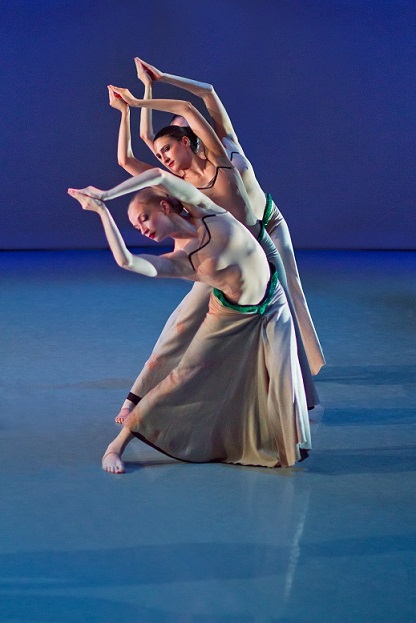
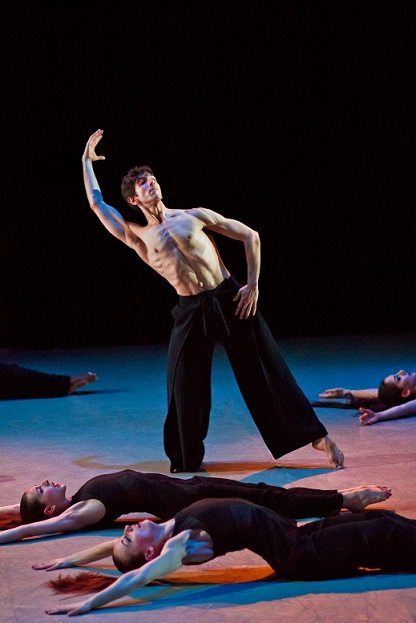
    Above: Edward Watson, Laura Morera, and Nehemiah Kish in SONG OF THE EARTH; photo from The Royal Ballet‘s website

    I had no idea what to expect from Kenneth MacMillan’s SONG OF THE EARTH. In pondering what it might be like, my first thought was that Mahler’s score is singularly unsuited to dance. But how wrong I was! I ended up being thoroughly mesmerized by the unexpected ‘rightness’ of MacMillan’s setting of the music, and by the superb dancing of the three principals.

    9848827a-c4de-491d-8c48-63368e0b21ec

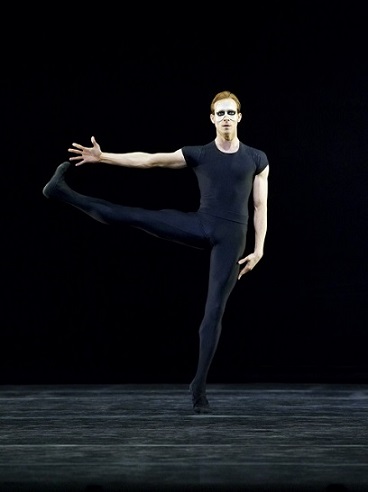
    If there’s a more distinctive danseur on the planet than Edward Watson (above), I’ve yet to find him. The lithe muscularity, the pale skin, the ginger hair, and the hypnotic eyes – clearly gleaming thru a half-masque tonight as MacMillan’s Messenger of Death – combined with a lyrically powerful technique make his performances (far too rare here in Gotham) something to cherish. The moment I saw his name listed for this evening’s performance I knew I had to be there.

    D74f4800af5876ce8dca814c00c1e26c

    A great pleasure to see Nehemiah Kish (above) again; he danced with MORPHOSES in their premiere New York season. Tall and with an easy command of space, his role in the MacMillan serves as both a compliment and a counter-poise to Edward Watson’s character: at the very end of the ballet, Mr. Kish appears masked, clearly ‘marked’ by Mr. Watson’s influence.
    13467865565_8cf990feaa

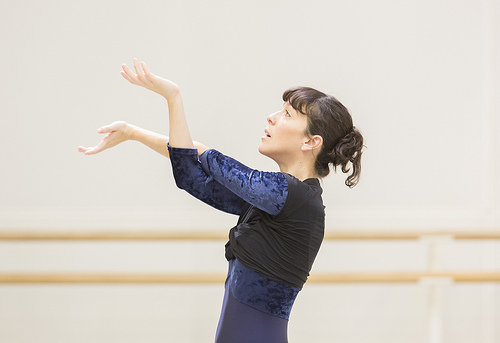
    New to me and making a magnificent impression was Laura Morera, a Spanish-born ballerina whose clarity of steps and of gesture as well as a radiant, far-searching gaze, marked her as a unique presence: despite the overwhelming allure of Mssers. Watson and Kish, I found it hard to take my eyes off Ms. Morera. She showed a deep connection to the music, and a blessed freedom from theatricality. (The rehearsal photo of Laura Morera above is from The Royal Ballet website…I simply love it…and her!)

    The Mahler score of Das Lied von der Erde calls for two vocal soloists: they alternate in singing the songs. For his ballet, MacMillan has them unobtrusively step out from the opposite sides of the  proscenium to sing; thus the focus remains on the dancers throughout. Tenor Thomas Randle seemed a bit stressed by the vocal demands cruelly placed on him by Mahler, but he managed well enough. Katherine Goeldner, who a few seasons back was an excellent Carmen on this very stage, summoned up some very expressive vocalism, making an especially haunting effect in the final passages of the work as she repeats the word “Ewig…” (‘Forever’) in gradations from piano to lingering pianissimo.

    To attempt to describe for New York dance-goers the overall look of the choreography MacMillan devised for this musically epic piece one might say it combines the stripped-down immediacy of Balanchine’s black-and-white ballets with the ritualistic aspects of Martha Graham’s mythic masterworks.

    In the abstract yet curiously meaningful passages for the corps, MacMillan has created a stylized world thru which the principals and soloists come and go with alternating sensations of urgency and angular introspection. Irony manifests itself at times, but overall the work takes itself very seriously and that in itself makes it all the more compelling.

    There were times when I wished for a bit more sense of unity of movement from the ensemble; of course Mahler’s endless thematic ebbs and flows don’t provide a real rhythmic blueprint for synchronization of steps and gestures. Nevertheless, everyone looked wonderfully handsome and attractive, individual personalities emerging even in the regimented sequences.

    To the splendid performances from Ms. Morera, Mr. Watson, and Mr. Kish were added some radiant dancing from Yuhui Choe and Lara Turk. There were others, too, who caught the questing gaze of my opera glasses but I’m not familiar enough with the Company to single them out.

    In a week that brought the news of Albert Evans’ untimely death, it was moving to be back in the theatre where I saw him dance hundreds of times. So lovely, too, to run into Wendy Whelan, who shared that stage with Albert on countless evenings. My feeling is that Albert would not want us to stop dancing…not even for a moment.

  • Kerstin Meyer

    Meyer_abcd100

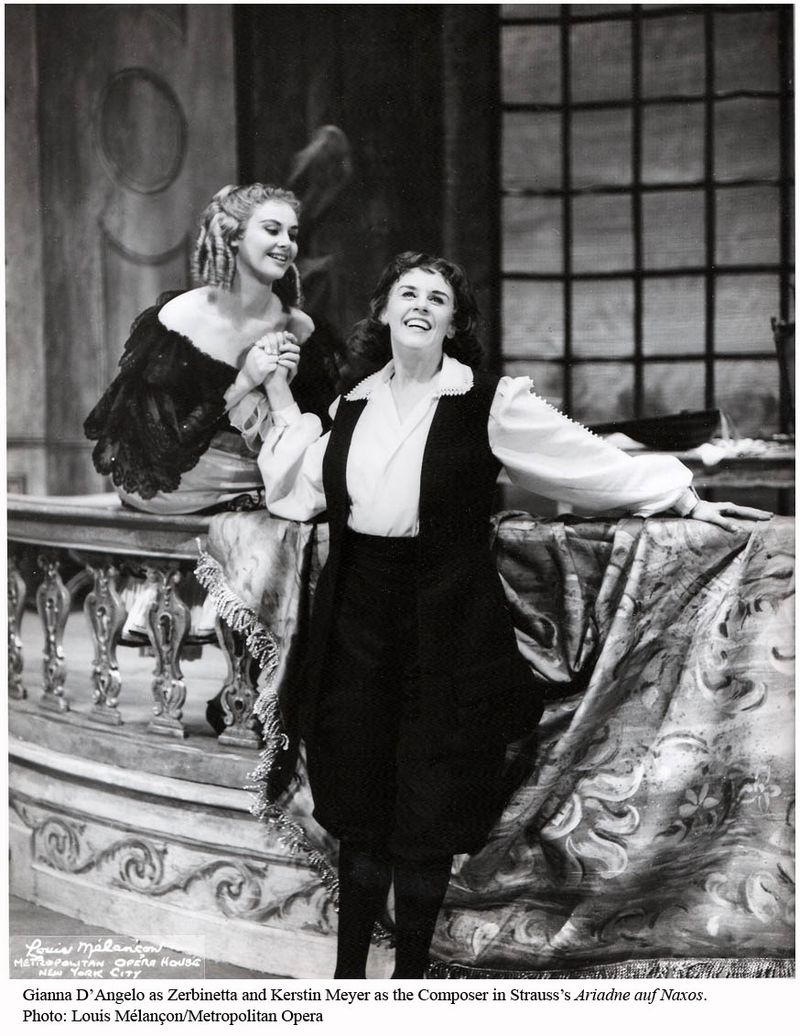
    Kerstin Meyer sings Konchakovna’s cavatina from Borodin’s PRINCE IGOR. Meyer sang the role of the Composer in the Metropolitan Opera premiere of Strauss’s ARIADNE AUF NAXOS in 1962, having previously appeared there as Carmen and Gluck’s Orfeo. 

    Ariadne6263.04

  • Beloved Albert

    6a00d8341c4e3853ef00e5523b71cf8833-800wi

    Above: Albert Evans with Wendy Whelan in Ratmansky’s RUSSIAN SEASONS, photo by John Ross

    Tuesday June 23rd, 2015 – I don’t want to be writing this.

    It seems impossible that Albert Evans has passed away. News of his death came this morning in an e-mail from a fellow balletomane; my initial reaction was that it must be some other Albert Evans because our Albert’s life force was too vibrant to have been extinguished.

    The news is still sinking in. These days, I am constantly hearing of the passing of dancers, singers, and musicians whose artistry made an impression on my life; but these are people in their 80s and 90s who have lived out their lives to the fullest. One would certainly have expected Albert to be with us for many, many more years. That’s why his passing is so tragic. It reminds us that we must never take for granted the presence of the people in our lives.

    It’s true that Albert’s passing brings back a flood of dance memories, and yet – as with all my favorite dancers – recollections of his performances have frequently sprung to mind in the days since his retirement.
    6a00d8341c4e3853ef013484aab3f8970c

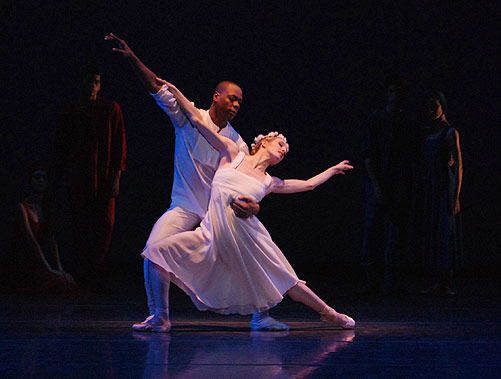
    Among his most felicitous roles was Puck in Balanchine’s MIDSUMMER NIGHT’S DREAM (with Arch Higgins and Alexandra Ansanelli, above, in a Paul Kolnik photo). In a role often undertaken by dancers of smaller physical stature, Albert made his own indelible mark with his brilliant characterization and marvelous, cat-like landings. The ‘Rhinestone Cowboy’ in WESTERN SYMPHONY was another Evans gem, as were his performances in AGON, THE FOUR TEMPERAMENTS, STRAVINSKY VIOLIN CONCERTO, and EPISODES. Albert frequently appeared in new repertory too, with Dove’s RED ANGELS, Ratmansky’s RUSSIAN SEASONS and Wheeldon’s LITURGY and KLAVIER among the most memorable. And who could forget his epic Rothbart in Peter Martins’ SWAN LAKE?

    6a00d8341c4e3853ef00e552536a7d8834-800wi

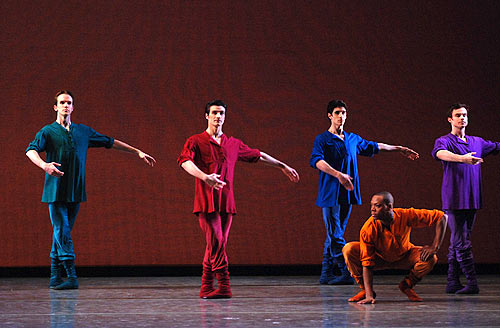
    Above: Albert in Ratmansky’s RUSSIAN SEASONS with NYCB colleagues Jonathan Stafford, Antonio Carmena, Sean Suozzi, and Adam Hendrickson. Photo: John Ross

    After his 2010 farewell to dancing at New York City Ballet, Albert continued working there as a ballet master. I would still run into him sometimes in the Lincoln Center area and there was always a smile and a friendly greeting. 

    6a00d8341c4e3853ef01348366cad2970c-800wi

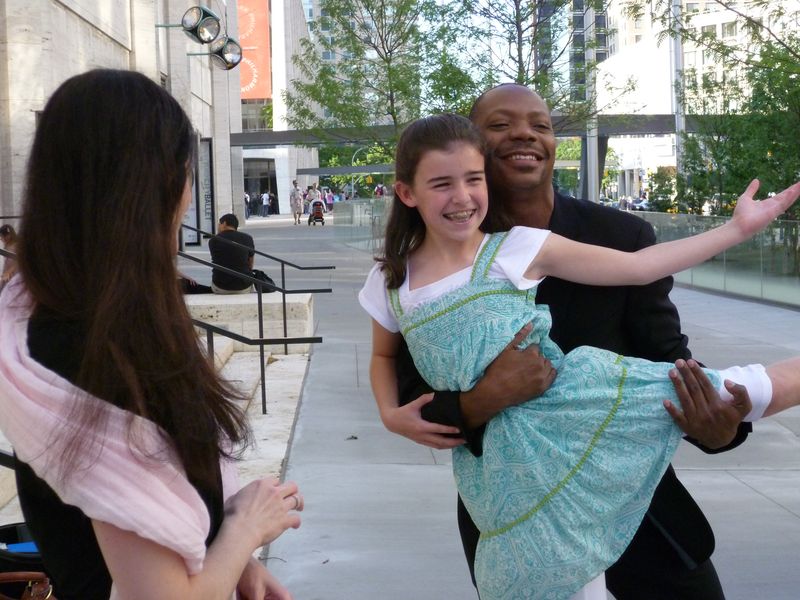
    Albert was always such a thoughtful person, always illuminating other people’s lives in a special way. After Yvonne Borree’s NYC Ballet farewell, Albert amazed a young dance student outside the stage door by sweeping her up into a pas de deux pose. It was such a happy moment, and that’s how I want to remember him.

    34127_1422702001586_4885590_n

    Above: curtain call at Albert’s NYCB farewell

  • Polish National Ballet @ The Joyce

    Ec34f50a48674b29a8d072cb4db0ae00

    Above: dancers of The Polish National Ballet in MOVING ROOMS; Photo: Ewa Krasucka

    Sunday June 21st, 2015 matinee – The Polish National Ballet in their New York debut performances at The Joyce with three contemporary works, bringing to New York City some two dozen dancers from their 90-member Company. While the inclusion of something more classical from their vast repertory might have given us a fuller picture of what The Polish National Ballet are about, it was nonetheless an exhilarating afternoon, thanks in no small part to the sleek energy of the dancers who brought ballet-based vitality to these modern works.

    Krysztof Pastor’s ADAGIO & SCHERZO, a setting of two movements from Schubert’s C-major string quartet, introduced us to the dancers; they are first seen in a sculpted cluster, evocatively lit. To the achingly poignant themes of the adagio, we meet them as individuals, as couples, and in small units as they come and go from the space. There’s some very poised and polished pointe work from the girls, and some impressive partnering motifs from the couples as the choreographer wraps an au courant feeling around the classical ballet vocabulary.

    The dancers re-form the opening cluster at the end of the adagio, then move on to fast-paced allegro dancing for the scherzo. In passages of stylized bravura, the ballet sweeps forward;  we may wish to linger our gaze on certain dancers but as they sail across the stage it’s clear there isn’t a weak link anywhere: they are all exciting to watch.

    A thorough change of mood as Emanuel Gat’s RITE OF SPRING unfolds before us. Performed by three women and two men in a space defined by an illuminated red carpet, this Rite is improbably set in a South American dance club. After a few initial moments of sizing one another up, the dancers go into ballroom/tango-based moves; partnerings come and go, and there’s always a woman left on her own. The work, nearly 40-minutes in length, maintained its pull on the viewer thanks to the charisma of the five dancers. It ends as one of the women slowly lets her hair down, lays down on the carpet, and falls asleep. Throughout this piece, I kept thinking of the riot caused by Stravinsky’s music when the ballet was premiered in the Nijinsky setting in Paris in 1913. The score is still provocative, but…to have caused a riot…?

    PolishNationalBallet1

    Above: from MOVING ROOMS; photo: Ewa Krasucka

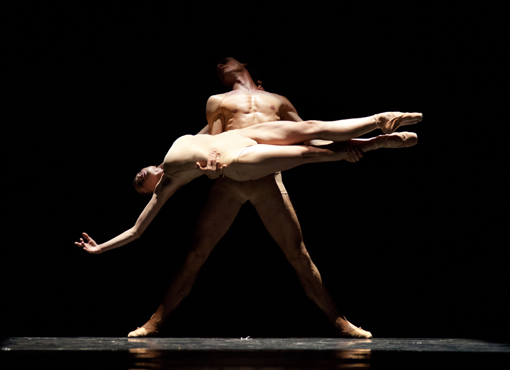
    Krysztof Pastor’s MOVING ROOMS gave the afternoon its powerful finale. Set to music of Alfred Schnittke and Henryk Górecki (his fascinating harpsichord concerto), this ballet opens with a solo male dancer, superbly illuminated, and soon expands to a giant light-defined chessboard on which the full complement of dancers move in mixed combinations, a dynamic structure of comings and goings that continually lures the eye in one direction, then another. In-sync ensemble passages are especially impressive to watch, filling the stage with unified movement.

    Eventually the ballet goes ‘nude’ – or, more precisely, the dancers appear nude in dance belts and sheer body tights. Their taut physiques seem both vulnerable and savourable; the dancing is sexy and ecstatic. 

    A large audience watched the performance in attentive silence and cheered the dancers roundly during the bows. I hope The Polish National Ballet will be back in Gotham in the near future; they certainly made a vivid impression today.

  • Roschman Dance + SAAKASU

    11270215_10155584728285554_6005642330318231725_o

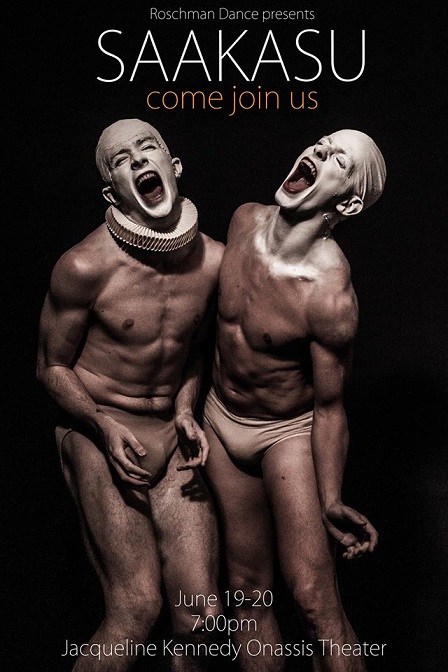
    Friday June 19th, 2015 – I’d never been to the Jacqueline Kennedy Onassis Theatre before. It’s a very nice venue for dance, with a proscenium stage and amphitheater seating, and tonight Roschman Dance (new to me) presented two works there, along with “Saakasu“, choreographed by Omar Roman de Jesus. 

    Roschman Dance’s 2012 work, “Learning To Fold“, opened the evening. Danced to music by Ethel, this piece showed the Roschman dancers to advantage with choreography that looks fresh and spacious. The six white-and-blue clad dancers shared a natural affinity for the sheer joy of movement. Aside from brief moments of reflection, the work is mostly a swirl of activity as the dancers come and go, connecting with one another in fleeting partnerships before sweeping onward. A stylized unison passage to the plucking of strings and a trio for the three women stood out, but for the most part “Learning To Fold” kept up its forward impetus: celebratory dance, performed with sincerity.

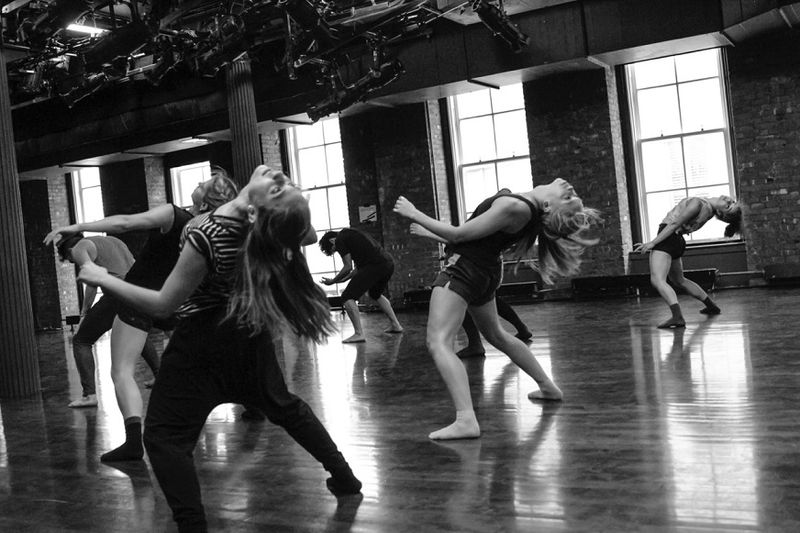
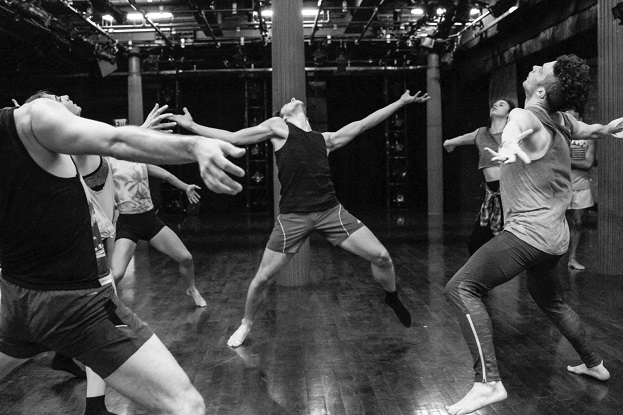
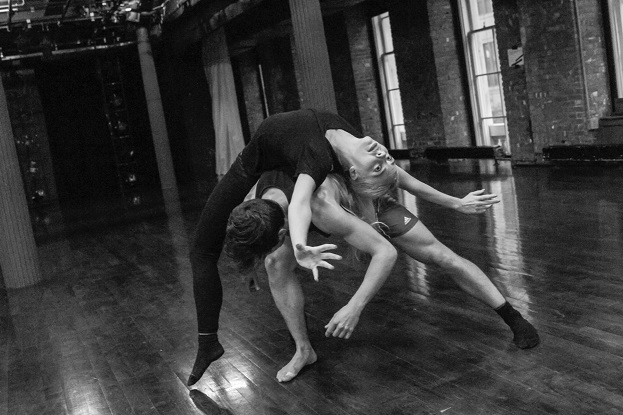
    Omar Roman De Jesus, who performs with Parsons Dance, offered  “Saakasu” (‘Circus’ in Japanese); earlier in the week photographer Travis Magee and I had dropped in at Omar’s rehearsal where his Parsons colleagues Ian Spring, Geena Pacareu Rijnsburger, and Eoghan Dillon along with a lively ensemble of young dancers were putting finishing touches on “Saakasu“.

    Seen onstage, with its sexy costuming and dramatic lighting, “Saakasu” makes a vivid impression. It opens with Ian Spring alone onstage. In his seasons with Parsons Dance, Ian has developed from an energetic boy-next-door into a charismatic dancer of the first order: one of New York’s finest. Wearing only a dance belt, a ruffled collar, and powdered hair, Ian takes on the timeless persona of the traveling player: visions of old Japanese theatre, the commedia dell’arte, and the tragic Pagliaccio smearing on his white greasepaint are evoked. 

    The music of a kozmic hurdy-gurdy sets the mood; Ian, in a pool of light, emits a profound scream: his inner animal wants to emerge. Eoghan Dillon and two girls have a stylized trio; more screams, and the full ensemble take the stage with the wary eageress of animals who have escaped their cages. Ian and Zoey Anderson have a sensuous duet to a piano theme, and then the tribe return, stomping their feet and slapping their thighs in a primitive ritual. 

    Ian crosses the stage singing a famous circus song. The music goes big and industrial; he and Geena have a duet. Meanwhile Eoghan has been crawling among the savage dancers and he finally finds a means of escape, though he simply ends up running in place since nightmares rarely allow for escape. 

    The dancers rush about in a circle, leaping. Things slow to near stillness. Debussy’s immortal “Clair de lune” is heard as Ian dances a compelling solo with very subtle images of Nijinsky’s faune woven in. This reverie ends as the ensemble re-enter, stamping their feet. They shimmy, shake, and exalt around Ian, lifting their arms to summon some pagan god. They hit the floor as the music goes pensive, only to rise again and collectively stomp upstage as silence and darkness fall.

    I wasn’t familiar with Omar Roman de Jesus’s choreographic background, but with “Saakasu” he’s really onto something: vivid in its theatricality and demanding of the dancers in terms of both technique and expression, it’s a piece to be seen again. The audience reacted with shouts of enthusiasm. 

    Contrast is a valuable asset in a mixed program of dance and so, after the interval, Sean Roschman’s “Crooked Creek” (a world premiere) was a fine counterpoise to the large-scale and darkly sexy de Jesus work. Set to an ‘Americana’ score, Roschman Dance‘s latest work seems on the surface a simple presentation of young people at a dance in a rural community, maybe in the inter-war years of the 20th century. Yet there is an underlying sense of dread, as if something is not quite right.

    Three couples waltz to an innocent, hummed tune, and then the fiddle summons up a square dance. A woman is abandoned by her partner; she lingers to watch another couple’s duet. Agitated passages follow: a trio of women and an in-sync duet for two girls; always there is a sense of being observed.

    Cascades of fiddling urge the dancers onward: various pairings and shifting solo moments, stillness offset by activity. A buzzing musical motif, and one of the girls collapses as if infected; her sad solo evolves to a trio for the women, and then to a pas de quatre for two couples. The tempo picks up for a duet, then the sound of the cello sets up a solo for one of the women. The dancers rush about as if possessed before collapsing, and the lights go out. But in an postlude, one woman sits up, unsure of what has happened. Her questioning gaze is held as a final darkness falls.

    Seeing a new Company, it’s perhaps unfair to single out a particular dancer: but in the two Roschman works I was especially impressed by Christian Deluna-Zuno, a Mexican guy with a high-flying extension and a handsome stage presence.

  • Rehearsal: Omar Roman de Jesus’s SAAKASU

    IMG_9372

    Above: “Saakasu” rehearsal, photo by Travis Magee

    Sunday June 13th, 2014 – Omar Roman de Jesus, who dances with Parsons Dance, presents “Saakasu” at the Jacqueline Kennedy Onassis Theater, 120 West 46th Street, on June 19th and 20th, 2015, at 7:00 PM. The program is under the auspices of Roschman Dance who will be premiering a new piece, “Crooked Creek”, and a revival of their 2012 work, “Learning To Fold”. Tickets here.

    This evening, Omar invited photographer Travis Magee and me to a rehearsal of “Saakasu“, which  translates to “circus” in Japanese; Omar’s dancework presents “a nightmarish vision of animalistic transformation”.

    Ian Spring (above) of Parsons Dance has a pivotal role in “Saakasu”; his Parsons colleagues Geena Pacareu Rijnsburger and Eoghan Dillon are also in the work, along with an ensemble of dynamic young dancers.

    Travis’s photos from the rehearsal:

    IMG_0655

    Ian Spring (center) and the ensemble

    IMG_0662

    IMG_0463

    Above: Eoghan Dillon

    IMG_0262

    Above: a duet for Zoey Anderson and Ian Spring…

    …and more of Ian Spring:

    IMG_0548

    IMG_0625

    IMG_0702

    All photos by Travis Magee


  • Monte/Buglisi/Muller @ NYLA 2015

    ImageProxy.mvc

    Tuesday June 16th, 2015 – A triumvirate of distinguished female choreographers presenting their work at New York Live Arts: Jennifer Muller, Elisa Monte, and Jacqulyn Buglisi drew together to offer an impressive evening of dance, and each had the benefit of the excellence of her dancers.

    Sacred Landscapes – Episode 1 (Buglisi/World Premiere) This dreamlike dancework is set to an evocative score by Paola Prestini, performed live by cellist Jeffrey Zeigler and vocalist Helga Davis. As the lights come up, the dancers – clad in diaphanous garments – stride towards us in slow motion as fog billows about them. A sombre theme from the cello sets the mood. Among the many danced highlights, solos by Ari Mayzick and the ever-ravishing Carrie Ellmore-Tallitsch stood out. There are demanding partnering motifs, including some wafting high lifts.

    Ms. Davis’s voice is first heard in whispered parlando; she will later sustain some other-worldly high notes. The cellist meanwhile veers from dreamy to profound. The dancing is ritualistic and the dancers evoke an atmosphere that is both spiritual and the sensuous. Ms. Ellmore-Tallitsch gave an enthralling performance: her simple act of crossing the stage near the end of the piece took on a depth of resonance thanks to this dancer’s particular mystique. Lovely to re-encounter Lauren Jaeger (such expressive hands) and Darion Smith – all the dancing, in fact, took on a fine lustre.

    Hurricane Deck (Monte) begins with a quirky announcement: “A blow to the head…I’ve never been unconscious before!” and from there Elisa Monte’s eight dancers zip about the space against a sky-blue background, the choreography witty and active. Clymene Baugher, Maria Ambrose, Mindy Lai and JoVonna Parks swirl about in swift, playful combinations while the bare-chested boys – Malik Kitchen, Justin Lynch, Alrick Thomas and Thomas Varvaro – pursue and partner them: the movement is fun and eclectic.

    David Lang’s score is a lively setting for all this activity, with odd rhythms, stuttering brass, and a sense of whirring at one point as the dancers switch partners.  The backdrop has gone black as the dancers stand in a row, each stepping forward in an agitated danced narrative. They hit the floor only to bob up again. “Say it!…end it!” says the unseen narrator, and as the dancers embrace, silence falls and we hear their breathing. The piece seems to be over. 

    But instead, clanging sounds rouse them; the music turns rather ominous as they perform a sort of darkish coda to heavy brass. The atmosphere takes on a cloying tinge and the work moves slowly to an un-premeditative end. The dancers sustained this longish final section strongly, though I think the work might have benefited by stopping earlier, with the words “End it.” 

    Alchemy (Jennifer Muller/World Premiere): I had an opportunity to see this work in rehearsal a week before the performance. At that time, Jennifer mentioned there would be ‘projections’ but the production was in fact quite elaborate, with a scrim having been installed during intermission. Across the backdrop and scrim, thought-bytes appear in swift succession: “…a deluge of information…” and “…accumulating none-essentials…” are but two timely references. Later, catch-phrases from pop culture and Yahoo!-style headlines flash across the screens, making me chuckle. Eventually, single words come flying at us. The four-elements inspiration for Alchemy brings us a firestorm; projections of the scorched Earth finally give way to the blessed, cleansing effects of rain. Kudos to Mark Bolotin, who devised the video design.

    All these visual effects might have tended to dwarf dancers of lesser power than Jennifer’s; but the Muller troupe – and Jennifer’s choreography – assured that the dancing held forth and remained central to the production. We first find Caroline Kehoe alone onstage, a feminine presence of alluring line; Seiko Fujita appears, striking a sustained arabesque. They are joined by Shiho Tanaka, Michelle Tara Lynch, and Sonja Chung: even thru the scrim, their personalities read clearly.

    Gen Hashimoto, Michael Tomlinson, and Malik Warlick appear in stylized, slow-motion phrases; Benjamin Freedman will later complete the impressive male quartet. The dance becomes more active; the dancers rush about as if searching for something. Lightning flashes; threatened by Nature, Caroline and Malik dance an entwined, restless pas de deux.

    Having been cast down upon the blasted terrain, Gen struggles back to the land of the living; as Seiko also revives, they dance a tender, earth-bound duet. Sonja and Michael are beautifully matched in their duet. A feeling of desolation creeps in. In the dim light, Shiho’s poetic hands evoke the rain…which finally falls, bringing a glimmer of hope and renewal.  

    Sand (Buglisi) is performed to a luscious Philip Glass score which continually put me in mind of Debussy’s L”aprèsmidi d’un faune. Beautifully lit (by Clifton Taylor), this exotic pas de six calls for both lyrical movement and powerful elements of partnering. The three couples – So Young An with Juan Rodriguez, Stephanie van Dooren-Eshkenazi with Ari Mayzick, and Anne O’Donnell with Darion Smith – met all the demands of the piece whilst creating a sultry atmosphere, induced by the swaying sensuousness of the Glass score.

  • Philharmonic Finale: JOAN OF ARC

    Joanpiffard

    Above: Joan of Arc, a late-19th century painting by Harold H. Piffard

    Saturday June 13th, 2015 – Jeanne dArc au bûcher (Joan of Arc at the Stake), an oratorio by Arthur Honegger, was the final offering of the New York Philharmonic’s 2014-2015 season. Leave it to Alan Gilbert to end an exciting season with a big bang: Honegger’s epic work unfolded in a staged version which captured both the gravitas and the insouciant sarcasm of the score.

    Jeanne dArc au bûcher was originally commissioned by Ida Rubinstein, who had enflamed Paris when she appeared with Diaghilev’s Ballets Russes in the title role of Cléopâtre in 1909, and Zobéide in Scheherazade in 1910. Rubinstein premiered Jeanne d’Arc with her own Company at Basel in 1938; she bade farewell to the stage in the same work in 1939.

    The New York Philharmonic last performed the oratorio in 1994 with Marthe Keller in the title role. For the current performances, the superb French actress Marion Cotillard has taken on the role of Jeanne which she has previously performed at Orléans and Barcelona, and most recently on a tour of Monaco, Toulouse and Paris in the present production by Côme de Bellescize.

    Arthur Honegger’s setting of Claudel’s text centers on Joan of Arc’s last moments of life at the stake, where she sees the events of her life pass before her eyes before succumbing to a terrifyingly painful death. Her confessor, Brother Dominique, reads to her from the book of her life, starting with her trial and conviction for heresy and witchcraft in 1431 and goes back even further, beyond Charles VII’s coronation, to her awakening to the voices of the saints – Catherine and Margaret – in her country garden as a young maiden. Honegger’s theatrical setting calls for three speaking actors – as Joan, Brother Dominique, and a Narrator, respectively – as well as singing soloists and adult and children’s choruses.

    The often quirky score includes parts for saxophone, piano, and the electronic ondes martenot, and the musical influences range from plain chant and Baroque to folksong and jazz. The Philharmonic musicians were at their customary high level of play, and Maestro Gilbert’s detailed handling of the score made the best possible case for this unusual work.

    A runway wraps around the partially sunken orchestra, with the children’s chorus and various players coming into close range of the audience. Behind the orchestra, the adult chorus on risers loom up on either side of the grim stake, which rests on a small platform where Brother Dominique attempts to ease the horror of Joan’s impending torturous death by reminding her of her past good deeds and the notion of heavenly reward.

    The mood of the piece veers sharpy from piety to farce, with the presiding dignitaries at Joan’s sham trial portrayed as a pig and a donkey. The evening’s most memorable moments came at the end, as deep red light representing the consuming flames filled not only the stage but much of the auditorium. As everything faded to black, every chorister and musicians held up a small faerie light, leaving us with a vision of the eternal stars.

    Marion-Cotillard

    Above: Marion Cotillard; her portrayal of Joan was a tour de force, her wonderful voice encompassing both the irony and the terror of her speeches. From girlish sing-song to her witty responses to her captors thru to the earthy, guttural expressions of her fear of death, and at last her final ecstasy, Cotillard gave a masterful performance, as touching to watch as to hear. 

    Her fellow actors – Eric Génovèse as Brother Dominique and Christian Gonon (as narrator, and in multiple smaller roles ) – were ideally cast both in terms of their voicing of the lines and their characterizations. Among the various supporting roles, two singers stood out: soprano Erin Morley, radiant-toned in the high-lying phrases of the Virgin, and tenor Thomas Blondelle who sang fearlessly and with clear projection in the taxing tessitura of Porcus, the pig-magistrate, and in other smaller roles. Everyone, in fact, sounded well in this sometimes tricky music, and both choruses – the adults and the children – made a very fine effect.

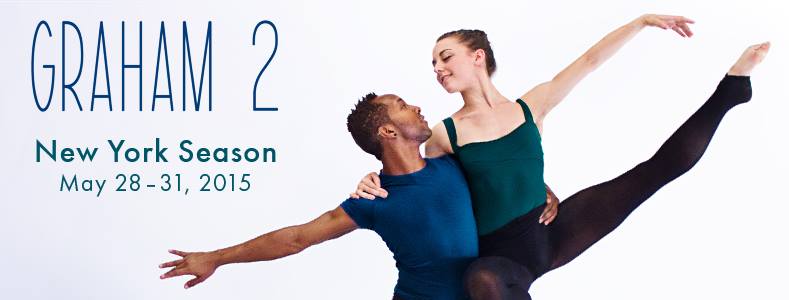
  • In Performance: GRAHAM 2

    11015477_10153139682186131_3644922198939538584_n

    Friday May 29th, 2015 – The young dancers of Graham 2 in performance at the Martha Graham Dance Company’s home space at Westbeth on Bethune Street in the West Village. It was rather stuffy in the theatre, and there were distractions of latecomers wandering in during the dancing. But it was a very impressive performance overall, and several of the participating dancers seemed poised to emerge as successful Graham artists in the seasons ahead.

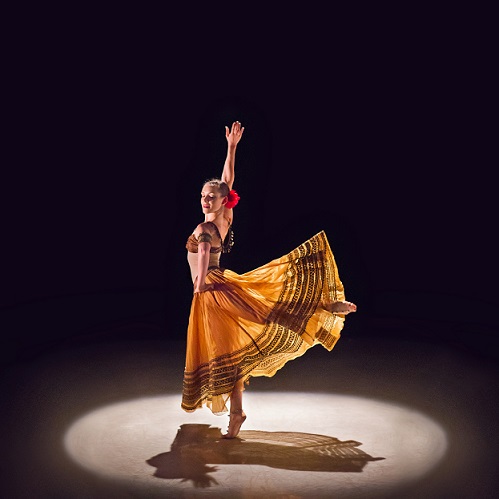
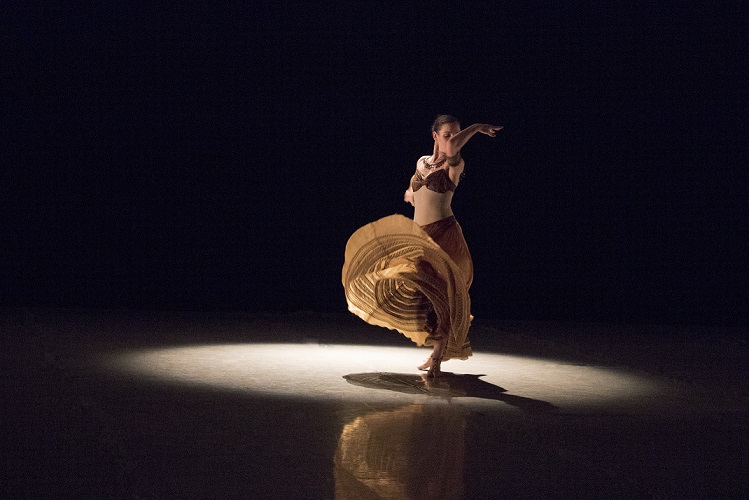
    Beginning in a circle of light, Dani Stringer performed the elegant solo à l’espagnole, SERENATA MORISCA. In a billowy skirt, wearing ankle bells and with a peony in her hair, Dani seemed eminently at home in this liltingly lovely dance, to atmospheric music by Mario Tarenghi. Premiered in 1916 (!) the solo looks absolutely fresh and au courante today. Two photos of Dani dancing the Serenata were offered to me – each captures her so well that I decided to include both:

    001 - _MG_1804

    Above, photo by Brigid Pierce

    002 - G215_SM1

    Above, photo by Antonia K Miranda

    HERETIC dates from 1929 and is one of Graham’s most powerful works. It alludes to the outcasts that are found in every culture, race, and religious affiliation. I’ve now seen it a few times and it’s a resonant work, with a stop-and-start score arranged by Charles de Sivy from an old Breton chanson

    002 - G215_H2

    Above: from HERETIC, with Jessica Sgambelluri and the Graham 2 ensemble; photo by Antonia K Miranda

    Jessica Sgambelluri gave a powerful performance as the scorned woman, constantly subjugated by the implacable sisterhood who move almost mechanically into positions of closing ranks around the hapless victim. At times they seem to be praying for the woman’s redemption, but they remain sternly rejecting, even threatening.

    001 - G215_H1

    Above: Ms. Sgambelluri and the ensemble in HERETIC; photo by Antonia K Miranda

    001 - G215_L1

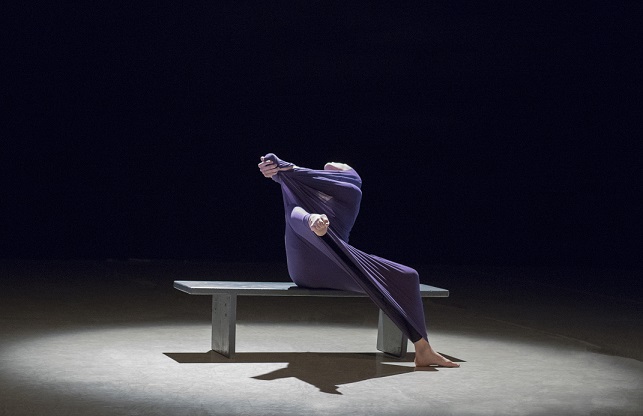
    Anja Zwetti (above, in Antonia K Miranda’s photo) took on the iconic Graham solo LAMENTATION and made a strong impression as she performed this ‘dance of sorrows’ seated on a bench and wrapped in a shroud of purple jersey. The Kodaly piano score gives the dancer her movement cues, and the lighting provides a shadow-dance that gives the work an added ghostliness. Ms. Zwetti held the audience in a state of keen focus throughout the solo. I had the feeling that several in the crowd were seeing LAMENTATION for the first time, and were deeply moved by the experience.

    002 - G215_L2

    Above: Anja Zwetti in LAMENTATION, photo by Antonia K Miranda.

    A selection from NIGHT CHANT followed, re-staged by the inimitable Virginie Mécène. This late Graham work (1988) is set to an exotic score by R Carlos Nikai and features a large ensemble of both male and female dancers who move in signature Graham motifs; it is an homage to the culture of the Native Americans, depicting the rituals of their community.

    001 - _MG_0258

    The women (above, photo by Brigid Pierce) appear variously in large or small movement units while the men, sexy in sleek tights, are given dynamic leaps and cartwheels. NIGHT CHANT features a central pas de deux couple: tonight we had the charismatic Dani Stinger and Alex Clayton giving a fluent performance. 

    003 - G2150178

    Above: the ensemble in TURNING POINT, photo by Antonia K Miranda

    In its world premiere performances, TURNING POINT by Blanca Li was a striking addition to the Graham 2 repertory. Thirteen dancers, clad in black trousers, first appear standing in place; they remain on their marks as individual solos, disconnected duets, and mini ensembles spring up almost randomly. They fall and rise in various combinations, and then there’s a walkabout before they re-group. They disappear and re-enter in a diagonal, with more floor time and passages of gestural language. Suddenly the dancers rush about the space; a female duet ensues, and then a female trio takes up a counter-dance. Silence falls, and the full ensemble appear in a cluster swaying gently as the light fades.

    Tao Guttierez’s wonderful score shows us a contemporary composer unafraid of melodic appeal; the dancers did a great job with this piece, which afforded many individual opportunities. I hope to have a chance to see TURNING POINT again.

    001_MG_0497

    Above: Jessica Sgambelluri in TURNING POINT; photo by Brigid Pierce.

    002_MG_0599

    Above: Stylianos Kefalas in TURNING POINT; photo by Brigid Pierce

    Following the interval, more Graham classics to be savoured, beginning with the 1936 all-female ensemble work STEPS IN THE STREET, the central section of Graham’s visionary anti-war trilogy CHRONICLE.

    002_MG_1790

    Dani Stinger (above, photo by Brigid Pierce) led the ensemble with an impressive sense of mission…

    001_MG_1757

    …while the ensemble (above, Brigid Pierce photo) moved compellingly thru the stylized demands the choreography places on them. My hope for these young dancers – both the women and the men – is that they will be instilled not only with Graham’s dance technique but also with her work ethic and philosophy of life.

    Anne Souder appeared next in the signature green-black-white-yellow dress that says: SATYRIC FESTIVAL SONG. This is Graham at her most witty, and Ms. Souder did an excellent job of it, with her quirky leaps, wiggles, and sudden posed stops; her hair also became part of her performance. I unfortunately don’t have a photo of Anne Souder in this solo but moments later she was back onstage for DIVERSION OF ANGELS and here she shone ever-brighter.

    001_MG_1248

    Above: Anne Souder in DIVERSION OF ANGELS; photo by Brigid Pierce

    In the concluding DIVERSION OF ANGELS (1948, to a Norman Dello Joio score), Ms. Souder displayed a soaring extension and rock-steady balances, along with a stage-hungry aspect that gave each moment of her performance an inspiring glow. The dancing by everyone, in fact, was really impressive. The men gave their passages a high-energy verve – will they make the leap to the top Graham echelon? Let’s hope so, because the courage and conviction are there: in addition to Alex Clayton, we had Alessio Crognale, Antonio Cangiano, and Stylianos Kefalas all doing handsome work. Sharing the spotlight with Ms. Souder in the ballet’s principal female roles were Anja Zwetti (lyrical in White) and Vera Paganin (lively in Yellow). Sarita Apel and Linda Bombelli joined Jessica Sgambelluri and Dani Stinger for some fine dancing in the supporting female quartet.

    Lovely to see Graham luminaries Natasha Diamond-Walker and Lorenzo Pagano among the crowd, and my special thanks to Janet Stapleton for arranging things and for sending me the production photos with perfect timing.

  • Hadelich/Honeck @ The NY Philharmonic

    Hadelich

    Above: violinist Augustin Hadelich

    Thursday May 28th, 2015 – Earlier this season, Dmitry and I heard Augustin Hadelich give a memorable performance of the Samuel Barber’s violin concerto at Carnegie Hall. I was keen to hear the violinist again, and tonight the opportunity came with his appearance at Avery Fisher Hall with The New York Philharmonic playing Mozart’s “Turkish” concerto. Manfred Honeck was on the podium, opening the evening with the FLEDERMAUS overture; following the interval, we had Brahms’ 4th symphony.

    The tuneful FLEDERMAUS overture was given a brisk, opulent rendition by the Philharmonic; Maestro Honeck gave this infectious music a vibrant sway, and Liang Wang’s oboe solo was a highlight. Toe-tapping and nodding in three-quarter time seized the audience, an inevitability whenever this overture is played.

    Mozart’s 5th violin concerto (K. 219) is popularly referred to as “the Turkish” though there’s little feeling of the exotic in the music until near the end of the final movement. Mr. Hadelich, who I feels ranks very high among today’s top violinists for sheer beauty of tone, made his mark immediately when the opening Allegro aperto movement is surprisingly interrupted for a radiant adagio theme for the soloist. In the slow movement – the Adagio proper – the violinist was at his most persuasively lyrical, his warmth of tone and innate sense of the phrasing giving enormous pleasure. The final movement seems pretty much a standard rondo until Mozart suddenly tosses in a sustained passage of witty “Turkish” music that he used so charmingly in The Abduction from the Seraglio. After this diversion, a minuet sweeps graciously by and the concerto ends gently.

    There’s a cadenza near the end of each of the concerto’s three movements, and as there are no ‘official’ versions for these miniature showpieces, Mr. Hadelich composed his own and they ideally showcased both his dulcet tone and his nimble technique.

    A warm reception from the audience drew an encore from the violinist: a staggeringly virtuosic Paganini piece with slithering mile-a-minute scale passages expertly set forth by Mr. Hadelich. The audience listened in awestruck silence to this coloratura display, then erupted in cheers; the soloist was called out twice to a standing ovation, which he so thoroughly merited. 

    Following the interval, Maestro Honeck and the orchestra treated us to a sonorous Brahms 4th. This symphony, full of inspiring melodies, sounded particularly plush tonight. The composer himself conducted the 1885 premiere of this, his last symphony, and since then it has stood among the great musical masterworks of all time…and it certainly seemed so tonight. Though sometimes described as ‘tragic’, the fourth symphony prompted Clara Schumann to write to Brahms with this summation: “It is as though one lay in Springtime among the blossoming flowers, and joy and sorrow filled one’s soul in turn.” That is exactly how I felt listening to it this evening.