Author: Philip Gardner

  • Season Finale: Score Desk for BALLO IN MASCHERA

    -hvorostovsky-radvanovsky

    Above: Dmitry Hvorostovsky and Sondra Radvanovsky

    Tuesday April 28th, 2015 – For my final Met performance of the current season, Verdi’s BALLO IN MASCHERA with probably the strongest overall cast of any opera produced at the Met this season. I felt no need to see the Met’s mixed-bag, neither-here-nor-there production again, so I was back at my score desk. Of the twenty-plus performances I attended at the Met this season, most were experienced from score desks; there is less and less of a need to actually see what it happening onstage, so why spend the money on a ‘room with a view’? And besides, I hardly ever stay to the end of anything thanks to the slow agony of the Gelb-length intermissions. Tonight, though, my two amusing friends Adi and Craig helped make the long breaks somewhat more tolerable.

    Tonight’s audience was one of the largest I’ve seen at the opera all season. The Met’s always been a ‘singers house’; the box office is voice-driven and has been since the days of de Reszke and Caruso. There was Flagstad, and Birgit and Franco; and there was Pav, and now there’s Netrebko and Kaufmann. People come for the singing because that’s what opera is all about.

    The evening began with an announcement that James Levine would be replaced on the podium by John Keenan. This may have been a rather last-minute decision since Levine’s special wheelchair platform was in place. Keenan is a very fine Wagner conductor, but in the Italian repertoire Joseph Colaneri would be my choice if Levine is ailing. Much of Act I tonight had an unkempt quality; the singers seemed to want different tempi than Keenan was offering them, and they tended to speed ahead, leaving the orchestra to catch up.

    Piotr Beczala – superb in IOLANTA earlier in the season – sounded a bit tired in Act I. His opening aria was not smooth and the climactic top A-sharp was tight and veered above pitch. He began to settle in vocally at Ulrica’s, though the (written) low notes in “Di tu se fedele” were clumsily handled – no one would have cared if he’d sung them up an octave. By the time he reached the great love duet, Beczala was sounding much more like his usual self, and his “Non sai tu che se l’anima mia” was particularly fine. Spurred on by his resplendent soprano, the Polish tenor invested the rest of the duet with vibrant, passionate singing.

    As Ulrica, Dolora Zajick was exciting: the voice has its familiar amplitude and earthy chest notes intact and she also sang some beautiful piani, observing Verdi’s markings. It’s not her fault that the production idiotically calls for amplification of her deep call for “Silenzio!” at the end of her aria. Dolora’s chest tones don’t need artificial enhancement.

    Heidi Stober was a serviceable Oscar; her highest notes could take on a brassy edge and overall she lacked vocal charm. Memories of Reri Grist, Roberta Peters, Judith Blegen, Lyubov Petrova, and Kathleen Kim kept getting in my ear, perhaps unfairly.

    Dmitry Hvorostovsky as Count Anckarström was in splendid voice from note one, and his opening aria “Alla vita che t’arride” was beautifully phrased with a suave legato, the cadenza rising up to a majestically sustained high note. In the scene at the gallows (or rather – as this production places it – “in an abandoned warehouse…”) the baritone was vividly involved, first as a loyal friend urging his king to flee and later as the shamed, betrayed husband.

    Sondra Radvanovsky, who in 2013 gave us a truly impressive Norma at The Met, was – like the baritone – on top form. With a voice utterly distinctive and unlike any other, and with the seemingly innate ability to find the emotional core of any role she takes on, Radvanovsky has a quality of vocal glamour that makes her undoubtedly the most exciting soprano before the public today. What makes her all the more captivating is that, if a random note has a passing huskiness or isn’t quite sounding as she wants it to, she’s able to make pinpoint adjustments and forge ahead. This makes her singing interesting and keeps us on high alert, wondering what she’ll do next. Thus she generates a kind of anticipatory excitement that is rare these days.

    Launching Amelia’s “Consentimi o signore’ in the Act I trio, Sondra shows off the Verdian line of which she alone today seems true mistress. When we next meet her, she is out on her terrified search for the magical herb. Unfurling the grand recitative “Ecco l’orrido campo…” with instinctive dramatic accents, she draws us into Amelia’s plight. The great aria that follows is a marvel of expressiveness (though I do wish she would eliminate the little simpering whimpers during the orchestral bridge…a pointless touch of verismo); and then terror seizes her and she goes momentarily mad before calming herself with the great prayerful ascent to the high-C. The ensuing cadenza was both highly emotional and superbly voiced.

    In the love duet, with Beczala now vocally aflame, Sondra gave some of her most incredibly nuanced, sustained singing at “Ma tu, nobile…”- astounding control –  before the two singers sailed on to the impetuous release of the duet’s celebratory finale and ended on a joint high-C.

    Amelia’s husband unexpectedly appears to warn the king that his enemies are lurking; after Gustavo has fled (has Sondra ever contemplated taking a high-D at the end of the trio here? I’ve heard it done…), soprano and baritone kept the excitement level at fever pitch during the scene with the conspirators: page after page of Verdian drama marvelously voiced, ending with a rich high B-flat from the soprano as she is hauled off to be punished.

    I hate the break in continuity here: ideally we would follow the couple home and the intensity level would suffer no letdown; instead we have another over-long intermission.

    But the mood was quickly re-established when the curtain next rose: Hvorostovsky thundering and growling while Radvanovsky pleads for mercy. Now the evening reached a peak of vocal splendour as the soprano sang her wrenchingly poignant plea “Morro, ma prima in grazia…” Displaying a fascinating command of vocal colour and of dynamics that ranged from ravishing piani to gleaming forte, the soprano was in her greatest glory here, with a spectacular cadenza launched from a sublime piano C-flat before plunging into the heartfelt depths and resolving in a ravishingly sustained note of despair.

    Hvorostovsky then seized the stage. In one of Verdi’s most thrilling soliloquies, the character moves from fury to heartbreak. After the snarling anger of “Eri tu”, Dima came to the heart of the matter: using his peerless legato and vast palette of dynamic shadings, he made “O dolcezze perdute, o memorie…”  so affecting in its tragic lyricism before moving to a state of resignation and finishing on a gorgeously sustained final note. In the scene of the drawing of lots, Hvorostovsky capped his triumph with an exultant “Il mio nome! O giustizia del fato!” – “My name! O the justice of fate: revenge shall be mine!” His revenge will bring only remorse. 

    We left after this scene, taking with us the fresh memory of these two great singers – Radvanovsky and Hvorostovsky – having shown us why opera remains a vital force in our lives.  

    Metropolitan Opera House
    April 28, 2015

    UN BALLO IN MASCHERA
    Giuseppe Verdi

    Amelia.............................Sondra Radvanovsky
    Riccardo (Gustavo III).............Piotr Beczala
    Renato (Count Anckarström).........Dmitri Hvorostovsky
    Ulrica (Madame Ulrica Arvidsson)...Dolora Zajick
    Oscar..............................Heidi Stober
    Samuel (Count Ribbing).............Keith Miller
    Tom (Count Horn)...................David Crawford
    Silvano (Cristiano)................Trevor Scheunemann
    Judge..............................Mark Schowalter
    Servant............................Scott Scully

    Conductor..........................John Keenan

  • Führerbunker

    Holocaust_Memorial_large

    Above: the Berlin Holocaust Memorial

    On Thursday April 30th, 2015, the 70th anniversary of the death of Adolf Hitler will be marked. On that date in 1945, with the Red Army only blocks from his bunker underneath the Reich Chancellery, Hitler and his wife Eva Braun committed suicide.

    On 16 January 1945, Hitler had moved into the Führerbunker, a secure underground haven of residential and office space from whence he continued to rule Germany for three more months. He was joined by his senior staff, Martin Bormann, and later by Eva Braun. At some point Joseph Goebbels with his wife Magda and their six children also took up residence in the upper Vorbunker. Two or three dozen support, medical, and administrative staff were also living there. These included Hitler’s secretaries (among them Traudl Junge), a nurse named Erna Flegel, and telephonist Rochus Misch. Hitler’s dog Blondi was also one of the occupants of the underground bunker; Hitler could sometimes be seen strolling around the chancellery garden with Blondi.

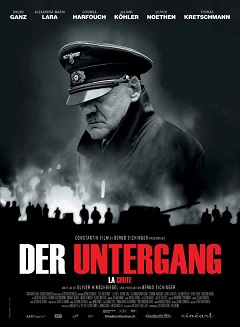
    This recent article in The Guardian tells of the lingering effects of Hitler’s reign of horror on the city of Berlin. Reading the story of course prompted me to watch, yet again, Oliver Hirschbiegel’s 2004 film ‘Der Untergang‘ (Downfall). 
    Der untergang

    In this powerful film, which I cannot recommend highly enough, the Swiss actor Bruno Ganz creates a portrait of Hitler in the final days of his life that has a harrowing feeling of reality. The dictator’s slow grasp of the fact that his Reich is doomed is detailed in scenes in which the character veers from cool efficiency and calculation to epic temper tantrums as he berates his generals and clings desperately to the belief that Germany can still prevail. Once that illusion has been shattered by incoming reports that the bunker is surrounded, Hitler becomes a ghost of himself. He marries Eva, has cyanide capsules tested on his beloved dog Blondi, and finally withdraws with his wife to the private room where they end their lives, having bid farewell to his faithful staff.

    In the film’s most chilling scene, Magda Goebbels (another uncannily ‘real’ characterization, from actress Corinna Harfouch) systematically murders her six children; she then sits down to a game of solitaire before going up to the Chancellery garden where her husband shoots her before taking his own life. This scene so powerfully depicts the sway Hitler held over his followers, creating a vast cult in which he was viewed as nothing less than a god. Following his death, many of the faithful shot themselves rather than face a world where Hitler was no longer.

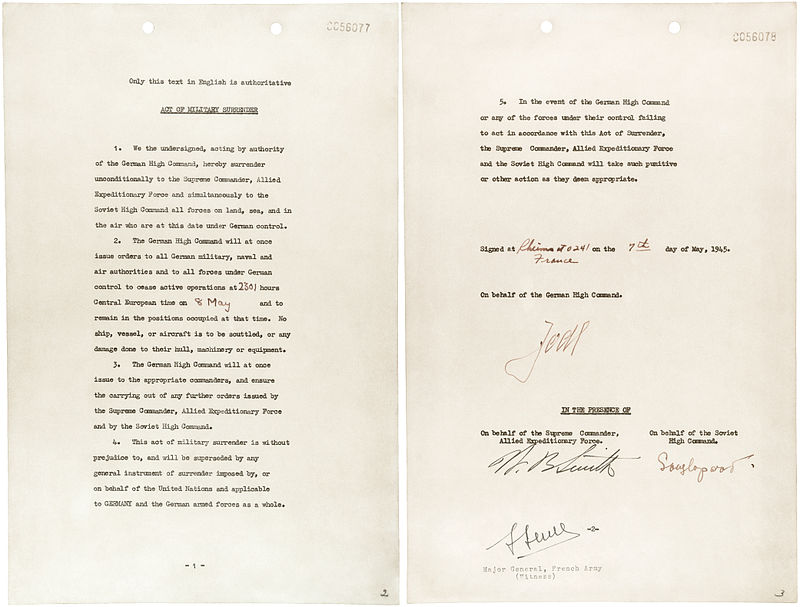
    German_instrument_of_surrender2

    Above: the instrument of surrender, which ended the war in Europe.

  • All-Brahms @ Chamber Music Society

    Cho-liang lin

    Above: violinist Cho-Liang Lin

    Friday April 24th, 2015 – With their customary flair for matching great music with great musicians, Chamber Music Society of Lincoln Center put together an inviting all-Brahms programme and gathered a world-class ensemble to perform it. It would be fair to say this concert was a highlight of the season to date, but then that seems to be true of each of the Society’s offerings.

    Cho-Liang Lin has always been a particular favorite of mine; he boasts a wonderful discography, with his Stravinsky/Prokofiev disc one I especially like. Tonight he joined pianist Wu Qian for the opening Brahms work: the Violin Sonata in A major Op. 100.  The piece opens with brief, hesitant violin interjections before sailing forth into melody. The second movement – an unusual setting in which Brahms seems to combine an andante and a scherzo (and it works!) – opens with a theme of tenderness and longing, so expressively played by Lin and Qian. Later, when more animated passages arise, their clarity of articulation was most welcome. The serene melody recurs, with major/minor shifts giving an affecting quality. A plucky little dance makes for a sprightly interlude before returning to the andante where the violin now lingers on high. An unexpected little coda gives the movement a brisk finish.

    The sonata’s final movement opens with a poignant theme, lovingly ‘voiced’ by Mr. Lin while Ms. Qian’s piano ripples gently. The music becomes more animated – each player alternately carries the melody by turns – but retains its lyrical heart and eschews virtuosity in favor of something more heartfelt. A friend of the composer said: “The whole sonata is one caress,” and that’s how it seemed this evening in such a beautifully dovetailed rendering from our two artists.

    The Trio in C minor for Piano, Violin, and Cello dates from the same year as the sonata, and follows it immediately in the composer’s catalog of works. Both pieces were written while Brahms was on vacation (a ‘working vacation’, obviously) at Lake Thun, Switzerland; he is thought to have been inspired by the scenery, which is understandable: 

    Lake thun
    The Piano Trio No. 3 was a favorite of Brahms’ dear friend Clara Schumann; she is said to have turned pages for Brahms when he played the work with his two friends – the cellist Robert Hausmann and violinist Joseph Joachim.
     
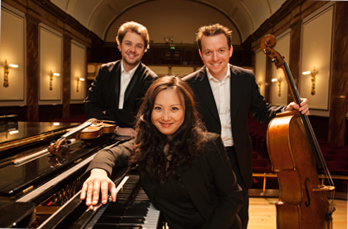
    This evening’s performance marked the Chamber Music Society debut of the Sitkovetsky Trio. Although  violinist Alexander Sitkovetsky has appeared with the Society before, tonight marked his first performance there with his established chamber music colleagues Richard Harwood (cello) and Wu Qian (piano). Their playing of the C-minor trio drew a well-deserved, vociferous reception from the Tully crowd.
    Concert_pic
     
    Above: The Sitkovetsky Trio
     
    In the Trio’s opening Allegro energico the three musicians got off to a grand start, the melodies pouring generously from the Brahmsian font. The blend of violin and cello was particularly enriching whilst at the Steinway, Wu Qian brought the same lyrical glow to the music that had made her performance in the sonata so impressive. A unison passage for violin and cello had a richly burnished quality, and all three players displayed both technical precision and real passion for the music.
     
    The charming and subtle second movement – Presto non assai finds the violin and cello plucking delicately; but beneath the lightness of touch there’s an inescapable quality of sadness. Then a feeling of gentle nostalgia develops in the Andante grazioso that follows, and the strings and piano trade expressive passages. This leads directly into the dynamic opening of the Allegro molto in which reflective phrases mingle with more extroverted ones; the trio concludes with in a rockingly positive mood.
     
    After the interval, we jumped back 20+ years in Brahms’ compositional career for the Sextet #2 in G Major (Opus 36); Mssrs Sitkovetsky and Harwood were joined by Cho-Liang Lin, violists Paul Neubauer and Richard O’Neill, and – fresh from his marvelous Carnegie Hall concerto debut – cellist Nicholas Canellakis. As the musicians settled in and did a bit of tuning, my level of anticipation shot up: we were in for something special.  

    When Brahms started work on his second sextet, it seems he was in a highly emotional state, having been secretly engaged to a young singer named Agathe von Siebold. Realizing that marriage was not for him, the composer sent her a brusque message terminating the engagement. But he managed to preserve the memory of his brief love in this second Sextet: the letters of Agathe’s name ‘spell’ a theme in the work’s first movement; he later wrote: “Here is where I tore myself free from my last love.”

    Paul Neubauer launched the performance with a gently rocking two-note motif in continuous repetition; this motif is later passed from one player to another, giving a continuity to the music. Outstanding beauty of tone from Nicholas Canellakis and plenty of viola magic from both Mr. Neubauer and the passionate Richard O’Neill as the melodies make the rounds of the ensemble, passing from artist to artist.

    The scherzo (rather restrained and thoughtful, actually) opens on high and features delicate plucking and curling drifts of melody. Halfway thru there’s a joyous dance which subsides into into rolling waves before its boisterous conclusion.

    Cho-Liang Lin’s playing had a searching quality in the opening of the Andante which wends its way at a stately pace thru rather doleful minor-key passages until there’s an unexpected lively outburst. Calm is restored, and now major and minor phrases alternate to lovely effect; Mr. Lin’s melodic arcs sailed sublimely over the finely-blended lower voices; the music becomes almost unbearably beautiful, leading to a peaceful coda. 

    In the final movement, a brief agitato introduction settles into a lilting flow with some lively interjections. The music cascades on: bold and sunny, its energy carries us forward with inescapable optimism. A perfect finale, and the Tully audience could scarcely wait til the bows were off the strings give the six superb players the standing ovation they so surely merited.

    The Repertory:

    The Participating Artists:

  • Huang/Schwizgebel @ The Morgan Library

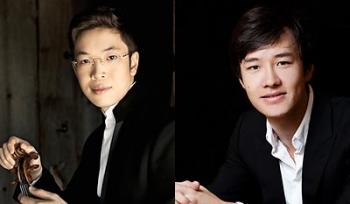
    Huangschwizgebel

    Wednesday April 22nd, 2015 – Violinist Paul Huang and pianist Louis Schwizgebel (above) in a noontime recital at the Morgan Library, presented by Young Concert Artists in collaboration with the Morgan Library and Museum.

    Earlier this year I heard Paul Huang playing in a Young Concert Artists Composers Series concert at Merkin Hall. His artistic maturity seemed remarkable in one so young. Shortly after that concert, it was announced that Paul was one of five recipients of an Avery Fisher Career Grant.

    Swiss-Chinese pianist Louis Schwizgebel won the Geneva International Music Competition at the age of seventeen, and two years later, he won the Young Concert Artists International Auditions in New York. In 2012 he was awarded the Arthur Rubenstein Prize in Piano at the Juilliard School, and in 2013 he was announced as a BBC New Generation Artist.

    Franz Schubert’s Rondo brilliant in B Minor, D. 895 (Op. 70) opened the programme, with both the musicians looking dapper in black suits with red silk handkerchiefs in their breast pockets. Gilder Lehrman Hall at The Morgan is a wonderful venue for chamber music, with its comfortable, steeply-raked seating and its fine acoustic which gives the music real immediacy. Displaying ‘Olde World’ warmth of tone and depth of sensitivity, the Huang/Schwizgebel duo gave an exhilarating performance of this demanding Schubert showpiece.

    Thematically rich, with an upward-leaping signature motif, the Rondo (composed 1826) showed the two young musicians in a fine rapport, mining both the dramatic and the virtuosic passages with flair. Shifts of key and pacing were astutely mastered, and Mr. Huang’s technical command was impressive. Incidentally, the manuscript score of this work is housed at The Morgan.

    Arvo Pärt’s Fratres is well-known to Gotham’s ballet lovers since it was used by Christopher Wheeldon for his 2003 ballet LITURGY at New York City Ballet. After a twitchy, nervous passage for solo violin, the piano makes an emphatic entrance. Thereafter we are taken on a musical/spiritual journey that veers from urgency to pensiveness, rises to a passionate cry to heaven, and develops into a soulful hymn. A repeated, rising theme for the violin seems to depict souls ascending to heaven before the work reaches its ethereal finish. Mssrs. Huang and Schwizgebel gave an engrossing performance of this piece which is surely among Pärt’s finest and most memorable compositions.

    Cesar Franck’s Sonata for Violin and Piano in A Major is so poignantly familiar; right from the start we are drawn into its melodic soundscape. Louis Schwizgebel’s playing of the first solo piano passage radiated romantic tenderness, and the piano introduction to the second movement was superbly played. Paul Huang brought intense beauty to each theme that Franck so generously gives to the violin; the clarity and expressiveness of his playing was something uplifting to experience.

    Responding to very warm applause from the large audience, Paul and Louis offered a heartfelt rendition of Robert Schumann’s Träumerei as an encore, thoughtfully dedicating it to Susan Wadsworth, the director of Young Concert Artists, and to everyone involved in the organization. The recital celebrated a beautiful Spring day in high style; I felt so fortunate to have been there.

  • American Symphony Orchestra’s MUSIC U

    Cd_cover460

    Sunday April 19th, 2015 – This note from the press release describes the inspiration for today’s programme, entitled ‘MUSIC U’, by the American Symphony Orchestra: “In a country without kings and courts, universities have served as the patrons for many of America’s greatest composers.” Leon Botstein and the ASO were joined by the Cornell University Glee Club & Chorus in a celebration of five Ivy League composers.

    RandallThompson480

    In 1940, Randall Thompson (above) who taught at Harvard and was director of the Curtis Institute, was commissioned to compose a choral work for the opening exercises of the new Berkshire Music Center at Tanglewood, to be performed by the entire student body. The composer offered a setting of the Alleluia. Distraught over the Nazi invasion of France, Thompson could not bring himself to compose a joyous fanfare. Instead, he produced this solemnly beautiful and introspective piece, inspired by the Biblical passage (Job 1:21): “The Lord gave and the Lord has taken away; blessed be the name of the Lord.”

    Performing a cappella under the direction of Robert Isaacs, the young singers from Cornell displayed a lovely vocal blend in the heavenly harmonies of this slow, lilting choral miniature. The gentle pace quickens somewhat near the work’s end, but falls back into calm with a very sustained final note that hung on the air.

    Parker

    After a rather long pause, the concert continued with the oldest work (late 19th century) on the programme: the cantata Dream-King and his Love by Horatio Parker (above), one-time Dean of Music at Yale. This cantata won first prize in its category in a competition judged by Dvořák himself. A fanciful romantic text tells the tale of a maiden visited in her dream by a kingly lover.

    The work is melody-filled and seems to echo some of the exotic works of Jules Massenet. From the lyrical opening (the harp is prominent) thru passages dance-like, rapturous, and triumphant by turns, the music opens out like a perfumed lotus blossom. The naturally youthful sound of tenor soloist Phillip Fargo fell pleasingly in the ear, and the singers from Cornell again gave of their best.

    Rochberg-George-01

    The Symphony No. 2 by George Rochberg (above), who ran the music department at the University of Pennsylvania, was the longest work on the programme. Composed in 1955-1956, this symphony today sounds like a generic work from an era when classical music was not quite sure what direction it was headed in. It’s a big-scale piece, one which seems to take itself very seriously. One can sense such influences as Prokofiev, Stravinsky and Schönberg in the writing, and the composer’s fine craftsmanship is never in doubt. Yet despite its rhythmic variety and interesting sonic textures – oboe and horns are well-employed – the piece seemed over-extended. Melody is pretty much banished – a promising duet passage for two violas evaporated after a few seconds – and although melody is not essential, it is inevitably gratifying. Maestro Botstein’s commitment to the work and the excellent playing of the ASO – many fleeting bits of solo work are strewn throughout the score – made as strong a case for the symphony as one could hope to hear.

    300h

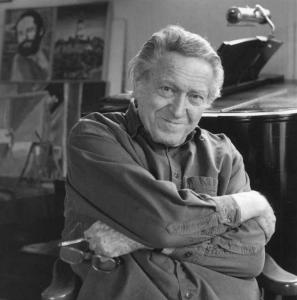
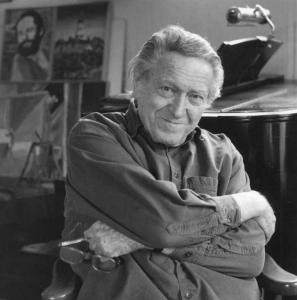
    Music for Cello and Orchestra by Harvard’s Leon Kirchner (above)…

    Nicholas-Canellakis

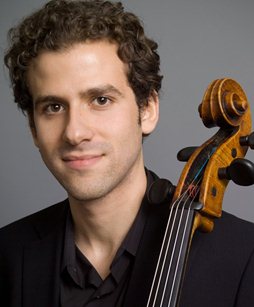
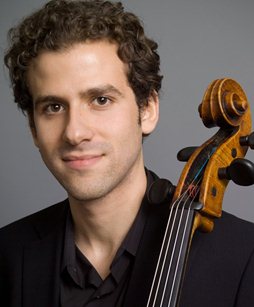
    …with soloist Nicholas Canellakis (above) opened the second half of the concert. The cellist is a frequent participant in Chamber Music Society of Lincoln Center‘s superb concerts.

    Today, Kirchner’s music seemed to me to have found what was missing from the Rochberg: a connection to the heart. Throughout the Kirchner, the solo cello gives his piece a sense of unity and purpose that – to my ears – the Rochberg lacks. Kirchner’s orchestration is colorful and dense, with excellent use of percussion, and the music sometimes takes on a cinematic quality. I love hearing a piano mixed into an orchestral ensemble work, and at the reference to TRISTAN UND ISOLDE, my friend Adi and I exchanged smiles.

    Mr. Canellakis was simply breathtaking right from the cello’s passionate opening statement. He was deeply involved in the music, moving seamlessly from a gleaming upper register to the soulful singing of his middle range. Capable of both redolent lyricism and energetic, jagged flourishes, Nicholas’s playing seemed so at home in the venerable Hall. The audience gave him lusty and well-deserved round of applause as he was called back to the stage after his exceptional performance.   

    Robertosierraheadshot

    The chorus then returned to the stage for the concert’s grand finale: the world premiere of Cantares by Roberto Sierra (above), which Cornell University commissioned for this concert in celebration of their 150th anniversary. In this panoramic work, the cultures of the African, Spanish, Native Peruvian, and Aztec peoples are entwined in vivid musical settings of texts dating back to the 16th and 17th centuries. The composer has re-imagined these invocations and narratives for the contemporary world; for this piece, the Cornell choristers leapt readily from Quechua to Spanish.

    A long sustained tone opens Cantares; then, emerging from dark turbulence, the chorus begins to ‘speak’. A trumpet call, a wandering xylophone, a celestial harp, an oddly ominous rattle: these are all heard as kozmic sound-clouds drift by. The music is mystical and – with the under-pacing of rhythmic chant – takes on an other-worldly feeling.

    The second movement evokes African ritual and that continent’s ancient connection to Cuba. The music seems to echo thru time in its heavenly, ecstatic vibrations. Somehow Chausson’s Poeme de l’amour et de la Mer came to mind.

    An orchestral interlude has the flutter of birdsong and a dense-jungle yet transparent appeal and leads into the final Suerte lamentosa, an epic of dueling cultures told from both the winners’ and the losers’ points of view.

    The work is perhaps a trifle too long, but the composer has been successful in drawing us to contemplate the oft-forgotten (or ignored) events surrounding the injection of Christianity into the Western Hemisphere. And musically it’s truly brilliant.

  • American Symphony Orchestra’s MUSIC U

    Cd_cover460

    Sunday April 19th, 2015 – This note from the press release describes the inspiration for today’s programme, entitled ‘MUSIC U’, by the American Symphony Orchestra: “In a country without kings and courts, universities have served as the patrons for many of America’s greatest composers.” Leon Botstein and the ASO were joined by the Cornell University Glee Club & Chorus in a celebration of five Ivy League composers.

    RandallThompson480

    In 1940, Randall Thompson (above) who taught at Harvard and was director of the Curtis Institute, was commissioned to compose a choral work for the opening exercises of the new Berkshire Music Center at Tanglewood, to be performed by the entire student body. The composer offered a setting of the Alleluia. Distraught over the Nazi invasion of France, Thompson could not bring himself to compose a joyous fanfare. Instead, he produced this solemnly beautiful and introspective piece, inspired by the Biblical passage (Job 1:21): “The Lord gave and the Lord has taken away; blessed be the name of the Lord.”

    Performing a cappella under the direction of Robert Isaacs, the young singers from Cornell displayed a lovely vocal blend in the heavenly harmonies of this slow, lilting choral miniature. The gentle pace quickens somewhat near the work’s end, but falls back into calm with a very sustained final note that hung on the air.

    Parker

    After a rather long pause, the concert continued with the oldest work (late 19th century) on the programme: the cantata Dream-King and his Love by Horatio Parker (above), one-time Dean of Music at Yale. This cantata won first prize in its category in a competition judged by Dvořák himself. A fanciful romantic text tells the tale of a maiden visited in her dream by a kingly lover.

    The work is melody-filled and seems to echo some of the exotic works of Jules Massenet. From the lyrical opening (the harp is prominent) thru passages dance-like, rapturous, and triumphant by turns, the music opens out like a perfumed lotus blossom. The naturally youthful sound of tenor soloist Phillip Fargo fell pleasingly in the ear, and the singers from Cornell again gave of their best.

    Rochberg-George-01

    The Symphony No. 2 by George Rochberg (above), who ran the music department at the University of Pennsylvania, was the longest work on the programme. Composed in 1955-1956, this symphony today sounds like a generic work from an era when classical music was not quite sure what direction it was headed in. It’s a big-scale piece, one which seems to take itself very seriously. One can sense such influences as Prokofiev, Stravinsky and Schönberg in the writing, and the composer’s fine craftsmanship is never in doubt. Yet despite its rhythmic variety and interesting sonic textures – oboe and horns are well-employed – the piece seemed over-extended. Melody is pretty much banished – a promising duet passage for two violas evaporated after a few seconds – and although melody is not essential, it is inevitably gratifying. Maestro Botstein’s commitment to the work and the excellent playing of the ASO – many fleeting bits of solo work are strewn throughout the score – made as strong a case for the symphony as one could hope to hear.

    300h

    Music for Cello and Orchestra by Harvard’s Leon Kirchner (above)…

    Nicholas-Canellakis

    …with soloist Nicholas Canellakis (above) opened the second half of the concert. The cellist is a frequent participant in Chamber Music Society of Lincoln Center‘s superb concerts.

    Today, Kirchner’s music seemed to me to have found what was missing from the Rochberg: a connection to the heart. Throughout the Kirchner, the solo cello gives his piece a sense of unity and purpose that – to my ears – the Rochberg lacks. Kirchner’s orchestration is colorful and dense, with excellent use of percussion, and the music sometimes takes on a cinematic quality. I love hearing a piano mixed into an orchestral ensemble work, and at the reference to TRISTAN UND ISOLDE, my friend Adi and I exchanged smiles.

    Mr. Canellakis was simply breathtaking right from the cello’s passionate opening statement. He was deeply involved in the music, moving seamlessly from a gleaming upper register to the soulful singing of his middle range. Capable of both redolent lyricism and energetic, jagged flourishes, Nicholas’s playing seemed so at home in the venerable Hall. The audience gave him lusty and well-deserved round of applause as he was called back to the stage after his exceptional performance.   

    Robertosierraheadshot

    The chorus then returned to the stage for the concert’s grand finale: the world premiere of Cantares by Roberto Sierra (above), which Cornell University commissioned for this concert in celebration of their 150th anniversary. In this panoramic work, the cultures of the African, Spanish, Native Peruvian, and Aztec peoples are entwined in vivid musical settings of texts dating back to the 16th and 17th centuries. The composer has re-imagined these invocations and narratives for the contemporary world; for this piece, the Cornell choristers leapt readily from Quechua to Spanish.

    A long sustained tone opens Cantares; then, emerging from dark turbulence, the chorus begins to ‘speak’. A trumpet call, a wandering xylophone, a celestial harp, an oddly ominous rattle: these are all heard as kozmic sound-clouds drift by. The music is mystical and – with the under-pacing of rhythmic chant – takes on an other-worldly feeling.

    The second movement evokes African ritual and that continent’s ancient connection to Cuba. The music seems to echo thru time in its heavenly, ecstatic vibrations. Somehow Chausson’s Poeme de l’amour et de la Mer came to mind.

    An orchestral interlude has the flutter of birdsong and a dense-jungle yet transparent appeal and leads into the final Suerte lamentosa, an epic of dueling cultures told from both the winners’ and the losers’ points of view.

    The work is perhaps a trifle too long, but the composer has been successful in drawing us to contemplate the oft-forgotten (or ignored) events surrounding the injection of Christianity into the Western Hemisphere. And musically it’s truly brilliant.

  • New Chamber Ballet: Four Works

    L1550484

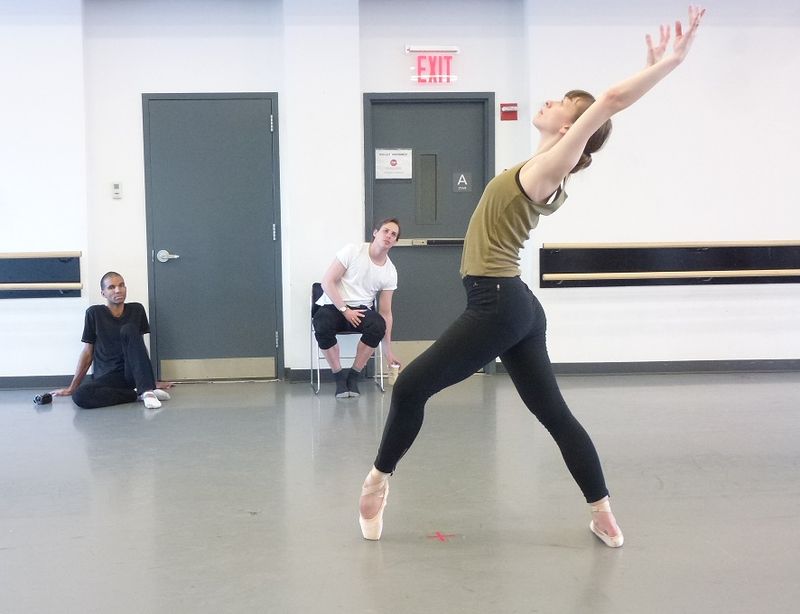
    Above: Elizabeth Brown of New Chamber Ballet rehearsing the solo Moments, observed by choreographers Miro Magloire and Constantine Baecher

    Saturday April 18th, 2015 – “Ballet is Woman,” said George Balanchine; and Miro Magloire‘s New Chamber Ballet seems to be living proof of it. Miro’s obvious delight and skill in choreographing for female dancers has resulted in a series of works which honor the ballerina tradition whilst at the same time pushing boundaries, especially in the realm same-sex partnering. Tonight, the customary New Chamber Ballet formula of women dancing in an up-close-and-personal setting to live music brought us works by both Miro and NCB‘s resident choreographer Constantine Baecher, including two world premieres.

    Now celebrating their tenth anniversary, New Chamber Ballet have always presented an ensemble of finely-trained ballerinas with vivid, individualized personalities. The current quartet maintains the high standard: these are women who are comfortable with having their audience literally within reach, able to dance with confidence and poise in an intimate setting. Their dancing is enhanced by the accomplished musicality of violinist Doori Na and pianist Melody Fader who are always ready, willing, and able to tackle whatever music Miro hands them – and that’s saying a great deal.

    Entangled, a quartet for on- and off-pointe dancers, is performed to Paganini’s Caprices expertly played by Doori Na. The girls, in Sarah Thea’s minty-green sheer costumes with a harem feeling, are paired off: two on pointe (Sarah Atkins and Traci Finch) and two in slippers (Elizabeth Brown and Amber Neff). 

    L1550289

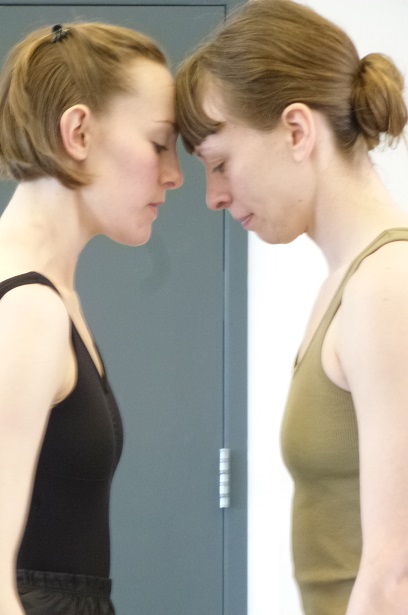
    The ballet opens with Amber and Elizabeth face to face (rehearsal image, above); they rush away from one another and then meet again – repeatedly – in an approach-avoidance sequence. Their dance becomes spastic; they struggle on the floor and there are shakes and shapes. Doori, the violinist, is meanwhile making fast and furious with the demanding Paganini score. The pointe couple appear: Sarah and Traci in stylized balletic poses with stretched arabesques and sculptural port de bras. The couples alternate; the soft-slipper girls have a shuffling little jig. As the adagio begins, the pointe pair lean into one another before they are left alone to a high violin shimmer. Innovative floor choreography follows. We half expect a faster final movement, but instead the ballet ends quietly.  

    Elizabeth Brown, a founding member of New Chamber Ballet, has been thru a serious injury episode and has come back in phenomenal physical condition and more expressive than ever. A unique dancer, Elizabeth performed Miro’s solo Moments to Salvatore Sciarrino’s Caprices 5,2, and 6. Doori Na plays the annoying (in a good way) and demanding score with touches of wit. The opening section is all about line and control, and Elizabeth here reveled in these beautiful, slow-to-still poses. The choreography becomes more animated, gestural, and space-filling, with a spirited circle of piqué turns. New Chamber Ballet audiences tend to be rather reserved, but lusty cheers went up after Moments.

    L1550245

    Above: Traci Finch and Amber Neff rehearsing Miro Magloire’s newest ballet, La Mandragore

    La Mandragore (The Mandrake) is a new duet by Miro set to Tristan Murail’s solo piano work of the same title. Melody Fader at the keyboard showed a particular affinity for this music which begins misterioso, becomes turbulent, then sinks back into eerie calm. Dancers Traci Finch and Amber Neff meet Miro’s complex partnering demands head-on; they are fearless, strong and supple as they wrap around one another, performing lifts and mutually supportive feats in an unusual mixture of power and intimacy. Miro pushes the two dancers to extremes and they respond with compelling assurance and grace.  

    The world premiere of NCB resident choreographer Constantine Baecher’s Two Tauri and A Tiger marked yet another success for Constantine, who has created several works for New Chamber Ballet over the years. Two Tauri opens with Elizabeth Brown rushing on to a stimulating Mozart theme played by Melody Fader; Elizabeth’s solo is questing and energetic. Traci Finch enters next, followed by Sarah Atkins, each dancing a restless and animated solo. The movement has a playful, windswept feeling with an aspect of childlike joy, as when Elizabeth and Traci join hands and spin mirthfully about. 

    The music pauses and we hear the dancers breathing; they re-group in silence, have a walkabout, and a bit more spinning. As Melody intones a more staid Mozart theme, the ballet becomes pensive. The girls circle around, holding hands and relying on counter-balance. This passage recalls Balanchine’s fondness for similar linkings, and also evokes Matisse’s La Danse. As the music animates, the dancers rush about and a pair will playfully drag the third as in a children’s game. This recedes into a more temperate passage with some stretching motifs. Overall, Two Tauri seems like a romping, good-natured piece; yet I feel there might be some underlying shadows, too. I’ll need to see it again to get a deeper sense if it. One thing for sure: the three dancers seemed to be genuinely having a good time dancing it.

    So nice to see Candice Thompson, Amy Brandt, Emery LeCrone, and Lauren Toole among the audience tonight.

    New Chamber Ballet will conclude their 10th anniversary season with performances on June 12th and 13th, 2015. Further details will be forthcoming.

  • Lydia Johnson Dance: Rehearsal Gallery

    L1550552

    Above: Katie Lohiya and Oliver Swan-Jackson of Lydia Johnson Dance

    Friday April 17th, 2015 – Lydia Johnson Dance are in rehearsal for their upcoming New York season; the performance dates are June 11th thru 13th, 2015 at Ailey Citigroup Theater. Tickets here. The programme will feature two world premieres: “What Counts” set to music by The Bad Plus, and an as-yet-untitled piece to music by Osvaldo Golijov and Marc Mellits. Last season’s “Barretts Mill Road: A Remembrance”, danced to Mozart, will return; and the evening includes a revival of “Untitled Bach” (2010) for ten dancers which is set to selections from Bach’s violin sonatas and partitas.

    Lydia’s choreography continues to impress as a unique fusion of ballet and contemporary dance; her intense focus on musicality has set her creations in high profile among the vast number of danceworks being made here in Gotham year after year. Her dancers seem constantly to find new depths of eloquence in performing these ballets which are essentially abstract but rooted in matters of the heart. Thus the dancing is never dryly technical but instead reverberates with evocations of the human spirit. 

    The Company’s ballet mistress Deborah Wingert had given company class prior to my arrival at the studio today; Deborah has also been engaged in coaching for the Company and is working closely with Lydia in molding a unity of stylistic expression for these dancers who come from diverse training backgrounds.

    Here are some images of the LJD dancers at work:

    L1550562

    Chazz McBride and Min-Seon Kim

    L1550572

    Grant Dettling and Sarah Pon

    L1550626

    Katie Lohiya

    L1550634

    Laura DiOrio, Blake Hennessy-York, Min Kim, Chazz McBride

    L1550641

    Chazz McBride, Blake Hennessy-York

    L1550649

    Chazz and Blake

    L1550933

    Laura DiOrio

    L1550847

    Blake Hennessy-York

    L1550896

    Oliver Swan-Jackson, Katie Lohiya

    L1550909

    Sarah Pon, Blake Hennessy-York

    So lovely to run into Lisa Iannicito McBride at Lydia’s studio today; Lisa has been a key member of LJD and several important works were created on her. She took time off to have a wonderful son; it was just great seeing her again!

    6a00d8341c4e3853ef016767d40943970b-800wi

    Here’s Lisa in Lydia’s CROSSINGS BY RIVER, a gorgeous female-ensemble work set to Golijov that I am dying to see again…photo by Kokyat.

  • Great Performers: Lisa Batiashvili/Paul Lewis

    Lisa Batiashvili

    Monday March 30th, 2015 – Violinist Lisa Batiashvili (above) joined pianist Paul Lewis for this recital at Alice Tully Hall, the second event of our Great Performers at Lincoln Center subscription series.  Sonatas by Schubert and Beethoven book-ended the programme, with some delicious treats in between.

    Ms. Batiashvili, who is artist-in-residence for the current New York Philharmonic season, is a slender, elegant beauty gowned in rose-pink. From the opening measures of the Schubert ‘Duo’ in A-major, she and Mr. Lewis formed an ideal alliance: both players are masters of subtlety, the violinist with her shining clarity of tone, the pianist capable of great delicacy as well as a sense of gentle urgency. Throughout the sonata’s opening Allegro moderato, their mutual musicality yielded an uncommonly lovely experience, drawing the large audience into Schubert’s world.

    In the exuberant charm of the Scherzo which follows, the two players mixed virtuosity with fleeting passages of ‘sung’ melody; then came the Andantino, with its poignant theme and gracious motif of trills where the artists lingered in music’s expressive delights. The final Allegro vivace blends declamation and lilt, carrying us along with its waltzing buoyancy.

    As a sort of mega-encore, Ms. Batiashvili and Mr. Lewis offered a vibrant performance of Schubert’s Rondo in B minor (“Rondo brillant”) which opens regally and proceeds to a blend of jaunty upward leaps, inviting melodies, and coloratura flights of fancy.

    An-Pianist-20Paul-20Lewis-20130214220256259727-300x0

    Paul Lewis (above, in a Pia Johnson photo)

    Following the interval, each artist took a solo turn. Mr. Lewis’s rendering of the Busoni arrangement of Bach’s Nun komm, der Heiden Heiland was profoundly beautiful in its grace and simplicity. Ms. Batiashvili played Telemann’s Fantaisie No. 4 in D major, its classic three-movement (fast-slow-fast) structure compressed into a five-minute time span, a miniature solo-concerto which was handsomely played.

    The Beethoven sonata No. 10, which closed the evening, begins gently with shimmering trills; a simple two-note motif later in the first movement has a hypnotic quality, then back to a trill-filled conclusion before we move on to the achingly gorgeous, sustained melodies of the Adagio espressivo: here Ms. Batiashvili and Mr. Lewis were at their most ravishing. There’s no pause as the Adagio yields immediately to the brief, playful Scherzo with both players spinning the music onward. The fourth movement, Poco allegretto, seems calm at first but there’s underlying tension building: you can sense an impending flood of energy and surely enough it bursts forth. Both players were on a high here, yet cunningly the composer draws back into a lulling, rather sentimental passage. What then seems like a race to the finish gets momentarily sidetracked again – Beethoven is playing with us – before the last sprint.

    Superb music-making in a most congenial space: we left Ms. Batiashvili and Mr. Lewis basking in the warmth of the audience’s cheers and applause. 

    The Program: 

    Schubert: Violin Sonata in A major

    Schubert: Rondo in B minor (“Rondo brillant”)

    Bach (arr. Busoni): Nun komm, der Heiden Heiland, for piano

    Telemann: Fantaisie No. 4 in D major, for solo violin

    Beethoven: Violin Sonata No. 10 in G major

  • Miro Magloire for CBC

    L1540856

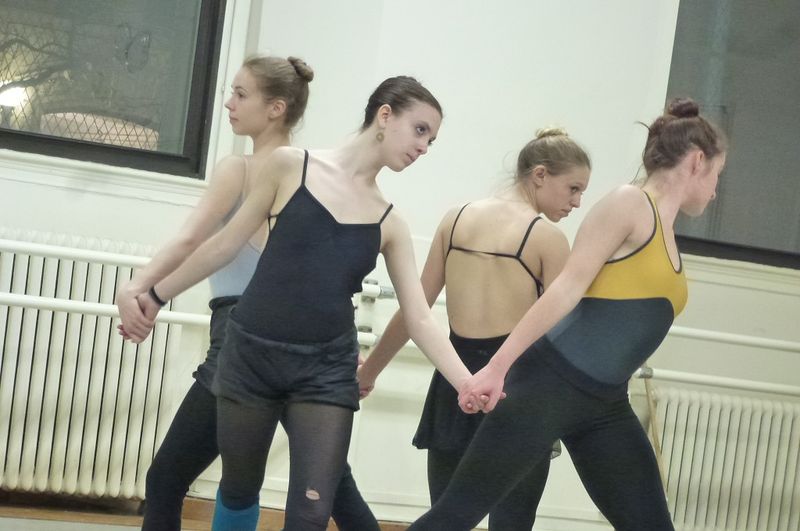
    Above: dancers from Columbia Ballet Collaborative rehearsing a new Miro Magloire ballet; the girls are Vanessa van Deusen, Shoshana Rosenfield, Alyssa Hubbard, and Morgan Caglianone

    Sunday March 29th, 2015 – This evening I stopped in at Barnard College where Miro Magloire, artistic director of New Chamber Ballet, is creating a new work for Columbia Ballet Collaborative‘s upcoming performances – a matinee and an evening show at The Miller Theater, Columbia University on Saturday April 18th, 2015.

    L1540721

    Above: violinist Pala Garcia, Miro Magloire

    The music Miro has selected is “tanz.tanz” for solo violin by composer Reiko Fueting, who is a professor at Manhattan School of Music; it will be played live by violinist Pala Garcia.

    L1540947

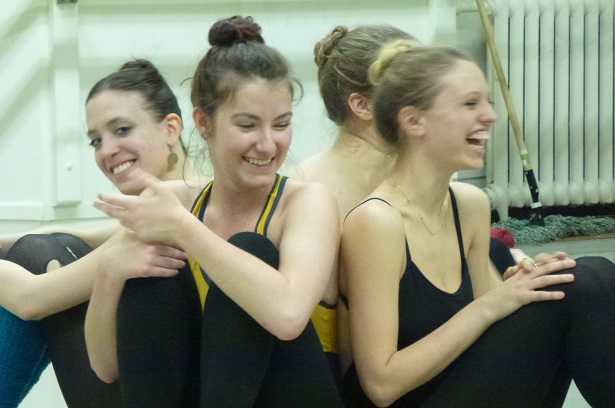
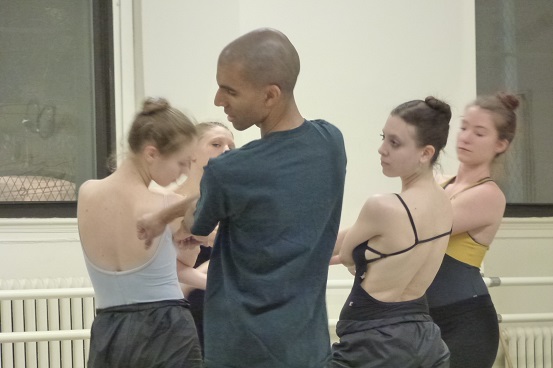
    A nice, relaxed atmosphere in the studio this evening; the dancers were experimenting with a seated back-to-back formation from which Miro wanted them to rise…

    L1540804

    …this produced some mirth from the girls, but eventually they figured out how to make it work. 

    L1540883

    There was also an attempt to cover their neighbor’s mouth or eyes by feeling: more levity. But again it soon was absorbed into the dance.

    L1540861

    Miro later had them draw into a Matisse-like circular formation, moving faster and faster.

    L1540730

    There are fleeting partnered passages (Morgan and Alyssa, above)…

    L1540931

    …and reflective moments where the girls sit, each in her own dreamy world (Vanessa, above).

    L1540880

    As the rehearsal was drawing to a close, Shoshana Rosenfield (above) breezed thru a beautiful solo passage, full of swift, lyrical turns.

    For the Spring 2015 season, Columbia Ballet Collaborative welcomes new ballets by five choreographers: Charles Askegard, former dancer with American Ballet Theatre and New York City Ballet and co-founder of Ballet Next; Roya Carreras, graduate of UC Irvine’s Claire Trevor School of the Arts and dancer with Danielle Russo Dance Company (NYC); Serena Mackool, senior at the School of General Studies and former dancer with Tulsa Ballet, Ballet San Antonio, and Proyectos en Movimiento; Miro Magloire, founder and artistic director of New Chamber Ballet; and Katya Vasilaky, Postdoctoral Earth Institute Research Fellow at Columbia University and former dancer with San Francisco Ballet. CBC is also proud to present selections from George Balanchine’s Who Cares?.

    Tickets will be $10 with a Columbia University ID, $15 with a non-Columbia University student ID, and $22 for general admission. They are available for purchase via these links: 

    3pm Show

    8pm Show