Author: Philip Gardner

  • At the Miller Theatre: Baroque Vanguard

    K_bezuidenhout_wide-b5b77ed093080035c7e24bf4f5b150b17823af5a-s40

    Saturday April 27th, 2013 – The brilliant South African harpsichordist Kristian Bezuidenhout (above, in a Marco Borggreve photo) teamed up with Ensemble Signal to present an intriguing programme at Columbia University’s Miller Theatre. The event had been on my calendar for months and it lived up to expectations in every way.

    Two hundred and sixty years separate the composition dates of the evening’s opening and closing works. In this fusion of olde and new, Mr. Bezuidenhout and the Ensemble’s conductor Brad Lubman shook hands across the centuries, commencing the performance with the wildly discordant and precursive opening statement of Jean-Fery Rebel‘s “Chaos” from LES ELEMENTS. The work, which dates from 1737, has a startling freshness, even when it subsides into a more expected Baroque feeling. Despite its forward-looking beginning, this piece also seems to look back to the late Renaissance and the composer explores all the musical facets with a keen imagination.

    Two of the sons of Johann Sebastian Bach were represented next by a pair of sinfonias, the first by Carl Philipp Emanuel Bach (in D major, composed in the 1770s) and the second by Wilhelm Friedemann Bach (in D minor, dating from the 1740s). In the first, a complement of wind players join the strings and keyboard: horns, flutes, oboe and bassoon; the flutes remain to play the second sinfonia as well. The music is all delightful and superbly rendered, yet the work of the father which followed the intermission showed that the sons never quite attained the miraculous level of Johann Sebastian’s perfection.

    The harpsichord concerto in D-minor (1738) found Mr. Bezuidenhout at his most elegant in the gently rippling cadenzas, while the musicians of the Ensemble gave full-toned and scrupulously musical support. The harpsichordist’s speed and accuracy were dazzling, and he played with a passion and intensity that drove out any notion of this music as being a dry technical exercise.

    The harpsichord then vanished and six players (violins, viola, cello and double bass) ranged themselves in a semi-circle to tackle Michael Gordon’s devilsihly delightful WEATHER ONE. Dating from 1997, this work was inspired by chaotic shifts in weather patterns; the aural wind machine starts cranking up in the bass range and soon all six musicians are bowing furiously thru the swirling motifs in a staggering, shifting skyscape of rhythmic and textural elements. As the twenty-minute work finally subsided into calm, the audience erupted in cheers for Mr. Lubman and his valiant players: this score seems a great test of both concentration and physical stamina for the musicians. The composer appeared onstage, embracing each of the players in turn. I was left to imagine what sort of dancework could be made to this fantastical piece; the counts alone would be a major challenge for the dancers.

    As the Bach concerto was being played, I was recalling my childhood wish to play the harpsichord. My mother had bought me a recording entitled ‘Said The Piano to The Harpsichord‘ and I played it til it wore out. I had been playing the piano by ear starting at a very young age, but once I heard this recording I started asking for a harpsichord; my parents had no idea of where or how to get one in our god-forsaken little town, but the sound of the instrument always brings back this memory. Amazingly, I found the ancient recording on YouTube.

    The repertory of tonight’s Baroque Vanguard concert:

    Rebel: Chaos from Les Elements
    C.P.E. Bach: Sinfonia in D Major, Wq 183
    W.F. Bach: Sinfonia in D minor, F. 65
    J.S. Bach: Concerto in D minor, BWV 1052
    Michael Gordon: Weather One

  • New York Choral Society: A SEA SYMPHONY

    Ship at sea

    Thursday April 25, 2013 – “Behold the sea!” is the ecstatic phrase intoned by the chorus at the start of Ralph Vaughan Williams’ epic A SEA SYMPHONY. This evening the New York Choral Society offered this masterpiece at Carnegie Hall, along with Beethoven’s CALM SEA AND PROSPEROUS VOYAGE.

    The Beethoven unfortunately went for naught this evening because the people seated behind us could not settle themselves during the marvelous hush of the work’s opening section; they continued to squirm and whisper throughout the 8-minute duration of the piece. Fortunately we were able to move further down our row to a quieter place for the Symphony.

    A SEA SYMPHONY, which premiered in 1910 (on Vaughan
    Williams’ 38th birthday; and he conducted the premiere himself),
    established the composer as a legitimate successor to Edward Elgar in
    the pantheon of British musical giants.

    There are four movements:

    I. A Song for All Seas, All Ships – Moderato maestoso
    II. On the Beach at Night, Alone – Largo sostenuto
    III. Scherzo: The Waves – Allegro brillante
    IV. The Explorers – Grave e molto adagio – Andante con moto

    In A Sea Symphony, Vaughan Williams evokes the days when Britain ruled the waves and her Empire spanned the planet. It is a sweepingly heroic pæan to the world’s oceans and sailors, the Walt Whitman texts summoning up visions of billowing sails and flags flying aloft: …”of dashing spray
    and the winds piping and blowing”.

    Tonight’s performance unfurled splendidly under David Hayes’ baton; the shining qualities of the Vaughan Williams score emerged through the finely-textured playing of the musicians and the rich harmonies of the choral writing. Chorus and orchestra have the symphony’s Scherzo all to themselves and delivered optimum music-making in this evocative passage.

    Actress Kathleen Turner, with her signature huskiness of voice, read the Whitman poems before each of the symphony’s four movements. Clad all in black and taking on a professorial aspect as she donned her eyeglasses, she was a lecturer whose stance and gestures took on a seasoned and theatrical expansiveness as the evening progressed.

    The raven-haired soprano Jennifer Forni appropriately chose a very pretty aquamarine gown for tonight’s concert; the singer, who recently debuted at The Met as the First Esquire in the new production of PARSIFAL, displayed an unusually rich quality in her lyric-soprano voice. She sang with clarity, warmth and an attractive upper register. Undoubtedly she’ll be asked for spinto roles thanks to the unexpected and appealing density of her timbre; I hope wisdom will prevail and that she will move carefully into the repertory, assuring herself of a sustained career. The soprano’s singing was well-matched by the baritone Jordan Shanahan; his performance managed to tread a fine line between boyish eagerness and a more mature sense of vocal dignity. His poetic rendering of “On the beach at night, alone” was a highlight of the evening. Mr. Shanahan’s vocal power and clarity were in ample evidence, and when the two singers joined in unison during the symphony’s final movement, the combined effect of their voices was particularly pleasing.

    NYCSchorus

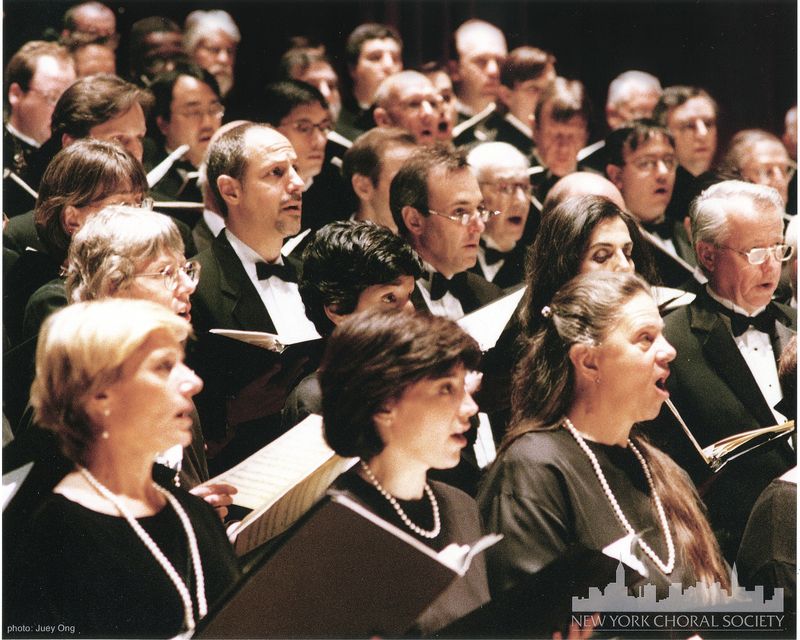
    Founded in 1958, the New York Choral Society have presented many of the masterworks in the choral genre, as well as offering eleven world premieres; and they have commissioned works by Paul
    Alan Levi, Morton Gould, Stephen Paulus, and Robert De Cormier. I love these lines from the Society’s mission statement:

    “Our passion is music.

    Our belief is that choral music lifts the human spirit. It is a language that spans borders and cultures.

    Our goal is inspiring and excellent performance.

    Our great hope is that future generations will share our passion for choral singing.”

    Dance-lovers who follow my blog will note with pleasure that the long listing of choral artists of the Society includes the name of the great ballerina Martine van Hamel. I’ll never forget a conversation I had with her one day when I was working at Tower; she was seeking some choral music on CD and explained to me that she’d been taking voice lessons and had joined the Society, pursuing a fresh aspect in her artistic career. I had to smile when I saw her name listed in the Playbill this evening, bringing back memories of that lovely encounter.

    The concert’s participating artists were:

    David Hayes, Music Director and Conductor

    Kathleen Turner, speaker

    Jennifer Forni, soprano
    Jordan Shanahan, baritone

    Chorus and orchestra of the Society

  • Watching Yuki @ Dixon Place

    549369_3885594357018_791351648_n

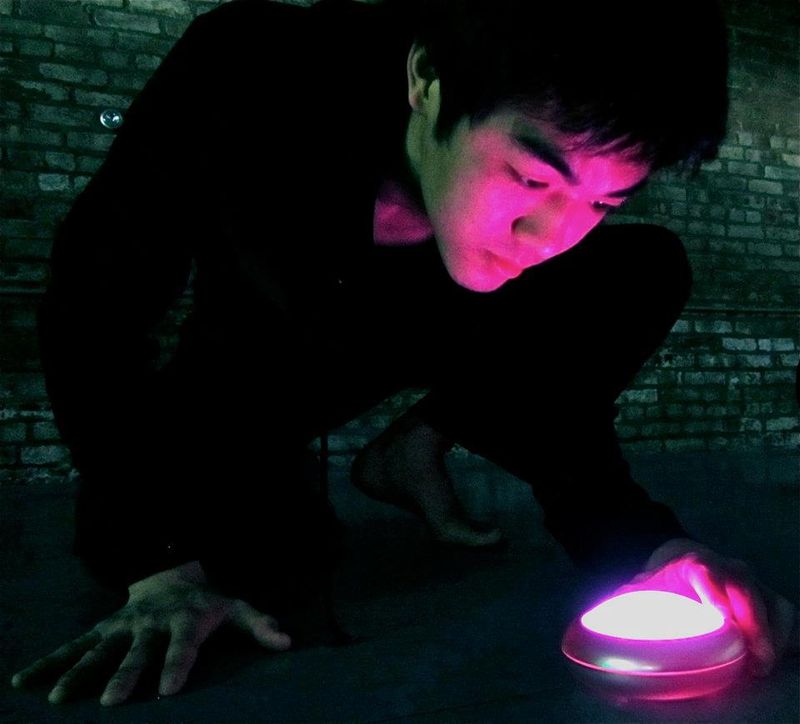
    Wednesday April 24th, 2013 – Certain dancers seem to grab our attention no matter what they are dancing. I’ve been following Yuki Ishiguro’s work here in New York City for a few seasons now and he’s a dancer I’ll often go out of my way to see. Tonight he was performing in a piece by Charly Wenzel in a mixed programme at Dixon Place; the evening was part of the NYC10 Festival.

    Yuki began his dance-life break-dancing in Japan. Since coming to New York City, he has danced with isadoraNow (where I first saw him), for Darcy Naganuma, Sunhwa Chung, and Emery LeCrone; he appeared in a witty work with Yoo and Dancers and he’s currently involved in Cori Marquis’ The Nines. Yuki performed his poignant solo ANOTHER WORLD with BalaSole Dance Company, and was photographed by Kokyat while rehearsing a duet with Kentaro Kikuchi.

    What makes Yuki so intrguing – beyond his style of movement – is his enigmatic quality. There’s no other dancer quite like him on the Gotham dance scene. Tonight he appeared in an excerpt from Charly Wenzel’s mysterious Light and Breath and Life and Thought, a work for small ensemble which incorporates hand-held lights and tiny mirror-discs sewn to the costumes which create starry patterns as they catch the light. Yuki danced beautifully in a role that featured elements of break-dancing, a form in which his combination of technical skills and artistry make him a stand-out. 

    My plan this evening was to go, watch the piece that Yuki was in, and leave. It turned out that Yuki was on next-to-last but it didn’t matter because I ended up enjoying the entire programme. Here is a brief commentary on each of the participating companies:

    The Beat Club – a tremendous and diverse large ensemble of gorgeous young people; they closed the evening with a fantastic performance; combining many genres, their energy was unstoppable in this brilliant and often auto-biographical work combining spoken narrative and infectious rhythms.   

    Charly Wenzel & Dancers
    – at once dark and luminous; a mystery-filled excerpt which makes me want to see more.

    NonaLee Dance Theatre
    – four dancers in tightly-hooded body suits dancing excellent moves, with appropriate-energy music. I liked this a lot.

    Sublime Dance Company
    – really inventive, very well-danced, and an interesting ‘script’ actually spoken by the dancers. Nice individual performances; I know dancers don’t like talking as a rule but they handled it very well. 

    SUNPROJECT – fantastic send-up of SWAN LAKE with four black-leather and boldly-sassy swans doing wildly provocative moves to Tchaikovsky; hugely entertaining, and I was smitten with Keiji Kubo.  

    Sunny Nova Dance
    – very fine choreography and super-good dancing, the music was a bit anonymous but the dancers carried it really well.

    MJM Dance
    – the most thought-provoking work, very well-executed; it’s the story of a tragic 1911 sweatshop fire in New York City that killed over 140 workers. Nice ensemble work from the all-female cast.

    DanceSpora
    – four distinctively beautiful women on pointe; really enjoyed this choreography and all the dancers, despite an innocuous musical score. The movement and individual personalities were very pleasing.

    Billy Bell’s Lunge Dance Collective – a powerful, sensuous and violent pas de deux danced magnificently by Billy Bell and McKenna Birmingham; everything here was engrossing except the music, the anonymity of which somewhat undemined the power of the piece. Nevertheless, a fascinating and disturbing work, and Billy Bell is tantalizing
    in his cruelty shaded with guilt while Ms Birmingham gives a courageous performance.

    Yoo and Dancers – a truly original work in which a young woman deconstructs and re-builds a male statue; live piano music enhanced the performances of Mary-Elizabeth Fenn and Sean Hatch, who carried out the choreographer’s idea with a lovely seriousness of intent.

    So, because of a single dancer – Yuki – I met a whole lot of new choreographers and dancers, including some I definitely want to see again. It was a really good evening.

  • Deborah Wingert @ Lydia Johnson Dance

    IMG_2986 copy

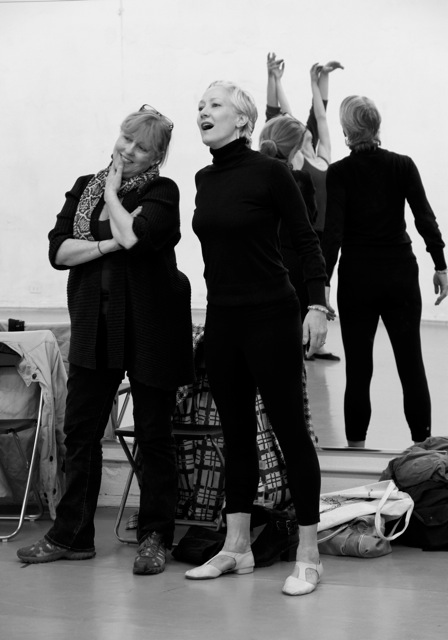
    Above: dancers Sarah Pon and Anthony Bocconi of Lydia Johnson Dance being coached by Deborah Wingert; photo by Melissa Bartucci

    Deborah Wingert, one of New York City’s foremost ballet teachers, has been working in the studio with the dancers of Lydia Johnson Dance, coaching them particularly in the nuances of partnering in the works that Lydia is preparing to show in her June 2013 performances.

    Deborah Wingert, a former New York City Ballet dancer and presently one of an elite group of stagers of Balanchine repertoire for the Balanchine Trust, is deeply involved as an instructor, choreographer and mentor for the young dancers of Manhattan Youth Ballet. Her depth of knowledge and her understanding of dance from both a technical and an emotional point of view make her a priceless treasure. 

    I asked photographer Melissa Bartucci to document Deborah’s first day in the studio with Lydia Johnson Dance; then, a week later, I was able to get to the studio myself and observe the process first- hand. It didn’t surprise me to find that Lydia and Deborah were very much on the same wave-length, since for both of them their work in dance stems from a spiritual connection with music and movement.

    It was hard to imagine that someone could make Lydia’s beautiful troupe of dancers look even better, but in the most subtle ways – and often in an expressive rather than a technical context – that is what Deborah was able to accomplish.

    Here are some of Melissa Bartucci’s images:

    IMG_2835 copy

    Lydia Johnson, Deborah Wingert

    IMG_2702 copy

    Dancers Kerry Shea and Eric Williams

    IMG_2908 copy

    Anthony Bocconi and Sarah Pon

    IMG_3007 copy

    Lydia observing Sarah and Anthony

    IMG_2957 copy

    Anthony Bocconi

    IMG_3048 copy

    The dance is in the details

    IMG_3057 copy

    Lydia, Kerry, Eric and Deborah

    IMG_3056 copy

    Eric and Kerry watched by Deborah and Lydia

    Lydia Johnson Dance will have their New York season on June 6th, 7th and 8th, 2013 at the Ailey Citigroup Theater. Works set to music of Gorecki, Golijov, Schubert and Bach will be performed. Details will be forthcoming.

  • Oratorio Society: Britten’s WAR REQUIEM

    White_dove.23095031_std

    Monday April 22nd, 2013 – The Oratorio Society of New York presented a performance of Benjamin Britten’s WAR REQUIEM at Carnegie Hall this evening. 

    One of the greatest and most meaningful choral works ever created, the WAR REQUIEM was commissioned for the re-dedication of Coventry Cathedral in 1962; the church had been almost totally destroyed by German bombs in 1940. Britten, a life-long pacifist, drew on the poetry of Wilfred Owen
    – who had been killed in 1918 (one week before the Armistice ended the war) at the age of 25 while fighting in France
    – as well as the texts of the Latin mass for the dead in setting his
    masterpiece. Though deeply spiritual in atmosphere, Britten intended the
    WAR REQUIEM to be a secular work.

    The Oratorio Society, one of New York City’s oldest cultural treasures, traces its history back to 1873. Founded by Leopold Damrosch, the Society presented their first concert on December 3,
    1873. One year later, on Christmas night, the Society began what has become an unbroken
    tradition of annual performances of Handel’s Messiah. In 1891, the Oratorio Society participated in the opening concert of what is now Carnegie Hall.

    The chorus and musicians of the Society under Kent Tritle’s baton tonight unfurled the sonic tapestry of Britten’s creation in a performance which greatly satisfied both the ear and the soul. In the composer’s structuring of the REQUIEM, the large chorus and orchestra – supporting a soprano soloist – sing the Latin texts of the mass while a chamber orchestra (led by David Rosenmeyer) accompanies the tenor and baritone soloists whose words come from the poetry of Wilfred Owen. From high up in a side balcony, the voices of children from the choir of Saint John The Divine (directed by Malcolm Merriweather) provide an angelic sound, accompanied by a small organ.

    Britten’s score, richly textured, amazes in its rhythmic and instrumental variety. Marked by off-kilter harmonies and shifting tonalities, the music is grand and theatrical one moment and poignantly stark and personal the next. The juxtaposition of public mourning and private grief – and of the liturgical and poetic texts – give the REQUIEM its unique resonance.

    Of the three vocal soloists, soprano Emalie Savoy (currently a Met Young Artist) revealed a sizeable lyric instrument with a blooming high register and a capacity to dominate the massed choral and orchestral forces. Tenor John Matthew Myers sang with a plaintive, clear and warm timbre while baritone Jesse Blumberg gave a wonderfully expressive rendering of the texts, his voice hauntingly coloured in his long final solo.

    At the close of the piece, all the participants were warmly lauded by the audience.

    “My subject is War, and the pity of War.
    The Poetry is in the pity…
    All a poet can do today is warn.” ~ Wilfred Owen

    Now, nearly a century after the poet’s warning, mankind continues to use war as a means of settling religious and ideological differences. This evening’s concert fell on Earth Day, reminding us of the fragility of the planet on which we all live. Only by turning away from gods and politics – those great dividing forces – can we hope to find a path into a safe and meaningful future. Like the poet’s two soldiers from opposing armies who find themselves dying side by side in a ditch far from their homes as the REQUIEM draws to a close, we must learn to embrace our common humanity before it’s too late.

    The evening’s participating artists will were:

    Kent Tritle, conductor
    David Rosenmeyer, chamber orchestra conductor
    Emalie Savoy, soprano
    John Matthew Myers, tenor
    Jesse Blumberg, baritone
    Choristers of the Cathedral of St. John the Divine,
    Malcolm Merriweather, conductor
    Chorus and Orchestra of the Society 

  • Ballet Hispanico @ The Joyce

    Jardi 2

    Above: Min-Tzu Li and Jamal Rashann Callender of Ballet Hispanico in Nacho Duato’s JARDI TANCAT. Photo by Jeaux McCormick.

    Sunday April 21, 2013 matinee – A recent visit to a Ballet Hispanico rehearsal was an ideal introduction for me to this vivid and delightful Company. Today at The Joyce I got to see them in full regalia: lights, costumes, the works. It was an exhilirating afternoon.

    Nacho Duato’s JARDI TANCAT finds its roots in folk tales from Catalonia, transformed into songs sung by Spanish singer Maria del Mar Bonet. The ballet opens in silence with six dancers in a patch of sunlight on a darkened plain; they are simple countryfolk who work the barren land,
    praying to God for the rain that does not come:

    “Water, we have asked for water

    And You, Oh Lord, You gave us wind

    And You turn Your back on us

    As though You will not listen to us”

    As the music begins, the sun brightens further and the choreographer presents us with passages of ensemble work in which the dancers capture the spirit of the land and the longing for relief from the hardships of their lives. Despite the bleakness of their daily labours, they seem to find a quiet joy in their sense of community. 

    In three stunningly beautiful duets, Duato extends the art of partnering in fresh ways and the Ballet Hispanico dancers respond to his vision with clarity and passion. The three couples today were: Melissa Fernandez with Donald Borror, Martina Calcagno with Mario Ismael Espinoza, and Min-Tzu Li with Jamal Rashann Callender. JARDI TANCAT is a spell-binding work, holding the audience in a keenly attentive state. The moment it ended I was ready to watch it again: and how often can we say that of a dancework?

    Vitrola

    Above: from TANGO VITROLA, photo by Paula Lobo. Click on the image to enlarge.

    An old gramophone sits illuminated on a high pedastal at the back of the stage as Donald Borror, his dorsal muscles expressive in the golden light, dances the opening solo of TANGO VITROLA. This magical tango-ballet unfolds against a sonic tapestry of scratchy old 78s; among the songs from the 1920s are “Rosendo”
    and “La Cumparista” by Orquesta Típica Criolla de Vincente Creco; and
    “El Llorón,” “Pena Mulata” and “El Porteñito” by Roberto Firpo.

    Magnificently lit by Joshua Preston, the dancers – the women in slinky black frocks and stiletto heels and the men bare-chested in black trousers and wearing fedoras – weave thru choreographer Alejandro Cervera’s intoxicatingly seductive patterns, periodically retreating to watch the others dance from rows of cafe chairs at either side of the stage. Desire and provocation tingle in the air of this dreamlike nightclub where the sexy atmosphere is over-laid with the almost formal courting rituals of the tango. Attitude is all as the dancers revel in their own attractiveness.

    Nube blanco

    Above: from NUBE BLANCO, photo by Rosalie O’Connor

    Theatrical elements come into play for the final NUBE BLANCO; again Mr. Preston’s lighting is a vital factor in this work set by choreographer Annabelle Lopez Ochoa to recordings of Maria Dolores Pradera. The dancers, all in bright red shoes, are called upon to act and vocalize along with executing the earthy moves, hand-clapping and foot-stomping culled from the flamenco vocabulary. Meanwhile an allusion to ballet comes in the fluffy white tutus worn by the women. A particularly riotous male quartet (“uno! dos! tres! cuatro!”) clearly caught the audience’s fancy, as did a charming mimetic vignette by Mario Ismael Espinoza, one of the Gotham dance scene’s sexiest guys. In the end the dancers stagger in, each wearing one shoe with the other foot bare; one of the girls has put on all the white tutus at once, tramsforming herself into a giant animated snowball. Her final arabesque, foot pointing to heaven, gave NUBE BLANCO its concluding mirthful image. As the dancers stepped out for their bows, I found myself whooping and screaming along with the rest of the crowd.

    120416_bhispanico_08971

    Above: Mario Ismael Espinoza in NUBE BLANCO, photo by Rosalie O’Connor

    An absorbing, sexy and vastly pleasing afternoon of dance. Ballet Hispanico continue their season at The Joyce for another week: performance and ticket information here.

    I give Ballet Hispanico six stars out of a possible five: go, and be seduced.

  • Wagner in Spain

    315687_10151564040474941_234279829_n

    My beautiful soprano-friend Erika Wueschner is currently in Barcelona singing Freia in DAS RHEINGOLD at the Gran Teatre del Liceu. In this production photo Erika is with the Japanese mezzo-soprano Mihoko Fujimura, who is singing Fricka. More details here. Watch the finale of the opera here.

  • Temptation


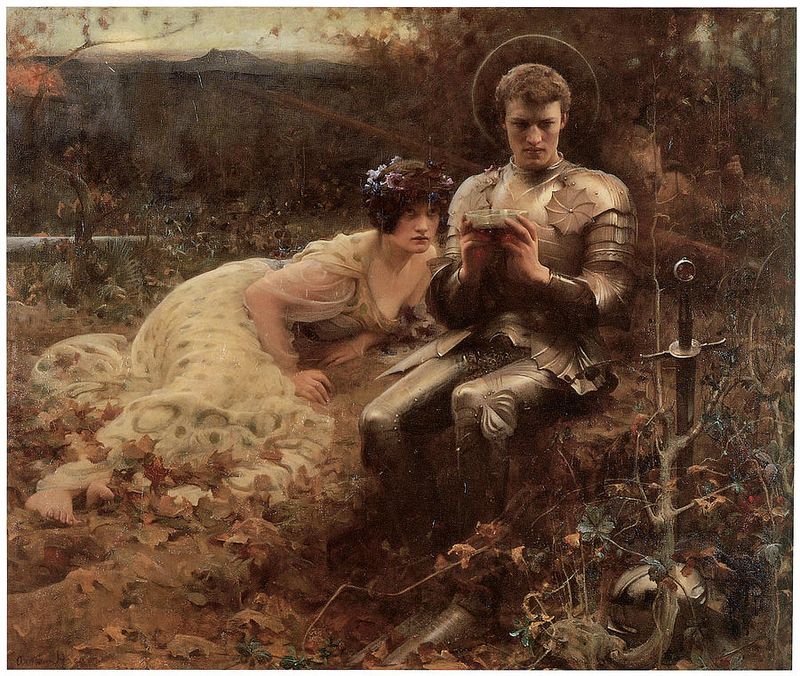
    Parsifal

    The Temptation of Sir Percival

    Arthur Hacker/1894

  • Bella


    Bella-in-mourillon-1926

    Bella in Mourillon

    Marc Chagall/1926

  • Rehearsal: Zvi @ Steps Repertory Ensemble

    L1080268

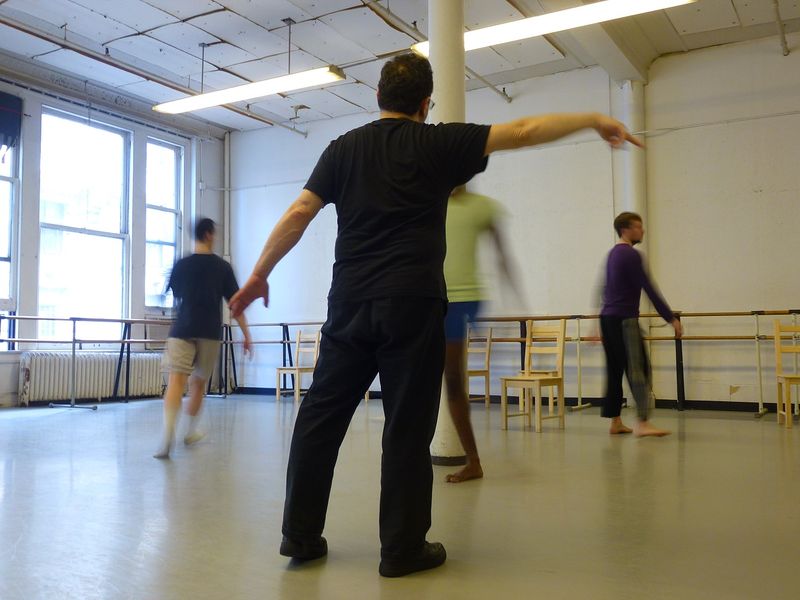
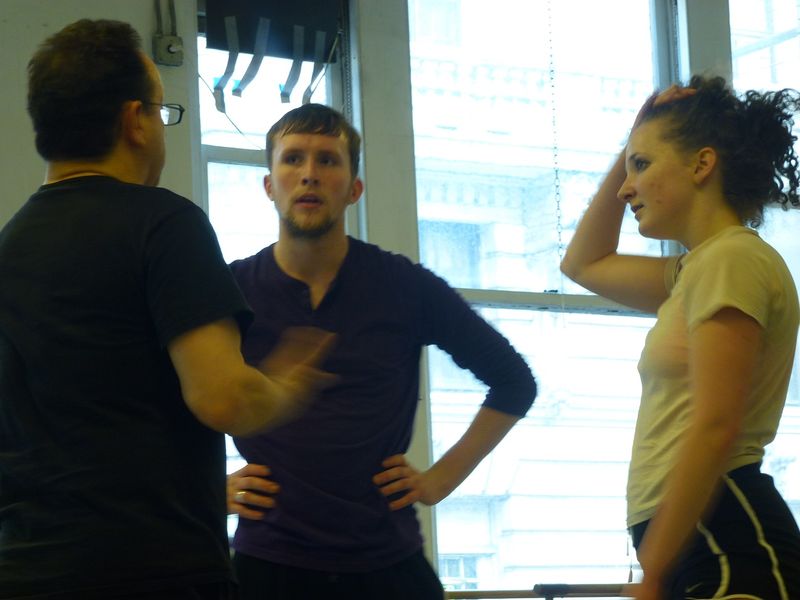
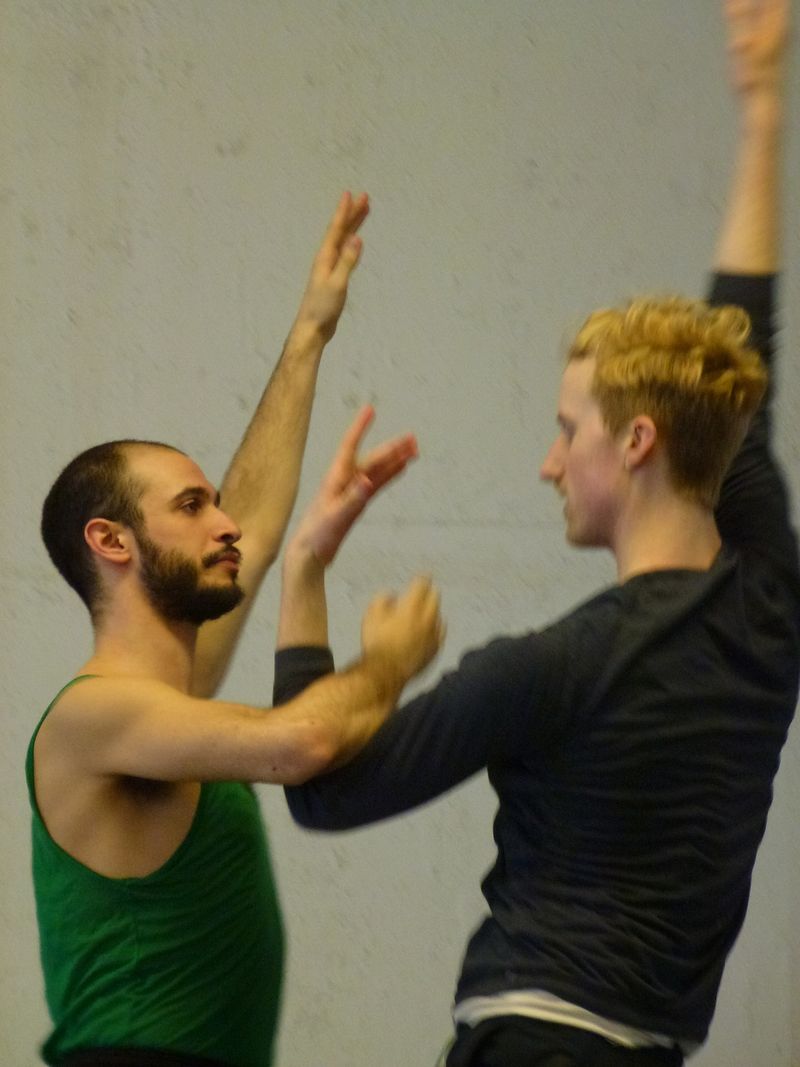
    Wednesday March 27th, 2013 – Choreographer Zvi Gotheiner is setting his dancework “Chairs”, which premiered in 1992, on the Steps Repertory Ensemble who will be performing it during their upcoming season at Ailey Citigroup Theater. My friend Joe and I dropped in at a rehearsal today to see how things are developing.

    For this dancework, Zvi uses music culled from film soundtracks, Rachmaninoff etudes, and Russian Orthodox
    sacred music. Today we were watching the dancers work on specific passages…

    L1080260

    …stopping periodically to refer to a video of a live performance which gave us an idea of how the work will feel when it’s costumed and lit. Mindy Upin and Lane Haplerin, above, having a look.

    There’s a tremendous sense of energetic flow in the choreography, particularly in a quartet passage…

    L1080318

    …and Zvi spent some time working out partnering details with dancers Jake Bone and Lane Halperin (above); their duet has a restless, space-covering energy.

    L1080219

    We’d just missed a sampling of a duet for two men (David Scarantino and Clinton Edward Martin, above) but just from the phrases we saw, and a few sneak peeks at the video, “Chairs” is clearly a very interesting piece.

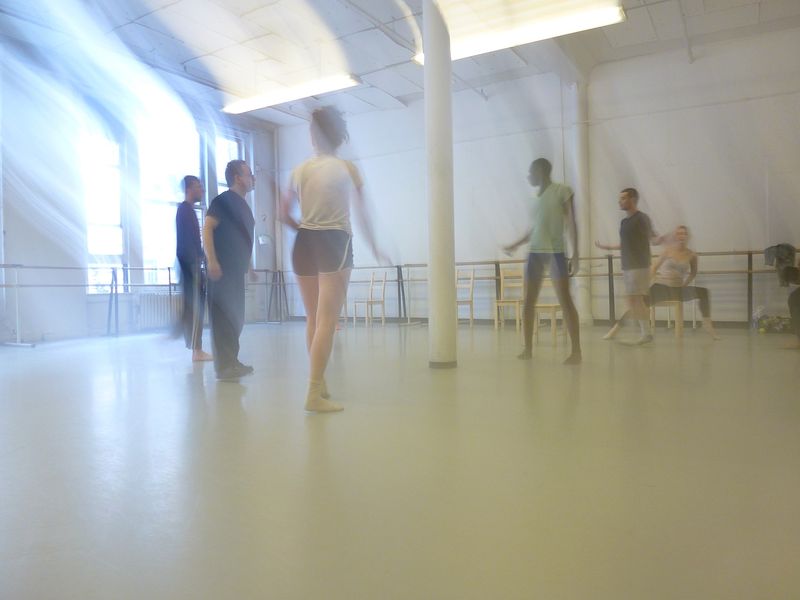
    Most of my photos today looked like this:

    L1080235

    So we’ll have to wait for the performances to get the full impact of what “Chairs” will look like. Just as I did a few months when I checked out Manuel Vignoulle’s rehearsal, I really loved the atmosphere at the Steps Rep studio. And it’s lovely to chat with the Company’s director Claire Livingstone.

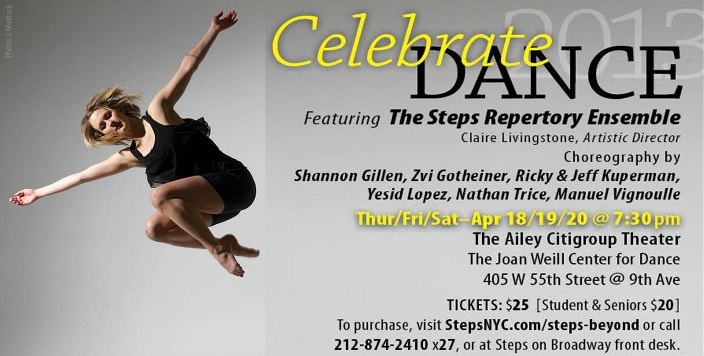
    In addition to Zvi’s “Chairs”, and the Vignoulle creation, the programme will feature works by Shannon Gillen, Ricky and Jeff Kuperman, Yesid Lopez and Nathan Trice.

    188405_435059263251133_2135932523_n