Author: Philip Gardner
-
On Christmas Eve
So, we’ll go no more a-rovingSo late into the night,Though the heart be still as loving,And the moon be still as bright.For the sword outwears its sheath,And the soul wears out the breast,And the heart must pause to breathe,And love itself must rest.Oh, the night was made for loving,And the day returns too soon,Yet we’ll go no more a-rovingBy the light of the moon.~ Lord Byron -
My Only 2012 NYCB NUTRACKER
Sunday December 23, 2012 matinee – Due to the rise in ticket prices at New York City Ballet, I’ve had to adopt strict budgeting rules: for the first time since moving to NYC, I found myself forced to skip NUTCRACKER season altogether. I’d been in the habit of going as many as eight times each year, seeing debuts and covering interesting casting combinations for my blog with genuine enthusiasm. I came to really love and admire the entire Balanchine NUTCRACKER experience, always finding fresh details in the thrice-familiar production.
But this year, with prices really out of my reach and with the Tchaikovsky Festival looming ahead (I want to go every single night!), I was forced to forego NUTCRACKER; I’ve looked at the casting each week, wishing I could be there but simply unable to deal with the monetary situation. Fortunately, my friend Monica very kindly offered me a ticket to today’s matinee.
The cast this afternoon included some debuts, and there wasn’t a principal dancer to be seen onstage. But the soloist and corps de ballet did the Company proud, stepping into the leading roles with confidence and charm. Clothilde Otranto led a lively performance, and special kudos to concertmaster Kurt Nikkanen for his ravishing playing of the Interlude, replete with shimmeringly subtle trills in the highest register.
Lauren Lovette’s debut as the Sugar Plum Fairy was a major point of appeal in the casting today. This young ballerina has been doing excellent work in the corps, and she always makes a beautiful impression when she’s cast in a prominent role; her debut recently in Christopher Wheeldon’s POLYPHONIA was a real eye-opener, for she held the stage in mesmerizing fashion in her mysterious solo, danced to one of Ligeti’s most trance-like works. Her Sugar Plum today was lyrical and light in the opening solo, and showed the confident radiance of a seasoned star-ballerina in the pas de deux where her cavalier, the story-book-prince Chase Finlay, showed off his ballerina with élan. Together they sailed smoothly thru the duet’s many difficulties: difficulties that have been known to undo the most seasoned dancers. Lauren and Chase drew the audience in with their youth and poise, winning a particularly warm reception.

I met Mary Elizabeth Sell shortly after she joined the Company in 2006, and have kept an eye on her ever since. She and I share a birthday; I took the above picture of her one day a couple years ago when I ran into her on a rehearsal break. Always a dancer to draw the eye in any ballet because of her vivid presence and perfect smile (she was one of the few dancers to make an impact in the leaden OCEAN’S KINGDOM), her performances stand out in a way that have always made me think she could do well in major roles. This Winter the opportunity came her way – she had debuted yesterday as Dewdrop – and, just as I suspected she would, she seized the opportunity and gave a really exciting performance. Her Dewdrop was on the grand scale, able to make her own musical statement in the role by playing ever so subtly with the timing: holding an arabesque one moment, then swirling forward in a flurry of pirouettes. Her jeté was effortlessly brilliant, her extension regally unfurled, her attitude turns silky, her fouettés gracefully swift and sure. To all of this she added her dark eyes and gracious smile. Her performance had amplitude and (rare commodity:) glamour; in short, she put me in mind very much of one of my all-time-favorite Dewdrops, Colleen Neary. There’s no better compliment, in my book.
Other notable newcomers were Cameron Dieck (handsomely squiring the marvelous Gwyneth Muller in Spanish), Claire Kretzschmar (leggy and cool as Arabian), and Joseph Gordon (bouncing high in Chinese). Sara Adams was pretty, precise and perfectly pleasing as Marzipan; Anthony Huxley – he of the fabulous feet – a stellar Candy Cane (I was hoping he’d jump thru his hoop on his exit in the finale, as he did when he first danced the role); Andrew Scordato an amusing Mother Ginger; Lauren King and Ashley Laracey led the Waltz of the Flowers with distinction…two of my favorite ballerinas.
In Act I, Sean Suozzi replaced David Prottas as Drosselmeyer; the change was unannounced. Sean was superb, as we could expect from one of the Company’s most intriguing personalities; he even gave the grandmother a startlingly emphatic kiss. Amanda Hankes and Christian Tworzyanski were the appealing Stahlbaums, Kristen Segin and the very pretty Claire von Enck danced charmingly as Harlequin and Columbine, and Giovanni Villabos neatly executed the Soldier Doll’s solo.
It’s kind of amazing that there are now dancers in the Company I cannot
identify onstage; things seem to be changing more rapidly that ever in
terms of the roster. During 2012 some of my favorite dancers left the
Company unexpectedly; others are currently injured (an ongoing problem).
The total complement of dancers stands at 85, the smallest number in my
years of attending,; apprentices and (sometimes) senior SAB students
seem to be filling the ranks in the big ensembles.SUGARPLUM: *Lovette; CAVALIER: Finlay; DEWDROP: Sell; HERR DROSSELMEIER: Suozzi; MARZIPAN: Adams; HOT CHOCOLATE: Muller, *Dieck; COFFEE: *Kretzschmar; TEA: *Gordon; CANDY CANE: Huxley; MOTHER GINGER: Scordato; FLOWERS: King, Laracey; DOLLS: Von Enck, Segin; SOLDIER: Villalobos, MOUSE KING: J. Peck; DR & FRAU STAHLBAUM: Hankes, Tworzyanski
The house seemed nearly full, and so nice to run into some of the Company’s most ardent supporters during intermission.
Thanks so much, Monica!
-
The Forgotten Impressionist
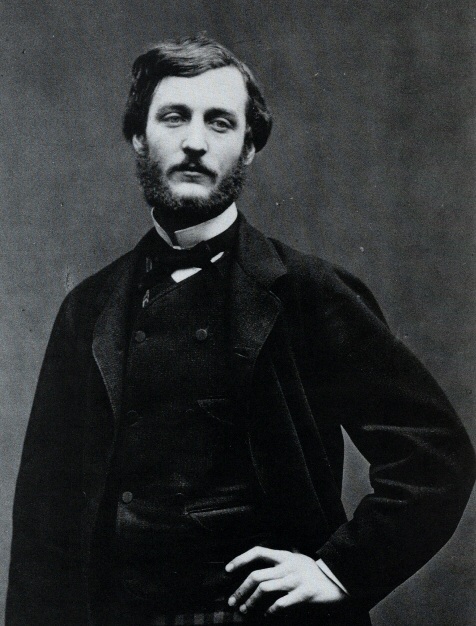
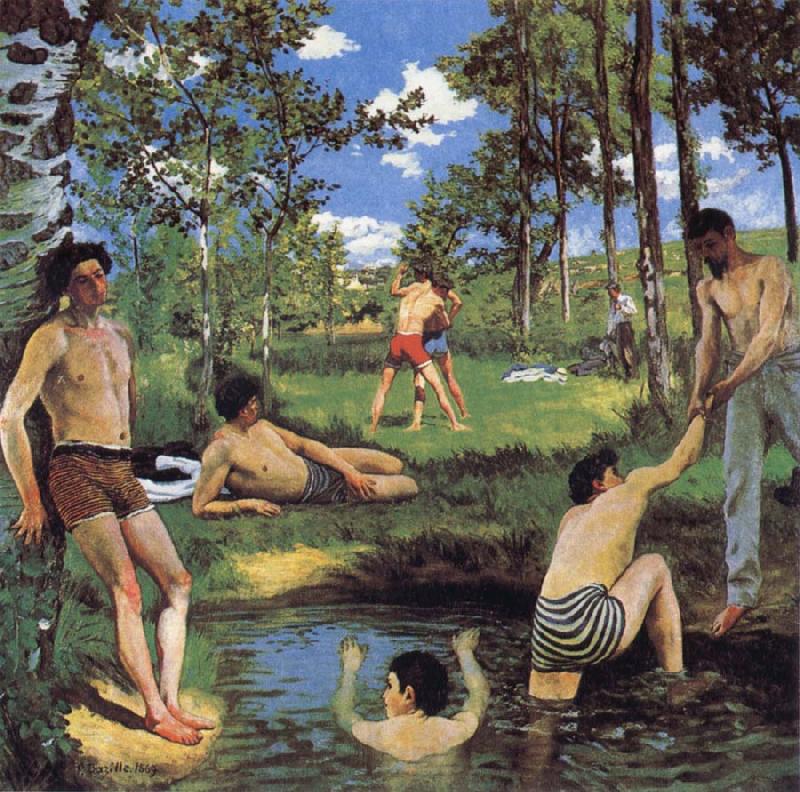
When we think of the Impressionists, we think of Manet, Degas, Monet, Cezanne, Renoir. But there was another pioneering spirit in that group: Frédéric Bazille (above). Born in 1841, the son of a wealthy land-owner from Montpellier, Bazille came to Paris as a young man to pursue his interest in painting after failing to pass his exams in medical studies.
Bazille befriended Monet, Renoir, and Alfred Sisley. The foursome were to take painting out of the studio and into the natural world where colour and light inspired them. It was slow going: the ‘official’ Parisian art world was ultra-conservative, elite, concerned mainly with maintaining familiar elements of style. Bazille’s access to family funds helped his fellow artists through lean times; they shared flats and studio space. Opportunities to show their work were few and far between; but slowly the ‘impressionists‘ began to make their mark, and the public took inspiration from their work.
Bazille’s works include the lovely Black Woman With Peonies from 1870 (above)…
…and the atmospheric Summer Scene daing from 1869 (above).
Click on each painting to enlarge.
That Bazille never developed as truly unique a ‘voice’ in the Impressionist school as his more famous colleagues did, was a result of the outbreak of the Franco-Prussian War in 1870. Bazille signed up and, on November 28th, 1870, he was killed in a skirmish in Burgundy at the age of 29.
Bazille, whose name I had only noted in passing when reading about the other artists of the Impressionist school, came to my attention recently as we watched the excellent BBC series THE IMPRESSIONISTS. In this docu-drama. much of which was shot in Provence and Normandy (as well as at Giverny) Bazille is played by the handsome British actor James Lance. Lance’s warmth and sensitivity fill the opening episode of the series, and it’s sad when his character meets his end. Richard Armitage and Julian Glover play Monet at different stages of his life. The film of course cannot hope to document all the artists who were part of the Impressionsist movement, but it’s well-filmed and acted, instructive and highly enjoyable.
Above, from the film: Claude Monet (Richard Armitage), Auguste Renoir (Charlie Condou) and
Frederic Bazille (James Lance). -
Steps Repertory Ensemble Rehearse Vignoulle
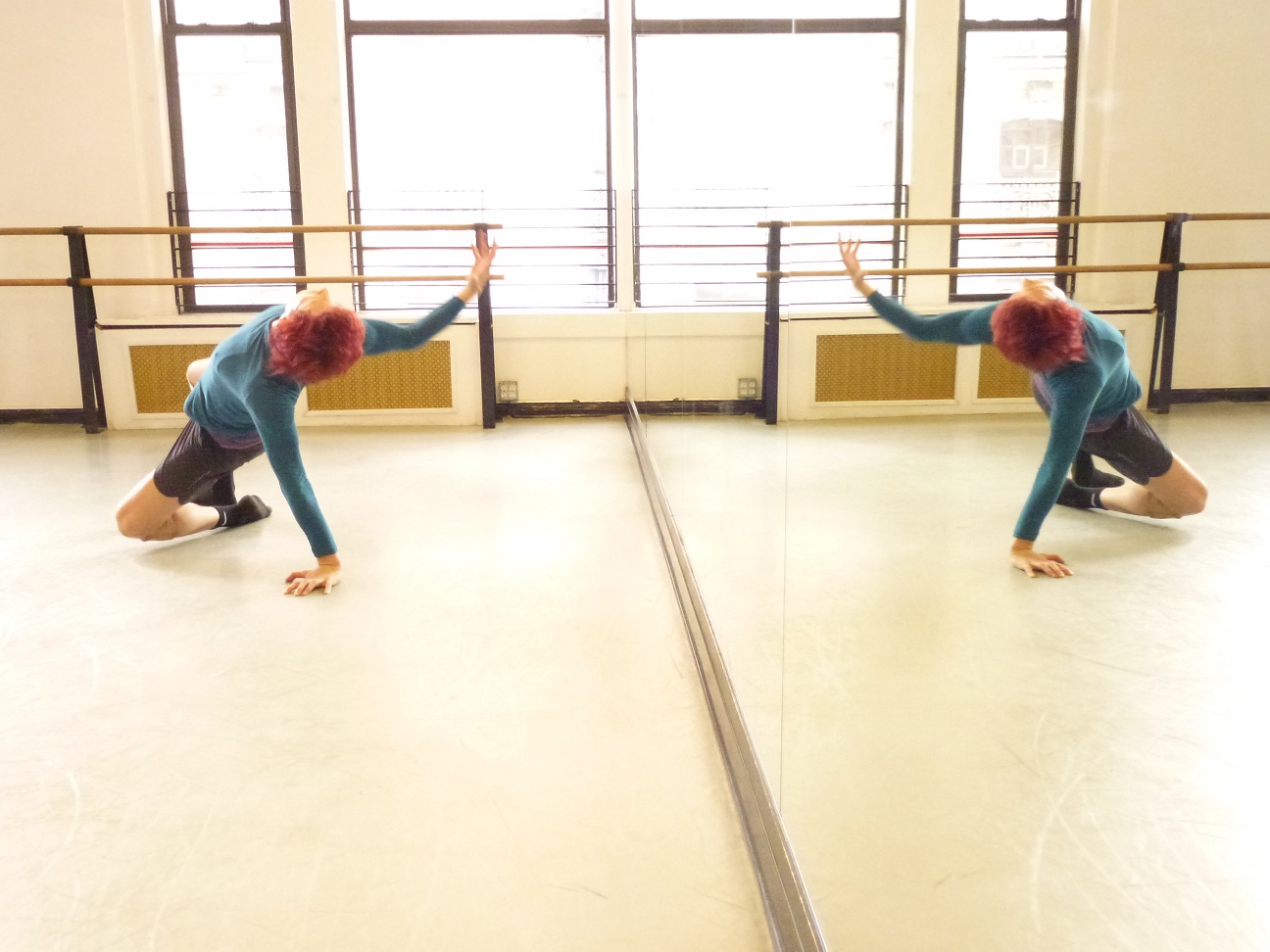
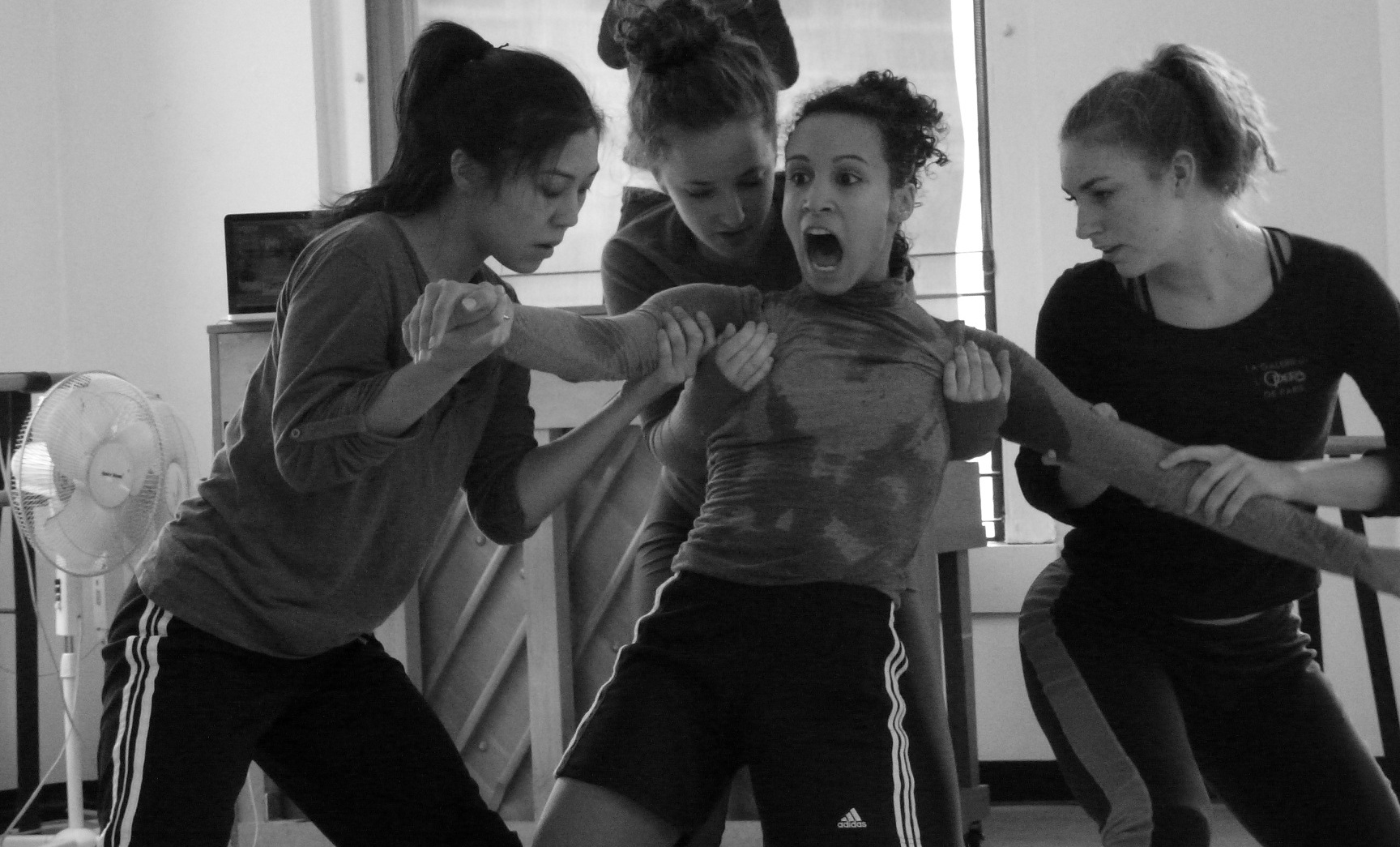
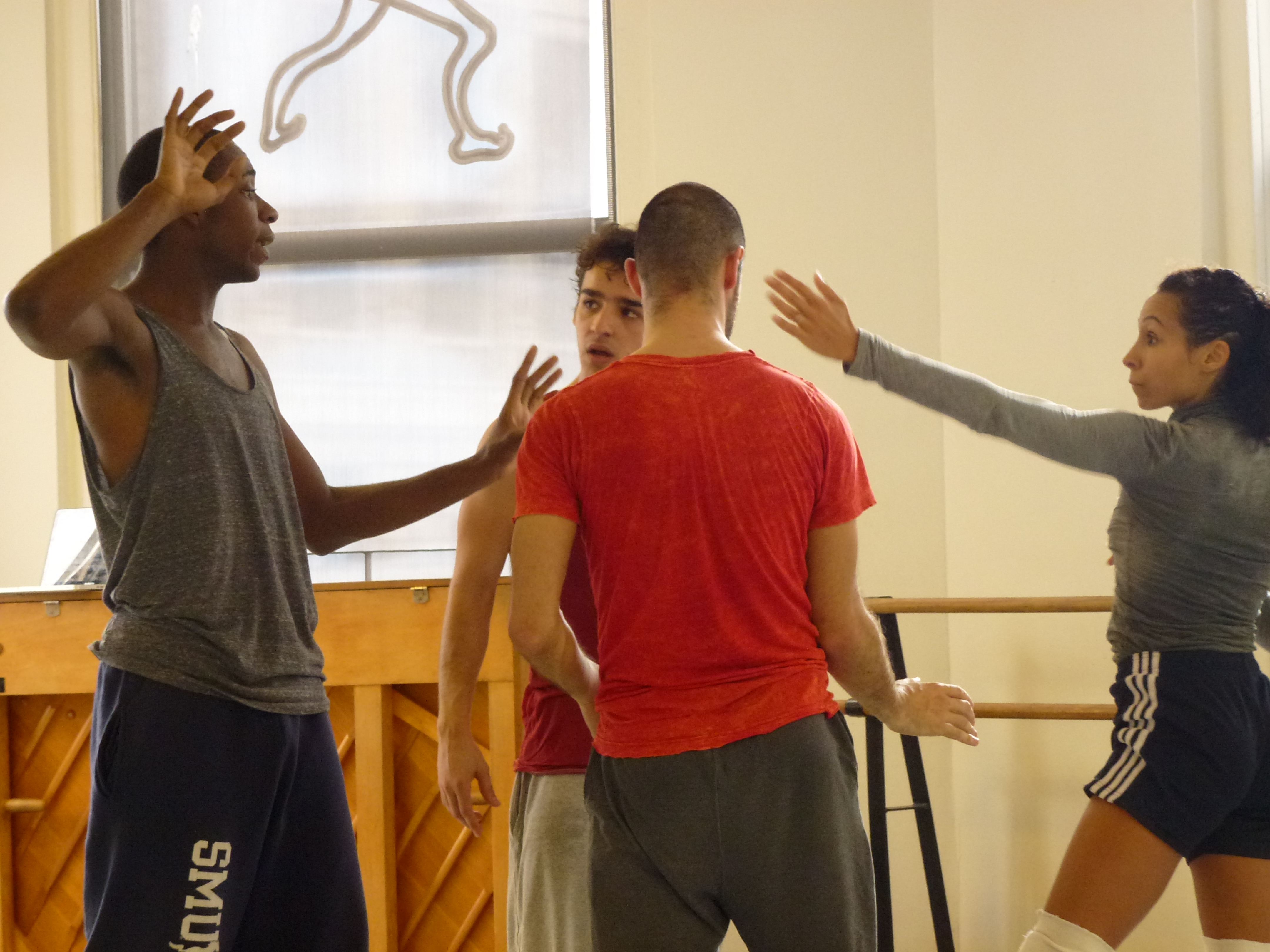
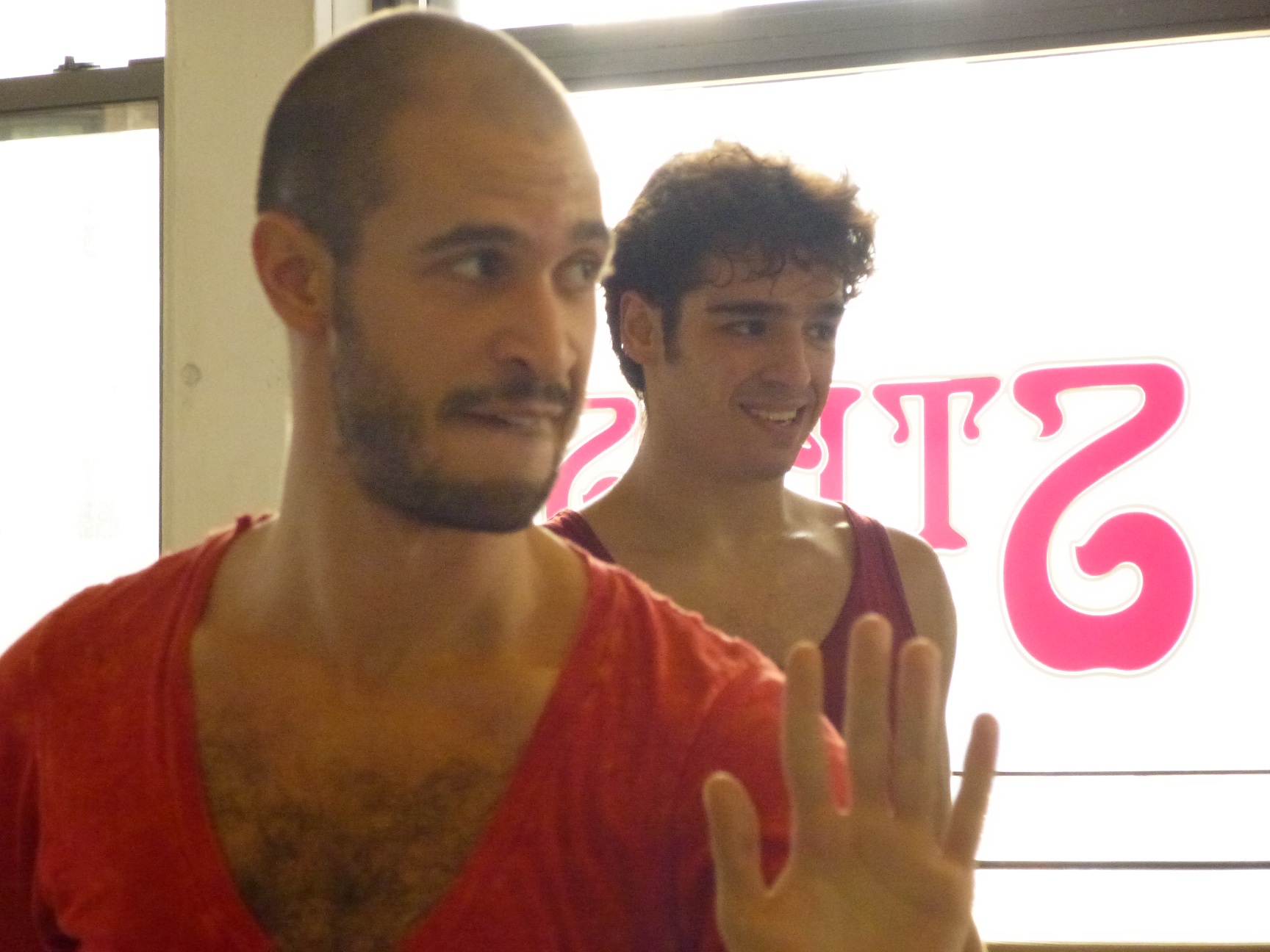
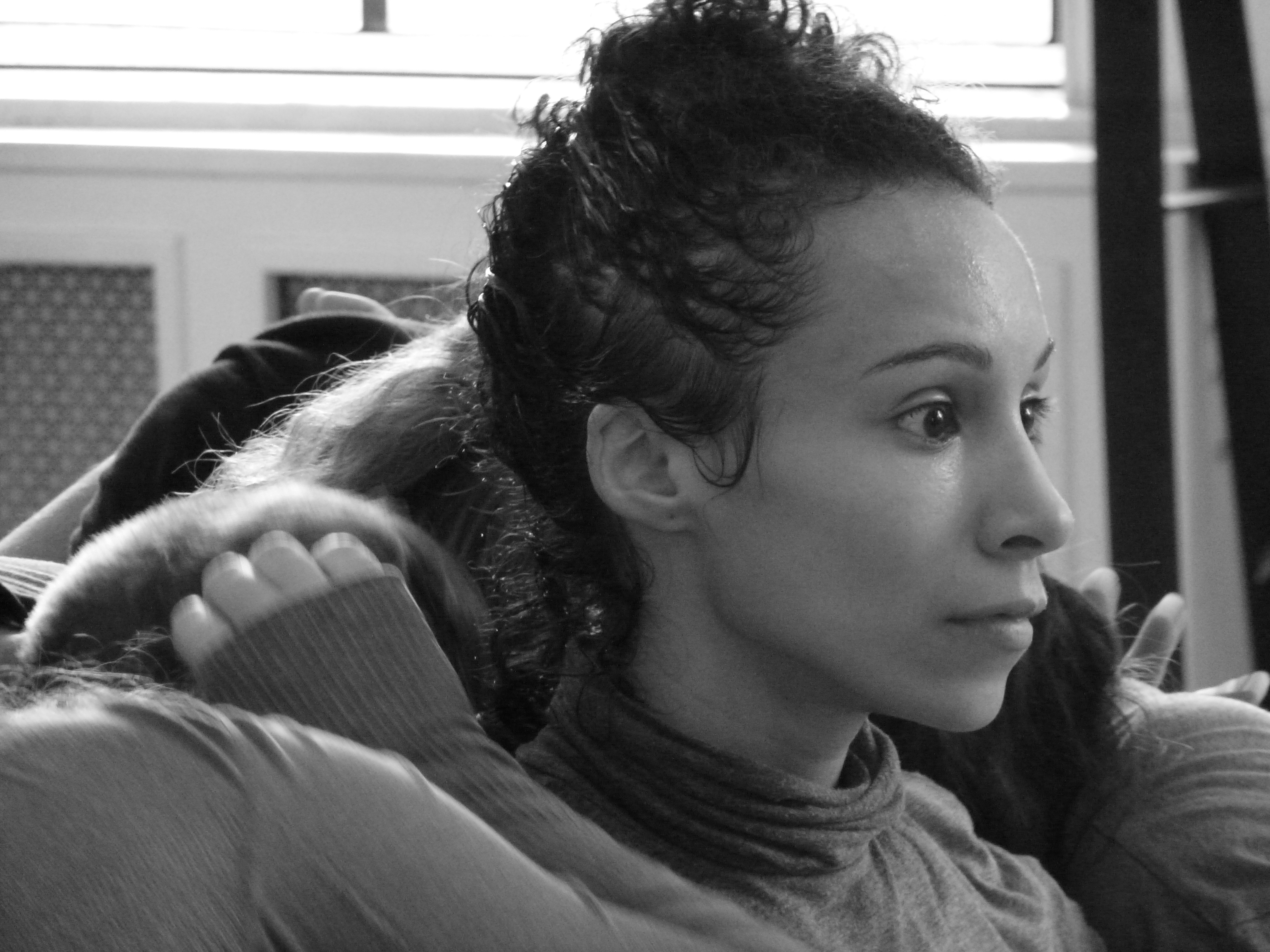
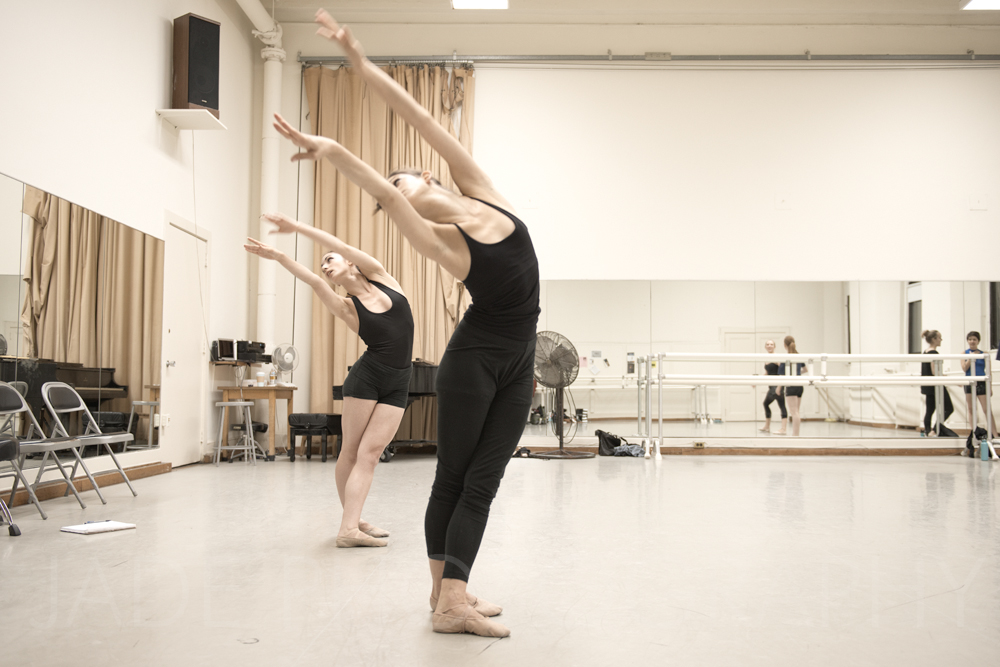
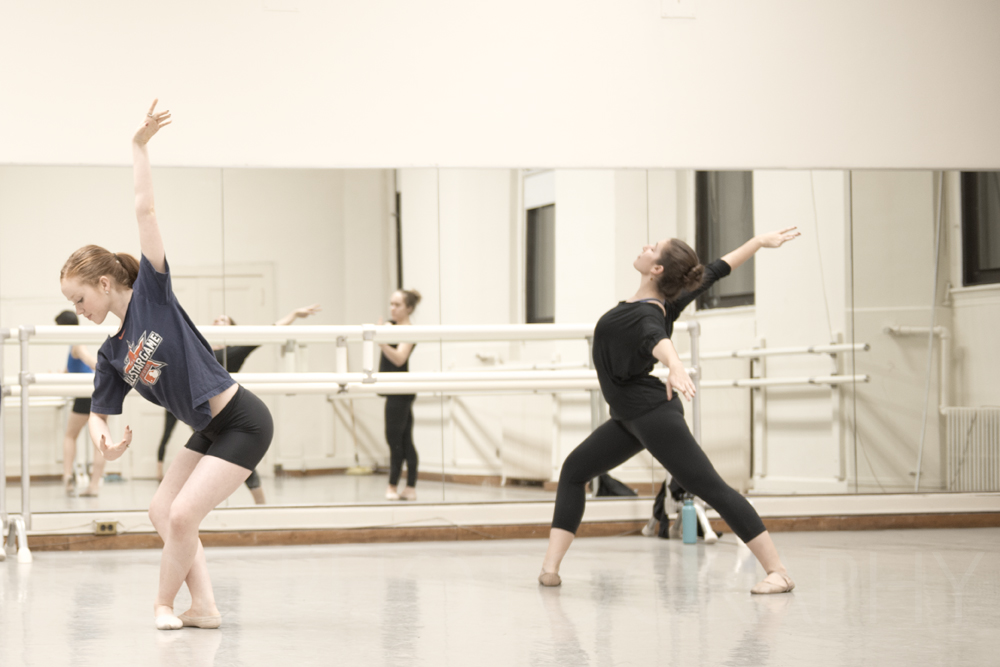
Wednesday November 28, 2012 – I stopped by at Steps on Broadway today where the Steps Repertory Ensemble were rehearsing a new work by Manuel Vignoulle. I got to know Manuel as a dancer through his performances with Cedar Lake Contemporary Ballet. This was my first time meeting him, and his infectious energy and devilishly sexy accent made the studio hour fly by. It’s always fun when a choreographer leaps in to demonstate during rehearsals, and Manuel was continually showing the dancers what he wanted. His choreography is athletic and risky; a passage of repose contrasts to the edgy, restless atmosphere that the work has built up.
Manuel’s piece for the Steps Repertory Ensemble is entitled “Le Moi Sauvage” and it will be part of the Company’s Celebrate Dance performances at Ailey Citigroup scheduled for April 19-21, 2013. Chances are it will be shown sooner than that in a studio setting.
Britney Tokumoto, Lane Halperin, Marielis Garcia and Katherine Spradzs
Victor Larue
Discussing the mechanics of a lift
David Scarantino, Gabriel Malo
Landes Dixon
Marielis Garcia
Manuel Vignoulle
Now that I’ve had my introduction to the Steps Repertory Ensemble (thanks to Mindy Upin), I’m hoping to cover more of their work in the coming months, leading up to their April performances.
-
Ira Malaniuk
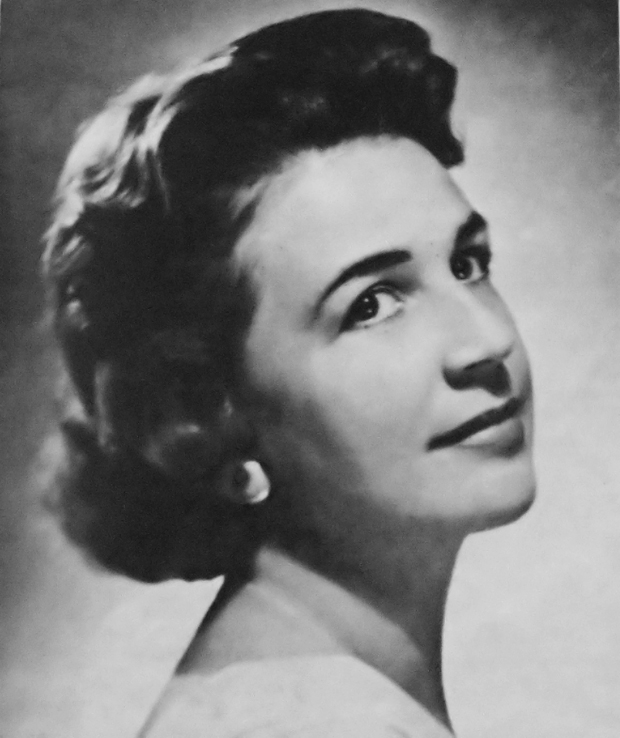
The contralto Ira Malaniuk (above) was an Austrian singer of Ukranian descent who had a major career in Europe from 1939 to 1976 yet is rarely mentioned today in discussions of great voices from the past. Yet surely she is one of their number.
Malaniuk appears on several commercial recordings, some of which I have heard, yet it is a 1953 live recording of GOTTERDAMMERUNG from the 1953 Bayreuth Festival in which she sings Waltraute that made me sit up and take notice of this wonderful singer.
Malaniuk came to international attention at the 1951 Bayreuth Festival when she stepped in at the last minute for an ailing colleague; here is the story:
“It was 1951. The Wagnerian Festival at Bayreuth, Germany was taking place for the first time since the end of World War II.
Herbert von Karajan was the conductor. The opera was Das Rheingold (The Rhine Gold), the first of the four operas that comprise Wagner’s Der Ring Des Nibelungen. A complete Ring Cycle peformance was planned for this innaugural post-war season.
Elisabeth Höngen, a mezzo-soprano, was scheduled to sing. She had
performed only a few days earlier. Suddenly on August 11, 1951, Höngen
came down with an acute case of appendicitis and was hospitalized.That fateful day, Ira Malaniuk, a young mezzo-soprano, came into the
theatre not suspecting that she would be required to sing the part of
Fricka that night. According to her own autobiography, not only had
Malaniuk never sung the part, she hadn’t even heard it before.And yet, with the assistance of the Bayreuth Festival staff,
colleagues, prompters and conductor Karajan, Ira Malaniuk went on stage
that night and sang. The critics raved. Bavarian Radio broadcast the
production.And, Ira Malaniuk went on to become a famous opera singer – a Kammersängerin – in both Germany and Austria.”
Malaniuk had studied with the great basso Adamo Didur, and opera was always in her heart, as she relates in this charming story:
“I cannot say, where the beginnings of my love of opera were. Already in
childhood, they shone for me like a guiding star. Although, in all
truth, there was a female opera singer in our family, that reached world
wide fame – Salomea Kruszelnicka. She was the daughter of my paternal
grandmother’s brother, in short my father’s cousin. Our paths never
crossed – I never met Kruszelnicka, never saw her peform on stage, but
perhaps some drop of her artistic blood courses through my veins.”Above, Ira Malaniuk with her soprano colleague, the radiant Lisa Della Casa.
Listen to Ira Malaniuk singing the Second Norn in this document from the Bayreuth Festival’s 1953 GOTTERDAMMERUNG. Her sister-Norns are Maria von Ilosvay and Regina Resnik (in her soprano days); Clemens Krauss conducts.
-
Lauren Alpert for CBC
Lauren Alpert created a new ballet for Columbia Ballet Collaborative‘s recent performances at MMAC. Above: dancer Gabriela Minden, photo by Jade Young.
I was unable to attend the CBC performances this Autumn, but I did stop by at one of Lauren’s rehearsals of her new creation. Entitled signal:noise and set to a collage of contemporary music, this is probably one of the few danceworks ever to be inspired by working in a neuroscience lab. But it was there that Lauren developed the concept for her ballet.
Lauren Alpert and dancer Rebecca Walden
Audrey Crabtree-Hannigan and Rachel Silvern
signal:noise is an ensemble work for seven women; although there are unison passages, much of the work is devoted to indivdual expression, some of it with an improvisational quality. I hope there’ll be a chance to see it again sometime.
Photos: Jade Young.