Author: Philip Gardner

  • Songs & Snow @ Chamber Music Society of Lincoln Center

    (My article about this phenomenal concert in May of 2024 didn’t move from the Grove to the Glade, but I couldn’t imagine leaving it to disappear. So…I’ve copied and pasted it here.)

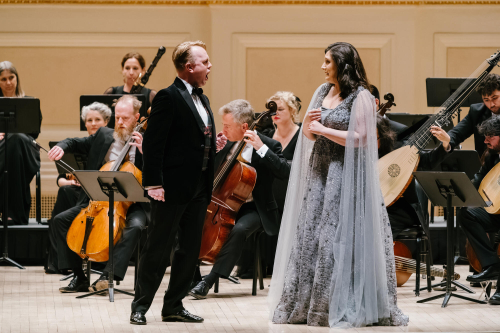
    Above: Alisa Weilerstein with the players of Sandbox Percussion; photo by Da Ping Luo

    Tuesday May 7th, 2024 – Sandbox Percussion joined pianist Gilbert Kalish and cellist Alisa Weilerstein at Alice Tully Hall where Chamber Music Society of Lincoln Center presented a program of music by George Crumb and Tan Dun. The beloved soprano Dawn Upshaw was a special draw for me, at this – my last CMS concert of the current season. 

    It was an evening of fascinating music, thrillingly performed. The only comparable experience I can recall was the American Symphony Orchestra’s program, Requiem for the 20th Century, some ten years ago. Tonight’s concert was on a more intimate scale, and it held me under its spell from first note to last.

    The Alice Tully Hall stage was set with an enormous array of percussion instruments, and a jubilant ovation greeted Ms. Upshaw, Mr. Kalish, and the Sandbox boys; special lighting for this program had been devised by Alejandro Fajardo, melding the visual and the sonic aspects of the evening into a cohesive and immersive whole.
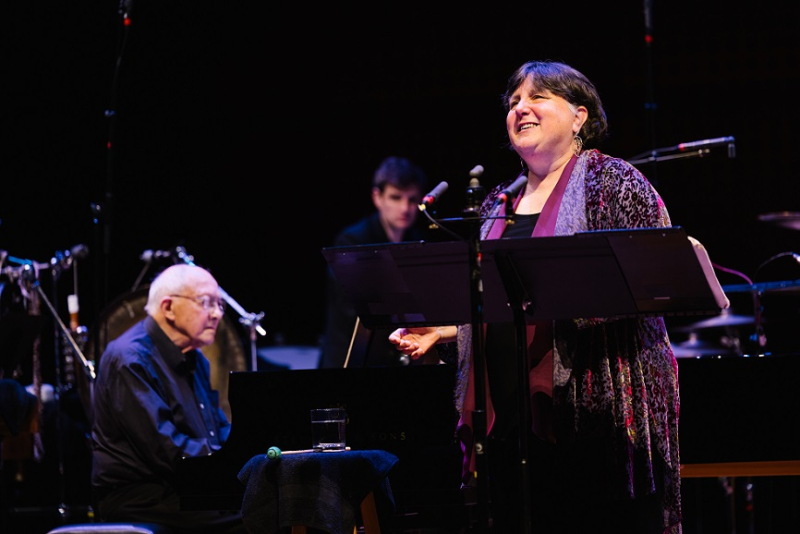
    Above: Gilbert Kalish and Dawn Upshaw; photo by Da Ping Luo

    George Crumb’s song cycle, The Winds of Destiny, is a setting of hymns, folk songs, and spirituals with otherworldly sounds created by an amplified piano and a percussion orchestra displaying a vast range of colours and rhythms.

    From a ghostly prelude, Ms. Upshaw’s voice emerges with remarkable purity in “Mine Eyes Have Seen the Glory”; the hushed sense of mystery in her singing gave me the chills. By contrast, a deafening thunder-burst of drumming seemed to herald the end of days. The soprano became exuberant in “When Johnny Comes Marching Home”; huge percussion assaults remind us of the horrors Johnny has experienced in time of war. There is a mystical interlude – did I hear a glass harmonica? – before Ms. Upshaw resumes her singing, now in a hesitant whisper. The vibraphone creates a hallucinatory atmosphere for the soprano’s ultra-soft rendering of “Lonesome Road”, evoking the fear of death. “Twelve Gates Into the City” brings on the xylophone, and some old-school coloratura from Ms. Upshaw; the song has a big-bang finish.

    The lights dim on the singer as Mr. Kalish joins the percussionists in an interlude: “De Profundis: A Psalm for the Night Wanderer”: music which conjures up spectral images in its quietude. Ms. Upshaw’s shushing whispers herald “Death’s Lullaby: All My Trials”, sung in her low register with delicate support from Mr. Kalish as an unearthly hush falls over the hall. Suddenly sparkling xylophone motifs bring a fantastical “Go Tell It On The Mountain”, alive with curiously Oriental harmonies.  The music turns pensive, then celebratory as Ms. Upshaw delivers uncanny echo effects on the sung words. Two massive drumbeats punctuate the song’s end. The vibraphone – very soft – introduces the mysteries of “The Enchanted Valley” in which her singing slowly becomes spoken words, ending with a whisper. Rippling piano phrases and soft bells conjure up the river currents of “Shenandoah”, sung to spell-binding effect by the soprano.  

    Ms. Upshaw, Mr. Kalish, and the gentlemen of Sandbox Percussion – Jonathan Allen, Victor Caccese, Ian David Rosenbaum, and Terry Sweeney – faced a colossal, rock-star ovation from the packed house – everyone screaming and whooping it up in appreciation for this unique musical experience. A second bow was demanded – and delivered – to the delight of he crowd. The performance had captivated me, and the intermission was a slow return to the real world. But, soon, we were taken on a second musical journey of equal power…and the kind of beauty that disturbs. 

    Alisa Weilerstein (above, photo by Da Ping Luo) and the percussionists took the stage in darkness for a devastating performance of Tan Dun’s 1991 Elegy: Snow in June – music which reflected the composer’s reaction to the 1989 Tiananmen Square uprising and the subsequent execution of protesters. In view of the current world situation, this work takes on a new timeliness.

    Snow in June derives its theme from a 13th century Chinese drama by Kuan Han-Ching, in which a young woman, Dou Eh, was executed for a murder she did not commit. Nature itself cries out for her innocence, with resulting miracles: her blood does not fall to Earth but flies upward, a heavy snow descends in June, and a devastating drought lays waste to the land. This Elegy is a lament for all the victims of the world.

    Mr. Fajardo’s lighting design underscored the drama of the work; Ms. Weilerstein was seated on a low platform with the percussion array in a semi-circle around her. The movements of the percussionists seemed almost like a choreographed ritual.

    As the lights slowly come up, the cello sighs…at first mournful, then agitated. Bells sound, and the music gets wilder, interspersed with more sustained motifs. The wind whines, there are whispered cries, static, and moments of silence. Ms. Weilerstein’s cello is heard in a high, pleading phrases.

    Suddenly: pandemonium! Crashing cymbals and battered drums signal a dance-like rhythm, the cello swaying and stuttering. A shrill whistle blows. Through all of this, the percussionists are as fascinating to watch as to hear.

    There is a cello drone, and hushed gongs create an extreme softness as long cello tones are sustained. Ms. Weilerstein takes up a forlorn melody, deep and tragic, and later becoming passionate. A crescendo…and then bustling activity among the men as they they seem to be playing multiple instruments simultaneously, alternating subtle and noisy effects. The cello strikes up afresh – animation all round – and then a massive drum attack induces a frantic cello response. Calm is restored: gongs and xylophone produce music of the spheres until a gigantic tidal wave of sound hits. A fast beat is taken up, the cellist playing mad trills and the virtuoso percussionists seem possessed by a mythic force. The whistle screams, the bass drum pounds, panic sets in.

    A deep cello note sounds, the music swells to a vast forte, then fades. To the sound of chimes, the cello strays to the high range before sinking to an ominous deep passage, which finally fades away.

    This thrilling Tan Dun piece elicited the evening’s second monumental ovation, with Ms. Weilerstein embracing each of the percussionists in turn. Repeated waves of cheers filled the hall as the artists returned for a second bow.

    (Performance photos by Da Ping Luo, courtesy of Chamber Music Society of Lincoln Center.)

    ~ Oberon

  • PRISE DE TROIE ~ scene: Dame Janet Baker and Raimund Herincx

    Listen to this magnificent scene from Berlioz’s PRISE DE TROIE, sung in English by Dame Janet Baker (above)and Raimund Herincx.

    This was from a concert performance via the BBC in 1966; Sir Colin Davis is the conductor.

  • A Leonie Rysanek Triumph

    (Bringing this forward from the Grove: some of Rysanek’s greatest singing ever!)

    Tannhauser

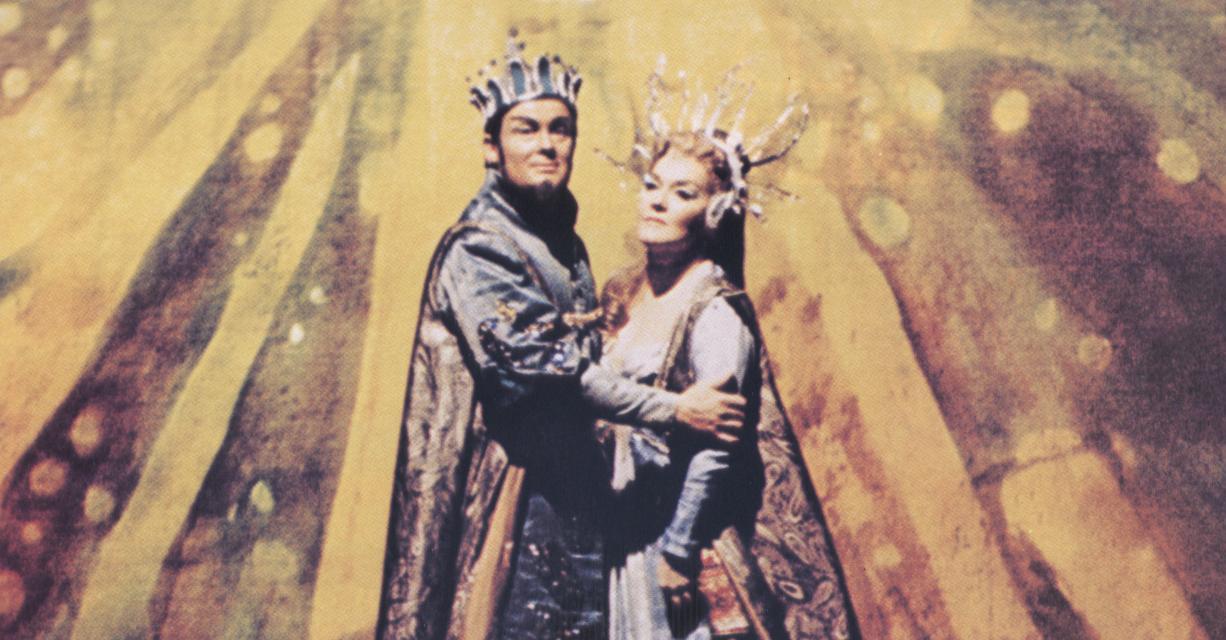
    Above: Leonie Rysanek and Jess Thomas in TANNHAUSER

    Leonie Rysanek had not sung at the San Francisco Opera for over a decade; her return in 1973, as Elisabeth in TANNHAUSER, must be counted among the great triumphs of her career.

    The audience greeted the beloved soprano with a wave of applause as she entered the Hall of Song at the Wartburg in Act II. Wagner purists would likely disapprove of an interruption after “Dich teure halle“, but the diva’s wonderfully emotional performance elicited more applause here; and after the great duet with tenor Jess Thomas (another San Francisco favorite), the audience could no longer contain themselves.

    I’m happy that, among my hundreds of old cassettes, a souvenir of this exciting night exists. I have recently converted it to MP3; there is a slight break after “Dich teure halle“. Enjoy!

    TANNHAUSER – Act II scene – Leonie Rysanek & Jess Thomas – San Francisco 1973

    Scanned Section 5-1

    Of all the many performances, broadcasts, and recordings of Rysanek that I have enjoyed over the years, this is my personal favorite.

    ~ Oberon

  • The Wadsworth Legacy @ Chamber Music Society

    (This article about a truly meaningful evening at Chamber Music Society in May of 2025 somehow didn’t make the transition from Oberon’s Grove to the Glade, so I have done a copy-and-paste.)

    Wadsworth

    Above: Charles Wadsworth

    ~ Author: Oberon

    Friday May 2nd, 2025 – This evening, Chamber Music Society of Lincoln Center honored its Founding Artistic Director, Charles Wadsworth, with a program book-ended by a trio sonata by the Baroque composer Johann Gottlieb Goldberg and a septet by Camille Saint-Saëns and centering on a unique set of Schumann vocal works sung by a quartet that included the one-and-only Frederica von Stade, with de luxe pianists Wu Han and Ken Noda.

    Wu Han explained that the opening Goldberg work had been the first piece played at the very first Chamber Music Society performance in this hallowed Hall back in 1969. At that time, this trio sonata was thought to have been composed by Bach himself; later it was determined that one of the maestro’s students, Johann Gottlieb Goldberg, had penned it. (Click on the concert images to enlarge.)

    W_521_CMS-SpringGala_CherylynnTsushima_20250501

    Above, at the end of the Goldberg: Chad Hoopes, Wu Han, Sterling Elliott, and Francisco Fullana; photo by Cherylynn Tsushima

    Wu Han was at the harpsichord this evening, joined by violinists Chad Hoopes and Francisco Fullana and cellist Sterling Elliott. From its serene opening Adagio, the music is cordial and was elegantly played, the musicians achieving an immaculate sonic blend. There follows an animated Alla breve, a melodious flow in which Wu Han’s expert keyboard playing could be savoured. The lamenting song of the violins, exchanging phrases or duetting, marked the Largo; with the Elliott cello providing deeper colours, the refined playing culminates with some delicious trills. The final Gigue is a joyous dance, full of delicious subtleties.

    The stage was now re-set for Robert Schumann’s Spanische Liebeslieder, a set of songs that tell of the various aspects of love. The cycle opens with a piano duo, Wu Han joined by the always-welcome Ken Noda. Their playing was enticing and finely wrought; a tiny mistake was charmingly resolved.

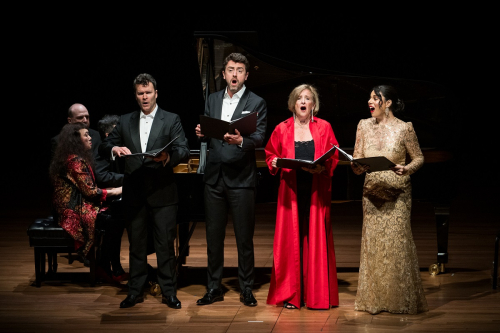
    Originally planned to feature the beloved voices of Kathleen Battle, Frederica von Stade, and Thomas Hampson, over time the quartet morphed into soprano Amanda Batista, tenor Ben Bliss, and baritone Joshua Hopkins – all currently (or recently) involved in productions at The Met – joining the inimitable Ms.von Stade. Flicka looked gorgeous in a long red coat, with Ms. Batista in a shimmering gown that seemed spun out of mithril

    Ms. Batista, who had just sung at the Gerda Lissner Foundation concert at Zankel Hall, has a larger and more extroverted voice that the anticipated Ms. Battle, but she was able, for the most part, to hone her singing down to blend with her lyrical colleagues. Ben Bliss, fresh from a triumphant series of Taminos at The Met, gave us a jolly song, blithely sung. Ms. von Stade joined Ms. Batista in a duet to a lulling rhythm, harmonizing to fine effect; their singing had an operatic edge, the signature von Stade sound still on display.

    W_530_CMS-SpringGala_CherylynnTsushima_20250501

    Above: pianists Wu Han and Ken Noda with baritone Joshua Hopkins; photo by Cherylynn Tsushima

    Following a light intro from Mr. Noda, Mr. Hopkins (a memorable Met Papageno and Ping, and now starring there as Mozart’s Count Almaviva) ) sang nobly, his voice warm and rich.

    A dance-like interlude from the piano duo led to a heartfelt song from Ms. Batista, and then on to Ben Bliss’s characterful singing of a song about the woes of having an angry girlfriend. Ms. von Stade, joining Ms. Batista, now charmed the crowd with her gentle, lovely singing whilst memories of her peerless Cherubino, her haunting Mélisande, and her captivating Octavian were evoked for me: some of my most beautiful operatic memories. Mssrs. Bliss and Hopkins joined forces for a jovial duet, which romped along to a big finish. The cycle’s concluding quartet, supported by rippling motifs from the pianists, was somewhat unbalanced vocally, but pleasing nonetheless.

    After the interval, three more Schumann works were sung, with Mr. Noda ever the perfect pianist. “Liebhabers Ständchen” united Ms. Batista and Mr. Bliss for some passionate singing, and then Mr. Hopkins joined Ms. von Stade for “Ich bin dein Baum”. They sounded simply delightful together, the baritone gazing at Flicka in admiration as the von Stade voice summoned so many memories for those of us who cherish that unique sound. In this duet about love and nature, all seemed well with the world; Mr. Hopkins gallantly kissed Flicka’s hand at the end. The concluding Schumann piece, “Tanzlied”, set to an accented tempo, brought the four vocalists together for a final celebration.

    One of the things I loved most during the Schumann songs was observing Flicka while her colleagues were singing; she leaned forward, watching them intently and smiling whenever they did something wonderful (which was often…). During the upbeat moments, she tapped her foot, and when things turned more pensive, a dreamy look came over her face, as if the music was summoning beautiful recollections for her. 

    Photos by Cherylynn Tsushima of the evening’s singers – Amanda Batista, Frederica von Stade, Ben Bliss, and Joshua Hopkins – with Wu Han and Ken Noda taking turns at the Steinway:

    W_533_CMS-SpringGala_CherylynnTsushima_20250501
    W_537_CMS-SpringGala_CherylynnTsushima_20250501
    W_539_CMS-SpringGala_CherylynnTsushima_20250501
    W_544_CMS-SpringGala_CherylynnTsushima_20250501

    To conclude the evening, a rarity: Camille Saint-Saëns’ Septet in E-flat major for Trumpet, Two Violins, Viola, Cello, Double Bass, and Piano, Op. 65 which is in four movements – Préambule,  Menuet,  Intermède, and Gavotte et Final. David Washburn’s trumpet rang forth in this rather unusual instrumental combination, wherein violinists Fallana and Hoopes were joined by violist Paul Neubauer, Mr. Elliott with his cello, Wu Han at the Steinway, and the velvety bass playing of Nina Bernat. If the music did not prove memorable, the playing of it was superb.

    W_551_CMS-SpringGala_CherylynnTsushima_20250501

    Above, playing the Saint-Saëns septet: Mssrs. Fullana, Hoopes, and Neubauer, Wu Han at the piano, Sterling Elliott, Nina Bernat, and Davd Washburn; photo by Cherylynn Tsushima.

    From the moment this program was announced, I’d hoped to meet Flicka again, and to get her autograph for my English friend Mollie, who has always attributed her life-long love of opera to having heard the von Stade voice back in the early 1970s and falling under its spell. We found the beloved singer being chatted up by fans, and she was as gracious as ever. And now I have something special to send to my friend across the sea.

    ~ Oberon
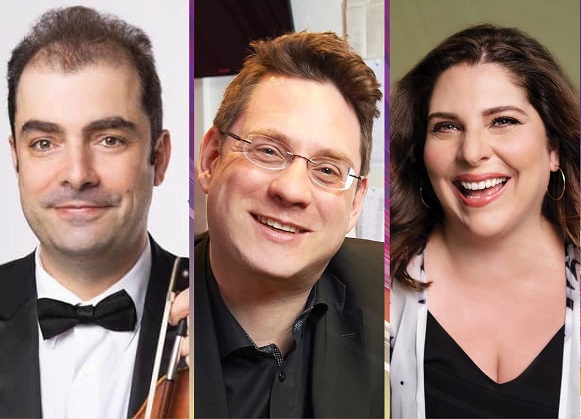
    (Performance photos by Cherylynn Tsushima, courtesy of Chamber Music Society, and with my thanks to Beverly Greenfield of Kirshbaum Associates.)

  • Double Bassist Nina Bernat @ Merkin Hall

    (One of several recent articles on Oberon’s Grove that did not transfer to Oberon’s Glade. It was a fine night of music-making, and I want to hold onto the memory of it.)

    Nina bernat jpg

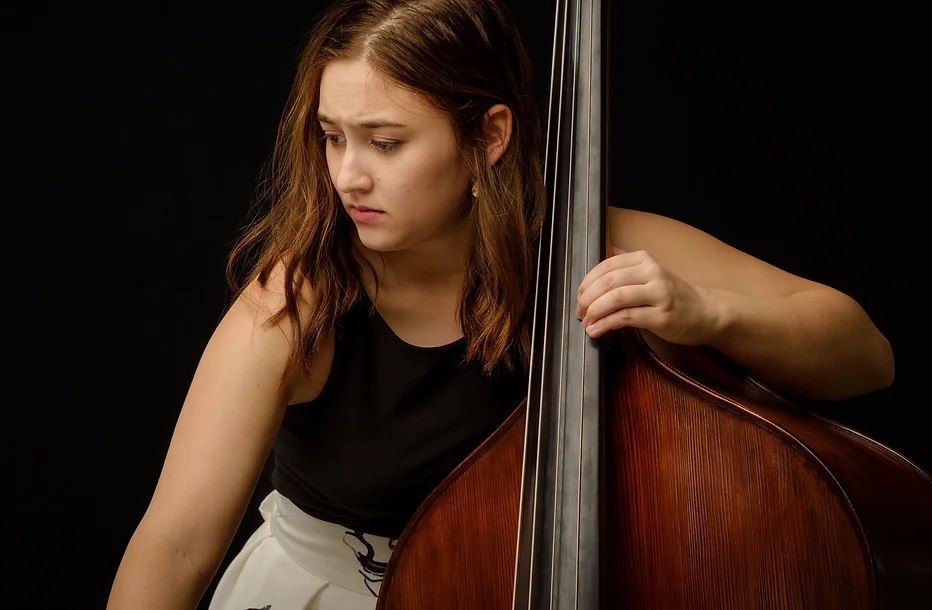
    Above: Nina Bernat

    ~ Author: Oberon
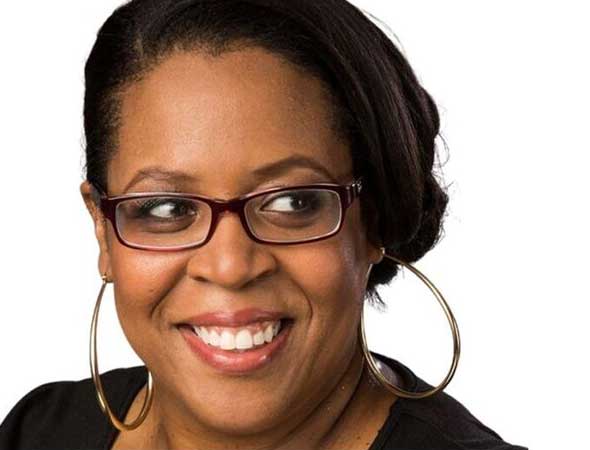
    Friday May 9th, 2025 – In the past few years, I’ve been so captivated by the sound of the double bass, whether it’s a single player at a chamber music concert or six or eight of them playing a Wagner opera from the Met Opera’s pit. The bass really is the heartbeat of classical music, and I’ve sometimes become so focused on what the basses are doing that I have to snap out of it and give the other instruments their due. In recent seasons, I’ve been very impressed by Nina Bernat, a lovely and gifted musician who I’ve heard at Chamber Music Society of Lincoln Center, and most recently with the Sejong Soloists at Carnegie Hall.

    Tonight, Ms. Bernat gave a recital at Merkin Hall; this was only the second double bass recital I’ve attended…the first was given by Xavier Foley, a Young Concert Artists’ discovery whose playing really impressed me. Ms Bernat’s program looked very appealing on paper, ranging from Bach to a world premiere by Lara Poe.

    But even the listing of the works to be played didn’t prepare me for the thoroughly engaging musical experience that Ms. Bernat and her colleagues presented. She, mezzo-soprano Katherine Lerner Lee, and pianist Anthony Ratinov all seem so very young – the last named looks like an Ivy League freshman – yet they are accomplished musicians: indeed, they are artists.

    Setting the essentially serious tone of the evening was Ernest Bloch’s Prayer. Ms. Bernat’s playing was immediately engrossing – such richness of tone and such passionate commitment – whilst the composer also brings in some lovely writing for the piano, elegantly played by Mr. Ratinov. A haunting central section leads to an affecting cadenza. The audience had been rather distracting whilst settling in; this opening work settled the mood, and the program continued to hold the crowd under a spell until the very last note had sounded.

    Lara poe

    From composer Lara Poe (above) we heard a world premiere: Songs of Self. The composer spoke briefly about the four songs, which are settings of texts by female poets accompanied only by the bass. 

    Kll

    Mezzo-soprano Katherine Lerner Lee (above) – a strikingly beautiful woman in a classic maroon frock – has a wonderfully clear and expressive voice; she honored the poets with the clarity of her diction. The first song, I dwell in Possibility, is a setting of Emily Dickinson’s words. From a very soft start, the voice entwines with the wide-ranging bass line, which is laced with fiorature and trills. The two women created a silky-smooth blend. The second and fourth songs are settings of poems by Sara Teasdale – now, that is a name I haven’t heard for a very long time! An agitated bass line and shimmering, flighty singing merge in I could snatch a day. The second Teasdale poem, February Twilight, brings an extraordinary blend of sounds, with the high, lyrical voice over a bass part that has a folk-music feel.

    Between the Teasdale songs came I am a Witch; the text is by Saima Harmaja, a Finnish poet who lived only to the age of 23. Ms. Lee’s voice begins in a monotone, accompanied by eerie, creepy sounds from the Bernat bass. The song casts a spell; a sustained, fading tone from the singer is heard, and the music feels sinister as the song moves toward a terrifying finish. 

    Ratinov

    Above: pianist Anthony Ratinov

    There’s a story behind Aaron Copland’s Violin Sonata and how it became a Bass Sonata: in 1980, bassist Gary Karr and his partner, pianist Harmon Lewis, visited Aaron Copland at his home to request a composition for double bass. Copland proposed instead that Karr give his Sonata for Violin and Piano a try. Karr proceeded to sight-read it, and the composer was so pleased with what he heard that he had it published as their joint arrangement. This sonata is a genuine masterpiece. After its completion in 1943, Copland had learned of the recent death of Harry H. Dunham, a rich and handsome young man of his social circle, shot down while serving in the Air Force, and he dedicated the piece to Dunham’s memory. The sonata thereby became an elegy.

    Tonight, Ms. Bernat and Mr. Ratinov did both Copland and Karr proud. The sonata’s opening Andante semplice was lovingly shaped by both players; from  a prayerful start, the music becomes more animated, taking on a fresh rhythm. This is optimistic music, in which hints of Appalachian Spring can be detected. Ms. Bernat’s bass resonates in its lowest range, and the movement has a wistful finish. The ensuing Lento has a note-by-note piano opening; the bass is pensive in this simple, poetic music which develops a gentle flow and is tinged with sadness. The concluding Allegretto is restlessly rhythmic, a steady beat from the piano – decorated by miniature fanfares – suddenly goes high. Ms. Bernat covers the wide range of the bass in agile passages. The music slows, then re-bounds and cruises along to a pulsing bass beat, swirling away before settling down to a calm finish.

    Indian-American composer Reena Esmail‘s Perhaps is a double bass solo in which Ms. Bernat again impressed with the sheer richness of sound she can produce. From a thoughtful start, the music goes through shifting moods, covering a vast dynamic range. The composer was in the hall, and took a bow to warm applause.

    The Adagio from J.S. Bach’s Sonata No. 3 in E Major, BWV 1016, was another marvelous interpretation from the Bernat/Ratinov duo. The pianist’s measured introduction conjured up a a haunting theme from the bass. The two players switch roles between melody and rhythm. This music evoked bittersweet memories from me, whilst photos that Ms. Bernat had found in in the apartment of her late grandmother – a holocaust survivor – must have been having the same effect on the young musician as they were projected on a screen. What stories these images could tell. 

    As perfect and engrossing as the evening had been thus far, in the musicians’ performance of Allan Blank‘s Poems from the Holocaust they surpassed themselves in this powerful and deeply moving set of songs about some of the darkest years the world has ever experienced; the songs are particularly – and scarily – timely now, as we seem to be on the verge of another calamitous period.

    Katherine Lerner Lee again sang with sublime clarity and beauty of both timbre and expression; in terms of communicating emotion through the colourings of the texts, she put me in mind such iconic lieder singers as Barbara Bonney and Frederica von Stade.

    The opening song, At Terezin, has a dramatic feeling, anxious and unsettling. The second song, Close Your Precious Eyes, to a poem by Isaiah Spiegel from a book by Frieda W. Aarin entitled Bearing the Unbearable, was painfully touching to experience. Ms. Lee found wondrously expressive colours in her singing with which to illuminate the words, whilst Ms. Bernat and Mr. Ratinov wove magical, evocative sounds around the voice, giving us a darkly captivating and thoroughly fascinating musical experience. The song ends in chilling, unearthly quietude, with ominous shivering sounds from the bass.

    Continuing the Blank cycle, keyboard filigree with commenting bass phrases open The Butterfly, a poem written by Pavel Friedmann from his two years spent at The Theresienstadt Concentration Camp, where he died in 1944. Ms. Lee’s voice is lyricism personified. The cycle’s concluding Kaddish is soulful, despairing music which Ms. Bernat played so evocatively whilst Mr. Ratinov played with entrancing softness of touch. The music held us spellbound; the three artists were hailed with long, sincere applause.

    To conclude the program, a Hebrew Melody by Joseph Achron (ed. Leopold Auer) was played by Ms. Bernat and Mr. Ratinov, both with overwhelming beauty of tone and expression. An amazing cello ‘cadenza’ was a highlight in an evening of marvelous music-making. The pianist resumes, whilst Ms. Bernat gives us some entrancing bass trills and a dark-tinged postlude before Mr. Ratinov plays a final chord. 

    Ms. Bernat had chosen “something small” as an encore; she didn’t tell us what it was or who wrote it, but it was sweet, sad, and gorgeous…a sonic feast for my Romantic soul. 

    While celebrations marking the 80th anniversary of the end of World War II have just taken place, threats of a recurrence of those devastating times are everywhere. The familiar line that those who ignore history are doomed to repeat it is so timely.

    ~ Oberon
  • Robert Hale Has Passed Away

    (This 2023 obituary for bass-baritone Robert Hale, originally on Oberon’s Grove, somehow failed to make the transition to the Glade. I would not want him to be forgotten.)

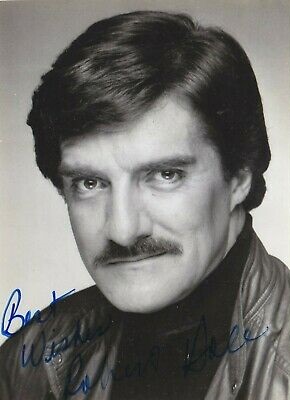
    Robert-Hale-NYCO

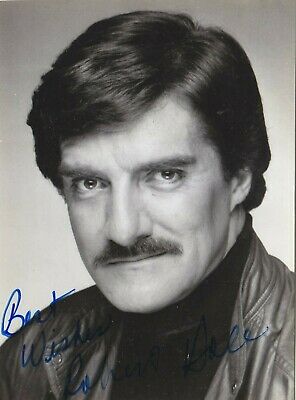
    Robert Hale, the versatile American bass-baritone, has passed away at the age of 90.

    A native of Texas who grew up in Louisiana, Mr. Hale made his operatic debut as Colline in LA BOHEME in 1967 at the New York City Opera; he was, for several seasons, a pillar of that Company, and I saw him many times in a wide variety of roles: his Sparafucile, Colline, Mozart’s Figaro, and Don Giovanni were all first-class. He was a magnificent Raimondo in the famed ‘Sills production’ of LUCIA DI LAMMERMOOR, and also sang Escamillo, Henry VIII in ANNA BOLENA, and Handel’s Giulio Cesare. Hale was truly impressive in every one of these roles…here he is in the Don’s serenade:

    Robert Hale – Serenade – DON GIOVANNI – NYCO 1972

    His performance as Scarpia in TOSCA was extraordinarily powerful, especially as he dominated the chorus and orchestra in the Te Deum that ends the first act. Hale’s vocalism was thrilling here, and as the curtain fell, he crushed a rose in his hand. I was so bowled over by his Scarpia that I made a special return trip from Hartford to New York City to see it a second time, one week later.

    Mr. Hale’s huge international career found him singing at Berlin, Covent Garden, La Scala, Vienna, Barcelona, Hamburg, San Francisco, Sydney, the Royal Danish Opera, Teatro Colon, the Bolshoi, Finnish National Opera, and the Salzburg Festival.

    Behrens hale

    Above: Robert Hale as Wotan, with Hildegard Behrens as Brunnhilde

    Robert Hale became a leading exponent of the roles of Wotan/The Wanderer in the RING Cycle and the title-role of the FLIEGENDE HOLLANDER. He sang these roles at The Met – as well as Don Pizarro in FIDELIO – between 1990 and 1996, He recorded the RING and the Dutchman (video) with both Sawallisch and von Dohnányi. Hale also sings Jochanaan on a recording of Strauss’s SALOME, and portrays Barak in a video of DIE FRAU OHNE SCHATTEN conducted by Sir Georg Solti.

    This sampling of Hale’s Wotan from the Dohnányi recording:

    Robert Hale – Das Rheingold ~ Abendlich strahlt der Sonne Auge

    Robert Hale’s abiding love for sacred music and spirituals took him on concert tours with other artists offering varying programs of this music, and he made several recordings: listen to him sing Deep River“.

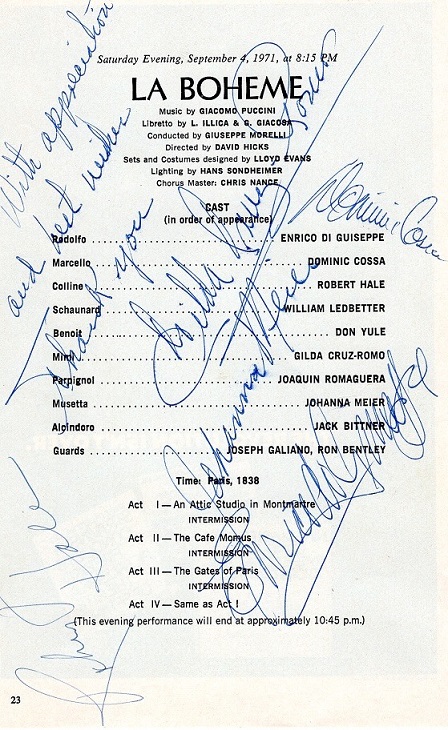
    One of my very favorite “Robert Hale” evenings at New York City Opera was this performance of LA BOHEME in which the five principal roles were taken by artists who I particularly admired.

    69311590_10216986479308219_4687127127571562496_n

  • GIULIO CESARE @ Carnegie Hall

    (Among my reviews which somehow failed to make it from Oberon’s Grove to Oberon’s Glade, this report on a wonderful Handel performance at Carnegie Hall is one I didn’t want to leave behind.)

    GIULIO CESARE @ Carnegie Hall

    CH11540969

    Above: Beth Taylor, who sang Cornelia; photo by Fadi Kheir

    ~ Author: Oberon
    Sunday May 4th, 2025 – The English Concert presenting Handel’s GIULIO CESARE in a concert performance at Carnegie Hall; Harry Bicket was at the harpsichord, with the following cast:

    Christophe Dumaux, Giulio Cesare
    Louise Alder, Cleopatra
    Paula Murrihy, Sesto
    Beth Taylor, Cornelia
    John Holiday, Tolomeo
    Morgan Pearse, Achilla
    Meili Li, Nireno
    Thomas Chenhall, Curio

    My primary reason for attending today’s performance was to hear Beth Taylor, the Scottish mezzo who made such a striking impression at the 2023 Cardiff Singer of the World competition, and who was singing Cornelia this afternoon. Immediately after the Cardiff finals, I had made friends with her on Facebook, and I have kept tabs on her ever since. 

    GIULIO CESARE is a long opera, and the seats at Carnegie Hall are notoriously bad for people who have lower back problems. I wasn’t at all sure I would make it thru the whole afternoon, though I knew that much of Cornelia’s music occurs in the first act: her lament “Priva son d’ogniconforto” and – the most moving music Handel ever wrote – “Son nato a lagrimar”, a mother’s poignant duet with her son as both are imprisoned.

    My first-ever experience with a Handel opera was at the opening night of the New York City Opera’s GIULIO CESARE in 1966. At that time, the Early Music mania had not yet commenced. The opera was treated like any other opera; I don’t recall any period instruments being used in the pit, though I wouldn’t have known what to look/listen for anyway. It was of course the production that thrust Beverly Sills, who had been singing with the Company for years, into the spotlight with her dazzling singing of Cleopatra. Cesare was sung by the great dramatic basso Norman Treigle. There were no counter-tenors in the cast; the characters of Tolomeo and Nireno were sung by bassos. 

    Fast-forward 30+ years and I was working at Tower Records where counter-tenor mania was in full flourish. The Met had given its all-star RINALDO in 1984 – a big hit – and the New York City Opera presented productions of Handel operas that drew enthusiastic crowds. I dutifully attended these, though my true passion was the Wagner/Strauss repertoire. 

    So today’s performance of GIULIO CESARE by the English Concert was the first Handel opera I’d attended in many moons. I was expecting a rather formal opera-in-concert presentation, with the singers seated onstage, rising when their characters sang, and using scores. Instead, we had a semi-staged production which included the head of Pompey in a shopping bag, and many comings-and-goings. I found it all rather distracting, and at times overly cute, as when Cesare walked down the aisle and took a seat to watch Cleopatra appear on Monte Parnasso to sing “V’adoro, pupille”.

    At any rate, it was a musically pleasing performance, with Maestro Bicket having everything well in-hand, and his orchestra full of virtuosos. There were times when the voices were covered by the musicians. Following the delicious overture, all the singers joined in the opening ‘chorus’, and then the story began to unfold. 

    We first meet Cesare in the person of the marvelous Christophe Dumaux, and Achilla (Morgan Pearse), who is toting Pompey’s head: a victory gift to Cesare from Tolomeo. The furious Cesare berates the messenger in the dramatic aria usually translated as “Tyrant, avoid my sight!” This is a brilliant introduction to M. Dumaux’s dazzling artistry.

    Scottish mezzo-soprano Beth Taylor (the main reason I was at this performance) as Pompey’s widow Cornelia and her son – the tall, slender Paula Murrihy – are horrified by the treatment of the severed head. Cornelia’s aria “Priva son d’ogni conforto” introduces the mezzo’s unique voice, with a rich lower range and gorgeous moments of straight-tone, and an amazing dynamic range, all woven into the aria’s poignant melody. Ms. Murrihy’s Sesto replies with her own reassuring aria, “Svegliatevi nel core“, with its touching central song and a stunning cadenza.

    Louise Alder’s Cleopatra is introduced with “Non disperar“, her singing at once lovely and characterful, with humorous touches in the repeat. Cleopatra is played as rather too silly and juvenile in the early scenes, but this will change as her fate alters from scene to scene. John Holiday’s Tolomeo joins the action, his “Empio, sleale!” is vividly sung, though at times the orchestra covered his voice. In a peaceful, reflective interlude, M. Dumaux’s singing is refined and poignant. Cleopatra is introduced to Cesare (she’s wearing sunglasses) as “Lydia”.

    Beth Taylor returns, holding the urn of her husband’s ashes. She has a gorgeous recit, a dramatic monolog in which her multi-hued voice is fascinatingly employed. Introduced by a superb cello solo, Ms. Murrihy again brings her artistry to delight us in “Caro speme“; her subtle ornaments are captivating. Cesare’s ‘hunting’ aria, “Tacito e nascosta” was another Dumaux gem, though the horn playing was not immaculate, and the orchestra was a bit too loud; the counter-tenor’s ravishing cadenza made these concerns irrelevant. Morgan Pearse makes much out of Achilla’s big aria, and then the opera’s most magical moments unfold in the great duet for mother and son, “Son nata a lagrimar“. Mlles. Murrihy and Taylor achieved a miraculous blend of timbres, their singing exquisitely filled with subtleties and emotional shadings as they share their despair; they seemed to live and breathe as one.

    I seriously thought of leaving at this point, just to carry this incredible musical experience away in my heart.

    We settled in for Act II, counter-tenor Meili Li making a fine impression as Cleopatra’s help-mate Nireno. Ms. Alder’s Cleopatra was getting a bit annoying in this juvenile characterization (not the singer’s fault, but that of the staging); the soprano would soon find more depth in the character and her singing would become increasingly impressive…and moving. But for now, her “V’adoro pupille” was charmingly rendered…and the best was still to come.

    Violin virtuosity from Nadia Zweiner introduced another Dumaux delight, and then Ms. Taylor has another sad song, full of wondrous soft singing. Mr. Holiday’s Tolomeo threatens Cornelia in a florid aria. Sesto prevents his mother from killing herself, and Ms. Murrihy displays her deft coloratura in “An angry serpent never rests…”

    Ms. Alder’s “Venere bella” was charmingly sung, Thomas Chenhall’s Curio makes his mark, and M. Dumaux delivers some fabulous fiorature in an allegro aria. Calls for Cesare’s death are heard, and then Ms. Alder comes stunningly into her own with a heartfelt “Se pietà di me non senti”; in leaving behind the whole ‘Lydia’ conceit, the soprano now becomes truly compelling in both her vocalism and her hypnotic acting. 

    Another interval…the afternoon is stretching long, and my back sends me alarming signals (I’ll be paying for all this sitting in the proverbial “morning after”) but I persevered. 

    Tolomeo continues to court Cornelia, and Sesto tries to murder him. John Holiday’s aria here is most effectively delivered; in his anger, he makes his sister Cleopatra crawl. Ms. Alder’s “Piangerò la sorte mia” is quite magical; she’s very involved in the words and delivers some neat coloratura in the fast section. The da capo is a bit over-decorated, but very finely sung. 

    Now Mr. Dumaux brings all his gifts to the recit that precedes “Aure, deh per pietà“; a remarkable note swells from pianissimo to glowing power and then back to a whisper…truly astonishing. He then sings the aria with uncanny control and entrancing subtleties; a magical cadenza is the crowning touch. Cleopatra is on the brink of suicide when good news prompts a brilliant “Da tempeste” from the soprano. Tolomeo again rattles Cornelia, and this time Sesto strikes to kill. (One of the awkward things about the semi-staging is that dead people come back to life, stand up, and walk offstage…) 

    One wishes for a grand scena to seal Beth Taylor’s great success as Cornelia, but a rather modest song will have to do. Cleopatra and Cesare sing of their joy in an extended finale.

    Giulio cesare-1 jpg

    We met Ms. Murrihy at the stage door, such an elegant and friendly woman. 

    We then waited a long time for Beth Taylor to appear, but eventually we found out there was a reception going on, apparently with no end in sight. So I missed my chance to meet this woman with the fascinating voice.

    And now for some Fadi Kheir photos from the evening…click on each image to enlarge:

    CH11540973

    John Holiday as Tolomeo and Louise Alder as Cleopatra

    CH11540976

    Louise Alder as Cleopatra and Meili Li as Nireno

    CH11540980

    Christophe Dumaux as Cesare and Louise Alder as Cleopatra

    CH11540981

    M. Dumaux sings from the audience

    CH11540982

    Ms. Alder and M. Dumaux

    CH11540984

    Morgan Pearse as Achilla and Beth Taylor as Cornelia

    CH11540988

    Ms. Alder as Cleopatra

    CH11540992

    M. Dumaux and Ms. Alder

    CH11540994

    Paula Murrihy as Sesto

    CH11540995

    Christophe Dumaux as Giulio Cesare

    CH11540989

    The cast takes a bow: Beth Taylor, Paula Murrihy, Louise Alder, Christophe Dumaux, Maestro Harry Bicket, John Holiday, Morgan Pearse, Meili Li, and Thomas Chenhall.

    “Let fair joy and pleasure
    now return within our hearts;
    relieved of all sorrow,
    we may rejoice once again.”

    ~ Oberon

    (Performance photos by Fadi Kheir, courtesy of Carnegie Hall.)

  • Voice~Viola~Piano @ The Manhattan School of Music

    (Some articles from Oberon’s Grove did not make the trip to Oberon’s Glade. Here is one about a particularly lovely concert given in January 2024.)

    Eve

    Above, this evening’s artists: Shmuel Katz, Thomas Lausmann, and Eve Gigliotti

    Wednesday January 15th, 2024 – A recital at the Manhattan School of Music brought together mezzo-soprano Eve Gigliotti, violist Shmuel Katz, and pianist Thomas Lausmann for a program of works by Shostakovich, Valerie Coleman, Brahms, and Loeffler. The School’s Greenfield Hall is a perfect setting for such chamber concerts; it feels spacious, yet the sense of intimacy is palpable. And the acoustics are wonderfully immediate. I sat in the front row, and all evening could feel the music in a very personal way…like it was being sung and played just for me.

    Mssrs. Katz and Lausmann opened the program with the Shostakovich Sonata for Viola and Piano, Op. 147. This was the composer’s final work; he completed it on July 5, 1975, and the next day he entered the hospital where, just over a month later, he passed away from the effects of terminal heart disease and lung cancer.

    Shostakovich seems to have considered the Viola Sonata to be his farewell to music, and to life. Each of the sonata’s three  movements conclude with a morendo – a “dying away.” The opening Moderato (the composer had initially called it Novella) commences with a solitary pizzicato line from the viola; the piano then joins with chromatic motifs, in contrast to the viola’s open intervals. A dialogue ensues which has an austere feeling. Mr. Katz’s simply gorgeous tone filled the lamenting theme with a deep sense of yearning; both viola and piano have a great outpouring before the music turns restless and animated. Viola tremelos and brooding passages from Mr. Lausmann’s keyboard give the feel of impending doom. Mr. Katz’s viola takes on an eerie sound as he plays a twisty theme. A burst of passion subsides, and there’s a rather sneaky, sorrowing viola cadenza before the opening pizzicati resume, leading to a fade-out of gossamer pianissimi.

    The second movement – marked Allegretto – is in scherzo mode. March-like rhythms veer into folk dances, the two players in perfect alignment. The music combines humor and passion in alternating currents. Mr. Katz’s viola is plucked over a brooding passage from Mr. Lausmann; they then join in a unison dance passage. After a rich-toned viola cadenza, the two players skim onward until the viola commences a slow solo, marvelously played.

    The sonata’s final movement was composed in just two days. Echoes of the iconic opening measures of Beethoven’s “Moonlight” sonata emerge, conjuring up memories. The whole movement is so poignant, all the more so for Mr. Katz’s infinite depth of tone; his stunning cadenza leads to a sense of darkening; Mr. Lausmann’s piano solo is so evocative of the moonlight. Shostakovich now looks back into the past with ghostly quotes from his earlier works. In the final moments, the composer leaves us with the purity of C-major, with Mr. Katz sustaining an incredibly long tone of impeccable beauty. The audience responded fervently to this spellbinding music, so marvelously played.

    ValerieColeman-v1

    Composer Valerie Coleman (above) came to the stage to introduce her Fan Imèn (Human Family), which she had originally composed as a competition piece for flautists; tonight we were hearing the premiere of the viola setting. Ms. Coleman left us with a passage from one of Maya Angelou’s poems: “We are more alike, my friends, than we are un-alike.” If only people could grasp this notion, what a world we might be living in…free from all this chaos and strife.

    Mssrs. Katz and Lausmann now did Ms. Coleman proud with a beautifully genial rendering of Fan Imèn. It opens with the pensive viola playing over shining piano motifs; turning lyrical, there is a flow of melody before becoming more animated and – finally – quite grand. After a lull, Mr. Lausmann plays shimmering notes as Mr. Katz’s viola sings eloquently. The pianist instigates a dance, the viola sailing over it. The work’s optimistic, swirling finish is a pure joy. Ms. Coleman returned for a bow and was presented with flowers by a charming a young girl.

    Following the interval, Eve Gigliotti appeared in a stunning red frock to sing Johannes Brahms’  lovely Zwei Gesänge, Op. 91, often referred to as “the viola songs”. The first of these, “Gestillte Seihnsucht” (‘Longing at Rest’), is a hymn to nature sung from an unsettled soul that seeks heavenly peace. Beautifully meshing her warm, rich timbre with that of the Katz/Lausmann duo’s perfect blend, Ms. Gigliotti filled the space with her expressive, all-embracing  voice. An animated interlude returns her to the rapturous melody, her singing alive with poetic subtleties and colours. Mr. Katz’s viola maintains the atmosphere in the song’s postlude.

    The second song, “Geistliches Wiegenlied” (‘Sacred Lullabye’) is based on a medieval Christmas carol. Mary asks the angels to still the winds so that her child might sleep. The viola opens and closes the song with a gently rocking motif. Ms. Gigliotti brings her distinctive timbre and a sense of passion to the music, catching the poems shifting moods with a mastery of dynamics. Now I want to hear her in the Brahms Alto Rhapsody.

    To conclude the evening: Poèmes, Op. 5, by Charles Martin Loeffler. These songs are new to me, and they bring us settings of poems by Baudelaire and Verlaine with an eclectic mix of musical styles.

    Published in 1904, the first song is a Charles Baudelaire poem; entitled “La Cloche fêlée” (‘The Broken Bell’), it opens with a somber piano and a lamenting viola. Ms. Gigliotti’s expressive singing – with her opulent vibrato – captures the mood. After an interlude from the viola, her vocal line becomes urgent…and then quite grand.  Rich, smouldering singing fills the last strophe; piano and viola offer a gorgeous postlude, Mr. Katz’s playing exquisitely soft.  

    The three remaining songs are to poems by Paul Verlaine. “Dansons la gigue!” (‘Let’s dance the jig!’) is a jolly, rollicking tavern song. The three musicians were clearly having a blast with this, wherein the poem describes the memories of a romance that turns out to be a ‘dead letter’ (I’ve had a few such experiences in my life). The song has an instrumental finish.

    Le son du cor s’afflige vers les bois” (‘The Sound of the Horn Wails in the Woods’) opens with hauntingly beautiful playing from Mr. Lausmann. Eve’s voice is touchingly expressive. The Katz viola takes up a sustained theme, over rapturous sounds from the pianist; the singer produces a flood of tone. The deep viola leads to a wistful finish.

    The set ends with “Sérénade“. Mr. Katz strums his viola like a guitar, the music dance-like. Mood swings follow, and a marvelous interlude for viola and piano. Eve’s sense of drama is ever-evident. With some viola plucking, the song reaches a witty finish. The audience’s enthusiastic response drew the artists back for a second bow, whilst two little girls came forward with bouquets.

    What an engaging concert…an ideal escape from the woes of the world. 

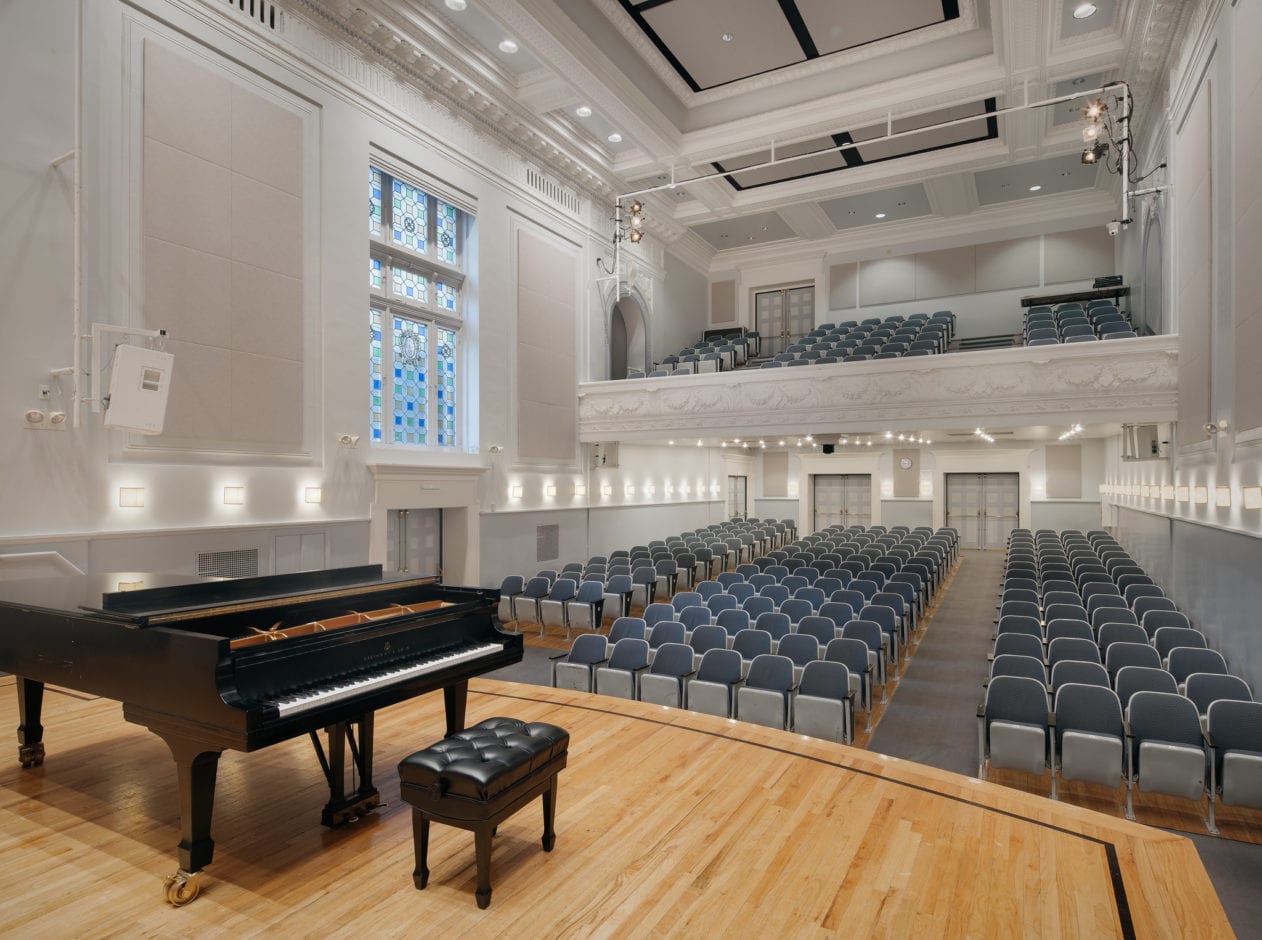
    Gordon K. and Harriet Greenfield Hall

    Above: tonight’s beautiful venue: the Gordon K. and Harriet Greenfield Hall at the Manhattan School of Music.

    Adding to this very pleasing evening was a chance meeting with Catherine Malfitano; Catherine’s on the faculty at the Manhattan School of Music, and all day I’d been thinking, “Maybe I’ll run into her!” In this large, sprawling building it seemed unlikely but – mirabile dictu – she was suddenly passing before me. It was so nice to see her again, recalling a long talk we once had when I was working at Tower Records. She looks great – gorgeously dressed, as always – and she was very gracious.

    ~ Oberon

    My Photo

  • WEEKEND AT THE OPERA: February 21-22, 1969

    (In transitioning from Oberon’s Grove to Oberon’s Glade, some articles got left behind. Here is one that I wrote about a memorable weekend at The Met in 1969.)

    Opera2 020

    In the decades since I started going to the opera, I’ve had some spectacular experiences at the Met. But one weekend always stands out: February 21 – 22, 1969 when I saw a perfect cast in my first FRAU OHNE SCHATTEN on Friday; my first RHEINGOLD (and my only Herbert von Karajan performance in the theatre) on Saturday afternoon; and the once-in-a-lifetime combination of Birgit Nilsson and Montserrat Caballe as Turandot and Liu in TURANDOT on Saturday night. It’s pretty incredible to think it was almost 40 years ago – and even more incredible that the performances remain so vivid in my mind.

    Opera2 022

    When I think back now about such monumental portrayals as Leonie Rysanek’s Kaiserin in FRAU (above), I can’t avoid a feeling of regret, both for myself  – that such breath-taking voices and personalities no longer seem to exist – and for the younger generations of opera-goers who only very rarely can experience performances of such majesty and intensity today. What I think possibly it comes down to is: singers like Rysanek, Irene Dalis, Christa Ludwig, Birgit Nilsson and Montserrat Caballe sang with complete generosity; they gave not only of their voices but of their very selves. Coached and supported by conductors like Karl Bohm and Herbert von Karajan, they were secure in what they were doing and unafraid to spend their voices lavishly. However, it was more than just the vocalism: you can listen to live recordings from this era and surely find flaws, but in the house the commitment and sheer passion of these singers swept away any misgivings. There is nothing comparable today to hearing the sound of a Rysanek or a Nilsson pouring out into the big hall. On this weekend, the five ladies mentioned and all their colleagues in all three operas generated the kind of audience fervor that simply is not found in opera houses today.

    Opera2 021

    Moments like the scene above in FRAU, where Rysanek as the Empress dismisses her Nurse (Irene Dalis) have simply emblazoned themselves on the aural memory. In that split second before Leonie came soaring in on “…du taugst nicht zu mir!” (“You are not my kind!”) you simply knew you were going to get hit by a thunderbolt. I can hear it today, forty years on…and more importantly, I can FEEL what it was like to experience it. Irene Dalis put her stamp on the Nurse’s music – and persona – in definitive terms. Rysanek, who sang  this opera with every world-class Nurse during her career, once cited Irene’s as the ideal.

    Opera2 023

    It’s hard to imagine what singers could ever surpass Christa Ludwig and Walter Berry (above) as the Dyer couple.  They cast a spell of rapture over the house with their big duet in Act III, but earlier Christa had reveled in the complete ease and clarity of her own voice as she swept into the soaring phrase “O welt in der welt, O traum in wachen!” (“Oh, world within the world, oh waking dream!”) on first seeing the vision of the Young Man. There was a humanity in Walter Berry’s sound that will always make him the Barak of the imagination.

    King_184

    James King (above), who sang the Emperor on Friday and Calaf in TURANDOT on Saturday night reportedly had to get a dispensation from Dr. Bohm to sing back-to-back performances. He sang with clarity and passion on both nights. I cannot think of a tenor today who could sing these two roles on consecutive evenings and make such a vocal and stylistic impression in very disimilar music.

    Singers 005

    Above: James King and Leonie Rysanek during the finale of FRAU.

    Opera2

    Karajan’s approach to RHEINGOLD was described by some as ‘chamber music’ and it surely had a great intimacy of feeling. I had the Solti recording at home and loved it, but inexperienced as I was in RING performances I could still feel Karajan’s attention to detail in the clarity of the various orchestral voices which was so impressive, and that the singers were able to project easily into the house. The impressive singing and characterizations of Theo Adam (Wotan), Gerhard Stolze (Loge) and the fabulous Zoltan Kelemen (Alberich) would have been enough to guarantee a thrilling afternoon, but look at those names: Edda Moser, Donald Grobe, Talvela, Ridderbusch, Sherrill Milnes!

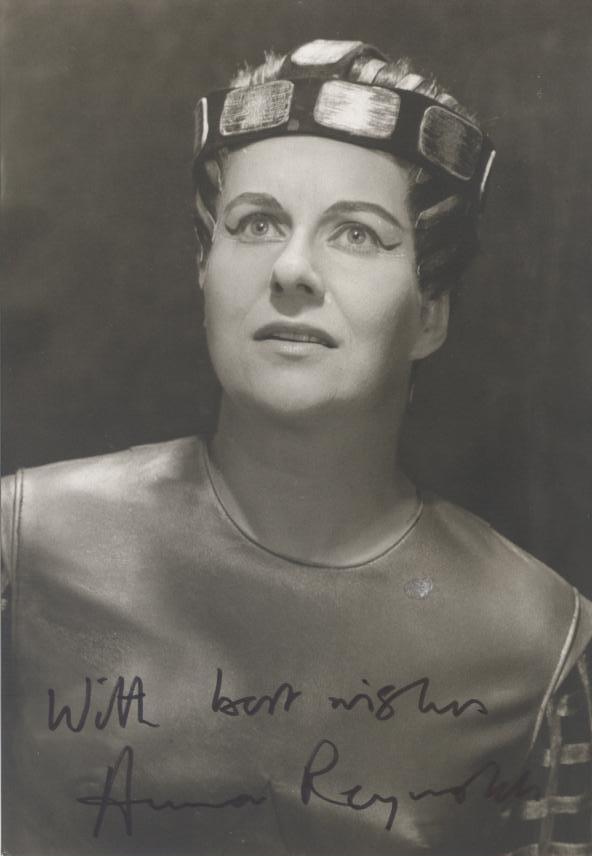
    There was an added feeling of excitement among the fans in standing room (where I was) when Josephine Veasey bowed out as Fricka and was replaced by the then-unknown Anna Reynolds (below) who had been cast originally as a Rhinemaiden. She brought lyric dignity to her music…and a stately presence. A few seasons later I saw her as a sensational WALKURE Fricka.

    Opera 015
    Opera2 014

    And then there was the great audience favorite, Lili Chookasian (above) singing Erda. It was her scene with Wotan that perhaps was the most enthralling moment of the afternoon. Using her wonderfully weighted voice, Chookasian along with Theo Adam turned their encounter into one of those time-stands-still episodes. Since this first in-theatre experience with a RING opera, the Cycle has become a cornerstone of my musical world. I don’t claim to begin to comprehend it, but simply to be moved and astonished by it on so many levels. I’m always grateful that my initiation was with such a memorable and satisfying performance.

    Of course, there were enormous ovations after both FRAU and RHEINGOLD. In those days we thought nothing of screaming our heads off for twenty minutes at the end of an opera. Between the singers and the two great maestros, the audiences were whipped into a frenzy of acclamation. The performers bowed and bowed but the crowd would not let them go.

    Opera2 003

    For all the magnificence of those Strauss and Wagner performances – and the wild reception accorded the participants – the Nilsson/Caballe TURANDOT possibly elicited an even more passionate response. I always loved Zubin Mehta’s brilliantly colourful account of this score. James King and Bonaldo Giaiotti (Timur) received impressive volleys of applause all evening, but you would have to have been there to comprehend the madness which seized the crowd as Nilsson (above) and Caballe (below) – each in her own way – defined the term DIVA.

    Opera2 005

    We were certainly expecting luminous Caballe pianissimi all evening but I think she surpassed herself, starting with the suspended B-flat on ‘Perche un di…’ in Act I which had the delicacy of moonlight. At the end of ‘Signore ascolta’ she produced a gossamer top B-flat and then swelled it to fortissimo in an unforgettable display of breath control and support.

    In Act II, Nilsson was on a double-gold standard; she knew she’d have to give it her all on a night like this. But then, giving her all was what Birgit always did. She effortlessly dispatched her trademark trumpeting top notes that blazed into the house, driving the fans wild.

    Finally in Act III came the long-anticipated scene in which princess and slave meet. Tortured to reveal the name of her beloved Prince, the steadfast Liu is silent. “What is the secret of your strength?” Turandot asks her. ‘Principessa, l’amore!’  (“Princess, it is love!”) Caballe replied and on “l’amore” she produced a breathtaking silvery pianissimo like a whisper. Astoundingly, Nilsson responded “L’amore?!” with a delicate pianissimo of her own. A silent thrill – a frisson – passed thru the house.

    Dementia reigned at curtain call. Time and again the singers came forth. Many, many sets of solo bows. Each group call produced the delightful game of ‘after you!’ between the two sopranos, each offering to give precedence to the other.  At long last Nilsson and Caballe came out together, just the two of them. You’d have thought the house was going to simply cave in. Complete delirium. They embraced, and waved to the crowd; then they started to walk off. Suddenly the sound of the applause and screaming re-doubled. Nilsson and Caballe halted in their tracks, bowed deeply again to the house and to one another, then threw their arms around each other and walked off the stage.

    TurandotBeatonDesign1

    Cecil Beaton costume sketch above. It just happened to be the 100th performance of Puccini’s final opera by the Met:

    Metropolitan Opera House
    February 22, 1969

    TURANDOT {100}

    Turandot................Birgit Nilsson
    Calàf...................James King
    Liù.....................Montserrat Caballé
    Timur...................Bonaldo Giaiotti
    Ping....................Theodor Uppman
    Pang....................Andrea Velis
    Pong....................Charles Anthony
    Emporer Altoum..........Mariano Caruso
    Mandarin................Robert Goodloe
    Prince of Persia........David Milnes [Last performance]
    Servant.................Lance Westergard
    Servant.................Lawrence Eddington
    Servant.................Harry Jones
    Executioner.............Phillip Rice
    Executioner.............Donald Mahler
    Executioner.............Howard Sayette

    Conductor...............Zubin Mehta

  • Gerda Lissner Winners Concert ~ 2025

    (In moving content from Oberon’s Grove to Oberon’s Glade, some articles proved resistant to being re-located. This is one of them, from an evening I especially enjoyed.)

    Wednesday April 30th, 2025 – The annual Gerda Lissner Foundation Winners Concert took place this evening at Zankel Hall. Female voices well out-numbered the male contingent (just two tenors, no baritones nor bassos), and – as a special treat – the marvelous Sasha Cooke flew in from Houston where she is singing Venus in TANNHAUSER to make beautiful music together with the iconic pianist Warren Jones. Midge Woolsey was the host

    The first half of the concert was given over to lieder. Pianist Francesco Barfoed, whose playing for Joseph Parrish’s Merkin Hall recital earlier this year was so impressive, supported the singers with his attentive, nuanced playing.

    Soprano Ashlyn Rock opened the concert with well-contrasted songs by Jean Sibelius and Libby Larsen. A striking blonde woman, Ms. Rock is already a fully-formed artist; her presence and presentation were engaging, and the voice is clear and effortlessly hall-filling. Mr. Barfoed’s piano introduction to the Sibelius was grand indeed, and the soprano delivered a great outpouring of tone. In the Larsen song, the doomed Anne Boleyn veers from explosive to prayerful, Ms. Rock was in command at every moment, her diction outstandingly keen. Though now a lyric soprano, I can hear a future Elsa and Sieglinde in that voice: a stunning opener to the program.

    Bridget Esler, in a peach-coulored frock, teamed up with Mr. Barfoed’s inspired playing for Schumann’s Requiem, the pianist veering from gentleness to rhapsodic, the soprano’s lovely timbre and dynamic variety impressive at every moment. Messiaen’s Resurrection opens with some banging on the Steinway; the singer then commences an Alleluia, her voice vivid as she moves between dramatic passages and moments when coloratura comes into play.

    Tenor Michael John Butler, a sturdy, youthful fellow, has a distinctive timbre and is wonderfully word-conscious. In Poulenc’s C, a setting of a Louis Aragon poem, he and Mr. Barfoed made a most congenial effect, the tenor’s singing at once masculine and elegant. Rippling piano motifs open Strauss’ Heimlich Aufforderung  wherein Mr. Butler’s powerful sound and very appealing personality held us under a musical spell: passion was the watch-word as tenor and pianist regaled us with their artistry.

    Mezzo-soprano Erin Wagner then took the stage; in a velvety blue gown, she and Mr. Barfoed opened with Dominick Argento’s The Diary from the composer’s Virginia Woolf cycle. From a rambling piano introduction, Ms. Wagner offered lovely, expressive singing, her mastery of a vast dynamic range (honed down to an exquisite, lingering pianissimo on the song’s final note), was ideally merged with her making every word of the text count. In Hugo Wolf’s thrilling Kennst du das land, Mr. Barfoed’s immaculate piano introduction set the tone for a spectacular performance in which voice and piano entwined to ravishing effect. Both artists caught every nuance of the music and text; in the passionate passages, Ms. Wagner’s outpouring of sound was riveting, standing in contrast to the more pensive phrases…and an undercurrent of restlessness. The pianist was simply marvelous, from first note to last. The song ends with a sustained, delicate note, and in that moment the singer appeared to be gently weeping.

    Sasha Cooke and Warren Jones were warmly welcomed; Sasha, in a forest-green gown, looks more beautiful than ever, and the voice has a charismatic radiance that casts a spell over listeners – a spell that tonight was palpable. Honoring Michael Tilson Thomas, in whose farewell performance at San Francisco Sasha has just taken part, she and Mr. Jones (stepping out of retirement this evening) offered Grace, a joyous song of giving thanks by the conductor/composer that opens with a long piano intro and was then was deliciously voiced by Ms. Cooke. For a moment I thought that the mood-swing from that extroverted song into Mahler’s sublime “Ich bin der Welt abhanden gekommen” wouldn’t work, but leave it to Sasha to prove me wrong. Her incandescent voice and her deep connection with the text, combined with Mr. Jones’s poetic playing, created an incredible atmosphere of peace; as the music faded away, a sublime silence fell over the hall. Time stood still. 

    After an overly-long intermission, the opera singing commenced. A pair of chatterboxes had settled in behind us, and they talked openly through much of the concert’s second half. I’m sure there were times when the singers onstage could hear them (we were in the second row); it really put a blot on the proceedings.

    Magdalena Kuźma, in a black frock slit to the thigh and amazing red shoes, was my Papagena at the Met a couple of weeks ago. With Arlene Shrut at the Steinway, she opened the operatic half of the program with an arias from Tchaikovsky’s IOLANTA, which commences with a few bars of grand piano playing. Ms. Kuźma has a vibrant voice, and a colorful personality; she is a generous singer, but also capable of subtlety. She would later return to close the program.

    Subtlety was lacking in some of the remaining singing of the evening. Amanda Batista, in a lacy gown, has a voice to be reckoned with, impressive in size and colour. She seemed too ‘healthy’ for Mimi’s Act I narrative from LA BOHEME, music which can be so poetic when piano/pianissimisi effects are woven in. Ms. Batista’s personality is quite extroverted; Tosca might be a better match for her in that regard. She sang very well in the ARABELLA aria, though more nuance might make it more magical. The piano postlude was most appealing.

    Sofia Gotch looked striking in deep blue; her “Caro nome” was deftly voiced, though again it’s an aria that profits from more subtle colourings. The piano’s setting forth of the main melody was too dotty. Music from Britten’s MIDSUMMER NIGHT’S DREAM was then charmingly dispatched by Ms. Gotch, who found beauty in the words as well as the notes. Hers is an impressive young voice, to be sure. 

    Shelén Hughes, in a purple gown, reminded me very much of my dear friend, dancer Francesca Todesco. Ms. Hughes opened with the Snow Maiden’s aria from the Rimsky-Korsakov opera. It’s an appealing voice, and she captured the maiden’s mood-swings with lyrical singing, fine dynamic control, and amusing outbursts. Her singing is often delectable, and she gave the aria a big finish. Then she sang one of my favorite arias, “Son pochi fiori” from Mascagni’s L’AMICO FRITZ, in which she captivated me with a sustained, a lovely diminuendo.   

    Tatev Baroyan looked truly fabulous in her flared red skirt and black bodice – it’s a look I associate with the great Agnes Baltsa, whose New York debut in a concert version of Mercadante’s IL GIURAMENTO at Lincoln Center many, many moons ago made such a vivid impression. Ms. Baroyan shares the Baltsa gift for dramatic flair and fearless vocalism. Her Song to the Moon from RUSALKA boasted an ideal vocal mixture of passion and wistfulness, whilst her entrancing arms and hands spoke of her longing. Ms. Baroyan followed this with a gypsy song from Kalman’s CSARDASFURSTIN, which features echo effects before getting fast and fun…and then the diva started dancing.

    Giorgi Guliashvili, a Georgian tenor, offered two of my favorite tenor arias, both sung with passion and intensity. The haunting piano introduction to Lensky’s aria from EUGEN ONEGIN led to the tender, lamenting air of the young poet about to die in a duel with his best friend; Mr. Guliashvili singing is at once tender and powerful as he resigned himself to his fate. This was followed by the splendid “O souverain, O juge…” from Massenet’s LE CID, which the tenor commenced with a rich-toned recitative that leads to the prayerful aria, which was intensely rendered; there is a delectable hint of a sob in the voice. Very moving!

    Ms. Kuźma then returned; at first Susanna’s “Deh vieni non tardar” seemed like merely a nod to the otherwise absent Mozart, but the soprano made something of it with her skilled interpretation. An aria from Moniuszko’s HALKA commenced with a grand piano introduction from Ms. Strut, launching Ms.Kuźma’s big-voiced start. A reflective passage found the soprano capable of lovely softness, but then the drama takes over and propels the aria – and the evening – to its finish. All the participants then joined together for a bow:

    Lissner

    Click on the above photo to enlarge.)

    On a personal level, two wonderful things happened as we made our way out of the hall: I encountered a friend, Arthur Levy, who I had not seen for nearly 40 years; and I greeted and shook hands with the foremost Wotan, Dutchman, and Hans Sachs of his day (and mine!): the great James Morris, with his dear wife Susan Quittmeyer. 

    ~ Oberon