Over time, I have come to truly cherish Mahler’s KINDERTOTENLIEDER. I’ve recently discovered an arrangement by Andreas N. Tarkmann that I especially like: played by musicians of the WDR Symphony Orchestra and sung by Sara Gouzy (photo above).
The live recording dates from January 2024. Watch and listen here.
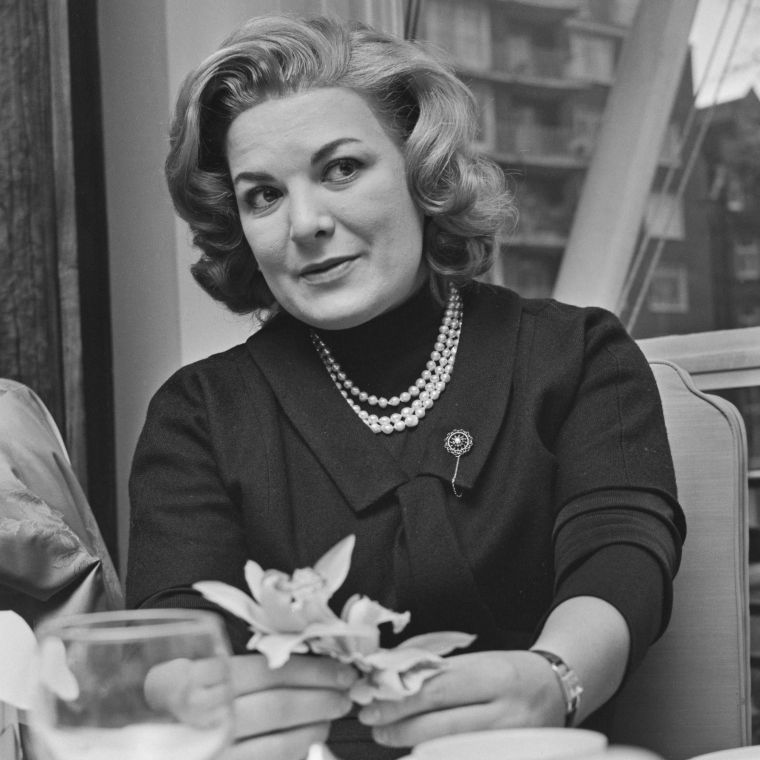
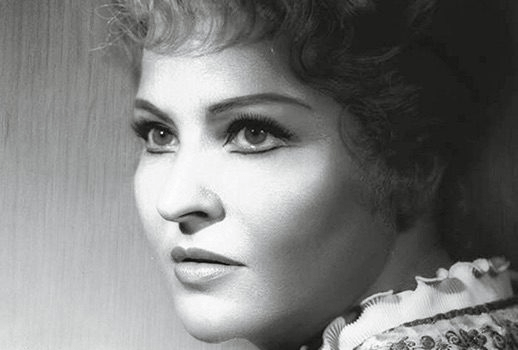
Teresa Stich-Randall (above) sings Strauss’s Vier letzte Lieder, with the Radio-Symphonieorchester, Vienna, conducted by László Somogyi. The recording dates from June 1964.
In November of 1963, I attended my first-ever performance at the Metropolitan Opera (at the Old Met!). It was DON GIOVANNI, and Ms. Stich-Randall sang Donna Anna.
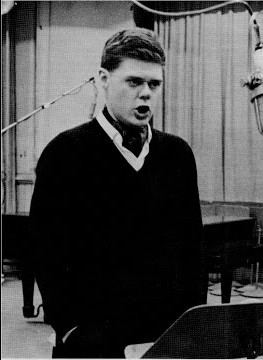
Bass-baritone Donald Bell (above) sings Walton’s BELSHAZZAR’S FEAST with the Netherlands Radio Choir and the Radio Chamber Orchestra, broadcast live from the Concertgebouw in Amsterdam in December of 1965. Hugo Rignold conducts.
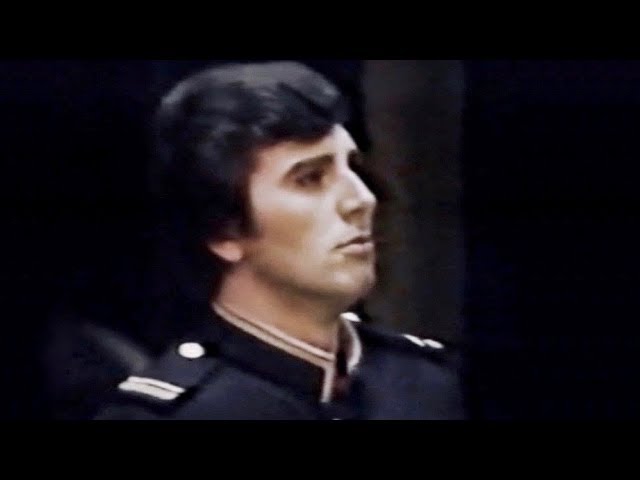
Jerry Hadley (above), Judith Christin, and Alan Titus in a scene from Act III of Puccini’s MADAMA BUTTERFLY. The performance, by the New York City Opera, was televised in 1982 and is conducted by Christopher Keene.
(This article about the great singing-actress first appeared on Oberon’s Grove in 2008; it included many more photos, but for this revival, I’ve chosen a few special favorites.)
Back in 1968, I was at a performance of CAV/PAG at NYCO and the soprano singing Nedda caught my fancy, not just because she was slender and sexy and moved with a natural command of the stage, but also that at one point she stamped out a cigarette with her bare foot. I could not think of many divas who would do that.
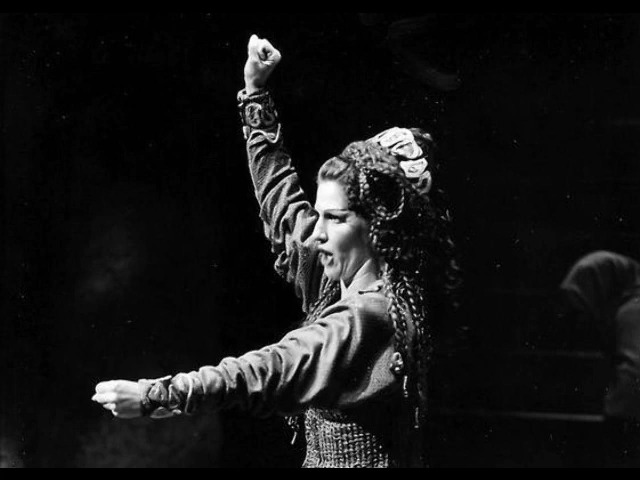
I could write a book about Maralin Niska; her performances are among the most potent memories I have of that heady time in the 1960s-1980s when so many great singers played nightly at both of New York’s opera houses.
Her voice was unconventional; an enigma, really. I would not call it beautiful though she could convince you that it was utterly gorgeous in certain phrases. Her technique was based very much on a chest resonance which gave her unusual power; while the timbre of her voice was dark, the thrust of it was very bright. When I think of other great singing-actresses I have seen – Rysanek, Silja, Behrens – Niska stands firmly in their company and she was the most versatile of them all. She was a striking woman; I remember her being referred to as the Rita Hayworth of opera.
In 1969, while the Met was closed due to a strike, Maralin was alternating Mozart’s Countess Almaviva with the role of Yaroslavna at NYCO. Two more dissimilar roles would be hard to imagine but she was utterly at home in both. Her Countess had an almost tragic dimension as she suffered the indignations her husband heaped on her; she used her perfectly supported piano technique to great effect in Mozart’s music. As Yaroslava, left by Prince Igor to run the unruly kingdom while he is off fighting Khan Kontchak, Niska sang a hauntingly hushed lament for his absence. But when the rebels set fire to the palace, Maralin, surrounded by the thundering chorus of boyars, let fly with an unscripted high-D which was as thrilling as any note I’ve ever heard in an opera house.
As Marguerite in FAUST, Niska was anything but a shrinking violet. Faust was the key to her sexual awakening and when he bade her adieu in the Garden Scene, Niska broke into sobs of frustrated passion. Her overwhelming power in the final trio, and her devastating rejection of Faust at the end literally ring in my ears even today.
The vocal and dramatic strokes Niska used in her canvas remain vividly alive for me all these years later. In BUTTERFLY, kneeling with Suzuki and Trouble with backs to the audience as the Humming Chorus is intoned and evening falls, Niska slowly looked over her shoulder to the audience with an expression of quiet fear: Butterfly’s unshakable faith would not pass the test. In TRAVIATA, having been asked by Germont pere to give up his son, Niska sustained the opening of “O, dite alla giovine” with a remarkable hushed tone and drew no breath before continuing. With that phrase, Violetta’s fragile world comes undone. No other soprano has done it quite the same way. But I went backstage afterwards and said, “Maralin! That NOTE!” “Which note?” “The note before “Dite alla giovine!” “Um…yes?” “You held it so long and so quietly and then went into the phrase without breathing!” “I did?”
She sang Tosca, her contempt for Scarpia expressed with icy power. After she had murdered him, she knelt by his corpse and sang “E morto…or gli perdono!’ and with a swift stroke buried the blade of the knife into the stage about an inch from the baritone’s head. Then she sang Mimi, and I thought she’d be way too cold for that. But she told an interviewer: “I put on the costume and I became Mimi.” Using portamenti and her miraculous piano, Niska did indeed become the pathetic seamstress.
Niska was also singing at the Met by now, in VESPRI and TOSCA among other operas. She was wonderful and wove her own magic into the existing stagings.
Above: Maralin as Medea
NYCO mounted Cherubini’s MEDEA for her. This complex role, sometimes sung as a verismo shrew, was more classically structured by Niska who seemed to realize that vocally Medea is more akin to Donna Anna than anything else. Moreover, she convinced me that Medea was “right” and that her horrific murders of Glauce and of her children were perfectly natural. I never saw Callas in opera, but it would be hard to imagine she was any more potent a Medea than Niska.
At NYCO she continued in her Mimi mode with a beautifully expressive Manon Lescaut. Then she took on Salome, having just the ideal combination of silver & blood in the voice. I was dazed by the mesmerizing, obsessive power of both her singing and her portrayal. The art deco sets were superb, and Niska ended her dance in a shimmering body stocking. In the end, as the soldiers crushed her, Maralin let out a chesty groan and writhed for a moment before death took her.
Then came one of her most delightful and unexpected triumphs: the Composer in ARIADNE AUF NAXOS. This is my favorite opera and I just loved NYCO’s production which seemed to capture the two colliding worlds to perfection. Maralin sang the idealistic Composer, who is finally forced to deal with the realities of life in the theatre, with a flood of dark, soaring tone and vivid dynamic control. The Composer disappears at the end of the Prologue, but in this production, Niska entered the pit and “conducted” the opening of the opera; then Julius Rudel, already seated next to the podium, took over after several measures.
TJ and I had moved to Hartford and were stunned one night when we went to see TRAVIATA at the Bushnell to find that Maria Chiara had cancelled and Maralin was replacing her. “Let’s go leave her a note!” suggested TJ. Rushing to the stage door, we came upon Maralin pounding on the “wrong” door, trying to get into the theatre where she’d never performed before. She was thrilled to see us, not least because we were able to show her the right door.
FANCIULLA DEL WEST was another perfect Niska creation; she seemed just to “become” this unpretentious, good-hearted Wild West woman…not above cheating at cards to win her man.
TURANDOT was a role we never got to see her do; apparently NYCO asked Maralin to learn it for the LA tour, promising her performances in NYC afterwards. The promise was broken. But I have a tape of the LA performance and it’s pretty impressive.
Maralin sang the unlikely role of Rosalinda in FLEDERMAUS and, at Carnegie Hall, the Latvian national opera BANUTA in which her steely top notes and powerful chest voice were thrillingly on display.
Above: Maralin as Emilia Marty
Niska’s greatest triumph, though, was in the Frank Corsaro production of Janacek’s MAKROPOULOS AFFAIR. This fascinating story of a 342-year-old woman who has spanned the decades under various names (always using the initials E.M.) thanks to her alchemist father’s potion for eternal life has been fashioned by Janacek into a vivid drama which centers on Elina’s need to find the lost prescription: she needs a dose to extend her life another 300 years. Ruthlessly manipulative, she manages by seduction to attain the formula only to decide in the end that she is weary of life. Corsaro told the story of the opera onstage while overhead, films of episodes from EM’s past are shown on multiple screens. Maralin appears in the films in various period costumes, using and abusing her sexual fascination to get what she wants from her various lovers. Onstage there is a nude scene where EM removes her dressing gown to show Baron Prus the scars inflicted by one of her sadistic lovers; few divas besides Niska have the body to appear nude onstage. It seemed entirely natural. In the end, Elina offers the magic formula to the young Christa who burns it; spontaneously all the screens burst into flame and out of the darkness, EM’s enigmatic chauffeur comes to bear her away into the smoke. The ovations Maralin received for these performances rivalled any I have encountered in the theatre.
I saw her onstage for the last time as Elisabetta in MARIA STUARDA; she was still singing with amazing force but NYCO had decided they didn’t need her – even though the latest revival of the Janacek had been even more powerful than the original run. But she threw herself into the Donizetti, brazenly sailing in and out of registers and treating Maria (Ashley Putnam) with palpable disdain. After signing Maria’s death warrant, Elizabetta turns on the hapless Leicester and orders him to be witness to Maria’s execution. Launching her final stretta with almost gleeful vengeance, Niska propelled the scene to its climax and struck a brazen high E-flat which rang into the house (and onto my tape recorder!)
She moved to Santa Fe and we kept in touch. Then one year my Christmas card came back marked “No such number”. I wrote again: same thing. I feared we had lost contact.
I thought about her all the time; and the power of thought worked. Shortly after I moved to NYC, I was working one morning and down the aisle Maralin came walking. She was in town with her husband Bill Mullen for a NYCO “family reunion”. We had the most amazing conversation and established why my letters hadn’t reached her. Three years later she was in town again and came in expressly to say hello.
Now I’m re-reading what I’ve written. How feeble it sounds; I don’t think l’ve begun to express the impact of her performances. My diaries have much more detail, but even they seem very pallid. It’s the impressions she made on my mind or my…soul…that can’t be defined. The diaries, the old tapes, the photos, the programmes, notes she sent me. No one could grasp from any of this what Maralin Niska really meant to me. But I wanted to try to express it anyway.
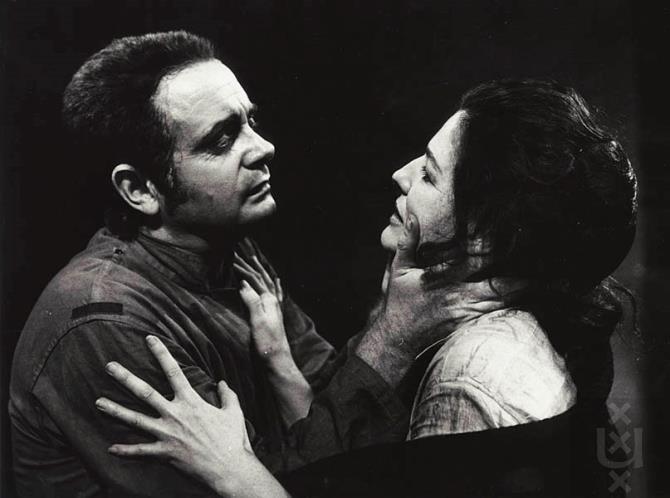
Above: with baritone Jan Derksen in WOZZECK, one of Maralin’s European triumphs
(Imported from Oberon’s Grove, a 2007 story of one of my most memorable days as a blogger: a chance meeting with New York City Ballet’s Wendy Whelan and Pauline Golbin)
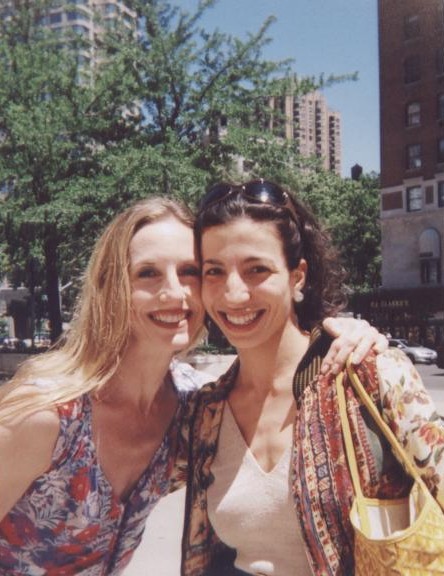
This was my big opportunity as a blogger: having Wendy Whelan and Pauline Golbin and my camera all in the same place at the same time. To be honest, I almost always have my camera with me but I rarely work up the nerve to ask any of the dancers if I can take their picture. However, it was such a gorgeous day (6/23/07) and the girls were in such a great mood that I said ‘what the heck’ and asked them. I just love the results, if I do say so myself. And I will tell you that these two dancers have an awful lot to do with not only my devotion to NYC Ballet but the way I have come to watch the Company.
After going to NYCB pretty often in the late 1970s, I sort of wavered; I was really into opera, and whenever I would come down to NYC from Hartford, opera was my main priority. It’s too bad because every time I did squeeze in a visit to the State Theatre I just loved it. I missed entire careers there, and dancers I really admired came & went without me being aware of it.
In 1996 I was dating a Japanese guy named Toshi who lived on the East Side; he was a textile designer with an incredible eye. One night on a whim, I took him to NYC Ballet. Walking home across Central Park, I asked him if any of the dancers had made an impression. “Wendy Whelan. Can’t you see she is on a whole other level from the other dancers?” I had seen her dance a few times and always really liked her. So we started going pretty frequently and I realized he was right. There seemed to be something almost profound about everything she did – not profound in a weighty sense but in a way of making you feel and think about what she was doing as being more than just dancing.
After I moved here in 1998 there was a season when most of the principal ballerinas were either sick, injured, or pregnant. Wendy, along with Yvonne Borree and Miranda Weese, was carrying the whole season and since there were lots of ballets that Yvonne & Miranda didn’t do, Wendy ended up dancing at literally every performance, and often two – and sometimes three – ballets a night. Far from getting tired of her or craving a different face and body, I became addicted. Wei and I went more and more frequently, just to see what she would do. We fell under her spell. Going so often simply became a habit, and when the other ballerinas rejoined the ranks we found that Wendy had managed to get us hooked on the whole scene.
It was Pauline Golbin who turned me into a corps-watcher. And again it was Toshi who noticed her. I must say that until 1996 I didn’t pay much attention to the corps. I knew they were there and that Mr B had given them plenty to do on any given night, but I couldn’t tell one bun-head from the next, and the boys I hardly ever even noticed. So after one piece, Toshi asked me: “Who is that girl with the black hair and the wonderful smile?” Hmmmm, well there’s about a dozen of ’em onstage; I couldn’t answer his question. We came out the side doors and this very girl dashed past us in a striking coat, scarf, and hat.”That’s her! So chic!!” said Toshi. So next time we went we started looking for her; it became a ritual to find this girl onstage. Then, during an intermission, we scanned thru the season booklet and found her: Pauline Golbin.
By watching for Pauline, I started to notice how demanding the corps work was at NYCB, and that they weren’t just a mass of anonymous bodies but beautiful/handsome people who were doing amazing things. I began matching names to faces and hoping to see certain dancers get some of the featured roles. I began watching the corps much more intensely, and it really gave the performances a whole other dimension. There have been many nights when I have gone to a performance just because someone from the corps that I like had landed a solo. Of course, I love to see them get promoted though I realize not everyone can be a soloist. Though many of them should be.
Pauline is famous for her hats, and I said something about it…and she reached into her bag and pulled one out. In the book ROUND ABOUT THE BALLET, Wendy was asked: “Is there anything people don’t know about you that you’d like them to know?” and she replied: “I’m a funny person! I think I come across as so serious in ballets. But I’m a pretty silly girl. I don’t know if people realize that.” So it didn’t surprise me when she started cutting up and trying to get under Pauline’s hat.
As they strolled into the theatre, I really felt like I’d truly been in the right place at the right time.
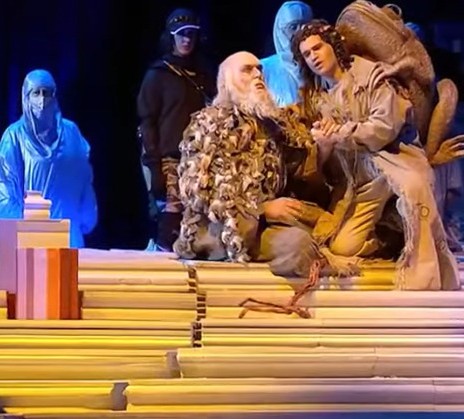
Above: Antonio Di Matteo as Timur, Michael Fabiano as Calaf
This production of TURANDOT, from Rome 2022, is interesting in that it ends with the death of Liu, which was the last scene Puccini completed before he passed away.
(Another personal story from Oberon’s Grove: the story of Kenny and me.)
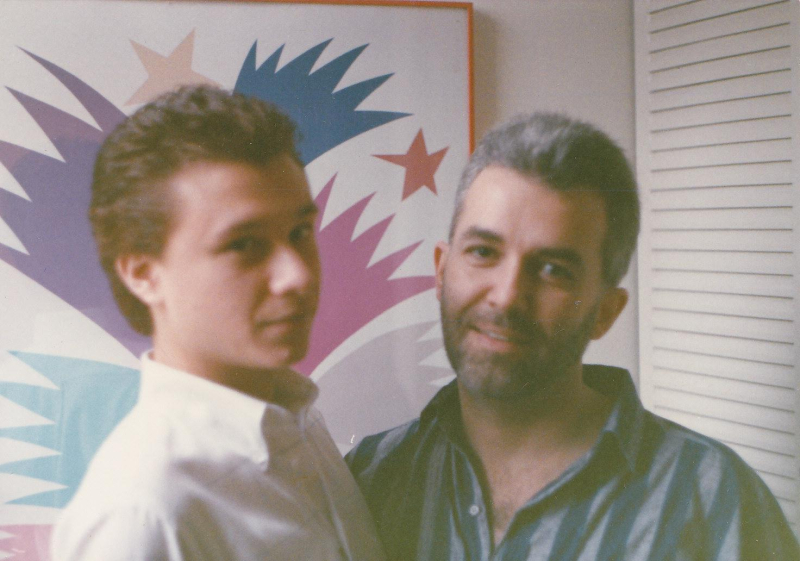
My best friend Richard and I were living in a walk-up near Trinity College in Hartford in 1985, and we did our grocery shopping at Stop & Shop. Working there as a cashier was a very handsome and unusual-looking boy with red hair and Spanish eyes. Both Richard and I were quite taken with him but he was totally aloof: never made eye contact when he was ringing up our groceries, and if we asked him a question he would give a one-word, dismissive answer. However, that didn’t deter us from always choosing his check-out lane. Then one day he disappeared. I assumed he had found a better job.
I was right. He suddenly appeared in the cafeteria of the building where I worked. I managed to find out that he was working in a medical billing office which was renting space from my company. My one-sided infatuation suddenly took on a new aspect when – to my amazement – he began making eyes at me during lunch hour. My co-workers were instantly aware of what was going on, and they would always arrange for me to have a seat at the table with a clear prospect for flirting with the mystery boy. This went on for a couple of weeks; Franky, the Hispanic boy from the mail room who I was fooling around with, referred to the interloper as Peppermint Patty. Everyone seemed to be watching and waiting for something to happen.
Then one afternoon Pam, the adorably mischievous little Black girl who did our filing, whispered in my ear: “You know that boy you like? He’s upstairs at the soda machine!” I never moved faster in my life. I raced up the stairwell and found him coming down. “Hi! I’m Philip.” “I’m Ken.” Then I shoved him up against the wall and started kissing him. He liked it. “How old are you?” “19,” he lied. I was thinking more like ‘barely legal’. Turns out he was 18.
He came over that night and in between doing what boys like to do we found out about the complications that we would be dealing with in the weeks ahead: his girlfriend, my boyfriend, his mother. Extricating ourselves from these situations was a long and frequently agonizing process. Many nights we had no place to go and spent hours driving around in his car, Miss Malibu, listening to Madonna singing La Isla Bonita. Like all young people at that time, he adored Madonna. I got used to her, for his sake. We went to see DESPERATELY SEEKING SUSAN, blatantly making out in the darkened cinema.
Sparing you the novel-length description of our travails, it’s enough to say we ended up finally freeing ourselves from our involvements with Carmen and Felix, and that his mom eventually came to accept me as a second son.
We set up house together in a very nice apartment in Downtown Hartford; for the first few weeks we holed up there, delighting in being alone together in our own place. The only thing I could cook was spaghetti with sauce from a jar. We ate that on so many nights and went out to our favorite haunt, Shenanigans, two or three times a week. Mostly we just talked and talked and talked. Kenny told me his story, which I found extremely moving. Abandoned in a hospital lobby in Columbia, South America as a baby (he has a white scar on his ankle where the I.V. was inserted that kept him alive) he was adopted via a Catholic orphan-placement organization by parents in Maine of Canadian descent. His adoptive father was a slacker, but Little Mama – as I came to call her – worked tirelessly at a manufacturing job to make a life for herself and her son. That he turned out so well is a credit to her energy and devotion.
In my vanity, I loved introducing him to my friends; having a twenty-years-younger lover was a novelty for me and I was feeling rejuvenated. In truth though, neither one of us was ready for a committed, monogamous relationship. I still had a vast supply of wild oats to sow and he, newly exposed to the gay world, was a bit like a kid who had never been inside a particularly yummy candy store before. Knowing that young people need to be amused, I started taking him out to Backsteet. Hartford had a limited dance-club scene: Backstreet was pretty much it. There were flirtations, jealousies, three-ways. For a brief period we lived in a stormy menage a trois with a Portuguese boy. The one person who had the potential to be a major part of our life, Freddy, contacted viral pneumonia soon after we’d met him and died within three days.
For all the turmoil in our socio-sexual lives, we stuck together. We basically liked each other and got on well despite the 20-year age difference.
We spent lots of time in Provincetown where the beaches, bars, jacuzzis and rooftop sundecks seethed with erotic possibilities all day and night. Following an afternoon on the dance floor at The Boatslip we would settle in for a long dinner at our favorite place, Gallerani’s. One of the many memorable evenings we spent in P’town was attending the local premiere of Madonna’s TRUTH OR DARE.
We took in his cat, Boo, from his mom’s menagerie and moved to a lovely townhouse in the West End. Madonna’s poster was up, her music playing frequently. On one trip to P’town he played the DICK TRACY soundtrack about 1,000 times; I really didn’t mind. I’d gotten used to living with Madonna.
We sunbathed in the park, trekked to Jacob’s Pillow, adored Emmylou Harris, shopped at Macy’s in New Haven, and danced on weekends. He spent more and more time with his best friend Danny. I’d go down to New York City for opera and ballet knowing he was home getting into mischief. We sort of had an understanding…but, like most understandings, this one started to wear thin.
When the owner of the townhouse wanted it back, we moved for the last time together to a nice but ordinary place. I nursed him thru a bout of illness, and we still sometimes referred to ourselves as lovers, but after six years of togetherness (with a couple breaks) we each had our own life and we were becoming something of a hindrance to each other. We couldn’t form relationships with other people when we were still tied to each other domestically. I had met and fallen in love with a Chinese callboy in NYC and was obsessed with all things Asian. Having enhanced his body at the gym, Kenny was quite the object of desire. Things had reached a turning point.
After quarrels and edginess started to overwhelm the good times of our life together, we decided to live separately. He had expanded his social circle and after a while he moved to Philadelphia (leaving me bereft, though I never told him that) and eventually to Fort Lauderdale. I took a beautiful, huge old top-floor apartment in the West End, biding my time and knowing that by my 50th birthday I really needed to escape to Gotham. I did, and Kenny was among the guests at my 50th birthday lunch in the Village.
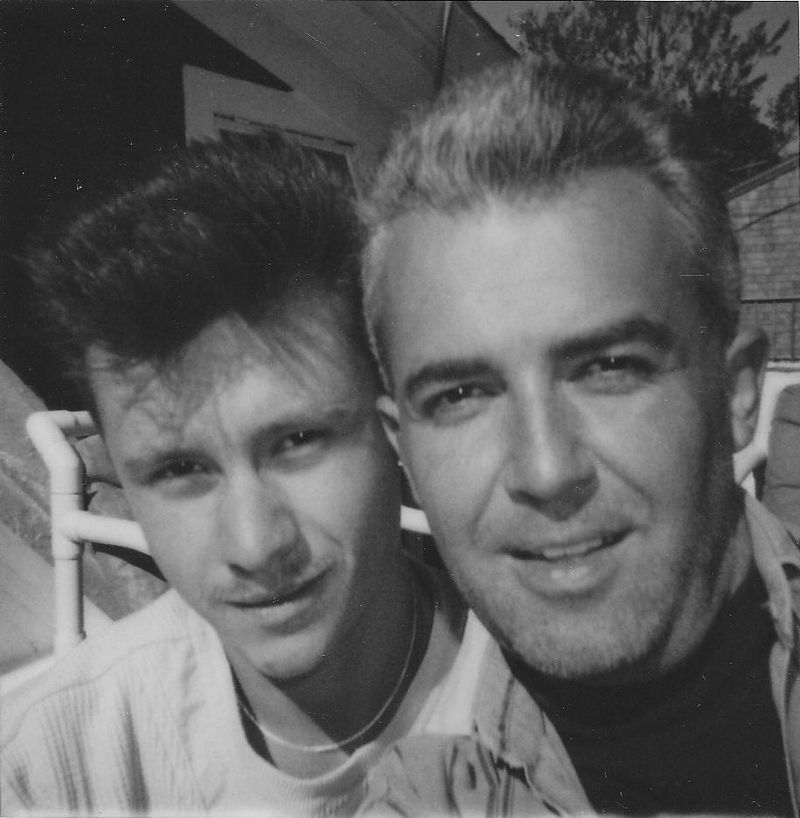
One of my favorite pictures of Kenny & me, on the roofdeck of the Normandy House in P’town. I can imagine him saying: “Oh, my god…my hair!” It was very stylish at the time, however.
We have remained good friends and though we haven’t seen each other for years, we keep in touch and we understand one another in ways than only former lovers truly can. Whenever I hear Madonna’s voice, I remember our times together. In true romantic fashion, I have forgotten all the bad things between Kenny and me, and can best remember us driving around on those first unforgettable nights, when he would play ‘La Isla Bonita‘, singing along and changing the words: “…I fell in love with San Felipe…”
(Bringing this 2014 article forward from the Grove to celebrate the one-and-only Wendy Whelan.)
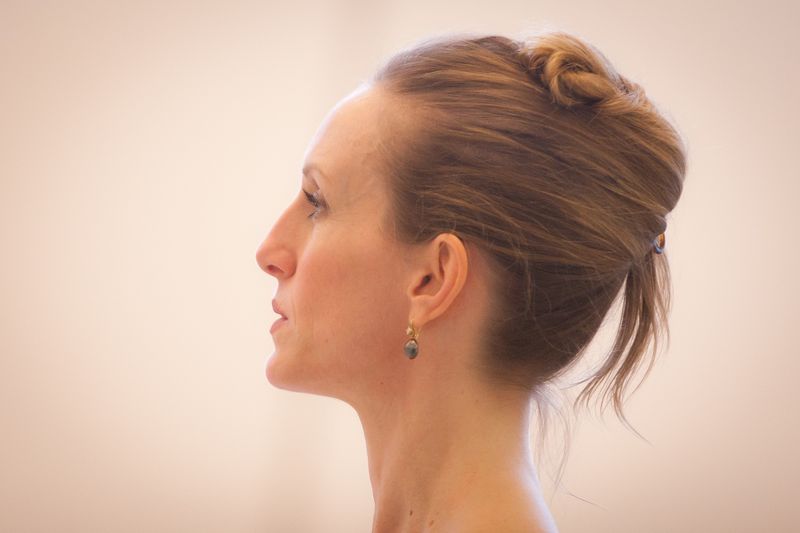
Above: Wendy Whelan, photographed by Matt Murphy
Saturday October 18th, 2014 – No two ballerina farewells are ever alike. Darci Kistler’s farewell marked the end of an era, as she was considered “the last Balanchine ballerina”. At Heléne Alexopoulos’ gala we celebrated one of the greatest beauties ever to grace the stage. Yvonne Borree’s farewell was the most touching, Kyra Nichols’ the most moving. I missed the farewells of Jenifer Ringer and Janie Taylor, saying ‘goodbye’ to them in the days prior to their final bows, simply because I couldn’t imagine NYCB without them. Miranda Weese wasn’t given the full farewell treatment as she wasn’t retiring, just changing companies. I missed her even before she was gone, and I still miss her.
Tonight, Wendy Whelan’s farewell summoned up an enormous range of emotions, just as her dancing has always done. The programme was well-chosen to underscore her association with four great choreographers, including a complete performance of one of her signature ballets, Balanchine’s LASONNAMBULA, excerpts from works by Jerome Robbins, Alexei Ratmansky, and Christopher Wheeldon, plus a special pièce d’occasion: a new pas de trois devised for Wendy, Tyler Angle, and Craig Hall in a choreographic collaboration of Chris Wheeldon and Alexei Ratmansky.
Daniel Capps was on the podium for the opening SONNAMBULA and the concluding Vivaldi/Richter setting for the premiere of BY 2 WITH & FROM; Andrews Sill led the Shostakovich score for CONCERTO DSCH. Throughout the evening, Company musicians were featured: pianist Cameron Grant playing the Chopin for GATHERING; Susan Walters at the keyboard for CONCERTO DSCH; violinist Arturo Delmoni with Cameron Grant for AFTER THE RAIN; and violinist Kurt Nikkanen for the Vivaldi/Richter. For each of them, Wendy had a very cordial greeting, and at the end of the evening she stepped to the edge of the stage and swept into a deep curtsey to thank the NYCB orchestra for their invaluable support throughout her career. That was a particularly lovely moment.
The emotional temperature ran high all evening; in fact several people I talked to spoke of how they had experienced unusual mood swings from giddiness to despair throughout the day, anticipating Wendy’s dancing whilst regretting that it would be her last time on this stage.
Following LA SONNAMBULA‘s opening scene and divertissements, Wendy appeared to the first ovation of the night. She conveyed the mystery of the sleepwalker with her pin-pointe bourrées; in a trance, she managed to totally ignore Robert Fairchild’s endless attempts to intrude on her private world. Earlier in the work, Sara Mearns, Amar Ramasar, Likolani Brown, Megan Mann, Devin Alberda, David Prottas, Lauren King, Antonio Carmena, and Daniel Ulbricht were all vividly present, and they joined in the applause for Wendy during the bows.
In the DANCES AT A GATHERING excerpt, Wendy joined Abi Stafford and Rebecca Krohn in dances of sisterly joy; Jared Angle, Adrian Danchig-Waring and Zachary Catazaro were the handsome cavaliers. In the passage where the girls are flung from one boy to the next, Zachary made an amazing catch of Wendy as she hurtled thru the air into his arms.
It was that poignant piano theme in Shostakovich’s concerto #2 – played with great clarity by Susan Walters – that really put me over the edge. Wendy and Tyler Angle danced the adagio from CONCERTO DSCH luminously, with such expressive lyricism. A beautiful sextette of supporting dancers conveyed the quiet intensity of the little vignette Ratmansky has created for them here: Alina Dronova, Gretchen Smith, Lydia Wellington, Joshua Thew, Justin Peck, and our newly-promoted-to-soloist Russell Janzen. How thrilled they all must have been to share these moments with Wendy one last time.
Wendy and Craig Hall then danced the pas de deux from Wheeldon’s AFTER THE RAIN, holding the audience in an enraptured state as the crystalline purity of the Arvo Pärt’s ‘Spiegel im Spiegel’ stole thru the silent hall in all its poignant grace. It seemed that time stood still here, allowing us to immerse ourselves in the spell-binding artistry of these immaculate dancers.
In between the three above-listed shorter works, brief films were shown while Wendy changed costumes. In these films, the ballerina I have had the honor to know revealed so many facets of her personality. In one utterly Wendy moment, she played up the mock-jealousy of finding Craig Hall emerging from a rehearsal with ‘another woman’: Rebecca Krohn. That made me laugh out loud.
And all to soon, we had reached the end. The Ratmansky/Wheeldon collaboration provided an excellent setting for Wendy’s last dance on Mr. B’s stage. With her two princes – Tyler Angle and Craig Hall – she conveyed the supple strength, tenderness, gentle wit, and sheer overwhelming beauty that have made her one of the great dance icons of our time. The ballet ends with Wendy reaching for the stars.
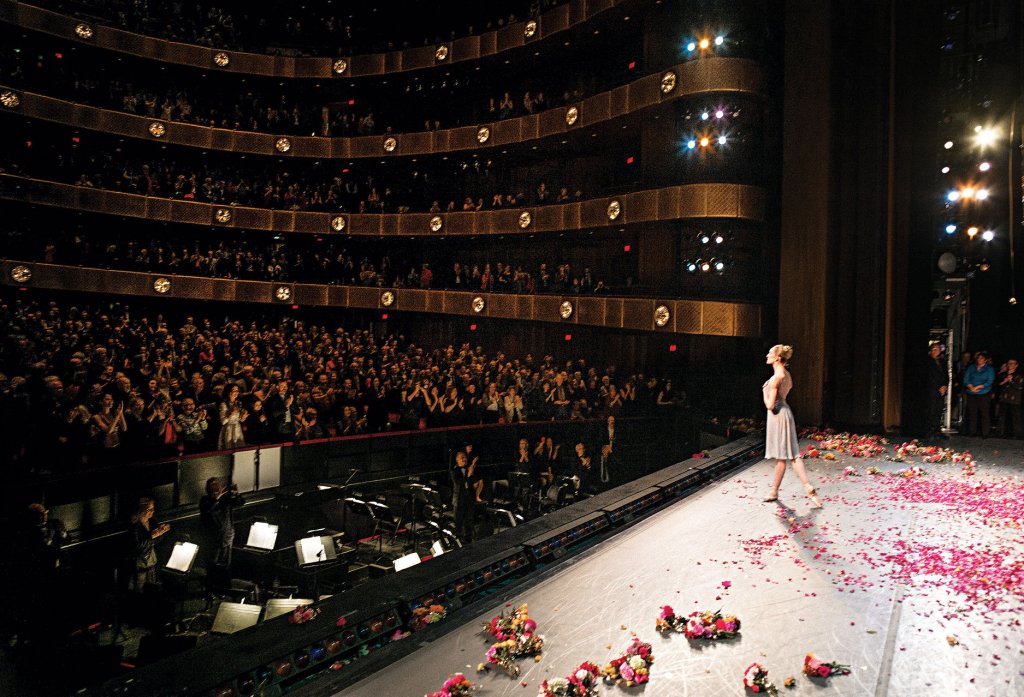
At a farewell, the actual dancing often takes a back-seat to the event. The ballerina appears in selections from her cherished roles and as we savor her artistry one last time while secretly we are looking forward to the downpour of rose petals, the flinging of bouquets, the embraces of colleagues, the inevitable “last bow”, and the opportunity to express our admiration in unbridled clapping and shouting.
For Wendy, the huge ovation at the end signified not only our appreciation for all she has accomplished in her magical career to date, but also our plain unvarnished love for her as a human being.
As the applause at long last echoed away, I started walking up Broadway, planning to attend the after-party. But then I just felt a need for solitude and reverie, so I jumped on the train at 72nd Street and came home. I was thinking yet again that it has been my great good fortune to have been in this City at the same time as Wendy Whelan.
LA SONNAMBULA: Whelan, R. Fairchild, Mearns, Ramasar, Mann, Brown, Alberda, Prottas, King, Carmena, Ulbricht
DANCES AT A GATHERING (Excerpt): A. Stafford, Whelan, Krohn, Danchig-Waring, Catazaro, J. Angle [Solo Piano: Grant]
CONCERTO DSCH (Second Movement): Whelan, T. Angle [Solo Piano: Walters]
AFTER THE RAIN Pas de Deux: Whelan, Hall [Solo Piano: Grant; Solo Violin: Delmoni]
NEW WHEELDON/RATMANSKY (World Premiere): *Whelan, *T. Angle, *Hall [Solo Violin: Kurt Nikkanen]
(It took me a long time to settle on a portrait of Wendy to headline this article. Matt Murphy took the picture at the top when Wendy guest-taught a class at Manhattan Movement and Arts Center a couple of years ago. To me, the photo is her…I love the wispy strands of hair at the nape of her neck, and her utterly unique beauty.)
Bringing this story up to date, Wendy is currently the Associate Artistic Director of the New York City Ballet.








 Oberon's Glade