Author: Philip Gardner

  • It’s All Because of Renata Tebaldi

    (One of my earliest long articles for Oberon’s Grove: the story of how my obsession with opera started.)

    tebaldi copy

    In a way, I could say that I am where I am today because of Renata Tebaldi. It’s simplistic, and of course there are a million things which influence our choices as time goes by. But it was Tebaldi who made me fall in love with opera; it was opera that brought me to New York City on my own for the first time in 1966;  it was in New York City that I – the proverbial small town boy – discovered that I was not the only male in the world attracted to other men; it was a fellow opera fan who introduced me to New York City Ballet; it was my devotion to opera and ballet that kept me coming to NYC from Connecticut for 22 years – and spending a fortune.  And finally it was the desire to have opera & NYCB at my fingertips that finally got me to move here in 1998. And once I did, I met Wei. So, I owe it all to Renata!

    It was on January 12, 1959 that I happened to watch the Bell Telephone Hour; Tebaldi sang excerpts from MADAMA BUTTERFLY. I know the exact date because the performance has been released on video. This was not my first exposure to operatic singing; my parents had some classical LPs in their collection and there were snippets of Flagstad and Lily Pons on these. But nothing that moved me or drew me in like watching Tebaldi’s Cio-Cio-San. That was the beginning.

    My parents bought me my first 2-LP set of opera arias; I found out about the Saturday afternoon Met broadcasts; I subscribed to OPERA NEWS; I wrote fan letters to singers I heard on the radio. I used my tiny earnings from my paper route and working in my father’s store to buy a few more LPs. I plastered a big bulletin board in my room with pictures of singers. My parents took me to my first opera at the Cincinnati Zoo. Then they took me to the Old Met.  But it was a lonely obsession; I had no one to share it with.

    In 1966 when the new Met opened, I was allowed (freshly out of high school) to make my first trip to NYC alone. I got a room at the Empire Hotel and timidly went across the street to Lincoln Center.

    tebaldi ticket line c

    There I found a group of people sitting outdoors along the North side of the Opera House. “Sign in and take a number,” said a girl who was minding the line. Somewhere I still have my tag; I think I was number 57. I sat down and soon people started talking to me; I suppose to the many gay men the sight of a novice seventeen-year-old must have been tantalizing even though I was pretty ordinary looking. But people were so nice: what operas did I want to see? What singers did I like? After 5 years of having no one to talk about opera to, I thought I was in heaven. I shyly mentioned liking Gabriella Tucci, who I had seen at the Old Met. So the Tucci fans gathered and we talked about her.

    I ended up not leaving the line for 3 days and 2 nights. The late summer air was comfortable; we slept (or stayed awake) on the pavement. We sang thru complete operas: we sang all of TOSCA and someone jumped into the (empty) fountain at the end. People gave me soda, a few of the girls brought home-made baked goods. Pizzas were ordered, and Chinese take-out. Someone smuggled out a recording of a rehearsal of FRAU OHNE SCHATTEN  – a work most of us were totally unfamiliar with. I was devastated hearing the voice of Rysanek in that music for the first time. Franco Corelli served coffee one night; Franco Zeffirelli came out and got in someone’s sleeping bag. News filtered out about the new productions that were being rehearsed. There was a flurry of excitement when Leonie Rysanek was spotted at the far end of the Plaza. The crowd, now hundreds strong, surged around her. In a panic, she gestured for security guards from the House to come to her aid. Once inside, she turned and waved to us.

    Finally the box office opened; I got my tickets: TURANDOT, TRAVIATA, GIOCONDA, ANTONY & CLEOPATRA, RIGOLETTO. I had made my first friends in NYC; I had addresses and phone numbers of people who would send me tapes and get more tickets for me.

    Grubby and ecstatic, I went back to the Empire. My pants were slipping down: I hadn’t been eating. I took the bus back to Syracuse, asleep. My parents picked me up and took me home. I fell asleep in the bathtub.

    Soon after, I was back in NYC for the performances I had bought. For some strange reason, I had also stopped by the New York State Theatre and bought a ticket for their Opening Night of Handel’s GIULIO CESARE. Beverly Sills was singing Cleopatra. I had heard her already when NYCO toured to Syracuse and she sang Rosalinda in FLEDERMAUS. The CESARE was of course Beverly’s “big bang”.

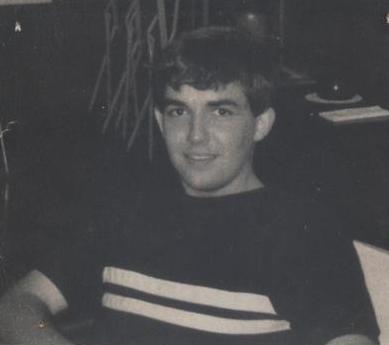
    This was what I looked like during that summer of 1966; I loved this t-shirt and wore it literally every day until it wore out. My sweet Jeanette says I was “embedded in it.”
    tebaldi me
  • DON CARLO ~ Geneva 1988

    Rosalind-Plowright1

    Above: Rosalind Plowright

    An audio-only performance of Verdi’s DON CARLO given at Geneva in 1988.

    Listen here

    CAST:

    King Philip II – Samuel Ramey; Elisabeth – Rosalind Plowright; Don Carlos – Neil Shicoff; Marquis of Posa – Håkan Hagegård; Princess Eboli – Eva Randova; Grand Inquisitor – Kevin Langan; Tebaldo/Voice from Above – Barbara Bonney; Monk – Constantin Sfriris; Royal Herald – Valentin Jar; Count of Lerma – Constantin Zaharia.

    Conductor: Richard Armstrong

  • My First – and Only – Public Appearance

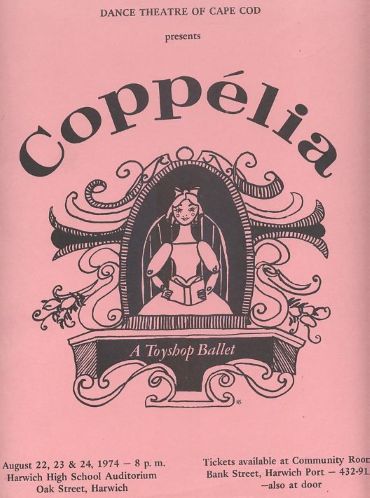
    coppelia size

    (This article originally appeared on Oberon’s Grove in 2008. I’ve brought it forward to the Glade as it’s about an especially meaningful period of my life.)

    When I was twenty-five I fell in love with a 17-year-old kid who spent his summers working for a small ballet company, Dance Theatre of Cape Cod. He invited me to spend a summer with him there; we would live in a room in a big house in Harwichport across the street from the studio.

    Within a week after we got there, he was totally immersed in the ballet. They were mounting COPPELIA at the end of the summer; he was dancing Franz and also was the business manager for the school. He and Helen, the woman who ran the program, were very close. I could see that I was going to be playing second fiddle to COPPELIA all summer.

    At this point in my life, I had never seen a ballet performance; just tidbits on TV. I was a big opera fan, but whenever there was a ballet in an opera performance I was bored to death.

    coppelia 2

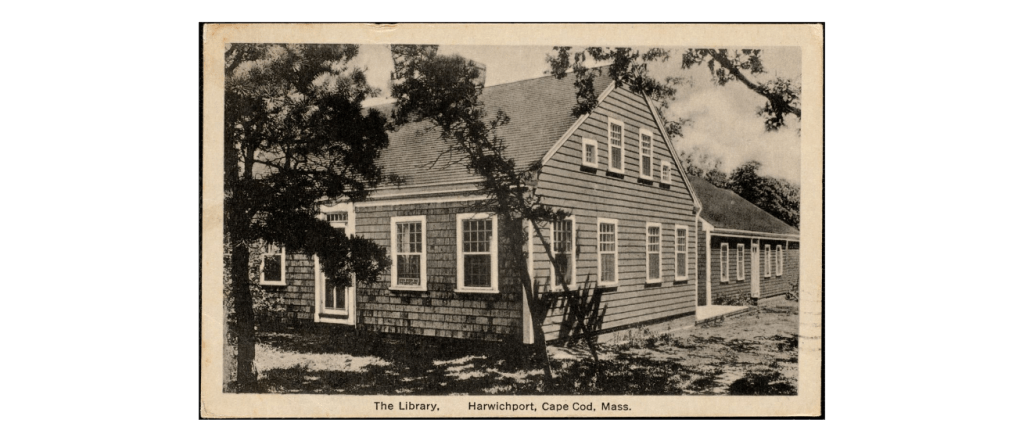
    The studio was located behind (and connected to) the Harwichport Town Library, directly across the street from the house where we were staying. So, the music of COPPELIA wafted over from the studio, and that drew me there. When I first walked into the studio I was much intrigued by the musty smell of old costumes that were hung out to air, and the girls (ages 8-16) were dazzled to have a man watching them. They became giggly and adorable.

    The teacher eyed me with the sort of interest that small-time ballet mistresses have eyed young men for decades: could she transform me into a “dancer”?  She had TJ to play Franz, she had a local actor to play Doctor Coppelius, and the boyfriend of one of the girls to play the Mayor. She wanted very much to have another male in her production, especially to pique the jealousy of the rival ballet school a few miles away.

    “I’m planning to stage a little folk dance in the third act,” she said to me. “Would you think about it? I’ll make it easy for you…” TJ was poking me in the ribs, “Say yes!” She played the piece for me: it would be myself and one of the girls; the music (which Balanchine uses for the Jesterettes) was bouncy and the piece was short.  Realizing that if I didn’t join in I would be seeing very little of TJ all summer, I said OK.

    Then came the clincher: I had to take class. This gave me pause, but only for a minute. I was slender then, and in reasonably good shape. We drove to a small dance supply shop in Hyannis where TJ helped me get a dance belt, tights and slippers.

    My first class was a riot. The beginners class, 8- and 9-year-olds, were thrilled to have a man in their class. They all wanted to stand next to me at the barre. When we began tendus, the teacher waltzed up to me and said: ” Point your foot!” to which I replied “Point my foot…at what?”

    The studio had a ghost, Ada, who we contacted nightly using a Ouija board. She was a nurse who told us she had cared for soldiers returning home after World War I. How she ended up in a dance studio was never revealed. (I have since found out that the building did indeed house recuperating soldiers upon their return from Europe!)

    I found that I had a natural affinity for ballet, not that I would have guessed. I began rehearsing my dance; my partner was a beautiful black-haired 14-year-old named Elaine. We got on perfectly. We played a betrothed couple who danced at Swanhilda’s wedding fete. Elaine was light and springy so the lifts were easy.In the dance, she did most of the work. Lots of stomping and romping. The piece ended with me on one knee; I reeled her in from some turns she was doing, she sat on my other knee and we smooched.

    coppelia 3

    Above: only known photo of me wearing tights…with my partner Elaine Aronson, a talented 14-year old.

    Costumes…I wore a blue satin vest, white tights and shirt, and blue suede boots. Elaine wore a white “peasant” dress with red character shoes and flowers in her hair. One of the mothers did my makeup. We had 3 performances, and our dance was a hit. One night one of Elaine’s friends tossed her a bouquet when we were bowing. Little kids asked us for our autographs.

    After that summer TJ and I moved to Hartford; eventually we split up. I continued taking class for about 3 years. Whenever I hear the music of COPPELIA I’m transported back to that sweltering studio and that care-free time.

    Beth Taylor had danced Swanhilda in our performances; the following winter she danced the Sugar Plum Fairy in another company’s NUTCRACKER. TJ and I drove down to the Cape in wintry weather to see her; aside from Beth several of the kids who had been in COPPELIA were dancing in the NUTCRACKER.

    coppelia 4c

    TJ took this picture of me & Beth after the show; it was the last time I ever saw her, or any of the other people I’d spent my memorable summer with.  

  • Remembering Hildegard Behrens

    behrens c

    (This article appeared on Oberon’s Grove in 2009, following Ms. Behrens’ death at the age of 72.)

    “It is so difficult for me to comprehend that Hildegard Behrens has died. She was only 72 and it seems not all that long ago that my friend Bryan and I visited her in her dressing room after what was to be her penultimate Met performance: as Marie in Berg’s WOZZECK.

    Hildegard Behrens was one of a half-dozen singers who, in the nearly half-century that I’ve been immersed in the world of opera, made an impression that transcended mere vocalism and acting. Her voice was utterly her own: a ravaged, astringent quality often beset her timbre – the price of having given so unsparingly of her instrument in some of opera’s most taxing roles. And yet she could produce phrases of stupendously haunting beauty, and she could suddenly pull a piano phrase out of mid-air. Her unique mixture of raw steely power, unmatched personal intensity and a deep vein of feminine vulnerability made her performances unforgettable even when the actual sound of the voice was less than ingratiating.

    So many memories are flooding back this morning while I am thinking about her: the Wesendonck Lieder she sang at Tanglewood during my ‘Wagner summer’…a rare chance to hear her miscast but oddly moving singing of the Verdi REQUIEM…her televised RING Cycle from the Met…her wildly extravagant ‘mad scene’ in Mozart’s IDOMENEO…her passionate Tosca and Santuzza, cast against the vocal norm…a solo recital at Carnegie Hall…the dress rehearsal of the Met revival of her ELEKTRA  where she made up (and how!) for an off-night at the premiere. Hildegard Behrens was also the holder of the Lotte Lehmann Ring, which was left to her by her great colleague Leonie Rysanek upon Rysanek’s untimely death in 1998.

    behrens 2

    It was in fact the Behrens Elektra, sung in concert at Tanglewood with the Boston Symphony Orchestra under Seiji Ozawa in August 1988 that has always seemed to me the very epitome of what an operatic portrayal can be. In a black gown and violently teased hair, the soprano (announced as being indisposed by allergies) transformed a stand-and-deliver setting into a full-scale assault on the emotions. I’ll never forget that performance and I was fortunate a week later to record it from a delayed broadcast.

    In the great scene in which Elektra recognizes her long-lost brother, Behrens transported me right out of this mortal world. Here it is, from her 1994 Met performance with Donald McIntyre.

    It’s going to be hard for me now to listen to Hildegard – her Berlioz Nuits d’Ete is my favorite recording of those beloved songs, unconventional as her voice sounds in that music – or to watch her on film as Brunnhilde or Elektra. For a while I will just let the memories play.”

    behrens tosca

    Above: Ms. Behrens as Tosca

    behrens 4

    Above: the soprano in concert with Daniel Barenboim

  • Hyunhan Hwang ~ Widmung

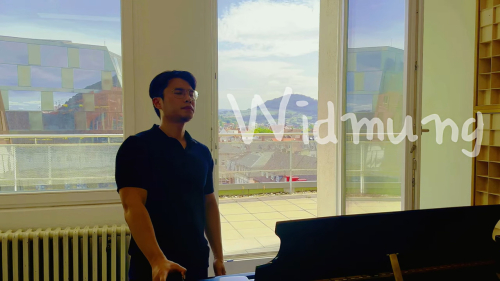
    Widmung

    Hyunhan Hwang sings Robert Schumann’s Widmung.

    Watch and listen here.

  • More from the Time:Spans Festival ~ False Division

    Author: Lili Tobias

    @ the di menna center

    On Thursday, August 21st, 2025, I headed back to the DiMenna Center for my second concert of the week to see another performance that was part of the Time:Spans Festival. On the program was the world premiere of False Division, a collaboration between Endlings (Raven Chacon and John Dieterich) and Yarn/Wire (Laura Barger, Julia Den Boer, Russell Greenberg, and Bill Solomon), which created an emotional experience entirely different from Tuesday’s concert. While Chaya Czernowin’s the divine thawing of the core was powerfully haunting, False Division ultimately maintained a sense of underlying safety amidst the chaotic banquet of noise.

    The music began with glowing bell tones in the percussion and electronics, reminding me of fireflies or droplets of water on a summer night. Everything that followed was incredibly different though! While I wasn’t a fan of each and every sound in the piece (such as the nails-on-a-chalkboard sound of bowing a block of styrofoam), each one was an experience of some sort, and many sounds were completely new to me (like the rumbling of a massage gun on the surface of a bass drum). There were often quick shifts between sections with very different sound profiles, each one with its own unique character.

    False Division celebrated the joy of musical exploration and experimentation. I had really great seat, with a direct line of sight towards one of the elaborate percussion setups, so I could not only hear everything, but also see the process of how those sounds were brought to life. One of my favorite moments of the piece was when the percussionist nearest to me ecstatically bowed a cymbal resting on a drum until nearly half the bow hairs had frayed and split—and he did all this with a mallet held between his teeth!

    I could tell all the musicians were having a ton of fun, and this fun continued through the duration of the performance. To kick off the “grand finale,” the keyboardist pulled out a twirly noisemaker, and, spinning it around above her head, made her way over to the piano bench to join the pianist for a lively 4-hand explosion of notes. Even as just an audience member, I could feel the joy of making music together, and I left the concert hall far more lighthearted than I did on Tuesday. Both nights were filled with incredibly inspiring music, and it’s always good to have variety at a long festival like this!

    ~ Lili Tobias

  • Chaya Czernowin ~ the divine thawing of the core

    chaya c

    Above: composer Chaya Czernowin, photo by Astrid Ackerman

    ~ Author: Lili Tobias

    Tuesday August 19th, 2025 – This evening, the Talea Ensemble, with Claire Chase on solo contrabass flute, performed the US premiere of Chaya Czernowin’s the divine thawing of the core at the DiMenna Center. The concert was part of the Time:Spans Festival, and the musicians delivered a stunning performance to a nearly full house!

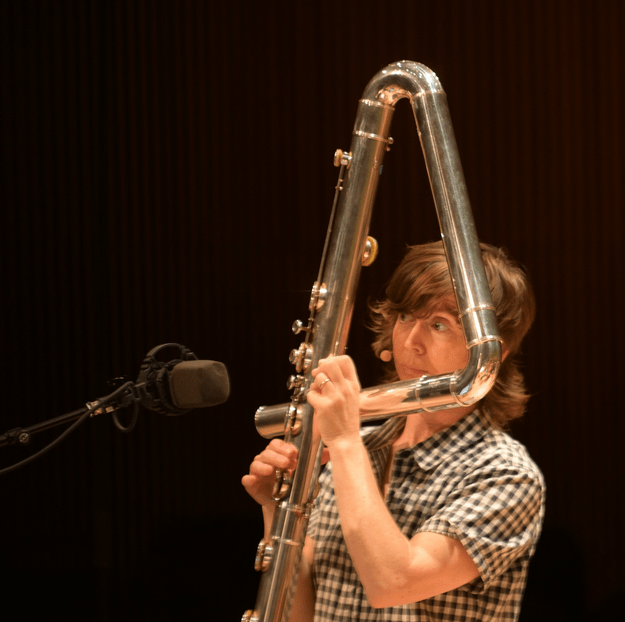
    Breathing played a prevalent role in the sound world of the divine thawing of the core. The unusual collection of instruments in the ensemble, which included six flutes, six oboes, and six trumpets, leaned heavily on the winds, which were truly “windy” to the greatest extent. It was as if the musicians made up a collective weather system, at times calm and at others, stormy. The music began with a plaintive, single-note call-and-response structure between Claire Chase on the contrabass flute and the other sections of instruments. Tranquil, but at the same time eerily apprehensive and ill at ease.

    Screenshot 2025-09-02 at 22-28-47 Mail – philip gardner – Outlook c

    Above: Claire Chase (rehearsal photo)

    Further on in the piece, the storm broke: the winds and brass howling and screaming, the notes swirling behind the frantic trills of the contrabass flute. Chase displayed incredible breath control when the music got chaotic. Although it seemed at first as though she was struggling for breath with sharp uptakes of air, I could ultimately tell that this effect was deliberate. The breath in was just as important as the breath out, as it added an extra layer of humanity to the music that can be difficult to achieve with a non-vocal ensemble.

    From the first few delicate tones to the turmoil of a “demonic waltz,” Czernowin’s music continually circled around exact pitches, rarely landing solidly on a frequency. The winds bent the notes, wavering and unstable, while the cellos bowed deep into the strings, producing rumbly low sounds. Even the piano, when it first entered the soundscape, provided key strikes that oscillated up and down in their decay. 

    And together as an ensemble too, the musicians often behaved as one entity emitting and ever-shifting collection of sound. The addition and subtraction of tones from the cumulative voice of the ensemble created a brand new form of pitch variance, and this perpetual suggestion—but never clarification—of pitch kept me attuned to every tiny transformation.

    Suddenly though, all airflow was cut off, and just the breathing of the audience was left in the hall. After a moment of silence, applause erupted through the rows of seats and lasted for a good 5 minutes!

    The musicians of the Talea Ensemble:

    Laura Cocks, Flute

    Yoshi Weinberg, Flute

    Isabel Lepanto Gleicher, Flute

    Catherine Boyack, Flute

    Amir Farsi, Flute

    Michael Matsuno, Flute

    Michelle Farah, Oboe

    Stuart Breczinksi, Oboe

    Christa Robinson, Oboe

    Jeffrey Reinhardt, Oboe

    Karen Birch Blundell, Oboe

    Mekhi Gladden, Oboe

    Sam Jones, Trumpet

    Jerome Burns, Trumpet

    ChangHyun Cha, Trumpet

    Alejandro López-Samamé, Trumpet

    Atse Theodros, Trumpet

    Robert Garrison, Trumpet

    Mike Lormand, Trombone

    Dan Peck, Tuba

    Margaret Kampmeier, Piano

    Sae Hashimoto, Percussion

    Chris Gross, Cello

    Brian Snow, Cello

    Thapelo Masita, Cello

    Conductor: James Baker

    ~ Lili Tobias

  • Verdi REQUIEM ~ BBC Proms

    Tamara wilson

    Marin Alsop leads the Orchestra of the Age of Enlightenment in a performance of the Verdi REQUIEM given at the BBC Proms in 2016.

    The soloists are soprano Tamara Wilson (photo above), mezzo-soprano Alisa Kolosolva, tenor Dimitri Pittas, and bass Morris Robinson; recorded live at the Royal Albert Hall.

    Watch and listen here.

  • Brigitte Fassbaender ~ Kindertotenlieder

    B f

    Brigitte Fassbaender (above) sings Gustav Mahler’s Kindertotenlieder at a 1980 filmed recording given by the NDR  Elbphilharmonie, conducted by Klaus Tennstedt. 

    Watch and listen here.

  • Raina Kabaivanska ~ In questa reggia

    Kabaivanska a

    A rare document: the great Bulgarian soprano Raina Kabaivanska singing Turandot’s “In questa reggia” at a concert given at Viareggio in 1978. As far as I know, she never performed the entire role during her long career (though she was an admirable Liu), nor can I find any mention of her singing Turandot’s narrative/aria anywhere else.

    Watch and listen here