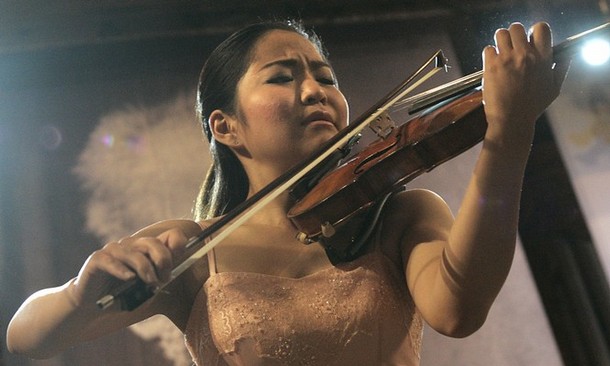
Violinist Mayuko Kamio’s rendition of the famous Meditation from Massenet’s THAIS.
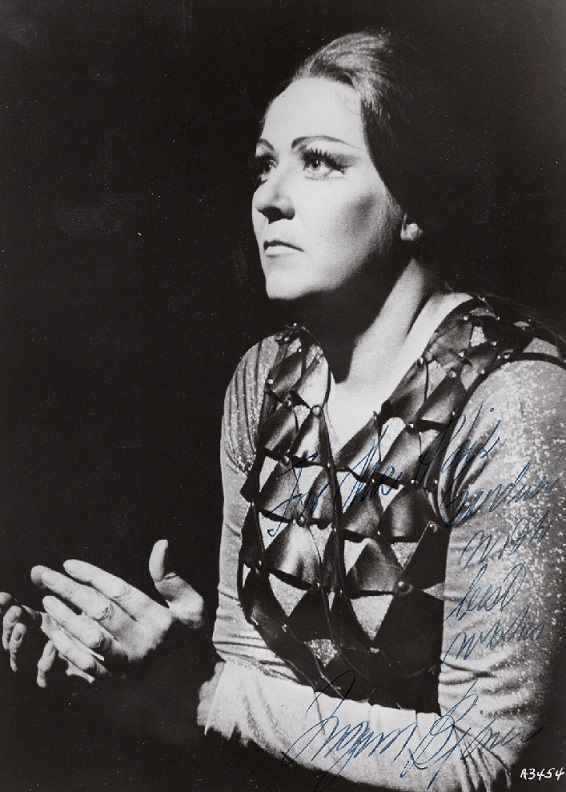
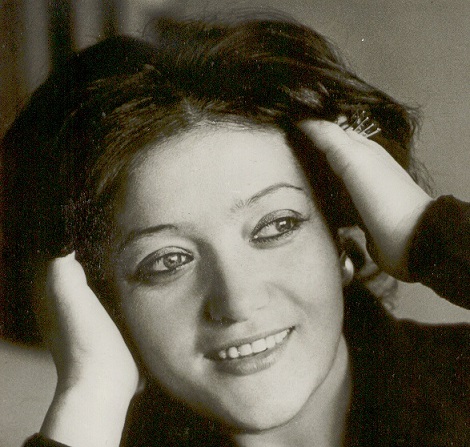
Ingrid Bjoner (above) is Brünnhilde in these scenes from a performance of Wagner’s DIE WALKURE from Munich, 1972. The in-house sound quality leaves much to be desired, but I’ve always loved this rendering of the Todesverkündigung as sung by Bjoner and James King.
There are also three brief excerpts from Act III, with Claire Watson as Sieglinde and Heinz Imdahl as Wotan joining Ingrid Bjoner. Rudolf Kempe’s conducting strikes me as just about ideal.
WALKURE exc – Munich 1972 – Bjoner King Watson Imdahl – Kempe cond

Above: Amy Shuard as Turandot
A performance of Puccini’s TURANDOT from San Francisco Opera given in 1968. Audio only.
Listen here.
CAST:
Turandot: Amy Shuard; Calaf: Ludovic Spiess; Liu: Jane Marsh; Timur: Ara Berberian; Ping: Ingvar Wixell; Pang: Raymond Manton; Pong: Alan Crofoot; Mandarin: Clifford Grant
Conductor: Giuseppe Patanè

~ Author: Lili Tobias
Tuesday November 26th, 2024 – I don’t celebrate Christmas, but I do love the traditions of music written for the holiday, especially when that music is choral! So this past Tuesday, I attended An Eric Whitacre Holiday at Carnegie Hall. This annual concert is a celebration of Whitacre’s Christmas music, his Christmas-adjacent music, and some other Christmas music by different composers (including Melissa Dunphy who was in the audience!).
Whitacre himself conducted the Distinguished Concerts Singers International (DCSI), part of Distinguished Concerts International New York (DCINY), which produces concerts around New York that bring together singers from around the globe. This concert featured two different 250-member choirs, accompanied by pianist Kelly Yu-Chieh Lin and the Distinguished Concerts Orchestra. These musicians had only been rehearsing all together for the past two days, but they performed so well together that the short time wasn’t at all apparent. I was impressed with the clarity of the singers’ diction, as well as their ability to reach incredibly low volumes despite how many of them there were. I always enjoy the sound of a really large choir too, since the diverse array of different voices actually enhances the blend of sound.
Whitacre is best known for the enchanting harmonies he uses in his music, in particular his tone clusters. The majority of the program for this concert was indeed very harmony-focused and, overall, very slow moving. While this aspect of Whitacre’s music is certainly beautiful, I find that his music really shines when it’s faster and more rhythmic. There were a few moments of quick music that I absolutely loved, including in the “An Unexpected Turn” scene from his opera The Gift of the Magi. In particular, Whitacre is really good at utilizing odd time signatures to drive the music forward while still maintaining the flow. These moments were a refreshing change, and I bet the singers had so much fun singing them too!
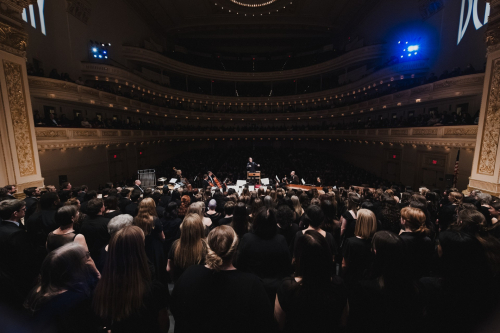
As I briefly mentioned earlier, this concert also included Whitacre’s Christmas opera, The Gift of the Magi. This was actually the world premiere of the orchestrated version, orchestrated by Evan L. Snyder and Whitacre. I was impressed with how the staging was done, given that most of the stage was taken up by 250 singers and a small orchestra. The action took place in the areas on either side of the orchestra, so the characters could travel across the stage for the different scenes. The singers also used the conductor’s podium to sit on or lay down props such as gift boxes. I felt that the production was just right for the venue, and the singing was wonderful too!
This concert had an extremely warm and welcoming atmosphere. It was a family affair all around, as the audience was largely made up of the choir members’ relatives coming to support them. And not only that, but Whitacre’s wife, soprano Laurence Servaes, starred as Della in the opera, and his son (for whom he had written Goodnight Moon) was in the audience. While I won’t be celebrating Christmas this year, I certainly celebrated an Eric Whitacre holiday on Tuesday night!
The performance photos are by Dan Wright.
~ Lili Tobias

José Carreras sings “La dolcissima effigie” from Cilea’s ADRIANA LECOUVREUR. Montserrat Caballé is Adriana.
Watch and listen here.
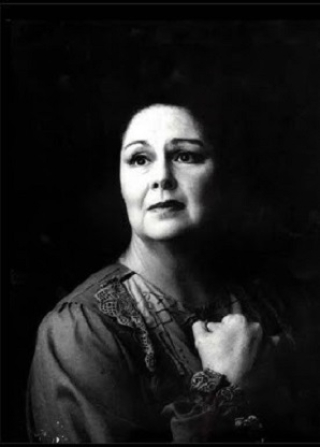
This rare video of scenes from a 1988 production of Giordano’s ANDREA CHENIER from Pretoria, South Africa, caught my attention with the names of Carla Pohl (photo above) and George Fortune in the cast. Unfortunately, Mr. Fortune’s “Nemico della patria” is not included, but most of Maddalena’s music suits Ms. Pohl very well (though her hairdo is hardly credible at the time of the Reign of Terror).
I saw Maurizio Frusoni as Cavaradossi in a very exciting TOSCA given at Bridgeport, Connecticut (of all places) in 1984 opposite excellent colleagues Olivia Stapp and Frederick Burchinal. Mr. Frusoni is a solid Chenier in the Pretoria production.
Watch and listen here.
Performance photo by Chris Lee
~ Author: Ben Weaver
Saturday November 23rd, 2024 – The Royal Concertgebouw Orchestra gave two sold-out concerts at Carnegie Hall last week under the baton of its chief conductor designate Klaus Mäkelä. The second concert on Saturday, November 23rd featured beloved works by Arnold Schoenberg and Gustav Mahler.
Between the two concerts, this evening’s playing of Schoenberg’s Verklärte Nacht, Op. 4 was the strongest performance of the orchestral works the Concertgebouw presented this week. Originally composed for string sextet in 1899, Schoenberg made an arrangement for a string orchestra and it’s become one of his most beloved and most frequently performed works. The string section of the Concertgebouw was on absolute peak form with its lush yet concentrated sound. Schoenberg’s score is by turns dark, ominous, romantic, and shimmering, and the orchestra reflected each emotion and turn with beautiful clarity. Maestro Mäkelä conducted it without a score, so it appears to be a work that is close to his heart. Maybe that’s why he managed to keep the tension throughout the entire composition.
When it comes to playing Mahler, I think the Concertgebouw’s only rival is the New York Philharmonic. These symphonies are close to their hearts and they perform them frequently. The Symphony No. 1 in D major received its Dutch premiere in 1903 under Mahler himself. This evening’s performance under the orchestra’s young incoming chief conductor was somewhat mixed.
The first movement was something of a mess that echoed the very unfortunate performance of Rachmaninoff’s Symphony No. 2 the previous evening: while Maestro Mäkelä can build to a climax, he was unable to connect any of the climaxes together, the tension and structure of the music disintegrating every few minutes. So it was here, unfortunately. Low voltage would be one way to describe it, a flicker of color quickly draining into something dull and gray.
Fortunately things improved as the performance continued, and Mäkelä managed to keep the symphony moving. The second movement is filled with sections of chamber music, interrupted by full orchestral blasts. There was some wonderful playing from individual sections of the Concertgebouw, the winds in particular covering themselves in glory.
The Funeral March was the best part of the performance. The double bass solo (principal Dominic Seldis) was appropriately weary and somber. The mocking tune that interrupts it was nicely paced and delightfully almost jazzy. The Finale was largely well handled, but lacked enough frenzy to be truly satisfying until the very last moments.
With Maestro Mäkelä taking over two of the world’s top orchestras – the Concertgebouw and the Chicago Symphony Orchestra – these performances left me concerned if he is the right person for these jobs at this time. But time will soon tell if the confidence he has inspired in others pays off.
~ Ben Weaver

Performance photo by Chris Lee
~ Author: Ben Weaver
Saturday November 23rd, 2024 – The Royal Concertgebouw Orchestra gave two sold-out concerts at Carnegie Hall last week under the baton of its chief conductor designate Klaus Mäkelä. The second concert on Saturday, November 23rd featured beloved works by Arnold Schoenberg and Gustav Mahler.
Between the two concerts, this evening’s playing of Schoenberg’s Verklärte Nacht, Op. 4 was the strongest performance of the orchestral works the Concertgebouw presented this week. Originally composed for string sextet in 1899, Schoenberg made an arrangement for a string orchestra and it’s become one of his most beloved and most frequently performed works. The string section of the Concertgebouw was on absolute peak form with its lush yet concentrated sound. Schoenberg’s score is by turns dark, ominous, romantic, and shimmering, and the orchestra reflected each emotion and turn with beautiful clarity. Maestro Mäkelä conducted it without a score, so it appears to be a work that is close to his heart. Maybe that’s why he managed to keep the tension throughout the entire composition.
When it comes to playing Mahler, I think the Concertgebouw’s only rival is the New York Philharmonic. These symphonies are close to their hearts and they perform them frequently. The Symphony No. 1 in D major received its Dutch premiere in 1903 under Mahler himself. This evening’s performance under the orchestra’s young incoming chief conductor was somewhat mixed.
The first movement was something of a mess that echoed the very unfortunate performance of Rachmaninoff’s Symphony No. 2 the previous evening: while Maestro Mäkelä can build to a climax, he was unable to connect any of the climaxes together, the tension and structure of the music disintegrating every few minutes. So it was here, unfortunately. Low voltage would be one way to describe it, a flicker of color quickly draining into something dull and gray.
Fortunately things improved as the performance continued, and Mäkelä managed to keep the symphony moving. The second movement is filled with sections of chamber music, interrupted by full orchestral blasts. There was some wonderful playing from individual sections of the Concertgebouw, the winds in particular covering themselves in glory.
The Funeral March was the best part of the performance. The double bass solo (principal Dominic Seldis) was appropriately weary and somber. The mocking tune that interrupts it was nicely paced and delightfully almost jazzy. The Finale was largely well handled, but lacked enough frenzy to be truly satisfying until the very last moments.
With Maestro Mäkelä taking over two of the world’s top orchestras – the Concertgebouw and the Chicago Symphony Orchestra – these performances left me concerned if he is the right person for these jobs at this time. But time will soon tell if the confidence he has inspired in others pays off.
~ Ben Weaver

Above: dancer Kathleen Caragine in Water Study, photo by Steven Pisano
~ Author: Oberon
Sunday November 24th, 2024 matinee – Francesca Todesco’s company Dances We Dance presenting ACQUA, a program of danceworks inspired by water. This evening’s afternoon’s was a performance that celebrated sisterhood and helped ease the after-effects of a painful recent election, in which women’s causes that seemed set to flourish under a Harris administration now seem destined for setbacks in the years ahead.
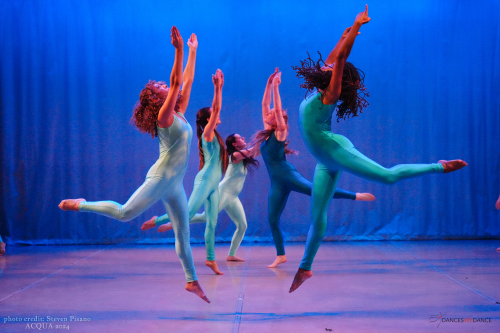
Above: the ensemble in Water Study, photo by Steven Pisano
The program presented a set of dances inspired by or alluding to themes relating to water, which – since the earliest beginnings of dance – have evoked or reveled in this essential element. From the rain dances of the ancient tribes to Chris Wheeldon’s After The Rain… and Caterina Rago’s Alta Marea, water has been a constant source of inspiration in the dance community.
As part of this exploration, the audience today experienced the re-staging of Doris Humphrey’s renowned 1928 choreography Water Study, performed by a cast of 11 dancers under the direction of master teacher Gail Corbin. This was preceded by a showing of Isadora Duncan’s 1905 piece Water Study, which has an improvisational feeling. As staged by Francesca Todesco, this opens to the sound of dripping water.
As music of Schubert sounds, the lights slowly come up to reveal the dancers prone on the floor. Wearing blue/green costumes, they slowly rise and – as projections of the sea appear on screen – they come and go, executing fleeting steps and creating waves of movement suggesting the ebb and flow of the sea. A Schubert waltz sounds, and the dancers assume an ecstatic pose.

Above: the dancers in Doris Humphrey’s Water Study; photo by Steven Pisano
Silence falls as the Humphrey piece commences: the kneeling dancers awaken, the sound of their breathing hangs gently on the air. One by one they rise. Forming opposing lines, they race towards each other like tempest-tossed waves converging. They run en masse from corner to corner, as if crashing against sea walls. Standing, they sway from side to side to the sounds of their own breath. Then they fold into kneeling poses and the ballet ends as it began. Kudos to Ms. Corbin for bringing the fascinating work to currency.

Above: from Catherine Gallant’s Wave; the dancers are Colleen Edwards, Rosey Gentle, and Kathleen Caragine; photo by Steven Pisano
The next three works were finely contrasted but they had one thing in common: each was so visually and musically enjoyable that they felt too short!
Wave, a 2001 work choreographed by Catherine Gallant, is an homage to Isadora with a contemporary touch. Three dancers – Kathleen Caragine, Colleen Edwards, and Rosy Gentle – are posed in a pool of light at the start. To the sounds of a Chopin mazurka, these beauties dance nobly and expressively in tunic-like costumes. They collapse and rise, evoking visions of Wagner’s Rhinemaidens, their faces are at once youthful and ancient: a sisterhood of goddesses. As the light fades, they return to their opening pose.

Above: choreographer Catherine Gallant in an iconic photo
I was ever so happy to see Catherine this evening; I felt reassured after speaking with her: now more than ever we must be there for one another. I told Catherine of the beautiful “Isadora” photo I have of her on my bookcase shelf (above); I can look up from my desk all thru the day and see her in that ecstatic pose.
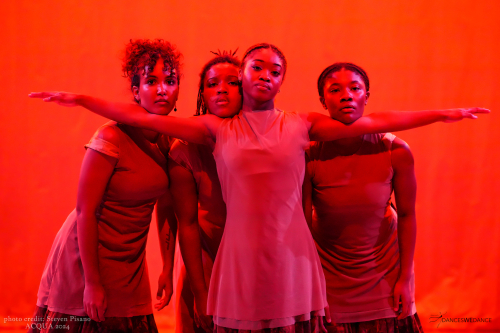
Above: from Crosscurrents; the dancers are Jada Alfred, Marley Poku-Kankam, Autumn Rodrigue, and Alana Averett; photo by Steven Pisano
Crosscurrents, choreographed by Hannah Howell, brought forth four lovely young ladies, each with a distinctive personality. To a wonderfully weird and quirky score by Angel Bat David, the dancers create movement patterns and dance in diagonal formations. The sound of the clarinet takes over – I love it! – and standing in a line up, each dancer has a brief solo. The music is incredibly evocative, it sings of solidarity. The stage becomes sun-drenched as the dancers fall and then resume their initial pose.
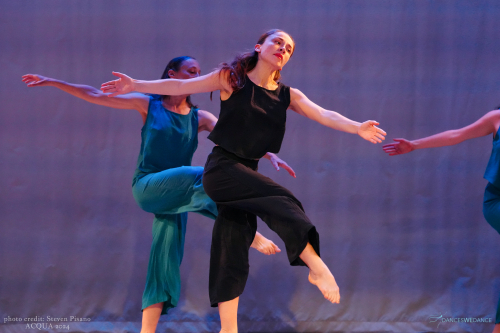
Above: Lana Hankinson in Tidal Pool; photo by Steven Pisano
Tidal Pool, set to deeply lyrical music by Yumira and choreographed by Rae Ballard, was danced by a quintet that featured Mlles. Caragine, Edwards, and Gentle joined by guest dancers Lana Hankinson and Lauren Naslund. The gentle flow of the dance created a sense of quiet serenity whilst the music evokes a luxuriant feeling of peace. Nearing the end, Ms. Naslund walks slowly forward center-stage while one by one the other dancer cross her path and depart, leaving her alone onstage with an expression of quiet wonderment. I’ve always been an admirer of Ms. Naslund, more so today than ever. Her calm beauty has the enviable gift of timeless grace.

Following the interval, Francesca Todesco’s brand new Cherchez La Femme (above photo by Steven Pisano) was danced by Mlles. Edwards, Gentle, and Caragine.These three women have developed into artists of high quality, thoroughly comfortable and assured onstage. Each has something personal to say, making their dancing really fascinating to watch.

Colleen Edwards (above, photo by Steven Pisano), so impressive in the Gallant piece earlier in the program, was riveting here. As the Todesco trio commenced against a golden backdrop, the white-clad Ms. Edwards stood in the light, casting her shadow. She is joined by the other two, and shadow-play becomes a part of their movement.
Ms. Edwards has the first solo: each character has a name, and she is Simonetta. To softly cascading piano motifs, her dancing is truly mesmerizing. She rushes about the space and finally withdraws as Ms. Gentle, clad in red as Camille, enters frantically, as if being pursued…she immediately collapses. A questing search and a plea reveal her desperation. Rising, she appears hesitant, as if seeking something…or someone. To music of Chopin, the search becomes a plea. Ms. Gentle’s dancing seemed to reveal her heart and soul to us.
Now we meet Artemisia: fair of face, Ms. Caragine’s black hair sets off her expressive eyes; she moves beautifully, with a ballerina’s poise, as the steps and gestures flow on the music. The trio re-unite, Ms. Gentle now back in her white frock, as the dance moves to its finish.
Here are more images from Cherchez la femme, photos by Steven Pisano:

Rosy Gentle

Kathleen Caragine

Mlles. Edwards, Gentle, and Caragine in Cherchez La Femme

Above: Francesca Todesco in Memories; photo by Steven Pisano
Ms. Todesco then took the stage alone to premiere a new solo choreographed by Rae Ballard to the always welcome music of Astor Piazzolla. Entitled Memories, this solo finds the dancer clad in severe black with black pumps; she seems like a widow, alone in her grief, recalling happier times The music has a lamenting feeling and becomes quite lush; a hint of a tango is woven in. Francesca’s innate musicality, with her expressive hands and face, creates a mood of longing. At times, she seemed to be dancing just for me.
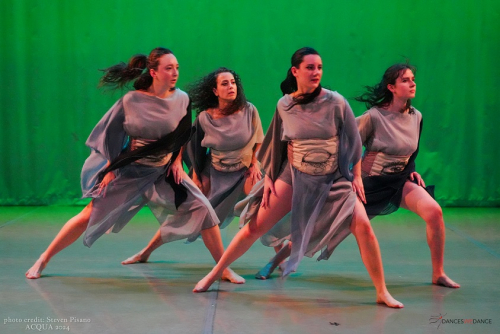
Above, the sirens of Haunted Echoes: Colleen Edwards, Margherita Tisato, Kathleen Caragine, and Rosy Gentle; photo by Steven Pisano
Closing the program was a newly commissioned work choreographed by the beloved former Paul Taylor star Annmaria Mazzini. This is Haunted Echoes, set to musical collage which propels a dance of the sirens – bewitching creatures all in sea-green. Drifting about the space, they pause to sing their alluring song. A big beat springs up and the dancing turns wild. And then the music becomes a bluesy lullaby, and the dancers drift off, a sisterhood lost at sea.
On an evening that meant a lot to me, it was especially nice to greet the inimitable Jim May, who I’d only met once before, many, many moons ago at a Sokolow rehearsal. Tonight, it felt like a reunion of long-lost brothers.
Performance photos by Steven Pisano.
~ Oberon
Above: soprano Ángeles Gulín
Audio-only…Ponchielli’s LA GIOCONDA from Madrid 1970.
Listen here.
CAST:
La Gioconda – Angeles Gulín; Enzo – Plácido Domingo (debut in Madrid); Barnaba – Peter Glossop; Laura – Biancamaria Casoni; Alvise – Ruggero Raimondi; La Cieca – Mirna Pecile.
Conductor – Anton Guadagno

 Oberon's Glade