Author: Philip Gardner

  • Stella & Tucker: TOSCA @ The Met

    Stella tosca

    Antonietta Stella is Tosca (above) and Richard Tucker is Cavaradossi in this Saturday matinee broadcast from The Met in 1958. Leonard Warren is Scarpia, Salvatore Baccaloni is the Sacristan, and Dimitri Mitropoulos conducts.

    Listen here.

    CAST

    Floria Tosca: Antonietta Stella; Mario Cavaradossi: Richard Tucker; Scarpia: Leonard Warren; Sacristan:  Salvatore Baccaloni; Spoletta: Paul Franke; Angelotti: Norman Scott; Sciarrone: George Cehanovsky; Shepherd: George Keith; Jailer Louis Sgarro

  • @ US Open Qualifiers ~ 2022

    Yy jpg

    Above: China’s Yue Yuan

    Tuesday  August 23rd, 2022 – Every Summer, since moving to New York City in 1998, I have gone to the US Open. For several years, we bought tickets and saw favorite players like Martina Hingis, Kim Clijsters  Paradorn Schrichaphan, and Richard Gasquet; but as tickets became increasingly expensive and audiences seemed to be there more for the event than the actual game of tennis, I started going to the qualifying tournament. For a few years, this was a perfect solution for me, since most attendees were very serious about tennis; but then one summer the NY Times ran an article about this fantastic, free, all-day tennis event in Queens, and the qualifying tournament became a destination.

    The qualifiers take place the week before the main tournament starts. Admission is free, and all day – and sometimes until late at night – you can move from court-to-court and see exciting newcomers as well as established players who – thru injury or just plain bad luck – have fallen down the rankings and who have come to the Tennis Center hoping to win a berth in the main draw. This year, such wonderful players as Fernando Verdasco, Gilles Simon, Andreas Seppi, and Pablo Cuevas were among those vying for a spot in the main draw line-up; unfortunately, none of them played today…they were all scheduled for Wednesday instead.

    ZacharySvajda

    Having missed 2 years of live tennis due to COVID, I truly enjoyed being back at the Open. The first match I watched today today was between two Americans: Zachary Svajda (above) and Aleksandar Vukic. This year, there were no lines-people on the courts: Hawkeye is now in charge of determining what’s in and what’s out. Still, from somewhere, cries of “out!” were heard throughout the day. During the Svajda/Vukic match, the scoreboard malfunctioned; a ball-boy took a bathroom break and wasn’t on court when he was needed. But the match proceeded, with the youthful Mr. Svajda cruising to an early lead. The taller and seemingly stronger Mr. Vukic pulled even at 4-all, but the cunning Mr. Svajda held fast and took the first set. Svajda pretty much dominated the second set, though Vukic had his moments.

    Over on court 17, a duel between big hitters – Ernesto Escobedo and Ethan Quinn – was great fun to watch: both players were simply pounding the ball, and Escobedo produced some brilliant aces. It was Escobedo who took the first set; but Quinn, who is 18 years old, seemed to have the audience’s backing, and he was relentless in the next two sets, claiming the win.

    After a walkabout, I circled back to Court 17 where the long-legged Chinese beauty Yue Yuan faced America’s Katie Volynets. Ms. Volynets could not seem to do anything against Yue Yuan’s onslaughts in the first set, but she stepped up her game considerably in the second set, which went to a tense tie-breaker, which Yue Yuan finally won. The Chinese player’s cracking serve was something to see, and she used it as a weapon in her march to victory.

    Thundershowers had been predicted, but none materialized: it was a simply perfect day. Despite the usual distractions – and the fact they wouldn’t take cash when I went to buy my humble lunch – I was very happy to be back at the US Open.  

    Go 2017

    Above: Go Soeda at the US Open Qualifiers in 2017

    Among the lesser-known players who I came to love over the years of watching the qualifying matches, I was sad – though not surprised – to see that the Japanese player Go Soeda was not participating this year. I think I have seen Go in more matches than any other player; he has a beautiful, classic game with deep shots, perfectly placed. He won almost every match I saw him play over the years, but I don’t remember him ever getting beyond the the first round of the main draw. Recently, I read that Go has become a father, and has retired from tennis. I certainly missed him at the Qualies this year.

    UPDATE: How did the players I saw on Tuesday fare in the rest of the qualifying tournament? Both Zachary Svajda and Ethan Quinn lost in their second-round matches, by Yue Yuan won both her second and third round matches, and she advances to the main tournament.

    Interestingly, two Chinese players – Wu Yibing and Zhang Zhizhen – prevailed in their three qualifying rounds, and they become the first Chinese men to enter the main draw at the US Open.

    ~ Oberon

  • Erda & The Wanderer

    Rolf_Kuhne

    Rolf Kühne (above) is the Wanderer and Ortrun Wenkel is Erda in the opening scene of Act III of Wagner’s SIEGFRIED.

    Listen here.

  • PRINCE IGOR @ Chicago Lyric Opera ~ 1962

    Danon

    Oskar Danon (above) conducts a 1962 performance of Borodin’s PRINCE IGOR from Chicago Lyric Opera, with a very interesting cast:

    Yaroslavna – Consuelo Rubio
    Konchakovna – Carol Smith
    Polovtsian Girl – Jeanne Diamond
    Nurse – Prudencija Bickus
    Vladimir – David Poleri
    Eroshka – Mariano Caruso
    Ovlur – Rudolf Knoll
    Prince Igor – Igor Gorin
    Prince Galitsky – Boris Christoff
    Skula – Renato Cesari
    Khan Konchak – Boris Christoff

    Listen here.

  • Callas @ Dallas/1957

    Snapshot

    In 1957, Maria Callas sang a concert with the Dallas Symphony under the baton of Nicola Rescigno. Someone snuck a tape recorder into one of the rehearsals for this concert, and the resulting “Callas/Rehearsal in Dallas 1957” made the rounds of reel-to-reel tape-traders back in the 1960s.

    David Abramowitz, my very first opera-friend, gave me a copy of the rehearsal tape and I enjoyed it, despite being somewhat frustrated with the stops-and-starts as Callas and Rescigno worked out the interpretive details. I was especially impressed by the different takes on passages from the entrance scena – sometimes referred to as the Letter Scene – of Lady Macbeth from Verdi’s MACBETH.

    It occurred to me to patch these phrases together and create a complete run-thru of the recitative and aria. Years later, when I was getting rid of my reel-to-reel collection, it was one of the few things I saved. The voice of Maestro Rescigno can sometimes be heard, and there’s some static at first, and a bit of tape drag. But once she’s into the aria proper, it gets better.

    Maria Callas – MACBETH aria – rehearsal composite – Dallas 1957

  • Sharon Sweet as Aida

    Sweet

    Sharon Sweet (above) sings Aida, with Michael Sylvester as Radames and Juan Pons as Amonasro, in a scene from Act III of Verdi’s AIDA:

    AIDA – Act III scene – Sharon Sweet – Michael Sylvester – Juan Pons – Met 1997 bcast

  • NYO-USA at Carnegie Hall

    Aw

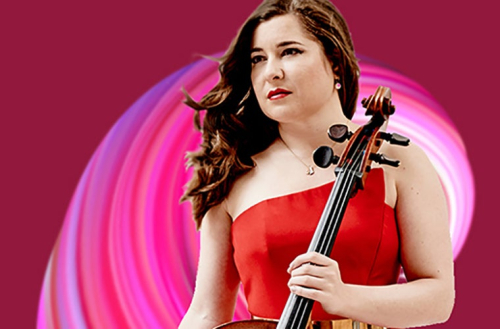
    Above: cellist Alisa Weilerstein

    Author: Ben Weaver

    Friday July 29th, 2022 – Elgar’s Cello Concerto and Mahler’ Fifth Symphony made up the very ambitious program by the National Youth Orchestra of the United States of America at Carnegie Hall. The young American musicians – aged 16 to 19 – are embarking on a world tour with these works and will perform at the Concertgebouw in Amsterdam, as well as in Berlin, Ravello, and Lucerne in the upcoming weeks. Leading the orchestra in all these concerts is the British conductor Daniel Harding, with American cellist Alisa Weilerstein the soloist in the Elgar.

    Elgar’s Cello Concerto, composed in 1919, was mildly popular before Jacqueline du Pré gave it immortality with Sir John Barbirolli in the 1960s. There are few mainstream works as identified with one performer as Elgar’s concerto is with du Pré. For any cellist to take on this work must be intimidating. Alisa Weilerstein is a cellist who needs not fear anything from comparison. A consummate artist of genuine depth, gravitas, and beauty, Ms. Weilerstein’s performance glowed with humanity and grace. From the first passionate notes of the work – no orchestral introduction here – Elgar’s  writing for the cello is intricate and deeply emotional. Even the Scherzo has little frivolity. Ms. Weilerstein’s warm and powerful playing, the rich sound of her cello effortlessly filling the hall, was a true joy. Elgar’s ability to compose for a large orchestra, yet keep the orchestration translucent so it never buries the solo instrument, is perhaps rather unique among cello concertos. And Maestro Harding also kept the young players of the orchestra at bay, letting loose when necessary, but allowing Ms. Weilerstein to always be heard. Everything in this performance was perfectly balanced. An all-around marvelous performance of a very special work.

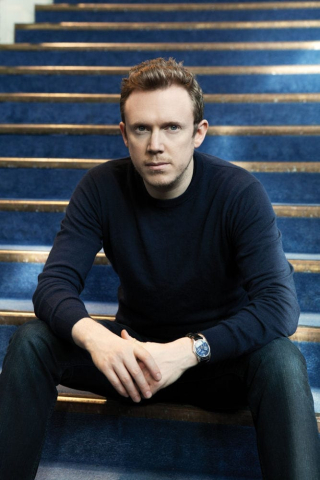
    Harding

    With Mahler’s Fifth Symphony things got a bit more complicated. Maestro Harding (above) is an excellent Mahlerian, having began his career as an assistant first to Simon Rattle in Birmingham and then to Claudio Abbado in Berlin. And his decision to include such a difficult work for a young orchestra was certainly brave, but it did not pay off on this evening. There’s no need to mention any specific mistakes made by specific musicians – I’ve heard the same mistakes made by professional and very experienced musicians of the New York Philharmonic. And there were many wonderful moments too: the horns were warm and fruity, the concertmaster’s solo was lovely, the percussion section was on peak form (I especially enjoyed the grin on the face of one of the percussionists every time he played something loud – his enthusiasm and joy were wonderful, charming, and infectious.) But the totality of the work just did not come together. There were wonderful moments scattered throughout. Perhaps it was Maestro Harding who failed to bring it all together. Perhaps the orchestra’s future performances, as they face more audiences and play the work more, will come together. But, with its faults, I’m glad these young musicians played Mahler. They are the future members of our great American orchestras.

    ~ Ben Weaver

  • Bolero

    41f26bfa2c3cd74227f8b024695b4d29

    Anna Moffo sings the Bolero from Verdi’s I VESPRI SICILIANI.

    Anna Moffo – VESPRI SICILIANI – aria

  • John Feeley: Bach Chaconne

    Jphn feeley

    Many thanks to my friend Richard Curtis for sending this perfect performance of Bach’s D-minor Chaconne by John Feeley on to me.

    Watch and listen here.  

  • Bastianini & Tucci ~ scene from ANDREA CHENIER

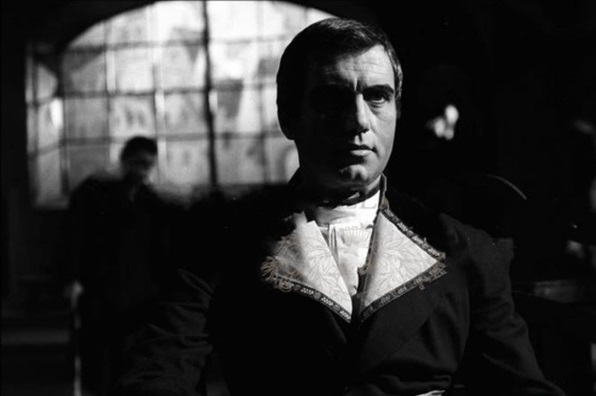
    Snapshot bastianini

    Ettore Bastianini is Carlo Gerard (above) and Gabriella Tucci is Maddalena di Coigny in a scene from Act III of Giordano’s ANDREA CHENIER. Listed as being from Torino 1963, this seems to be a studio recording or radio broadcast: the sound quality is amazingly clear. Both singers are at their very finest.

    Listen to them here.