Author: Philip Gardner

  • La Scala in Japan ~ Verdi REQUIEM 1981

    Snapshot a t-s

    Above: soprano Anna Tomowa-Sintow

    Maestro Claudio Abbado conducts the orchestra and chorus of La Scala in a performance of the Verdi REQUIEM given at Tokyo in 1981. The soloists are Anna Tomowa-Sintow, Lucia Valentini-Terrani, Veriano Lucchetti, and Nicolai Ghiaurov.

    Watch and listen here.

  • György Ligeti ~ Requiem

    Snapshot ligeti

    Above: soloists Victoire Brunel and Makeda Monnet

    A performance of György Ligeti’s Requiem from Paris, 2018. Watch and listen here.

    Makeda Monnet, soprano / Victoire Bunel, mezzo-soprano
    Chœur National Hongrois / Csaba Somos, Chef de chœur
    Orchestre du Conservatoire de Paris / Ensemble intercontemporain
    Matthias Pintscher, direction 

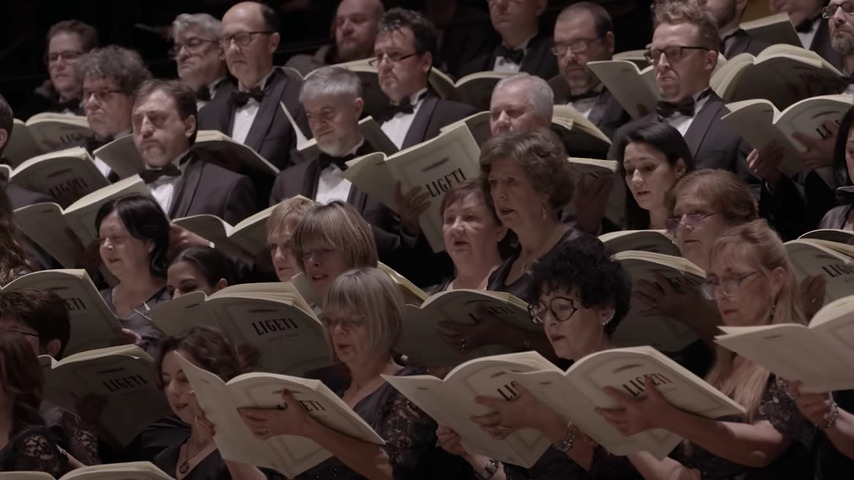
    Snapshot ligeti 2

    Above: members of the Chœur National Hongrois

    I first took an interest in the music of György Ligeti (1923-2006) after seeing Christopher Wheeldon’s 2001 masterpiece POLYPHONIA at New York City Ballet. Chris turned to the music of Ligeti again for his 2002 ballet MORPHOSES. Both these danceworks featured the beloved NYCB partnership of Wendy Whelan and Jock Soto.

  • Helen Vanni in ARIADNE AUF NAXOS

    Vanni

    From the 1971 Glyndebourne Festival comes a performance of Strauss’s ARIADNE AUF NAXOS (sans Prologue) with Helen Vanni (above) in the title-role.

    Listen here.

    CAST:

    Bacchus: Helge Brilioth
    Zerbinetta: Sylvia Geszty
    Ariadne: Helen Vanni
    Harlekin: John Gibbs
    Scaramuccio: Maurice Arthur
    Brighella: John Fryatt
    Truffaldin: Dennis Wicks
    Naiade: Teresa Cahill
    Dryade: Enid Hartle
    Echo: Yvonne Fuller

    Conductor: Aldo Ceccato
    Royal Philharmonic Orchestra

    Read more about Helen Vanni here.

  • Gerda Lissner Foundation ~ Winners Concert 2022

    Feldmann jpg

    Above: baritone Gregory Feldmann, photographed by Pierre Lidar

    Author: Oberon

    Sunday May 22nd, 2022 matinee – It feels like ages have passed since we attended the Gerda Lissner Foundation’s 2016 Winners Concert, where the male voices held sway. This is the thing about the pandemic: it has warped our sense of the passing of time. This afternoon, we were back in Carnegie’s cordial Zankel Hall to hear the 2021-2022 Winners. Today’s concert was dedicated to the memory of two longtime friends of the Foundation, Stephen DeMaio and Brian Kellow.

    Overall it was a very good concert, though we might have wished for more singing, less talking. Midge Woolsey was the “hostess with the mostess”; but does this type of event really need a host? Apart from a speech of welcome, the audience can get all the information they require from a printed program.

    The prizes are awarded in two main categories: the Lieder Song Vocal Competition and the International Vocal Competition. The latter is split into two divisions: the General Division and the Operetta & Zarzuela Division. So we heard a wide variety of music, including three singers in zarzuela repertoire. Two expert pianists – Mary Pinto and Arlene Shrut – provided first-rate support for the vocalists.

    Third prize winner in the Lieder Song category, soprano Yvette Keong, set the afternoon beautifully on its way. Looking like a Vogue model in her black gown, with ruby-red appliqué at the hem, and slit to thigh, Ms. Keong sounded as lovely as she looked. She opened the program with Rachmaninoff’s “To Her”, sung with a sense of ecstasy, and then offered Stephen Foster’s “Beautiful Dreamer”, a song I have known since childhood when my parents gave me a Swiss music box that played the melody. Ms. Keong’s clear lyricism was most enjoyable to hear.

    Mezzo-soprano Alma Neuhaus was unable to join the other winners at the concert today; how I would love to have heard her Fauré and Grieg selections.

    It did not surprise me in the least that baritone Gregory Feldmann had won first-prize in the Lieder Song Competition: Mr. Feldmann’s recital with pianist Nathaniel LaNasa at Weill Hall in February 2020 – just days before the pandemic caused everything to go awry – was a solid gold evening. This afternoon, Mr. Fekdmann performed “Citadel” by William Grant Still, and Franz Schubert’s “Auf den Bruck”. This young man has a way of drawing the listener in to whatever he is singing, so that you feel that he is ‘speaking’ just to you. In the Schubert, Mary Pinto played the demanding piano part with distinction. Mr. Feldmann’s handsome tone, excellent diction, and wonderfully sincere delivery make him a most engaging artist, one I will hope to hear often in the future in both lieder and opera.

    Next came the three Zarzuela arias, commencing with soprano Evelyn Saavedra who looked stylish in a red frock, red stilettos, a red flower in her jet-black hair, and a decorative fan in her hand. She sang my favorite zarzuela aria,” De España vengo” from El Niño Judío by Pablo Luna (1879-1942), and made a vivid impression.  

    Costa Rican baritone Kevin Godínez, a handsome fellow with an easy stage presence, captivated the crowd with “Junto al puente de la Peña” from La Cancion del Olvido by José Serrano. The song tells of a man who is attracted to the town’s prettiest courtesan and is confident that he will have her. Mr. Godínez is an assured singer with a very pleasing timbre, making me wish these zarzuela artists had each been allotted a second song.

    The Mexican soprano Ethel Trujillo did indeed get to sing an extra aria, which was not listed in the program, before delighting us with “Me llaman la Primarosa’ from Gerónimo Giménez’s zarzuela El Barbero de Sevilla. Ms. Trujillo, first-prize winner in her Division, has a very pretty voice with an ear-teasing Spanish vibrato. At times, she reminded me a bit of Lisette Oropesa, which is high praise indeed. Ms. Trujillo’s voice can phrase a line and colour its words to make the music all the more alluring; and the voice can fly easily to the top. On top of all that, she has a charming personality.

    Following the interval, it was opera…opera…opera.

    Mezzo-soprano Shannon Keegan kicked things off with the aria “O petite étoile” from opera Emmanuel Chabrier’s delightful opera L’étoile. I saw this work when Juilliard staged it with my beloved friend, the late Makiko Narumi, and again when New York City Opera presented it. Ms. Keegan has a pleasing voice to begin with, but within seconds we were carried away by her dramatic instincts, her dynamic control, and her expansive top range. She turned her aria into a triumph of voice and personality. And…Ms. Keegan gets an extra bouquet of roses for coping admirably with the disruption of someone’s cellphone sending an alert which lasted thru much of her aria. 

    Soprano Teresa Perrotta made a marvelous impression with her rendering of the demanding aria “Come scoglio” from Mozart’s Cosi fan tutte. A beauteous, majestic blonde, Ms. Perrotta was in complete command from start to finish as Mozart’s aria carried her across a 2-octave range. Luminous top notes and a creamy (rather than booming) chest register were skillfully linked by a voice that moves fluently thru the aria’s coloratura passages. She struck me as a singer who will go far.

    Cuban baritone Eleomar Cuello brought his good looks, poised demeanor, and a natural feeling for poetry  to the haunting “Pierrot’s Tanzlied” from Korngold’s Die Tote Stadt. I was truly moved by Mr. Cuello’s singing, and especially by his ability to hone the voice down to a sweet softness at the aria’s wistful ending.

    Just the day before this concert, tenor Eric Ferring had made a very fine impression in the brief but demanding role of Arturo in Donizetti’s Lucia di Lammermoor at The Met. I was in the House, and the voice spoke to me clearly in the big space. Today, Mr. Ferring graciously added an aria – the ravishing “Le Rêve” from Massenet’s Manon to his scheduled Handel piece. The Massenet was simply gorgeous: deeply felt, lovingly phrased, and with magically floated soft high tones, whilst pianist Arlene Shrut matched the tenor’s interpretation with her elegant pianissimo playing. Mr. Ferring then turned to Handel for “Il tuo sangue” from Ariodante. In this dramatic piece, the tenor showed another side of his artistry with his mastery of dynamics and finely-voiced fiorature

    All of the singers then returned to the stage for a specially-prepared encore: the title-song from Stephen Sondheim’s Sunday In The Park With George, with Ms. Pinto at the piano.

    ~ Oberon
  • @ My Met Score Desk for LUCIA DI LAMMERMOOR

    Bloody_dagger_

    Saturday May 21, 2022 matinee – Having no interest in seeing the Met’s Rust-Belt setting of LUCIA DI LAMMERMOOR, I took a score desk for this afternoon’s performance. In the Playbill, there’s a long essay by the director of the production. I didn’t bother to read it. This succinct program note from Tito Capobianco’s production for Beverly Sills at New York City Opera in 1969 tells us all we to need to know:

    Lucia jpg
    I recently asked a longtime singer/friend of mine why singers who should know better agree to appear in these bizarre and unsuitable productions, and he said: “If you want to work in opera nowadays, this is what opera has become. Take it or leave it. If you start turning down productions that do not respect the composer or librettist, you will soon stop being asked.”

    So I sat with my score before me this afternoon, creating my own production in the theater of the mind. There were a lot of empty seats, more than usual for a matinee. And people laughed aloud at times: there is nothing very funny about LUCIA, really, but perhaps the libretto’s reference to Edgardo’s announced journey to the “friendly shores of France”, or Enrico telling Normanno to ride out “on the road to Scotland’s royal city” to greet Arturo, seemed out of place in the Rust Belt. It must always be a pesky thing to these cutting-edge directors to have to deal with references in librettos that deter them in their quest to make opera relevant to modern audiences.

    Maestro Riccardo Frizza conducted the opera as if it were early Verdi. He sometimes let the orchestra cover the singers. The harp solo that opens the opera’s second scene was sublimely played by Mariko Anraku, but she had to contend with stage noises caused by the moving set, and then – as the solo neared its end – a cellphone went off. 

    The vocal stars of the afternoon were Polish baritone Artur Ruciński – who scored a great personal success as Enrico – and Christian van Horn, stepping in for an ailing Matthew Rose and singing magnificently as Raimondo.

    In the opera’s opening scene, Mr. Ruciński’s voice showed its customary warmth and power; his extraordinary breath control allowed him to sail thru long phrases effortlessly, and he sustained the final note of his cabaletta throughout the musical postlude. In the duet where Enrico forcibly brings Lucia around to his was of thinking about her impending marriage, Ruciński sounded splendid, with an exciting mini-cadenza at “…insano amor!” And, as at the 2019 Richard Tucker Gala, he brought the baritone line in the sextet very much to the fore.

    Mr. van Horn made every word and note of Raimondo’s role count; his voice spans the music’s range comfortably, and has both strength and nuance. In the duet where the chaplain (do they have chaplains in the Rust Belt?) persuades Lucia to yield to her brother’s demand that she marry Arturo, Mr. van Horn’s sense of line had a wonderful rightness, and once he had secured Lucia’s agreement, he expressed the character’s joy and relief with some powerfully righteous vocalism. Another great moment in the van Horn Raimondo came as he stepped between the adversaries to prevent bloodshed at the wedding ceremony: 

    “Respect in me
    the awful majesty of God!
    In His name I command you
    to lay down your anger and your swords.
    Peace, peace!…
    He abhors
    murder, and it is written:
    He who harms another by the sword,
    shall perish by the sword.”

    This is one of the opera’s great moments, and Mr. van Horn sang it thrillingly.

    To hear this basso sing Raimondo’s announcement of the murder of Arturo almost persuaded me to stay to the end of the opera. If I say that Mr. van Horn was as thoroughly impressive and satisfying in this role as Robert Hale had been in the City Opera’s Sills production, that is very high praise.

    Had our Edgardo and Lucia attained the level as Mssrs. Ruciński and van Horn this afternoon, this would have been one of the great LUCIAs of my experience. But Javier Camarena’s voice, while clear and pleasing, seemed a size too small for this music in the big House. For the most part, the conductor did not push the tenor to extremes, but a bit more ring and vigor were wanting. Passing moments of flatting and throatiness could be forgiven at this, the final performance of the run. The popular tenor seemed to struggle at times in the Love Duet, which was spoilt anyway by the persistent cough of someone in the audience. But he did go for the high E-flat, despite the fact that he and Nadine Sierra sounded somewhat screamy at this tense moment.

    Ms. Sierra ‘s tone at first seemed to have a steady beat; this became less prominent as the afternoon wore on, though moments of slightly sharp singing came and went. It is a generic sound, and she does not put a personal stamp on the music as such memorable Lucias as Sutherland, Scotto, Sills, Gruberova, Devia, and Oropesa have done, but, for all that, she had some very exciting moments. For one thing, her top D-flat and D were spot on today, making for exciting ends to her Act I cabaletta, the sextet, and the Act II finale. However, I do not think the Sierra Lucia will be remembered for years to come as the ladies listed above have been and will continue to be. 

    As Normanno, tenor Alok Kumar was covered by the orchestra in the opening scene, but he was incisive later on. Deborah Nansteel fared very well as Alisa, and she handled the ‘high A’ moments in the Act II finale, which elude many mezzos, nicely. Eric Ferring sang the brief but demanding role of Arturo handsomely. 

    ~ Oberon

  • Ô Lumière de Troie!

    Ghost of Hector

    Above: The Ghost of Hector appears to Aeneas; Henri Fantin-Latour (1836-1904)

    Hector Berlioz’s LES TROYENS is a unique masterpiece. The libretto was written by Berlioz himself, drawn from Virgil’s epic poem The Aeneid. The two-part opera was composed between 1856 and 1858. Berlioz did not live to see a complete performance of the work.

    Every time I listen to LES TROYENS, I’m thrilled by its power, mystery, and tragic sense of doom. The scene where the slumbering Aeneas is visited by the Ghost of Hector has become, over the years, a particularly moving one for me. 

    AENEAS:

    “Oh, light of Troy!…Oh, glory of the Trojans!
    From what fated region do you return? Your eyes are veiled.
    Hector, what summons you back from the dead?”

    THE GHOST OF HECTOR:

    “Ah!… flee, son of Venus!
    The enemy is within our walls! The whole of Troy crumbles!
    A hurricane of flames engulfs our temples and palaces.
    To save the soul of Troy
    Pergamus commands you: Go, seek Italy!
    After a perilous journey over the waves,
    You shall found a mighty empire
    That shall dominate the world.
    There, a hero’s death awaits you.”

    The Trojan soldiers rush in, confirming that the city is being destroyed. Aeneas leads them into the fray.

    PRISE DE TROIE ~ O lumière de Troie! – Nicolai Gedda – Plinio Clabassi – RAI 1969

  • Alma Mahler: Muse or Monster?

    Alma-Mahler jpg

    Above: Alma Maria Mahler Gropius Werfel

    Wednesday, May 18th, 2022 – Aspect Chamber Music Series presenting works by Alma and Gustav Mahler, Korngold, and Zemlinsky at the Italian Academy. In the days leading up to this concert, I watched again the remarkable film Bride of the Wind; read about it here.

    I had not realized that this evening would include a lecture; I generally avoid such events, though tonight’s commentary was not overly long. However, it was not until the lights went down and an announcement was made that wearing masks during the performance was “optional” that I realized how many people around us did not have masks on. Had I known this in advance, I would never have attended. But the lights were down and it would have been impossible to exit without disturbing people. So we stayed for the first half, feeling quite uncomfortable.

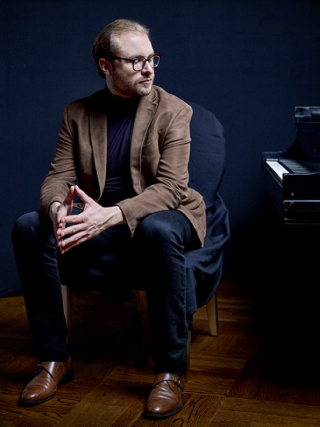
    Golka

    As a sort of unannounced prelude to the evening, pianist Adam Golka (above) played a Chopin nocturne with ravishing finesse. This established a beautiful musical atmosphere which was sustained throughout the performance.

    A screen was then lowered and musicologist Nicholas Chong spoke of Alma’s famed beauty and of the many men in her life, while photos of the lady and her suitors were shown. What a life she led! Of course, many of her adventures are spoken of in the film Bride of the Wind. It might have been illuminating to hear more about her musical education and of her small catalog of surviving works, though.

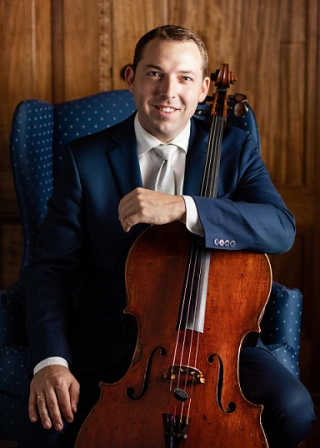
    Brook-Speltz - anna kariel

    Alexander Zemlinsky was Alma’s music teacher…and her lover. Tonight, Zemlinsky’s Three Pieces for Cello and Piano were performed for us by the Escher Quartet’s marvelous cellist Brook Speltz (photo above, by Anna Kariel), with Mr. Golka at the keyboard. The first of these, Humoreske, is a folkish piece that turns lyrical. Then comes Lied, a song of poignant beauty which expresses a sense of longing. The third piece, Tarantella, is a lively dance. To each of the three, Mr. Speltz brought his trademark warmth and expressiveness, well-matched by Mr. Golka’s sensitive and rhythmically deft playing.

    Ringle-Rebecca-10

    Two sets of songs, four by Gustav Mahler and five by Alma Mahler, brought forth mezzo-soprano Rebecca Ringle Kamarei (above) and the Canadian pianist Brian Wagorn. Ms. Kamarei, a comely woman with a unique voice and a sure sense of feminine power, looked striking in a black gown trimmed with golden vine-like appliqué.

    From Gustav Mahler’s vast song repertoire, Ms. Kamarei opened her set with the dramatic “Wenn mein Schatz Hochzeit macht“; her voice instantly captivated me with its distinctive colour-palette, size, a compelling command of dynamics, and a thoughtful way with words.  Continuing with the familiar “Rheinlegendchen“, the singer was sailing along beautifully when she had a momentary memory lapse and needed a re-set…this was charmingly handled, and she and the pianist resumed their music-making. In two of my most beloved songs from the Rückert-Lieder, “Ich atmet’ einen linden Duftand “Liebst du um Schönheit”, Ms. Kamarei and Mr. Wagorn wove their spell thru the dreamy passages of the first song to the wryly romantic sensibilities of the second.

    Wagorn  jpg

    Above: pianist Bruce Wagorn

    The five Alma Mahler songs drew my companion and me into even higher regard for Ms. Karamei and Mr. Wagorn. In “Die stille stadt“, the singer gave the signature descending phrases a nice sense of quiet drama; an unfortunate cellphone intrusion did not deter her from her poetic path: she displayed the great power of her voice, then reined it in to an impressive piano with complete control The pianist’s lovely postlude gave the song a perfectly polished end.

    During “Laue Sommernacht“, the singer’s expressive hands were captivating to watch. Again, her assurance of dynamic ‘rightness’ found her skillfully pulling back from forte to piano, making an exciting effect. This songs ends quietly; throughout, Mr. Wagorn was the ideal collaborator. In “Bei dir ist es traut“, lyrical expressiveness and finely-shaded vocal colours kept us riveted to the music; and the gentle sway of the song’s central section had its own allure. 

    Mr. Wagorn’s gently restless piano figurations created the right summertime mood for “Ich wandle unter Blumenen“;  but the singer cannot suppress a sudden burst of drama when she feels the desperate need for her lover’s embrace: her ardour creates a touch of witty irony. 

    Finally came “Lobgesang”, a song of praise. Introspective at the start, the music becomes quite grand. By now we are under Ms. Kamarei’s spell, and wanting to hear her in…some Wagner: Fricka and Waltraute came immediately to mind, as did – of course – the Wesendonck Lieder.

    Meanwhile, our desire to escape became more urgent as the unmasked couple in front of us began coughing the moment the music ended. We left hastily, regretting that we were missing the concert’s Korngold finale.

    ~ Oberon

  • Remembering Makiko Narumi

    With eve shapiro 2000

    Above: Makiko Narumi with director Eve Shapiro

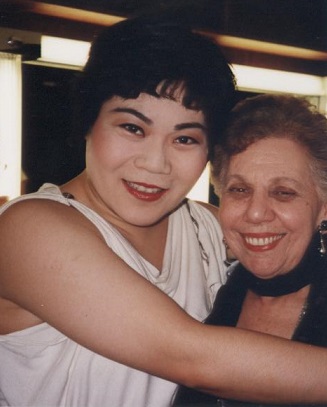
    April 30th, 2022 – Twenty years ago on this date, my friend the Japanese contralto Makiko Narumi passed away at the age of 33. I first met Makiko soon after I moved to New York City in 1998; I had heard her singing Schumann’s Frauenliebe und -leben at a Juilliard liederabend and was simply blown away by the sound of her voice, and a few days later she came into the opera room at Tower Records where I was working; she was stunned when I addressed her by name.

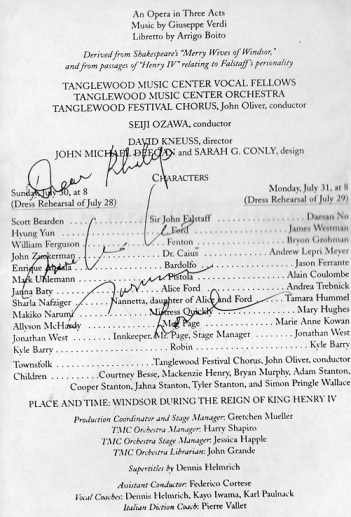
    We struck up a friendship and over the next 3 years I heard her many times at Juilliard (both in opera and lieder), in the semi-final and final rounds of the Met Auditions, at a Licia Albanese Foundation gala, at private concerts, singing the Rückert Lieder with the Juilliard Orchestra, and – in 2000 – at Tanglewood as Dame Quickly in FALSTAFF, conducted by Seiji Ozawa. Her last public appearance was singing the Mahler 2nd at Carnegie Hall just a few weeks before she passed away…a very emotional evening for both of us.

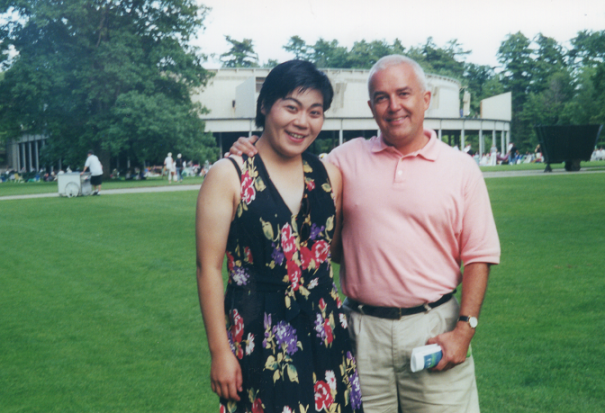
    One of the happiest days of our friendship: the Tanglewood FALSTAFF:

    1175885WOOzbiA

    Here we are on the lawn at Tanglewood after the performance in the Summer of 2000…

    118111jC9ldEDF

    …I even asked for her autograph!

    Makiko tanglewood falstaff

    Above: Makiko costumed as Dame Quickly…

    1185364kaB3O31

    …and here’s the entire cast of the Tanglewood FALSTAFF with Maestro Ozawa.

    I love to think of her now, bolstering the contralto section in the heavenly choir.

    Makiko’s memorial:

    Makiko's memorial 2002-1 jpg

    A message from Makiko’s parents:

    Message from makiko's parents-1jpg

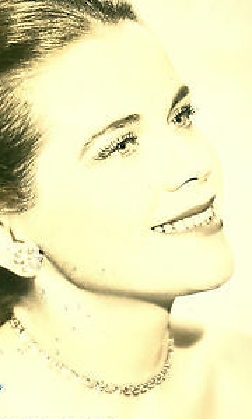
  • Teresa Zylis-Gara ~ Tu che le vanità

    Teresa_Zylis_Gara

    The beloved Polish soprano Teresa Zylis-Gara sings Elisabetta’s great aria “Tu che le vanità” from Verdi’s DON CARLO, from a performance given at Rome in 1969. Thomas Schippers conducts.

    Listen here.