Author: Philip Gardner

  • Taylor & Keigwin @ City Center

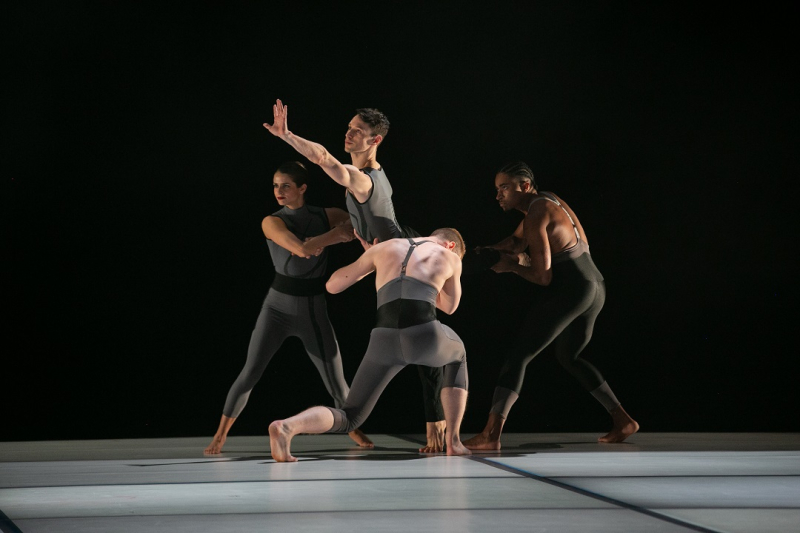
    Rush Hour (Keigwin) John Harnage (L-R) Maria Ambrose  Lee Duveneck  Devon Louis_photo by Whitney Browne

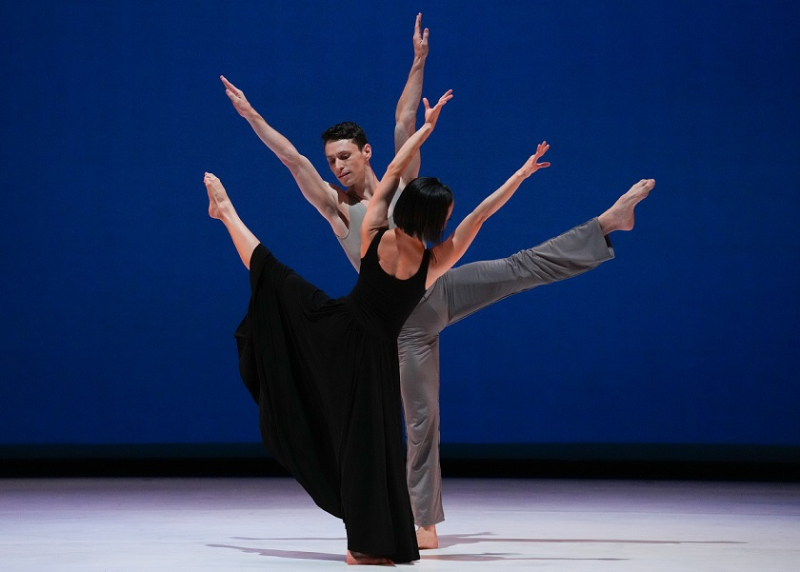
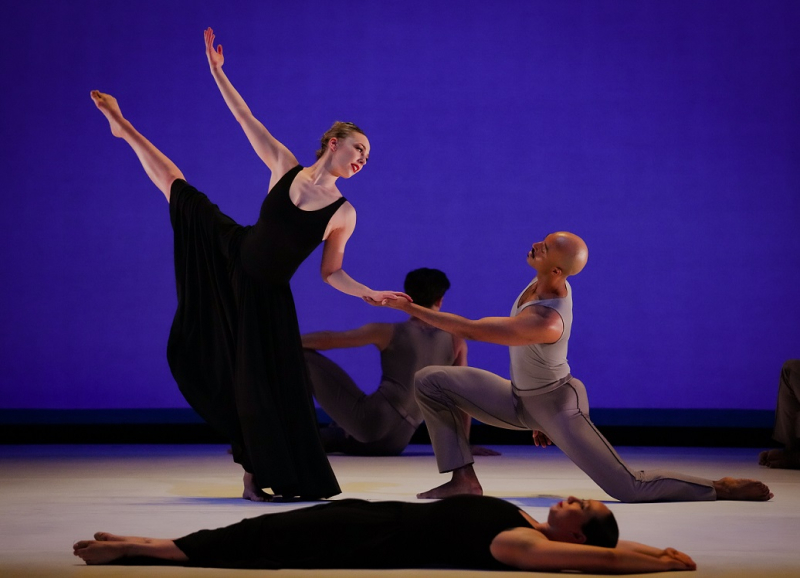
    Above: from Larry Keigwin’s RUSH HOUR; photo by Whitney Browne – the dancers are Maria Ambrose, John Harnage, Lee Duveneck and Devon Louis

    Author: Oberon

    Wednesday March 30th, 2022 – I’ll never forget the tumultuous ovation that rocked the New York State Theatre at the end of the world premiere performance of Larry Keigwin’s RUSH HOUR by the Paul Taylor Dance Company in 2016. I’d always hoped to see this piece again, and tonight that opportunity presented itself. Rightly, the Keigwin was presented last tonight because it is hard to imagine anything coming after, aside from massive applause.

    The program opened with OFFENBACH OVERTURES, Paul Taylor’s 1995 creation that spoofs the conventions of classical ballet. The Orchestra of St. Luke’s played the well-worn tunes with spirit for this “red” dancework: red backdrop, red costumes, red red red…

    OFFENBACH OVERTURES is funny once, and this was my second viewing of it after a gap of several seasons. Tonight it seemed corny, dated,  cliché-ridden, and long…I got restless waiting for it to end. All that being said, the dancing was first-rate: it looked thoroughly and very well-rehearsed, and several of the individual dancers made a splash. Lisa Borres as an un-hinghed ballerina was amazingly loose-limbed, and her facial expressions were priceless. Jada Pearman and Michael Apuzzo duetted persuasively, and Devon Louis and Lee Duveneck excelled as the Duelists who can’t keep their rockets in their pockets, so they rush off for a quickie mid-duel. New to the Company, Austin Kelly’s handsome face and compact, sturdy physique kept drawing my gaze.  

    N2W2981Y

    Above: Austin Kelly courts Maria Ambrose in OFFENBACH OVERTURES; photo by Ron Thiele

    Far more pleasure was derived from Taylor’s AIRS, one of his masterworks. Set to the music of Handel, this dancework premiered on this very stage in 1978,  and it looks as fresh, clean, and clear as ever this evening. Kudos to the Orchestra of St. Luke’s under David LaMarche’s baton for their gracious playing of these timelessly lovely airs. As opposed to the “send-up” balleticisms of the Offenbach, AIRS is genuinely balletic. In fact, the first time I saw it, it was being danced at ABT; that was – in fact – my first experience seeing any Paul Taylor work.

    AIRS has a small cast (seven dancers) and tonight’s septet were exceptional. Four women – Madelyn Ho, Maria Ambrose, Jada Pearman, and Jessica Ferretti – and three men: Alex Clayton, John Harnage, and Devon Louis – come and go in various pairings and ensemble passages. They all looked beautiful beyond words.
    2022-Airs-Ho-Clayton-by-Whitney-Browne1 - Copy

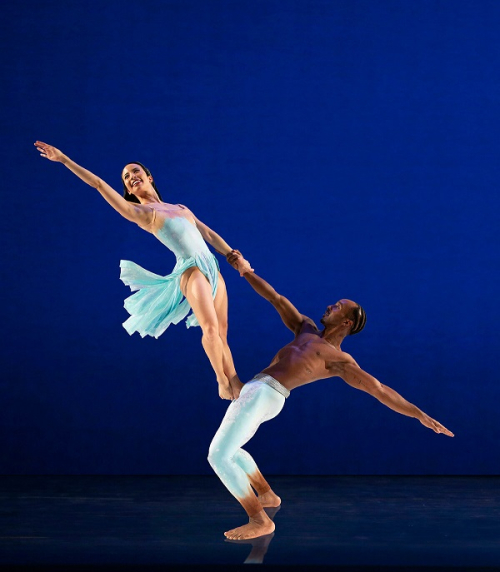
    The beating heart of AIRS is a remarkable duet performed tonight by Madelyn Ho and Alex Clayton (above, in a Whitney Browne photo); they danced with breath-taking skill and artistry. The audience was spellbound by their poetic grace, hailing them with warm applause when their duet ended. 

    Jada Pearman and John Harnage shared a Gavotte, dancing divinely together; Maria Ambrose was lovely in a solo weaving among the three men, and Jessica Ferretti in the final movement of AIRS presented herself as an already-shining Taylor star.

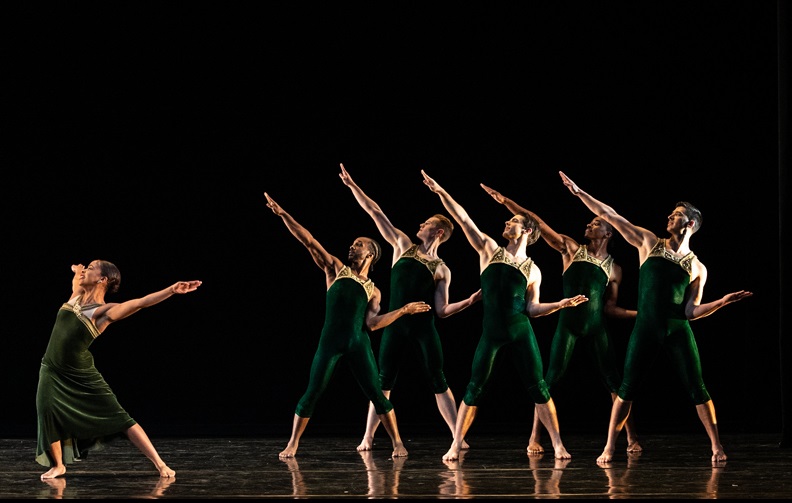
    Larry Keigwin’s RUSH HOUR triumphed again tonight. While many of the dancers who created roles in this piece have since left the Company, each member of tonight’s cast stepped proudly up to bat, hitting a series of home runs.

    Danced on the stage opened to the wings, with club lighting, and  smoke hovering on the air, RUSH HOUR zooms to life on Adam Crystal’s fantastical score. Larry Keigwin’s dynamic choreography demands incredible energy from the dancers, and each of them have ample opportunity to dazzle us with their power and passion.

    RUSH HOUR is perfectly tailored to the Taylor Company; soaring on the music, the dancers leap, swirl, and rush about the space in movement that is impulsive but that always seems well-charted. Everyone danced full-tilt, and I must again mention Alex Clayton, who was having a really great night.

    ~ Oberon

  • Philharmonic Ensembes~Ewazen/Stravinsky/Dvořák

    Ewazen

    Above: composer Eric Ewazen

    Author: Oberon

    Sunday March 27th, 2022 matinee – I always enjoy the Philharmonic Ensembles series at Merkin Hall, and I was very glad to be there this afternoon for an excellent program. The players of the New York Philharmonic love playing chamber music together when time allows, and this afternoon’s lineup of artists was really impressive.

    Composer Eric Ewazen greeted us prior to the program’s opening work: his Ballade, Pastorale, and Dance for the unusual combination of flute, horn, and piano. The last time I heard an Ewazen score was in 2018, when the composer’s violin concerto was used by the great choreographer Paul Taylor for his last major work: Concertiana. Today, introducing his Ballade, Pastorale and Dance, Mr. Ewazen touched on his Ukrainian heritage, and then the performance began.

    William_wolfram

    For the Ewazen trio, the tall and distinguished pianist William Wolfram (above) was joined by the Philharmonic’s stellar flautist Mindy Kaufman, and the orchestra’s current Acting Associate Principal Horn, the radiant Leelanee Sterrett.

    The opening Ballade begins with a darkish motif from the piano, soon joined by the mellow depth of the horn and the gleaming upper range of the flute. The blend of these three voices was really delectable, making me wish other composers would write for this particular combination. From a long flute trill and spiraling piano figurations, the music turns animated, and then calms for a really gorgeous andante. Then another burst of vigor, and another contrasting slower passage before a brisk final statement.

    Rippling sounds from Mr. Wolfram keyboard introduced a lovely Pastorale theme from Ms. Sterrett’s horn, which is then harmonized by Ms. Kaufman’s flute. Here, the contrast between burnished richness of the horn with the silvery sweetness of the flute truly delighted the ear. Lovely phrases follow, one after another, and then Ms. Sterrett’s horn sings a lyrical theme over the warbling flute and the piano’s arpeggios. A feeling of hope seems to rise within us as the Ballade reaches its solemn end.

    With sparkling sounds from Ms. Kaufman’s flute, and with Mr. Wolfram’s piano sounding in the upper octaves, we are ready to Dance. Ms. Sterrett’s summoning horn draws us in to this lively and tuneful music, which gets quite grand as the work comes to its close.  Such a unique treat this music is! Other choreographers might do well to follow Paul Taylor’s lead and have a listen to Mr. Ewazen’s music.

    More music I’d never heard before – Igor Stravinsky’s Octet for Winds – came next. For this, a brilliant ensemble drawn from the ranks of the Philharmonic’s wind sections were gathered: Robert Langevin, flute; Pascual Martínez Forteza, clarinet; bassoonists Judith LeClair and Kim Laskowski; trumpeters Christopher Martin and Thomas Smith, with Colin Williams on trombone and George Curran on bass-trombone. Mr. Langevin, in his introductory remarks, told us a story about a dream Stravinsky had had in which this particular set of instruments were playing together, and he wrote this octet to try to capture what he’d heard in his dream.

    The Octet is in three movements, though there was no discernible break between the second and third. A trumpet note introduces the Sinfonia, followed by a blending of woodwind voices. The full ensemble engage in music that is wittily paced and harmonized. A brassy march springs up, with trumpet calls and chuckling bassoons. The Sinfornia comes to a sudden halt.

    The Theme and Variations, which runs directly into the Finale, starts out with plodding brass and unison woodwinds; they then switch roles. Scurrying bassoons herald a military brass band passing by, and everyone falls in. Suddenly, I hear a waltz, with Mssrs. Langevin and Martínez Forteza taking the lead. Brilliant rhythms briefly take over, then there’s a slow bassoon passage, taken up by the clarinet and the brass. The music becomes chorale-like, before the flute and clarinet have a dialogue. The bassoons, sounding jolly, are joined by the clarinet; shifting rhythms carry us to the Octet‘s finish.     

    The afternoon’s program ended with a magnificent performance of Antonín Dvořák’s beloved Piano Quintet in A-major, Op. 81, one of his most familiar and oft-played works. The musicians here were violinists Kuan Cheng Lu and Su Hyun Park, violist Rebecca Young, and cellist Ru-Pei Yeh, with Mr. Wolfram returning to the piano. Ms. Young introduced the piece, and then took up her viola to regale us in the numerous opportunities Dvořák provides for the instrument. Kuan Cheng Lu played the many magical violin melodies with Olde World sweetness, warmth, and emotion; and the composer has also been generous to the second violinist: Su Hyun Park, playing beautifully this afternoon. And the cello is prominent throughout, with Ru-Pei Yeh providing cordial tone and rhythmic finesse. At the piano, Mr. Wolfram sustained the excellent impression he made in the Ewazen, making me wish to hear him in a solo recital.

    The applause throughout the afternoon was rather subdued; the audience consisted largely of senior citizens (anyone older than me is a senior citizen!) and perhaps they lack the stamina to clap for a long time. I honed my applauding skills during the 20-minute ovations that often ensued during the last Golden Age at the opera, which ended years ago. These days, applause lasting more than five minutes is extremely rare. Well, we live in different times now: everyone’s constantly in a rush – to get to the theatre, and then to get home. As my commadre used to say, “No time for love.” 

    ~ Oberon

  • Crespin & Meliciani ~ AIDA Scene

    Meliciani

    Soprano Régine Crespin and baritone Carlo Meliciani (above) sing the father/daughter duet from Act III of Verdi’s AIDA; the performance is from Mexico City, 1962, with Nicola Rescigno conducting. Jon Vickers is heard as Radames.

    Listen here.

    Mr. Meliciani recently passed away at the age of 92. He was a popular star at La Scala, debuting there In 1959 as Ping in TURANDOT and continuing to sing there thru the 1970s, taking on the Verdi baritone roles. He performed at the major opera houses of Italy, where such roles as Scarpia, Tonio in PAGLIACCI, and Carlo Gerard in ANDREA CHENIER supplemented his Verdi list. Mr. Meliciani also appeared at Wiesbaden, Lausanne, in Greece, Mexico, and in the USA (Philadelphia and Hartford). 

  • Kariné Poghosyan ~ Serenata Andaluza

    Karine-Poghosyan

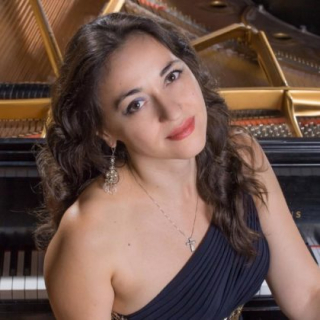
    Pianist Kariné Poghosyan performs Manuel de Falla’s Serenata Andaluza in a recital given at Yerevan, Armenia, in July 2010.

    Watch and listen here.

  • Paul Taylor Dance Company/City Center/2022

    ROSESHarnage Ho by Steven Pisano

    Above: John Harnage and Madelyn Ho in Paul Taylor’s Roses; photo by Steven Pisano 

    ~ Author: Oberon

    (Click on each image to enlarge…)

    Wednesday March 24th, 2022 – Opening night of the Paul Taylor Dance Company‘s 2022 season at City Center. Two Taylor masterworks book-ended the program, with a premiere by the Company’s recently-designated Resident Choreographer, former New York City Ballet principal ballerina Lauren Lovette, in between.

    This was my first time seeing the Company since several popular Taylor stars left, starting with Michael Trusnovec and followed by Laura Halzack, Parisa Khobdeh, Michelle Fleet, Jamie Rae Walker, Heather McGinley, James Samson, Robert Kleinendorst, and Sean Mahoney. Incoming new dancers were just getting their feet wet two years ago when the pandemic caused a prolonged pause in their progress. So, for me, tonight was a reunion and a re-discovery.

    As an ardent admirer of the music of Richard Wagner, Paul Taylor’s Roses is one of my favorites among his numerous masterworks. It moves me so deeply each time I see it…and hear it. The story of the first performance of Wagner’s Siegfried Idyll, played on the staircase at Villa Tribschen on the morning of December 25, 1870, by a small chamber orchestra, is one of my favorite tales out of musical history. It was the composer’s birthday and Christmas gift to his beloved Cosima, and marked one of the happiest days of their life together. You can read about it here.

    Roses - Jessica Ferretti  Shawn Lesniak and Company_photo by Steven Pisano

    Above: Jessica Ferretti and Shawn Lesniak in Roses; photo by Steven Pisano

    Roses opens with five couples onstage, the women in long black gowns. The pairings tonight were: Jessica Ferretti with Shawn Lesniak, Christina Lynch Markham with Jake Vincent, Raechelle Manalo with Alex Clayton, Madelyn Ho with John Harnage, and Kristin Draucker with Michael Apuzzo. Watching these beautiful creatures in a series of duets summoned many emotions in me – all of them warm and reassuring – for they are the future of the Paul Taylor Dance Company, and that future is in good hands. All these dancers radiated confidence, and their performances were suffused with poetry and light. The audience took a special liking to Ms. Ho and Mr. Harnage…understandably: they were superb. 

    As the Siegfried Idyll reaches its end, we have found a place of tranquility in an ever-darkening world; the music and dancing have nourished the spirit, and one cannot imagine that anything more beautiful and poignant could possibly follow it. But then Jada Pearman and Lee Duveneck, clad in pristine white, appear to dance one of the most entrancing of Paul Taylor’s duets. Set to a score by Heinrich Baermann which features a clarinet solo played sublimely by the Orchestra of St. Luke’s inimitable Jon Manasse, this pas de deux had a particularly hypnotic effect tonight. Mr. Duveneck towers over the petite and radiant Ms. Pearman, his partnering so protective and tender, and her dancing a vision of grace. The five couples remain seated on the floor at the rear of the stage during this duet, keeping echoes of the Siegfried Idyll in our consciousness. A genuine “Taylor ovation” greeted the dancers during their bows.

    Anticipating Ms. Lovette’s new work, I was pleased to read of her choice of music, and intrigued by the piece’s title: Pentimento. I first discovered the music of the Argentine composer Alberto Ginastera many years ago when a pianist I was dating played some of it for me on his baby grand, which took up most of the space in his little studio apartment. “Pentimento” is an Italian word meaning repentance; in the art world, it refers to a painter’s regret when a piece he is working on does not come out quite as he wanted it to; he paints over and re-uses the canvas, but with the passing of time, the original picture may bleed thru, causing a ghostly image.

    Pentimento (Lovette) - Lee Duveneck and Company_photo by Whitney Browne

    Above: Lee Duveneck and the ensemble in Lauren Lovette’s Pentimento; photo by Whitney Brown

    My expectations for the Lovette work were high, and the opening moments, with the dancers in silhouette against a glowing backdrop, boded well. Christina Lynch Markham, her hair down, has a dramatic solo passage which finds her in a state of worry and agitation; she clutches a red scarf as she dances…and finally collapses. Now the scarf will be passed from dancer to dancer, each one having a featured solo amidst the ensemble. Thus we watched the lively Lisa Borres, a tormented Jada Pearman (who emits a scream at one point), the willowly and wonderful Maria Ambrose, the pale and somewhat mysterious Lee Duveneck, and the bold and beautiful Devon Louis being put thru their paces.

    Clad in dreary costumes that might have come off the racks at Old Navy, the community perform athletic combinations, with Tayloresque gestures; they roll about on the floor, form brief alliances, strike quirky poses, and gather – with expressions of care and concern – to watch their colleagues go thru the motions. Meanwhile, the Ginastera music, not his best by far, has become sort of an after-thought. My mind started to wander; the audience, so engrossed by Roses, began to get restive.

    Pentimento was well-received, but during the intermission I could not sense the sort of buzz that usually follows a premiere. I suppose having your new work debuted between two classics by one of the great choreographers of all time would be somewhat daunting. We shall see where this collaboration goes in the future.     

    Brandenburgs - Jada Peaman and Company - photo by Ron Thiele

    Above: Jada Pearman and the Taylor men in Brandenburgs; photo by Ron Thiele

    Paul Taylor’s festive Brandenburgs, to the immortal music of Johann Sebastian Bach, made for a perfect end to the evening. Tonight, the ballet looked as fresh and vibrant as it ever has…and that music!  The magnificent Taylor dancers soar on the wings of Bach’s score; they inspire and uplift us at a time when hope and joy are in short supply.

    Brandenburgs - Madelyn Ho  John Harnage  Maria Ambrose  Jada Pearman - photo by Ron Thiele

    Above: John Harnage and Maria Ambrose in Brandenburgs with Madelyn Ho and Jada Pearman kneeling; photo by Ron Thiele

    The male ensemble – Lee Duveneck, Alex Clayton, Devon Louis, Adam Dickerson, and Jake Vincent – race about the stage in trademark Taylor patterns. Blindingly handsome and charismatic, John Harnage held the audience in the palm of his hand simply by being there. His dancing is so clear and so poetic. And later – standing stock still as he watches his three muses  (Maria Ambrose, Jada Pearman, and Madelyn Ho) dance solos to dazzle him – he looked like a young god. Mr. Harnage’s adagio pas seul, was a portrait of masculine beauty. Then Brandenburgs sweeps onward to its final pose: an uplifting celebration of music and dance, and of the human spirit.

    Danceworld luminaries among the audience included Justin Peck, Troy Schumacher, Damian Woetzel, and Edward Villella.

    All photos by the credited photographers, courtesy of Paul Taylor Dance Company. Many thanks to the Company’s wonderful press liaison de luxe, Lisa Labrado. 

    ~ Oberon

  • Saxophonist Steven Banks @ The Morgan Library

    Steven banks

    Wednesday March 23rd, 2022 matinee – Young Concert Artists presenting a noontime “encore” concert by saxophonist Steven Banks (photo above) at the Morgan Library. Pianist Xak Bjerken joined Mr. Banks for a wonderfully varied program.

    From way back in my high-school days, I’ve loved the sound of the saxophone; I chose the French horn, but in band, I always sat next to our phenomenal first sax player. This afternoon was the first time I’ve ever attended a full recital of music for the instrument, and I was bowled over by Mr. Banks’ opulent sound, commanding technique, and deep musicality. 

    The program opened with Canadian composer Denis Bédard‘s Fantasie, a delightful piece which Mr. Banks played on soprano sax. As the afternoon evolved, he moved to alto sax, and then to tenor sax. The exuberant opening of the Bédard immediately established Mr. Banks as a virtuoso of the first order. His tone is luminous, his technique compelling, his breath control astonishing. Tall and slender, he is a charismatic musician, and he had the audience under his spell within seconds. Bédard makes the pianist an equal partner in this work, and Mr. Bjerken played with great clarity and feeling, both here and throughout the concert.

    The Fantasie features flowing melodies, with alternating passages of lyricism and animation; as the music takes a pensive turn, both artists made much of the sustained phrasing. Then, a da capo of the zestful opening speeds on to a quirky end.

    Xak Bjerken

    Above: pianist Xak Bjerken

    I became familiar with Paul Creston’s Sonata in E-flat Major, Op. 19, during the pandemic via YouTube; this afternoon, I was very glad for the opportunity to hear it played live. The piece was premiered by one of the most popular American saxophonists of his day, Cecil Leeson, in New York City in 1940. For this, Mr. Banks took up his alto sax.

    The sonata is in three movements; the first, marked “With Vigor“, has a lively beginning and goes on thru many contrasts of speed and flow, including  a warm, drawn-out melody and passages of bustling wit. Both Mr. Barnes and Mr. Bjerken showed off a wide range of dynamics. The second movement, “With Tranquility“, finds Mr. Bjerken with a solo which develops into a lovely song in which both artists showed a gift for finely-shaped phrasing and for finding appealing colours. The music becomes passionate, then turns dreamy. The sustained ending was immaculately rendered. Following a spirited opening the third movement – “With Gaiety” – moves on to an interlude wherein Mr. Banks summoned up some of his sweetest sounds. The music then breezes on to its finish.

    Now that we have Mr. Banks among us as a saxophone paragon, let’s hope contemporary composers will follow Paul Creston’s lead and bring us more sonatas – and/or concertos – for the instrument.

    Mr. Banks then spoke of the next three works, which are often featured as encores; he wanted to bring them to us as a set, and as such they were highly enjoyable to hear…their contrasts setting each work in high relief.

    First came Claude Debussy’s brief and haunting Syrinx, which is usually heard as a flute solo. Languorous and seductive, this music found fresh hues in the saxophone range: a dusky quality develops, and Mr. Banks’ fantastic dynamic control made it so alluring.

    From Astor Piazzolla, we heard Milonga del Angel, which Mr. Bjerken commenced with a slow swaying motif from the piano. The music is full of suggestion: at first inviting, then more insistent.  

    Steven Stucky’s Scherzino is playful and slithering at first, then becomes songful, and finally dotty. The piano goes high before we reach a sudden end.

    Mr. Banks’ next offering was a large piece he wrote himself: Come As You Are. It is in four movements, three honoring of his siblings, and the final one dedicated to his mother; each movement drew its inspiration from a beloved spiritual. For this, Mr. Banks brought forth his tenor sax.

    In the first movement, Lift My Eyes, we could hear echoes of “My Lord, What a Morning”. There are big bursts of melody, and the pianist plays an important role here. An uncannily sustained note from Mr. Banks led to a slow, quiet cadenza.

    Times of the Storm draws on “Wade in the Water”; it is bustling, jazzy music. At one point, Mr. Banks turned his back to the audience and achieved a sort of echo effect as Mr. Bjerken reached into the piano to pluck individual strings. A sense of quiet rapture settles over us; from the keyboard, Mr. Bjerken plays swirling pianissimo spirals of notes.  

    Strength of my Life moved me deeply, since the old song “His Eye Is On The Sparrow” was a great favorite of my maternal grandmother, who would sing it to me in her old age with a quavering voice. From a lulling start by the piano, the saxophone sings to us passages that veer from poignant to passionate. Mr. Banks finishes this movement with a long tone that slowly vanished into the air. What a sound!

    For the fourth and concluding movement of this suite – Lift My Hands – Mr. Banks turned to “I Still Have Joy”. A somber start soon grows more lively. I cannot recall ever hearing a more sumptuous saxophone tone than what Mr. Banks gave us here…well, all afternoon, actually.  And then he turns to some flights of coloratura before a big build-up to the finish.

    This singular creation, at once personal and universal, was such an impressive undertaking for the artist. His family were present, hearing the music performed ‘live‘ for the first time.

    The program concluded with Pedro Iturralde’s Pequena Czarda, which has a dramatic start before becoming a big sad-love song. A fast and bouncy czardas pops up, slows for an interlude, and then ends with a swirl of notes.

    Mssrs. Banks and Bjerken gave us so much to enjoy this afternoon. The concert marked a reunion with my high-school classmate Deb Hastings, who came down from Connecticut specially for the occasion. After the two-year pandemic lull, it was wonderful to see her again…and to hear together such fresh, vibrant music so engrossingly played.

    ~ Oberon

  • Truls Mørk ~ Bloch’s Schelomo: Rhapsodie Hébraïque

    Mork

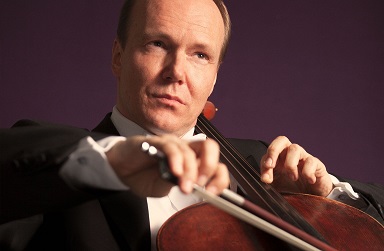
    One of my favorite artists, the Norwegian cellist Truls Mørk, joins the Stavanger Symphony Orchestra in a performance of Ernest Bloch’s Schelomo: Rhapsodie Hébraïque at a concert given in August 2019. Markus Stenz is the conductor.

    Watch and listen here.

  • Truls Mørk ~ Bloch’s Schelomo: Rhapsodie Hébraïque

    Mork

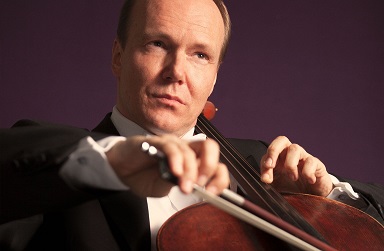
    One of my favorite artists, the Norwegian cellist Truls Mørk, joins the Stavanger Symphony Orchestra in a performance of Ernest Bloch’s Schelomo: Rhapsodie Hébraïque at a concert given in August 2019. Markus Stenz is the conductor.

    Watch and listen here.

  • Transfigured Night @ Chamber Music Society

    Arnold_Schonberg_Richard_Gerstl

    Above: portrait of Arnold Schoenberg by Richard Gerstl

    ~ Author: Oberon

    Friday March 18th, 2022 – Whenever Arnold Schoenberg’s Verklärte Nacht (“Transfigured Night”) is being performed in Manhattan, I will try to be there. This evening, it was the closing work on an imaginative program of ‘music of the night’ put together by Chamber Music Society of Lincoln Center.

    Opening the evening was Luigi Boccherini’s Quintet in C-major for Two Violins, Viola, and Two Cellos, G. 324, “La musica notturna delle strade di Madrid”  which was composed in 1780. As my friend Ben Weaver remarked after hearing it tonight: “This music is so ahead of its time…it could have been composed yesterday!” To be sure, it is very inventive work, and there’s so much packed into its 12-minute duration.

    Tonight, this Boccherini gem was performed to perfection by Yura Lee (having exchanged her more usual viola for the violin this evening), violinist Stella Chen, violist Matthew Lipman, and cellists Nicholas Cannellakis and Sinhao He. The best-known section of the work, the Minuet, caused a ripple of recognition to run thru the hall. Elsewhere, plucking and shivering motifs provide accompaniments as the melodies spin out; it ends with a regal section as Retreat is sounded and the guardsmen return to barracks.

    Franz Schubert wrote his Notturno in E-flat major for Piano, Violin, and Cello, D. 897, Op. 148, in 1828. It is sublimely beautiful, and was played tonight by three extraordinary musicians: Yura Lee (violin), Sihao He (cello), and Michael Brown (piano).

    The piano commences a slow waltz, the violin and cello harmonizing. Then roles are reversed: the strings take up a plucking rhythm as the pianist assumes the melody. From gentleness, there comes a rise of passion, with rippling keyboard figurations. The opening melody is repeated, becomes expansive, fades briefly, is revived, and then on to a quiet ending. Throughout the ten-minute work, I greatly enjoyed watching the silent communication between the three players.

    James+Austin+Smith

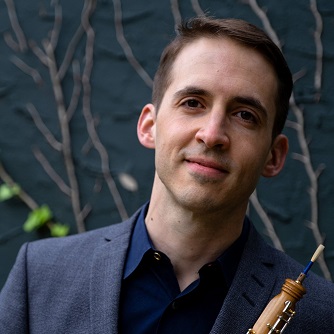
    Above: oboist James Austin Smith

    This evening brought my second hearing of Benjamin Britten’s Phantasy Quartet for Oboe, Violin, Viola, and Cello, Op. 2,  which. was written in 1932 for a competition for single-movement chamber works established in 1905 by Walter Wilson Cobbett,

    When I heard this work in 2013, James Austin Smith was the oboist; and he was back tonight, playing it so clearly and thoughtfully. He was joined by violinist Stella Chen (elegantly gowned in purple and white), violist Hsin-Yun Huang (very chic in a halter top and toreador trousers), and cellist Nicholas Cannellakis. 

    The piece commences with short, dotty cello notes, and then a march develops. The oboe takes up a songful passage. A swift and vibrant allegro is followed by a string trio before the oboist picks up where he left off, and the music marches off into the air as magically as it appeared. Mr. Smith’s delicious, multi-hued playing was – as always – a delight to hear.

    After the interval, the Society’s Executive Director, Suzanne Davidson, gave a brief speech, dedicating the concert to the heroic people of Ukraine. The crowd’s reaction was loud and clear.

    Maxresdefault

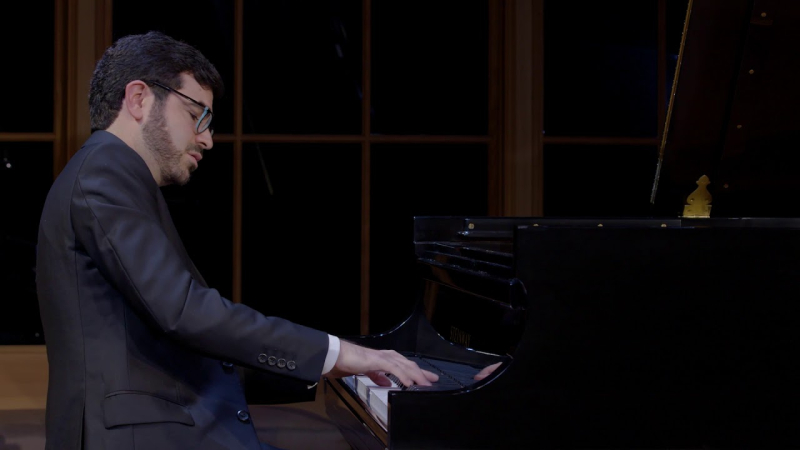
    The program continued as Michael Brown (above) took the stage alone to ravish the ear with his magical playing of two piano works by Claude DebussyLa terrasse des audiences du clair de lune” from Préludes, Book II (1913), and “Clair de lune” from Suite bergamasque (circa 1890; revised in 1905).

    In the first, Mr. Brown’s incredibly hushed pianissimo playing cast a spell of rapture and mystery over us; his control was astounding. As the prélude reached its tranquil end, Mr. Brown kept his hands poised over the keyboard momentarily and then embarked on an intoxicating rendering of the “Clair de lune”.. I found myself wishing that this poignant dream could go on and on… 

    Huang_

    Above: violist Hsin-Yun Huang

    To end this fascinating program, Arnold Schoenberg’s Verklärte Nacht (“Transfigured Night”) was magnificently played by a string sextet of the highest order: Yura Lee and Stella Chen (violins), Hsin-Yun Huang and Matthew Lipman (violas), and Nicholas.Cannellakis and Sinhao He (cellos).

    The composer drew inspiration for this work from a poem by the Austrian poet Richard Dehmel which tells of a man and woman wandering together late into the evening. The woman confesses to her lover that she is pregnant by another man. In the shadowy forest, the man consoles his beloved and, through his forgiveness, her guilt us assuaged. He assures her that he will care for the child as his own. Their love is transfigured through this night of communion they have shared, and they look to the future with hope.

    In its thirty-minute time span, Verklärte Nacht traces the lovers’ journey with incandescent harmonies and haunting melodies that sing of the redemption of forgiveness and the enduring power of love, The music traces the arc of the poem from its first line – “Two people walk through a bare, cold wood;” to its last: “Two people walk on through the high, bright night.” For a die-hard romantic like myself, few other works can compare.

    One of the most wonderful things about this work is the way Schoenberg distributes the musical treasures in his score: each of the six players has ample opportunity to display their tone and artistry as melodies are passed about and harmonies mingle on the air. As the music wends towards its finish, a great flow of lyricism rises up.

    Stella-Chen-

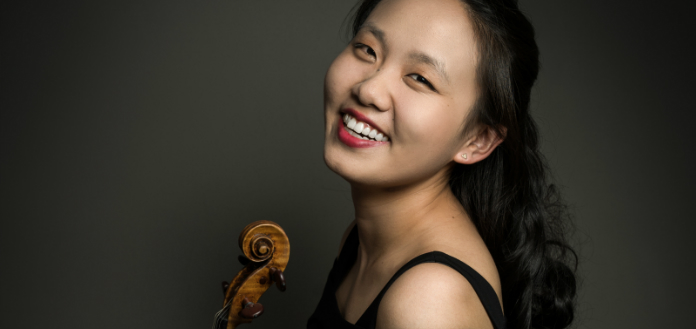
    Above: violinist Stella Chen

    This evening’s performance was so richly rewarding; the players captured every nuance of this profoundly moving score. At the end, a standing ovation was the only possible audience reaction; onstage, the artists quietly embraced one another during the bows.

    The cumulative effect of Verklärte Nacht tonight was to pull me – at least for a time – out of a deep feeling of world-weariness that has weighed on me in recent weeks, due to the lingering pandemic, the downward spiral of our great democracy, and a war started by a power-mad fiend. Indeed, it has, at times, felt like life is no longer worth living.

    To the musicians who played tonight: please know the great value of your music-making, and what it means to us. You provide a ray of light in an ever-darkening world. . 

    ~ Oberon