Author: Philip Gardner

  • Strings Only @ Chamber Music Society

    K lee

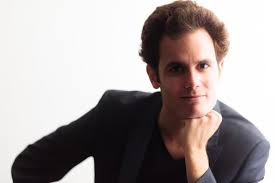
    Above: violinist Kristin Lee

    Tuesday January 18th, 2022 – Chamber Music Society of Lincoln Center brought together six virtuoso string players from their stellar roster for a program of music by Beethoven, Schulhoff, and Dvořák at Alice Tully Hall.

    Beethoven’s Quintet in C-minor for Two Violins, Two Violas, and Cello, Op. 104, started life as a piano trio composed in 1794–95; the composer arranged the work for string quintet in 1817.

    An almost waltzy feeling springs up for the opening of the Allegro con brio. The music spills forth with contrasting passages of animation and lyricism, which tonight’s five musicians graced with delicious harmonies and finely-judged dynamics. Violist Matthew Lipman’s playing (all evening) was of particular note.

    A gentle flow of melody opens the Andante cantabile. Ensuing variations include a sad interlude and some boisterous passages; Mr. Lipman and cellist Keith Robinson seize on their opportunities. The irresistible magic of Beethoven abounds here. The Menuetto has a courtly feeling, but fabulous flourishes from Kristin Lee’s violin add a spicy touch. Later, some charming echo effects are heard.

    Ms. Lee takes the lead in the quintet’s Finale: Prestissimo. Here I found myself deriving great joy from watching the five musicians reveling in the pleasure of playing such marvelous music. After all that has gone before, Beethoven pulls off a final magic trick: the quintet ends quietly.   

    Erwin-Schulhoff

    Above: composer Erwin Schulhoff

    The centerpiece if this evening’s program was Czech composer Erwin Schulhoff‘s Sextet for Two Violins, Two Violas, and Two Cellos, composed in the early 1920s. This evening was my first hearing of this work, and it was an engrossing, revelatory experience. My only other Schulhoff encounter was a powerful performance of the composer’s 5th symphony by the American Symphony orchestra in 2017.

    Schuhoff’s Sextet opens with an Allegro risoluto, the musicians digging in and then trudging along with numerous dramatic effects. The music calms, with wisps of melody woven in; our two violists (Mssrs. Lipman and Neubauer) have much to do here, with plucking and tremolo passages. The music has hauntingly somber harmonics and brusque accents.

    In the eerie Tranquillo: Andante which follows, the music is spine-tingling: unsettling yet beautiful. Mr. Neubauer and cellist Keith Robinson share an evocative exchange, and Kristin Lee spins a silky violin theme over a rocking motif. A solo from Mr. Robinson sustains the mood, and then a creepy, insectuous theme yields to a hushed atmosphere. The cello sings low, and then, with fantastic control, a final passage for viola and cello. “Wow!” I scrawled in my notes.  

    An agitato movement, marked Burlesca. Allegro molto con spirito brought forth fun, lively rhythms and some fiery playing from Matthew Lipman. The tempo speeds up for a propulsive unison passage at the finish.

    Inbal Segev’s deep, dolorous cello sound opens the concluding Molto adagio; the music has a dense, plaintive quality. Mr. Sussmann and Ms. Lee exchange lamenting themes; and while the violas sustain a tremolo effect, Mr. Robinson joins: his cello imitates the sound of a pendulum clock. An uneasy quietude settles over the hall as the music takes a long fade, and Mr. Robinson’s cello has a last utterance.
     
    This magnificent rendering of the Schulhoff will linger long in my memory.

    Arnaud-Sussmann-Photo-V-Photo-Credit-Carlin-Ma jpg

    Above: violinist Arnaud Sussmann, photographed by Carlin Ma

    To close the evening, Antonin Dvořák’s Sextet in A-major for Two Violins, Two Violas, and Two Cellos, Op. 48 (1878) was gorgeously played by our six artists.

    From the start, this sextet is a veritable font of melody. And the dance rhythms are indeed toe-tappingly appealing. But after a while, it all becomes so very pleasant, and I began to think back to the jarring fascination of the Schulhoff. As time goes by, I find that Dvořák’s music seldom draws a deep response from me.

    Despite such quibbles, I was so glad to stand up and cheer at the end of the concert, joining my fellow music-lovers in a heartfelt homage to these six great musicians. 

    ~ Oberon
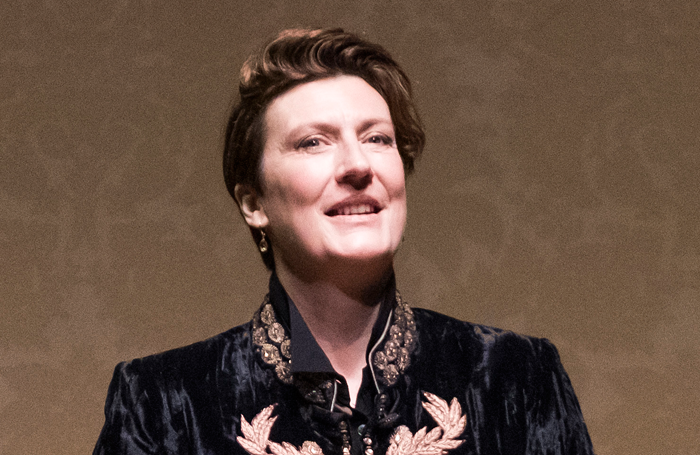
  • Dame Sarah Connolly ~ La Mort de Cléopâtre

    Sarah-Connolly

    Dame Sarah Connolly sings Hector Berlioz’s La Mort de Cléopâtre at the Barbican Hall, London, in May, 2015, with the BBC Symphony Orchestra, conducted by Sir Andrew Davis.

    Listen here.

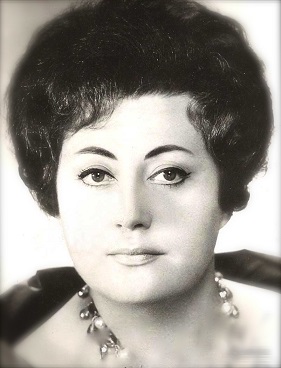
  • Régine Crespin ~ Le Spectre de la Rose

    Crespin2

    Régine Crespin sings Berlioz’s Le Spectre de la Rose from LES NUITS D’ÉTÉ from a televised concert given by the Orchestre Philharmonique de l’ORTF in 1966. The conductor is Jean Claude Hartemann.

    Watch and listen here.

  • Paolo Rigutto – Gabriel Fauré ~ Nocturne n°4

    Rigutto

    Paolo Rigutto plays Gabriel Fauré’s Nocturne n°4.

    Watch and listen here.

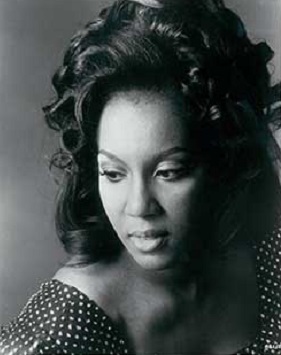
  • Gwendolyn Killebrew Has Passed Away

    Killebrew

    Wednesday December 29th, 2021 – Mezzo-soprano Gwendolyn Killebrew passed away on December 24th, 2021, at the age of 80.

    Strikingly beautiful, and with a voice to match, Gwendolyn Killebrew studied at the Juilliard School and was a Met Auditions winner in 1966.

    In 1967, Ms. Killebrew made her Met debut as Waltraute in the Karajan WALKURE. She sang a series of Carmens at The Met in 1979. In 1971, she had also joined New York City Opera, where she sang Ulrica in BALLO IN MASCHERA (debut) and Genevieve in PELLEAS ET MELISANDE. I had the good fortune to see her in both these roles.

    Joining the Deutsche Oper am Rhein, Düsseldorf, in 1976, Ms. Killebrew sang a wide repertoire there including Azucena, Amneris. Fricka, Jocasta, Baba the Turk, Orfeo, and the Monteverdi contralto roles. At the 1978 Bayreuth Festival, she made a striking impression as Waltraute in Patrice Chéreau’s wildly controversial staging of the “centennial” RING Cycle. Listen to her in Waltraute’s doom-ladened narrative from GOTTERDAMMERUNG, from the 1980 international telecast of the Cycle:

    Gwendolyn Killebrew as Waltraute ~ Götterdämmerung – Boulez cond – Bayreuth 1980

    Ms. Killebrew’s appeared at Santa Fe, Cologne, Paris, Stuttgart, Copenhagen, and Geneva, and at the great music festivals of Salzburg, Ravinia, Tanglewood, and Aspen. She worked with such illustrious conductors as Wolfgang Sawallisch, Leonard Bernstein, Seiji Ozawa, James Levine, Pierre Boulez, Herbert von Karajan, Sir George Solti, Zubin Mehta, Fabio Luisi, and  James Conlon.

    Upon retiring from the stage, Ms. Killebrew taught and coached at her studio at Düsseldorf.

    Enjoy this brief delight of a trio from Handel’s TAMERLANO sung by Ms. Killebrew, Alexander Young, and Carole Bogard, and a marvelous At II of TRISTAN UND ISOLDE here, wherein Ms. Killebrew and Jessye Norman each revel in their vocal richness.

    More from Ms. Killebrew:

    Gwendolyn Killebrew – Bella gara che faranno ~ Handel’s TAMERLANO

    Gwendolyn Killebrew – Dammi pace ~ Handel’s TAMERLANO

    Gwendolyn Killebrew – Prendi! É Un Ricordo..Son La Vecchia Madelon ~ ANDREA CHENIER

    ~ Oberon

  • Régine Crespin & Sándor Kónya ~ PARSIFAL scene

    Snapshot parsifal

    Above: Sándor Kónya and Régine Crespin

    The final scene of Act II of PARSIFAL from the 1966 Met broadcast. This was the first time I ever heard this opera, which became a favorite of mine over time.

    Kundry: Régine Crespin
    Parsifal: Sándor Kónya
    Klingsor: Morley Meredith
    Conducted by Georges Prêtre

    Listen here.

  • Régine Crespin & Sándor Kónya ~ PARSIFAL scene

    Snapshot parsifal

    Above: Sándor Kónya and Régine Crespin

    The final scene of Act II of PARSIFAL from the 1966 Met broadcast. This was the first time I ever heard this opera, which became a favorite of mine over time.

    Kundry: Régine Crespin
    Parsifal: Sándor Kónya
    Klingsor: Morley Meredith
    Conducted by Georges Prêtre

    Listen here.

  • Biebl ~ Ave Maria

    Voces8

    Voces8 perform Franz Biebl’s Ave Maria. It sounds like ‘early music’, but the composer was born in Germany in 1906 and passed away in 2001. Read about him here.

    Watch and listen here.

  • Wolfscrag Scene ~ Araiza & Schexnayder

    Araiza (3)

    The Wolfscrag Scene from Donizetti’s LUCIA DI LAMMERMOOR sung by tenor Francisco Araiza (above) and baritone Brian Schexnayder from a 1988 performance.

    Watch and listen here.

  • Wolfscrag Scene ~ Araiza & Schexnayder

    Araiza (3)

    The Wolfscrag Scene from Donizetti’s LUCIA DI LAMMERMOOR sung by tenor Francisco Araiza (above) and baritone Brian Schexnayder from a 1988 performance.

    Watch and listen here.