Author: Philip Gardner

  • Raina Kabaivanska ~ TOSCA – Act II

    Raina tosca (2)

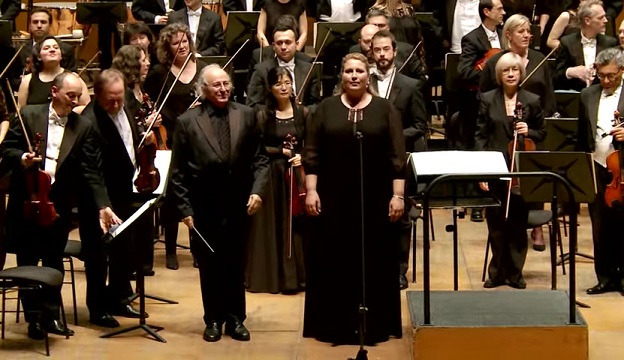
    Raina Kabaivanska sings Tosca in the second act of Puccini’s masterpiece from a performance at the Teatro Comunale di Adria in 1987.

    Watch and listen here.

    CAST:

    Floria Tosca – Raina Kabaivanska
    Mario Cavaradossi – Gianfranco Cecchele
    Baron Scarpia – Silvano Carroli
    Cesare Angelotti – Giovanni Antonini
    Spoletta – Giancarlo Turati
    Sciarrone – Manrico Canovi

    Conductor: Massimo de Bernart

  • ABT GISELLE: Brandt ~ Cornejo ~ Petersen

    Herman-Cornejo (3)

    Thursday October 21st, 2021 – After watching some clips of Ana Sophia Scheller in a recent production of GISELLE at Cagliari, Italy, I suddenly felt a great desire to see this immortal ballet live again. But…where? I’ve been so out of touch during the pandemic; but then I remembered that ABT were about to begin a season at the New York State Theater; might they be giving giving GISELLE? I went to their website and…voilà! There is was: a whole week of GISELLEs to choose from. Fortune smiles on me yet again. I quickly chose this evening’s performance, drawn by the presence in the cast of Herman Cornejo (photo) as Albrecht. The ticket was ordered, and soon enough I was cozy in my 3rd Ring AA seat and experiencing this ballet which carries so much personal meaning for me.

    The audience, who have been starved for live performances of ballet for a year and a half, were wonderfully attentive and wildly enthusiastic. The orchestra, under David LaMarche’s astute leadership, played the Adam score superbly; we often take the pit bands of our two ballet companies for granted, but both ensembles are loaded with excellent musicians, and tonight the ABT orchestra played this incomparable score very handsomely indeed.

    In the first act, dancers whose characters do not re-appear after the intermission made such fine impressions that I was wishing there were curtain calls in order to show appreciation for their performances. This was especially true of the inimitable Susan Jones, whose Berthe is so touching; her mime is incredibly clear and telling. Isadora Loyola, a vision all in red, was a striking Bathilde. A tall couple were cast in the Peasant Pas de deux: the dancing of Betsy McBride and Jose Sebastian gave the duet a spacious feel. Ms. McBride’s deft footwork and Mr. Sebastian’s cushioned landings made a very pleasing effect.

    Andrei Ishchuk was a tall, impressive Hilarion. As I have often said in the past, Hilarion is the ‘good guy’ in GISELLE; had Giselle trusted her longtime beau and seen thru Albrecht’s deception, her story would have had a different outcome. But…love in blind (and don’t I know it…) At any rate, Mr. Ishchuk did a fine job with the part, including some flashy air turns in his tormented dance in Act II.

    ABT’s first-class Wilis seemed unfazed by the somewhat more limited space of the State Theater stage (as opposed to that of The Met). Their dancing made the ballet’s second act everything it should be. Fangqi Li and April Giangeruso were lovely in their solo passages as Moyna and Zulma respectively.

    Petersen_Stephanie Jade Young

    Stephanie Petersen (above, in a Jade Young portrait) danced Myrthe beautifully. During this week of ABT GISELLEs, this role has gone thru several casting changes: originally, Catherine Hurlin was listed for this evening, and but then Christine Shevchenko’s name appeared in her place. Stephanie was to have danced Zulma tonight, but a pre-curtain announcement made her the Queen of the Wilis instead.

    It was simply delightful to see Ms. Petersen again; in the past I’ve seen her dancing not only with ABT but also for Joshua Beamish, Emery LeCrone, and Claudia Schreier…and every time she’s dazzled me. Stephanie, who returns to the stage from the COVID layoff – and from becoming a mother – is on fabulous form, and her Myrthe was regally danced (both her solos simply entrancing) and dramatically more nuanced than some I have seen: for beneath the icy, commanding presence of the Wili queen, one can still see the young woman that Myrthe once was. Brava, Stephanie!  

    I saw Herman Cornejo as Albrecht in 2008 – I believe it was his ABT role debut – opposite Xiomara Reyes. Read about that wonderful performance here. Tonight, this now 40-year-old prince of the dance triumphed yet again; his Albrecht is boyish of face and figure, compelling in his dancing, and incredibly expressive and impressive in his partnering. The bravura passages were tossed off with élan, and his affectionate dancing with Ms. Brandt in Act I gave way to his soul-searing partnering in Act II, where his remorse was so movingly expressed. The two overhead lifts were simply astounding, and his final parting from the girl who not only forgave him but saved him from his fate, was heart-rending. In a beautiful gesture, during the final bows, Herman sent Ms. Brandt out alone, only joining her after she had faced the avalanche of cheers that descended on her.   

    Skylar-Brandt

    Skylar Brandt’s Giselle can stand proudly in my pantheon of great interpreters of this iconic role. The long-limbed ballerina danced her heart out all evening, and she had the audience with her every step of the way. Her first solo – Giselle emerging from her home on her last day on this Earth – had an immediacy and freshness that was most appealing. Her modesty and shyness with Albrecht were lovingly portrayed, and her big solo – just before her world comes crashing down – featured triumphant yet delicate hops on pointe and remarkably swift turns. The mad scene was that of a dazed girl, unable to comprehend what has befallen her. 

    Dazzling is the only word for Skylar’s dancing of Giselle’s whirlwind turns after being summoned from her grave by Myrthe…this passage evoked a massive round of cheers and applause from the audience. Then, from the very start of her pas de deux with Albrecht, the ballerina cast a poetic spell over me. She and Herman were so moving, the danseur gorgeously partnering her with infinite tenderness. Giselle’s steadfastness, protecting her beloved from the Wili’s curse, was poignantly expressed. I felt a knot in my throat as their inevitable parting loomed. And then the weeping started. 

    ~ Oberon

  • Bach ~ Magnifcat

    Snapshot bach (2)

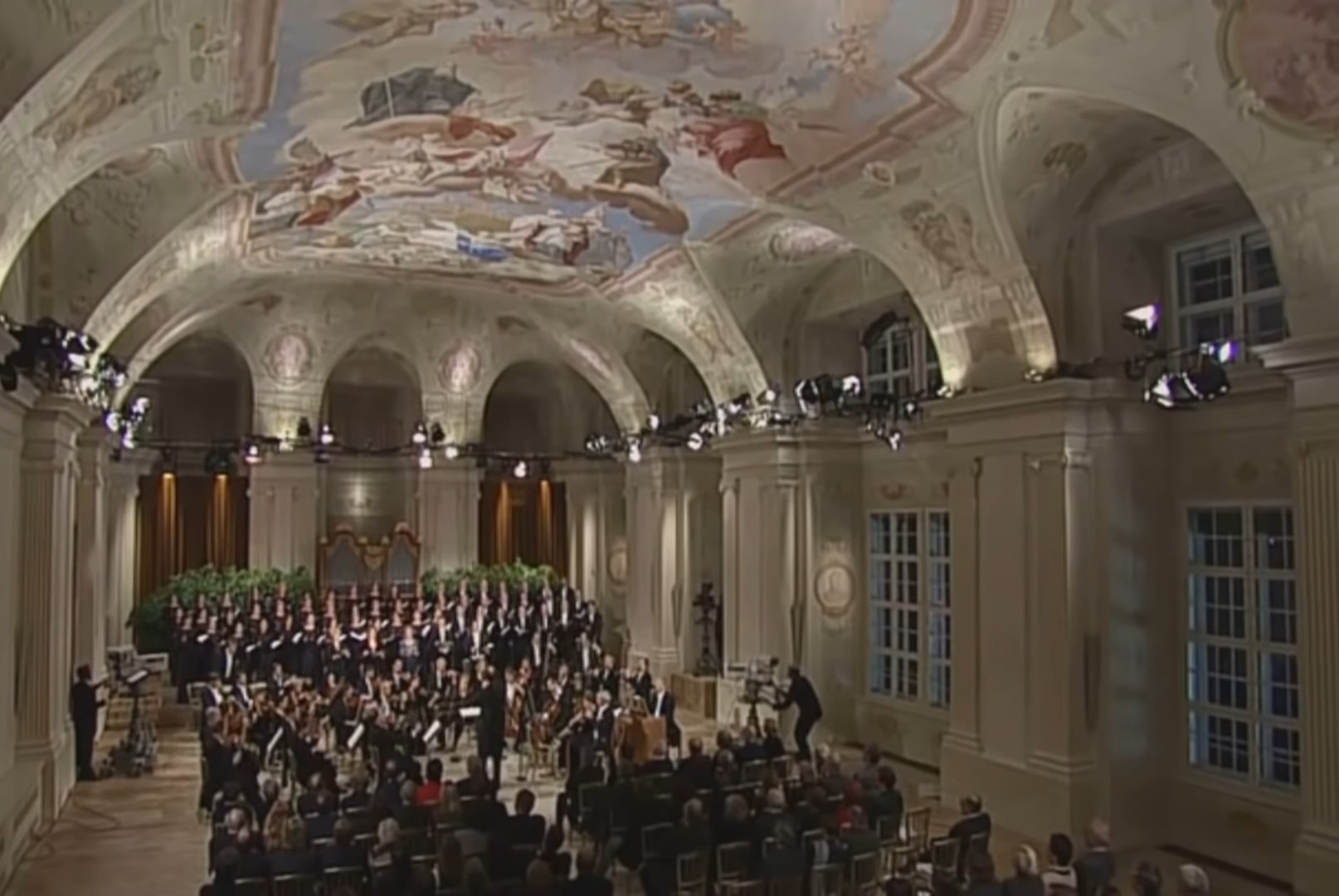
    Nicholas Harnoncourt leads Concentus Musicus Vienna and the Arnold Schoenberg Choir in a performance of Bach’s Magnificat in D-major given at the Kloster Melk, Austria, in 2000.

    The soloists are Christine Schäfer, Anna Korondi, Bernarda Fink, Ian Bostridge, and Christopher Maltman.

    Watch and listen here.

  • Cellist Zlatomir Fung @ Weill Hall

    Zlatomir-Fung

    Tuesday October 19th, 2021 – One of my favorite musicians, Zlatomir Fung, made his Carnegie debut this evening at Weill Hall, a red-letter event for me. Zlatomir, whose unique name derives from his Bulgarian and Chinese-American parentage, was the first American in four decades – and the youngest cellist ever – to win first prize at the International Tchaikovsky Competition in 2019.

    I first heard Mr. Fung in a Young Concert Artists recital at Merkin Hall in February 2019, and was captivated by his remarkable talent. Read about the evening here.
    Mishka

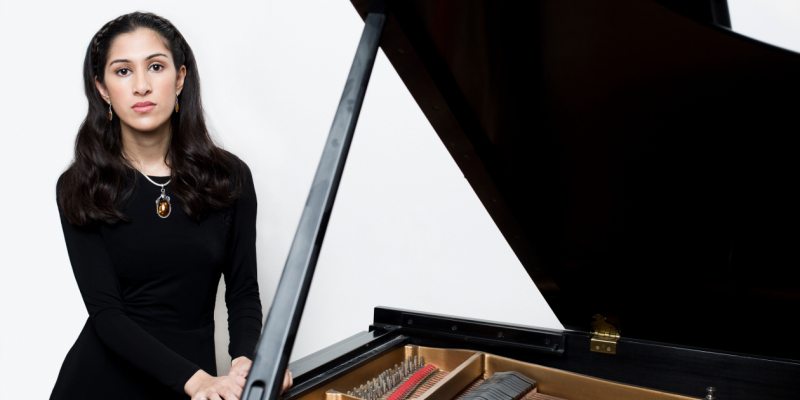
    Joined at Weill Hall this evening by pianist Mishka Rushdie Momen (above), the cellist gave us a marvelous program of classics from the Romantic period. The concert was sold out, and the audience’s rapt attention was a tribute both to the music and to the musicians. 

    Robert Schumann’s Adagio and Allegro, Op. 70, was composed in 1849. The pensive adagio, heart-tugging in its emotional expressiveness, gives way to the lively and passionate allegro, a deft flow of music that sometimes looks back to the opening movement. From note one, I was transfixed by Mr. Fung’s achingly beautiful playing, which drew me – and my fellow audience members – immediately in to the music.

    Franz Schubert’s Sonata in A-Minor, D. 821, “Arpeggione“, was written in 1824, soon after the beloved song cycle Die Schöne Müllerin and shortly before the C-major symphony.

    The sonata’s opening movement is a songful allegro moderato, tinged with a feel of nostalgia. A dance springs up, with a folkish flavor, and a passage of staccati from the cello aligns with sparkling notes from the piano. The movement continues, shifting between sadness and joy…a sort of reflection on the times in which we are living. 

    From its poignant opening, the sonata’s central adagio found Mr. Fung at his most persuasively eloquent as the music carried him across a wide dynamic range, leaving the listener in awe of his sustained, finely nuanced phrasing. Ms. Momen was a ideal companion. This was music-making of the highest calibre.  

    The concluding allegretto is energetic, at times having with a somewhat jaunty feel; both players displayed great  nimbleness, dancing us along to a surprisingly subdued finish. 

    Antonín Dvořák’s “Silent Woods“, Op. 68, No. 5, was – to me – the heart of the evening; subtle dynamic shadings from both players constantly allured the ear, and the astonishing resonance in Mr. Fung’s playing reached the depths of my soul. A dance-like passage gives way to a wave of passion; this subsides only to sweep over us again moments later. Mr. Fung’s glorious descending phrase at the end was thrilling.

    The musicians took only the briefest of breaks between works, but they seemed wonderfully fresh as they returned to the Weill Hall stage for the program’s concluding work: César Franck’s epic and very demanding Sonata in A-major. The cellist Jules Delsart was so moved when he first heard this sonata in its original violin setting that he obtained the composer’s permission to arrange the work for his own instrument. This arrangement was published in 1887.

    The sonata’s opening Allegretto ben moderato joins two themes: one for the cello and one for piano. These themes, especially the cello’s, will return in the following movements. The players seemed to gently bend the melodies, putting a personal stamp on this familiar music. 

    Turbulence rises for the second movement, a dramatic scherzo, in which the restless piano is over-lain with a vivid, dramatic passage for the violin. Lyrical moments, featuring this sonata’s second well-loved theme, come and go. From a veritable feast of notes, passion rises with the great melody sounding forth. Becalmed, deep resonance from the cello lingers briefly, then another rise to a triumphant finish.

    The Recitativo-Fantasia brings back sonic images from the previous movements. There is a feeling of improvisation here which leads in a slow buildup to another haunting melody for the cello. Then the final Allegretto con moto commences with the piano and cello seemingly exchanging thematic thoughts. Things grow turbulent again, and earlier themes resurface, all leading to a vibrant, joyous ending.

    Enthusiastic applause, the audience standing, brought Mr. Fung and Ms. Momen back for an encore: a Nocturne by Alexander Borodin which was unfamiliar to me. This was elegantly played, with appealing dynamic shifts and a spine-tingling tremelo passage from the cellist. As throughout the evening, I loved watching Mr. Fung’s expressive face as he played; he seemed to be communing with Saint Cecilia, all to the greater glory of the music.

    ~ Oberon

  • Verdi REQUIEM ~ San Francisco 1973

    Arroyo (2)

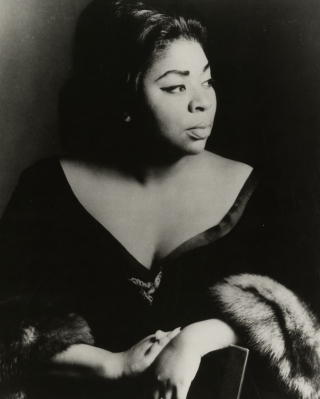
    Seiji Ozawa leads the San Francisco Symphony Orchestra and Chorus in a 1973 performance of the Verdi REQUIEM with soloists Martina Arroyo (photo), Maureen Forrester, Placido Domingo, and Martti Talvela.

    Listen here.

  • Eight Cellists Play Villa-Lobos

    Snapshot celli

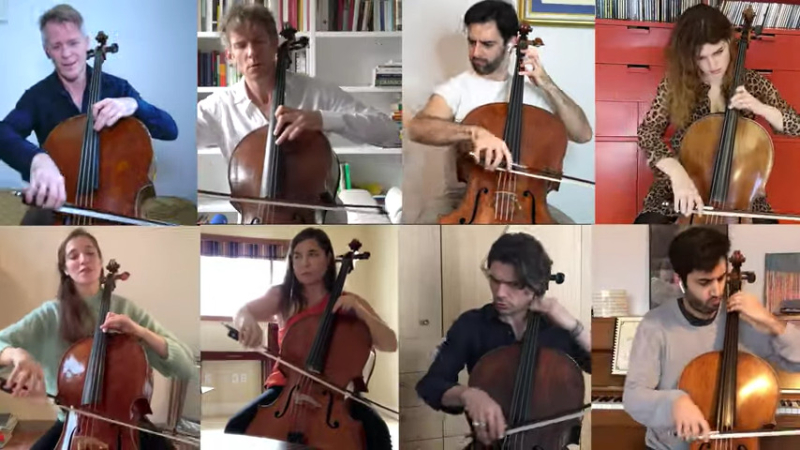
    Eight celebrated cellists join in a performance of Heitor Villa-Lobos’ Bachianas Brasileiras nr. 1 during the time of the pandemic.

    Watch and listen here.

    The cellists are:

    Alban Gerhardt
    Johannes Moser
    Pablo Ferrandez
    Julia Hagen
    Camille Thomas
    Alisa Weilerstein-Payare
    Gautier Capuçon
    Kian Soltani

  • Francis Poulenc’s STABAT MATER

    Snapshot monteverdi

    The Monteverdi Choir, with soloist Christine Wolff, perform Francis Poulenc’s STABAT MATER, conducted by Matthias Beckert, at a 2012 concert at the Neubaukirche in Würzburg, Germany.

    Watch and listen here.

    This work is new to me, and I love it!

  • 55 Years Ago ~ TURANDOT @ The Met

    Birgit (2)

    On September 26th, 1966, I attended my first opera at the New Met: a performance of Puccini’s TURANDOT starring Birgit Nilsson (above), Franco Corelli, Teresa Stratas, and Bonaldo Giaiotti, conducted by Zubin Mehta.

    A few weeks earlier, I had taken an over-night bus from Syracuse to New York City and joined the ticket line for the opening performances at the new opera house. Read about my adventure here.

    I had seen the Met’s Cecil Beaton production of TURANDOT previously, at the Old Met. It was considered quite lavish at the time, but within a couple decades it was wildly surpassed by the elaborate Franco Zeffirelli setting. Birgit and Franco seemed thoroughly at home on the Beaton sets, their by-play with Turandot’s all-day-lollipop/sceptre, was always commented upon by the fans, who gauged the scene to determine how well the two superstars were getting along on a given evening.

    Turandot-1 jpg
    My diary entry was very brief:

    “First performance at the New Met!! Magnificent evening, dazzling experience. After hearing Nilsson and Corelli on Saturday matinee broadcasts, it was electrifying to hear them “live“; you can’t really tell how immense and thrilling their voices are over the radio. They are great stars!

    Teresa Stratas was excellent as Liu, and my favorite bass, Bonaldo Giaiotti, sounded great. Uppman, Nagy, Anthony, and Goodloe – all singers know from the broadcasts – were fine. Mehta tremendous!

    There was huge applause after each act, and many curtain calls. The Corelli fans in particular went crazy.”

    After the ovation finally ceased, I went to the stage door where a huge crowd of people were waiting to meet the artists. They finally came out, and they were all very nice to me. Stratas signed my program, and Birgit signed the photo at the top of this article.

    Franco

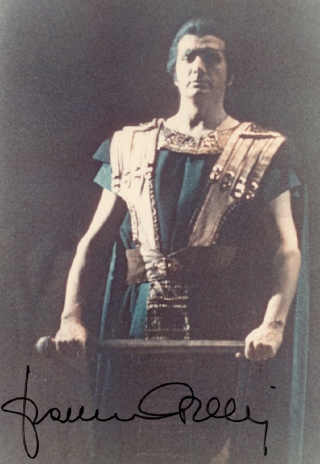
    I’d brought along the above photo of Corelli as Radames for him to sign; he seemed genuinely pleased to see this picture of himself, and the fans gathered around him were gasping, “Where did you find this???” 

    I remember that I slept very little after getting back to The Henry Hudson Hotel that night. I was really wound-up: I had been going to the opera sporadically since 1962 – plus catching every Met broadcast and building a big record collection. But this evening marked the start of the next phase of my operatic career. I began coming down to New York for long weekends, taking the over-night bus from Syracuse and staying at the Henry Hudson; opera was everything to me.

    After spending the Summer of 1974 on Cape Cod with TJ, working for a small ballet company, I moved into his dorm room at Sarah Lawrence College where we spent the 1974-1975 academic year together. We went down to the opera (and also the ballet!) constantly, taking a bus from Bronxville to the A train station at 207th Street – the station that’s now a block from where I live.

    After he graduated, we moved to Hartford; we were poor, and trips to New York City were few and far between. But after we broke up, I got my own place place and began spending frequent long weekends in NYC again. My promiscuous phase – can 25 years be considered a phase? – started at this point.

    Finally, in 1998, shortly before my 50th birthday, I moved to New York City. This had been my plan since that first solo excursion to join the Met ticket line in late Summer 1966, but Hartford had been a 22-year detour.

    Now, at last, I was home.

    ~ Oberon

  • AIDA @ The Arena di Verona ~ 1999

    Diadkova

    Above: Larissa Diadkova

    A performance of Verdi’s AIDA given at the Arena di Verona in 1999.

    Watch and listen here.

    CAST:

    Aida: Sylvie Valayre
    Radames: José Cura
    Amneris: Larissa Diadkova
    Amonasro: Leo Nucci
    Ramfis: Andrea Papi
    Il Re: Carlo Striuli
    Sacerdotessa: Antonella Trevisan
    Messaggero: Aldo Orsolino

    Conductor: Daniel Oren
    Staging: Pier Luigi Pizzi

  • Okka von der Damerau ~ Kindertotenlieder

    Snapshot okka

    Okka von der Damerau sings Mahler’s Kindertotenlieder with the Orquesta Sinfónica de Galicia, conducted by Eliahu Inbal, from a 2019 concert.

    Watch and listen here.