Author: Philip Gardner

  • Régine Crespin ~ O ma lyre immortelle

    Crespin

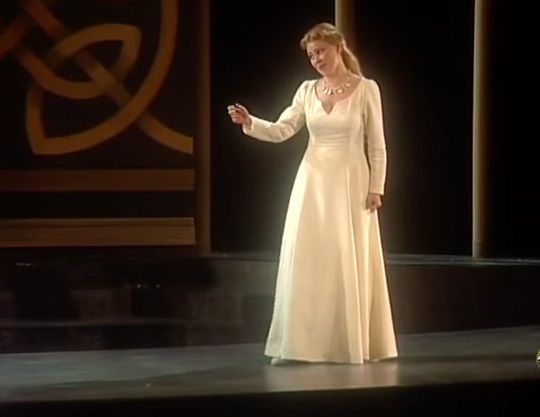
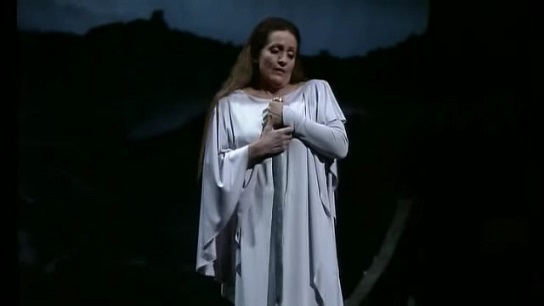
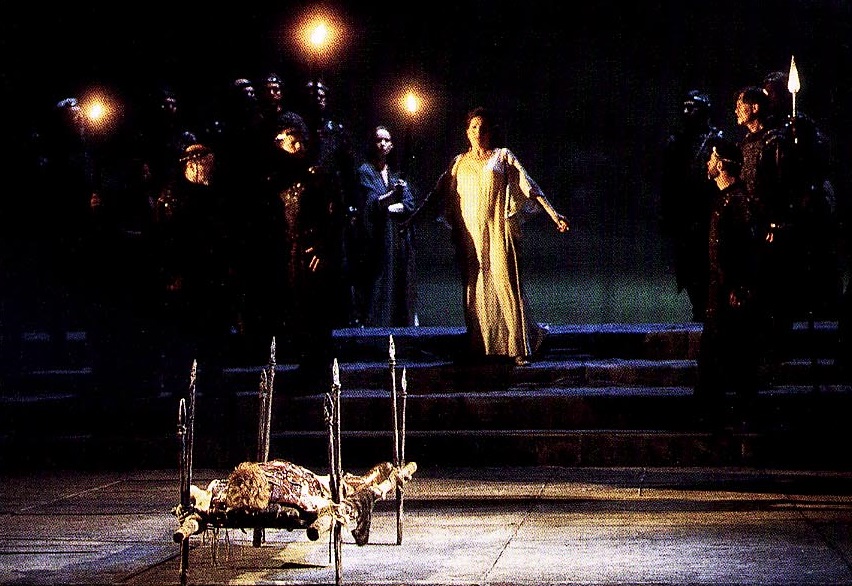
    Régine Crespin sings the great final aria from Gounod’s rarely-heard opera SAPHO:

    Régine Crespin – O ma lyre immortelle ~ SAPHO

    "O my immortal lyre,
    often when tears I have shed...
    My voice has been the portal
    thru which my sorrows fled.

    In vain now does your sweet murmur
    Seek to console me in my sadness
    No, you cannot heal this final wound -
    a wound deep in my heart,
    Only death can end my despair.

    Farewell, flame of the world!
    Sink down to the bosom of the sea.
    Myself, I shall descend into the depths
    to my eternal rest.

    Another day, Faone,
    will dawn for you.
    But you will not think of me
    As you watch the sun arise.

    Open now, bitter sea,
    open now!
    I shall sleep forever
    beneath the waves."

    ~ She flings herself into the ocean.

  • La Sconsolata

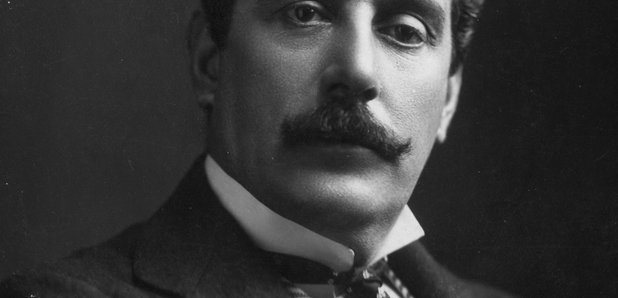
    Giacomo-puccini-1233683908-article-0

    The only work Giacomo Puccini (above) is known to have composed for violin and piano, La Sconsolata dates from 1883.

    Puccini – La Sconsolata – R Gniewek – R Woitach – 1989

  • Nadine Sierra @ The Met’s At-Home Gala

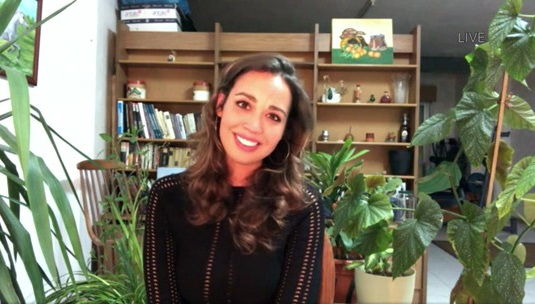
    Snapshot sierra

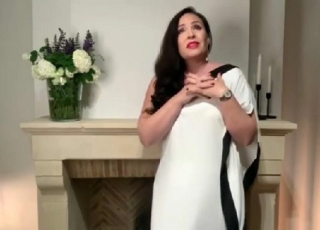
    Nadine Sierra sang Mimi’s narrative “Mi chiamano Mimí” from LA BOHEME for the Metropolitan Opera’s At-Home Gala on April 25th, 2020. Watch and listen here.

  • Nadine Sierra @ The Met’s At-Home Gala

    Snapshot sierra

    Nadine Sierra sang Mimi’s narrative “Mi chiamano Mimí” from LA BOHEME for the Metropolitan Opera’s At-Home Gala on April 25th, 2020. Watch and listen here.

  • Ruxandra Donose as Adalgisa

    Snapshot garanca

    Ruxandra Donose is Adalgisa in a production of Bellini’s from Las Palmas, 2011. Dimitra Theodossiu is Norma, Fabio Sartori is Pollione, and Carlo Colombara is Oroveso.

    Watch and listen here.

  • Souvenirs from Cardiff ~ Part III

    Wall

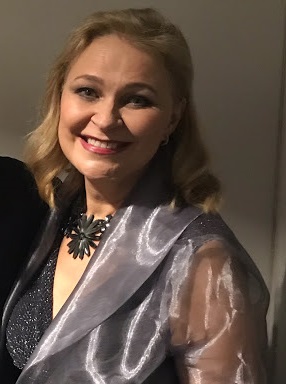
    Erin Wall, a native of Calgary, Canada, was a finalist at the 2003 Cardiff Singer of the World competition. She had made her international debut the previous year singing Britten’s War Requiem in London. She spent three seasons building repertoire at Lyric Opera of Chicago, and made her Met debut in 2009 as Donna Anna. In 2014, I had the pleasure of hearing her as Strauss’s Arabella at The Met.

    Erin Wall’s repertoire includes Freia, the 3rd Norn, Strauss’s Daphne, Marguerite in Faust, Ellen Orford, Chrysothemis, Helena in Britten’s Midsummer Night’s Dream, Thais, and Mozart’s Contessa Almaviva. She does a lot of concert work, most notably the Mahler symphonies 2, 4, and 8, and Strauss’s Vier Letze Lieder.

    Erin Wall – Vier letzte Lieder ~ Frühling

    Rexroth

    Counter-tenor Matthias Rexroth was born in Nuremberg and made his debut in Purcell’s King Arthur at Stuttgart in 1999. Having won major voice competitions at Barcelona and Vienna, Mr. Rexroth was soon performing Bach and Baroque works all over Europe, and he represented Germany at the 2003 Cardiff Competition. He sang often with conductor Nikolaus Harnoncourt, and also with Riccardo Muti and Rafael Frühbeck de Burgos. His operatic repertory covers numerous Handel roles and ranges from Monteverdi to Britten.

    Watch Mr. Rexroth singing at the the 37th Concurso Francisco Viñas in Barcelona here.

    Since 2014, Mr. Rexroth has been professor of voice at the Opera Academy of Warsaw; he also gives masterclasses internationally.

    Parts of Ms. Wall’s and Mr. Rexroth’s 2003 Cardiff performances are heard here:

    Cardiff 2003 – Matthias Rexroth – Erin Wall

    Donose

    Bucharest-born Ruxandra Donose came to prominence following an impressive showing at a voice competition at Munich in 1990. She soon joined the opera company at Basel, and – thereafter – the Vienna State Opera. Her international career has since continued apace, and lately she has taken on roles like Kundry and Sieglinde.

    Donose @ The Met

    Above: Ruxandra Donose as Nicklausse in Contes d’Hoffmann; a Marty Sohl/Met Opera photo

    I met Ruxandra in 2004 while I was working at Tower Records; she was singing Nicklausse at The Met and she stopped by at the opera room. We had a lovely chat.

    Here’s Ruxandra at the 1993 Cardiff competition:

    Ruxandra Donose – Allerseelen – Cardiff 1993

    And Roger Vignoles is the pianist for Ruxandra’s lovely singing of Dalila’s seduction aria from a 2014 London recital here.

    ~ Oberon

  • Sumi & Dima

    Snapshot

    Sumi Jo and Dmitri Hvorostovsky in the great father-daughter duet from Verdi’s RIGOLETTO, from a concert at Seoul in 2005. Watch and listen here.

  • Gianni Raimondi

    Unnamed

    Above: Gianni Raimondi as Rodolfo in LA BOHEME

    Tenor Gianni Raimondi was born at Bologna in 1923. He made his operatic debut in 1947 as the Duke in RIGOLETTO and was soon singing in opera houses throughout Italy. His career expanded to Nice, Marseille, Monte Carlo, Paris, London…

    4f402265ec689c12784d79be7548bf9d

    …and La Scala, where, in 1956, Mr. Raimondi made his debut in Luchino Visconti now-legendary production of LA TRAVIATA starring Maria Callas.

    Bolena - callas - raimondi

    Callas and Raimondi (above) reunited the following year as Anna and Percy in Donizetti’s ANNA BOLENA. 1957 also marked the tenor’s debut at Vienna, where he was to appear regularly for twenty seasons.

    In 1963, the Vienna State Opera’s production of LA BOHEME, under the direction of Herbert von Karajan, was filmed for posterity; Mirella Freni and Gianni Raimondi appeared as Mimi and Rodolfo. The performance is available on DVD.

    Having debuted at San Francisco (1957) and the Teatro Colon (1959), Mr. Raimondi made his Metropolitan Opera debut as Rodolfo in BOHEME in 1965, opposite Ms. Freni. 

    Freni Raimondi

    Above: Freni and Raimondi in BOHEME

    BOHEME was the only opera I saw Raimondi in at The Met. The performance was in September 1968, and his Mimi was Teresa Stratas;  they were among the most moving of all the many interpreters of these roles I have seen thru the decades. My diary says the tenor was “…terrific…great upper range…beautiful portrayal…” 

    Mr. Raimondi remained at the Met until 1969; his other roles there were Pinkerton, Donizetti’s Edgardo, Faust, the Duke of Mantua, and Mario Cavaradossi. In 1968, the tenor joined Regine Crespin and Gabriel Bacquier in a thrilling broadcast performance of TOSCA, with Zubin Mehta conducting.

    In the 1970s, Raimondi took on the spinto tenor roles in NORMA, I MASNADIERI, I VESPRI SIVILIANI, and SIMON BOCCANEGRA.

    Following his retirement from the stage, the tenor lived in his villa by the sea at Riccione. He passed away in 2008.

    Here is a collection of arias sung by Gianni Raimondi…some of these take a few seconds to start:

    Gianni Raimondi – FAUST aria

    Gianni Raimondi – GIOCONDA aria

    Gianni Raimondi – Recondita armonia ~ TOSCA

    Gianni Raimondi ~ Nessun dorma – TURANDOT

    Oberon

  • Song to the Moon

    Yoncheva

    Sonia Yoncheva sings the Song to the Moon from Dvořák’s RUSALKA at the Met’s At-Home Gala, webcast on April 25th, 2020. Watch and listen here.

  • Premiere: Levine/Schenk GÖTTERDÄMMERUNG

    Scanned Section 6-1
    During these endless days of being at home, I’ve been reading thru my opera diary, a hand-written document I started in 1962 and which now fills numerous file folders. So many wonderful memories of the great performances I saw over the years were stirred up by reading about them.

    One such exciting night was the 1988 premiere of the Otto Schenk GÖTTERDÄMMERUNG, the closing opera of Wagner’s epic RING Cycle. Often referred to affectionately as “the Levine RING”, full cycles of the production in the ensuing seasons created a great international buzz; Wagnerites from all over the globe gathered in New York City to witness this classic staging.

    Having already seen the RHEINGOLD, WALKURE and SIEGFRIED, I had a pretty good idea of what to expect; still, when the Gibichung Hall loomed into view, it took my breath away. Levine was mostly magnificent, though there were moments when he let things drag a bit; his orchestra gave it their all, and the chorus sounded sensational as they gathered in lusty expectation of the double wedding.

    As to the singers, here’s what I wrote upon returning to my room at the Colonial House after the performance: 

    “Casting was strong, with pretty singing from the Rhinemaidens – Joyce Guyer (in her Met debut), Diane Kesling, and Meredith Parsons – and Franz Mazura made an astoundingly vivid Alberich, singing with oily malice. The opening scene of Act II, with Alberich pawing at the sleeping Hagen, was very atmospheric.

    The Gibichung brother and sister were rather curiously cast: as Gunther, Anthony Raffell’s voice sounded veiled and throaty, and Kathryn Harries’ beautiful (and beautifully acted) Gutrune was undone by effortful singing and a prominent vibrato. [I mentioned that Cornell MacNeil and Lucine Amara could have made for far more interesting casting in these roles!].

    The Norn Scene, which I have always loved, benefited from the super casting of Mignon Dunn as 1st Norn, sung with richly doom-ladened tone. Hanna Schwarz (2nd Norn) had a couple of husky moments, but overall sang vividly, with excellent diction. As the 3rd Norn, Marita Napier sometimes sounded a bit insecure, but she did not let down the side. These three really made something of their opening discussion. 

    Toni Kramer sang erratically but acceptably in the torturous role of Siegfried. He seemed to be husbanding his powers, doing his best singing in Act III.

    C l + h b

    Above: Christa Ludwig as Waltraute and Hildegard Behrens as Brunnhilde

    The divine Christa Ludwig made a thrilling Waltraute, singing with great clarity and verbal point. The distinctive Ludwig tone – that cherished sound – drew the audience in to her every phrase. Add to this the anguished urgency of her delivery, and the result was a veritable triumph.

    The Ludwig Waltraute produced one of my all-time favorite curtain calls: stepping before the gold curtain for her first solo bow, she was greeted by such a din of applause and shouting that she halted in her tracks; her eyes opened wide in amazement, and she broke into a huge smile. It seemed to me that she had not expected such an avalanche of affection. She bowed deeply, clearly savoring this outpouring of love from the crowd.

    Matti

    The towering magnificence of Matti Salminen as Hagen (above) produced tremendous excitement in the House. His huge voice was at peak form, effortlessly filling the hall with sinister sound. In the scene where Hagen’s father appears to him in a dream, Salminen and Franz Mazura matched one another in both power and eerily expressive subtlety: thoroughly engrossing. The basso’s portrayal as the drama of Act II unfolded was towering in its epic nastiness and in his manipulation of the situation to attain the character’s sole goal: to regain the ring. This was a performance thrilling to behold, and to hear. 

    The roar of applause for each of Salminen’s solo bows was thunderous, and I was so excited to be part of it, shouting myself hoarse.

    ~ Sample the Salminen Hagen, from a later broadcast…it gives me he chills: 

    Matti Salminen as Hagen – Met 1993

    Snapshot

    Hildegard Behrens (above) was a Brunnhilde of terrifying intensity and incredible feminine strength. This was an overwhelming interpretation, in which voice and physicality combined to transcend operatic convention, reaching me on the deepest possible level. Behrens lived the part, in no uncertain terms.

    The Dawn Duet found Behrens portraying the tamed warrior maid to perfection, savoring her domestic bliss but eager that Siegfried should go out into the world and do great deeds. Her unconventional beauty and her inhabiting of the character were so absorbing to behold. Later, In the scene with Waltraute, Behrens as Brunnhilde listened anxiously to all her sister’s words and she began to grasp the first signs of the downward spiral that would culminate with Siegfried’s betrayal and her own sacrifice. Even so, she dismissed Waltraute with fierce disdain. Behrens’ vivid depiction of Brunnhilde’s terror and helpless dejection as the false Siegfried wrested the ring from her was palpable.

    Scanned Section 1-1

    In one of the evening’s most gripping moments, Behrens – having become possessed by Brunnhilde’s plight in Act II – responded to Siegfried’s oath by snatching Hagen’s spear away him and singing her own oath with blistering abandon. Totally immersed in the character, her pain was painful to behold. In the powerful trio that ends Act II, Behrens, Raffell, and Salminen were splendid.

    Behrens GOTTER

    Above: Hildegard Behrens as Brunnhilde ~ Immolation Scene

    In the Immolation Scene, the great strength of Brunnhilde’s love for Siegfried, and her determination to perish in the flames of his funeral pyre, marked the culmination of Hildegard Behrens’ sensational performance. Her singing was powerful, with unstinting use of chest voice and flaming top notes; there were moments when expressionistic effects crept in but it all seemed so right. The amazing thing about Behrens’ singing and acting here was that it all seemed spontaneous…she seemed to be living it all in the moment. One cannot ask more of an operatic portrayal.

    The curtain calls went on and on, the audience eager to show their appreciation with volleys of bravos as the singers stepped forward time and again. Here we must also thank James Levine, whose grand design underlies the great success to date of the individual operas. Ahead, in the Spring, seeing the full cycle in a week’s time is already on my calendar. My dream will come true!” 

    ~ Oberon