Category: Ballet

  • NCB Farewells ~ Gallery

    004_SM_2019_11_23_NCB_15TH-ed

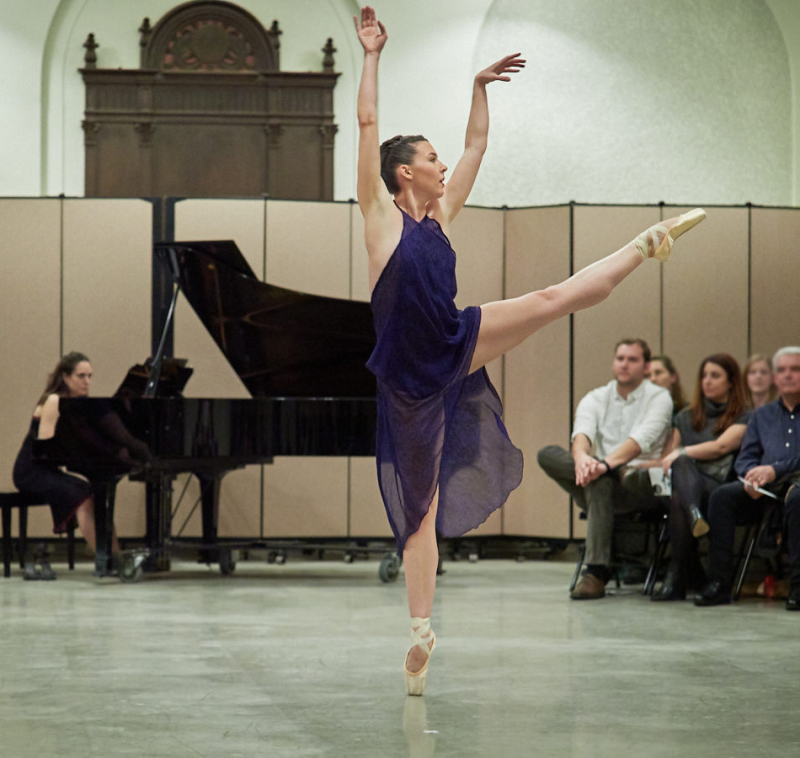
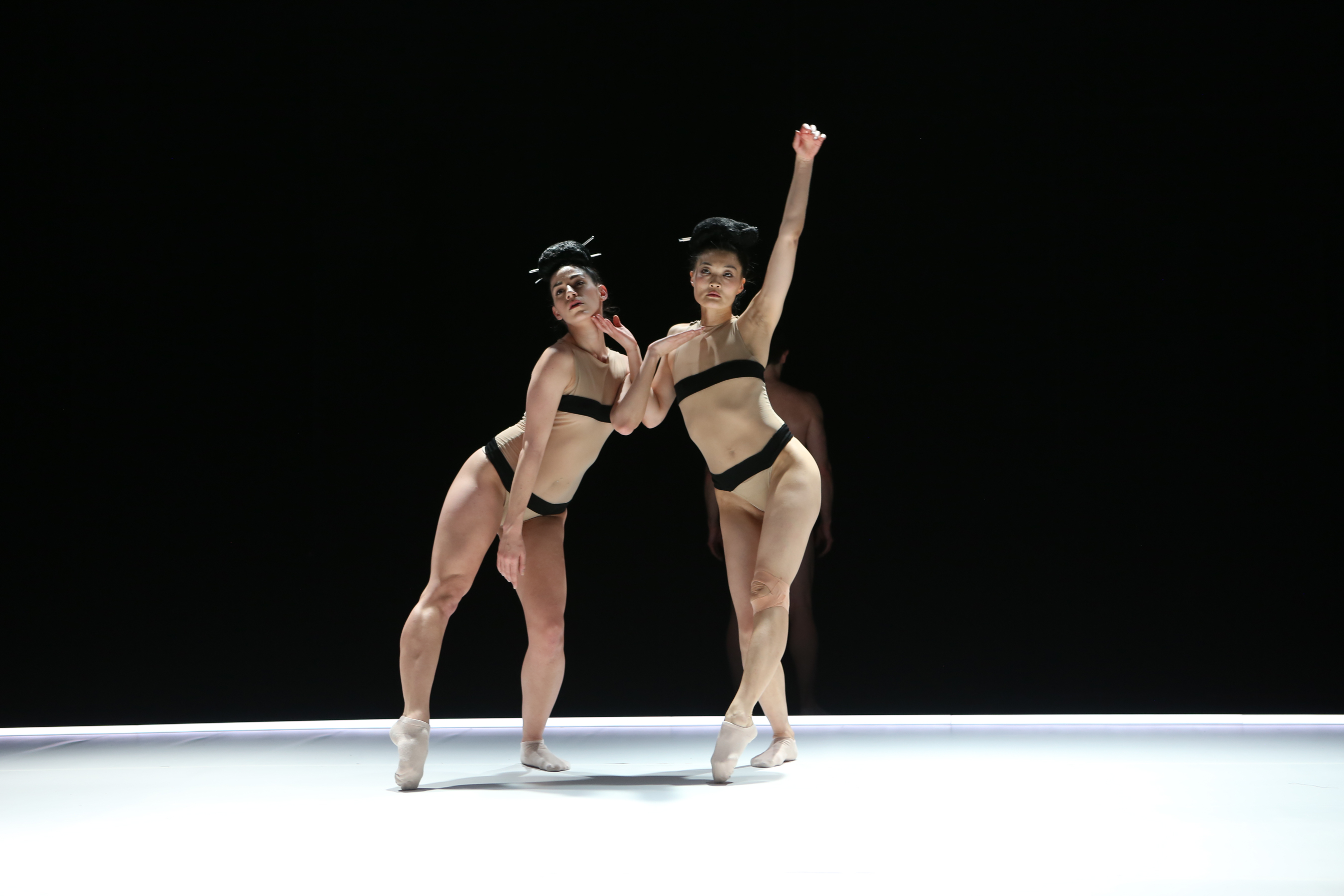
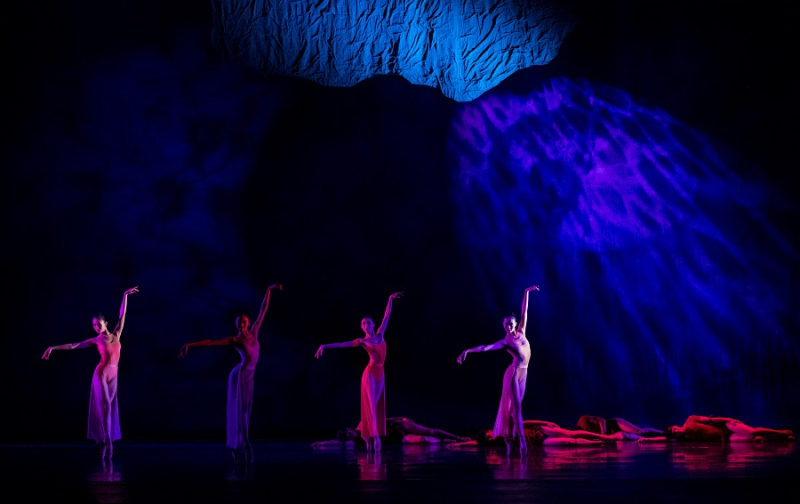
    Above: pianist Melody Fader and dancers Elizabeth Brown and Sarah Atkins in Miro Magloire’s Klavierstück

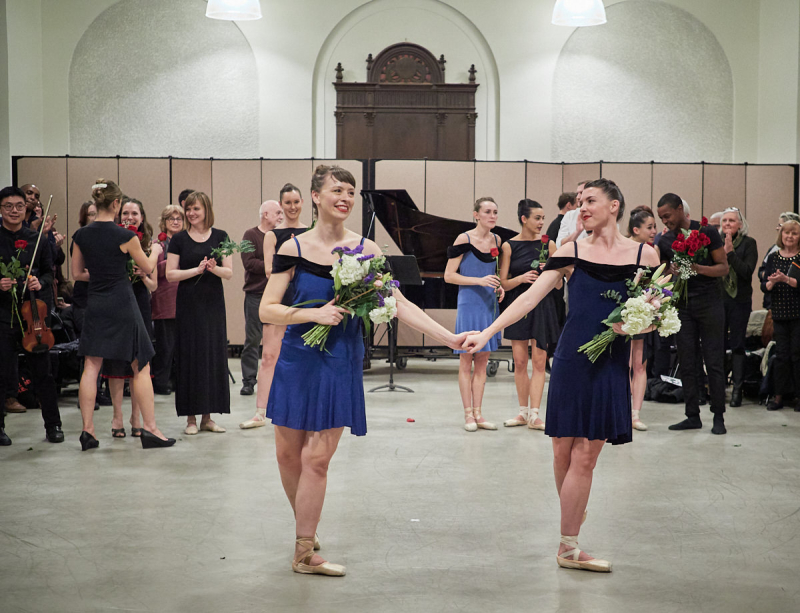
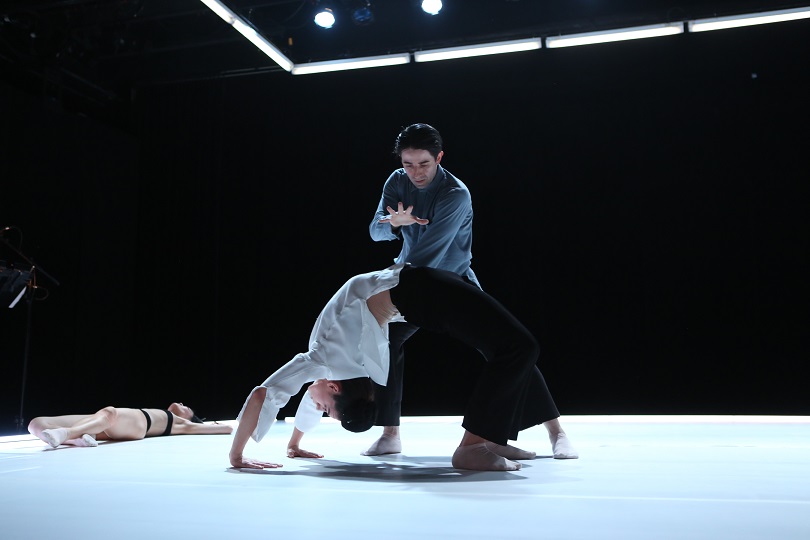
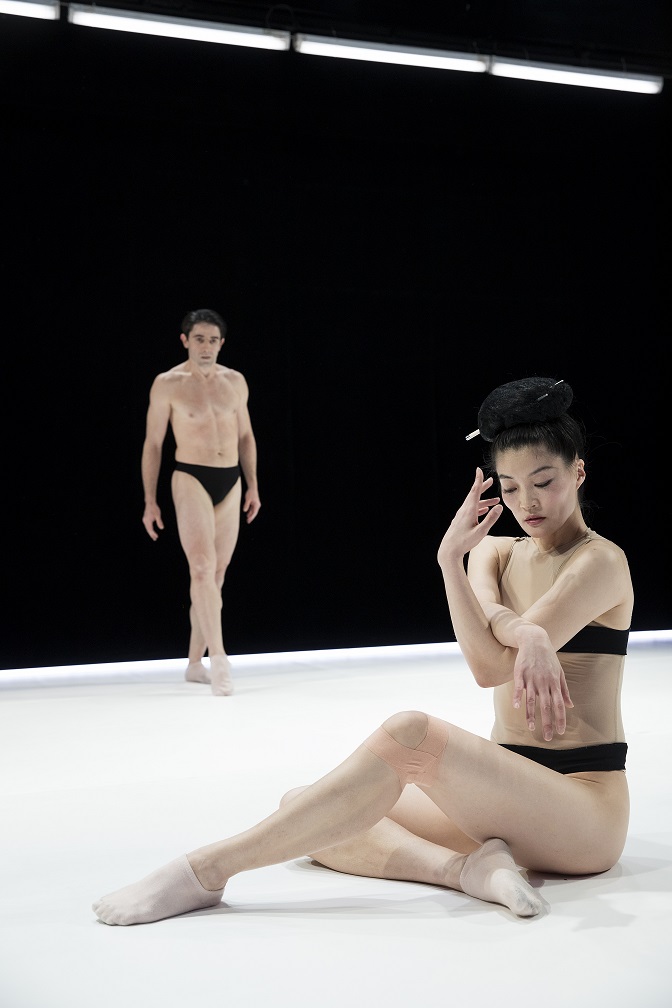
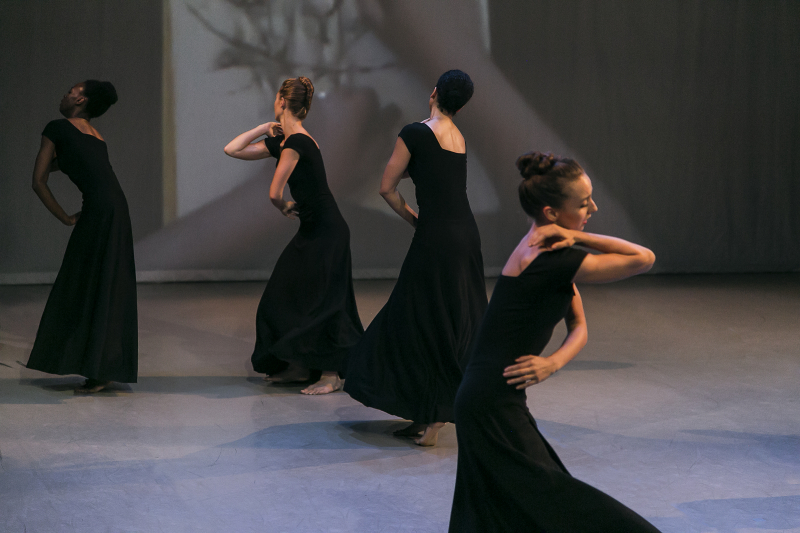
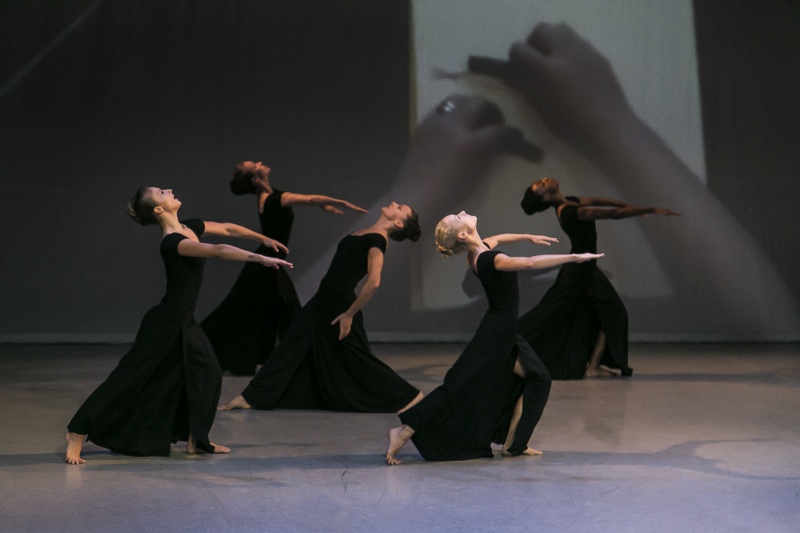
    Photographer Arnaud Falchier provides these images from the Saturday November 23rd, 2019, performance at Miro Magloire’s New Chamber Ballet. The evening marked the farewell performances of two longtime Company dancers: Elizabeth Brown and Sarah Atkins. Read about the performance here.

    022_SM_2019_11_23_NCB_15TH-

    Sarah Atkins in the solo For Another Day, created for her by Miro

    030_SM_2019_11_23_NCB_15TH-ed

    Sarah Atkins in For Another Day

    083_SM_2019_11_23_NCB_15TH-

    Miro’s gift to founding Company dancer Elizabeth Brown: the solo Morning Song

    092_SM_2019_11_23_NCB_15TH-

    Elizabeth Brown in her solo Morning Song

    102_SM_2019_11_23_NCB_15TH-

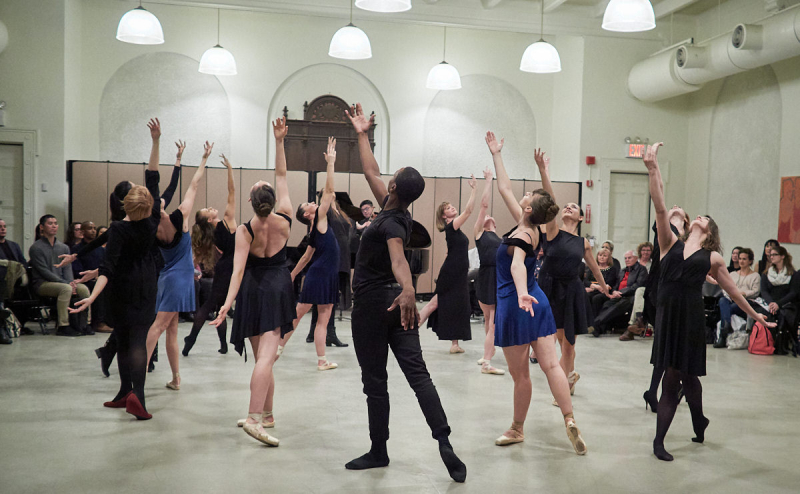
    Former members gather to celebrate the community that is New Chamber Ballet in As One

    111_SM_2019_11_23_NCB_15TH-

    Alumni and current NCB dancers in As One

    118_SM_2019_11_23_NCB_15TH-

    Elizabeth Brown and Sarah Atkins taking their final New Chamber Ballet bows

    All photos by Arnaud Falchier

    ~ Oberon

  • Farewells @ New Chamber Ballet

    6a00d8341c4e3853ef016767bb8206970b-800wi

    Above: Elizabeth Brown and Sarah Atkins of New Chamber Ballet, photo by Kokyat

    ~ Author: Oberon

    Saturday November 23rd, 2019 – While I felt happy to be part of New Chamber Ballet’s 15th anniversary season, tonight felt bittersweet as two dancers long associated with Miro Magloire’s company were giving their farewell performances: Elizabeth Brown (a founding member) and Sarah Atkins.

    Over the years since I began following Miro’s work, his Company has undergone many changes in roster. Inevitably, with smaller dance troupes, one forms an attachment to individual dancers, and this is especially true of New Chamber Ballet as Miro has frequently invited to me rehearsals over the years, so that I’ve often felt like I’m a non-dancing member of the family. Watching Elizabeth and Sarah tonight brought back so many memories, not only of their own performances but of all the other women they have danced with thru the years. This kind of nostalgia is lovely in its way, but it also means we’re all getting older.

    The evening’s program opened with Klavierstück, to solo piano music by Karlheinz Stockhausen. The grand piano had been rolled into the center of the space, where pianist Melody Fader deftly took in stride the composer’s demands. Danced by the evenings two honorees – Elizabeth Brown and Sarah Atkins – it’s a work in which the piano becomes an altar or shrine. 

    6a00d8341c4e3853ef0168e695be97970c

    Above: Sarah Atkins, photo by Kokyat

    Next came a solo, For Another Day, created by Miro specially for Sarah Atkins. With the piano now back in its usual place at the point of the seating diamond, Melody Fader played the sixth of Franz Schubert’s Moments musicaux to which Ms. Atkins danced with a deep sense of the music’s lyrical flow. Circling the space, the dancer made eye contact with audience members: a beautiful expression of leave-taking. To dance this gorgeously at one’s farewell speaks volumes for Sarah’s technique and artistry. As the solo ended, a tidal wave of vociferous applause cheers was unleashed; everyone stood up to salute the dancer, who had to bow many times. 

    For an excerpt from Miro’s full-length work Phantom, music of Wolfgang Rihm, which veers from dreamlike to dramatic, was marvelously played by Ms. Fader and the enormously talented violinist Doori Na. Here we must pause to praise the technical assurance of the fearlessly adventurous Melody and Doori, who tackle any score Miro sets before them with flair. Over the years, they – as much as the choreography and dancing – have made New Chamber Ballet so distinctive. A chance to peer over Doori’s shoulder at his illuminated score for the Rihm was a highlight of my evening.

    The dancers – Amber Neff, Rachele Perla and NCB newcomers Anabel Alpert and Megan Foley – coped well with the choreography, which is often floor-oriented and includes demanding passages of the same-sex partnering that Miro has been developing in recent works. Tonight, in this gala setting, it seemed earthbound and over-long. Matters were not helped by the audience seating configuration, which feels like a airport boarding lounge when the flights have been delayed. 

    6a00d8341c4e3853ef01b7c90150ea970b

    Above: Elizabeth Brown rehearsing Morning Star with violinist Doori Na, photo by Nir Arieli

    This was my third viewing of Morning Song, the solo Miro made in 2017 for Elizabeth Brown to John Cage’s violin piece “Cheap Imitation”. A new costume for this ballet tonight was less to my liking than the original, but that became irrelevant during this sensational performance by Ms. Brown and Mr. Na.

    Morning Star is one of Miro’s greatest creations, and my favorite among all his works.  Elizabeth Brown is the inspirational force behind the solo’s success, with its feeling of timeless ritual and quiet ecstasy. It is a portrait of feminine power and mystique, and Ms. Brown dances it divinely. It ends as the dancer circles the space in hypnotically slow turns, finishing with an Isadora-like greeting of the dawn, arms upraised.

    As a founding member of New Chamber Ballet, Elizabeth has been an superlative muse for Miro, and an inspiration for dance-lovers; her technical prowess, unique persona, and deep devotion to the art merit the highest praise.

    During the mammoth applause that greeted her after Morning Song this evening, Elizabeth and Doori bowed deeply to one another, underscoring the intrinsic connection between music and dance that is Miro’s trademark.

    To conclude the program, Miro offered a pièce d’occasion entitled As One. Set to Antonín Dvořák’s Romance for violin and piano – played with impeccable verve, charm, and joy by Melody Fader and Doori Na – the work is Miro’s hymn to all the dancers who have performed for him thru New Chamber Ballet’s 15-year history.

    As such, and in a celebratory move that seemed to take Elizabeth and Sarah by surprise, a bevy of former NCB dancers who had been seated randomly among the crowd suddenly rose and stepped into the dance space, performing an homage to the two departing stars whilst also celebrating the continuum of Miro’s tireless work, in which the dancers and the dance are one.

    6a00d8341c4e3853ef01b8d1a3507e970c

    Above: Elizabeth and Sarah. Thanks for the memories, ladies…and please: keep on dancing!

    ~ Oberon

  • Emanuel Ax|Stéphane Denève @ The NY Phil

    Emanuel-ax

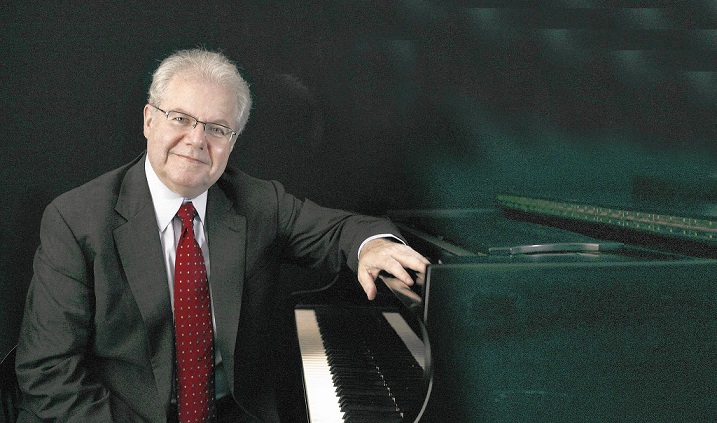
    Above: pianist Emanuel Ax

    ~ Author: Oberon

    Saturday October 26th, 2019 – How wonderful to encounter Emanuel Ax again so soon after his lovely performance of the Schumann piano quintet with the Dover Quartet last week at Zankel Hall. Tonight the great pianist joined The New York Philharmonic for Beethoven’s Piano Concerto #1.

    The announced program looked long on paper, and indeed – after an engrossing first half – there was something of a slump with Albert Roussel’s 3rd symphony. It’s understandable that Maestro Stéphane Denève would want to include it, but somehow it did not quite fit in with the other works: it didn’t hold hold up well in the company of Beethoven and Ravel.

    Jennifer+Higdon

    Above: composer Jennifer Higdon

    Jennifer Higdon’s blue cathedral, composed in 2000 in memory of her brother, opened the evening. Read the composer’s eloquent program note on this work here.

    blue cathedral opens with most ethereal of sounds: barely audible at first, the music slowly seeps into our consciousness. Cello, the plaintive flute, clarinet, piano, and harp bring their colours to bear; the strings are lush and grand, with the high violins set against the deep celli and basses. A massive wave of drums and low brass hits like a tsunami. The marimba, oboe, and Cynthia Phelps’ dusky viola are heard: each solo voice seems to evoke a particular memory of the departed.

    The music then becomes cinematic, with a back-beat dynamic. Brass fanfares lead to epic grandeur before calm sets in. Now the solo voices are heard again – flute, clarinet, oboe – and an especially fine passage for a cello/viola quartet as the music fades to the gentle chiming of a solitary bell.

    In her program note, Ms. Higdon wrote about her use of the clarinet, which was her brother’s instrument. It was in the passages for that instrument, sublimely played by the inimitable Pascual Martínez-Forteza, that Ms. Higdon’s moving tribute to her sibling found its most poignant voice.

    Emanuel Ax, ever a welcome guest at the Philharmonic, was warmly greeted as he took his place at the Steinway. The pianist sat quietly as the musical introduction – at first courtly, then stately – sets the mood. Mr. Ax then began his enchanting performance: crystal-clear arpeggios, subtly modulated, drew us in. Beethoven’s font of melody – both for the pianist and the orchestra – is filled to overflowing. In a long paragraph, the pianist displayed his gifts with nimble downhill scales played pianissimo, and cascades of notes of great delicacy, clarity, and warmth.

    Following a majestic orchestral passage, the long cadenza – which seems almost like a sonata in itself – was impeccably delivered, the audience in a state of rapt attentiveness. One sensed that an ovation might erupt at this point, but Maestro Denève was able to forestall an intrusion by keeping a cautionary hand raised.

    Now came the Largo, featuring one of Beethoven’s most gorgeous themes. For the next several minutes, my companion and I were transfixed by the ongoing dialog between Mr. Ax’s keyboard and Pascual Martínez-Forteza’s clarinet. Two great musicians, trading subtleties: mesmerizing! 

    Mr. Ax immediately commenced the concerto’s concluding Rondo: Allegro, bringing to mind – with its jaunty interjections – the ballet Prism which Helgi Tomasson choreographed to this score for New York City Ballet in 2000. The esteemed pianist continued to dazzle us right to the last note, causing the audience to leap to their collective feet as he took his bows; Mr. Martínez-Forteza was also asked to rise, deservedly so.

    An encore was demanded, and Mr. Ax sustained the ballet connection for me with his Chopin, used by Jerome Robbins in his ballet Dances at a Gathering.

    Stephane_Deneve_01_811x486

    Following the interval, Maestro Stéphane Denève (above) brought us two works by his fellow Frenchmen: Albert Roussel’s Symphony #3 (composed 1929-1930) and Maurice Ravel’s immortal La Valse, which premiered in 1930. 

    The Roussel at first seemed wonderfully refreshing: its jazzy, driven, bustling opening augured well for thorough enjoyment. Yet as the work unfolded, it seemed full of ideas but lacking in coherence. The first, second, and fourth movements each felt overly long, and there was a sense of increased audience restlessness. The piece features a lot of ‘big’ music; rhythmic variety and enticing instrumentation are never lacking. Though poignant, witty, and ebullient by turns, the music slips in one ear and out the other, leaving little lasting impression. Some wonderful solo passages for violin, played beautifully by Frank Huang, were appealing.

    Image

    Above: New York City Ballet’s Marika Anderson in George Balanchine’s La Valse

    “We are dancing on the edge of a volcano…” wrote Maurice Ravel’s in his notes for La Valse. Such a timely concept, as our world these days often seems to be rushing toward its doom. This music, which George Balanchine choreographed for his evocative “death and the maiden” ballet of the same title, has been with me for decades.

    Tonight’s performance, under Maestro Denève’s ardent baton, was everything one can hope for in this marvelous music. The musicians made the most of every opportunity, whether by solo or by section. La Valse again entranced with its dark allure and inevitability. Resistance is futile.

    As we were walking down to the subway, my friend Cherylyn Lavagnino and I both spoke of the effect that the playing of Mssrs Ax and Martínez-Forteza in the Beethoven adagio had on us, and of the consolation of such musical experiences in these dark days. Thank you, gentlemen.

    ~ Oberon

  • Karole Armitage’s You Took a Part of Me

    Armitage Gone! Dance_You Took a Part of Me (2019)_ Dancers_ Megumi Eda  Sierra French_Costume_ Peter Speliopoulos_ PhotoJulie Lemberger_2019-6891

    Above: Sierra French and Megumi Eda in Karole Armitage’s You Took a Part of Me; photo by Julie Lemberger

    ~ Author: Oberon

    Wednesday October 23, 2019 – Karole Armitage’s You Took a Part of Me, trailers and photos of which were apparently banned on Twitter, is playing this week at New York Live ArtsDrawing inspiration from Noh, the ancient ritualized Japanese form of dance-drama, You Took a Part of Me centers on the memory of an erotically charged love affair which has left a Woman (now a Ghost) in search of emotional resolution and a restoration of inner peace.

    On entering the theater, we see the stage set with an elevated platform outlined in fluorescent lights, with a small adjacent space with a low stool stage left; overhead, a square of tube light hovers. You Took a Part of Me is performed by three dancers: Megumi Eda (the Ghost), Sierra French (her Double), and Christian Laverde-Koenig (her Lover). A fourth dancer, Alonso Guzman, clad all in black with his face partly hidden, takes the traditional Noh role of the koken, a sort of valet. The lighting design by Clifton Taylor and the costuming by Peter Speliopoulos were key elements in the production’s success.

    Set to a poignantly spare, flute-centric score by Reiko Yamada, You Took a Part of Me unfolds in seven movements. Initially I felt that we might be watching a silent play, but the ballet is in fact filled with gorgeous, stylized dancing that flows like classical Japanese calligraphy. As the Woman’s memories darken, the dance becomes more angular and somewhat smudged.

    The Woman/Ghost is first seen seated on the low stool, the konen assisting her with her long hair. Her Double appears: identically clad in long white trousers, they seem like conjoined twins, with their hair entwined. They perform a mirror duet, in sync or in echo effect, with lyrical port de bras. During this, the Lover has taken a seat on the stool; an actor waiting for his entrance, he stares into the audience.

    03. Armitage Gone! Dance_You Took a Part of Me (2019)_ Dancers_ Megumi Eda  Cristian Laverde-Koenig_Costume_ Peter Speliopoulos_Photo Steven Pisano_20190611-DSC00346

    Above: Christian Laverde-Koenig and Megumi Eda; photo by Steven Pisano

    The Ghost and her Lover now dance a Memory Duet. To a spellbinding flute solo, they at first seem cordial and graceful, but then the seductiveness veers toward a more controlling stance on the Lover’s part. The konen enters and strips the two dancers down to thongs. The duet becomes intensely intimate, the flute so evocative of their passion. After their climax, silence falls. The Lover silently departs.

    As the Ghost dances a solo, Abandonment, the Lover – having put his shirt and trousers on – reappears and again sits on the stool. Ms. Eda, as the Ghost, collapses to the floor as her Double appears. Mr. Laverde-Koenig and Ms. French now engage in a pas de deux, Hijacked Mind, which replicates his earlier duet with Ms. Eda.

    Armitage Gone! Dance_You Took a Part of Me (2019)_ Dancers_ Megumi Eda  Sierra French  Cristian Laverde-Koenig_Costume_ Peter Speliopoulos_ Photo Julie Lemberger_2019-6671 copy

    In this intriguing scene (Julie Lemberger photo, above), as Ms. Eda dreams on the floor, the Double and the Lover seem to mimic his earlier duet with the Ghost. But here he often controls his partner without touching her. The konen again strips the couple; Ms. Eda rises and she and Ms. French have a competitive duet. As this progresses, Mr. Laverde-Koening reappears – now clad only in his thong – and again sits staring into space. Then a trio, Attachments, ends with the three wrapped in a seemingly naked knot on the floor.

    Now the Ghost/Woman is left alone, in white as at the start, the konen again ministering to her needs. She retains one of her long hairpins. As her memories replay in her mind, I found myself wondering if she intended to commit seppuku, inserting the pin into her neck, cutting the arteries with one stroke. This was the form of ritual suicide practiced by the widows of disgraced samurai.

    Armitage Gone! Dance_You Took a Part of Me (2019)_ Dancers_ Megumi Eda  Cristian Laverde-Koenig_Costume_ Peter Speliopoulos_ Photo Julieta Cervantes-252

    Above: Christian Laverde-Koenig and Megumi Eda; photo by Julieta Cervantes

    Between the excellence of the dancers, the power and poetry of the movement, and the sublime resonance of the music, You Took a Part of Me held the audience enraptured.

    Faye Arthurs, who I had a chance to catch up with after the performance, interviewed Karole Armitage for Fjord.

    ~ Oberon

  • Karole Armitage’s You Took a Part of Me

    Armitage Gone! Dance_You Took a Part of Me (2019)_ Dancers_ Megumi Eda  Sierra French_Costume_ Peter Speliopoulos_ PhotoJulie Lemberger_2019-6891

    Above: Sierra French and Megumi Eda in Karole Armitage’s You Took a Part of Me; photo by Julie Lemberger

    ~ Author: Oberon

    Wednesday October 23, 2019 – Karole Armitage’s You Took a Part of Me, trailers and photos of which were apparently banned on Twitter, is playing this week at New York Live ArtsDrawing inspiration from Noh, the ancient ritualized Japanese form of dance-drama, You Took a Part of Me centers on the memory of an erotically charged love affair which has left a Woman (now a Ghost) in search of emotional resolution and a restoration of inner peace.

    On entering the theater, we see the stage set with an elevated platform outlined in fluorescent lights, with a small adjacent space with a low stool stage left; overhead, a square of tube light hovers. You Took a Part of Me is performed by three dancers: Megumi Eda (the Ghost), Sierra French (her Double), and Christian Laverde-Koenig (her Lover). A fourth dancer, Alonso Guzman, clad all in black with his face partly hidden, takes the traditional Noh role of the koken, a sort of valet. The lighting design by Clifton Taylor and the costuming by Peter Speliopoulos were key elements in the production’s success.

    Set to a poignantly spare, flute-centric score by Reiko Yamada, You Took a Part of Me unfolds in seven movements. Initially I felt that we might be watching a silent play, but the ballet is in fact filled with gorgeous, stylized dancing that flows like classical Japanese calligraphy. As the Woman’s memories darken, the dance becomes more angular and somewhat smudged.

    The Woman/Ghost is first seen seated on the low stool, the konen assisting her with her long hair. Her Double appears: identically clad in long white trousers, they seem like conjoined twins, with their hair entwined. They perform a mirror duet, in sync or in echo effect, with lyrical port de bras. During this, the Lover has taken a seat on the stool; an actor waiting for his entrance, he stares into the audience.

    03. Armitage Gone! Dance_You Took a Part of Me (2019)_ Dancers_ Megumi Eda  Cristian Laverde-Koenig_Costume_ Peter Speliopoulos_Photo Steven Pisano_20190611-DSC00346

    Above: Christian Laverde-Koenig and Megumi Eda; photo by Steven Pisano

    The Ghost and her Lover now dance a Memory Duet. To a spellbinding flute solo, they at first seem cordial and graceful, but then the seductiveness veers toward a more controlling stance on the Lover’s part. The konen enters and strips the two dancers down to thongs. The duet becomes intensely intimate, the flute so evocative of their passion. After their climax, silence falls. The Lover silently departs.

    As the Ghost dances a solo, Abandonment, the Lover – having put his shirt and trousers on – reappears and again sits on the stool. Ms. Eda, as the Ghost, collapses to the floor as her Double appears. Mr. Laverde-Koenig and Ms. French now engage in a pas de deux, Hijacked Mind, which replicates his earlier duet with Ms. Eda.

    Armitage Gone! Dance_You Took a Part of Me (2019)_ Dancers_ Megumi Eda  Sierra French  Cristian Laverde-Koenig_Costume_ Peter Speliopoulos_ Photo Julie Lemberger_2019-6671 copy

    In this intriguing scene (Julie Lemberger photo, above), as Ms. Eda dreams on the floor, the Double and the Lover seem to mimic his earlier duet with the Ghost. But here he often controls his partner without touching her. The konen again strips the couple; Ms. Eda rises and she and Ms. French have a competitive duet. As this progresses, Mr. Laverde-Koening reappears – now clad only in his thong – and again sits staring into space. Then a trio, Attachments, ends with the three wrapped in a seemingly naked knot on the floor.

    Now the Ghost/Woman is left alone, in white as at the start, the konen again ministering to her needs. She retains one of her long hairpins. As her memories replay in her mind, I found myself wondering if she intended to commit seppuku, inserting the pin into her neck, cutting the arteries with one stroke. This was the form of ritual suicide practiced by the widows of disgraced samurai.

    Armitage Gone! Dance_You Took a Part of Me (2019)_ Dancers_ Megumi Eda  Cristian Laverde-Koenig_Costume_ Peter Speliopoulos_ Photo Julieta Cervantes-252

    Above: Christian Laverde-Koenig and Megumi Eda; photo by Julieta Cervantes

    Between the excellence of the dancers, the power and poetry of the movement, and the sublime resonance of the music, You Took a Part of Me held the audience enraptured.

    Faye Arthurs, who I had a chance to catch up with after the performance, interviewed Karole Armitage for Fjord.

    ~ Oberon

  • MANON @ The Met

    72203039_2587859277931352_7352510735420751872_o

    Above: Lisette Oropesa as Manon in The Met’s production; a Marty Sohl/Met Opera photo

    Saturday matinee September 28th, 2019 – After a rather scrappy dress rehearsal on Friday September 20th, the Metropolitan Opera’s revival of their tedious Laurent Pelly production of Massenet’s MANON opened this past Tuesday. For today’s matinee, a group of friends who are admirers of Lisette Oropesa met up in the Family Circle boxes to see and hear the Cuban-American soprano in her latest new role. 

    Vocally, there are basically two types of Manons: the lyric-coloraturas and the full-fledged (and even slightly…beyond…) lyrics. The role was created by Marie Heilbronn, whose repertory included the coloratura roles of Marie (FILLE DU REGIMENT), Ophélie (HAMLET), Gounod’s Juliette, and Catherine in Meyerbeer’s ETOILE DU NORD. Massenet’s preferred Manon was Sibyl Sanderson, who created the high-flying title-role in his opera ESCLARMONDE. The light-voiced Brazilian soprano Bidu Sayão became a beloved Manon at The Met starting in 1937, and the tradition of coloratura-oriented Manons continued with Beverly Sills (perhaps her greatest role), Patricia Brooks, and Reri Grist.

    Sopranos with larger, richer voices have also taken on the role: Lucrezia Bori, Geraldine Farrar, Claudia Muzio (!), Victoria de los Angeles, Eleanor Steber, Anna Moffo, Virginia Zeani, Raina Kabaivanska, Jeannette Pilou, Catherine Malfitano, Carol Vaness, Renee Fleming, and Anna Netrebko. Some of these sopranos had to make adjustments in Manon’s coloratura set-pieces, and in dealing with (or omitting) the score’s high-Ds. And at times, the opera has seemed to take on a verismo tinge in these interpretations, as listening to their various recordings will show. 

    Lisette Oropesa’s Manon is in the lyric-coloratura vein, and it’s so enchanting to hear her intriguingly perfumed timbre in this music. This is a voice that draws us into the music, covering the wide range with that distinctive sound, rejoicing in the fiorature of the Cours la Reine arias, pinpointing those top-Ds, and seducing both the tenor and the audience with the serpentine vocal line of “N’est-ce plus ma main”: that passage which Beverly Sills knew was the key to the whole character. 

    To accomplish her success in the music of Manon, Lisette had to overcome a hideous production and an interpretation of the score by an out-of-touch conductor. As the opera progressed, we moved scenically from a dreary grey courtyard – surrounded by perched toy-town houses and cuckoo-clock windows that periodically opened and closed – to an ugly wheeled-out ‘garret’ for the lovers wherein the ‘petite table‘ seemed like an afterthought.

    The ridiculous ramps and metal dog-run fencing of the Cours la Reine deprived the setting of its glamour and left the bevy of ballerinas that Guillot had brought to cheer Manon up little space to execute some rather pointless choreography (the girls deserved better!) With the gaslights, Manon clad in a enormous feathered hat, boa, and ruffled gown, and the top-hatted men courting her in-sync, the scene recalled bad productions of HELLO DOLLY.

    Seeking out des Grieux at Saint Sulpice, Manon arrives in what looks like a long white slip. There’s a lot of stage business to this seduction, as compared to the Sills Manon who just stood there, enticing her lover with vocal allure until – at the right moment – she let her cape fall to reveal the diva’s legendary décolletage, to which her tenor immediately succumbed. In the Pelly production, a convenient bed (for the altar boys?) is where Lisette and Michael Fabiano end up in a bodice-ripping finale. It’s the tenor’s bodice that gets ripped.

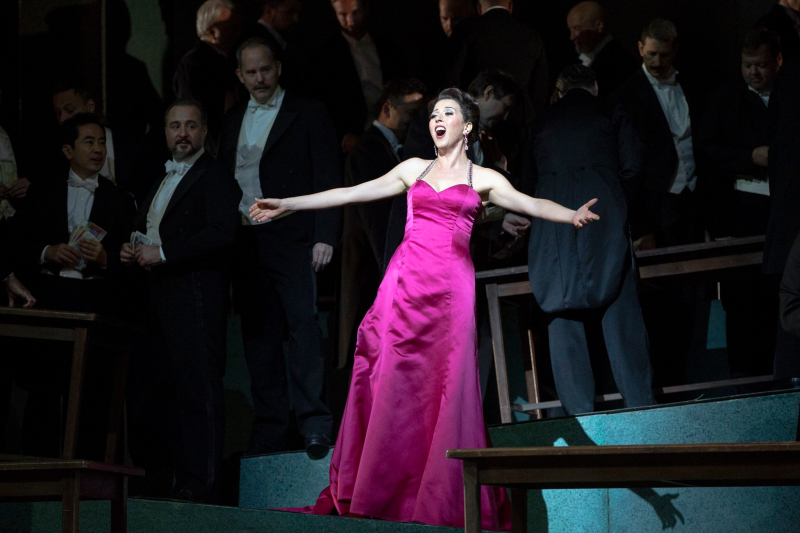
    The gambling den in a drab basement room with more ramps, and with card tables wheeled busily on and off; the tension of the game between des Grieux and Guillot is minimized. The scene’s redeeming feature is the vision of Lisette in a stunning magenta gown.

    The opera’s final scene is misty and appropriately foreboding. Manon is beaten by the guards who are escorting her to the ship for deportation. She seems to die from this beating rather than from some infection she picked up in prison.

    Manon is one of the least appealing characters in all opera: selfish, willful, faithless, conniving. And those are her good qualities. But somehow, Lisette managed to be one of the very few Manons to make us feel sorry for her as the life ebbs out of her.

    Maurizio Benini on the podium seemed to have no feeling for the distinctive atmosphere of the score, redolent of a time and place that the production has simply glossed over; the large orchestra frequently unleashed Puccinian waves of passion. But the musicians did what they could, bringing forth the desired poetry: of particular appeal was the clarinet solo in the prelude, played with captivating tenderness and nuance by Inn-Hyuck Cho.  Mr. Cho also stayed in the pit thru much of the intermission, practicing various themes, much to my delight.

    The pairing of Lisette Oropesa and Michael Fabiano as the doomed lovers was not felicitous. They are a vocal mismatch, and though they went thru the motions of romance and seduction, it was only in a theatrical sense that they made it work. The tenor, who would seem better suited to the Puccini rather than the Massenet des Grieux, lacked the heady vocal elegance that Alfredo Kraus, Vinson Cole, and Enrico di Giuseppe have brought to this music. Mr. Fabiano managed his Dream aria nicely enough, seemingly employing falsetto, but a flattish start to “Ah, fuyez, douce image” led to what felt like a struggle thru this demanding aria. 

    Two excellent baritones enhanced the afternoon: Artur Ruciński as Lescaut and Brett Polegato as de Brétigny. Mr. Ruciński, who sang Enrico to Lisette’s Lucia at the Teatro Real in 2018, Madrid, and who is a very impressive Onegin in a DVD of the Tchaikovsky opera from Valencia, has sung Sharpless and Germont at The Met. He transforms Lescaut into a leading role, making his arias – which can in lesser hands devolve into character pieces – real vocal gems thru the beauty and colour of his timbre, whilst also creating a lively (and – eventually – moving) character. His curtain calls drew enthusiastic and well-deserved bravos.

    I first heard Canadian baritone Brett Polegato’s voice on a tape from the Cardiff Competition in 1995. He made a very fine impression, which was subsequently amplified by his wonderful 2001 recording (with Christine Goerke, conducted by Robert Spano) of Vaughan Williams’ A Sea Symphony for Telarc. Hailed upon its release as “…a Sea Symphony for the new century…”, this recording won a Grammy.

    It wasn’t until 2012 that I got to hear Mr. Polegato live: he sang Walton’s Belshazzar’s Feast with the Atlanta Symphony at Carnegie Hall. I sat in the front row and enjoyed his performance immensely, and I questioned at the time why he was not at The Met. And now here he is in his debut performances at The House, the voice very much at home in the big hall. As de Brétigny today, the baritone made the most of every line, especially in the garret scene quartet, and proved a wonderful support (literally) to Lisette’s Manon at the Cours la Reine. Had Manon only stuck with this well-to-do and dapper gentleman, she might have lived long…and prospered.

    Basso Kwangchul Youn brought warm, house-filling sound to the Comte de Grieux’s aria, in which he urges his son to forget about the priesthood and find a nice girl to marry, one worthy of himself and of the family. The Comte, his visit to Saint Sulpice having proved in vain, departs with the wistful farewell to his son – “Adieu … reste à prier!” – which was touchingly spoken by Mr. Youn.

    Carlo Bosi, a sensational Nick in FANCIULLA DEL WEST when it was last done at The Met, was equally high-profile this afternoon as Guillot, the man who destroys Manon and, consequently, des Grieux.

    In another example of how to make a smallish role resonate, Paul Corona as the Innkeeper was outstanding. He took a bow at the dress rehearsal, and I wish he had done so this afternoon so I could have given him a “bravo!“.

    Bidu_Sayao

    As a tease, the Met has installed Bidu Sayão’s Cours la Reine costume (above) in a glass display case on the Dress Circle level. This cloth-of-gold creation, incredibly detailed, served as a reminder of what MANON is all about. I hope one day that Lisette will have a production of this opera worthy of both herself and of the opera’s long traditions, with charming costumes, with a swing for Manon to sit on in the garden at Amiens for “Voyons, Manon“…and with de Brétigny bringing her an emerald necklace to dazzle her right after the kidnapping of her beloved chevalier.

    ~ Oberon
  • GrahamDeconstructed: Steps in the Street

    2019_MGDC_Steps in the Street_05

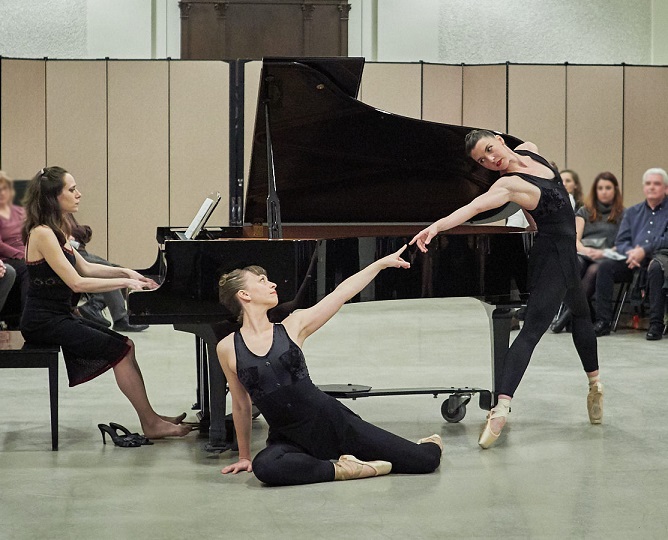
    Above: Anne Souder of the Martha Graham Dance Company in Graham’s Steps in the Street; photo by Elisabeth Atjay

    ~ Oberon

    Tuesday September 24th, 2019 – Kicking off their season of studio presentations, the Martha Graham Dance Company tonight gave us an up-close look at Steps in the Street, the second movement of Graham’s powerful and thrilling larger work, Chronicle. It was premiered in New York City on December 20th, 1936, and stands as the choreographer’s glorious response to the rise of Facism. As such, it resonates today when democracy is under threat from forces within our beloved country.

    It was in 2012, at an invitation-only studio rehearsal of Chronicle at Joyce SoHo, that I fell under the spell of Martha Graham. I was only slightly familiar with her work at that time, but on that afternoon, I fell in love with not only the choreography but with the dancers, both as a collective and as individuals. Over the ensuing years, the roster of artists has inevitably changed; but my feelings have not. The current Graham ensemble fascinates me every time I see them.

    Steps in the Street, which was considered a “lost” work for several years, was reconstructed in 1989 by Yuriko and Martha Graham, relying on a miraculously-discovered Julian Bryan film as a starting point.

    On this absolutely beautiful end-of-Summer evening, my choreographer-friend Claudia Schreier and I went down to the Graham homespace on the 11th floor of 55 Bethune Street for Steps in the Street. We were totally prepared to be blown away, and that’s exactly what happened.

    Brief excerpts from the old black-and-white film of Steps in the Street were being shown as we took our seats. Later, the Graham Company’s Artistic Director Janet Eilber used passages of this film as an introduction to the various movement motifs, which were then performed by the current ensemble of Graham women. Thus does this intriguing ballet grow from an opening passage of individual dancers walking backwards in silent, pensive poses slowly transform itself from a state of “Devastation – Homelessness – Exile” into a community of feminine determination.

    During the presentation, projections of drawings being spontaneously created by artist Sohyun Bae were shown; working with ambidextrous haste, the artist produced a series of pictures which did not attempt to literally depict the choreography, but rather to reflect the artist’s emotional response to the dancing and the music.

    A complete performance of Steps in the Street was then given. Leading the ensemble, Anne Souder, a lithe dancer of marvelous suppleness and intrinsic mystique, was spellbinding. Each of the ten women of the ‘corps de ballet‘ was able to display her unique gifts as an expressive artist whilst maintaining the stylized unity of the collective. The performance was simply fascinating to behold.  

    Alongside Ms. Souder, the participating dancers were So Young An, Alyssa Cybulski, Laurel Dalley Smith, Natasha M. Diamond-Walker, Charlotte Landreau, Marzia Memoli, Anne O’Donnell, Aoi Sato, Androniki Vasili, and Leslie Andrea Williams. They left me feeling both elated and hopeful.

    Photos by Elisabeth Atjay from this evening’s studio presentation of Steps in the Street:

    2019_MGDC_Steps in the Street_01

    Anne Souder; in the background, a projection of Sohyun Bae’s spontaneous drawing

    2019_MGDC_Steps in the Street_02

    Walking in silence: Anne Souder in the foreground

    2019_MGDC_Steps in the Street_03

    The ensemble, with Ms. Souder in the foreground

    2019_MGDC_Steps in the Street_04

    The final moments of Steps in the Street 

    ~ Oberon

  • Francesca Todesco ~ Isadora Duncan Classes

    20181011121518-f108-sokolowtodesco2018photobydanieldugan

    Francesca Todesco (above) is offering a series of classes focusing on the technique and repertory of Isadora Duncan, to be held on Fridays from 1:00-3:00 PM at 12 Saint Marks Place, on Manhattan’s Lower East Side. The classes will run from September 20th thru December 20th, 2019. Details below:

    70988457_2955578114469155_7951244578235875328_n

    Francesca’s dedication to the Duncan legacy – both as a dancer and teacher – makes her an invaluable spokeswoman in all matters Isadora. Francesca recently attended the Isadora Duncan International Symposium in London – an event held every other year in a different city – where an international gathering of performers, instructors, and writers meet to celebrate and honor the Mother of Modern Dance.

    Francesca Todesco epitomizes the enduring grace and power of the Duncan style, which has been handed down from generation to generation; she studied here in New York with Catherine Gallant and Loretta Thomas. Thru her classes, Francesca continues the tradition.

    Isadora Duncan is one of the most fascinating women of all time. I read her biography once a year, and have found that my interest in her took on a personal resonance when I realized that I am related on my mother’s side to one of Isadora’s pianists – and lovers: Walter Morse Rummel. Their story is but one of so many intriguing episodes in the life of this spellbinding woman.

    ~ Oberon

  • Guangzhou Ballet @ Lincoln Center

    DSCF1949

    Above: from Guangzhou Ballet‘s production of Carmina Burana as performed at Lincoln Center; photo by Dmitry Beryozkin

    ~ Author: Oberon

    Saturday August 17th, 2019 – Guangzhou, China, is the birthplace of my beloved Wei, so I arranged tickets for us to Guangzhou Ballet’s performance at Lincoln Center tonight. Earlier in the day, my friend Dmitry Beryozkin photographed the dress rehearsal of the production.

    Although tested by numerous audience distractions, we stayed to the end because of the impressive work of the Guangzhou Ballet‘s dancers, who are beautifully trained and who excel in both virtuosity and artistry.

    DSCF1527

    Above: from Goddess of the Luo River; photo by Dmitry Beryozkin

    Goddess of the Luo River is set to a violin concerto by the venerated Chinese composer Du Mingxin, who is now in his 90th year. The music has both rhythmic and lyrical appeal, though the Adagio begins to feel overly sweet after a while.

    The program note for Goddess of the Luo River was basically incomprehensible to me, but the ballet seems to tell of a pair of young lovers yearning to be together, and of the goddess who helps make their dream come true.

    Peter Quanz, a Canadian choreographer beloved by my friend Arlene Cooper, has re-staged the Du Mingxin concerto to beautiful effect. Mr. Quanz is a master of classical styling who has a gift for structure and for creating pleasing and musically-inspired combinations. The opening segment of Goddess of the Luo River, danced by an ensemble of women, was emblematic of Mr. Quanz’s work, which sustained our interest for the 30-minute duration of this atmospheric piece.

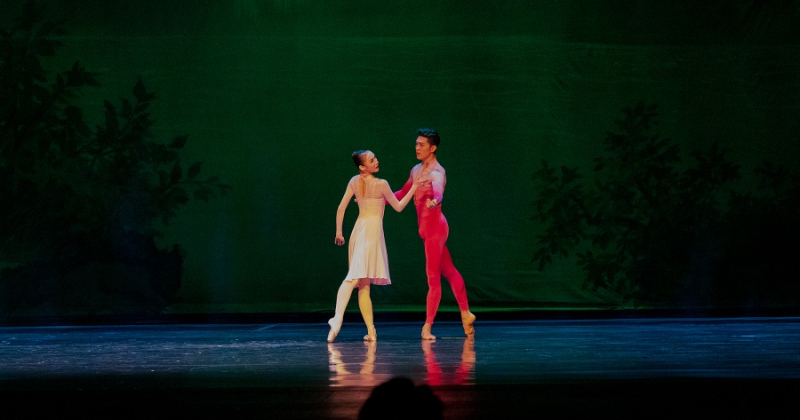
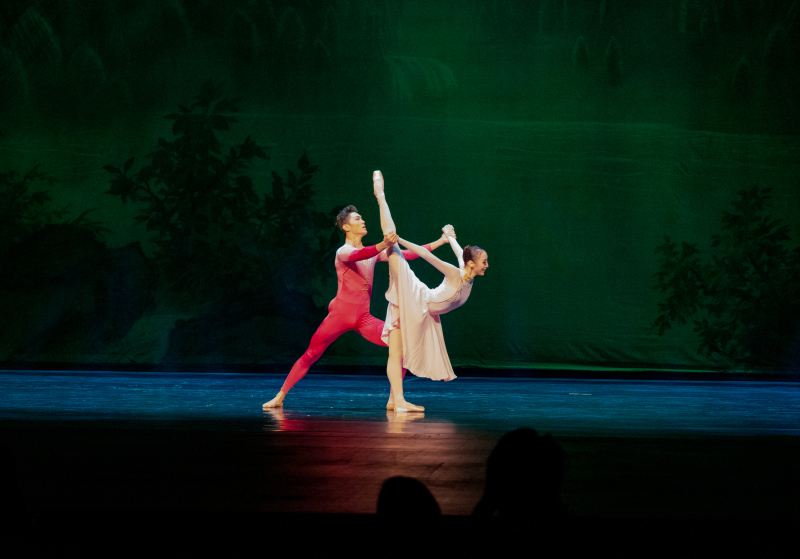
    Against a backdrop of a misty forest river-glade, Goddess of the Luo River unfolds like a blooming flower. If I have read the Playbill correctly, the principal dancers tonight were Fang Afang, Ma Minghao, and Huang Bairnao, and they were all simply entrancing to watch. But in fact, everyone onstage danced gorgeously, with musicality and grace.

    At the end, the bow lights cam up and we looked forward to hailing the dancers in their curtain calls, but the applause dwindled away and there were no bows.

    DSCF1510

    Above: from Goddess of the Luo River; Dmitry tells me they only did a brief excerpt from this ballet at the dress rehearsal. Too bad, because there were some lovely passages for the corps and the other featured dancer that I would like to have had photos of.

    Following the interval, a three-act choreographic rendering by Qi Jiang of Carl Orff’s Carmina Burana was presentedThe score was first performed on June 8, 1937, at Frankfurt, and is a setting of Medieval poems for three solo voices, chorus, and orchestra. This work was Orff’s “greatest hit” (though he wrote some truly fascinating operas) and it became one of the best-known musical works of the 20th century thru its use in film and commercials. Carmina Burana greatly appealed to the Nazi regime, to whom its rhythms were reminders of the “stamping columns of the Third Reich”.

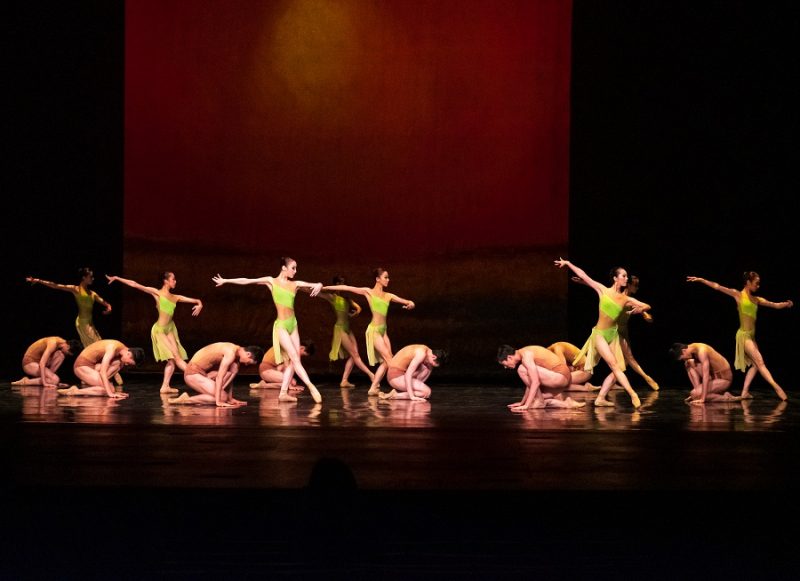
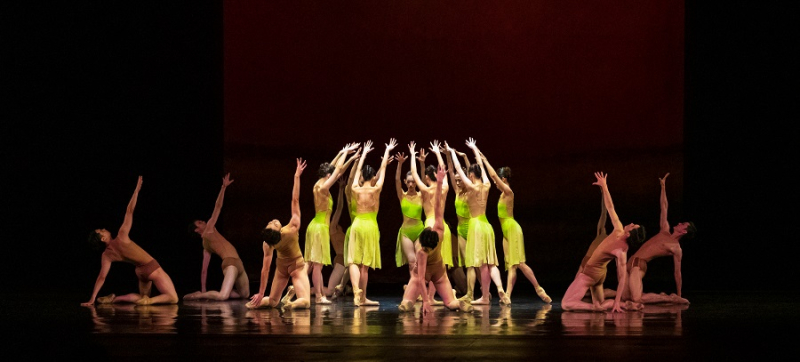
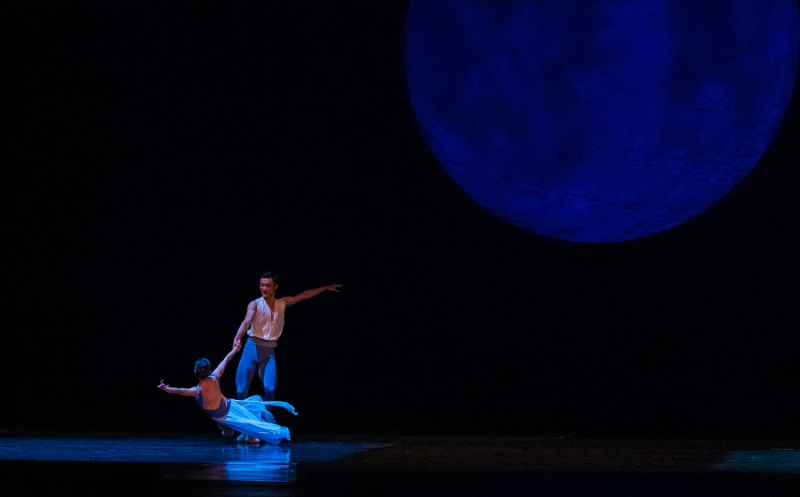
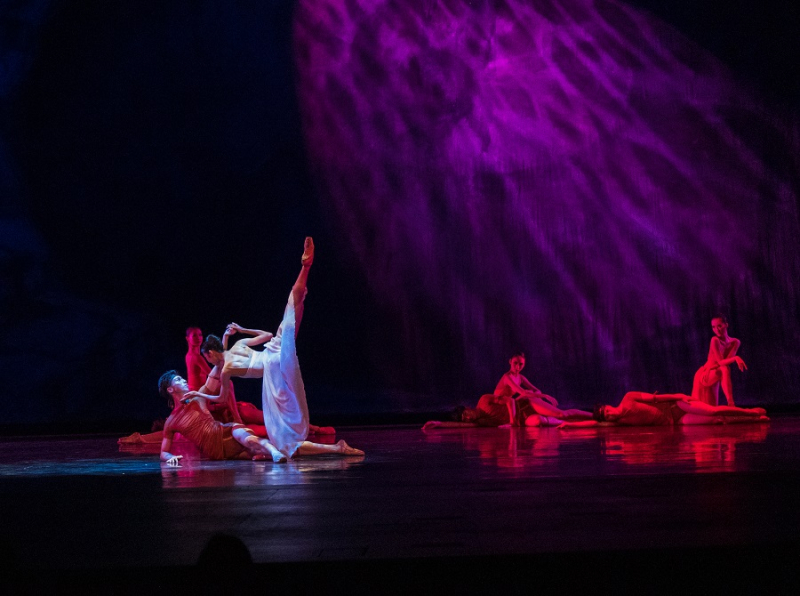
    Guangzhou Ballet did not choose one of the many top-notch recordings of the piece for their ballet production but it was very well reproduced over the theater’s sound system. The music has an irresistible emotional force. Han Jiang (scenic designer) and Chen Xiaji (lighting designer) have created a production full of impressive visuals, as you can see from Dmitry Beryozkin’s photos, below.

    The Company’s Carmina Burana, however, did not reach the same level of involvement for either Wei or I as the evening’s opening work. It’s nearly an hour long, and there were stretches when the choreography seemed uninspired and repetitive. Perhaps some judicious pruning of the music would have helped make it more coherent: there are stories being told, but they become rambling after a bit.

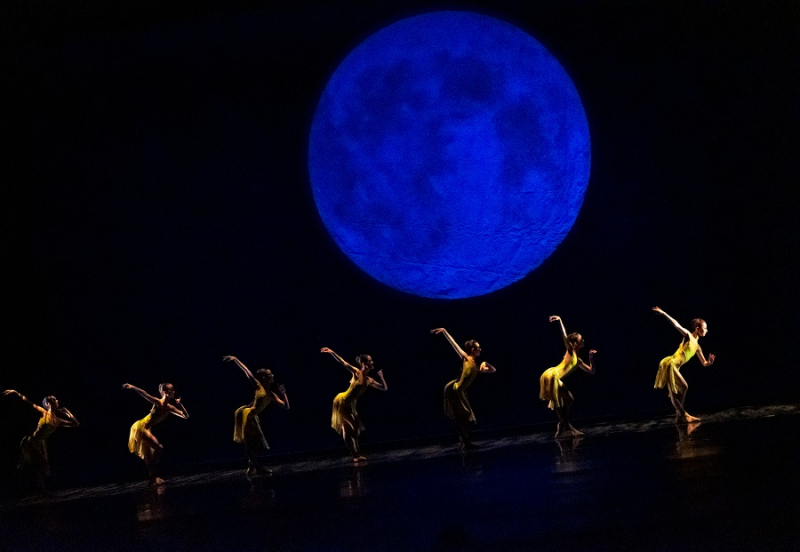
    Such striking moments as the powerful, smoky opening segment with dancers emerging from under a large blanket of fabric, and – especially – the gigantic moon that looms over some scenes kept us focused. But the constant whispering and checking of cellphones by people around us, the amorous boy in front of us who wanted to cuddle his girlfriend, and the continuous undercurrent of a whimpering child somewhere to our left (eventually taken out, with 5 minutes of music left to go) became so aggravating as the ballet progressed. If we could have made a graceful exit (some people did), we would have left midway thru.

    But it was nice to see the dancers taking their bows at the end, though these were staged Broadway-style, with a reprise of music from the Orff score.

    Here is a gallery of Dmitry Beryozkin’s images from Carmina Burana:

    DSCF1677

    DSCF1850

    DSCF2041

    DSCF2030

    DSCF2270

    DSCF2326

    DSCF2297

    DSCF2273

    ~ Oberon

  • Catherine Gallant ~ Escape From the House of Mercy

    L2000115

    Above: dancer Cecily Placenti

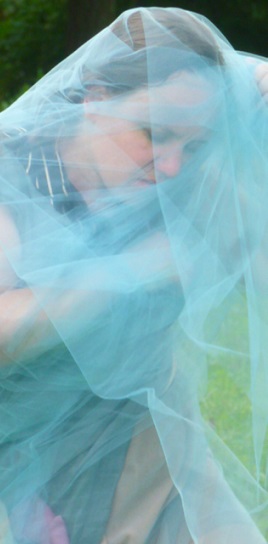
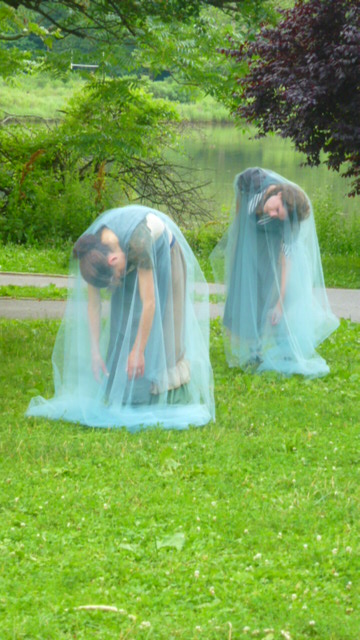
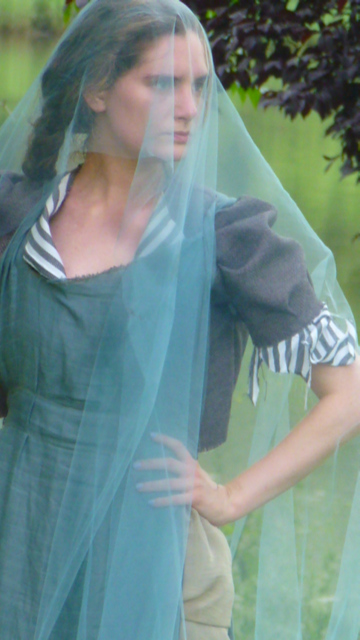
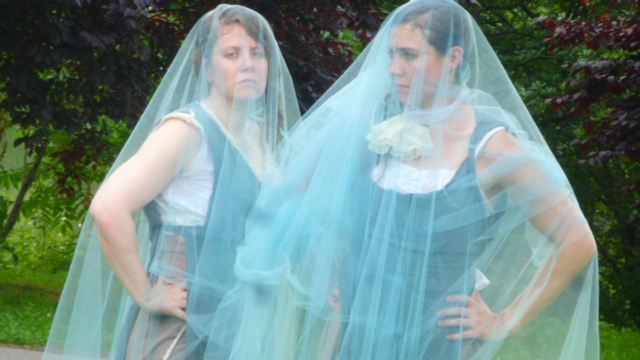
    On Thursday and Friday, June 27th and 28th, 2019, Catherine Gallant/DANCE present ESCAPE FROM THE HOUSE OF MERCY on Pat’s Lawn at Inwood Hill Park. Detailed information about these performances – and the story behind the dancework – may be found here.
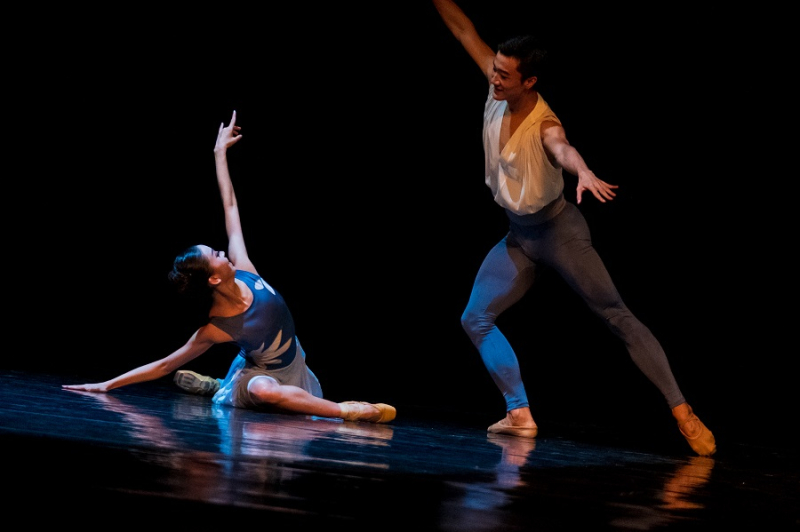
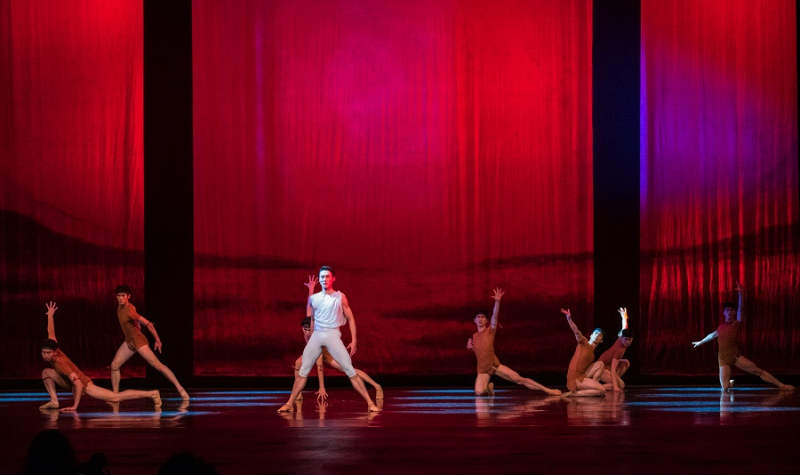
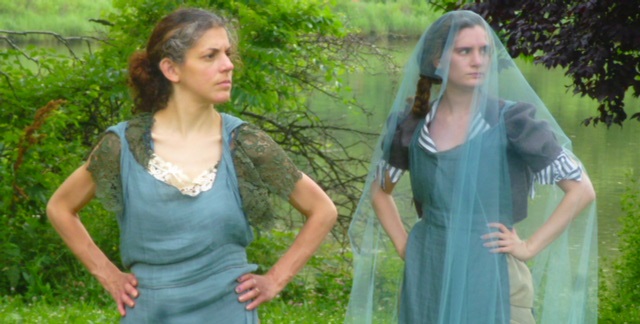
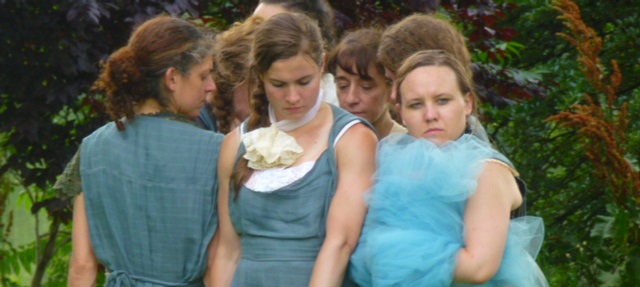
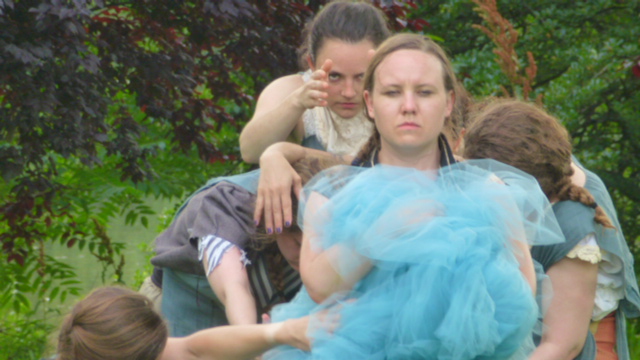
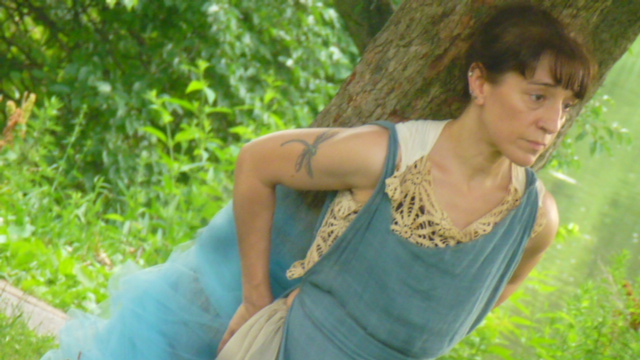
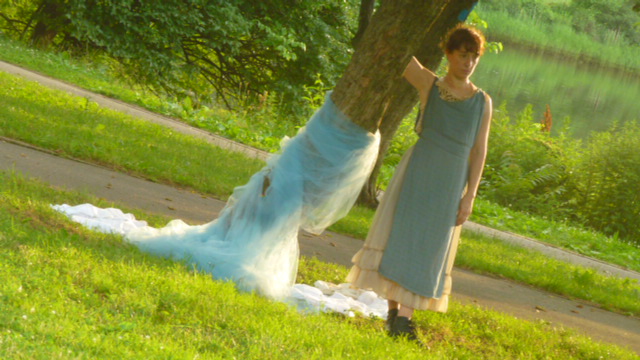
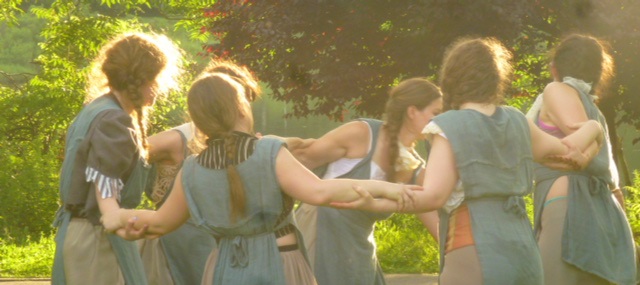
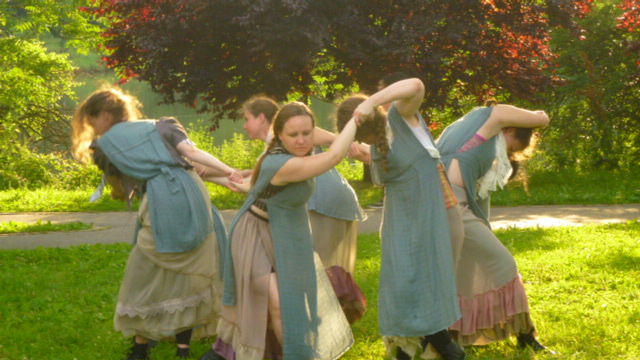
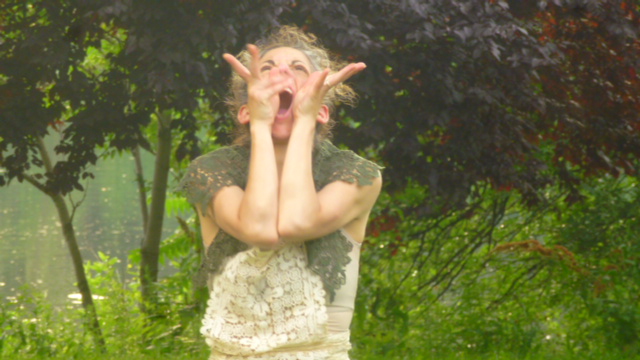
    An excerpt from ESCAPE FROM THE HOUSE OF MERCY was presented at the Baruch Performing Arts Center in April; it was at that time that I learned about the institution for which the dancework is named – the House of Mercy – and that it was located just a few blocks from where I live, up here at the Northern tip of Manhattan.

    Under the guise of caring for young women who had gone astray, places like the House of Mercy were modeled on the Magdalen Laundries created by the Catholic Church in Ireland. Essentially they were prisons, where the ‘inmates’ worked long hours doing laundry, wardened by nuns who resorted to cruel punishments to enforce discipline among their charges.

    Ms. Gallant told me that the site of the House of Mercy was off the beaten path where I often take my daily hikes: the trail that leads up from Inwood Hill Park, under the Henry Hudson Bridge, and down to the banks of the Hudson River. In such a place, the girls would have been truly isolated from the world. The House of Mercy was demolished in 1933; in Ireland, apparently, such places existed until the 1990s.

    On Tuesday, June 25th, a dress rehearsal for the presentation took place on Pat’s Lawn. I went over to observe; at first there was a feeling of chaos as other events in the park distracted from the matter at hand. But soon things settled in, and I was able to take a few pictures.

    L1990927

    An instrumental ensemble, led by trumpeter Kevin Blanq, perform New Orleans funeral songs and music by Lisa Bielawa live. Their instruments seem to have stories of their own to tell.

    L1990983

    Above: dancer Jessie King and tuba player Kenny Bentley.

    Ivana Drazic designed the costumes, which have the look of petticoats, old work clothes, and aprons.

    L2000106
    Jessie King

    L2000047

    Cecily Placenti, Halley Gerstel

    L2000094

    Abra Cohen

    L2000103

    Megan Minturn

    L2000108

    L2000119

    L2000127

    Abra Cohen

    L2000132

    Charlotte Hendrickson, Kelli Chapman

    L2000133

    Halley Gerstel, Abra Cohen

    L2000143

    L2000151

    Jessie King, Megan Minturn

    L2000162

    Kelli, Halley, Abra, Megan, Charlotte, Cecily

    L2000180

    Cecily Placenti

    L2000185

    Charlotte Hendrickson, Halley Gerstel

    L2000205

    Cecily Placenti

    L2000223

    L2000230

    L2000248

    Megan, Cecily, Abra

    L2000257

    Halley Gerstel

    The dancers are: Kelli Chapman, Abra Cohen, Halley Gerstel, Jessie King, Charlotte Hendrickson, Erica Lessner, Megan Minturn, and Cecly Placenti

    The musicians are: Kevin Blancq (group leader/trumpet), Scott Bourgeois (tenor sax), Rick Faulkner (trombone), Kenny Bentley (tuba), Moses Patrou (snare drum), and Connor Elmes (bass drum)

    ~ Oberon