Category: Ballet

  • Amanda Selwyn’s CROSSROADS @ NY Live Arts

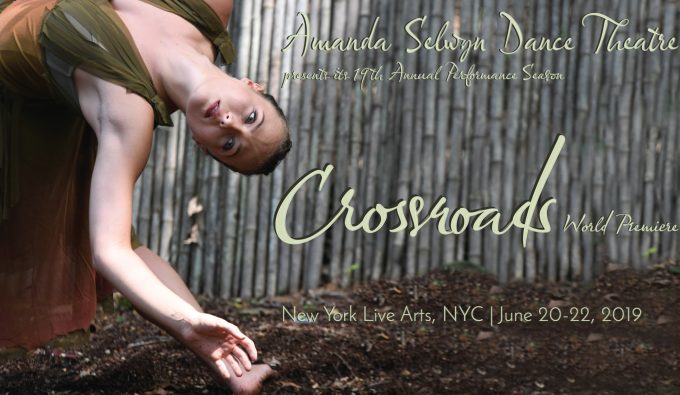
    680w_x395h_c-AmandaSelwynDanceTheatre_SeasonPostcard_Draft1-1

    ~ Author: Oberon

    Thursday June 20th, 2019 – Having seen three rehearsals of Amanda Selwyn’s CROSSROADS at various stages of its development, tonight I experienced the finished work in its premiere performance at New York Live Arts.

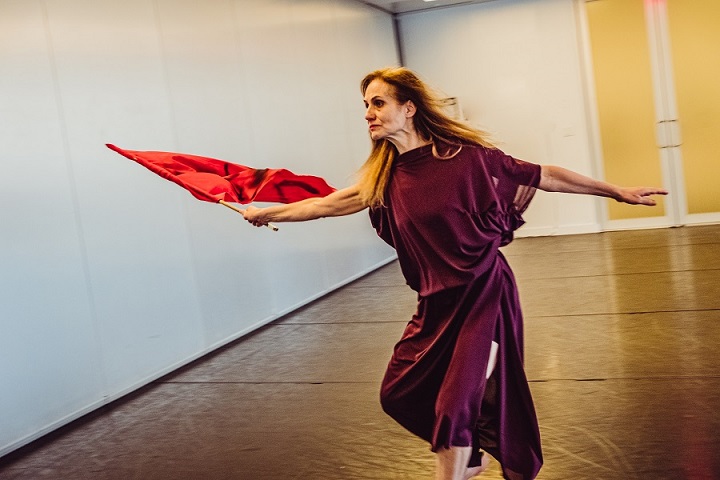
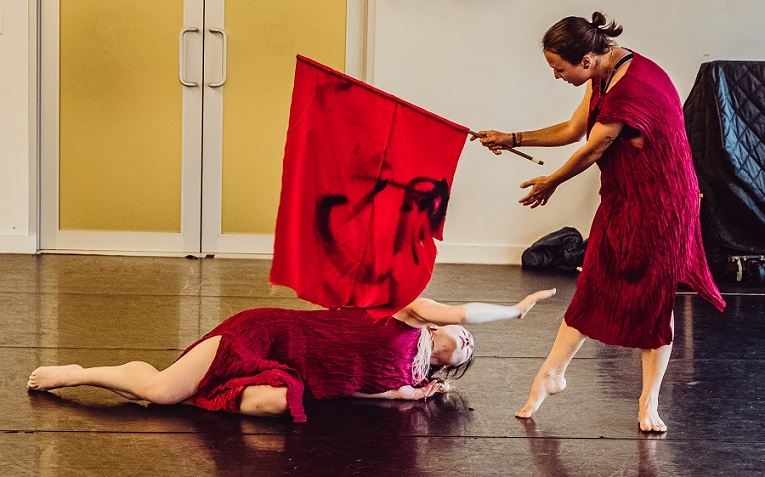
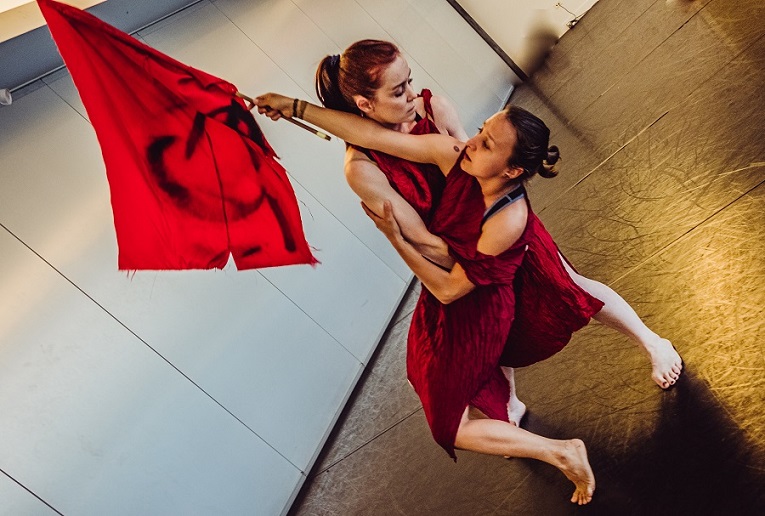
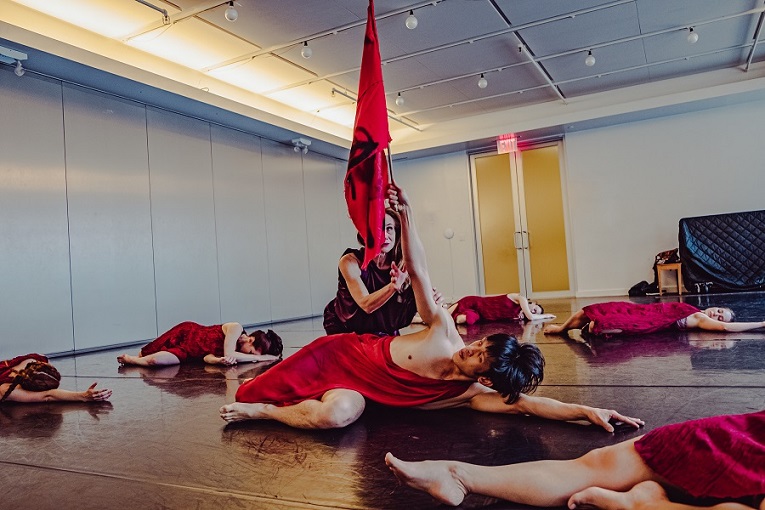
    The process began during wintertime rehearsals: brief movement motifs were introduced by each of the individual dancers. Over time, these were developed and woven into the choreographic tapestry. The dancing is set on a musical soundscape that veers from driven to meditative; the sets, costumes, and props give the piece an eye-opening visual framework, and expert lighting by Dan Ozminkowski is the crowning touch.

    In the months between concept and performance, there were some changes in the roster of performers; but Amanda ended up with a cast of brilliant and distinctive dancers whose commitment and flair kept the audience thoroughly engaged throughout the work’s 90-minute span.

    The art of René Magritte and M C Escher were initial inspirations for CROSSROADS. A row of fanciful doors provide a backdrop, and columns – illuminated from within – are moved about as the work’s opening movement progresses. Later, the dancers will continually re-arrange a set of boxes to be used as podiums…or obstacles. By the end, everything is stripped down to essentials, the boxes piled in a heap, the dancers liberated.

    But lets rewind to the start: Part I of CROSSROADS is entitled Sight. It begins with Ashley McQueen entering the shadowy space; she is a dancer with the grace of a ballerina, the groundedness of an Isadora acolyte, and the impetuous musicality of someone who dances because she must. All evening, my gaze kept returning to this woman and multi-hued dancing. Topping it all off, Ms. McQueen is also a comedienne to be reckoned with: her solo, stuck in an inflatable plastic chair, made me laugh out loud. 

    The other dancers now enter thru the upstage doors; they pair off – Ms. McQueen with Alex Cottone, Misaki Hayama with Isaac Kerr, and  Manon Hallay with Michael Bishop – whilst the distinctive and enigmatic Sarah Starkweather weaves among them, a dancer on her own path. The couples creates a flow of beautiful moves and poses, and then the tall and lithe Mr. Kerr comes forward in silence and takes a bite out of Magritte’s apple.

    The music now takes on a deep beat, and we are ready for some spacious dancing; fleeting solos and duets are part of the mix. As CROSSROADS progresses, each dancer will have multiple opportunities to show off his or her individuality and flair, seizing our focus in movement that veers from high-energy to expressive. The boys show off their partnering skills, the women each compelling in her own way. 

    With the columns on a diagonal, Ashley McQueen covers the space to dense, pensive music; her arms and hands speak to us poetically, and then her solo gets more animated. Misaki Hayama emerges thru one of the doors to dance a thoughtful, moving solo of loneliness and hope; Alex Cottone opens another door to dance with Misaki.

    A tom-tom beat sets off a bouncy, propulsive ensemble dance: these people are super-movers. Alex Cottone’s solo here is just one of innumerable passages in which this dancer of boundless energy and passion seized the stage. He dances with Ms. McQueen, and then with Ms. Hallay. Michael Bishop and Ashley McQueen, in a duet to languid, deep, and soulful cello music, execute beautiful lifts.

    After a blackout, Part II commences. Entitled Faith, it does indeed take on the feeling of a sacred rite when Alex Cottone is seen in a pool of blinding light on a low altar; his solo is simply spell-binding. As the light over Alex fades, another altar is illuminated and here the gorgeous Manon Hallay displays her beauteous line and floated arabesque in a solo at once alluring and pure. Both dancers here wear raspberry-hued costumes that accentuate their physical appeal.

    Each dancer now has his/her own box on which to dance or pose, at first in unison. Sarah Starkweather’s plastique solo inaugurates a fresh cycle of movement motifs. To a bigger beat, the boxes are rearranged, and fleeting pas de deux replace the solos briefly. In a spirited trio, Misaki, Manon, and Sarah dance in sync. 

    Faith now becomes a journey: boxes are arranged along the front of the stage and the dancers walk in procession over these obstacles, pausing to pose or perform gestural solos along the way. A back-beat develops, and the parade breaks up.

    A rather purgatorial “red quintet” springs up to a fresh tempo: Alex and the four women dance in sync, with breakouts and swift duets. Misaki’s fancy footwork here captured my eye. Sarah and Alex duet, then the quintet resumes. The beat is all. 

    Following a blessedly brief interval, Part III – Ascent – commences. In a foggy setting, Sarah Starkweather has a stormy solo to the sound of rushing water. Misaki and Ashley join her, the music (with big piano chords) has a throbbing depth; then Sarah – she of the unique presence – resumes her solo. 

    Alex Cottone, Michael Bishop, and the four women now have a quartet wherein the darkly lyrical cello gives a feeling of Russian passion; posing and moving, so attentive to one another, the dancers pair off. The woman in a row gesture in sync as the men provide visual counterpoint. This for me was the best part of CROSSROADS; it ends on a long cello tone.   

    Now comes the comic interlude: to spaced-out music, Ashley McQueen becomes helplessly trapped in an inflatable plastic chair. Her gestures and facial expressions are priceless. The other dancers come and go, unwilling – or too self-absorbed – to help her. Manon Hallay’s lovely arabesques again come into play; she seems intent on perfecting them whilst Ms. McQueen struggles valiantly to stand. Suddenly, Isaac Kerr rushes on and – in a flying leap – sails over the woman stranded in the chair. Meanwhile, Sarah Starkweather and Alex Cottone have carried on with their own duet throughout.

    The mood now shifts, aided by sounds of shifting sea tides: Manon Hallay and Michael Bishop have a tender duet, with lyrical partnering phrases. Misaki Hayama and Isaac Kerr dance a spacious duet, with airy lifts and a trace of romance, which the cello accentuates. Sarah Starkweather and Alex Cottone walkabout, connect, and have an agile, gently amusing duet.

    While Alex wanders alone, all the others advance from stage right, striking poses and gesturing – a very nice look here – before leaving Alex on his own again. A duet of passion for Ashley McQueen and Isaac Kerr is not without hints of danger. Following a solo passage for Sarah, Manon and Michael have a side-by-side duet with subtle dips and lifts. When Manon leaves him, Michael continues to dance with his memory of her.

    The three men dance as the women ‘Vogue’ behind them; then the four women take the floor. Following a brief, compulsive solo, Alex Cottone is left alone as the lights fade.

    CROSSROADS had flashed by: never a dull moment in this feast of movement. Thanks to the vibrant commitment of her seven dancers, Amanda Selwyn can chalk up yet another winning entry in her ongoing catalog of successes. How did I feel when CROSSROADS ended? I felt like dancing!

    ~ Oberon

  • Amanda Selwyn’s CROSSROADS @ NY Live Arts

    680w_x395h_c-AmandaSelwynDanceTheatre_SeasonPostcard_Draft1-1

    ~ Author: Oberon

    Thursday June 20th, 2019 – Having seen three rehearsals of Amanda Selwyn’s CROSSROADS at various stages of its development, tonight I experienced the finished work in its premiere performance at New York Live Arts.

    The process began during wintertime rehearsals: brief movement motifs were introduced by each of the individual dancers. Over time, these were developed and woven into the choreographic tapestry. The dancing is set on a musical soundscape that veers from driven to meditative; the sets, costumes, and props give the piece an eye-opening visual framework, and expert lighting by Dan Ozminkowski is the crowning touch.

    In the months between concept and performance, there were some changes in the roster of performers; but Amanda ended up with a cast of brilliant and distinctive dancers whose commitment and flair kept the audience thoroughly engaged throughout the work’s 90-minute span.

    The art of René Magritte and M C Escher were initial inspirations for CROSSROADS. A row of fanciful doors provide a backdrop, and columns – illuminated from within – are moved about as the work’s opening movement progresses. Later, the dancers will continually re-arrange a set of boxes to be used as podiums…or obstacles. By the end, everything is stripped down to essentials, the boxes piled in a heap, the dancers liberated.

    But lets rewind to the start: Part I of CROSSROADS is entitled Sight. It begins with Ashley McQueen entering the shadowy space; she is a dancer with the grace of a ballerina, the groundedness of an Isadora acolyte, and the impetuous musicality of someone who dances because she must. All evening, my gaze kept returning to this woman and multi-hued dancing. Topping it all off, Ms. McQueen is also a comedienne to be reckoned with: her solo, stuck in an inflatable plastic chair, made me laugh out loud. 

    The other dancers now enter thru the upstage doors; they pair off – Ms. McQueen with Alex Cottone, Misaki Hayama with Isaac Kerr, and  Manon Hallay with Michael Bishop – whilst the distinctive and enigmatic Sarah Starkweather weaves among them, a dancer on her own path. The couples creates a flow of beautiful moves and poses, and then the tall and lithe Mr. Kerr comes forward in silence and takes a bite out of Magritte’s apple.

    The music now takes on a deep beat, and we are ready for some spacious dancing; fleeting solos and duets are part of the mix. As CROSSROADS progresses, each dancer will have multiple opportunities to show off his or her individuality and flair, seizing our focus in movement that veers from high-energy to expressive. The boys show off their partnering skills, the women each compelling in her own way. 

    With the columns on a diagonal, Ashley McQueen covers the space to dense, pensive music; her arms and hands speak to us poetically, and then her solo gets more animated. Misaki Hayama emerges thru one of the doors to dance a thoughtful, moving solo of loneliness and hope; Alex Cottone opens another door to dance with Misaki.

    A tom-tom beat sets off a bouncy, propulsive ensemble dance: these people are super-movers. Alex Cottone’s solo here is just one of innumerable passages in which this dancer of boundless energy and passion seized the stage. He dances with Ms. McQueen, and then with Ms. Hallay. Michael Bishop and Ashley McQueen, in a duet to languid, deep, and soulful cello music, execute beautiful lifts.

    After a blackout, Part II commences. Entitled Faith, it does indeed take on the feeling of a sacred rite when Alex Cottone is seen in a pool of blinding light on a low altar; his solo is simply spell-binding. As the light over Alex fades, another altar is illuminated and here the gorgeous Manon Hallay displays her beauteous line and floated arabesque in a solo at once alluring and pure. Both dancers here wear raspberry-hued costumes that accentuate their physical appeal.

    Each dancer now has his/her own box on which to dance or pose, at first in unison. Sarah Starkweather’s plastique solo inaugurates a fresh cycle of movement motifs. To a bigger beat, the boxes are rearranged, and fleeting pas de deux replace the solos briefly. In a spirited trio, Misaki, Manon, and Sarah dance in sync. 

    Faith now becomes a journey: boxes are arranged along the front of the stage and the dancers walk in procession over these obstacles, pausing to pose or perform gestural solos along the way. A back-beat develops, and the parade breaks up.

    A rather purgatorial “red quintet” springs up to a fresh tempo: Alex and the four women dance in sync, with breakouts and swift duets. Misaki’s fancy footwork here captured my eye. Sarah and Alex duet, then the quintet resumes. The beat is all. 

    Following a blessedly brief interval, Part III – Ascent – commences. In a foggy setting, Sarah Starkweather has a stormy solo to the sound of rushing water. Misaki and Ashley join her, the music (with big piano chords) has a throbbing depth; then Sarah – she of the unique presence – resumes her solo. 

    Alex Cottone, Michael Bishop, and the four women now have a quartet wherein the darkly lyrical cello gives a feeling of Russian passion; posing and moving, so attentive to one another, the dancers pair off. The woman in a row gesture in sync as the men provide visual counterpoint. This for me was the best part of CROSSROADS; it ends on a long cello tone.   

    Now comes the comic interlude: to spaced-out music, Ashley McQueen becomes helplessly trapped in an inflatable plastic chair. Her gestures and facial expressions are priceless. The other dancers come and go, unwilling – or too self-absorbed – to help her. Manon Hallay’s lovely arabesques again come into play; she seems intent on perfecting them whilst Ms. McQueen struggles valiantly to stand. Suddenly, Isaac Kerr rushes on and – in a flying leap – sails over the woman stranded in the chair. Meanwhile, Sarah Starkweather and Alex Cottone have carried on with their own duet throughout.

    The mood now shifts, aided by sounds of shifting sea tides: Manon Hallay and Michael Bishop have a tender duet, with lyrical partnering phrases. Misaki Hayama and Isaac Kerr dance a spacious duet, with airy lifts and a trace of romance, which the cello accentuates. Sarah Starkweather and Alex Cottone walkabout, connect, and have an agile, gently amusing duet.

    While Alex wanders alone, all the others advance from stage right, striking poses and gesturing – a very nice look here – before leaving Alex on his own again. A duet of passion for Ashley McQueen and Isaac Kerr is not without hints of danger. Following a solo passage for Sarah, Manon and Michael have a side-by-side duet with subtle dips and lifts. When Manon leaves him, Michael continues to dance with his memory of her.

    The three men dance as the women ‘Vogue’ behind them; then the four women take the floor. Following a brief, compulsive solo, Alex Cottone is left alone as the lights fade.

    CROSSROADS had flashed by: never a dull moment in this feast of movement. Thanks to the vibrant commitment of her seven dancers, Amanda Selwyn can chalk up yet another winning entry in her ongoing catalog of successes. How did I feel when CROSSROADS ended? I felt like dancing!

    ~ Oberon

  • Beth Jucovy/Dance Visions NY: Isadora’s Russian Repertory

    DSCF7652

    Above: I-Nam Jiemvitayanukoon and Beth Jucovy in Isadora Duncan’s Varshavianka; photo by Dmitry Beryozkin

    ~ Author: Oberon

    Monday May 27th, 2019 – Since I had a prior commitment on the evening of their appearance at Sans Limites Movement 2019, Beth Jucovy very kindly arranged for me and photographer Dmitry Beryozkin to watch a rehearsal of her Company, Dance Visions NY, who are presenting the Company’s staging of Isadora Duncan’s Russian Workers Songs and Scriabin Etudes at the festival.

    These works were transmitted to Ms. Jucovy directly by 2nd generation Duncan exponent, Julia Levien, with the exception of The Crossing, which was passed on to Ms. Jucovy by Adrienne Ramm. Isadora Duncan’s Scriabin Etudes consist of Mother, The Crossing, and Revolutionary. The Russian Workers Songs are entitled Dubinushka and Varshavianka.

    These danceworks were created by Isadora Duncan circa 1923; they were all revived by Irma Duncan and re-staged by Julia Levien, who had danced with Irma’s company. The dances reflect Isadora’s experiences while she lived in Revolutionary Russia; among their themes are struggle, awakening, protest, revolution, and – ultimately – victory.

    Dance Visions NY dancers who perform in the Russian Workers Songs are Beth Jucovy, Anastasia Benedetti, Louisa Cathcart, Cathleen Deutscher, Ligia Gaissionok, I-Nam Jiemvitayanukoon, Shannon McMullan, and Rebekah Mulkey. The Scriabin Etudes – three solos – are danced by Ms. Jucovy.
     
    After running thru the Russian Workers Songs a couple of times in practice clothes, the dancers donned the red-hued costumes and danced both pieces full-out.
     
    The Varshavianka sings of the struggle of the workers to throw off the yoke of oppression. Marching under the red flag of Liberty, one by one the valiant fighters are shot down; but with each casualty, another brave worker takes up the banner. In the end, the fallen are transfigured; they rise again to carry on the struggle.
     
    Photos from Varshavianka:
     
    DSCF7575
     
    Beth Jucovy
     
    DSCF7577
     
    DSCF7603
     
    Louisa Cathcart and Ligia Gaissionok
     
    DSCF7606
    Ligia Gaissionok and Cathleen Deutscher
     
    DSCF7609
     
    Cathleen Deutscher and Ligia Gaissionbok
     
    DSCF7627
     
    I-Nam Jiemvitayanukoon and Shannon McMullan
    DSCF7637
     
    I-Nam Jiemvitayanukoon, Shannon McMullan
     
    DSCF7650
     
    DSCF7656
     
    DSCF7660
     
    DSCF7667
     
    DSCF7670
     
    Above: the finale of the Varshavianka
     
    The Dubinushka was sung by dock workers, hauling the heavy ropes in the shipyard; they sang this song to maintain the rhythm of their work.
     
    Photos from Dubinushka:
     
    DSCF7515
     
    Beth Jucovy
     
    DSCF7522
     
    DSCF7535
     
    DSCF7543
     
    DSCF7556
     
    DSCF7565
     
    Above: in the foreground are Shannon McMullan and Rebekah Mulkey
     
    After dancing the Workers Songs, the dancers began packing up to leave. We talked with them briefly: some have been dancing with Ms. Jucovy for many years, so the Company definitely has the feel of family. Beth began tidying up the studio, and I asked her a question about the Scriabin Etudes. “Shall I dance them for you?”, she asked. And in the twinkling of an eye, she donned the Isadorian scarves and began to dance the three solos.
     
    Mother:
     
    DSCF7698
     
    DSCF7730
     
    DSCF7752
     
    DSCF7765
     
    DSCF7795
     
    The Crossing:
     
    DSCF7808
     
    DSCF7828
     
    DSCF7848
     
    DSCF7863
     
    Revolutionary:
     
    DSCF7928
     
    DSCF7945
     
    DSCF7971
     
    DSCF8009
     
    Beth danced these solos in full performance mode, deeply involved and vibrantly expressive; it was so generous of her to share these unique works with us.
     
    ~ Oberon
     
    Photos: Dmitry Beryozkin  
  • Beth Jucovy/Dance Visions NY: Isadora’s Russian Repertory

    DSCF7652

    Above: I-Nam Jiemvitayanukoon and Beth Jucovy in Isadora Duncan’s Varshavianka; photo by Dmitry Beryozkin

    ~ Author: Oberon

    Monday May 27th, 2019 – Since I had a prior commitment on the evening of their appearance at Sans Limites Movement 2019, Beth Jucovy very kindly arranged for me and photographer Dmitry Beryozkin to watch a rehearsal of her Company, Dance Visions NY, who are presenting the Company’s staging of Isadora Duncan’s Russian Workers Songs and Scriabin Etudes at the festival.

    These works were transmitted to Ms. Jucovy directly by 2nd generation Duncan exponent, Julia Levien, with the exception of The Crossing, which was passed on to Ms. Jucovy by Adrienne Ramm. Isadora Duncan’s Scriabin Etudes consist of Mother, The Crossing, and Revolutionary. The Russian Workers Songs are entitled Dubinushka and Varshavianka.

    These danceworks were created by Isadora Duncan circa 1923; they were all revived by Irma Duncan and re-staged by Julia Levien, who had danced with Irma’s company. The dances reflect Isadora’s experiences while she lived in Revolutionary Russia; among their themes are struggle, awakening, protest, revolution, and – ultimately – victory.

    Dance Visions NY dancers who perform in the Russian Workers Songs are Beth Jucovy, Anastasia Benedetti, Louisa Cathcart, Cathleen Deutscher, Ligia Gaissionok, I-Nam Jiemvitayanukoon, Shannon McMullan, and Rebekah Mulkey. The Scriabin Etudes – three solos – are danced by Ms. Jucovy.
     
    After running thru the Russian Workers Songs a couple of times in practice clothes, the dancers donned the red-hued costumes and danced both pieces full-out.
     
    The Varshavianka sings of the struggle of the workers to throw off the yoke of oppression. Marching under the red flag of Liberty, one by one the valiant fighters are shot down; but with each casualty, another brave worker takes up the banner. In the end, the fallen are transfigured; they rise again to carry on the struggle.
     
    Photos from Varshavianka:
     
    DSCF7575
     
    Beth Jucovy
     
    DSCF7577
     
    DSCF7603
     
    Louisa Cathcart and Ligia Gaissionok
     
    DSCF7606
    Ligia Gaissionok and Cathleen Deutscher
     
    DSCF7609
     
    Cathleen Deutscher and Ligia Gaissionbok
     
    DSCF7627
     
    I-Nam Jiemvitayanukoon and Shannon McMullan
    DSCF7637
     
    I-Nam Jiemvitayanukoon, Shannon McMullan
     
    DSCF7650
     
    DSCF7656
     
    DSCF7660
     
    DSCF7667
     
    DSCF7670
     
    Above: the finale of the Varshavianka
     
    The Dubinushka was sung by dock workers, hauling the heavy ropes in the shipyard; they sang this song to maintain the rhythm of their work.
     
    Photos from Dubinushka:
     
    DSCF7515
     
    Beth Jucovy
     
    DSCF7522
     
    DSCF7535
     
    DSCF7543
     
    DSCF7556
     
    DSCF7565
     
    Above: in the foreground are Shannon McMullan and Rebekah Mulkey
     
    After dancing the Workers Songs, the dancers began packing up to leave. We talked with them briefly: some have been dancing with Ms. Jucovy for many years, so the Company definitely has the feel of family. Beth began tidying up the studio, and I asked her a question about the Scriabin Etudes. “Shall I dance them for you?”, she asked. And in the twinkling of an eye, she donned the Isadorian scarves and began to dance the three solos.
     
    Mother:
     
    DSCF7698
     
    DSCF7730
     
    DSCF7752
     
    DSCF7765
     
    DSCF7795
     
    The Crossing:
     
    DSCF7808
     
    DSCF7828
     
    DSCF7848
     
    DSCF7863
     
    Revolutionary:
     
    DSCF7928
     
    DSCF7945
     
    DSCF7971
     
    DSCF8009
     
    Beth danced these solos in full performance mode, deeply involved and vibrantly expressive; it was so generous of her to share these unique works with us.
     
    ~ Oberon
     
    Photos: Dmitry Beryozkin  

  • Limón Dance Company @ The Joyce

    Jose_limon

    Above: José Limón

    ~ Author: Oberon

    Wednesday May 29th, 2019 – The Limón Dance Company‘s program at The Joyce this evening brought us José Limón’s classic masterwork The Moor’s Pavane and his fascinating ensemble piece Psalm, along with Colin Connor’s The Weather in the Room, danced by guest artists Stephen Pier and Miki Orihara, and Radical Beasts in the Forest of Possibilities from choreographer Francesca Harper, in collaboration with composer/performer Nona Hendryx.

    Thumbnail_limonEt2DYiXo

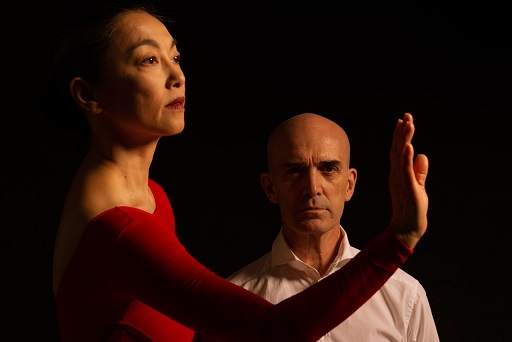
    How wonderful to see dance icons Miki Orihara and Stephen Pier (above) onstage together tonight; the husband-and-wife duo gave a vivid, touching performance in the New York premiere of Colin Connor’s The Weather In The Room, an intimate narrative work which tells us of a long-lasting domestic relationship and shows us what it takes to keep it alive thru the years.

    A couple return home from a formal party; a chair, a stool, and a rug comprise the setting. Shoes come off, and his jacket; they get comfy as what sounds like a scratchy old ’78 record begins to play. Sarah Shugarman’s score is so evocative, and soon memories are in play. Miki’s gestural language is poetry made visible, whilst Stephen looms over his petite soulmate, alternately solicitous and slightly impatient.

    As their danced conversation unfolds, six dancers in white appear, moving restlessly in the background, and running about. A chime sounds, and to a pulsing motif, an argument between the husband and wife springs up. Eventually they withdraw to opposing corners and the space becomes a small theatre where, in a series of duets, the six dancers present dances of memory: chapters from the biography of a marriage. Impetuous youthful gladness, tender moments, and passing anxiousness are depicted to expressive music.

    Thumbnail_limon2019frances  samson&terrencediableinweatherphotobychristopherjones

    Above: Terrence D.M. Diable and Frances Samson in The Weather in the Room; photo by Christopher Jones.

    Gradually, Miki and Stephen have moved closer to one another from their distant corners, and in the end, they are reconciled. But…it’s not quite the end. For the piece has a happy-music coda; the setting reverts to the quiet living room. As the music fades, Miki laughs softly. 

    There are times in an enduring relationship when you will question whether you are in the right place with the right person; it’s happened to me from time to time in recent years. At such moments, drawing from the well of memory reminds us of what we loved about our mate at the start, and makes us ask: what would life be like without him?  Mr. Connor’s thoughtful, sobering dancework resonates with meaning for me and – I am sure – for many who will watch this work. The depth of Miki and Stephen’s performance was so gratifying to experience, and the ensemble of dancers – Terence D.M. Diable, Mariah Gravelin, Gregory Hamilton, Eric Parra, Frances Samson, and Lauren Twomley – sustained the atmosphere with their articulate, committed dancing.

    José Limón’s best-known work, The Moor’s Pavane, is always as meaningful to hear as to see; the choreographer’s choice of Henry Purcell’s music underscores what I have long believed: this music is made to be danced to. Drawing on Shakespeare’s story of The Moor whose love for his faithful wife Desdemona is destroyed thru jealousy sparked by innuendo, the choreographer creates a ballet at once elegant and brutal. This evening it was splendidly danced by Mark Willis (The Moor), Savannah Spratt (His Wife), Jess Obremski (His Friend), and Jacqueline Bulnés (The Friend’s Wife), their dancing alive with nuance and musicality. 

    Over tiime, I have seen many danceworks similar to Francesca Harper’s Radical Beasts in the Forest of Possibilities wherein the dancers dwell in a desolate landscape, with drifting fog. Nora Hendryx has created a collage of electronic sounds ranging from static to sonic pulsars. Among the eight dancers, who move with vivid athleticism in choreography that has an improvisational quality, there seem to be alternating currents of connection or isolation.

    Jacqueline Bulnés (who emerges first from the darkness, as if lighting the way), Terrence Diable, Mariah Gravelin, David Glista, Jesse Obremski, Frances Samson, Lauren Twomley, and Mark Willis all showed the strength and suppleness of their dancing. The work might have ended on a rather desolate note, but then Ms. Hendryx turned from her laptop to the piano keyboard and began to play a lyrical theme. Dancers Lauren Twomley and Jesse Obremski joined in a duet that brought a sense of humanity to the proceedings; both dancers are beautiful movers. The piece ends on a question mark, as Ms. Bulnés returns with her flashlight as if seeking the couple out. Have they done something wrong? 

    Thumbnail_limonPsalmphoto_by_Douglas_Cody

    Above: from Psalm; photo by Douglas Cody

    The evening ended with a re-staging of José Limón’s 1967 ritualistic work, Psalm. Carla Maxwell had commissioned a new score for this large-scale dramatic work from composer Jon Magnussen in 2002. I had the opportunity of watching a studio rehearsal of Psalm a week prior to the Joyce performances, and was thrilled and moved by it.

    Without the program note explaining the traditional Jewish belief that all the sorrows of the world rest in thirty-six Just Men, we might have thought of the ballet’s protagonist as an Outcast, a Penitent, or a Christ Figure. In this role, dancer David Glista gave a striking performance, abounding in physical energy and passion, living out the torment of the character with unswerving commitment. Two women, Savannah Spratt and Frances Samson, had prominent roles, and the entire Company filled the space with leaps, turns, and ecstatic gestures as the music ranged from harp and chant to pounding drums, solos for male voice, syncopated Alleluias, and summoning tambourines. Throughout the work, thoughts of Martha Graham’s epic ceremonials continually came to mind.

    Psalm is perhaps a bit over-long, and parts of it are repetitive. But it is as impressive to behold as to hear, and it provides a portal to an ancient world where such rites were an essential element in the life of the community.

    ~ Oberon

  • Ballets Russes @ Chamber Music Society

    Photo nicolas dautricourt 74

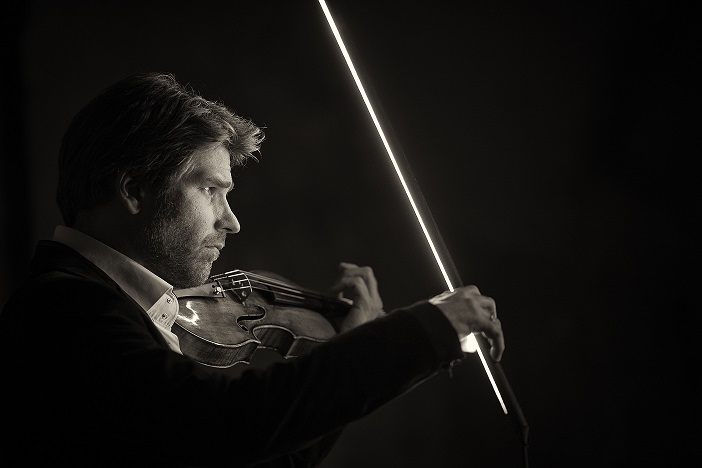
    Above: violinist Nicolas Dautricourt, photographed by Bernard Martinez

    ~ Author: Oberon

    Sunday May 19th, 2019 – For their final concert of the 2018-2019 season at Alice Tully Hall, Chamber Music Society of Lincoln Center offered a program of works by composers associated with Serge de Diaghilev’s Ballets Russes. It was a long program, full of rewards.

    Jennifer Johnson Cano, the Metropolitan Opera mezzo-soprano who in February shared a memorable program with tenor Matthew Polenzani at Zankel Hall, sang works by Manuel de Falla and Maurice Ravel, and a septet of marvelous musicians were heard – in varying configurations – in these, plus music by Debussy, Prokofiev, and Stravinsky. 

    JJC

    Ms. Cano (above, in a Matthu Placek portrait) opened the concert with Manuel de Falla’s Psyché in which she was joined by Tara Helen O’Connor (flute), Nicolas Dautricourt (violin), Yura Lee (viola), David Finckel (cello), and Bridget Kibbey (harp). Composed in 1924, as a setting of a poem by Georges Jean-Aubry, this is the awakening song of Psyché, a mortal woman whose beauty has caught the eye of Cupid, god of Love, who she will eventually marry.

    The flûte enchantée of Tara Helen O’Connor opens the work; the addition of M. Dautricourt’s ethereal violin and Ms. Kibbey’s delicate harp create an exotic atmosphere. Ms. Cano’s singing – clear, warm, and wonderfully nuanced –  was vastly pleasing; in her unaccompanied opening passage, the sheer beauty of her tone and its evenness throughout the registers marked her as a singer of exceptional natural gifts.

    Adding depth and colour to the enticing ‘orchestration’ were Ms. Lee’s viola and Mr. Finckel’s cello; overall the five instrumentalists created an impression of a larger ensemble thru the richness of their individual timbres. The music becomes urgent, and Ms. Cano’s singing golden, as flute trills and harp melismas lure the ear.  Psyché this evening was an intoxicating delight.

    For Maurice Ravel’s chamber arrangement of Shéhérazade, Ms. Cano and Ms. O’Connor returned, along with pianist Alessio Bax. It’s Mr. Bax’s delicate, silvery playing that sets the mood of the opening song, Asie. At “Je voudrais voir des assassins souriant“, passion builds: Ms. Cano brought an operatic quality to her performance at this point, rising to her steady and blooming upper range to fine effect. Asie has a little pendant at the end, full of lovely mystery. It ends on an exquisitely tapered note.

    La flûte enchantée brings forth limpid, entrancing sounds from Ms. O’Connor’s flute, and the weaving together of voice, flute, and piano is hypnotic. The concluding song, L’indifferent, begins with a calm lullabye played by Mr. Bax. Ms. Cano’s beguiling singing, sometimes bringing straight tone into play, was a marvel of expressiveness.

    Infringing on our enjoyment of the Ravel was the sound of text booklets dropping onto the floor, and a crash of something falling in the outside corridor. But Ms. Cano held to her course; this is a truly wonderful voice that I would love to hear in the music of Massenet’s Charlotte.

    Maxresdefault

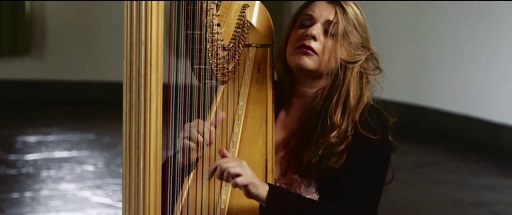
    Above: harpist Bridget Kibbey

    Mlles. O’Connor, Lee, and Kibbey then offered a sublime performance of Claude Debussy’s Sonata for Flute, Viola, and Harp, written in 1915. In an evening filled with marvelous sounds, the opening sustained flute tone of this sonata – taken up by the viola – sent chills thru me at the start of the Pastorale. The blend these three remarkable musicians produced was exceptional. A gentle animation arose – soft and merry – only to subside. Mlles. Lee and O’Connor duet, the viola deep and buzzy. Swirls of notes from the harp – and then from the flute – lingered on the air.

    The Interlude commences with a viola melody underpinned by the harp, After a sprightly interjection, viola and flute play in unison, and the harp tapers to pianissimo.The viola is plucked, the music soft and swift. A percolating motif opens the Finale, like the break of dawn on a sunny day; after a momentary slowing down, the piece ends abruptly.

    Prokofiev’s Sonata in D-major for Violin and Piano, Op. 94a, brought together Mssrs. Dautricourt and Bax for a fabulous performance that sparked a shouting, standing ovation from the crowd. Though the piece was composed in 1943 as a flute sonata, Prokofiev later obliged the great violinist David Oistrakh by creating a violin version, which premiered in 1944.

    Mr. Dautricourt launched the sonata with a high sweet/melancholy song. As the music becomes increasingly animated, an ultra-familiar theme is heard, which will crop up several times along the way. Vibrant, agitated, march-like music ensues; Mr. Bax displays magic tricks of his own, and the movement has a lovely ending.

    In the Scherzo, Mr. Dautricourt’s virtuosity is astounding. A demented, off-kilter dance commences, then slows to a high-lying interlude before resuming. The music, and the playing of it, are thrilling…and then it comes to a sudden halt.

    The audience, who all evening applauded between movements, prompted the violinist to declare “Two more!” before commencing the Andante: a sorrowful song which tends to meander a bit over time, with a hint or two of of jazz thrown in; in the end it becomes high and eerie. 

    The concluding Allegro con brio dances along, with some respite for a poignant interlude before dancing on again. Moodiness briefly takes over, and then a rush to the finish. The applause began before the music stopped: Dautricourt/Bax are a winning team.

    Alessio-600

    Lucille Chung and Alessio Bax (above, photographed by Lisa-Marie Mazzucco) joined together for the evening’s Fokine finale, saluting Diaghilev’s ground-breaking choreographer with a piano-four-hands arrangement of Igor Stravinsky’s Petrushka.

    Despite more intrusions – a loud clang from the balcony, and the sound of something (or someone) falling – Stravinsky’s brilliance prevailed. For 40-minutes, the outstanding Bax/Chung duo sustained the vibrancy of a theatrical presentation; everything felt so alive – with dazzling rhythms and infinite colours – that the entire ballet danced in the mind. For their brilliant and generous playing, the couple were rewarded with hall-filling, joyous applause. What a way to end the season!

    ~ Oberon

  • ABT Studio Company @ The Joyce

    57605248_10157352309708319_238433348500848640_n

    ~ Author: Oberon

    Thursday April 25th, 2019 – The American Ballet Theatre Studio Company has three evenings at The Joyce this week; I went on the second night for a program in which a pair of well-beloved pas de deux book-ended four new (or very recent) works.

    Tarantella, George Balanchine’s Neapolitan duet set to music by Louis Moreau Gottschalk, opened the evening. When the dancers made their entrance, my first thought was that they were too tall for this ballet. They executed all the steps and went thru the motions well enough, but their dancing didn’t sparkle, and the feeling of imminent sex was missing. Perhaps it’s been toned down for the MeToo crowd.

    Neon by Claudia Schreier, having its New York premiere, is set to music by Marc Mellits. The dancers, wearing black belted in teal, look sleek and dashing. At curtain rise, two men stand in a pool of light, one behind the other, their arms in sweeping arcs seeming to depict the hands of a clock. Then the dance erupts to the propulsive Mellits music. The sometimes complex partnering motifs Ms. Schreier demands of her dancers are smoothly executed; this is a choreographer who likes to set challenges for her dancers, then rehearse them astutely so they end up looking well-polished.

    Neon’s first movement ends with all eight dancers in a circle, taking up the rotating arm gestures of the work’s opening moments. A series of departures clears the stage for a men’s trio in which the women eventually join. Sub-groups come and go, enhanced by excellent lighting. The ballet’s third section opens with a striking overheard lift, the couple commencing a luminous pas de deux, wherein Ms. Schreier’s choice of music pays off handsomely. The concluding movement, alive with musical agitation, displays the choreographer’s trademark surety of structure into which a sense of contemporary poetry has been woven.

    As with every Schreier work I have seen to date, Neon ended with the audience whooping up a storm. The choreographers should have been given a bow after their respective ballets tonight, so we could properly show our appreciation.

    Overture by Ethan Stiefel is a ballet that mixes – in perfect measure – gorgeousness with wit. In choosing Beethoven’s Egmont overture, Mr. Stiefel is already halfway down the road to success. And a success it was, in every respect: from the stunning opening tableau with the dancers classically arranged in silhouette, Overture is a pleasure to watch…and to hear. 

    The dancers are prettily costumed in traditional ballet style, but soon we notice contemporary touches – each man has one bare arm. The dancing also mixes old with new: a Romantic atmosphere has been established, and the choreography abounds in classic vocabulary and time-honored partnering themes; but modern modes crop up – a shoulder-shrugging motif and some quirky port de bras keep the ballet vivid. The dancers excelled here, taking their cues from the Beethoven score and bringing touches of tongue-in-cheek charm to their dancing. Overture is a winner on all counts.

    Returning to my seat after the intermission, I found the curtain already up. Soon a lone dancer ambled onto the stage and began chatting us up. The performance of Pliant by Stefanie Batten Bland, he told us, had already started…and we were to be part of it. Dancers moved up and down the aisles, supposedly ‘interviewing’ audience members. Since they did not have hand mikes, the rest of us were not privy to these conversations, so we sat there twiddling our thumbs. 

    Finally the dancers hauled themselves up onto the stage and, to nondescript music, they struck poses and did a bit of dancing (nothing strenuous). While this was going on, I was thinking that I could have been home doing my ironing, whilst one of my fellow writers seated nearby fell deeply asleep. Pliant is exactly the kind of clever, now-for-something-different “ballet” that has dampened my enthusiasm for dance in recent years. 

    Gemma Bond’s Interchangeable Text was a perfect restorative. Some people think Philip Glass has been done to death in the dance world; I disagree, and I’m glad Gemma shares my feeling that it’s ideal music for dancing. Her ballet, impeccably danced by four couples, had the benefit of atmospheric lighting.

    Interchangeable Text opens with a male dancer alone in a pool of light; the music comes from the “romantic” Glass catalog. Soon it begins to pulse, and the dance takes off. Ms. Bond shows off her gift for making classic ballet combinations look fresh. Through ever-shifting patterns, the eight dancers are fully-engaged, the music being their springboard. A chain of pas de deux commences, each couple in turn having their chance to shine. The ballet ends as it began, with the man isolated in the glowing circle.

    The Don QuixoteWedding Suite’ brought the evening to an end; danced with fine technique, lively spirit, and a dash of allure à lEspagnole by Chloe Misseldine and Joseph Markey, this gave the hardcore classical ballet fans in the audience something to cheer about. The two ‘bridesmaid’ solos were woven in, and though they were not named in this evening’s cast list, I believe the dancers were Leah Baylin and Kanon Kimura, who were dancing these solos on the other two nights.

    The ABT Studio Company has always been a place to spot stars of the future: it’s where I first saw David Hallberg dancing! Tonight, one dancer who often caught my eye was Melvin Lawovi, a native of Toulouse. It did not surprise me to read that Mr. Lawovi is the recipient of The David Hallberg Scholarship.

    ~ Oberon

  • @ My Met Score Desk for TRAVIATA

    Domingo hartig ken howard met opera

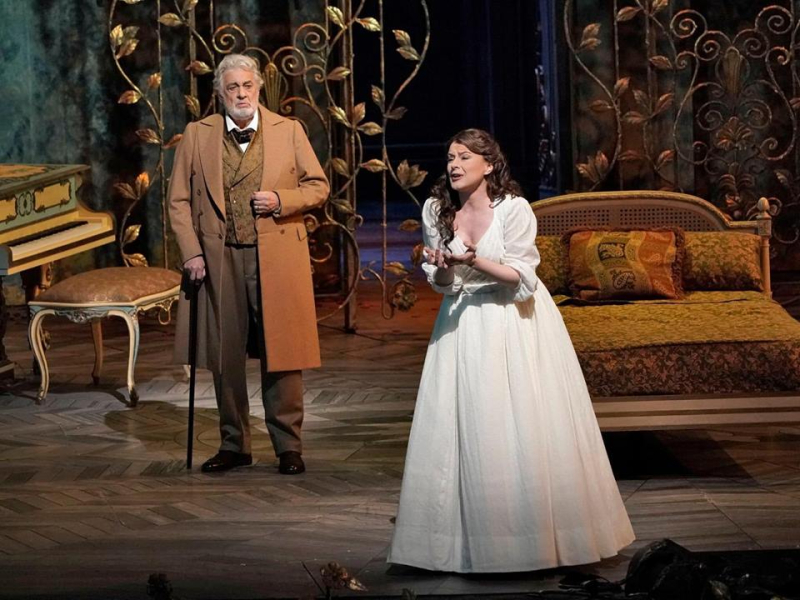
    Above: Placido Domingo and Anita Hartig in LA TRAVIATA; a Ken Howard/Met Opera photo

    ~ Author: Oberon

    Wednesday April 24th, 2019 – TRAVIATA is the opera I’ve seen more than any other. Along with Tosca and Turandot, Violetta is my idea of a test role; I’ll go to see almost anyone who tries it. From A to Z – from Licia Albanese to Teresa Zylis-Gara, from Ainhoa Arteta to Virginia Zeani – I’ve experienced every kind of Violetta: good, bad, or indifferent. Patricia Brooks, Anna Moffo, and Diana Soviero remain among the most memorable in the role; and in recent seasons, Hei-Kyung Hong and Marina Rebeka have struck gold in the part. Inexplicably, I missed seeing Tucci, Sutherland, Lorengar, Scotto, and Sills as the fragile courtesan. But as Lois Kirschenbaum always said: “You can’t go to everything!”…a notion she herself seemed to disprove.

    Knowing I’ll be seeing the Met’s current TRAVIATA (which some have described as Disneyesque) next season, when Lisette Oropesa takes on the role of Violetta at The Met, I took a score desk for tonight; my main reason for being there was to hear Anita Hartig, whose Mimi and Liu in recent season captivated me.

    Ms. Hartig’s voice, with a mixture of enticing vibrato and curiously effective straight tone, was sadly beset by pitch problems tonight (and, from comments I have read, throughout her run here as Violetta). The voice was annoyingly sharp, at times excruciatingly so. The allure of her timbre, her sense of lyricism, and her brightish upper range should have made her a fascinating Violetta; instead, it became something of a trial to listen to her.

    Stephen Costello’s Alfredo has improved considerably since I last heard him in the part, though he too showed some vagaries of pitch during the evening. I sometimes feel that Mr. Costello doesn’t sense the heartbeat of the music, but tonight he sounded like an ardent, passionate young man with reckless streak.

    Hearty applause greeted the entrance of Placido Domingo, the beloved tenor-turned-baritone, as Germont. After sorting out the voice for a bit, he settled in at “È grave il sacrifizio…” and thereafter sang quite beautifully, finding a nice emotional connection to Ms. Hartig’s Violetta in the great duet “Dite alla giovine“, which is the very heart of the opera. Some small chokes or sobs, perhaps to indicate empathy, were unnecessary; but Domingo impressed by singing the phrase “Dio mi guido…dio mi guido…” in his big aria without breaking for breath. 

    In comprimario roles, so important in the opera, the male contingent excelled: Scott Scully (Gastone), Jeongcheol Cha (D’Obigny), Paul Corona (Dr. Grenvil), the characterful singing of Dwayne Croft (Baron Douphol), and even – in the very brief role of Giuseppe – tenor Marco Antonio Jordão, each made an impression.

    Maestro Nicola Luisotti’s TRAVIATA was overall on the fast side, which is fine. He suddenly sped up the final reprise of the Brindisi, which felt exhilarating in a way, and he took “Di Provenza” at a fast clip: maybe that’s what Mr. Domingo wanted. I could have done without that aria’s cabaletta, though.

    The ballet music had gypsy charm at first, and vigor as the matador theme took over. I was recalling the many times I heard it at New York City Opera, when the incredible Esperanza Galán transformed this scene with her Flamenco flair, castanets blazing.

    Listening to Violetta’s touching reply to Alfredo’s public insult, “Alfredo, Alfredo, di questo core…”, I was yet again reminded of one of the most painful things in life: living with remorse.  

    ~ Oberon

  • Lori Belilove ~ Isadora Duncan Dance Company

    Wj180622016-website-featured-image-2

    ~ Author: Oberon

    Thursday March 28th, 2019 – A studio performance by The Isadora Dance Company, founded by and under the artistic direction of Lori Belilove (above), presenting an evening of Duncan works in an intimate salon setting. At the piano, New York City Ballet’s Cameron Grant regaled us with his vibrant playing of works by Chopin, Brahms, Schubert, and Scriabin. 

    The room was packed to the bursting point as Lori greeted us, and then the dancing immediately commenced. A set of Duncan works set to music of Franz Schubert opened the evening, starting with dancers Hayley Rose and Faith Kimberling as light-hearted nymphs Moment Musical. Throughout the evening, the women wore classic Grecian-style tunics, iconic elements of the Duncan repertoire, in various hues. Emily D’Angelo, in pale blue, danced Lullabye, with the evocative Isadora motif of raising the arms heavenward. Becky Allen and Caroline Yamada, in pink with flowers in their hair, gave us Classical Duet, and then Lori Beliliove, in dark blue, spoke to us in Duncan’s striking gestural language in the waltz-like Water Study.

    The music by Frederic of Chopin – waltzes, etudes and mazurkas – came next, all of it immaculately played by Mr. Grant (I was seated just behind his right shoulder, and could follow along in his score). Nikki Poulos was the soloist in the joyous Grande Valse Brillante – a feel-good Isadora work to be savoured for its freshness and vitality. Mlles. Yamada, Allen, Kimberling, and Rose were the attractive ensemble here. Emily D’Angelo’s solo opened Prelude, with Becky Allen and Caroline Yamada transforming it into a trio; this very familiar music was most cordially played by Mr. Grant. Faith Kimberling – always such an appealing dancer to watch – then appeared for a second trio, Line Mazurka, with Becky and Caroline.

    In the solo Ballspiel, Hayley Rose used the space to fine advantage, her dancing responding ideally to the music’s shifting changes of pace. In the moody Slow Mazurka, Mlles. D’Angelo, Rose, Poulos, and Yamada took turns striking stylized poses on the floor – classic Isadora, this – whilst their companions danced. Becky Allen’s dancing of the immortal Minute Waltz was perfectly dovetailed to the playing of Mr. Grant: this was one of the evening’s many highlights.

    Hayley Rose, Nikki Poulos, and Faith Kimberling appeared as woodland sprites in Butterfly Etudes, employing scarves in a space-filling dance. Nikki Poulos gave a poignant performance of Death and The Maiden, her gestures indicating longing and then withdrawal, her expressive face beautifully mirroring the sorrowing music.

    Isadora’s suite of Brahms waltzes entitled The Many Faces of Love opened with Caroline Yamada’s cheerful energy in Greeting, followed by Faith Kimberling’s Frolic, with its folkish flavour, so lovely to watch. Lori Belilove performed Scarf Dance, a lilting, provocative piece, followed by Mlles. Rose, Yamada, and Poulos in the unison trio that opens Cymbals, with its accented music. Ms. Rose then gave Flames of The Heart a Romany flair: fast, passionate, with streaks of wildness. The lyrical, lovely Rose Petals was danced by Emily D’Angelo with cherishing grace; at the end of the dance, she slowly scatters the flowers about the floor.
     
    Two of Isadora Duncan’s great Scriabin solos were given exemplary performances by Lori Belilove: the deep melancholy of Mother, in which she comforts her ghostly children, and the madly passionate, red-clad  Revolutionary, with its silent screams.
     
    As a triumphant finale, honoring Women’s History Month and embracing the power of sisterhood, Nikki Poulos led Mlles. Yamada, Allen, Kimberling, and Rose in the bracing Military Polonaise of Chopin, thrillingly played by Cameron Grant. This made our spirits soar.
     
    ~ Oberon

  • Ballet Hispánico @ The Joyce ~ 2019

    Jared Bogart and Melissa Fernandez (c) Paula Lobo

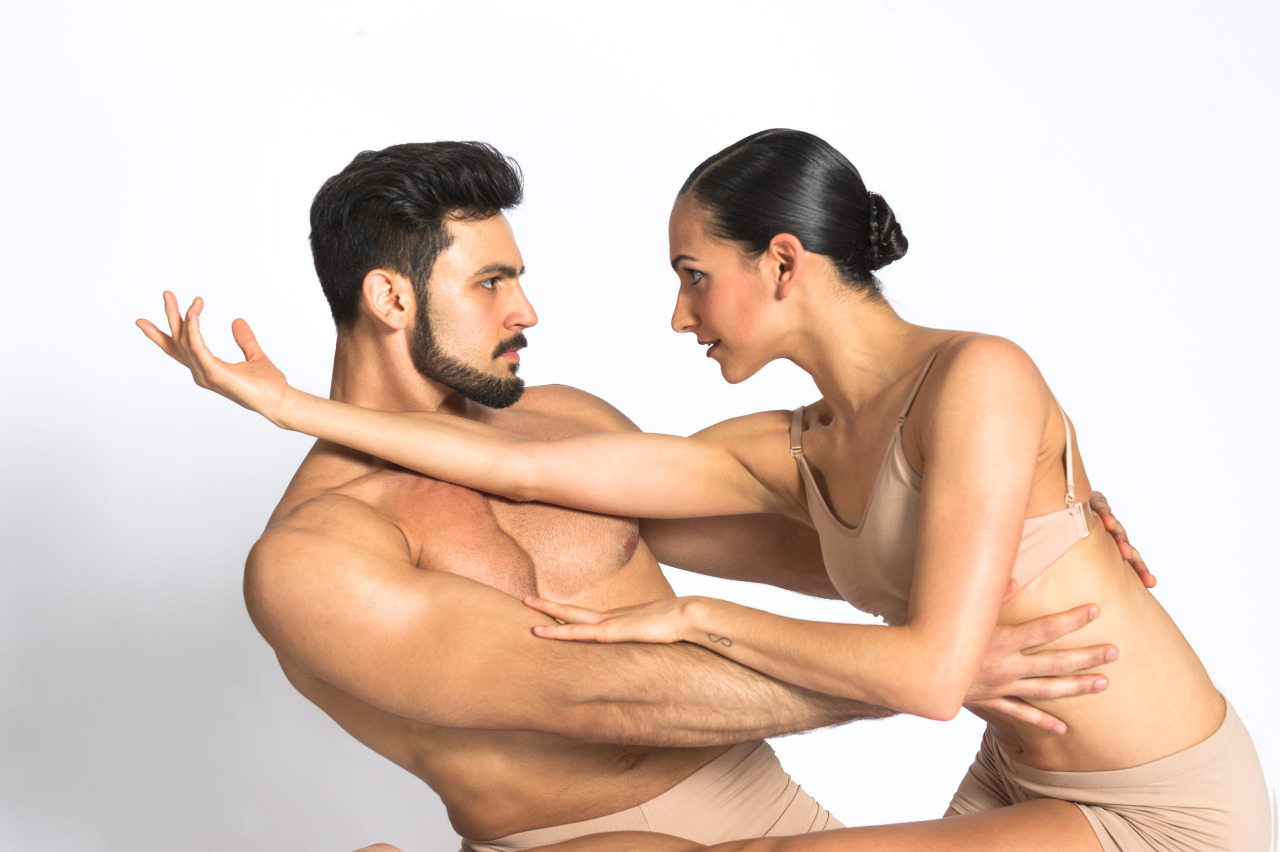
    Above: Jared Bogart and Melissa Verdecia of Ballet Hispánico; photo by Paula Lobo

    ~ Author: Oberon
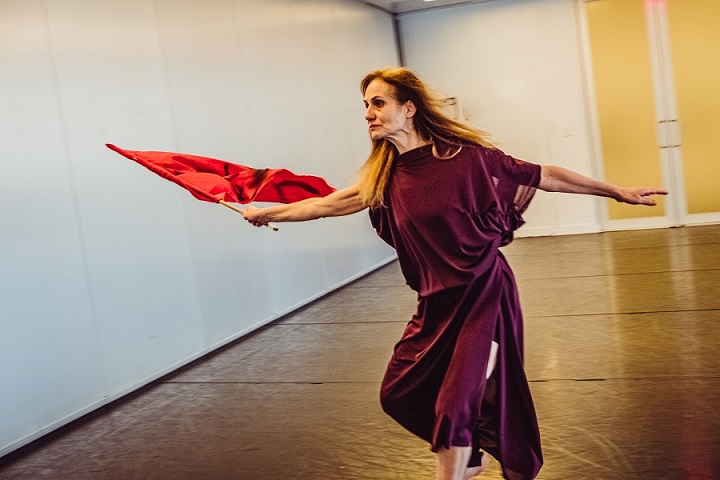
    Wednesday March 27th, 2019 – Ballet Hispánico’s season at The Joyce offered a very strong program: Annabelle Lopez Ochoa has re-set her brilliant masterpiece Sombrerísimo, originally danced by the Company’s men, for an all-female cast; and Asian influences came into the mix with world premieres by Edwaard Liang and Bennyroyce Royon, each of which was highly successful in its own way.
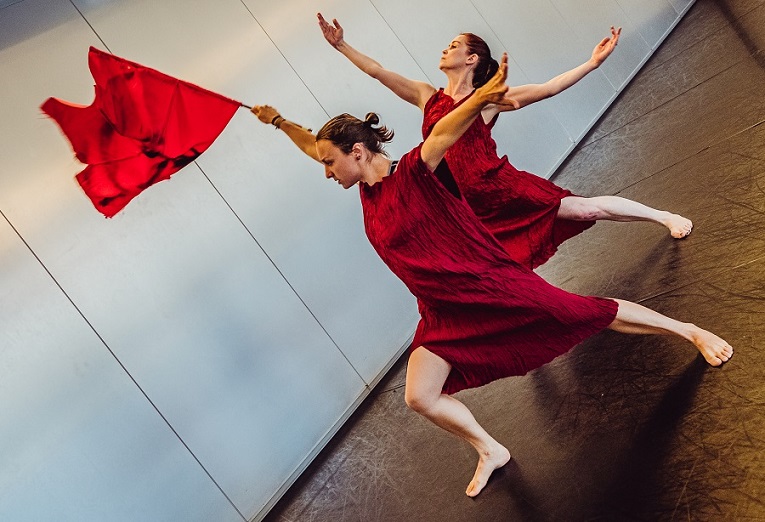
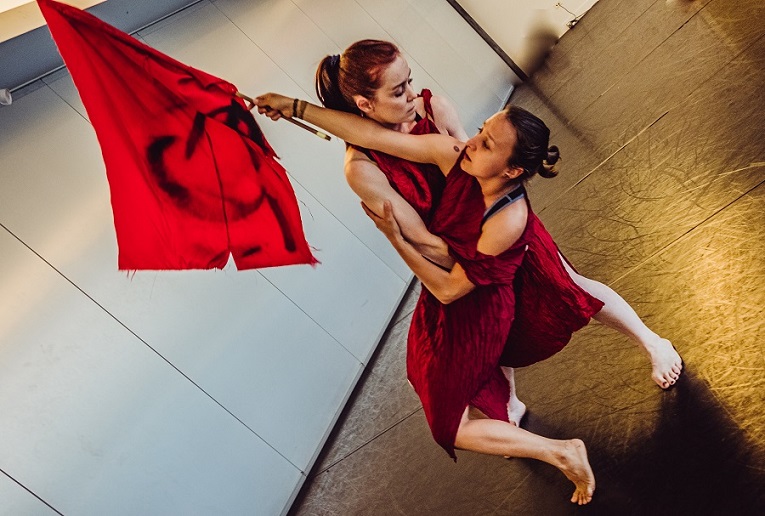
    I last saw perform Ballet Hispánico in 2016, and there have been major changes in their roster of dancers since then. Watching the Company tonight at The Joyce, I realized how bad my eyesight has become over time; it’s much more difficult for me now to single out individual dancers, and to put names to faces.

    Edwaard Liang, formerly a soloist at New York City Ballet and now the Artistic Director of BalletMet in Columbus, Ohio, has established himself among the front rank of international choreographers; his works have been danced by the Bolshoi Ballet, Houston Ballet, Joffrey Ballet, Kirov Ballet, New York City Ballet, Pacific Northwest Ballet, San Francisco Ballet, Shanghai Ballet, Singapore Dance Theatre and Washington Ballet. Tonight, Ballet Hispánico opened their program with Liang’s El Viaje (“The Voyage”).

    Set to the lushly lyrical Ralph Vaughan Williams score Variations on a Theme by Thomas Tallis, and gorgeously lit by Joshua Paul Weckesser, El Viaje resonates with themes of emigration and cultural re-location, particularly of Chinese peoples; it speaks to me personally as I married one such emigrant. 

    Liang

    Above: from El Viaje, photo by Paula Lobo

    Melissa Verdecia, striking in a red dress, is spotlit facing upstage as the curtain rises. Such rushes into a high lift as the ballet begins. The dance has a ritualistic feel, and a strong architectural framework. Partnering motifs, performed by the couples in unison, underscore the sense of community. Solo and duet opportunities abound, in which the Hispánico dancers revel in their power and beauty, buoyed by the marvelous music. At the end, the dancers stand together, facing the sunrise, uncertain but hopeful. 

    Dandara

    Above: Dandara Veiga in El Viaje, photo by Paula Lobo

    Sombrerísimo was commissioned by New York’s City Center for Fall for Dance in 2013; I was present at the premiere, which was a huge hit with the audience. Choreographed for an all-male ensemble by Belgian-Colombian Annabelle Lopez Ochoa to a collage score by Banda Ionica, Macaco el Mono Loco, and Titi Robin, it of course now has a very different feel as danced by six women: Shelby Colona, Jenna Marie, Eila Valls, Gabrielle Sprauve, Dandara Veiga, and Melissa Verdecia. The movement ranges from swift and accented to cool and sexy, and there’s much by-play with the hats that inspired the ballet’s title. Joshua Preston’s lighting is atmospheric, and often produces a shadow-dancing effect. At the end, the girls toss their hats into the air while dozens of other hats fall from above.

    Sombrero

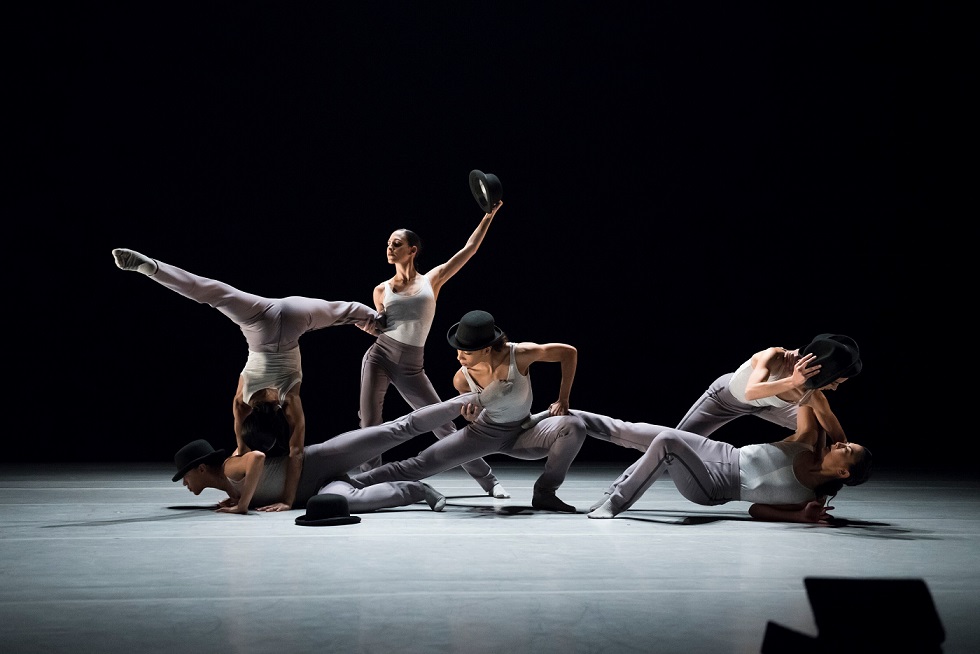
    Above: the Ballet Hispanico women in Sombrerísimo, photo by Paula Lobo

    Bennyroyce Royon’s Homebound/Alaala is a danced memory-book of his homeland in The Philippines. On the other side of the world, in Bato, Leyte, mi amor de loin keeps me in daily touch with that world – a unique on-line love affair that made Benny’s ballet especially meaningful to me.

    Chris B

    Above: Chris Bloom in Homebound/Alaala, photo by Paula Lobo

    Opening with a dazzling stars-scape, the stage is full of boxes which the dancers carry, push, construct, take down, open, and close throughout the ballet. Perhaps they are boxes full of memories: some are marked Fragile. To popular songs of the Tagalog, the people work, relax, joke, flirt, and dream. Unison dance passages emphasize the sense of community, which is so very strong in the Filipino culture.

    Central to Benny’s ballet is a gay ‘cruising’ duet, performed in silence. The two men warily circle one another, unsure of a response. In an overwhelmingly Catholic society, being gay in The Philippines faces barriers to acceptance; President Duterte tends to send mixed messages on the subject. My Brix thankfully has the support of his family, which many young people in the life there do not.

    But, back to Bennyroyce’s ballet: flip flops are lined up as the finale is reached. While I might have wished for more dancing in this piece, I loved the music, the spirit of commitment from the dancers, and feeling the connection to my Tico…a love from afar.

    ~ Oberon