Category: Ballet

  • Lydia Johnson Dance ~ Retrospective – Part IV

    12814347_10153470036923526_6316221232388951043_n

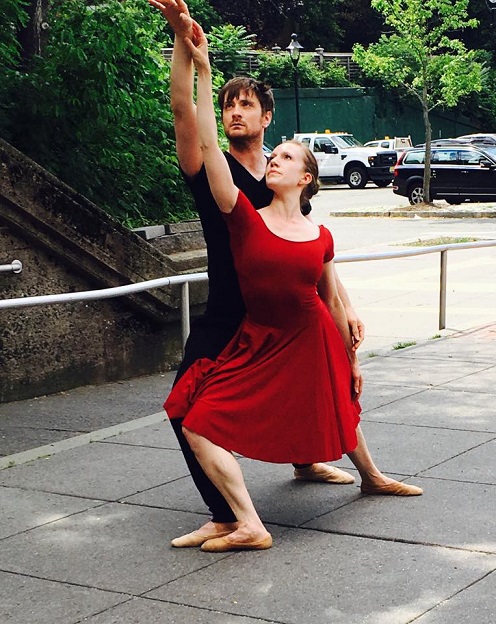
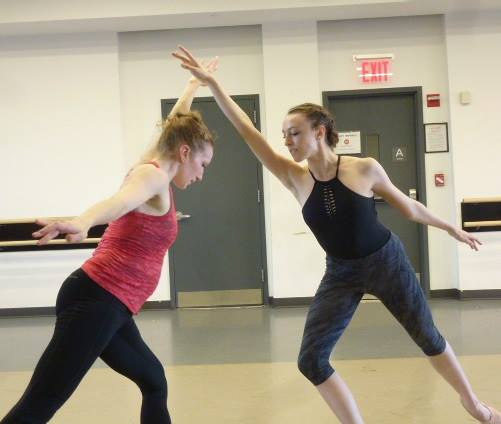
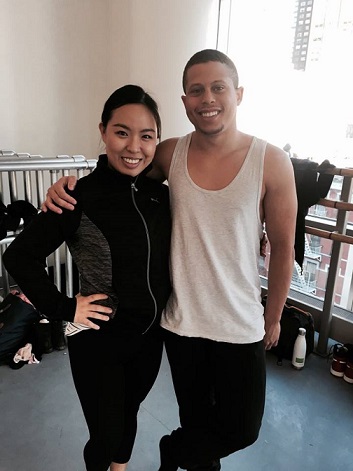
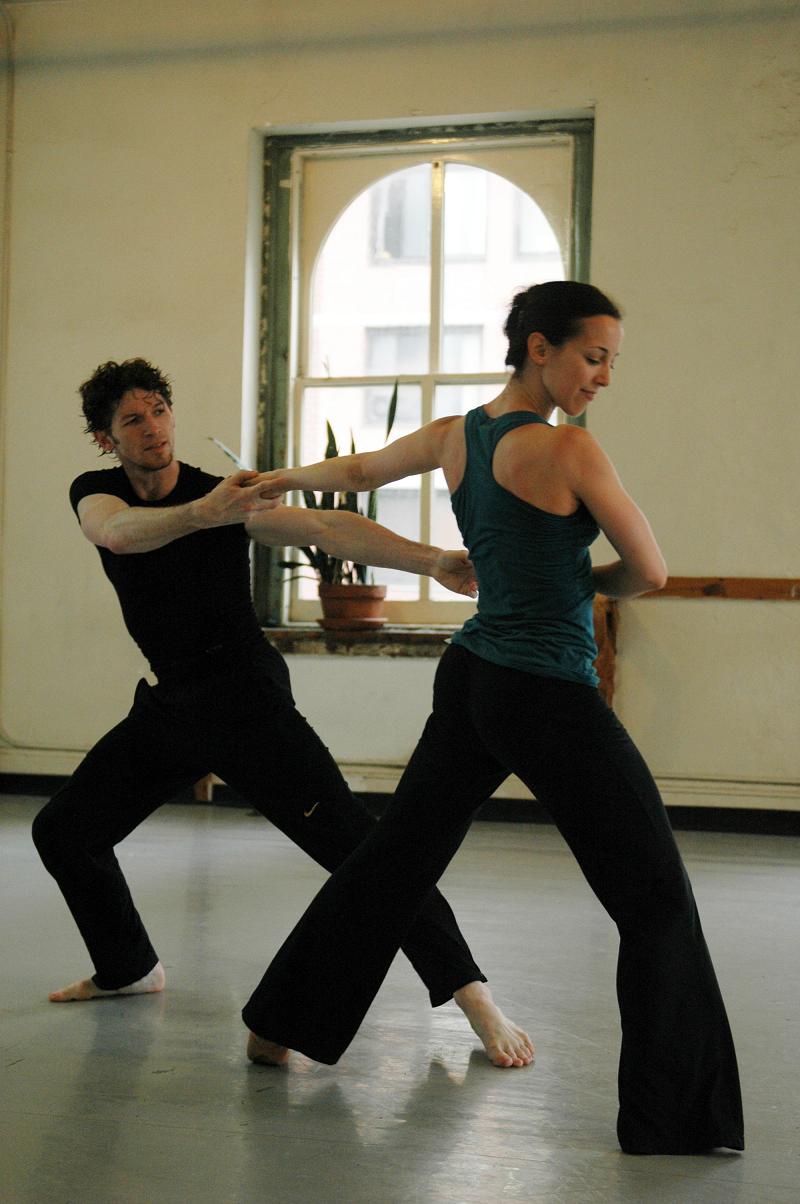
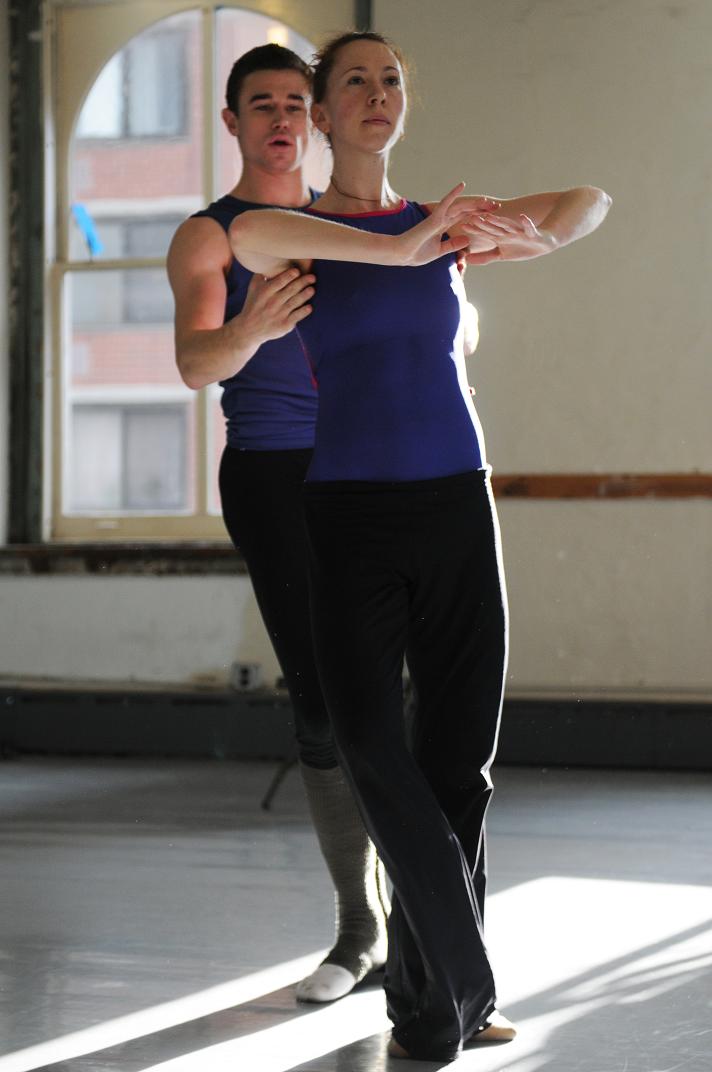
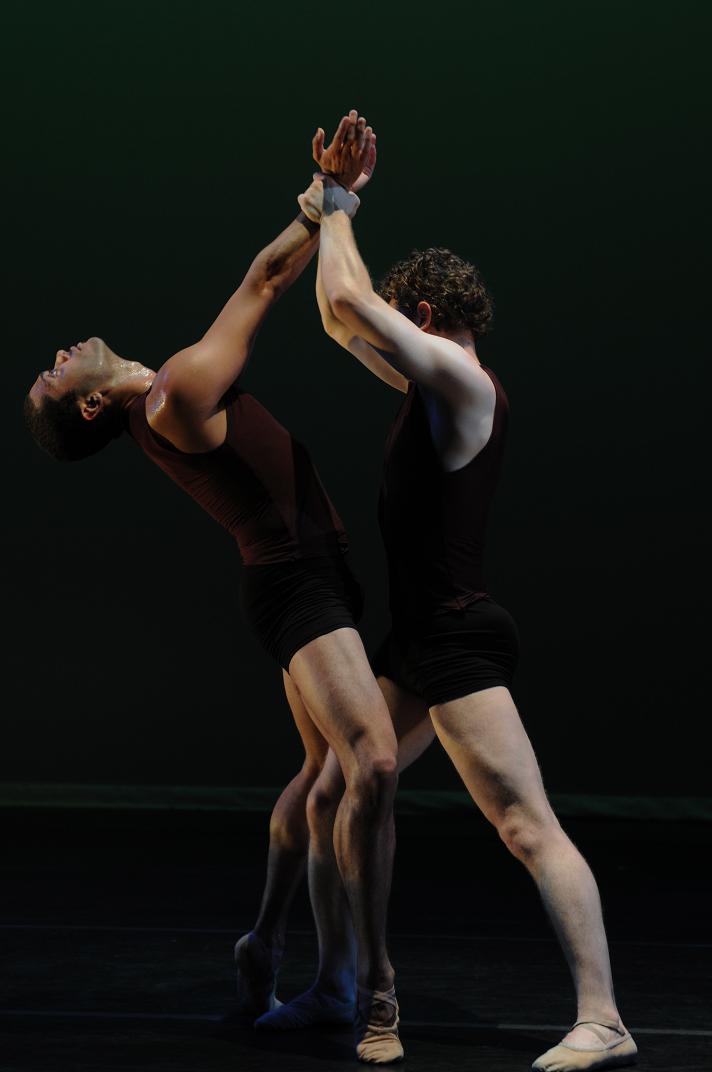
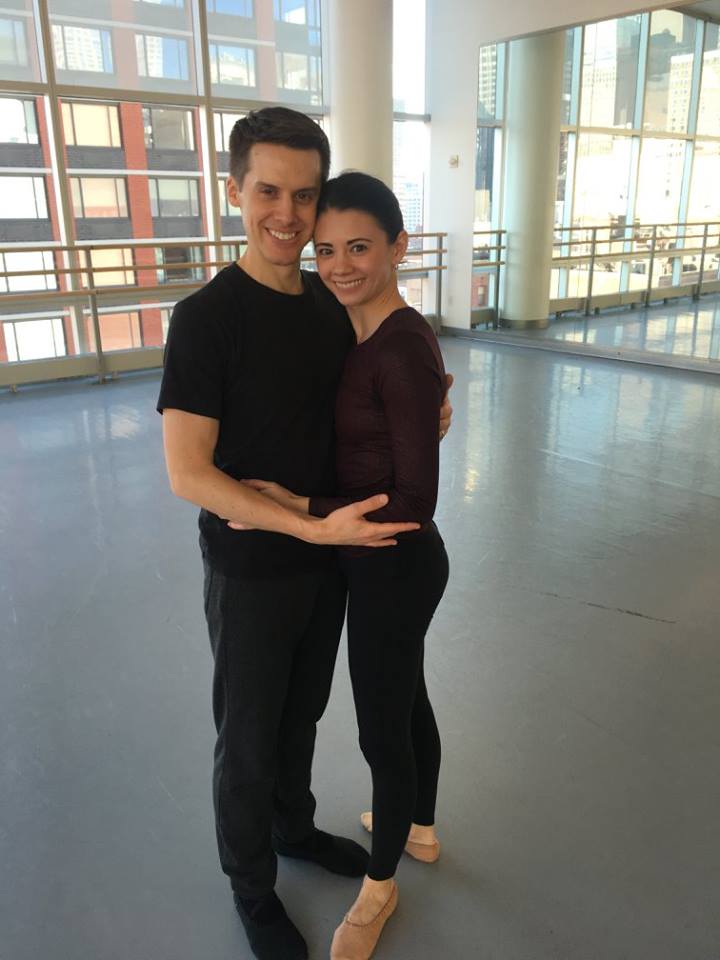
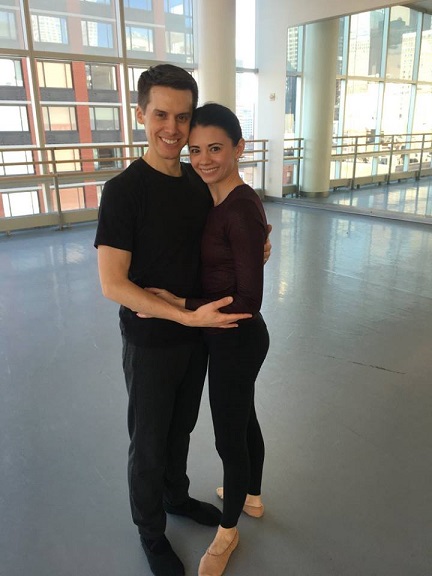
    Above: dancers Blake Hennessy-York and Sarah Pon after a rehearsal

    The 2016 season marked a transitional period for Lydia Johnson Dance: the roster of the Company was evolving. Their annual New York City performances took place in March rather than June.

    1557492_10153524522403526_5171198097577764693_n

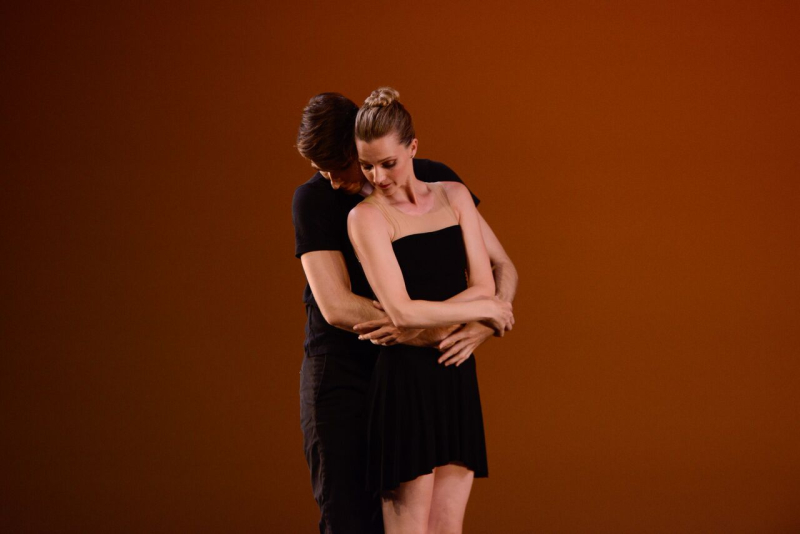
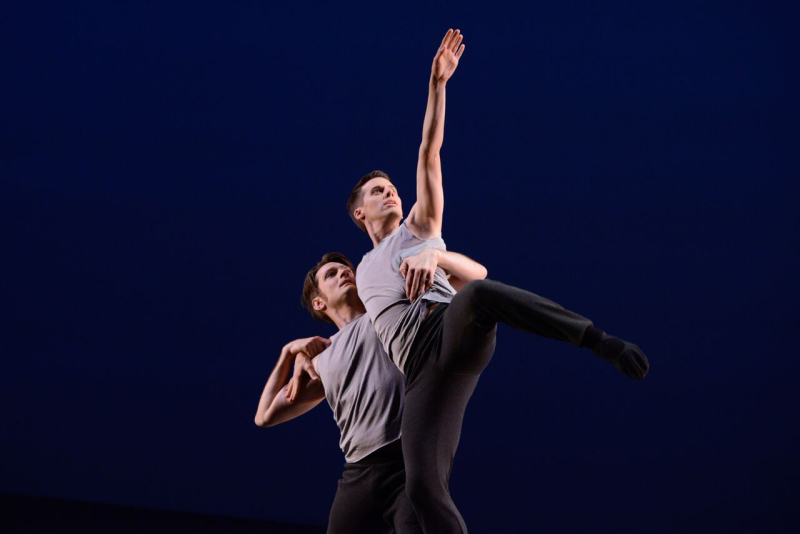
    The program featured repeats NIGHT OF THE FLYING HORSES (above: Laura Di Orio and Brynt Beitman)…

    12919846_10153544176833526_1349054394289731279_n

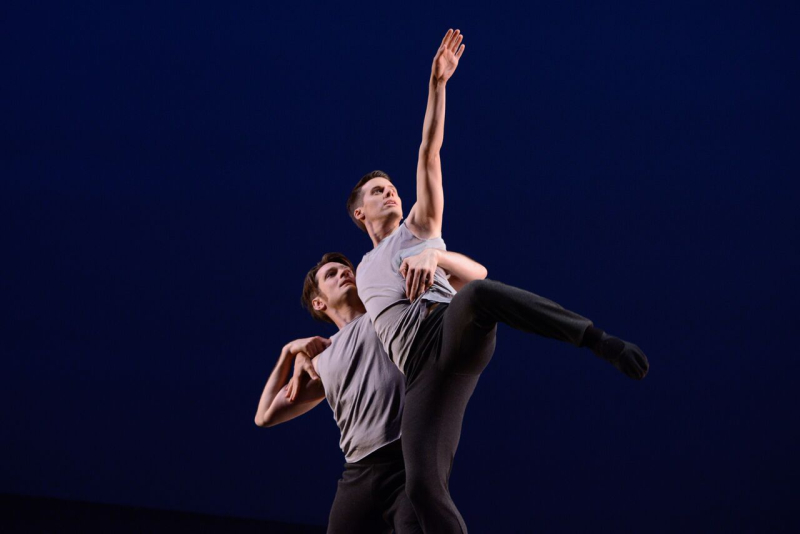
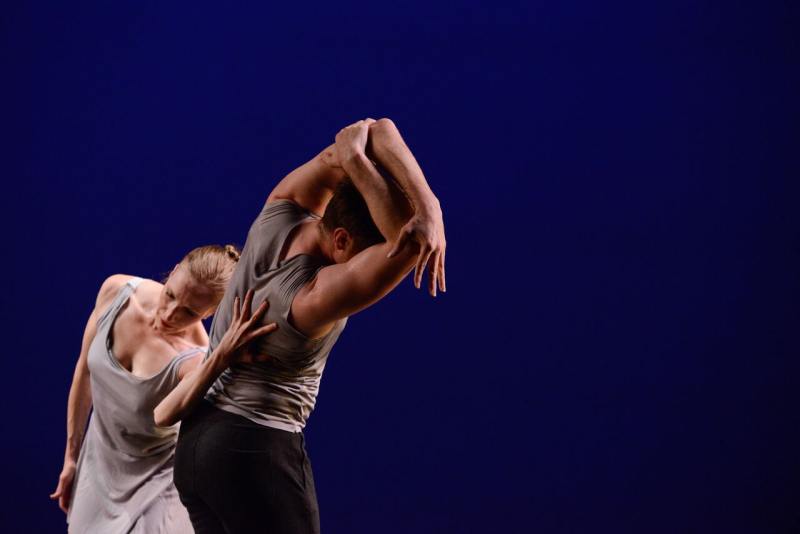
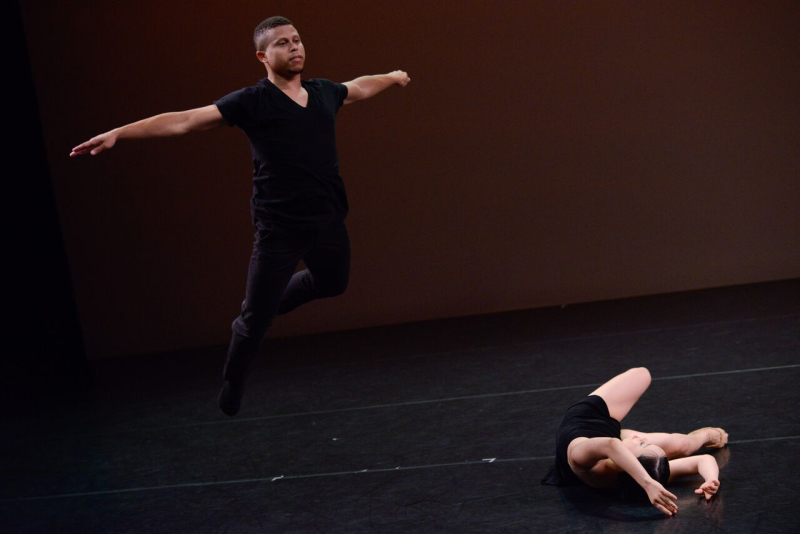
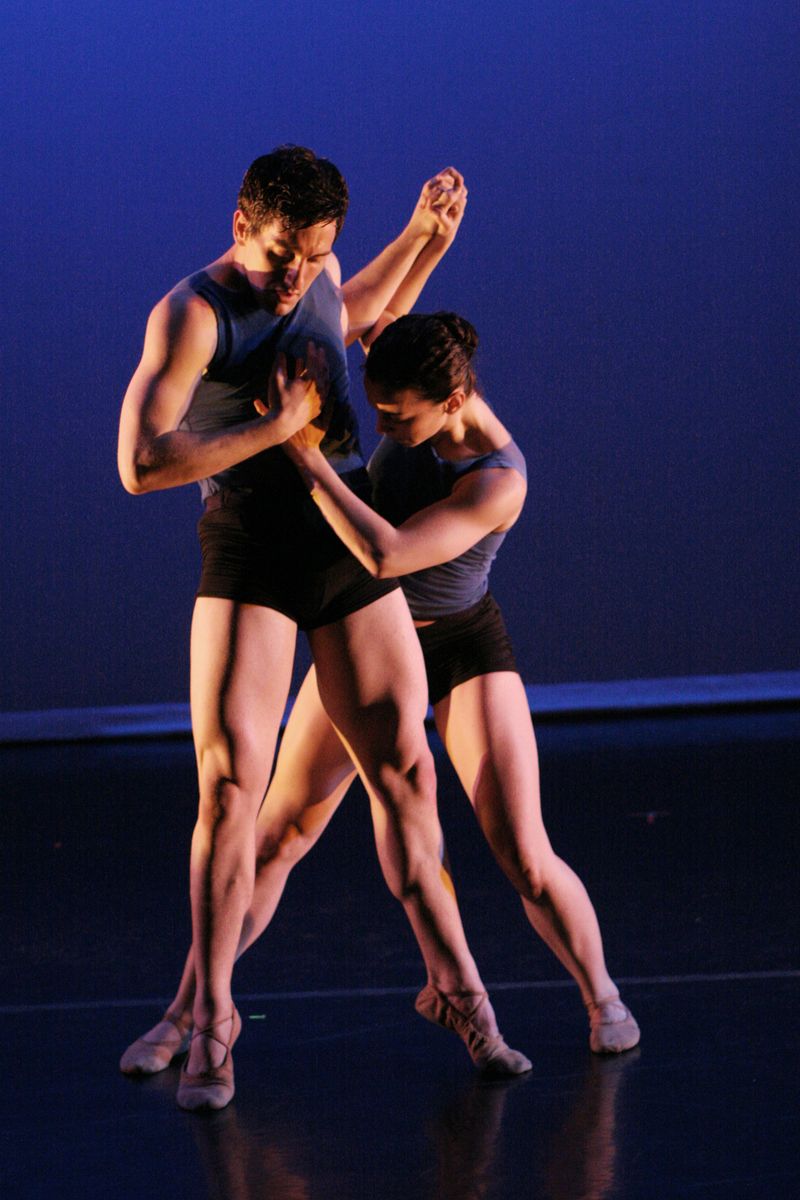
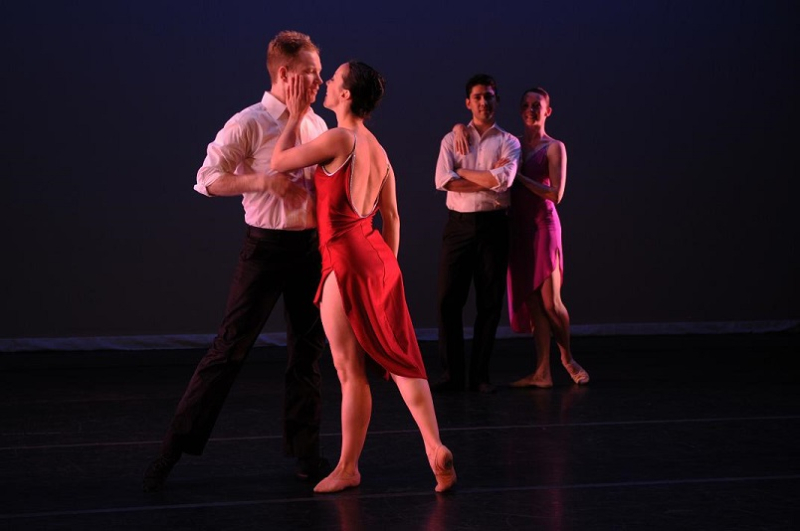
    …and GIVING WAY (with guest artist Riccardo Battaglia and Blake Hennessy-York), plus a new jazz piece, HINDSIGHT, which quickly disappeared from the repertoire. Performance photos from the 2016 performance by Nir Arieli.

    But the sad news was that the 2016 season marked the last performances with the Company of Sarah Pon and Blake Hennessy-York, who had decided to move to California. In their seasons with Lydia Johnson Dance, they made their mark in every ballet they danced in, and for their farewell they encored their outstanding performance in WHAT COUNTS.

    12795446_10153465792028526_1062266244066689420_n

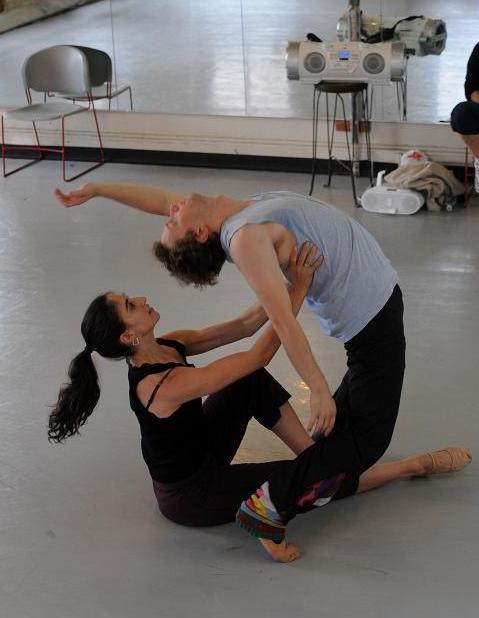
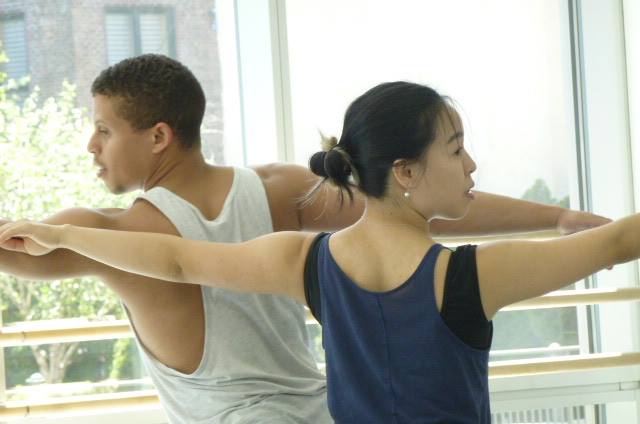
    Above: Blake and Sarah, rehearsing

    13466415_10153719315028526_8461955679054400303_n

    The great outdoors: Brynt Beitman and Laura Di Orio in a pas de deux from NIGHT OF THE FLYING HORSES.

    As rehearsals for 2017 began, the Company roster was much changed from when I first connected with Lydia Johnson Dance. But some surprises were in store:

    14962741_10209103893208493_969022386819372478_n

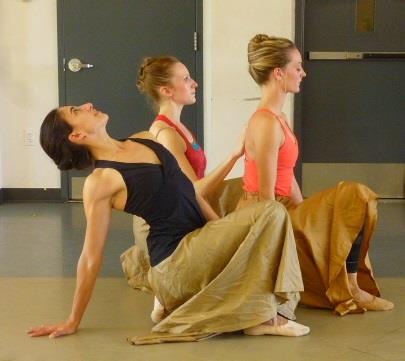
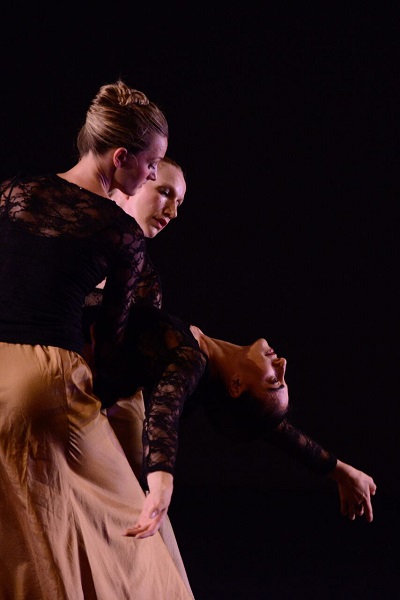
    Lisa Iannacito McBride (in black, rehearsing with Laura Di Orio and Katie Lohiya, above ) returned as a guest artist to dance the role she had created in CROSSINGS BY RIVER…

    304693_10151080994803526_1597229455_n

    …and, incredibly, Blake and Sarah came in from the West Coast to dance the roles made on them in GIVING WAY.

    This was an especially happy time to be part of the extended LJD family, and privy to rehearsals:

    14910487_10209103950009913_2521372843909942851_n

    It was simply great to have Lisa back in the studio…

    13413575_10207863587761632_4515039308130984208_n

    …and Chris Bloom, on a break from Ballet Hispanico, popped in…

    13445820_10207863589441674_4606341104290949215_n

    …to dance with Katie Lohiya.

    13428441_10207863588281645_2737574780800113738_n

    The partnership of Chazz Fenner-McBride and Min Kim developed in leaps and bounds…

    12813995_10153470036548526_39574393432111450_n

    …and they are always in good spirits during rehearsal.

    14333563_10153940627643526_3763133290813763056_n

    Min Kim and Laura DiOrio in company class…

    14953887_10209107714824031_8927625525154349393_n

    …and Laura rehearsing with Dona Wiley, who was just joining the Company.

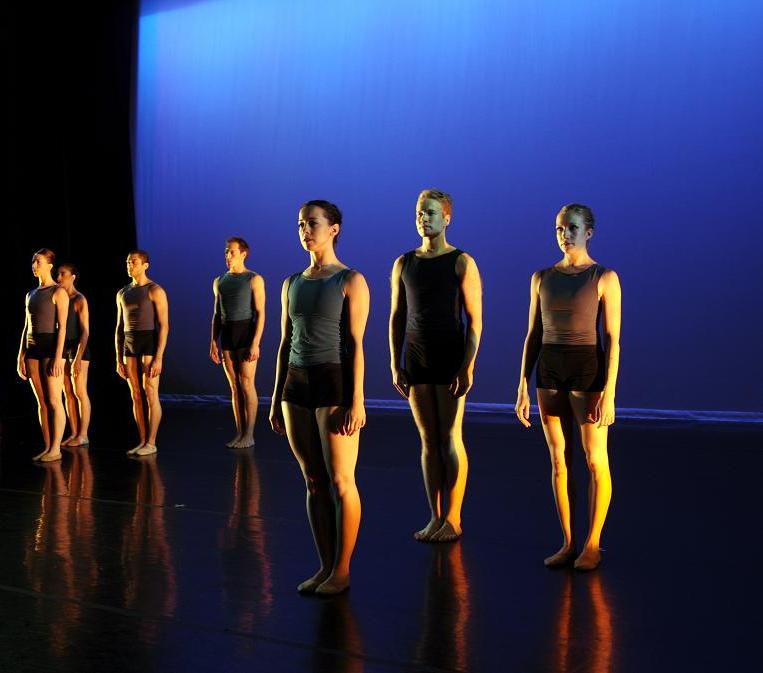
    The performances in June 2017 were given at New York Live Arts in Chelsea. The program was especially strong, with two new ballets: TRIO SONATAS, set to Handel, and This, and my heart beside… one of Lydia’s most personal works, to music by Philip Glass. The all-female CROSSINGS BY RIVER made a welcome return to the repertoire, and a repeat of the previous season’s GIVING WAY was handsomely danced.

    Photos from the 2017 season by Nir Arieli:

    6a00d8341c4e3853ef01bb09a7efef970d-800wi

    CROSSINGS BY RIVER: Min Kim, Lisa Iannacito McBride, Dona Wiley, Laura Di Orio, Katie Lohiya

    6a00d8341c4e3853ef01bb09a7f02e970d-800wi

    CROSSINGS BY RIVER: Katie Lohiya, Laura Di Orio, Lisa Iannacito McBride

    6a00d8341c4e3853ef01b8d28f16d7970c-800wi

    GIVING WAY: Brynt Beitman and Blake Hennessy-York

    6a00d8341c4e3853ef01b7c904cd87970b-800wi

    GIVING WAY: Laura Di Orio and Brynt Beitman

    6a00d8341c4e3853ef01b7c904d207970b-800wi

    TRIO SONATAS: Danny Pigliavento and Katie Lohiya

    6a00d8341c4e3853ef01b7c904d048970b-800wi

    TRIO SONATAS: Chazz Fenner-McBride and Min Kim

    6a00d8341c4e3853ef01b7c904d634970b-800wi

    This, and my heart beside…: Sara Spangler and Katie Lohiya. Sara, a young dancer from Lydia Johnson’s school, made a lovely impression in this ballet

    6a00d8341c4e3853ef01bb09a7f8b9970d-800wi

    This, and my heart beside…: guest artists Mary Beth Hansohn and Peter Chursin were spellbinding

    6a00d8341c4e3853ef01bb09a7f908970d-800wi

    This, and my heart beside…: Danny Pigliavento and Katie Lohiya. Their partnership has a poignant lyricism.

    Among the many photos from the rehearsal period for the 2017 season, this is a particular favorite of mine, though it’s not in the studio:

    13432369_10153714386528526_2192772087061383777_n

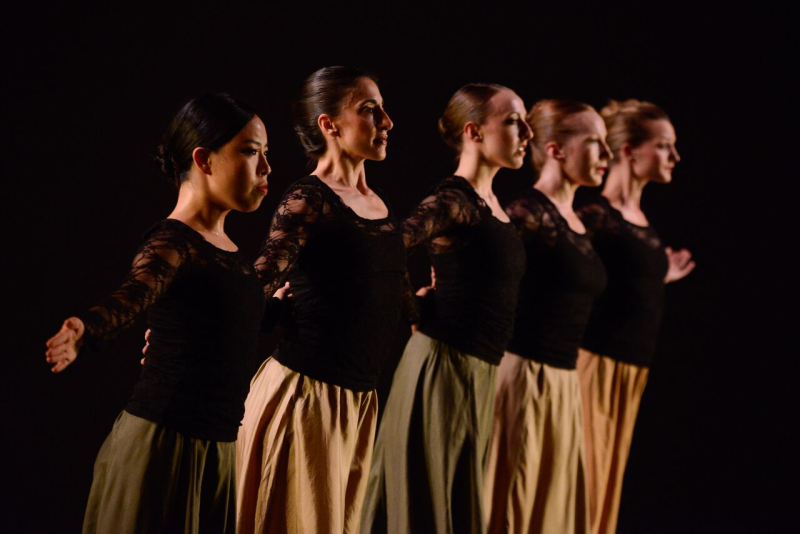
    LJD Women: Min Kim, Lisa Iannacito McBride, Laura Di Orio, and Katie Lohiya

    ~ Oberon

  • Lydia Johnson Dance ~ Retrospective – Part IV

    12814347_10153470036923526_6316221232388951043_n

    Above: dancers Blake Hennessy-York and Sarah Pon after a rehearsal

    The 2016 season marked a transitional period for Lydia Johnson Dance: the roster of the Company was evolving. Their annual New York City performances took place in March rather than June.

    1557492_10153524522403526_5171198097577764693_n

    The program featured repeats NIGHT OF THE FLYING HORSES (above: Laura Di Orio and Brynt Beitman)…

    12919846_10153544176833526_1349054394289731279_n

    …and GIVING WAY (with guest artist Riccardo Battaglia and Blake Hennessy-York), plus a new jazz piece, HINDSIGHT, which quickly disappeared from the repertoire. Performance photos from the 2016 performance by Nir Arieli.

    But the sad news was that the 2016 season marked the last performances with the Company of Sarah Pon and Blake Hennessy-York, who had decided to move to California. In their seasons with Lydia Johnson Dance, they made their mark in every ballet they danced in, and for their farewell they encored their outstanding performance in WHAT COUNTS.

    12795446_10153465792028526_1062266244066689420_n

    Above: Blake and Sarah, rehearsing

    13466415_10153719315028526_8461955679054400303_n

    The great outdoors: Brynt Beitman and Laura Di Orio in a pas de deux from NIGHT OF THE FLYING HORSES.

    As rehearsals for 2017 began, the Company roster was much changed from when I first connected with Lydia Johnson Dance. But some surprises were in store:

    14962741_10209103893208493_969022386819372478_n

    Lisa Iannacito McBride (in black, rehearsing with Laura Di Orio and Katie Lohiya, above ) returned as a guest artist to dance the role she had created in CROSSINGS BY RIVER…

    304693_10151080994803526_1597229455_n

    …and, incredibly, Blake and Sarah came in from the West Coast to dance the roles made on them in GIVING WAY.

    This was an especially happy time to be part of the extended LJD family, and privy to rehearsals:

    14910487_10209103950009913_2521372843909942851_n

    It was simply great to have Lisa back in the studio…

    13413575_10207863587761632_4515039308130984208_n

    …and Chris Bloom, on a break from Ballet Hispanico, popped in…

    13445820_10207863589441674_4606341104290949215_n

    …to dance with Katie Lohiya.

    13428441_10207863588281645_2737574780800113738_n

    The partnership of Chazz Fenner-McBride and Min Kim developed in leaps and bounds…

    12813995_10153470036548526_39574393432111450_n

    …and they are always in good spirits during rehearsal.

    14333563_10153940627643526_3763133290813763056_n

    Min Kim and Laura DiOrio in company class…

    14953887_10209107714824031_8927625525154349393_n

    …and Laura rehearsing with Dona Wiley, who was just joining the Company.

    The performances in June 2017 were given at New York Live Arts in Chelsea. The program was especially strong, with two new ballets: TRIO SONATAS, set to Handel, and This, and my heart beside… one of Lydia’s most personal works, to music by Philip Glass. The all-female CROSSINGS BY RIVER made a welcome return to the repertoire, and a repeat of the previous season’s GIVING WAY was handsomely danced.

    Photos from the 2017 season by Nir Arieli:

    6a00d8341c4e3853ef01bb09a7efef970d-800wi

    CROSSINGS BY RIVER: Min Kim, Lisa Iannacito McBride, Dona Wiley, Laura Di Orio, Katie Lohiya

    6a00d8341c4e3853ef01bb09a7f02e970d-800wi

    CROSSINGS BY RIVER: Katie Lohiya, Laura Di Orio, Lisa Iannacito McBride

    6a00d8341c4e3853ef01b8d28f16d7970c-800wi

    GIVING WAY: Brynt Beitman and Blake Hennessy-York

    6a00d8341c4e3853ef01b7c904cd87970b-800wi

    GIVING WAY: Laura Di Orio and Brynt Beitman

    6a00d8341c4e3853ef01b7c904d207970b-800wi

    TRIO SONATAS: Danny Pigliavento and Katie Lohiya

    6a00d8341c4e3853ef01b7c904d048970b-800wi

    TRIO SONATAS: Chazz Fenner-McBride and Min Kim

    6a00d8341c4e3853ef01b7c904d634970b-800wi

    This, and my heart beside…: Sara Spangler and Katie Lohiya. Sara, a young dancer from Lydia Johnson’s school, made a lovely impression in this ballet

    6a00d8341c4e3853ef01bb09a7f8b9970d-800wi

    This, and my heart beside…: guest artists Mary Beth Hansohn and Peter Chursin were spellbinding

    6a00d8341c4e3853ef01bb09a7f908970d-800wi

    This, and my heart beside…: Danny Pigliavento and Katie Lohiya. Their partnership has a poignant lyricism.

    Among the many photos from the rehearsal period for the 2017 season, this is a particular favorite of mine, though it’s not in the studio:

    13432369_10153714386528526_2192772087061383777_n

    LJD Women: Min Kim, Lisa Iannacito McBride, Laura Di Orio, and Katie Lohiya

    ~ Oberon

  • Oberlin College Choir and Orchestra @ Carnegie Hall

    Oberlin-in-nyc-v3

    ~ Author: Brad S Ross

    Saturday January 19th, 2019 – The Oberlin Conservatory of Music, visiting from Ohio, began 2019 on the proverbial high-note Saturday night at Carnegie Hall’s Isaac Stern Auditorium.  The talents of students and educators alike were well-showcased in a concert bifurcated between the Oberlin College Choir and the Oberlin Orchestra.  Following brief opening remarks by Oberlin College President Twillie Ambar, things were swiftly under way in what would turn out to be a tremendously satisfying program.
    Thumbnail_RS80080_LK2_9234 copy copy

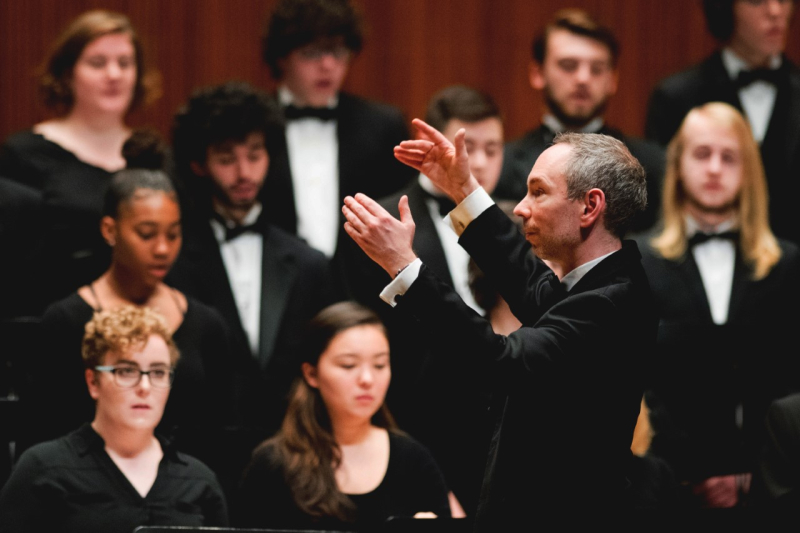
    For the first half of the concert, the Ronald O. Perelman Stage belonged to the Oberlin College Choir under the baton of Gregory Ristow (photo, above).  They began with Triptych, a mostly tonal choral composition written in 2005 by the British-American composer Tarik O’Regan.  Though originally cast for chorus and orchestra (and what a sight to behold that would’ve been!), it was presented here in a more manageable arrangement for percussion and chorus by the percussionist and composer Dave Alcorn.  It featured an eclectic text culled from such myriad sources as William Blake, John Milton, William Wordsworth, Muhammad Rajab al-Bayoumi, and the Book of Psalms, among others.

    The first movement, “Threnody,” opened on a gripping a cappella statement set to an epigram by William Penn, “When death takes off the mask, we will know one another.”  A driving percussion line soon entered and pushed the work forward as languid, otherworldly phrases meandered in call and answer throughout the chorus.  The effect was almost primal.

    Following a short percussion interlude, the second movement “As We Remember Them” opened on a haunting soprano solo set to the words of the rabbi Roland B. Gittelsohn, “In the rising of the sun and at its going down, we remember them.”  This was performed with remarkable precision by Risa Beddie, whose voice would be featured occasionally throughout the remainder of the piece.  This elegy seemed in many ways the heart and soul of O’Regan’s Triptych, however, as the combined, yet subdued forces of Beddie, chorus, and percussion achieved a hypnotic beauty.

    Another short interlude followed and the work was propelled energetically forward into the third and final movement, “From Heaven Distilled a Clemency.” O’Regan’s choral writing here was its most exuberant as the choir toned the words of the great Persian poet Rumi, “So why then should I be afraid?  I shall die once again to rise an angel blest.”  Beddie’s haunting soprano then returned for one last quiet utterance before the work rose to its climactic finale.  Every force was well-utilized in Triptych and it made for excellent way to put the evening into motion.

    Next up was Igor Stravinsky’s ballet Les noces (“The Wedding”) for four pianists, percussion, vocal soloists, and chorus from 1923.  Like O’Regan’s Triptych, Les noces was also originally conceived for a much larger ensemble, but Stravinsky himself made the decision to scale back its herculean forces to a mere four solo vocalists, chorus, percussion, and four pianos.  Indeed, even with this “reduced” compliment, the sight of so many musicians, instruments, and four Steinway pianos gave the stage impressively cluttered look.  Its libretto, penned by the composer himself from traditional Russian wedding songs, describes the marriage rite of a young bride and groom.

    Les noces begins frighteningly on a solo soprano line accompanied by piano, cymbals, and xylophone effecting somber bell tones.  Other unholy voices soon joined the proceedings as the mother and bridesmaids console the young bride-to-be.  While the libretto features a deceptively melodramatic narrative, musically Stravinsky seemed to be describing a wedding straight from the gates of hell.  There was no hint of saccharine or sentiment to be found amongst the composer’s numerous parallel lines, violent dynamic shifts, and strikingly dissonant harmonies—so much the better.

    Les noces followed the marriage of its protagonists right up to the wedding night and showcased exhilarating performances by the soprano Katherine Lerner Lee, mezzo-soprano Perri Di Christina, tenor Nicholas Music, baritone Kyle Miller, and bass Evan Tiapula as various members of the ceremony.  Its final eerie bell tone—open octaves throughout the instrumental accompaniments—reverberated for what seemed an eternity before Ristow finally lowered his baton.  This was an electrifying way to conclude the first half of the program.

    Thumbnail_RS16976_IMG_7691 copy copy

    After intermission came a high-point in what had already proved to be an exhilarating evening.  The conductor Raphael Jiménez (photo, above) and the Oberlin Orchestra next took the stage for the New York premiere of Elizabeth Ogonek’s All These Lighted Things—a set, as the work’s subtitle notes, of “three little dances for orchestra.”  It was originally commissioned and premiered by the Chicago Symphony Orchestra in 2017 while Ogonek served as the ensemble’s composer-in-residence.  Ogonek, who teaches composition at Oberlin, has quickly earned a reputation as one of the finest young composers in the United States.  Based on All These Lighted Things, I would be hard-pressed to disagree.

    The first movement began with quiet textures emanating from the percussion and high strings.  A broad sonic spectrum swiftly unfolded from Ogonek’s musical prism, with such varied colors as muted brass, dissonant woodwind runs, and violent strikes in the strings, among many other extended techniques I couldn’t quite decipher from a single hearing.  The etherial sound of a rainstick opened and continued to be featured throughout the second movement, soon joined by a full high-voice descending glissandi and a stirring violin solo by concertmaster Jerry Zheyang Xiong.

    Animated pizzicato runs in the bass and celli signaled the start of the third movement.  Aided with light percussion, swift woodwind runs allude to a growing musical menace.  A sumptuous flute line emerged with building woodwind accomplices.  Finally, a great, full-ensemble crescendo swelled to a tremendous crash and a few fleeting quiet percussion voices sang the piece to its silent conclusion.

    Like many contemporary pieces, All These Lighted Things seemed to be more about shifting sonic textures than any strict adherence to musical form.  This will no doubt exhaust some listeners who long for structure, but they should at least take comfort that none of Ogonek’s sonorities ever outstay their welcome, as modern compositions so often do.  I, for one, found it a lively and vibrant piece—one that will surely warrant many further hearings.

    The evening concluded with a performance of Claude Debussy’s La Mer.  Its performance was solid, if not quite on par with what New York audiences have been spoiled to expect of late (the New York Philharmonic programmed it twice last year alone, both times to tremendous effect).  Apart from the occasionally muddy entrance and one conspicuously fracked trumpet note, the Oberlin Orchestra played with delicate grace, offering a decidedly above-average rendition of Debussy’s great orchestral tome.  For his part, Jiménez’s interpretation was lingering and dynamic, never rushing its dramatic moments.  This worked well in its first and second movements where Debussy’s colors should be allowed to frolic and breathe freely.  By the third movement, however, this approach seemed a touch overwrought and unfortunately robbed some essential energy from the grand brass chords that announce the work’s finale.

    But I quibble.  A critic knows he’s heard something truly good when there are only minor details he would change.  All in all, this was a successful finale to an indisputably successful concert program—one that will surely signal a prosperous new year for the Oberlin Conservatory’s faculty and students.  If the sustained standing ovation that night was any indication, New York audiences will welcome them back as often as they’ll come.

    ~ Brad S Ross
  • Lydia Johnson Dance ~ Retrospective

    73230_1552248160159_5128356_n

    Above: the studio at Battery Dance where Lydia Johnson Dance rehearsed during the first years of our association; photo by Kokyat

    It was on a March evening in 2009 that I first encountered the choreography of Lydia Johnson; a press invitation sent to me by publicist Audrey Ross had piqued my curiosity enough to prompt me to go – with my fellow blogger Evan Namerow – to a studio showing by Lydia Johnson Dance.
    What I discovered that night was choreography that successfully melded elements of classical ballet and contemporary dance, that had a keen connection to the music, and that – rarest of all – had an emotional resonance that I had found in only a handful of works by current choreographers of the day.

    Tucker Jessica Lemberger 2009

    Above: Tucker Ty Davis and Jessica Sand; photo by Julie Lemberger. Tucker and Jessica were among the dancers who appeared in that first-encounter studio event

    I can’t remember now the sequence of correspondence between Lydia and myself that led to my being invited, along with my photographer/friend Kokyat, to a rehearsal of Lydia’s company down at the Battery Dance studios. At that time, Kokyat was a dance photographer in the making; he became a master over time. In the ensuing months, he and I spent many hours in that studio – so steeped in the very essence of dance – and we became friends with all the dancers…and with Lydia herself. 

    Here are some of Kokyat’s photos from those happy days at Battery Dance:

    Eric Jessica Kokyat 2009

    Eric Vlach, Jessica Sand

    Lisa Jesse Kokyat 2009

    Lisa Iannacito and Jesse Marks

    Jessica Kokyat 2009

    Jessica Sand

    6a00d8341c4e3853ef0133ecd6ec07970b-800wi

    Robert Robinson, Jessica Sand

    6a00d8341c4e3853ef0147e1b60ffe970b-800wi

    Jessica Sand

    6a00d8341c4e3853ef0148c7bf390a970c-800wi

    Lisa Iannacito

    6a00d8341c4e3853ef0162fda213af970d-800wi

    Laura Di Orio

    6a00d8341c4e3853ef0120a64d52f2970b

    Kerry Shea

    6a00d8341c4e3853ef014e88a83cc7970d-800wi

    Sean Patrick Mahoney, a guest artist from the Paul Taylor Dance Company, with Jessica Sand

    6a00d8341c4e3853ef0147e4276da9970b-800wi

    Sarah Pon and Blake Hennessy-York, a young married couple who joined Lydia Johnson Dance and made it their artistic home

    6a00d8341c4e3853ef01538eb4b773970b-800wi

    Guest artist Sean Patrick Mahoney

    6a00d8341c4e3853ef01676158447c970b-800wi

    Guest artist Max van der Sterre with Kerry Shea

    72759_1552247120133_3137225_n

    An early rehearsal of SUMMER HOUSE

    6a00d8341c4e3853ef016300629303970d

    Laura Di Orio, Kaitlin Accetta

    6a00d8341c4e3853ef01543283c6af970c-800wi

    Blake Hennessy-York and the ensemble

    6a00d8341c4e3853ef015438240b35970c-800wi

    A rehearsal of CROSSINGS BY RIVER

    6a00d8341c4e3853ef0168e6597cd9970c-800wi

    Guest artist Max van der Sterre

    Robert Robinson's bday Kokyat 2010

    Celebrating dancer Robert Robinson’s birthday

    Lydia Kokyat 2009

    Lydia Johnson

    Now for some of Kokyat’s onstage images of the Lydia Johnson Dance in works we saw in the first two or three seasons of our affiliation:

    6a00d8341c4e3853ef01538f4a9494970b-800wi

    UNTITLED BACH (Shannon Maynor, Eric Vlach)

    6a00d8341c4e3853ef0154331d97d4970c-800wi

    SUMMER HOUSE (Laura Di Orio, Robert Robinson)

    6a00d8341c4e3853ef01538f4a9c8e970b-800wi

    Dancer Justin Lynch

    DREAM SEQUENCE Jesse Kokyat 2010

    DREAM SEQUENCE (Jesse Marks, center)

    DUSK Kokyat 2009

    DUSK

    END OF THE MOVIE Erica Schweer Laurs Kokyat 2010

    END OF THE MOVIE (Erica Schweer, Laura Di Orio)

    Eric Jessica DUSK Kokyat 2009

    DUSK (Eric Vlach, Jessica Sand)

    James Laura UNTITLED BACH 2010

    UNTITLED BACH (James Hernandez, Laura Di Orio)

    Jessica IN CONVERSATION Kokyat 2010

    IN CONVERSATION (Jessica Sand)

    Robert Jesse UNTITLED BACH 2010

    UNTITLED BACH (Robert Robinson, Jesse Marks)

    LAMENT Kokyat 2009

    LAMENT

    Dream

    DREAM SEQUENCE (Eric Vlach, Jessica Sand, James Hernandez, Laura Barbee).

    J-M Kerry IN COMVERSATION Kokyat 2010

    IN CONVERSATION (John-Mark Owen, Kerry Shea)

    And some studio shots from Oberon:

    69055_1553260665471_8178068_n

    Robert Robinson, Jessica Sand

    292565_3500004772857_625378975_n

    SUMMER HOUSE rehearsal: Lisa and Jessica

    67745_1552247600145_8139061_n

    SUMMER HOUSE rehearsal: Robert, Laura

    394206_3930916585383_1515812787_n

    Lauren Perry

    381042_3930918785438_470944862_n

    Laura Di Orio

    By now, the dancers were used to having Kokyat and I breathing down their necks, so to speak…so much so, that Kokyat was permitted to photograph the Company’s 2011 performance in New York City from backstage. 

    This first installment covers roughly 2009-2011, with a couple of 2012 images thrown in. I’ll continue this retrospective in a few days – picking up where I left off – when I have had time to gather photos for a second gallery.

    ~ Oberon

  • Catherine Gallant’s THE SECRET

    6a00d8341c4e3853ef01b7c86c90a3970b

    Above: The Secret in rehearsal; the dancers are Janete Gondim and Eleanor Bunker

    Catherine Gallant’s The Secret, one of my favorite danceworks experienced in recent seasons, may be seen on Vimeo here.

    Seeing The Secret in 2016 prompted this response from me:

    “The evening could not have a had a more propitious start than Ms. Gallant’s The Secret; like white-clad angels, the two dancers – Janete Gondim and Eleanor Bunker – continually conveyed the sense of wonder which permeates this dancework like a delicious fragrance.

    With Ygor Shetsov at the piano, playing the Scriabin Poeme in F-sharp major, the two dancers moved about the space with a sort of quiet urgency, pausing to marvel at the treasure they had found, and which they were holding in the palms of their hands. The choreography flows gorgeously on the music: simple moves which take on a poetic resonance in the personalities of the two women; Janete and Eleanor were captivating to watch, and The Secret joins a short list of danceworks I’ve encountered in the past 20 years that ideally meld music, mood, and movement, leaving a lasting impression.”

    ~ Oberon

  • Catherine Gallant’s THE SECRET

    6a00d8341c4e3853ef01b7c86c90a3970b

    Above: The Secret in rehearsal; the dancers are Janete Gondim and Eleanor Bunker

    Catherine Gallant’s The Secret, one of my favorite danceworks experienced in recent seasons, may be seen on Vimeo here.

    Seeing The Secret in 2016 prompted this response from me:

    “The evening could not have a had a more propitious start than Ms. Gallant’s The Secret; like white-clad angels, the two dancers – Janete Gondim and Eleanor Bunker – continually conveyed the sense of wonder which permeates this dancework like a delicious fragrance.

    With Ygor Shetsov at the piano, playing the Scriabin Poeme in F-sharp major, the two dancers moved about the space with a sort of quiet urgency, pausing to marvel at the treasure they had found, and which they were holding in the palms of their hands. The choreography flows gorgeously on the music: simple moves which take on a poetic resonance in the personalities of the two women; Janete and Eleanor were captivating to watch, and The Secret joins a short list of danceworks I’ve encountered in the past 20 years that ideally meld music, mood, and movement, leaving a lasting impression.”

    ~ Oberon

  • Emmanuelle Haïm @ The NY Philharmonic

    Haim1hdl17105

    Above: Emmanuelle Haïm

    ~ Author: Oberon

    Wednesday November 21st, 2018 – Music of Handel and Rameau was on this evening’s bill as Baroque specialist Emmanuelle Haïm made her New York Philharmonic debut. Neither composer’s name is really associated with the orchestra (MESSIAH of course being the exception), but their music was most welcome tonight, following in the wake of a pair of less-than-enjoyable ‘contemporary’ works we’d just recently heard at Carnegie Hall.

    From first note to last, the music offered this evening – and the Philharmonic’s playing of it – seemed truly fresh and vital. And Ms. Haïm is so engaging to watch: her deep affection for the music is evident at every turn, and her conducting has an embracing style which drew superb playing from the orchestra. On Thanksgiving eve, we wondered how big of a crowd might turn out, but the house was substantially full. It was the most attentive audience of the classical music season to date – always a good sign.

    It was fun to enter the auditorium this evening and see two harpsichords parked on the Geffen Hall stage, one for Ms. Haïm, the other for Paolo Bordignon. Handel’s Concerto Grosso, Op. 6, No. 1, calls for a relatively small ensemble of musicians, with Sheryl Staples as concertmaster.

    From her first downbeat, Ms. Haïm’s conducting had a choreographic feeling. Swaying with the music, her gestures resonated like balletic port de bras. One could imagine her, gorgeously gowned and bejeweled, leading the dancing at Versailles in another lifetime. What a marvelous presence!

    In the Concerto Grosso, violinists Sheryl Staples and Qian Qian Li along with cellist Carter Brey, form a musical sub-set, playing trio motifs with elegance and verve.  The Allegro movements sparkled, the Adagio soothed and charmed, the exhilarating finale was full of life.

    58216

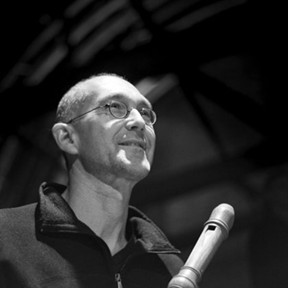
    Two of Handel’s Water Music suites were performed. In the first, No. 3 in G-minor, the tall and slender Sébastien Marq (above) brought his polished recorder tone and technique to the mix. Switching from alto to soprano after the suite’s first movement, Mssr. Marq piped away to captivating effect. Oboes, bassoon, bass, and theorbo add textures that constantly lure the ear, and a violin solo in the Minuet was graciously played by Ms. Staples. The familiar tunes of the final Gigues made for a happy ending.

    Philharmonic horn players Richard Deane and Allen Spanjer joined the ensemble for the Water Music Suite #1 in F-major; they were seated on the highest riser alongside oboist Sherry Sylar, a second young oboist I didn’t recognize, and bassoonist Kim Laskowski. These five artists made musical magic as the suite sailed forward.

    Ms. Sylar’s plangent playing of a solo in the Adagio was pure beauty, and the two hornsmen reveled in the harmonized coloratura passages of the second Allegro. The woodwind trio blended lovingly in the Andante, and then the noble horns graced the Minuet. In the Air, our string trio from the Concerto Grosso emerged again, to lovely effect, as the horns sustained long notes in support. Horn calls open the Minuet, and then the suite dances on with a Bourrée-Hornpipe-Bourrée combination: swift and light to start, with a woodwind trio intervention, and then a fast finale that tripped the light fantastic.

    Applause filled the hall; Ms. Haïm came out for a bow, but made a bee-line for the upper riser, where she drew the horn players from their chairs, then had Ms. Sylar take a solo bow (to warm shouts of ‘brava!‘), and then had the mystery oboist and Ms. Laskowski rise. What a fine gesture!  

    Selections from Rameau’s opera Dardanus, arranged as a suite by Ms. Haïm, made a splendid effect as the program’s second half. The opera, a classic five-act Tragédie en musique which premiered in 1739, follows Dardanus – the son of Zeus and Electra – in his feud with King Teucer. Their eventual pact of peace is reached as Dardanus marries Teucer’s daughter Iphise, who he’d met through the intervention of the sorcerer Isménor.

    If the plot sounds unlikely, the score is enchanting. An enlarged ensemble tonight brought abounding grace and drama to music which covers an extraordinary range of rhythms and textures. Among the many sonic treats are the sound of a repeatedly dropped chain in the “Entry of the Warriors“, a delicate blend of flutes and triangle in the Air, and the suggestive shaking of the tambourine.

    Ms. Haïm’s Philharmonic debut was a sure success; she passed among the musicians, greeting them individually as the applause rolled on. I hope she will come back to the Philharmonic in the future, bringing more Baroque gems with her. And what might she do with Gluck, Mozart, or Berlioz?

    ~ Oberon

  • Shaham|Sokhiev @ The New York Philharmonic

    43631700_10158224011972293_9087441948343533568_n

    Above: violinist Gil Shaham and conductor Tugan Sokhiev, photo by Chris Lee/NY Philharmonic

    ~ Author: Oberon

    Thursday October 25th, 2018 – An all-Russian evening at The New York Philharmonic. Tugan Sokhiev, Music Director of Orchestre National du Capitole de Toulouse, was making his Philharmonic debut on the podium, with Gil Shaham as violin soloist.

    Alexander Borodin composed In the Steppes of Central Asia to honor Tsar Alexander II on the 25th anniversary of his coronation. The eight-minute work has an ethereal start, from which emerges a plaintive clarinet solo played by Pascual Martínez-Forteza; this artist’s sumptuous tone was a joy to hear throughout the evening. Maestro Sokhiev held sway over the music, which was gorgeously played – especially by the celli. Solos for English Horn and flute, a rich passage for the horns, and the violins in a tutti of cinematic sweep kept the ear constantly allured. The music becomes majestic, worthy of a venerable Tsar.

    As the work progressed, I was very much put in mind of the composer’s opera Prince Igor, and found myself wondering where Peter Gelb’s expensive poppy field might be languishing.

    Mr. Shaham then joined the orchestra for Prokofiev’s Violin Concerto No. 1. This work was choreographed by Jerome Robbins in 1979; the ballet, Opus 19/The Dreamer, is by far my favorite from the Robbins catalog, and is frequently performed by the New York City Ballet.  It’s always wonderful to experience music I’ve come to know at the ballet in its original concert setting, and it goes without saying that the choreography danced in my mind during Mr. Shaham’s marvelous performance.

    Prokofiev’s knack for blending lyricism and irony was a continual source of pleasure in tonight’s performance by Mssrs. Shaham and Sokhiev. The concerto’s haunting opening, with the shining, silver – almost astringent – sound of Mr. Shaham’s violin draws us into a dreamlike state. Everything is magical, with the violas pulsing as the soloist engages in shimmering fiorature. The music becomes driven, only to meld into a slow cadenza. Then a chill sets in, with the flute shimmering. Mr. Shaham, returning to the original melody, lets the sound vanish into thin air.

    In the ensuing Scherzo, the music abounds in sarcasm; Mr. Shaham met all the technical demands with impetuous energy, including some really gritty playing. This is such amazing music to experience, right up to its sudden end.

    The the work’s final movement commences with a moderate-tempo, march-like theme, first played by the bassoon, and later by the brass.  Mr. Shaham’s playing of the songful melodies Prokofiev gifts him was luxuriantly modulated. His tone taking on a nocturnal iridescence, the violinist made the concerto’s final moments pure heaven.

    Mr. Shaham played a 30-second delight of an encore his announcement of which I could not hear. It was witty little treat, but a cellphone interjection at the start was not welcome.

    Sokhiev-8-crdit-Patrice-Nin-1024x680

    Above: Maestro Tugan Sokhiev, photo by Patrice Nin

    I last heard Tchaikovsky’s Symphony No. 4 played by the Philharmonic in 2016 in at performance that impressed and even thrilled me sonically, without reaching me on a spiritual level. Tonight, Maestro Sokhiev achieved that last distinction in a performance of soaring lyricism and searing passion, played splendidly by the orchestra. Perhaps it is true that it takes a conductor with a Russian soul to find the deepest resonances of Russian music.

    Tchaikovsky’s fourth symphony grew out of a highly emotional period of the composer’s life. After a disastrous attempt at marriage, he suffered from writer’s block whilst also struggling with depression and pondering his sexuality. He finished the symphony in 1877 and it was premiered in 1888.  The the opening bars of music stand as a metaphor for Fate; in Tchaikovsky’s own words: “…the fatal power which prevents one from attaining the goal of happiness”.

    This evening’s performance was thrilling in every way. From the splendid opening and straight thru to the end, the orchestra were on peak form. The depth of sound from the ensemble – and the numerous solo passages that frequently sing forth – constantly impressed, and the Maestro had everything under fingertip control. From the grandest imperial passages to the uncanny delicacy of the more restrained moments, his mastery of colour and balance seemed ideal. My companion for the evening, Ben Weaver, who knows this music inside out, was very taken with Sokhiev’s pacing ,which made the symphony seem fresh to him.

    The Philharmonic’s soloists produced an endless flow of enchanting playing: Mr. Forteza and his colleagues – Robert Langevin (flute), Sherry Sylar (oboe), and Judith LeClair (bassoon) – seized upon the generous melodic gifts which Tchaikovsky lavished upon them. The horns were plush, the trumpets and trombones commanding in their fanfares. The timpanist was a marvel of velvet touch is the waltzy passage of the first movement, and in the ‘interlude’ of the otherwise Allegro finale, the triangle sounded with a pristine glimmer.
    There seemed to be a particular sheen on the string playing tonight, and they made the pizzicati of the Scherzo dazzlingly alive. Watching Maestro Sokhiev cue them and entice their keen manipulation of the dynamic range during this captivating movement was a treat in itself.

    In recent days, the feeling that we are poised now of the edge of an abyss makes music, poetry, art, and Nature seem more vivid and essential than ever. A beautiful face among the crowd tonight captured my imagination, but filled me with apprehension that such innocence may soon be swept away in a tide of hatred.

    ~ Oberon

  • Aimard | Stefanovich @ Carnegie

    ~Author: Scoresby

    Thursday October 25 2018 – The difference between hearing a particular musician live versus hearing a recording of them can be extraordinary. For Pierre-Laurent Aimard and Tamara Stefanovich‘s two piano performance in Carnegie’s Zankel Hall, I was excited by the repertoire but unsure how it would be performed. Familiar with Mr. Aimard’s many recordings but never having heard him live, I have always thought of him as a thoughtful, but somewhat understated pianist. This duo proved me wrong in one of the most exciting and beautiful performances I’ve heard in the past few years. 

    Screen Shot 2018-10-26 at 7.00.51 PM
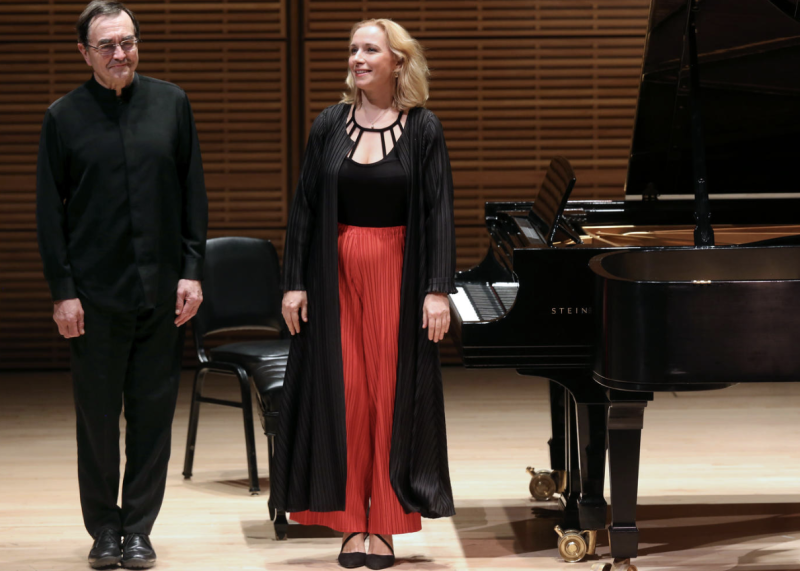
    Pierre-Laurent Aimard and Tamara Stefanovich during last night’s recital; Photo Credit: Steve Sherman

    This was a concert of equals, exchange, and contrasts. To begin the program, they selected seven works from Bartok’s Mikrokosmos. For those who haven’t studied piano, the Mikrokosmos occupy an odd place: wonderful short studies meant to illuminate aspects of technique/musical thinking ranging from the beginner (Book 1) to virtuoso performer (Book 6). Bartok made sure that each of these were compositionally interesting and many are imbued with folksy melodies.

    The short selection Ms. Stefanovich and Mr. Aimard drew from covered the range of styles. One was the Debussy like Chord and Trill Study in which Mr. Aimard played a constant Debussy-like trill to Ms. Stafanovich’s chordal melody. The light touch and exquisite pedaling made this short study shine. In the aptly named New Hungarian Folk Song (originally for voice and piano), they brought out the Messiaen-like textures in the base chords below the lyrical melody. To end the selections they played the Ligeti-like Ostinato trading accents and rhythms with each other. It was a nice launching point for the rest of the evening.

    Next was Ravel’s very early work Sites auriculaires which consists of a Habanera in the first movement and a second movement titled Between bells. In the Habanera, Mr. Aimard plucked out a sensual low pulse that is kept quietly moving through the movement while Ms. Stefanovich brought a clean sound to the more melodic part. The performers made the most of the luscious bell-like sonorities in the opening of Between bells that sound like later Ravel, full of whole tones with large dynamics. The silken middle section was given a soft pedaling and lots of space to let the notes resonate.

    The major work on the first half of the program was the US Premiere of Harrison Birtwistle’s Keyboard Engine, A Construction for Two Pianos. Like the rest of the program, this piece is a study in opposites: ranging from dynamics, thematic material between performers, rhythmic contrasts, toccata like lines paired with heavy chords, and many others. The two pianos seem split in this material – always interrupting the other with its contrast, sometimes aligning to produce a new sonority altogether. After a dodecaphonic sounding start of quiet repetitious notes the music roars to life with sudden loud dynamics in the extreme registers of the piano. The pianos are slowly exchanging a call and answer type format and the dialogue between them becomes more frenzied. After a brief respite with dreamy material, a rapid pace ensues with an ostinato that is punctuated by polyrhythms in both instruments. Both performers seemed to gleefully indulge interrupting the other’s lines and hitting giant chords in sync.

    These spacious and frenzied passages continue to alternate for the remainder of the work and each time a passage moves in to the opposite extreme it takes on slightly different material. Ms. Stefanovich and Mr. Aimard managed to capture the frenzy, intimacy, and mischievousness that this piece has – it would be fantastic for two dancers to stage given the many contrasts. One of my favorite sections was near the end when Mr. Aimard’s piano begins to create sympathetic vibrations with the other piano by holding down specific keys with the sustain pedal. These transfers of sound and timbre gave a bell like quality to some of Ms. Stefanovich’s chords. I found myself transfixed in the jazzy riffs of rhythm and spinning themes of the piano. It must take incredible coordination to pull off such an assured performance of this work that seemed to be perfectly both in and out of sync. It was a pleasure to see both pianists studying each other carefully for cues.

    Screen Shot 2018-10-26 at 6.55.43 PM
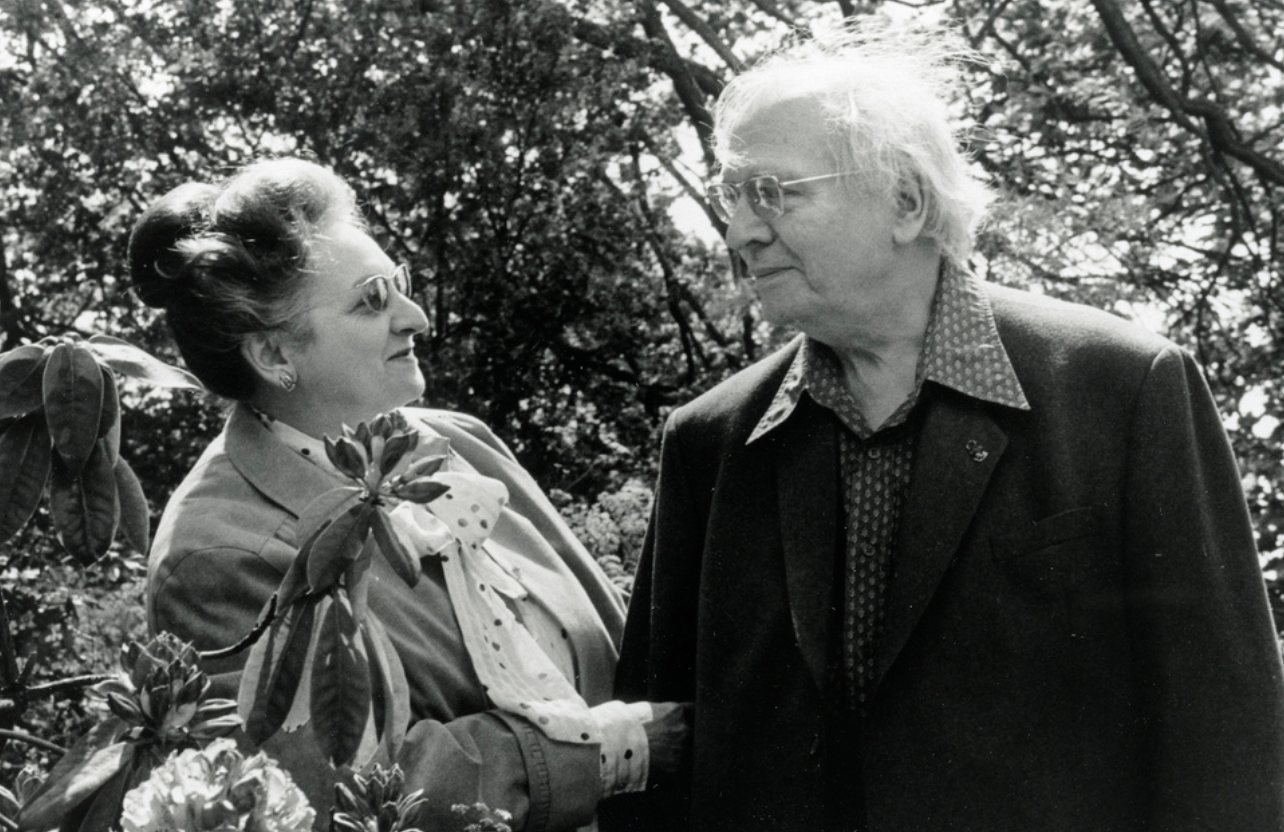
    Above: Loriod and Messiaen many years later, still in love

    The treat of the evening came after intermission in the form of Messiaen’s Visions de l’amen. This sprawling seven movement, 50-minute (small for Messiaen’s standards) work is a classic two piano piece with each of the movements dedicated to a vision of a reason to be thankful (or an amen as Messiaen puts it) – this is a cosmic, mystical piece of music in a way only Messiaen can deliver. Like the Birtwistle work, each piano has its own distinct voice – a fleeting, fast ethereal part that was written for Messiaen’s future wife Yvonne Loriod and an earthier chordal part written for himself. Ms. Loriod was perhaps the greatest contemporary music pianist of the 20th century and the dedicatee of almost all of Messiaen’s piano music – they had a partnership of equals. Ms. Stefanovich took on Loriod’s voice and Mr. Aimard took Messiaen’s.

    Before the opening Amen of creation, the performers took a good two minutes on stage letting the audience quiet down and the rumbling of the subway beneath to pass before beginning. Mr. Aimard managed to make the ppp in the score for his primordial opening sound like a whisper coming out of the slight noise from the crowd earlier before introducing the main melodic theme of the work. Meanwhile, the pppp high-pitched bells from Ms. Stefanovich rang in a soft, but lucid texture. The creeping in Ms. Stefanovich’s part is classic Messiaen – a song of the stars that is continually moving atop Mr. Aimard’s expanding chords. The interaction between the two is like light hitting stained glass and creating refractions – the light being Ms. Stefanovich’s bending colors. The music continued getting faster and louder as the “Creation” unfolded until the resonance from the piano held in the air with one last loud chord. In the next movement’s long introduction, Mr. Aimard nailed the jazzy harmonies and riffs barrowed from the Quartet from the End of Time’s sixth movement in the low register. Ms. Stefanovich’s managed to play through the rapid bird like sequences in the high reaches of the piano in a sing-song fashion in perfect time with beefy chords from Mr. Aimard. This exchange and dialogue of thematic material was so much fun to both watch and hear.

    One of my favorite moments from the evening was after the first outburst of passion in the Amen of desire. The music got very quiet producing a moment of éblouissement. Mr. Aimard played a tender love theme while Ms. Stefanovich in the tinkled a taught, but honeyed variation of the original ‘star’ melody in the upper registers. The quiet sensitivity of Ms. Stefanovich’s made the music sing. This gave way to a loud run of manic, effervescent love at the climax of the movement with both performers seemingly investing all of their energy. It was clearly that this work is personal to both of them. Only the ending of the Amen of the consummation got even louder, more manic, and extreme in its sound.

    Screen Shot 2018-10-26 at 7.02.18 PM
    Pierre-Laurent Aimard and Tamara Stefanovich; Photo Credit: Steve Sherman

    Through all the dense textures, both performers managed to emphasize Messiaen’s stunning language taking through the virtuosic runs of Ms. Stefanovich’s high register and the huge chords of Ms. Aimard’s lower register. In the fffff final, organ like chords spanning the register of the entire piano the audience gave a well-deserved rapturous applause before the notes even decayed. They ran the gamut of textures, timbres, and emotions – ending in exaltation. As one more conservative in taste neighbor near me put it “I never thought I’d like that sort of modern music, but hearing that piece in person was like a religious experience!” Indeed it is and it is difficult to get a sense of the proportions of such a piece from a recording.

    — Scoresby

    The Performers:

    Pierre-Laurent Aimard, piano

    Tamara Stefanovich, piano

    The Repertoire:

    Bartók: Seven Selections from Mikrokosmos

    Ravel: Site auriculaires

    Birtwistle: Keyboard Engine, A Construction for Two Pianos

    Messiaen: Visions de l’amen

  • Hilary Hahn @ White Light Festival

    ~Author: Scoresby

    Tuesday October 23 2018 – Lincoln Center’s White Light Festival every October/November is always an interdisciplinary highlight of the season that offers a variety of different events. This year’s ranges from the upcoming US Premiere of Kaija Saariaho’s new opera Only the Sound Remains to a music with dance performance of Feldman’s Triadic Memories featuring pianist Pedja Muzijevic and choreographer Cesc Gelabert. Part of this celebration of spiritual/communal art featured the genial violinist Hilary Hahn in all too rare NY concert. She performed two of the three of the Bach Sonatas and Partitas that she just released on recording. The last work was one of the other three she recorded as her debut album, and it seems will perform them this Spring in Europe. According to Ms. Hahn’s Instagram, this was her first solo concert in the US in her career.

    Screen Shot 2018-10-25 at 12.38.40 PM
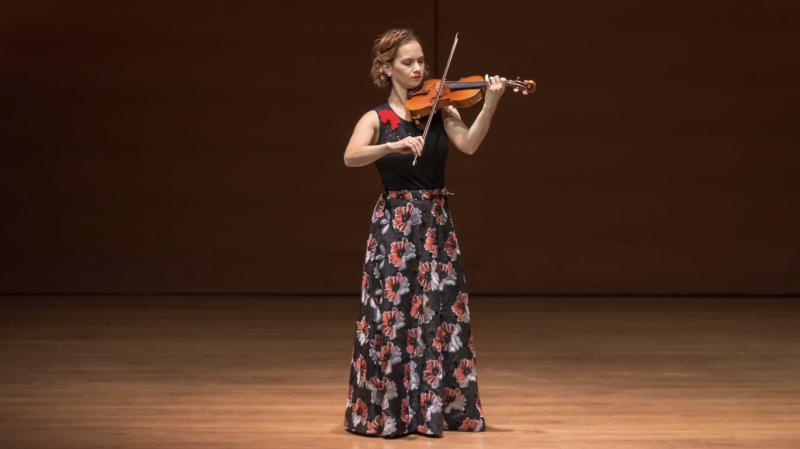
    Above: Violinist Hilary Hahn playing Bach; Photo by Kevin Yatarola Courtesy of Lincoln Center

    Ms. Hahn was performing to a sold out, enthusiastic audience in the intimate Alice Tully Hall yesterday evening. It should be said that all six of these pieces are extremely difficult to play well and yet at the core of the violin repertoire. The first work on the program was Sonata No. 1 in G minor. Ms. Hahn coaxed a large, beautiful sound out of her violin in the opening Adagio. Her sound was reminiscent of a purer Arthur Grumiaux (different intepratively). In the Fugue, Ms. Hahn took a more aggressive sounding virtuosic as she traversed each of the many double and triple stops. Out of the many live performances I’ve seen of this work, this is the first time I’ve heard this movement sound almost as clean as a recording – a near impossible feat. In addition to her accuracy, it was striking to be able to hear the countermelodies in the bass that usually disappear in the dense textures rang with clarity. In Ms. Hahn’s rendering, the intricate contrapuntal structure was easy to hear. While she was retuning before the third movement, the audience gave a hearty applause. After the gorgeous Sciliano, Ms. Hahn gave a brisk, full-bodied account of the presto. Her use of a quick tempo and her interesting finger work let the entire bass line ring through the movement letting the entirety of the piece shine.

    In the opening Allemende of the Partita No. 1 in B minor Ms. Hahn took her time and employed small cells of melodic phrases that were punctuated by the larger chords. It was a unique take on this movement, make it sound angular – almost in the vein of Stravinsky. She seemed to take a similar approach in Courante that when moving into the Double expanded into a carefully coordinated flash of notes that was always clear. Part of that clarity came from giving almost every note its own bowing, making each shine in its own way. The audience applauded here too before the final four movements. Another highlight was the careful pacing of the Sarabande. As in other areas, Ms. Hahn’s preternatural ability of voicing every line let the music sing.

    Screen Shot 2018-10-25 at 12.41.23 PM

    Above: Violinist Hilary Hahn

    After intermission was Partita No. 2 in D minor. Ms. Hahn continued with the same big sound and near orchestral quality of playing. While beautifully rendered and intellectual satisfying, I couldn’t help but feel that her performance felt lacking in intimacy. As encore to the Partita, Ms. Hahn opted to replay the massive Chaconne. While I felt it was quite a bit odd at first to play a 15 minute encore of music just performed earlier, this was her best playing of the night. Perhaps relieved to be over with her first US solo concert, she seemed relaxed and personal with this second reading. Phrases that had been burly had a softer edge to them, the lyrical parts of the work had more space, and Ms. Hahn seemed to use quieter dynamics than she had the rest of the evening. It was thrilling to hear such a change in performance style from the rest of the concert and the crowd seemed to be just as enthralled.

    Scoresby