Category: Ballet

  • Sarasota Ballet @ The Joyce

    TheSarasotaBallet II

    Above: from Sarasota Ballet’s production of Sir Frederick Ashton’s Monotones II; the dancers in this photo by Frank Atura are Ricardo Graziano, Victoria Hulland, and Ricardo Rhodes

    ~ Author: Oberon

    Sunday August 19th, 2018 matinee – A chance to see a program of works by Christopher Wheeldon and Sir Frederick Ashton – and to see Marcelo Gomes in a guest performance – drew me to The Joyce this afternoon where Sarasota Ballet were wrapping up a week-long stay.

    There Where She Loved, choreographed by Christopher Wheeldon in 2000 for The Royal Ballet, is set to songs by Frederic Chopin and Kurt Weill. Two very good singers, Stella Zambalis and Michelle Giglio, took turns singing the songs live; along with Cameron Grant’s expertise at the piano, they made the musical side of things a pleasure in itself.

    From a time before Wheeldon found his groove, this is pretty ‘standard ballet’ stuff: nice partnering motifs, and a sense of lyricism. Overall, the effect is pleasant and a bit bland. Best by far of the seven movements is the last one – to Weill’s “Je ne t’aime pas” – in which Victoria Hulland was superb, partnered by Ricardo Rhodes.

    Monotones I & Monotones II by Sir Frederick Ashton was the highlight of the afternoon: Cameron Grant’s exquisite playing of the Satie Gnossiennes and Gymnopiedes created a marvelous, poetic atmosphere. Beautifully lit, two trios of dancers move in stylized patterns; dressed in be-jeweled body tights and bathing caps, they take on an alien identity. The sold-out house seemed mesmerized by this pair of unique, other-worldly ballets.

    The concluding part of the programme was given over to Divertissements from Sarasota Ballet’s extensive Ashton repertoire. Despite being very well-danced, each piece seemed dated in its own way.

    Ballerina Kate Honea gave her all as the La Chatte Metamorphosee en Femme (The Cat Turned Into a Woman). All the expected feline moves and quirks are set forth, and the dancer emits a loud “meow” at the end. Mr. Grant’s playing of the Offenbach score kept things from becoming too silly. 

    More froth in the Pas de Trois from Les Patineurs; without the sets and the context of the full ballet, this brief piece was inconsequential. 

    The Méditation from Massenet’s opera Thaïs is gorgeous music, but setting it as an exotic ‘love pas’ doesn’t do it any favors since, in the opera, the music depicts the heroine’s life-changing reflection on aging and the emptiness of her dissolute life, deciding her to enter a convent. Ashton’s pas de deux is performed in gaudy, dance-recital costumes; the two dancers this afternoon sometimes seemed tested by the partnering motifs.   

    TheSarasotaBallet-pigeons

    Above: Victoria Hulland and Marcelo Gomes in the pas de deux from The Two Pigeons; photo by Frank Atura

    Featuring a pair of live pigeons, the final duet from The Two Pigeons was – needless to say – expressively danced by Ms. Hulland and Mr. Gomes. The music, by André Messager, seemed far too grand for the intimate scene.

    ~ Oberon

  • The Colón RING

    2982284

    Above: the Valkyries on the field of battle in the Teatro Colón’s abbreviated RING Cycle; Maestro Roberto Paternostro is on the podium

    ~ Author: Oberon

    In 2012, the Teatro Colón in Buenos Aires presented the first performances of Cord Garben’s reduction of Richard Wagner’s monumental RING DES NIBELUNGEN; Garben cut the usual run-time of the complete Cycle from fifteen to seven hours, and meant his version to be performed in a single day. I’ve been watching it on DVD, finding it by turns intriguing and maddening.

    The production was to have been directed by Katharina Wagner, great-grand-daughter of the composer. In the documentary film that is part of the boxed DVD set, Ms. Wagner arrives at Buenos Aires to start rehearsals and finds that the theatre is behind schedule in the creating of the physical production: sets, costumes, and wigs are not ready. Ms. Wagner decides she cannot work under such conditions. She flies back to Germany, but then returns to Buenos Aires…only to resign from the production.

    Enter one of La Fura dels Baus’s director/choreographers: Valentina Carrasco. Described by soprano Linda Watson, who plays Brünnhilde, as a ‘spitfire fireball’, Ms. Carrasco and her team take matters in hand and – in just over a month of rehearsals – get the Colón RING stage-worthy. Meanwhile, there have been problems on the musical end of things, too: some of the originally-cast singers have dropped out, and conductor Roberto Paternostro becomes frustrated with the musicians of the Colón orchestra; the Maestro walks out of a rehearsal, calling their playing “a farce”. Somehow it all comes together, and the production is a hit – at least musically.

    Ms. Carrasco’s key idea is introduced early in Rheingold; the Rhinemaidens appear to be nannies guarding their treasure: a baby. Bad idea? I thought so at first. But then, babies represent the future…the hopes and dreams of mankind. Alberich steals the ‘golden child’, and by scene three, the Nibelheim scene, he has set up a ‘baby factory’ to increase his ‘wealth’: in a combination torture chamber and nursery, women are continuously and forcibly impregnated, their babies cruelly snatched from them and kept under the eye of sinister nurses. Other pregnant women are seized on the streest and enslaved, giving the term “forced labor” a fresh meaning. It’s a hellish scene, reminding us of the horrors of THE HANDMAID’S TALE. 

    As the Cycle evolves, we continue to see children as pawns; separated from their parents by the State, the shadow of Trump’s Amerika looms large. And in Siegfried, Fafner keeps some kids in a cage. Talk about self-fulfilling prophecies… 

    But what about the story-telling? The musical flow? In Rheingold, the narrative is fairly clear, but the characters of Donner, Froh, and – unkindest cut of all – Erda are eliminated altogether. Jukka Rasilainen in his military uniform with medals and gold sash, is a Perónist Wotan. And Simone Schröder, as Fricka, wears her hair in one of Eva Perón’s iconic styles. The musical cuts are scattered; in interviews, the singers speak frequently of the production’s biggest challenge: remembering what has been deleted and what your next line will be.

    There’s some really good, characterful singing in Rheingold: Andrew Shore brings with him a sterling reputation as Alberich on the world’s stages, and both Mr. Rasilainen and Ms. Schröder are fine. The Rhinemaidens –  Silja Schindler, Uta Christina Georg, and Bernadett Fodor – fare well on a tricky set that includes a water pool and a sandbox; I like Ms. Fodor’s voice especially. Wotan follows Gollum’s example: to get the ring, he bites or hacks off Andrew Shore’s finger with the ring wrapped around it.

    Stefan Heibach is a lyrical Loge; he wears a fedora, raincoat, and sunglasses. Kevin Conners excels as Mime – later, in Siegfried, he will excel his own excellence. The giants are impressively sung by Daniel Sumegi (Fasolt) and Gary Jankowski (Fafner), the latter confined to a wheelchair. They are accompanied by a band of young thugs, some wearing soccer togs. I half expected to see Klaus Barbie flitting in and of the Nibelheim torture chamber.

    Musically, the first act of Walküre, one of the most perfect acts in the entire operatic repertoire, is hacked apart. The arranger is especially unkind to Sieglinde, which is unfortunate as the role is very finely taken by soprano Marion Ammann. Ms. Ammann is an excellent singing-actress, gamely entering into the director’s concept of the role: she is indeed her husband’s ‘property’, for Hunding has kept her tethered to the floor on a short rope with a rough noose around her neck. She has been unable to stand erect for such a long time that, when Siegmund sets her free, she can barely walk. Ms. Ammann’s vocalism makes the substantial cuts in ‘Der Männer Sippe’ all the sadder. Stig Andersen, remembered for his Met Siegfrieds in the year 2000, is an excellent companion to Ms. Ammann. The pulling of the sword from the tree seems like an after-thought here. Daniel Sumegi, a paunchy Hunding, wears a wife-beater t-shirt. He sounds creepy, and he plays the character as truly revolting. We feel no shred of sympathy for this Hunding.

    Linda Watson as Brünnhilde doesn’t sing ‘Ho-Jo-To-Ho‘ to open Act II of Walküre; Cord Garben simply jumps from Wotan’s fantastic opening lines to mid-Wotan/Fricka duet. Ms. Schröder loses a lot of Fricka’s music but does well with that which is left to her.  

    Mr. Rasilainen navigates the cuts in Wotan’s monologue successfully – all too soon, it’s “Das ende.”  Ms. Watson’s singing of the passage where Brünnhilde weighs Wotan’s new instructions is excellent, and beautifully filmed. The pursued Wälsungs arrive, and Ms. Ammann is really thrilling in this scene of Sieglinde’s guilt and her love for her brother; her singing is expressive and passionate. Mr. Andersen is moving in Siegmund’s lines throughout Act II. The weight of the world is on him; all he wants is to be with Sieglinde. He and Ms. Watson are very effective in the Todesverkündigung (‘Annunciation of Death‘) which  is staged with heartfelt simplicity. Now the cuts come fast and furious. Hunding fells Siegmund, then lets his thugs kick the hapless man to death. 

    As Walküre moves to its conclusion, the production becomes truly affecting. The parting of Wotan and Brünnhilde is heart-rendingly intimate and beautifully acted by Ms. Watson and Mr. Rasilainen. After Wotan has kissed away his daughter’s divinity, she sinks to the floor. White-clad angels appear and surround her slumbering form with candles – a gorgeous image:

    2746493

    As the Magic Fire music plays, Mr. Rasilainen as Wotan removes his military jacket and other signs of his power and command; he almost seems to age before our eyes. As the music of Walküre reaches its solemn end, he walks slowly away from the glowing Valkyrie rock: the king of the gods is now the Wanderer.

    As the applause welcoming Maestro Paternostro back to the podium for Siegfried fades, someone in the audience shouts “Viva Wagner!” I was feeling about the same at this point.

    This Siegfried is populated by convincing singing-actors. Cord Garben’s cuts are judicious in this opera, probably the most difficult of the four to compress. We get just enough of the Siegfried/Mime banter, with tenors Leonid Zakhozhaev and Kevin Conners very much at home as hero and dwarf respectively. Much is made of the fact that Mime is both Siegfried’s father and mother – Mr. Conners dons a blonde drag wig to accentuate his maternal characteristics. Nothung is discussed – and later re-forged – but the riddle scene for the Wanderer and Mime is completely excised.

    The horn-call and solo serve as in interlude, leading us to Fafner’s cave, where Act II centers on Siegfried and Fafner. The wheelchair-bound, drowsy giant is surrounded by his entourage while his child-slaves observe the action from behind bars. There’s a rumble; Siegfried wounds Fafner. Their ensuing dialogue is excellently voiced by Mr. Zakhozhaev and by basso Fernando Rado, who is credited as the Siegfried Fafner, even thought the fellow in the wheelchair looks a lot like Gary Jankowski, who sang the role in Rheingold.

    In one of the production’s serious visual lapses, the Forest Bird appears as a furry green muppet. Silly. Wotan wanders in, aged and weary; Siegfried breaks his grandfather’s spear by hand, sending the old man on his way.

    The candles are still glowing around Brünnhilde’s rock. Fortunately, the opera’s dumbest line – “Das ist kein mann!” – is cut. The ecstatic genius of Wagner at “Heil dir, sonne!” finds Linda Watson at her best; she maintains peak form as cuts carry her directly to “Ewig war ich“. Brünnhilde resists, so Mr. Zakhozhaev woos her with ardent, lyrical singing. Capitulation: “Radiant love! Laughing death!” Ms. Watson falls short of the high-C. It doesn’t matter. Together, the lovers blow out the last remaining candle. The audience bursts into massive applause.

    One of my favorite RING scenes, The Norns, is cut altogether. Instead, Götterdämmerung opens with the Dawn Duet; the couple seem to be living in a balconied duplex apartment in the low-rent district. Both singers are excellent here, mining the lyricism of their vocal lines music and well-supported by Maestro Paternostro and the orchestra. Ms. Watson and Mr. Zakhozhaev have this music in their blood; the soprano creates another vocal high-point as she calls on the gods to witness her love for Siegfried.

    At the Gibichung Hall, Mr. Sumegi is a chilling Hagen, and he has Gutrune (Sabine Hogrefe) and Gunther (Gerard Kim) completely under his thumb. Mr. Shore’s Alberich briefly menaces Hagen. Then Zakhozhaev/Siegfred strolls in; Sumegi/Hagen is impressive as he describes how the Tarnhelm works. Mr. Zakhozhaev sings the toast to his wife expressively, but he nearly chokes on the polluted potion. Once drugged, he kisses Gutrune passionately. Siegfried’s blood-brotherhood with Gunther is mentioned almost in passing, and the two men are off to secure Brünnhilde for Gunther as Ms. Hogrefe’s cuddly, adorable Gutrune anticipates her union with Siegfried. Mr. Sumegi’s deals darkly with Hagen’s Watch.

    As the Waltraute scene is cut entirely, we remain at the Gibichung Hall; Brünnhilde, dressed in a very odd, constraining bridal gown, is led in like a dog by Gunther. The whole business of “…how did you get that ring?…” is quickly dispatched, and Brünnhilde goes wild, ripping off her wedding gown and over-turning furniture. There’s no “Oath”…just Brünnhilde, Gunther, and Hagen plotting in an exciting trio.

    On a golf course, Siegfried practices his swing; no Rhinemaidens here, but some caddies instead. Jarred back to reality by another potion, Siegfried extols Brünnhilde. Hagen attacks him with a golf club. Mr. Zakhozhaev sings his tender farewell to his true wife. He dies a slow death, bleeding from the mouth. During the Funeral March, his body lies alone on the stage until at last he is borne away.

    In the scene of Gutrune awaiting her groom’s return, Ms. Hogrefe is quite touching; she screams when Hagen’s deceit is revealed. Hagen bullies his siblings, finally fighting with – and killing – Gunther. Brünnhilde arrives, and explains the facts to Gutrune; the set slowly turns as Gunther is carried off.

    Brünnhilde is alone with Siegfried’s body. The Immolation Scene, very effective in Ms. Watson’s interpretation, becomes an intimate rather than a public ceremony: the soprano’s singing of “Wie sonne lauter...” touched me deeply; as she sang, ‘angels’ covered Siegfried with a red shroud. A vision of Wotan appears, and he looks down on how things have played out; at “Ruhe, ruhe, du Gott!” the now-powerlessgod slowly withdraws.

    The Rhinemaidens enter and receive the ring from Brünnhilde; Ms. Watson is exciting, polishing off her singing to powerful effect before joining Siegfried in his shroud. The angels re-appear with candles which they arrange around the lovers’ bodies. Now the populace fill the stage; the baby is restored to the Rhinemaidens, and all of the children who had been stolen from their parents rush on to be reunited as loving families. They stand, like humanity in all its glory, looking out into the future. It made me cry, actually, while also making me disgusted with the sadists who currently hold sway over our beloved country; may the gods deliver us from evil.  

    Linda Watson receives a mammoth ovation – she has won me over in the course of the presentation – and Mr.Zakhozhaev is strongly hailed, rightly so. Maestro Paternostro, all of the singers, and indeed everyone on the musical side of things are heartily cheered. The production team are booed, but – while not everything in their concept worked – they saved the day, and much of what they brought forth was thought-provoking, effective…and timely.

    One of the most fun bits in the documentary about the preparation for the production is a brief scene in which soprano Sabine Hogrefe (who stepped in for Christine Goerke in a Met performance as Elektra earlier this year) and tenor Leonid Zakhozhaev are rehearsing the final passage of the duet that closes Siegfried. Ms. Hogrefe flings out a bright high-C. At that moment in time, the two singers don’t know if the production will actually happen; they are simply swept along by the irresistible glory of Wagner’s music.

    ~ Oberon

  • Rehearsal: Claudia Schreier for Vail

    DSCF4541

    Above: Claudia Schreier with dancers Chris Bloom and Dandara Veiga of Ballet Hispanico; photo by Dmitry Beryozkin 

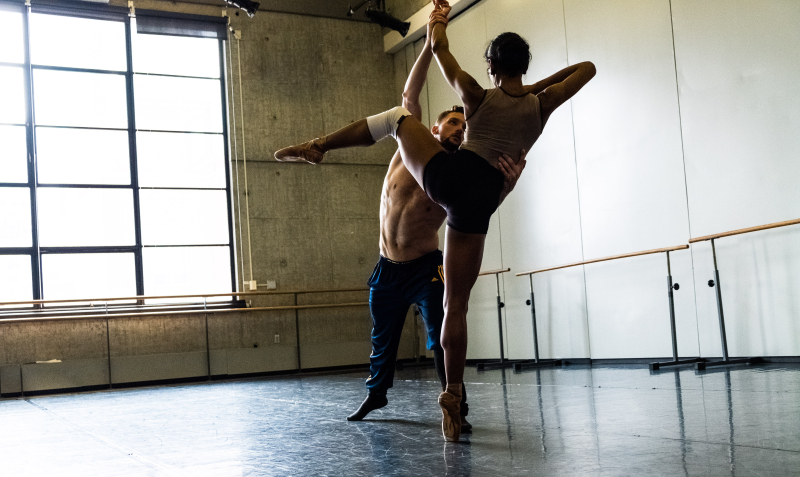
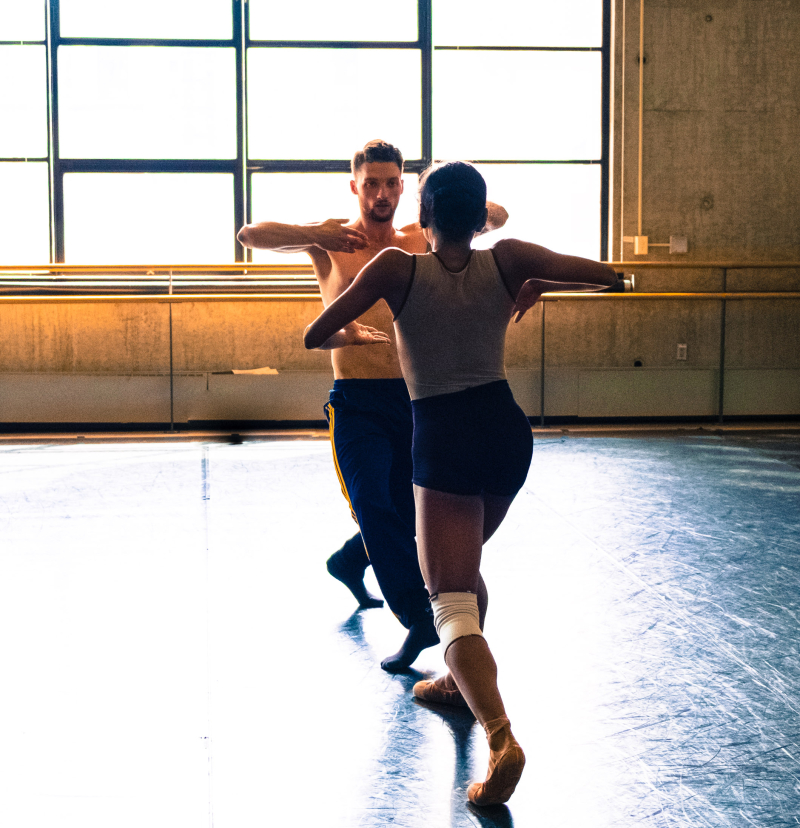
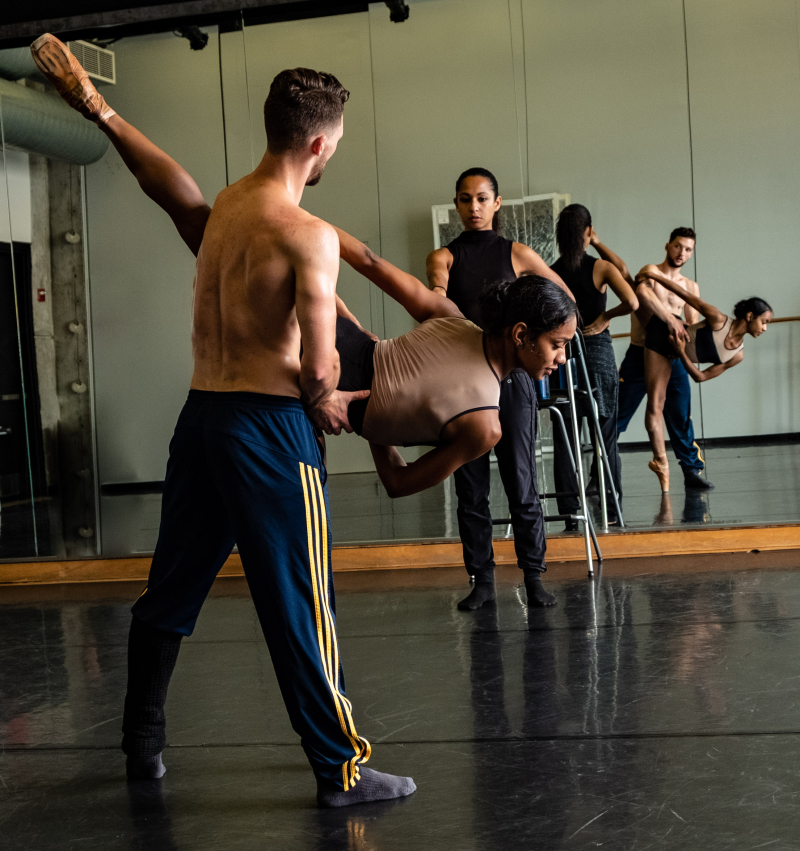
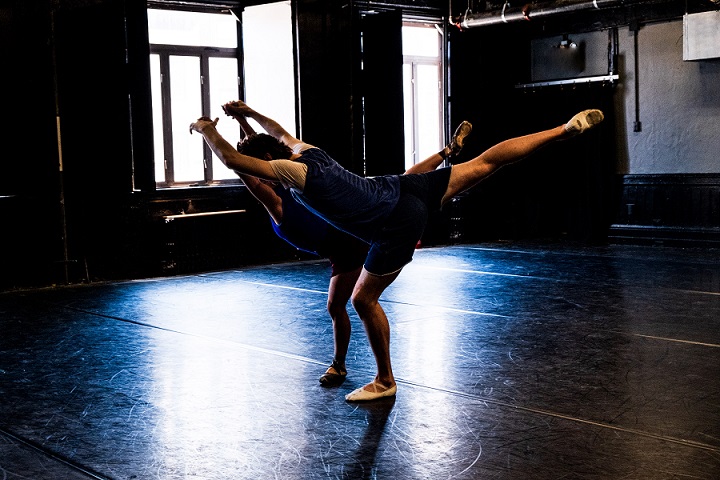
    Tuesday July 24th – Photographer Dmitry Beryozkin and I stopped in at the Baryshinikov Arts Center this afternoon where choreographer Claudia Schreier’s newest creation was in rehearsal. The pas de deux is Claudia’s third commission from the world-renowned Vail Dance Festival: in 2016 she debuted there with SOLITAIRE, and last Summer, TRANQUIL NIGHT, BRIGHT AND INFINITE was presented on the Vail stage.

    Claudia’s new ballet, as yet untitled, it set to a score by Gabriela Lena Frank which is a joint commission by the Vail Festival and Brooklyn Rider. Two charismatic dancers from Ballet Hispanico, Dandara Veiga and Chris Bloom, are performing Claudia’s pas de deux, while the full company of Ballet Hispanico will also be dancing at the Vail Festival in a program that includes their brilliant rendering of CARMEN.maquia, choreographed by Gustavo Ramírez Sansano.

    Dmitry Beryozkin’s images from today’s rehearsal:

    DSCF4322

    DSCF4378

    DSCF4416

    DSCF4464

    DSCF4505

    DSCF4634

    DSCF4682

    DSCF4698

    DSCF4810

    DSCF4822

    DSCF5004

    All photographs by Dmitry Beryozkin.

    ~ Oberon

  • CMS Summer Evenings ~ 2018 – Concert 3

    Se_news

    ~ Author: Oberon

    Sunday July 15th, 2018 – The last of Chamber Music Society of Lincoln Center‘s Summer Evening concerts for 2018: perfect playing from a quintet of wonderful artists in music of Mozart, Weber, and Schubert.

    Nothing sets an evening of chamber music on its way to finer effect than Mozart: his Quartet in C-major for Flute, Violin, Viola, and Cello, K. 285b dates from the 1780s and was the last of three quartets Mozart wrote for the amateur flautist Ferdinand De Jean.

    The quartet is in two movements: the opening Allegro finds the sound of Sooyun Kim’s flute floating on the air over an elegant string accompaniment; her tone is delicious, her ruby-red gown a delight. Her colleagues – Erin Keefe (violin), Paul Neubauer (viola), and David Requiro (cello) – have a lovely feel for the pacing of the music, which occasionally veers into the minor…and back.

    The first movement comes to a pretty end, then the Andantino begins with the players harmonizing to fine effect. The music has a gentle pulse, and we can savour the velvety texture of Mr. Requiro’s cello sound. Ms. Keefe commences a theme, echoed by Mr. Neubauer’s viola and then the cello launches a fresh idea. Following a cadenza for Ms. Kim, the strings pulse gently as the flautist sends forth a sweet song which she repeats before the quartet reaches a light and charming finish.

    Carl Maria von Weber’s Trio in G-minor for Flute, Cello, and Piano, Op. 63 (composed 1818-19) – a gem of a piece – was superbly played by Ms. Kim, Mr. Requiro, and pianist Orion Weiss. von Weber is best-remembered today for the overture to his opera OBERON and for the irresistible Invitation to the Dance which inspired Fokine’s romantic ballet Le Spectre de la Rose. Weber’s music abounds in melody, and his music often seems like German bel canto.

    The opening Allegro moderato begins with a somewhat mysterious piano passage, then Mr. Requiro’s gorgeous-toned cello enters, followed by Ms. Kim’s flute, weaving together in a lovely mix. The three voices dovetail perfectly in a da capo, and the movement ends on a sustained flute tone.

    After a dramatic start, the Scherzo turns Spring-like, with the flute spinning out a tune accompanied by waltz figurations. In the Andante, entitled ‘Schäfers Klage’ (‘Shepherd’s Lament’), piano and cello seem to imitate a guitar; then each voice takes the melody in turn. Shifts from major to minor are intriguing, and – after a brief flute cadenza – comes a calm finish. Mr. Weiss commences the Finale quietly. As the pace builds, the flute takes up a tune: Ms. Kim and the pianist really sparkle here, and the music is fast and fun. After a lull, the three musicians take a da capo and sail on to a lively ending. The audience lavished them with enthusiastic applause, and deservedly so.

    Franz Schubert’s 1827 Trio No. 1 in B-flat major for Piano, Violin, and Cello, D. 898, Op. 99, filled the program’s second half. As chamber works go, it is quite long; the composer makes numerous repeats of themes throughout the four movements, and to me it seems his best ideas come in the first two. But, played as it was tonight, this trio became quite engrossing.

    The first movement, Allegro moderato, has an almost triumphant start; as the music calms, lovely nuances are brought forth by Ms. Keefe, Mssrs. Requiro and Weiss. The pianist, who was truly marvelous throughout the evening, plays a fresh melody over plucked strings. Another winning theme passes from cello to violin. In alternating passages of delicacy and melodrama, the three musicians display the agility and passion of their impeccable playing.

    The Andante has a peaceful opening, and Mr. Requiro shines yet again in a radiant melody that is then taken up by Ms. Keefe to ravishing effect. The gently animated Scherzo has a Mendelssohnian grace, but as it neared its end, a cellphone went off to disastrous effect. Yet the players were able to re-establish the mood in the charming, light, and brilliant Allegro vivace finale, much to the delight of the crowd.

    ~ Oberon

  • CMS Summer Evenings ~ 2018 – Concert 3

    Se_news

    ~ Author: Oberon

    Sunday July 15th, 2018 – The last of Chamber Music Society of Lincoln Center‘s Summer Evening concerts for 2018: perfect playing from a quintet of wonderful artists in music of Mozart, Weber, and Schubert.

    Nothing sets an evening of chamber music on its way to finer effect than Mozart: his Quartet in C-major for Flute, Violin, Viola, and Cello, K. 285b dates from the 1780s and was the last of three quartets Mozart wrote for the amateur flautist Ferdinand De Jean.

    The quartet is in two movements: the opening Allegro finds the sound of Sooyun Kim’s flute floating on the air over an elegant string accompaniment; her tone is delicious, her ruby-red gown a delight. Her colleagues – Erin Keefe (violin), Paul Neubauer (viola), and David Requiro (cello) – have a lovely feel for the pacing of the music, which occasionally veers into the minor…and back.

    The first movement comes to a pretty end, then the Andantino begins with the players harmonizing to fine effect. The music has a gentle pulse, and we can savour the velvety texture of Mr. Requiro’s cello sound. Ms. Keefe commences a theme, echoed by Mr. Neubauer’s viola and then the cello launches a fresh idea. Following a cadenza for Ms. Kim, the strings pulse gently as the flautist sends forth a sweet song which she repeats before the quartet reaches a light and charming finish.

    Carl Maria von Weber’s Trio in G-minor for Flute, Cello, and Piano, Op. 63 (composed 1818-19) – a gem of a piece – was superbly played by Ms. Kim, Mr. Requiro, and pianist Orion Weiss. von Weber is best-remembered today for the overture to his opera OBERON and for the irresistible Invitation to the Dance which inspired Fokine’s romantic ballet Le Spectre de la Rose. Weber’s music abounds in melody, and his music often seems like German bel canto.

    The opening Allegro moderato begins with a somewhat mysterious piano passage, then Mr. Requiro’s gorgeous-toned cello enters, followed by Ms. Kim’s flute, weaving together in a lovely mix. The three voices dovetail perfectly in a da capo, and the movement ends on a sustained flute tone.

    After a dramatic start, the Scherzo turns Spring-like, with the flute spinning out a tune accompanied by waltz figurations. In the Andante, entitled ‘Schäfers Klage’ (‘Shepherd’s Lament’), piano and cello seem to imitate a guitar; then each voice takes the melody in turn. Shifts from major to minor are intriguing, and – after a brief flute cadenza – comes a calm finish. Mr. Weiss commences the Finale quietly. As the pace builds, the flute takes up a tune: Ms. Kim and the pianist really sparkle here, and the music is fast and fun. After a lull, the three musicians take a da capo and sail on to a lively ending. The audience lavished them with enthusiastic applause, and deservedly so.

    Franz Schubert’s 1827 Trio No. 1 in B-flat major for Piano, Violin, and Cello, D. 898, Op. 99, filled the program’s second half. As chamber works go, it is quite long; the composer makes numerous repeats of themes throughout the four movements, and to me it seems his best ideas come in the first two. But, played as it was tonight, this trio became quite engrossing.

    The first movement, Allegro moderato, has an almost triumphant start; as the music calms, lovely nuances are brought forth by Ms. Keefe, Mssrs. Requiro and Weiss. The pianist, who was truly marvelous throughout the evening, plays a fresh melody over plucked strings. Another winning theme passes from cello to violin. In alternating passages of delicacy and melodrama, the three musicians display the agility and passion of their impeccable playing.

    The Andante has a peaceful opening, and Mr. Requiro shines yet again in a radiant melody that is then taken up by Ms. Keefe to ravishing effect. The gently animated Scherzo has a Mendelssohnian grace, but as it neared its end, a cellphone went off to disastrous effect. Yet the players were able to re-establish the mood in the charming, light, and brilliant Allegro vivace finale, much to the delight of the crowd.

    ~ Oberon

  • Rehearsal: Two Duets by Cherylyn Lavagnino

    DSCF4129

    Above: Ramona Kelley and Daniel Mantei rehearsing for Cherylyn Lavagnino Dance; photo by Dmitry Beryozkin

    ~ Author: Oberon

    Thursday June 21st, 2018 – Cherylyn Lavagnino Dance are preparing for their annual New York season with performances at the Tisch School of the Arts’ Jack Crystal Theatre on June 27th and 28th, 2018. Details and ticket information here.

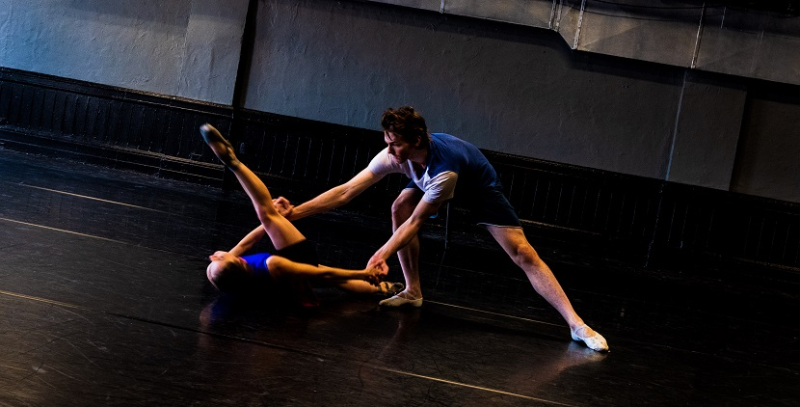
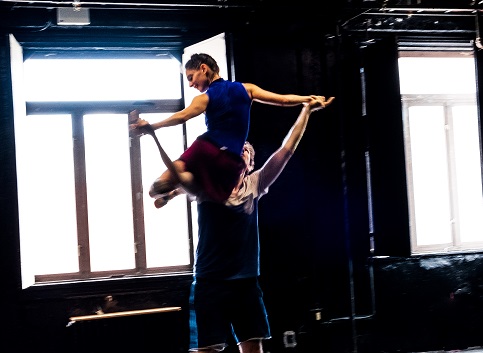
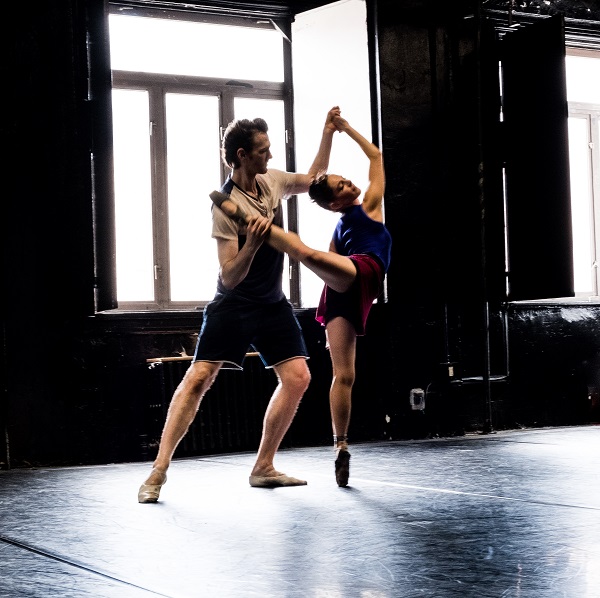
    I had missed Cherylyn’s performances last season due to my prolonged ‘indisposition’; I was all set to attend the performance this month when a family obligation took over. So I was very grateful indeed to be able to go down to the Tisch studios this afternoon watch a rehearsal of two duets from the upcoming program: one from the ballet Kamila, set to the song cycle The Diary of One Who Vanished by Leoš Janáček, and a free-standing duet set to Janis Joplin’s classic rendering of Gershwin’s Summertime. The delightful ballerina Ramona Kelley and former ABT dancer Daniel Mantei were paired in these two distinctively different pas de deux. My friend Dmitry Beryozkin was there to photograph the dancers:

    DSCF3725

    DSCF3736

    DSCF3738

    DSCF3758

    DSCF3767

    DSCF3808

    DSCF3892

    DSCF3906

    DSCF3944

    DSCF3970

    B

    DSCF4024

    DSCF4076

    DSCF4130

    DSCF4149

    DSCF4152

    ~ Oberon

  • BroadwayWorld Review: Lydia Johnson Dance

    DSCF3589

    Above: Lydia Johnson Dance in Undercurrent; photo by Dmitry Beryozkin

    This review by Barnett Serchuk for BroadwayWorld of Lydia Johnson Dance‘s recent program at Ailey Citgroup Theatre reminds me of my own first encounter with Lydia Johnson’s work.

    On a whim, I went to one of Lydia’s studio showings in 2009, knowing nothing about her and with zero expectations. Nine years on, I still think she’s one of the very few truly distinctive choreographers on the New York scene.

    A gallery of Dmitry’s photos from the LJD Ailey show here.

  • Concerto Night @ CMS

    A-M McDermott

    Above: Anne-Marie McDermott at the Steinway; she delivered a phenomenal Mozart K. 466 at Chamber Music Society of Lincoln Center‘s end-of-the-season performance at Alice Tully Hall tonight.

    Author – Oberon

    Sunday May 20th, 2018 – For the final offering of their 2017-2018 season, Chamber Music Society of Lincoln Center presented five concerti, each calling for a varied ensemble of players; an impressive group of artists came together to assure yet another great CMS evening of music-making. A surprise addition to the program, in the second half, was an added treat.

    Jean-Marie Leclair’s Concerto in B-flat major for Violin, Strings, and Continuo, Op. 10, No. 1 was a wonderful program-opener, bringing forth a sterling performance from violinist Bella Hristova. This was my second Leclair encounter this Spring: in April, the composer’s Sonata for Two Violins in E-minor was played by artists from the New York Philharmonic at a Merkin Hall matinee. Today, again, Leclair’s music seemed truly fresh and vivid.

    Bella

    Ms. Hristova (above, in a Lisa-Marie Mazzucco portrait) looked gorgeous in a gunmetal grey gown, styled à la Grecque. Gilles Vonsattel was ready to play at the harpsichord and, with an ensemble of string players – Aaron Boyd, Sean Lee, Mihai Marica, Paul Neubauer, and Timothy Cobb – ranged around her, Ms. Hristova and her colleagues created a picture that somehow represented everything I love about Chamber Music Society. And then they began to play. 

    Ms. Hristova has always played beautifully, but there was some intangible quality in her artistry tonight that gave her performance a special glow. In this elegant, cordial music, she sounded splendid in both the lyrical passages and in the abounding coloratura. The poignant melody of the Andante was particularly appealing, where Mr. Cobb’s genial and rich bass also made a fine impression. In the concluding Gigue, veering between major and minor, Ms. Hristova the capped her triumph. As waves of applause swept thru the hall, Ms. Hristova strode back onto the stage for a bow, assuming that her colleagues were right behind her. But the men had held back, so that she could bask in the warm reception that she so truly deserved.

    For Mozart’s Concerto in D minor for Piano and Strings, K. 466 – composed in 1785 and played tonight in Carl Czerny’s arrangement – Anne-Marie McDermott took her place at the Steinway, joined by Tara Helen O’Connor (flute), Sean Lee and Ms. Hristova (violins), Paul Neubauer (viola), Mihai Marica (cello), and Timothy Cobb (bass). The audience, poised to hear great music-making, experienced a revelatory performance from Ms. McDermott.

    The concerto’s opening Allegro has an almost sneaky start, and then proceeds thru alternating modes of storm and calm. From the piano’s first entrance in a solo passage, it was clear we were in for exceptional playing from Ms. McDermott. The movement has a da capo with added piano roulades and an exchange of phrases between Sean Lee’s violin and Ms. O’Connor’s flute. The piano part becomes increasingly prominent. After a second da capo, Ms. McDermott trilled her way into a big cadenza; then the music again moved thru major/minor variants.

    The Romance begins with the piano in straightforward phrases which develop over a gracious pulsing motif from the strings. Ms. McDermott’s gift for nuance, and her suave turns of phrase, were abundantly pleasing to hear. In the da capo, Ms. O’Connor’s flute adds a sparkle to the harmonies; modulations, masterfully handled by Mozart, carry thru to the finish.

    Agitated bowing sets up the Rondo-finale, and as Ms. McDermott sailed thru delicious virtuoso passages with technical dazzle and amazing grace. One could sense the audience’s pent up excitement was about to burst. And burst it did. Thunderous applause filled the hall, with the pianist’s colleagues joining in and refusing to stand until she had stepped forward for a bow. The delirium continued, everyone on their feet, as Ms. McDemott and her fellow artists returned for two more bows.

    VonSattelGilles_bio

    To open the evening’s second half, Gilles Vonsattel (above) treated us to an immaculate performance of the Bach Concerto in G minor for Keyboard, BWV 975 (after Vivaldi RV 316). The oldest music on the program (dating from 1713-14), it sounded brand new: so alive and clean. In the Largo, especially, Mr. Vonsattel’s hushed pianissimi phrases and his rippling figurations played over a gentle pulse made an enchanting impression. Pianist, piano, Bach…a wonderfully intimate performance, the audience keenly attentive and appreciative.

    Paul_neubauer

    Above: violist Paul Neubauer

    Still on a high from experiencing The New York Philharmonic’s extraordinary performance of the Shostakovich 5th under Semyon Bychkov’s baton a few days ago, I was happy to hear Wu Han announce a surprise addition to the scheduled program this evening. Recently when she was in Saint Petersburg, Wu Han heard that the manuscript of a very short Shostakovich piece for viola and piano had just been discovered. Somehow she managed to bring a copy of this two-page work back to New York City with her. Paul Neubauer learned it in a day, and – with Wu Han at the piano – gave us what was most likely the first public performance (and for sure the US premiere) – of Shostakovich’s Impromptu for Viola and Piano (1931).

    This Impromptu is in two movements, a sad and very Russian melody – soft and sorrowing – which displayed Mr. Neubauer’s finely-controlled tone – and then a lively, folk-like dance kicked off by Wu Han at the piano, her bright-red shoes tapping the floor. A little musical gem, this would seem a perfect encore piece for Mr. Neubauer in future.

    Leos Janáček’s Concertino for Clarinet, Bassoon, Horn, Two Violins, Viola, and Piano (1925) is a quirky delight of a piece. As if the unusual instrumentation was not enough on its own, the full complement of musicians do not play in the first and second movements. The opening Moderato involves only the piano and horn (Ms. McDermott and burnish-toned Stewart Rose), and for the second – Più mosso – only clarinet (Tommasso Lonquich) and piano are heard, until the strings add a couple of chords at the finish.

    Mr. Lonquich had brought three clarinets to the stage, switching from one to another as the music progressed. His lively trills danced the music on to a string finish. The Concertino moves on: a rocking, swaying mode, an off-kilter march, slashing bows, dancing or jogging along, vigorous plucking, extended string trills, a misterioso piano, a fast finale.  

    Bg01

    Above: percussionist Ayano Kataoka

    The evening closed with the most recently-written work on the bill: Micro-Concerto for Solo Percussion, Flute, Clarinet, Violin, Cello, and Piano, composed 1999 by Steven Mackey. Ayano Kataoka moved from place to place on the stage where her various percussion instruments were arrayed. A superb “supporting cast” had been assembled: Tara Helen O’Connor (flute, and piccolo), Tommaso Lonquich (clarinet, and bass-clarinet), Sean Lee (violin), Mihai Marica (cello), with Gilles Vonsattel at the Steinway. The musical ensemble has their work cut out for them, as the writing seemed quite tricky and they were sometimes called upon to make unusual sound effects.

    Ms. Kataoka played several ‘legit’ percussion instruments, plus a few that she and composer John Mackey apparently found under the proverbial kitchen sink, including whistles and clickers. Often she played two or three of these at a time. A petite woman with giant talent, Ms. Kataoka had choreographed herself to always be in the right place at the right time, and the audience seemed genuinely intrigued by her every move and by all the varied sounds she produced. 

    The work opens with an extra-terrestrial quality. Tara Helen O’Connor had 2 flutes and a piccolo at her fingertips; the composer calls on her for everything from low sputtering to piccolo pipings. Two passages have special appeal: one for bass clarinet (Mr. Lonquich) and Ms. Kataoka’s vibraphone, and a second where Mihai Marica’s expert cello playing meshed with the marimba to sensuous effect.  

    The composer bounded onto the stage for a bow at the end, thanking all the players, and embracing Ms. Kataoka. The percussionist’s frock was a contemporary take on traditional Japanese dress with a shortened skirt and a fanciful obi.  

    ~ Oberon
  • An Evening With Freiburg Baroque

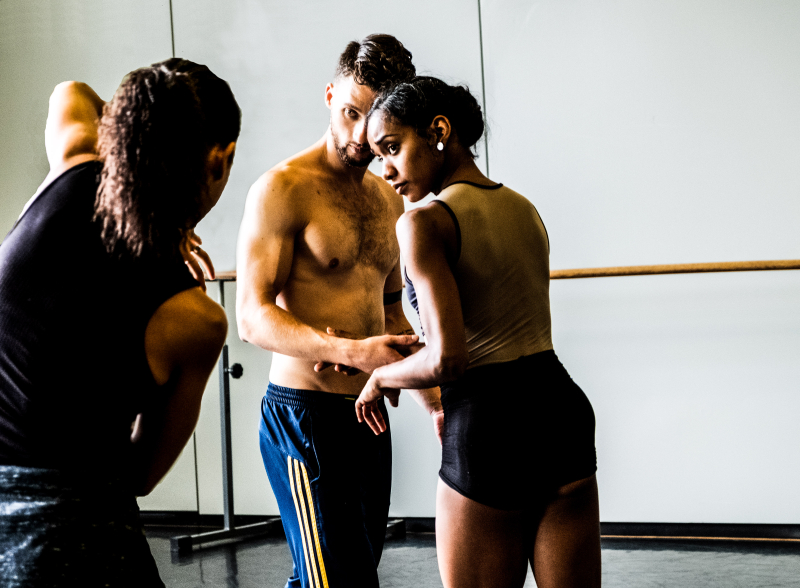
    Bb_freiburger-barockorchester-kristian-bezuidenhout-werke-von-haydn-mozart-und-j-chr-bach-2018_01_20170608

    ~ Author: Ben Weaver

    Saturday May 19th, 2018 – The period instrument ensemble Freiburg Baroque Orchestra (above) has been a favorite of mine on records for some time. I was glad to finally be able to hear them live – along with one of my favorite pianists, Kristian Bezuidenhout at the fortepiano. This concert of works by Haydn, J.C. Bach and Mozart was part of Lincoln Center’s Great Performers series. 

    Conducting from the keyboard in the uncomfortably warm Alice Tully Hall, Mr. Bezuidenhout launched the Freiburg Barockorchester into the opening chords of Haydn’s Symphony No. 74 (composed in 1781) with great enthusiasm. The musicians, standing around the fortepiano, all wore black and played beautifully.

    Period instruments can be an acquired taste. These instruments can go out of tune easily, and there is sometimes a nasal quality to the sound of the strings. But personally I love it, errant pitches and all. Though it should be noted that for the Freiburg Baroque musicians pitch was not an issue. Their ensemble work is flawless and the small number of players do not surrender anything in fullness and richness of sound. For this concert the orchestra was made up of 9 violinists, 3 violas, 2 cellos and 1 double-bass; with an assortment of winds and 2 horns.

    Haydn’s 74th Symphony was one of the first works he was able to publish independently and for his own profit while working for the Esterházys in Eisenstadt, Austria. It may be true that many of Haydn’s symphonies can be a bit workmanlike, but the 74th is one of his finest works, filled with lovely melodies and inventive orchestration. The second movement especially is lovely: an Adagio of muted violins playing lovely theme and variations over the cello playing a repeated motif, like a guitar accompanying a serenade. A lively Trio leads to an exciting whirlwind of the Allegro finale.

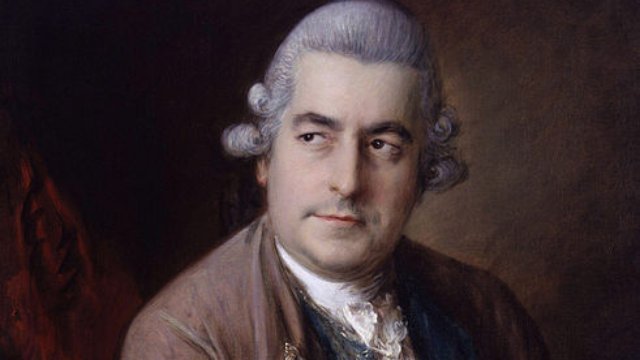
    Johann-christian-bach

    Johann Christian Bach (above) was the youngest of Johann Sebastian Bach’s sons and formed a direct link from the great Baroque master to the soon-to-be most important composer of the Classical era. When the Mozarts visited London in 1764, Wolfgang was 8 years old and J.C. Bach, recognizing talent in the young boy, played duets with him on the harpsichord and let him borrow music. Two years later, when Mozart tried his hand at composing piano concertos, he used J.C. Bach’s music as the foundation: 10 year old Mozart’s first 3 Piano Concertos are based on Johann Christian’s themes. And when Mozart heard of J.C. Bach’s death in 1782 he was in the middle of composing his 12th Piano Concerto. Mozart paid tribute to his old friend by basing the slow movement of the concerto on a melody from one of Bach’s operas, La calamità del cuore.

    While Johann Christian could never eclipse his father – a true titan – as a composer, he nonetheless became a very respectable musician in his own right. More than that, Johann Christian’s Symphony in G minor, Op. 6, No. 6 is something of a trailblazer of the symphonic repertoire. Composed some time in the 1760s, the G minor Symphony went beyond the usual sunny allegros and dances of other composers. Johann Christian offered something of a “sturm und drang” darkness in this work that would reach the peak of passion with Beethoven. The symphony opens with stormy strings and horns’ call to arms. There is an urgency to the music that an older Mozart and then Beethoven would bring over the edge. The slow movement, the Symphony’s longest movement, brings respite from urgency, but not darkness. Menacing horns return in the final Allegro molto. In this movement you can hear the winds Beethoven would one day raise in his Pastoral Symphony. But strangest of all is the Symphony’s conclusion: it simply stops, unresolved, in the middle of a thought. This is something no composer would seriously attempt until the end of the 19th century.

    Both Haydn and J.C. Bach were friends and mentors to the young Wolfgang Mozart. All 3 men composed memorable piano concertos, but Mozart’s compositions in the genre surpassed anyone who came before. Mozart’s 9th Piano Concerto, composed in Salzburg in 1777, is one of his most important compositions. It was the largest and most substantial composition of his to date, and it launched Mozart’s extraordinary development of the Piano Concerto into a centerpiece of not only his own output, but of the genre overall. The musicologist Alfred Einstein once called it “Mozart’s Eroica.”

    For many years the concerto was incorrectly called “Jeunehomme.” Nobody really knew who Jeunehomme was and it is only in 2004 that historian Michael Lorenz established that the confusion arose from the incorrect spelling of Victoire Jenamy, the highly regarded pianist and daughter of famous dancer and balletmaster Jean-Georges Noverre. The Mozarts had known the Noverres for some time, and Wolfgang gave the concerto to Ms. Jenamy as a gift of friendship between the two families when she stopped in Salzburg on her way to Paris from Vienna in 1777.

    The concerto opens with an unusual, almost instant entry of the fortepiano. Typically concertos began with extended orchestral introductions; indeed, most of Mozart’s own piano concertos do. But here Mozart wasted no time for the soloist. It’s a feature other major composers would not attempt until Beethoven’s 4th and 5th Piano Concertos a quarter century later. Composers like Grieg, Tchaikovsky and Rachmaninoff celebrated this invention with unforgettable results in their own times. The second movement, a lovely Andantino, contains magnificent writing for the piano, written almost like for a singing voice, and the final Rondo contains a surprising slow Minuet, perhaps Mozart’s nod to Ms. Jenamy’s father’s dancing career.

    The 17th Piano Concerto, written in 1784, may be from the early stages of Mozart’s maturity as a composer, but it is a fully developed and wonderful work. The orchestra begins the piece with a lively and extended introduction, like most of Mozart’s concertos. But once the pianoforte enters, Mozart displays an unerring sense of balance between the solo instrument and orchestra, the play between them, passing of melodies from one to the other – and to other solo instruments within the orchestra – was something few could do with the confidence of Mozart. The beautiful Andante is in a long line of unforgettable Mozart slow movements, at once charming and sad, with flashes of light and sudden clouds. Beautiful writing for the winds in the movement is particularly moving as well. The exuberant final movement is a reminder that Mozart often sounds easy – effortless – but, in fact, requires extraordinary virtuosity.

    Photos-4x

    Kristian Bezuidenhout (above, in a Marco Borggreve) portrait played these works magnificently. He played, of course, on a period fortepiano and hearing these concertos played on an instrument Mozart would have recognized is a fascinating experience. We are so used to the behemoth sound created by the modern Steinway Grand in a concert hall (accompanied by a far larger ensemble) that we forget how light and almost fragile these sounds originally were. The instrument (alas, the Playbill does not mention the specific period it replicates) has a pearly, mildly hollow sound. There are, of course, no pedals, so the sound produced is uniform and it is up to the player to truly create the effect he/she wishes to present. Mechanical trickery is not an option. Mr. Bezuidenhout is a magician in this regard. He may well be our most brilliant interpreter of Mozart’s music today. Undaunted by technical demands, he manages to conjure universes out of a small wooden box and a few strings. The rapport between him and Freiburg Baroque players is obvious; they have perfectly synced tempos and dynamics, and there were the warm glances and smiles exchanged as cues and between movements.

    The players all sat down on the risers to hear Mr. Bezuidenhout play an encore, a magical Allemande from Mozart’s unfinished Suite in C major (sounding like Papa Bach by way of Mozart).

    ~ Ben Weaver

  • Gražinytė-Tyla|Rachvelishvili|MET Orchestra

    AR

    Above: Anita Rachvelishvili, the stellar soloist at Carnegie Hall tonight

    ~ Author: Oberon

    Friday May 18th, 2018 – Mirga Gražinytė-Tyla conducting The MET Orchestra with mezzo-soprano soloist Anita Rachvelishvili at Carnegie Hall. Works by Debussy, Mussorgsky, and Tchaikovsky were on the bill.

    Claude Debussy’s Prélude à l’après-midi d’un faune opened the evening; this score, now beloved of ballet fans worldwide, was the setting for the controversial ballet by Vaslav Nijinsky who – at its 1912 premiere in Paris – caused a scandal with his portrayal of the exotic faun. It has since been performed in various choreographic versions, most notably that of Jerome Robbins for New York City Ballet (1953) where it remains a mainstay of the repertoire.
     
    Tonight, The MET Orchestra brought just the right glow of mystery and languid sensuality to this music.  Beautifully atmospheric playing from flautist Seth Morris was an outstanding feature of the performance; his solo bow rightfully drew bravos. Throughout, the numerous wind and harp solo passages were poetically played. At times, the pacing seemed just a shade too fast; but the overall effect was sublime. So nice to see the Met’s peerless concertmaster, David Chan, getting out of the pit and out onto the stage where his musicianship could shine the brighter.  
     
    CH1384284
     
    Ms. Rachvelishvili (above, in a Chris Lee photo from the performance) then appeared for Modest Mussorgsky’s Songs and Dances of Death (performed in the Shostakovich orchestration). The Georgian mezzo, who is making quite a name for herself these days, looked and sounded splendid, with her softer singing carrying superbly in the Hall, and producing a thrilling effect when she unleashed her full power.  

    Songs and Dances of Death, composed in the mid-1870s, is a set of four songs. In Lullabye, a mother cradles her sick child, who grows increasingly feverish. Death appears, disguised as a babysitter, and rocks the infant to eternal sleep. Here Ms. Rachvelishvili displayed a haunting use of almost straight-tone, employed as a means of lyrical expression. Her timbre is darkish, wine-coloured, with a haunting quality.

    Serenade depicts the figure of Death waiting outside the window of a dying woman, serenading her like a wooing lover. Ms. Rachvelishvili was simply magnificent here, the lushness and house-filling strength of her voice making a vivid impression. The music rises to a passionate conclusion. 

    In Trepak, a drunken peasant stumbles outside into the snow and becomes caught in a blizzard. The figure of Death invites him to dance the Trepak with him. The drunken man freezes to death, dreaming of summer fields and doves. The song starts softly, then a rhythmic figuration springs up; the bass-clarinet is prominent. Ms. Rachvelishvili’s vocal power, unleashed, was something to hear; and she brought forth some simply massive chest tones. For all the thrill of her voluminous, rich sound, she can also be extraordinarily subtle. 

    The Field Marshal is the final song, wherein the figure of Death is depicted as an officer summoning the dead troops of opposing armies after a horrific battle. As the ghostly soldiers parade before him, the Field Marshall speaks of them in remembrance. A bit of tension on some of the singer’s upper notes was swept aside by the visceral impact of her singing; in a calmer interlude, the straight-tone was again brought forth to extraordinary effect.

    Ms. Rachvelishvili received rapturous applause and was called back twice for additional bows. Someone handed flowers up to her, always nice to see. The crowd clearly wanted an encore, but perhaps the singer knew best; she left us with the echoes of the powerful Mussorgsky songs.   

    Following the interval, Ms. Gražinytė-Tyla led Tchaikovsky’s Symphony No. 4 in which the orchestra shone. Written in 1877-1878, the symphony is dedicated to the composer’s patroness and ‘dear friend,’ Nadezhda von Meck.

    Following his catastrophic marriage to his former student, Antonina Miliukova, which lasted all of two months, Tchaikovsky began writing his fourth symphony. Struggling with his sexuality and battling depression, he produced a symphony which, he is quoted as saying, is about Fate: “the fatal power which prevents one from attaining the goal of happiness”.

    The 4th is vastly pleasing in so many respects, with its titanic fanfares, its plaintive oboe solo in the Andantino, its originality in a Scherzo full of plucking strings, and the rush and plush of the final Allegro con fuoco. What is doesn’t do – for me, at any rate – is reach the depths of feeling that the composer so often evoked in other works.

    Mirga Gražinytė-Tyla’s extremely animated podium style became wearying to watch after a while. This orchestra plays so well on their own; the musicians hardly need a conductor at all. Constantly in motion, Ms.  Gražinytė-Tyla rose on her toes, hopped up and down, waved her baton overhead, and energetically gave cues. I ended up closing my eyes, to avoid this visual distraction.

    Though the 4th does not seem to me to be peak Tchaikovsky – though the composer himself thought highly of it, apparently – it did make me long to see EUGENE ONEGIN, SWAN LAKE, SLEEPING BEAUTY, and Balanchine’s SERENADE.

    There were empty seats around me, and the couple behind me remarked that the MET Orchestra series no longer seems to be the sell-out it has always been in seasons past. I wonder if the absence of James Levine has anything to do with it?

    ~ Oberon