Category: Ballet

  • Boston Trio @ Weill Hall

    Landing_image_mobi

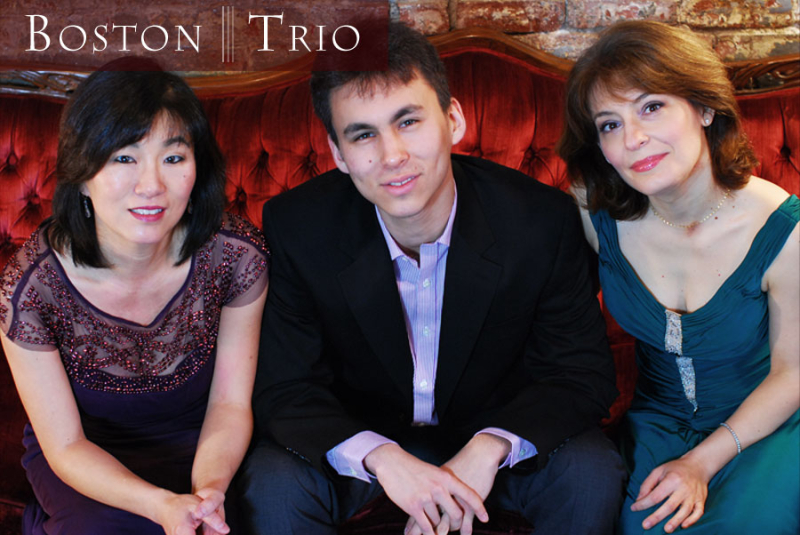
    Above: The Boston Trio: Heng-Jin Park, piano; Jonah Ellsworth, cello; Irina Muresanu, violin

    Author: Oberon

    Thursday September 28th, 2017 – Inaugurating my 2017-2018 Carnegie season with an ensemble new to me – the Boston Trio – in concert at Weill Hall. In terms of both programming and playing, the evening (aptly sub-titled Wheel of Colors) was a genuine pleasure; a large and very attentive audience made for a congenial atmosphere.

    The program was finely-constructed, with some ‘new’ music to begin, followed by an incredibly inventive arrangement of a symphonic classic, and concluding with a familiar and beloved Dvořák piano trio. We sat close, on the keyboard side, and were deeply immersed in the music. The pianist wore red, the violinist a lovely pale lemon-yellow frock, and the cellist an open-collar blue shirt; they were as pleasing to watch as to hear, and Ms. Muresanu’s elegant posture was an added delight.

    Jennifer Higdon: Piano Trio

    I. Pale Yellow

    II. Fiery Red

    I admit to being unfamiliar with Jennifer Higdon‘s music, though her name figures prominently among current composers. The two movements of Higdon’s Piano Trio seemed like miniature tone poems, and they were superbly played by the Boston Trio.

    In the first, Pale Yellow, the composer reveals a romantic bent: the music is lyrical, melodious, devoid of angularity. Yet while harkening back to a more gracious era, the piece seems utterly contemporary and fresh. It served as a perfect introduction to the three artists of the Boston Trio.

    Pale Yellow begins with a wistful passage for the piano; the cello comes in on a soft, sustained tone. The violin joins, entwining its voice with the cello in close, intriguing harmonies. The music flows lovingly: the cello sinks to the deep range as the violin sings high and sweet. Our three players develop a warm resonance of sound and then the music turns turbulent before rising…soaring. There’s a sort of coda, with the violin again lingering on high. A lovely, gradual resolution leaves the audience in a spellbound state.

    A complete volte face for the second movement: Fiery Red is aptly titled. It commences with violent energy, Ms. Muresanu slashing her bow across the strings. At the piano, Heng-Jin Park strikes up a dynamic dance, but suddenly things come to a halt. Then the strings begin to buzz as the piano gets a bit jazzy. This develops into a plodding piano figuration as violin and cello pluck away. An energy build-up sends the violin and cello high with a scratchy edge to their playing. From a piano heartbeat, the volume amps up and the music starts to sway heavily. Musical peaks and valleys eventually surge forward to the ending. 

    Great playing from all three musicians, and the audience really seemed to be soaking it all in. Now I need to hear more of Higdon’s music: it’s refreshing to find a contemporary composer who in unafraid of melody and sentiment on the one hand, and who can then can turn bristling and quirky moments later.

    After the briefest of pauses, the trio returned for the Debussy.  

    Debussy/arr. Beamish: La Mer

    I. De l’aube à midi sur la mer

    II. Jeux de vagues

    III. Dialogue du vent et de la mer

    The idea of hearing Debussy’s  La Mer arranged for piano trio was a key factor in my decision to attend this concert. Sally Beamish, London-born violist and composer, arranged the Debussy masterwork in 2013 for the Trio Apaches, a British ensemble. I can only marvel at what Ms. Beamish accomplished, and marvel further at the Boston Trio’s splendid playing of the piece.

    There’s no sense of miniaturization or of anything being ‘left out” in Ms. Beamish’s adaptation: the sound our trio produced tonight had a quite amazing orchestral quality, and Debussy’s reputation as a colorist didn’t suffer at all as they played with such depth both of tone and of feeling.

    Ms. Beamish hands much of the responsibility for the success of her setting to the pianist, and Heng-Jin Park seized on the opportunity, playing beautifully and conjuring the mood shifts of each of the three movements. 

    The pianist commences De l’aube à midi sur la mer quiet and low, and the tremelo strings join in, developing a sense of mystery. Dense textures evolve, with gently rocking waves evoked by the strings; later, piano and cello pulsate with a violin overlay. Taking on a symphonic quality, the three players bring out delicious colours. The violin shimmers, the cello sings deep, the piano is luminous: sustained, heartfelt, passionate playing from all.

    Rippling sensations from the keyboard open Jeux de vagues, with the strings in agitation. Heng-Jin Park gracefully executes the melismas that Debussy originally assigned to the harp – so atmospheric – and Ms. Muresanu’s trills are a further attraction. The music fades into a hazy mist.

    Low grumbling from Heng-Jin Park’s Steinway and a restless passage from Mr. Ellsworth’s cello set Dialogue du vent et de la mer on its way. The restless yearning of a downward-bending 2 note/4 note motif that recurs in this movement is a signature element of La Mer, and Ms. Beamish’s arrangement employs it intriguingly. The depth of sound the three musicians achieve is most gratifying, and contrasts magically with the calm stillness of the piano repeating the main motif. This theme is taken up by all three, with a build-up of ecstatic tension.

    Experiencing the Debussy in this intimate setting is something I’ll always remember; roses for Ms. Beamish to hail her accomplishment, and gratitude to the Boston Trio for bringing the work to us, and playing it so very well.

    Following the interval, Dvořák provided an ideal conclusion to the evening.   

    Dvořák: Piano Trio in F Minor, Op. 65

    I. Allegro, ma non troppo

    II. Allegretto grazioso

    III. Poco Adagio

    IV. Finale. Allegro con brio

    With the new music and the Debussy arrangement behind us, I simply let the familiar Dvorák play on, genuinely savoring the artistry of the three musicians and vastly enjoying their performance. My companion of the evening, choreographer Claudia Schreier, spoke afterwards of experiencing a deep connection both to this music and the Boston Trio’s performance of it.

    A full-house standing ovation followed the Dvorák; the musicians came out for a couple of bows, and, as it became evident the crowd wanted to hear more music, the trio graciously gave us the Presto from Haydn’s C-major trio. This music is sparkling, with a somewhat ironic quality, and with a darkish interlude. It showed off the three players superbly and brought the evening to a merry end.

    ~ Oberon

  • New Chamber Ballet: From Bach to Beat

    21122624_10155646992488571_4600347794179842337_o

    Above: Elizabeth Brown of New Chamber Ballet

    Friday September 22nd, 2017 – Kicking off their 2017-2018 season, Miro Magloire’s New Chamber Ballet offered an evening of five ballets choreographed by Miro to music by J S Bach, W A Mozart, Luciano Berio, Beat Furrer, and the choreographer himself. Pianist Melody Fader and violinist Doori Na performed these stylistically varied scores to perfection: their playing illuminated the evening in a very special way. Miro’s five ballerinas – Sarah Atkins, Elizabeth Brown, Kristine Butler, Traci Finch, and Amber Neff – rose to every challenge the choreographer handed them, from brisk allegro combinations to extremes of partnering.

    Miro has recently altered the seating configuration for his City Center Studio presentations: the audience now sit on all four borders of the performing space, with the piano in a permanent place at the far end of the hall. This worked exceptionally well. I chose a seat right next to the musicians which proved wonderfully congenial. 

    The revival of Lace provided a stunning showcase for violinist Doori Na: his playing of Luciano Berio’s Sequenza VIII was simply spine-tinglingly sensational. To revel in the exceptional clarity of Doori’s playing – the music’s fleet edginess, intensity, and wide dynamic range all captured to perfection – made for a perfect start to the evening. The choreography creates a sense of ritual as the three ballerinas – Sarah Atkins, Elizabeth Brown, and Traci Finch – seem to personify priestesses in the service of some ancient, long-forgotten goddess. Each dancer has solo passages while the other two sit or kneel, striking poses of reverence or ecstasy. The contrast between agitation and reverence creates an engrossing atmosphere.

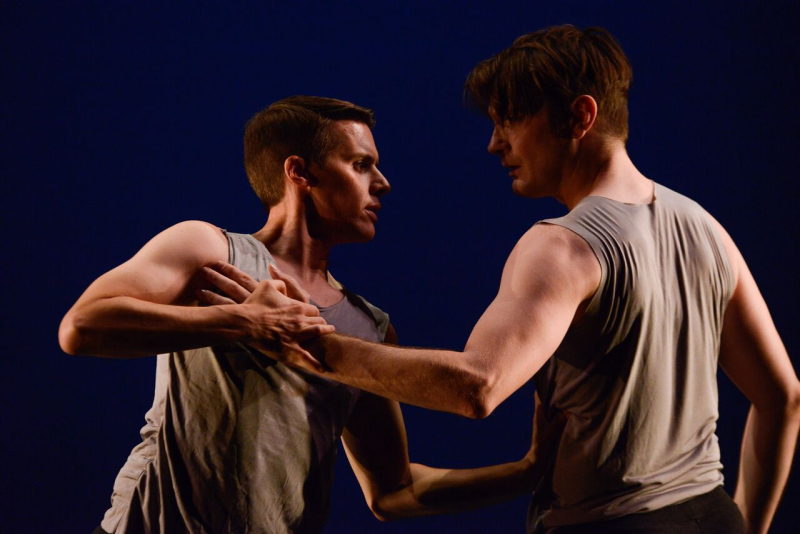
    Pianist Melody Fader brought a hypnotic, quiet radiance to the music of Beat Furrer for Voicelessness, a duet inspired by a poem of Sylvia Plath’s and danced by Kristine Butler and Amber Neff. Melody’s control of the music’s piano/pianissimo gradations was so atmospheric. The two dancers moved with intense assurance thru some very demanding partnering sequences; in this and other recent ballets, Miro has created a new mode of same-sex partnering.

    The revival of 104 Fahrenheit, to Magloire’s own score, made me stop to think: have I seen any other  ballets choreographed by their composer before? I can’t think of any. The ballet begins languidly, with Melody Fader again setting the mood with her refined playing. Traci Finch has the first solo passage: a danced agitato with cunning pauses. Kristine Butler’s slower solo reflects the sense of stillness in the music. Skittering motifs from the piano signal Elizabeth Brown’s space-filling solo, a vividly-danced montage of athleticism and repose in which the dancer’s hands create their own visual poetry. Throughout, Melody Fader’s inspired playing gave wing to the exceptional dancing.

    The world premiere of a new duet to music from Johann Sebastian Bach’s Well-Tempered Clavier has a simple working title for now: Bach. Commissioned by longtime friends of New Chamber Ballet, Leslie and Richard Curtis, the duet is lovely as it stands; but Miro already has plans to enlarge on it.

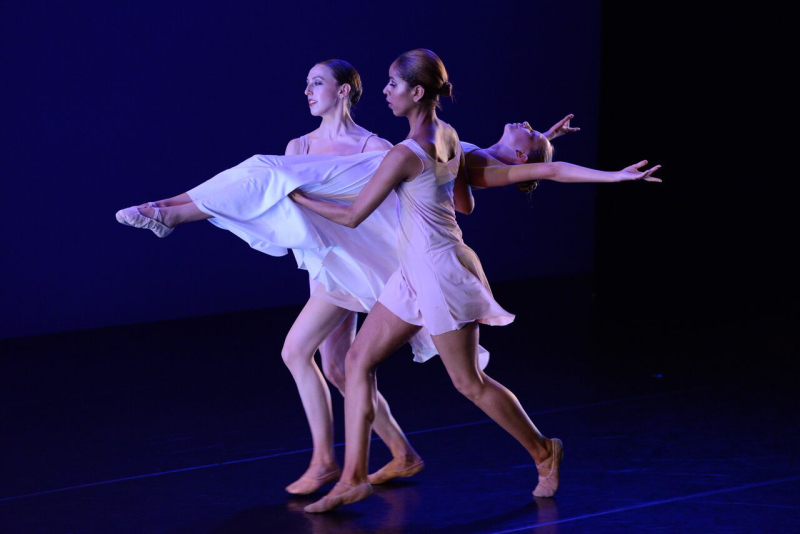
    Wearing Sarah Thea’s frothy pastel frocks, Amber Neff and Kristine Butler drew inspiration from Melody Fader’s spot-on playing of the Bach prelude and fugue #14 in F-sharp minor. The two dancers move from joyous bounciness thru some stretchy give-and-take partnering, and lovely, ecstatic back-bends. It’ll be interesting to see how Miro develops this piece, and whether additional dancers might be included.   

    Amity is set to Mozart’s violin sonata in C Major K.296, and what a wonderful performance of that piece we heard this evening from Melody Fader and Doori Na. Sitting so close to these music-makers, I could really feel their resonance – Doori’s lower register had a nice contralto depth – while Melody’s choice of tempos seemed perfect.

    6a00d8341c4e3853ef01b8d28b748f970c-800wi

    Above: Amity dress rehearsal image by Nir Arieli.

    Wearing Sarah Thea’s gossamer-gold costumes, dancers Sarah Atkins, Kristine Butler, Traci Finch, and Amber Neff affirmed the sense of joy in dancing to Mozart’s music with airy grace. From time to time, Miro has them fall to the floor: an unexpected move that at first seemed accidental. These little touches occur frequently throughout Miro’s choreography, and they keep things fresh.

  • Upcoming: A New Season @ New Chamber Ballet

    L1880359

    Above: dancers Amber Neff and Kristine Butler of New Chamber Ballet

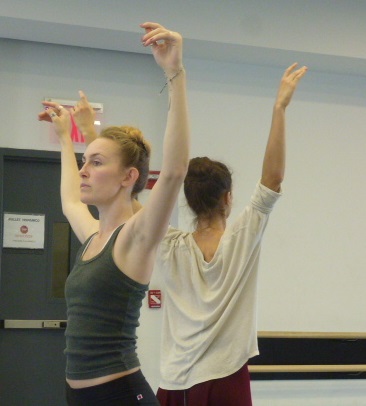
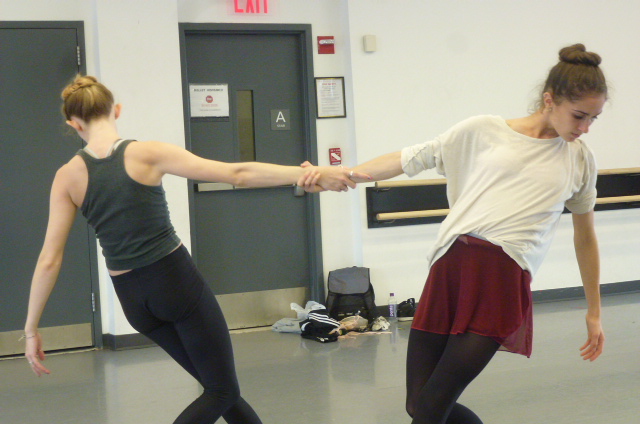
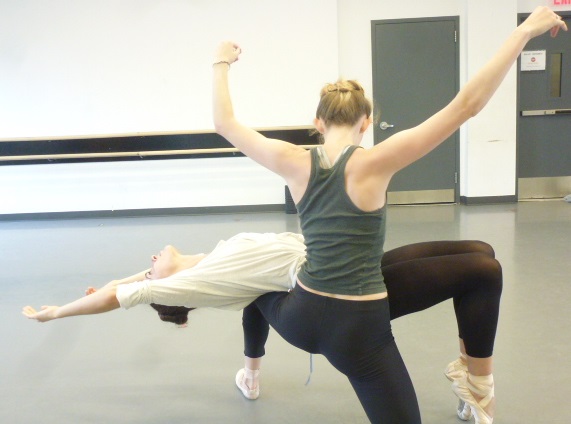
    Monday September 18th, 2017 – Today I stopped by at the Ballet Hispanico studios to visit some of my favorite people from the dance world: Miro Magloire and the ballerinas of his New Chamber Ballet. They are presently in rehearsal for the opening performances of their 2017-2018 season, which will take place on September 22nd and 23rd, 2017, at the City Center Studios. Tickets and more information about the performances here

    The all-Magloire program for the opening performances features a new ballet commissioned by Richard and Leslie Curtis to music by J S Bach. The other composers represented will be Luciano Berio, Beat Furrer, and Miro Magloire. The dancers are Sarah Atkins, Elizabeth Brown, Kristine Butler, Traci Finch, and Amber Neff. In keeping with New Chamber Ballet’s time-honoured tradition, all of the musical scores will be performed live by pianist Melody Fader and violinist Doori Na.

    The overcast sky and a recalcitrant camera kept me from getting any really good images today, but here are some of Amber and Kristine rehearsing the new Bach piece and Voicelessness, the Beat Furrer ballet:

    L1880230

    L1880237

    L1880350

    L1880431

    Kristine Butler is the newest member of New Chamber Ballet

    L1880432

    L1880437

    L1880464

    L1880477

    L1880505

    L1880525

  • Table of Silence ~ 2017

    L1870606

    Above: vocal soloist Courtney Cook

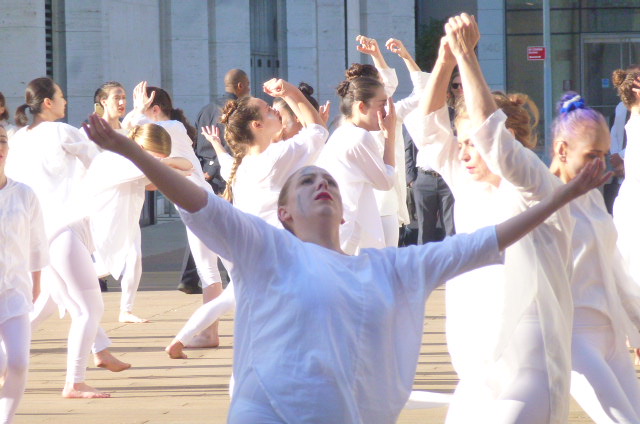
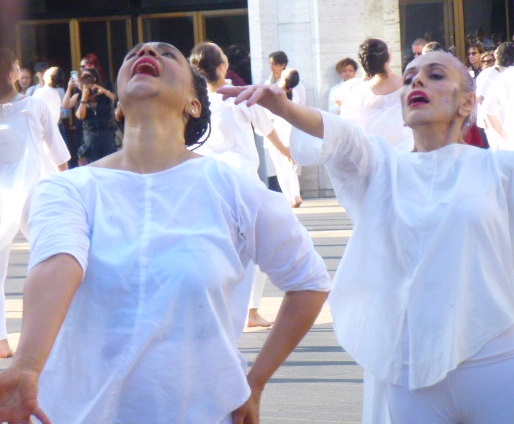
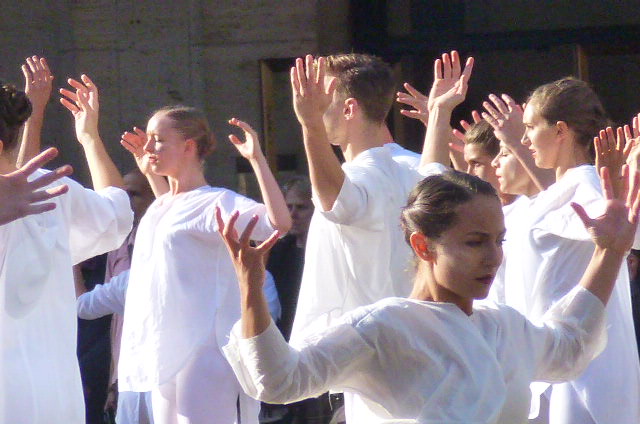
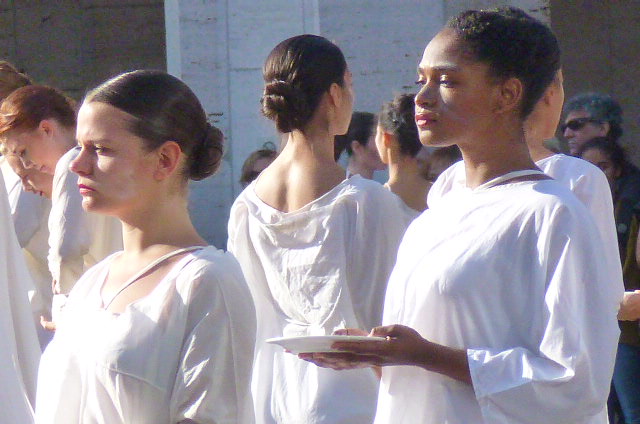
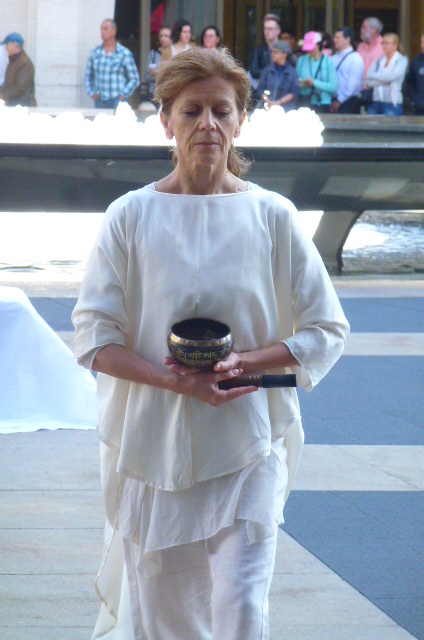
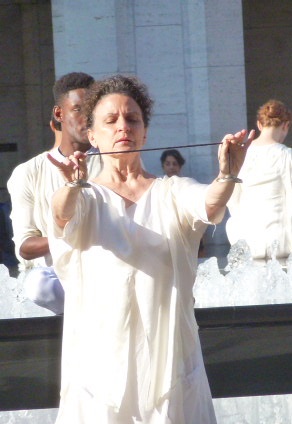
    Monday September 11th, 2017 – The seventh annual performance of Jacqulyn Buglisi’s ritual of hope and peace, Table of Silence, was given on the Plaza at Lincoln Center this morning. Commemorating the 9/11 terrorist attacks, this astonishing work gathers together more than one hundred dancers and an ensemble of singers, flautists, and percussion players who perform an ethereal score conceived by Andrea Ceccomori (flutes) and Libby Larsen (vocals). 

    This year, Table of Silence seemed more moving and more necessary than ever. A pall of darkness hangs over our daily lives as self-serving and often incoherent world leaders, deranged perpetrators of senseless violence, and a succession of natural catastrophes fill the headlines with presages of doom. Thus, we turn ever more fervently to music, dance, poetry, and art, both for solace and to inspire a hope that our common humanity may prevail.

    Here are some images from this morning’s uplifting and thought-provoking performance of Table of Silence

    L1870609

    Percussionists at the ready

    L1870622

    L1870626

    L1870644

    L1870704

    L1870709

    L1870728

    L1870749

    L1870753

    L1870755

    L1870766

    L1870783

    Dance Theatre of Harlem‘s Da’Von Doane on the right

    L1870793

    Graham priestess Virginie Mécène summons the faithful

    L1870802

    L1870807

    L1870819

    Vocalists Lydia Graham and Carla Lopez-Speziale

    L1870830

    Lloyd Knight of the Martha Graham Dance Company

    L1870845

    Courtney Cook

    L1870860

    Graham diva and Associate Founder of Buglisi Dance Theatre: Terese Cappuccilli

    L1870754

    L1870942

    Virginie Mécène signals the end of the rites

    L1870949

    Virginie Mécène

    More photos on Facebook: here.

    “The 9/11 Table of Silence Project represents the common threads of humanity which unite all mankind into a single force with common goals and aspirations regardless of race, culture, or religion. Through this ritual, we celebrate compassion, and honor the bravery of all those affected by acts of war and suppression of freedom…a call for Peace in our world.” ~ Jacqulyn Buglisi

  • AnA Collaborations: SEASONED

    2017-Seasoned

    We never remember days, only moments.” ~ Cesare Pavese

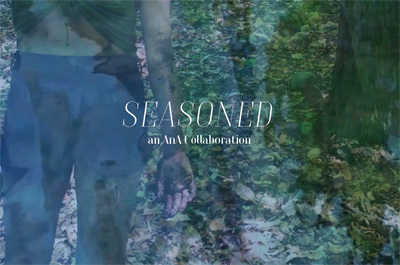
    AnA Collaborations (dancer/choreographers Alex Jenkins and Audrey Rachelle) have created a film entitled SEASONED. The film premiered in late July 2017 down at The Wild Project. At that time, I was still in the recovery phase of my hip arthritis ordeal; but the collaborators have very kindly sent me a Vimeo of the entire film to view at home. I’ve finally found time this afternoon to watch it, and it’s a finely-crafted film that resonates deeply.

    Alex Jenkins is the central figure in SEASONED: her distinctive and quite mesmerizing screen presence alone is enough to sustain our interest in watching the 20-minute film. Cinematographer Blake Horn has wisely let nothing intrude on Ms. Jenkins’ charismatic persona; rather, he enhances it at every turn.

    The four seasons are evoked in this reflective work; in each of its four segments, Ms. Jenkins shares the screen with an equally compelling lover or partner in her journey. 

    Autumn is handsomely filmed against a backdrop of yellow leaves; Ms. Jenkins finds herself in this woodland glade with Jon Ole Olstad. Their intimacy is easy, loving, and joyous, and their pas de deux is at once earthbound and dreamy. Everything about this scene is perfectly natural and spontaneous, even to the point of feeling that’s it’s been shot in one take.

    In Winter, the cinematographer dazzles us with chiaroscuro effects. We are in a dark, unfurnished, rustic cabin but thru the windows the reflected glare of a snow-covered landscape makes for brilliant contrast. Here, Ms. Jenkins’ partner is Cameron McKinney, whose alluring sculpted torso is ideally displayed in the contrasted light. Perhaps suffering from cabin fever, this couple’s love is rougher, with an unkind edge. Their choreography is gestural and more angular, and occasionally there are cutbacks to Ms. Jenkins’ happier times in Autumn. Desperate to escape, Mr. McKinney leaps out of a window and races away into forest. Ms. Jenkins pursues him.

    The Winter lovers are never re-united. Instead, in Spring, Ms. Jenkins – after running and seeking – encounters a contemporary wood-nymph, played by Ms. Rachelle. They bask in a mud bath and communicate on a primeval level.

    81847432f9ff625c46f8e3c1dc712ef1_original

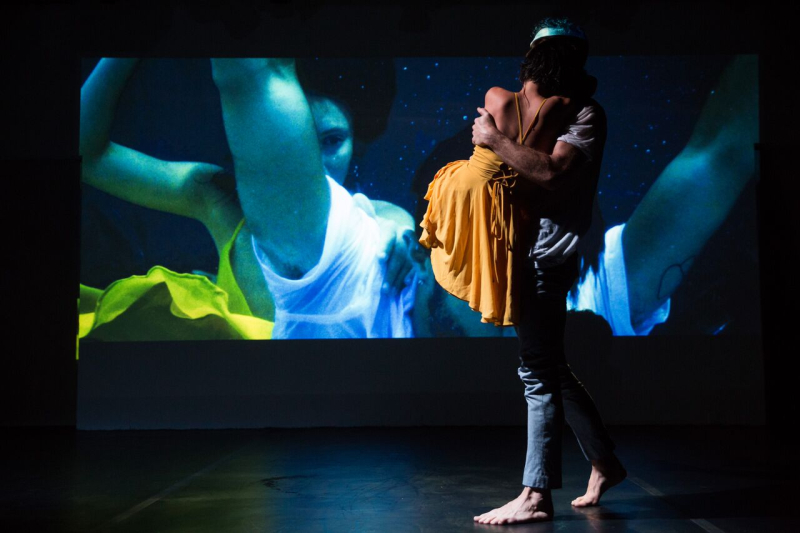
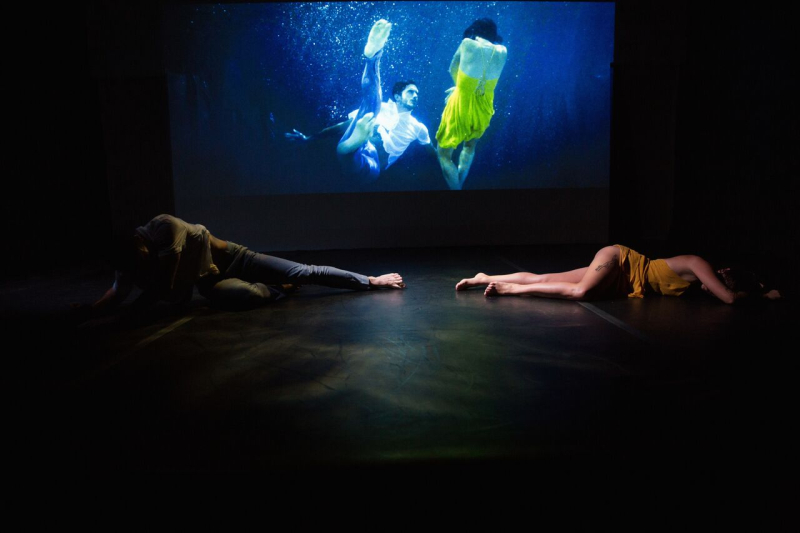
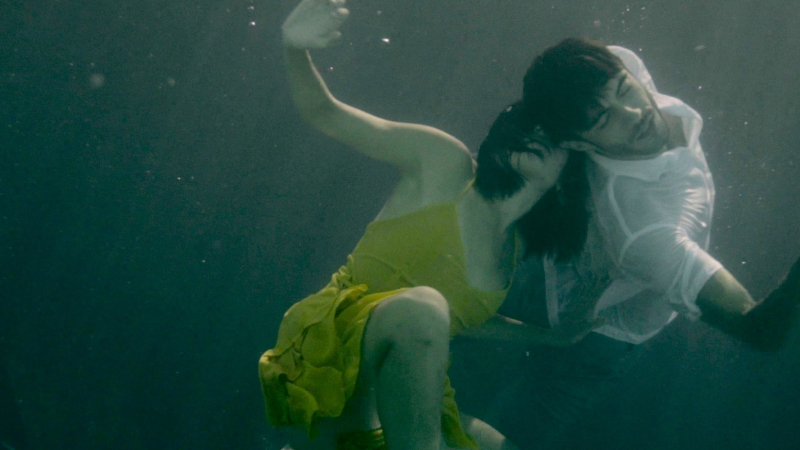
    Finally, in Summer, we experience a beautifully-framed underwater pas de deux, with Ms. Jenkins and Nick Korkos floating weightlessly across the screen, their bodies alternately entwining and drifting apart. Their hypnotic duet has a sense of quiet ecstasy, and of time standing still. 

    072217-AnACollaborations-Seasoned-byScottShaw-146

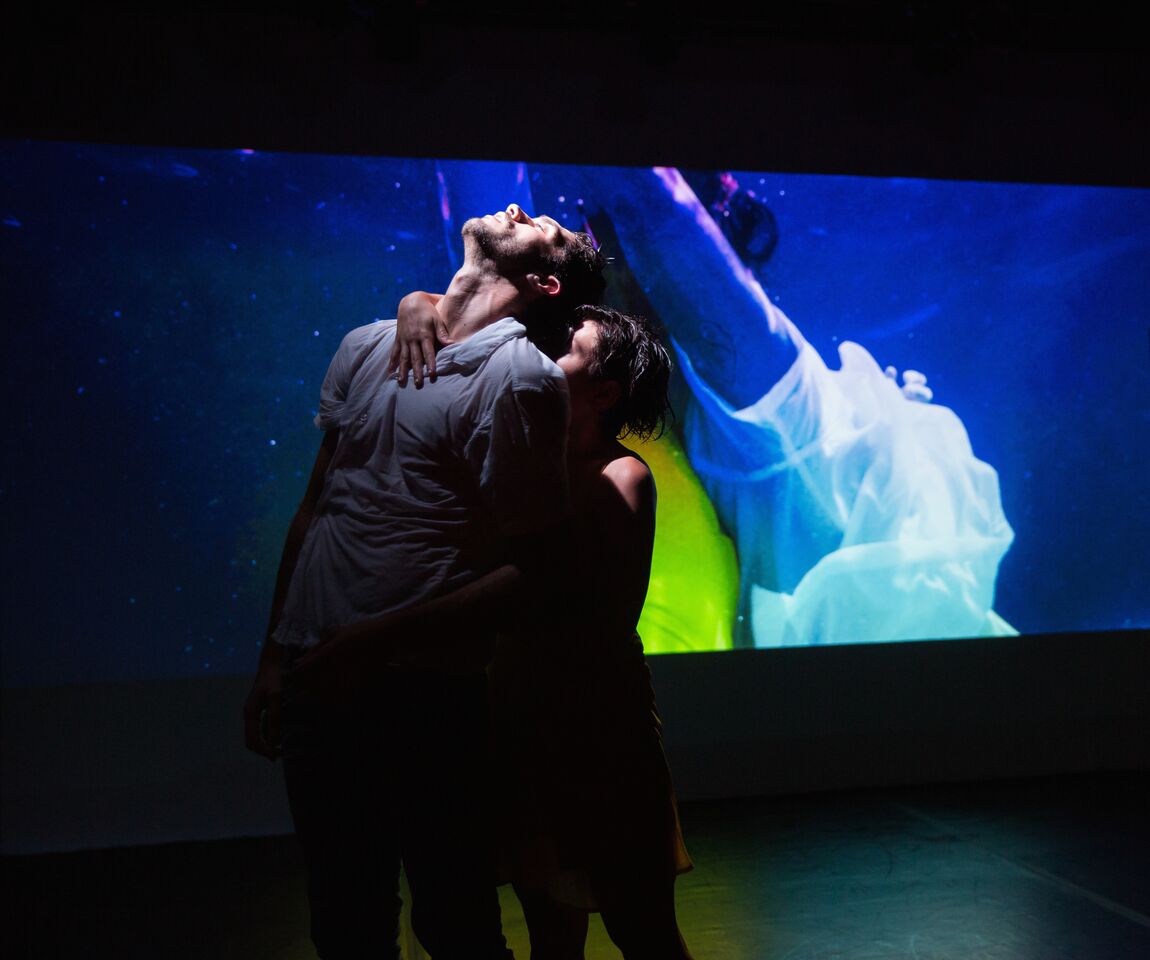
    At the Wild Project premiere of SEASONED, while this aquatic duet is being shown, Ms. Jenkins and Mr. Korkos (above, in a Scott Shaw photo) appeared live onstage, dancing together in a duet of passion, tenderness, and supplication. While perfectly dovetailed to the filmed sequence, this live duet has a distinct power of its own as a viable, free-standing dancework.

    More of Scott Shaw’s images:

    072217-AnACollaborations-Seasoned-byScottShaw-226

    072217-AnACollaborations-Seasoned-byScottShaw-222

    Watch the SEASONED trailer here.

  • Claudia Schreier & Company: Gallery

    AniCollier_DSC04839

    Above: Wendy Whelan and Da’Von Doane in Claudia Schreier’s VIGIL; photo by Ani Collier. VIGIL is danced to a cappella choral music, performed onstage by Tapestry

    Here are some images from photographer Ani Collier of Claudia Schreier & Company‘s recent program at The Joyce. Read about the performance here.

    AniCollier_DSC04761

    Wendy Whelan with Da’Von Doane (of Dance Theatre of Harlem) in VIGIL

    AniCollier_DSC04954

    Wendy and Da’Von: VIGIL

    AniCollier_DSC04987

    New York City Ballet’s Cameron Dieck and Jared Angle, with Da’Von Doane and NYCB soloist Unity Phelan in SOLITAIRE

    AniCollier_DSC05017

    Unity Phelan and Da’Von Doane: SOLITAIRE

    AniCollier_DSC05055

    New York City Ballet stars Unity Phelan and Jared Angle: SOLITAIRE

    AniCollier_DSC05060

    Unity & Jared in SOLITAIRE

    AniCollier_DSC05062

    Unity & Jared in SOLITAIRE

    AniCollier_DSC05243

    Elizabeth Claire Walker (soloist, Los Angeles Ballet) and Jared Angle in TRANQUIL NIGHT, BRIGHT AND INFINITE

    AniCollier_DSC05329

    Elizabeth Claire Walker and Jared Angle in TRANQUIL NIGHT, BRIGHT AND INFINITE

    AniCollier-DSC05825

    Elizabeth Claire Walker in CHARGE; Ms. Walker was recently (and aptly) described by the L.A. Times as “impossibly glamorous” when she danced the Siren in Balanchine’s PRODIGAL SON at Los Angeles Ballet.

    AniCollier-DSC05868

    Tiffany Mangulabnan with Elizabeth Claire Walker in CHARGE.

    And finally, a series of Ani Collier’s images of Wendy Whelan in the mysterious and marvel-filled solo created on her by Claudia Schreier, and danced to music by Marc Mellits: THE TRILLING WIRE.

    AniCollier_DSC05508

    AniCollier_DSC05525

    AniCollier_DSC05560

    AniCollier_DSC05587

    AniCollier-DSC05593

    AniCollier_DSC05650

    All choreography by Claudia Schreier; all photography by Ani Collier.

  • Claudia Schreier & Company @ The Joyce

    6Q5A0441

    Above: Da’Von Doane (of Dance Theater of Harlem) and Elizabeth Claire Walker (from Los Angeles Ballet) in Claudia Schreier’s TRANQUIL NIGHT, BRIGHT AND INFINITE @ The Joyce; photo by Travis Magee

    Author: Oberon

    Friday July 21st, 2017 – Tonight’s performance by Claudia Schreier & Company at The Joyce was something I had been looking forward to ever since the choreographer confided to me last Fall the news that she had been invited to show a full evening of her work at the iconic dance venue. Having put together an impressive program of her ballets which explore a range of moods and musical styles, Ms. Schreier assembled a simply gorgeous troupe of dancers and also summoned a choir, a pianist, a clarinet virtuoso, and a string quartet to make the performance one of the most impressive and satisfying in many a Gotham moon.

    I first became aware of Claudia Schreier’s choreography thru her creations for Columbia Ballet Collaborative; those elements in dance-making that should be fundamentals (but so often aren’t) – musicality, structural integrity, showing off dancers in the best possible light, and an underlying sense of passionate commitment – are givens when it comes to Ms. Schreier’s work. 

    It was one particular piece – her 2013 ballet HARMONIC set to a dazzling score by the Dutch composer Douwe Eisenga – that heralded a great leap to prominence for the choreographer. After its premiere at Columbia, the ballet was taken up by Craig Salstein’s Intermezzo Dance Company for performances at Vassar.

    And then, in 2014, HARMONIC won Claudia Schreier the top prize in the Breaking Glass Competition for Female Choreographers. The shouts of joy from the crowd as HARMONIC ended that night signaled the emergence of a major force in the dance world, and things have rolled on with a sense of inevitability since then. A year after winning their Competition, Breaking Glass presented a full evening of Schreier choreography at the Ailey Citigroup Theatre which was a smashing success. Claudia then became the second woman to hold the Virginia B Toulmin Fellowship for Female Choreographers at New York University’s Center for Ballet and Arts. A ‘big ballet’ (CHARGE) for Ballet Academy East, and an intimate quartet (SOLITAIRE) for the Vail International Dance Festival (2016) have shown Ms. Schreier’s range. Commissions and future projects will keep her busy for months to come.

    And so this evening’s Joyce program provided a welcome vision of what Claudia Schreier has accomplished to date, where she stands at the moment, and where it all may lead her in the future.

    ~~~~~~~~~~~~~~~~~~~~~~~~~~~~~~~~~~~~~~~~~~~~~~~~~~~~~~~~~~~~~~~~~~~~~~~~~~~~~~~~~~~~~~~~~~~~

    On Valentine’s Day, 2016, Claudia and I attended a concert which was part of the New York Philharmonic Ensembles series at Merkin Hall. A stellar group of NY Phil players opened their program with the Piano Quintet – composed in 2010 – of Ellen Taafe Zwilich. After the quintet’s striking first movement, I whispered to Claudia: “That’s your next ballet!” and she whispered back, “I was thinking the exact same thing!” And…voilà!…a year and a half later, we have WORDPLAY.

    6Q5A0170

    WORDPLAY is an impeccably-crafted duet, danced by New York City Ballet’s Unity Phelan and Jared Angle (above, photo by Travis Magee). Clad in sleek red-and-black body tights from designer Martha Chamberlain, the dancers mirror the changing moods of the Zwilich score in a pairing that shifts from intimate to gently ironic. Jared Angle, always my ideal as a danseur noble, looked thoroughly at home in the supple Schreier choreography, and his partnering skills are to die for. Ms. Phelan’s technical authority is vivid, yet I can’t quite get a sense of the woman inside the dancer.

    6Q5A0193

    Above: Wendy Whelan, Da’Von Doane, and members of Tapestry in Claudia Schreier’s VIGIL; photo by Travis Magee 

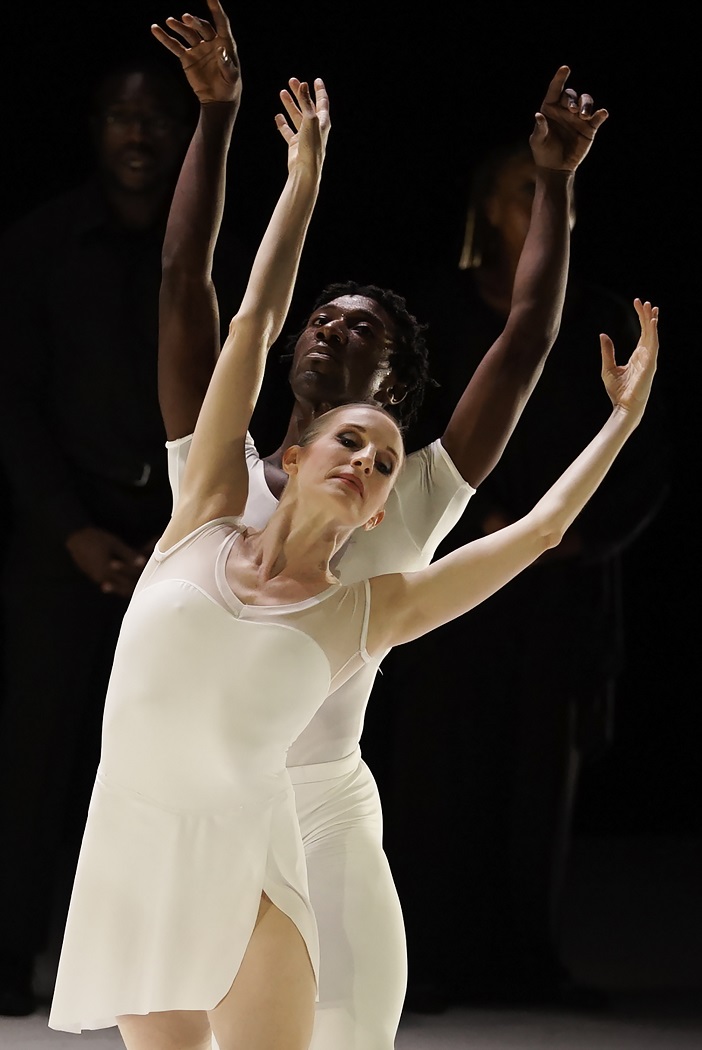
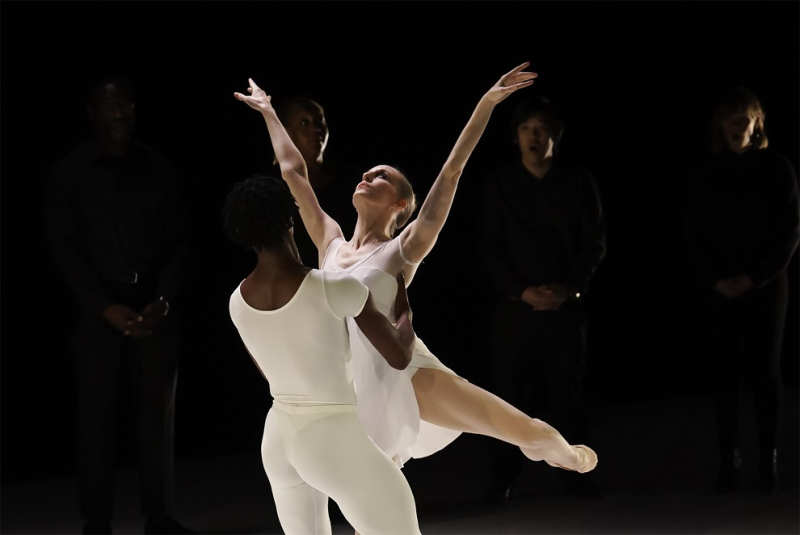
    VIGIL is set to choral works by Tomás Luis de Victoria and Sergei Rachmaninoff which were performed live tonight by the choral group Tapestry. Their achingly beautiful harmonies evoked such feelings of peace: an escape to a realm of purity and truth from an ever-darkening world. Danceworks which can move us to the very depths of our souls come along but rarely; VIGIL is in that rarefied echelon. 

    6Q5A0240

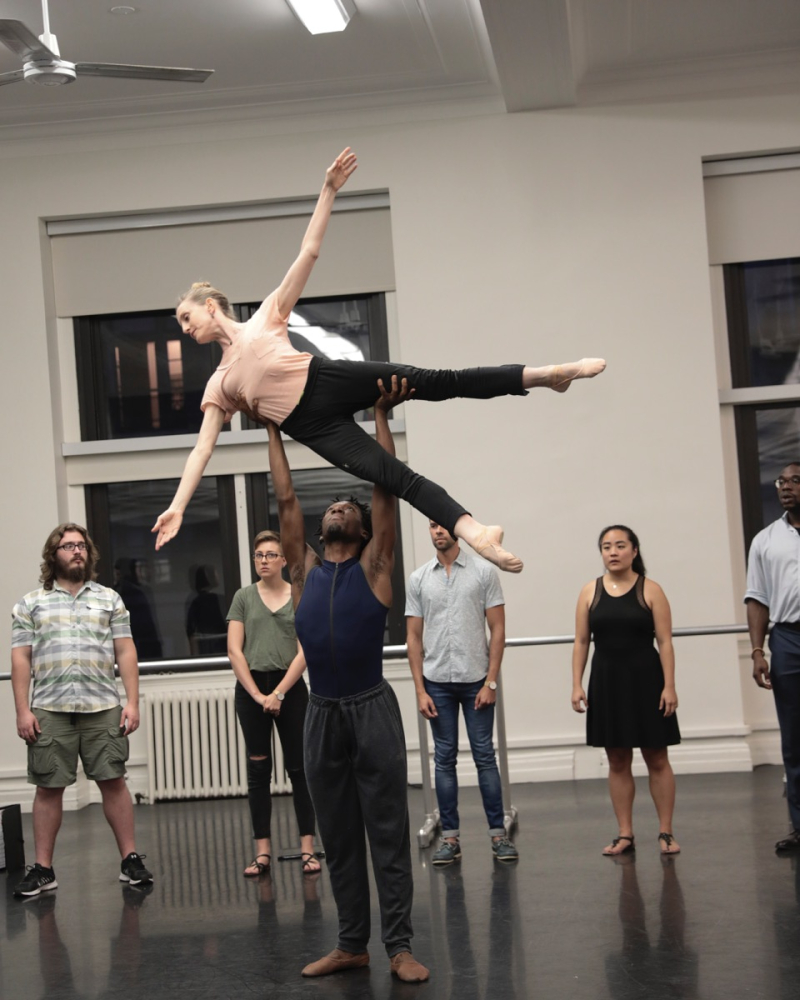
    With the singers of Tapestry, clad in black, ranged in a semi-circle onstage, the stage lights came up on the heavenly sight of Wendy Whelan poised aloft, borne up on the strong arms of Da’Von Doane. Together they moved thru the choreography, which somehow manages to be both elegant and soulful, in a state of grace. As Da’Von manipulated his gossamer-light ballerina with consummate skill thru lifts and sustained poses, they seemed like angels on Earth. Wendy’s other-worldly beauty and serenity as she floated weightlessly in her partner’s hands was something to behold.   

    6Q5A0300

    As the lights began to fade on the final moments of VIGIL, I wanted so desperately to remain in that beautiful place with Wendy, Da’Von , and the singers of Tapestry. I was put in mind of the ecstatic words of the Dyer’s Wife in Act II of Richard Strauss’s DIE FRAU OHNE SCHATTEN; upon being shown a vision of the life she has always desired, she cries out: “O Welt in der Welt! O Traum im Wachen!” (“O world within the world! O waking dream!”)… 

    But if we cannot linger long in paradise, then let it be Shostakovich who calls to us: the gentle opening of his Piano Quintet, Opus 57, played by pianist Emily Wong, opens Claudia Schreier’s SOLITAIRE, which was first seen at last summer’s Vail Festival. Unity Phelan leads off the ballet alone to that pensive piano solo; she is soon joined by three men: Jared Angle, Da’Von Doane, and Cameron Dieck, as the strings take up a chorale-like passage.

    The Shostakovich section ends with the first of two sensational lifts of Ms. Phelan by Jared Angle. The moderato pastorale from Alfred Schnittke’s Piano Quintet is the setting for their ensuing duet, which reaches a striking climax with a powerful, very exposed overhead lift. 

    6Q5A0356

    Let us now praise the superb musicians (above) who so beautifully played the Shostakovich/Schnittke scores used in SOLITAIRE: Emily Wong (piano), Lily Holgate and Kenneth Trotter (violins), Drew Ford (viola), and Julia Henderson (cello).

    Here are some of Travis Magee’s images from SOLITAIRE:

    6Q5A0366

    Da’Von Dane and Unity Phelan

    6Q5A0374

    Unity Phelan and Jared Angle

    6Q5A0389

    Unity Phelan and Jared Angle

    During the intermission, everyone was abuzz about the choreography, the music, and the dancing. It was wonderful to find so many dance-world luminaries among the crowd: Deborah Wingert Arkin and her daughter Ava; Christina Lynch Markham and Madelyn Ho from Paul Taylor; Miro Magloire, Brian Brooks, Vincent Paradiso, Richard Isaac, Jere Hunt…

    6Q5A0409

    Live music set the evening’s second half on its way with a brilliant performance of Leonard Bernstein’s Sonata for Clarinet and Piano (1942). Above: Ms. Wong was again delightfully at the keyboard with Weixiong Wang delivering a performance of the clarinet part with delicious tone, fluent technique, vastly appealing subtle moments, and a lively personality to boot. This ballet, with the intriguing title TRANQUIL NIGHT, BRIGHT AND INFINITE, opens with the five dancers in silhouette.

    6Q5A0453

    As the lights come up, Martha Chamberlain’s tourquoise/sea-green/black costumes catch the eye – above, Jared Angle, Unity Phelan, Elizabeth Claire Walker, and Dameron Dieck; photo by Travis Magee. The choreography is agile, sometimes stylized, with comings and going and brisk partnering trade-offs. Joined by Da’Von Doane, the dancers follow the music into a lyrical state…

    6Q5A0522

    …as Ms. Walker and Mr. Angle dance a pas de deux while their colleagues eavesdrop. The ballet ends with an upbeat feeling.

    More images from TRANQUIL NIGHT, BRIGHT AND INFINITE courtesy of Travis Magee:  

    6Q5A0545

    Unity Phelan and Da’Von Doane

    6Q5A0565

    Unity Phelan and Cameron Dieck

    Solo danceworks for women loom large in my memory-book: seeing Peggy Lyman dance The Incense at Jacob’s Pillow; Kaitlyn Gilliland debuting at New York City Ballet in Eliot Feld’s Étoile Polaire; Ioanna Toumpakari enrapturing me with Andonis Foniadakis’ Rite of Spring; a whole evening of solos from the magical Miki Orihara at La MaMa…the list goes on and on. Tonight, Claudia Schreier’s THE TRILLING WIRE, danced by Wendy Whelan, wrote a whole new chapter in my dance diary: an unforgettable piece performed by Terpsichore’s favoured handmaiden.

    The choreography for THE TRILLING WIRE is different from all other Schreier choreography I have seen. And I’m sure it posed challenges for the dancer; but Wendy Whelan has risen to every challenge that’s ever come her way and thus she turned this unusual work into a full-fledged triumph.

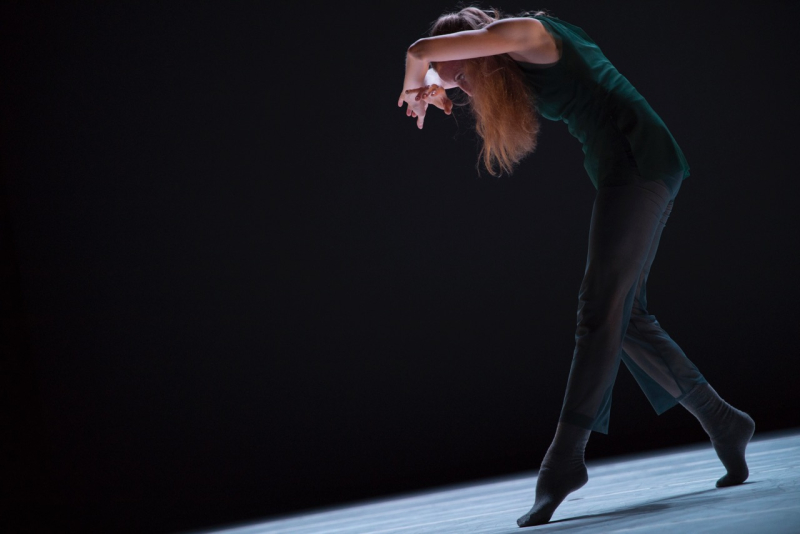
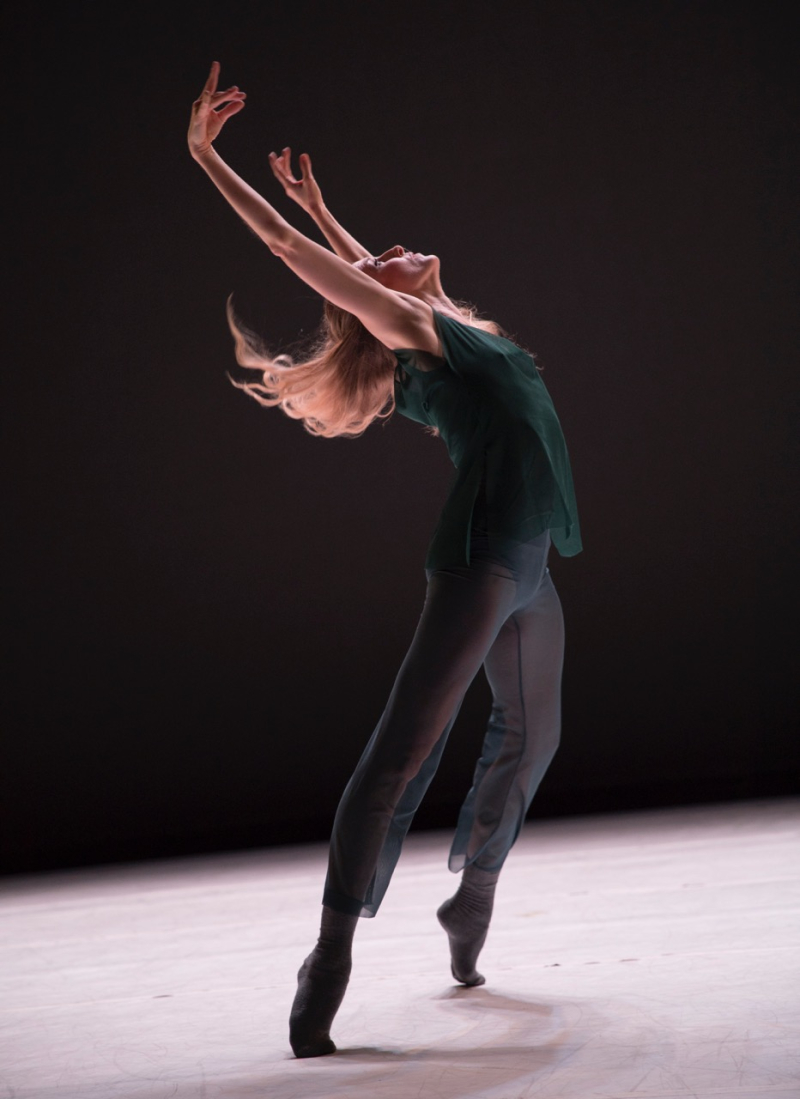
    With the string players back in the pit to play movements of three Marc Mellits string quartets, the ballet opens with Wendy – hair down, in a casual outfit and wearing socks – facing upstage. She begins to move, and within about three seconds we are totally under her spell: her most subtle gestures lure the viewer in. A flow of dance commences, with a searching air and marked by pauses as if she was examining the terrain along which her quest carries her. Mesmerizing at every single moment, Wendy transforms a prayerful gesture into an act of wonderment. 

    As the musical pace steps up, the gorgeous movement quality becomes light and airy. Wendy’s arms and hands are hypnotic, and even her hair is dancing. As the strings stutter, the classic notion of “dancing like no one is watching” comes to mind.

    Then out of the blue comes a walkabout: Wendy simply circles the stage. But even this simple act has such resonance. To pulsing music, fabulous movement ensues; veering from lyrical to stylized, turns and gentle leaps propel the dancer as the pace quickens. A sort of coda seems to indicate the solo is about to end, but suddenly Wendy stops, only to embark on a slowish passage with animated gestures. She has made the music, the choreography, and the very space itself her own. The audience erupted in a tumult of cheers and applause after having savoured this unparalleled dance experience. Graciously sharing the acclaim with the musicians, Wendy was engulfed in a flood of love.

    Here’s a gallery of Travis Magee’s images of Wendy Whelan in Claudia Schreier’s THE TRILLING WIRE:

    6Q5A0594

    6Q5A0603

    6Q5A0633

    6Q5A0678

    6Q5A0682

    6Q5A0706

    6Q5A0720

    I simply cannot get over the power and the glory of Wendy’s performance!

    6Q5A0951

    Above: the final moment of CHARGE with Tiffany Mangulabnan is a spectacular lift by Gilbert Bolden III    

    The evening ended thrillingly with CHARGE. Douwe Eisenga’s Piano Concerto, Movement III is the musical font from which this choreographed blessing flows. It is a work for large ensemble, and every dancer in that ensemble matters. There’s no standing about or idle promenading: this is a ballet that is meticulously structured yet seemingly bursting with spontaneity. The eye is constantly allured from one heavenly body to another as Claudia’s bevy of ballerinas and their handsome cavaliers flash thru the combinations and partnering motifs with élan.

    The driven pace of the music – with fleeting moments of sparkle – propels various smaller ensemble sub-divisions into a vast tapestry of dance. Visual polyphony has seldom been so appealing: with endless comings and goings, one hardly knows where to settle one’s gaze next.

    Travis Magee caught these moments from CHARGE:

    6Q5A0757

    Craig Wasserman and Holly Curran

    6Q5A0816

    Ramona Kelley and Gabriel Hyman

    6Q5A0940

    For me, this ballet was especially gratifying to watch thanks to the presence in the cast of a number of ballerinas who I count as wonderful friends: thus, thru every moment of CHARGE, I was feeling a very personal connection to what was happening onstage: thanks…and roses…to Holly Curran (who opens CHARGE alone onstage, luminous in the light), Amber Neff, Elinor Hitt, Ramona Kelley, Cassidy Hall, and Tiffany Mangulabnan. New to me were Evelyn Kocak, Jasmine Perry, and Jordan Miller. Beauties, all!

    Da’Von Doane, having danced passionately all evening, looked wonderfully fresh and vital here: he and the other men have so much to do in CHARGE, from whirlwind combinations to tricky partnering motifs. Great work from all: Samuel Akins, Michael Breeden, Gabriel Hyman, Francis Lawrence, Craig Wasserman, and Gilbert Bolden III. Mr. Bolden, who I believe is about to join NYC Ballet, is a tall and powerful presence: he effortlessly put Tiffany Mangulabnan into an overhead lift to mark the end of this spectacular ballet.

    6Q5A0897

    As if we had not had enough thrills all evening, watching Elizabeth Claire Walker (above) toss off a series of demi-turns while sending her extension skyward was the frosting on the cake. This combination, which made me think of Gamzatti’s coda in Bayadere, just delighted me thoroughly. We don’t get to see Liz nearly often enough here in New York City.

    The curtain fell, then rose again as the packed house went wild for the dancers. Wendy, Unity, Jared, and Cameron – already in street clothes – joined the cast of CHARGE onstage. Finally, Cameron brought Claudia Schreier out onto the stage; the entire audience stood up and literally screamed at the top of their lungs. It seemed actually that the roof might cave it. Such delirium, and so well-deserved.

    Many thanks to Travis Magee for producing the images for this article.

    Oberon

  • Prelude: Claudia Schreier & Co

    6Q5A0113

    Claudia Schreier & Co will be at The Joyce on July 21st and 22nd, 2017, as part of the theatre’s two-week ballet festival. The performances are sold out.

    On Wednesday evening, July 19th, photographer Travis Magee and I stopped in at the Barnard College studios where rehearsals have been taking place. The dancers were running thru CHARGE, Claudia’s large-scale ballet set to a vibrant score by the Dutch composer Douwe Eisenga. For this ensemble work, Claudia has gathered together an outstanding group of dancers; although it’s an ad hoc ensemble, they’ve already developed the feeling of a Company.

    Here are more of Travis’s images from CHARGE:

    6Q5A0203

    Elinor Hitt and Craig Wasserman

    6Q5A0319

    Elizabeth Claire Walker

    6Q5A0396

    Claudia & Company

    While the dancers caught their breath after two runs of CHARGE, members of the choral group Tapestry filed into the studio and arranged themselves in a semi-circle to sing the music of Tomás Luis de Victoria and Sergei Rachmaninoff which comprise the setting of Claudia’s breathtaking pas de deux, VIGIL.

    6Q5A0482

    VIGIL is danced by guest artist Wendy Whelan and Dance Theater of Harlem’s Da’Von Doane. Working together for the first time, Wendy and Da’Von have formed a partnership based on resonant technique and spiritual affinity. Their dancing is borne up by the heartfelt, resplendent harmonies of Tapestry, making this is a dance experience sans pareil.

    More of Travis Magee’s photos from VIGIL

    6Q5A0506

    6Q5A0523

    6Q5A0558

    The Joyce performances by Claudia Schreier & Co will further feature ballets set to music of Leonard Bernstein, Marc Mellits, Dmitri Shostakovich, Alfred Schnittke, and Ellen Taafe Zwilich. Unity Phelan, Jared Angle, and Cameron Dieck – all from New York City Ballet – will appear in prominent roles.

    All photos by Travis Magee.

  • Lydia Johnson Dance @ NYLA

    _NA09058

    Above: Nir Arieli’s image of Dona Wiley, Sara Spangler, and Blair Reavis-Tyler in Lydia Johnson’s This, and my heart beside…

    Author: Oberon

    Wednesday June 21st, 2017 – Lydia Johnson Dance‘s annual New York season opened tonight at New York Live Arts in Chelsea. Performing in two new works, as well as the revival of a Johnson classic from 2012, and the repeat of a darkish ensemble work held over from last season, the Company dancers displayed the strength, technical accomplishment, emotional commitment, and ever-appealing individuality of face and form that sets them in a unique place on the Gotham dancescape. For Lydia Johnson’s work, rooted as it is classical ballet technique, is alive with dramatic nuances that paradoxically seem both contemporary and curiously evocative of ancient modes of dance. 

    Among current choreographers, Lydia’s work bristles and blooms with a poignant sense of humanity. There’s nary a trace of theatricality in her dances; rather, she uses the music as a canvas on which emotions – both the deep and the subtle – are painted. Expressions of tenderness (so lacking in our lives today), hope, remorse, uncertainty, and the frailty of the human heart well up on the music, sometimes unexpectedly. How often, watching Lydia’s troupe in rehearsal, have I fought back tears or felt pangs of regret as I connect memories from my own life with things she is depicting in dance.

    To Lydia’s good fortune, her work has always attracted dancers with an intrinsic gift for colouring their performances with expressive hues, drawing on their own recollections and experiences to captivate the viewer with their commitment, energy, and passion.

    This season, a particularly striking ensemble has gathered together to offer up Lydia’s ballets: from Company mainstays Laura DiOrio, Katie Martin-Lohiya, MinSeon Kim, Brynt Beitman, and Chazz Fenner- McBride to newcomers Daniel Pigliavento, Dona Wiley, Lauren Treat, Blair Reavis-Tyler, and Hope K Ruth, everyone shone: each in his or her own way. Debuting with the Company, a marvelous ballet-duo, Mary Beth Hansohn and Peter Chusin, left me hoping that tonight marks the start of their ongoing involvement with Lydia’s troupe.

    Of special joy was the re-appearance at Lydia Johnson Dance of a pair of beloved dancers, Sarah Pon and Blake Hennessy-York; they had moved to the West Coast last year, and have graciously flown in to reprise their roles in Giving Way. And we also welcomed back Lisa Iannacito McBride, a key dancer during her seasons with Lydia Johnson Dance. Lisa has come back to perform a role made on her in 2012 in Crossings by River; in the intervening years, Lisa has been raising her son and dancing in her current neighborhood, up the Hudson River. This was not a sentimental return, but rather a vibrant and supremely assured performance from a dancer who always lights up the stage. 

    As we sat waiting for the performance to start, I was reflecting on all that has happened since the Company last danced in New York City. I felt quite certain, having seen some rehearsals, that this would be a strong program. As the evening flowed onward, I found the impact of the music, the choreography, and the dancing exceeded expectations in every regard.

    _NA07564

    Above: Lisa Iannacito McBride, Laura DiOrio, and Katie Martin-Lohiya in Crossings by River; photo by Nir Arieli

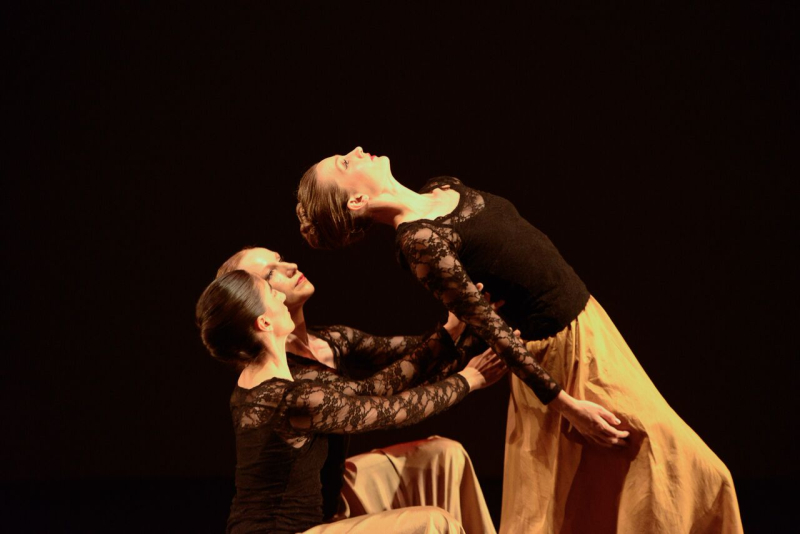
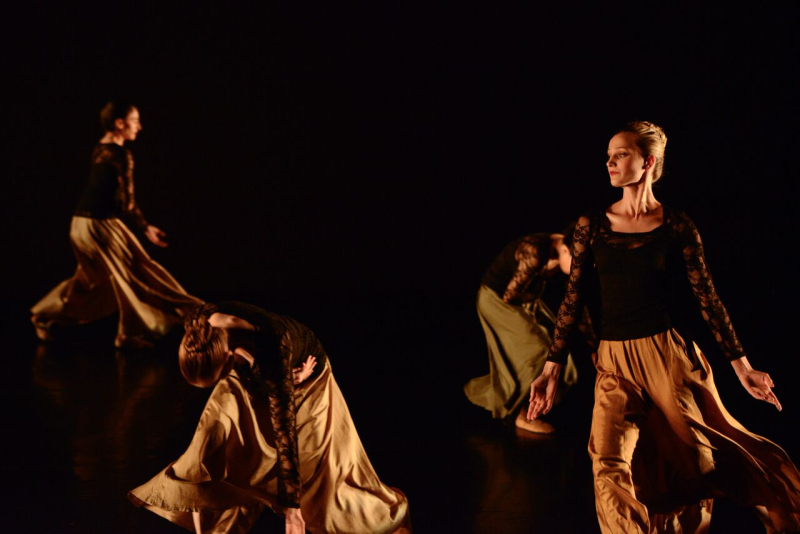
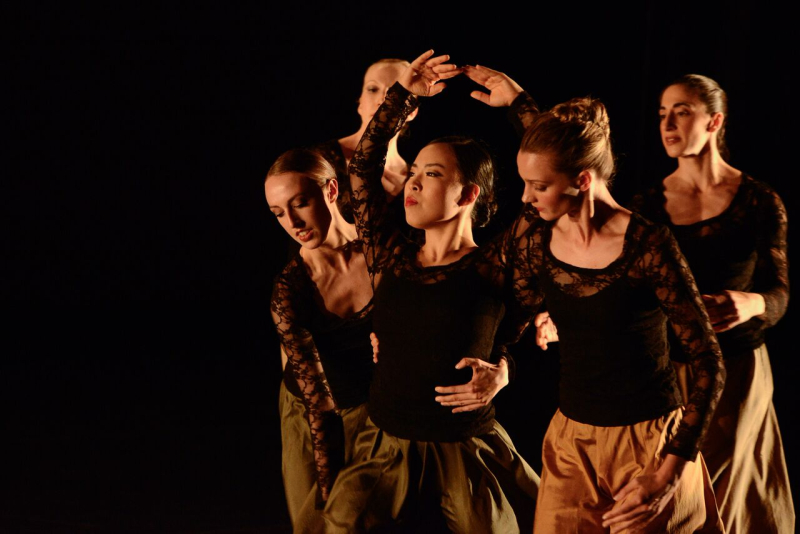
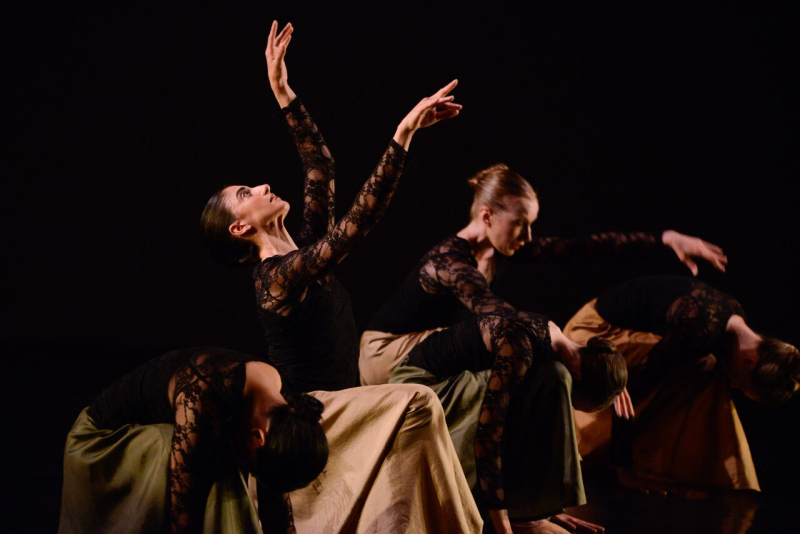
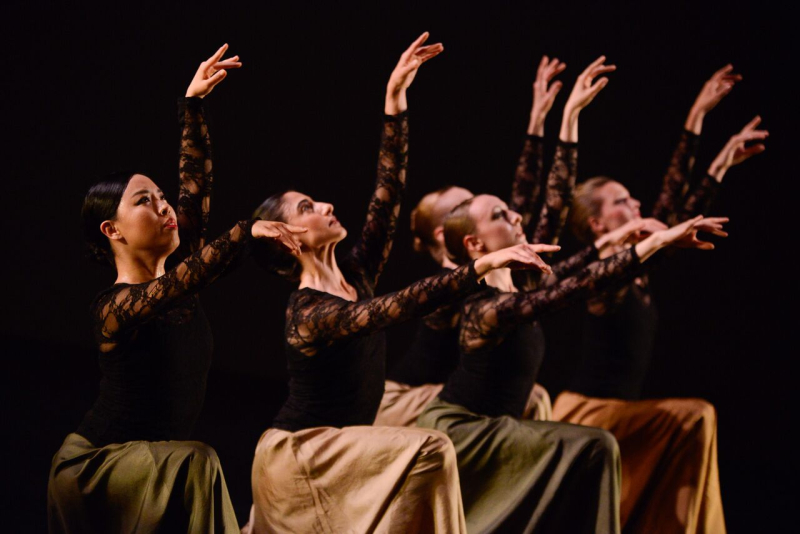
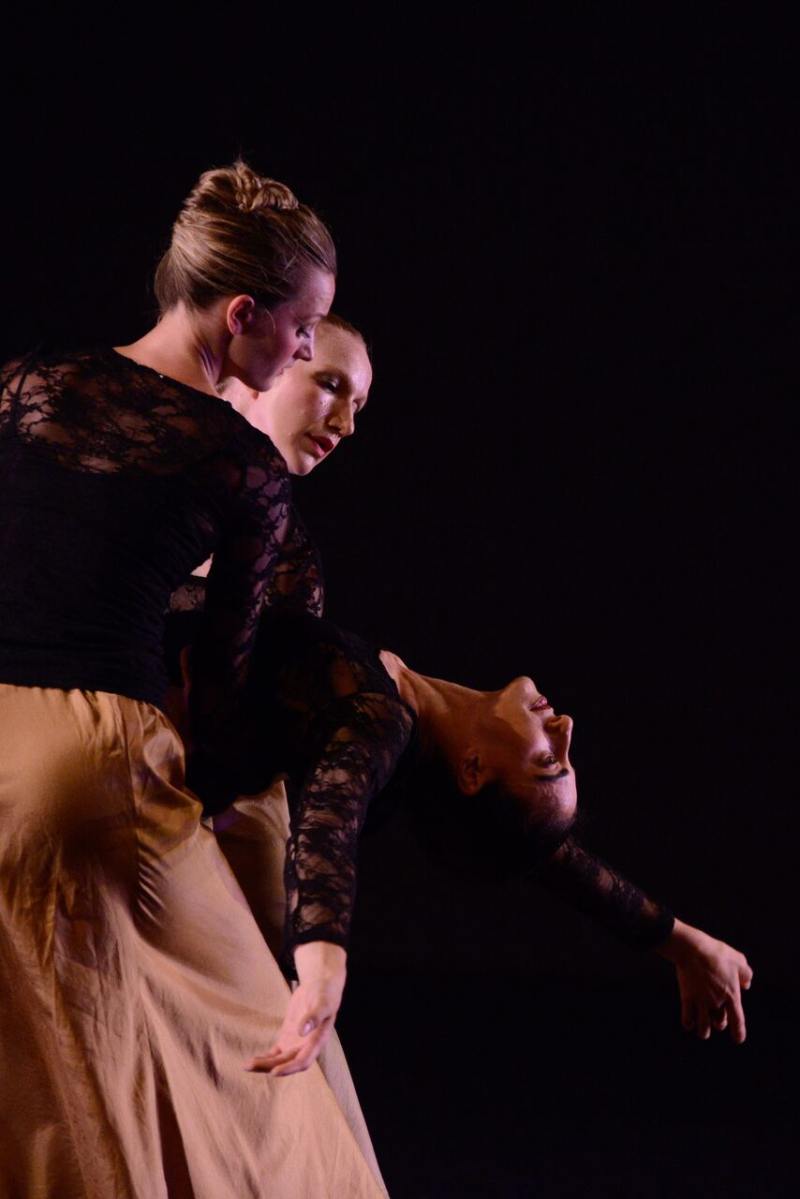
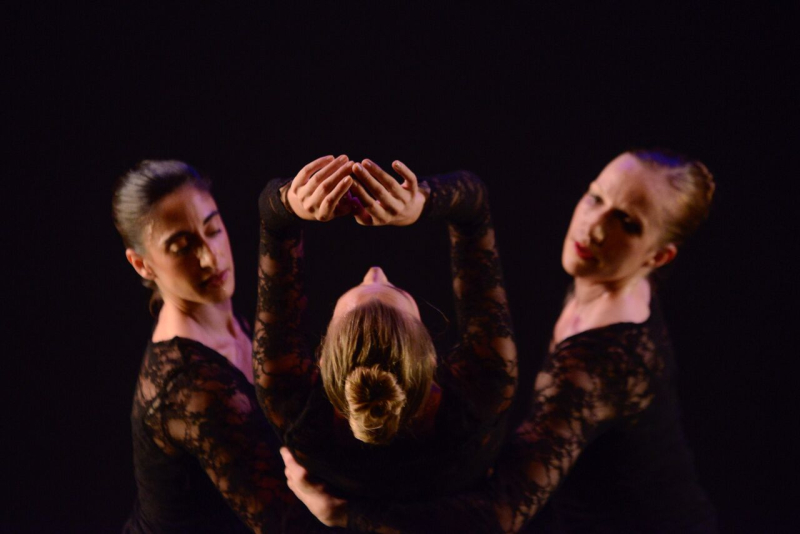
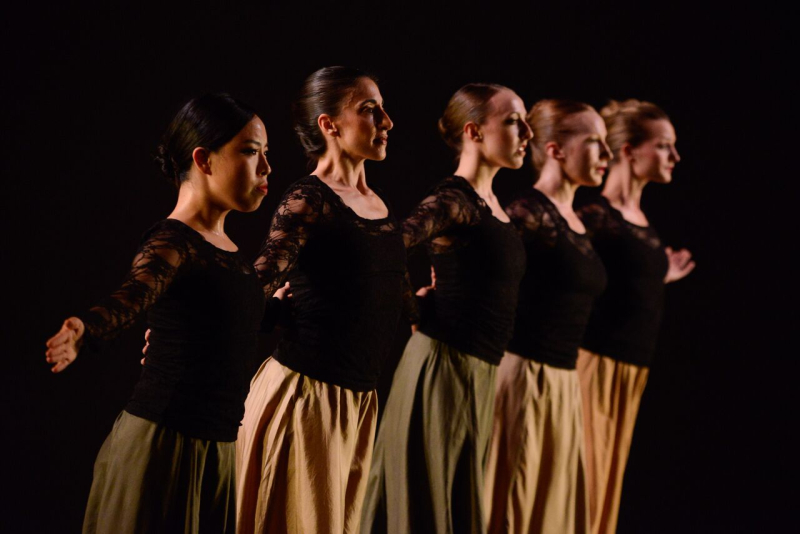
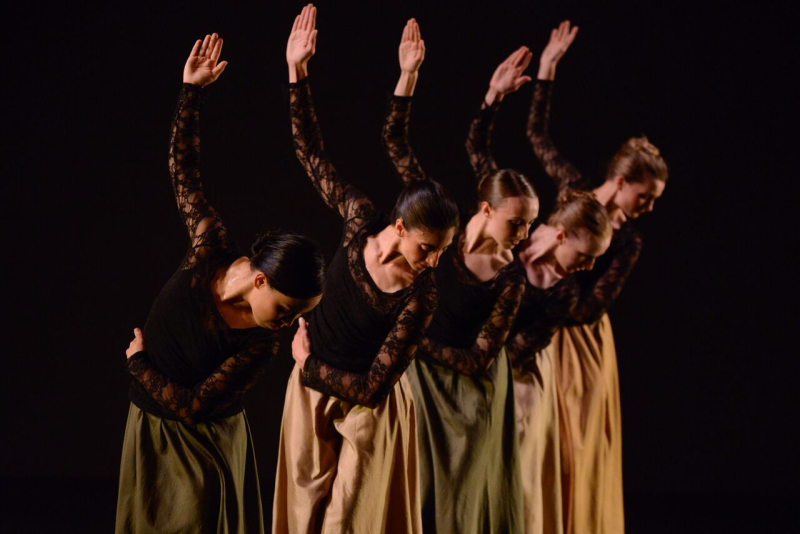
    In Crossings by River, music of Osvaldo Golijov is the ideal setting for a dancework depicting the quiet rituals of a group of five women. Their flowing golden skirts and black lace bodices lend a Spanish flavour to the proceedings and, from the rooted, gestural elements at the start thru to spacious circlings laced with solo passages, and on to the consoling, rocking motifs of the sisterhood, Lydia Johnson’s choreography takes the Balanchinian stance of letting us see the music.

    The five women gave an exceptionally well-integrated performance; two members of the original cast for Crossings were re-visiting their roles today: Lisa Iannacito McBride and Laura DiOrio. Their confident, expressive dancing resonates from the depths of their feminine spirits. Since the creation of this ballet, both Lisa and Laura have become mothers; this added an intangible layer of richness to their portrayals. 

    Katie Martin-Lohiya, who has become a paragon of the Lydia Johnson style, radiated assurance and grace, and MinSeon Kim stepped into one of Lydia’s most intriguing solos – the dancer subtly changes directions as she moves about the space – and made it her own. Dona Wiley, in her first performances with Lydia Johnson Dance, was an elegant presence and danced beautifully in this finely-integrated ensemble work.

    Here are some of Nir Arieli’s images from Crossings by River:

    _NA07582

    Katie Martin-Lohiya

    _NA07630

    Dona Wiley, Min SeonKim, Katie Martin-Lohiya

    _NA07782

    Min, Lisa, Dona, Laura, Katie

    _NA07785

    _NA07789

    Lisa Iannacito McBride

    _NA07794

    _NA07817

    Katie, Laura, and Lisa

    _NA07878

    Katie, gently rocked by Lisa and Laura

    Giving Way is being presented for the third consecutive season; I must say it seemed even more vital this year than previously, though I cannot put my finger on the reason. A sense of urgency was in full flourish among the dancers, whilst the more lyrical passages were hauntingly evocative.

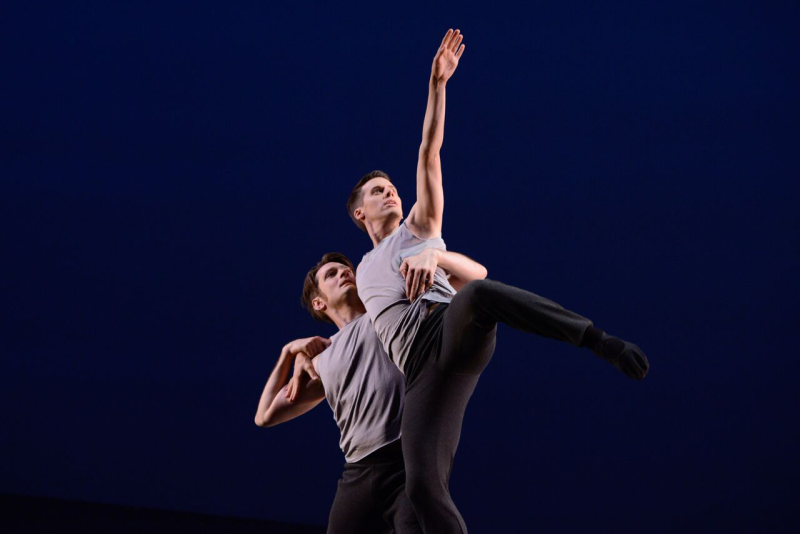
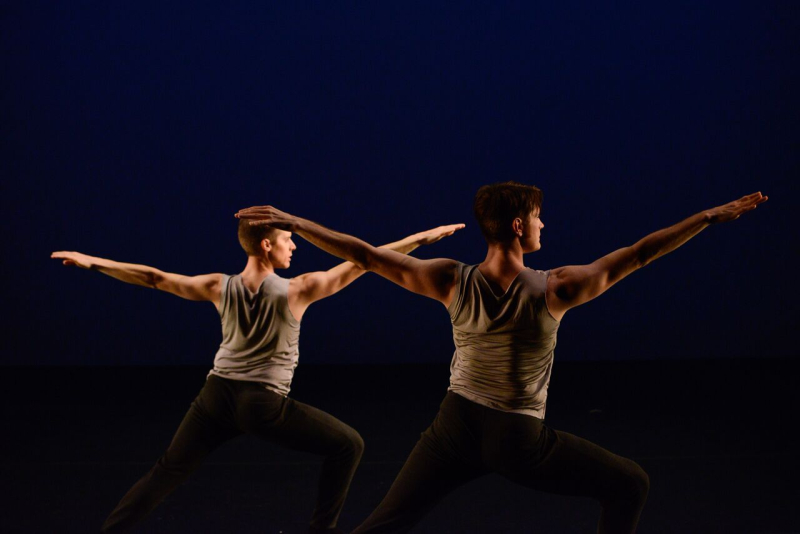
    Following a dynamic opening in which opposing quartets of men and women advance and retreat, Lydia Johnson brings forth an intensely personal duet for two boys: Blake Hennessy-York and Brynt Beitman. Their performance was a highlight of the evening, as Nir’s images attest:

    _NA07968

    _NA07979

    _NA07985

    A men’s quartet – swaying at first and then more animated – leads on the the heart of the ballet, set to a gorgeously mystical music for marimba and cello. A folkish cello passage for the men evolves to a memorable pas de deux danced by Laura Di Orio and Brynt Beitman:

    _NA08306

    _NA08316

    _NA08319

    _NA08327

    In a unique passage, girls are lifted by pairs of men:

    _NA08262
    Sarah Pon

    _NA08270

    Katie Martin-Lohiya

    Spectacular solo dancing from Chazz Fenner-McBride in Giving Way brought another outstanding performance from this incredibly gifted and vividly communicative dancer. I have been following Chazz over the past few seasons, dancing first for Robin Becker and now for Lydia Johnson. He just gets better and better: fearless, powerful, but always lyrical at heart: such a perpetual pleasure to watch him.

    Giving Way ends with the dancers undulating in a wave-like passage as the light fades. 

    Here are more of Nir images from Giving Way:

    _NA07902

    Peter Chursin, Blake Hennessy-York

    _NA07999

    Blake Hennessy-York

    _NA08017

    Chazz Fenner-McBride & MinSeon Kim

    _NA08114

    Katie Martin-Lohiya, Peter Chursin

    _NA08140

    Brynt Beitman, Laura DiOrio

    _NA08149

    Peter Chursin

    The music of Georg Friedrich Handel cries out: “Dance to me!” The contrasts between the lively allegros and the lyrical andantes set up a perfect opportunity for choreographers to show off both their dancers’ technical proficiency and their emotive qualities.

    _NA08468

    In the premiere of her new Handel ballet, Trio Sonatas, Lydia Johnson shows her usual structural deftness and musicality. The dancers strike off-kilter, stylized poses (above) before things turn more animated, with small leaps in place and the girls flinging themselves dramatically into Chazz’s arms.

    Duet motifs, and a walking ensemble ensue: the Company’s newest members have opportunities to shine. Daniel Pigliavento dances with Katie Martin-Lohiya – their long limbs and tender sense of lyricism shaping the movement persuasively:

    _NA08575

    _NA08579

    Lydia’s newest ladies – Dona Wiley, Lauren Treat, Blair Reavis-Tyler, and Hope K Ruth – are seen to advantage in the Handel work. A sprightly finale strikes up, with the dancers doing swift lay-downs before springing back to action. Chazz Fenner-McBride’s daring catches of the petite and charming Hope K Ruth drew appreciative murmurs from the crowd. A female ensemble with decorative gestures, another bit of brightness from Ms. Ruth, and a duo passage for Chazz and Blair Reavis-Tyler draw Trio Sonatas to its close. 

    Trio Sonatas images from Nir Arieli:

    _NA08408

    Chazz fenner-McBride and MinSeon Kim

    _NA08435

    Laura DiOrio and Katie Martin-Lohiya

    _NA08451

    Chazz Fenner-McBride and MinSeon Kim

    _NA08591

    Chazz Fenner-McBride and Dona Wiley

    Thumbnail_Hope in Trio Sonatas

    Hope K Ruth

    This, and my heart beside… is Lydia Johnson’s very newest work, and let’s say it flat-out: it’s a masterpiece. The title of the ballet is drawn from this Emily Dickinson poem:

    “It’s all I have to bring today—
    This, and my heart beside—
    This, and my heart, and all the fields—
    And all the meadows wide—
    Be sure you count—should I forget
    Some one the sum could tell—
    This, and my heart, and all the Bees
    Which in the Clover dwell.” 

    To music by Marc Mellits and Philip Glass, the choreographer has deployed her large cast in an inspired manner; the ballet features the appearance of a young girl, Sara Spangler, and centers on three couples: Mary Beth Hansohn and Peter Chursin, MinSeon Kim and Chazz Fenner-McBride, and Katie Martin-Lohiya dancing with Daniel Pigliavento.

    One aspect of this work that is most intriguing is that its narrative qualities seem to loom up along a fluid timeline; rather than linear storytelling, the dancers seem to slip from the here-and-now into memories from the past and dreams of things to come. Philip Glass’s music amplifies this sense of layers of time, just as it did in Lydia Johnson’s earlier work Summer House, also danced to Glass.

    _NA08770

    The Marc Mellitts segment of This, and my heart beside… has the feeling of a prologue. Sara Spangler’s perfection in the role of The Child (above, with Katie Martin-Lohiya) removed the risk of any inadvertent scene-stealing on her part: she was a calm, natural, lovely presence throughout.

    _NA08776

    Sara Spangler and Katie Martin-Lohiya

    Once the Philip Glass music commences, we are drawn deeper into the drama. In a dancework rife with emotion, the exact inter-relationships of the characters become a matter of what the individual viewer chooses to focus on. There is much going on; the ballet will require additional viewings before one can draw any definitive conclusions – though, on the other hand, definitive conclusions may not be possible in this case.

    In a striking partnership, Mary Beth Hansohn and Peter Chursin delved into both the passion and the problems inherent in a long-time love affair. Resistance and surrender vie for the upper hand, and it is all so true-to-life. Here are some of Nir’s images of this charismatic pair of dancers:

    _NA08844

    _NA08867

    _NA08957

    _NA08970

    _NA09121 - Copy

    One memorable moment in the Hansohn/Chursin relationship came when they seemed to express opposing viewpoints in flashes of pirouettes.

    _NA08871

    The second couple, Katie Martin-Lohiya and Daniel Pigliavento (above), seem more steadfast in their love. It is they, in the end, who have charge of the young girl.

    _NA08890

    _NA08935 - Copy

    Thumbnail_Min and Chazz in This....

    MinSeon Kim and Chazz Fenner-McBride (above) are a youthful couple, alternately joyous and a bit scrappy; all seems well between them until – as the ballet nears its end – Chazz becomes intrigued with Mary Beth. This sets up a brief and subtle but tension-filled encounter for Chazz and Peter. The situation remains unresolved, as does the music. As the light fades, Peter and MinSeon are on their own, with Mary Beth in Chazz’s encircling arms. The child, for whom all that has gone before may be a vision of the future, is safe in the protective love of Katie and Daniel.

    Others will have seen variable narratives in this complex but wonderfully absorbing work; and over time, I may change my opinion of what has happened in the course of This, and my heart beside…

    But I won’t change my mind about the work itself: it’s something to treasure.

    ~ Oberon

  • Rehearsing: Lydia Johnson Dance

    _NA07508

    Above: Nir Arieli’s rehearsal photo from the final moments of Lydia Johnson’s new creation This, and my heart beside…

    Author: Oberon
    Lydia Johnson Dance will be at New York Live Arts, 219 West 19th Street, on June 21st, 22nd, and 23rd, 2017. The performances are at 7:30 PM each evening. Tickets here.
    Two new works choreographed by Lydia Johnson will be presented: Trio Sonatas, to music of Georg Friedrich Handel, and This, and my heart beside…, inspired by Emily Dickinson’s poem “It’s All I Have to Bring Today” and set to music by Marc Mellits and Philip Glass. Completing the program will be a revival of Lydia’s 2012 ballet for five women, Crossings By River, to music by Osvaldo Golijov, and Giving Way, returning from last season, with music by Mellits and Golijov.
    On Friday June 16th, Lydia invited photographer Nir Arieli and me to her rehearsal at the Ballet Hispanico studios. Giving Way was being run when we arrived, and here are some of Nir’s images from that work.
    Click on each photo to enlarge.

    _NA06889

    Laura DiOrio

    _NA06936

    Brynt Beitman

    _NA06941

    Blake Hennessy-York and Brynt Beitman

    _NA06988

    Blake and Brynt

    _NA06984

    Blake and Brynt

    _NA06986

    Above: Lydia with Sarah Pon, who will be dancing in Giving Way at NYLA, giving notes

    After a brief respite, the large ensemble involved in This, and my heart beside… took their places and I got to see this moving and disturbingly beautiful work in a full run-thru. 

    Here is the Emily Dickinson poem from which the ballet’s title is derived:

    “It’s all I have to bring today—
    This, and my heart beside—
    This, and my heart, and all the fields—
    And all the meadows wide—
    Be sure you count—should I forget
    Someone the sum could tell—
    This, and my heart, and all the Bees
    Which in the Clover dwell.”

    The ballet is built around three couples, each of them at a different stage in their relationship:

    _NA07034

    MinSeon Kim and Chazz Fenner-McBride, observed by the ensemble…

    _NA07054

    …Mary Beth Hansohn and Peter Chursin…

    _NA07326

    …and Daniel Pigliavento and Katie Martin-Lohiya.

    Dona Wiley, Hope K Ruth, Blair Reavis-Tyler, and Lauren Treat form the ensemble for this poetic work, and also appearing will be Sara Spangler, a very young dancer who was not at today’s rehearsal.

    _NA07008

    This, and my heart beside… opens with a sort of prologue set to a Marc Mellits score which serves to set the stage for the drama which will unfold. Above: Dona Wiley, and Katie Martin-Lohiya (seated).

    Lydia then turns to one of Philip Glass’s most haunting works, from his Etudes, Book 2: No 17, for the unfolding of the ballet. I won’t give away too much about the piece – Nir’s photos will say more than words can express – but this is a dancework which grasps the heart and never lets go. 

    Here is This, and my heart beside… in rehearsal:

    _NA07139

    Katie and Daniel

    _NA07147

    Daniel, Katie, Chazz, Min

    _NA07203

    Peter

    _NA07457

    Peter

    _NA07248

    Chazz and Min, observed by Mary Beth

    _NA07265

    Peter and Mary Beth

    _NA07312

    Mary Beth and Min

    _NA07322

    Daniel and Katie

    _NA07333

    Min, Mary Beth, Chazz, Peter

    _NA07360

    Min and Chazz

    _NA07379

    Mary Beth and Peter

    _NA07390

    Mary Beth and Peter

    _NA07396

    Katie and Daniel

    _NA07399

    Daniel and Katie

    _NA07425

    Mary Beth and Peter

    _NA07431

    Mary Beth and Peter

    _NA07471

    Peter, Mary Beth, Chazz

    _NA07486

    Mary Beth and Peter

    This, and my heart beside… ends without a musical resolution. It is a ballet filled with unanswered questions.

    All photos by Nir Arieli, with my sincere appreciation.

    ~ Oberon