Category: Ballet

  • Paul Taylor @ The Joyce ~ 2025

    Shawn lesniak

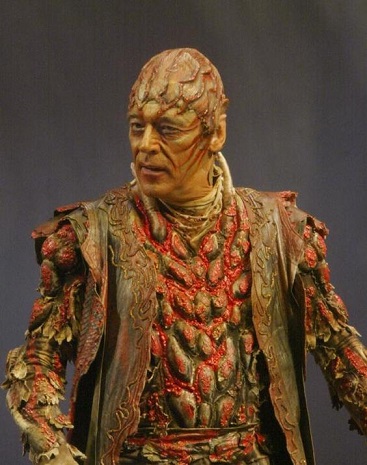
    Above: Shawn Lesniak in Paul Taylor’s Runes; photo by Steven Pisano

    ~ Author: Oberon

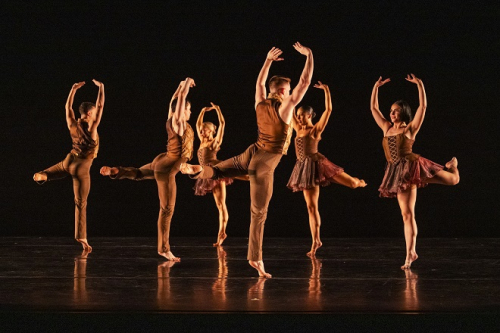
    Sunday June 22nd, 2025 matinee – Three works were on the bill at The Joyce this afternoon, as the Paul Taylor Dance Company concluded their season at the iconic venue. The matinee marked the farewell Taylor performance of Shawn Lesniak, who joined the Company in 2019. 

    Paul Taylor’s opus 64 – Polarisis set to a commissioned score by Donald York; it premiered in 1976. This work is unique in that it presents the same choreography twice, in different musical settings and with different dancers performing in and around a metallic cube; Jennifer Taylor’s lighting design, always so impactful, is also altered in the repeat. 

    In the cast of the first setting of the work were Gabrielle Barnes, Emmy Wildermuth, Payton Primer, John Harnage, and Jake Vincent. Of the women, Mlles. Barnes and Primer were new to me. Ms. Wildermuth had dazzled me in 2024, dancing Jody Sperling’s Clair de Lune, inspired by Loïe Fuller; today, in Polaris, her solo was vividly danced. John Harnage and Jake Vincent looked like young gods, and they danced handsomely.

    Donald York’s score develops a lilting theme, the choreography is stylized as the dancers move about the space creating shapes and striking poses; one dancer replaces another as if by magic.  The music is increasingly cinematic, the dancing full of wit, irony, athleticism, and grace. Ms. Primer and Mr. Harnage have an intriguing duet, and then Ms. Barnes made a gorgeous impression in a long solo passage where she moved about the space like a goddess. 

    One by one, the dancers of the first setting depart, their spots being taken over by Lisa Borres Casey, Jada Pearman, Jessica Ferretti, Lee Duveneck, and Alex Clayton. The music here felt more dramatic…more theatrical; at times, it became suspenseful, even creepy. The lighting seemed to take on a unique glow, with Jada Pearman charming us in her solo. Ms. Borres Casey and Mr. Clayton matched up to fine effect in their duet, and Jessica Ferretti was stunning and sublime in the long solo. Lee Duveneck towered over his colleagues, always a compelling advocate of the Taylor style. The finale of the ‘second’ score was especially evocative. 

    Following the interval, we saw Tablet (Taylor’s opus 24), set to a commissioned score by David Hollister, premiered in 1960. This playful, nine-minute duet was once danced by the choreographer and Akiko Kanda (photo below by Helga Gilbert): 

    Tablet-Taylor-Kanda-by-Helga-Gilbert 2

    Today, Tablet was danced by Kristin Draucker and Devon Louis, below in a Steven Pisano photo:

    Taylor tablet pisano

    Tablet’s score is quirky, the atmosphere that of a playful courting duet. The dancers were ideally paired, their shapes and port de bras having a natural flow. Each has a solo passage, but it is in their entwined partnering that the relationship – and the mutual trust between the two – is most palpable. During the interval, former Taylor star Richard Chen-See stopped by to chat; I understand that Richard was very much involved in getting Tablet back into the repertoire, and that’s surely why it felt so perfect. Ms. Draucker and Mr. Louis were the ideal choices for this revival. I hope Tablet will continue to be danced for us in seasons to come.   

    Cloven Kingdom has long been one of my favorites in the Taylor repertoire; it was the choreographer’s opus 63. With music by Arcangelo Corelli, Henry Cowell, and Malloy Miller, the work premiered in 1976. I first saw it at Jacob’s Pillow in 1982, and it was love at first sight…and first hearing. The music casts a spell: the elegance of Baroque is mixed with sexy percussive rhythms and sounds from an exotic jungle to captivating effect. Having seen it numerous times since that Pillow showing, the piece today was as marvelous as ever.

    “Man is a social animal…” as the Spinoza quote tells us. And what a delightful bunch of humans danced for us this afternoon: Jessica Ferretti, Gabrielle Barnes, Emmy Wildermuth, Elizabeth Chapo, Kristin Draucker, Lisa Borres Casey, Jada Pearman, and Payton Primer swept about the stage in their swirling gowns, leapt swiftly along diagonals, and found new ways of walking (and cart-wheeling) that gave their moves added vibrancy. Their mirrored head-gear cast shards of light into the Hall.  

    The male quartet – a Taylor classic if ever there was one – was dazzlingly done by Devon Louis, John Harnage, Austin Kelly, and Mr. Lesniak. It seemed to me that, in the course of this number – which ends with a stunningly-lit statue-pose – and indeed on into the ballet’s finale, the dancers were subtly messaging their affection and admiration to their retiring colleague as they passed him in the course of their dancing.

    The matinee ended with a rousing ovation from the packed house; cries of “Shawnie! Shawnie!” rang out, and Mr. Lesniak then took a solo bow, to wild applause. Flowers were pelted onto the stage as his colleagues surrounded him in a massive love-in. Bravo!! Bravissimo!!!  

    ~ Oberon

  • Egon Schiele Goes to Prison

    ~ The Austrian Expressionist has been having a moment with gallery goers. Now his life is an opera.

    by Andrew Kupfer

    Schiele in prison

    In 1963, when she was 29, Alessandra Comini was in Neulengbach, Austria, hunting for Egon Schiele. Or rather for his prison cell. An art historian, Comini was in the country for graduate school, and she knew that in 1912, long before the Nazis dubbed his art degenerate, Schiele had been jailed for obscenity—the only European painter ever to have been imprisoned for his work. She also knew from his prison diaries that his basement cell had bars widely enough spaced to toss an orange between them, as Schiele’s lover had done when he was incarcerated. And on this day she had a hunch the old municipal building she was standing before was the right place. She approached the caretaker. He refused to let her in, claiming the former cells held important government papers.

    She left, but loitered nearby. At lunch she noticed a stream of workers leaving the building. “So I did what we used to do to sneak into the movies when we were kids,” she told me. “I stood in the crowd as they exited and slowly walked backwards into the building.” She popped down the stairs and found six doors. On the inside of the second were the carved initials of Schiele’s predecessor, just like in one of Schiele’s prison watercolors. She had found it. As she was leaving, she looked for the government documents. “There were no papers,” she recalls. “Only firewood.”

    Ten years later, that story led to a book, Schiele in Prison, her first of three about the artist. And now that book has inspired an opera by Jared Schwartz, 43, the all-around musical polymath who composed the score and wrote the libretto.

    Jared 3

    Above: Jared Schwartz

    A century after he created them, Schiele’s paintings still have the power to shock. They are unflinching, raw, frank, and altogether unsettling, and they challenge the visitor to experience emotions one usually doesn’t feel when viewing a painting, like disgust. In a way, they are car-crash art: one can hardly bear to look and yet one cannot look away. Drama is inherent in the images.

    What better subject for an opera?

    The project came to fruition about four years ago when a friend and collaborator of Schwartz introduced him to Comini, who broached the idea of an opera. The more he heard the more he liked it. He began composing, meeting with Comini once or twice a week to talk through their ideas. And she provided him with a budget. With that funding, and with the Neue Gallery in New York as a presenting partner, Schwartz mounted a workshop production of Schiele in Prison in January. And I got to see the rehearsals.

    How I happened to be there was a bit of serendipity. Schwartz was staying with an old friend of mine while he was running the rehearsals, and I passed on word that I’d love to sit in one day. I was struggling to write a show of my own and was hoping to see first-hand how an opera might come together. He kindly wrote to say I could come to whatever rehearsals I wished. I think both he and I were surprised that I ended up coming to all of them, every day for two weeks. But after the first rehearsal, I was curious to see what happened next, and after the second or third came a compulsion to see how it all turned out. The singers seemed to accept me as part of the furniture. And here I was with a thrilling opportunity—to witness a group of supremely talented people at the top of their profession as they created a work of art.


    Any opera goer can tell you of the electrifying moment when a well-tuned chorus reaches full voice and fills a hall with sound. To encounter those vocal forces in a small rehearsal studio from a distance of three feet is an altogether different experience. Within two seconds, the thoughts going through my head in quick succession are (1) OHMYGOD THAT’S LOUD (2) People can do that? (3) Is this safe?

    It was also gorgeous. And art isn’t supposed to be safe anyway. In other words, this first impression is a good aural metaphor for Schiele’s art. Schiele in Prison aims to subvert the common conception of the painter as a twisted curio, showing him as a courageous idealist. And that changes how we see the paintings.

    The opera opens in the basement cell where Schiele served his sentence—and where Schwartz spent a night to steep in the atmosphere. He likens the experience to being in a tomb. “It was terrifying,” Schwartz says. “Schiele was only there for 24 days, but for the first 21, he didn’t know how long he would stay. I knew I could leave, but even so I felt panicked and choked.” Along with Schiele’s prison diaries, the visit informed Schwartz’s libretto.

    From there Schwartz moves back in time through the watershed events in Schiele’s life. First Schiele (played in the workshop by Colin Levin) and his younger sister (Christa Dalmazio) try to navigate their fraught childhood in a home dominated by an unbalanced father who had conversations with people who weren’t there. Schiele then bristles against the orthodoxies of art school, impulsively quitting and seeking the mentorship of Gustav Klimt (Bert Johnson). He visits his lover, Max Oppenheimer (Hans Tashjian), an artist, who laments that Schiele doesn’t have the courage to be open about his bisexuality. The scene shifts to the flat he shares with his other lover, Wally (Soon Cho), his model and muse; she would be with him during the pivotal event of the story, when police arrive in search of a young girl who had earlier taken shelter there. The police find not the girl but Schiele’s paintings. “What is this filth?” ask the police. “My art,” replies Schiele simply, again and again.

    Next comes the wild heart of the opera, a kaleidoscopic spectacle in which the cast morph into townspeople attending a show of Schiele’s art. As they gather at the gallery, they hold masks to their faces in a display of piety. They lower them as they are seized by deliriously obscene desires, accosting Schiele’s agent to buy one or another of the erotic works that best fits their masturbatory, armpit-licking fantasies. The ensemble leaves the scene en masse, swirling from the gallery into Schiele’s jail cell, at which point the audience will realize that the scenes from Schiele’s life had all been conjured by the artist as he sat in prison. The opera ends as it began, with Schiele, defiant, defending his art.


    I don’t think of high school very often, but during the fortnight of rehearsals I remember a lesson in my physics class on the difference between constructive and destructive interference in sound. When sound waves from two sources—a tenor and a baritone, say—are perfectly in synch, they combine, producing a larger crest and delivering a louder sound than the sum of the two waves on their own. If they are even slightly out of synch, with one wave sliding toward its trough as the other peaks, they partially cancel each other out, and the perceived sound diminishes, which is one reason why a professional chorus can sound louder than a chorus of talented amateurs three times its size.

    It is that synchronic confluence of voices that nearly knocks me out of my seat on the first day of rehearsals. What follows from that salvo is a primer on how to mount a show, which, for anyone interested in process, is fascinating in its granular detail and has me canceling all my other plans for two weeks. The rehearsals start with the gallery scene, musically the most demanding in the show, with almost the entire ensemble in action. Each day brings a new section, with the action usually returning to the gallery scene in any spare moment. Emphasis shifts throughout. The early days focus on musical phrasing and clarity of diction—bite off your words so the listener can tell when they end, music director Richard Cordova, cajoles the players again and again—which, with 11 people singing at once, is a challenge. When they do, the sound pops.

    That the cast’s voices align so well is a function of how Schwartz worked with them in the weeks before the group rehearsals, meeting with the singers one-on-one to go over their parts. If something didn’t sit well with their voice, Schwartz made revisions to the score at the piano as they rehearsed. These deft on-the-fly touches helped give the singing its power.

    As the rehearsals progress, the focus widens to take in dramatic presentation, fine-tuning gesture and attitude. Jim Brown, the staging director, works with Schiele’s demented father to sharpen his insanity. “Sometimes you glance over to your family when you’re supposed to be talking to your imaginary guests,” says Brown. “It seems like you’re talking to your wife.” David Mejia, as the father, adjusts, boring in on his phantoms.

    Over the course of the first week, Brown layers in blocking and choreography, with movements that are clever enough to add doses of attitude and humor but simple enough for a group of non-dancers to master quickly. In the gallery scene, he deploys the cast for an assault on the sensibilities of a prim and proper Vienna. “In the third bar of the fanfare the lights will come up,” he explains. “You can’t wait to see this debased art. You run in and see the audience, and you stop dead. You put up your masks because you don’t want them to see you.” Brown has them march in time to the music, and, as they sing “We are the people who Run. This. Town!” they point to themselves on each word, a gesture that gives the crew a collective moxie. Whenever they walk backward—which is often—they lean forward, and when they move ahead, they lean back. “Contraporto!” Brown exclaims. “Remember, the more precise it is, the funnier it is.”

    Indeed, if the earlier scenes are alternately harrowing and moving, the gallery scene is raucous fun. Brown encourages improvisation. “We want various sexy poses,” he says. “So meet your scene partners!” The tableau instantly transforms into a Bosch painting, if the figures in a Bosch painting could bump and grind. A soprano immediately stands behind a tenor and bends him forward at the waist. Another duo entwine limbs and gyrate as they hocket. Later, during a solo, a tenor gives a pelvic thrust. “And when you say ‘erotic’, you need another pelvic thrust,” says Brown. “More pelvic thrusts!” Each time they run the scene, the improv is different, and just a bit raunchier, and it’s a hoot to see how inventively the cast use dramatic muscles opera singers don’t often get to flex.

    In week two, rehearsals move to the performance venue, and a string quartet joins the company, marking the first time all the singers and musicians are in the same place at the same time—the so-called sitzprobe, or seated rehearsal, where the entire ensemble gathers to run through the music. It’s the one day of rehearsals I miss; I have finally come down with the fluey illness that has been tearing through the cast, forcing a few to rehearse by Zoom some days. The new venue is as different from a dank basement prison cell as you can imagine—an urban sky mansion in the old headquarters building of the Carl Fischer music publishers, now condominiums, this one the property of Jim St. George and Mark Sullivan, tech philanthropists who frequently use the space to help creators mount workshop productions of new shows.

    Schwartz is now at the keyboard—which will be his station for the performances—and he is worried about the balance between the piano and the strings; he plays with enough power to drown out the quartet if he doesn’t take care. In fact, he had been on track to be a concert pianist till he was 18 and damaged the tendons in his right wrist playing tennis, necessitating surgery; it was months before he could play again, and the wrist was never the same. “It’s my first string quartet,” he confesses. “But I started playing the violin when I was 5. And then the viola. And then the cello.” Wait—you play the violin, the viola, the cello, and the piano? “And the French horn, too. And a whole bunch of other instruments,” he says. He’s also a singer, a lyrical bass. “I’ve just really loved music since I was 3.”

    Tweaks and adjustments continue through the dress rehearsals. Brown adapts the choreography to the new space. It’s a vast, open-plan layout, but there are some immovable obstacles—on the left a marble coffee table that reminds me of the altar in The Brutalist (if you haven’t seen The Brutalist, it’s a hunk of Carrara marble that had to be winched into place), on the right a kitchen island. In the dress rehearsal, the pace picks up, with no time to work passages and with tweaks made on the spot.

    During a run-through of the phantasmagoric fifth scene, Schwartz declares from the piano: “You’re getting this wrong every single time!” Someone was singing the old version of a passage that Schwartz had changed a few days before. He repeats the section, and suddenly dashes from the keyboard to the choral scrum with the hint of a smile and sticks his ear an inch from the mouth of each vocalist, like the round, flat mike in a recording session. He returns to the keyboard mollified; he’s a perfectionist. “I knew I had to do something outrageous to get their attention,” he admits later. “As a music director, I have very high standards, and I offer high support. I also have a lot of fun.” Schwartz agrees with my impression that the singers were having fun too. “Every single person in the cast really wanted to be there. They really wanted the show to work,” Schwartz says. “That’s not normal. Usually most people are there to do the gig.”

    Performance day arrives. Well suited to the venue are the plummy complement of invited guests. A good number of them have come from Austria. The cast negotiate the obstacles and sail past the odd glitch and dropped line with no one in the audience who hadn’t sat through 50 hours of rehearsal any the wiser. “All I could hear is every wrong note I played at the piano,” Schwartz tells me afterwards. “But the piece is compelling and powerful, even in a living room, even in rushed circumstances.” The first show marks the birthday of Professor Comini. At the end Colin Levin, who plays Schiele, pulls her up to take a bow with the cast. She nearly topples over—she is 90 that day—but she holds her ground, as she did all those years before in Neulengbach.

    Now come revisions and the hard graft of finding backers and a producer. Europe is the most likely site for a fully staged performance; the opera is a little too racy for, say, Texas. Schwartz plans to restore some material that he removed for the workshop performances. “I tamed it down. I didn’t want penises out in Mark and Jim’s living room. It’s too small a space,” he says. “But all the nudity and masturbation will have to be there for Europe. I’ll have to get back into the score and make it scandalous again.”

    So more creative tests lie ahead. A workshop—even a terrifically exciting one—is just a first step.

    ~ Andrew Kupfer is a writer and editor in New York City.
  • Parsons Dance @ The Joyce ~ 2025

    Her-Gifts-Photo-by-Steven-Pisano1-1024x683

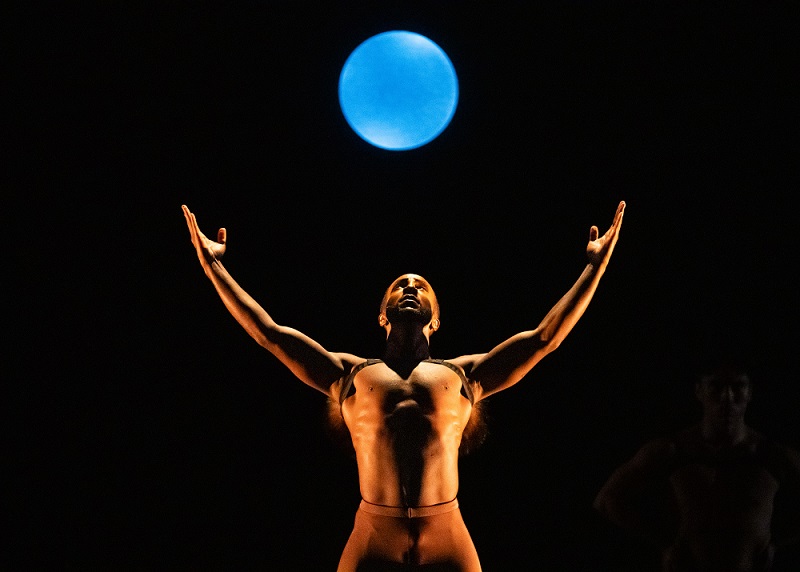
    Above: the one and only Zoey Anderson in David Parsons’ new solo, Her Gifts; photo by Steven Pisano

    Sunday May 18th, 2025 matinee – Parsons Dance at The Joyce with a program of works by Rena Butler, Robert Battle, and the founding choreographer himself: David Parsons.

    The program opened with Parsons’ 2005 work Wolfgang, to music of Mozart. Hints of Paul Taylor as well as nods to the classical ballet world are woven into the choreography. Howell Binkley’s emblematic lighting designs – both here and later, in Caught and In The End – are so atmospheric. 

    Wolfgang  Photo by Paula Lobo

    Wolfgang (photo above by Paula Lobo) has a beautiful, flowing feeling, with a series of duets giving the dancers ample opportunity to shine (the “either/or” listing of the dancers left me wondering who was who at times). For a while, the dancers lounge on the floor. The adagio brought finely-lit poses, laced with touches of humor. There were vanishing acts, where the dancers disappeared into the upstage darkness. In the light and bright finale, Parsons makes canny use of the music; a series of turns elicited a burst of applause.

    A brand new – and stunning – solo, Her Gifts, choreographed by David Parsons to Roberta Flack’s immortal classic ‘The First Time Ever I Saw Your Face’, was a gift from David to the radiant Zoey Anderson. In a striking Judy Wirkula gown, glowingly bathed in golden light, Zoey took complete command of the stage with her hypnotic way of moving: her every step and gesture held the audience under a spell.

    The Hunt (2010), is choreographed by Robert Battle to a tumultuous score by the French percussion band Les Tambours du Bronx. I seem to recall being at the studio one afternoon early on in this work’s creative process. Of course, it was a whole different set of dancers in those days. 

    The Hunt can be danced by either men or women, and today it was a female quartet – Téa Pérez, Megan Garcia Ziminski, Justine Delius, and Joanne Hwang – who took us on this wild ride. Burke J. Wilmore’s lighting bathes the quartet in bloody light; later, saturated colors illuminate the back panel. The dancing is provocative, ritualistic, ecstatic. Pairing off, bodies are dragged about. The pace is relentless, the women so compelling in their moves. The crowd responded with unbridled enthusiasm.  

    Sheep_s-Gothic-Paula-Lobo

    Above: from Rena Butler’s Sheep’s Gothic; photo by Paula Lobo

    Sheep’s Gothic, a 2025 creation by Rena Butler opened the evening’s second half. Moody lighting by Christopher Chambers showed us seven dancers costumed by Asha Ama in athletic gear, including knee pads. The “either/or” cast listing (and a prevailing darkness) again kept me from figuring out who was who, but the dancing was impressive throughout.

    A cappella choral works by Felix Mendelssohn have an oddly nationalistic air. Offsetting these, music by Darryl J Hoffman creates a sonic tapestry; things speed up, echo effects entice, whimsical elements are introduced as this darkish dancework evolves. The chorale resumes, with some mechanical noises further deepening the nocturnal mood. Hymn-like music and spoken words sustain the atmosphere, but after a while, a feeling of longueurs creeps in. A relaxed beat underpins a spacious ensemble as this enigmatic dance moves to its end.   

    I cannot count the times I’ve seen David’s signature masterpiece Caught; I first saw this solo danced by the choreographer at Jacob’s Pillow many years ago. Since then, it’s been performed by both male and female dancers, and it never fails to elicit a delirious response from the audience. This afternoon, Joseph Cyranski wowed the crowd with his magnetic presence and dazzling dancing, perfectly timed to give Caught the visual magic this iconic dancework demands.    

    In The End  Photo by Steven Pisano

    Above: Joseph Cyranski in In The End; photo by Steven Pisano

    David Parsons created In The End – to the music of the Dave Matthews Band – in 2005. It makes a perfect closing number, as all ten of the Company’s dancers join in. Again, Howell Binkley’s lighting is a key element to the work’s appeal. The dancers move thru the Parsons choreography with a mix of lyricism and athletic poise, evoking a celebratory ovation at the end as each dancer rushes on for a solo bow.  

    ~ Oberon

  • @ My MET Score Desk for the New AIDA/3rd of 3

    Garace jagde ken howard

    Above: Elīna Garanča and Brian Jagde as Amneris and Radames; a Ken Howard/MET Opera photo

    ~ Author: Oberon

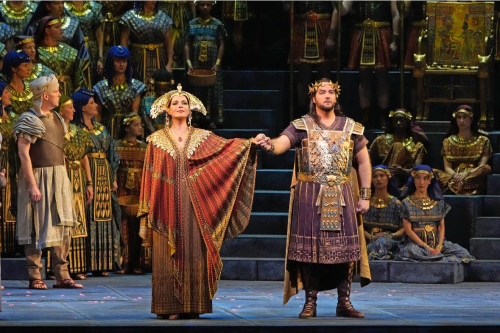
    Sunday April 27th, 2025 matinee – Two of the opera world’s brightest stars joined the cast today for the first of four Metropolitan Opera performances of Verdi’s AIDA, concluding this season’s run of the new production: Elīna Garanča, who had recently withdrawn from some European performances but who thankfully made it here to sing for us, was Amneris this afternoon, and the great Mongolian baritone Amartuvshin Enkhbat, whose Met debut as Germont in 2022 was truly impressive, as was his Amonasro this afternoon. Both of these singers came to worldwide recognition after participating in the Cardiff Singer of the World competition, the mezzo in 2001 and the baritone in 2015.  

    The only aspect of today’s performance that I wasn’t looking forward to was the presence on the podium of Yannick Nézet-Séguin, whose fast-and-loud, brass-happy conducting has spoiled several Met performances for me. 

    After a the opera’s expressive prelude, superbly played by the MET Orchestra, the huge voice of Morris Robinson drew us immediately into the story. As Radames, the stentorian tenor sound of Brian Jagde responded to the hint that Robinson/Ramfis had just dropped with an urgent recitative and then commenced the “Celeste Aida” which was taken a bit faster than usual; the tenor’s massive top notes immediately impressed the crowd, winning Jagde enthusiastic applause: with this man in command, the Egyptians were sure to win the coming battle.

    Ms. Garanča as Amneris enters, immediately making a lovely vocal impression as a lyrical princess; in her elegant phrasing, her every note spoke of her deep affection for Radames. A dulcet clarinet solo introduces Angel Blue’s Aida. The orchestra was sometimes too loud during the ensuing trio.

    Krzysztof Bączyk immediately made an excellent vocal impression as the King, as did the clear-toned Messenger of Yongzhao Yu. “Su del Nilo” felt a bit rushed, but Mr. Bączyk and Mr. Robinson traded bass sonorities to fine effect. Ms. Garanča chimes in…but from the pit, a N-S noise fest is developing. Angel Blue soars above the ensemble, then immediately commences “Ritorna vincitor!” in which Aida’s dilemma is introduced: she is torn between her love for Radames and love of her homeland. Some nice, chesty resonances underscore her anguish, though her topmost range seemed a bit tight. Her lyrical, prayerful ending of the aria was truly beautiful.

    As the action moves to the Temple of Vulcan, Tessa McQueen’s offstage Priestess is too far upstage to make an immediate impression but soon she is moved to a more congenial spot from which to display her attractive voice. There are lovely harmonies from the priests, and then ballet commences, only to have the music’s beautiful sense of calm (played with nice rubato touches) spoilt by someone’s coughing fit. Morris Robinson’s fabulous introduction to the consecration ritual, and Mr. Jagde’s heroic response, soon fall victim to over-playing from the N-S pit, nearly swamping the voices. 

    Bringing the house lights up a bit prior to the ensuing boudoir scene really shatters the mood; there’s a late seating, with latecomers stumbling about in the near darkness whilst people who’d arrived on time think it’s a bathroom break. Cellphones come on throughout the hall. Chatter spoils the ensuing opening harp solo as the women’s chorus seeks to restore the mood after this intrusion of reality.

    Ms. Garanča’s thrice-voiced, dreamy summoning of her beloved is so seductive. After the ballet interlude, the Egyptian princess baits her Ethiopian rival. Sparks fly as their rivalry is revealed; Amneris has the upper hand, and Ms. Garanča’s “Figlia de’ Faraino!” is blisteringly set forth. Some of Ms. Blue’s higher notes are a bit harsh, but her touching prayer at the end – Numi pieta!” – sounded gorgeous.

    The Triumphal Scene is grandly done, orchestra and chorus blazing away – interspersed with more lyrical passages – and then the ballet boys bring down the House with their bold, stomping dance. Mr. Bączyk sounds splendid as the King greets the conquering hero: Radames. The prisoners of war are brought in, among them the incognito King of Ethiopia – Aida’s father, Amonsaro – in the person of Amartuvshin Enkhbat. N-S lets loose the brass, but the baritone is unfazed, singing handsomely. Angel Blue produces a shining top-C. Now Mssrs. Robinson and Bączyk exchange bass sonorities as they debate the fate of the prisoners…of course, the priest wins. Bączyk now gives his daughter’s hand in marriage to Radames, with Ms. Garanča revelling in her triumph. The concluding ensemble was a bit messy. 

    On the banks of the Nile, Morris Robinson again impresses as he leads Amneris to a all-night prayer vigil. Angel Blue phrases the “O patria mia” poetically, her lyricism to the fore. She doesn’t float the top-C, but she makes much of the ensuing lament with a neat crescendo and then a hushed “…mai più…!” 

    Amartuvshin Enkhbat is authoritative and truly impressive as he tells his daughter what she must now do in the name of her country. His wonderful phrasing as he manipulates her leads to some very fine cantabile passages from Ms. Blue. The orchestra again overplays, but the baritone rises to the challenge with an epic “Non sei mia figlia!” Ms. Blue’s anguish is palpably voiced, and her father responds with the inspiring “Pensa che un popolo, vinto, straziato!”; here the orchestra gave truly marvelous support, making it a highlight of the performance.

    Radames now appears, and Ms. Blue treats us to a very seductive “La tra foreste vergini” as she tempts him to run away with her. The soprano’s turnings of phrase here is most inviting. But Mr. Jagde is unsure…his dolce B-flat as he ponders his choices was magical indeed. There was an intrusion by someone in distress in the audience, which killed much of the atmosphere as the duet moved to its end; Ms. Blue’s closing B-flat was short and unsteady; then the stretta was on the wild side, the soprano’s top not really assured. Amonasro’s reappearance sealed the baritone’s success, and then Mr. Jagde nailed his “Io resto a te!” with amazing power and thrust.

    Elīna Garanča now took command of the Met stage with a Judgement Scene in which every word and note counted. Her “Vorrei salvarlo…” was full of hesitant hope, and then the chilling orchestral passage, ending on a splendid clarinet low note, brought Radames before her. Simply gorgeous clarinet playing underscored Ms. Garanča’s beautifully desperate plea, to which Mr. Jagde responded with a great outpouring of tone. Garanča’s brilliant “Morire!!?” was phrased immediately into her ensuing entreating passages. Jagde silenced her with a massive B-flat. Tension reaches a boiling point, Garanča’s voice rising to two scorching B-flats as her desperation overwhelmed her.

    Radames is led away, and Ms. Garanča’s lament is hauntingly sung, her anguish over her jealously having caused Radames’s downfall marked by a pianissimo intoning of “…io stessa lo gettai!” fading to a whisper. Morris Robinson’s chilling calls of “Radames!” must still be echoing somewhere in the univese. Soft drum rolls ominously underscore the ensuing trial, with Robinson/Ramfis becoming increasingly impatient.

    Harsh accents from the orchestra underscore the death penalty prouncement, the deep brass voices terrifying. Ms. Garanča’s pleas are in vain; in her fury she curses the priests, soaring to a climatic top A. A prolonged ovation ensued, the crowd cheering the beloved mezzo in a well-deserved salute.

    The final scene opened with Mr. Jagde’s doom-ladened phrases of farewell to Aida. When she steps from the darkness of the tomb, the great farewell duet commences. Here one wished for more piano singing from Ms. Blue but overall the duetting voices were wonderfully expressive and moving. Then Ms. Garanča’s solemn invocation of peace lingered on the air as darkness fell.

    The ovation when Elīna Garanča took her first solo bow was genuinely tumultuous; a bouquet flew onto the stage, and the comely Elīna literally prostrated herself in response to the waves of love pouring across the footlights. 

    ~ Oberon

  • Mozart & Bartók @ The NY Philharmonic

    Week32-BrandonPatoc_0059

    Above: performance photo by Brandon Patoc

    ~ Author: Mark Anthony Martinez II

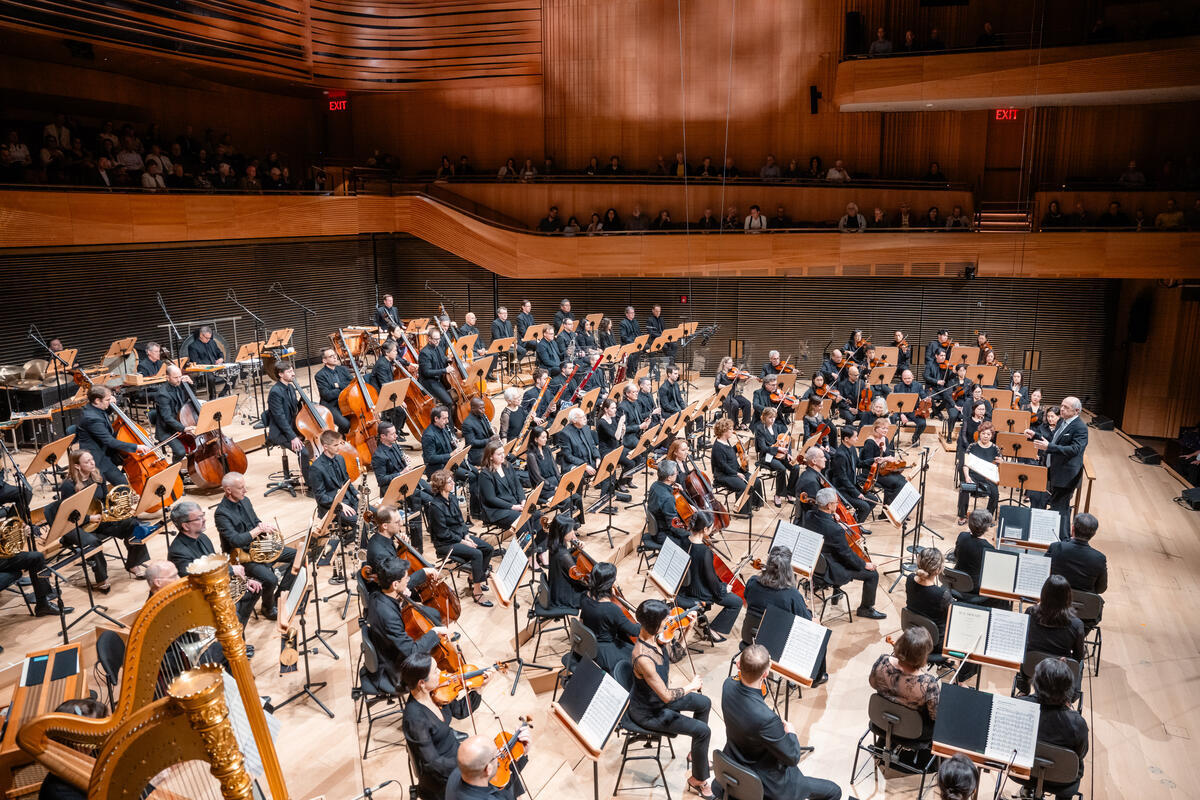
    Saturday April 26th, 2025 – The New York Philharmonic played a fantastically curated concert of Mozart and Bartók. Although the throughline of the pieces isn’t immediately apparent, the pairing of Mozart at his most theatrical — with the Magic Flute Overture and his Fifth Violin Concerto — with Bartók’s The Wooden Prince, originally written as music for a ballet, made for a fantastic night of music.

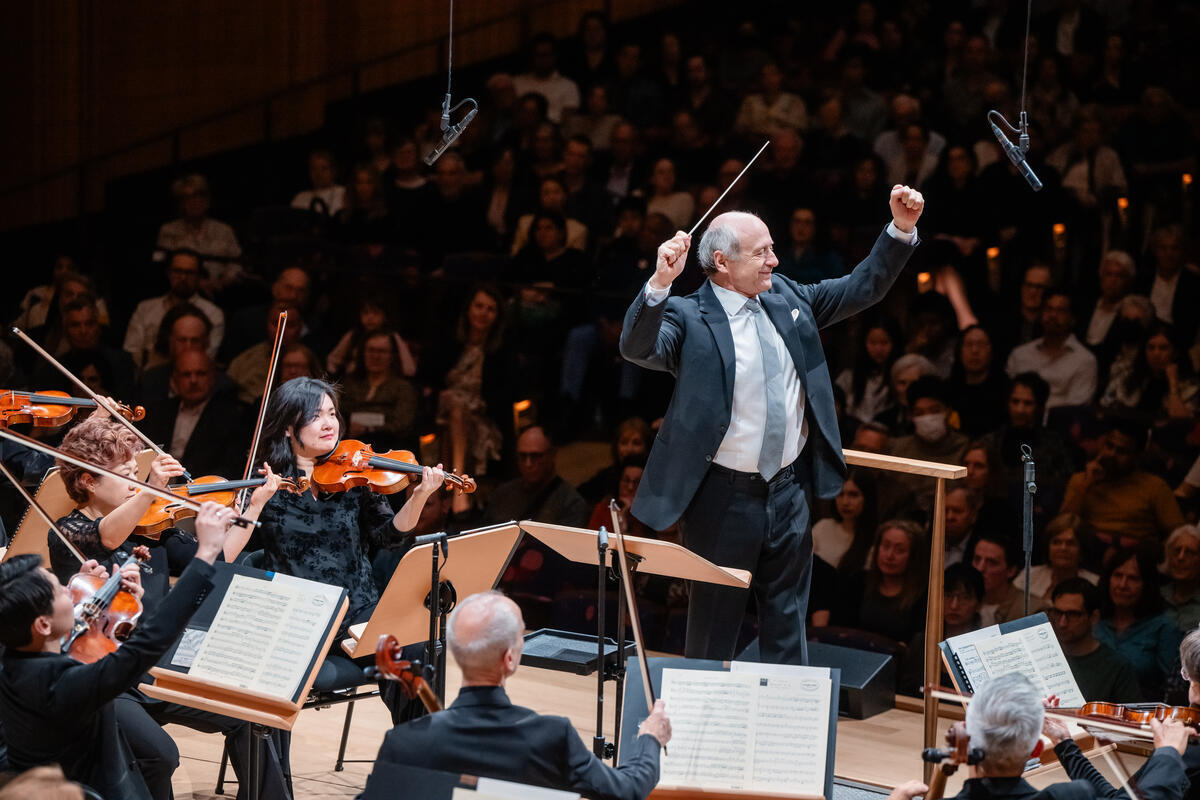
    The guest conductor was Iván Fischer, and he conducted marvelously: at ease in the music while simultaneously seeming to really have fun. Maestro Fischer appeared to conduct The Magic Flute Overture from memory at the podium, moving through the different sections of the piece with wide arm gestures.

    I had just recently seen The Magic Flute at the Metropolitan Opera the week before, so the piece was still fresh in my memory. Something very interesting was that, when I heard it that night at the Philharmonic, the overture seemed more like a symphonic suite than an overture to a stage play. It seemed more related to Mozart’s Jupiter Symphony somehow in this moment, rather than the opening to Così fan tutte. The music was played perfectly, with every dynamic crystal clear in execution. Maybe it was the perfection of how the piece was played that made it seem more symphonic and less like a piece written for the stage, where inevitably something new happens every night.

    Week32-BrandonPatoc_0013

    I particularly liked the restraint that Maestro Fischer (above, photo by Brandon Patoc) showed in the moments of the overture where silence mattered more than sound, such as the callback to the brass opening punctuated with long rests. The rests seemed longer than usual, but the impact was memorable because of it.

    The audience gave a very warm and deserved applause, after which the orchestra reduced in size to prepare for the violin concerto.

    Lisa b

    The soloist, Lisa Batiashvili (above), came out in a very memorable bright yellow dress with a baby blue sash around her waist. Normally, I don’t notice what soloists wear in performances, but this outfit seemed too intentional, almost as if it were making a statement. I thought that the color scheme seemed coincidentally similar to the Ukrainian flag until I saw a giant brooch of the U.S. Stars and Stripes cinching the sash onto her. So whatever the intent was, I’m sure it meant something to those more sartorially inclined.

    Batiashvili played the Mozart with clear familiarity with the style and music. Normally, I feel soloists tend to lean into the fiery, show-stopping nature of concertos, but Batiashvili tended toward austerity and restraint in her playing for the first two movements. The piece was played in a way that seemed courtly: certainly pleasant, but not too forward to draw attention to itself. Things changed when Batiashvili reached the cadenza of the first movement. The cadenza started out seeming to be in a Mozartian style, then veered into the chromatic and atonal. It wasn’t bad by any means, and certainly showcased Batiashvili’s virtuosity. It was just surprising to hear something so very non-classical in such a quintessentially classical piece. I read the program afterwards and saw that the cadenza was composed by a 15-year-old Georgian composer named Tsotne Zedginidze, which made quite a lot of sense in hindsight.

    I quite enjoyed the unconventional cadenza because it made me look forward to hearing the other cadenzas, which were also newly composed, one of them by the soloist herself. The other cadenzas were more traditional in nature though, which maybe was a good pairing with the one anachronistic one.

    The third movement was where Batiashvili took off and seemed to have the typical soloist verve. I had never heard the finale of this concerto before, and I loved the effects that gave the whole piece the moniker of “Turkish.” The sections where Batiashvili played the more exotic melody and the strings played col legno seemed like a vision into the future of where classical music would head with early Romanticism. The sections sounded more like Mendelssohn in one of his symphonic overtures rather than Mozart, and I was thrilled to hear it.

    After the concerto, Batiashvili gave several curtain calls, and it seemed like there was going to be an encore, but in the end, one didn’t come.

    Before the concert began, I overheard some audience members chatting and wondering why the screen normally used for super-titles for lyrics was open. Another audience member joked that it was just so they could make sure to tell people to silence their cell phones before the show.

    During intermission, the size of the orchestra ballooned, and it was almost impossible to fit more musicians on the stage. Before he started the Bartók piece, Maestro Fischer gave a short introduction. He told the audience that the piece was originally written for a short ballet, and — in an unconventional but amazing idea — had the original stage directions for the ballet projected onto the aforementioned screen while The Wooden Prince was being played.

    This piece was another first for me, and it was truly a masterpiece. The piece starts with a humming sound that almost feels like what you’d expect from a movie showing deep space.

    The story of The Wooden Prince follows a prince who falls in love with a princess, who is guarded by a fairy. The prince is blocked from being able to see the princess by the fairy, who enchants the forest in which they are to physically prevent the prince from reaching her.

    The stage directions were such a wonderful idea because they showed where Bartók’s mind went when he was creating the music for each physical gesture. At first, I thought there were going to be instruments tied to each of the characters, but in the end, the entire orchestra was involved in every scene to provide complete sonic storytelling.

    I found myself thinking about how The Wooden Prince compared with some of the other great ballets, like Tchaikovsky’s Swan Lake and Stravinsky’s Rite of Spring. The conclusion I came to was that The Wooden Prince was uniquely its own masterpiece.

    ~ Mark Anthony Martinez II

    (Performance photos by Brandon Patoc, courtesy of the NY Philharmonic)

  • RHEINGOLD @ THE MET ~ 25 YEARS AGO

    langridge loge

    Reading thru some of my hand-written diaries from a quarter-century ago, this entry about a tremendous performance of DAS RHEINGOLD brought back vivid memories.

    “Wonderful to see this opera again, and the cast of (mainly) RING veterans gave a superbly confident and nuanced performance. Levine had the huge orchestra under finger-tip control…there were passages of great beauty and lyricism, along with the unleashing of massive sound at times.  Although the lighting seems less evocative now, the production is still quite effective, though the first scene could use some freshening: the Rhinemaidens don’t always remember that they are underwater, and the rock pinnacle holding the gold wavered as Alberich clambered up.

    To start from the beginning: lovely lyricism from the Rhnemaidens: Joyce Guyer, Kristine Jepson, and Jane Bunnell each sang well in their solo lines, and their voices blended beautifully.

    Ekkehard Wlaschiha remains a powerful, vivid Alberich…his voice is now sketched indelibly on this music: magnificent in defeat, and in his vibrant, chilling curse. Hanna Schwarz brought her personal allure and great vocal authority to her interpretation of Fricka. She spun out some lovely soft phrases, creating a sensuous appeal that is not always heard in this music.  James Morris shows some vocal wear and tear as Wotan, but he is still able to hurl out vocal thunderbolts (especially at the end) as well as many pages of wonderfully musing soft singing. Very much a god to be reckoned with…bravo!

    Hei-Kyung Hong’s vocal radiance and sheer physical beauty made Freia a major role. She’s at her peak now, and I’m so lucky to be living here in NYC to witness it!  Mark Baker brought wafting lyricism as well as power to Froh’s music, and Alan Held’s darkish baritone produced a steady stream of well-inflected singing as Donner – his “Heda! Hedo!!“was a vocal high-point. 

    Splendid giants: the flowing depths of tone from Eric Halvarson perfectly complimented the more gritty, malevolent sound of Sergei Koptchak…bravissimi, gentlemen!! Graham Clark has a perfect role in Mime, where he is able to bring some “real” singing to a part that doesn’t always get it. His incisive diction was crystal clear. Brigitta Svendén  sounded simply gorgeous, and she makes Erda the alluring, mysterious icon she must be. 

     Dominating the stage and the music, Philip Langridge as Loge  (photo at the top) used his multi-coloured “big lyric” voice with the finesse of a poet. Langridge created the enigmatic character in purely musical terms whilst the added physical dimension of his portrayal (the grace of a ballet dancer, the gestures of a skilled magician) simply clinched the evening for this great singing-actor. He was greeted with a massive ovation at his bows.

    The entire cast was deservedly hailed by the Houseful of avid Wagnerites, and Levine and his orchestra were given a rousing ovation. A very stimulating evening!

    2000 rheingold-1jpg

  • The Met’s Newest Aida (+ A Cast Change!)

    nilsson

    ~ Author: Oberon

    Saturday March 22nd, 2025 matinee – In 1883, a Swedish soprano named Christina Nilsson sang Marguerite in FAUST for the opening of the then-new Metropolitan Opera House. Last week, another Swedish soprano named Christina Nilsson (photo above) made her Met debut as Aida. This afternoon, I went to hear my second AIDA of the current season to see how she fared in the daunting role.

    Alejandro-Roy

    Another singer new to me, tenor Alejandro Roy (above), stepped in today as Radames; he had made a short-notice Met debut in TURANDOT in 2019 opposite Christine Goerke…

    Burdenko

    …and the Amonasro, Roman Burdenko (above), had just made his Met debut a few days ago.

    Alexander Soddy was on the podium, and while he has good ideas about tempi and the alternating currents of grandeur and intimacy that run thru the score, he (like so many opera conductors today) tends to let the orchestra get the better of the singers all too frequently. Despite this, the score seemed extremely beautiful today, and I often felt moved.

    The Messenger and the Priestess – Yongzhao Yu and Ann-Kathrin Niemczyk – made the most of their moments. The two bassos were both super: Alexander Vinogradov (Ramfis) and Krzysztof Bączyk (the King) have powerful voices and they sounded assured throughout their range. So many phrases from these two gentlemen impressed me today. In the ensemble in the opening scene – and again in the Triumphal Scene – where both bassos have great moments, they created a sonic energy that was so pleasing to experience.

    Mr. Burdenko likewise made a vivid impression, his opening “Suo padre!” immediately established his dignity and fierce pride. Capable of both power and subtlety, Mr. Burdenko made every phrase come to life; a feeling of steadfastness emerged in his plea “Ma tu, Re…“. In the Nile Scene duet with Ms. Nilsson, the baritone veered from venomous (“…tu sei la schiava!“) to tenderness (“…pensa che un popolo…vinto…straziata…”) Bravo!!

    Mr. Roy’s voice exudes masculine confidence; it’s tinged with baritonal shadings at times but he also had the top notes for the music when needed. Following with my score, he seemed to heed all the dynamic markings, though he took the end of the “Celeste Aida” full voice. Joining in the trio with Ms. Nilsson and Judit Kutasi (Amneris), the three were sometimes covered by the orchestra. Again, in the Temple Scene, the sturdy voices of Mssrs. Roy and Vinogradov had to combat the orchestra’s volume..

    Having only one intermission, after the Triumphal Scene (wherein Mr. Roy blasted an epic B-flat at one point), the tenor must sing in succession the demanding Nile Scene and the dramatic confrontation with Amneris, and then bring forth lyricism for the tender final duet, “O terra addio…”). He handled this marathon quite impressively. I thought he might run out of steam near the end, but the final “…si schiude il ciel…” with Ms. Nilsson was handsomely clear and sustained. 

    Ms. Kutasi, whose Amneris was disappointing at my earlier performance this season, fared little better today, though her B-flats in the repeated phrase “…dal ciel si compira...” in the Judgement Scene were her best notes of the day. I really don’t know what is going on with her; there are exciting clips of her on YouTube, but the voice now is very erratic. The audience cheered her enthusiastically.

    I grew up on such plushy spinto Aidas as Leontyne Price, Martina Arroyo, Leona Mitchell, Gilda Cruz-Romo, and Anna Tomowa-Sintow. Ms. Nilsson today curiously put me in mind of Lucine Amara, an under-appreciated ‘big lyric’ soprano who could float lovely piani on high; Ms. Nilsson’s style is not as Italianate as Lucine’s, but their vocal heft is similar. 

    A ravishing clarinet solo introduces Aida, and the Nilsson voice has immediate appeal; she sounds young – even girlish at times. In the cantabile passages of the trio and ensemble of the opening scene, her singing is very persuasive; but Mr. Soddy lets that ensemble get too brassy…and there was an added drum rhythm I’d never noticed before.

    Ms. Nilsson got to show her stuff with “Ritorna vincitor“, her singing reflective, her phrasing having a lyrical glow; she gave the aria a lovely, poignant finish. In the boudoir scene, the soprano’s tone sometimes lacked richness, but she fared well in the Triumphal Scene, with a gleaming top-C to cap the ensemble’s first half.

    On the banks of the Nile, Ms. Nilsson shaped “O patria mia…” perfectly, though more colours could have been introduced along the way. Her sweet high-C lingered long on the air, and her sustained phrases at the aria’s finish were gorgeous. Mr. Burdenko’s raging “…tu sei la Schiava!” elicited a blistering top-A from the soprano. She later got enticingly floaty and provocative with “…la, tra le foreste vergini...” in the duet with Radames, before spinning out a magical “…fuggiam…fuggiam.....” The stretta, with Mr. Roy, was excitingly sung.

    The tenor commenced the final scene expressively, and Ms. Nilsson’s lyricism glows, lit by beaming high notes along the way; here she really reminded me of Amara. Mr. Roy sang valiantly as the opera moved towards its solemn ending, his voice well-matched to Ms. NIlsson’s. They took a joint bow, to a warm salute from the crowd. Mr. Roy had saved the day, and Ms. Nilsson had won new admirers. 

    Notably, it was the all-male ballet in the Triumphal Scene that roused the audience to the afternoon’s most enthusiastic cheers.

    ~ Oberon

  • Les Arts Florissants/Zankel Hall Center Stage

    CH11515039

    Above: William Christie, photo by Richard Termine

    ~ Author: Lane Raffaldini Rubin

    Tuesday January 28th, 2025 – Tonight,  Les Arts Florissants made what has become the rare appearance of an early music ensemble on a Carnegie Hall stage.

    To celebrate the eightieth birthday of its founder and co-musical director William Christie, the group presented selections from the core of its repertory, including scenes from the operas of Marc-Antoine Charpentier (1632-1704), Jean-Baptiste Lully (1632-1687), and Jean-Philippe Rameau (1683-1764). Christie has been a champion of these composers since the 1970s and it was with a 1986-87 production of Lully’s Atys – an opera that had not been staged since 1753 and whose music was excerpted at Tuesday’s performance – that Les Arts Florissants made its first big break.

    Seeing the thirteen players and six vocalists take the stage of Zankel Hall’s intimate in-the-round configuration, one might get the sense that Les Arts Florissants is simply a small group of musicians dedicated to the French Baroque. Back in France, however, this group is just one component of a multifaceted institution that includes early music performance, music pedagogy, professional development for young singers and instrumentalists, a historic country house with fanciful Baroque-style gardens (themselves home to many of the group’s activities), training for gardeners, and a garden studies research center. Christie himself (an American, mind you, who left the States as an objector to the Vietnam War) is the godfather of this musical-cultural web.

    Tuesday’s performance was a testament to the group’s decades-long legacy of learning and teaching, its total grasp of this body of music, and the kinship of its members, who played and sang together like family.

    CH11515040

    The chosen excerpts reveal the dramatic directness and emotional turbulence of French Baroque opera. We heard none of the repetitive music of Italian da capo arias or strophic forms. Instead, we heard through-written works that interweave recitative dialogues and monologues with airs and duets. The transitions between air and recitative were at times fitful and at times seamless, but always served a clear dramatic function. That formal range and psychological charge were on display in the excerpts from Charpentier’s 1693 Médée, where a dialogue between Médée and her confidante Nérine is interrupted by outbursts of jealousy and vengefulness. This all culminated in the aria “Quel prix de mon amour”, sung by mezzo-soprano Rebecca Leggett, a lamentation undergirded by fleeting but searing dissonances in the orchestra.

    Another characteristic of this music is its emphasis on French diction. Lully, the favorite composer of Louis XIV, explicitly sought to differentiate his music from the florid and opaque sounds of Italian opera of the time. In excerpts from the later acts of Atys of 1676, the tenor Bastien Rimondi sang with clarity and shapely elegance as he communicated his character’s yearning and anguish.

    The highlight of the program was Rimondi’s “Règne, Amour” from Rameau’s Pigmalion (1748). Rameau’s opera music, which dominated the evening, was presented simultaneously as a development of Lully’s legacy as well as an innovation upon and a perversion of it. In the Pigmalion excerpts we hear varied instrumental colors, free-spirited use of the recorders and reeds, heavy basso continuo inversions that drive harmonic motion, and a Handelian rhythmic motor. Rimondi sang his part with pure joy. His exquisitely crisp diction permeated ornate passages and more straightforward melodic lines, never hindering a sweet, clear tone and blooming vibrato on sustained notes.

    The program concluded with two scenes from Rameau’s 1735 Les Indes galantes, the flagrantly cancelable opera-ballet featuring unrelated tales of exotic places and their inhabitants. Both scenes were drawn from the act “Les sauvages” depicting North American landscapes and natives. One might think the inclusion of the “Forêts paisibles” chorus to be pandering to the New York audience, but this scene also includes the famous dance of the savages which serves as Les Arts Florissants’s frequent sendoff at the end of their concerts. They tossed off this music with swung beats and confident restraint.

    CH11515089

    As an encore, Christie and Les Arts Florissants offered the quartet “Tendre amour” from the third act of Les Indes galantes (which Rameau cut from the opera after its first performances). Christie described this music as “one of the most beautiful pieces of the eighteenth century” and indeed it was gorgeous and pastoral with vocal lines floating high in the air. It was a birthday gift from Christie to the audience.

    CH11515067

    Above: Maestro Christie greets Joyce DiDonato; photo by Richard Termine

    But the ensemble members had something else up their sleeve. The star mezzo-soprano Joyce DiDonato emerged onto the stage and lavished praise on Christie, whom she met while rehearsing for his 2004 production of Handel’s English-language opera Hercules. In tribute to Christie, she and the ensemble presented “As with rosy steps the morn” from the oratorio Theodora (why didn’t they choose something from Hercules?). After a full program of Charpentier, Lully, and Rameau, DiDonato’s Handel seemed monumentally scaled, possessing a different species of substance and intensity. The strophic form of this piece (repeating sections of music with new verses of text) set an obvious contrast with the French music of the main program and put the French works’ organic, dramatic, and transparent value into focus.

    The program was, after all, a didactic showcase of French Baroque music and its performance techniques. Among early music groups, Les Arts Florissants is a champion of craft, forgoing the temptations to produce the highly biting, peppery sound that is so en vogue these days. Surrounding the ensemble on all sides, it was as if we the audience could simply enjoy overhearing a reading of this music being shared among friends.

    Performance photos by Richard Termine, courtesy of Carnegie Hall

    ~ Lane Raffaldini Rubin

  • Ensemble Connect ~ Up Close

    CH11514851

    Above, composer/curator Gabriela Ortiz welcomes the crowd; photo by Chris Lee

    ~ Author: Oberon

    Monday January 27th, 2025 – Ensemble Connect is a joint program of Carnegie Hall, The Juilliard School, and the Weill Music Institute in partnership with the New York City Department of Education. In tonight’s Up Close presentation, curated by composer Gabriela Ortiz, the young artists of the Ensemble performed at the Hall’s Resnick Education Wing, an intimate venue which I’d never been aware of until Carnegie’s Meg Boyle gently twisted my arm into giving it a try.

    CH11514901

    Above: Chelsea Wang and Ryan Dresen playing Ortiz; photo by Chris Lee

    The evening opened with the New York premiere by of Pigmentum by Ms. Ortiz, a four-movement work presented in collaboration with visual artist Martirene Alcántara that was performed by Ryan Dresen (horn) and Chelsea Wang (piano) whilst a film by Ms. Alcántara was shown on a hanging screen.

    Each of the work’s four movements is named for a shade of blue, the first being Indigo. This music veered from dreamy to jazzy; some of the piano’s tones had been ‘prepared’, giving a quirky, off-kilter sound. Mr. Dresen’s playing has beauty and power throughout the range, and passages played with a mute were intriguing. Chime-like piano notes introduce Lapislazuli, with horn calls leading to a duet in the instruments’ lower ranges. The music gets wild, and a sudden ending takes us by surprise. The rippling delicacy of Ms. Wang’s playing in Cobalto is joined by the dusky sound of the horn. The music gets grand, then pensive. In the concluding Ultramar, Mr. Dresen’s horn rambles and stutters. There is a false ending, and then the enigmatic sound of toneless air being blown thru the horn. 

    CH11514949

    Mexico’s Carlos Carlos Sánchez-Gutiérrez presented Luciérnagas (photo above Chris Lee) for which three alumni of the Ensemble – Yasmina Spiegelberg (clarinet), Joanne Kang (piano), and Mari Lee (violin) – joined percussionist de luxe Oliver Xu and cellist Frankie Carr, who introduced the piece. A chord introduces the insectuous music of a swarm of fireflies, whilst the cello vibrates. The clarinet trills, the sneaky piano intones, cello and clarinet sound in unison. The xylophone heralds an explosion causing the violin to go crazy. A rhythmic passage turns spacey, thunder rolls, the bass clarinet rumbles deeply whilst awesome percussion motifs sound. An intriguing marimba solo is interrupted by an urgent one-note motif from the violin, and then the xylophone goes off like a fire alarm; the insistent piano sounds urgently. Silence falls. This seemed like a perfect place to end, but no…we go on, savouring some rhapsodic playing from Ms. Kang at the piano. But then the music turns dark and scary; a cymbal crash leads to a total wipe-out. Somehow, thru all of this, it was the cellist who seemed the central figure, both thru his noble playing and his poetic face.

    For “La Hamaca” from La Hamaca (NY Premiere) by the Venezuelan composer Ricardo Lorenz, the players were Chelsea Wang (piano), alumna Mari Lee, and cellist Thapelo Masita. The music opens softly with the piano joined by the violin; the cellist enters with a pinging motif before taking up a gorgeous theme wherein Mr. Masita’s tone was matched by the sweetness of the violin and magical sounds from the piano. The music turns passionate, then staccati introduce new themes, with rich playing from the cello. The staccati resume before Ms. Lee’s violin sings on high; dense harmonies emerge before an agitato outburst. A bouncy rhythm springs up…fabulous playing from the trio as the music wafts to heaven and then fades away.

    CH11514870

    Above, in a Chris Lee photo: Joanne Kang and Oliver Xu playing the Cuban composer Ileana Perez Velazquez’s Light echoes, having its New York premiere this evening. This piece gave us a virtuoso percussion display from Oliver Xu, who moved amidst his array of instruments with assured grace, as if in a choreographed solo. No less marvelous was Ms. Kang, who was back at the piano to make more magic. Bass drum rolls, bongo beats, and gong tones set off a jazzy piano theme. The swaying rhythm gets big as Mr. Xu moves swiftly from xylophone to ancient hanging bells to every type of drum. Ms. Kang  commences a keyboard interlude, laced with various percussive comments. Suddenly, there’s a kind of cabaletta, fast and florid, before things quieten and the mysterious gong sounds; a rhythmic coda ensues. Brilliant playing from start to finish!

    CH11514918

    The Costa Rican composer Alejandro Cardona’s Axolotl (a US premiere) brought three wind players to prominence: Ms. Spiegelberg (clarinet), Anjali Shinde (flute), and Joseph Jordan (oboe) with Joanne Kang at the piano, Mr. Carr with his cello, and the lovely violinist Isabelle Ai Durrenberger (photo above by Chris Lee).  

    CH11514915

    Above: Joseph Jordan and Anjali Shinde, photo by Chris Lee

    The piece develops gradually clarinet and oboe are heard in sync, and the piano music is jazzy. Stillness, and then a haunting flute passage is heard over delicately sustained string tones creating a wonderful air of mystery. The clarinet gets jazzy as a sexy beat rises; more jazz from the violin, whilst the cello is strummed like a guitar. Wailing clarinet and oboe slowly sputter out, and a thoughtful flute solo ensues, with piano and cello commenting. Bass clarinet and flute converse over the deep cello and piano; these voices then make an incredible fade-away.

    CH11514944

    The concert ended with the world premiere of Gritos de fuego, patrias de papel by the Colombian composer Carolina Noguera (above, photo by Chris Lee). This work brought together the largest ensemble of the evening, with Leonardo Pineda conducting. Joining Mlles. Shinde, Spiegelberg, Wang, Ai Durrenberger, and Mssrs. Jordan, Dresen, Xu, and Masita were flautist Catherine Boyack, bassoonist Marty Tung, violist Ramon Carrero-Martinez, and bass-player Marguerite Cox.

    CH11514858

    Photo: the ensemble playing the Noguera, photo by Chris Lee

    From an explosive start, announced by three massive strikes of the bass drum, eerie strings emerge; the flutes blow air as more thunder claps, wailing winds, and rumbling piano depict the storm, which gives way to the amazingly subtle and sustained violin supported by cello tremelos. A long flute trill sounds as the oboe blows air and a quiet sense of ecstasy settles overall. The piano and eerie shimmers from the violin bring on a repetitive 4-note rising motif from the violin. From a perpetual quietude, raindrop piano notes accompany a sweet and serene solo from Ms. Ai Durrenberger’s violin. The bassoon chimes in, the viola plays a repeated phrase. Big chords are repeated, and then the music vanishes into thin air as a sensationally sustained cello tone from Mr. Masita fades to silence.

    CH11514920

    Above: the composers take a bow; photo by Chris Lee

    Audience members lingered to greet the artists and the composers; except for congratulating Mr. Masita, I was too shy to speak to anyone. But I did have a chance to meet and thank photographer Chris Lee, whose remarkable gift for capturing the essence of Carnegie Hall concerts I have been lucky enough to share on my blog these past few years.

    CH11514895

    Above, the finale: this, and all the performance photos, are by Chris Lee, courtesy of Carnegie Hall

    ~ Oberon

  • Zwilich & Barber @ Carnegie Hall

    Zwilich

    Above: composer Ellen Taaffe Zwilich

    ~ Author: Oberon

    Saturday December 28th, 2024 – The New York String Orchestra were back at Carnegie Hall this evening, following up their Christmas Eve concert in the same Hall with a program of Zwlilich, Barber, and Brahms. I’d been down with flu-like symptoms for a couple of days, and debated whether I should attend tonight’s concert, but I couldn’t pass up a chance to experience the Barber violin concerto played live in this hall. Whether I could make it to the evening’s end remained to be seen.

    1983 Pulitzer Prize-winner Ellen Taafe Zwilich’s composed her Prologue and Variations for string orchestra on a commission from the Chattanooga Symphony, which premiered it under the baton of Richard Cormier in 1984. In her remarks on this piece, the composer spoke of her wish to celebrate “the special sonorities, character, and expressiveness of the string orchestra”. In tonight’s performance, the young players of the New York String Orchestra truly did the composer proud. 

    The violins open the piece, with start-and-stop phrases, soon picked up by the cellos. The violins then soar over an insistent beat. After a passage of luminous softness, the celli and basses cushion sizzling violins motifs. The opening theme recurs, and then a series of slow, mysterious sustained tones lead to a full stop.

    An animated section quietens to a slightly ominous lulling atmosphere. Then an agitato springs up, full of scale-work and insistent bowing. The music turns pensive, with brooding celli and deep basses. A trudging rhythm and fading violins lead to the work’s eerie ending.

    Enthusiastic applause greeted the musicians, and then Maestro Laredo gestured to Ms. Zwilich in her first tier box to rise for a bow; well-deserved bravas greeted the composer, now in her 85th year.

    Koh jpg

    Above: Jennifer Koh – I borrowed this stunning photo from her Facebook page

    Violinist Jennifer Koh then took the stage for the Barber, my enduring favorite among all the violin concertos I have heard thru the years. Ms. Koh looked striking in a silver-gray gown, her hair a bright, fiery red.

    This was Barber’s first effort in the concerto genre, written on a 1939 commission for the then-astonishing sum of $1000. When the originally scheduled soloist, Iso Briselli, found the concerto’s third movement too short and inconsequential, the work was premiered in 1941 by Albert Spalding; it was great success, and became one of Barber’s most beloved works, perhaps second only to his Adagio for Strings.

    Aside from concert performances, I have heard this music many times at New York City Ballet, where in 1988 Peter Martins premiered his ballet of the same title at the Company’s American Music Festival. The  ballet brings together a pair of ballet dancers and a pair of bare-footed modern dancers. The original cast starred Merrill Ashley and Adam Lüders as the classical couple, and Paul Taylor Dance Company’s delightful Kate Johnson and the charismatic choreographer/dancer David Parsons as the modern couple. Tonight’s performance was spectacular both for Ms. Koh’s fascinating way with the music, and for Maestro Laredo’s savvy exploration of the score, which allowed us to savour the composer’s gift for orchestral detail.

    Ms. Koh’s timbre has a vast colour-palette, ranging from burnished purple to shimmering silver. The very opening note of the piece always intrigues me, as Barber has the piano intone the first phrase along with the violin; Bo Zhang, at the Steinway, highlighted the keyboard’s participation throughout the concerto. 

    Ms. Koh’s playing of the familiar opening melody immediately seized my imagination; her tone has a special, spiritual quality that always gives meaning to the music. The gorgeous main theme, played by the entire orchestra, inevitably stirs my soul. Oboe (William Dunlop) and clarinet (Keyu (Frank) Tao) sing clearly over a steady pulse; violin and piano mesh, Ms. Koh rising to a shining top note. Pianist and violinist unite. The music turns grand, with a huge build-up and then my favorite moment of all: a dramatic plunge to the basses’ deepest notes. Now Ms. Koh’s violin hovers on high, descends, rises again to a delicate, suspended note; her cadenza is entrancing. Oboe, clarinet, and timpani draw us on to the movement’s conclusion. Throughout, the pianist has managed to be both prominent and unobtrusive…really impressive.

    Mr. Dunlop’s playing of the oboe solo that opens the Andante was hauntingly beautiful. The celli take up the theme, the basses sound richly, the horn solo (Engelberth Mejia-Gonzalez) glows. Out of the marvelous sonic blend, Ms. Koh’s violin rises poignantly to a shimmering trill as the trumpet (Bailey Cates) and piano interject before the violinist takes up the andante‘s opening melody with heart-rending passion. A sense of grandeur fills the hall. But then, a loudly dropped object somewhere upstairs killed the movement’s marvelous finish. Why do these things always happen at the worst possible moment?

    The timpani commences the final, brief Presto, in the course of which Ms. Koh plays what feels like thousands of notes with amazing dexterity and commitment. The celli scamper up the scale. So many notes!  All this rhythmic energy comes to a sudden halt after a final violin flourish.

    The audience cheered Ms. Koh’s intense and thrilling performance. My companion – who had played the Barber in his schooldays – and I were feeling a kind of elated exhaustion, and so we took leave of Carnegie Hall for 2024.

    ~ Oberon