Category: Ballet

  • Restless Creature: The Film

    P13844553_p_v8_aa

    RESTLESS CREATURE, the documentary about Wendy Whelan that dance lovers everywhere have been waiting for, is now playing (thru June 6th) at Film Forum down on Houston Street in New York City. Since, as most of my readers know by now, I’ve been on the disabled list for several weeks, I had the good fortune of receiving a link to watch the film at home.

    Very soon after I moved to New York City and started working at Tower Records, Wendy Whelan came in to shop one afternoon. She had been my dream dancer since I first took note of her as an outstanding, unique ballerina in my favorite dance company: New York City Ballet. Feeling overwhelmingly shy in the presence of my idol, I managed to croak out an uncertain “Hello, Wendy!” Incredibly, she seemed equally shy. We talked about the weather.

    From that day on, I ran into her frequently – both at the store and around Lincoln Center, where I loved hanging out for hours in hopes of seeing my beloved dancers coming and going from rehearsals and performances. Whenever Wendy passed by, she always stopped to chat; she has an incredible sense of humor, and a knack for making whoever she’s talking to feel…blessed. 

    I have a million Wendy Whelan stories, and I’ll put some links to some of my favorites at the end of this article. But right now, it’s showtime! Roll RESTLESS CREATURE… 

    ~~~~~~~~~~~~~~~~~~~~~~~~~~~~~~~~~~~~~~~~~~~~~~~~~~~~~~~~~~~~~~~~~~~~~~~~~~~~~~~~~~~~~~~~~~~~

    Restless-Creature-WP-Christopher-Duggan-Photographer-hr_20130415_057-e1432316688150

    Above: Brian Brooks and Wendy Whelan, photo by Christopher Duggan

    When I think of Wendy Whelan, the word that always comes to mind is: gratitude. Gratitude, not simply for her sublime artistry as a dancer, or her wit and warmth as a friend, but a true feeling of being thankful that our dance careers – hers performing, mine observing – have dovetailed so perfectly. From the first memories of singling her out on a stageful of magnificent dancers in her early days at New York City Ballet down to this very afternoon – watching her in the strikingly candid and deeply moving documentary RESTLESS CREATURE – Wendy has been one of those people who – quite simply – makes life worth living.

    The film opens with some footage from Jerome Robbins’ GLASS PIECES, with Wendy and Adrian Danchig-Waring in the pas de deux. Within seconds, the pristine beauty and ineffable mystique of Wendy Whelan have already moved me to tears. And that’s how I spent the entire 90-minute span of watching this film: on a roller-coaster of emotion as Wendy’s transition from prima ballerina to contemporary dancer de luxe is observed at close range in scene after scene which reveal both a deep vulnerability and a powerful strength of will in this complex and supremely human woman.

    “If I don’t dance, I’d rather die!” says Wendy early in the film; we then follow her on her journey beyond classical ballet and into another realm of dance: a journey marked by a surgical intervention with all its attendant hope and despair.

    Courageously, Wendy even lets us eavesdrop in the operating room, and we can only marvel at the technological advances that make what once would have been an unthinkable procedure go forward smoothly. From thence, with her handsome husband David Michalek ever a quiet pillar of strength, the ups and downs of recovery are chronicled. “It’s depressing to think of what I can’t do anymore,” Wendy broods, as she works thru physical therapy. Yet all the time, the future beckons.

    She speaks of roles having been taken away from her at New York City Ballet and of a conversation with Peter Martins that devastated her when he said, “I don’t want people to see you in decline.” With raw honesty, Wendy admits this episode caused her debilitating pain.

    But she carries on; her first gentle barre is an obstacle to be overcome: she is anxious to get back to work. With a focus on what she can do, her RESTLESS CREATURE program has taken shape: she will dance duets – not on pointe –  with each of four choreographers. But the recovery process stalls as pain begins to creep back in. When a hawk appears outside her window, Wendy takes it as an omen and postpones the RESTLESS CREATURE tour. The toll this decision takes on her is potent.

    But, resilience is in her nature. She works thru the pain and finds her strength again. Wendy plans her farewell program at New York City Ballet, determined to take leave of the House of Mr B during her 30th year with the Company. One last surprise comes her way: Alexei Ratmansky asks her to dance in his new creation PICTURES AT AN EXHIBITION. She is thrilled by the invitation, and seems to be having a blast doing it. {Wendy is currently staging PICTURES AT AN EXHIBITION for Pacific Northwest Ballet.}

    The night of the farewell is beautifully documented: Wendy dances with her next-generation partners Tyler Angle and Craig Hall, finishing the evening in a pas de trois specially crafted by Christopher Wheeldon and Akexei Ratmansky which ends with Wendy aloft, leaving the past behind and reaching for the future.

    Throughout the film there are delightful glimpses of people I love: Lynne Goldberg, Emily Coates, Sean Stewart, Maria Kowroski and Martin Harvey, Gonzalo Garcia, Edward Watson, Ask LaCour, Chris Bloom, Reid Bartelme, Abi Stafford, Tiler Peck, Sean Suozzi, Joshua Thew, Allegra Kent, Jacques D’Amboise, Wendy Perron, Gillian Murphy, Ethan Stiefel, Gwyneth Muller, Chuck Askegard, and oh-so-many more. Three of Wendy’s most marvelous cavaliers are seen: Jock Soto, Philip Neal, and Peter Boal. Mr. Boal pays Wendy an incredible – and honest – compliment when he says, “You changed how people behave in this profession.”

    Watching the film made me think yet again of Wendy as a very special kind of star, for while it is wonderful to be admired, applauded, honored, and revered as an artist, it is even more rewarding to be loved, not only for what you do but for who you are.

    Wendywhelanagon1_kolnik

    At the very end of RESTLESS CREATURE, there is one final tugging of the heartstrings: the film is dedicated to the memory of Albert Evans.

    ~~~~~~~~~~~~~~~~~~~~~~~~~~~~~~~~~~~~~~~~~~~~~~~~~~~~~~~~~~~~~~~~~~~~~~~~~~~~~~~~~~~~~~~~~~~~

    Here are some past articles from my blog about Wendy Whelan that you might enjoy reading:

    Wendy & Pauline

    RITE OF SPRING 

    LABYRINTH WITHIN

    Wendy Teaching

    Celebrating Wendy Whelan

    NYCB Farewell

    RESTLESS CREATURE @ The Joyce

    Hostess With The Mostess

  • Reese Thompson’s KIDS PLAY

    Kids play - cast

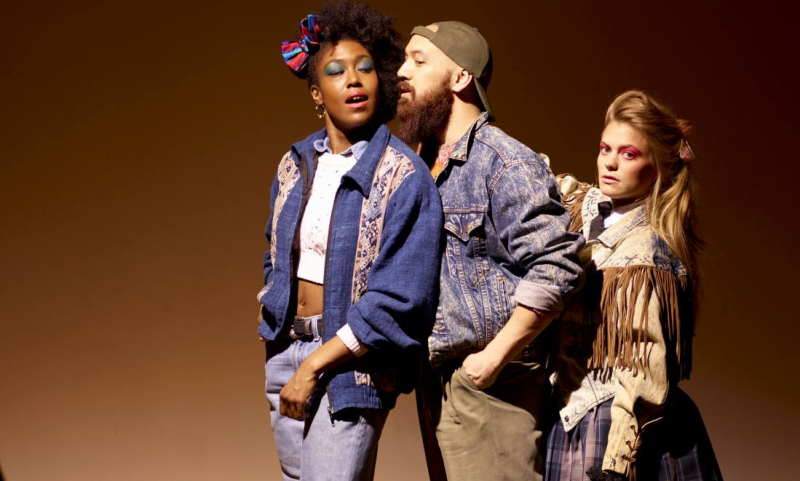
    Above: the cast of Reese Thompson’s play KIDS PLAY –  Erin Margaret Pettigrew, Matthew Bovee, and Joy Donze; styling by Anthony Hagan, hair and make-up by Ta Ming Chen; photographed by Jan Klier

    Recently, I received an e-mail from Reese Thompson. Reese and I worked together back in the day at Tower Records, and while we seldom see one another, we have stayed in contact thru the passing years.

    I could see from the heading of his e-mail – “Important Life Announcement” – that this was not just a friendly, keeping-in-touch message. Fortunately, it contained very good news: Reese’s play, entitled KIDS PLAY, is to be presented at the Edinburgh Fringe Festival this Summer. Edinburgh Fringe is the largest and one of the most prestigious arts festivals in the world: last year the Festival spanned 25 days and featured 50,266 performances of 3,269 shows in 294 venues. I expect this year’s Festival will carry on in the same vein.

    Reese and I, and hundreds of thousands of people world-wide, have something in common: we were cruelly bullied as children. In his e-mail, Reese mentioned the specific times in his daily school routine when things were most treacherous: getting to and from school, lunch-hour, and the playground. Although I am many years older than Reese, I experienced the exact same pattern in my youth. Nothing has changed…in fact, I would say things have gotten worse.

    “For certain kids, the world reveals itself as a dangerous place early on.” Truer words have never been spoken. If you are ‘different’, you become – at a very young age – fair game for those who fit accepted norms, both at school and in the community.

    The burgeoning suicide rate among very young people should be setting off all kinds of alarms, but instead it seems to have become just another statistic: suicide is now the third leading cause of death among young people, resulting in about 4,400 deaths per year. According to Yale University’s Office of Public Affairs, victims of bullying are 2 to 9 times more likely to consider suicide than non-victims.

    For those young people who don’t fit in, and who lack parental support and understanding, life becomes a quest to find your people: we build our own family and support network over time, and inevitably this replaces blood ties as a source of refuge, understanding, and encouragement.

    Reese Thompson’s KIDS PLAY evolved over a three-year period from a 10-minute play dealing with shaming, internalized sexism, and bullying on the playground. Since then, by collaborating with different casts and directors, the present a full-length version has taken shape. It now encompasses such themes as  childhood friendships, attending Catholic school, and nerve-wracking decisions about coming out. Reese’s play is both auto-biographical and universal.

    But, lest you think KIDS PLAY is a dark downer of a theatrical experience, it doesn’t wallow in despair: in fact, there is singing…and dancing, as in this preliminary video featuring the cast members and choreographed by Benjamin Rowan.

    Of course, putting on a production at a festival across the pond costs money, and the KIDS PLAY folks have started a fun-raising effort: you can read more about the play (and the other half of its double bill, Joy Donze’s 13 AND NOT PREGNANT), and contribute to the expenses involved here.

  • Reese Thompson’s KIDS PLAY

    Kids play - cast

    Above: the cast of Reese Thompson’s play KIDS PLAY –  Erin Margaret Pettigrew, Matthew Bovee, and Joy Donze; styling by Anthony Hagan, hair and make-up by Ta Ming Chen; photographed by Jan Klier

    Recently, I received an e-mail from Reese Thompson. Reese and I worked together back in the day at Tower Records, and while we seldom see one another, we have stayed in contact thru the passing years.

    I could see from the heading of his e-mail – “Important Life Announcement” – that this was not just a friendly, keeping-in-touch message. Fortunately, it contained very good news: Reese’s play, entitled KIDS PLAY, is to be presented at the Edinburgh Fringe Festival this Summer. Edinburgh Fringe is the largest and one of the most prestigious arts festivals in the world: last year the Festival spanned 25 days and featured 50,266 performances of 3,269 shows in 294 venues. I expect this year’s Festival will carry on in the same vein.

    Reese and I, and hundreds of thousands of people world-wide, have something in common: we were cruelly bullied as children. In his e-mail, Reese mentioned the specific times in his daily school routine when things were most treacherous: getting to and from school, lunch-hour, and the playground. Although I am many years older than Reese, I experienced the exact same pattern in my youth. Nothing has changed…in fact, I would say things have gotten worse.

    “For certain kids, the world reveals itself as a dangerous place early on.” Truer words have never been spoken. If you are ‘different’, you become – at a very young age – fair game for those who fit accepted norms, both at school and in the community.

    The burgeoning suicide rate among very young people should be setting off all kinds of alarms, but instead it seems to have become just another statistic: suicide is now the third leading cause of death among young people, resulting in about 4,400 deaths per year. According to Yale University’s Office of Public Affairs, victims of bullying are 2 to 9 times more likely to consider suicide than non-victims.

    For those young people who don’t fit in, and who lack parental support and understanding, life becomes a quest to find your people: we build our own family and support network over time, and inevitably this replaces blood ties as a source of refuge, understanding, and encouragement.

    Reese Thompson’s KIDS PLAY evolved over a three-year period from a 10-minute play dealing with shaming, internalized sexism, and bullying on the playground. Since then, by collaborating with different casts and directors, the present a full-length version has taken shape. It now encompasses such themes as  childhood friendships, attending Catholic school, and nerve-wracking decisions about coming out. Reese’s play is both auto-biographical and universal.

    But, lest you think KIDS PLAY is a dark downer of a theatrical experience, it doesn’t wallow in despair: in fact, there is singing…and dancing, as in this preliminary video featuring the cast members and choreographed by Benjamin Rowan.

    Of course, putting on a production at a festival across the pond costs money, and the KIDS PLAY folks have started a fun-raising effort: you can read more about the play (and the other half of its double bill, Joy Donze’s 13 AND NOT PREGNANT), and contribute to the expenses involved here.

  • Celebrating Alan Gilbert’s 50th Birthday

    1617_GilbertBdayFeb23_3240x1256

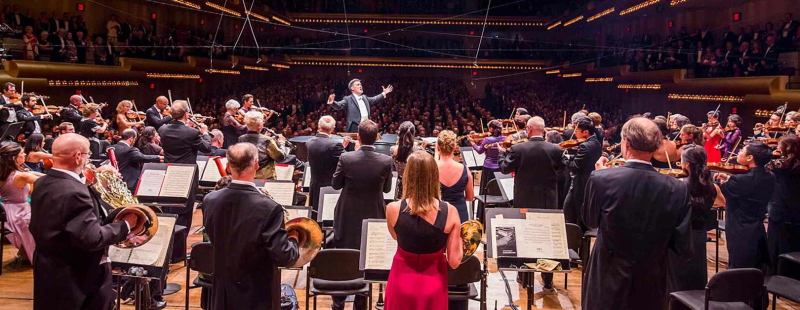
    Thursday February 23rd, 2017 – An array of stars from the classical music firmament were on hand to celebrate the 50th birthday of The New York Philharmonic‘s Music Director Alan Gilbert. Click on the above photo to enlarge.

    “Life begins at 50!”…at least it did for me: the life I’d always hoped to live, here in New York City with my beloved, with everything I enjoy – music, dance, art, food, a nearby park – at my fingertips, and good friends to share things with. Alan Gilbert’s tenure as Music Director coincides with my own embrace of The Philharmonic. I would go once in a while during the Mehta-Boulez-Masur-Maazel years, but in recent seasons I have rarely missed a program; I have become an admirer of several of the orchestra’s musicians, and of Alan’s leadership. He’ll soon be embarking on a new phase of his career, and so it was truly pleasing to be there tonight, joining with the stellar party guests onstage to salute the Maestro.

    The first half of the evening was devoted to music of the Three Bs: Bach, Beethoven, and Brahms. After welcoming speeches, Alan Gilbert strode out to a warm greeting from the packed house. Paolo Bordignon was at the harpsichord as Pamela Frank and Frank Huang took up the opening Vivace of Bach’s Concerto for Two Violins in D minor, BWV 1043, playing with festive vitality. Pamela Frank was then joined by Joshua Bell for the Largo ma non tanto, and how beautifully their timbres blended: deeply satisfying music-making. I’d hoped Alan Gilbert might play tonight, but the third movement of the Bach brought forth Lisa Batiashvili and Mr. Huang in the vivacious Allegro

    I think this was the first time I have heard this piece outside of its ballet setting: Balanchine’s masterpiece CONCERTO BAROCCO is frequently given across the Plaza. Throughout tonight’s concert rendering, the choreography danced in my head.

    Phenomenal back-to-back performances by two of the world’s great pianists followed: Emanuel Ax cast a magic spell over the music of Brahms: the Andante from the 2nd piano concerto. How gently Mr. Ax caressed this music, and how poignant was the sound of Carter Brey’s cello in his long solo passage. The cello returns near the end of the movement as Mr. Ax plays a series of delicate trills.

    Yefim Bronfman then took command of the Steinway in a thrillingly virtuosic Allegro con brio from Beethoven’s Piano Concerto No. 3. With some wonderful interjections from the Philharmonic’s wind soloists along the way, the pianist brought both passion and nuance to his playing. As his spectacular rendering of the cadenza drew to its close on a series of gossamer trills, the orchestra re-entered creating an exquisite sense of quietude. 

    Joshua Bell’s fiery playing and unbridled physicality evoked the audience’s rousing ovation for his performance of the Allegro energico from Max Bruch’s first violin concerto. Moments later, a very different aspect of Mr. Bell’s artistry was gorgeously evidenced as he joined Renée Fleming for Richard Strauss’s “Morgen!“; the warmth of the soprano’s voice and the silken serenity of Mr. Bell’s phrasing created a tranquil atmosphere, like basking in sunlight on some distant seashore.

    Ms. Fleming then gave one of her trademark arias, “Marietta’s Lied” from Erich Korngold’s DIE TOTE STADT; the song’s romance and mystery were conveyed by the soprano in the high-rising arcs of the vocal line over a dreamlike orchestration that features harp, piano, and celesta. The music becomes passionate; then the singer speaks a couple of lines, as she tries to recall the words of the second verse. Once again the haunting melody is sung, followed by an evocative postlude. Intoxicating moments.

    Lisa Batiashvili offered “Goin’ Home“, the ‘spiritual’ that was drawn from the principal theme of the Largo of Antonin Dvořák’s New World symphony, arranged by Fritz Kreisler, and adapted by T. Batiashvili. This was played with rich emotion and lovely tone by the comely Ms. Batiashvili; the only problem is that the song is quite brief, leaving us craving more Batiashvili.

    Gershwin’s An American in Paris, a favorite work of Alan Gilbert’s, was the closing work of the evening; not my cup of tea, but of course superbly played. 

    Frock watch: being a party night, the women of the Philharmonic did not all wear regulation black; Cynthia Phelps looked radiant in a “gamorous” slit-skirt emerald green number. Pamela Frank wore a black gown shot with silver, and be-jeweled shoes which would have made Cinderella envious. Lisa Batiashvili, ever the picture of elegance, wore a sleek, satiny gun-metal creation with a hint of Grecian style. And Renée Fleming looked every inch the diva in vermilion with a long golden shawl.

    Renée led us in singing ‘Happy Birthday, Dear Alan’ with the standing audience saluting the conductor and everyone singing full-voice. Maestro Gilbert basked in the embraces of the great musicians who had gathered to honor him; then they all seemed to be heading off together to continue the party into the wee hours as Alan waved goodbye to the crowd.

  • Joyous Mendelssohn @ Chamber Music Society

    16729309_10211418741411574_4800437195826780331_n

    In the days leading up to this evening’s concert at Chamber Music Society of Lincoln Center, it was announced that violinist Paul Huang was among the recipients of the 2017 Lincoln Center Awards.   

    Tuesday February 21st, 2017 – In the midst of their season celebrating Mendelssohn, Chamber Music Society of Lincoln Center offer two programs contrasting the joyous and the sorrowful. Today we reveled in the positive, sunny side of chamber music; on Sunday, February 26th, melancholy will prevail.

    The Variations in E-flat major, Op. 44, by Ludwig van Beethoven, is a series of fourteen variations on a theme written for piano, violin and cello. The theme is set forth, plain as day: the musicians play a series of arpeggios at a moderate pace. From thence, the variations proceed in a variety of rhythms, instrumentation, harmony, and embellishment. Orion Weiss (piano), Sean Lee (violin), and Paul Watkins (cello) played deftly, and I greatly enjoyed observing their musical camaraderie and silent communication with one another.

    The evening’s two pianists, Huw Watkins and Orion Weiss, gave us Mendelssohn’s Andante and Allegro brillant for Piano, Four Hands, Op. 92. And “brillant” aptly describes their performance, for they followed up the melodious Andante with a striking virtuoso display in the Allegro. Mr. Watkins took the lower octaves, and Mr. Weiss the upper, but they sometimes invaded each others domain. When things got fast and furious, each player had to lean out of the way to give the other access to the full keyboard in alternating solos. Thus their performance was as appealing to watch as to hear.

    _90769994_prom

    Above: British brothers Huw and Paul Watkins

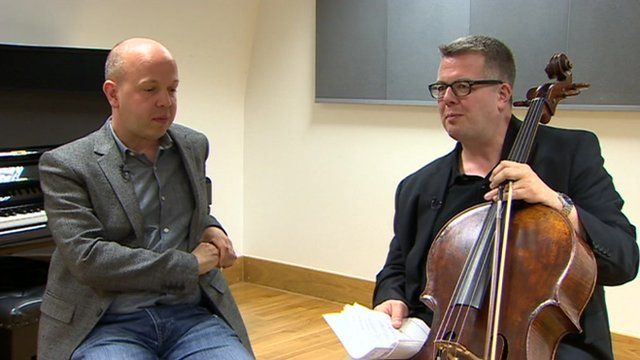
    Cellist Paul Watkins was joined by his pianist/brother Huw Watkins in a magnificent rendering of Mendelssohn’s Sonata in D-major for Cello and Piano, Op. 58. Their performance was truly engrossing, with the cellist’s soul-reaching depth of tone and the pianist’s perfect blend of elegance and vitality combining for a spell-binding musical experience.

    In the D-major Sonata, Mendelssohn exults in the outer movements, giving the pianist a barrage of arpeggios with which to delight us while the cellist sings felicitous melodic passages.The sonata gets off to a fast start, with a lively pulse; both players bring mellifluous tone which they are able to maintain even in the most rapid phrases. Paul’s cello buzzes while Huw plays melody for a spell; then they seem to reverse roles. The word ‘amazing’ is so over-used these days, but that’s what I wrote as this fabulous Allegro assai vivace carried us along. The playing hones down to great subtlety before re-bounding and sweeping onward.

    The second movement starts with a sprightly piano tune, with the plucking cello commenting, and then humming low. A lovely cello theme leads onto a more boisterous, slightly gritty passage before recurring. This little scherzo ends with a gentle whisper.

    Rhapsodic phrases from the piano herald the Adagio, the heart of the matter. A poignant melody wells up from the cello, Paul Watkins’ glowing tone like a transfusion for the soul. Huw rhapsodizes again, then takes up his own melody over long-sustained tones from the cello. This Adagio seemed all too brief when played so nobly as it was this evening; the brothers then took only the briefest pause before attacking the opening of the final movement.

    In this Molto allegro e vivace, both players flourished in the coloratura passages and in the melodic exchanges that ensue. After a lull, a slithery scale motif from the cello made me think of the moment in Strauss’s ELEKTRA before the murder of Klytemnestra – a far-fetched association to be sure, but there it is. The music ebbs and flows on to the finish, the Watkins brothers rightly hailed with spirited applause for their remarkable performance.

    Orion-WeissB09_credit-Jacob-Blickenstaff

    Mr. Weiss (above, in a Jacob Blickenstaff portrait) returned to the Steinway for Chopin’s Ballade in A-flat major for Piano, Op. 47, a piece long-familiar to me thru its appearance in the Jerome Robbins ballet The Concert. The pianist savoured the music, displaying a vast dynamic spectrum (blissful high pianissimi) and a keen appreciation for the shifting rhythmic patterns. When the music gets grand, Mr. Weiss’s playing is absolutely regal.  

    The Mendelssohn Quintet No. 2 in B-flat major for Two Violins, Two Violas, and Cello, Op. 87, drew together a most impressive string ensemble: Paul Huang and Sean Lee (violins), Paul Neubauer and Matthew Lipman (violas), and Paul Watkins (cello): their performance might be sub-titled ‘The Glory of Mendelssohn‘.

    The players plunged immediately into the music with a vibrant agitato rhythm, from which Paul Huang’s violin soars up to the heavens. Throughout the performance, Mr. Huang’s tone shone with an achingly beautiful polish, his profusion of technique and his uncanny ability to mix refinement and passion in perfect measure defined him an artist of exceptional gifts.

    This ensemble of wonderful musicians created a blend of particular cordiality, and each player took up their solo opportunities with stylish élan. Paul Neubauer’s playing was – as ever – aglow with poetic nuance; Matthew Lipman seconded him handsomely, displaying his trademark love of and commitment to the music, and Sean Lee’s suave phrasing is ever-pleasing to the ear. I found myself wishing that Mendelssohn had given the cello a bit more prominence, simply because I could not get enough of Paul Watkins’s playing.

    The quintet’s Adagio e lento found all the musicians at their most expressive, a reassurance in uncertain times; we so desperately need great music at this point in our lives when the future seems poised on the edge of a knife. With the dedication of such artists as we heard today, the light of hope continues to shine as a testament against the powers of darkness. 

    • Beethoven Variations in E-flat major for Piano, Violin, and Cello, Op. 44 (1804)
    • Mendelssohn Andante and Allegro brillant for Piano, Four Hands, Op. 92 (1841)
    • Mendelssohn Sonata in D major for Cello and Piano, Op. 58 (1843)
    • Chopin Ballade in A-flat major for Piano, Op. 47 (1841)
    • Mendelssohn Quintet No. 2 in B-flat major for Two Violins, Two Violas, and Cello, Op. 87 (1845)

  • Graham/Duato/Cherkaoui @ The Joyce

    Mosaic4

    Above: Xin Ying and Abdiel Jacobsen in Sidi Larbi Cherkaoui’s Mosaic; photo by Brigid Pierce

    Friday February 17th, 2017 – A richly rewarding evening of dance from The Martha Graham Dance Company, performing works by Graham, Nacho Duato, and Sidi Larbi Cherkaoui at The Joyce. A packed house seemed spellbound by the ballets, and went wild for the Graham dancers – and rightfully so: their power, commitment, bravery, and beauty make them seem super-human. 

    As a prelude to the evening, Peter Sparling’s gorgeous film SacredProfane was shown as audience members found their seats and settled in. You can sample Sparling’s imaginative work here.

    Mysteries 2

    Above: Pei-Ju Chien-Pott and the ensemble in Primitive Mysteries; photo by Brigid Pierce

    Primitive Mysteries is the Graham work I have most been wanting to see ever since I first read about it a few years ago, shortly after I had attended the rehearsal of Chronicle with photographer Brian Krontz which turned my curious interest in Graham into something of an obsession.

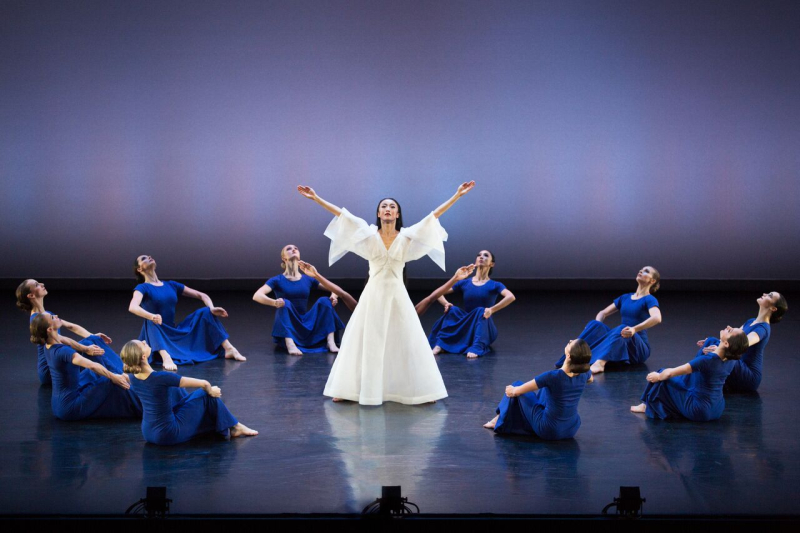
    Performed to music by Louis Horst for flute and piano, Primitive Mysteries is divided into three sections: “Hymn to the Virgin,” “Crucifixus,” and “Hosannah.” The work premiered on February 2, 1931, with Martha Graham in the central role. This ritualistic ballet draws inspiration from the veneration of the Virgin Mary that permeates Catholicism, but also from the rites of the Native Americans whose belief systems were obliterated by the arrival of undocumented immigrants on these hitherto unsullied shores.
    Mysteries 4

    Above: PeiJu Chien-Pott and the ensemble in Primitive Mysteries; photo by Brigid Pierce

    A corps of twelve blue-clad women frame the iconic Virgin, portrayed this evening by that fascinating Graham paragon, PeiJu Chien-Pott. Clad in pristine white, her hair flowing like black silk, Ms. Chien-Pott presides over her acolytes with benign yet unquestionable authority.

    The dancers enter in silence, with slow, unified strides: they will exit and re-enter in the same mode for each section of the ballet. Trademark Graham moves are to be seen, with high-stepping, contracted motifs, and regimented, stylized gestures unifying the sisterhood. In the second movement, Ms. Chien-Pott strikes a pose of crucifixion, arms outstretched, while the women circle her at increasing speed.
    Mysteries 3

    Above: PeiJu Chien-Pott and Leslie Andrea Williams (center) in a Brigid Pierce photo

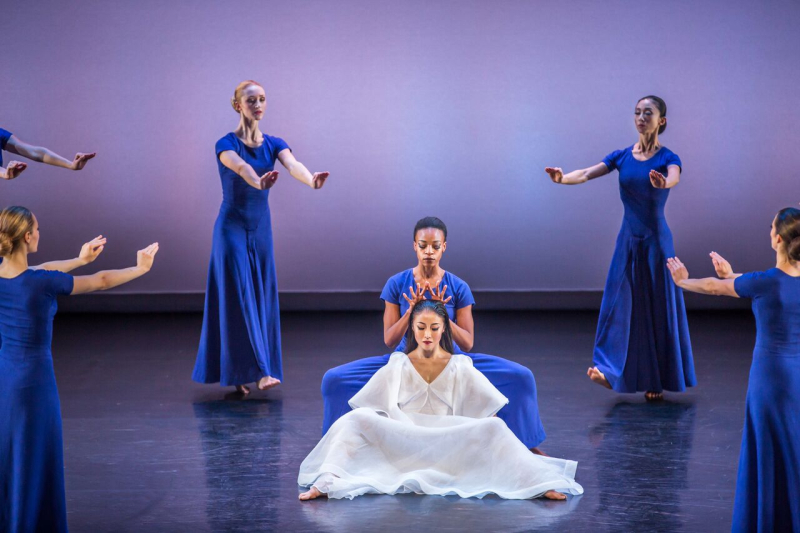
    In the concluding “Hosannah”, Ms. Chien-Pott and Leslie Andrea Williams – a charismatic, ascending Graham dancer – strike ecstatic plastique poses, ending with Ms. Williams in a slow, backward collapse into Ms. Chein-Pott’s arms: a Pietà-like vision. Transfigured, the women slowly leave the stage as darkness falls.

    Primitive Mysteries evoked the first of the evening’s ovations, the dancers receiving vociferous screams of delight from the crowd as they took their bows.
    Rust 2

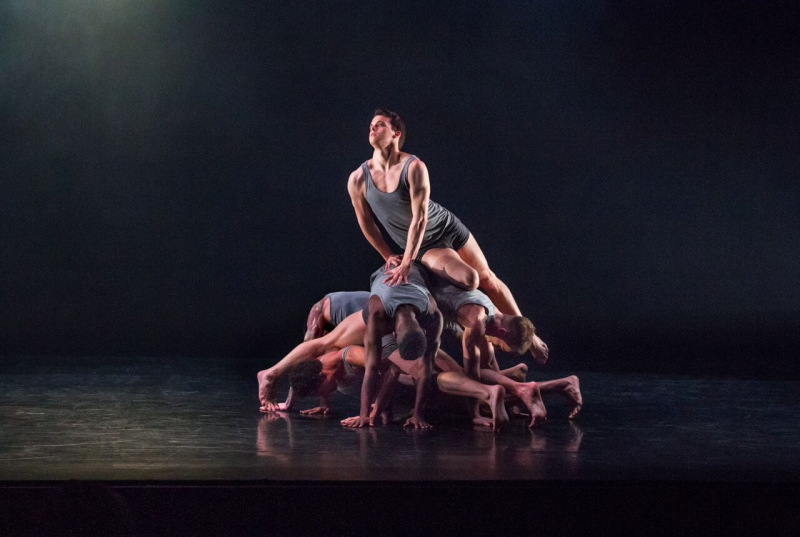
    Above: Lloyd Mayor at the top of the heap in Rust; a Brigid Pierce photo

    After a brief pause, the curtain rose on Nacho Duato’s Rust, a powerful all-male work that served as an ideal counterpoise to the feminine spirit of the preceding Graham work. Lorenzo Pagano emerges from the shadows under the relentless beam of an interrogation spotlight; upstage, the hapless Ari Mayzick is kicked, tortured, and left for dead. Ben Schultz, Lloyd Mayor, and Abdiel Jacobsen complete the quintet as Mr. Duato puts them thru demanding physical passages and down-trodden floor work.

    Rust

    Above: from Rust; photo by Brigid Pierce

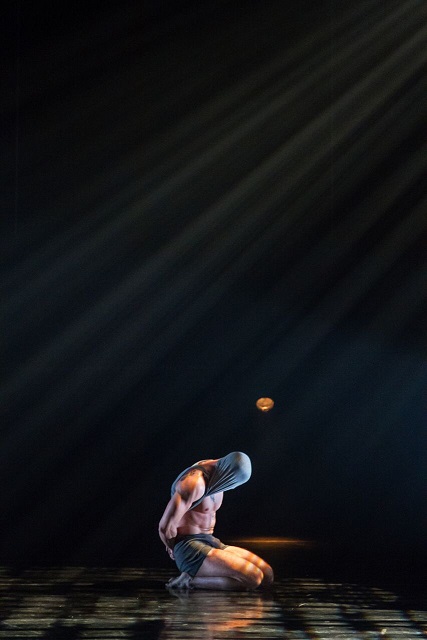
    Rust is danced to Arvo Pärt’s deep-chanting “De Profundis” (composed in 1980); voices emerge from the depths of despair, rising up to create an atmosphere of devotional reverence. The spirituality of the music and the brutality of the action remind us of the violence that permeates the history of the great religions. Rust ends with the men kneeling, hooded and with their hands tied behind their backs: all are prisoners, one way or another.
    Ben s rust

    Above: Ben Schultz in Rust; photo by Brigid Pierce

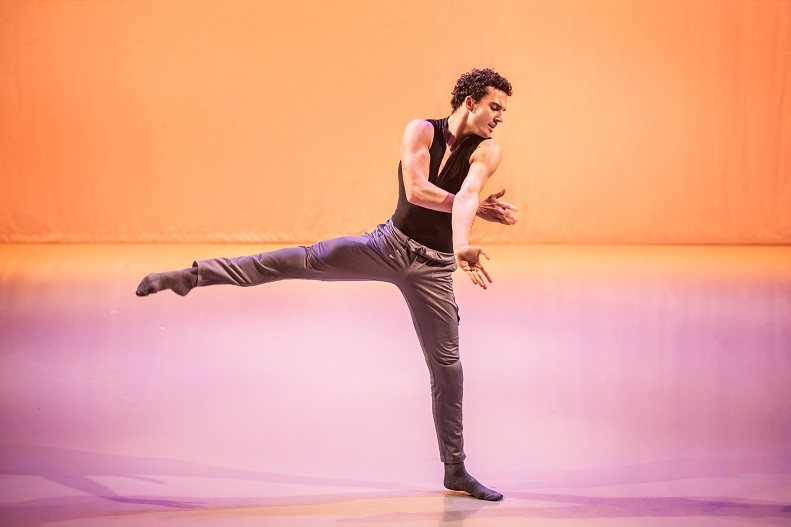
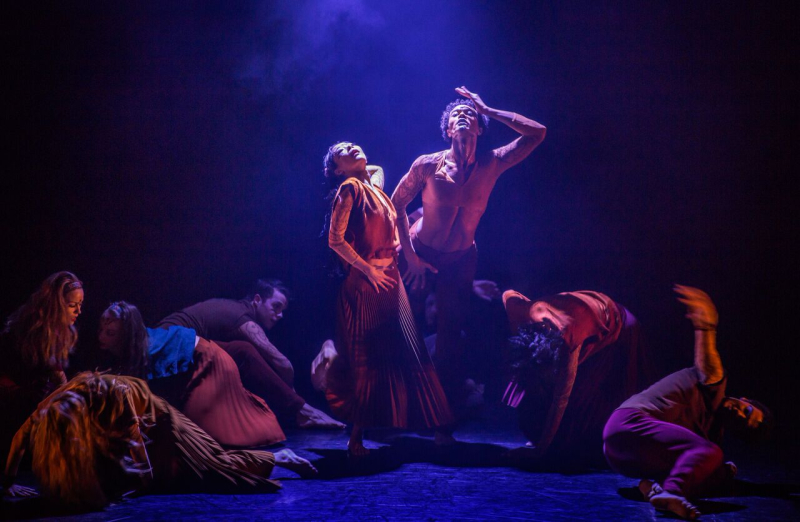
    We had had a preview of Sidi Larbi Cherkaoui’s Mosiac a few weeks ago at the Graham studios. Tonight this exotic, sensual but also shadowy ballet looked mysterious in Nick Hung’s lighting. Felix Bunton’s mid-Eastern score, spicy and alluring, is embellished by spoken commentary from the news networks.

    The dancers, costumed in soft, warm-hued garments, are seen in a cluster at curtain-rise. In a solo passage, Anne Souder’s personal beauty and physical flexibility made an alluring impression. Vocals that evoke deserts, minarets, and marketplaces set the dancers swirling; smoke drifts on the air as Lorenzo Pagano steps forward for a solo.
    Unspecified4d

    Above: Lorenzo Pagano in Mosaic; Brigid Pierce’s image from a studio showing 

    Mosaic

    Above: Xin Ying in Mosaic; photo by Brigid Pierce

    A threatening atmosphere arises; the incomprehensible talk all sounds like bad news. Stylized dancing under aqua lights brings forth the Company’s incredible Xin Ying: her feel for the sway of the music is intrinsic. A big beat and strobe lights give off contrasting impressions: are we in a nightclub or a prison yard? The dancers begin to shed their outer layers of clothing, and their vulnerability lends a new aspect to the story.

    Mosaic2

    A duet for Anne Souder and Lloyd Mayor (above, photo by Brigid Pierce) could be provocative, or manipulative. In the end, the dancers return to the clustered formation, but now they are trembling uncontrollably.
    Mosaic3

    Above: Xin Ying and Abdiel Jacobsen in Mosaic; a Brigid Pierce photo  

    To close the evening Diversion of Angels, Martha Graham’s glowing commentary on the aspects of love, was marvelously danced. To Norman Dello Joio’s lyrical, romance-tinged score, we meet three women who embody the ages of love: Charlotte Landreau (Young Love, in yellow), Xin Ying (Passionate Love, in red), and Konstantina Xintara (Deep and Lasting Love, in white); each has her beloved: Lloyd Mayor, Lorenzo Pagano, and Ben Schultz respectively. An ensemble of four women (So Young An, Marzia Memoli, Anne Souder, and Leslie Andrea Williams) and an additional man (Jacob Larsen – to complete the male quartet) fill out the stage picture with animated choreography, often heralding or echoing the principals.

    Konstantina-1

    Ms. Xintara (above) and Mr. Schultz exude calm: her elongated arabesques show romantic centeredness and confidence while his muscular physique provides a pillar of strength for his beloved. A particular gesture of Ben’s reminded me ever so much of Nijinsky’s Faune.  At times, this White Couple simply stand together, assured of their mutual affection as they watch the younger generations leap and swirl.

    Xin-ying

    Xin Ying (above), superbly beautiful in her red frock, repeatedly displays her own arabesque-motif, sustaining the pose with awesome control. Mr. Pagano is a more fleeting lover here, but when he and his love do meet up, their passion sizzles.

    Charlotte

    Charlotte Landreau (above) is a dancer to cherish. With her strong technique and engaging presence, Charlotte seems destined for many Graham roles. As the Woman in Yellow tonight, her breezy jetés – stretched long and wonderfully elevated – delighted my choreographer/friend Claudia Schreier and me. As Charlotte’s ardent young lover, Lloyd Mayor hovered over his sweetheart, looking at once smitten and protective. 

    Jacob Larsen, handsome of face and form, kept pace with the Company’s dynamic men; he looks likely to become a valuable asset in the Graham rep. 

    An excellent evening on every count, and the cheers and applause that greeted the generous Graham dancers as they took their bows were eminently deserved.

    Production photos in this article are by Brigid Pierce, sent to me at just the right moment by the Graham Company’s press agent, Janet Stapleton.
  • Barnatan|Honeck @ The NY Philharmonic

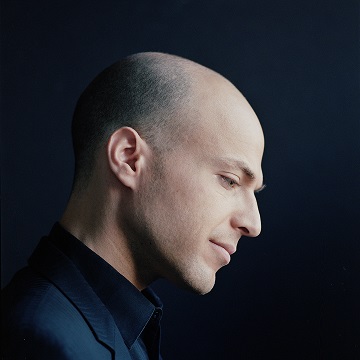
    Barnatan_16-500x500

    Thursday February 16th, 2017 –  Beethoven’s 1st piano concerto, with soloist Inon Barnatan (above), and Mahler’s 1st symphony were paired in tonight’s New York Philharmonic performance under the baton of Manfred Honeck.

    Beethoven’s 1st piano concerto was used by choreographer Helgi Tomasson in 2000 for his gorgeous ballet PRISM, originally danced by Maria (‘Legs’) Kowroski and Charles Askegard at New York City Ballet: that’s how I fell in love with this particular concerto. Throughout the third movement tonight, I was recalling Benjamin Millepied’s virtuoso performance of Tomasson’s demanding choreography.

    Israeli pianist Inon Barnatan, currently the first Artist-in-Association of the New York Philharmonic, has thrilled me in the past with his playing both with the Philharmonic and in frequent appearances with Chamber Music Society of Lincoln Center. And I don’t use the word ‘thrilled’ lightly. 

    Mr. Barnatan’s playing of the Beethoven this evening was remarkable as much for its subtlety as for its brio. Maintaining a sense of elegance even in the most whirlwind passages, the pianist had ideal support from Maestro Honeck and the artists of the Philharmonic. The cascading fiorature which sound soon after the soloist’s entrance were crystal-clear; with Mr. Barnatan relishing some delicious nuances of phrase along the way, we reached the elaborate cadenza where the pianist demonstrated peerless dexterity, suffusing his technique with a sense of magic.

    From the pianissimo opening of the Largo, Mr. Barnatan’s control and expressiveness created a lovely sense of reverie. He found an ideal colleague in Pascual Martinez Forteza, whose serenely singing clarinet sustained the atmosphere ideally. Maestro Honeck and the orchestra framed the soloist with playing of refined tenderness; the Largo left us with a warm after-glow.  

    The concluding Rondo: Allegro is one of the most purely enjoyable finales in all the piano concerto literature. Good humor abounds, the music is expansive, and a jaunty – almost jazzy – minor key foray adds a dash of the unexpected. Mr. Barnatan was at full-sail here, carrying the audience along on an exuberant ride and winning himself a tumult of applause and cheers. He favored us with a brisk and immaculately-played Beethoven encore, and had to bow yet again before the audience would let him go. 

    Inon Barnatan has, in the past two or three years, become a ‘red-letter’ artist for me – meaning that his appearances here in New York City will always be key dates in my concert-planning. His Gaspard de la Nuit at CMS last season was a true revelation, and tonight’s Beethoven served to re-affirm him as a major force among today’s music-makers. 

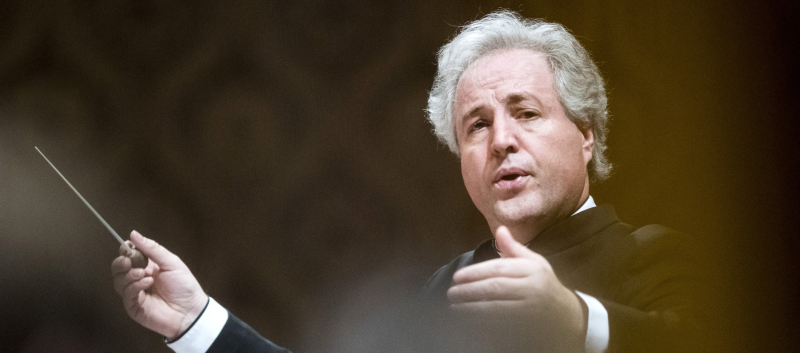
    Manfred-honeck-header

    Maestro Honeck (above) returned to the podium following the interval for the Mahler 1st. In the course of the symphony’s 50-minute span, the Maestro showed himself to be a marvelous Mahler conductor. The huge orchestra played splendidly for him, and the evening ended with yet another resounding ovation.

    From the ultra-soft opening moments of the first symphony, which Mahler described as sounds of nature, not music!”, this evening’s performance drew us in. The offstage trumpet calls seem to issue from a fairy-tale castle deep in a mysterious forest. The Philharmonic’s wind soloists – Robert Langevin, Philip Myers, and Liang Wang among them – seized upon prominent moments: Mr. Wang in fact was a key element in our pure enjoyment of the entire symphony. The pace picks up, and a melody from the composer’s Wayfarer songs shines forth; the music gets quite grand, the horns opulent, the trumpets ringing out, and so on to a triumphant climax.

    The symphony’s second movement, a folkish dance, also finds the horns and trumpets adding to the exuberance. After a false ending, a brief horn transition sends us into a waltzy phase, with winds and strings lilting us along. Then the movement’s initial dance theme returns, accelerates, and rushes to a joyful finish.

    The solemn timpani signals the ‘funeral music’ of the third movement; a doleful round on the tune of “Frère Jacques” ensues, but perhaps this is tongue-in-cheek Mahler. Mr. Wang’s oboe again lures the ear, and a Wayfarer song is heard before a return to the movement’s gloomy opening atmosphere. The unusual intrusion of a brief gypsy-dance motif melts away, and the funeral cortege slowly vanishes into the mist.

    Maestro Honeck took only the briefest of pauses before signaling the dramatic start of the finale. A march, a lyrical theme, a romance that grows passionate: Mahler sends everything our way. After several shifts of mood, it begins to feel like the composer is not quite sure how he wants his symphony to end. Various motifs are heard again, and at last Mahler finds his finish with a celebratory hymn, the horn players rising to blaze forth resoundingly.

  • Bronfman|Bychkov ~ Tchaikovsky @ The NY Phil

    Bronfman_TchaikovskyFestival_2520x936

    Above: pianist Yefim Bronfman

    Friday January 27th, 2017 – With Semyon Bychkov on the podium and Yefim Bronfman at the Steinway, we were assured of an exciting evening at The New York Philharmonic. Music by Glinka and Tchaikovsky was played in the grand style under Maestro Bychkov’s magical baton, and Mr. Bronfman brought down the house with his splendid account of Tchaikovsky’s 2nd piano concerto. Throughout this à la Russe program, visions of the splendours of the Tsarist courts filled the imagination.

    The first half of the evening was given over to two scores which inspired George Balanchine to create two choreographic masterworks:  Mikhail Glinka’s brief Valse-Fantaisie, and the Tchaikovsky concerto. The two ballets unfolded clearly in my mind as the music, so familiar to me from innumerable performances at New York City Ballet, filled Geffen Hall in all its romantic glory.

    The infectious, lilting rhythm of the waltz propels the Glinka score; originally written for piano in 1839 and later orchestrated, it is rich in melody and intriguing shifts between major and minor passages, evoking the glamour, chivalry, and mystery of a glittering ball at the Winter Palace. Needless to say, it was sumptuously played under Maestro Bychkov’s masterful leadership.

    Tchaikovsky’s 2nd piano concerto has been a favorite of mine for years, thanks to my great affection for the ballet Balanchine created to it. Written in 1879–1880, the concerto was dedicated to Nikolai Rubinstein; but Rubinstein was never destined to play it, as he died in March 1881. The premiere performance took place in New York City, in November of 1881 with Madeline Schiller as soloist and Theodore Thomas conducted The New York Philharmonic orchestra. The first Russian performance was in Moscow in May 1882, conducted by Anton Rubinstein with Tchaikovsky’s pupil, Sergei Taneyev, at the piano.

    Tonight, Yefim Bronfman’s power and virtuosity enthralled his listeners, who erupted in enthusiastic applause after the concerto’s first movement. The eminent pianist could produce thunderous sounds one moment and soft, murmuring phrases the next; this full dynamic spectrum was explored in the monster cadenza, to mesmerizing effect. A word of mention here of some lovely phrases from flautist Robert Langevin and clarinetist Pascual Martinez Fortenza early in the concerto; in fact, all of the wind soloists were very much on their game tonight.

    In the Andante, a sense of gentle tenderness filled Bronfman’s playing, and his rapport with concertmaster Frank Huang and cellist Carter Brey in the extended passages where they play off one another made me crave an evening of chamber music with these three masters. The concerto sailed on thru the concluding Allegro con fuoco, with its gypsy-dance theme brilliantly set forth by both pianist and orchestra. Maestro Bychkov, who had set all the big, sweeping themes sailing forth grandly into the hall throughout, was particularly delightful in this lively finale. At the end, the audience erupted in a gale of applause and cheers, Mr. Bronfman cordially bringing Mssrs. Huang and Brey forward to share in the ovation. 

    Throughout this awe-inspiring performance, the choreography of Balanchine danced in my head, and visions of Viktoria Tereshkina, Teresa Reichlen, Faye Arthurs, and Jonathan Stafford sprang up, the music inspiring the memory of their sublime dancing in Mr. B’s remarkable setting of this concerto.

    Semyon_bychkov

    After the interval, Maestro Bychkov (above) led an epic performance of Tchaikovsky’s 5th symphony. From the burnished beauty of the horn solo near the start, thru the palpable fervor of the Andante cantabile (with its evocation of the SLEEPING BEAUTY Vision Scene), and on thru the Valse, which moves from sway to elegant ebullience, Maestro Bychckov and the artists of the Philharmonic gloried in one Tchaikovskyian treasure after another.

    The symphony’s finale, right from it’s soulful ‘Russian’ opening theme, seemed to sum up all that had gone before: vivid dancing rhythms from Russian folk music, a march-like tread, a brief interlude. Then the brass call forth, and a tremendous timpani roll heralds a mighty processional. One final pause before a stately repeat of the main theme and a swift, four-chord finish. The audience rightly responded to the Maestro and the musicians with a full-scale standing ovation.

  • Back at the Ballet

    6a00d8341c4e3853ef015435034561970c-800wi

    Wednesday January 25th, 2017 – I haven’t been to a New York City Ballet performance since Jennie Somogyi’s farewell in 2015, but I keep running into the dancers and am constantly reminded of how much I miss watching them dance. A few weeks ago, on a whim, I ordered a ticket for tonight’s all-Balanchine program, before casting was announced. A domestic surprise – a nice one – called me home early: I missed FOUR TEMPERAMENTS tonight. But I greatly enjoyed seeing ALLEGRO BRILLANTE and the Balanchine SWAN LAKE again. 

    On entering the theater lobby, I was very happy to see that The Lyre has been restored to a place of honor. Once seated, I watched the musicians warming up while the theater filled slowly. I was not feeling the old sense of anticipation, and I was not sure if my idea of re-connecting with NYCB was making sense: perhaps it’s a chapter best left closed? 

    But then the house lights went down; pianist Susan Walters and conductor Andrew Litton entered the pit for ALLEGRO BRILLANTE and suddenly it felt right to be there. This was my first experience of having Andrew Litton on the podium; the orchestra – apart from a random note or two going astray in SWAN LAKE – played the big Tchaikovsky themes sumptuously. Ms. Walters did a beautiful job with ALLEGRO BRILLANTE; and later in the evening, concertmaster Arturo Delmoni played a ravishing White Swan solo. 

    Tiler Peck was originally listed for ALLEGRO BRILLANTE, but a pre-curtain announcement informed us that Megan Fairchild would be dancing instead. I was pleased with this announcement, as I’d become quite an admirer of Ms. Fairchild over time; I was curious to see how the Fairchild/Veyette partnership would work under the circumstances, but they are both professionals and carried it off in fine style. Megan’s dancing had a lovely lyrical feeling, and I began to realize how very much I have missed her dancing over the past several months.

    When the swans made their entry in the Balanchine SWAN LAKE, it really sank in just how long I’d been away: hardly a familiar ballerina in sight. There was a time when I knew every single person in the Company and could scan a large group of corps dancers with my opera glasses and see one friendly face after another. Tonight the girls seemed beautifully anonymous; I wonder who among them might captivate me as Rebecca Krohn and Ashley Laracey had once done, right from their first performances with the Company?

    The soloists, Megan LeCrone and Lauren King, both danced very well. Teresa Reichlen and Russell Janzen created a true sense of poetry and ill-fated romance in their partnership. Russell looks the epitome of a romantic hero: his sense of wonder at finding this fragile creature by the lake, and his desire to protect and cherish her were beautifully expressed. Tess was an elegant Swan Queen, terrified at first and only slowly surrendering to the calming effects of Russell’s care. The two long-limbed dancers make a striking couple, and their ardent tenderness mirrored the music ideally. They were rapturously applauded, and called out for an extra bow.

    In ALLEGRO BRILLANTE, I was particularly impressed by the dancing of the supporting ensemble of eight dancers; Balanchine gives them plenty to do, and they all looked superb. These are dancers I followed closely back in my days as an NYCB regular, and it was really good to see them all again, looking so attractive and dancing with such assurance and grace: Megan Johnson, Meagan Mann, Gretchen Smith, Lydia Wellington, Devin Alberda, Daniel Applebaum, Cameron Dieck, and Aaron Sanz. Watching them, I was keenly aware of what I’ve been missing.

  • Back at the Ballet

    6a00d8341c4e3853ef015435034561970c-800wi

    Wednesday January 25th, 2017 – I haven’t been to a New York City Ballet performance since Jennie Somogyi’s farewell in 2015, but I keep running into the dancers and am constantly reminded of how much I miss watching them dance. A few weeks ago, on a whim, I ordered a ticket for tonight’s all-Balanchine program, before casting was announced. A domestic surprise – a nice one – called me home early: I missed FOUR TEMPERAMENTS tonight. But I greatly enjoyed seeing ALLEGRO BRILLANTE and the Balanchine SWAN LAKE again. 

    On entering the theater lobby, I was very happy to see that The Lyre has been restored to a place of honor. Once seated, I watched the musicians warming up while the theater filled slowly. I was not feeling the old sense of anticipation, and I was not sure if my idea of re-connecting with NYCB was making sense: perhaps it’s a chapter best left closed? 

    But then the house lights went down; pianist Susan Walters and conductor Andrew Litton entered the pit for ALLEGRO BRILLANTE and suddenly it felt right to be there. This was my first experience of having Andrew Litton on the podium; the orchestra – apart from a random note or two going astray in SWAN LAKE – played the big Tchaikovsky themes sumptuously. Ms. Walters did a beautiful job with ALLEGRO BRILLANTE; and later in the evening, concertmaster Arturo Delmoni played a ravishing White Swan solo. 

    Tiler Peck was originally listed for ALLEGRO BRILLANTE, but a pre-curtain announcement informed us that Megan Fairchild would be dancing instead. I was pleased with this announcement, as I’d become quite an admirer of Ms. Fairchild over time; I was curious to see how the Fairchild/Veyette partnership would work under the circumstances, but they are both professionals and carried it off in fine style. Megan’s dancing had a lovely lyrical feeling, and I began to realize how very much I have missed her dancing over the past several months.

    When the swans made their entry in the Balanchine SWAN LAKE, it really sank in just how long I’d been away: hardly a familiar ballerina in sight. There was a time when I knew every single person in the Company and could scan a large group of corps dancers with my opera glasses and see one friendly face after another. Tonight the girls seemed beautifully anonymous; I wonder who among them might captivate me as Rebecca Krohn and Ashley Laracey had once done, right from their first performances with the Company?

    The soloists, Megan LeCrone and Lauren King, both danced very well. Teresa Reichlen and Russell Janzen created a true sense of poetry and ill-fated romance in their partnership. Russell looks the epitome of a romantic hero: his sense of wonder at finding this fragile creature by the lake, and his desire to protect and cherish her were beautifully expressed. Tess was an elegant Swan Queen, terrified at first and only slowly surrendering to the calming effects of Russell’s care. The two long-limbed dancers make a striking couple, and their ardent tenderness mirrored the music ideally. They were rapturously applauded, and called out for an extra bow.

    In ALLEGRO BRILLANTE, I was particularly impressed by the dancing of the supporting ensemble of eight dancers; Balanchine gives them plenty to do, and they all looked superb. These are dancers I followed closely back in my days as an NYCB regular, and it was really good to see them all again, looking so attractive and dancing with such assurance and grace: Megan Johnson, Meagan Mann, Gretchen Smith, Lydia Wellington, Devin Alberda, Daniel Applebaum, Cameron Dieck, and Aaron Sanz. Watching them, I was keenly aware of what I’ve been missing.