Category: Ballet

  • Sidi Larbi Cherkaoui @ Martha Graham Dance Co

    Unspecified4y

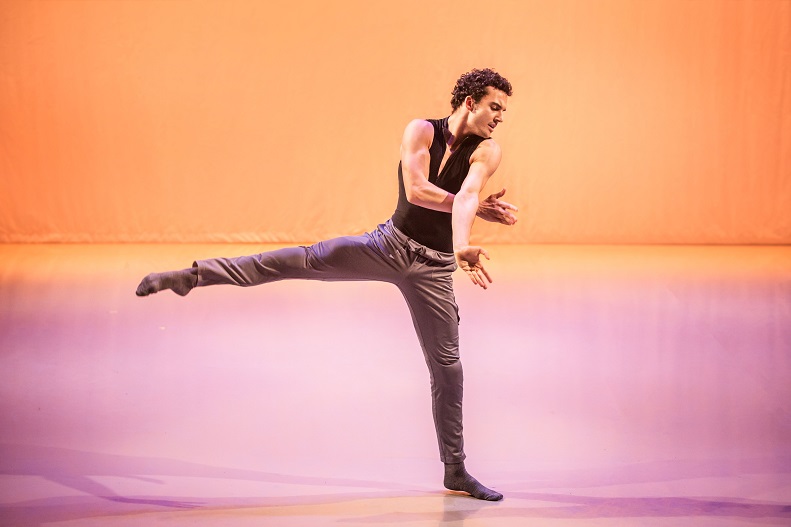
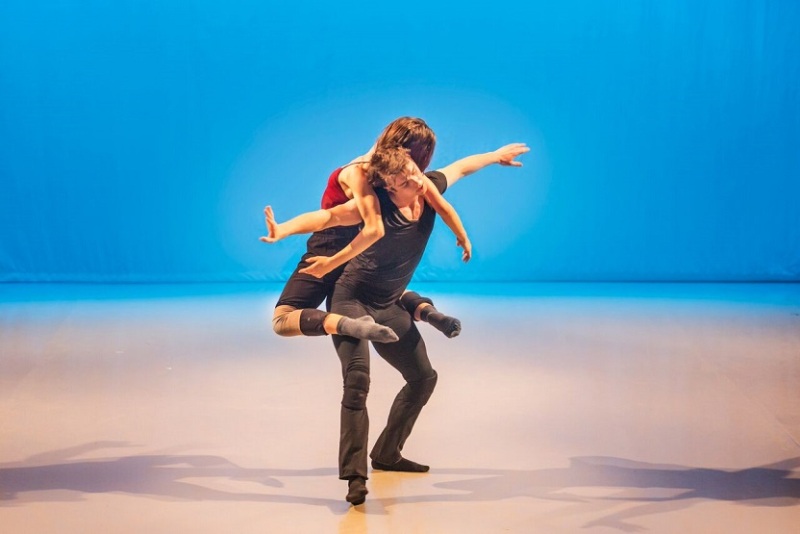
    Above: members of The Martha Graham Dance Company at a studio showing of MOSAIC, a new work being created for the Company by choreographer Sidi Larbi Cherkaoui; photo by Brigid Pierce. MOSAIC will premiere during the upcoming Graham season at The Joyce, which opens on February 14th. Details and tickets here.

    On January 11th, 2017, friends of Graham gathered at the Company’s homespace at Westbeth on Bethune Street for a first look at the new Cherkaoui piece. This is my fourth time experiencing this choreographer’s work: in 2009, Cedar Lake Contemporary Ballet premiered Larbi’s ORBO NOVO; in 2010, his SUTRA was performed as part of the White Lights Festival; and this past Summer, HARBOR ME was performed at the Joyce by LA Dance Project. 

    MOSAIC is danced to a score by Felix Buxton; the choreography has a sultry, swaying, Middle Eastern  feel. Without giving away more than that, I will only say the Graham dancers look sexy as ever in this provocative style. It was really great seeing Jason Kittelberger, an iconic dancer with the late, lamented Cedar Lake Company; Jason is Larbi’s choreographic assistant for MOSAIC and he introduced the work this evening.

    Here are a some images from the showing of MOSAIC; the photographer is Brigid Pierce:

    Unspecified4

    Anne Souder

    Unspecified3

    Leslie Andrea Williams, Lorenzo Pagano, Anne Souder, Lloyd Mayor

    Unspecified4d

    Lorenzo Pagano

    Unspecified5

    Anne Souder, Lloyd Mayor

    Unspecified6

    Anne Souder, Lloyd Mayor

    In addition to MOSAIC, the repertoire for the upcoming Graham season at The Joyce features a premiere by Annie-B Parsons, recent works by Nacho Duato and Pontus Lidberg, a revival of Martha Graham’s PRIMITIVE MYSTERIES, as well as Graham classics MAPLE LEAF RAG, DARK MEADOW SUITE, DIVERSION OF ANGELS, and CLYTEMNESTRA Act II.

    I’m hoping to get to a studio rehearsal before the season at The Joyce begins.

  • SALOME @ The Met

    Salome1

    “You know, there are three kinds of Salomes: those who can sing it, those who can dance it, and those who should be shot!” ~ Leonie Rysanek

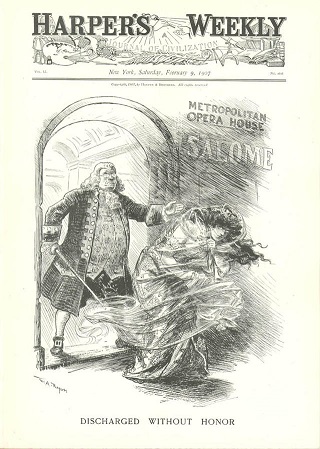
    Wednesday December 28th, 2016 – My friend Dmitry and I had really been looking forward to seeing SALOME at The Met this season; it’s among our favorite scores. I bought tickets in advance for two performances, since I wanted to hear both Željko Lučić and Greer Grimsley as Jochanaan.

    Then came the news that the scheduled Salome, Catherine Naglestad, had withdrawn from the title-role, and was to be replaced by Patricia Racette. Racette used to be a particular favorite of mine, going back to her performances as Emmeline in Tobias Picker’s opera at NYCO. She was a marvelous Met Mimi, Violetta, and Ellen Orford, and I very much enjoyed her Elisabetta in DON CARLO. But as the seasons have passed, the wear-and-tear has really begun to show in Racette’s singing. Still, as recently as 2013, she gave a striking performance in Dallapiccola’s IL PRIGIONIERO with The New York Philharmonic.

    Since then, anything I have heard from her has sounded sadly worn and unpleasant. I suppose there’s something honorable about “the sword wearing out the sheath” in the service of art, but after a while the artistry and dedication no longer compensate for the sound being produced.

    I don’t want to dwell on the negative, but much of Racette’s singing was really off-putting. In the lower-to-middle-range passages, she was often covered by the orchestra. The heavy usage the soprano has subjected her voice to really shows in this music: the vibrato has spread so that in the upper range there’s no core to a sustained note; the louder the note, the wider the fluctuation.

    Salome is supposedly a teenager, but Strauss wrote the part in a way that only a mature and experienced soprano can cope with it. Thus the Dance of the Seven Veils must be handled with kid gloves; soprano and choreographer have to find ways for a woman of a certain age who is capable of singing the role to be reasonably credible in the dance-moves. For this famous scene, Racette chose an unflattering get-up: a sort of tuxedo affair with hot pants and a top hat. The choreography was duly carried out by the soprano and two men, but it was about as provocative as an after-dinner mint (to quote from the film CABARET). As the dance ended, Dmitry and I quietly left the theater.

    To briefly note the evening’s positive elements: Greer Grimsley was a powerful Jochanaan – though the amplification of his voice from the cistern was unflattering – and Gerhard Siegel was pretty much perfect as Herod. Excellent singing and portrayals from Nancy Fabiola Herrera as Herodias (great high notes!) and Kang Wang, who was vocally clear and thrilling as Narraboth. I loved seeing John Hancock onstage again, and there was fine work from Carolyn Sproule, Kathryn Day, Nicholas Brownlee, Richard Bernstein (ever the impressive stage figure, as when he kept the prophet on a long leash), Mikhail Petrenko, and Paul Corona. Allan Glassman led a strong quintet of Jews who were well-differentiated as personalities and just as annoying as one imagines Strauss intended them to be.

    The orchestra played superbly, and conductor Johannes Debus did well to highlight the myriad hues of the opera’s marvelous orchestration. Debus did not, however, always maintain an ideal union between pit and stage, sometimes drowning out the singers.

    Neither Dmitry nor I could recall the fanciful fore-curtain of angels, but perhaps we’ve suppressed the memory of it. The audience seemed pretty much captivated by the whole performance, though the woman seated in the adjoining box giggled and commented aloud during the dance. 

    Over the years and through repeated hearing, I’ve found that my favorite passage of SALOME is Jochanaan’s admonition to Salome to seek Christ at the Sea of Galilee. Tonight, Mr. Grimsley and concertmaster David Chan rendered this moment so beautifully; I suppose it’s odd that an atheist should be moved by this affirmation of faith, but to be honest, I often find expressions of deep and simple belief to be truly touching.

    Metropolitan Opera House
    December 28th, 2016

    SALOME
    Richard Strauss
    Salome..................Patricia Racette
    Herod...................Gerhard Siegel
    Herodias................Nancy Fabiola Herrera
    Jochanaan...............Greer Grimsley
    Narraboth...............Kang Wang
    Page....................Carolyn Sproule
    Jew.....................Allan Glassman
    Jew.....................Mark Schowalter
    Jew.....................Noah Baetge
    Jew.....................Alex Richardson
    Jew.....................David Crawford
    Nazarene................Mikhail Petrenko
    Nazarene................Paul Corona
    Soldier.................Nicholas Brownlee
    Soldier.................Richard Bernstein
    Cappadocian.............John Hancock
    Slave...................Kathryn Day
    Executioner.............Reginald Braithwaite

    Conductor...............Johannes Debus

  • Michael Todd Simpson in L’AMOUR DE LOIN

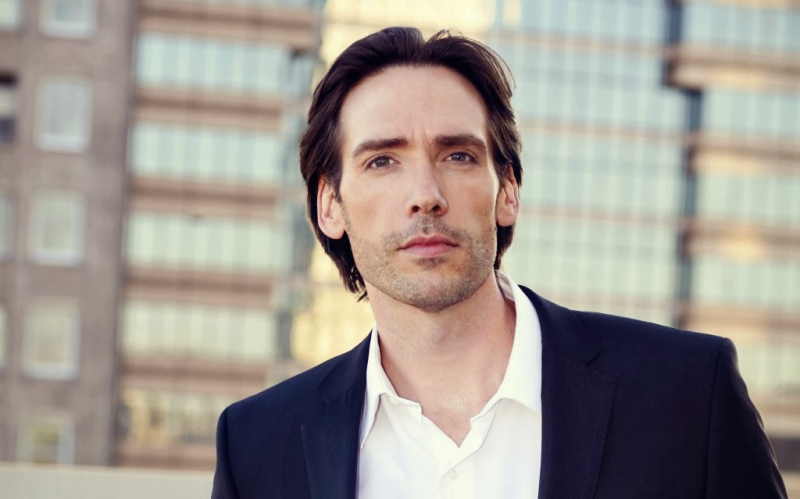
    Simpson, Michael Todd

    Saturday December 24th, 2016 matinee – This afternoon we had the unalloyed pleasure of experiencing baritone Michael Todd Simpson’s performance as Jaufré Rudel in Kaija Saariaho’s breathtakingly beautiful opera L’Amour de Loin at The Met. Mr. Simpson was replacing the scheduled Eric Owens in the role, and to say that he gave an impressive interpretation would be putting it mildly: in terms of both voice and physical presence, Mr. Simpson was simply ideal.

    We settled in at our balcony box this afternoon, observing the many empty seats for this matinee; neither the Saariaho nor Strauss’s Salome – to be shown in the evening – is really holiday fare, but that’s what The Met programmed on this day before Christmas. The Amour production has its striking moments, but overall it was the musical experience that thrilled us. 

    My friend Dmitry and I had been looking forward to seeing the Saariaho opera ever since the plan for the opera’s Met premiere was whispered to me by my choreographer-friend Luca Veggetti. Luca is good friends with Ms. Saariaho, and they have collaborated here in New York: Luca staged the composer’s ballet MAA at The Miller Theatre in 2010, and in 2013 he invited me to a rehearsal of the same work when he was preparing it for a Paris production. Luca turned to Ms. Saariaho’s music for his 2012 all-female dancework From the Grammar of Dreams, created for The Martha Graham Dance Company. In 2014, a fascinating collaboration between Gotham Chamber Opera and The Martha Graham Dance Company resulted in a memorable presentation of Saariaho’s The Tempest Songbook at The Metropolitan Museum of Art: I saw an early rehearsal, and the stunning opening night performance. Ms. Saariaho was also featured in a composer’s evening at The Miller Theatre in February 2014.

    L’Amour de Loin premiered at the Salzburg Festival in 2000. The Robert Lepage production – which The Met is presenting – is the tenth production of this striking work to date; that fact alone attests to the opera’s viability, which springs – in my opinion – both from the magical sound-world Kaija Saariaho has created and from the ineffable sadness and mystery of the story. 

    Jaufré Rudel was a 12th century troubadour from Blaye, near Bordeaux in south-west France. He fell in love – sight-unseen – with the Countess of Tripoli after hearing her praised by pilgrims returning from Antioch. He wrote poems about her and sang of her nobility and virtue. From this idealized love sprang Jaufré’s desire to meet her. He joined the Crusade and set sail for the Holy Land, but he fell gravely ill on the Mediterranean voyage and arrived at Tripoli only to die in the Countess’s arms. She had him buried in the temple of her city, and thereafter, undone by her grief, she became a nun.

    Kaija Saariaho’s score, as with Debussy’s for Pelléas et Mélisande, creates a unique atmosphere with its timeless and treasurable tale of a love that is both exalted and doomed, rendered in music of intoxicating tenderness and – eventually – despair. In shimmering orchestral textures, the composer summons up visions of the sea which divides the lovers and upon which the mysterious Pilgrim sails in his fragile boat, carrying messages between Jaufré and his beloved Countess.

    From the very first measures, this music drew me in and held me, as if in a dream from which one doesn’t want to awaken. Countless passages from the opera were so hauntingly expressive that I regretted not having booked more than one performance. The music darkened considerably in the second half of the evening: there’s a vivid sea-faring prelude to Act IV, some dance-like rhythms spring up; and Jaufré’s lamenting phrases that he may not live long enough to meet his beloved are deeply moving.

    The Met orchestra played superbly under the baton of Susanna Mälkki: I loved watching her from my perch high above the pit, and she was given a warm reception when she appeared onstage at the end of the opera.

    This afternoon was actually my second encounter with Michael Todd Simpson at The Met; in 2012 he caught my attention in the brief role of the Tsar’s herald in Khovanschchina. It is Mr. Simpson, as Jaufré Rudel, who opens the Saariaho opera. But even before he began to sing, the baritone established himself as a charismatic presence: tall, fair of complexion, with expressive eyes and handsome cheekbones, Mr. Simpson put me in mind of the Royal Ballet’s Edward Watson – and believe me, I can’t pay a higher compliment than that.

    Yet all that would have been for nought had Mr. Simpson not had the vocal goods to back up his physical appeal. But …he does! This is a warm, clear, easily-produced voice – a voice wonderfully present in the big House. Mr. Simpson seemed utterly at home, both in the persona and in the music; one would have thought he’d sung this piece dozens of times since every word and note in his nuanced performance radiated assurance and grace. All afternoon, the Simpson voice was a veritable font of baritonal beauty, and while comparisons are not always meaningful, I can only say that listening to Mr. Simpson gave me the same deep pleasure I have often drawn from the singing of Sanford Sylvan and Thomas Hampson. 

    Deservedly hailed with bravos at his solo bow, Mr. Simpson proved so much more than a stand-in: he’s a distinctive artist, and one I hope to hear again – soon and often.   

    Mumford01_(c)Dario-Acosta

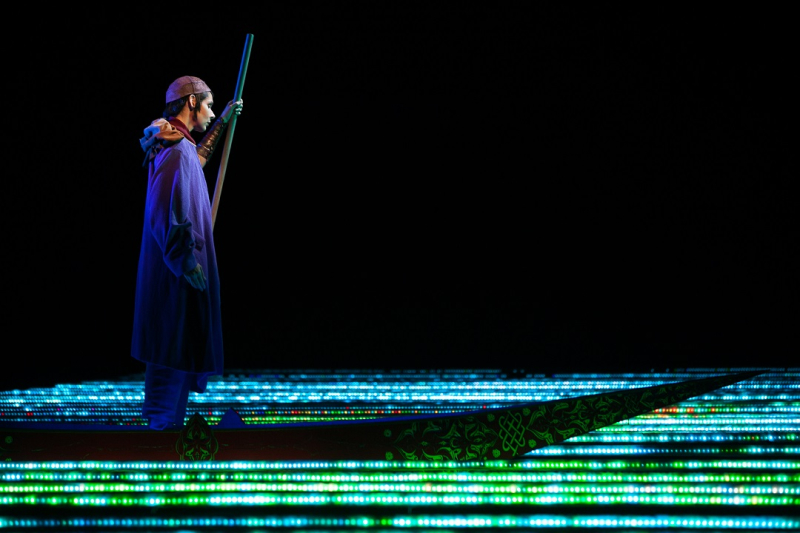
    More sublime singing this afternoon came from mezzo-soprano Tamara Mumford (above, in a Dario Acosta portrait) in the role of The Pilgrim. Patiently plying her small boat across the stage, Tamara looked out at us with far-questing eyes. She’s clad in neutral garb, a messenger with a masculine aura; but there’s no question that the voice is anything but intrinsically female. And what a voice it is! As with every note I have heard from this superb singer since she first came onto the scene, Ms. Mumford’s house-filling and lustrous tone, evenness of range, and pliantly expressive phrasing combined to imbue her performance with a marvelous glow. 

    La-Amour-de-loin-Tamara-Mumford

    Above: Tamara Mumford as The Pilgrim

    Hq720

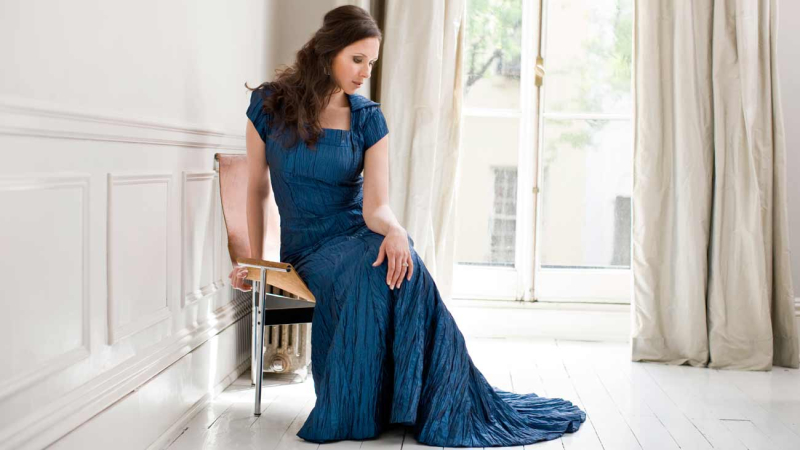
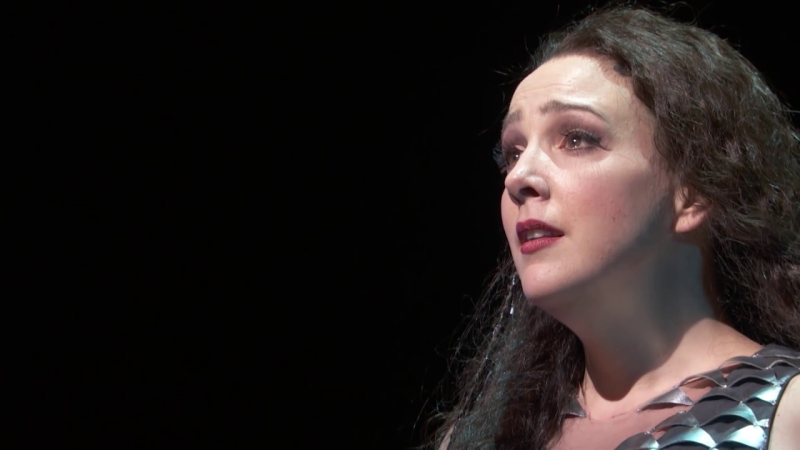
    Above: Susanna Phillips as Clémence, Countess of Tripoli. In this role, Ms. Phillips had her finest Met success to date. A beautiful young woman, she well-captured the initial reserve and ultimate passion of the poet’s muse. Traces of stridency marked some of her uppermost notes, but overall the soprano coped impressively with the demands of the role, creating a lyrical atmosphere with her clear phrasing and sense of dynamics. And she looked so lovely, gazing out across the sea to her lover from afar.

    Robert Lepage’s infatuation with machinery – which gave us the clunky, cumbersome $20 million RING Cycle set that languishes in storage somewhere – was evident in a huge metal see-saw apparatus that swung slowly around the stage thru much of the evening. The waves of the sea were evoked by row upon row of tiny LED lights which flickered in changing colours and patterns, eventually tiring the eye. The chorus are seated beneath the waves and pop up when they are called on to sing. As the afternoon progressed, I increasingly wished The Met had imported the imaginative ENO/Cirque de Soleil production rather than this earthbound contraption. Still, I was extremely grateful to experience the opera live in any setting.  

    Some people complained of the opera’s longueurs; I never felt this at all, but I must say that the end of the opera was something of a disappointment. After Jaufré’s death, one wants a silence and then an evaporating orchestral postlude. Instead, Clémence has a sort of mad scene that becomes too verismo in its intensity. She expresses the same feelings, over and over, while one is always hoping each utterance is her last. There’s even some screaming. For me, this shattered the mood of all that had gone before. How much more poetic it would have been to end with Jaufré’s tender phrase: “In this moment, I have all that I desire.”

    Most people seem to believe that a love for someone you’ve never met is unrealistic, and that a mutual bond is unattainable. Speaking from personal experience, I strongly disagree.

  • Nikolaj Znaider|Iván Fischer|NY Phil

    Znaider_0

    Friday November 25th, 2016 – Tonight, Nikolaj Znaider (above) played the Beethoven violin concerto with The New York Philharmonic under the baton of Iván Fischer; the second half of the program was given over to the Dvořák 8th symphony.

    The first thing we noticed when entering the hall tonight was the configuration of the orchestra, most especially the welcome addition of risers for the wind players, and the basses (they were on the highest platform). This is something I have always wished to see at Philharmonic performances: up til this evening, it was nearly impossible to determine who was playing solo wind passages during a symphony. Now there’s a better opportunity to watch people like Robert Langevin, Liang Wang, and Anthony McGill: to savor them as individuals and not just as sounds emanating from behind 2 rows of string players and 3 of music stands. It’s unclear whether the risers are going to continue to be in regular use now or whether it’s just something Maestro Fischer asked for. But this set-up really enhanced my enjoyment of the evening, especially given Mr. Langevin’s prominence in the Dvořák: how wonderful to not only hear his magic flute but to actually watch the magician at work. 

    Nikolaj Znaider is one of those many musicians whose discs I used to hear being played when I worked at Tower Records; at that time, I was still very much immersed in opera and ballet, and I rarely focused on symphonic or chamber music. So now I am making up for lost time, and hearing Mr. Znaider perform live tonight for the first time was genuinely enjoyable.

    The violinist is very tall, with courtly manners to the fore as he kissed the hands of violinists Sheryl Staples and Michelle Kim after his triumphant performance of the Beethoven.

    The music begins with five soft beats on the kettledrum; this leads to a rather long opening ‘prelude’, commencing in the winds and flowing onward to the violins. Mr. Znaider’s entrance really pricked up my ears, for his timbre is quite striking. My first thought was that his sound had a trace of astringency, a piquant tartness that gives it a particular appeal. As the concerto progressed, his playing took on a silvery aspect. Clarity of articulation and a mastery of dynamics are among Znaider’s most appealing gifts, and – greatly needed in the Beethoven – the control and tonal sheen he displayed in the highest range is really impressive. He also showed off a deliciously shimmering trill. 

    High, plaintive themes are poignantly set forth, whilst there is a flowing naturalness in his scale passages. Using the Kreisler cadenzas, Mr. Znaider arrived at one of his most compelling moments: a series of trills on various pitches, honed down in the end to a whisper. I must mention here, too, the expressive playing from Kim Laskowski’s bassoon.

    Displaying a full range of degrees of piano/pianissimo playing, made Mr. Znaider’s performance in the playing of the Larghetto was truly captivating. Again, roses for Ms. Laskowski – in fact, there was page after page of lovely playing from all the Philharmonic artists under Maestro Fischer’s gentle baton. As Mr. Znaider spun out a long melodic line over plucked strings, his superb control of pianissimo nuances was outstanding.

    As the final Rondo: Allegro rolls forward, we are are treated to further adventures as Mr. Znaider continues to explore a vast dynamic range; conductor and ensemble are with him every step of the way, with the brilliant conclusion prompting an immediate and fervent response from the audience. The violinist seemed genuinely pleased with the warm reception, his hand-to-heart gesture sending the affection back to the cheering crowd whilst the musicians onstage applauded him vigorously. A subtly played Bach encore, offered up with captivating delicacy and grace, drew the audience even deeper into Znaider’s artistry.

    Fischer_ivan foto_marco_borggreve

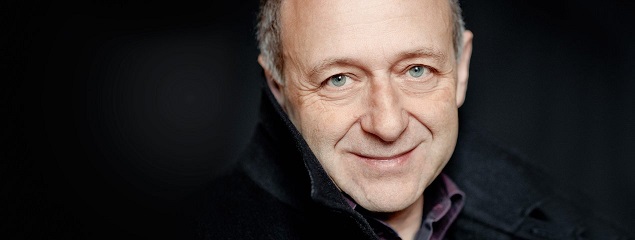
    Above: Iván Fischer, in a Marco Borggreve portrait

    The Dvořák 8th symphony abounds in folkish themes and ‘nature’ sounds that summon up visions of the Czech countryside, and I truly enjoyed Maestro Fischer’s interpretation in every regard. Robert Langevin’s flute solo early on was a limpid delight, and soon oboist Liang Wang and clarinetist Anthony McGill were piping up with sweetly evocative birdcalls. Phil Myers’ signature “big horn” sound was at its most congenial tonight, and the cellos sounded warmly lyrical.

    The symphony’s most familiar theme comes in the Adagio as flute and oboe entwine and then send the melody forward to tonight’s concertmaster Sheryl Staples who shapes the phrases with silken assurance. Things turn rousing; the proverbial “big theme” embraces us. Trumpets sound, and then things recede to a gracious clarinet duo which eventually fades away.

    An amiable waltz looms up in the Allegro graziosa, and Liang Wang’s oboe leads off some brief wind passages that move from voice to voice. An expansive song emerges, then the waltz re-bounds. An unusual coda concludes the movement.

    Trumpet fanfares introduce the symphony’s finale; a handsome cello tutti leads to a proud dance and Mr. Langevin’s flute replies to the cellos with a variation on their theme. The other wind soloists have their final say before a grand acceleration speeds the symphony to its end. The audience seemed really taken with the entire concert, and the applause was generous and sincere.

    To me, it was a perfect evening; my friend Dmitry was less enthusiastic, having some issues with tempi in the Beethoven and transitions in the Dvořák. His familiarity with the symphonic and chamber repertoire vastly surpasses my own, for he was immersed in the Mahler symphonies and Beethoven quartets while the first half-century of my musical ‘career’ was almost exclusively devoted to opera. But for all that, tonight’s concert was an unalloyed pleasure for me and left me in a really good mood.


  • NY Philharmonic Ensembles: International Feast

    Liang

    Above: The New York Philharmonic’s principal oboist Liang Wang

    Sunday November 20th, 2016 – Music by French, Russian, German, and English composers was on offer this afternoon as a stellar ensemble of players from The New York Philharmonic took the stage at Merkin Hall. The group included some of the orchestra’s principals; the playing was divine, and all four works on the program were new to me.

    The matinee opened with the String Trio of Jean Françaix, composed in 1933. Françaix was a child prodigy, writing his first music at age 6 and being published at age 10. His String Trio exemplifies the Neo-classical style which was enjoying favor at the time he wrote it; it consists of four movements, two of which are played with the strings muted. The excellent players – Shanshan Yao (violin), Peter Kenote (viola), and Qiang Tu (cello) – were clearly having a good time with this music, and their enjoyment was transmitted to the audience, who seemed quite taken with the piece.

    The opening Allegretto vivo is a witty conversation among the three players; it has a gentle sway and a touch of jazz. With the musical lines in a state of perpetual motion, there is a sense of delicate charm in play. The following Scherzo – un-muted – is a sprightly dance played with a breezy ‘je ne sais quoi‘ quality. Plucking motifs and changes of pace eventually lead to a congenial if quirky waltz. The mutes are on for the Andante, which commences with wistful harmonies. Ms. Yao leads off with a sweet/sad song, taken up by Qiang Tu’s savorable cello and then by Mr. Kenote’s warm-toned viola: so lovely to hear each voice in succession. In a return to C-major, with the mutes set aside again, the lively start of the finale has an effervescent feeling (Mr. Kenote, in his opening remarks, spoke of a cancan). Things slow down a bit, with the violin playing over a plucked accompaniment. The pace then reaches sizzling speed, subsiding to lethargy before re-bounding to briskness and an actual march before vanishing on a surprisingly soft pizzicato. Such a fun piece! 

    Living in Paris in 1924, Sergei Prokofiev accepted a commission to compose a ballet for a touring  troupe; the director asked for a short work for five instruments with a simple plot revolving around life with the circus. Prokofiev produced a quintet for the players the director had on hand: oboe, clarinet, violin, viola, and double bass. The ballet’s title was Trapeze. Since assembling this particular complement of instruments isn’t always easy, the work is not often performed; hearing it today made me wonder what the choreography would have been like.

    Drawing from the Philharmonic roster, the instrumentation was handily (and expertly) filled out by a lively group of players, led by Anna Rabinova (violin), with Vivek Kamath (viola), Blake Hinson (bass – he also introduced the work) and wind virtuosos Sherry Sylar (oboe) and Pascual Martinez Forteza (clarinet).

    The music definitely has a ‘circus’ atmosphere. A feeling of urban bustle with a slightly Mid-Eastern tinge pervades the opening movement, with oboe and clarinet vying phrase for phrase; the viola and then the violin join the fun, and the bass induces a lumbering motif. The music stalls, and turns pensive before bursting into a fast, flashy dance with violin screeching at us. The striding bass returns us to the opening oboe theme.

    In the second movement, the bass growls at us and there’s an off-kilter feeling. The clarinet moves from burbling sounds to straightforward song; discord resolves into a major chord. The third movement, with a steady pacing, finds the clarinet and oboe trading sound-bytes; a swirling turbulence ensues.

    In the fourth movement, an Adagio, the oboe sounds a bit ominous; the clarinet trills, the violin shivers, the bass creeps about. A violin melody melds into a dense tutti, with the oboe prominent. The plucking bass introduces the light-hearted fifth movement, with ironic gestures from the clarinet and oboe. The strings pluck and slash before Mr. Forteza’s clarinet polishes things off in fine style.

    The final Andantino is whimsically dirge-like; there are clarinet cascades and the oboe gets insistent; the tread of the bass signals a minuet reprise. Suddenly alarms sound, and the piece rumbles raucously to a sudden end.

    Several pages of Beethoven’s Quintet in E-flat major (originally penned in 1793) had gone missing by the time Leopold Zellner took up the task of ‘resuscitating’ it in 1862. Zellner relied strictly on the material evidence he found in Beethoven’s drafts in preparing a performing edition.

    This work utilizes another off-beat assemblage of instruments: three horns, oboe, and bassoon. The horns – Richard Deane, R Allen Spanjer, and Howard Wall – enter in turn; their music veers from jaunty to Autumnal mellowness. As the work progressed, it became evident that the oboe was taking the most prominent position in terms of melodic opportunity: Liang Wang, the Philharmonic’s principal oboist, demonstrated both his striking virtuosity and his coloristic phrasing throughout the piece. Kim Laskowski’s bassoon seemed mostly limited to echo effects and to joining the horns; I kept hoping for a paragraph from her, but only a few phrases peeked thru the full-bodied sound of the horns.

    A horn chorale initiates the Adagio maestoso, with the oboe again very much to the fore – and so attractively played by Mr. Wang. The concluding Minuetto begins brightly and brings us some really rich horn blends. Mr. Wang’s playing was exceptional, and it was a real pleasure to watch and hear him play his extended role here this afternoon, after so often enjoying his solo moments in the big repertory at Geffen Hall.

    The Philharmonic’s principal horn, Philip Myers, introduced the concluding work – Ralph Vaughan Williams’ D-major Quintet – with a genuinely amusing speech in which he lamented the relative scarcity of chamber works featuring the horn and spoke of how he seized on the opportunity to play the Vaughan Williams today…which he did, to perfection.

    Ralph Vaughan Williams’ Quintet in D-major had been withdrawn from circulation by the composer. He instructed his first wife not to publish it, but his second wife went ahead and did so, and thus we have this unusual work to enjoy today, more than a century after its premiere.

    A deluxe quintet of Philharmonic artists gathered to perform the piece: alongside the resplendent sound of Mr. Myers’ horn, principal Anthony McGill’s clarinet playing was simply dazzling; violinist Lisa Kim (violin) and cellist Eileen Moon (my artistic crush) seized on the string passages to fine effect, whilst John Novacek underscored the ensemble beautifully from the keyboard, and relished his solo moments with some very cordial playing.

    The four-movement quintet opens with an Allegro moderato initiated by clarinet and piano. A rolling theme for the ensemble sets up a round-robin of voices: piano, violin, clarinet, a horn summons, and cello speak up in turn. Things turn big and emphatic, and Phil Myers’ lush playing here was really grand, with Mr. Novacek ideally supportive. Cello, violin, and clarinet have another say before a shimmering motif from Mr. Novacek and a sustained phrase from Mr. Myers bring the movement to a close.

    The second movement takes the form of an intermezzo; it has the feel of a Viennese waltz. Ms. Moon’s cello blends with the piano; later, Myers and McGill play in unison as the music sails on, with the piano taking up the waltz while Ms. Kim plays elegantly, incorporating a brief cadenza.

    The velvety sound of the Myers horn sets up the Andantino, with Mr. Novacek’s evocative playing and another lovely passage from Ms. Kim leading into a melodic outpouring from all the voices. Fanfare-like motifs sound forth, and then a rich blending of timbres to savor. The horn plays over a rolling cello figure, and the music turns quite grand. Clarinet and violin descend, and the horn and piano glow gorgeously in a nostalgic theme.

    The final Allegro molto induces toe-tapping from note one. Big horn-playing reigns, the clarinet and violin lead a merry dance, and a McGill cadenza with a perky trill delights us before the quintet reaches its boisterous end.

    The Repertory:

    FRANÇAIX – String Trio
    PROKOFIEV – Quintet in G minor for Oboe, Clarinet, Violin, Viola, and Double Bass
    BEETHOVEN – Quintet in E-flat major for Oboe, Three Horns, and Bassoon
    VAUGHAN WILLIAMS – Quintet in D major for Clarinet, Horn, Violin, Cello, and Piano

    The Participating Artists:

    Richard Deane, horn

    Pascual Martínez Forteza, clarinet

    Blake Hinson, bass

    Vivek Kamath, viola

    Peter Kenote, viola

    Lisa Kim, violin

    Kim Laskowski, bassoon

    Anthony McGill, clarinet

    Eileen Moon, cello

    Philip Myers, horn

    John Novacek, piano

    Anna Rabinova, violin

    R. Allen Spanjer, horn

    Sherry Sylar, oboe

    Qiang Tu, cello

    Howard Wall, horn

    Liang Wang, oboe

    Shanshan Yao, violin

  • Noseda|Yuja Wang|London Symphony

    Gianandrea Noseda

    Friday October 28th, 2016 – Gianandrea Noseda (above) conducting the London Symphony at Geffen Hall, with works by Wagner and Shostakovich book-ending a performance of the Ravel G-major piano concerto by Yuja Wang. The concert was part of the Lincoln Center Great Performers series.

    The evening began with the orchestra making an “entrance”. This pretentious ritual should be abandoned, and tonight’s audience weren’t buying it: there was about 5 seconds of applause and then the majority of the players had to find their places in silence. It was all mildly embarrassing. After the intermission, they tried it again and, after a smattering of hand-claps, silence again prevailed. 

    I’m so accustomed to hearing the overture to DIE MEISTERSINGER played from the Metropolitan Opera House’s pit that the massed sound of The London players onstage at Geffen tonight came as a jolt. To me, Gianandrea Noseda’s choice of pacing in the opening theme seemed too slow. The sound was very dense and I missed the layering of voices that can make this music so fascinating. The playing was marvelous, and the impression grandiose, but much of the time it seemed like sonic over-kill: exciting in its own way, but not finding an emotional center. 

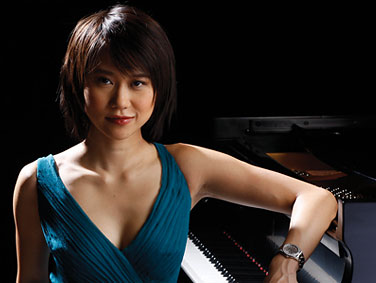
    Yuja-wang

    Above: Yuja Wang

    I love a well-contrasted program, but following the Wagner overture with Ravel’s charmingly jazzy and often delicate G-major piano concerto – an idea that seemed ideal on paper – didn’t quite come off. The Ravel, dazzlingly played by Yuja Wang, seemed oddly inconsequential – for all its delights.

    Commencing in the ‘toy piano’ register, the opening Allegramente proceeds thru varying moods – from magically mystery to bluesy languor – with the piano line woven among gentle coloristic passages from the winds and harp. In the Adagio, introspective yet subtly passionate, we’re reminded of the beautiful ‘beach’ pas de deux that Jerome Robbins created for his ballet “In G Major“. Boisterous interjections from wind instruments attempt to jar the pianist from her mission in the concluding Allegro assai, but the music rushes onward to a final exclamation point.

    Yuja Wang performed the concerto superbly, making a particularly lovely impression with the extraordinary delicacy of her playing in the Adagio. In the animation of the finale, she blazed away with marvelous energy, causing the audience to explode in cheers and tumultuous applause at her final jubilant gesture. Ms. Wang is a musician who brings a rock-star’s pizazz to classical music; but far from being just a stage-crafty icon, she has the technique and artistry to stand with the best of today’s pianists.

    This evening, Yuja Wang played three encores. This delighted the crowd, but in the midst of a symphonic concert, one encore suffices…or two, at a stretch; in a solo recital, you can keep encoring til the wee hours, as Marilyn Horne did at Salzburg in 1984. Ms. Wang’s third recall brought her most intriguing playing of the evening an: arrangement of Schubert’s Gretchen am Spinnrade which was hypnotic in its restlessness and its melodious mood of quiet desperation.

    Is Shostakovich’s fifth symphony the greatest symphony ever written? It certainly seemed that way tonight, and though one wonders what the composer might have written had he not been in need of paying penance to Stalin following the dictator’s displeasure with LADY MACBETH OF MTSENSK, the result of Shostakovich’s desire to please under threatening circumstances resulted in this titanic masterpiece.

    Maestro Noseda and The London players served up this astounding music in a performance that was thrilling from first note to last. Commencing with solo clarinet and moving on to a passage with piano and deep brass, the opening Moderato becomes extremely noisy..and then subsides. The pairing of flute and horn is a stroke of genius, with the clarinet and high violin picking up the melodic thread. The misterioso flute casts a spell.

    In the Allegretto, solo winds pop up before Shostakovich commences a waltz. Irony and wit hover overall, with featured passages for a procession of instruments: violin, flute, trumpet, a bassoon duo. Plucking strings bring a fresh texture.

    The dolorous opening of the Largo dispels any thoughts of lightness that the Allegretto might have stirred up. In this third movement, the brass do not play at all. Weeping strings, and the mingling of harp and flute lead to a rising sense of passion coloured by desolation. This evolves into a theme for oboe and violins. A lonely clarinet and a forlorn flute speak to us before a grand build-up commences with the strings in unison really digging into it. The music wafts into a high haze of despair, the harp trying to console. Just as the whispering final phrase was vanishing into thin air, someone’s device made an annoying intrusion: another great musical moment smudged by thoughtlessness. 

    The fourth movement, with its driven sense of propulsive grandeur, is thought to have marked Shostakovich’s triumph over the woes besetting him; but it has also been described as “forced rejoicing”. Whichever may be the case, the glorious horn theme, the aching strings, and the slow build-up to the epic finish certainly raised the spirits tonight. The cymbalist’s exuberant clashes at the end took on a celebratory feel.  

    It was reported that, at this symphony’s 1937 premiere, members of the audience began to weep openly during the Largo. Today, some 80 years on, there is still much to weep over in the world: religious and political forces continue to divide mankind; our planet is slowly being ravaged; racism, sexism, ageism, homophobia, and casual violence pervade the headlines daily. As we seem to slip deeper and deeper into some terrible abyss, it is in music, art, poetry, dance, and great literature that we may seek consolation. Tonight, the Shostakovich felt like an affirmation of faith in humanity, and we must cling to that against all odds.

  • Batiashvili|Tchaikovsky|NY Philharmonic

    Batiashvili - gilbert

    Saturday September 24th, 2016 – Lisa Batiashvili‘s appearances with The New York Philharmonic are always red-letter events; the mutual admiration society that the luminous violinist has formed with Maestro Alan Gilbert invariably results in something very special, and tonight their entente cordiale produced a magnificent rendering of the Tchaikovsky violin concerto.

    When I arrived at Geffen Hall, the atmosphere was already abuzz: “Sold Out” signs were just being posted, and a long line of music-lovers hoping for returns was forming. A packed house always creates its own sense of excitement, and when the ever-elegant Ms. Batiashvili strode onto the stage in a stunning black gown with a bejeweled bodice, the welcome was wonderfully warm. Forty minutes later, the violinist was basking in an epic full-house ovation.

    It was another female violinist, Maud Powell, who helped popularize the Tchaikovsky concerto – a concerto at first thought by some to be unplayable. Ms. Powell played the New York premiere of the piece in 1889 with the New York Symphony (which merged with the Philharmonic in 1928); tonight, Lisa Batiashvili carried the banner to new heights.

    In the concerto’s opening movement, Ms. Batiashvili combined passionate lyricism with subtle turns of phrase; her coloratura was fleet and fluent, her shaping of phrases so innately appealing. When Alan Gilbert’s full orchestra entered for the big tutti passage, visions of the grandeur of the Romanov court were evoked. Ms. Batiashvili’s cadenza sounded a bit modern (“…to old-fashioned ears…”, as Mrs. Manson Mingott would say) and her playing of it most impressive: superb control of dynamics and a stunningly sustained double trill which led to a poignant restoration of melody. After treating us to some sizzling fireworks, the violinist sailed graciously into an affecting theme before ascending to some very delicate high-register passages and thence to the movement’s final flourishes.

    Playing with a melancholy pianissimo, Ms. Batiashvili created a very poetic atmosphere of sadness as the Canzonetta/Andante began. Her tone became incredibly soft, with a lovely sheen to it, while the audience held their collective breath to savour every moment of it.

    There’s a direct path into the concerto’s finale, which commences with an intense invitation to the dance, followed by a playful second theme. Relishing these shifts of mood, Ms. Batiashvili sounded gorgeous in a deep-lyric interlude and brilliant in some decorative filigree that followed. On to the final sprint, where the fiery glow of the violinist’s passionate playing swept all before her, igniting an ovation and delighted cries of “Brava!” as the entire audience rose to acknowledge Ms. Batiashvili’s truly thrilling performance.

    Lisa was called out for a solo bow – huge din of cheers and thunderous applause – then returned again with Maestro Gilbert, who signaled the wind soloists (who had made such distinctive impressions in the final movement) to rise. The mutual affection of violinist and conductor was movingly evidenced as they embraced and walked off together. But still the ovation would not subside, and the radiant soloist re-appeared for another solo bow, with her onstage colleagues joining the tribute and the audience getting gleefully boisterous. 

    During the course of the concerto, the marvelous rapport between Ms. Batiashvili and Maestro Gilbert was as endearing to the eye as their playing to the ear: as the music wove its spell, they seemed engaged in a pas de deux which swayed on the ebb and flow of Tchaikovsky’s balletic score. Bravi!!

    Enjoy a bit of Lisa’s playing here.

  • American Classical Orchestra @ Alice Tully Hall

    AMERICAN CLASSICAL ORCHESTRA  Thomas Crawford conducts  photo credit is  William Neumann Photography.
    Above: Thomas Crawford leading the American Classical Orchestra; image from William Neumann Photography
     
    Thursday September 22nd, 2016 – The opportunity to hear two favorite works on a single evening drew me to this concert by the American Classical Orchestra at Alice Tully Hall: Mendelssohn’s “Scotch” Symphony, which every ballet-lover knows by heart, and the marvelous song cycle Les Nuits d’été of Hector Berlioz. The pleasure of hearing a ‘new’ voice in the Berlioz, and a natural curiosity about the evening’s third work – Cipriani Potter’s tenth symphony – made the program sound very inviting.
     
    Thomas Crawford, the ACO’s founder and artistic director, greeted us with charming and genuinely humorous remarks: the orchestra’s celebrating their 32nd season. There are some very fine musicians in the ensemble, among them Myron Lutzke, who did some especially lovely playing in the solo passages for cello.
     
    I must confess that I am not really a ‘period instruments’ person, and that one or two concerts per season in that genre are more than sufficient for me. The flip side of the coin is that so much of the repertory is really appealing; however, I invariably find myself put off by what so frequently sounds to me like out-of-tune playing that my enjoyment is compromised. Tonight this problem was not as annoying as is sometimes the case, though there were some jarring moments along the way.
     
    The mystery of Cipriani Potter was cleared up tonight. An Englishman who lived a long life (1792-1871), Potter spent 16 months in Vienna (1817-1818) where he met Beethoven. Back in London, Potter enjoyed a notable career as a pianist, giving the British premieres of three of the Beethoven concertos. He composed ten symphonies, nine of which survive. Tonight we heard the tenth, which may actually have been the sixth one to be written.
     
    Cipriani Potter’s 10th symphony is perfectly pleasant but – in the end – not very distinctive music. Attractively played by the ACO tonight under Maestro Crawford’s baton, the symphony provided no revelations and simply flowed along on its well-crafted trajectory. Overall, it put me in mind of such ‘pleasant’ works as the Beethoven ‘Pastoral‘, which I try to avoid. Tonight’s performance was not helped by a late seating after the first movement, which broke my concentration.
     
    The slender and very attractive young mezzo-soprano Avery Amereau then appeared for the Berlioz. In his opening remarks, Maestro Crawford had spoken of his impression that this singer should be considered a contralto rather than a mezzo; how right he is! It’s a distinctive voice with a warm and very cordial lower range, and her singing of the Berlioz clearly impressed her existing admirers and won her many new ones.
     
    It took a moment or two for things to settle in: the opening ‘Villanelle‘ found the singer’s her upper notes not entirely steady; this, combined with some vague tuning among the players, made me wonder if I was going to derive full pleasure from these beloved songs tonight. But a few measures into the gorgeous ‘Spectre de la Rose‘, everything came together for the singer and her voice positively blossomed, covering the wide range with confident beauty of tone and expression. I was a bit surprised when Ms. Amereau didn’t sink down to the lowest note of ‘Sur les lagunes‘ (to which Regine Crespin so deliciously descends in her magical recording of the work) but that’s a minor detail in the face of all that we could savour in Ms. Amereau’s genuinely fascinating performance. I look forward to hearing her again.
     
    At this point in the evening, I was ready to strangle the two girls sitting in front of us who could not sit still to save their souls, whispering and texting and flipping their hair; one of them had smuggled in a can of soda or beer. They seemed to be fans or friends of Ms. Amereau, and tried to film or photograph her performance. Adding to their distractions was the expected constant flipping of Playbill pages as people tried to figure out which song of the Berlioz was being sung at the moment; naturally, a few Playbills slipped and hit the floor, seemingly always at the worst possible moments.
     
    These disruptions made me seriously consider leaving at the interval, but my friend Dmitry wanted to hear the Mendelssohn (so did I!), so we stayed on, and it turned out to be the highlight of the evening. The “Scotch” Symphony, so melodically rich and so atmospheric, was inspired by the composer’s 1829 visit to Holyrood Castle, where Mary Stuart was crowned Queen of Scots in 1542. Stories of the adventurous, romantic, and ultimately tragic Queen have inspired musicians, poets, playwrights, and painters over the centuries, and Mendelssohn’s symphony has to be one of the very best of these numerous homages.
     
    Tonight’s performance was lovingly played, wonderfully satisfying, and almost compensated up for the distractions of the evening, even though the texting lass in front of us clearly had other things on her mind.

  • Duo Gagnant: French Music for Two Pianos

    Maxresdefault

    Wednesday September 21st, 2016 – Dan K Kurland invited me to this concert of French music – from the familiar to the relatively obscure – for two pianos at Juilliard’s Paul Hall. The program looked very inviting, and since dance themes prevailed throughout the hour-long presentation, it was especially agreeable to have choreographer Claudia Schreier sitting next to me.

    We arrived just moments before the house lights dimmed; Paul Hall was nearly full, and we found seats in the front row, in the aisle. The balance of sound may have been slightly off, but it was a very interesting perspective visually.

    ~ POULENC L’embarquement pour Cynthère
    Pianists: Dan K Kurland and Jonathan Feldman

    Opening with this 1951 Poulenc gem – music that is so quintessentially French – the tone for the entire evening was set. Described as a Valse-Musette, this piece delights from its vivacious start to its ironic finish. Though Dan Kurland was not originally schedule to play tonight, he did…and wore red socks into the bargain, a subtle nod to a beloved French pianist. Joining Dan was Jonathan Feldman, chairman of Juilliard’s Collaborative Piano Department, making for a brilliant performance. 

    ~ DEBUSSY Prélude à l’après-midi d’une faune
    Pianists: Michał Biel and Brian Zeger

    Shifting moods, we are plunged into the erotic mystery of Claude Debussy’s Prélude à l’après-midi d’une faune in a splendid performance by Michal Biel and Brian Zeger. The composer completed his symphonic poem Afternoon of a Faun in 1894, and published a version for two pianos the following year. In a rapture-inducing performance of perfumed sonorities, the two pianists beautifully summoned up the music’s alternating currents of delicacy and turbulent passion. I so enjoyed seeing Brian Zeger again, here in the hall where I first heard him play many moons ago. 

    ~ FRANÇAIX Huit Dances Exotiques
    Pianists: Cherie Roe and Arthur Williford

    Dating from 1957, these eight miniatures represent the “newest” music on the program. Pianists Cherie Roe and Arthur Williford jumped right into the music hall swing-and-sway of the opening Pambiche. Sprightly syncopation and etched-in miniature glissandi delighted us in Baiao, and more syncopation followed in Nube gris; both here and in the lively Merengue that follows, sudden endings took us by surprise. The rolling rhythm of the Mambo was further enhanced by a mid-song change of key. Both the urbane, casually shrugging Samba and the bouncy swirl of the Malambeano caught us off-guard by ending in mid air. The final Rock ‘n’ Roll, wryly jazzy, would have caused my old friend Franky to exclaim, “This is so jive!” The two pianists seemed to be having a blast with this music.   

    ~ CHAMINADE Duo Symphonique
    Pianists: Dror Baitel and Nathan Raskin

    Cécile Chaminade, the sole female composer to be included on this evening’s program, wrote her Duo Symphonique in 1905. Of all the music heard this evening, this was the most traditionally “classical” in feeling. It opens operatically, runs on to swirls of notes and later to fanfare-like motifs. The highest and lowest registers of the piano are explored, the vast range adding to the truly symphonic quality of the piece: “…lyrical grandeur…” was one of my descriptive scrawls. A more delicate theme heralds a song-like interlude, followed by a build-up and an a grandiose finale. I loved every minute of it, and was very impressed by the expert playing of Dror Baitel and Nathan Raskin. 

    ~ SAINT-SAËNS Danse Macabre
    Pianists: Jinhee Park and Ho Jae Lee

    Saint-Saëns’ Danse Macabre is a musical setting of a poem by the French poet Henri Cazalis, based on the allegory of the ‘dance of death’. Pianists Ho Jae Lee and Jinhee Park maintained communication across the pianos, which in their sleek blackness took on a coffin-like aspect. The music rises from the depths to jangling heights, descending passages seem to point to the grave (or to hell), and at one point the very lowest notes of the keyboard resound. Becoming wildly dramatic, the music speeds up before turning more pensive and ending in sudden death. The audience took special delight in this piece, and in the two players. 

    ~ DEBUSSY Petite Suite
    Pianists: Katelan Terrell and Michał Biel

    Debussy’s Petite Suite was published in its original four-hands version in 1889; transcriptions for solo piano and for violin and piano followed in 1906. The work found great popularity in a 1907 adaptation for chamber orchestra by Henri Büsser. Tonight the four-hands version was played by Katelan Terrell and Michal Biel, seated together at a single keyboard. Commencing in dreamy softness, the suite continues with evocations of Spring, very slight tinges of gypsy allure, contrasts of rhythm and lull, and bursts of joyous rippling in the higher range which maintain brightness. The final movement seems very ‘Parisian’, and, after an interlude, we are carried back to the boulevards by our two sophisticated pianists.

    ~ RAVEL La Valse
    Pianists: Sora Jung and Adam Rothenberg

    Best known (especially to Balanchine admirers) in its orchestral version, Ravel’s La Valse was transcribed by the composer twice, once for solo piano and again for two pianos. The first performance of the piano duo version was given at the home of Misia Sert, with Ravel himself one of the pianists. Misia, one of my favorite characters in the history of music and dance, was the work’s dedicatee. Among those present at Misia’s salon for the premiere performance were Serge Diaghilev, Igor Stravinsky, Francis Poulenc, and Léonide Massine: how I wish I could have been there! 

    The mystery of the opening of La Valse loomed up from the depths as pianists Sora Jung and Adam Rothenberg launched their intense and remarkable performance. At last the waltz struggles to the surface, and the two pianists delight in flinging myriad colours onto the sonic canvas. Thunderous intrusions alternate with madly ironic swirls of dance. This is music on the verge of madness. 

    Throughout the Ravel, images of two beloved dancers – Janie Taylor and Sébastien Marcovici – overtook my imagination: they danced this Balanchine masterwork at their New York City Ballet farewell performance in 2014.

    Tonight, as all the pianists appeared for a bow on the stage of Paul Hall at the end of the concert, an exuberant standing ovation greeted them. A really wonderful evening!

  • …And All That Djazz @ NCB

    14199168_10154473099603571_6069759855082671756_n

    Friday September 16th, 2016A sold-out house this evening as Miro Magloire’s New Chamber Ballet presented their season-opening program. At a time when I am covering far less dance than in the past, Miro’s work – his choreography, his musical choices, and the dancers and musicians who bring the ballets to life – continues to draw me to his performances and rehearsals. Tonight’s program was one of the finest I have experienced at New Chamber Ballet: wonderfully diverse in the music presented, expertly danced by a quintet of distinctive ballerinas, and played by a violinist and pianist who seem to thrive on the stylistic range and technical challenges of the music Miro selects.

    Variety is the spice of life, and it is also – from a musical point of view – an essential element in putting together an evening of dance. Miro will sometimes provoke New Chamber Ballet‘s faithful followers with the thorniness of a score he has decided on; inevitably, his rightness of judgment wins out. These contemporary pieces are counter-balanced by more ‘accessible’ music – tonight, Tartini and Ravel – thus turning the evening into a audio roller coaster. We are along for the ride, which can be quite exhilarating, and the NCB musicians make it all so rewarding. 

    Opening the evening was a trio, Silk, which premiered in 2006. Doori Na’s playing of the Sonata VII for solo violin by Giuseppe Tartini was stunningly virtuosic. The violinist had a long evening ahead of him, playing in all four works; in the Tartini, he poised himself at a very high level of technique and artistry, and then incredibly soared upward from there. The Ravel that ended the evening was – to use a 60s phrase – mind-blowing.

    In Silk, the three dancers – Elizabeth Brown,Traci Finch, and Cassidy Hall – appear in Candice Thompson’s ice-blue, skirted leotards. They commence with slow ‘plastique’ port de bras and poses that might have been inspired by a Grecian urn. A sense of calm pervades their unison trio. There’s a silence as things are re-set for a charming, light-filled allegro.

    Striking poses in unison, the girls commence an andante which features a simply gorgeous Tartini melody, superbly intoned by Doori. Cassidy Hall has a long solo, danced beautifully, while Traci and Elizabeth stand back-to-back, swaying gently, and curling their hands in a subtly expressive motif. 

    Elizabeth and Cassidy sit in a stylized pose as Traci dances an impressive solo with lots of intricate pointe work and a sense of urgency. In a striking passage, Traci balances on both pointes as her upper body sways and angles itself off-kilter. Doori hones his tone down to a thread before it goes deep: this music is so demanding!

    Elizabeth Brown, a dancer of unique qualities, has solo passages laced into a spacious trio; as the pace of the music slows and then revs up again, Elizabeth executes lyrical turns and unusual, quirky footwork. The three girls dance in unison, with fast moves to slow music. Silk goes on to a sprightly conclusion.

    Thumbnail_IMG_0872_edited_sm

    Above: Cassidy Hall and Sarah Atkins in Upon My Wings; photo by Amber Neff

    In the first of the evening’s two premieres, Upon My Wings, Doori Na again made a vivid impression in the music of Reiko Fueting: tanz.tanz was composed for solo violin as an homage to Bach’s famous Chaconne. This ballet, originally entitled Tanz Tanz, was commissioned by the Columbia Ballet Collaborative, where it premiered in 2014.  For his own company, Miro has distilled the dancing to a duet for Sarah Atkins and Cassidy Hall.

    Skittering sounds from Doori’s violin find the two dancers balancing against one another’s bodies. They kneel and sway. The choreography features the intimate and physically taxing same-sex partnering that Miro has been exploring of late: for example, Sarah being rotated by Cassidy in an off-center balance.

    The violin stutters and buzzes, and Doori shows his mastery with some ultra-soft playing, so subtle and shining. The girls echo one another in turns as the music goes Bachian; the ballet ends in silence.

    Yellow-Rose-Red-Blue, the evening’s second premiere, marks Miro’s third collaboration with composer Michel Galante; the work is made possible by a grant from the O’Donnell-Green Music and Dance Foundation. 

    Thumbnail_IMG_0970_edited_sm

    Above: Amber Neff, Cassidy Hall, and Traci Finch in Yellow-Rose-Red-Blue; photo courtesy of New Chamber Ballet

    The ballet’s title derives from the colours of Sarah Thea’s stylish and usual costumes: mock-turtle-neck designs with long, gossamer slit-skirts. These elegant frocks add to the airy feeling of the space-filling choreography. Pianist Melody Fader joins Doori Na to play Galante’s very demanding score.

    As Amber Neff and Cassidy Hall engage in more of Miro’s intense partnering, the music is almost immediately fiendish: deep piano and growling violin. Things turn waltzy, and the girls pair off and circle the stage in a movement motif that is half-waltz and half-galop. The music continues to engage us: somehow, Doori is able to produce a deep, gritty sound as if he was drawing his bow across sandpaper. The dancers gather in a circle, raising their arms in a reverential gesture.

    Amber and Cassidy, standing back-to-back, wrap one another en attitude, and bend apart. The four dancers form a chorus line; the music grows agitated, and the girls rush off into a space-filling chase-about. Their paths cross; poses are struck while the others dance on. They re-form the celebratory circle, reaching for heaven. In an allegro rush, the dancers conjure up a galloping pace, drawing from a repeated note on Melody’s keyboard. 

    Yellow-Rose-Red-Blue: it’s complicated, both musically and choreographically. It will take further viewings to delve into its riches, and I feel certain we’ll be seeing it again soon. Tonight’s premiere certainly was provocative, and I look forward to this ballet’s future evolution. 

    Concluding the evening was Djazz. Set to Maurice Ravel’s sonata #2 for violin and piano, the ballet was commissioned by Leslie and Richard Curtis. Here designer Sarah Thea had the three dancers – Sarah Atkins, Traci Finch, and Amber Neff – in dark-coloured leotards to which long fringes have been attached. This gave the girls a “flapper” look which meshed well with Ravel’s jazz-tinted score; when doing fast turns, the fringe flared out, giving an added air of animation.

    Sarah Atkins leads off the dancing, soon joined by Traci Finch and Amber Neff; their contrasting personalities are engaging. Miro’s choreography here again calls for tricky partnering, as well as jazz-inspired swaying and sauntering. At the end of the first movement, the dancers wilt; at the end of the second, they sleep. In the finale, the dancing becomes very animated, with high-kicking extensions on display and brisk steps woven into the pulsating music.

    In the Ravel, the musical achievement of Doori Na and Melody Fader was extraordinary; I can honestly say I’ve never heard this piece played better. It’s such incredible music: rhythmically captivating, veering from assertive to misterioso, and rich in irony. Doori and Melody were rightly cheered by the full house as the evening drew to its close.

    Dancers: Sarah Atkins, Elizabeth Brown, Traci Finch, Cassidy Hall, and Amber Neff
    Musicians: Melody Fader, piano & Doori Na, violin