Category: Ballet

  • Premiere Performance: Intermezzo Dance Company

    1097997_490777371014252_1699397711_n

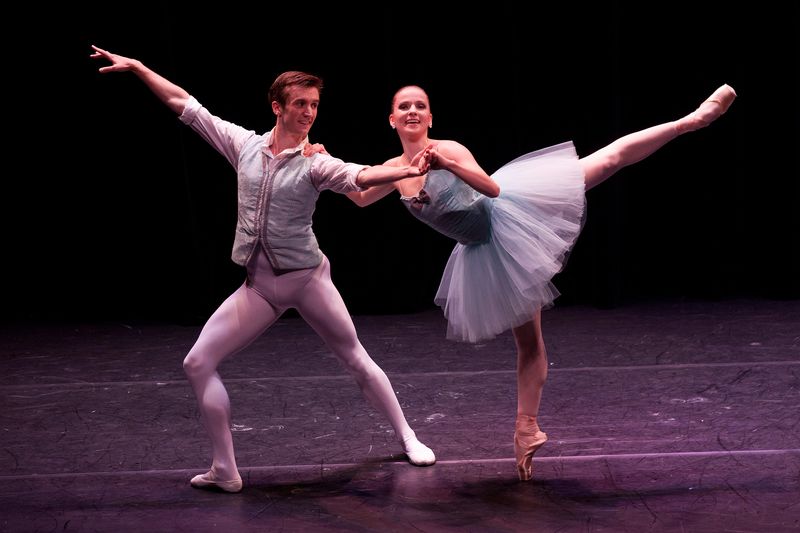
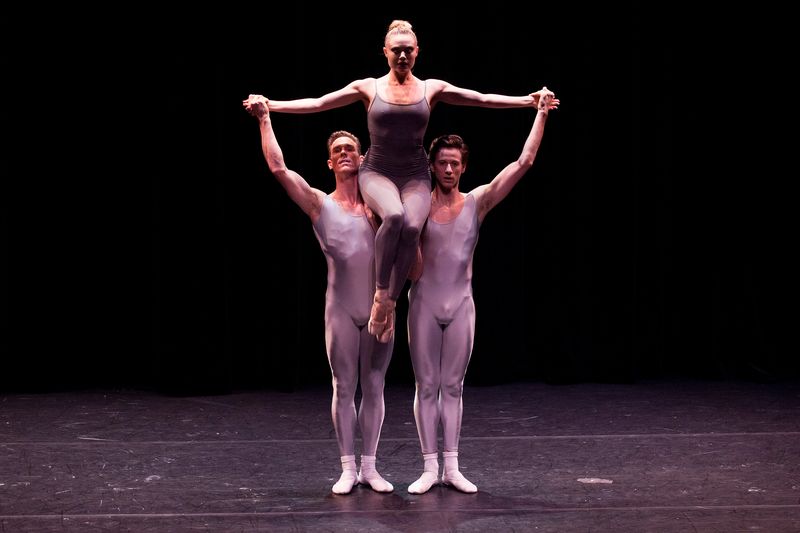
    Friday October 18th, 2013 – Since I was involved in the early planning stages of these first performances by Craig Salstein’s Intermezzo Dance Company. I can’t really write about their premiere performance tonight at the 92nd Street Y with any sense of detachment – not that we should ever be detached from dance. But of course I loved the music – the Verdi string quartet and a fantasia on themes from his opera A MASKED BALL (all played live by the Wyrick Quartet) – and the choreographers and dancers all came thru with flying colours. And the audience was simply loaded with dance-world celebrities. 

    With three sold-out performances, Intermezzo‘s off to a fine start, and I know Craig has some exciting future plans – which can’t, as yet, be announced.

    Hopefully I’ll soon have some production photos to share.

  • Fall for Dance 2013 – Program 2

    Dance Theatre of Harlem Gloria, Photo by Matthew Murphy

    Above: Dance Theater of Harlem in Gloria; photograph by Matthew Murphy

    Saturday September 28th, 2013 – The annual – and very popular – Fall for Dance festival is underway at New York’s City Center. Tonight was the first of three programs – out of five being offered – that I’ll be reporting on. The theater was packed, of course, and there was nary a peep from the audience during the dancing, but plenty of genuine enthusiasm after each work.


    Nrityagram -Surupa Sen & Bijayini Satpathy - Photo by Uma Dhanwatey

    Above: Nrityagram (Surupa Sen & Bijayini Satpathy) in a photo by Uma Dhanwatey

    Nrityagram is one of India’s foremost dance companies; for nearly 20 years, Surupa Sen and Bijayini Satpathy have taken traditional Indan dance all over the world while also commissioning new compositions from leading Indian classical musicians. Tonight the the two dancers opened this Fall for Dance performance with Vibhakta (2008, choreographed by Surupa Sen). Inspired by the belief that creation begins when The One splits into
    two and becomes Ardhanārīśvara (…’the Lord who is half-woman’…), this duet was performed to live music played by a small ensemble of excellent musicians seated stage right. Wearing gorgeous costumes of red, gold and pink, with jingling bells on their anklets, the two dancers cast a spell over the House with their graceful synchronized moves, long balances, accentuated footwork, and elegant gestures.

    Most of the audience seemed to enjoy 605 Collective‘s offering, Selected Play, more than I did. I’ve seen this type of dancework countless times in recent seasons: the dancers clad in everyday clothes doing everyday dance moves to a vaguely ominous soundtrack. It was well-performed and well-lit, but there was nothing to set it apart from the many other similar works in this style that I have seen.

    With the City Center stage stripped back to the bare walls and lighting scaffolds, HeadSpaceDance from London performed Light Beings, a duet choreographed by Mats Ek and set to Sibelius’ Andante Festivo. The dancers – Charlotte Broom and Christopher Arkill – burst joyously onto the stage and filled the space with witty combinations which seemed to gently spoof the traditional steps, port de bras and partnering motifs of the art of ballet. Their dancing, wth droll facial expressions, drew constant laughs from the crowd. The piece was a fun interlude and – at just under ten-minutes duration – showed that the choreographer understood the concept that brevity is the soul of wit.

    Harlem-3

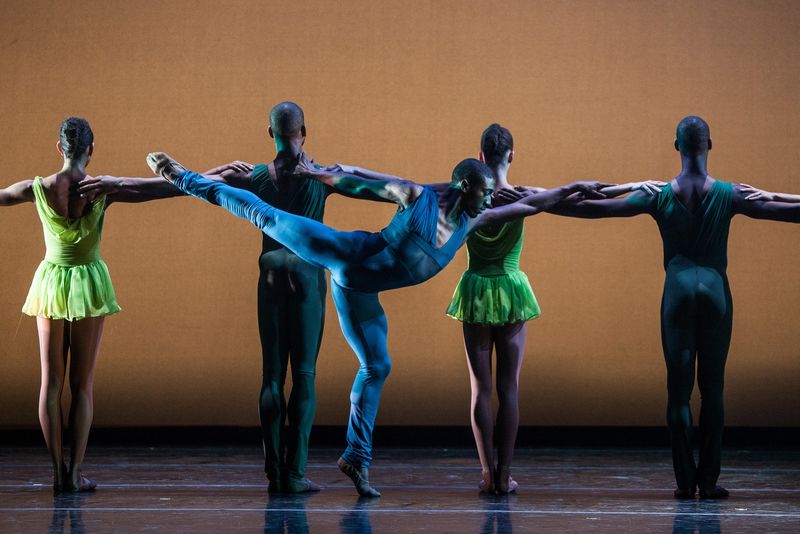
    Above: Da’Von Doane and corps de ballet of Dance Theatre of Harlem in Gloria; photo by Matthew  Murphy

    Gloria, choreographed by Robert Garland and performed by Dance Theatre of Harlem to the classic sacred work by Francis Poulenc, was s striking finale for the evening. The dancers, clad in rich hues of blue, forest green and chartreuse, moved thru Mr. Garland’s well-structured choreography with assurance and commitment. The girls are on pointe and the vocabulary is classic, but with some fresh accents that give it a distinct flavor; a troupe of small girls from the Company’s school also participate in this ballet. In leading roles, Ashley Murphy and Da’Von Doane looked superb. The combined effect of Poulenc’s uplifting score, the beautifully-lit space, and the very attractive dancing evoked an enthusiastic ovation from the audience.

  • TAKE Dance: Dark Mourning

    555594_10151919266405929_1933576248_n

    Above photo by ‘M’ Apisak Vithyanond; Elise Drew and Kile Hotchkiss in the foreground

    Friday September 27th, 2013 – TAKE Dance presented the premiere of Takehiro Ueyama’s DARK MOURNING at Symphony Space tonight. The programme further featured a new duet entitled A BAITED SOUL created by Kazuko Hirabayashi and danced by Jill Echo and Take Ueyama, and a revival of Take’s FLIGHT which was created in 2010.

    I’ve been following TAKE Dance since 2008, when my friend Sophie Bromberg first mentioned the Company to me. Take was one of the first to bring dance bloggers into the fold, and he has often shared his creative process with me. In May 2011, Take’s evening-length SALARYMAN seemed to have attained a peak – both theatrical and choreographic – for the Company. Tonight, watching DARK MOURNING, I felt that Take has surpassed himself yet again. This somber new work, in which movement, music, and silence are meshed into a cogent whole, expresses both the terror and tranquiity of death, and presents a haunting view of bereavement.

    To the tolling of bells, a black-clad dancers appear as shuffling mourners moving across the darkening landscape. We are reminded at first of Take’s 2009 creation FOOTSTEPS IN THE SNOW; but DARK MOURNING takes a very different path. Take’s musical choice of the Kronos Quartet’s Lachrymae Antiquae gives DARK MOURNING a timeless sprituality. In structuring the work, silences are as profound as the Renaissance-inspired music.

    Alternating ensemble passages – marked by fluid movement – with four solos, Take presents his dancers at their most compelling. Kile Hotchkiss, appearing nearly nude in a pool of dazzling white light – a sharp contrast to the prevailing gloom – appears as a fallen angel, his long limbs and expressive hands simply spellbinding. In a long black gown, Kristen Arnold evokes images of Martha Graham with her expansive gestures of mourning and supplication. John Eirich, showing his customary disdain for personal safety, gives a restless athleticism to his bold gymnastic combinations. And Gina Ianni ended the work as a broken spirit, her blonde vulnerability succumbing at last to the inevitable. Lynda Senisi, Elise Drew (now dancing with Limon) and Brynt Beitman completed the cast for this impressive new creation, a work which I hope to experience again soon.

    Take Ueyama and Jill Echo performed the Hirabayashi duet, A BAITED SOUL, which was inspired by a Japanese ghost story. To the lonely sound of a flute, the two dancers appear in ritualistic moves in a state of courtly wariness that evolves into tempestuous conflict. Smoke wafts across the space, and Jill carries a decorative rose-hued parasol, sometimes hiding behind it. The back curtain is opened as Take begins a long, physically demanding solo to the sound of chant. As the voice becomes distorted the dancer’s movements suggest he is trapped in a spirit world. It was of course wonderful to see Jill and Take dancing together, and Anthony Aiu as a mysterious black-clad attendant also made his mark here.

    In a work inspired by flocks of birds banking or racing across the Roman sky, the revival of FLIGHT has taken on a new visual dimension: the costumes have been changed, so that the dancers who – at the premiere – appeared as brown-clad starlings, now look like doves in their gossamer white trousers and shirts.

    Barry Wizoreck, a former Paul Taylor dancer, appears in FLIGHT‘s opening solo which Take had originally danced himself. Projections of swarming birds appear, and the dancer casts a shadow as he moves in a state of quiet wonder. A quartet of dancers – Gina Ianni, Elise Drew, John Eirich and Kile Hotchkiss – dance the second movement, sometimes in unison and sometimes perched in their arrested trajectories; John Eirich again erupts with a dazzling combination. In a dynamic, turbulent build-up, more doves appear. Dancing to Philip Glass’s Meetings Along the Edge, the large ensemble moves fast while the quartet moves slowly: a striking justaposition. Barry Wizoreck reappears, wandering cautiously among the fluttering doves as he scatters white feathers on the ground.

    The performance was well-attended and well-applauded; among the audience were four beloved Taylor women from different generations: Linda Kent, Karla Wolfangle, Rachel Berman and Amy Young.

    Performers:
    Kristen Arnold, Brynt Beitman, Jill Echo, Elise Drew, John
    Eirich, Kile Hotchkiss, Gina Ianni, Lynda Senisi, Marie Zvosec &
    Take Ueyama with Jesse Dunham, Jamison Goodnight, Jillian Hollis, Lauren
    Elise Kravitz, Anthony Aiu and Barry Wizoreck (Guest Artist)

    Music by Philip Glass, Ana Milosavljevic, Kronos Quartet,
    Terry Riley, Aleksandra Vrebalov, Houzan Yamamoto

    Lighting Design: Lauren Parrish
    Costume Design: Jesse Dunham, Elena Comendador

  • A Balanchine Evening @ NYC Ballet

    Mourka & mr b

    Above: Mr. B with Mourka

    Wednesday September 25th, 2013 – This evening’s all-Balanchine programme at New York City Ballet was a veritable parade of favorite dancers. The audience, at least in my immediate vicinity, seemed comprised of long-time NYCBers; in fact I seemed to be at the lower end of the age spectrum. It was an attentive crowd, though rather subdued in terms of expressing enthusiasm.

    Any evening that begins with Faye Arthurs onstage is off to a beautiful start; the ballerina – partnered by Zachary Catazaro – danced the opening theme of Balanchine FOUR TEMPERAMENTS. This ballet is for me the most spectacular of the Balanchine black-and-whites, not only because of its marvelous steps and structuring, but the Hindemith score seems to me a true 20th century masterpiece. 

    Lauren King and Allen Peiffer (who literally danced all night) took the second theme, crossing the stage with semaphoric gestures; the melodic sway of the third theme brought forth yet another impressive partnership: Ashley Laracey and Justin Peck. All three couples danced to perfection.

    Robert Fairchild’s Melancholic had a restless grandeur about it: what a compelling stage presence! Meagan Mann and Georgina Pazcoguin circled the handsome danseur, deploying their extensions to dramatic effect. Tyler Angle replaced his brother Jared in the Sanguinic pas de deux; I do not recall having previously seen Tyler paired with Savannah Lowery but it turned out to be an interesting match-up, with Tyler bringing a touch of classic nobility which dovetailed with Savannah’s authoritative contemporary style. In Phlegmatic, Adrian Danchig-Waring seemed to have descended from Mount Olympus: his striking physique and intense focus were engrossing. Ashley Bouder gave a stunning Choleric, her dancing – vivid and grandly secure – was marked by sustained balances and a rich feeling of commitment. In the pit, guest conductor Carolyn Kuan led this splendid score with passionate élan, and pianist Cameron Grant made a significant contrbution to the ballet’s atmosphere.

    EPISODES is basically a series of four duets, three of them performed with attendant corps dancers. Clothilde Otranto and the NYCB musicians gave clarity to the quirky Webern pieces which comprise the ballet’s score, ending with the composer’s imaginative tribute to Bach in a setting from Musical Offering.

    Abi Stafford and Sean Suozzi were finely-matched in the ballet’s opening Symphony; their articulation of the steps and their fluent work as partners made me wish to see them together in other ballets. Three couples echo the principal pair: Marika Anderson with Russell Janzen, Gwyneth Muller with Allen Peiffer and Gretchen Smith with Andrew Scordato. This entire opening movement, with the stage bathed in an unusual verdigris hue, was absorbing to watch.

    Things then take a darker turn as Teresa Reichlen and Ask LaCour appear in pools of light and dance a mysterious succession of five brief duets, their relationship physical but unfathomable. The ballet’s sense of mystery extends to the ethereal Janie Taylor’s appearance in Concerto; dancing with Sebastien Marcovici (who is just back from a hiatus), Janie retains the allure of being the Company’s most enigmatic ballerina.

    EPISODES ends with a gorgeous ritual: a corps of fourteen female acolytes weave patterns around the central couple: Maria Kowroski-  looking supremely divine – and her noble consort Jonathan Stafford. The two principal dancers, so well matched both in physique and in their ability to make expressive nuances count in these abstract ballets, were superb.   

    Principal ballerina Megan Fairchild talks about Balanchine’s DUO CONCERTANT here. When Chase Finlay sustained an injury onstage last week, forcing him to withdraw from his immediate-future performances, I wondered who might partner Ms. Fairchild in this evening’s performance. My thoughts ran to Jared Angle, who had danced DUO so perfectly at Yvonne Borree’s farewell. And sure enough: Jared it was, stepping into the ballet tonight with his signature nobility of style and peerless partnering abilities.

    Kurt Nikkanen and Cameron Grant performed this panoramic Stravinsky score – it veers from playful to deeply expressive – with impressive musicianship. The ballet is an ideal vehicle for Megan Fairchild, sweeping her from girlish impetuosity to womanly tenderness on the brilliant changing modes of the rhythms and harmonies of the instrumental voices. Jared was by turns playful, protective and poignant as he interacted with his ballerina; their partnership was a rewarding one to experience, and the audience – heretofore rather reserved in their reactions to the evening – greeted the dancers and musicians with warm applause. Now I’m wanting to see the Megan/Jared duo in other ballets.

    From its iconic opening diagonal of sleekly white-clad, pony-tailed ballerinas to the final ritualistic tableau as the dancers kneel or raise their arms (in homage to Balanchine and Stravinsky, I imagine) SYMPHONY IN THREE MOVEMENTS is one of NYCB‘s treasures. Excellent demi- and corps work in tonight’s performance, which opened with the vitality of Daniel Ulbricht’s remarkable high leaps; Ana Sophia Scheller, letting her hair down, shows us that a first-class tutu-and-tiara ballerina can also be a dynamic contemporary stylist. Rebecca Krohn looked stunning in her deep-rose leotard and danced with abandon, matched by Andrew Veyette’s speed and clarity. In the central pas de deux, one of Balanchine’s more effective, Sterling Hyltin and Amar Ramasar were at their finest. Earlier, Sterling had made a swift trajectory, circling the stagetwice in pique turns at ever-increasing speed. Amar’s charismatic presence, his commancing partnering and his generosity as a dancer make him an invaluable member of this troupe.

    As the work soared forward to its energetic conclusion, propelled by Carolyn Kuan’s baton, one felt yet again the great genius of Balanchine, and the continuing pleasure of experiencing his works, year after year.

    THE FOUR TEMPERAMENTS: Arthurs, Catazaro, King, Peiffer, Laracey, J.Peck, R. Fairchild, Lowery, T. Angle, Danchig-Waring, Bouder

    EPISODES: A. Stafford, Suozzi, Reichlen, laCour, Taylor, Marcovici, Kowroski, J.Stafford
     
    DUO CONCERTANT: M. Fairchild, J Angle
    SYMPHONY IN THREE MOVEMENTS: Hyltin, Scheller, Krohn, Ramasar, Ulbricht, Veyette

  • Images from NYC Ballet’s Balanchine Evening

    C36439-15_Duo_MFairJAng_1

    A series of Paul Kolnik’s photographs from last night’s Balanchine programme at New York City Ballet. Above: Jared Angle and Megan Fairchild in DUO CONCERTANT.

    C34660-9_Sym3_HyltinRama

    Amar Ramasar & Sterling Hyltin in SYMPHONY IN THREE MOVEMENTS.

    C36436-12_Episodes

    Janie Taylor & Sebastien Marcovici with the corps de ballet in EPISODES.

    C36429-16_4Temp

    Tyler Angle & Ashley Bouder in THE FOUR TEMPERAMENTS.

    My thanks to Mr. Kolnik and the NYCB press office for providing these photos

  • Bouder/Veyette SWAN LAKE @ NYCB

    C31750-6_Swan_BouderVeye (2)

    Above: New York City Ballet principal artists Andrew Veyette and Ashley Bouder in SWAN LAKE; photo by Paul Kolnik

    Saturday evening September 21, 2013 – When New York City Ballet announced Peter Martins’ SWAN LAKE for their Autumn 2013 season I was hoping we’d have a 2-week run with some new Swan Queens; but instead there were only six performances (all, seemingly, sold out) and the dual role of Odette/Odile remained the property of three of the Company’s top interpreters: Sara Mearns, Teresa Reichlen, and Ashley Bouder.

    Tonight was an opportunity to re-visit the Bouder traversal of this very demanding dual role. In this video, Ashley speaks of her constant work in the studio, endeavoring to bring her interpretation of Odette up to the level of her Odile. Tonight she seemed to have reached – and even surpassed – her goal.

    A key element in making tonight’s performance so enjoyable was the lack of audience distractions, which so plagued the first half of the previous evening’s SWAN LAKE. Tonight we were seated amongst well-behaved folks who seemed keenly focussed on the stage throughout the performance; even the annoying late-seating was far enough away from us to be tuned out. It makes an enormous difference in one’s appreciation of the performance when there’s nothing to infringe on the powers of concentration.

    And so from the very first notes of the prelude to the final heart-rending departure of the doomed Odette, the evening was among the most enjoyable I have spent at NYCB in recent seasons.

    Clothilde Otranto paced the music beautifully: full-speed ahead when the drama called for propulsion; tenderness and a sense of lingering when love – or the loss of it – was the theme. The powerful ending of this SWAN LAKE – from both a visual and emotional standpoint – hits home every time, and Peter Martins’ remarkable vision of the ballet’s final moments tends to make me forgive some of his lapses in other productions.

    For people like me who simply adore the NYCB dancers, this ballet affords one of the most satisfying ways of savoring so many favorites all at once: from well-established principals to the newest apprentices, SWAN LAKE is a chance to revel in the enormous variety of faces, forms and personalities who make up this phenomenal Company. And so from curtain-up to curtain calls we are immersed in NYCB on a personal level.

    The sixteen corps dancers and the flock of small children who appear in the Prince’s Act I birthday festivities have plenty to dance, and they danced up a storm. As the opera glasses wander about the scene, you can pause anywhere and watch someone like Likolani Brown or David Prottas exuding their talents – both in terms of technique and stage-craft. This is not an anonymous bunch of automatons going thru the motions, but lively individual personalities doing what they love.

    Troy Schumacher gave a dazzling virtuoso display as the Jester – a demanding role in which the character, in this production, never overstays his welcome. Antonio Carmena as Benno danced with generous spirit and space-filling bravura: his jumps and turns clear and vivid. He shared the pas de trois with two of our recently-promoted soloists: Ashley Laracey and Lauren King, both dancing with sweet assurance. Marika Anderson’s Queen was excellent: her distinctive features reacting to the dramatic situation, her height and bearing setting her apart from her subjects.

    Andrew Veyette’s Siegfried was both impressively danced and instinctively well-acted; his portrayal of the lonely boy facing a destiny that doesn’t suit him was remarkably resonant. It’s no wonder that in his magical encounter with equally unhappy Odette he seems to have found his soulmate. That his love for her is her eventual undoing is the basis of the tragedy; his unwitting duplicity, concocted by Rothbart, leaves the bereft Prince on the brink of suicide at the end of the ballet. Andrew moved thru the events of the prince’s coming-of-age – his discomfort at having to choose a bride, his joy when his beloved suddenly appears in the ballroom, his desperation when Rothbart’s ploy is revealed – with a sense of natural nobility mixed with hapless naïveté; his final collapse in a state of deepest despair was so moving. All evening Andrew’s dancing – his lithe and effortless virtuosity – was aligned to his masculine grace and skillful partnering, making for a portrayal that was thoroughly satisfying in every way,

    Ashley Bouder’s technical sorcery and her sense of theatrical vitality have always made her Odile an exciting event. Not only is she undaunted by the role’s virtuoso demands, she simply revels in them – and she even adds her own flourishes. The character – sly, enticing, peerlessly confident – has always been a triumphant Bouder realization. Meanwhile, Odette – despite Ashley’s impeccable dancing – has seemed to just slightly elude the ballerina in terms of poetry and expressive nuance. Tonight she seemed to have moved deeper into Odette’s soul and found the needed resonance there: this seems to have come about both thru hard work and thru the natural virtue of the ballerina’s maturing into womanhood. Her Odette tonight was moving, passionate, tragic. Her performance of the iconic dual role is now a complete work of art, though I feel with certainty that she’s not one to rest on her laurels: I suspect the next time we see Ms. Bouder in this ballet she will have taken things to yet another level. But for now: a triumph.      

    As I remarked earlier, the evening was a feast for devotees of the Company: the Four Cygnets were especially well-matched and accomplished tonight: Sara Adams, Alexa Maxwell, Sarah Villwock and Kristen Segin were among the finest teams I’ve ever seen in this tricky piece.

    Presenting themselves as candidates for marriage to the Prince, six ballerinas dance a lovely set-piece in which each steps forward in turn to make her mark: Faye Arthurs, Likolani Brown, Meagan Mann, Jenelle Manzi, Mary Elizabeth Sell and Lydia Wellington all looked lovely in this piece, one of my favorite passages in the production. Faye, of the lyrical extension, was also seen as the Vision of Odette.

    Megan LeCrone looked superb in the pas de quatre, with Ana Sophia Scheller and Erica Pereira completing the trio of dark-haired beauties, and the amiable partnering and handsome virtuosity of Gonzalo Garcia making me wish he’d been cast as Siegfried this season (could we not have a Scheller/Garcia SWAN LAKE next time around?) 

    Georgina Pazcoguin gave off incredible star-power in the Hungarian dance, and the handsome and rather rare Craig Hall matched her for intensity and charisma. Janie Taylor’s intoxicating presence lured my opera glasses in the Russian dance, with Ask LaCour looming over her, part predator and part slave. In the Spanish quartet, Gretchen Smith and Gwyneth Muller imbued their steps wth a flamenco flourish, their yellow fans a decorative asset; Andrew Scordato and Taylor Stanley looked dashingly sexy. Allen Peiffer, always a handsome Neapolitan lad, now has a new village lass to charm: Kristen Segin was excellent and she and Allen are a delightful match-up.

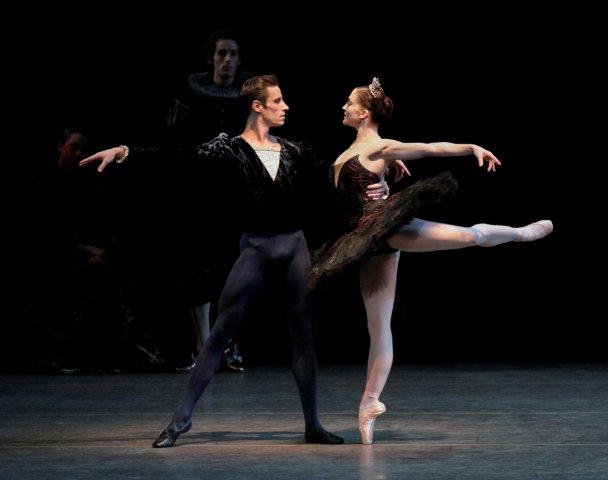
    As the Black Swan pas de deux unfolded, brilliantly danced by Bouder and Veyette, a tall newcomer to the stage, Silas Farley, showed an already keen flair for stagecraft with his manipulative, faux-courtly Rothbart.

    And so we come to the end: at the lakeside where they had met, Odette and Siegfried are now torn asunder. The power of their love has vanquished Rothbart, but his curse endures. Odette vanishes amidst the swans, and Siegfried collapses in remorseful despair.

    ODETTE/ODILE: Bouder; SIEGFRIED: Veyette; VON ROTBART: Farley; QUEEN: Anderson; JESTER: Schumacher; BENNO: Carmena; PAS DE TROIS: Laracey, King; PAS DE QUATRE: LeCrone, Scheller, Pereira, Garcia; HUNGARIAN: Pazcoguin, Hall; RUSSIAN: Taylor, laCour; SPANISH: Smith, Stanley, Muller, Scordato; NEAPOLITAN: Segin, Peiffer; PRINCESSES: Manzi, Mann, Sell, Brown, Wellington, Arthurs

  • Reichlen/T Angle SWAN LAKE @ NYCB

    6a00d8341c4e3853ef014e5f6b6b16970c-800wi

    Above: New York City Ballet principal artists Tyler Angle and Teresa Reichlen in SWAN LAKE; photo by Paul Kolnik

    Friday September 20, 2013 – I’m an admirer of the New York City Ballet‘s Peter Martins production of SWAN LAKE, even though the first time I saw it (with Kyra Nichols in her only performance of it) I found it a great eyesore. I had vowed never to see it again but of course, this Company is my Company and how could I let anything deter me from seeing such Swan Queens as Miranda Weese, Wendy Whelan, Jenifer Ringer, Maria Kowroski, Jennie Somogyi and Sara Mearns? I soon made peace with the sets and costumes (basically by simply tuning them out), and on second seeing realized that there is no more potent ending for this ballet than that which Peter has crafted.

    Non-stop dancing and just enough mime propel the ballet forward. The familiar set-pieces are there, and Peter brings especial vitality to the villager’s dance in the opening scene and (truly lovely) the would-be-brides set piece which just precedes the arrival of Odile.

    This evening’s performance had its ups and downs. There was a bit of ragged playing from the pit here and there, and it seemed to me that Daniel Capps’ tempo for the White Swan pas de deux was just a bit too fast for Teresa Reichlen and Tyler Angle to make the maximum poetic effect. But much of the first lakeside scene was nullified for me by audience distractions (whispering mother and child behind me; a woman munching on cashews from a plastic cup; someone texting). I retreated to the 5th Ring for the second half of the evening and was far better able to concentrate there.

    The opening scene, where Siegfried’s friends from the village have come to celebrate his birthday with a party of the castle terrace (they’d never be allowed inside the royal residence per se) is one long dance-a-thon and the sixteen corps dancers were a pleasure to observe thru my opera glasses: corps-watching heaven. But apparently many in the audience had never seen chidren onstage so there was a lot of ooohing and aaaahing when the small fry appear (they danced very nicely).

    BallHarrison

    Harrison Ball (above, headshot by Paul Kolnik) scored a hit as the Jester; he was one of several dancers making role-debuts tonight. Lithe and agile, Harrison moved thru the virtuoso demands of the choreography with flair. Later, at the ‘official’ birthday party of his master, I very much liked Harrison’s facial acting throughout the Black Swan pas de deux: he seemed to be the only person at court to sense that something was amiss with this Odile woman and her sinister escort.

    Amanda Hankes, a natural aristocrat, made a youthful Queen. Taylor Stanley’s handsome Benno (debut) was another feather in this dancer’s cap; watching the vivacious Lauren Lovette in the pas de trois was a treat, and I liked the touch of rubato Ashly Isaacs brought to this attractive set piece.

    As the partiers went romping off, leaving the Prince, Benno and the Jester frozen in a gesture of farewell, the stage was set for the drama to begin. At this moment, NYCB decided it was time for a round of late seating, so we had the patter of feet, the urgent whispers, the bright glare of flashlights. The mood of the ballet was successfully broken.

    Teresa Reichlen’s opening jeté seemed to proclaim that the ballet could now move into the realm of poetry, but it was at this point that the distractions all around me commenced. Restive audience members are the bane of ballet-going: if you prefer to chat with your daughter, eat, or text, why did you come to the theatre?

    So despite being aware of Tess’s lovely attitude poses and deep back bends, and of Tyler’s pale and urgently tender personification of the Prince, much of this scene went for nought. I couldn’t wait to escape; I even thought of simply going home, but it seemed so unfair – this triumph of indifference – and there were dancers coming up in the second half that I really wanted to see.

    Tess was at her grandest as Odile, wonderfully predatory as she manipulates the hapless Tyler. Coached by the ultra-tall and sinister Ask LaCour as Rothbart, Tess used the role’s faux-Odette motifs with canny skill: a mistress of deceit. Her solo was gorgeously danced and she whipped off a blazing set of fouettés, followed by the sustained balances up the diagonal. Tyler’s solo was a beautiful paragraph of polished bravura. The pledge…the shock of  betrayal…the desperate rush to the lake…

    The final scene, built on the prince’s hopeless notion the damage could be repaired, was movingly played by Tess and Tyler. Odette knows her chance has been lost; when the Prince again raises his hand in pledge, she pulls his arm down and wraps it around her torso. This will be their last moment together. But now Rothbart must be defeated: in the brilliant coup de foudre the couple make a last stand for love and Rothbart is destroyed. But the curse has not been broken. In those last heart-rending moments, Siegfried tries in vain to forestall Odette’s transformation. But she vanishes among the ranks of the swans, leaving him to contemplate his failure. In this final parting, Tess and Tyler personified the despair of shattered hope.

    Back-tracking to the ballroom, there was lots of fine dancing – commencing with Harrison Ball’s playful number with three small jesters. The prospective brides arrive: in pastel frocks, the girls weave solo passages into a very charming ensemble: Sara Adams, Likolani Brown, Megan Johnson, Jenelle Manzi, mary Elizabeth Sell and Lara Tong each took the opportunity to shine. But despite this bevy of beautiful choices, the Prince demurs.

    The pas de quatre, a virtuosic set-piece, brought forth Savannah Lowery, Rebecca Krohn and Ashley Laracey each looking lovely and with accomplished dancing. But something was amiss: Chase Finlay, after squiring the girls thru the opening segment, did not perform his variation. And in the coda, Chase seemed to be marking. If Chase had sustained an injury, let’s hope it’s quickly remedied. I was left wondering how the conductor knew to skip the male variation music. 

    In the swirling Hungarian number, Gretchen Smith threw a dash of paprika into her role-debut dancing; Justin Peck was her rather somber and very impressive beau: now that Justin is taking the choreographic world by storm, we sometimes forget what a great presence he has as a dancer. Jennie Somogyi and Adrian Danchig-Waring (another newcomer to his role) were daringly provocative and physically fearless in the steamy Russian dance. New senoritas in Spanish – Meagan Mann and Lydia Wellington – vied for our attention with their footwork and their yellow fans; Daniel Applebaum and Zachary Catazaro (debut) were the dashing toreros, In a particularly appealing match up, Lauren Lovette and Devin Alberda (his debut) were the Neapolitan dancers, displaying Lauren’s piquant charm and a touch of devilry from Devin.

    The House was full to the rafters, and Tess, Tyler and Harrison were strongly cheered. Ask’s curtain call, drawing the villain’s booing, recalled Albert Evans in the same role: a glacial staredown, and a swirl of the cape. I ran into Albert during the intermission, handsome as ever.      

    ODETTE/ODILE: Reichlen; SIEGFRIED: T. Angle; VON ROTBART: la Cour; QUEEN: *Hankes; JESTER: *Ball; BENNO: *Stanley; PAS DE TROIS: *Lovette, Isaacs; PAS DE QUATRE: Laracey, Lowery, Krohn, Finlay; HUNGARIAN: *Smith, J. Peck; RUSSIAN: Somogyi, *Danchig-Waring; SPANISH: *Wellington, Applebaum, *Mann,*Catazaro; NEAPOLITAN: Lovette, *Alberda; PRINCESSES: Manzi, Sell, Johnson, Brown, Adams, Tong

  • John J Zullo/Raw Movement @ St. Mark’s

    Zullo_ExSk_4

    Above: dancer Mike Hodge in John Zullo’s this Exquisite diversion/mysterious Skin

    Thursday September 19, 2013 – John J Zullo Dance/Raw Movement presented three works at St. Mark’s Church In the East Village tonight. An unusual and pleasing dance venue, St. Mark’s sanctuary transforms into a spacious theater-in-the-round. John Zullo’s danceworks function well in this setting, and the evening was enhanced by excellent lighting (Mark Simpson) as well as by the boundless energy of the dancers. The programme featured ALL what THIS do HAS you HAPPENED see? BEFORE, and the world premieres of this Exquisite diversion/mysterious Skin and project Xiii.

    ALL what THIS do HAS you HAPPENED see? BEFORE was the evening’s longest work. The space has been hung with gauzy panels and wrapped in a broad ribbon of white fabric. As the six dancers enter, pacing along the perimeter, they make blatant eye contact with the seated audience members. The dancers then step into a central pool of light and begin to move in silence.

    As the piece progresses in a series of distinct scenes distinguished by the lighting concept, we see movement motifs repeated or rearranged. An animated opening passage in which the dancers rarely touch one another gives way to a broadly lyrical musical theme; solos for each dancer are woven into the movement tapestry. The gossamer fabric-panels are lowered into the dance-space and audience members are ushered into the performing area to observe the dancers at close range. The space is flooded with golden light, and eventually the dancers withdraw from the setting, leaving audience members standing in their places.

    Music for this work includes Monolake, Ludovico Einaudi, David Lynch, and Autechre and the simple costume designs of Hector Perez give the dancers a touch of see-thru allure.  The six dancers – Jenna Liberati, Mary Madsen, Olivia Orozco, Tyler Patterson, Jeff Davis and  Bong Ian Dizon – are all excellent and thoroughly at ease in the physical demands of John Zullo’s choreography. There were passing moments when the work seemed a bit over-long, but the vibrant personal qualities of the individual dancers kept our focus firmly on the movement.

    I’d had a glimpse of the evening’s second work, this Exquisite diversion/mysterious Skin earlier this year at LaMaMa. Inspired in part by Scott Heim’s novel
    “Mysterious Skin,” in which two young boys are sexually exploited and
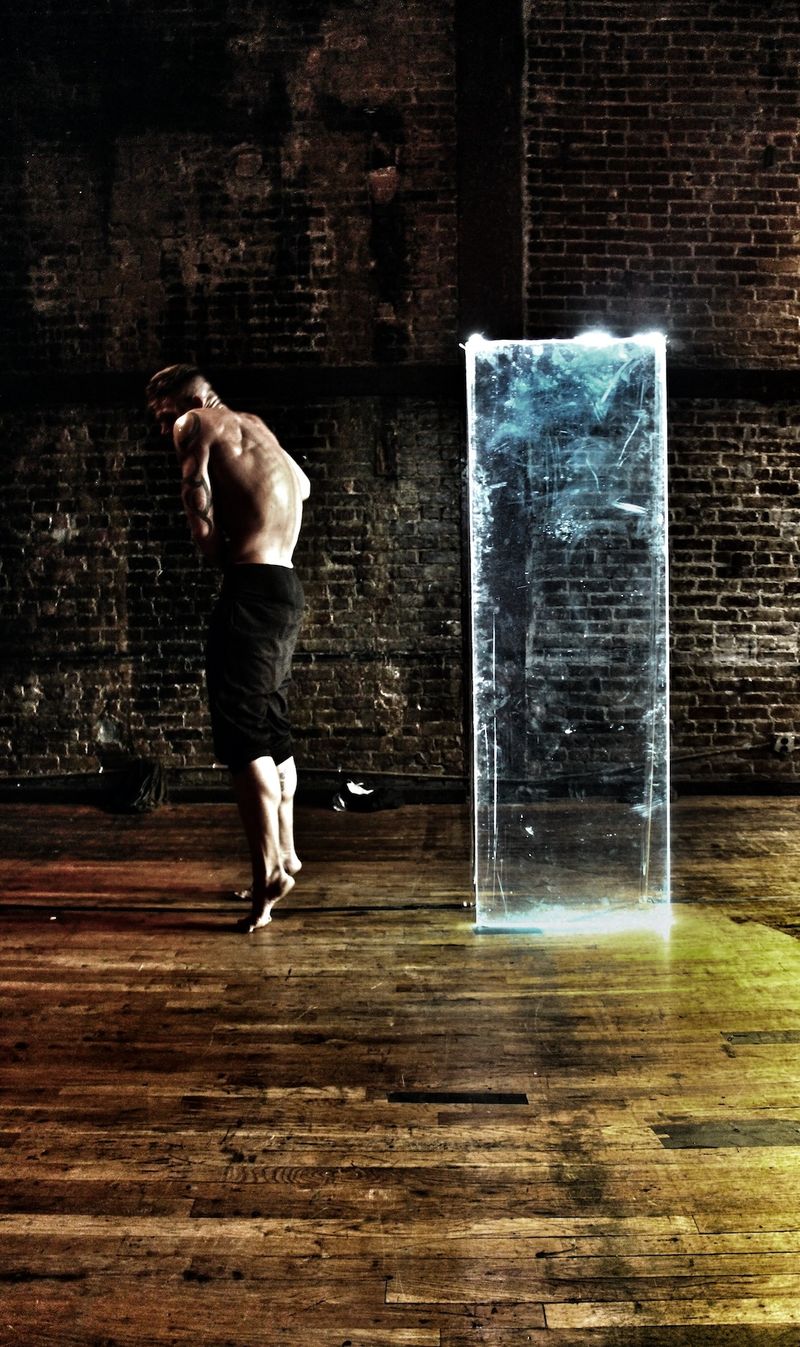
    assaulted, this darkly sensual and provocative dancework is set amidst luminous lucite panels which serve as both mirrors of the dancers involved and windows into their dark doings. The collage-score, arranged by David Englehard, includes Olafur Arnalds, Max Richter, and Deru; and at one point singer Jessie Davis wanders into the space singing “Dream A Little Dream of Me”.

    L1220636

    Tyler Patterson (rehearsal photo, above) opens this Exquisite diversion/mysterious Skin with a restless, floor-oriented solo. Later, stripped down to black briefs, Tyler’s beautiful vulnerability became a poignant element of the work. The shadow effects, off-setting the radiance of the lighted mirrorlike-panesl, create a haunting visual landscape. Jenna Liberati, Olivia Orozco, Jeff Davis, Bong Dizon, and Mike Hodge are the other fine dancers in this unsettling, brink-of-a-nightmare work.     

    project Xiii begins with a digital clock in the center of the space being set for a 13-minute countdown. The piece commences with John Zullo dancing the first of twelve solos, each to music chosen by the various dancers. Guest artists mingle with Company members, each dancer having 60 seconds to work their self-made phrase. This imaginative piece had the benefit of Mark Simpson’s lighting; Mark’s contributions to the evening were underscored here as Jenna Liberati, in a pool of light just a couple feet away from me, danced with her own shadow. This piece was an excellent way to end the evening.

  • Tom Gold Dance @ Bilbao

    TOM GOLD DANCE  Apollo with   Sara Mearns,  Adrian Danchig Waring, Abi Stafford

    On August 21st and 22nd, 2013 Tom Gold Dance performed at the Guggenheim Museum at Bilbao, Spain. The programme consisted of Tom’s ballet LA PLAGE, Balanchine’s APOLLO, Jerome Robbins’ CONCERTINO, and the pas de deux from FLOWER FESTIVAL AT GENZANO. In the top photo, Sara Mearns, Likolani Brown, Adrian Danchig-Waring and Abi Stafford in APOLLO.

    Click on each photo to enlarge.

    TOM GOLD DANCE   Flower Festival at Genzano  with  Devin Alberda and Abi Stafford

    Above: Devin Alberda and Abi Stafford in the FLOWER FESTIVAL pas de deux.

    TOM GOLD DANCE  Concertino, with  Stephen Hanna, Sara Mearns, Andrew Scordato

    Above: Stephen Hanna, Sara Mearns and Andrew Scordato in CONCERTINO.

    These images from the performance are courtesy of The Guggenheim Museum, Bilbao.

  • Rehearsal: Intermezzo Dance Company

    L1210303

    Above: Shoshana Rosenfield and Kurt Froman rehearsing for Intermezzo Dance Company; click on the image to enlarge.

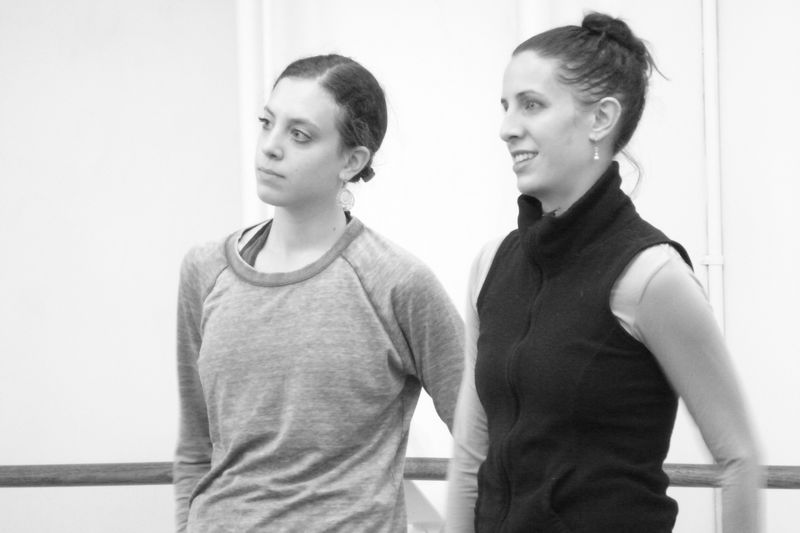
    Thursday August 29th, 2013 – Craig Salstein, founder of Intermezzo Dance Company, invited me to a Company rehearsal today at the ABT Studios. Choreographers Lisa de Ribere and Gemma Bond were working on the 2nd and 4th movements – respectively – of the Verdi string quartet which will be shown at Intermezzo‘s premiere performances in October.

    Intermezzo Dance Company will debut at the 92nd Street Y with a programme celebrating the 200th anniversary of the birth of the great Italian opera composer Giueseppe Verdi. Craig Salstein, a serious opera-lover, will honor the Maestro with a setting of the composer’s string quartet as well as a fantasia of melodies from the dramatic opera UN BALLO IN MASCHERA (A Masked Ball), specially arranged for these performances. Four choreographers – Marcelo Gomes, Lisa de Ribere, Adam Hendrickson and Gemma Bond – will each set a movement of the quartet, while BALLO will be choreographed by Raymond Lukens. Tickets for the performances are on sale now: click here to order.

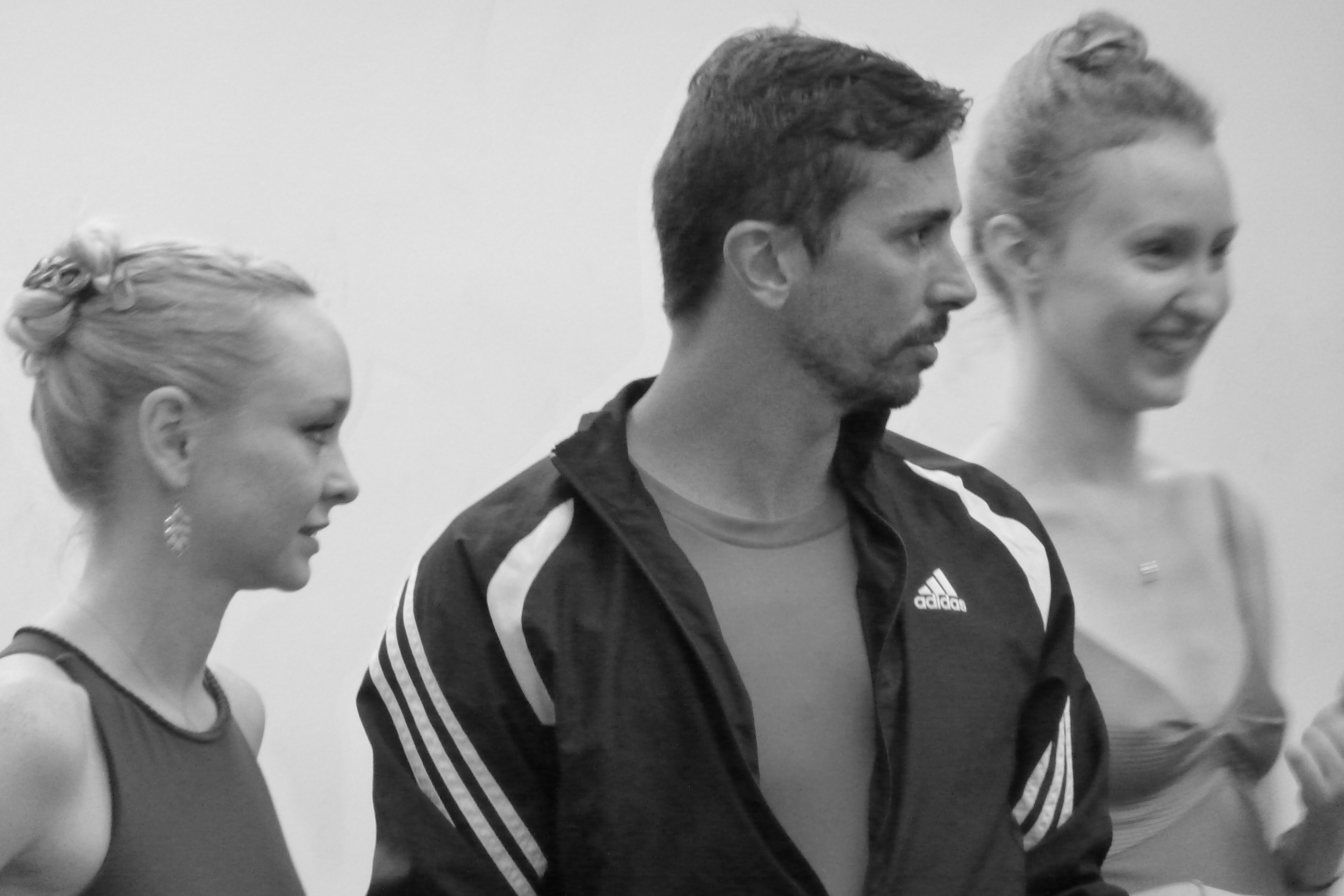
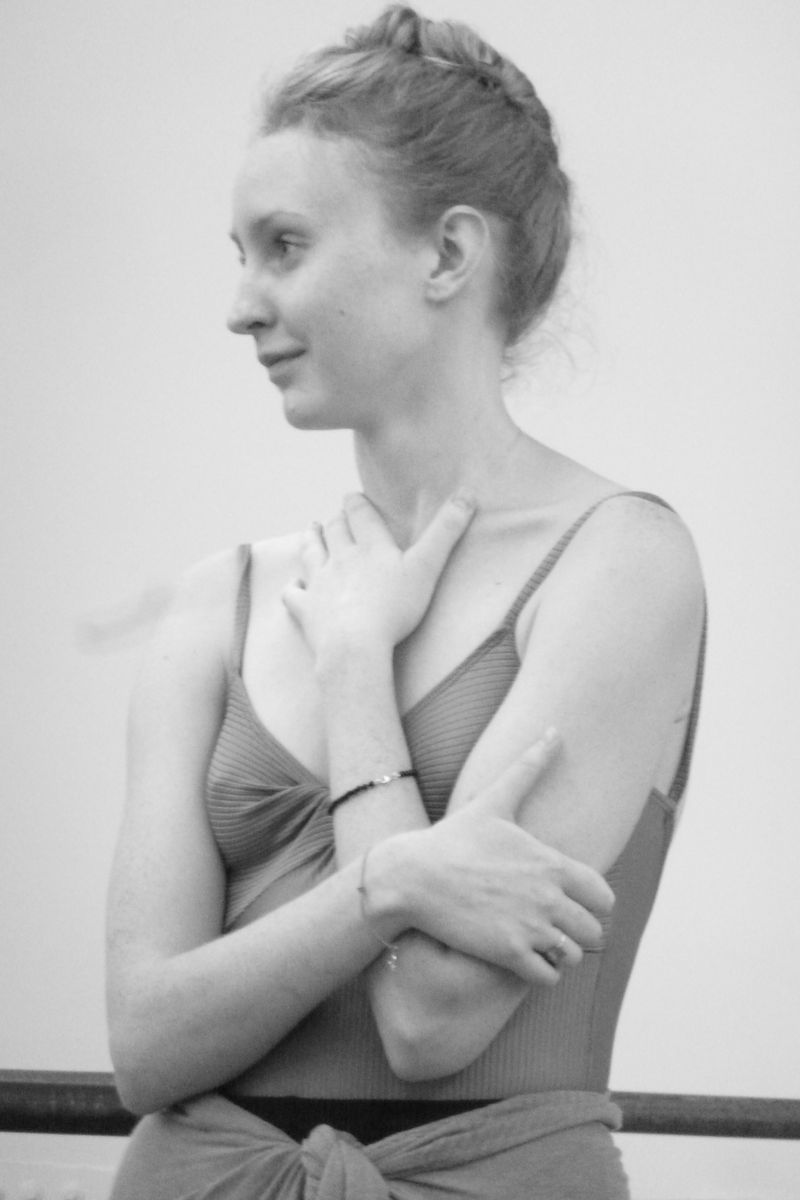
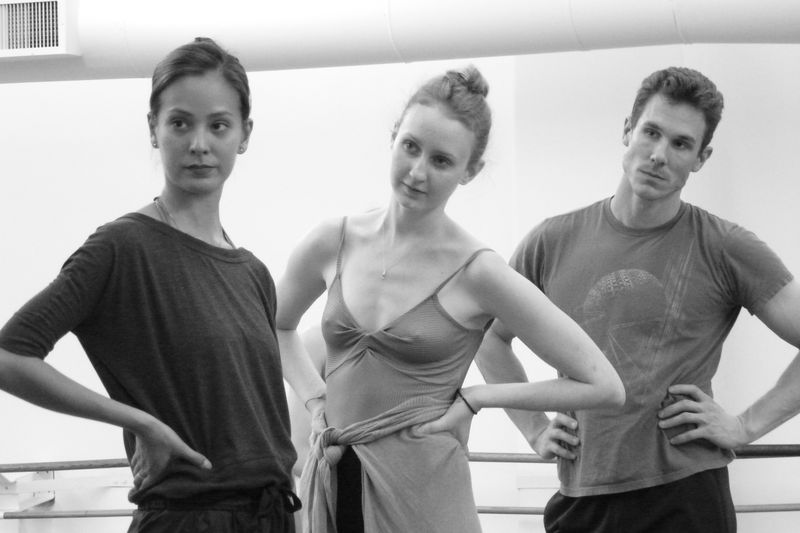
    Craig has put together a handsome roster of dancers, including established favorites and some exciting newcomers. It was great to see everyone today, and if they were for the most part moving too fast for my camera to capture, I do have a few images to share:

    L1210254

    Kurt Froman

    L1210257

    Aran Bell warming up

    L1210390

    Shoshana Rosenfield and Nancy Richer

    L1210433

    Nadezhda Vostrikov, Carlos Lopez and Kaitlyn Gilliland

    L1210453

    Nancy Richer, Rina Barrantes

    L1210465

    Kaitlyn Gilliland, Stephen Hanna and Nadia Vostrikov getting notes from Gemma Bond

    L1210312

    Kaitlyn!

    L1210444

    Carlos and Nadia

    L1210486

    Striking a melodramatic pose: Carlos Lopez

    L1210467

    Rina, Kaitlyn and Stephen

    L1210427

    Aran Bell

    L1210503

    Carlos and Nadia, one of my few actual dance shots that turned out

    L1210276

    Kaitlyn Gilliland and Sarah James

    L1210436

    Nancy Richer, Gemma Bond

    L1210447

    Carlos Lopez. I met Carlos this past Spring when he danced with Lydia Johnson Dance.

    Another of the Intermezzo choreographers, Adam Hendickson, is creating the 3rd movement of the string quartet as a pas de deux for Kaitlyn Gilliland and Stephen Hanna. I’m hoping to watch a rehearsal of this part of the programme soon.

    Meanwhile, a short film featuring all the Intermezzo dancers moving to music from Verdi’s NABUCCO is in the works.