Category: Ballet

  • Deborah Wingert @ Lydia Johnson Dance

    IMG_2986 copy

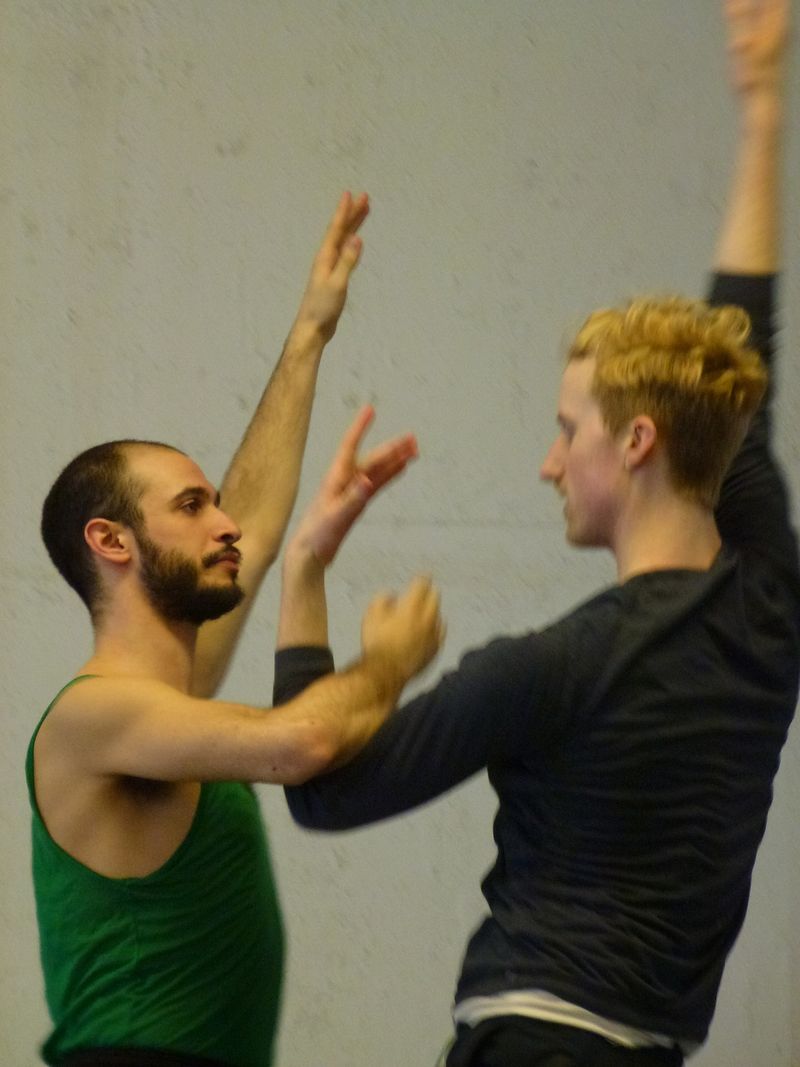
    Above: dancers Sarah Pon and Anthony Bocconi of Lydia Johnson Dance being coached by Deborah Wingert; photo by Melissa Bartucci

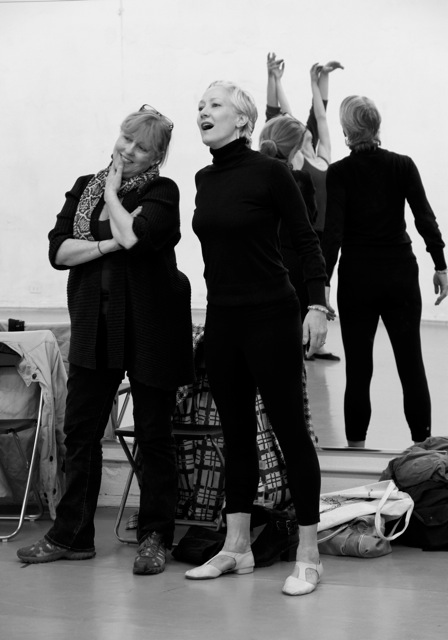
    Deborah Wingert, one of New York City’s foremost ballet teachers, has been working in the studio with the dancers of Lydia Johnson Dance, coaching them particularly in the nuances of partnering in the works that Lydia is preparing to show in her June 2013 performances.

    Deborah Wingert, a former New York City Ballet dancer and presently one of an elite group of stagers of Balanchine repertoire for the Balanchine Trust, is deeply involved as an instructor, choreographer and mentor for the young dancers of Manhattan Youth Ballet. Her depth of knowledge and her understanding of dance from both a technical and an emotional point of view make her a priceless treasure. 

    I asked photographer Melissa Bartucci to document Deborah’s first day in the studio with Lydia Johnson Dance; then, a week later, I was able to get to the studio myself and observe the process first- hand. It didn’t surprise me to find that Lydia and Deborah were very much on the same wave-length, since for both of them their work in dance stems from a spiritual connection with music and movement.

    It was hard to imagine that someone could make Lydia’s beautiful troupe of dancers look even better, but in the most subtle ways – and often in an expressive rather than a technical context – that is what Deborah was able to accomplish.

    Here are some of Melissa Bartucci’s images:

    IMG_2835 copy

    Lydia Johnson, Deborah Wingert

    IMG_2702 copy

    Dancers Kerry Shea and Eric Williams

    IMG_2908 copy

    Anthony Bocconi and Sarah Pon

    IMG_3007 copy

    Lydia observing Sarah and Anthony

    IMG_2957 copy

    Anthony Bocconi

    IMG_3048 copy

    The dance is in the details

    IMG_3057 copy

    Lydia, Kerry, Eric and Deborah

    IMG_3056 copy

    Eric and Kerry watched by Deborah and Lydia

    Lydia Johnson Dance will have their New York season on June 6th, 7th and 8th, 2013 at the Ailey Citigroup Theater. Works set to music of Gorecki, Golijov, Schubert and Bach will be performed. Details will be forthcoming.

  • Ballet Hispanico @ The Joyce

    Jardi 2

    Above: Min-Tzu Li and Jamal Rashann Callender of Ballet Hispanico in Nacho Duato’s JARDI TANCAT. Photo by Jeaux McCormick.

    Sunday April 21, 2013 matinee – A recent visit to a Ballet Hispanico rehearsal was an ideal introduction for me to this vivid and delightful Company. Today at The Joyce I got to see them in full regalia: lights, costumes, the works. It was an exhilirating afternoon.

    Nacho Duato’s JARDI TANCAT finds its roots in folk tales from Catalonia, transformed into songs sung by Spanish singer Maria del Mar Bonet. The ballet opens in silence with six dancers in a patch of sunlight on a darkened plain; they are simple countryfolk who work the barren land,
    praying to God for the rain that does not come:

    “Water, we have asked for water

    And You, Oh Lord, You gave us wind

    And You turn Your back on us

    As though You will not listen to us”

    As the music begins, the sun brightens further and the choreographer presents us with passages of ensemble work in which the dancers capture the spirit of the land and the longing for relief from the hardships of their lives. Despite the bleakness of their daily labours, they seem to find a quiet joy in their sense of community. 

    In three stunningly beautiful duets, Duato extends the art of partnering in fresh ways and the Ballet Hispanico dancers respond to his vision with clarity and passion. The three couples today were: Melissa Fernandez with Donald Borror, Martina Calcagno with Mario Ismael Espinoza, and Min-Tzu Li with Jamal Rashann Callender. JARDI TANCAT is a spell-binding work, holding the audience in a keenly attentive state. The moment it ended I was ready to watch it again: and how often can we say that of a dancework?

    Vitrola

    Above: from TANGO VITROLA, photo by Paula Lobo. Click on the image to enlarge.

    An old gramophone sits illuminated on a high pedastal at the back of the stage as Donald Borror, his dorsal muscles expressive in the golden light, dances the opening solo of TANGO VITROLA. This magical tango-ballet unfolds against a sonic tapestry of scratchy old 78s; among the songs from the 1920s are “Rosendo”
    and “La Cumparista” by Orquesta Típica Criolla de Vincente Creco; and
    “El Llorón,” “Pena Mulata” and “El Porteñito” by Roberto Firpo.

    Magnificently lit by Joshua Preston, the dancers – the women in slinky black frocks and stiletto heels and the men bare-chested in black trousers and wearing fedoras – weave thru choreographer Alejandro Cervera’s intoxicatingly seductive patterns, periodically retreating to watch the others dance from rows of cafe chairs at either side of the stage. Desire and provocation tingle in the air of this dreamlike nightclub where the sexy atmosphere is over-laid with the almost formal courting rituals of the tango. Attitude is all as the dancers revel in their own attractiveness.

    Nube blanco

    Above: from NUBE BLANCO, photo by Rosalie O’Connor

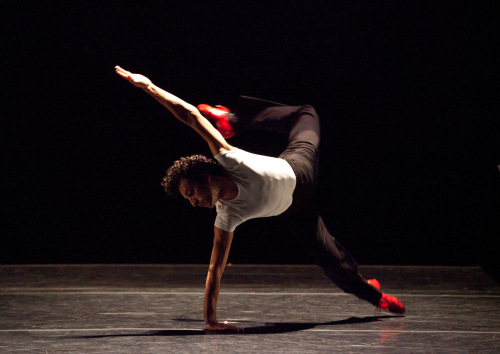
    Theatrical elements come into play for the final NUBE BLANCO; again Mr. Preston’s lighting is a vital factor in this work set by choreographer Annabelle Lopez Ochoa to recordings of Maria Dolores Pradera. The dancers, all in bright red shoes, are called upon to act and vocalize along with executing the earthy moves, hand-clapping and foot-stomping culled from the flamenco vocabulary. Meanwhile an allusion to ballet comes in the fluffy white tutus worn by the women. A particularly riotous male quartet (“uno! dos! tres! cuatro!”) clearly caught the audience’s fancy, as did a charming mimetic vignette by Mario Ismael Espinoza, one of the Gotham dance scene’s sexiest guys. In the end the dancers stagger in, each wearing one shoe with the other foot bare; one of the girls has put on all the white tutus at once, tramsforming herself into a giant animated snowball. Her final arabesque, foot pointing to heaven, gave NUBE BLANCO its concluding mirthful image. As the dancers stepped out for their bows, I found myself whooping and screaming along with the rest of the crowd.

    120416_bhispanico_08971

    Above: Mario Ismael Espinoza in NUBE BLANCO, photo by Rosalie O’Connor

    An absorbing, sexy and vastly pleasing afternoon of dance. Ballet Hispanico continue their season at The Joyce for another week: performance and ticket information here.

    I give Ballet Hispanico six stars out of a possible five: go, and be seduced.

  • Rehearsal: Zvi @ Steps Repertory Ensemble

    L1080268

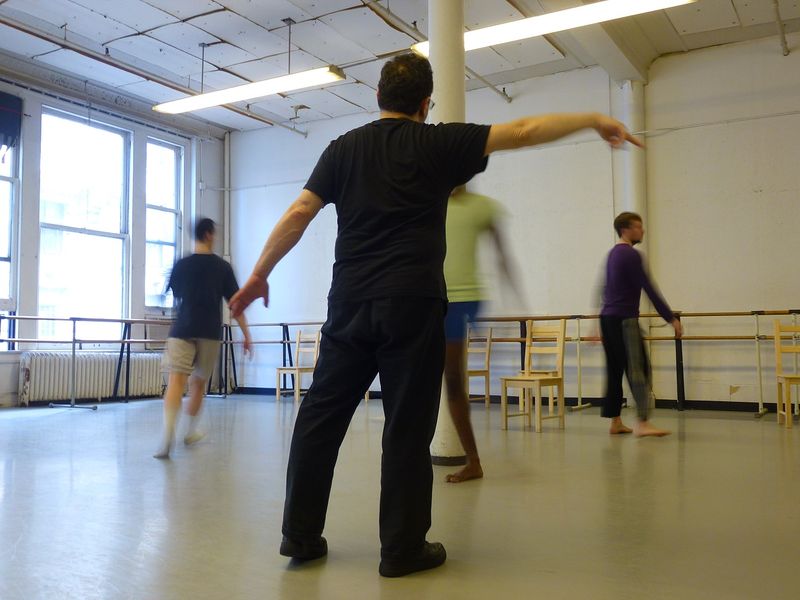
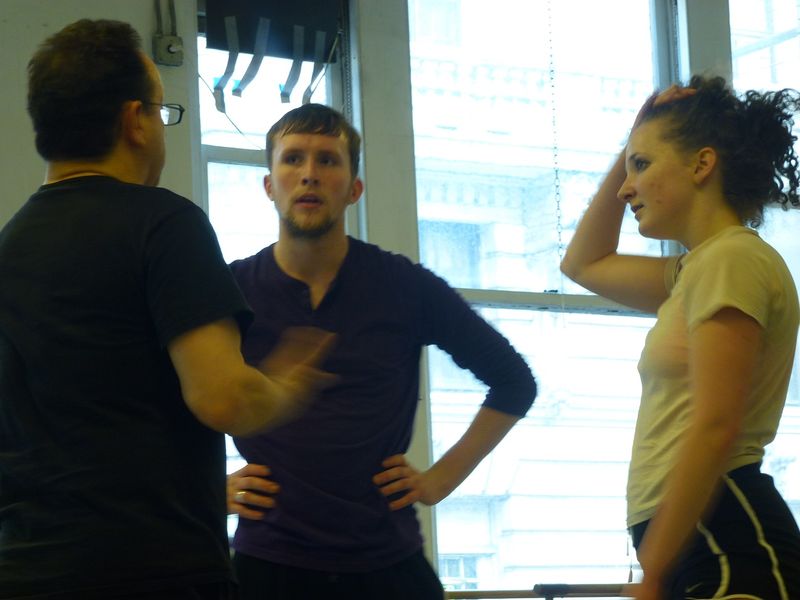
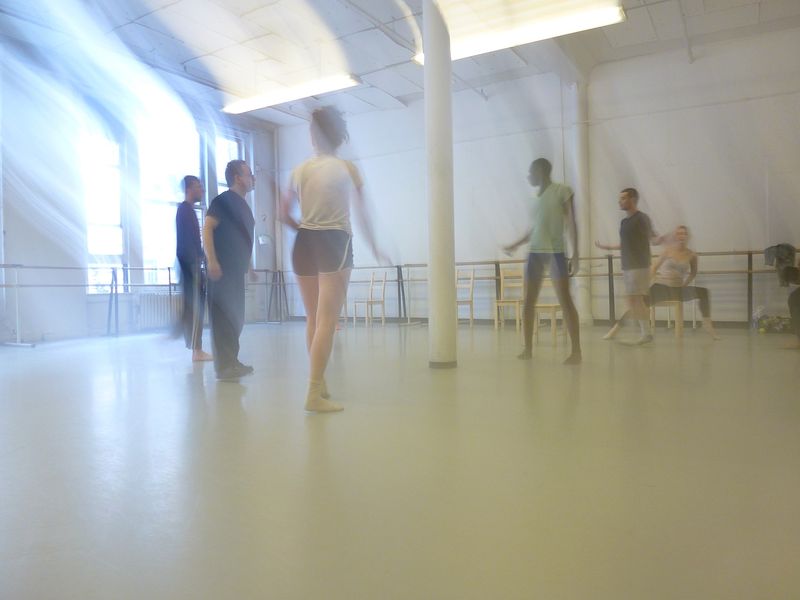
    Wednesday March 27th, 2013 – Choreographer Zvi Gotheiner is setting his dancework “Chairs”, which premiered in 1992, on the Steps Repertory Ensemble who will be performing it during their upcoming season at Ailey Citigroup Theater. My friend Joe and I dropped in at a rehearsal today to see how things are developing.

    For this dancework, Zvi uses music culled from film soundtracks, Rachmaninoff etudes, and Russian Orthodox
    sacred music. Today we were watching the dancers work on specific passages…

    L1080260

    …stopping periodically to refer to a video of a live performance which gave us an idea of how the work will feel when it’s costumed and lit. Mindy Upin and Lane Haplerin, above, having a look.

    There’s a tremendous sense of energetic flow in the choreography, particularly in a quartet passage…

    L1080318

    …and Zvi spent some time working out partnering details with dancers Jake Bone and Lane Halperin (above); their duet has a restless, space-covering energy.

    L1080219

    We’d just missed a sampling of a duet for two men (David Scarantino and Clinton Edward Martin, above) but just from the phrases we saw, and a few sneak peeks at the video, “Chairs” is clearly a very interesting piece.

    Most of my photos today looked like this:

    L1080235

    So we’ll have to wait for the performances to get the full impact of what “Chairs” will look like. Just as I did a few months when I checked out Manuel Vignoulle’s rehearsal, I really loved the atmosphere at the Steps Rep studio. And it’s lovely to chat with the Company’s director Claire Livingstone.

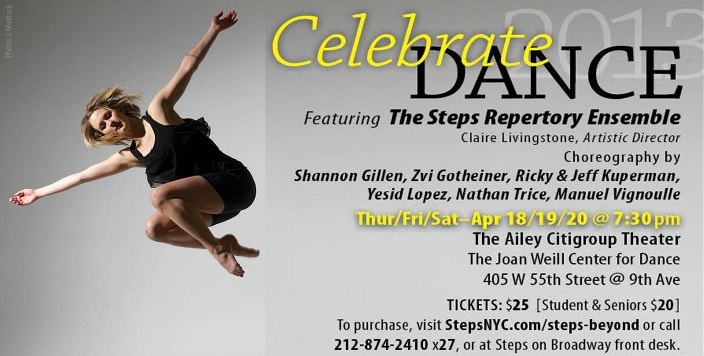
    In addition to Zvi’s “Chairs”, and the Vignoulle creation, the programme will feature works by Shannon Gillen, Ricky and Jeff Kuperman, Yesid Lopez and Nathan Trice.

    188405_435059263251133_2135932523_n

  • AIDA at the Teatro Colon 1968

    Arroyo10

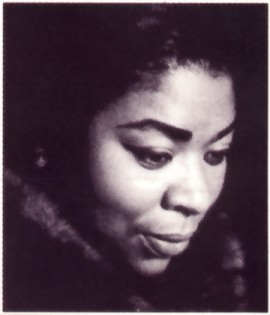
    This 1968 performance of AIDA from the Teatro Colon, Buenos Aires, cropped up on the Opera Depot website and thought the combination of Martina Arroyo (above) and Carlo Bergonzi as Aida and Radames would be exciting to hear, since they are two of my all-time favorite Verdi singers. Both are in prodigious voice, providing phrase after phrase of wonderfully generous vocalism. My thanks to Dmitry for making me a copy.

    Martina Arroyo never made a commercial recording of AIDA, and Bergonzi’s Radames on the Decca label (with Tebaldi) was recorded in an unusual acoustic which even later tampering-with could not make really enjoyable. So it’s wonderful to have this live recording from the Colon in perfectly good sound and with both singers on impressive vocal form.

    Teatro Colon, BA

    The Teatro Colon (above) is a vast house (1,000 standees may be accommodated), and over the years has been rated high acoustically by singers and listeners alike. On this evening in 1968, the crowd surely senses that they are hearing teriffic vocalism from Arrroyo and Bergonzi and they repay the singers with generous ovations throughout the performance.

    Bruno Bartoletti is on the podium; over the years I have heard performances conducted by this man that seem ideal and others that are less inspiring. For this AIDA he sets a generally fast pace (the ballet segments are wickedly speedy – I would not want to have been dancing in this performance!) but he certainly gives his singers a lot of leeway, and they enjoy lingering on high notes and having the opportunity to sustain favorite phrases.

    There are some off-notes and a few unhappy bits from the pit musicians, and one jarring passage in the Tomb Scene where Bartoletti inexplicably rushes ahead of Bergonzi who is in the middle of some raptly poetic music-making; it takes a few bars to get things back in sync.

    Carlo-Bergonzi

    Carlo Bergonzi (above) has always been my personal king of tenors; yes, I know all his flaws and yes, he went on singing too long after he should have stopped. But in his heyday he was just so thoroughly pleasing to listen to, his marvelous turns of phrase and beautifully sustained vocalism always make me feel…happy. The beauty of hearing the Italian language wrapped in Bergonzi’s plangently expressive sound has always given me particular joy; even now, if I’m feeling blue, I’ll reach for that first Decca recital disc and soon I’m transported out of myself and basking in the music that has kept me – both spiritually and psychologically – on an even keel all these years. His singing in this AIDA is simply marvelous to experience: the unstinting generosity of both voice and style, the many small touches of sustained notes and his lovely colourings of the words in a rich emotional palette. It’s Verdi tenor singing at its best.

    Martina Arroyo is in glorious voice also, rich and even throughout the role’s vast range. If she does not employ the ravishing piano effects that some sopranos have in this music, we are amply compensated with the velvety splendour of Arroyo’s sound and her plush phrasing, as well as her dramatic awareness which never carries her to excess. In this grand performance, the great Martina rises to the high-C of ‘O patria mia’ – a note which has defeated many a soprano – with blessed assurance and sustains it with glorious ease. In the opera’s concluding Tomb Scene, she and Bergonzi trade passages of soul-pleasing Verdi vocalism, and together they sustain their final joint phrase seemingly beyond the realm of human possibility.

    Cvejic

    The Serbian mezzo-soprano Biserka Cvejic (above) is probably not on anyone’s list of top-ten mezzos; yet if she had been the Amneris in either of the last two AIDAs I heard at The Met, I would have been satisfied. It’s a crusty, Old-World sound with an ample and pleasing chest register and higher notes sometimes approached from below. Cvejic has the role well in hand and if her singing doesn’t rise to the level of the soprano and tenor, neither does she let down her side of the triangle.

    Cornell MacNeil is a powerful, dramatic Amonasro and I was surprised to find Nicola Rossi-Lemeni listed as Ramfis: this basso – a famous stage-creature of the 1950s – is surely nearing the end of his singing career by 1968. If not vocally prime, he surprises with some very robust moments (‘Immenso Ptah!’) and makes an authoritative impression.

  • Rehearsal: Cherylyn Lavagnino Dance

    298949_2223306496198_978977615_n

    Above: dancer Justin Flores, photo by Kokyat.

    Sunday March 24, 2013 – Today I went over to to the studios at Tisch/NYU where Cherylyn Lavagnino was working with her dancers on a new ballet set to the Schubert piano trio in E-flat, a piece that has always evoked dance images for me. Entitled TREIZE EN JEU, it is an ensemble work that features intimate duets mixed into a larger and finely-structured setting.

    Stepping off the elevator to the second-floor studio space, the sounds of the Schubert score at once made me feel that I was in for something special, and that was indeed the case. A roomful of dancers, many of whom I know, were mid-phrase when I walked into the studio. It took only a few seconds of observation to determine that this would be a truly pleasing afternoon, as much to the ear as to the eye. 

    Cherylyn Lavagnino’s works, though fresh in detail, are rooted in the traditions of classical ballet. The girls are on pointe and the vocabulary is rich. Subtle nuances in the port de bras and partnering put a distinctive gleam on the choreography, and transitions from unison ensemble passages to a focus on individuals or couples are accomplished in the twinkling of an eye. The dance springs ever from the music, and what heart-filling music it is.

    For this large work, Cherylyn has assembled a group of dancers with a high level of technical accomplishment and with distinctive personalities. They work beautifully as a collective yet their individuality is never submerged; thus in the bigger moments of the work the eye is constantly lured from dancer to dancer.

    A series of duets give us a chance to savor some lovely partnerships: Claire Westby and Eric Williams, Laura Mead and Justin Flores, Ramona Kelley and Adrian Silver, and the long-limbed and lithe pairing of Giovanna Gamna and Michael Gonzalez. Each couple creates a unique atmosphere; it was so satisfying to watch them ironing out the details under Cherylyn’s watchful eye. Justin later worked on the piece with the delicious Selina Chau – there will be double-casting during the performance run at Baruch College in June. Samuel Swanton joined in an energetic male quartet, and two very attractive apprentices – Kristin Deiss and Lila Simmons – filled out a double-trio of women who weave patterns while the sumptuous Claire and Eric are dancing. Laura Mead who made such a lovely impression in Pontus Lidberg’s WITHIN for Morphoses last October, looks fetching indeed, and the elongated shapes created by Giovanna and Michael gave their duet a particular appeal.

    It was particularly meaningful for me to see Ramona and Adrian dancing together again, for it was in this very studio in 2009 that I first met them when they were rehearsing a John-Mark Owen duet. Their partnership remains an intriguing combination of delicacy and strength. 

    As the dancers dispersed after a final run-thru, Selina and Justin remained to do some intensive work on the partnering. Their dedication and keen focus on detail gave a clue as to why Cherylyn’s works always end up looking so good.

    This new Schubert ballet can be seen (with the score played live!) from June 12th thru 19th when Cherylyn Lavagnino joins Dušan Týnek Dance Theatre and Zvi Gotheiner as part of the inaugural year of a new festival
    celebrating music and dance at Baruch College. Exact dates and times will be announced soon, and the festival extends thru June 22nd with solo nights for Zvi and Dušan.

  • Paul Taylor @ Lincoln Center 2013 #5

    Profireco

    Above: from Paul Taylor’s PROMETHEAN FIRE. Photo by Paul B Goode. Click on the image to enlarge.

    Saturday March 23rd, 2013 matinee – My final performance of the Paul Taylor Dance Company‘s 2013 Lincoln Center season. It’s been a brilliant three weeks and the Company are dancing superbly. Celebrating Bach’s birthday with a Bach ballet on every single programme has been an added source of joy, and the Company’s press liaison Lisa Labrado assured me of a warm welcome every time I attended. The Taylor company are outstandingly generous to dance writers, and it’s always a great pleasure to find Rachel Berman and Richard Chen-See – former Company dancers – circulating among the guests, making us feel a part of the Taylor family.

    This matinee opened with KITH AND KIN, dating from 1987 and set to a Mozart serenade. A tall and elegant couple in brown – radiant Amy Young and James Samson – preside over a flock of energetic young people who seem to be celebrating the sheer joy of being alive in stylized passages of leaps and restless comings and goings. Set slightly apart from this community is the magnetic Heather McGinley, a friendly (and gorgeous) guardian angel. In the central adagio, Amy and James dance with formal grace as Aileen Roehl and Michael Apuzzo swirl about them, perhaps representing their younger selves. This ballet, new to me this season, shows a happy meeting place of generations, with the stately ‘senior’ couple presiding overall yet still capable of having a little fun of their own.

    The poignantly dark splendours of THE UNCOMMITTED evolve first to the gleaming, celestial strains of Arvo Part’s Fratres as the dancers – in richly-hued body stockings with rose-red highlights – appear in a series of brief solos. This is a world inhabited by lonely spirits, seeking – but eventually unable – to connect with one another. Paul Taylor again turns again to Mozart as a series of duets unfold; each couple hovers on the brink of understanding but in the end none can sustain a relationship. Even the number of dancers involved – eleven – implies from the start that there will always be an odd man out. Despite its rather bleak emotional outlook, THE UNCOMMITTED provides a wonderful opportunity to focus on the individual lustre of each of the dancers – and what an ensemble it is: Michael Trusnovec, Amy Young, Robert Kleinendorst, Michelle Fleet, Parisa Khobdeh, Eran Bugge, Francsco Graciano, Laura Halzack, Michael Apuzzo, Aileen Roehl and Michael Novak.

    Bach provides the setting for a grand finale to the programme: PROMETHEAN FIRE. For this ballet, the entire Company are onstage; the dancers listed above are joined by James Samson, Sean Mahoney, Jamie Rae Walker, Heather McGinley and George Smallwood. In their velvety black costumes subtly trimmed with silver, the dancers revel in Mr. Taylor’s complex and visually inspiring combinations: PROMETHEAN FIRE is a masterpiece of structure, formal yet joyously human in expression. The heart of this sumptuous ballet is an adagio in which the combined genius of Mozart and Taylor moves us to the highest realms of spiritual satisfaction. Parisa Khobdeh and Michael Trusnovec were at their most transportive here, the partnering remarkable in its beauty and power, their personal magnetism magically aglow. Indeed it was one of the most moving and soul-stirring experiences in my long memory of watching dance.

    PROMETHEAN FIRE concludes with a splendid tableau of the Company dancers and for a moment we could simply relish their collective perfection, for it is they who in the end have the ultimate responsibility of making the choreography live and breathe. Then Mr. Taylor appeared for a bow and the audience swept to their feet with resounding cheers.

  • Paul Taylor @ Lincoln Center 2013 #4

    SpeakinginTonguesRobert

    Above: Robert Kleinendorst of Paul Taylor Dance Company in SPEAKING IN TONGUES. Photo by Paul B Goode. Click on the image to enlarge.

    Thursday March 21st, 2013 – Paul Taylor Dance Company have been celebrating Johann Sebastian Bach throughout their current Lincoln Center season: there’s been a Bach ballet on every programme and today – the actual birthdate of the peerless composer – the dancers gave a glorious performance of ESPLANADE, seeming to up their ‘normal’ level of energy, musicality, passion and sheer daring to a breathtaking point.

    The programme opened with SPEAKING IN TONGUES, a complex work which always leaves me with mixed feelings. Matthew Patton’s score does not seem strong enough to sustain a ballet which lasts almost an hour, and to my aging ears the interjections of spoken word no longer have the clarity needed to make a dramatic impact. The work stretches long, but there is no part of it that seems expendable: it is what it is, and perhaps best viewed with a focus on individual dancers.

    Surely there are few dance experiences today to equal the thrill of watching Michael Trusnovec onstage. This dancer with his taut, slender muscularity and singular artistry gave a transfixing rendering of the preacher-man’s opening solo and then moved thru the rest of the ballet with compelling dramatic intensity. Likewise Robert Kleinendorst as the Odd Man Out struck a vibrant note as his open, innocent personality is slowly dismantled by the holier-than-thou congregation; he’s literally beaten into submission, and at last taken into the cult. Also making a strong impact in this work were Amy Young, Laura Halzack, James Samson, Sean Mahoney, Jamie Rae Walker, Aileen Roehl, Heather McGinley, Michael Novak and Michael Apuzzo. Those sumptuous beauties Parisa Khobdeh and Michelle Fleet were outstanding in their prominent solo passages.

    My companion for the evening, choreographer Lydia Johnson, helped me to see this work in a somewhat different light than I had previously, and to understand why the dancers love dancing SPEAKING IN TONGUES.

    Seeing Taylor’s ESPLANADE on Balanchine’s stage made for a joyful experience: the two great masters of modern and ballet choreography each turned to the same Bach music and thus ESPLANADE reminds us of CONCERTO BAROCCO, as different as they are in style and setting. And one of my favorite BAROCCO ballerinas, Teresa Reichlen, was sitting a few rows behind us.

    In ESPLANADE the sense of dynamism and physical risk play high, and the superb collective of Taylor dancers went at it with unfettered vitality: Amy Young, Laura Halzack, Eran Bugge, Parisa Khobdeh, Jamie Rae Walker, Robert Kleinendorst, Francisco Graciano and George Smallwood all looked smashingly beautiful and grand, and if it was Michelle Fleet who ended up stealing our collective hearts, that too was part of Taylor’s plan. The audience, psyched by the fantastic performance, erupted in a massive ovation when the choreographer appeared onstage for a bow.

  • Collegiate Chorale: Glass and Golijov

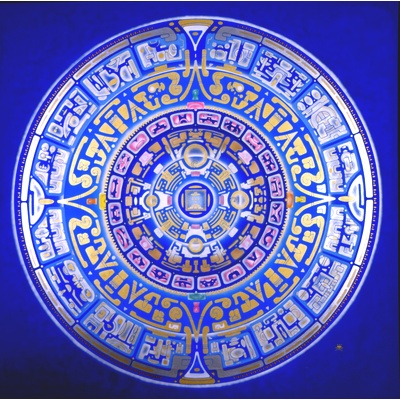
    Toltec

    Above: A Toltec star-shield

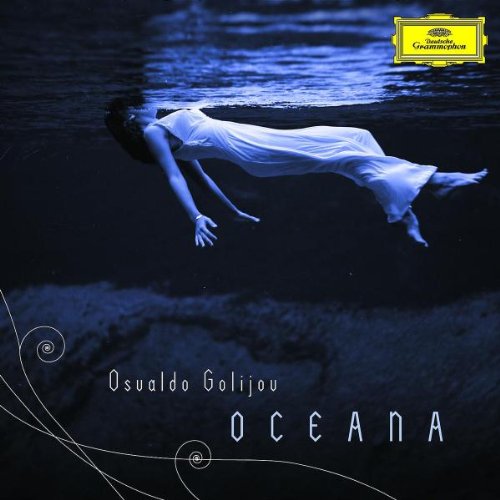
    Wednesday February 27, 2013 – A few minutes into this concert by the Collegiate Chorale, an expression from the 60’s came to me: “Mind-blowing!” The evening, one of the most purely pleasurable I have ever spent in a concert hall, featured two great contemporary works: the Toltec Symphony (#7) of Philip Glass, and OCEANA, a marvel-filled cantata by Osvaldo Golijov. The cumulative sonic effect of this music was like that of a mystical drug: I felt both vividly stimulated and wonderfully relaxed: a paradox, but there it is.

    The Glass dates from 2005 when it was commissioned by the National Symphony Orchestra to honor the 60th birthday of conductor Leonard Slatkin. The composer was inspired by the ancient culture of the Toltecs, remnants of which may still be found in Northern Mexico. Like many wise peoples, the Toltecs lived in close harmony with nature; the symphony evokes not only that link but the mysterious harmonies of forgotten rituals.

    The term Minimalist doesn’t really apply to Philip Glass; his view of music is in fact panoramic and the Toltec is universes away from Minimalism. It’s a vast and grand piece. The composer’s signature motif of repeated rhythmic patterns is very much in play, but there are layers of sound bulit on that foundation.

    The work opens subtly, with harp, maracas and celeste; as the first movement (entitled The Corn) develops, there is a spine-tingling ebb and flow of dynamics and textures from huge tutti passages that pulsate thunderously to trancelike delicacies that float on air. The second movement (The Sacred Root) is a grand choral tapestry, veering in song from seductive sway to hypnotic chant; at one point four singers step forward to deliver a counter-song. The chanting, sustained over timpani, finally dwindles magically into silence.

    The symphony’s final movement opens with a chorale of brass and violins into which the woodwinds and harp soon join. At this point there was an annoying late seating which broke the mood of the piece; with only a few minutes of music left, was it really necessary to seat people at that point?  Better to have taken a pause between the second and third movements and gotten the stragglers in place before continuing.

    Trying to recover my focus, I was intrigued by a passage for harp and strings, interrupted twice by the timpani. The winds join in a grand welling-up only to subside again. A four-square rhythmic, benedictive choral finale develops with halting pauses between segments, inducing an ecstatic feeling. With luminous high-flutes sounding over gently rocking strings, the Toltec vanishes into the mist like a lost civilization.

    There was no intermission but rather a longish pause in which the stage was re-set for the Golijov. I’ve recently become fascinated with this composer thanks to hearing his music used by choreographer Lydia Johnson. For OCEANA, the brass and woodwinds leave us as do the percussionists: aside from a quartet of flautists and three musicians playing small percussion instruments, OCEANA is all-strings – including guitars – and singing. 

    Neruda_0

    The enigmatic and perfumed poetry of Pablo Neruda (above), from Cantos Ceremonial, gives wing to Osvaldo Golijov’s matchless musical imagination. In this cantata, modeled on Bach, the illusive words of the poet will rise up from the mystic murmurs of harp and guitar and the sounds of the rainforest which open the work.

    Biella

    The sensational Venezuelan vocalist Biella Da Costa (above) revealed a mellow, sultry voice of huge range and capable of entrancing vocal effects woven into her alluring sound. Wow!  As the work progressed from one movement to the next, I found myself thinking: “What sonic magic will we experience next?” Between the orchestra, the chorus and the soloist, the ear is constantly seduced while the soul veers madly from the realms of the spiritual to the sensual.

    In a splendid aria, the jazzy singer bounces her voice around a big range, joyously carefree in this litling vocalise which percolates over guitar, bass and flutes. Then the chorus takes over, rocking and rolling like a sailing ship on a breezy day. Folkish percussion with harp and guitar tingle as a group of young women from the Manhattan Girls Chorus join in the music-making: wind and waves carry us forward, making me want to dance.

    Finally we reach the choral finale: the Oceana chant, a dreamlike invocation, makes us feel like we’re in church. The vision of the sea and the clouds fades like a dream as the music evaporates into a hush.

    IMG_1862Chorale

    Conductor James Bagwell (above, in an Erin Baiano photo) is to be praised not only for his steering of the musical ship tonight but for this imaginative and wonderfully satisfying programming.  Ms. Da Costa was nothing short of a revelation, and let’s have some special roses for harpist Sara Cutler who played so marvelously all evening. 

    Osvaldo Golijov susrprisingly joined the singers and musicians onstage during the applause; I’m not sure the audience recognized him though.

    -Osvaldo-Golijov -Oceana

    OCEANA is available on CD

    Philip-Glass-Glass -Symphony-No.7-'Toltec'

    …as is Glass’s Toltec Symphony.

  • Edwaard Liang: Artistic Director @ BalletMet

    E liang

    It’s a great pleasure to share the announcement that Edwaard Liang (above) will assume the position of Artistic Director of BalletMet in Columbus, Ohio starting in July 2013.

    Edwaard danced at New York City Ballet from 1993 til 2007, taking a break for a couple of years (starting 2001) to dance in FOSSE on Broadway. I interviewed Edwaard in 2007 when he was dancing with and choreographing for MORPHOSES: The Wheeldon Company.

    In August 2009, Kokyat photographed Edwaard and NYC Ballet principal ballerina Maria Kowroski dancing a pas de deux from Wheeldon’s FOOL’S PARADISE in Central Park: an unforgettable experience. Not long after, Edwaard stopped dancing and began to concentrate all his energies on choreography.

    Please join me in wishing Edwaard all the best at BalletMet!

  • Martha Graham: Myth & Transformation II

    Phaedra

    Above: Tadej Brdnik and Blakeley White-McGuire in Martha Graham’s PHAEDRA. Photo: Costas.

    Sunday matinee February 24th, 2013 – The Martha Graham Dance Company continue their season at The Joyce with a striking double bill: Graham’s PHAEDRA (not performed for a decade) and the Company’s premiere performances of Richard Move’s THE SHOW (Achilles Heels).

    I had had the good fortune to see a studio rehearsal of PHAEDRA in October; and more recently, I had a sneak peek at a segment of THE GAME at a private showing. Finally today I got to see these two sharply contrasted works in their full glory, and I brought my friend Joe along who was having his first experience of Graham. It was a great afternoon.

    In PHAEDRA, Robert Starer’s score propels the dancers as they move amidst the Noguchi-designed set pieces. This story of forbidden love – Phaedra becomes obsessed with her young step-son Hippolytus – caused the threat of a Congressional censure when it was first performed in 1962, so wildly did it offend the government’s guardians of morality. It seems far less shocking today, but still potent thanks to the remarkable performances of Blakeley White-McGuire as Phaedra, Maurizio Nardi as Hippolytus and Tadej Brdnik as Theseus. Ms. Blakeley-White is riveting to watch as she regsters the spectrum of Phaedra’s emotions: lust, tenderness, remorse, guilt. Blakeley’s body was made to dance Graham: from her expressive hands and gorgeous torsol contractions to her marvelously ‘wrapped’ feet, she makes her entire physique a vessel of communicative grace. Maurizio Nardi has the enviable combination of the sleek, smooth body to make him a believable youth with the artistic maturity to give the character of Hippolytus depth. Tadej Brdnik handsome face and strikingly muscled frame are grandly invested in his portrayal of Theseus; the only “problem” being that Tadej looks too young to be the father of a grown son.

    The beauteous Mariya Dashkina Maddux as Artemis holds a statue-like pose for minutes on end without moving a centimeter. She later bursts free, dancing dynamically whilst firing off her arrows. Xiaochuan Xie as Aphrodite emerged and retreated from her pink-cloud cocoon to meddle in the fates of the muddled mortals: her enchanting performance pleased the audience greatly. Equally lovely but playing a darker role, PeiJu Chen Potts danced Parsiphea’s solo superbly; of her character (Phaedra’s mother) Ovid  memorably said: “Pasiphaë took pleasure in becoming an adulteress with a bull.” The men of the Graham Company looked great in their decorative briefs; their ensemble dance was powerful and they wove thru the action in smaller roles, always drawing the eye with their physical attributes.

    THE SHOW (Achilles Heels) is Richard Move’s send-up of the story of the end of the Trojan War. The expected characters appear but not always as we might imagine them. A pre-recorded narrative (featuring the voices of Mikhail Baryshnikov and Deborah Harry) is lip-synced by the dancers. In this pan-sexual ballet, men wear stiletto heels and women speak in baritonal voices. Achilles, vain and unspeakably beautiful, is ideally personified by the boyishly cocky Lloyd Mayor. As a paragon of male perfection, he’s matched by his mythic love Patroclus in the person of Abdiel Jacobsen: their intmate post-workout duet is ideally handled by Mr. Move: it borders on the erotic but keeps us tantalized.

    Katherine Crockett as Helen of Troy makes the face (and form) that launched a thousand ships totally believable, her majestic figure and queenly extension entice us at her every move. Blakeley White-McGuire revels in the theatricality of playing a game-show hostess who just happens to be the goddess Athena. She also joins Mariya Dashkina Maddux and Natasha Diamond-Walker as a Andrews Sisters-like trio of commentators. Ms. Diamond-Walker’s topless solo as Xanthus (Achilles’ horse) was so artfully managed that her nudity transcended mere decorativeness. Tadej Brdnik appeared in different guises as the ballet unfolds, and Ben Schultz always drew our gaze with his godlike presence – and he should feel free to uncover his wonderful tattoos. 

    THE GAME weaves songs by Deborah Harry – notably “Beautiful Creature” which certainly is apt for Mr. Mayor’s Achilles – into a composed score by Arto Lindsay. Today the music seemed just a little too loud to be ideally savoured. The opening segment of moody darkish dancing (though finely executed) seems rather too long: let’s get into the narrative! And later there are places which might be pruned down to the overall advantage of the work. But the concept is novel and it really does work. For all the game-show glitz and zany juxtaposition of voices to characters, there are also wonderfully moving moments, most notably the death of Patroclus with its fluttering dove. The Graham dancers gave the piece their all.