Category: Ballet

  • Fouad Boussouf’s NÄSS @ The Joyce

    Nass fff

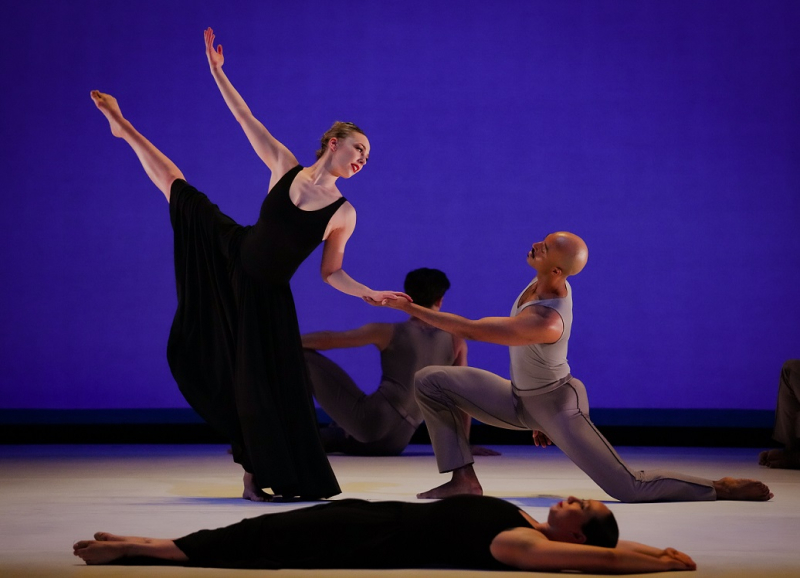
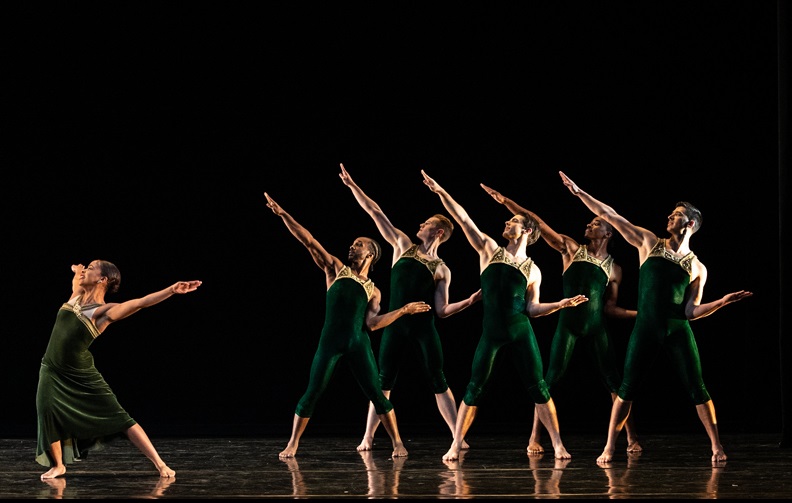
    Tuesday October 18th, 2022 – An exhilarating evening at The Joyce as choreographer Fouad Boussouf brought his handsome Company of dancers from his native Morocco to thrill us with Näss. The title is Arabic for “people”, and it’s a work where eclectic dance styles converge effortlessly, combining restless, relentless activity with a feeling of ancient masculine rituals. For an hour, the seven men danced to rhythmically wide-ranging music, with perfect timing and synchronization; though clearly carefully structured and well-rehearsed, Näss feels wonderfully and thoroughly spontaneous.

    The dancers in Näss are Sami Blond, Mathieu Bord, Maxime Cozic, Yanice Djae, Loïc Elice, Justin Gouin, and Maëlo Hernandez.

    Nass_Charlotte_Audureau4

    Above, photo by Charlotte Audureau

    The curtain rises on a totally darkened stage. Very slowly, the back panel is illuminated with the dancers ranged in a line-up, backs to the audience. Mingled with the sounds of street noise noise and garbled talking, angel voices are heard. Drumming strikes up and the men begin moving in place, stepping to the beat.

    Suddenly, they burst into movement, stomping and romping about the space. Unison moves, with gestures of supplication, are mingled with free-flowing solo passages and duets which vary in feeling from humorous to wildness. 

    Boussouf Nass_Charlotte_Audureau2

    Above photo by Charlotte Audureau

    The lighting takes on a golden hue; the men’s jackets are slowly shed and each is wearing a loose t-shirt of autumnal solour. Going into breakdance mode, they give us headstands and intricate floor motifs executed with panache. The t-shirts become part of the dance: they are pulled up to cover the men’s faces and expose their abs as the light fades a bit and a sense of calm is briefly felt. The dancers start talking.

    Then a quintet of men step-dancing in unison circle the stage in almost military precision whilst two others dance a pas de deux in their own world. The brotherhood then tramp about the space with heavy-footed accents. The lighting shifts, providing shadowplay.

    The dancers move upstage, clustered with backs to us; they become silhouettes as the music fades and the lighting is slowly extinguished until they vanish into the darkness from whence they came.   

    As silence fell there was a very brief lull before a house-wide standing ovation commenced. People screamed and shrieked as the dancers came out for their bows. Great atmosphere! Then the seven men began striking poses along the edge of the stage, and they commenced an impromptu encore, clapping their hands to set the pace. The audience picked up the rhythm, clapping and stomping. It was like being at a revival meeting where everyone has been saved. I felt high as a kite.

    Boussouf fouadcharlotteaudureau

    Photo: Charlotte Audureau

    ~ Oberon

  • Lydia Johnson Dance @ NYLA ~ 2022

    Ensemble

    Above: the dancers of Lydia Johnson Dance in Lydia Johnson’s For Eli; photo by Dmitry Beryzokin

    Saturday September 17th, 2022 – Lydia Johnson Dance performing at New York Live Arts in Chelsea. Having missed two New York seasons due to the ongoing pandemic, the Company took the opportunity to appear at NYLA in September rather than wait until their accustomed performance time in the Spring: the dancers of course were anxious to perform again, and guest artist Craig Hall of New York City Ballet fame was available…so: on with the show!

    Unfortunately, I was feeling sick and could not attend any of the performances; but I did see all four of the works being presented when I dropped in at a studio rehearsal the previous week. My friend Dmitry Beryozkin photographed the dress rehearsal, and sent me some images. So this is not a review, really, but simply a photo gallery. 

    The Company were not idle during the long shutdown: they spent a week at Kaatsbaan, where Lydia worked on new creations, they danced (outdoors) in Connecticut, and they gave a warmly-received studio showing at the Martha Graham Studio Westbeth on May 2022, previewing two new works: Glide Path and For Eli. 

    Glide Path opened tonight’s show: it’s set to music by the contemporary quartet ETHEL. Here are some of Dmitry’s evocative photos from the dress rehearsal of Glide Path:

    DSCF6446

    Minseon Kim and Chazz Fenner-McBride

    DSCF6455

    The ensemble of women

    DSCF6507

    Katie Lohiya

    DSCF6627

    Chazz Fenner-McBride and Willy Laury

    DSCF6648

    Emily Sarkissian, Minseon Kim, Amanda Egan, Michael Miles, and Michelle L. Siegel

    DSCF6709

    Willy Laury and Laura DiOrio

    DSCF6721

    Laura DiOrio and Willy Laury

    Next came For Eli, a poignant work commissioned by New Jersey-based artist Laura Lou Levy, in memory of her pianist-son Eli, who loved playing the music of Frédéric Chopin.

    A series of Dmitry Beryozkin’s images from For Eli:

    DSCF6840

    Michelle L. Siegel, Michael Miles, Minseon Kim, Amanda Egan, and Laura DiOrio

    DSCF6939

    Willy Laury, Michael Miles, Katie Lohiya, Amanda Egan, and Minseon Kim

    DSCF6944

    Katie Lohiya

    DSCF7056

    Amanda Egan, Emily Sarkissian

    DSCF7123

    Chazz Fenner-McBride and Willy Laury

    Following the interval, Craig Hall joined Lydia’s dancers for Time…and again, a new work set to Oscar Peterson recordings of jazz standards. This marked a return engagement for the former New York City Ballet star, whose performances in Lydia’s haunting Night and Dreams in 2019, dancing with Laura DiOrio, were deeply moving. Craig and Laura have reunited for Time…and again, joined by three other couples for a series of duets.

    Photos from this jazz work by Dmitry Beryozkin:

    DSCF7304

    Katie Lohiya and McGee Maddox

    DSCF7305

    Katie & McGee, Amanda & Laura, Minseon & Michael

    DSCF7377

    Laura DiOrio & Craig Hall

    DSCF7425

    Craig Hall & Laura DiOrio

    DSCF7456

    Laura & Craig

    DSCF7549

    Amanda Egan & Chazz Fenner-McBride

    DSCF7617

    Katie Lohiya & McGee Maddox

    DSCF7760

    Crag Hall

    DSCF7920

    Katie Lohiya with Michael, Laura, and Willy

    The music of Henryk Górecki makes a colossal impression in the evening’s concluding work, Undercurrent. Here are some of Dmitry Beryozkin’s pictures from this ballet:

    DSCF8146

    McGee Maddox, Chazz Fenner-McBride, and Michael Miles

    DSCF8361

    Students from Lydia’s school participated in the finale of Undercurrent

    DSCF8379

    The Company women in swirling red skirts

    DSCF8390

    The full Company onstage

    DSCF8393

    Michael Miles and Minseon Kim, center

    DSCF8434

    Michael Miles and student dancer Stella Weihrauch

    DSCF8446

    DSCF8486

    Laura DiOrio, aloft, as Undercurrent come to an end

    All photos by Dmitry Beryozkin

    ~ Oberon

  • Farewells: Amar Ramasar

    Amar

    Above: New York City Ballet principal Amar Ramasar

    Author: Oberon

    Sunday May 29th, 2022 matinee – This afternoon, we bade farewell to one of New York City Ballet‘s most popular stars: Amar Ramasar. I remember so clearly seeing the handsome young man with the engaging smile for the first time on Mr. B’s stage during the 2000-2001 season. His ascent thru the ranks came quite soon and seemed inevitable: a soloist by 2006 and a principal in 2009.

    Thru the ensuing seasons, I enjoyed seeing Amar countless times. Among the ballets in which he made a vibrant impression were Balanchine’s AGON, BRAHMS-SCHOENBERG QUARTET, FOUR TEMPERAMENTS, LIEBESLIEDER WALTZES, STRAVINSKY VIOLIN CONCERTO, SYMPHONY IN C, SYMPHONY IN THREE MOVEMENTS, UNION JACK, and WHO CARES?; Jerome Robbins’ DANCES AT A GATHERING, FANCY FREE, FOUR SEASONS, GLASS PIECES, IN THE NIGHT, and WEST SIDE STORY; Bigonzetti’s OLTREMARE, LUCE NASCOSTA, and AMARIA; Peter Martins’ CHICHESTER PSALMS and FEARFUL SYMMETRIERS; Jorma Elo’s SLICE TO SHARP; and Ratmansky’s RUSSIAN SEASONS and PICTURES AT AN EXHIBITION.

    Amar has also appeared on Broadway in CAROUSEL and WEST SIDE STORY.

    Amar discusses Ratmansky’s PICTURES AT AN EXHIBITION here.

    Here’s some photos of Amar with his renowned partners:

    Amar & becky russian seasons john ross

    With Rebecca Krohn in RUSSIAN SEASONS; photo by John Ross

    Amar starling symph in 3 moves kolnik

    With Sterling Hyltin in SYMPHONY IN THREE MOVEMENTS; photo by Paul Kolnik

    Amar tess fearful symetries kolnik

    With Teresa Reichlen in FEARFUL SYMMETRIES; photo by Paul Kolnik

    Amar tess polyphonia kolnik

    Again with Tess, in POLYPHONIA; photo by Paul Kolnik

    Amar tiler divert 15 kolnik

    With Tiler Peck in DIVERTIMENTO #15; photo by Paul Kolnik

    Tess amar  C Duggan in the night jpg

    With Teresa Reichlen in IN THE NIGHT; photo by Christopher Duggan

    AMARIA jpg

    With Maria Kowroski in Mauro Bigonzetti’s AMARIA, danced at Maria’s farewell performance

    Twirl sara amanda amar

    Above: in 2010. Amar appeared with Sara Mearns and Amanda Hankes in Kristin Sloan’s brief film, TWIRL; I was planning to post a link to the film here, but it’s no longer available. Sara was to have danced Titania in Amar’s farewell performance this afternoon, but she was out with an injury.

    I met Amar in passing several times, and once at one of Emery LeCrone’s rehearsals. He was always extremely friendly and upbeat, and always ready with an infectious laugh.

    ~~~~~~~~~~~~~~~~~~~~~~~~~~~~~~~~~~~~~~~~~~~~~~~~~~~~~~~~~~~~~~~~~~~~~~~~~~~~~~~~~~~~~~~~~~~~

    I’ve loved Mr. B’s MIDSUMMER NIGHT’S DREAM ever since I first saw it in May of 1977 with a fantastic cast headed by Karin von Aroldingen and Robert Weiss as the fairy queen and king, Patricia McBride and Helgi Tomasson in the second act pas de deux,and Jean-Pierre Frohlich (no less!) as Puck. You can see how I became spoiled rotten from my early days of ballet-going.

    Amar sterling

    For his farewell, unfortunately, Amar did not have an evening of ballets of his own choosing, but rather he was scheduled to dance the divertissement pas de deux in Act II of MIDSUMMER NIGHT’S DREAM with Sterling Hyltin (photo above by Paul Kolnik). In the days running up to the farewell matinee, there were numerous cast changes due to illness and injury; then Amar himself sustained an injury, and it was arranged that he would dance only the adagio in today’s performance; sportingly, Andrew Veyette took over the allegro sections, squiring Sterling handsomely. When Amar finally appeared, the crowd went absolutely berserk, with a roaring flood of applause that obliterated several bars of music.

    Amar looked very serious throughout the adagio, partnering Sterling with tender loving care. They won a tumultuous, extended ovation, embracing frequently as the applause rolled on. In the ballet’s grand finale, Amar finally began to smile – that dazzling smile that has won the hearts of so many ballet fans over the years. 

    The entire performance had a special glow. The orchestra, under Clothilde Otranto’s genial baton, sounded wonderful in this magical score to which Balanchine tells the tale so very clearly, without a wasted note or gesture. Unity Phelan, my first dark-haired Titania since Karin, was lovely, and Daniel Ulbricht’s Oberon was simply delightful both in his virtuosity and his acting. Harrison Ball was a spectacular Puck, his characterization tinged with just a hint of darkness. 

    As the mortals Helena and Hermia, Isabella LaFreniere and Ashley Laracey were finely-contrasted: Isabella the more lyrical and wistful, Ashley the more dramatic. Ashley’s solo, alone in the woods at night, was a masterpiece all its own. Their suitors, Aaron Sanz and Peter Walker, were lively and played their parts engagingly. Gil Bolden was a terrific Bottom, the recently-promoted Chun Wai Chan looked dashing as Titania’s Cavalier, and Alexa Maxwell was a brilliant Butterfly, having her own personal triumph. Dazzling me – and the entire House – with her vivid beauty, spacious dancing, and fabulous fouettés, Emily Kikta displayed full-fledged star-power as Hippolyta, causing the noble Preston Chamblee, as the Duke of Athens, to fall to his knees and ask her to marry him.

    With Puck drifting skyward in the ballet’s final moments, the audience burst into applause; after some bows before the curtain, Amar finally stood alone on the big stage and the audience unleashed a deafening hurricane of cheers. Amar leapt off the stage to embrace Peter Martins, then resumed his place center-stage as a procession of well-wishers came forward to greet him. How wonderful to see the gorgeous Lourdes Lopez and her husband carrying bouquets to Amar; and moments later, Gonzalo Garcia surprised Amar by bringing forth the beloved Joaquin de Luz. The ovation went on and on and on, Amar clearly moved by the outpouring of love. He pounded his heart and seemed on the verge of tears.

    Outside the stage door, a huge crowd gathered to wish Amar well. But after an hour, he still had not emerged, and people began drifting away. If he’d come out sooner, he would have been there til nightfall, signing autographs and being photographed. 

    Amar-Ramasar igor burlak

    Above: Amar Ramastar, photo by Igor Burlak

    Hail and farewell, Amar! Thank you for brightening our lives. I hope I’ll see you around town from time to time in the years ahead.

    ~ Oberon

  • György Ligeti ~ Requiem

    Snapshot ligeti

    Above: soloists Victoire Brunel and Makeda Monnet

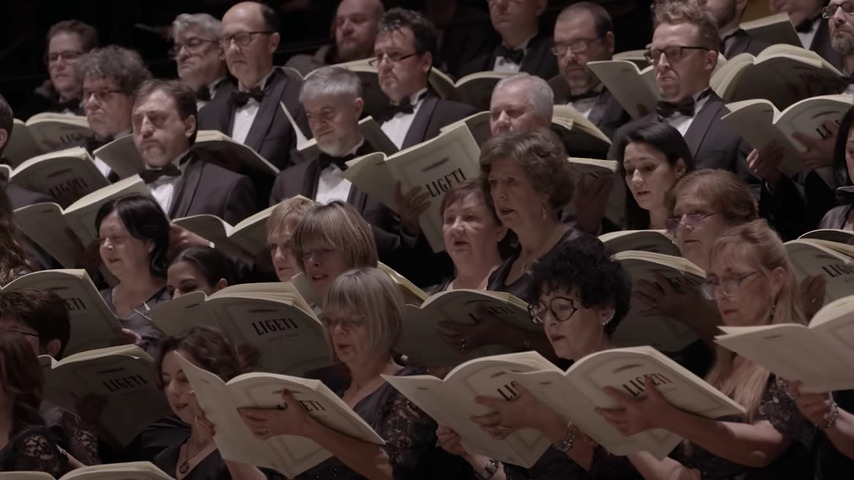
    A performance of György Ligeti’s Requiem from Paris, 2018. Watch and listen here.

    Makeda Monnet, soprano / Victoire Bunel, mezzo-soprano
    Chœur National Hongrois / Csaba Somos, Chef de chœur
    Orchestre du Conservatoire de Paris / Ensemble intercontemporain
    Matthias Pintscher, direction 

    Snapshot ligeti 2

    Above: members of the Chœur National Hongrois

    I first took an interest in the music of György Ligeti (1923-2006) after seeing Christopher Wheeldon’s 2001 masterpiece POLYPHONIA at New York City Ballet. Chris turned to the music of Ligeti again for his 2002 ballet MORPHOSES. Both these danceworks featured the beloved NYCB partnership of Wendy Whelan and Jock Soto.

  • Limón Dance Company @ The Joyce

    José+Limón+-++Photo+by++Paul+Draper

    Above: choreographer José Limón, photo by Paul Draper

    Tuesday April 19th, 2022 – The Limón Dance Company celebrating their 75th Anniversary Season with performances at The Joyce Theatre. This evening marked my third experience watching the Limón troupe: the first was in 2008, and more recently in 2019. There have been quite a few changes in the Company’s roster since my last viewing, including the departures of such entrancing dancers as Jacqueline Bulnés and Jesse Obremski. But the current ensemble is a staggeringly beautiful assemblage of forms and faces.

    Each work was prefaced by commentary from an unseen narrator…spoken by my longtime friend, actor Dion Mucciaito. These brief speeches provided us with interesting background material for the works being performed. But I wish Dion had appeared onstage to impart this information, because…he’s such a great-looking guy!

    Doris Humphrey was José Limón‘s inspiration and mentor. Watching Humphrey’s achingly gorgeous AIR FOR THE G-STRING, created in 1928, gives us a sense of the timeless resonance – and the great necessity – of dance in our lives. Bringing to mind the iconic female danced-rituals of Isadora Duncan, AIR FOR THE G-STRING shows us the value of great music as the inspirational springboard for creating danceworks that will endure.

    Limonphotochristopherjonesairforthegstring2022

    Above: from Humphrey’s AIR FOR THE G-STRING; photo by Christopher Jones

    From the curtain-rise – on the dancers in silhouette against a rose-coloured back-panel – to final pose, AIR FOR THE G-STRING held us under its spell. Five women, clad in simple gowns of varied hues and long Renaissance-style golden cloaks with trains, move slowly in processions and circling motifs. Though not in any way religious in feeling, it conveys a depth of spirituality that speaks to me poignantly.

    This evening, Frances Lorraine Samson, a petite woman with a space-filling presence, led the ensemble: Mariah Gravelin, Deepa Liegel, Jessica Sgambelluri, and Lauren Twomley…distinctive beauties all. This Humphrey work is part of that long continuum of dances of sisterhood that spans the centuries from the swans, slyphs, shades, and Wilis of classical ballet, through the more intimate Duncan, to Graham’s epic CHRONICLE, Balanchine’s SERENADE, Robbins’ ANTIQUE EPIGRAPHS, and Lydia Johnson’s CROSSINGS BY RIVER. Watching this spell-binding work tonight gave me an incredible lift of spirit – something so desperately needed in these bleak days as the world sometimes seems to be crumbling around us.

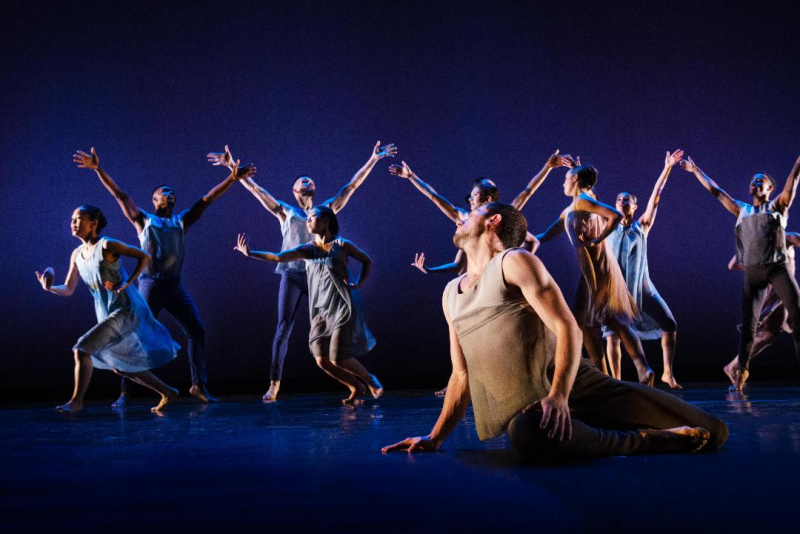
    Two Limón masterpieces were central to this evening’s program. The first of these, PSALM, dates from 1967. The choreographer drew inspiration from the French author Andre Schwarz-Bart’s semi-historical novel, “The Last of the Just,” which traces the martyrdom of the Jews through thirty-six generations of the Levy family, ending at Auschwitz.
    Limonpsalmphotobychristopherjones infrontnicholasruscica

    Above: Nicholas Ruscica in Limón’s PSALM; photo by Christopher Jones

    For PSALM, Limón was unable to obtain the music he wanted to use – Stravinsky’s “Symphony of Psalms” – so he created the work in silence. Nearing the date of the premiere, the choreographer asked composer Eugene Lester to provide a score, based on his “million counts”. Later, Limón disciple Carla Maxwell, feeling the choreography called for something grander, commissioned a score from Jon Magnussen which included a full chorus, ten instruments, and a baritone soloist; it was to the Magnussen score that I saw PSALM performed in 2019. This evening, the Lester score – more intimate and highly personal – was back in place. Lester’s score is percussion-based, features a male singer/speaker, and somehow feels right.

    Superbly lit Al Crawford, PSALM is a story of the triumph of the human spirit over death, created by Limón at a time when his own untimely death from pancreatic cancer loomed before him. The Lester score, while quite spare in contrast to the Magnussen, provides vividly contrasted rhythms which give the dancers an aural roadmap for the movement. 

    Eight dancers appear, seemingly searching for someone…or something. The whole Company then takes the stage, moving in finely-wrought patterns. In one passage, they kneel in a row, reminding me yet again of Robbins’ ANTIQUE EPIGRAPHS. Dancer Nicholas Ruscica was the central figure in tonight’s performance, commencing with a solo to the sound of a baritone voice. We hear the word “Adonai” (Hebrew for ‘God’) which put me in mind of Krzysztof Penderecki‘s monumental SEVEN GATES OF JERUSALEM; with such references, PSALM became more and more meaningful to me as it progressed.

    Mr. Ruscica’s dancing was very subtle and expressively detailed. As the comings and goings of the populace surged around him, the danseur‘s movement took on a hypnotic, other-worldly feeling. He collapses; to delicate music, the women tend to him. He then awakens and begins to dance, first on his knees, and then – gathering strength – he rises. The group swarm about him in a celebratory dance. Circling in a dazzling passage, they lift him aloft. 

    PSALM thrilled me tonight, even more than it did in 2019. To me, it seems a dance very much for our time. All of the dancers are captivating to watch, and each has a distinctive personality. Mariah Gravelin, Savannah Spratt, and Lauren Twomley had featured roles among the women, with the ladies from the opening Bach work all dancing divinely here. Terrence D. M. Diable, B. Woods, Joey Columbus, MJ Edwards, and Johnson Guo are the Company’s wonder-men, and it was great to see Robert M. (‘Buddy’) Valdez again, very tall and handsome, with eyes that dazzle. In this large-scale scale work, dancers from Limón 2 – Erin Hollaman, Nicole Miera, and Sabrina Olivieri – joined the full Company.

    José Limón created the solo CHACONNE in 1942 to the familiar music from Bach’s violin Partita #2. Onstage tonight, standing in separate pools of light, were violinist Johnny Gandelsman and guest-artist dancer Shayla-Vie Jenkins. Ms. Jenkins, a poised beauty with the gift of lyrical grace, wore trousers and a soft, loose-fitted blouse. When Mr. Gandelsman struck up the familiar Bach piece, the dancer began to move in place, her expressive arms and hands speaking to us in dance’s silent language. Later her movement becomes almost balletic, her dancing at once supple and courtly. With the violinist’s subtle nuances tempting the ear, the two made this Limón gem a sheer delight.

    Limononlyonewillrise.photochristopherjones.dancersSavannahSpratt MJEdwards BWoods(jumping)

    Above: Samantha Spratt, MJ Edwards, and B Woods in Tarpaga’s ONLY ONE WILL RISE; photo by Christopher Jones

    In line with the current quest for choreographer-based companies to find new works to provide fresh opportunities for their dancers once the founding choreographer has passed away, tonight we saw ONLY ONE WILL RISE, choreographed by Olivier Tarpaga. This work tells of the ‘dark horse’, the person who unexpectedly triumphs in the end: in this case, it was the the youthful-looking MJ Edwards, who made a very fine impression both in movement and presence, with a poetic face. The choreographer provides brief solos for the other dancers, too, as well as well-constructed ensemble passages. The work is quite dark, and the final illumination of the dancers, with Mr. Edwards having risen in their midst, was a beautiful moment.

    LimononlyonewillrisedancersJohnsonGuo  Nicholas Ruscica  Lauren Twomley

    Above: Johnson Guo, Nicholas Ruscica, and Lauren Twomley in ONLY ONE WILL RISE; photo by Christopher Jones

    What gave ONLY ONE WILL RISE its appeal was the music, composed by the choreographer and guitarist Tim Motzer, and played live onstage by Mr. Motzer, with his fellow musicians Daniel Johnson and Saidou Sangare. They were fantastic.

    It’s not easy to find danceworks that can appear on programs alongside the masterworks of some of the world’s all-time greatest choreographers without being eclipsed. The Balanchine, Graham, and Taylor companies have to work in this current situation, as does Limón. Perhaps though, it’s true that – as Miki Orihara once said – “To find the future of dance, we must look to the past.”

    ~ Oberon

  • Taylor & Keigwin @ City Center

    Rush Hour (Keigwin) John Harnage (L-R) Maria Ambrose  Lee Duveneck  Devon Louis_photo by Whitney Browne

    Above: from Larry Keigwin’s RUSH HOUR; photo by Whitney Browne – the dancers are Maria Ambrose, John Harnage, Lee Duveneck and Devon Louis

    Author: Oberon

    Wednesday March 30th, 2022 – I’ll never forget the tumultuous ovation that rocked the New York State Theatre at the end of the world premiere performance of Larry Keigwin’s RUSH HOUR by the Paul Taylor Dance Company in 2016. I’d always hoped to see this piece again, and tonight that opportunity presented itself. Rightly, the Keigwin was presented last tonight because it is hard to imagine anything coming after, aside from massive applause.

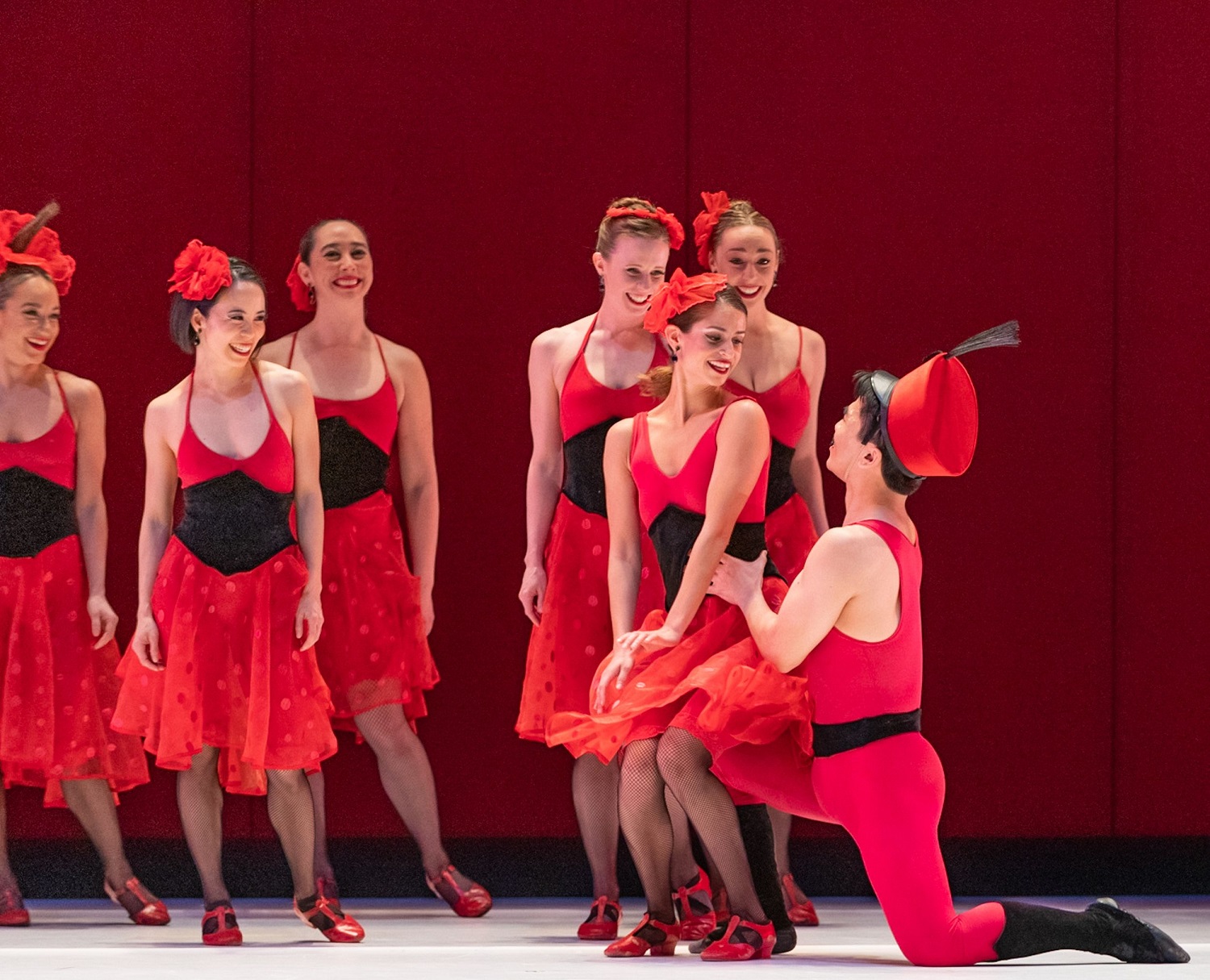
    The program opened with OFFENBACH OVERTURES, Paul Taylor’s 1995 creation that spoofs the conventions of classical ballet. The Orchestra of St. Luke’s played the well-worn tunes with spirit for this “red” dancework: red backdrop, red costumes, red red red…

    OFFENBACH OVERTURES is funny once, and this was my second viewing of it after a gap of several seasons. Tonight it seemed corny, dated,  cliché-ridden, and long…I got restless waiting for it to end. All that being said, the dancing was first-rate: it looked thoroughly and very well-rehearsed, and several of the individual dancers made a splash. Lisa Borres as an un-hinghed ballerina was amazingly loose-limbed, and her facial expressions were priceless. Jada Pearman and Michael Apuzzo duetted persuasively, and Devon Louis and Lee Duveneck excelled as the Duelists who can’t keep their rockets in their pockets, so they rush off for a quickie mid-duel. New to the Company, Austin Kelly’s handsome face and compact, sturdy physique kept drawing my gaze.  

    N2W2981Y

    Above: Austin Kelly courts Maria Ambrose in OFFENBACH OVERTURES; photo by Ron Thiele

    Far more pleasure was derived from Taylor’s AIRS, one of his masterworks. Set to the music of Handel, this dancework premiered on this very stage in 1978,  and it looks as fresh, clean, and clear as ever this evening. Kudos to the Orchestra of St. Luke’s under David LaMarche’s baton for their gracious playing of these timelessly lovely airs. As opposed to the “send-up” balleticisms of the Offenbach, AIRS is genuinely balletic. In fact, the first time I saw it, it was being danced at ABT; that was – in fact – my first experience seeing any Paul Taylor work.

    AIRS has a small cast (seven dancers) and tonight’s septet were exceptional. Four women – Madelyn Ho, Maria Ambrose, Jada Pearman, and Jessica Ferretti – and three men: Alex Clayton, John Harnage, and Devon Louis – come and go in various pairings and ensemble passages. They all looked beautiful beyond words.

    2022-Airs-Ho-Clayton-by-Whitney-Browne1 - Copy

    The beating heart of AIRS is a remarkable duet performed tonight by Madelyn Ho and Alex Clayton (above, in a Whitney Browne photo); they danced with breath-taking skill and artistry. The audience was spellbound by their poetic grace, hailing them with warm applause when their duet ended. 

    Jada Pearman and John Harnage shared a Gavotte, dancing divinely together; Maria Ambrose was lovely in a solo weaving among the three men, and Jessica Ferretti in the final movement of AIRS presented herself as an already-shining Taylor star.

    Larry Keigwin’s RUSH HOUR triumphed again tonight. While many of the dancers who created roles in this piece have since left the Company, each member of tonight’s cast stepped proudly up to bat, hitting a series of home runs.

    Danced on the stage opened to the wings, with club lighting, and  smoke hovering on the air, RUSH HOUR zooms to life on Adam Crystal’s fantastical score. Larry Keigwin’s dynamic choreography demands incredible energy from the dancers, and each of them have ample opportunity to dazzle us with their power and passion.

    RUSH HOUR is perfectly tailored to the Taylor Company; soaring on the music, the dancers leap, swirl, and rush about the space in movement that is impulsive but that always seems well-charted. Everyone danced full-tilt, and I must again mention Alex Clayton, who was having a really great night.

    ~ Oberon

  • Taylor & Keigwin @ City Center

    Rush Hour (Keigwin) John Harnage (L-R) Maria Ambrose  Lee Duveneck  Devon Louis_photo by Whitney Browne

    Above: from Larry Keigwin’s RUSH HOUR; photo by Whitney Browne – the dancers are Maria Ambrose, John Harnage, Lee Duveneck and Devon Louis

    Author: Oberon

    Wednesday March 30th, 2022 – I’ll never forget the tumultuous ovation that rocked the New York State Theatre at the end of the world premiere performance of Larry Keigwin’s RUSH HOUR by the Paul Taylor Dance Company in 2016. I’d always hoped to see this piece again, and tonight that opportunity presented itself. Rightly, the Keigwin was presented last tonight because it is hard to imagine anything coming after, aside from massive applause.

    The program opened with OFFENBACH OVERTURES, Paul Taylor’s 1995 creation that spoofs the conventions of classical ballet. The Orchestra of St. Luke’s played the well-worn tunes with spirit for this “red” dancework: red backdrop, red costumes, red red red…

    OFFENBACH OVERTURES is funny once, and this was my second viewing of it after a gap of several seasons. Tonight it seemed corny, dated,  cliché-ridden, and long…I got restless waiting for it to end. All that being said, the dancing was first-rate: it looked thoroughly and very well-rehearsed, and several of the individual dancers made a splash. Lisa Borres as an un-hinghed ballerina was amazingly loose-limbed, and her facial expressions were priceless. Jada Pearman and Michael Apuzzo duetted persuasively, and Devon Louis and Lee Duveneck excelled as the Duelists who can’t keep their rockets in their pockets, so they rush off for a quickie mid-duel. New to the Company, Austin Kelly’s handsome face and compact, sturdy physique kept drawing my gaze.  

    N2W2981Y

    Above: Austin Kelly courts Maria Ambrose in OFFENBACH OVERTURES; photo by Ron Thiele

    Far more pleasure was derived from Taylor’s AIRS, one of his masterworks. Set to the music of Handel, this dancework premiered on this very stage in 1978,  and it looks as fresh, clean, and clear as ever this evening. Kudos to the Orchestra of St. Luke’s under David LaMarche’s baton for their gracious playing of these timelessly lovely airs. As opposed to the “send-up” balleticisms of the Offenbach, AIRS is genuinely balletic. In fact, the first time I saw it, it was being danced at ABT; that was – in fact – my first experience seeing any Paul Taylor work.

    AIRS has a small cast (seven dancers) and tonight’s septet were exceptional. Four women – Madelyn Ho, Maria Ambrose, Jada Pearman, and Jessica Ferretti – and three men: Alex Clayton, John Harnage, and Devon Louis – come and go in various pairings and ensemble passages. They all looked beautiful beyond words.

    2022-Airs-Ho-Clayton-by-Whitney-Browne1 - Copy

    The beating heart of AIRS is a remarkable duet performed tonight by Madelyn Ho and Alex Clayton (above, in a Whitney Browne photo); they danced with breath-taking skill and artistry. The audience was spellbound by their poetic grace, hailing them with warm applause when their duet ended. 

    Jada Pearman and John Harnage shared a Gavotte, dancing divinely together; Maria Ambrose was lovely in a solo weaving among the three men, and Jessica Ferretti in the final movement of AIRS presented herself as an already-shining Taylor star.

    Larry Keigwin’s RUSH HOUR triumphed again tonight. While many of the dancers who created roles in this piece have since left the Company, each member of tonight’s cast stepped proudly up to bat, hitting a series of home runs.

    Danced on the stage opened to the wings, with club lighting, and  smoke hovering on the air, RUSH HOUR zooms to life on Adam Crystal’s fantastical score. Larry Keigwin’s dynamic choreography demands incredible energy from the dancers, and each of them have ample opportunity to dazzle us with their power and passion.

    RUSH HOUR is perfectly tailored to the Taylor Company; soaring on the music, the dancers leap, swirl, and rush about the space in movement that is impulsive but that always seems well-charted. Everyone danced full-tilt, and I must again mention Alex Clayton, who was having a really great night.

    ~ Oberon

  • Philharmonic Ensembes~Ewazen/Stravinsky/Dvořák

    Ewazen

    Above: composer Eric Ewazen

    Author: Oberon

    Sunday March 27th, 2022 matinee – I always enjoy the Philharmonic Ensembles series at Merkin Hall, and I was very glad to be there this afternoon for an excellent program. The players of the New York Philharmonic love playing chamber music together when time allows, and this afternoon’s lineup of artists was really impressive.

    Composer Eric Ewazen greeted us prior to the program’s opening work: his Ballade, Pastorale, and Dance for the unusual combination of flute, horn, and piano. The last time I heard an Ewazen score was in 2018, when the composer’s violin concerto was used by the great choreographer Paul Taylor for his last major work: Concertiana. Today, introducing his Ballade, Pastorale and Dance, Mr. Ewazen touched on his Ukrainian heritage, and then the performance began.

    William_wolfram

    For the Ewazen trio, the tall and distinguished pianist William Wolfram (above) was joined by the Philharmonic’s stellar flautist Mindy Kaufman, and the orchestra’s current Acting Associate Principal Horn, the radiant Leelanee Sterrett.

    The opening Ballade begins with a darkish motif from the piano, soon joined by the mellow depth of the horn and the gleaming upper range of the flute. The blend of these three voices was really delectable, making me wish other composers would write for this particular combination. From a long flute trill and spiraling piano figurations, the music turns animated, and then calms for a really gorgeous andante. Then another burst of vigor, and another contrasting slower passage before a brisk final statement.

    Rippling sounds from Mr. Wolfram keyboard introduced a lovely Pastorale theme from Ms. Sterrett’s horn, which is then harmonized by Ms. Kaufman’s flute. Here, the contrast between burnished richness of the horn with the silvery sweetness of the flute truly delighted the ear. Lovely phrases follow, one after another, and then Ms. Sterrett’s horn sings a lyrical theme over the warbling flute and the piano’s arpeggios. A feeling of hope seems to rise within us as the Ballade reaches its solemn end.

    With sparkling sounds from Ms. Kaufman’s flute, and with Mr. Wolfram’s piano sounding in the upper octaves, we are ready to Dance. Ms. Sterrett’s summoning horn draws us in to this lively and tuneful music, which gets quite grand as the work comes to its close.  Such a unique treat this music is! Other choreographers might do well to follow Paul Taylor’s lead and have a listen to Mr. Ewazen’s music.

    More music I’d never heard before – Igor Stravinsky’s Octet for Winds – came next. For this, a brilliant ensemble drawn from the ranks of the Philharmonic’s wind sections were gathered: Robert Langevin, flute; Pascual Martínez Forteza, clarinet; bassoonists Judith LeClair and Kim Laskowski; trumpeters Christopher Martin and Thomas Smith, with Colin Williams on trombone and George Curran on bass-trombone. Mr. Langevin, in his introductory remarks, told us a story about a dream Stravinsky had had in which this particular set of instruments were playing together, and he wrote this octet to try to capture what he’d heard in his dream.

    The Octet is in three movements, though there was no discernible break between the second and third. A trumpet note introduces the Sinfonia, followed by a blending of woodwind voices. The full ensemble engage in music that is wittily paced and harmonized. A brassy march springs up, with trumpet calls and chuckling bassoons. The Sinfornia comes to a sudden halt.

    The Theme and Variations, which runs directly into the Finale, starts out with plodding brass and unison woodwinds; they then switch roles. Scurrying bassoons herald a military brass band passing by, and everyone falls in. Suddenly, I hear a waltz, with Mssrs. Langevin and Martínez Forteza taking the lead. Brilliant rhythms briefly take over, then there’s a slow bassoon passage, taken up by the clarinet and the brass. The music becomes chorale-like, before the flute and clarinet have a dialogue. The bassoons, sounding jolly, are joined by the clarinet; shifting rhythms carry us to the Octet‘s finish.     

    The afternoon’s program ended with a magnificent performance of Antonín Dvořák’s beloved Piano Quintet in A-major, Op. 81, one of his most familiar and oft-played works. The musicians here were violinists Kuan Cheng Lu and Su Hyun Park, violist Rebecca Young, and cellist Ru-Pei Yeh, with Mr. Wolfram returning to the piano. Ms. Young introduced the piece, and then took up her viola to regale us in the numerous opportunities Dvořák provides for the instrument. Kuan Cheng Lu played the many magical violin melodies with Olde World sweetness, warmth, and emotion; and the composer has also been generous to the second violinist: Su Hyun Park, playing beautifully this afternoon. And the cello is prominent throughout, with Ru-Pei Yeh providing cordial tone and rhythmic finesse. At the piano, Mr. Wolfram sustained the excellent impression he made in the Ewazen, making me wish to hear him in a solo recital.

    The applause throughout the afternoon was rather subdued; the audience consisted largely of senior citizens (anyone older than me is a senior citizen!) and perhaps they lack the stamina to clap for a long time. I honed my applauding skills during the 20-minute ovations that often ensued during the last Golden Age at the opera, which ended years ago. These days, applause lasting more than five minutes is extremely rare. Well, we live in different times now: everyone’s constantly in a rush – to get to the theatre, and then to get home. As my commadre used to say, “No time for love.” 

    ~ Oberon
  • Paul Taylor Dance Company/City Center/2022

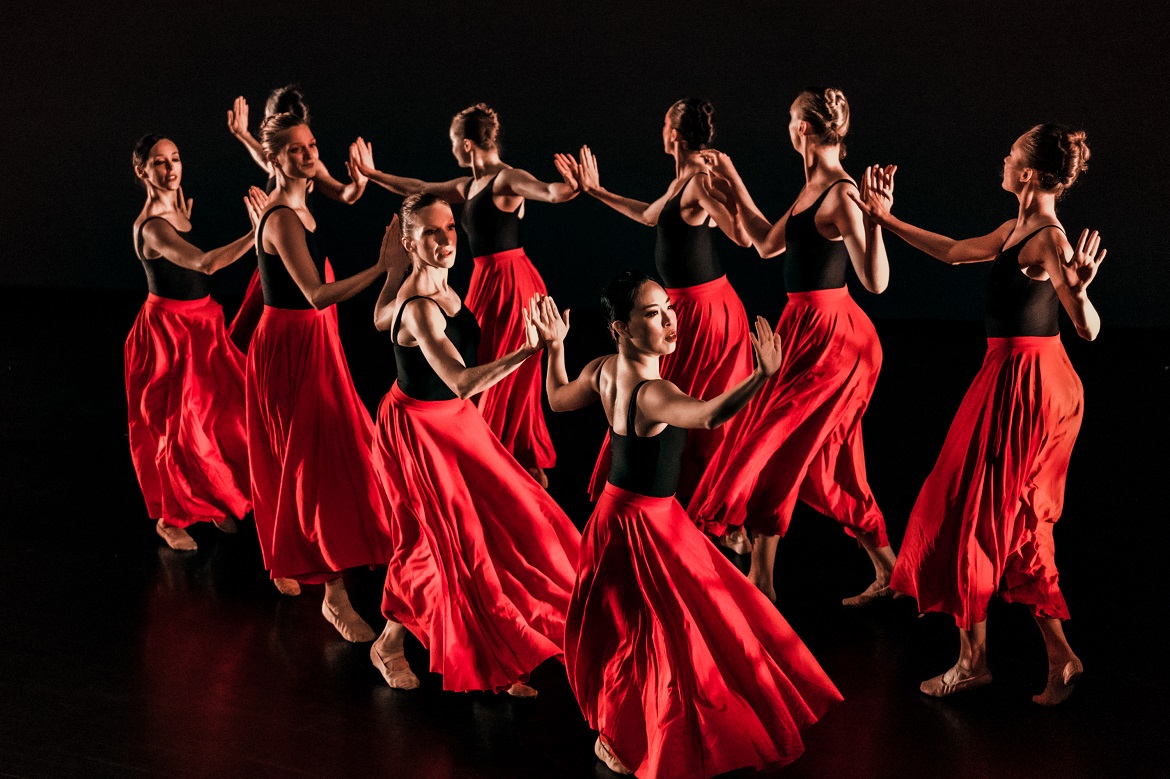
    ROSESHarnage Ho by Steven Pisano

    Above: John Harnage and Madelyn Ho in Paul Taylor’s Roses; photo by Steven Pisano 

    ~ Author: Oberon

    (Click on each image to enlarge…)

    Wednesday March 24th, 2022 – Opening night of the Paul Taylor Dance Company‘s 2022 season at City Center. Two Taylor masterworks book-ended the program, with a premiere by the Company’s recently-designated Resident Choreographer, former New York City Ballet principal ballerina Lauren Lovette, in between.

    This was my first time seeing the Company since several popular Taylor stars left, starting with Michael Trusnovec and followed by Laura Halzack, Parisa Khobdeh, Michelle Fleet, Jamie Rae Walker, Heather McGinley, James Samson, Robert Kleinendorst, and Sean Mahoney. Incoming new dancers were just getting their feet wet two years ago when the pandemic caused a prolonged pause in their progress. So, for me, tonight was a reunion and a re-discovery.

    As an ardent admirer of the music of Richard Wagner, Paul Taylor’s Roses is one of my favorites among his numerous masterworks. It moves me so deeply each time I see it…and hear it. The story of the first performance of Wagner’s Siegfried Idyll, played on the staircase at Villa Tribschen on the morning of December 25, 1870, by a small chamber orchestra, is one of my favorite tales out of musical history. It was the composer’s birthday and Christmas gift to his beloved Cosima, and marked one of the happiest days of their life together. You can read about it here.

    Roses - Jessica Ferretti  Shawn Lesniak and Company_photo by Steven Pisano

    Above: Jessica Ferretti and Shawn Lesniak in Roses; photo by Steven Pisano

    Roses opens with five couples onstage, the women in long black gowns. The pairings tonight were: Jessica Ferretti with Shawn Lesniak, Christina Lynch Markham with Jake Vincent, Raechelle Manalo with Alex Clayton, Madelyn Ho with John Harnage, and Kristin Draucker with Michael Apuzzo. Watching these beautiful creatures in a series of duets summoned many emotions in me – all of them warm and reassuring – for they are the future of the Paul Taylor Dance Company, and that future is in good hands. All these dancers radiated confidence, and their performances were suffused with poetry and light. The audience took a special liking to Ms. Ho and Mr. Harnage…understandably: they were superb. 

    As the Siegfried Idyll reaches its end, we have found a place of tranquility in an ever-darkening world; the music and dancing have nourished the spirit, and one cannot imagine that anything more beautiful and poignant could possibly follow it. But then Jada Pearman and Lee Duveneck, clad in pristine white, appear to dance one of the most entrancing of Paul Taylor’s duets. Set to a score by Heinrich Baermann which features a clarinet solo played sublimely by the Orchestra of St. Luke’s inimitable Jon Manasse, this pas de deux had a particularly hypnotic effect tonight. Mr. Duveneck towers over the petite and radiant Ms. Pearman, his partnering so protective and tender, and her dancing a vision of grace. The five couples remain seated on the floor at the rear of the stage during this duet, keeping echoes of the Siegfried Idyll in our consciousness. A genuine “Taylor ovation” greeted the dancers during their bows.

    Anticipating Ms. Lovette’s new work, I was pleased to read of her choice of music, and intrigued by the piece’s title: Pentimento. I first discovered the music of the Argentine composer Alberto Ginastera many years ago when a pianist I was dating played some of it for me on his baby grand, which took up most of the space in his little studio apartment. “Pentimento” is an Italian word meaning repentance; in the art world, it refers to a painter’s regret when a piece he is working on does not come out quite as he wanted it to; he paints over and re-uses the canvas, but with the passing of time, the original picture may bleed thru, causing a ghostly image.

    Pentimento (Lovette) - Lee Duveneck and Company_photo by Whitney Browne

    Above: Lee Duveneck and the ensemble in Lauren Lovette’s Pentimento; photo by Whitney Brown

    My expectations for the Lovette work were high, and the opening moments, with the dancers in silhouette against a glowing backdrop, boded well. Christina Lynch Markham, her hair down, has a dramatic solo passage which finds her in a state of worry and agitation; she clutches a red scarf as she dances…and finally collapses. Now the scarf will be passed from dancer to dancer, each one having a featured solo amidst the ensemble. Thus we watched the lively Lisa Borres, a tormented Jada Pearman (who emits a scream at one point), the willowly and wonderful Maria Ambrose, the pale and somewhat mysterious Lee Duveneck, and the bold and beautiful Devon Louis being put thru their paces.

    Clad in dreary costumes that might have come off the racks at Old Navy, the community perform athletic combinations, with Tayloresque gestures; they roll about on the floor, form brief alliances, strike quirky poses, and gather – with expressions of care and concern – to watch their colleagues go thru the motions. Meanwhile, the Ginastera music, not his best by far, has become sort of an after-thought. My mind started to wander; the audience, so engrossed by Roses, began to get restive.

    Pentimento was well-received, but during the intermission I could not sense the sort of buzz that usually follows a premiere. I suppose having your new work debuted between two classics by one of the great choreographers of all time would be somewhat daunting. We shall see where this collaboration goes in the future.     

    Brandenburgs - Jada Peaman and Company - photo by Ron Thiele

    Above: Jada Pearman and the Taylor men in Brandenburgs; photo by Ron Thiele

    Paul Taylor’s festive Brandenburgs, to the immortal music of Johann Sebastian Bach, made for a perfect end to the evening. Tonight, the ballet looked as fresh and vibrant as it ever has…and that music!  The magnificent Taylor dancers soar on the wings of Bach’s score; they inspire and uplift us at a time when hope and joy are in short supply.

    Brandenburgs - Madelyn Ho  John Harnage  Maria Ambrose  Jada Pearman - photo by Ron Thiele

    Above: John Harnage and Maria Ambrose in Brandenburgs with Madelyn Ho and Jada Pearman kneeling; photo by Ron Thiele

    The male ensemble – Lee Duveneck, Alex Clayton, Devon Louis, Adam Dickerson, and Jake Vincent – race about the stage in trademark Taylor patterns. Blindingly handsome and charismatic, John Harnage held the audience in the palm of his hand simply by being there. His dancing is so clear and so poetic. And later – standing stock still as he watches his three muses  (Maria Ambrose, Jada Pearman, and Madelyn Ho) dance solos to dazzle him – he looked like a young god. Mr. Harnage’s adagio pas seul, was a portrait of masculine beauty. Then Brandenburgs sweeps onward to its final pose: an uplifting celebration of music and dance, and of the human spirit.

    Danceworld luminaries among the audience included Justin Peck, Troy Schumacher, Damian Woetzel, and Edward Villella.

    All photos by the credited photographers, courtesy of Paul Taylor Dance Company. Many thanks to the Company’s wonderful press liaison de luxe, Lisa Labrado. 

    ~ Oberon
  • Farewells: Gonzalo Garcia

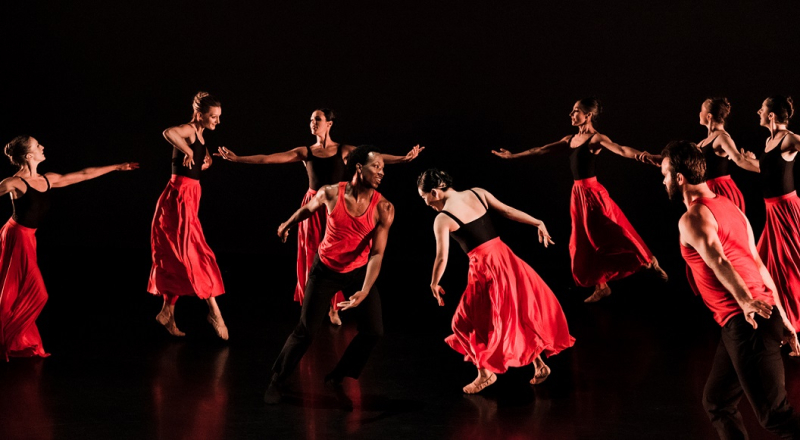
    Apollo-Garcia jpg

    Above: Gonzalo Garcia in George Balanchine’s immortal APOLLO

    Sunday February 27th, 2022 matinee – Gonzalo Garcia, one of the handsomest men ever to grace the ballet stages of the world, bade farewell to the New York City Ballet this afternoon.

    Gonzalo, a native of Zaragoza, Spain, won the Prix de Lausanne in 1995 at the age of 15 – the youngest dancer to win that coveted prize. He joined San Francisco Ballet in 1998 at the age of 18, and at 22 he became a principal dancer there.

    In 2007, Gonzalo made a great leap from one coast to the other, leaving San Francisco Ballet to join New York City Ballet. Since then, he has performed many roles for us here; among them, I have especially loved his Apollo, Oberon in MIDSUMMER NIGHT’S DREAM, the Princes in the Peter Martins productions of SWAN LAKE and SLEEPING BEAUTY, Franz in COPPELIA, the principal male roles in BALLO DELLA REGINA, RUBIES, and BAISER DE LA FEE, the leads in Jerome Robbins’ OPUS 19/THE DREAMER, DANCES AT A GATHERING, and GLASS PIECES, in Christopher Wheeldon’s POLYPHONIA and LES CARILLONS, and Alexei Ratmansky’s CONCERTO DSCH. Most recently, I greatly enjoyed seeing Gonzalo in Justin Peck’s ROTUNDA, an excerpt from which he danced at his farewell gala.

    Some wonderful Gonzalo Garcia partnerships:

    Gonzalo scheller beauty

    Above: Gonzalo Garcia and Ana Sophia Scheller in SLEEPING BEAUTY; photo by Paul Kolnik

    Gg & starling rubies kolnik

    Above: Gonzalo with Sterling Hyltin in RUBIES; photo by Paul Kolnik

    Other dances tiler baiano

    Above: Gonzalo with Tiler Peck in OTHER DANCES; photo by Erin Baiano

    Megan f gg nutcracker

    Above: with Megan Fairchild in NUTCRACKER

    When time has allowed, Gonzalo has danced as a guest artist:

    Gg guesting strs &stripes

    …in STARS AND STRIPES at a gala in Italy

    Gg guesting giselle madrid

    …and, in Madrid, as Albrecht in GISELLE

    Gg morphoses kokyat

    Closer to home: dancing with MORPHOSES in Central Park 2009; photo by Kokyat

    Gg

    And in this charming film, Gonzalo shows us how he kept in shape at home during the pandemic.

    ““““““““““““““““““““““““““““““““““““““““““““““

    For his farewell performance at New York City Ballet, Gonzalo danced works by Balanchine, Robbins, and Justin Peck. The program was book-ended by ballets set to two of Sergei Prokofiev’s most fascinating scores: the Violin Sonata #1 in D-major sets the stage for my favorite Jerome Robbins ballet – OPUS 19/THE DREAMER – and PRODIGAL SON, which marked the only time George Balanchine used Prokofiev’s music. In between, a studio film of Gonzalo working on a solo from Justin Peck’s ROTUNDA (to a fine Nico Muhly score) was followed by a live performance of part of the ballet, with its cast of twelve. Andrews Sill was on the podium, and Kurt Nikkanen’s playing of the violin concerto was simply spectacular. How meaningful it was today to hear the scores of Prokofiev, a son of the Ukraine.

    During the interval, I loved running into Carlos Lopez, Charles Askegard, David Fernandez, and Wendy Whelan.

    Gonzalo was alone onstage as the curtain rose on OPUS 19, and the audience greeted him with a warm round of applause. His opening solo as the restless dreamer was hypnotically beautiful…his arms and hands are so expressive. For this occasion, two ballerinas took turns dancing with Gonzalo: first, Sterling Hyltin skimmed about the space with an airy lightness before their sublime pas de deux. Tiler Peck then appeared for the allegro passages, and then Sterling returned; it was Tiler who ended the ballet, resting her head on Gonzalo’s palm. The corps danced splendidly, and the three principals exchanged embraces of mutual affection during the curtain calls.  

    The filmed excerpt from ROTUNDA gave us an up-close view of the danseur at work, whilst the soundtrack included accolades from Gonzalo’s colleagues and his own words about what it means to be a dancer. The live performance went brilliantly, Gonzalo sharing some moments with another of his frequent partners, the spirited Megan Fairchild. The ballet ends with Gonzalo rushing forward into a sudden blackout.

    The distinctive setting for PRODIGAL SON was created in 1929 by painter Georges Rouault. This poignant ballet tells of a young man who leaves his home and his gentle family to find excitement in the wide world; seduced, beaten, and abandoned, he returns home in shame and abject misery only to be enfolded in his father’s loving arms. Gonzalo, looking youthfully handsome, danced the role with the verve and commitment of a spirited teenager. His degradation and downfall were poignantly portrayed, and the moment where he creeps into his father’s forgiving embrace was extraordinarily moving.

    Sara Mearns was the deceitful Siren. Harrison Coll and Lars Nelson excelled in their dancing “duel”, and Mary Elizabeth Sell and Jenelle Manzi were lovely as the sisters. Arron Sanz made a profound impression as the father.
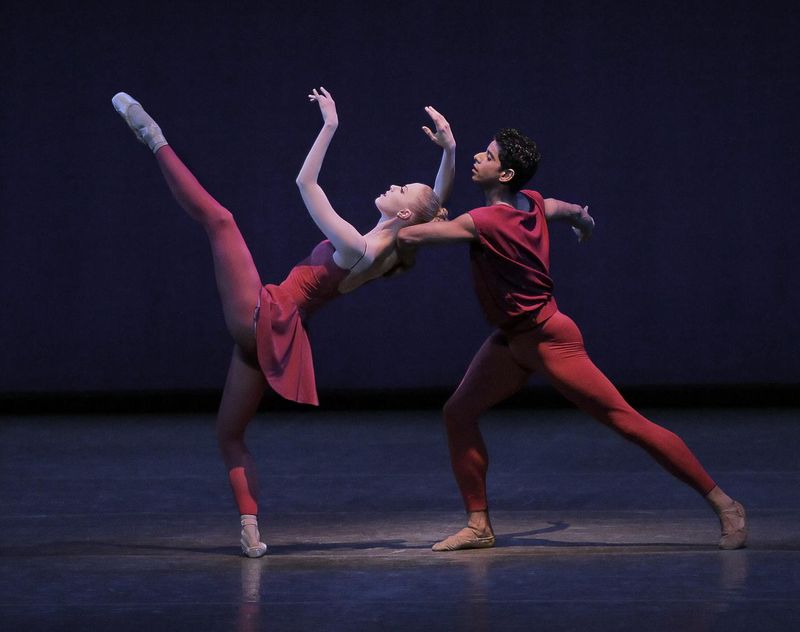
    The gala ended with a massive ovation which Gonzalo accepted with humility and great joy, pounding his heart with his hand to express his love for us. His colleagues came out one by one, presenting flowers and hugs: they all seemed genuinely sincere. Then Gonzalo’s husband came out, and they shared a kiss, to the audience’s great delight. And so, Gonzalo finished his dancing career while still at peak form, truly one of the finest – and best-loved – dancers I’ve had the pleasure to watch.

    ~ Oberon