Category: Ballet

  • YCA Presents Martin James Bartlett

    Bartlett_martin_james

    Above: British pianist Martin James Bartlett

    Author: Oberon

    Thursday February 24th, 2022 – Young Concert Artists presenting pianist Martin James Bartlett in recital at Merkin Hall.

    Opening his refreshing and unique program with two Bach transcriptions, Mr. Bartlett immediately established himself as an engaging artist with his performance of the Busoni arrangement of Ich ruf du dir, Jesu Christ, BWV 639, wherein an air of mystery was created and the sustained to spellbinding effect. This was followed by Dame Myra Hess’s arrangement of Jesu, Joy of Man’s Desiring in which the lyrical flow of the music was enhanced by Mr. Bartlett’s mastery of dynamics.

    The lively animation of Rameau’s Suite in A-Minor, RCT 5/VII. Gavotte et six doubles, was played as a gallant invitation to the dance, with virtuosic spirit in the changing dance rhythms, and a grand finish. 

    Haydn’s Sonata No. 31 in A-flat Major; HOB. XVI:46 began life as a divertimento. Mr. Bartlett’s marvelous agility and sense of fun made the opening Allegro moderato a delight. The Adagio, commencing with a left-handed opening passage, is quite gentle, with some elegant little trills etched in. In the concluding Presto, Mr. Bartlett dazzled us with his virtuosity, whilst introducing sly subtleties along the way. By this point, the engaging young pianist had the audience in the palm of his hand.

    Following the interval, Franz Liszt’s solo piano arrangement of the Liebestod from Wagner’s TRISTAN UND ISOLDE was a wonderful treat, starved as I am for live performances of the music of the Master of Bayreuth. Mr. Bartlett played with great passion, and also great tenderness; again, his dynamic range put a personal mark on this sublime music.

    Contemporary British composer Julian Anderson wrote She Hears to honor the memory of Imogen Holst. Ms. Holst was the daughter of Gustav Holst, and was a composer herself as well as an educator and writer; she was known for her uncanny gift for hearing music on a transcendental level. The Anderson work, and Mr. Bartlett’s playing of it, had a fascinating sense of introspection that seemed to captivate the audience.

    Three Rachmaninoff gems came next. The first two were transcriptions by Earl Wild: both the melodious flow of Where Beauty Dwells and the rhapsodic qualities of the Vocalise, Op. 34, No.14, displayed Mr. Bartlett’s true affinity for the music of the Russian composer. The third Rachmaninoff work, Polka de W.R. was jaunty, and spiced with wry hesitations: music that played to the young pianist’s sense of humor…and his brilliant technique.

    My ballet-loving companion and I were so pleased to hear Ravel’s La Valse as the concert’s closing work, our thoughts drifting back to the many performances of Balanchine’s haunting ballet of the same title that we have witnessed. From its rumbling start, and thru the moods of mystery and drama in which Ravel’s score abounds, we were drawn deeper and deeper into the music. By the final madness, Mr. Bartlett seemed possessed, his fingers sweeping the keyboard with fiery passion to summon the vision of dancing on the edge of a volcano.

    The audience had clearly taken this personable and vastly talented young pianist to their hearts, and he responded to our avid applause with a silken rendition of Gershwin’s Embraceable You.

    ~ Oberon

  • L-E-V @ The Joyce

    L-e-v

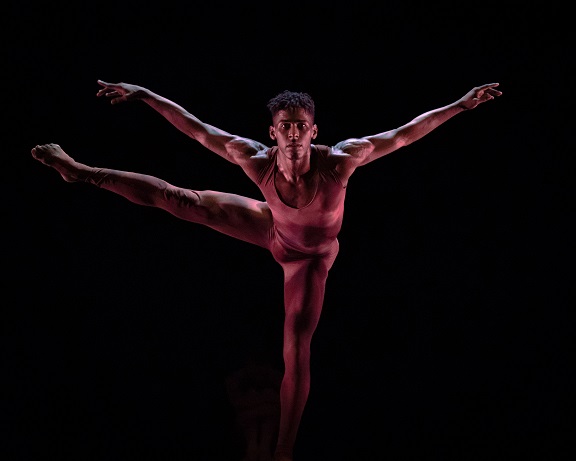
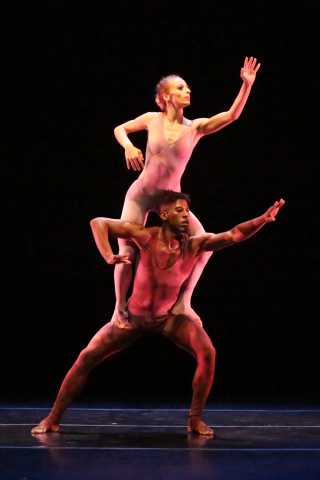
    Tuesday February 22nd, 2022 – The Brutal Journey of the Heart, the final installment of a trilogy on love by choreographer Sharon Eyal, opened this evening at The Joyce, performed by L-E-V. With a score by Ori Lichtik, costumes by Dior creative director Maria Grazia Chiuri, and superb lighting by Alon Cohen, this dancework  explores the ways we heal from wounds of the heart. As an oft-wounded romantic living in an unromantic world, I have had much experience with these healing processes. And – I am  sorry to have to admit – I have also thoughtlessly inflicted such wounds on people who deserved better. And so, I expected The Brutal Journey of the Heart to speak to me with poignant clarity; what it ended up doing was make me want to go out dancing.

    At curtain rise, a solitary woman on the dramatically lit stage begins to move to a fascinating beat. She is soon joined by her five colleagues who show off witty ways of walking, and pausing to pose. The movement is inventive and everything feels wonderfully fresh and vivid. As one alluring song melds into another, the urge to dance is increasingly difficult to suppress. After about fifteen minutes, though, one begins to wonder what comes next: a change of lighting? Maybe a pas de deux, something slow and heart-achy?

    But, no: the dancers simply draw into a cluster, swaying and writhing in place while their arms and hands weave stylized gestures. Then they spread out again and repeat passages from earlier in the piece. Meanwhile, the music is pretty much relentless, and a feeling of ‘too much of a good thing’ starts to creep in. A male duet and a female solo are briefly eye-catching, but the ensemble keeps giving us recycled moves; it begins to feel like we’re in the purgatory of lost love.

    Maybe this is the brutal thing about the journey of the heart: it never really ends, and there’s no redemption to be found. The dancers continue on to a false ending, and though it seems that the woman who opened the performance alone onstage has now found some kind of peace, we don’t really know how, beyond the notion that dance is wonderfully therapeutic, especially to this music.

    Despite a sense of aimlessness at times, the evening was very much worthwhile for the excellence of the dancing, the atmospheric lighting, and most of all for the score.

    The dancers – Clyde Emmanuel Archer, Keren Lurie Pardes, Darren Devaney, Guido Dutilh, Dana Pajarillaga, and Edit Domoszlai – were hailed at the end with a whooping standing ovation, which they truly deserved.

    ~ Oberon

  • Vengerov/Trpčeski @ Carnegie Hall

    CH11152281_Medium_res_comp

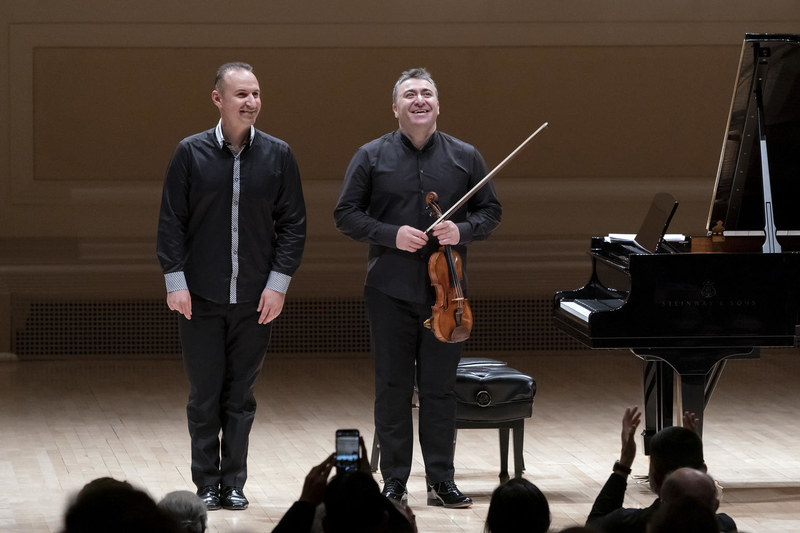
    Above: violinist Maxim Vengerov and pianist Simon Trpčeski onstage at Carnegie Hall; photo by Jennifer Taylor, courtesy of Carnegie Hall

    Thursday January 20th, 2022 – My first concert at the Stern Auditorium at Carnegie Hall since March of 2020. I was very happy to bring my friend DK to see one of his favorite artists, Maxim Vengerov, in recital. The Macedonian pianist Simon Trpčeski was at the Steinway for a wonderful program.

    The audience gave the musicians a hearty welcome as they walked out onto the stage. People are simply aching to hear great music played live again after the the long months of uncertainty. And so the opening Mozart seemed like a transfusion of peace and hope, though still tinged with darkness.

    CH11152497_Medium_res_comp

    Above: Maxim Vengerov, photo by Jennifer Taylor

    Mozart’s Violin Sonata in E-Minor, K. 304 was composed in 1778; this is the only one of Mozart’s violin sonatas written in a minor key; its underlying wistfulness might be connected to the fact that the composer’s mother had passed away while he was working on it.

    Departing from the norm, this sonata is in only two movements. The Allegro takes its character from the poignant opening theme, played in unison by violin and piano. The piano brings forth a second, more animated theme, though the mood remains restrained. A lovely dovetailing of dynamics marked the Vengerov/Trpčeski partnership’s playing, the violinist’s repeated insistent notes met by the pianist’s wonderful subtleties. 

    Mozart marks the second movement Tempo di Minuetto, but it has a forlorn quality not usually heard in a minuet. Solo piano introduces the grave yet graceful opening melody, and soon the two instruments take turns with it, their voices entwining. A major-key interlude gives us an unexpected ray of light, with sublimely soft playing from Mr. Trpčeski. The minor mode resumes, the melody flowing on to a rather sudden stop.

    CH11152391_Medium_res_comp

    Photo by Jennifer Taylor

    In direct contrast to the Mozart, Mssrs. Vengerov and Trpčeski next offered the Prokofiev Violin Sonata No.1. Prokofiev is one of my A-list composers, and this sonata encapsulates everything I love about his works: the rough-edged drama, the heartfelt lyricism, the chiaroscuro dynamics, and the subtle wit of his music always fascinates me.

    Following the four-movement structure (slow-fast-slow-fast) of the Baroque church sonatas, Prokofiev opens this sonata with a somber passage from the piano. The violin joins, edgy and buzzy, and then the two instruments blend in a unison lament. The piano’s dolorous notes draw the violin into a yearning, dramatic passage. Then the violin skitters softly on high as the pianist intones soft chords; it sounds “like the wind in a graveyard” as Prokofiev told David Oistrakh, who played the sonata’s premiere performance.

    The second movement, Allegro brusco, begins vigorously, lapses into a songful state, then turns fast and furious. Things subside briefly, but accents soon propel the piano forward again as the violin makes agitated remarks. Calming to lyricism, the music then gets grand – with a soaring melody leading to a wild finish.

    In the third movement, Andante, the Vengerov/Trpčeski transported us with their spectacular playing. An opening passage of piano filigree is taken up by the violin. A gorgeous violin melody is heard, whilst the piano sustains a magical atmosphere. This ethereal music puts us in a blissful state, with Mr. Vengerov finishing his reverie with a miraculously sustained pianissimo trill. Heavenly!

    Brilliant playing from both artists drove the sonata’s concluding Allegrissimo forward in spectacular fashion. A melodious interlude lets us again savour the warmth and serenity of Prokofian lyricism, and then some biting staccati dazzle us yet again. Another whiff of the “wind in a graveyard” motif leads on to work’s quiet closing. 

    CH11152496_Medium_res_comp

    Photo by Jennifer Taylor

    Following the interval, César Franck’s ever-popular Violin Sonata was given a thrilling performance by the Vengerov/Trpčeski duo. This sonata was inspired by the marriage of the great violinist Eugène Ysaÿe to Louise Bourdeau in 1886.  Franck’s initial idea for the sonata was to commence with a a slow and reflective opening movement, but Ysaÿe persuaded him that it worked best at a quicker tempo, so Franck marked it Allegretto, ben moderato. This movement juxtaposes rather than develops two themes, the first given almost exclusively to the violin, the second to the piano. These themes, particularly the violin’s, will return in the following movements. From note one, I fell under the spell of this music, which seemed so fresh and vivid as performed tonight. Mr. Trpčeski’s playing was positively rhapsodic, whilst Mr. Vengerov poured so much passion into the thrilling melodies the composer has given him.  

    The agitated, dramatic second movement casts its own spell, with the players again displaying their intriguing dynamic range and their peerless legato. The music is at once propulsive and poetic. Then comes the pensive Recitativo-Fantasia, wherein Mr. Vengerov’s rapturous playing in the high range is heard over the piano’s gently rolling misterioso figurations.

    The familiar and beloved themes reappear in the sonata’s final movement, which builds to a glorious finish. The inevitable reaction of the audience to the playing of Mssrs. Vengerov and Trpčeski was a fervent ovation, richly deserved. 

    Ravel’s Tzigane was a late addition to the program. Familiar to me mainly from the ballet that George Balanchine created for his muse, Suzanne Farrell, to this music, it’s a Vengerov specialty: he played it here at his February 2020 concert, just days before the pandemic shut everything down. 

    In July 1922, Maurice Ravel met the young Hungarian violinist, Jelly d’Aranyi, who was the grand-niece of famed 19th-century violinist Joseph Joachim. The composer was intrigued when he heard the violinist playing gypsy melodies at a party. Inspired, he fashioned a gypsy rhapsody, working on it over a period of two years. Ravel completed it just a few days before the premiere: on April 26, 1924, in London, Mlle. d’Aranyi and pianist Henri Gil-Marchex gave the premiere of Tzigane.

    Tzigane is a legendary showpiece, and tonight the amazing dexterity of the violinist (later joined by the pianist) kept the audience on the proverbial edge of their seats. After a giant “pre-cadenza”, the music starts to dance, by turns high and shimmering, then wildly earthy.

    CH11152444_Medium_res_comp

    At the concert’s end, Trpčeski and Vengerov were greeted with a lively ovation. They returned for three encores: two delicious Fritz Kreisler treats, and then Gabriel Fauré’s sublime Après un rêve, which was sublimely played. Bravo, gentlemen!  Bravissimo!!

    All photos by Jennifer Taylor, courtesy of Carnegie Hall.

    ~ Oberon

  • Rolando Villazón’s Papageno @ The Met

    Villazon papageno

    Above: Rolando Villazón rehearsing the role of  Papageno; a Met Opera photo

    Saturday December 18th, 2021 – Though I would like to have seen The Met’s Julie Taymor MAGIC FLUTE again, financial constraints decided me to get score desks for all but a couple of Met performances this season. One of the main draws for FLUTE this time around was to hear Rolando Villazón essaying the role of Papageno. When Villazón’s career as a primo tenore faltered a few years back, he shifted into different repertory. But I believe his taking on Papageno might be a first step towards joining the ranks of baritones

    In the event, though he was HUGELY cheered at his solo bow, Villazón’s Papageno didn’t really work in vocal terms. His voice is no longer very attractive, being a bit dry and lacking in resonance. Much of the time he semi-spoke his musical lines, whilst the actual spoken passages, charmingly accented, were not always understandable. He made bird noises from time to time; his rooster crow was hilarious. It struck me that Placido Domingo in his 80s has more voice at his disposal than Villazón, who is not yet 50.

    The remainder of the cast has its pluses and minuses. Outstanding were Matthew Polenzani’s beautifully turned phrases, exquisite piano notes, and clear diction as Tamino, and the rich and rolling sound of basso of Morris Robinson, whose diction was also superb, as Sarastro. Patrick Carfizzi’s Speaker, Rodell Rosel as Monostatos, and Ashley Emerson’s Papagena were excellent, making much of their roles. Daryl Freedman’s Third Lady and Adam Lau’s Second Guard stood out. 

    Kathryn Lewek dazzled with the Queen of Night’s first aria, climaxing with a sustained high-F; later, in her Vengeance aria, Ms. Lewek’s singing was not quite as impressive as she has been in previous seasons. Hera Hyesang Park’s attractive lyric timbre acquired an edgy quality when she put too much pressure on the tone higher up. Felicia Moore has impressed me on YouTube, but today as the First Lady she sang well but not memorably, though the voice blossomed more as the afternoon went on. Sarah Larsen was fine as the 2nd Lady, Matthew Burns and Mark Schowalter spoke clearly as the Priests, and Richard Trey Smagur was a forthright 1st Guard. The Three Spirits were under-powered and pitchy; I hope when The Met gets a new ZAUBERFLOETE, the music of these Three Spirits will once again be sung by petite women, of the same ilk as Suzanne Adams, Christine Weidinger, Frederica von Stade, Helen Vanni, and Joann Grillo, all of whom were Spirits at The Met over the years.

    Jane Glover’s conducting was well-nigh perfect, and the orchestra played well; Chelsea Knox’s flute solos fell gracefully on the ear.

    An annoying child in the Family Circle whined and muttered often throughout the opera, and the sound of moving sets around behind the drop curtain during “O Isis and Osiris” spoiled that beautiful passage. But…all’s well as ends well. As the Three Spirits remind Papageno – and us: “You have a life, so live it while you can!”

    Saturday December 18th, 2021 matinee
    THE MAGIC FLUTE}
    Wolfgang Amadeus Mozart

    Pamina.......................................Hera Hyesang Park
    Tamino.......................................Matthew Polenzani
    Queen of the Night...........................Kathryn Lewek
    Sarastro.....................................Morris Robinson
    Papageno.....................................Rolando Villazón
    Papagena.....................................Ashley Emerson
    Monostatos...................................Rodell Rosel
    Speaker......................................Patrick Carfizzi
    First Lady...................................Felicia Moore
    Second Lady..................................Sarah Larsen
    Third Lady...................................Daryl Freedman
    Genie........................................Julian Knopf
    Genie........................................Julian Fertel
    Genie........................................N. Casey Schopflocher
    Priest.......................................Ashraf Sewailam Priest.......................................Mark Schowalter
    Guard........................................Richard Trey Smagur
    Guard........................................Adam Lau
    Slave........................................Stephen Paynter
    Slave........................................Kurt Phinney
    Slave........................................Craig Montgomery
    Solo Dancer.......................................Maria Phegan

    Flute Solo...................................Chelsea Knox

    Conductor....................................Jane Glover

    ~ Oberon 

  • CMS ~ Music From Four Countries

    Nick yura

    Above: cellist Nicholas Canellakis and violist Yura Lee

    Sunday November 21st, 2021 – This evening at Alice Tully Hall, Chamber Music Society of Lincoln Center gave us a wonderfully satisfying program of music by composers from Russia, Germany, Hungary, and France. The works were all composed between 1849 and 1890.

    A very high level of playing is maintained by the Society, making it almost impossible to single out certain concerts as being of particular merit; but tonight was surely one of the most impressive and enjoyable programs have experienced since I started going to CMS concerts regularly a few seasons back.

    The program opened with the Andante Cantabile from Tchaikovsky’s String Quartet No. 1, performed in a 1888 arrangement for solo cello and strings. “Cantabile” is an Italian word meaning “singable” or “song-like”, and that’s exactly how cellist Nick Canellakis performed it: as if singing an operatic cavatina.

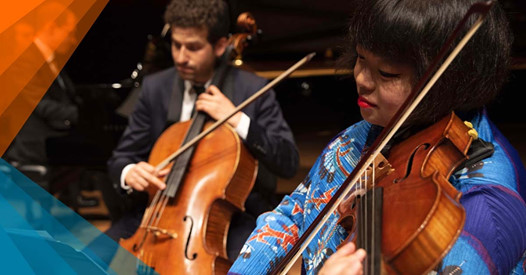
    From the work’s tranquil start, Nick gave us impeccable playing: warm of tone and alive with dynamic subtlety. Seated next to him, the Society’s co-Artistic Director David Finckel threaded a lovely line to compliment his cellist-colleague. Mr. Finckel and violist Misha Amory offered a gentle plucking accompaniment as Nick’s cello continued to sing a melody with a vaguely Asian feeling. Violinists Cho-liang Lin and Alexi Kenney gave silken textures to the music. The work ends on a sweetly blended pianissimo.  Mr. Finckel urged Nick Canellakis to stand first; then the other players refused to rise, leaving Nick with a solo bow, much to the delight of the crowd.

    Lin

    Above: Cho-liang Lin

    Johannes Brahms’ Quintet in G-major for Two Violins, Two Violas, and Cello, Op. 111, was written in 1890, at the start of the last decade of the composer’s life. It provides a veritable feast for the ear to listeners who – like me – love the sound of stringed instruments. Mssrs. Lin, Kenney, Amory, and Canellakis were joined by that delectable violist, Yura Lee.  Ms. Lee, who always delights with her choice of footwear, tonight wore white pumps; her one-shoulder black frock showed off some beautiful tattoos.

    The opening movement, marked Allegro non troppo, ma con brio (“…fast, but not too fast, but with a lively feeling…”) gets off to a joyous start, the violas begin duetting in a passage taken up by the violins. The music is so melodious and congenial, with Cho-liang Lin’s poignant violin theme standing out. The music turns mysterious; then Yura Lee’s passionate playing leads back to a reprise of the earlier pairings of violins and violas. Meanwhile, Mr. Canellakis’s cello is giving everything a velvety cushion. The entire movement kept me entranced: simply fantastic playing from everyone. 

    The ensuing Adagio, in D-minor, has a feeling of melancholy as Yura Lee leads off with a familiar melody. Soon the music had me so engrossed that the rest of the world seemed to vanish: they were playing this music sublimely, and playing it just for me. Yura’s ‘cadenza’ near the end was hypnotically beautiful. 

    Mr. Lin’s violin sets the third movement, Allegretto, in motion. This is essentially a scherzo, and the melodies flow merrily on. Inspired by Hungarian folk dances, the quintet’s finale is marked  Vivace ma non troppo presto (“…lively, but not too fast…”). Yura Lee’s viola is aglow, and Mr. Lin relishes his opportunities to spin more silk with his subtle playing. Suddenly the pace doubles, and the players break into an exultant dance. The crowd went wild: the only possible reaction to this kind of playing.     

    Inon

    Pianist Inon Barnatan (above) kept the audience under a spell with his magical playing of Franz Liszt’s “Funérailles” from the Harmonies poétiques et religieuses, written in 1849. The pianist, who in 2016 gave us a mesmerizing performance of Ravel’s Gaspard de la Nuit in this very hall, was spell-binding again this evening.

    This piece, which my companion Monica Wellington soon recognized as the music to which the late Liam Scarlett’s 2014 ballet for New York City Ballet, Funérailles, is set. I did not see that pas de deux, costumed by Alexander McQueen, but hearing the music tonight, it’s hard to image a dancework set to it: the music seems to wander thru many mood swings, but Mr. Barnatan’s playing made it cohesive.

    The piece opens with gloomy funeral chimes in the slow register. A plodding rhythm reminds us of mourners in a cortège; this stops, and a somber fanfare-like passage is heard. The sense of doom lessens, and then a nostalgic melody is heard, which gets rhapsodic. Animated figurations for the left hand give rise to militaristic passages, followed by a great rise in passion, Full stop. A soft, sad tune is played, whilst low-register rumblings are heard. The music ends suddenly. All this was splendidly played by Mr. Barnatan.
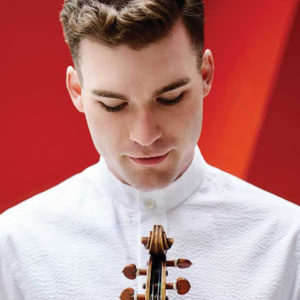
    Alexi-Kenney

    Above: Alexi Kenney

    The concert concluded with Gabriel Fauré’s Quartet No. 2 in G-minor for Piano, Violin, Viola, and Cello, Op. 45. The piece premiered on January 22nd, 1887, at the Société Nationale de Musique; it is dedicated to Hans von Bülow, the pianist and conductor who was the first husband of Cosima Liszt who later married Richard Wagner.
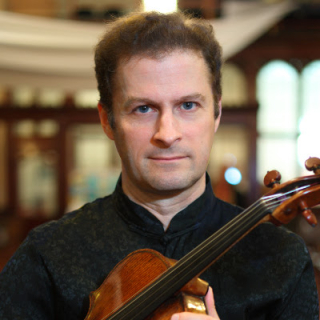
    Amory

    Above: Misha Amory

    Inon Barnatan returned to the Steinway for this evening’s de luxe rendering of the Fauré; he was joined by violinist Alexi Kenney and violist Misha Amory, both displaying exceptional beauty of tone, whilst Nick Canellakis rounded off his stellar evening with still more phenomenal playing.

    The opening Allegro molto moderato commences dramatically, and with passion. The restless piano supports unison strings; the violin, and then the viola, have solo melodies, exquisitely played. Mr. Barnatan continues to work his magic with the music, whilst the strings bring us gorgeous blends, with Mr. Kenney’s upper register truly affecting. Nick Canellakis keeps the cello line prominent without being over-bearing.   The opening restive piano and unison strings return, moving to a sublime finish.

    The Scherzo: Allegro molto contains lively string pizzicati heard over the piano’s dazzling agitato; though the music is tinged with a strange sense of worry, there is a forward impetus. Marvelous flourishes from the keyboard lead to a sudden stop.

    In the Adagio non troppo, in which the composer drew on childhood memories of the sound of church bells, provides lyrical passages for each instrument. There is much subtlety and also much passion in their playing. A curious little interlude develops into a feeling of yearning. This quietens, as piano and viola converse; then the violin takes over. Cello and piano, soon joined by the higher strings, bring us a dreamy ending.

    The Finale : Allegro molto has a vibrant start; again Mr. Kenney’s heavenly high-range lures the ear. The music gets bouncy, and then quite grand, as the quartet sails on thru shifting moods. The audience expressed their delight in the music – and with the the playing of it – with a joyous ovation, calling the artists back for a second bow. I felt elated as I headed out into the chilly evening air. 

    ~ Oberon

  • Christopher Williams ~ NARCISSUS @ NYLA

    Narcissus jpg

    Above: from NARCISSUS; photo by Andrew Jordan

    Saturday October 30th, 2021 matinee – At New York Live Arts this afternoon with Roberto Villanueva for a performance of Christopher Williams’ NARCISSUS. It was a purely delightful hour, wherein the music, choreography, lighting, costumes, and the beautiful cast of dancers all combined to create a dreamworld at once quirky, erotic, and poignant.

    NARCISSUS is set to Nikolai Tcherepnin’s score “Narcisse et Echo” which was composed in 1911 for Michel Fokine’s ballet of the same title, produced by Serge de Diaghilev for the Ballets Russes. In Mr. Williams re-imagining of the ballet, he takes a fresh look at the timeless tale of Nacissus, a young man very much taken with his own beauty. The enticing production features costume and set designs by Andrew Jordan and lighting by Joe Levasseur.

    In a brief prologue, in which bouche fermée voices are heard, a group of Boeotians are silhouetted against the breaking dawn. We then meet the Oreads: a brotherhood of mountain nymphs with Spock-like ears. Dancers Casey Hess, Jack Blackmon, Alexander Olivieri, Michael Parmelee, and Logan Pedon cavort, their heavenly, nearly nude bodies adorned with fantastical red penises. For all the intimacy of their partnering, they paradoxically seem chaste. The music underscores the ecstatic feeling of these youthful males, savoring their delight in nature and in each others company. Throughout this provocative scene – and indeed, throughout the entire ballet – the choreography in superbly musical.

    The music shifts with the arrival of Echo, who has both a penis and female breasts; Mac Twining plays the part handsomely. Echo is a lonely creature, and is rejected by the Oreads who hiss at him like animals. Now the Boeotians return: hetero and same sex couples of varying ages are danced by Janet Charleston, Alan Good, Ching-I Chang, Shayla-Vie Jenkins, Justin Lynch, and Jake Montanaro. They are joined by a trio of Bacchantes (Christiana Axelsen, Breckyn Drescher, and Caitlin Scranton), dressed in flame-coloured gowns, their faces painted white, their dark hair almost Medusa-like. Their dance is a highlight of the ballet. Now the music becomes tumultuous, the dancing joyous.

    The Oreads re-appear, and we are only too happy to see them again; and finally we meet Narcissus himself – in the magnetic person of New York City Ballet principal dancer Taylor Stanley. Clad in a short blue tunic, his solo depicts the character’s self-love.

    For Narcissus has fallen in love with his own reflection: a reflection danced by Cemiyon Barber in a yellow tunic. Their duet of mutual admiration is danced in-sync; meanwhile, their shadows follow them on the wall. 

    Echo returns; smitten with Narcissus, his dance is a visual lament. As the music veers from powerful to eerie, he sustains a balance as if teetering on the verge. Mr. Twining excelled here. Now Narcissus and his double return; the music gets big as they fill the space with swirling leaps and mirror-image passages. They embrace, sink to the ground, their bodies communing whilst the forlorn Echo watches them in despair. Narcisssus expires; reaching under his dead idol’s tunic, Echo brings forth a yellow narcissus as darkness falls.

    The dancers were enthusiastically applauded; though I thought solo bows for Mssrs. Stanley, Barber, and Twining were in order, they were not forthcoming. The choreographer was warmly greeted by dancers and audience alike. 

    One of the many reasons I wanted to see this production was the presence in the cast of my friend Justin Lynch. Justin has danced for Amanda Selwyn, Lydia Johnson, and Nai-Ni Chen, and in 2014 he appeared in the Metropolitan Opera’s controversial production of DEATH OF KLINGHOFFER. In 2010, he participated in Kokyat’s photoshoot at the Secret Theater. Justn’s such a handsome fellow: it was great to see him again.

    ~ Oberon

  • Graham @ The Joyce ~ 2021 – Program B

    MGDC_Jacob_MSherwood-02

    Above: Jacob Larsen of the Martha Graham Dance Company in Sir Robert Cohan’s solo Jacob; photo by Melissa Sherwood

    Wednesday October 27th, 2021 – The Martha Graham Dance Company is presenting two programs at The Joyce in these final days of October, 2021. I happened to see Program B before seeing Program A.

    During the long months of the pandemic, I found myself seriously missing the Graham dancers. Whenever I was down in The Village, I would walk by the Company’s home at 55 Bethune Street on the off-chance of seeing some of them, even though I knew full well that some of them had left the City. I did run into Lorenzo Pagano once, and that truly made my day. Otherwise, my only encounter with any of these fascinating people during the shutdown was via the Company’s webcasts of Immediate Tragedy in June 2020 and the three-part GrahamFest95 in May 2021.

    This evening, my ‘reunion’ with the Graham Company was simply spectacular. It’s a company of stars, and they all shone tonight to dazzling effect.  

    Leslie steps hibbard nash jpg

    Above: Leslie Andrea Williams in Steps in the Street; photo © Hibbard Nash Photography 

    The excellent program opened with the powerful Steps in the Street, the second movement of Martha Graham’s epic all-female anti-Facist dancework Chronicle. Set to a vibrant, martial score by  Wallingford Riegger, Chronicle premiered at the Guild Theater here in New York City in December of 1936. In her introductory remarks, the Graham Company’s artistic director Janet Eilber called the work “…a dance of determination and resilience.”

    Led by the ever-luminous Leslie Andrea Williams, the women back rather hesitantly onto the stage one by one in silence. As the music commences, the choreography becomes complex (both in steps and gestures); it’s extremely demanding, calling for deep dedication and boundless energy. The Graham women were simply magnificent; their individual beauty and power radiated at every moment. These are women I have admired so much in recent years: So Young An, Laurel Dally Smith, Natasha M. Diamond Walker, Marzia Memoli, Anne O’Donnell, Anne Souder, and Xin Ying…watching them flash across the stage in intricate combinations – or simply walking with tremendous dignity and strength – was an exhilarating experience. New to the Company are Devin Loh and Kate Reyes. At the center of it all, the arresting presence of Ms. Williams glowed like a beacon of feminine strength and grace. 

    MGDC_Jacob_MSherwood-06

    Above: Jacob Larsen, photo by Melissa Sherwood

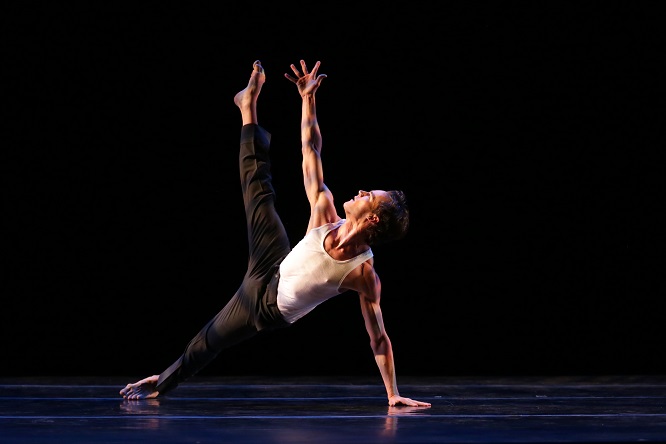
    Sir Robert Cohan‘s solo Jacob takes its name from dancer Jacob Larsen; Sir Robert, who passed away in January of this year at the age of 95, created the work on the dancer remotely during the period of pandemic isolation. Set to Nils Frahm’s Hammers, the dance opens with pulsating music as the dancer, clad in dark trousers and a wife-beater tee-shirt, does a run-about the finely-lit space, pausing from time to time in a pose with arms outstretched.

    Mr. Larsen’s dancing filled the space with the choreographer’s finely-cratfted movement, his face handsome and expressive. Thrice he collapsed to his knees and then magically executed back-somersaults. Combining energy and artistry expertly, the danseur gave a compelling performance. During the solo’s final moments, danced in silence in the fading light, one could sense the audience’s pent up admiration building; and when the lights came up, Jacob was greeted with a great wave of applause and bravos, so richly deserved. “A star is born!”, I scrawled in my program.  

    Natasha lloyd

    Above: Natasha M. Diamond-Walker and Lloyd Mayor in Untitled (Souvenir); photo by Melissa Sherwood

    I was very pleased to see Pam Tanowitz’s Untitled (Souvenir) again. I saw it twice during its premiere performance run in 2019 and had different (but all positive) feelings about it at each viewing. Caroline Shaw’s score was again a key element to my enjoyment of the piece: with elements of Americana, British Baroque, and an echo of hymn “The Lord Is Our Great Shepherd” all brilliantly woven together by the composer. The Graham dancers all looked fabulous in their costumes by Ryan Lobo and Ramon Martin of TOME.

    This time around, Untitled (Souvenir) summoned up for me images of an English garden party sometime in the early days of the 20th century, when Art Deco was all the rage in Europe. Anne O’Donnell and Marzia Memoli are onstage for the work’s silent opening; Marzia unfolds into a beautiful arabesque and then the dancing starts: witty, but very much tongue-in-cheek. Other dancers now arrive: Lloyd Mayor, striking in lounging pajamas; the tall beauty Natasha Diamond-Walker; Lloyd Knight hopping on; the distinctive (and glamorously gowned) Xin Ying; Jacob Larsen (looking fresh after his brilliant solo performance); and Laurel Dalley Smith, who I always love to watch.

    Everyone strikes poses, frequently ignoring the other guests. I was particularly taken with Natasha Diamond-Walker’s ‘character’: her spotlit, silent solo displayed the many mood shifts of a woman at once alluring and insecure. At one point, she even hid behind a piece of scenery…which is something I would do at a party.

    There are duets, fleeting suggestions of romance, a trio of men in the cross-currents of mutual interests. In all, the work is a delight. And again, I must praise Caroline Shaw’s wonderful score, with cunningly accented motifs and a lambent cello solo. Iconic Graham moves and gestures pop up, getting a fresh take in Ms. Tanowitz’s choreography.

    MGDC_Treading_MSherwood-13

    Above: Marzia Memoli and Lloyd Kinght in Treading; photo by Melissa Sherwood

    Following the interval, Elisa Monte’s duet work, Treading, was stunningly danced by Lloyd Knight and Marzia Memoli. These two gorgeous creatures gave their all in a steamy, intimate pairing which demands great strength and control…and perfect timing. In their sleek body tights, Marzia and Lloyd generated a hothouse atmosphere, holding the audience in rapt attentiveness as their bodies folded and snaked thru the slow partnering motifs.

    MGDC_Treading_BrianPollock-05

    Lloyd (above, in a Brian Pollock photo) was mesmerizing to behold right from his opening solo…

    MGDC_Treading_MSherwood-03

    …and Marzia created incredible shapes (Melissa Sherwood’s photo above), and her lush back-bend was a stunning moment. For me, Marzia’s was another ‘star is born’ performance tonight, and the audience seemed in full agreement. 

    MGDC_Treading_MSherwood-09

    Above: Marzia and Lloyd in Treading; photo by Melissa Sherwood  

    Treading drew a huge response from the audience, and Ms. Monte joined the dancers onstage for a bow. Roses and champagne to Marzia and Lloyd for their breathtaking performance!

    Anne o lloyd diversion

    Above: Anne O’Donnell and Lloyd Mayor in Diversion of Angels; photo by Luis Luque

    Diversion of Angels had its premiere at Connecticut College in August of 1948. This ballet is set to a wonderful romantic score by Norman Dello Joio; in it, three couples dance duets reflecting on different aspects of love. A Couple in Red embodies passionate love; a Couple in White, mature love; and a Couple in Yellow, the joys of young, flirtatious love.

    Diversion is one of the Graham ballets that places extraordinary demands on all the dancers in the cast. So Young An, Devin Loh, Kate Reyes, and Anne Souder formed a lovely ensemble, their dancing filled with commitment, beauty, and energy. At one point, they are seated on the floor, gazing ardently into the eyes of their cavaliers: a very romantic moment in this ultra-romantic ballet. A newcomer to Graham, Richard Villaverde, made his mark with his handsome presence and deft dancing.

    The three couples were splendid, each in their own way. Leslie Andrea Williams, a vision in White, danced like a goddess, and her partner, Alessio Crognale, was equally impressive. Together, they expressed the couple’s deep sense of quiet ecstasy, secure in their mutual love.

    Anne O’Donnell looks fetching in Red, and she had the perfect partner in Lloyd Mayor. Their dancing, both individually and in duet passages, was vibrant and wonderfully true to the music. At one point, while Lloyd was elsewhere, Anne seems to be tempting Alessio; that’s the thing about passionate lovers: their passion can get directed in a different direction at the drop of a hat.

    Laurel Dalley Smith was like a ray of sunshine in Yellow; Jacob Larsen completed his stellar evening as Laurel’s cavalier. Their choreography includes some daredevil catches and lifts: Laurel flew like a golden bird into Jacob’s arms and was swiftly swept aloft. Brilliant! I just loved watching them, and I must say that Laurel’s performance had the same ‘star-is-born’ feeling as Jacob’s and Marzia’s…the third in a single evening.

    And what an evening it was…it stands as one of the great dance performances I have witnessed in the last quarter-century. Although tinged with regret for two ‘missing persons’ – who I hope are both well along on the road to recovery – the evening was made memorable by the unstinting generosity and mind-boggling talent of these unique and extraordinary dancers.

    ~ Oberon

  • ABT GISELLE: Brandt ~ Cornejo ~ Petersen

    Herman-Cornejo (3)

    Thursday October 21st, 2021 – After watching some clips of Ana Sophia Scheller in a recent production of GISELLE at Cagliari, Italy, I suddenly felt a great desire to see this immortal ballet live again. But…where? I’ve been so out of touch during the pandemic; but then I remembered that ABT were about to begin a season at the New York State Theater; might they be giving giving GISELLE? I went to their website and…voilà! There is was: a whole week of GISELLEs to choose from. Fortune smiles on me yet again. I quickly chose this evening’s performance, drawn by the presence in the cast of Herman Cornejo (photo) as Albrecht. The ticket was ordered, and soon enough I was cozy in my 3rd Ring AA seat and experiencing this ballet which carries so much personal meaning for me.

    The audience, who have been starved for live performances of ballet for a year and a half, were wonderfully attentive and wildly enthusiastic. The orchestra, under David LaMarche’s astute leadership, played the Adam score superbly; we often take the pit bands of our two ballet companies for granted, but both ensembles are loaded with excellent musicians, and tonight the ABT orchestra played this incomparable score very handsomely indeed.

    In the first act, dancers whose characters do not re-appear after the intermission made such fine impressions that I was wishing there were curtain calls in order to show appreciation for their performances. This was especially true of the inimitable Susan Jones, whose Berthe is so touching; her mime is incredibly clear and telling. Isadora Loyola, a vision all in red, was a striking Bathilde. A tall couple were cast in the Peasant Pas de deux: the dancing of Betsy McBride and Jose Sebastian gave the duet a spacious feel. Ms. McBride’s deft footwork and Mr. Sebastian’s cushioned landings made a very pleasing effect.

    Andrei Ishchuk was a tall, impressive Hilarion. As I have often said in the past, Hilarion is the ‘good guy’ in GISELLE; had Giselle trusted her longtime beau and seen thru Albrecht’s deception, her story would have had a different outcome. But…love in blind (and don’t I know it…) At any rate, Mr. Ishchuk did a fine job with the part, including some flashy air turns in his tormented dance in Act II.

    ABT’s first-class Wilis seemed unfazed by the somewhat more limited space of the State Theater stage (as opposed to that of The Met). Their dancing made the ballet’s second act everything it should be. Fangqi Li and April Giangeruso were lovely in their solo passages as Moyna and Zulma respectively.

    Petersen_Stephanie Jade Young

    Stephanie Petersen (above, in a Jade Young portrait) danced Myrthe beautifully. During this week of ABT GISELLEs, this role has gone thru several casting changes: originally, Catherine Hurlin was listed for this evening, and but then Christine Shevchenko’s name appeared in her place. Stephanie was to have danced Zulma tonight, but a pre-curtain announcement made her the Queen of the Wilis instead.

    It was simply delightful to see Ms. Petersen again; in the past I’ve seen her dancing not only with ABT but also for Joshua Beamish, Emery LeCrone, and Claudia Schreier…and every time she’s dazzled me. Stephanie, who returns to the stage from the COVID layoff – and from becoming a mother – is on fabulous form, and her Myrthe was regally danced (both her solos simply entrancing) and dramatically more nuanced than some I have seen: for beneath the icy, commanding presence of the Wili queen, one can still see the young woman that Myrthe once was. Brava, Stephanie!  

    I saw Herman Cornejo as Albrecht in 2008 – I believe it was his ABT role debut – opposite Xiomara Reyes. Read about that wonderful performance here. Tonight, this now 40-year-old prince of the dance triumphed yet again; his Albrecht is boyish of face and figure, compelling in his dancing, and incredibly expressive and impressive in his partnering. The bravura passages were tossed off with élan, and his affectionate dancing with Ms. Brandt in Act I gave way to his soul-searing partnering in Act II, where his remorse was so movingly expressed. The two overhead lifts were simply astounding, and his final parting from the girl who not only forgave him but saved him from his fate, was heart-rending. In a beautiful gesture, during the final bows, Herman sent Ms. Brandt out alone, only joining her after she had faced the avalanche of cheers that descended on her.   

    Skylar-Brandt

    Skylar Brandt’s Giselle can stand proudly in my pantheon of great interpreters of this iconic role. The long-limbed ballerina danced her heart out all evening, and she had the audience with her every step of the way. Her first solo – Giselle emerging from her home on her last day on this Earth – had an immediacy and freshness that was most appealing. Her modesty and shyness with Albrecht were lovingly portrayed, and her big solo – just before her world comes crashing down – featured triumphant yet delicate hops on pointe and remarkably swift turns. The mad scene was that of a dazed girl, unable to comprehend what has befallen her. 

    Dazzling is the only word for Skylar’s dancing of Giselle’s whirlwind turns after being summoned from her grave by Myrthe…this passage evoked a massive round of cheers and applause from the audience. Then, from the very start of her pas de deux with Albrecht, the ballerina cast a poetic spell over me. She and Herman were so moving, the danseur gorgeously partnering her with infinite tenderness. Giselle’s steadfastness, protecting her beloved from the Wili’s curse, was poignantly expressed. I felt a knot in my throat as their inevitable parting loomed. And then the weeping started. 

    ~ Oberon

  • 55 Years Ago ~ TURANDOT @ The Met

    Birgit (2)

    On September 26th, 1966, I attended my first opera at the New Met: a performance of Puccini’s TURANDOT starring Birgit Nilsson (above), Franco Corelli, Teresa Stratas, and Bonaldo Giaiotti, conducted by Zubin Mehta.

    A few weeks earlier, I had taken an over-night bus from Syracuse to New York City and joined the ticket line for the opening performances at the new opera house. Read about my adventure here.

    I had seen the Met’s Cecil Beaton production of TURANDOT previously, at the Old Met. It was considered quite lavish at the time, but within a couple decades it was wildly surpassed by the elaborate Franco Zeffirelli setting. Birgit and Franco seemed thoroughly at home on the Beaton sets, their by-play with Turandot’s all-day-lollipop/sceptre, was always commented upon by the fans, who gauged the scene to determine how well the two superstars were getting along on a given evening.

    Turandot-1 jpg
    My diary entry was very brief:

    “First performance at the New Met!! Magnificent evening, dazzling experience. After hearing Nilsson and Corelli on Saturday matinee broadcasts, it was electrifying to hear them “live“; you can’t really tell how immense and thrilling their voices are over the radio. They are great stars!

    Teresa Stratas was excellent as Liu, and my favorite bass, Bonaldo Giaiotti, sounded great. Uppman, Nagy, Anthony, and Goodloe – all singers know from the broadcasts – were fine. Mehta tremendous!

    There was huge applause after each act, and many curtain calls. The Corelli fans in particular went crazy.”

    After the ovation finally ceased, I went to the stage door where a huge crowd of people were waiting to meet the artists. They finally came out, and they were all very nice to me. Stratas signed my program, and Birgit signed the photo at the top of this article.

    Franco

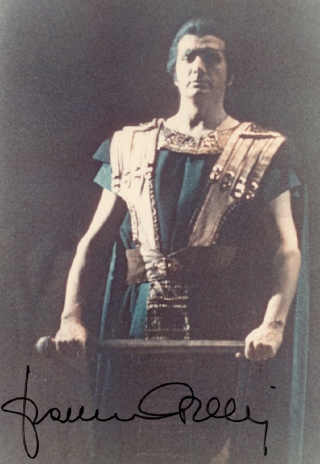
    I’d brought along the above photo of Corelli as Radames for him to sign; he seemed genuinely pleased to see this picture of himself, and the fans gathered around him were gasping, “Where did you find this???” 

    I remember that I slept very little after getting back to The Henry Hudson Hotel that night. I was really wound-up: I had been going to the opera sporadically since 1962 – plus catching every Met broadcast and building a big record collection. But this evening marked the start of the next phase of my operatic career. I began coming down to New York for long weekends, taking the over-night bus from Syracuse and staying at the Henry Hudson; opera was everything to me.

    After spending the Summer of 1974 on Cape Cod with TJ, working for a small ballet company, I moved into his dorm room at Sarah Lawrence College where we spent the 1974-1975 academic year together. We went down to the opera (and also the ballet!) constantly, taking a bus from Bronxville to the A train station at 207th Street – the station that’s now a block from where I live.

    After he graduated, we moved to Hartford; we were poor, and trips to New York City were few and far between. But after we broke up, I got my own place place and began spending frequent long weekends in NYC again. My promiscuous phase – can 25 years be considered a phase? – started at this point.

    Finally, in 1998, shortly before my 50th birthday, I moved to New York City. This had been my plan since that first solo excursion to join the Met ticket line in late Summer 1966, but Hartford had been a 22-year detour.

    Now, at last, I was home.

    ~ Oberon

  • Vaganova Ballet Academy ~ Dance of the Hours

    Snapshot vaganova 2

    Dancers from the Vaganova Ballet Academy perform the Dance of the Hours from Amilcare Ponchielli’s opera LA GIOCONDA.

    Watch and listen here.