Category: Ballet

  • 40 Years Ago: Fracci & Nureyev ~ GISELLE

    Fracci nureyev gisells

    ~~~~ Note: I had originally planned to post this article on the 40th anniversary of my one-and-only experience of seeing the great Carla Fracci onstage. Today, news of the ballerina’s death has come, so I am posting it now, two months shy of the actual anniversary:

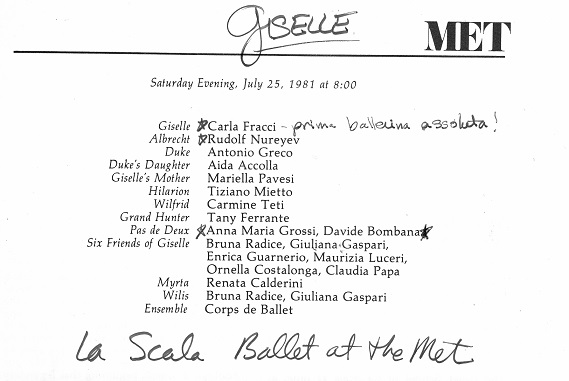
    Giselle La Scala-1jpg
    On this date, forty years ago, one of the greatest ballet performances of my experience took place at the Metropolitan Opera House, where the La Scala Ballet presented their production of GISELLE with Carla Fracci and Rudolf Nureyev in the leading roles.

    I had spent the afternoon at The Met watching GISELLE with an alternate cast; it was a very pleasing performance. But the undeniable star-power of Fracci and Nureyev made the evening performance unforgettable. 

    This is my diary entry from that magnificent evening:

    GISELLE – 2nd performance – with the assumption on the leading roles by two great dancers, the whole production took on a new dimension. The corps seemed better than at the matinee, though again Renata Calderini was not a particularly impressive Myrthe. There was a very exciting Peasant Pas de Deux with Anna Maria Grossi and a very exciting Davide Bombana; they roused the audience to cheers.

    But it was in the superstars that the real excitement lay – and that is why they are superstars! Rudolf Nureyev’s Albrecht was marred slightly by some rather ‘modern’ acting details in Act I where he failed to maintain the aura of manners of the period. But otherwise he caught the essence of the caddish young nobleman in Act I and the grief-stricken man of Act II. He danced with thorough command despite passing traces of stiffness. He interpolates many intricate steps and then challenges himself to bring them off…and always succeeds. His Albrecht was a full portrait – and it was very exciting.

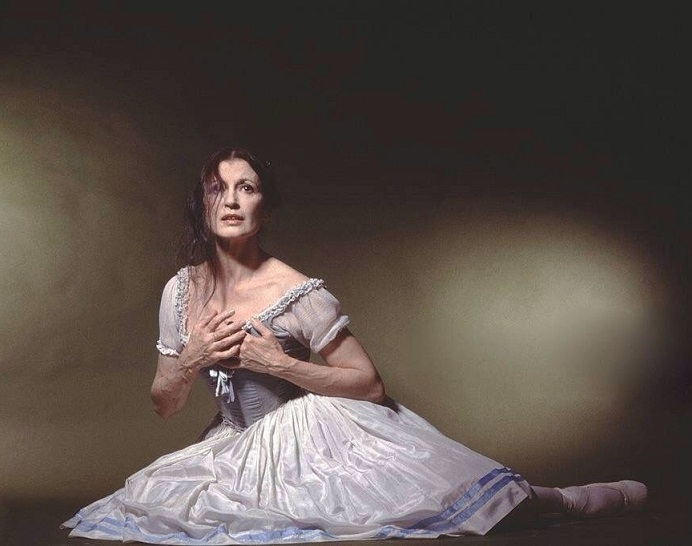
    Fracci giselle

    In Carla Fracci we had the perfect Giselle. All this talk about her ‘capturing the essence of the Romantic Era’ felt absolutely true. There were times in Act II when she really did seem like the ghostly vision of another time and place. Here is a dancer so technically assured, so light yet bearing underneath great strength of character and of will. She was so charming in Act I, and her Mad Scene was brilliantly done – not overplayed but seemingly so real. Act II truly produced the feeling of seeing a phantom. Floating in her gossamer long tutu, Fracci evoked the remote mystique of the spectre. Her dancing throughout was so poised, with the steps always presented as a natural expression of the character and stemming completely from the drama. One had the feeling of really seeing Giselle herself, not of a ballerina portraying her.

    At the end there was a tremendous ovation (20 minutes) with roses being thrown and Fracci & Nureyev called out repeatedly…bravi!!!”  

    ~ Overon   

  • 40 Years Ago: Fracci & Nureyev ~ GISELLE

    Fracci nureyev gisells

    ~~~~ Note: I had originally planned to post this article on the 40th anniversary of my one-and-only experience of seeing the great Carla Fracci onstage. Today, news of the ballerina’s death has come, so I am posting it now, two months shy of the actual anniversary:

    Giselle La Scala-1jpg
    On this date, forty years ago, one of the greatest ballet performances of my experience took place at the Metropolitan Opera House, where the La Scala Ballet presented their production of GISELLE with Carla Fracci and Rudolf Nureyev in the leading roles.

    I had spent the afternoon at The Met watching GISELLE with an alternate cast; it was a very pleasing performance. But the undeniable star-power of Fracci and Nureyev made the evening performance unforgettable. 

    This is my diary entry from that magnificent evening:

    GISELLE – 2nd performance – with the assumption on the leading roles by two great dancers, the whole production took on a new dimension. The corps seemed better than at the matinee, though again Renata Calderini was not a particularly impressive Myrthe. There was a very exciting Peasant Pas de Deux with Anna Maria Grossi and a very exciting Davide Bombana; they roused the audience to cheers.

    But it was in the superstars that the real excitement lay – and that is why they are superstars! Rudolf Nureyev’s Albrecht was marred slightly by some rather ‘modern’ acting details in Act I where he failed to maintain the aura of manners of the period. But otherwise he caught the essence of the caddish young nobleman in Act I and the grief-stricken man of Act II. He danced with thorough command despite passing traces of stiffness. He interpolates many intricate steps and then challenges himself to bring them off…and always succeeds. His Albrecht was a full portrait – and it was very exciting.

    Fracci giselle

    In Carla Fracci we had the perfect Giselle. All this talk about her ‘capturing the essence of the Romantic Era’ felt absolutely true. There were times in Act II when she really did seem like the ghostly vision of another time and place. Here is a dancer so technically assured, so light yet bearing underneath great strength of character and of will. She was so charming in Act I, and her Mad Scene was brilliantly done – not overplayed but seemingly so real. Act II truly produced the feeling of seeing a phantom. Floating in her gossamer long tutu, Fracci evoked the remote mystique of the spectre. Her dancing throughout was so poised, with the steps always presented as a natural expression of the character and stemming completely from the drama. One had the feeling of really seeing Giselle herself, not of a ballerina portraying her.

    At the end there was a tremendous ovation (20 minutes) with roses being thrown and Fracci & Nureyev called out repeatedly…bravi!!!”  

    ~ Overon   

  • Lar Lubovitch ~ Three Dances

    NYCDP_LarLubovitch_0036

    Above: Lar Lubovitch, photo courtesy of NYC Dance Project

    Friday May 21st, 2021 – This evening I tuned in to watch a program of highlights from three works by the eminent choreographer Lar Lubovitch. The program featured excerpts from two familiar ballets by Lar, and part of his unique The Planets.

    Watching the film’s duet from Concerto Six TwentyTwo brought back memories of a beautiful afternoon photographer Nir Arieli and I spent watching a rehearsal of this piece in 2013.  Mr. Lubovitch was coaching dancers Attila Joey Csiki and Clifton Brown, and the atmosphere in the studio was palpable. 
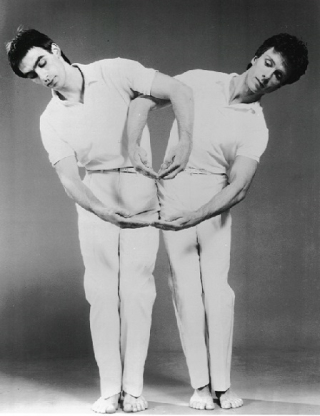
    Concerto Six Twenty-Two #1 - photo by Jack Mitchell - Lafortune  Michalek jpg

    Above: Sylvain LaFortune and Rick Michalek in Concerto Six TwentyTwo; photo by Jack Mitchell

    The duet is set to the adagio from Mozart’s Clarinet Concerto, a beloved work that reached a wide audience when it was used in the film Out of Africa. Sylvain LaFortune and Rick Michalek are the dancers in today’s program; clad all in white, they could be lovers, or brothers, or best of friends. The Lubovitch choreography is a poignant response to the music; the men are mutually supportive and tender without becoming cloying. There are solo passages, danced whilst the other man observes. It’s a study in masculine grace.

    Othello, which premiered in 1997, was a joint creation for the Lubovitch Company, American Ballet Theatre, and San Francisco Ballet. In 2018, as part of the celebration of the Lubovitch Company’s 50th anniversary, Fabrice Calmels and his colleagues from The Joffrey performed excerpts from Othello at The Joyce. 

    Screenshot_2021-05-21 Highlights from the Broadcast Premieres of Three Televised Works by Lar Lubovitch

    Above: Desmond Richardson and Yuan Yuan Tan in Othello

    This evening we saw the ballet’s third act from a filmed performance by San Francisco Ballet. The stellar cast featured Desmond Richardson as Othello, Yuan Yuan Tan as Desdemona, Parrish Maynard as Iago, Katita Waldo as Emilia, and a very young Gonzalo Garcia as Cassio.

    As Act III opens, Cassio is in chains, being interrogated by Othello with Iago a menacing observer. Despite his pleas of innocence, the young captain doesn’t stand a chance; he is taken away. Now Desdemona comes on the scene: Yuan Yuan Tan, achingly lovely, seeks to placate her jealous husband. Parrish Maynard as a scarily intense Iago watches the couple. The potent physicality of Desmond Richardson’s Othello holds sway over his blameless wife. Katita Waldo as Emilia joins for a pas de quatre set to dynamic music.

    Othello and Iago are left alone, and the latter summons up the green-eyed monster: jealousy. Here composer Elliot Goldenthal makes cunning use of the saxophone. Whilst Iago weaves his web of lies, Othello sees visions of Cassio courting his wife. Then Iago produces the handkerchief and Desdemona’s fate is sealed.

    The perfection of Desmond Richardson’s portrayal is now to be savoured in a solo of technical perfection and great dramatic intensity. He then confronts his wife, and, following an anguished  duet, he strangles her with the handkerchief. Now Emilia rushes in, and reveals Iago’s deception; she barely has time to state the truth before her husband murders her. Othello, overcome with remorse, stabs himself.

    The excellence of the cast made for a truly absorbing performance of this Lubovitch masterpiece.  
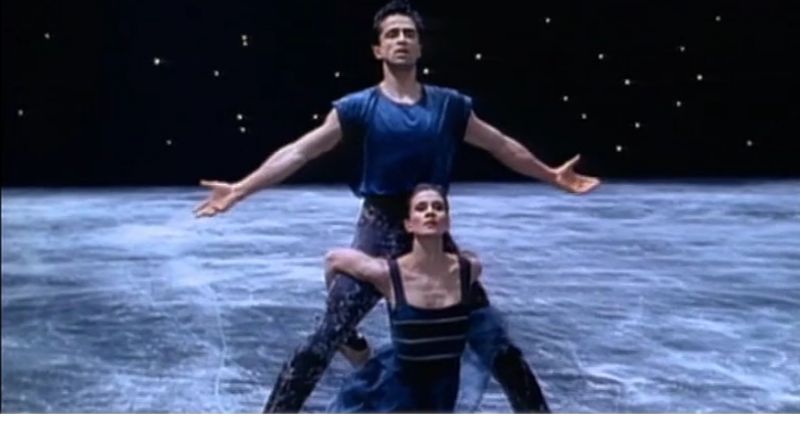
    Screenshot_2021-05-21 Highlights from the Broadcast Premieres of Three Televised Works by Lar Lubovitch(1)
    Above: Isabelle and Paul Duchesnay in The Planets

    Completing the program, we had an excerpt from The Planets, in which figure skaters and ballet dancers joined together. The music is “Venus” from Holst’s The Planets, Mr. Lubovitch choreographed the skating, and Doug Varone the ‘court of Venus’. The goddess is portrayed by Sonia Rodriguez of the National Ballet of Canada, and the principal skating couple are Paul and Isabelle Duchesnay, 1992 Olympic Silver Medalists.

    Venus, after drinking from an enchanted pool, sees a vision of a company of lovers, come to pay her homage. These skaters fill the ice with swirling, flowing combinations. Now the principal couple – the brother-and-sister Duchesnays – execute a lush duet, sailing across the ice to the lyrical Holst music.

    Paul Duchesnay kneels before Ms. Rodriguez’s Venus; she is captivated by this mortal male and they begin a duet in which Ms. Rodriguez’s feet never touch the ice. The goddess then returns to her temple, but the encounter has left its mark on her. 

    Screenshot_2021-05-21 Highlights from the Broadcast Premieres of Three Televised Works by Lar Lubovitch(3)

    Above: Sonia Rodriguez in The Planets

    While watching the program, many memories of my experiences with Lar Lubovitch’s work – and of meeting him briefly in various settings – came flooding back. It’s thanks largely to my friendship with Attila Joey Csiki – an iconic Lubovitch dancer – that I discovered the world of Lubovitch. Here are some articles and images from my blog about these encounters:

    Meeting Attila in person for the first time in November 2010 when he was preparing a Lubovitch solo with pianist KathleenTagg.

    In 2011, with Attila teaching a Lubovitch class, is where the Lubovitch connection took hold. Three dancers in the class – Greg Lau, Sarah Pon, and Blake Hennessy-York – were embarking on their careers at the time.

    Attila arranged for Kokyat and me to watch a rehearsal of Lar’s Men’s Stories. This was the first time I met Mr. Lubovitch; he was quite formal, which I liked.

    2014 brought the fascinating Black Rose to The Joyce.

    In 2017, in preparation for the 50th anniversary of the Lubovitch Company, Lar set his Legend of Ten on the Martha Graham Dance Company. Photographer Nir Arieli and I had a fantastic time watching a rehearsal.

    And in 2018, the 50th anniversary was celebrated in high style at The Joyce.

    There’s so much more Lubovitch in my dance diary! And there’s no way I could finish this article without mentioning my two Lubovitch goddesses: Nicole Corea and Kate Skarpetowska.

    ~ Oberon

  • Alessandra Marc’s Met Debut ~ 1989

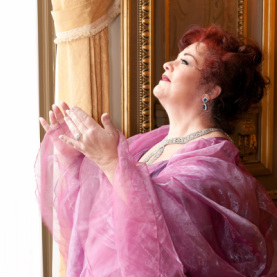
    Marc

    Alessandra Marc made her Metropolitan Opera debut on October 14th, 1989. My friend Paul and I were there. Soon after, another friend sent me a recording of parts of the performance.

    AIDA ~ duet – Alessandra Marc & Stefania Toczyska ~ Met 10-14-89

    Alessandra Marc – Met debut as Aida – excerpts – w Martinucci & Toczyska – 10~14~89

    Marc aiida-1

    Here’s my diary entry, written late on the evening of the date; despite the excitement of the Marc debut, Stefania Toczyska’s Amneris was the afternoon’s masterpiece:

    “Overall, a good performance and better-than-good much of the time. Audience most distracting (candy wrappers at their worst!). The settings are grand and it’s a Met-sized production, but very little happens dramatically – it falls to the individual singers to create theatrical sparks.

    Christian Badea favored slow tempi in general – but his support of the singers, in allowing them time to breathe and to sustain the vocal line, was admirable. The orchestra played very well, though there were times when their volume threatened to swamp even this big-voiced cast. The ballet was rather silly, though well-danced.

    While the Marc debut was the afternoon’s focal point, it was the superb Amneris of Stefania Toczyska who topped the cast. She sang with tremendous authority and passion, and she alone of the principals had a grasp of the drama. Her upper range has grown more secure over time, whilst maintaining a strong chest voice; her lovely entries in the opening passages of the Boudoir Scene were especially fine. And Toczyska is ever alert to the situation in every scene, creating a wonderfully feminine portrait of the ultimately distraught princess.

    The Judgement Scene was her crowning glory, a tremendously thrilling twenty minutes. After her beautifully sustained “Io stessa lo gettai…” the audience broke in with sustained applause. She concluded the scene with a fiery verbal assault in the priests, followed by a sustained final note before rushing off in a fury. Toczyska is a very attractive singer and her Amneris was deeply satisfying to experience. To top it off, she graciously pushed the debuting Aida, Alessandra Marc, forward during the group bow and started applauding her!

    Marc made a highly successful Met debut. Her voice has a curiously stimulating throb; at times it lacks resonance in the lower range, but the top has a lovely, almost girlish quality (such as we sometimes hear on recordings of sopranos from the early days of audio documentation): Marc’s voice blooms as it ascends. 

    Although lacking the ultimate cresting power in ensembles that some sopranos can muster, the soprano’s singing abounded in gorgeousness: starting with “Ritorna vincitor“, she won the audience with her opulent tone and marvelous turnings of phrase. The unaccompanied descending phrase in the Triumphal Scene was especially superb, and in the Nile Scene she proved herself with a splendid “O patria mia“, rising to a sustained, glowing high-C, and phrasing magically. 

    Marc did not make the most of the dramatic phrases of the duet with Amonasro, as some Aidas do, but in the seductive passages of the duet with Radames (“La tra foreste virgini…”) she sounded truly alluring. Likewise, the opera’s final duet showed the Marc voice at its distinctive best. Applause for the soprano was enthusiastic throughout the evening, and at the end the audience showered her with enthusiastic bravas

    Nicola Martinucci was a far more than capable Radames: his bronze-tinged voice has a nice metallic edge when needed, with strong tops – one or two of which were almost imperceptibly a hair’s breadth flat. Martinucci’s “Celeste Aida” went very well, with a sustained conclusion that won a vociferous response from the crowd. His voice cut thru the ensembles of the Triumphal Scene, and he found his lyric side in the Nile Scene before ending with a prolonged, ringing “Io resto a te!” Together with Toczyska, Martinucci made vocal sparks fly in the Judgement Scene, and he finished the opera strongly. Throughout, his slender, masculine figure looked great onstage, and his authentic Italian sound was more than welcome. 

    Juan Pons really sang Amonasro – no barking or hectoring. His warm sound and exemplary phrasing gave his singing a wonderfully noble sense of humanity…really impressive.

    Margaret Jane Wray sang beautifully as the Priestess, and Mark Baker strongly as the Messenger. Franco de Grandis sounded rough and effortful as the King, but even so he outshone the sadly out-of-voice Ramfis of Stephen Dupont.

    Despite the audience distractions, Paul and I were glad to have been there, and we enjoyed talking over the performance on the drive home.”

    ~ Oberon

  • Alessandra Marc’s Met Debut ~ 1989

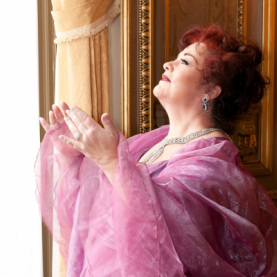
    Marc

    Alessandra Marc made her Metropolitan Opera debut on October 14th, 1989. My friend Paul and I were there. Soon after, another friend sent me a recording of parts of the performance.

    AIDA ~ duet – Alessandra Marc & Stefania Toczyska ~ Met 10-14-89

    Alessandra Marc – Met debut as Aida – excerpts – w Martinucci & Toczyska – 10~14~89

    Marc aiida-1

    Here’s my diary entry, written late on the evening of the date; despite the excitement of the Marc debut, Stefania Toczyska’s Amneris was the afternoon’s masterpiece:

    “Overall, a good performance and better-than-good much of the time. Audience most distracting (candy wrappers at their worst!). The settings are grand and it’s a Met-sized production, but very little happens dramatically – it falls to the individual singers to create theatrical sparks.

    Christian Badea favored slow tempi in general – but his support of the singers, in allowing them time to breathe and to sustain the vocal line, was admirable. The orchestra played very well, though there were times when their volume threatened to swamp even this big-voiced cast. The ballet was rather silly, though well-danced.

    While the Marc debut was the afternoon’s focal point, it was the superb Amneris of Stefania Toczyska who topped the cast. She sang with tremendous authority and passion, and she alone of the principals had a grasp of the drama. Her upper range has grown more secure over time, whilst maintaining a strong chest voice; her lovely entries in the opening passages of the Boudoir Scene were especially fine. And Toczyska is ever alert to the situation in every scene, creating a wonderfully feminine portrait of the ultimately distraught princess.

    The Judgement Scene was her crowning glory, a tremendously thrilling twenty minutes. After her beautifully sustained “Io stessa lo gettai…” the audience broke in with sustained applause. She concluded the scene with a fiery verbal assault in the priests, followed by a sustained final note before rushing off in a fury. Toczyska is a very attractive singer and her Amneris was deeply satisfying to experience. To top it off, she graciously pushed the debuting Aida, Alessandra Marc, forward during the group bow and started applauding her!

    Marc made a highly successful Met debut. Her voice has a curiously stimulating throb; at times it lacks resonance in the lower range, but the top has a lovely, almost girlish quality (such as we sometimes hear on recordings of sopranos from the early days of audio documentation): Marc’s voice blooms as it ascends. 

    Although lacking the ultimate cresting power in ensembles that some sopranos can muster, the soprano’s singing abounded in gorgeousness: starting with “Ritorna vincitor“, she won the audience with her opulent tone and marvelous turnings of phrase. The unaccompanied descending phrase in the Triumphal Scene was especially superb, and in the Nile Scene she proved herself with a splendid “O patria mia“, rising to a sustained, glowing high-C, and phrasing magically. 

    Marc did not make the most of the dramatic phrases of the duet with Amonasro, as some Aidas do, but in the seductive passages of the duet with Radames (“La tra foreste virgini…”) she sounded truly alluring. Likewise, the opera’s final duet showed the Marc voice at its distinctive best. Applause for the soprano was enthusiastic throughout the evening, and at the end the audience showered her with enthusiastic bravas

    Nicola Martinucci was a far more than capable Radames: his bronze-tinged voice has a nice metallic edge when needed, with strong tops – one or two of which were almost imperceptibly a hair’s breadth flat. Martinucci’s “Celeste Aida” went very well, with a sustained conclusion that won a vociferous response from the crowd. His voice cut thru the ensembles of the Triumphal Scene, and he found his lyric side in the Nile Scene before ending with a prolonged, ringing “Io resto a te!” Together with Toczyska, Martinucci made vocal sparks fly in the Judgement Scene, and he finished the opera strongly. Throughout, his slender, masculine figure looked great onstage, and his authentic Italian sound was more than welcome. 

    Juan Pons really sang Amonasro – no barking or hectoring. His warm sound and exemplary phrasing gave his singing a wonderfully noble sense of humanity…really impressive.

    Margaret Jane Wray sang beautifully as the Priestess, and Mark Baker strongly as the Messenger. Franco de Grandis sounded rough and effortful as the King, but even so he outshone the sadly out-of-voice Ramfis of Stephen Dupont.

    Despite the audience distractions, Paul and I were glad to have been there, and we enjoyed talking over the performance on the drive home.”

    ~ Oberon

  • Nika Antuanette: HOLOGRAM

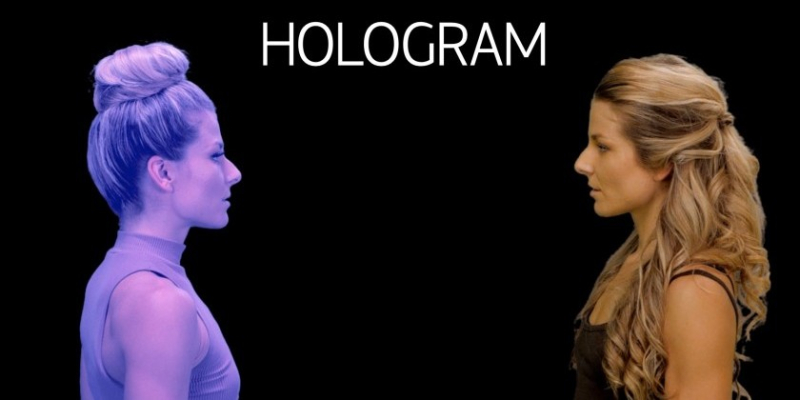
    Hologram_face_off_2020
     
    “The world is round, the screen is flat…” is perhaps the most evocative line in Jeremy Cone’s soundtrack for dancer Nika Antuanette’s short film, HOLOGRAM. This collaboration between these two artists produces the most imaginative video to come my way during the pandemic: HOLOGRAM is both wonderfully entertaining and truly timely.
     
    The lavender holographic image of Nika Antuanette rises onto the blank, black screen; the actual Nika greets this image of herself with a wary smile, and the two Nikas find their common ground in dance. They pick up moves from one another, and dance in sync. Meanwhile, photos of places, people, and things – typical of the images that pervade the on-line world – flow across the screen at increasing speed.
     
    The dancer and her double continue to dance, becoming competitive. The real Nika begins to look frazzled; her energy flags while her virtual counter-part remains fresh and glowing; the real Nika, no longer able to keep up, falls out of the frame as her holographic incarnation continues to blissfully execute perfect pirouettes.
     
    The contrast between reality and the one-dimensional social media experiences in which so many of us spend our hours is thought-provoking, especially in these days of COVID isolation. But that is another topic altogether.
     
    For now, Nika Antuanette and Jeremy Cove’s HOLOGRAM is very much worth watching. Check it out in YouTube here.

  • Waltz of the Snowflakes

    Snapshot waltz

    Post:ballet presents a ‘Waltz of the Snowflakes‘ from Tchaikovsky’s THE NUTCRACKER for the time of the pandemic.

    Watch and listen here.

    This performance really gave me a lift during this unusual holiday season. I was especially happy to see Landes Dixon dancing; I met him a few years ago when he danced with Steps Repertory Company, and again when he danced with Michele Wiles/Ballet Next.

    Credits:

    Choreography by Robert Dekkers
    Cinematography/editing by Ben Tarquin
    Performed by Post:ballet dance artists Cora Cliburn, Landes Dixon, Emily Hansel, Caitlin Hicks, Jenna Marie
    With Berkeley Ballet Theater dance artists Mai Corkins, Cameron Heanue, Elizabeth Inami, Monique Jonath, Nina Owen, Frances Pine-Rinella
    Produced by Lance Hepler
    Costumes courtesy Berkeley Ballet Theater and Post:ballet
    Special thanks to Marge Funabiki
    Filmed in Alameda, CA following corresponding state and municipal COVID-19 Safety Guidelines for Media Production
    Presented by Post:ballet and Berkeley Ballet Theater

    Merry Christmas to all!

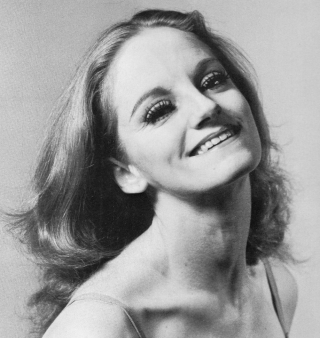
  • Sara Leland Has Passed Away

    Scanned Section 1-1

    Above: former New York City Ballet principal dancer Sara Leland has passed away.

    In the Autumn of 1974, I had moved into TJ’s dorm room at Sarah Lawrence College, pretending to be a student; he and I were making frequent trips into Manhattan for the opera. We’d spent the Summer on Cape Cod, performing with a small ballet company. I had never liked ballet until I got caught up in it by dancing in COPPELIA. Now that we were living within range of Lincoln Center, TJ began taking me to see The New York City Ballet.

    It was a heady time at NYCB, with Kay Mazzo, Patricia McBride, Karin von Aroldingen, and Violette Verdy as reigning ballerinas. And on our third visit to the House of Mr. B that season, Suzanne Farrell returned to the Company after five years in exile following her falling out with Balanchine…yes, we were there that night.

    Whilst these lovely ladies were giving one spectacular performance after another, both TJ and I had a special affection for Sara Leland, a truly unique ballerina. I first saw Sara in the Valse Mélanconique of TCHAIKOVSKY SUITE #3; a few days later, she danced the third movement of SYMPHONY IN C in Farrell’s return performance. 

    In May of 1975, I saw my first JEWELS, and it was RUBIES that most dazzled me, with Ms. Leland and Marnee Morris, another favorite, in the leading roles. Robert Weiss stepped in on very short notice for Edward Villella that night. Read about it here.

    Helgi and sara

    We went on to see Sara Leland in Balanchine’s UNION JACK (above, with Helgi Tomasson), SYMPHONY IN THREE MOVEMENTS, and VIENNA WALTZES, and in Robbins’ DANCES AT A GATHERING (in Apricot), SCHERZO FANTASTIQUE, GOLDBERG VARIATIONS, AN EVENING’S WALTZES, and THE CONCERT.

    Both TJ and I were especially fascinated whenever Sara danced with Bart Cook. They had a kind of offbeat sexiness, and they somehow could be both edgy and poetic at the same time:

    C2-1

    Another of Sara’s frequent partners, John Clifford, posted a film of SYMPHONY IN C, third movement; watch it here.

    Iwm weslow sara leland

    Sara Leland’s romantic side shines thru in this lovely photo of her with William Weslow in Balanchine’s LA VALSE.

  • Evgeny Kissin ~ Beethoven Piano Concerto #1

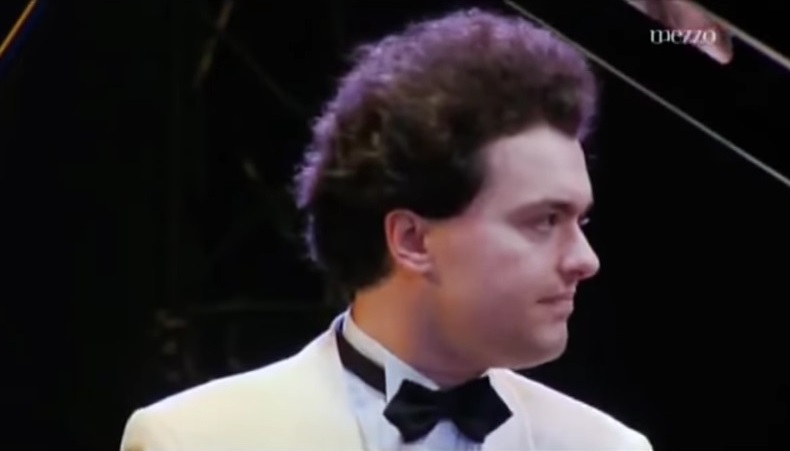
    Snapshot kissin

    Evgeny Kissin (above) plays Beethoven’s Piano Concerto #1 in a 2007 performance with the Verbier Festival Orchestra conducted by Esa-Pekka Salonen.

    Watch and listen here.

    I first fell in love with this concerto when Helgi Tomasson set his ballet PRISM to it for the New York City Ballet in 2000.

  • Claudia Schreier’s PLACES

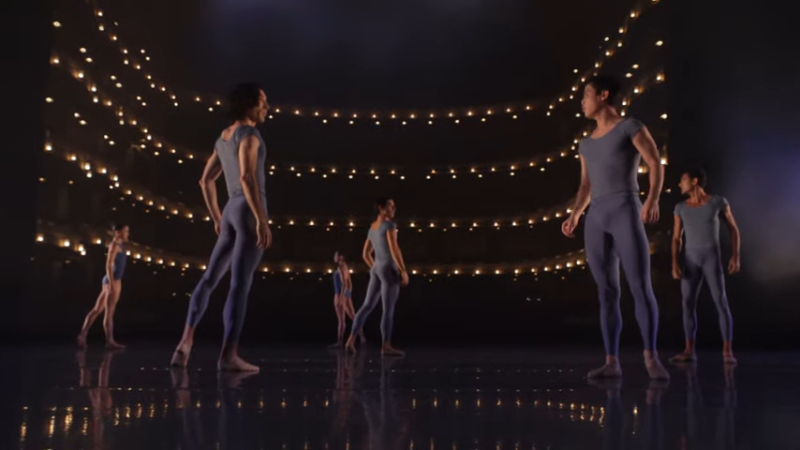
    Snapshot places

    Miami City Ballet‘s Artistic Director Lourdes Lopez introduces Claudia Schreier’s PLACES, created at the time of the pandemic. The piece premiered digitally on November 19th, 2020.

    Watch and listen here.

    CHOREOGRAPHY Claudia Schreier
    MUSIC Jorge Mejia
    CINEMATOGRAPHY Alexander Iziliaev
    LIGHTING DESIGN John Hall and Alexander Iziliaev
    COSTUME DESIGN Eleanor Wolfe
    BALLET MASTER Joan Latham

    DANCERS Nathalia Arja, Emily Bromberg, Renan Cerdeiro, Satoki Habuchi, Kleber Rebello, Damian Zamorano

    MUSICIANS Jorge Mejia, Piano; Daniel Andai, Violin I; Sheena Gutierrez, Violin II; Modesto Marcano, Viola; Shea Kole, Cello; Antonio Escobedo, Double Bass