Category: Ballet

  • Miro Magloire’s NOCTURNE

    IMG_3202-sm

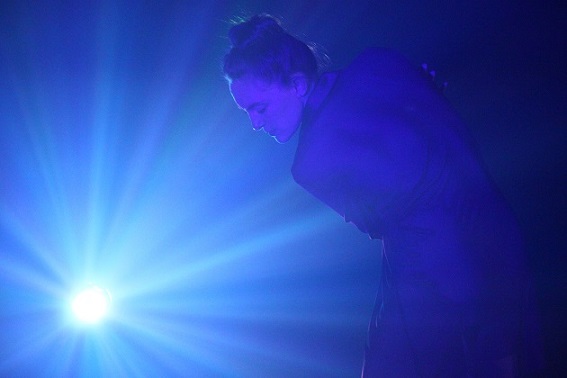
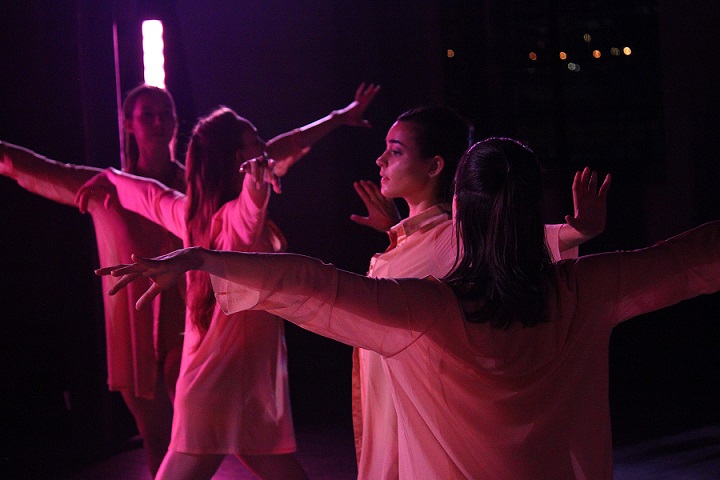
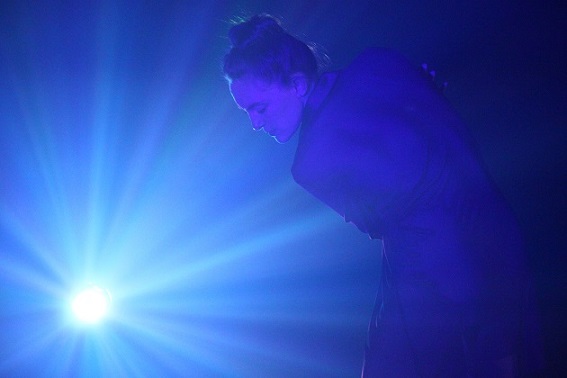
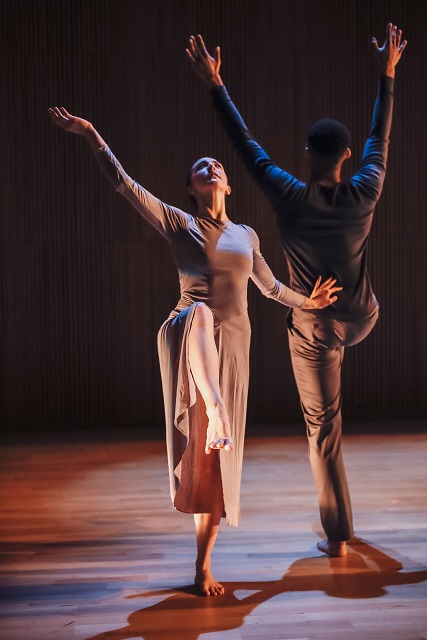
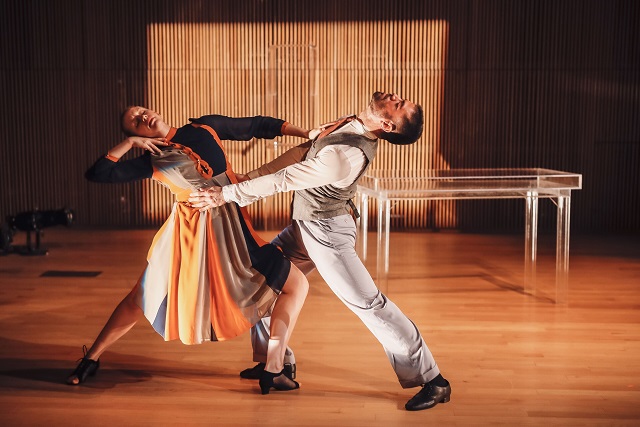
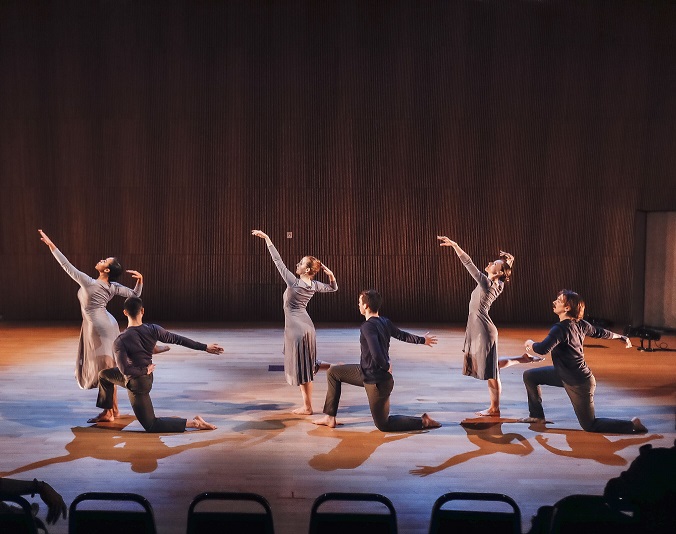
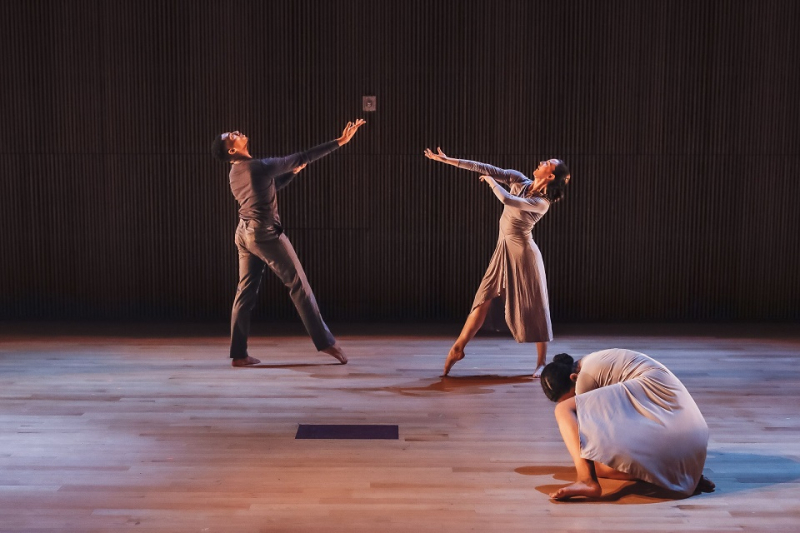
    Miro Magloire’s New Chamber Ballet have released NOCTURNE, a filmed ballet choreographed by Miro to the first and second movements of Johannes Brahms’ violin sonata No 1, opus 78. The dancers are Anabel Alpert, Megan Foley, Amber Neff, and Rachele Perla, and the score is performed by Doori Na (violin) and Sean Kennard (piano). Costumes are by Sarah Thea, assisted by Lauren Carmen. NOCTURNE was shot at Please Space, Brooklyn.

    The film was directed by Emily Kikta and shot by Peter Walker; Emily and Peter, members of New York City Ballet, have together formed KW Creative. As dancers, they have a unique gift for capturing dance on film. After watching the ballet, be sure to watch the interview with Emily and Peter further down the link:

    Watch NOCTURNE here.

    Anyone who has ever attended a New Chamber Ballet performance knows that Miro always takes you as close to dance as you can possibly get; but with NOCTURNE, KW Creative will make you feel like you are dancing yourself. The brilliant camera work brings you right into the action, much as the film ‘Backstage at the Kirov’ makes you feel like a fifth cygnet. And, as music and dance are equally essential to New Chamber Ballet‘s artistic credo, I can enthusiastically heap praise on the excellent rendering of the Brahms score by Doori Na and Sean Kennard.

    IMG_4358-sm

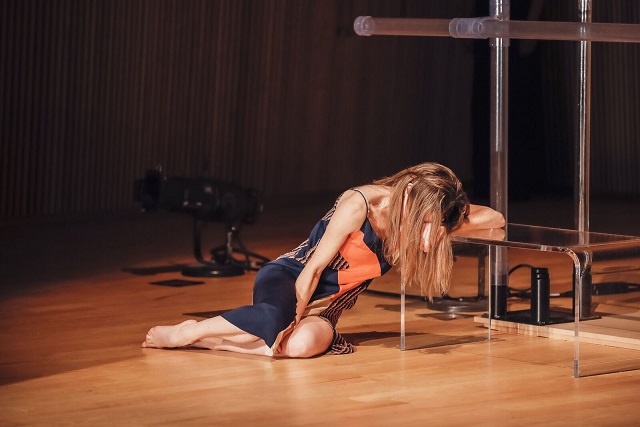
    The eerily atmospheric setting of Please Space after dark lends an air of mystery to NOCTURNE. The ballet evokes a feeling of urban Wilis carrying on with their nightly rituals. And, as with GISELLE, the coming dawn signals the end of their mystic rites. Amber Neff (above), who had opened NOCTURNE emerging hesitantly to dance in the sacred space, returns to her safe haven. The ballet has a timeless feeling; one could imagine these sylphs gathering to dance each night at moonrise for ages to come.

    Still photos by Miro.

  • Miro Magloire’s NOCTURNE

    IMG_3202-sm

    Miro Magloire’s New Chamber Ballet have released NOCTURNE, a filmed ballet choreographed by Miro to the first and second movements of Johannes Brahms’ violin sonata No 1, opus 78. The dancers are Anabel Alpert, Megan Foley, Amber Neff, and Rachele Perla, and the score is performed by Doori Na (violin) and Sean Kennard (piano). Costumes are by Sarah Thea, assisted by Lauren Carmen. NOCTURNE was shot at Please Space, Brooklyn.

    The film was directed by Emily Kikta and shot by Peter Walker; Emily and Peter, members of New York City Ballet, have together formed KW Creative. As dancers, they have a unique gift for capturing dance on film. After watching the ballet, be sure to watch the interview with Emily and Peter further down the link:

    Watch NOCTURNE here.

    Anyone who has ever attended a New Chamber Ballet performance knows that Miro always takes you as close to dance as you can possibly get; but with NOCTURNE, KW Creative will make you feel like you are dancing yourself. The brilliant camera work brings you right into the action, much as the film ‘Backstage at the Kirov’ makes you feel like a fifth cygnet. And, as music and dance are equally essential to New Chamber Ballet‘s artistic credo, I can enthusiastically heap praise on the excellent rendering of the Brahms score by Doori Na and Sean Kennard.

    IMG_4358-sm

    The eerily atmospheric setting of Please Space after dark lends an air of mystery to NOCTURNE. The ballet evokes a feeling of urban Wilis carrying on with their nightly rituals. And, as with GISELLE, the coming dawn signals the end of their mystic rites. Amber Neff (above), who had opened NOCTURNE emerging hesitantly to dance in the sacred space, returns to her safe haven. The ballet has a timeless feeling; one could imagine these sylphs gathering to dance each night at moonrise for ages to come.

    Still photos by Miro.

  • Doori Na: Rhapsody

    Snapshot doori

    Doori Na plays Jessie Montgomery’s Rhapsody #1 in an at-home performance during the pandemic. Watch and listen here.

    Doori is the resident violinist of Miro Magloire’s New Chamber Ballet. During this period of isolation, Doori has been producing a series of Laid Bach Concerts: watch them here.

    Read about composer Jessie Montgomery here.

  • White Swan ~ Makarova & Nagy

    Snapshot swan 2

    Natalia Makarova and Ivan Nagy dance the White Swan pas de deux from SWAN LAKE at the 100th anniversary celebration of the Metropolitan Opera in New York City in 1984. Ivan Nagy came out of retirement to dance with Ms. Makarova on this occasion. The dancers are accompanied on-stage by violinist Itzhak Perlman and cellist Lynn Harrell.

    Watch and listen here.

  • White Swan ~ Makarova & Nagy

    Snapshot swan 2

    Natalia Makarova and Ivan Nagy dance the White Swan pas de deux from SWAN LAKE at the 100th anniversary celebration of the Metropolitan Opera in New York City in 1984. Ivan Nagy came out of retirement to dance with Ms. Makarova on this occasion. The dancers are accompanied on-stage by violinist Itzhak Perlman and cellist Lynn Harrell.

    Watch and listen here.

  • Backstage at the Kirov

    I’ve just been re-watching a favorite ballet video of mine…this article was originally published in 2008!

    51HPJ9WGC9L._SL500_AA280_

    Now that the ballet season at Lincoln Center has ended, we’ve been watching some videos from the Library of the Performing Arts. Unfortunately, I have found that many of the DVDs in their collection turn out to be badly scratched; it’s a shame that people who are sophisticated enough to want to to watch SLEEPING BEAUTY or GISELLE are not correspondingly considerate enough to take good care of the library’s property. I’ve actually been having better luck with VHS tapes, since they are not in plastic sleeves and thus you can check their condition before signing them out. The library has quite a substantial VHS dance collection.

    Mezen09Asylmuratova-jw The 1982 film BACKSTAGE AT THE KIROV starts out as a run-of-the-mill (though interesting) documentary but soon the story starts to revolve around two Odettes: the established prima ballerina Galina Mezentseva and the (then) rising young Altynai Asylmuratova. Performance footage is interspersed with specially recorded passages where the camera actually takes us into the midst of the Kirov’s corps. This produces an especially vivid effect in such moments as the Cygnets where we follow the four girls around the stage. Later, when Asylmuratova and her husband Konstantin Zaklinsky are performing a segment of the adagio, the camera magically circles around them, catching the attendant Swans in their long rows as a swirling backdrop.

    Wei and I both thought Mezentseva was an exceptional Odette. Against the sustained slowness of the tempo set for the adagio, Mezentseva’s dancing – her fluent upper body, long arms and elegant legs – has a timeless, suspended quality. Asylmuratova’s youthful candor – she says she’d rather have slept in than attend class – is slyly sweet; she is a beautiful girl and we can already see emerging the ballerina who was to be such an impressive Nikiya in the filmed version of the Royal Ballet’s 1991 BAYADERE.

    BACKSTAGE AT THE KIROV (now available on DVD) also shows some very young students in class, and the hard-working corps of Kirov swans, some of whom come in for sharp reprimands from the ballet masters. It’s an intriguing view of SWAN LAKE from the inside: I ended up watching it four times in a week.

  • Martha Graham Dance Company~Immediate Tragedy

    -gvdt0Bg

    Above, clockwise from top left: Graham dancers Ying Xin, Lloyd Knight, Lorenzo Pagano, and Leslie Andrea Williams performing Immediate Tragedy from their homes. Photo by Ricki Quinn.

    Update: You can now watch Immediate Tragedy on YouTube here.

    Friday June 20th, 2020 – In a joint collaboration with The Soraya and Wild Up, the Martha Graham Dance Company today presented the world premiere performance of a digital dance creation, Immediate Tragedy, inspired by Martha Graham’s lost solo from 1937. This freshly-imagined version features the fourteen remarkable artists of the Graham Company performing from their homes to a new musical score composed by Wild Up’s Christopher Rountree (photo below).

    Rountree

    The loss of the 2020 Graham season in New York City was for me one of the saddest after-shocks of the pandemic. Nowadays, I keep wondering if dance, music, opera, and theatre – not to mention museums – can return to what we think of as ‘normal’ in the foreseeable future.

    The members of the Graham Company have, over the past decade or so, become very dear to me, not just as dancers but as human beings. Their energy, commitment, and their unique individual stories make them so appealing. I cannot wait to see them “live” again. But for now, today’s webcast of Immediate Tragedy at least let me behold their beautiful faces and forms again. 

    Host Thor Steingraber, executive director of The Soraya, welcomed viewers. Graham artistic director Janet Eilber and composer Christopher Rountree of Wild Up gave us some background information about the collaborative effort to bring Martha Graham’s “lost” 1937 solo back to life in a new guise nearly eighty years after it was last seen.

    Ms. Eilber spoke of receiving a collection of black-and-white images of Martha Graham performing Immediate Tragedy in 1937. They were taken by Robert Fraser, and it was Fraser’s son who contacted Ms. Eilber to say, “I have these photos…”  One thing led to another, and when the pandemic forced dancers to remain isolated, the idea of a digital dancework in which each Graham dancer would be filmed dancing at home, elaborating on the poses from the Fraser photos, made perfect sense. Each dancer was mailed four of the Fraser images, showing various moments from the original solo. Ms. Eilber oversaw the “new”  choreography, but…there was no music to dance to. Enter Mr. Rountree, who provided an intriguing score which five musicians from Wild Up play superbly.

    The last time Immediate Tragedy was performed, it was paired with another Graham solo, Deep Song. A gorgeous film of dancer Anne Souder performing Deep Song at the Teatro Real Madrid in 2017 opened today’s presentation. The solo, also dating from 1937, was another Graham response to the Spanish Civil War  – a war that raged until 1939 – and its dire effect on the women of Spain. The music is by Henry Cowell. 

    At first glance, the bench employed in Deep Song puts the viewer in mind of Graham’s iconic Lamentation, which was created in 1930. The two solos have an indelible connection, though the sources of inspiration – and the music used – are vastly different. Ms. Souder, striking in a beautiful re-creation of Edythe Gilford’s original black-and-white costume design, is a wonderfully supple and nuanced dancer; she gives a vivid performance. As the solo progresses, the bench becomes part of the choreography. Up-ended, it becomes a chair on which the dancer sits and slowly rotates in place. Later, she takes refuge under it and – momentarily – it has the feeling of a coffin. Then the dancer’s hands tremble: her indomitable spirit cannot be stilled.

    In a solo that runs an emotional gamut from defiance to despair, Ms. Souder’s dancing of Deep Song showed a perfect mixture of vulnerability and resolve.

    KoZuV8aQ

    Above: Wild Up’s Jodie Landau playing Intermediate Percussion; photo credit Ricki Quinn

    Perhaps picking up from the black-and-white of Anne Souder’s gown, the presentation continues with an entr’acte: a black-and-white film featuring Wild Up’s percussionist Jodie Landau playing at home. He employs a kit of drums and cymbals, as well as some household items. Jodie plays in a relaxed, utterly delightful way, pairing two ‘forgotten’ Henry Cowell works to create an interlude entitled Intermediate Percussion. Composer Chris Rountree said that he wasn’t sure if the brief Cowell works had ever been publicly performed, or even published, but that Jodie was playing from the manuscripts. The works are entitled Canto Hondo and Sarabande.

    Intermediate Percussion, far from being an idle filler while the “stage” was being “reset”, was a fascinating and integral part of today’s presentation. The black-and-white film has a refreshing, journalistic feel, and Mr. Landau’s playing was as pleasing to watch as to hear.
    Graham deep song - Copy

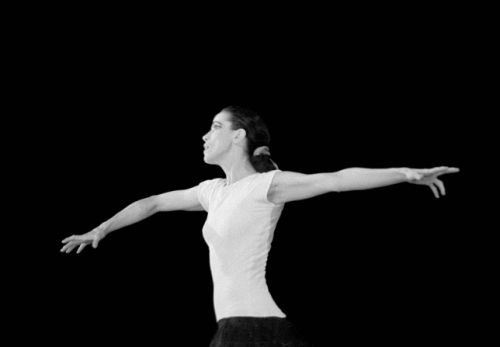
    Above: Martha Graham performing Immediate Tragedy in 1937; photo by Robert Fraser, courtesy of the Martha Graham Dance Company

    The black-and-white theme running thru the program now becomes palpable as a collage of the incredible Robert Fraser photos of Martha Graham from 1937 herald the start of Immediate Tragedy. Slowly, each individual photo of Ms. Graham is replaced by a photo of one of the current Graham dancers. Clad in dark colours, against white or neutral backgrounds, they are a sight to see. And then they begin to move.

    The Graham dancers appear in individual frames, sometimes paired, or in trios, or foursomes, and periodically in solo shots. So Young An, Alessio Crognale, Laurel Dalley Smith, Natasha Diamond-Walker, Lloyd Knight, Charlotte Landreau, Jacob Larsen, Lloyd Mayor, Marzia Memoli, Anne O’Donnell, Lorenzo Pagano, Anne Souder, Leslie Andrea Williams, and Xin Ying each dance the Grahamian modes of movement: kneeling, collapsing, contracting, stretching tall, with gestures of longing, supplication, or hopelessness. 

    The quintet of musicians of Wild Up – Jiji (guitar), Richard Valitutto (piano), Jodie Landau (percussion/harpejii/synth/voice), Brian Walsh (clarinets), and Derek Stein (cello) – play Mr. Rountree’s score impeccably. The music sings of loneliness and quiet anguish; thanks to the acoustic guitar and clarinet, there is an aptly Spanish quality about it at times. Cunning use of the harpejii adds a melismatic flavour. As the piece nears its end, there is a slow crescendo and an exciting acceleration of tempo during which the harpejii sounds like a mad, swirling dulcimer. It reaches a mighty climax, and then all falls silent.

    During this final musical build-up, the frames of the dancers move swiftly up the screen, shrinking in size whilst growing in numbers. When the music suddenly ends, the screen goes black. A hauntingly pensive clarinet coda is heard as, one by one, the dancers reappear in their frames. As they slowly attain the work’s final pose – hands clasped behind their heads – the bass clarinet descends to the depths. 

    Snapshot c

    In silence, the frames of the individual dancers all disappear, leaving only Leslie Andrea Williams. Just as Leslie fades from view, her figure morphs into the 1937 image of Martha Graham sustaining the same pose.

    “I was upright, and was going to remain upright at all costs.” ~ Martha Graham

    Though originally a necessary response to the pandemic – a way to keep dancers dancing and musicians playing – Immediate Tragedy has taken on yet another dimension following the murder of George Floyd and the massive international protests opposing racism and injustice. We seem to be living now on the edge of a knife; the coming months will determine the future of our democracy and – no exaggeration – the fate of mankind. For now, music, dance, art, and poetry continue to give solace. Immediate Tragedy – so beautifully performed – today felt like a ray of hope in a chaotic, dimming world.

    ~ Oberon

  • Joy Davidson

    Joy Davidson

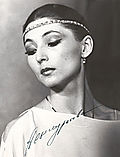
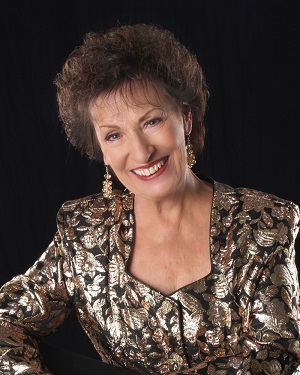
    Mezzo-soprano Joy Davidson was born at Fort Collins, Colorado. She studied voice with Elena Nikolaidi at Florida State University and made her operatic debut at Miami as Rossini’s Cenerentola in 1965.

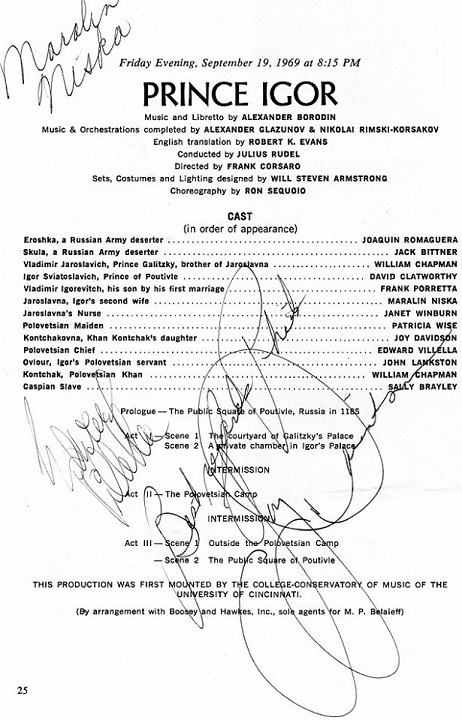
    Ms. Davidson joined the short-lived Metropolitan Opera National Company from 1965-1967 where her roles included Britten’s Lucretia. She won the Sofia International Opera Singers Competition in 1967, and in 1969 made her debut at New York City Opera as Kontchakovna in PRINCE IGOR, a role in which I saw her three times..and met her after one of them:

    68680189_10216986478868208_5008079979083202560_o

    (Note: NYC Ballet star Edward Villella danced in the PRINCE IGOR production, and Maralin Niska had one of her best roles as Yaroslavna).

    Scanned Section 2-1

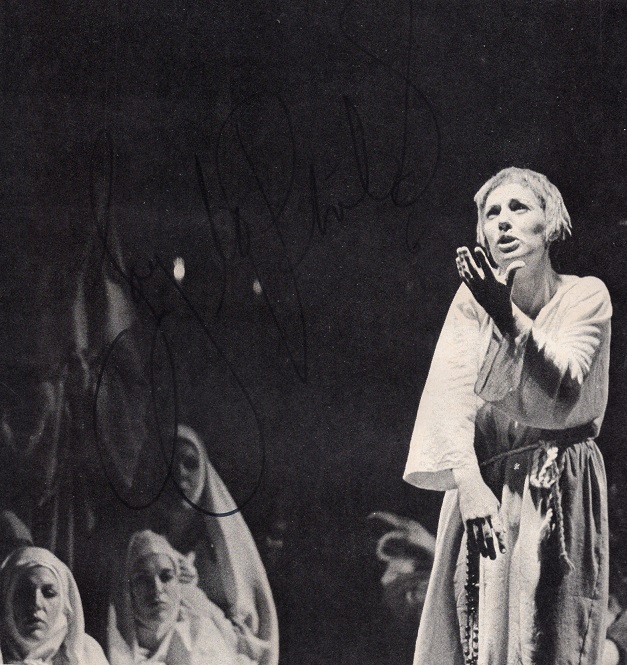
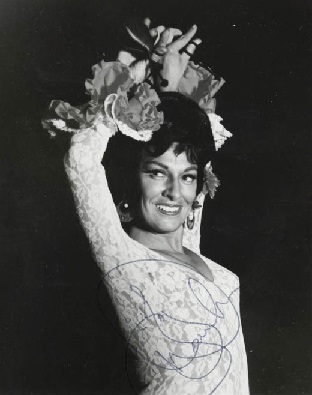
    In 1969, Joy Davidson made her Santa Fe debut as Jeanne in Penderecki’s DEVILS OF LOUDON (above photo, which she signed for me), the opera’s US premiere performances. In the same year, she made her San Francisco Opera debut as the Secretary in Menotti’s THE COUNSEL, and in 1971 she made her La Scala debut as Dalila.

    Joy ~ Carmen

    1971 also brought Joy Davidson back to the New York City Opera to star as Carmen (above) in a new production. In the ensuing seasons, she appeared in Vienna, Munich, Dallas, Barcelona, Turin, Lyon, at the Maggio Musicale and at the Spoleto Festival. 

    Joining the Metropolitan Opera on tour in 1976, Ms. Davidson sang Adalgisa opposite Shirley Verrett’s Norma in Boston and Cleveland. These were Verrett’s first Normas, and TJ and I traveled from Hartford to Boston for the occasion. Verrett had a great triumph; Ms. Davidson was taxed by some of the high notes in Act I, but fared much better in Act II. In 1978, the Joy Davidson was again cast as Adalgisa, in performances at the Bushnell in Hartford, opposite Cristina Deutekom’s Norma, which I attended. Here, Ms. Davidson enjoyed a thorough success.

    There are very few recorded souvenirs of Joy Davidson, unfortunately. Here she is in a German-language DON CARLO from Munich, 1968:

    Joy Davidson – O don fatale – DON CARLO – in German – Munich 1968

    She sang Jane Seymour in Donizetti’s ANNA BOLENA at Santa Fe in 1970; here is Seymour’s great scene of remorse, with Donald Gramm as Henry VIII.

    A rather remarkable document, which took me a great deal of searching to locate and verify, is a complete 1977 telecast of Massenet’s WERTHER from Teatro de la Zarzuela, Madrid. The mezzo’s name is listed as “Davison”, so this item does not readily appear in searches. Though the visuals are rather dated, it is a very attractive performance, and both Ms. Davidson and Alfredo Kraus give passionate portrayals. Watch it here, it’s really quite wonderful. 

    ~ Oberon

  • Cherylyn Lavagnino Dance ~ Gallery

    KIuoymNg

    Above: dancers Gwendolyn Gussman and Malcolm Miles Young in TRIPTYCH; photo by Charles Roussel

    Photographer Chares Roussel has produced a beautiful portfolio of images from Cherylyn Lavagnino’s production TALES OF HOPPER, given at the DiMenna Center on February 25th and 26th, 2020. You can read about the event here. Below is a selection of Mr. Roussel’s photographs from this wonderful evening of dance.

    The program opened with TALES OF HOPPER, a series of danced vignettes inspired by eight of the artist’s paintings:

    61RF976A

    Justin Faircloth

    Gm_NZrrw

    Sharon Milanese

    PvONH3qA

    Sharon Milanese

    MIwuXctQ

    Malcolm Miles Young, Dervia Carey-Jones, Philip Strom

    Novrt1CA

    Lila Simmons and Oscar Rodriguez

    SpCfLXMA

    Lila Simmons and Oscar Rodriguez

    QKyQTSrg

    Kristen Foote and Malcolm Miles Young

    Hh0dq4Bg

    Justin Faircloth and Corinne Hart

    U8FHHTMA

    Corinne Hart, Justin Faircloth, Claire Westby

    CSM6Fo_g

    Claire Westby

    Vb3Rw3Cg

    Emma Pajewski and Malcolm Miles Young

    Following the interval, TRIPTYCH, a ritualistic ballet, was preformed:

    BjJuc3ow

    Justin Faircloth and Emma Pajewski

    H0AfYEVQ

    The ensemble

    V_Tr_Hkg

    The women in TRIPTYCH

    VReBRIMQ

    The men in TRIPTYCH

    CcyQuMsA

    Malcolm Miles Young, Gwendolyn Gussman, Dervia Carey-Jones

    JtewCr8g

    Oscar Rodriguez and Justin Faircloth

    Z9K-0rUQ

    Dervia Carey-Jones

    GD2wPPXA

    Gwendolyn Gussman and Malcolm Miles Young

    VEILED was the closing work:

    6BhdryUw

    VEILED is a ballet for six women

    5ptr3x0w

    Emma Pajewski in VEILED

    HviLQ0Qg

    The ensemble

    X6qKLhQg

    Claire Westby in VEILED

    ~ All photographs by Charles Roussel

  • GrahamDeconstructed: CIRCE

    StudioSeries_Circe_003

    Above: So Young An as Circe, with Lorenzo Pagano as The Snake and Lloyd Mayor, perched in Noguchi’s tree, as The Lion; photo by Melissa Sherwood

    ~ Author: Oberon

    Wednesday February 26th, 2020 – A revival of Martha Graham’s CIRCE will figure prominently in the Company’s 2020 season at New York’s City Center, which runs from April 22nd – 26th (details here).
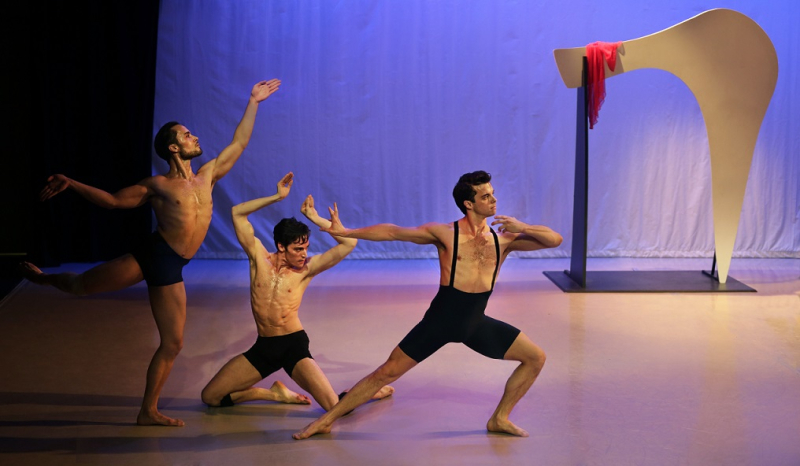
    Premiered in 1963, CIRCE has not been performed for fifteen years. To a score by Alan Hovahness, and with settings designed by Isamu Noguchi, the ballet is inspired by the mythic Circe, a sorceress with a penchant for turning men into animals. 
    Circe – or characters modeled after her – has appeared in various theatrical representations over time. She is often given the name Alcina, as in Francesca Caccini’s opera LA LIBERAZIONE DI RUGGIERO (the first opera written by a woman that has come down to us in a performable version); dell’Arte Opera presented this work in 2019. Handel’s opera ALCINA is rumored to be having its first Metropolitan Opera production in the next two or three years. And Circe plays a part in the narrative of my favorite opera, Richard Strauss’s ARIADNE AUF NAXOS, although she never actually appears. The young god Bacchus has escaped Circe’s island domain, and as he sails towards Naxos – where he will rescue Ariadne – he chides the sorceress by calling out to her across the waves:

    Circe kannst du mich hören ~ ARIADNE AUF NAXOS – Ben Heppner & Deborah Voigt

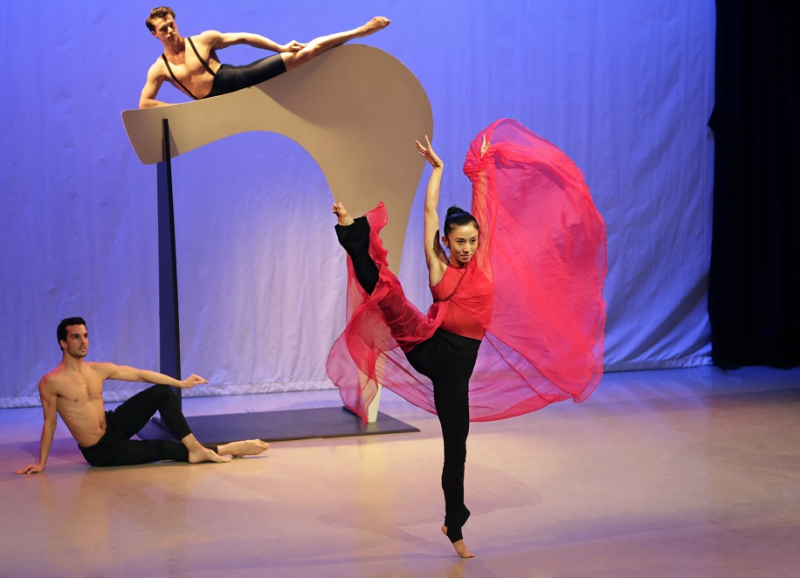
    Tonight, at the Graham Company’s homespace at Westbeth, a full run-thru of the work – replete with the Noguchi sets – was presented, with So Young An in the title role and six of Martha’s Men as those who have fallen under her spell or those she would like to add to her menagerie. It was an exhilarating experience.

    Alan Hovanhess’s score is intriguing: by turns lyrical and dramatic, it also sometimes going off-kilter, indicating that things are far from normal in Circe’s realm. The composer makes fine use of solo instruments, notably the trumpet, horn, clarinet, and oboe. You can listen to the music here.

    The Noguchi setting features a small boat and an archway which might also be a tree. These were designed for an earlier Graham work, FRONTIER, which had fallen out of the repertoire. Ms. Graham kept the set pieces in storage until she found the perfect home for them on Circe’s island.

    So Young An was supple and tempting as Circe; the character’s magic resides in a flowing red scarf which she dons when it is seduction time. Ulysses (Lloyd Knight) and his Helmsman (Ben Schultz) arrive at the island in the very cramped boat. Circe observes them from her perch in the arch/tree.

    StudioSeries_Circe_004

    Above: Lorenzo Pagano (The Snake), Alessio Crognale (The Deer) So Young An (Circe), Lloyd Mayor (The Lion), and Jacob Larsen (The Goat). Photo by Melissa Sherwood.

    StudioSeries_Circe_002

    Above: Jacob Larsen as The Goat; photo by Melissa Sherwood

    Four men who have been transformed by Circe into animals now take an interest in the new arrivals: enslaved by the sorceress, they will aid her in bringing about the downfall of Ulysses and his comrade. Lorenzo Pagano as The Snake first appears dangling from the tree; Lloyd Mayor is The Lion, Alessio Crognale The Deer, and Jacob Larsen The Goat. All the men in this ballet wear very little; I think that’s the way Martha liked her men. These dancers dispatched the demanding choreography with élan.

    StudioSeries_Circe_001

    Above: Lloyd Knight as Ulysses, photo by Melissa Sherwood

    As the story unfolds, it comes down to a battle between Circe, bent on conquest, and the Helmsman, who wants to save Ulysses and get the hell out of there. The red scarf nearly works its magic: Ulysses is falling under Circe’s spell. Hunkered down in the boat, the Helmsman is attacked by the Snake and sinks into a stupor.

    StudioSeries_Circe_005

    Above, Deer, Goat, and Lion: Alessio Crognale, Jacob Larsen, and Lloyd Mayor, photo by Melissa Sherwood

    The other animals stalk and caper, driving the victim into the enchantress’s arms. Just as Ulysses is about the capitulate, the Helmsman revives, hauls his master into the boat, and they sail away. Circe and her pets must now wait for someone else to succumb to the lure of her siren song.

    Danced with the technical prowess and personal commitment that make the Graham dancers the best in the world, CIRCE truly does cast a spell. I look forward to seeing it again, often, and to having it become part of the Company’s permanent repertory.

    All photos by Melissa Sherwood.

     ~ Oberon