
Music from the golden age of the castrati, performed by Filippo Mineccia, Samuel Mariño, and Valer Sabadus, with the Orchestre de l’Opéra Royal conducted by Stefan Plewniak.
Watch and listen here.
Music from the golden age of the castrati, performed by Filippo Mineccia, Samuel Mariño, and Valer Sabadus, with the Orchestre de l’Opéra Royal conducted by Stefan Plewniak.
Watch and listen here.

Tuesday August 22nd, 2023 – One of the most pleasant days, weather-wise, I have ever spent at the US Open. In recent years, my enjoyment of the matches has been compromised by extreme heat; the sun beats down on the courts, and there’s no escaping it. I sometimes wonder why more people – and especially the players and ball-boys – don’t faint. But today, clouds allowed the sun to make only passing appearances, and there was a lovely breeze.
I watched two matches: Taro Daniel of Japan (seeded 4th in the qualifying tournament) facing India’s Samit Nagal, and then the 18-year-old Chinese “rising star” (according to Wei) Shang Juncheng dueled the Argentine Genaro Alberto Olivieri.
Tall and lean, Taro Daniel dominated the first set of his match against Samit Nagal. Nagal is a talented and energetic player, but despite some fine moments, he had few answers for Taro, who took the set 6-1. But Nagal fared much better in the second set, winning the crowd’s acclaim for some brilliant shots. Nagal pulled ahead at one point, and it seemed that we might be headed to a third set, but then Taro’s years of experience took hold and he swept to victory.

Above and below: Taro after the match.

I had expected to go directly from the Daniel/Nagal match to watch the Shang/Olivieri contest, but the women’s match on court 15 was running late. I took a long walkabout, checking out several matches in progress; very few of the players were familiar to me. They all seemed terribly young.

Shang Juncheng (above) opened his match with a perfectly placed ace. His Argentine opponent fought ardently but most of the first set was all about China. Olivieri stepped up his game in set 2, and the momentum shifted somewhat. Shang Juncheng’s serve could be erratic – there were a couple of double faults – but in the end he prevailed.

Each year, I think: “This will be my last Open!” In fact, I almost didn’t go today. But in the end, I was glad that I did.
~ Oberon
German basso Lukas Lemcke sings Franz Schubert’s Der Wanderer, with Manfred Schiebel at the piano.
Watch and listen here.
“Your hands lie open in the long fresh grass,
The finger-points look through like rosy blooms:
Your eyes smile peace. The pasture gleams and glooms
‘Neath billowing skies that scatter and amass.
All round our nest, far as the eye can pass,
Are golden kingcup-fields with silver edge
Where the cow-parsley skirts the hawthorn-hedge.
‘Tis visible silence, still as the hour-glass.
Deep in the sun-searched growths the dragon-fly
Hangs like a blue thread loosened from the sky: –
So this wing’d hour is dropt to us from above.
Oh! clasp we to our hearts, for deathless dower,
This close-companioned inarticulate hour
When twofold silence was the song of love.”
~ Dante Gabriel Rossetti (1828-1882)
Above: Myriam Marbé
I came upon this composer’s Requiem totally by chance, and am pretty intrigued by it.
Myriam Marbé (1931-1997) was a Romanian composer; she composed the oddly-titled Fra Angelico–Chagall –Voronet-Requiem in 1990.
Listen to the work, performed by the Heidelberg Philharmonic Orchestra with Barbara Werner as soloist, conducted by Jan Schweiger, here.
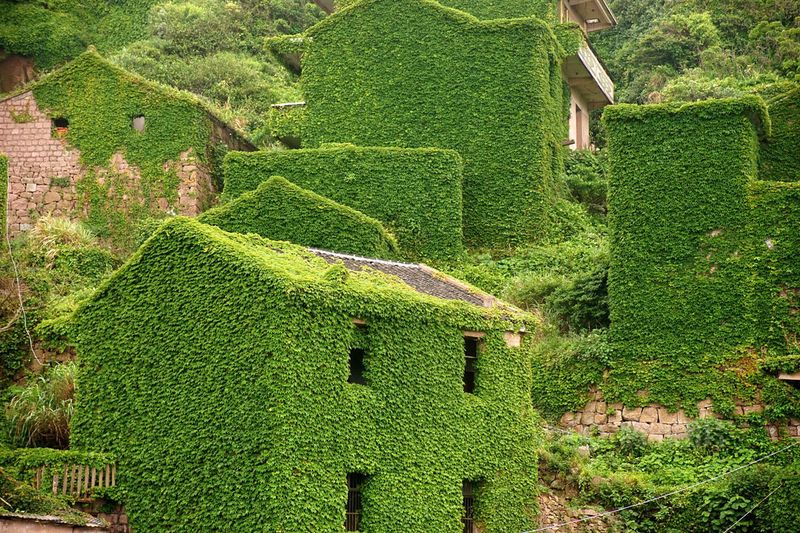
An abandoned fishing village on Gouqi Island, China, has been completely overgrown with ivy. I want to move there!
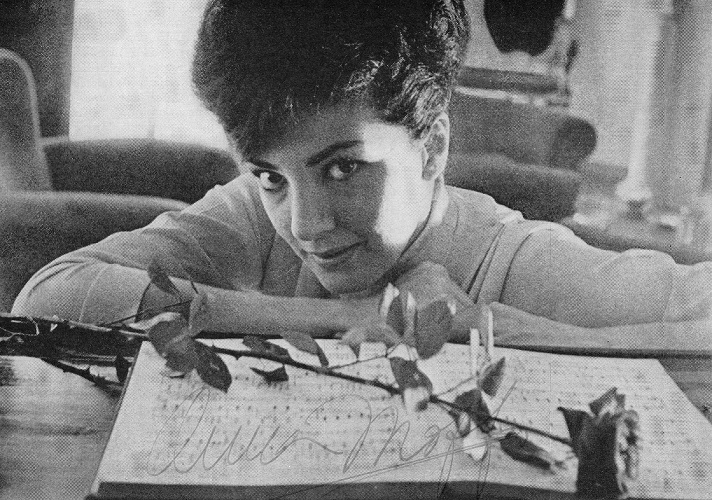
Anna Moffo, a beloved star at The Met in the 1960s and 1970s, made an album of Verdi arias from roles she never sang onstage. Entitled A Verdi Collaboration, the program was conducted by Franco Ferrera.
(The photo above is autographed, though the signature has faded.)
Here are some tracks from this wonderful and largely forgotten recording.
Anna Moffo – SIMON BOCCANEGRA – aria

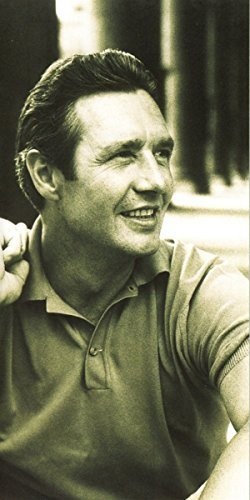
Franco Corelli sings Radames’ great arias Celeste Aida from a 1962 Met broadcast; Giorgio Tozzi sings Ramfis.
Franco Corelli – Celeste Aida – AIDA – with Giorgio Tozzi – Met b’cast 1962

 Oberon's Glade