Category: Dance

  • Discovering Lydia Johnson Dance

    (This story from Oberon’s Grove tells of my first encounter with Lydia Johnson Dance in March 2009.)

    ljd first

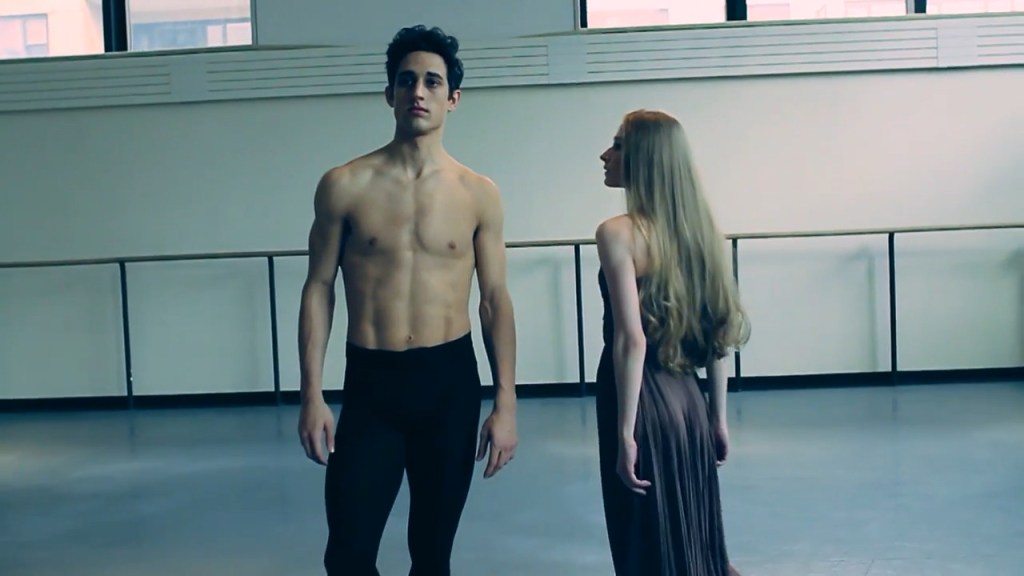
    Above: dancers Jessica Sand and Tucker Ty Davis, photo by Julie Lemberger

    Sunday March 29, 2009 – Back to the City Center Studios tonight with Evan to watch a rehearsal by the Lydia Johnson Dance Company of their latest work – as yet untitled – to the music of the Polish composer Henryk Gorecki. This was preceded by excerpts from Lydia’s 2004 work IN CONVERSATION set to the spectacular Violin Concerto of Philip Glass.

    Waiting for the dancing to begin, Evan and I were speaking of the sheer number of invitations to dance events we receive on a daily basis. Sorting out what to see and what to miss increasingly becomes a dilemma as we try to decide from a press release whether it is something we will like or not; then it’s a matter of scheduling and also of hoping to space events out reasonably so there is time in between to reflect rather than dashing madly from one venue to another and never having anything really sink in. Fortunately I have struck it rich in many of my choices, such as TAKE Dance or Miro Magloire’s New Chamber Ballet.

    Up until this evening Lydia Johnson was just a name I was vaguely familiar with; what made me say ‘yes’ to this invitation was the announcement that she would be working to music of Gorecki. Music is always the key element for me when it comes to enjoying dance; if I like the music, I’m halfway there before the dancing even commences.

    So this is what happened: Lydia Johnson became overnight one of my favorite contemporary choreographers. Her dancers all appear to have strong classical ballet background and are wonderfully fluent in presenting what Lydia asks of them while each also shows keen individuality and personal magnetism. Lydia’s style seems to me very demanding physically, making us aware of the workings of the human body while always imaginatively aligning movement to the music . 

    Introducing the works, Lydia’s love of music shone thru in her words. Then her dancers took the floor and within seconds I knew I had found something I loved.

    In excerpts from IN CONVERSATION, dancer Jessica Sand (who reminds me of Alexandra Ansanelli) immediately began ‘speaking’ to me with her superbly fluid movement; there is a gestural language here and Jessica’s dancing has a nice feeling of the poetic. She is partnered by an enigmatic dark-haired and dark-eyed young man named Robert Robinson. The bearded dancer immediately swept Jessica into a spacious lift, his strength as a partner surprising in view of his slender frame. Beyond that he showed elegant port de bras and a presence with an intriguing touch of mystery. Watching these two dancers move thru Lydia’s pas de deux with such extraordinary focus and grace as the gorgeous Glass score filled the room was quite an experience. I felt a deep connection to the music and to the expressive commitment of the dancers.

    Meanwhile, Tucker Ty Davis stood on the sidelines. He seemed rather unassuming and his more hunky build made me wonder what kind of dancer he would be. The answer when he started to move was compelling: he is passionate, powerful, agile and fearless. His interjected solo lasted only moments but it was enough to put him right up high on my list of dancers to watch in future.

    The Glass score with its hypnotic rhythms and haunting minor-key lyricism practically screams: “Dance to me!” It seemed to me that music, dancers and choreographer had met in a perfect union. And after such an exhilirating experience I had to keep reminding myself “It’s just a rehearsal”. Now I can’t wait to see it in full performance setting.

    After a very short break, all nine of the Company’s dancers appeared in the untitled Gorecki. Still a work in progess, the piece uses part of the composer’s Harpsichord Concerto (‘…like the score of an old horror movie”…as Lydia aptly decribed it) and part of his String Quartet #1. Lydia stated that the two movements may eventually have a connecting interlude but I didn’t think it needed anything more; it looks so good and responds so well to the music just as it is.

    At first the five women seem to be in their own world, moving with quiet intensity in patterns which seem to express that they are an isolated group but not discontented with their situation. As the four men join them, the movement becomes more expansive. Couples form, and the large group often splinters into trios who perform synchronized gestures as the dancing swirls around them; I especially liked this aspect of the piece. The work is both visually and musically extremely satisfying and again the individual dancers continually draw the eye from one to another. Jessica Sand, Tucker Ty Davis, Kerry Shea and the blonde Eric Vlach were outstanding in the leading roles here. The ensemble were anything but anonymous: rather each dancer makes a personal mark on the choreography. I look forward to putting names to faces so that I can properly enthuse over their individual efforts. 

    (This evening marked the start of my enduring friendship with Lydia Johnson and with many of the dancers who have appeared in her performances thru the ensuing years.)

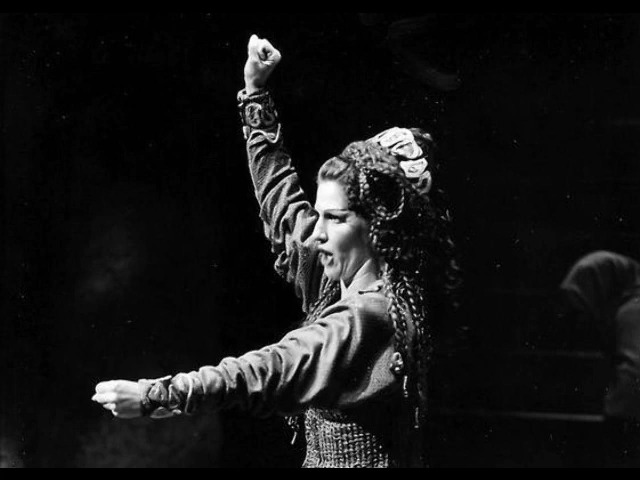
  • Singers: Maralin Niska

    (This article about the great singing-actress first appeared on Oberon’s Grove in 2008; it included many more photos, but for this revival, I’ve chosen a few special favorites.)

    maralin fave

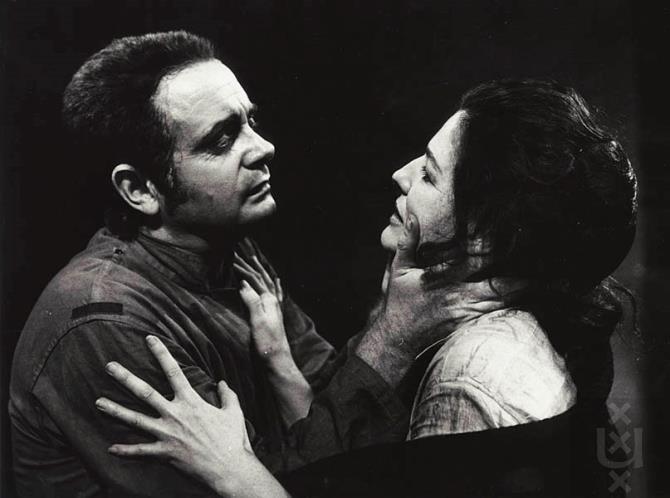
    Back in 1968, I was at a performance of CAV/PAG at NYCO and the soprano singing Nedda caught my fancy, not just because she was slender and sexy and moved with a natural command of the stage, but also that at one point she stamped out a cigarette with her bare foot. I could not think of many divas who would do that.

    I could write a book about Maralin Niska; her performances are among the most potent memories I have of that heady time in the 1960s-1980s when so many great singers played nightly at both of New York’s opera houses.

    Her voice was unconventional; an enigma, really. I would not call it beautiful though she could convince you that it was utterly gorgeous in certain phrases. Her technique was based very much on a chest resonance which gave her unusual power; while the timbre of her voice was dark, the thrust of it was very bright. When I think of other great singing-actresses I have seen – Rysanek, Silja, Behrens – Niska stands firmly in their company and she was the most versatile of them all. She was a striking woman; I remember her being referred to as the Rita Hayworth of opera.

    In 1969, while the Met was closed due to a strike, Maralin was alternating Mozart’s Countess Almaviva with the role of Yaroslavna at NYCO. Two more dissimilar roles would be hard to imagine but she was utterly at home in both. Her Countess had an almost tragic dimension as she suffered the indignations her husband heaped on her; she used her perfectly supported piano technique to great effect in Mozart’s music. As Yaroslava, left by Prince Igor to run the unruly kingdom while he is off fighting Khan Kontchak, Niska sang a hauntingly hushed lament for his absence. But when the rebels set fire to the palace, Maralin, surrounded by the thundering chorus of boyars, let fly with an unscripted high-D which was as thrilling as any note I’ve ever heard in an opera house.

    As Marguerite in FAUST, Niska was anything but a shrinking violet. Faust was the key to her sexual awakening and when he bade her adieu in the Garden Scene, Niska broke into sobs of frustrated passion. Her overwhelming power in the final trio, and her devastating rejection of Faust at the end literally ring in my ears even today.

    The vocal and dramatic strokes Niska used in her canvas remain vividly alive for me all these years later. In BUTTERFLY, kneeling with Suzuki and Trouble with backs to the audience as the Humming Chorus is intoned and evening falls, Niska slowly looked over her shoulder to the audience with an expression of quiet fear: Butterfly’s unshakable faith would not pass the test. In TRAVIATA, having been asked by Germont pere to give up his son, Niska sustained the opening of “O, dite alla giovine” with a remarkable hushed tone and drew no breath before continuing. With that phrase, Violetta’s fragile world comes undone. No other soprano has done it quite the same way. But I went backstage afterwards and said, “Maralin! That NOTE!” “Which note?” “The note before “Dite alla giovine!” “Um…yes?”  “You held it so long and so quietly and then went into the phrase without breathing!” “I did?”

    She sang Tosca, her contempt for Scarpia expressed with icy power. After she had murdered him, she knelt by his corpse and sang “E morto…or gli perdono!’ and with a swift stroke buried the blade of the knife into the stage about an inch from the baritone’s head. Then she sang Mimi, and I thought she’d be way too cold for that. But she told an interviewer: “I put on the costume and I became Mimi.” Using portamenti and her miraculous piano, Niska did indeed become the pathetic seamstress.

    Niska was also singing at the Met by now, in VESPRI and TOSCA among other operas. She was wonderful and wove her own magic into the existing stagings.

    niska medea

    Above: Maralin as Medea

    NYCO mounted Cherubini’s MEDEA for her. This complex role, sometimes sung as a verismo shrew, was more classically structured by Niska who seemed to realize that vocally Medea is more akin to Donna Anna than anything else. Moreover, she convinced me that Medea was “right” and that her horrific murders of Glauce and of her children were perfectly natural. I never saw Callas in opera, but it would be hard to imagine she was any more potent a Medea than Niska.

    At NYCO she continued in her Mimi mode with a beautifully expressive Manon Lescaut.  Then she took on Salome, having just the ideal combination of silver & blood in the voice. I was dazed by the mesmerizing, obsessive power of both her singing and her portrayal. The art deco sets were superb, and Niska ended her dance in a shimmering body stocking. In the end, as the soldiers crushed her, Maralin let out a chesty groan and writhed for a moment before death took her.

    Then came one of her most delightful and unexpected triumphs: the Composer in ARIADNE AUF NAXOS. This is my favorite opera and I just loved NYCO’s production which seemed to capture the two colliding worlds to perfection. Maralin sang the idealistic Composer, who is finally forced to deal with the realities of life in the theatre, with a flood of dark, soaring tone and vivid dynamic control. The Composer disappears at the end of the Prologue, but in this production, Niska entered the pit and “conducted” the opening of the opera; then Julius Rudel, already seated next to the podium, took over after several measures.

    TJ and I had moved to Hartford and were stunned one night when we went to see TRAVIATA at the Bushnell to find that Maria Chiara had cancelled and Maralin was replacing her. “Let’s go leave her a note!” suggested TJ. Rushing to the stage door, we came upon Maralin pounding on the “wrong” door, trying to get into the theatre where she’d never performed before. She was thrilled to see us, not least because we were able to show her the right door.

    FANCIULLA DEL WEST was another perfect Niska creation; she seemed just to “become” this unpretentious, good-hearted Wild West woman…not above cheating at cards to win her man.

    TURANDOT was a role we never got to see her do; apparently NYCO asked Maralin to learn it for the LA tour, promising her performances in NYC afterwards. The promise was broken. But I have a tape of the LA performance and it’s pretty impressive.

    Maralin sang the unlikely role of Rosalinda in FLEDERMAUS and, at Carnegie Hall, the Latvian national opera BANUTA in which her steely top notes and powerful chest voice were thrillingly on display.

    maralin em

    Above: Maralin as Emilia Marty

    Niska’s greatest triumph, though, was in the Frank Corsaro production of Janacek’s MAKROPOULOS AFFAIR. This fascinating story of a 342-year-old woman who has spanned the decades under various names (always using the initials E.M.) thanks to her alchemist father’s potion for eternal life has been fashioned by Janacek into a vivid drama which centers on Elina’s need to find the lost prescription: she needs a dose to extend her life another 300 years. Ruthlessly manipulative, she manages by seduction to attain the formula only to decide in the end that she is weary of life. Corsaro told the story of the opera onstage while overhead, films of episodes from EM’s past are shown on multiple screens. Maralin appears in the films in various period costumes, using and abusing her sexual fascination to get what she wants from her various lovers. Onstage there is a nude scene where EM removes her dressing gown to show Baron Prus the scars inflicted by one of her sadistic lovers; few divas besides Niska have the body to appear nude onstage. It seemed entirely natural. In the end, Elina offers the magic formula to the young Christa who burns it; spontaneously all the screens burst into flame and out of the darkness, EM’s enigmatic chauffeur comes to bear her away into the smoke. The ovations Maralin received for these performances rivalled any I have encountered in the theatre.

    I saw her onstage for the last time as Elisabetta in MARIA STUARDA; she was still singing with amazing force but NYCO had decided they didn’t need her – even though the latest revival of the Janacek had been even more powerful than the original run. But she threw herself into the Donizetti, brazenly sailing in and out of registers and treating Maria (Ashley Putnam) with palpable disdain. After signing Maria’s death warrant, Elizabetta turns on the hapless Leicester and orders him to be witness to Maria’s execution. Launching her final stretta with almost gleeful vengeance, Niska propelled the scene to its climax and struck a brazen high E-flat which rang into the house (and onto my tape recorder!)

    She moved to Santa Fe and we kept in touch. Then one year my Christmas card came back marked “No such number”. I wrote again: same thing. I feared we had lost contact.

    I thought about her all the time; and the power of thought worked. Shortly after I moved to NYC, I was working one morning and down the aisle Maralin came walking. She was in town with her husband Bill Mullen for a NYCO “family reunion”. We had the most amazing conversation and established why my letters hadn’t reached her. Three years later she was in town again and came in expressly to say hello.

    Now I’m re-reading what I’ve written. How feeble it sounds; I don’t think l’ve begun to express the impact of her performances. My diaries have much more detail, but even they seem very pallid. It’s the impressions she made on my mind or my…soul…that can’t be defined. The diaries, the old tapes, the photos, the programmes, notes she sent me. No one could grasp from any of this what Maralin Niska really meant to me. But I wanted to try to express it anyway.

    niska
    niska derksen wozzeck

    Above: with baritone Jan Derksen in WOZZECK, one of Maralin’s European triumphs

    niska button
  • NYCB Flashback ~ Wendy Whelan’s Farewell

    (Bringing this 2014 article forward from the Grove to celebrate the one-and-only Wendy Whelan.)

    ww by matt murphy

    Above: Wendy Whelan, photographed by Matt Murphy

    Saturday October 18th, 2014 – No two ballerina farewells are ever alike. Darci Kistler’s farewell marked the end of an era, as she was considered “the last Balanchine ballerina”. At Heléne Alexopoulos’ gala we celebrated one of the greatest beauties ever to grace the stage. Yvonne Borree’s farewell was the most touching, Kyra Nichols’ the most moving. I missed the farewells of Jenifer Ringer and Janie Taylor, saying ‘goodbye’ to them in the days prior to their final bows, simply because I couldn’t imagine NYCB without them. Miranda Weese wasn’t given the full farewell treatment as she wasn’t retiring, just changing companies. I missed her even before she was gone, and I still miss her.

    Tonight, Wendy Whelan’s farewell summoned up an enormous range of emotions, just as her dancing has always done. The programme was well-chosen to underscore her association with four great choreographers, including a complete performance of one of her signature ballets, Balanchine’s LA SONNAMBULA, excerpts from works by Jerome Robbins, Alexei Ratmansky, and Christopher Wheeldon, plus a special pièce d’occasion: a new pas de trois devised for Wendy, Tyler Angle, and Craig Hall in a choreographic collaboration of Chris Wheeldon and Alexei Ratmansky.

    Daniel Capps was on the podium for the opening SONNAMBULA and the concluding Vivaldi/Richter setting for the premiere of BY 2 WITH & FROM; Andrews Sill led the Shostakovich score for CONCERTO DSCH. Throughout the evening, Company musicians were featured: pianist Cameron Grant playing the Chopin for GATHERING; Susan Walters at the keyboard for CONCERTO DSCH; violinist Arturo Delmoni with Cameron Grant for AFTER THE RAIN; and violinist Kurt Nikkanen for the Vivaldi/Richter. For each of them, Wendy had a very cordial greeting, and at the end of the evening she stepped to the edge of the stage and swept into a deep curtsey to thank the NYCB orchestra for their invaluable support throughout her career. That was a particularly lovely moment.

    The emotional temperature ran high all evening; in fact several people I talked to spoke of how they had experienced unusual mood swings from giddiness to despair throughout the day, anticipating Wendy’s dancing whilst regretting that it would be her last time on this stage. 

    Following LA SONNAMBULA‘s opening scene and divertissements, Wendy appeared to the first ovation of the night. She conveyed the mystery of the sleepwalker with her pin-pointe bourrées; in a trance, she managed to totally ignore Robert Fairchild’s endless attempts to intrude on her private world. Earlier in the work, Sara Mearns, Amar Ramasar, Likolani Brown, Megan Mann, Devin Alberda, David Prottas, Lauren King, Antonio Carmena, and Daniel Ulbricht were all vividly present, and they joined in the applause for Wendy during the bows.

    In the DANCES AT A GATHERING excerpt, Wendy joined Abi Stafford and Rebecca Krohn in dances of sisterly joy; Jared Angle, Adrian Danchig-Waring and Zachary Catazaro were the handsome cavaliers. In the passage where the girls are flung from one boy to the next, Zachary made an amazing catch of Wendy as she hurtled thru the air into his arms.

    It was that poignant piano theme in Shostakovich’s concerto #2 – played with great clarity by Susan Walters – that really put me over the edge. Wendy and Tyler Angle danced the adagio from CONCERTO DSCH luminously, with such expressive lyricism. A beautiful sextette of supporting dancers conveyed the quiet intensity of the little vignette Ratmansky has created for them here: Alina Dronova, Gretchen Smith, Lydia Wellington, Joshua Thew, Justin Peck, and our newly-promoted-to-soloist Russell Janzen. How thrilled they all must have been to share these moments with Wendy one last time.

    Wendy and Craig Hall then danced the pas de deux from Wheeldon’s AFTER THE RAIN, holding the audience in an enraptured state as the crystalline purity of the Arvo Pärt’s ‘Spiegel im Spiegel’ stole thru the silent hall in all its poignant grace. It seemed that time stood still here, allowing us to immerse ourselves in the spell-binding artistry of these immaculate dancers.

    In between the three above-listed shorter works, brief films were shown while Wendy changed costumes. In these films, the ballerina I have had the honor to know revealed so many facets of her personality. In one utterly Wendy moment, she played up the mock-jealousy of finding Craig Hall emerging from a rehearsal with ‘another woman’: Rebecca Krohn. That made me laugh out loud. 

    And all to soon, we had reached the end. The Ratmansky/Wheeldon collaboration provided an excellent setting for Wendy’s last dance on Mr. B’s stage. With her two princes – Tyler Angle and Craig Hall – she conveyed the supple strength, tenderness, gentle wit, and sheer overwhelming beauty that have made her one of the great dance icons of our time. The ballet ends with Wendy reaching for the stars.

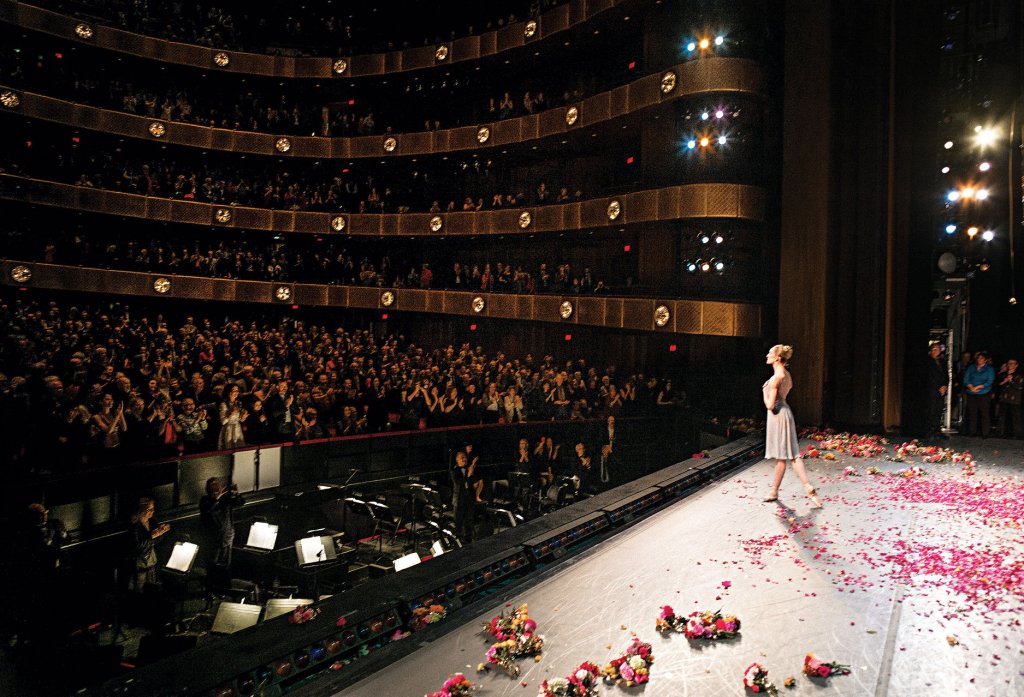
    At a farewell, the actual dancing often takes a back-seat to the event. The ballerina appears in selections from her cherished roles and as we savor her artistry one last time while secretly we are looking forward to the downpour of rose petals, the flinging of bouquets, the embraces of colleagues, the inevitable “last bow”, and the opportunity to express our admiration in unbridled clapping and shouting.

    ww farewell

    For Wendy, the huge ovation at the end signified not only our appreciation for all she has accomplished in her magical career to date, but also our plain unvarnished love for her as a human being.

    As the applause at long last echoed away, I started walking up Broadway, planning to attend the after-party. But then I just felt a need for solitude and reverie, so I jumped on the train at 72nd Street and came home. I was thinking yet again that it has been my great good fortune to have been in this City at the same time as Wendy Whelan.

    LA SONNAMBULA: Whelan, R. Fairchild, Mearns, Ramasar, Mann, Brown, Alberda, Prottas, King, Carmena, Ulbricht

    DANCES AT A GATHERING (Excerpt): A. Stafford, Whelan, Krohn, Danchig-Waring, Catazaro, J. Angle [Solo Piano: Grant]

    CONCERTO DSCH (Second Movement): Whelan, T. Angle [Solo Piano: Walters]

    AFTER THE RAIN Pas de Deux: Whelan, Hall [Solo Piano: Grant; Solo Violin: Delmoni]

    NEW WHEELDON/RATMANSKY (World Premiere): *Whelan, *T. Angle, *Hall [Solo Violin: Kurt Nikkanen]

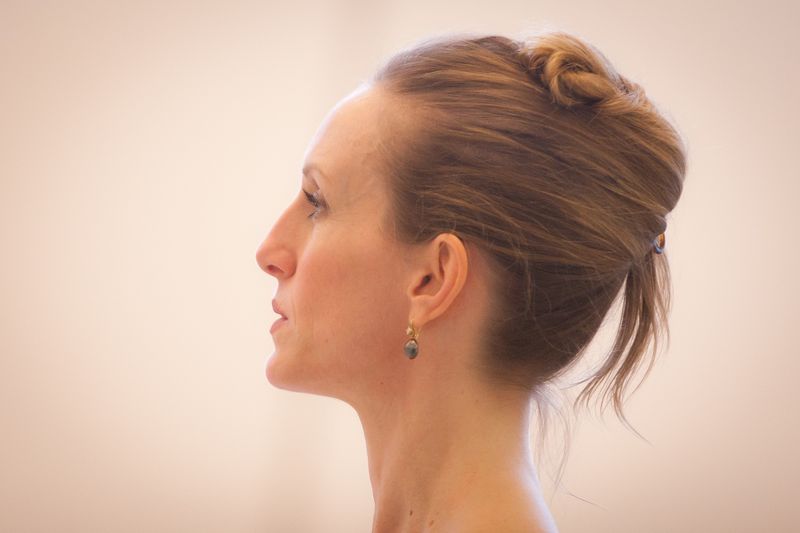
    (It took me a long time to settle on a portrait of Wendy to headline this article. Matt Murphy took the picture at the top when Wendy guest-taught a class at Manhattan Movement and Arts Center a couple of years ago. To me, the photo is her…I love the wispy strands of hair at the nape of her neck, and her utterly unique beauty.)

    Bringing this story up to date, Wendy is currently the Associate Artistic Director of the New York City Ballet.

  • CMS Summer Evenings 2025 ~ Concert V

    Anna Geniushene c

    ~ Author: Oberon

    Tuesday July 22nd, 2025 – I wasn’t feeling well but decided to go to this evening’s Chamber Music Society concert because I was especially keen to hear the Arensky quartet that was the closing work on the program. The prevailing heat and humidity had exhausted me, but now we had had a cooler day, and I was glad to get out of the house. In the event, I didn’t make it to the end of the evening.

    Mikhail Glinka’s Variations on a Theme of Mozart, as played by Anna Geniushene (photo above), got the evening off to a dazzling start. From its extraordinarily subtle opening bars,  the music soon turns fanciful. Ms. Geniushene’s technical command made for a fascinating aural experience as her mastery of piano/pianissimo colorations and touches of rubato constantly enticed the ear; her extraordinary delicacy of touch was a testament to her amazing control. Just as she was polishing off the final bar of music, someone sneezed loudly. Yes, I know these things can happen, but really spoiled the atmosphere in the hall. 

    During the ensuing performance of Beethoven’s Variations in G-major for Piano, Violin, and Cello, Op. 121a, “Kakadu”, my evening began to unravel. A couple sitting in front of me began sharing whispers, and even cuddled a bit, whilst two women next to me fanned themselves briskly with their Playbills. I managed to tune these distractions out – at least momentarily – as Ms. Geniushene was joined by violinist Francisco Fullana and cellist Sterling Elliott for the Beethoven.

    After a unison start, the pianist sets a gentle pace; the strings veer between intensity and lyricism, the violin tender, the cello deep. Moments of drama alternate with delicious subtleties as the music turns dancelike.

    Now the variations commence: the first for solo piano, the second for nimble violin & piano, the third for mellow cello & piano. Scale passages from the Steinway underscore themes traded between the string voices in the fourth, The fifth has a lyrical flow, the sixth is witty, with the strings making slashing attacks. Violin and cello are charming in the seventh variation, and Ms. Geniushene plays wistfully in the eighth, soon joined by the strings. Then a merry dance strikes up and the finale is quite grand. The three musicians were warmly cheered. 

    Schubert’s Adagio and rondo concertante in F-major for Piano, Violin, Viola, and Cello, D. 487, commenced with violist Lawrence Dutton and the gorgeous cellist Inbal Segev cellist joining Ms. Geniushene and Mr. Fullana for some sublime music-making. But the chatterboxes in front of me could not sit still, and now the man behind kept whispering to his companion, whilst the two women to my right had fallen asleep. As the Schubert reached its brilliant finish, to hearty applause, I decided to head home, not having heard the Arensky, which is why I was there in the first place.

    ~ Oberon

  • Janie Taylor & Justin Peck

    jp jt

    Janie Taylor and Justin Peck dance to music by Philip Glass in this brief film, made for The Block magazine .

    Watch and listen here.

  • Paul Taylor @ The Joyce ~ 2025

    Shawn lesniak

    Above: Shawn Lesniak in Paul Taylor’s Runes; photo by Steven Pisano

    ~ Author: Oberon

    Sunday June 22nd, 2025 matinee – Three works were on the bill at The Joyce this afternoon, as the Paul Taylor Dance Company concluded their season at the iconic venue. The matinee marked the farewell Taylor performance of Shawn Lesniak, who joined the Company in 2019. 

    Paul Taylor’s opus 64 – Polarisis set to a commissioned score by Donald York; it premiered in 1976. This work is unique in that it presents the same choreography twice, in different musical settings and with different dancers performing in and around a metallic cube; Jennifer Taylor’s lighting design, always so impactful, is also altered in the repeat. 

    In the cast of the first setting of the work were Gabrielle Barnes, Emmy Wildermuth, Payton Primer, John Harnage, and Jake Vincent. Of the women, Mlles. Barnes and Primer were new to me. Ms. Wildermuth had dazzled me in 2024, dancing Jody Sperling’s Clair de Lune, inspired by Loïe Fuller; today, in Polaris, her solo was vividly danced. John Harnage and Jake Vincent looked like young gods, and they danced handsomely.

    Donald York’s score develops a lilting theme, the choreography is stylized as the dancers move about the space creating shapes and striking poses; one dancer replaces another as if by magic.  The music is increasingly cinematic, the dancing full of wit, irony, athleticism, and grace. Ms. Primer and Mr. Harnage have an intriguing duet, and then Ms. Barnes made a gorgeous impression in a long solo passage where she moved about the space like a goddess. 

    One by one, the dancers of the first setting depart, their spots being taken over by Lisa Borres Casey, Jada Pearman, Jessica Ferretti, Lee Duveneck, and Alex Clayton. The music here felt more dramatic…more theatrical; at times, it became suspenseful, even creepy. The lighting seemed to take on a unique glow, with Jada Pearman charming us in her solo. Ms. Borres Casey and Mr. Clayton matched up to fine effect in their duet, and Jessica Ferretti was stunning and sublime in the long solo. Lee Duveneck towered over his colleagues, always a compelling advocate of the Taylor style. The finale of the ‘second’ score was especially evocative. 

    Following the interval, we saw Tablet (Taylor’s opus 24), set to a commissioned score by David Hollister, premiered in 1960. This playful, nine-minute duet was once danced by the choreographer and Akiko Kanda (photo below by Helga Gilbert): 

    Tablet-Taylor-Kanda-by-Helga-Gilbert 2

    Today, Tablet was danced by Kristin Draucker and Devon Louis, below in a Steven Pisano photo:

    Taylor tablet pisano

    Tablet’s score is quirky, the atmosphere that of a playful courting duet. The dancers were ideally paired, their shapes and port de bras having a natural flow. Each has a solo passage, but it is in their entwined partnering that the relationship – and the mutual trust between the two – is most palpable. During the interval, former Taylor star Richard Chen-See stopped by to chat; I understand that Richard was very much involved in getting Tablet back into the repertoire, and that’s surely why it felt so perfect. Ms. Draucker and Mr. Louis were the ideal choices for this revival. I hope Tablet will continue to be danced for us in seasons to come.   

    Cloven Kingdom has long been one of my favorites in the Taylor repertoire; it was the choreographer’s opus 63. With music by Arcangelo Corelli, Henry Cowell, and Malloy Miller, the work premiered in 1976. I first saw it at Jacob’s Pillow in 1982, and it was love at first sight…and first hearing. The music casts a spell: the elegance of Baroque is mixed with sexy percussive rhythms and sounds from an exotic jungle to captivating effect. Having seen it numerous times since that Pillow showing, the piece today was as marvelous as ever.

    “Man is a social animal…” as the Spinoza quote tells us. And what a delightful bunch of humans danced for us this afternoon: Jessica Ferretti, Gabrielle Barnes, Emmy Wildermuth, Elizabeth Chapo, Kristin Draucker, Lisa Borres Casey, Jada Pearman, and Payton Primer swept about the stage in their swirling gowns, leapt swiftly along diagonals, and found new ways of walking (and cart-wheeling) that gave their moves added vibrancy. Their mirrored head-gear cast shards of light into the Hall.  

    The male quartet – a Taylor classic if ever there was one – was dazzlingly done by Devon Louis, John Harnage, Austin Kelly, and Mr. Lesniak. It seemed to me that, in the course of this number – which ends with a stunningly-lit statue-pose – and indeed on into the ballet’s finale, the dancers were subtly messaging their affection and admiration to their retiring colleague as they passed him in the course of their dancing.

    The matinee ended with a rousing ovation from the packed house; cries of “Shawnie! Shawnie!” rang out, and Mr. Lesniak then took a solo bow, to wild applause. Flowers were pelted onto the stage as his colleagues surrounded him in a massive love-in. Bravo!! Bravissimo!!!  

    ~ Oberon

  • Shostakovich Sonatas @ Carnegie Hall

    Shostakovich

    ~ Author: Oberon

    Wednesday May 28th, 2025 – Evgeny Kissin was joined by three renowned string soloists for a program of Shostakovich sonatas this evening at Carnegie Hall. It was one of the most thrilling concerts I have ever attended. The atmosphere in the Hall was palpable; aside from some cellphones going off at the the wrong moments, silence reigned. The musicians seemed bent on preventing applause between movements, keeping their bows poised over the strings in order to sustain the atmosphere. The three sonatas were presented in order of their composition: cello first (1934), followed by the violin (1968), with the viola (1975) played following the interval.

    Gautier Capuçon and Mr. Kissin strode onto the Carnegie Hall stage to a warm greeting. Dmitri Shostakovich’s Cello Sonata in D-minor, Op. 40, was composed composed during a period of political and social upheaval in the Soviet Union, and the music reflects the unsettled atmosphere of the time…and of ours, now. The cellist sometimes allowed a touch of grittiness into his tone, which was truly evocative.

    The opening Allegro non troppo is gently introduced by Mr. Kissin at the Steinway. A lovely theme gives way to vivid animation from both players. The mood gets dreamy, with M. Capuçon taking up a gorgeous cello melody that turns passionate. A super-pianissimo moment briefly interrupts the music’s flow, and then a sense of longing grows from repeated cello tones, displaying Mr. Capuçon’s marvelous control. Plucking introduces a dance, and mood swings continue – one such bringing a haunting theme: quiet and mysterious. Single notes from the piano invite deep cello playing; Kissin’s tone takes on an almost grumpy sound. Fantastic!

    Staying in an Allegro mode, scintillating piano and dancing cello illuminate the second movement. Cello glissandi and insistent keyboard rhythms pop up as the dance sails onward. A sudden stop, and then the Largo commences with incredibly hushed music from M. Capuçon’s cello. The players’ quiet intensity creates a mysterious atmosphere. The cello tears at my heart, rising from its lowest range in music filled with longing and then bursting with passion before returning to the depths. A remarkable quietude fills the Hall, then a crescendo before a fade-out, with the piano on high longing for peace. Things darken; spellbinding control from both musicians casts a spell over us.

    With dancing motifs played as if compelled by an unseen force, the final Allegro lets us savour Mr. Kissin’s glorious virtuosity, whilst M. Capuçon produces an amazing stuttering effect with his cello as these two paragons delight us with their magical partnership, bringing the first of the concert’s enthusiastic ovations.

    Gidon Kremer walked out onto the Carnegie stage cautiously, to an welcome. Now 78 (two years older than myself!), the legendary violinist responded to Menthisiastic r. Kissin’s straightforward piano introduction of the Shostakovich opus 134 with a sinuous theme. For a while, simple musical lines are exchanged, and then a sprightly dance emerges. The music is subtly playful until there’s a rise of passion. The buzzy tone of the violin then resumes the dance, somewhat hesitantly. The high-register violin filigree creates an insectuous sound before a slow fade-away.

    The ensuing Allegretto opens with a nervous dance; this movement is lively, witty, and ironic. It’s music that veers high and dips low, with some sparkly effects from the violin. A sense of urgency takes over as the music presses forward, Kissin playing high and bright as Mr. Kremer handles the music with with amazing dexterity. The violin whines, the piano swirls onward: high, fast, phenomenal music-making!

    The sonata concludes with a Largo, the pianist striking single, dotty notes as the violinist plucks away. Mr. Kremer’s playing turns ethereal, poised on high with amazing control. A keyboard dance rhythm draws restless playing from the violin. Now Mr. Kissin introduces a sense of grandeur into the music, leading to an angular violin cadenza. A rocking motif from both players carries them into a series of tremelos as the sonata ends. The Kremer/Kissin duo elicited a fervent ovation from the crowd.  

    After the interval, an artist new to me – the Ukrainian-British violist/conductor Maxim Rysanov – joined Mr. Kissin for a revelatory performance of the Shostakovich Viola Sonata, opus 147. This fascinating work, which I have only heard played live two or three times previously, really got to my soul tonight: the kind of deeply immersive musical experience that happens so rarely. 

    The opening Moderato begins very quietly, with soft viola plucking – slow and pensive – as the piano joins, dark and rather ominous. A dirge-like sense of foreboding develops leading to a burst of power. Restlessness overtakes the music; a piano solo and eerie, shivering resonances from the viola develop into a flash of grandeur before an extraordinarily subtle viola passage is heard, ending with staccati, and a sustained fading away.

    Now comes the Allegretto, commencing with a dance à la Russe. Mr. Rysanov’s playing is so suave and assured. Boldness from the Kissin keyboard and plucking from the violist lead to a heartfelt unison song, which gets quite grand.

    After a pause, the Adagio commences with a sorrowing viola theme which gains poignant support from the piano. Every note from both players seemed like a thing of value, something to treasure…such incredible playing. The spirit of Beethoven hovers on the air as the rhythmic signature of the Moonlight Sonata casts its spell overall. A viola cadenza – lovingly fashioned by Mr. Rysanov – draws us on to the sonata’s magnificent finish. Throughout this movement, I had been in another time and place, far from the chaotic madness of the world. A massive, roaring standing ovation filled the Hall, and it was still resounding as we emerged into the downpour…

    ~ Oberon

  • A Late-Season BOHEME @ The Met

    Met boheme may 2025 ~ MET Opera photo

    Above, today’s BOHEME cast: Anthony Clark Evans, Gabriella Reyes, Dmytro Popov, Sean Michael Plumb, Corinne Winters, and Alexander Köpeczi; a MET Opera photo

    ~ Author: Oberon

    Sunday May 25th, 2025 matinee – A cast largely new to me brought me to the Met this afternoon for yet another BOHEME. It proved to be one of the most moving BOHEMEs I have ever experienced, and it brought us the Mimi of an extraordinary soprano, Corinne Winters.

    Opening my Playbill today, I was surprised to find that Yannick Nézet-Séguin was listed as the conductor. I was quite certain that he had not originally been scheduled, and sure enough – in checking the season brochure – it was to have been Riccardo Frizza. I was annoyed at the prospect of Y N-S ruining the afternoon with his tendency to overwhelm the singers with volume from the pit. There were passages where this happened today, but to me he was more attentive than usual to the voices. (Chatting with folks at the stage door after the show, the general feeling was that the orchestra was often too loud.)

    The quartet of Bohemians today was exceptionally pleasing. Tenor Dmytro Popov as Rodolfo had made a very fine impression in this role last season, and he was equally appealing today. The two excellent young baritones in the cast were Anthony Clark Evans as Marcello and Sean Michael Plumb as Schaunard.

    Alexander Köpeczi

    And the Hungarian-Romanian basso Alexander Köpeczi (above) was making Met debut this afternoon as Colline; I’d lately read about him and have watched some of his video clips on Facebook….very impressive!

    A favorite with Met audiences, Gabriella Reyes, was a warm-toned, lively Musetta, and in Corinne Winters we had one of the most moving Mimis of my (extensive) experience; she had first appeared at the Met in 2011 as Countess Ceprano in RIGOLETTO, but today really felt like a Met debut – and an extraordinary one at that.

    Curtain up, and Mr. Evans’ rich tone gets the singing off to a great start; Mr. Popov immediately shows off a finely-projected lyric tenor. They are joined by Mr. Köpeczi, his darkish, handsome timbre will keep the music gorgeously anchored all afternoon. And then Mr. Plumb makes his mark with a voice that will bring Schaunard to prominence as the opera unfolds. Evans/Marcello baits the Met’s go-to Benoit – Donald Maxwell – and then he and his pals head out to Cafe Momus, leaving Mr. Popov momentarily alone. A knock at the door brings Corinne Winters’ Mimi onto the Met stage: the beginning of a captivating performance from this fascinating singer. Her sound and style are Italianate, and the voice carries beautifully in the big space.

    Mr. Popov’s “Che gelida manina” is lovingly phrased, with persuasive dynamics and a true sense of the poetry. The conductor is not really supportive, but the tenor fares very well anyway, with a nice top-C. Then Ms. Winters commences Mimi’s narrative, in the course of which both Rodolfo and myself will fall in love with her. Clear-toned lyricism is a Winters trademark; her lower range distinctive, her word-colourings always fresh and appealing. The orchestra is much too loud at the start of the love duet – and must the audience laugh at every single title as love blooms between poet and seamstress? But the singing is so convincing as the couple experience the delight of new-found happiness. The act ends on a long-held, harmonized note. Magic!

    The scene-change lasts so long, they might as well make it an intermission: the mood has been shattered anyway. Mr. Popov makes the most of every note and word as he introduces Mimi to his friends…and the tenor makes something special out of “…sbaccio l’amor!” The children’s chorus have fun with their calls of “Parpignol…Parpignol!” and Mssrs. Evans, Plumb, and Köpeczi seize upon every note to keep their characters engaging us in this crowded staging.

    Musetta arrives in the person of Gabriella Reyes, and, as she settles in after some initial commotion, Ms. Winters and Mr. Popov have a lovely exchange. Then Ms. Reyes launches the waltz, full of allure and insinuation. The soprano shines in this aria, capping it with a house-filling top-B. Anthony Clark Evans then encores the melody with baritone-power, leading to a massive climax. The parade passes thru: the last joyous moment of the opera.

    Following an endless interval, the prelude to Act III was nicely and subtly played by the Met orchestra. Ms. Reyes’s sweet lyricism recalls her waltz, and then the hapless Mimi appears. From her first hesitant line, Corinne Winters captures every nuance of Mimi’s plight with her touching, expressive singing. Finding Marcello/Evans, the soprano and baritone are simply wonderful in their duet: clear, emotionally-charged singing from both. The soprano is spectacular here, her timbre and way with the words would make you swear you’re listening to an Italian prima donna

    As Mimi hides, Mssrs. Popov and Evans have a telling exchange, superbly voiced despite some over-playing from the pit. Then the tenor confesses his fears about Mimi’s health with “Mimi a tanto malata…” which continues to his outpouring of truth at “Una terrbil tosse“. Mr. Popov saturates these passages with passionate despair…bravissimo!

    Mimi steps forward to the sound of a theme full of heartbreak, and Ms. Winters is infinitely touching in Mimi’s farewell, “Donde ieta usci...”, so beautifully phrased and coloured, her lower range so evocative, her crushing final words gorgeously intoned, with a lingering last note that vanished into the air like a whispered goodbye. 

    Rodolfo/Popov seeks to mend things; the couple remind one another of the things they love – and hate – about each other. Meanwhile, Musetta and Marcello are having their own battle royale. In the ensemble, the sopranos pour out vibrant sounds. Then, alone again, Mimi and Rodolfo resolve to stay together: Mr. Popov’s ravishing “…stagion di fior...” true poetry.

    After a pathetic second intermission wherein most of the audience stayed in their seats, twiddling their thumbs, we have the reminiscing duet of Rodolfo and Marcello, recalling happier days: wonderful singing from the Popov/Evans team; and though the orchestra encroached for a spell, it ended with soft musing. Bravi, gentlemen! 

    Now the four Bohemians reunite; recalling past good times together, they party, all singing lustily. Mr. Plumb again impresses here. They dance, and duel, until suddenly Musetta bursts in, bringing with her the dying Mimi. In this heart-stopping moment, time seems to stand still. Ms. Winters brought forth a wealth of detail in her singing here, from the outpouring of Si rinasce…” to her wistful greeting of each of the Bohemians: “Tutti qui...”  

    Mr. Köpeczi sings Colline’s wrenching farewell to his old coat, hauntingly recalling it as his longtime companion thru good times and bad…the basso’s resonant voice, loaded with emotion, sounds marvelous in the big house. Bravissimo!

    Finally left alone with Rodolfo, Ms. Winters seals her fascinating performance with her heart-rending singing of “Sono andanti…?”  Pure poetry here, her lower range battering my heart with its unique incandescence.

    The mood was somewhat spoilt by audience members laughing at the title/translations…they should by turned off by this point. But Ms. Winters restores proper dignity when she finds Mimi’s pink bonnet under the pillow, inducing a flow of memories. And then she sleeps away.

    The curtain calls were lovely today, each singer warmly greeted as he/she stepped before the gold curtain in this, one of the last two Met productions wherein curtain calls involve an actual curtain. Ms. Winters was deservedly cheered for her engrossing performance.

    Boheme may 2025-1 jpg
    Above: a sizeable crowd gathered at the stage door to greet the singers, and I was very happy to re-connect with tenor and voice teacher Jason Ferrante, who I’d met when he was at Julliard and I worked at Tower Records. Ms. Winters is one of Jason’s longtime students. I met Ms. Reyes, and Mssrs. Evans, Plumb, and Köpeczi (how Mr. Popov managed to slip by me I am not sure). And Ms. Winters’ personality is as lovely as her voice; she seemed genuinely moved by the audience’s response to her performance this afternoon. 

    All in all, a wonderful afternoon at The Met…an afternoon that recalled another such day – many, many seasons ago – when I fell in love with Jeannette Pilou. Today, Corinne Winters cast a similar spell over me. She was so kind as I tried – so clumsily – to express my admiration.     

    ~ Oberon

  • CMS: Beethoven Quartet Cycle ~ Finale

    Calidore_Beethoven

    Above: the Calidore String Quartet, photo by Frank Impelluso

    ~ Author: Ben Weaver

    Sunday May 18th, 2025 – Chamber Society of Lincoln Center reached the end of its 2024-25 Beethoven String Quartets cycle, performed by the the outstanding Calidore String Quartet. For the sixth and final concert the quartet – violinists Jeffrey Meyers and Ryan Meehan, violist Jeremy Berry, and cellist Estelle Choi – performed Beethoven’s quartets Nos. 14 and 16.

    String Quartet No. 14 in C-sharp minor, Op. 131, composed in 1825-1836, and has been studied and individually praised by the likes of Richard Wagner, Robert Schumann, and Franz Schubert – who had it played for him privately a week before his death. Composed in seven movements played without a break, it opens with a somber melody on the first violin. The rest of the musicians enter one by one, the music remaining austere and calm, perhaps reflecting Beethoven’s deep faith as it resembles parts of his earlier Missa Solemnis. Wagner once wrote that this was “the saddest thing ever said in notes.” The Calidores played this beautifully, with extreme care and dedication. The music shifts to a playful dance and then back to darkness, and then back again and again. The playful Scherzo (marked Presto), with its charming melody, zooms around like a playful puppy, lovingly played by the Calidores. There’s a memorable moment towards its conclusion where all four instruments play pianissimo in their highest registers, then the volume is quickly raised, which felt like being suspended in zero gravity and then quickly falling down. The Finale is a violent march with occasional soaring melodies to break up the clouds.

    The Quartet No. 16 in F major, Op. 135 ended up being Beethoven’s almost-last composition for the string quartet. (The only thing remaining was the new final movement for Quartet No. 13, which ended up being the very last piece Beethoven ever composed.) It opens once again with a somber melody, but unlike the darkness of the earlier quartets, this one is simply mournful and lovely. The Calidores held the audience in thrall with the beauty of their playing. The second movement, Vivace, is wonderfully chaotic, as if ready to unravel at any point. The following Lento assai, cantabile e tranquillo is Beethoven at his most lyrical, full of stops and starts, like breathing of a dying man. And the Finale: Grave, ma non trope tratto, begins ominously and violently, but ends on a lighter, even triumphant, note.

    The terrific musicians of the Calidore Quartet undertook a monumental challenge, performing all sixteen of Beethoven’s String Quartets in a single season. The works themselves are the Mount Everest of the string quartet repertoire and the challenges are enormous. Beethoven wrote his string quartets in three batches of his life and career: early, middle, and late. They show a profound progress of an artist who became the leading figure of Romanticism, sturm und drang; but also a musician of frequently surprising humor. Mssrs. Meyers, Meehan, Berry, and Ms. Choi combine all the elements needed to bring these million faces of Beethoven to life.

    ~ Ben Weaver

  • Parsons Dance @ The Joyce ~ 2025

    Her-Gifts-Photo-by-Steven-Pisano1-1024x683

    Above: the one and only Zoey Anderson in David Parsons’ new solo, Her Gifts; photo by Steven Pisano

    Sunday May 18th, 2025 matinee – Parsons Dance at The Joyce with a program of works by Rena Butler, Robert Battle, and the founding choreographer himself: David Parsons.

    The program opened with Parsons’ 2005 work Wolfgang, to music of Mozart. Hints of Paul Taylor as well as nods to the classical ballet world are woven into the choreography. Howell Binkley’s emblematic lighting designs – both here and later, in Caught and In The End – are so atmospheric. 

    Wolfgang  Photo by Paula Lobo

    Wolfgang (photo above by Paula Lobo) has a beautiful, flowing feeling, with a series of duets giving the dancers ample opportunity to shine (the “either/or” listing of the dancers left me wondering who was who at times). For a while, the dancers lounge on the floor. The adagio brought finely-lit poses, laced with touches of humor. There were vanishing acts, where the dancers disappeared into the upstage darkness. In the light and bright finale, Parsons makes canny use of the music; a series of turns elicited a burst of applause.

    A brand new – and stunning – solo, Her Gifts, choreographed by David Parsons to Roberta Flack’s immortal classic ‘The First Time Ever I Saw Your Face’, was a gift from David to the radiant Zoey Anderson. In a striking Judy Wirkula gown, glowingly bathed in golden light, Zoey took complete command of the stage with her hypnotic way of moving: her every step and gesture held the audience under a spell.

    The Hunt (2010), is choreographed by Robert Battle to a tumultuous score by the French percussion band Les Tambours du Bronx. I seem to recall being at the studio one afternoon early on in this work’s creative process. Of course, it was a whole different set of dancers in those days. 

    The Hunt can be danced by either men or women, and today it was a female quartet – Téa Pérez, Megan Garcia Ziminski, Justine Delius, and Joanne Hwang – who took us on this wild ride. Burke J. Wilmore’s lighting bathes the quartet in bloody light; later, saturated colors illuminate the back panel. The dancing is provocative, ritualistic, ecstatic. Pairing off, bodies are dragged about. The pace is relentless, the women so compelling in their moves. The crowd responded with unbridled enthusiasm.  

    Sheep_s-Gothic-Paula-Lobo

    Above: from Rena Butler’s Sheep’s Gothic; photo by Paula Lobo

    Sheep’s Gothic, a 2025 creation by Rena Butler opened the evening’s second half. Moody lighting by Christopher Chambers showed us seven dancers costumed by Asha Ama in athletic gear, including knee pads. The “either/or” cast listing (and a prevailing darkness) again kept me from figuring out who was who, but the dancing was impressive throughout.

    A cappella choral works by Felix Mendelssohn have an oddly nationalistic air. Offsetting these, music by Darryl J Hoffman creates a sonic tapestry; things speed up, echo effects entice, whimsical elements are introduced as this darkish dancework evolves. The chorale resumes, with some mechanical noises further deepening the nocturnal mood. Hymn-like music and spoken words sustain the atmosphere, but after a while, a feeling of longueurs creeps in. A relaxed beat underpins a spacious ensemble as this enigmatic dance moves to its end.   

    I cannot count the times I’ve seen David’s signature masterpiece Caught; I first saw this solo danced by the choreographer at Jacob’s Pillow many years ago. Since then, it’s been performed by both male and female dancers, and it never fails to elicit a delirious response from the audience. This afternoon, Joseph Cyranski wowed the crowd with his magnetic presence and dazzling dancing, perfectly timed to give Caught the visual magic this iconic dancework demands.    

    In The End  Photo by Steven Pisano

    Above: Joseph Cyranski in In The End; photo by Steven Pisano

    David Parsons created In The End – to the music of the Dave Matthews Band – in 2005. It makes a perfect closing number, as all ten of the Company’s dancers join in. Again, Howell Binkley’s lighting is a key element to the work’s appeal. The dancers move thru the Parsons choreography with a mix of lyricism and athletic poise, evoking a celebratory ovation at the end as each dancer rushes on for a solo bow.  

    ~ Oberon