Category: Dance

  • Monte/Buglisi/Muller @ NYLA 2015

    ImageProxy.mvc

    Tuesday June 16th, 2015 – A triumvirate of distinguished female choreographers presenting their work at New York Live Arts: Jennifer Muller, Elisa Monte, and Jacqulyn Buglisi drew together to offer an impressive evening of dance, and each had the benefit of the excellence of her dancers.

    Sacred Landscapes – Episode 1 (Buglisi/World Premiere) This dreamlike dancework is set to an evocative score by Paola Prestini, performed live by cellist Jeffrey Zeigler and vocalist Helga Davis. As the lights come up, the dancers – clad in diaphanous garments – stride towards us in slow motion as fog billows about them. A sombre theme from the cello sets the mood. Among the many danced highlights, solos by Ari Mayzick and the ever-ravishing Carrie Ellmore-Tallitsch stood out. There are demanding partnering motifs, including some wafting high lifts.

    Ms. Davis’s voice is first heard in whispered parlando; she will later sustain some other-worldly high notes. The cellist meanwhile veers from dreamy to profound. The dancing is ritualistic and the dancers evoke an atmosphere that is both spiritual and the sensuous. Ms. Ellmore-Tallitsch gave an enthralling performance: her simple act of crossing the stage near the end of the piece took on a depth of resonance thanks to this dancer’s particular mystique. Lovely to re-encounter Lauren Jaeger (such expressive hands) and Darion Smith – all the dancing, in fact, took on a fine lustre.

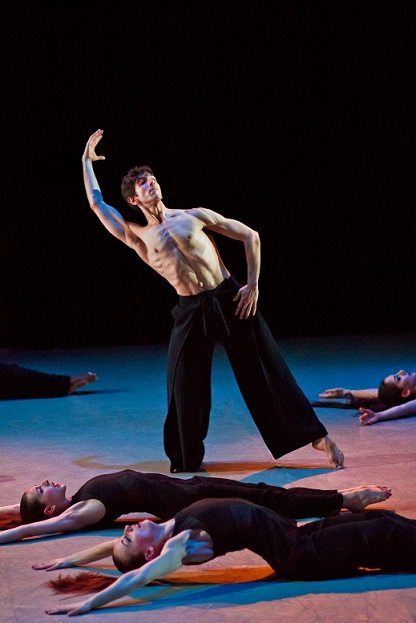
    Hurricane Deck (Monte) begins with a quirky announcement: “A blow to the head…I’ve never been unconscious before!” and from there Elisa Monte’s eight dancers zip about the space against a sky-blue background, the choreography witty and active. Clymene Baugher, Maria Ambrose, Mindy Lai and JoVonna Parks swirl about in swift, playful combinations while the bare-chested boys – Malik Kitchen, Justin Lynch, Alrick Thomas and Thomas Varvaro – pursue and partner them: the movement is fun and eclectic.

    David Lang’s score is a lively setting for all this activity, with odd rhythms, stuttering brass, and a sense of whirring at one point as the dancers switch partners.  The backdrop has gone black as the dancers stand in a row, each stepping forward in an agitated danced narrative. They hit the floor only to bob up again. “Say it!…end it!” says the unseen narrator, and as the dancers embrace, silence falls and we hear their breathing. The piece seems to be over. 

    But instead, clanging sounds rouse them; the music turns rather ominous as they perform a sort of darkish coda to heavy brass. The atmosphere takes on a cloying tinge and the work moves slowly to an un-premeditative end. The dancers sustained this longish final section strongly, though I think the work might have benefited by stopping earlier, with the words “End it.” 

    Alchemy (Jennifer Muller/World Premiere): I had an opportunity to see this work in rehearsal a week before the performance. At that time, Jennifer mentioned there would be ‘projections’ but the production was in fact quite elaborate, with a scrim having been installed during intermission. Across the backdrop and scrim, thought-bytes appear in swift succession: “…a deluge of information…” and “…accumulating none-essentials…” are but two timely references. Later, catch-phrases from pop culture and Yahoo!-style headlines flash across the screens, making me chuckle. Eventually, single words come flying at us. The four-elements inspiration for Alchemy brings us a firestorm; projections of the scorched Earth finally give way to the blessed, cleansing effects of rain. Kudos to Mark Bolotin, who devised the video design.

    All these visual effects might have tended to dwarf dancers of lesser power than Jennifer’s; but the Muller troupe – and Jennifer’s choreography – assured that the dancing held forth and remained central to the production. We first find Caroline Kehoe alone onstage, a feminine presence of alluring line; Seiko Fujita appears, striking a sustained arabesque. They are joined by Shiho Tanaka, Michelle Tara Lynch, and Sonja Chung: even thru the scrim, their personalities read clearly.

    Gen Hashimoto, Michael Tomlinson, and Malik Warlick appear in stylized, slow-motion phrases; Benjamin Freedman will later complete the impressive male quartet. The dance becomes more active; the dancers rush about as if searching for something. Lightning flashes; threatened by Nature, Caroline and Malik dance an entwined, restless pas de deux.

    Having been cast down upon the blasted terrain, Gen struggles back to the land of the living; as Seiko also revives, they dance a tender, earth-bound duet. Sonja and Michael are beautifully matched in their duet. A feeling of desolation creeps in. In the dim light, Shiho’s poetic hands evoke the rain…which finally falls, bringing a glimmer of hope and renewal.  

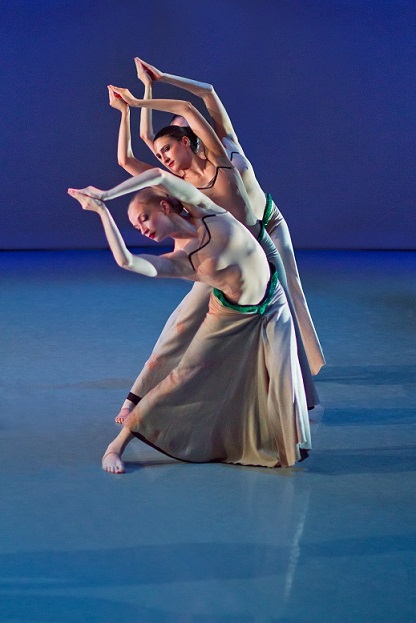
    Sand (Buglisi) is performed to a luscious Philip Glass score which continually put me in mind of Debussy’s L”aprèsmidi d’un faune. Beautifully lit (by Clifton Taylor), this exotic pas de six calls for both lyrical movement and powerful elements of partnering. The three couples – So Young An with Juan Rodriguez, Stephanie van Dooren-Eshkenazi with Ari Mayzick, and Anne O’Donnell with Darion Smith – met all the demands of the piece whilst creating a sultry atmosphere, induced by the swaying sensuousness of the Glass score.
  • In Performance: GRAHAM 2

    11015477_10153139682186131_3644922198939538584_n

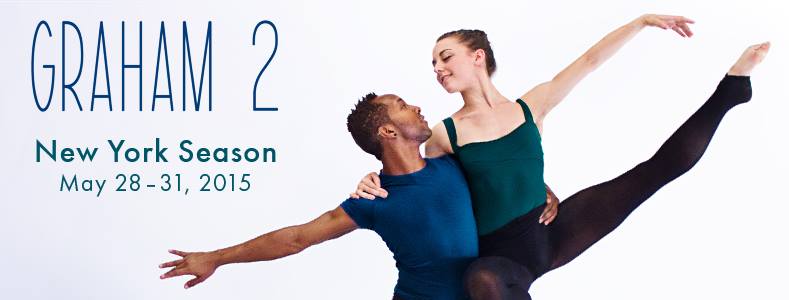
    Friday May 29th, 2015 – The young dancers of Graham 2 in performance at the Martha Graham Dance Company’s home space at Westbeth on Bethune Street in the West Village. It was rather stuffy in the theatre, and there were distractions of latecomers wandering in during the dancing. But it was a very impressive performance overall, and several of the participating dancers seemed poised to emerge as successful Graham artists in the seasons ahead.

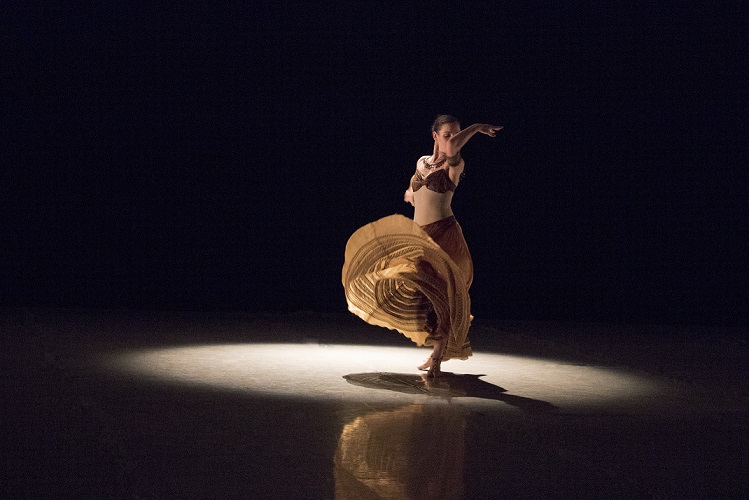
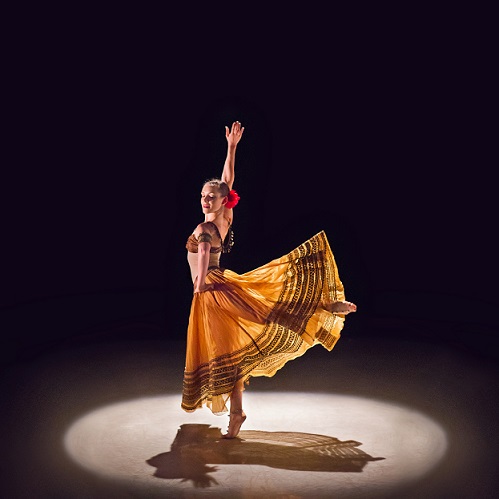
    Beginning in a circle of light, Dani Stringer performed the elegant solo à l’espagnole, SERENATA MORISCA. In a billowy skirt, wearing ankle bells and with a peony in her hair, Dani seemed eminently at home in this liltingly lovely dance, to atmospheric music by Mario Tarenghi. Premiered in 1916 (!) the solo looks absolutely fresh and au courante today. Two photos of Dani dancing the Serenata were offered to me – each captures her so well that I decided to include both:

    001 - _MG_1804

    Above, photo by Brigid Pierce

    002 - G215_SM1

    Above, photo by Antonia K Miranda

    HERETIC dates from 1929 and is one of Graham’s most powerful works. It alludes to the outcasts that are found in every culture, race, and religious affiliation. I’ve now seen it a few times and it’s a resonant work, with a stop-and-start score arranged by Charles de Sivy from an old Breton chanson

    002 - G215_H2

    Above: from HERETIC, with Jessica Sgambelluri and the Graham 2 ensemble; photo by Antonia K Miranda

    Jessica Sgambelluri gave a powerful performance as the scorned woman, constantly subjugated by the implacable sisterhood who move almost mechanically into positions of closing ranks around the hapless victim. At times they seem to be praying for the woman’s redemption, but they remain sternly rejecting, even threatening.

    001 - G215_H1

    Above: Ms. Sgambelluri and the ensemble in HERETIC; photo by Antonia K Miranda

    001 - G215_L1

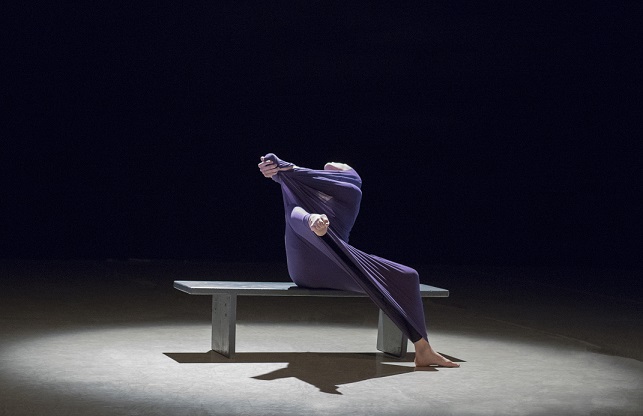
    Anja Zwetti (above, in Antonia K Miranda’s photo) took on the iconic Graham solo LAMENTATION and made a strong impression as she performed this ‘dance of sorrows’ seated on a bench and wrapped in a shroud of purple jersey. The Kodaly piano score gives the dancer her movement cues, and the lighting provides a shadow-dance that gives the work an added ghostliness. Ms. Zwetti held the audience in a state of keen focus throughout the solo. I had the feeling that several in the crowd were seeing LAMENTATION for the first time, and were deeply moved by the experience.

    002 - G215_L2

    Above: Anja Zwetti in LAMENTATION, photo by Antonia K Miranda.

    A selection from NIGHT CHANT followed, re-staged by the inimitable Virginie Mécène. This late Graham work (1988) is set to an exotic score by R Carlos Nikai and features a large ensemble of both male and female dancers who move in signature Graham motifs; it is an homage to the culture of the Native Americans, depicting the rituals of their community.

    001 - _MG_0258

    The women (above, photo by Brigid Pierce) appear variously in large or small movement units while the men, sexy in sleek tights, are given dynamic leaps and cartwheels. NIGHT CHANT features a central pas de deux couple: tonight we had the charismatic Dani Stinger and Alex Clayton giving a fluent performance. 

    003 - G2150178

    Above: the ensemble in TURNING POINT, photo by Antonia K Miranda

    In its world premiere performances, TURNING POINT by Blanca Li was a striking addition to the Graham 2 repertory. Thirteen dancers, clad in black trousers, first appear standing in place; they remain on their marks as individual solos, disconnected duets, and mini ensembles spring up almost randomly. They fall and rise in various combinations, and then there’s a walkabout before they re-group. They disappear and re-enter in a diagonal, with more floor time and passages of gestural language. Suddenly the dancers rush about the space; a female duet ensues, and then a female trio takes up a counter-dance. Silence falls, and the full ensemble appear in a cluster swaying gently as the light fades.

    Tao Guttierez’s wonderful score shows us a contemporary composer unafraid of melodic appeal; the dancers did a great job with this piece, which afforded many individual opportunities. I hope to have a chance to see TURNING POINT again.

    001_MG_0497

    Above: Jessica Sgambelluri in TURNING POINT; photo by Brigid Pierce.

    002_MG_0599

    Above: Stylianos Kefalas in TURNING POINT; photo by Brigid Pierce

    Following the interval, more Graham classics to be savoured, beginning with the 1936 all-female ensemble work STEPS IN THE STREET, the central section of Graham’s visionary anti-war trilogy CHRONICLE.

    002_MG_1790

    Dani Stinger (above, photo by Brigid Pierce) led the ensemble with an impressive sense of mission…

    001_MG_1757

    …while the ensemble (above, Brigid Pierce photo) moved compellingly thru the stylized demands the choreography places on them. My hope for these young dancers – both the women and the men – is that they will be instilled not only with Graham’s dance technique but also with her work ethic and philosophy of life.

    Anne Souder appeared next in the signature green-black-white-yellow dress that says: SATYRIC FESTIVAL SONG. This is Graham at her most witty, and Ms. Souder did an excellent job of it, with her quirky leaps, wiggles, and sudden posed stops; her hair also became part of her performance. I unfortunately don’t have a photo of Anne Souder in this solo but moments later she was back onstage for DIVERSION OF ANGELS and here she shone ever-brighter.

    001_MG_1248

    Above: Anne Souder in DIVERSION OF ANGELS; photo by Brigid Pierce

    In the concluding DIVERSION OF ANGELS (1948, to a Norman Dello Joio score), Ms. Souder displayed a soaring extension and rock-steady balances, along with a stage-hungry aspect that gave each moment of her performance an inspiring glow. The dancing by everyone, in fact, was really impressive. The men gave their passages a high-energy verve – will they make the leap to the top Graham echelon? Let’s hope so, because the courage and conviction are there: in addition to Alex Clayton, we had Alessio Crognale, Antonio Cangiano, and Stylianos Kefalas all doing handsome work. Sharing the spotlight with Ms. Souder in the ballet’s principal female roles were Anja Zwetti (lyrical in White) and Vera Paganin (lively in Yellow). Sarita Apel and Linda Bombelli joined Jessica Sgambelluri and Dani Stinger for some fine dancing in the supporting female quartet.

    Lovely to see Graham luminaries Natasha Diamond-Walker and Lorenzo Pagano among the crowd, and my special thanks to Janet Stapleton for arranging things and for sending me the production photos with perfect timing.

  • At ABT: Paloma Herrera’s Farewell

    Paloma-herrera

    Wednesday May 27th, 2015 matinee – Farewells are always bittersweet, and this afternoon at ABT as Paloma Herrera took her final bows with the Company, it seemed rather sad that she should be leaving us since she is in gorgeous physical shape, technically polished to perfection, exuding prima ballerina confidence, and wildly popular with audiences.

    Sometimes at a farewell, the occasion overshadows the actual work being performed, but this afternoon’s GISELLE was excellent in every way. Paloma’s Giselle is a classic: the marvelous feet, the expressive hands; the clarity with which she presents the character’s hopefulness, her illness, her devotion to Loys, the devastation of his betrayal, and her fall into madness and death all so perfectly projected in Act I. As a Wili, she is able to portray both spectral remoteness and human tenderness in perfect measure.

    Her Act I solo – the hops on pointe and then a swift, swirling manège – drew screams of delight from the audience, and her Wili solo in Act II literally stopped the show: she was called out twice to ecstatic applause. For all the brilliant surety of her dancing, it was her simple gesture of steadfast love after having saved Albrecht that will always linger in the memory.

    Roberto Bolle is a blindingly handsome Albrecht, and handsome is as handsome does: his dancing and partnering are superb. As he watches Giselle being crowned queen of the harvest, Bolle’s eyes reveal his foresight: “My number’s up, this will all end soon.”  We cannot quite tell if he’s taken his village romance seriously or has viewed it as a lark: whichever is the case, he is almost cripplingly devastated by remorse in Act II. 

    Bolle’s bravura solo in Act II and his long series of entrechats were much admired by the audience; he and Paloma sustained a spiritual link throughout their other-worldly encounter, imbuing the adagio with the palpable sense of a dream from which he hopes never to awaken.

    The most moving moment of the performance came with their final parting. As Herrera/Giselle was about to descend into her tomb, she stretched out her hand to the bereft Bolle/Albrecht to give him a single flower. He can barely reach her, barely grasp the blossom…her token of forgiveness. That’s when I burst into tears.

    The cast was a strong one down the line, with Thomas Forster’s towering Hilarion, Susan Jones’s clearly mimed presage of disaster as Berthe, and Luciana Paris’s luscious Bathilde all making a fine effect. Youthful brio and charm marked the Peasant pas de deux as danced by Skylar Brandt and Aaron Scott, with Skylar bringing a touch of rubato to her first solo.  In Act II, Devon Teuscher’s Myrthe was imperious and sublimely danced, and Melanie Hamrick and Leann Underwood as the principal Wilis floated thru their solo passages with Sylph-like grace.  

    The final ovation was monumental: many of Ms. Herrera’s partners – past and present – and seemingly the entire current ABT roster filled the stage to honor her, heaping flowers at the ballerina’s feet. The applause went on and on, with a group of devoted fans yelling “PA-LO-MA! PA-LO-MA!!” At last she appeared alone before the Met’s gold curtain to a veritable avalanche of applause and cheers.    

  • RESTLESS CREATURE @ The Joyce

    936786_622820757745337_656057846_n

    Above: the Restless Creature, Wendy Whelan, with her four choreographers; clockwise from top left: Kyle Abraham, Brian Brooks, Josh Beamish, and Alejandro Cerrudo; photo courtesy of Ms. Whelan 

    Tuesday May 26th, 2015 – Wendy Whelan’s RESTLESS CREATURE arrived at The Joyce this evening after an unforeseen delay: it was postponed from last season as Wendy was recuperating from surgery. In this production, the incomparable ballerina dances duets choreographed by four men – Joshua Beamish, Brian Brooks, Kyle Abraham, and Alejandro Cerrudo – and in each duet, she is partnered by the choreographer. 

    In July 2014, Wendy invited my friend Joe and I to the studio where she and Josh Beamish were rehearsing Josh’s duet in preparation for the London premiere of RESTLESS CREATURE. Tonight, Joe and I had seats in the front row, the better to savour every moment of this imaginative evening of dance.

    Musicians are seated on either side of the hall at audience level: pianist Rachel Kudo to our left and the Bryant Park Quartet to our right. It is a beautiful Max Richter cello solo played by the Quartet’s Tomoko Fujita that opens the evening; as the house lights fade, the tall and charismatic Alejandro Cerrudo starts his 2013 duet EGO ET TU with a sustained solo, the music having passed to the piano. Wendy Whelan, clad in white, makes a modest entry from upstage and dances a pensive solo with a vulnerable aspect. As the music reverts to the strings, Wendy and Alejandro are alternately drawn together and pulled apart. The music, which includes works by Philip Glass and Gavin Bryars in addition to the Richter, provides a gorgeous setting for the silken movement of the two dancers, and – as throughout the evening – Joe Levasseur’s lighting designs are a visual enrichment.

    A brief interlude from the Bryant players gives Wendy time for a costume-change, and then we move directly to Joshua Beamish 2015 duet CONDITIONAL SENTENCES with Ms. Kudo at the keyboard for J. S. Bach’s Partita No. 2 in C minor. Both dancers wear red shirts and grey trousers (I rather missed the long red skirt in which Wendy originally danced this piece) and the duet has the air of stylized courtship. Charmingly elusive, they cover the space deftly, ‘speaking’ to us, or to one another, in a wry gestural language. They seem very much like birds of a feather.

    Kyle Abraham’s darkly atmospheric duet THE SERPENT AND THE SMOKE begins in gloom with Kyle’s slow solo suddenly erupting in a spastic outburst. Mysterious music – by Hauschka and Hildur Gudnadóttir – creates an ominous expectancy; then, suddenly, there’s intense light. Warily, Wendy approaches Kyle and, to a lamenting theme, tenderness is cautiously explored in movement that is gorgeously stylized. Then silence falls and the dancing becomes more active. A lighting change makes a striking impact, along with a shift of pulse. The dancers pose on the floor as if in a mind-meld, and then, as the scene brightens, they rush about the stage in an enigmatic pursuit as Wendy’s hair comes undone.

    Music of Philip Glass ideally serves the Brian Brooks duet FIRST FALL which closes the programme. Reappearing in a daffodil-yellow frock, her hair flowing, Wendy dances a solo in silence. As the Bryant Park Quartet strike up, there’s a fine sense of urgency to the turbulent duet for the two dancers. Being up close gave us an intimate experience as – in the the duet’s most stunning passage – Wendy walks along the lip of the stage leaning on Brian’s bent back. A dancer’s trust in her partner is explored in a series of ‘blind’ fall-backs onto Brian’s hunched body. As the music fades, the dancers walk upstage, Wendy leaning dependently against Brian into a slow collapse.

    RESTLESS CREATURE might have been sub-titled “I Could Have Danced All Night” because that’s exactly what Wendy did. It was a tremendous pleasure to watch her take on the variety of movement motifs that the four choreographers asked of her, and to find her so thoroughly invested in dance which speaks a very different dialect from that which she trained and grew up in. As she moves on now to other projects, she remains the fascinating embodiment of everything dance is and can be.

  • Stella Abrera as Giselle @ ABT

    Abrera

    Above: Stella Abrera

    Saturday May 23rd, 2015 – Stella Abrera danced her first Giselle with American Ballet Theatre at The Met this evening; she had previously danced the role with the Company on tour. Ms. Abrera was originally to have debuted as the iconic Wili at The Met in 2008 but an injury intervened. Now at last we have the beauteous ballerina’s Giselle onstage here in New York, and what a lovely and moving interpretation it is. The audience, which included some 200 former members of ABT there to honor the Company’s 75th anniversary, gave Ms. Abrera and her partner, Vladimir Shklyarov, a delirious standing ovation.  

    ABT‘s GISELLE is a classic. Having seen it many times, there are of course aspects of it that I wish could be altered; but for a production which must frame any number of Giselles and Albrechts in a given season, it serves the ballet very well. The second act in particular is redolent of the perfume of the many phenomenal ballerinas who have graced this stage in this immortal role.

    While the Abrera debut was the evening’s centerpiece, there were many other impressive aspects to the performance. Leann Underwood was a vision in ruby-red as Bathilde, and Misty Copeland and Craig Salstein were on peak form for the Peasant Pas de Deux – I’ve never seen Craig dance better. Nancy Raffa’s mime as Berthe was clear and moving. Thomas Forster was a tall, intense Hilarion with a slightly creepy aspect, though his sincere love for Giselle was never in doubt. 

    Veronika Part’s plush dancing and Romanov-princess demeanor made her a stellar Myrthe; leaping along the diagonal in a swirl of white tulle, the imperious ballerina seemed gorgeously unassailable. Christine Shevchenko and Stephanie Williams danced beautifully as Moyna and Zulma, and the ABT Wilis, in Part’s thrall, won waves of applause for their precise, grace-filled dancing.

    Earlier this month I saw Stella Abrera in LES SYLPHIDES. She struck me as ideal in the Romantic style of this Fokine ballet; that performance seems now to have been a prelude to her Giselle. An immensely popular ABT ballerina, Abrera had the audience with her from the moment she opened the door to her cottage; as Giselle, she rushed out into the late-Summer morning full of joy and buoyed by her secret love, unaware that this was to be her last day on Earth.

    This Giselle had every reason to trust her Loys, for in Vladimir Shklyarov’s portrayal of the young nobleman there was a boyish sincerity and heart-on-sleeve openness that any girl would delight in. Shklyarov’s Albrecht had not thought far enough ahead as to the possible outcome of his village romance; he was genuinely in love and there was no trace of deceit behind his affection. Thus the naive pair saw no impediment to their romance; who knows? Albrecht might even have renounced his inheritance and they lived on together, happily ever after. Hilarion, in discovering the truth, ruins that scenario. Thus it seemed that Shklyarov’s Albrecht came to Giselle’s grave not as a repentant cad but as a bereft lover whose incautious behavior has destroyed his beloved.

    Abrera and Shklyarov both have beautiful, natural smiles, and they could not suppress the happiness of their mutual devotion throughout the early scenes of Act I. Their dancing together was light and airy, and Abrera’s solo was the lyric highlight of the first act. Yet whatever happens in Act I, and however moving Giselle’s mad scene might be – and Abrera’s was truly touching – it’s in Act II that the two dancers face the great test of both technical surety and poetic resonance. This evening Abrera and Shklyarov simply soared.

    Abrera’s Giselle gave all her purity and gentle strength to sustain her beloved throughout his ordeal. There was no way Myrthe could win against this Giselle’s steadfastness. In a spectacular pair of overhead lifts, Shklyarov swept Abrera heavenward with breathtaking steadiness. In his solos, the danseur‘s leaps and beats drew murmurs of admiration from the many dancers seated around us, and later his endless entrechats had the visual impact of a Joan Sutherland trill. Abrera, pallid and ethereal, danced sublimely. The final parting of the lovers was deeply affecting; cherishing the single flower Abrera had given him, Shkylarov seemed about to depart but in the end, drawn back by the memory of his lost Giselle, he collapsed amid the lilies on her grave.

    Standing ovations can seem de rigueur these days, but not this one: the moment the curtains parted on Abrera and Shkylarov standing alone on the vast stage, the audience rose as one and a great swelling of cheers filled the House. Not only do we have a superb ‘new’ Giselle to cherish – Abrera stands with the finest I have seen in the role – but also a deeply satisfying partnership that we can hope to enjoy frequently in coming seasons.

  • Chamber Music Society’s Season Finale

    Banner1

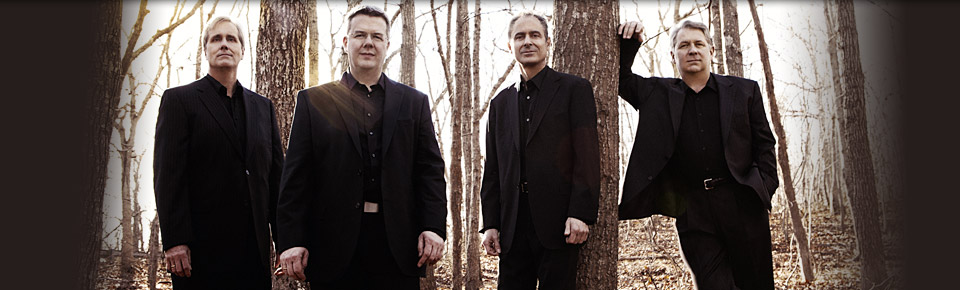
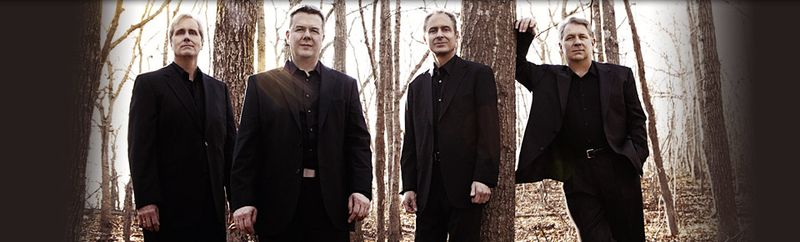
    Above: The Emerson String Quartet (Lawrence Dutton, Paul Watkins, Eugene Drucker, Philip Setzer) in a Lisa Mazzucco photo

    Tuesday May 19th, 2015 – Marking the end of their wonderful 2014-2015 season, Chamber Music Society of Lincoln Center presented the Emerson String Quartet, joined by violist Paul Neubauer and cellist Colin Carr, in a programme featuring the New York City premiere of a Lowell Liebermann work plus classics from Mozart and Tchaikovsky.

    It seems like only yesterday that I opened the CMS 2014-2015 season brochure and found myself anticipating every single one of the concerts listed; how quickly the months have flown by! But a few weeks ago, the Society announced their first Summer Season, and so now we will not have to wait until Autumn to be back at Tully Hall, hearing the great music and incredible artists who make the Society such a valuable part of our lives. 

    Tonight Alice Tully Hall was packed for this, the second performance of this programme. The Emerson String Quartet, surely one of the greatest chamber ensembles of all time, showed their mastery in works of contrasting styles; their marvelously integrated sound has a richness all its own: there are times you’d swear you’re listening to larger orchestra.

    Lowell Liebermann’s String Quartet No. 5 is one of the finest new works I have heard in recent years; not only is it superbly crafted, but it also draws a deep emotional response – something you can’t honestly say about a lot of newer music. Mr. Liebermann, who was seated directly behind us, wrote this brief note for the Playbill: “…I have no doubt that my mindset composing the piece and its resultant overriding elegiac tone was at least partly influenced by any number of depressing/terrifying events of the kind with which we are bombarded daily, in what seems more and more like a world gone mad.”  That sentence encapsulates to perfection my own feelings as I turn to the news each day and think “Can these things really be happening? Can people really have become so vain, shallow, and heartless? Has humanity lost its soul?” And so we turn to great music, both for consolation and also – sometimes – to weep with us. And that’s exactly what this quartet does.

    The music wells up from a deep cello phrase to eerie murmurings and a mournful viola theme. There’s a muted lullabye and a lamenting theme passed from viola to violin 2. Poignant textures draw us deeper and deeper into the music, and then it starts to scurry. A dance for viola is taken up by the violin; agitation builds. A full-scale canon develops, then more swirling dance music. A buzz, a violin duo, and then calm is restored with a yearning theme. A simply gorgeous violin solo is passed to violin 2 and then to the viola, which sings of anguish. A plucked passage from violin and viola takes us to a violin solo of pristine sadness before the music starts to echo its beginnings, fading in a ghostly glimmer. A profound silence filled the hall as the musicians finished: this evocative and thought-provoking piece had clearly made a deep impression. The composer was called to the stage, as bravos resounded. Both the music and the playing of it left me spell-bound.

    I kind of wished there’d been an intermission at that point, the better to remain in reverie; but Mozart’s Quintet in E-flat major K 614 brought the esteemed violist Paul Neubauer to the stage with the Emerson for music that was an antidote to the Liebermann and, almost against my will, I was drawn out of my pensive state into a sunnier place.

    Though written in Mozart’s last year, this Quintet is optimistic in tone and quite jolly in its dance motifs. Its elegant andante, prancing minuet, and jaunty finale were all played with spirit and grace, with much lovely ‘communicating’ between the players.

    For the evening’s concluding performance of Tchaikovsky’s Souvenir de Florence, Philip Setzer took the 1st violin stand with Mr. Neubauer and cellist Colin Carr adding their rich voices to the Emerson’s choir. The sound of this ensemble was really phenomenal, of symphonic resonance.

    The Souvenir is a pleasure from first note to last, but just as Tchaikovsky’s adagios in Swan Lake and Sleeping Beauty strike us most deeply in the heart, it’s the second movement of Souvenir that speaks directly to the receptive spirit. It reminded me so much of the composer’s Serenade for Strings which Balanchine transformed into his remarkable and eternal ballet masterpiece Serenade. Tonight’s performance of this Adagio cantabile was so richly played and so moving: music as consolation.     

    The Repertory:

    The Participating Artists:

  • Chamber Music Society’s Season Finale

    Banner1

    Above: The Emerson String Quartet (Lawrence Dutton, Paul Watkins, Eugene Drucker, Philip Setzer) in a Lisa Mazzucco photo

    Tuesday May 19th, 2015 – Marking the end of their wonderful 2014-2015 season, Chamber Music Society of Lincoln Center presented the Emerson String Quartet, joined by violist Paul Neubauer and cellist Colin Carr, in a programme featuring the New York City premiere of a Lowell Liebermann work plus classics from Mozart and Tchaikovsky.

    It seems like only yesterday that I opened the CMS 2014-2015 season brochure and found myself anticipating every single one of the concerts listed; how quickly the months have flown by! But a few weeks ago, the Society announced their first Summer Season, and so now we will not have to wait until Autumn to be back at Tully Hall, hearing the great music and incredible artists who make the Society such a valuable part of our lives. 

    Tonight Alice Tully Hall was packed for this, the second performance of this programme. The Emerson String Quartet, surely one of the greatest chamber ensembles of all time, showed their mastery in works of contrasting styles; their marvelously integrated sound has a richness all its own: there are times you’d swear you’re listening to larger orchestra.

    Lowell Liebermann’s String Quartet No. 5 is one of the finest new works I have heard in recent years; not only is it superbly crafted, but it also draws a deep emotional response – something you can’t honestly say about a lot of newer music. Mr. Liebermann, who was seated directly behind us, wrote this brief note for the Playbill: “…I have no doubt that my mindset composing the piece and its resultant overriding elegiac tone was at least partly influenced by any number of depressing/terrifying events of the kind with which we are bombarded daily, in what seems more and more like a world gone mad.”  That sentence encapsulates to perfection my own feelings as I turn to the news each day and think “Can these things really be happening? Can people really have become so vain, shallow, and heartless? Has humanity lost its soul?” And so we turn to great music, both for consolation and also – sometimes – to weep with us. And that’s exactly what this quartet does.

    The music wells up from a deep cello phrase to eerie murmurings and a mournful viola theme. There’s a muted lullabye and a lamenting theme passed from viola to violin 2. Poignant textures draw us deeper and deeper into the music, and then it starts to scurry. A dance for viola is taken up by the violin; agitation builds. A full-scale canon develops, then more swirling dance music. A buzz, a violin duo, and then calm is restored with a yearning theme. A simply gorgeous violin solo is passed to violin 2 and then to the viola, which sings of anguish. A plucked passage from violin and viola takes us to a violin solo of pristine sadness before the music starts to echo its beginnings, fading in a ghostly glimmer. A profound silence filled the hall as the musicians finished: this evocative and thought-provoking piece had clearly made a deep impression. The composer was called to the stage, as bravos resounded. Both the music and the playing of it left me spell-bound.

    I kind of wished there’d been an intermission at that point, the better to remain in reverie; but Mozart’s Quintet in E-flat major K 614 brought the esteemed violist Paul Neubauer to the stage with the Emerson for music that was an antidote to the Liebermann and, almost against my will, I was drawn out of my pensive state into a sunnier place.

    Though written in Mozart’s last year, this Quintet is optimistic in tone and quite jolly in its dance motifs. Its elegant andante, prancing minuet, and jaunty finale were all played with spirit and grace, with much lovely ‘communicating’ between the players.

    For the evening’s concluding performance of Tchaikovsky’s Souvenir de Florence, Philip Setzer took the 1st violin stand with Mr. Neubauer and cellist Colin Carr adding their rich voices to the Emerson’s choir. The sound of this ensemble was really phenomenal, of symphonic resonance.

    The Souvenir is a pleasure from first note to last, but just as Tchaikovsky’s adagios in Swan Lake and Sleeping Beauty strike us most deeply in the heart, it’s the second movement of Souvenir that speaks directly to the receptive spirit. It reminded me so much of the composer’s Serenade for Strings which Balanchine transformed into his remarkable and eternal ballet masterpiece Serenade. Tonight’s performance of this Adagio cantabile was so richly played and so moving: music as consolation.     

    The Repertory:

    The Participating Artists:

  • Open Rehearsal: New Chamber Ballet

    L1570082

    Above: dancers Holly Curran and Amber Neff of New Chamber Ballet

    Saturday May 16th, 2015 – Preparing for their final performances of the current season, New Chamber Ballet opened their rehearsal at MMAC today to friends of the Company. The works being rehearsed were Constantine Baecher’s Two Tauri And A Tiger (music: Wolfgang Amadeus Mozart) – which the Company premiered in April 2015 – and a new ballet by NCB‘s artistic director Miro Magloire: Friction, set to music by Richard Carrick.

    L1570052

    Friction is commissioned as part of an Artist Residency at the Center for Faith and Work. At the moment, the ballet is still in its developmental stages; it is a duet danced by Holly Curran and Amber Neff (above) and the rehearsal process has given rise to a new word: “fricting”. The dance draws on motifs of friction from the dancer’s feet upon the floor, from the dancers’ body contact with one another, and from the application of bow to strings of Doori Na’s violin.

    L1570079

    Above: Holly and Amber

    L1570085

    Above: Miro observing

    L1570122

    Constantine Baecher (above) then discussed the movement elements of his ballet Two Tauri and A Tiger. Melody Fader was at the piano to play the Mozart score as the three dancers demonstrated the free-flowing, improvisational phrases on which the work is built.

    L1570157

    Above: Traci Finch, Elizabeth Brown, and Sarah Atkins, about to start Two Tauri

    Observing the creative process in retrospect (I have already seen the ballet performed) gave me an entirely different feel for the piece. The dancers spoke of the joys (and challenges) of improvising, especially in the context of the intimate setting of New Chamber Ballet’s performances. 

    L1570100

    Above: Sarah and Traci waiting to dance

    New Chamber Ballet will close their 10th anniversary season Friday, June 12th and Saturday, June 13th, 2015, at 8:00 PM at City Center Studios, 130 West 56th St, 5th floor. Both of the works we saw in the studio today will be on the programme.

  • All-Brahms @ Chamber Music Society

    Cho-liang lin

    Above: violinist Cho-Liang Lin

    Friday April 24th, 2015 – With their customary flair for matching great music with great musicians, Chamber Music Society of Lincoln Center put together an inviting all-Brahms programme and gathered a world-class ensemble to perform it. It would be fair to say this concert was a highlight of the season to date, but then that seems to be true of each of the Society’s offerings.

    Cho-Liang Lin has always been a particular favorite of mine; he boasts a wonderful discography, with his Stravinsky/Prokofiev disc one I especially like. Tonight he joined pianist Wu Qian for the opening Brahms work: the Violin Sonata in A major Op. 100.  The piece opens with brief, hesitant violin interjections before sailing forth into melody. The second movement – an unusual setting in which Brahms seems to combine an andante and a scherzo (and it works!) – opens with a theme of tenderness and longing, so expressively played by Lin and Qian. Later, when more animated passages arise, their clarity of articulation was most welcome. The serene melody recurs, with major/minor shifts giving an affecting quality. A plucky little dance makes for a sprightly interlude before returning to the andante where the violin now lingers on high. An unexpected little coda gives the movement a brisk finish.

    The sonata’s final movement opens with a poignant theme, lovingly ‘voiced’ by Mr. Lin while Ms. Qian’s piano ripples gently. The music becomes more animated – each player alternately carries the melody by turns – but retains its lyrical heart and eschews virtuosity in favor of something more heartfelt. A friend of the composer said: “The whole sonata is one caress,” and that’s how it seemed this evening in such a beautifully dovetailed rendering from our two artists.

    The Trio in C minor for Piano, Violin, and Cello dates from the same year as the sonata, and follows it immediately in the composer’s catalog of works. Both pieces were written while Brahms was on vacation (a ‘working vacation’, obviously) at Lake Thun, Switzerland; he is thought to have been inspired by the scenery, which is understandable: 

    Lake thun
    The Piano Trio No. 3 was a favorite of Brahms’ dear friend Clara Schumann; she is said to have turned pages for Brahms when he played the work with his two friends – the cellist Robert Hausmann and violinist Joseph Joachim.
     
    This evening’s performance marked the Chamber Music Society debut of the Sitkovetsky Trio. Although  violinist Alexander Sitkovetsky has appeared with the Society before, tonight marked his first performance there with his established chamber music colleagues Richard Harwood (cello) and Wu Qian (piano). Their playing of the C-minor trio drew a well-deserved, vociferous reception from the Tully crowd.
    Concert_pic
     
    Above: The Sitkovetsky Trio
     
    In the Trio’s opening Allegro energico the three musicians got off to a grand start, the melodies pouring generously from the Brahmsian font. The blend of violin and cello was particularly enriching whilst at the Steinway, Wu Qian brought the same lyrical glow to the music that had made her performance in the sonata so impressive. A unison passage for violin and cello had a richly burnished quality, and all three players displayed both technical precision and real passion for the music.
     
    The charming and subtle second movement – Presto non assai finds the violin and cello plucking delicately; but beneath the lightness of touch there’s an inescapable quality of sadness. Then a feeling of gentle nostalgia develops in the Andante grazioso that follows, and the strings and piano trade expressive passages. This leads directly into the dynamic opening of the Allegro molto in which reflective phrases mingle with more extroverted ones; the trio concludes with in a rockingly positive mood.
     
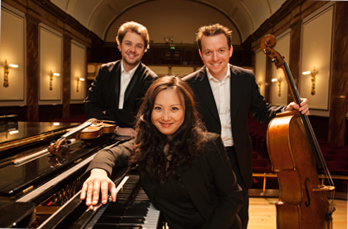
    After the interval, we jumped back 20+ years in Brahms’ compositional career for the Sextet #2 in G Major (Opus 36); Mssrs Sitkovetsky and Harwood were joined by Cho-Liang Lin, violists Paul Neubauer and Richard O’Neill, and – fresh from his marvelous Carnegie Hall concerto debut – cellist Nicholas Canellakis. As the musicians settled in and did a bit of tuning, my level of anticipation shot up: we were in for something special.  

    When Brahms started work on his second sextet, it seems he was in a highly emotional state, having been secretly engaged to a young singer named Agathe von Siebold. Realizing that marriage was not for him, the composer sent her a brusque message terminating the engagement. But he managed to preserve the memory of his brief love in this second Sextet: the letters of Agathe’s name ‘spell’ a theme in the work’s first movement; he later wrote: “Here is where I tore myself free from my last love.”

    Paul Neubauer launched the performance with a gently rocking two-note motif in continuous repetition; this motif is later passed from one player to another, giving a continuity to the music. Outstanding beauty of tone from Nicholas Canellakis and plenty of viola magic from both Mr. Neubauer and the passionate Richard O’Neill as the melodies make the rounds of the ensemble, passing from artist to artist.

    The scherzo (rather restrained and thoughtful, actually) opens on high and features delicate plucking and curling drifts of melody. Halfway thru there’s a joyous dance which subsides into into rolling waves before its boisterous conclusion.

    Cho-Liang Lin’s playing had a searching quality in the opening of the Andante which wends its way at a stately pace thru rather doleful minor-key passages until there’s an unexpected lively outburst. Calm is restored, and now major and minor phrases alternate to lovely effect; Mr. Lin’s melodic arcs sailed sublimely over the finely-blended lower voices; the music becomes almost unbearably beautiful, leading to a peaceful coda. 

    In the final movement, a brief agitato introduction settles into a lilting flow with some lively interjections. The music cascades on: bold and sunny, its energy carries us forward with inescapable optimism. A perfect finale, and the Tully audience could scarcely wait til the bows were off the strings give the six superb players the standing ovation they so surely merited.

    The Repertory:

    The Participating Artists:

  • American Symphony Orchestra’s MUSIC U

    Cd_cover460

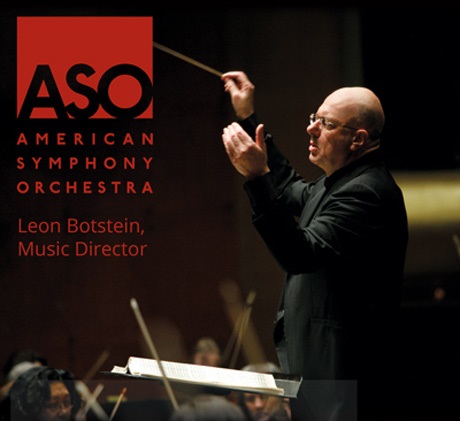
    Sunday April 19th, 2015 – This note from the press release describes the inspiration for today’s programme, entitled ‘MUSIC U’, by the American Symphony Orchestra: “In a country without kings and courts, universities have served as the patrons for many of America’s greatest composers.” Leon Botstein and the ASO were joined by the Cornell University Glee Club & Chorus in a celebration of five Ivy League composers.

    RandallThompson480

    In 1940, Randall Thompson (above) who taught at Harvard and was director of the Curtis Institute, was commissioned to compose a choral work for the opening exercises of the new Berkshire Music Center at Tanglewood, to be performed by the entire student body. The composer offered a setting of the Alleluia. Distraught over the Nazi invasion of France, Thompson could not bring himself to compose a joyous fanfare. Instead, he produced this solemnly beautiful and introspective piece, inspired by the Biblical passage (Job 1:21): “The Lord gave and the Lord has taken away; blessed be the name of the Lord.”

    Performing a cappella under the direction of Robert Isaacs, the young singers from Cornell displayed a lovely vocal blend in the heavenly harmonies of this slow, lilting choral miniature. The gentle pace quickens somewhat near the work’s end, but falls back into calm with a very sustained final note that hung on the air.

    Parker

    After a rather long pause, the concert continued with the oldest work (late 19th century) on the programme: the cantata Dream-King and his Love by Horatio Parker (above), one-time Dean of Music at Yale. This cantata won first prize in its category in a competition judged by Dvořák himself. A fanciful romantic text tells the tale of a maiden visited in her dream by a kingly lover.

    The work is melody-filled and seems to echo some of the exotic works of Jules Massenet. From the lyrical opening (the harp is prominent) thru passages dance-like, rapturous, and triumphant by turns, the music opens out like a perfumed lotus blossom. The naturally youthful sound of tenor soloist Phillip Fargo fell pleasingly in the ear, and the singers from Cornell again gave of their best.

    Rochberg-George-01

    The Symphony No. 2 by George Rochberg (above), who ran the music department at the University of Pennsylvania, was the longest work on the programme. Composed in 1955-1956, this symphony today sounds like a generic work from an era when classical music was not quite sure what direction it was headed in. It’s a big-scale piece, one which seems to take itself very seriously. One can sense such influences as Prokofiev, Stravinsky and Schönberg in the writing, and the composer’s fine craftsmanship is never in doubt. Yet despite its rhythmic variety and interesting sonic textures – oboe and horns are well-employed – the piece seemed over-extended. Melody is pretty much banished – a promising duet passage for two violas evaporated after a few seconds – and although melody is not essential, it is inevitably gratifying. Maestro Botstein’s commitment to the work and the excellent playing of the ASO – many fleeting bits of solo work are strewn throughout the score – made as strong a case for the symphony as one could hope to hear.

    300h

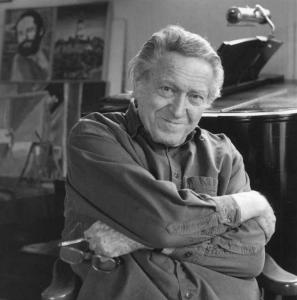
    Music for Cello and Orchestra by Harvard’s Leon Kirchner (above)…

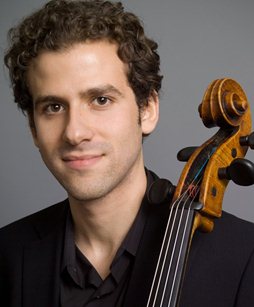
    Nicholas-Canellakis

    …with soloist Nicholas Canellakis (above) opened the second half of the concert. The cellist is a frequent participant in Chamber Music Society of Lincoln Center‘s superb concerts.

    Today, Kirchner’s music seemed to me to have found what was missing from the Rochberg: a connection to the heart. Throughout the Kirchner, the solo cello gives his piece a sense of unity and purpose that – to my ears – the Rochberg lacks. Kirchner’s orchestration is colorful and dense, with excellent use of percussion, and the music sometimes takes on a cinematic quality. I love hearing a piano mixed into an orchestral ensemble work, and at the reference to TRISTAN UND ISOLDE, my friend Adi and I exchanged smiles.

    Mr. Canellakis was simply breathtaking right from the cello’s passionate opening statement. He was deeply involved in the music, moving seamlessly from a gleaming upper register to the soulful singing of his middle range. Capable of both redolent lyricism and energetic, jagged flourishes, Nicholas’s playing seemed so at home in the venerable Hall. The audience gave him lusty and well-deserved round of applause as he was called back to the stage after his exceptional performance.   

    Robertosierraheadshot

    The chorus then returned to the stage for the concert’s grand finale: the world premiere of Cantares by Roberto Sierra (above), which Cornell University commissioned for this concert in celebration of their 150th anniversary. In this panoramic work, the cultures of the African, Spanish, Native Peruvian, and Aztec peoples are entwined in vivid musical settings of texts dating back to the 16th and 17th centuries. The composer has re-imagined these invocations and narratives for the contemporary world; for this piece, the Cornell choristers leapt readily from Quechua to Spanish.

    A long sustained tone opens Cantares; then, emerging from dark turbulence, the chorus begins to ‘speak’. A trumpet call, a wandering xylophone, a celestial harp, an oddly ominous rattle: these are all heard as kozmic sound-clouds drift by. The music is mystical and – with the under-pacing of rhythmic chant – takes on an other-worldly feeling.

    The second movement evokes African ritual and that continent’s ancient connection to Cuba. The music seems to echo thru time in its heavenly, ecstatic vibrations. Somehow Chausson’s Poeme de l’amour et de la Mer came to mind.

    An orchestral interlude has the flutter of birdsong and a dense-jungle yet transparent appeal and leads into the final Suerte lamentosa, an epic of dueling cultures told from both the winners’ and the losers’ points of view.

    The work is perhaps a trifle too long, but the composer has been successful in drawing us to contemplate the oft-forgotten (or ignored) events surrounding the injection of Christianity into the Western Hemisphere. And musically it’s truly brilliant.