Category: Dance

  • Claudia Schreier’s HARMONIC

    Harmonic 1

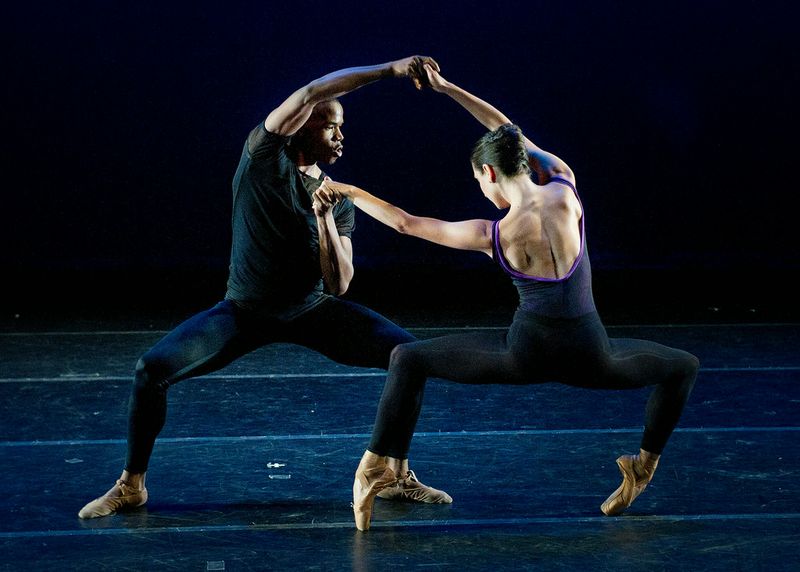
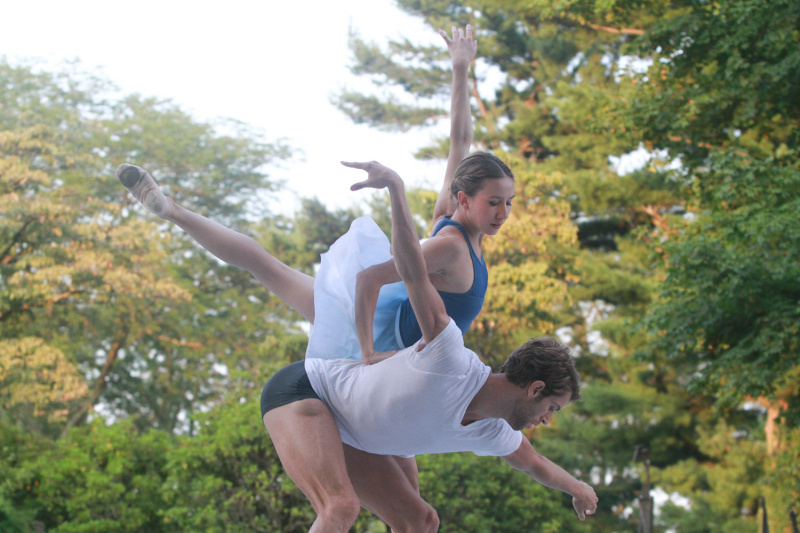
    Above: from Claudia Schreier’s ballet HARMONIC; photo by Lindsay Perry

    Claudia Schreier’s award-winning ballet HARMONIC is now on YouTube. Watch it here.

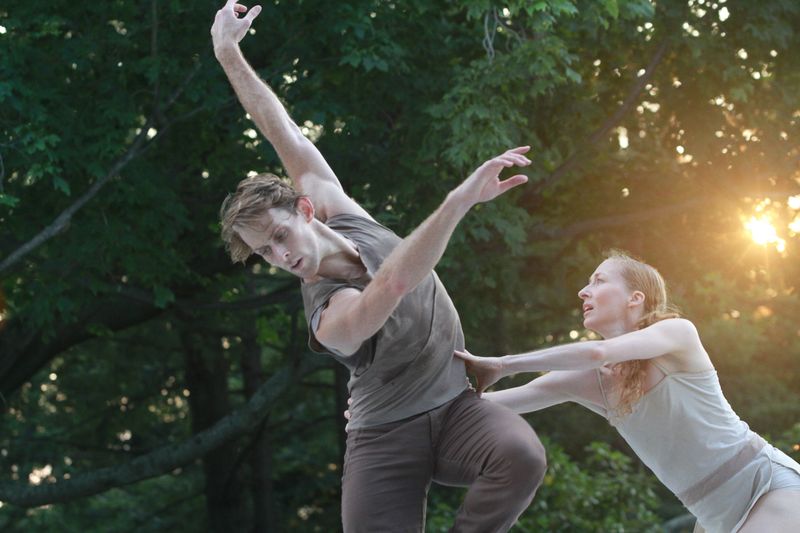
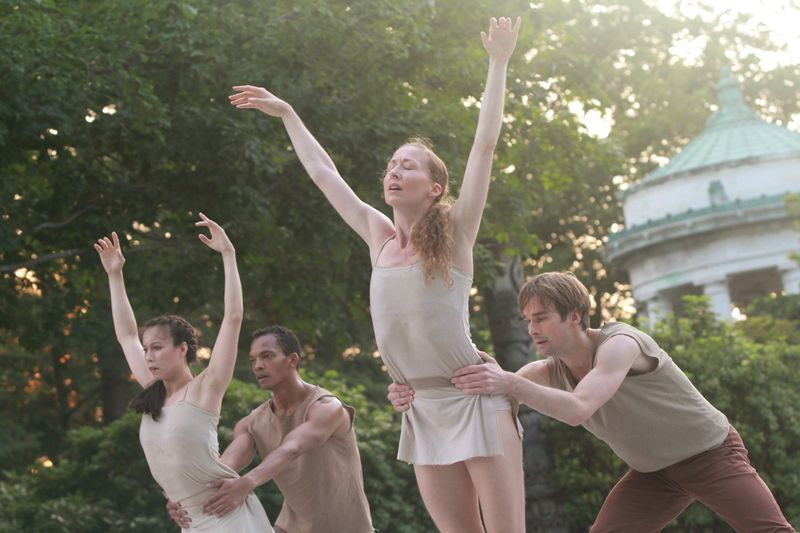
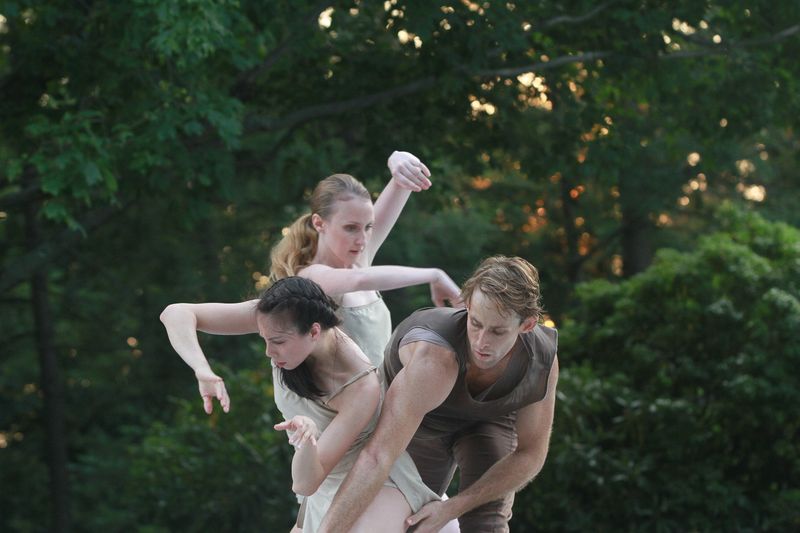
    Originally created for Columbia Ballet Collaborative and later staged for Craig Salstein’s Intermezzo Dance Company’s performances at Vassar, HARMONIC comes to us in this video from the 2014 Breaking Glass competition for female choreographers. Nicole Graniero (ABT), Edward Spots, Nadia Vostrikov and Amber Neff are seen dancing to a magical score: “Motion” by Douwe Eisenga.

    HARMONIC won the 2014 Breaking Glass award which provides Claudia with an opportunity to create/present a full evening of dance, to take place in Summer 2015; details of that performance will be forthcoming.

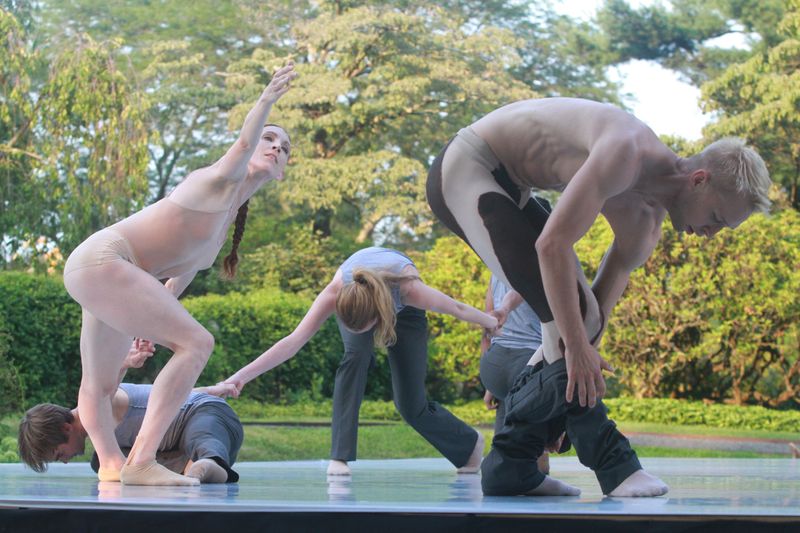
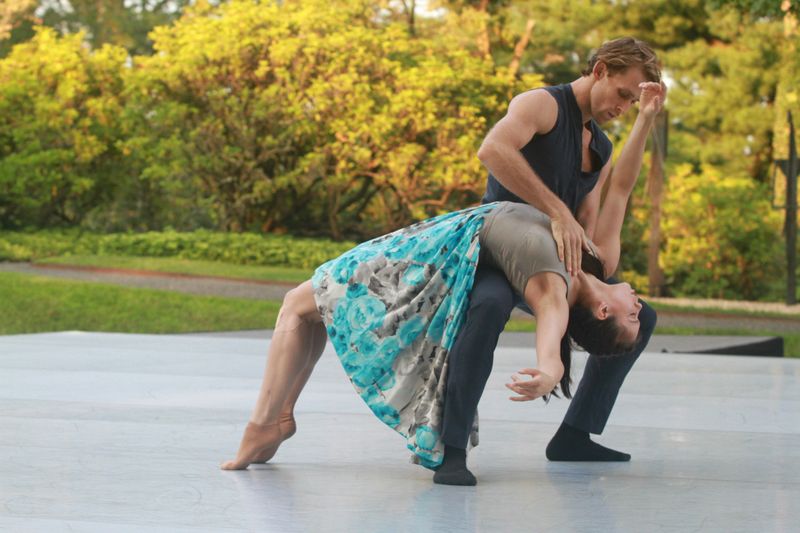
    More of Lindsay Perry’s images from HARMONIC as performed at the 2014 Breaking Glass Project:

    Harmonic 2

    Nicole Graniero in the ballet’s opening moments

    Harmonic 3

    Nadia Vostrikov

    Harmonic 5

    Edward Spots and Nicole Graniero

  • Unsuk Chin/Mahler @ The NY Phil

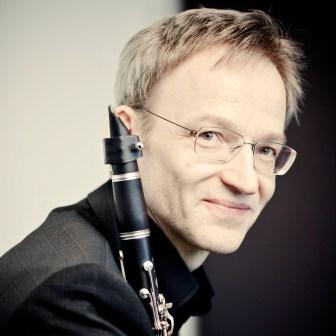
    Kari Kriikku

    Above: clarinet soloist Kari Kriikku

    Saturday September 27th, 2014 – The first subscription concert of the New York Philharmonic‘s 2014-2015 season featured a new clarinet concerto by the Korean composer Unsuk Chin and Mahler’s symphony #1. The Mahler evoked one of the most vociferous audience responses I’ve experienced since I started going to the Philharmonic frequently.

    A pre-concert mini-lecture-demo by Maestro Gilbert – with Mr. Kriikku giving some examples of the techniques called for by Unsuk Chin in the clarinet concerto – was somewhat spoilt by the distraction of late seating. Once the concerto proper started, all was well and the audience showed great attentiveness as this new sonic experience unfolded.

    Mr. Kriikku’s mastery of his instrument was beyond impressive; the clarinet truly became an extension of the artist. He showed an ability to sustain two tones at the same time, to make the ebony resonate at the faintest of volume levels, to wheeze and to squwak, and even to sustain long phrases seemingly without drawing breath.

    Ms. Chin draws from aspects of Asian folk music, overlain by textures of sound that are beyond contemporary. These layers are dense but drawn out by the Philharmonic musicians with sterling clarity. A vast array of percussion instruments are called into play, including a wine glass, a washboard, and two fishing reels. The soundscape veers from eerie near-silence to outbursts of intense shreiking from Mr. Kriikku.

    Overall, I felt the work (which seemed a bit too long at times) was more impressive than actually pleasing or meaningful. Surely it affords the player an opportunity to extend his range far beyond what might be considered to be in the realm of possibility. But, like much new music these days, neither the heart nor the soul were engaged. 

    The Mahler 1st, which premiered in Budapest in 1889, is classically referred to as “the Titan”; and while a programme note admonishes the listener from attaching that label to it, surely the final movement is a titanic experience.

    Back in 1889, the symphony had five movements instead of the four which we experience today. The composer deleted the original second movement – Blumine (‘Bouquet of Flowers’) – after the premiere, leaving us with the first movement in which Mahler represents “the waking of Nature after a long Winter” followed by a Scherzo (“The wind in my sails”). In the slow movement that comes next, solo double-bass sets forth the theme based on the French nursery song ‘Frère Jacques‘ (hearing it caused a rustle of appreciation among the audience): the movement depicts “The Hunter’s Funeral” with its vision of a hunter’s last cortege, the coffin drawn by animals. And at last we reach the epic graudeur of the finale which Mahler called “Dall’Inferno” – From Hell”: an outpouring of despair coming from a deeply wounded heart.

    These programmatic references in the end seem only to reflect Mahler’s desire to connect with the more conservative elements of his audience. The symphony is pure music, from start to finish, whatever allusions one might draw on hearing it. The orchestra gave a huge, glistening performance of the work, with the final movement being particularly magnificent. As the final chord resounded, the audience rose their feet in unison and commenced a long, loud ovation which Maestro Gilbert and the players truly deserved.

  • Pontus Lidberg Dance: Recent & Upcoming

    Pnts1515

    Above: from Pontus Lidberg’s FAUNE; photo by Nir Arieli

    Photographer Nir Arieli has sent me some images from Pontus Lidberg Dance‘s recent performance at Kykuit, the Rockefeller Estate at Pocantico, NY. The Company danced there on August 8th, 2014, in beautiful outdoor setting.

    Pnts1534
    Above: Adrian Danchig-Waring and Georgina Pazcoguin in an excerpt from WITHIN (Labyrinth Within)
     
    Pnts1551
    Above: Isabella Boylston and James Whiteside in a work-in-progress: a new duet scheduled to premiere at Fall For Dance on October 18th, 2014.
     
    Pnts1576
    Above: Adrian Danchig-Waring and Nadja Sellrup in TACTILE
     
    Pnts1594
    Above: Pontus Lidberg Dance in TACTILE
     
    Pnts1596
     
    Above: Pontus Lidberg Dance in TACTILE
     
    UPCOMING: Pontus Lidberg Dance will perform Pontus’s atmospheric Debussy ballet FAUNE on Saturday October 11th at the Hudson Valley Dance Festival. And on October 18th and 19th, Pontus’s duet for  Isabella Boylston and James Whiteside will premiere at the annual Fall For Dance Festival at New York’s City Center.

  • Tchaikovsky/Balanchine @ New York City Ballet

    10708211_10152712762704814_256726488_n

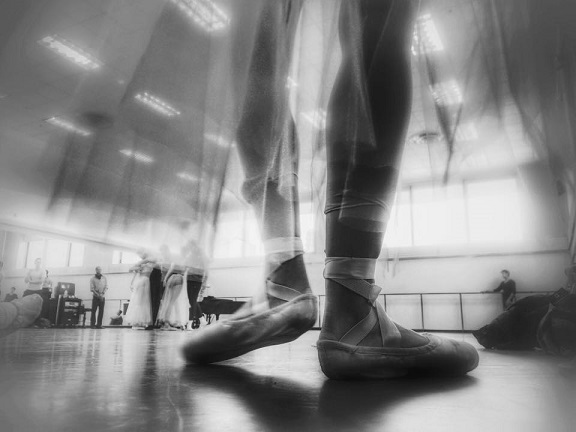
    Above: at a New York City Ballet rehearsal; photo by Craig Hall

    Wednesday September 24th, 2014 – An impressive line-up of favorite dancers in familiar roles, the music of Tchaikovsky, the choreography of Balanchine: what better way for me to start a new season at New York City Ballet?

    Under Clothilde Otranto’s baton, the four Tchaikovsky scores were nicely served up by the NYC Ballet‘s intrepid musicians. Tonight was probably considered an ‘easy’ night for these players: scores they have played dozens of times. They always deserve their spot-lighted ‘curtain call’ at the end of the evening, and it was good to hear a warm swelling of applause for them tonight.

    Ms. Otranto seemed to be favoring fast tempi in SERENADE tonight; the musicians assured that the emotional colours of the music came thru, and the dancers took it all in glorious stride. From curtain-rise, the corps provided an endless panorama of beautiful faces, forms, and personalities. It’s funny that I still find myself looking for people like Amanda Edge and Pauline Golbin among these ice-blue-gowned angels: and where’s Amanda Hankes tonight? Ah, well, they have danced into other phases of their lives – gone from this stage but never forgotten. 

    For present loveliness, we have a delectable quartet of demi-solistes: Faye Arthurs, Alina Dronova, Meagan Mann, and Mary Elizabeth Sell. And Gwyneth Muller always moves me as the consoling maternal figure at the end of the ballet.

    This was a blonde SERENADE: Sara Mearns, Sterling Hyltin, and Teresa Reichlen all looked sumptuous, especially when their hair came down for the final movement. Sara’s luxuriant dancing was given noble grounding by Jared Angle, ever the ideal cavalier. Sterling – her lingering balances spot-on – found just the right mixture of elegance and vivacity, catching the many musical moods in which her ‘character’ finds herself. Tess was divine lyricism personified, and Adrian Danchig-Waring seemed to have come down from Mount Olympus. The sight of Adrian and Tess crossing the stage together, raising Sara from her dream, and Tess’s marvelous slow-turning supported arabesque summed up everything that is SERENADE. The audience responded with a deeply resonant ovation; I am sure there were people in the audience seeing SERENADE for the first time, and I’m sure they will want to see it again.

    The quiet radiance of Maria Kowroski’s Preghiera in MOZARTIANA showed the great ballerina at her most communicative: the lovely passage with her hands in prayerful attitude was especially evocative tonight, as was the gentle silence of her pin-point bourrées. Later, as the ballet’s mood becomes more expansive, Maria’s swirling turns and trademark extension were woven into the music with queenly assurance. I couldn’t take my eyes off her. Tyler Angle was on fine form, his dancing marking the first of three displays of male virtuosity which had the audience cheering this evening. Maria and Tyler have formed an impressive partnership and I look forward to their future endeavors. The ever-excellent Daniel Ulbricht maintained the elegance of the ballet with his stylish dancing – his Gigue has become a signature role – and the Menuet was graciously performed by Marika Anderson, Megan Johnson, Emily Kikta, and Gwyneth Muller.

    A rousing rendition of the TCHAIKOVSKY PAS DE DEUX caused the audience to shed any trace of decorum and yell lustily as Ashley Bouder and Gonzalo Garcia traded technical fireworks in a vivid and smile-inducing performance. After a graciously musical adagio, Gonzalo gave an astonishing performance of his solo – some of the best dancing he’s ever done – nailing the myriad turns at the end before a final brilliant combination to the knee, expertly timed. The crowd went wild. Ashley then swept thru her own dazzling display of danced coloratura, tossing in spicy little pauses and teasing us with her technical savoir faire. Another roar went up as her solo’s final fantastical turns stopped on the proverbial dime. Now with the audience squarely in the palms of their hands, these two magicians of dance swept thru a blazing coda – Ashley’s deluxe fouettés yet another savorable moment – and brought down the house. 

    In the haunted ballroom setting for the Élégie of TCHAIKOVSKY SUITE #3, Rebecca Krohn and Ask LaCour brought tears to my eyes with their poetic evocation of an ideal found…and lost. Rebecca’s restless, almost feral allure was captivating to behold. And Ask is so perfect here: covering the space with questing leaps in pursuit of his elusive muse. Their performance moved me deeply, their parting and Ask’s sinking back into a reverie of heartache drawing up so many emotions.

    Abi Stafford and Justin Peck sustained a mood of mystery in the Valse Mélancolique, Justin’s innate sense of drama nearly drawing the coolly captivating Abi into his world. Yet it is she who prevails: at the end he backs away from her, completely under her spell. Abi and Justin are among my favorite dancers to watch; having them cast together here was a very nice gift.

    In the Valse, a particularly appealing trio of diverse beauties – Olivia Boisson, Lara Tong, and Claire Kretzschmar – looked fetching in one of the ballet’s many featured corps passages.

    In a bewitching performance, Erica Pereira spun marvelously thru the plentitude of pirouettes Balanchine demands of her in the Scherzo; her lustrous black hair and shimmering silver-white tulle flowing as she traced a comet-like trajectory around the stage. Antonio Carmena matched Erica’s spinning flourishes with his airy leaps; they fly off in opposite directions at the end. 

    And now we come to the grand finale: Theme and Variations. The recently refurbished costumes for this ballet seem to glow as Tiler Peck and Joaquin de Luz set forth the elegant opening Theme. Moments later, in her first solo variation, Tiler displayed her epic perfection as a classical ballerina with some truly glorious dancing. The audience showered her with a torrent of applause. The ballet progressed – with excellent suppport from the corps – as Tiler and Joaquin moved continually from one peak of perfection to another. Joaquin’s marziale variation was thrillingly executed, the devilishly handsome dancer basking in another avalanche of cheers, the iconic de Luz smile justifiably lighting up. The ballet swept forward, buoyed not only by the two spectacular principals but by a very impressive quartet of demi-solistes: Lauren King, Brittany Pollack, Mary Elizabeth Sell, and Lydia Wellington. Their cavaliers in the finale were Daniel Applebaum, Allen Peiffer, David Prottas and Andrew Scordato.

    As Ms. Otranto guided the evening to its triumphant close, the audience burst yet again into a passionate ovation: Tiler and Joaquin – and indeed the entire Company – were saluted at the end of a great evening…a great evening for dance, for Tchaikovsky, and for the enduring magnificence of Mr. B.

  • 10th Anniversary @ New Chamber Ballet

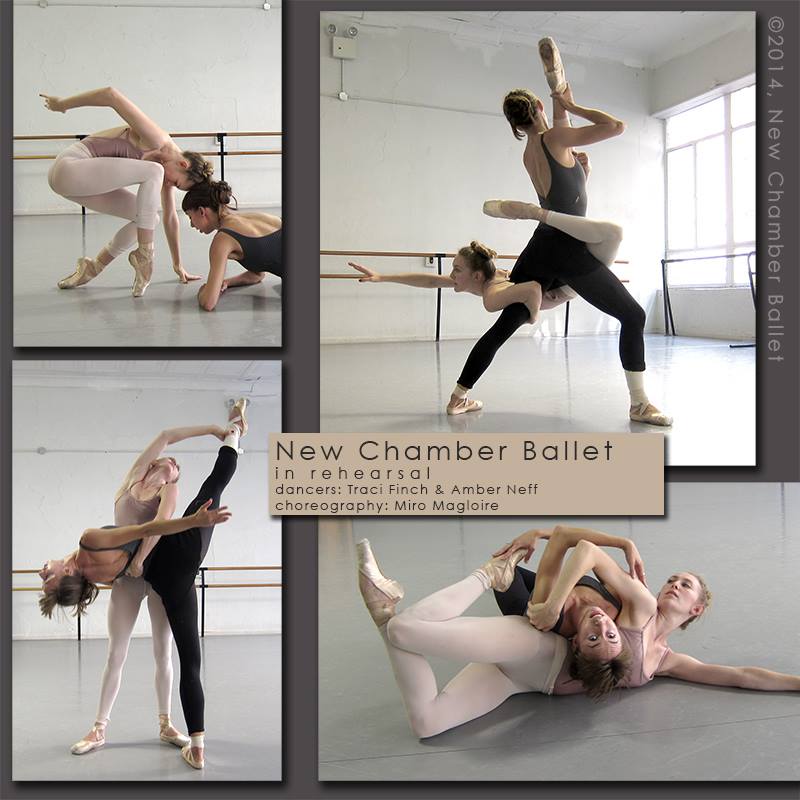
    Miro ncb rehearsal

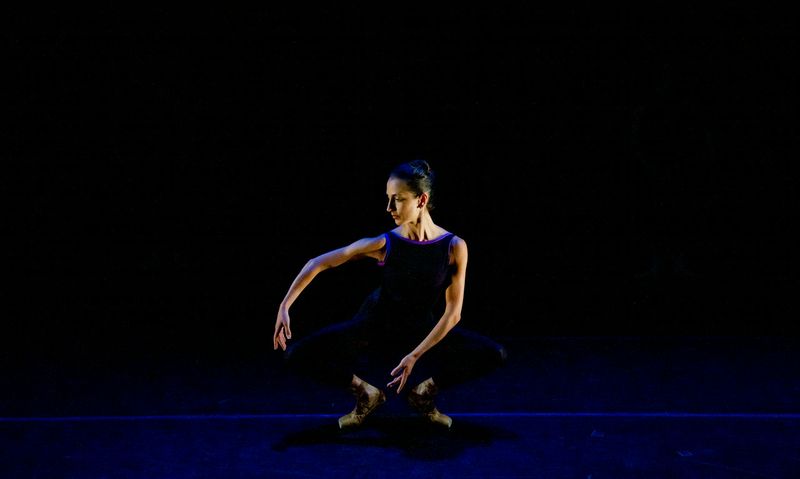
    Above: New Chamber Ballet company class; photo by Amber Neff

    Friday September 19th, 2014 – Miro Magloire’s New Chamber Ballet have inaugurated their tenth anniversary season with a programme featuring three Miro Magloire premieres and a work by NCB resident choreographer Constantine Baecher’s “Happy Dance Of The Wild Skeletons” (to music of John Cage), as well as Miro’s intriguing “Tilting and Leaning“, set to piano music by Pierre Boulez.

    Over the past decade, New Chamber Ballet have carved out a special niche for themselves in the Gotham dance world. Their “up-close-and-personal” concerts – always danced to live music – have drawn ever-expanding audiences, and tonight they played to a standing-room-only crowd.

    Much praise is due pianist Melody Fader and violinist Doori Na who perform the often complex scores that Miro likes to use with a high level of musicality. Exceptional tonight was their performance of Mauricio Kagel’s ‘Klangwölfe’ for the ballet RAW.

    In recent seasons Miro has presented narrative works: domestic dramas about ghosts, sibling rivalries, or mysterious letters. This evening’s three new works are more abstract though of course certain themes might be implied. The first ballet is aptly titled FAST FORWARD; danced to Beethoven’s ‘Rondo for Violin and Piano’, the work has three ballerinas – Sarah Atkins, Holly Curran, and Traci Finch – rushing about the space in speedy (even risky) combinations. The breathless quality of the movement is a fine response to the zesty drive of the Beethoven as played by Doori and Melody.

    Miro020-3289003989-O

    Above: Sarah Artkins in Miro’s TILTING/LEANING; photo by Adam Jason

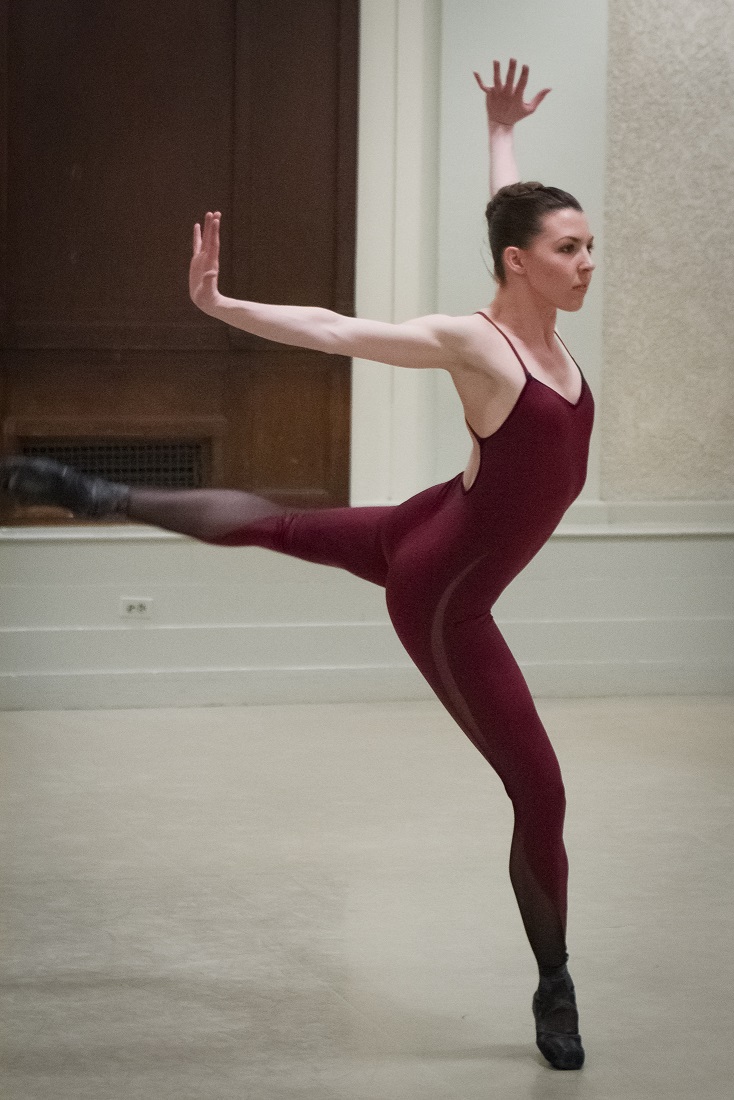
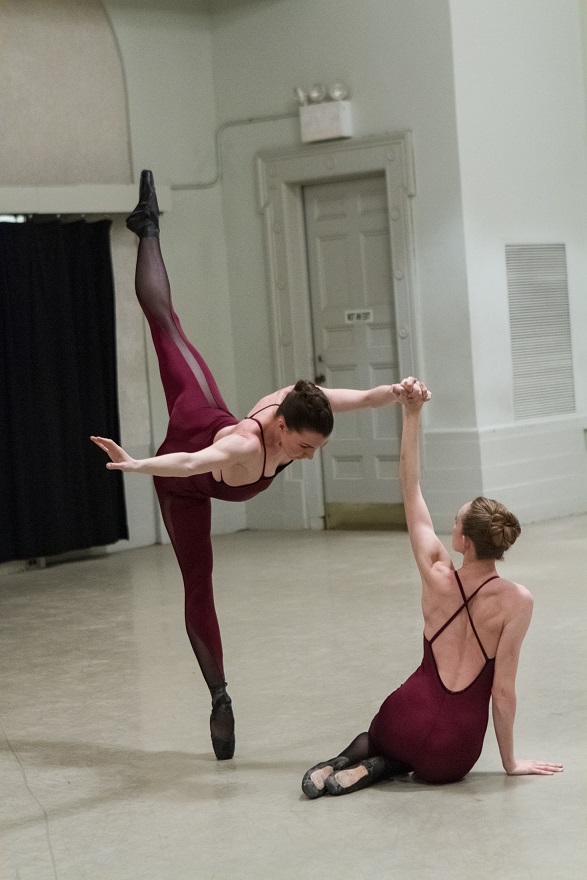
    Melody Fader took in stride the demands of Pierre Boulez’s ‘Notations’ which accompanies last season’s intriguing duet TILTING/LEANING. Dressed in Sarah Thea Swafford’s sleek wine-coloured body tights, dancers Sarah Atkins, Traci Finch, and Amber Neff go from intense to playful and back again in choreography where they balance against one another in unique and quirky shapes.

    Miro052-3289006317-O

    Supported arabesques are a signature motif in TILTING/LEANING (Sarah and Amber above, in an Adam Jason photo). At the end Sarah and Amber appear to ‘fold’ Traci into an improbable little bundle. This ballet rewards repeated viewings with its resonant nuances.

    L1480519

    For Holly Curran (rehearsal image, above), Miro has created an unusual tour de force solo entitled IN THE COLD. While Melody Fader spins out some Satie at the piano, Holly appears alternately shell-shocked, frantic, or trembling with the chills. Repetitive, compulsive moves give way to a spacious manège of leaps; the dancer periodically assumes a potent arabesque or pauses to rearrange herself before contemplating her next move. The solo, which choreographically rather plays against the expected responses to the Satie melodies, was excellently mastered by dancer and pianist.

    10486513_10152694171488571_8874687051716580051_n

    Above: rehearsal images from Miro’s new duet RAW

    Miro’s meshing of music and movement created yet another fresh vision with RAW. Introducing the work, Miro spoke affectionately of the German-Argentine composer Mauricio Kagel who was Miro’s composition teacher. The choreographer pays homage to his musical mentor with one of his most inspired works to date: RAW is such a fascinating piece that when it ended I immediately wanted to see (and hear) it again.

    Doori Na – his strings muted – and Melody Fader evoked a misterioso atmosphere: Doori showed great control as he spun out a thread of sound, and Melody later drew forth a shimmering, high-lying theme from the keyboard. Dancers Traci Finch and Amber Neff are literally entwined much of the time in this duet; their handling of the strenuous partnering motifs, including lifts and intimate bondings, gave the ballet a captivating intensity. An aggressive passage eventually leads to serene, almost worshipful images as Amber leans against the piano and Traci kneels at her feet. RAW seems to veer from sensuous to sterile to pensive, and it is perhaps Miro’s most intimate creation to date.

    To end the evening, Miro invited the viewers to circle the dancefloor, the better to watch Constantine Baecher’s impetuous romp of a duet, HAPPY DANCE OF THE WILD SKELETONS. Melody Fader plays John Cage’s ‘Bacchanale’ on a prepared piano as dancers Traci Finch and Amber Neff – in girlish playsuits and bobbi-sox – indulge in playful, slap-happy hijinx. Their hair comes down at the end, as they revel in the sheer joy of being silly.

    Happy anniversary, Miro!

    The Company’s next performances will be on November 21st and 22nd. 2014. Visit their website here.

  • Notes on a Voyage

    Mg

    Tuesday September 16th, 2014 – Whenever I come away from a performance (or rehearsal) of the Martha Graham Dance Company, I feel the need to invent new adjectives to describe both the works being danced and the people dancing them. Tonight, as part of the on-going GRAHAM/Deconstructed series, we saw an open rehearsal of the 1947 Graham classic, Errand Into the Maze, and a new work, Notes on a Voyage, created by former Graham dancer Peter Sparling.

    Errand Into the Maze, with its powerful score by Gian Carlo Menotti, seems startlingly fresh and meaningful each time I see it. Though billed as a ‘rehearsal’, the dancers – PeiJu Chien-Pott and Ben Schultz – gave a performance of deep commitment and generous physicality. Pei-Ju, luminous in a white shift, painted the terror and the ultimate triumph of her journey in a vividly nuanced performance. With his handsomely inked torso, Ben seemed an unconquerable force as he stalked his prey. Yet in the end, PeiJu overcomes her fear and casts him down. The packed house watched this masterpiece with intense focus and burst into an enthusiastic and richly-deserved applause for the two dancers at the end.

    6a00d8341c4e3853ef017ee9f9df65970d

    And now let me take a moment to congratulate the award-winning PeiJu Chein-Pott (above)! Read the story here.

    Photo antonia k miranda

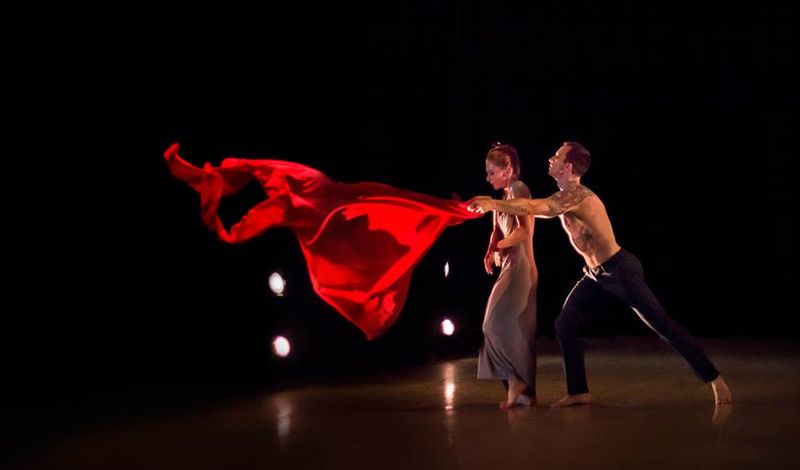
    Above: Blakeley White-McGuire and Ben Schultz in Notes On A Voyage, photo by Antonia K Miranda

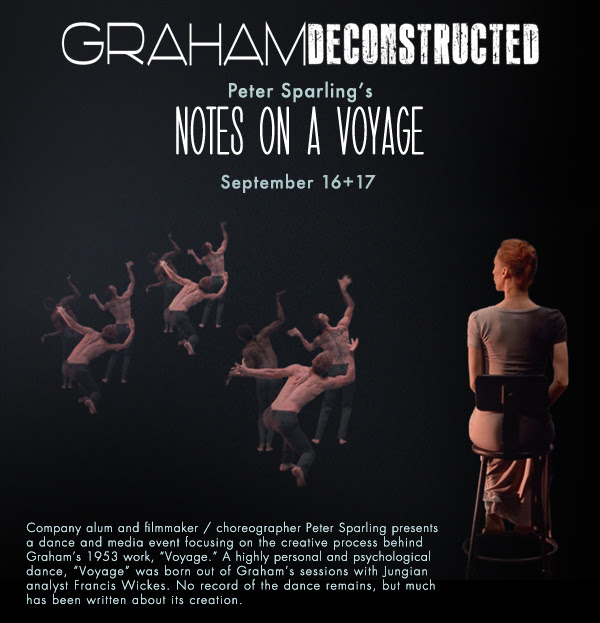
    In his striking multi-media work, Notes On A Voyage, Peter Sparling has summoned up a vision of Martha Graham’s lost 1953 work, Voyage. Stuart Hodes, who was among the original cast, gave valuable insights into the creation (and ultimate disappearance) of Voyage which evolved out of Martha Graham’s sessions with Jungian analyst Francis Wickes. No filmed or notated record of the dance remains, but it has been written about and spoken of in Grahamian circles over the intervening decades.

    Mr. Hodes revealed that, after a two-year period of creation, Voyage premiered and Martha Graham was not pleased with it. She immediately began re-working it, but it never again saw the light of day outside the studio…until now, in Mr. Sparling’s thoughtful and provocative rendering.

    The original Voyage had a Noguchi setting. Martha’s notes indicate she viewed the piece as taking place in a house on the edge of a desert; yet Noguchi’s design showed a boat. This paradox was somehow resolved at the time. For the current re-imagining, the space is empty aside from an extremely high stool in one corner, and a bolt of red fabric.

    Mr. Sparling found the William Schuman piano music, and he conceived a brilliantly executed film to accompany the dance. The voice of Ellen Lauren is heard, reading excerpts – fragments, really – from Martha Graham’s journals and letters. The overall atmosphere compellingly fuses the elusive past with the vibrant presence in the personages of the four magnificent dancers: Blakeley White-McGuire, Tadej Brdnik, Lloyd Knight, and Ben Schultz.

    Descibed as ‘a woman seeing herself thru the eyes of three men’, the central character takes on – in a succession of duets – the aspects of a goddess, a warrior, and a lover. Shirtless in fitted trousers, the three men display the agility and strength that Graham always demanded of her male dancers. Dancing first with Lloyd, then Ben and finally Tadej, Blakeley filled the space with both restless energy and moments of pensive calm, sometimes skittering up to the high seat from which she could view her own world. Blakeley’s performance was a pure astonishment of personal magnetism, her alluring physicality and her compelling gift for turning movement into magic gave me one heart-racing thrill after another. What a remarkable and generous artist she is.

    A great night, then, in every regard. So lovely to find Xiaochuan Xie, Alessandra Larson, Abdiel Cedric Jacobsen, and Ian Spencer Bell among the crowd.

    ~~~~~~~~~~~~~~~~~~~~~~~~~~~~~~~~~~~~~~~~~~~~~~~~~~~~~~~~~~~~~~~~~~~~~~~~~~~~~~~~~~~~~~~~~~~

    Upcoming: On October 30th, the Martha Graham Dance Company will present Appalachian Spring Up Close and Personal – a complete performance of Appalachian Spring in costume and with the classic Noguchi set pieces. This performance marks the 70th anniversary of the work’s premiere on October 30th, 1944. This one-night-only event will also feature film and photos from the premiere, and an introduction with quotes from Graham’s correspondence with Aaron Copeland as they created this beloved American classic. Mariya Dashkina Maddux will lead the cast in Graham’s role of The Bride. She will be joined by Lloyd Mayor, Natasha Diamond-Walker, Lloyd Knight, Xiaochuan Xie, Ying Xin, Charlotte Landreau, and Lauren Newman. Ticket information will be forthcoming.

  • CURRENT SESSIONS Volume IV, Issue II

    10540414_809848329055281_1375134267170772879_n

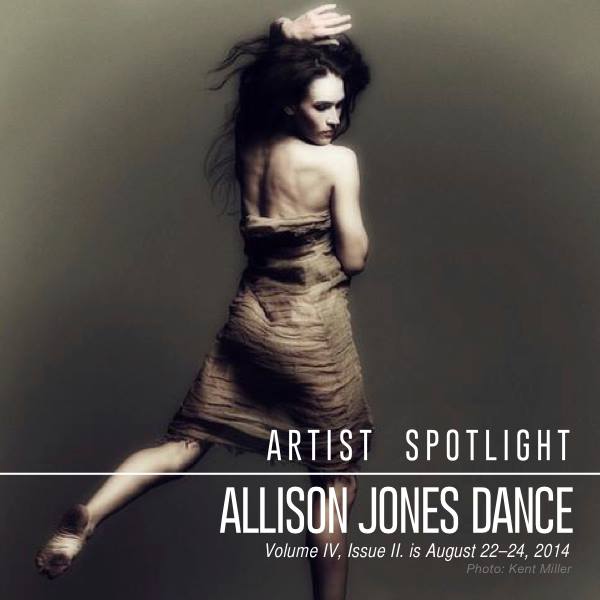
    Sunday August 24th, 2014 – This was the only performance of the ‘current sessions’ of the CURRENT SESSIONS that I could attend. I dearly wanted to see Colby Damon’s work but that will have to wait for another opportunity. Meanwhile, tonight’s line-up had the range and flair we’ve come to expect from these unique dance programmes. A big round of applause for the SESSIONS‘ co-Artistic Directors Allison Jones (photo at the top) and Alexis Convento for making it happen yet again.

    Housed in a comfortable, intimate venue The Wild Project down on the Lower East Side, the CURRENT SESSIONS bring together works by established and emerging choreographers in mix-and-match programming, getting dance and dancers seen in smoothly-produced and finely-lit (by Mike Inwood) repertory evenings. 

    This particular programme offered three fascinating works for solo female dancers, an entracing film based on the legend of Narcissus, an extended selfie of imaginative wit and energy, and ensemble pieces of visual variety, all served up by inspired and inspiring dancers.

    Jenna Pollack, a hypnotic mover, opened the evening in Nicole van Arx’s solo Wasserflut. Eerie and feral at first, Ms. Pollack expands thru the dance into a compelling presence; her backless black shirt reveals her expressive dorsal musculature. As the piece evolves, Jenna’s shadow becomes an element of the choreography. Fleetingly glimpsed through a sonic haze are fragments of the Schubert song from which the solo draws its title. 

    Enza DePalma // E|N|Z|A offered some bloom in darkness; this work for four dancers employs white chairs outlined in flourescent light. In this abstracted domestic drama revolving around our sense of security in our accustomed living space, the chairs are re-arranged as the dance moves forward. A distorted version of the Barcarolle from CONTES D’HOFFMANN is danced in-sync by the two girls; then the boys dance to a heavy beat. As the dancers re-claim their seats, we expect another vignette but instead a sudden blackout leaves us pondering what we’ve just seen.

    Jay Carlon’s Dance Film Selfie showed this engaging dancer/choreographer in a variety of public settings (starting on an escalator at Sochi) all caught on his own camera. Charmingly mixed, the scene of Jay dancing to “The Man I Love” while waiting for a bus was especially poignant; later he’s ticketed by the police: it’s a misdemeanor to dance in Brooklyn? As the film ends, Jay appears live onstage, sets his camera in the corner, and records another selfie solo to add to his repertoire. When the soundtrack, for solo violin, starts skipping like a broken record, it’s over. Jay’s timely and wonderfully whimsical work was a direct hit with the Wild Project crowd. Check him out here.

    Playback, a duet choreographed by Bryan Arias, was performed by Roya Carreras and Elise Ritzel to music played on an old cassette deck. Evoking both memory and expectation, the duet becomes intimate as the girls move to a collage of Mozart, a mostly incoherent spoken-word passage, and Max Reger. Bryan Arias’ choreography brought out a dark side in his two beautiful dancers.

    57c0d547191d0cc7a8f32dd041be8b95_large

    Above: Nico Archambault in the film Stagnant Pool

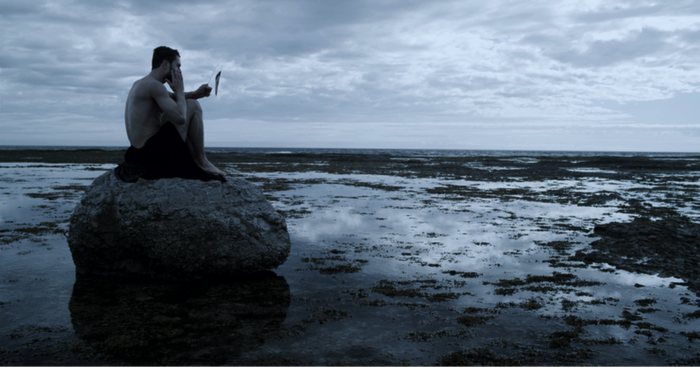
    Stagnant Pool, a film by Kevin Calero co-choreographed by Wynn Holmes and Nico Archambault, transports us to a mythic land’s end where – inspired by the legend of Narcissus – Mr. Archambault moves like a demi-god across the seascape from which rise other-worldly rock formations. Shards of a broken mirror allure the dancer to his own image as fantastical music of the spheres becomes transportive: the cumulative effect is breath-taking. And then the vision evaporates into a nightmarish coda.

    Allison Jones presented the evening’s second solo work, SUBCYCLE, in which she performed to a Sam Silver composition. Deep sonics anchor the work in which Allison, bathed at first in golden light, moves with an intense sense of plastique gesture, pausing briefly to rest on the floor before brighness floods the space and she revives: an absorbing and definitive performance.

    Choreographer Kat Rhodes has tirned to Cormac McCarthy’s novel The Crossing as inspiration for LOBO (Wolf), an excerpt of whch was shown tonight. A young girl in a homespun dress is roused from her sleep by three other women in prairie denim garb appear in this ritualistic and evocative work: the three women may variously represent men, or wolves. Music by Nick Cave and Warren Ellis, as well as Mike Inwood’s lighting, enhanced the committed work of the four dancers.

    Andrea Murillo, a dancer I first saw work while she was working with the Martha Graham Dance Company, danced gorgeously in a Troy Ogilvie-choreographed solo Legacy Part One. The power and control of movement which Ms. Murillo developed while working at Graham were amply evident in her inspired peformance tonight. Spoken narrative and a kozmic big beat set the atmosphere as the radiant dancer held sway over the crowd, the lights coming up to a huge brightness as the solo progressed. Andrea’s perfomance was a knockout: I can’t wait to see Part Two

  • Cedar Lab @ Cedar Lake

    1969399_10152531894249210_2500814993722967151_n

    Above: Cedar Lake‘s Jon Bond

    Wednesday July 30th, 2014 – I have always loved Cedar Lake Contemporary Ballet‘s homespace on West 26th Street and I very much enjoyed this evening’s presentation of Cedar Lab, a new adventure for the Company wherein the dancers create choreography on their colleagues.  Tonight, works-in-progress by Jon Bond, Navarra Novy-Williams, Matthew Rich, Joaquim de Santana and Vânia Doutel Vaz were presented.

    Earlier this month I stopped in at a rehearsal of two of the works, those created by Navarra and Vânia, so I had a sampling of tonight’s programme. The Cedar Lake dancers are among Gotham’s most talented and alluring, and this opportunity for five of them to spread their choreographic wings did indeed make for a stimulating evening. A quote from dancer/choreographer Navarra Novy-Williams set the tone for this new initiative: “We explored a lot, and I’m certain we are still exploring.”

    The only drawback to my enjoyment of the evening was that I was seated in the back row which, despite being on risers, caused my view of anything happening on the floor to be cut off by the rows of spectators in the intervening space. Since most of the choreographers made use of floor time in their danceworks, this aspect of the presentation went for nought from my perspective. 

    The opening work set a very high standard for the evening in terms of choreography, music, production elements, and dancing. Joaquim de Santana presented his duet DISTANT SILENCE, set to Sigur Rós’ “Fjögur Píanó” and “I Just wanted to Know” by Phillip Jack. The work opened with a brief film by Billy Bell in which the dancers – Jon Bond and Vânia Doutel Vaz – made a ghostly appearance. A large white drape is then torn down and Jon and Vânia appear in the flesh. They cross the space in a flow of gorgeously plastique moves, illuminating the music and choreography in a way that puts the viewer under a spell. Dancing in true sync or in partnered passages, Jon and Vânia were a compelling pair. Jon’s solo, with Vânia doing a walk-about, underscored his status as one of the great movers in the modern danceworld. Vânia is a marvelous match for him: her solo – in the second ‘movement’, set to spoken word and mechanical music – was very finely wrought. Mr. de Santana knows his dancers well and employed their incredible gifts to the finest advantage. There were no bows after the individual works, but if there has been Jon, Vânia and Joaquim would have brought down the house.

    Vânia was the next featured choreographer: her ensemble work THEM THERE was danced to an original score by Tom Sansky. The dancers wear simple white shirts and black briefs. One by one they step into the spotlight to pose and emote as their colleagues dance quietly in the background. Combining solo opportunities and in-sync ensemble passages, the overall effect was excellent though I wish I could have seen what was going on on the floor. Ebony Williams, that paragon of contemporary dance, was the last to step into the solo spotlight; she was soon engulfed by her fellow dancers. 

    I was dazzled by RESIDUAL REACTION, a film in which Matthew Rich combined his ‘double-major’ of dance and fashion, working with Billy Bell who directed and edited the work. A fabulous dance track from Nalepa and Flume sent the movie into orbit with incredible footage of Cedar Lake‘s sexy and spellbinding dancers. And they have never looked more sensuous: Nickemil Concepcion, Joseph Kudra, Navarra Novy-Williams, Guillaume Quéau, Ida Saki, Rachelle Scott, Madeline Wong, with guests Patrick Coker and Daphne Fernberger. The camera invades their privacy, lingering on their skin and muscle with provocative investigation as they move with seductive glamour to the music. Baby powder is an unexpected element, and later – dancing on a rooftop – we are enslaved by the emblematic gorgeousness of the Cedar Lake dancers. I hope this film will soon be available on the Company website, or on YouTube. It makes a super-enticing trailer. The moment it ended I wantd to watch it again.

    Some audience members are summoned to the stage to observe MUSE, Navarra Novy-Williams’ series of three solos, danced in turn by Acacia Schachte, Madeline Wong, and Rachelle Scott. Acacia, with her very personal mystique, snaps her fingers to turn on the spotlight for her solo which includes some very witty moves and covers the space fluently. Madeline, in a fanciful puff-skirt, dances to a big lyrical theme by Ennio Morricone, and then Rachelle displays powerful balance and control as she dances to “Moon River“. Here, more than elsewere, my inability so see the floorwork of the dancers was especially disheartening. But enough of the flavour of Navarra’s work emerged, and the music was particularly well-used.

    Jon Bond produced a nightmarish work, THE DEVIL WAS ME, dealing with the aspects of sin – one of my favorite topics! Music by Murcof and Peter Broderick summoned excellent work from the dancers – those already mentioned above plus Billy Bell, Gwen Benjamin, Joaquim de Santana and Jin Young Won. The work begins with a deeply ominous theme, Rachelle Scott in the spotlight; later she will endure a satanic ritual performed on a table. The dark gathering of masked feral creatures is briefly relieved by a passage where the dancers appear in silhouette before a yellow-gold sunset. But the overall tone is sinister and sinful.  The one thing that might have made this purgatorial work even more fascinating would have been to have Jon Bond dancing in it.

    The house was packed, and when I emerged into the lovely summer evening light there was a long line of dance-lovers waiting to get in to the second show. This sort of initiative is a feather in Cedar Lake‘s cap, and I sincerely hope Cedar Lab becomes an annual event.

  • Off to Edinburgh

    L1450239

    Above, dancer Marie Vestermark at today’s open rehearsal 

    Sunhwa Chung/Ko-Ryo Dance Company have been invited to participate in Danceforms’ 67th International Choreographers Showcase at the Edinburgh Festival Fringe 2014 in Edinburgh, Scotland, from August 5th through August 9th, 2014.

    The Company will perform a trio entitled It Doesn’t Matter, It Already Happened: Life is Every Day III choreographed by Sunhwa; she will also dance in the piece along with Dorothy Chen and Marie Vestermark. Sarang West will perform the solo violin part, and the music will be drawn from works of   Evelyn Glennie, Doug-Chang Lim, and Fazil Say.

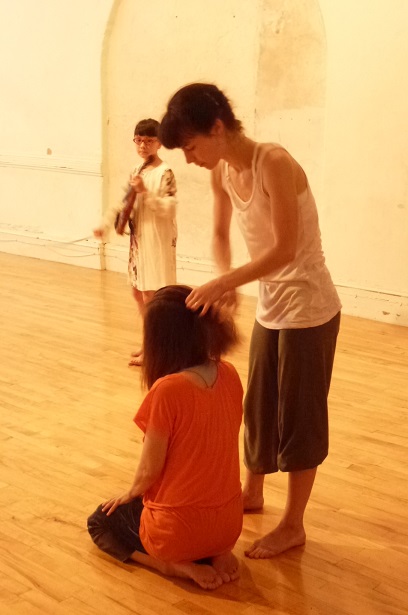
    Today I went down to SoHo to watch an open rehearsal of the piece at a very interesting studio space on Wooster Street. Unfortunately it was a bit too dark to make successful use of my camera, but Sunhwa, Dorothy and Marie ran thru the piece twice, with Sunhwa giving us some background between the two runnings.

    L1450173

    Dorothy Chen

    L1450133

    Sarang, Sunhwa and Marie

    L1450131

    Sunhwa’s young daughter Sarang West (above) performs a violin solo, and later the dancers begin to sing.

    L1450198

    A group of visitors commented on the work during the break as Sunhwa (above) explained that the piece was originally created as three inter-connected solos for one dancer and now she’s set in for a trio.

    This will be Sunhwa and her colleagues’ first trip to Scotland, so we wish them “Bon Voyage” and hopefully they will send back some photos from Edinburgh.

  • Fadi J Khoury Dance @ NYLA

    Back-company

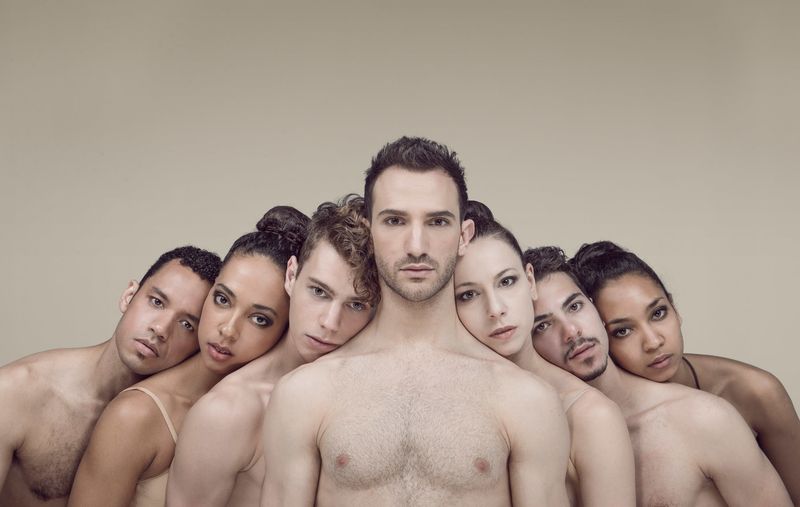
    Above: the artists of Fadi J Khoury Dance, photo by Nir Arieli

    Wednesday July 23rd, 2014 – Fadi J Khoury Dance enjoyed a highly successful opening night at New York Live Arts, the first of two sold-out evenings. Founded by Fadi Khoury, a native of Iraq, the Company boasts an international roster: dancers from Turkey, Spain, Italy, France, Costa Rica, and Colombia join together to present danceworks in a style in which Fadi, as choreographer, has skillfully merged elements of ballet and ballroom, with a dash of distinctively Middle Eastern spice thrown into the mix. 

    I met Fadi and his partner, Sevin Ceviker, when they were dancing with Nejla Yatkin’s troupe; another of tonight’s dancers, the lovely Karina Lesko, has also danced for Nejla and for Morales Dance.

    The opening work tonight, TANGO UNFRAMED, was danced to a collage of tango-oriented music by Ron Jackson, Emilio Solla, and Rosa Antonelli. Judith Daitsman’s lighting designs were an intrisic element in the evening’s visual appeal. 

    Blending the sultry sophistication of the tango with a fusion of ballet and contemporary movement, TANGO UNFRAMED opens with a striking vision of the lithe and charismatic Fadi Khoury standing in a pool of light. His solo dancing is marked by expansive port de bras and an elegance of phrasing which is underscored by a subtle sensuality. Sevin Ceviker, in high heels and a pretty frock, appears in her own spotlight and establishes a connection with Fadi.

    The three other couples come and go from the dance; there is a female ensemble segment and then a finely-wrought duet for Sevin and Fadi, danced to a piano solo. They display a mystic affinity both for the music and for one another.

    Fadi has been onstage all the time up to this point, but now the space clears and the stage remains empty for a piano interlude. Then there is an amusing quartet where two girls set their sights on two boys only to find that the boys have their sights set on one another.

    Sevin and Fadi commence another duet which blossoms into the work’s closing ensemble for the entire Company.  The audience responded with genuine enthusiasm to this evocative, passionate work. 

    The intermission stretched a bit long and though I usually dislike hearing music played during intermissions at dance performances – it tends to detract from the music the choreographer has chosen to set his dances to – some Middle Eastern melodies here would have been welcome. 

    ARABESQUE opens with Sevin Ceviker seated upstage in a lighted space as fog swirls about. The music is ominous, with an outer-space feeling. She remains on the floor for a while, then rises to dance on pointe. The other women join her, dancing to a big beat, then suddenly Fadi explodes onto the scene with a spacious jeté.

    The bleak sound of the desert wind signals the start of a ritualistic duet for Sevin and Fadi; they are kneeling, facing upstage, and they remain on the floor for a long time but luckily Fadi is a choreographer who knows what to do with floor time and so the duet sustained our interest, especially when Fadi sank back in a pair of voluptuous backbends.

    The ensemble intrudes, the boys bare chested in satiny midnight blue tights. Then Sevin and Fadi resume their duet, the music driving to a pounding beat: things get sexy, yet the movement remains balletic. The girls dance to a swirl of Arabic music, then the boys come leaping on one by one. Sevin and Fadi continue to dance in their own private realm.

    In a new section, two couples appear, followed by a boy’s trio and a trio for the girls which melds into a dance for all six. Sevin and Fadi ignite another duet passage, which leads into the concluding ensemble for the whole Company.

    The composers drawn upon for ARABESQUE are Mercan Dede, Samer Ali and Said Mrad: a very effective mixture, and again Ms. Daitsman’s lighting was excellent.

    The evening ended with a rousing standing ovation and the Company dancers were all greeted with cheers, marking an auspicious start for Fadi J Khoury Dance. Let’s see where this success leads them!